A Brief Review of Non-invasive Systems for Continuous Glucose Monitoring
Lisa K. Elmiladi, Atef Z. Elsherbeni, and Peter H. Aaen
Department of Electrical Engineering
Colorado School of Mines, Golden, CO 80401, USA
lelmiladi@mines.edu, aelsherb@mines.edu, paaen@mines.edu
Submitted On: December 23, 2024; Accepted On: June 20, 2025
ABSTRACT
This paper explores the pros and cons of using Vector Network Analyzers (VNAs) and radar systems for non-invasive glucose concentration testing. While VNAs provide precise measurement capabilities, radar systems offer a more portable and cost-effective solution. The research discusses the application of both technologies in medical settings, focusing on their potential for glucose monitoring and the challenges associated with each. This paper also considers radar unit options for experimental setups below 40 GHz, with a focus on simulations for glucose concentration detection in finger tissues using the 3-term Debye model.
Index Terms: Debye model, glucose monitoring, radar, VNA.
I. INTRODUCTION
The need for continuous and non-invasive glucose monitoring is growing as diabetes affects millions worldwide. Traditional monitoring methods like glucometers are invasive and uncomfortable for patients, leading to the exploration of alternative techniques involving electromagnetic methods. The use of both nano-Vector Network Analyzers (nano-VNAs) and miniaturized radar systems boards have been investigated for their potential in detecting glucose concentrations through changes in the dielectric properties of blood or the radar cross-section (RCS) from blood vessels having high glucose concentrations. RCS detects glucose concentration by observing the reflection of electromagnetic waves through human tissues.
VNAs have been extensively utilized for detecting glucose concentration changes through the measurement of scattering parameters (S-parameters), which reflect the dielectric properties of biological tissues. Figure 1 shows a simple VNA with internal S-parameter test set.
Studies such as those by Choi et al. [1] demonstrated the feasibility of microwave sensors to monitor blood glucose concentrations. Their work showed that the dielectric properties of blood are closely correlated with glucose levels, making VNAs a viable option for glucose sensing. Similarly, Flaherty [2] demonstrated that mmWave-based techniques using VNAs could detect glucose concentrations in anesthetized rats, further validating the potential of electromagnetic methods.
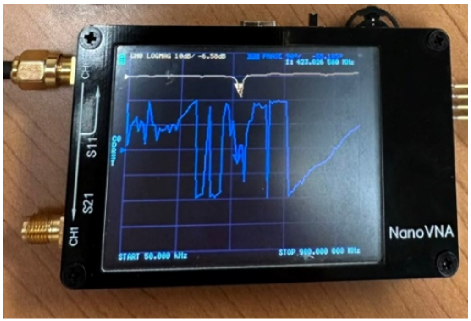
Figure 1: Nano-Vector Network Analyzer demonstrating a magnitude and phase plot.
On the other hand, radar systems operating in the mmWave band provide an alternative solution, offering greater portability and reduced cost. Figure 2 shows a 60 GHz mmWave radar system developed for applications such as driver monitoring and touchless interfaces. This radar system operates at mmWave frequencies, which provides high-resolution detection capabilities. It is manufactured by Acconeer AB, a company specializing in high-frequency radar solutions for automotive and consumer applications [3]. The radar system’s compact size and advanced integration make it ideal for non-invasive applications, including gesture recognition, motion tracking, and medical monitoring.
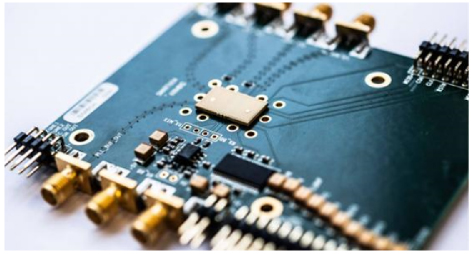
Figure 2: 60 GHz mmWave radar. Adapted from [3].
Saha et al. [4] investigated the use of microstrip patch antennas operating at 60 GHz for glucose detection. Their study highlighted how changes in the transmission and reflection coefficients of the radar signal could accurately monitor glucose levels. In a similar vein, Cano-Garcia et al. [5] conducted experiments using radar systems to detect glucose variability in saline solutions, demonstrating that radar systems can effectively monitor glucose concentrations non-invasively.
Despite the advancements in radar-based glucose monitoring, challenges remain in ensuring accuracy and sensitivity, especially when compared to the use of VNAs. Kim et al. [3] explored the sensitivity of microwave biosensors to different glucose concentrations in aqueous solutions, illustrating the need for higher precision equipment. Additionally, Guo et al. [6] studied alternative non-invasive methods, such as breath signal analysis for glucose monitoring, but found them less effective than electromagnetic approaches.
This paper examines the advantages and disadvantages of these two methods, considering cost, precision, portability, and the stage of development
II. VECTOR NETWORK ANALYZER
VNA has been widely used in material characterization due to its ability to measure S-parameters, making it a valuable tool for analyzing the dielectric properties of biological tissues, including blood glucose levels. VNAs operate by emitting electromagnetic waves and analyzing their interaction with materials, providing high-precision measurements. The use of VNAs for glucose monitoring, in particular, has shown promising results in detecting changes in the dielectric properties of blood, which correlate with glucose concentration. These measurements are often performed at higher frequencies, enhancing sensitivity to variations in glucose levels.
A. Advantages
One of the key advantages of the use of VNAs is their precision in measuring electromagnetic behavior. VNAs provide highly accurate readings of S-parameters, which are instrumental in quantifying the dielectric properties of biological tissues. This level of precision allows for detailed analysis of subtle variations in glucose concentration. They support a broad frequency range, with some models operating at frequencies as high as 67 GHz. The ability to work in higher frequency ranges enhances the VNA’s capacity to detect minute changes in electromagnetic behavior, particularly in relation to glucose sensing [7].
Additionally, VNAs are well-studied for medical applications. Their use in glucose detection has been extensively documented, with research demonstrating reliable results in measuring the dielectric properties of blood and correlating them with glucose levels [7].
B. Disadvantages
Despite their precision, VNAs present several limitations. The most notable drawback is their high cost, with prices over US$100,000 for those capable of measurements above 40 GHz. VNAs are not a cost-effective solution for widespread deployment in non-invasive glucose monitoring [7]. This limits their practical application to large research institutions and specialized medical facilities.
Another challenge is the bulky nature of VNAs. They are typically large and not portable, making them impractical for real-time, continuous glucose monitoring in everyday settings. Though advancements such as nano-VNAs offer more compact solutions, these smaller versions may sacrifice some precision and frequency range [7].
Finally, the complex setup required for VNAs can pose challenges. Accurate measurements depend on careful calibration and maintenance, which may be cumbersome in a clinical setting compared to more user-friendly alternatives, such as radar systems [7].
III. RADAR SYSTEM (60 GHz MMWAVE)
The mmWave radar systems, particularly those operating around 60 GHz, have gained attention as an alternative to VNAs for non-invasive glucose monitoring. These systems function by emitting electromagnetic waves and analyzing the reflected signals, allowing for the detection of changes in dielectric properties related to glucose concentrations in biological tissues. Radar systems offer a compact, portable, and potentially cost-effective solution for continuous glucose monitoring.
A. Advantages
Radar systems, especially those based on mmWave technology, provide significant advantages in terms of portability. Systems like the Google Soli radar are small and lightweight, making them well-suited for wearable applications. This portability facilitates non-invasive glucose monitoring in daily life without the need for intrusive devices or continuous finger pricking [7].
Another advantage is their cost-effectiveness compared to VNAs. Radar systems are considerably less expensive, making them a more viable option for large-scale deployment in medical applications. This affordability opens the possibility of continuous glucose monitoring for a broader patient population.
Radar systems also demonstrate good sensitivity to glucose concentrations. Research has shown that radar systems can effectively detect variations in the dielectric properties of glucose solutions, making them suitable for tracking glucose levels in the blood [7]. Moreover, radar-based systems allow for non-invasive monitoring, which reduces patient discomfort and improves the feasibility of frequent or continuous glucose testing [7].
B. Disadvantages
Radar systems also come with limitations. Most affordable radar units operate at frequencies below 40 GHz, which can reduce their sensitivity compared to higher-frequency VNAs. The lower frequency range may limit the system’s ability to detect small variations in glucose concentration, especially when applied to deeper biological tissues [7].
Another challenge lies in the radar systems’ sensitivity to physiological and environmental factors. Changes in body temperature, moisture, or surrounding environmental conditions can affect the accuracy of glucose readings, posing challenges for real-time monitoring [7].
Finally, radar-based glucose detection technology remains in the experimental stage. While research has demonstrated the feasibility of radar systems for glucose monitoring, further validation and development are needed before these systems can be deployed in clinical or personal health settings [7].
IV. RADAR UNIT SELECTION
A suitable and cost-effective radar unit is available on SparkFun that operates below 40 GHz. Operating below 40 GHz allows for compatibility with most existing VNA systems, ensuring that both radar systems and VNAs can be used in tandem for comparison studies. Additionally, radar units operating in this frequency range typically provide a balance between performance and cost, making them more feasible for practical applications in continuous glucose monitoring. One potential option is the SparkFun Radar Breakout - A111 Pulsed Radar Sensor shown in Fig. 3.
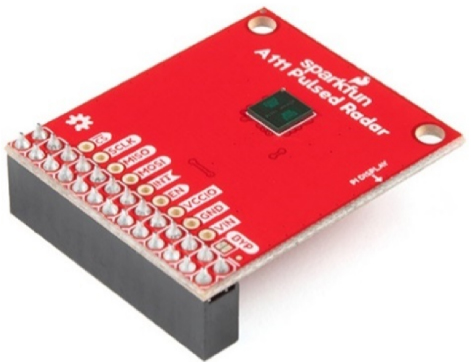
Figure 3: SparkFun A111 Pulsed Radar. Adapted from [8].
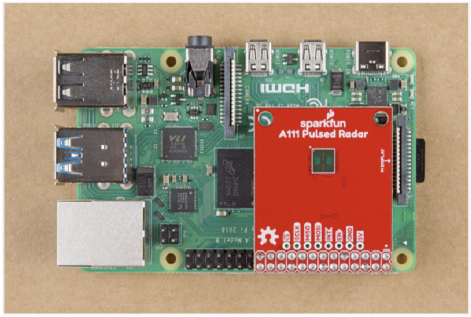
Figure 4: A111 HAT v1.1 and v1.0 stacked on a Raspberry Pi. Adapted from [8].
Although this unit operates at 60 GHz, which is higher than the preferred range, it may still be useful due to its versatility and potential for adaptation in medical applications. The A111 Radar Sensor is a compact pulsed radar sensor, which is capable of detecting motion [8], which makes it suitable for non-invasive applications where detecting minute changes in dielectric properties is crucial, such as in glucose monitoring.
The sensor is capable of detecting objects at distances of up to two meters and can be used for gesture recognition, motion detection, and distance measurement. It includes built-in antennae and supports communication via an SPI interface with speeds up to 50 MHz [8]. The breakout board for the A111 sensor comes with a 1.8 V regulator, voltage-level translation, and breaks out all pins for easy integration with Raspberry Pi or other development platforms [8]. Figure 4 demonstrates a sample configuration with a Raspberry Pi attached to the A111 radar.
It can be adapted for glucose monitoring by analyzing the reflection of electromagnetic waves through biological tissues, such as skin and blood. The radar system’s ability to detect subtle variations in reflected signals makes it a good candidate for measuring changes in the dielectric properties of blood, which vary with glucose concentration [2]. By calibrating the radar system to measure these variations, the A111 could be used to continuously monitor glucose levels in a non-invasive manner. If selecting an ideal radar unit under 40 GHz is critical, modifications to the experimental setup may be necessary, or modern sensors with broader operational ranges could be considered.
V. SIMULATION AND EXPERIMENTAL SETUP
Once the radar units are selected, electromagnetic simulations can be performed using the 3-term Debye model [9] for dielectric properties of finger or shoulder tissues. The modeling provides a detailed representation of the frequency-dependent behavior of biological tissues. The simulation should analyze amplitude and phase variations of the received radar signal as it passes through the simulated human tissues with varying glucose concentrations. Several electromagnetic simulation tools can be used to set up such simulation environment similar to those in [10].
To ensure simulation fidelity, it is recommended to model multilayered tissue geometries (e.g., skin, fat, muscle, blood vessels) with distinct Debye parameters. A parameter sweep across a realistic range of glucose concentrations should be used to observe sensitivity trends. Full-wave modeling tools should utilize the accurate presentation of these tissues’ dielectric properties [9, 10].
Further, radar time-domain modeling—such as simulating pulse response or transient S-parameters—can help evaluate the system’s response to changes in tissue permittivity due to glucose variability. These simulations should be conducted across the radar’s operating frequency band, particularly around 60 GHz, to match practical device capabilities [5, 7].
In terms of usability, VNAs—especially high-frequency models—are bulky and expensive, limiting their feasibility for patient-operated devices [7]. However, they can be valuable tools for calibration and controlled lab testing [1, 2]. Radar systems, on the other hand, are more promising for integration into non-invasive, wearable systems. For example, compact radar sensors like the SparkFun A111 (Fig. 3) demonstrate the feasibility of embedding such sensors into consumer-friendly form factors (e.g., smart rings or finger clips). For practical deployment, attention must be given to energy efficiency, signal processing accuracy, wireless communication (e.g., via Bluetooth or USB CDC [8]), and overall comfort and safety for the user. The system should be tested under dynamic conditions (e.g., blood flow or motion) to mimic real-world variability [4, 5].
VI. CONCLUSION
Both VNAs and radar systems present viable options for non-invasive glucose monitoring. VNAs offer higher precision and are well-studied but are costly and not portable. Radar systems, while more affordable and portable, are still in the experimental phase and may face challenges related to physiological and environmental variability. Future research and experimental validation will determine the most practical solution for continuous glucose monitoring.
REFERENCES
[1] H. Choi, J. Naylon, S. Luzio, J. Beutler, J. Birchall, C. Martin, and A. Porch, “Design and in vitro interference test of microwave noninvasive blood glucose monitoring sensor,” IEEE Transactions on Microwave Theory and Techniques, vol. 63, no. 10, pp. 3016-3025, 2015.
[2] N. Flaherty, “60GHz mmWave radar for driver monitoring and touchless interfaces,” eeNews Europe [Online], Aug. 04 2020. Available: https://www.eenewseurope.com/en/60ghz-mmwave-radar-for-driver-monitoring-and-touchless-interfaces (accessed July 04 2025).
[3] J. Kim, A. Babajanyan, A. Hovsepyan, K. Lee, and B. Friedman, “Microwave dielectric resonator biosensor for aqueous glucose solution,” Review of Scientific Instruments, vol. 79, no. 8, p. 086107, Aug. 2008.
[4] S. Saha, H. Cano-Garcia, I. Sotiriou, O. Lipscombe, I. Gouzouasis, M. Koutsoupidou, G. Palikaras, R. Mackenzie, T. Reeve, P. Kosmas, and E. Kallos, “A glucose sensing system based on transmission measurements at millimetre waves using microstrip patch antennas,” Scientific Reports, vol. 7, no. 1, 2017.
[5] H. Cano-Garcia, P. Kosmas, I. Sotiriou, I. Papadopoulos-Kelidis, C. Parini, I. Gouzouasis, G. Palikaras, and E. Kallos, “Detection of glucose variability in saline solutions from transmission and reflection measurements using V-band waveguides,” Measurement Science and Technology, vol. 26, no. 12, p. 125701, Oct. 2015.
[6] D. Guo, D. Zhang, L. Zhang, and G. Lu, “Non-invasive blood glucose monitoring using breath signal analysis,” Sensors and Actuators B: Chemical, vol. 173, pp. 106-113, 2012.
[7] A. E. Omer, G. Shaker, and S. Safavi-Naeini, “Non-invasive glucose monitoring at mm-Wave frequencies,” International Journal of Mobile Human Computer Interaction, vol. 10, no. 3, pp. 10-29, 2018.
[8] SparkFun, Getting Started with the A111 Pulsed Radar Sensor [Online]. Available: https://learn.sparkfun.com/tutorials/getting-started-with-the-a111-pulsed-radar-sensor/all
[9] R. Lumnitzer, A. Tanner, and A. Z. Elsherbeni, “Debye coefficients for biological tissues from 100 MHz to 100 GHz,” Applied Computational Electromagnetics Society (ACES) Journal, vol. 35, no. 11, pp. 613-621, 2020.
[10] F. Kaburcuk and A. Z. Elsherbeni, “Efficient electromagnetic analysis of a dispersive head model due to smart glasses embedded antennas at Wi-Fi and 5G frequencies,” Applied Computational Electromagnetics Society (ACES) Journal, vol. 36, no. 2, pp. 159-167, 2021.
BIOGRAPHIES
Lisa K. Elmiladi is a graduate student in the Electrical Engineering Department at Colorado School of Mines in Golden, Colorado, USA. With a keen interest in the practical and theoretical aspects of her field, Lisa is intent on furthering her education with a Ph.D. in Electrical Engineering. Her academic endeavors are not solely restricted to coursework; they extend to diverse interests such as VLSI Circuit Design, biomedical device applications, electromagnetics and RF, as well as Embedded Systems. Lisa’s research interests are centered around medical devices and antennas, reflecting her passion for leveraging technology to improve health outcomes.

Atef Z. Elsherbeni received his Ph.D. degree in Electrical Engineering from Manitoba University, Winnipeg, Manitoba, Canada, in January 1987. He started his engineering career as a Software and System Design Engineer from March 1980 to December 1982 at the Automated Data System Center, Cairo, Egypt. From January to August 1987, he was a Post-Doctoral Fellow at Manitoba University. Elsherbeni joined the faculty at the University of Mississippi in August 1987 as an Assistant Professor of Electrical Engineering and progressed to the full professor and the Associate Dean of the College of Engineering for Research and Graduate Programs. He then joined the Electrical Engineering and Computer Science Department at Colorado School of Mines in August 2013. Elsherbeni is an IEEE Life Fellow and ACES Fellow. He is the Editor-in-Chief for Applied Computational Electromagnetics Society (ACES) Journal, and a past Associate Editor to Radio Science . He was the Chair of the Engineering and Physics Division of the Mississippi Academy of Science, the Chair of the Educational Activity Committee for IEEE Region 3 Section, and the past President of ACES Society. He received the 2023 IEEE APS Harington-Mittra Award for his contribution to computational electromagnetics with hardware acceleration and the ACES 2025 Computational Electromagnetics Award.

Peter H. Aaen received the B.A.Sc. degree in Engineering Science and the M.A.Sc. degree in Electrical Engineering from the University of Toronto, Toronto, ON, Canada, in 1995 and 1997, respectively, and the Ph.D. degree in Electrical Engineering from Arizona State University, Tempe, AZ, USA, in 2005. He was the Manager of the RF Division, RF Modeling and Measurement Technology Team, Freescale Semiconductor Inc., Tempe, AZ, USA, a company which he joined in 1997, then the Semiconductor Product Sector, Motorola Inc. In 2013, he joined the Faculty of Engineering and Physical Sciences, University of Surrey, Guildford, UK, where he was a Reader of microwave semiconductor device modeling. He was also the Director of the Nonlinear Microwave Measurement and Modeling Laboratory, a joint University of Surrey/National Physical Laboratory, and the Director of National Physical Laboratory – South of England, Guildford, UK. In 2019, he joined the Colorado School of Mines as a Professor and Head of the Electrical Engineering Department. He has co-authored Modeling and Characterization of RF and Microwave Power FETs (Cambridge University Press, 2007). Aaen is a member of the Microwave Theory and Techniques and Electron Device Societies, served as an Executive Committee Member and Vice-President of the Automatic RF Techniques Group, and was the Chair of the IEEE Technical Committee (MTT-1) on Computer-Aided Design.
ACES JOURNAL, Vol. 40, No. 6, 520–524
doi: 10.13052/2024.ACES.J.400604
© 2025 River Publishers