Women’s History Month Special Article: Interview with Sima Noghanian
Cynthia Furse
Department of Electrical and Computer Engineering
University of Utah, Salt Lake City, UT 84112, USA
cynthia.furse@utah.edu
Submitted On: March 24, 2025; Accepted On: March 24, 2025
ABSTRACT
In this Special Article, Cynthia Furse interviews Sima Noghanian, Distinguished Hardware Engineer with CommScope Ruckus Networks in Sunnyvale, California, USA. Noghanian has worked in both industry and academia and is well known for her work in computational electromagnetics applied to antenna design.
Index Terms: Women in applied computational electromagnetics, women in STEM.
I. INTRODUCTION
Doctor Sima Noghanian is a Distinguished Hardware Engineer with CommScope Ruckus Networks in Sunnyvale, California, USA (Fig. 1). She previously worked in academia (Sharif University, University of Manitoba and University of North Dakota). She is well known for her work in computational electromagnetics applied to antenna design (Fig. 2). I had the pleasure of interviewing Dr. Noghanian to learn more about her experiences in the field.
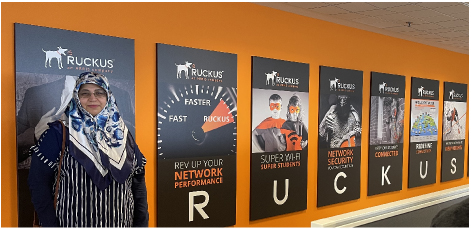
Figure 1: Sima Noghanian.
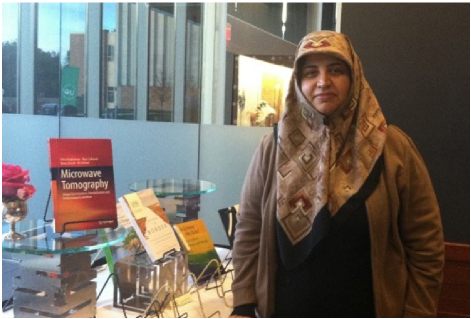
Figure 2: Sima Noghanian at authors’ appreciation event, University of North Dakota [1].
II. QUESTIONS AND ANSWERS (Q & A)
Q1: How did you get into engineering, and what is most exciting about it to you?
AI: At that time, one of the biggest challenges I faced was the war. My mother was a single parent. This created many difficulties, as there were restrictions on where I could go and what I could do. In the beginning of the war, we had to relocate to another city in the middle of the school year, causing me to lose a year of education. To make up for it, I completed my third year of high school at home over the summer and took the necessary exams at the end of the summer.
Initially, I planned to pursue a math major at the university. I took the entrance exam and achieved a high score. However, my older brother encouraged me to consider engineering, believing I might not enjoy pure math as much and would likely find engineering more engaging. Following his advice, I applied to several engineering programs and some applied math programs. Once I started engineering, I realized he was right—I saw how math was applied in the real-world scenarios, how it fueled creativity in problem-solving and how it could be used to innovate. This kept me in electrical engineering, and I’m glad I stayed.
At Sharif University of Technology in Tehran, where I earned my undergraduate degree in Electrical Engineering, I had excellent mentors and role models. My professors encouraged and motivated me. During my studies, I had to choose a concentration. Two professors, Dr. Farzaneh and Dr. Tebyani, were instrumental in guiding me. Dr. Farzaneh taught antennas and microwave engineering, which I found fascinating. His classes sparked my interest in microwaves and antennas. Studying at Sharif University was rigorous, but we had many outstanding professors and practical courses. One particularly valuable course was on RF circuit design, taught by Professor Behnia.
The war had a profound impact on my education. I was determined not to fall behind and get affected by the war. During my first year at the university, there was a risk of staying in Tehran due to ongoing attacks. The classes were canceled, and I didn’t want to lose a semester. I considered taking a semester as a guest in Ahvaz to continue my studies, but my mother was reluctant to let me go. To convince her, I went on a three-day hunger strike until she finally agreed. I spent a semester as a guest student at Chamran University, where my aunt worked. It was a difficult time, filled with uncertainty about my family’s safety in Tehran. I returned to Sharif University after that semester but, throughout my undergraduate years, we lived with the constant possibility of having to relocate or cancel classes due to the war. It was stressful, but we adapted.
Living in a war zone made me resilient and flexible. I learned to focus on what was within my control—such as making up for lost time with extra effort. It was challenging to juggle responsibilities and sacrifice time with family, but this experience made me stronger when facing future challenges. The unpredictability of war required full mental and emotional strength. I can only imagine the immense stress my mother and other parents endured. I hope that one day, war will no longer exist.
Q2: Can you tell me about your graduate school experience?
A2: As an undergraduate student, I always aspired to go to graduate school. I wanted to learn more and expand my knowledge. At the end of my undergraduate degree, I got married. My husband, also an electrical engineering major, was pursuing a master’s in biomedical engineering. He received a scholarship for his PhD studies, which he took at the University of Manitoba in Canada. I also explored master’s programs in Canada and reached out to professors conducting research in antennas and RF engineering.
Professor Lot Shafai (Fig. 3) at the University of Manitoba offered me a position in his research group, but it was initially unpaid. I had some savings to cover my tuition for the first year and, afterward, he provided me with a graduate research stipend. Dr. Shafai was an incredible mentor, researcher and educator. Studying under his guidance was the best thing that could have happened to me when I moved to Canada. He not only supervised my master’s and PhD research but also taught me invaluable life lessons. He showed me how to be an educator, researcher and problem solver. His guidance helped me develop teamwork skills and a structured approach to tackling complex engineering problems. Even years after graduation, I often sought his advice when facing difficult challenges.
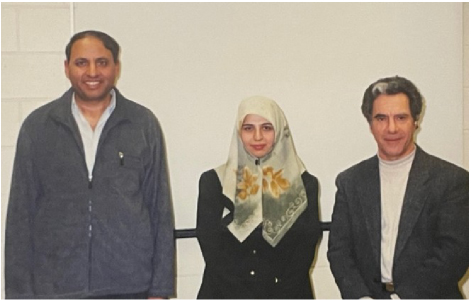
Figure 3: Professor Abdel Sebak (advisory committee member), Sima Noghanian and Professor Lot Shafai (her advisor) during her thesis defense at the University of Manitoba.
Graduate school taught me more than just technical knowledge—it shaped my problem-solving mindset. I learned how to break down complex problems into manageable components, work effectively in teams and continuously seek opportunities to learn. To this day, I see myself as a student, always eager to explore new ideas. Sometimes, I wish I could return to school. I always encourage my students to cherish their time as learners, because it is a rare and valuable phase of life.
Q3: What are the most important things you have done in your career?
A3: One of the most meaningful aspects of my career is teaching (Fig. 4) and mentoring students (Fig. 5). They are the most valuable outcome of my work. I am grateful that I have had the opportunity to support and guide students, playing a small role in their growth. Not everyone gets this chance, and I appreciate the encouragement I received from Dr. Shafai to pursue an academic career. Although I left academia a few years ago, I continue to mentor, teach and share my knowledge. Supporting the next generation is crucial—not just for individuals but for society as a whole. Seeing my students grow into professors, engineers or business leaders has been deeply rewarding.
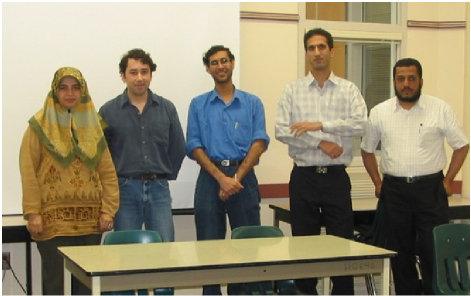
Figure 4. Sima Noghanian and graduate class students (Luis Gurrieri, Abdel-Halim Mohammad, Abas Sbouni and Mohammad Sehaili).
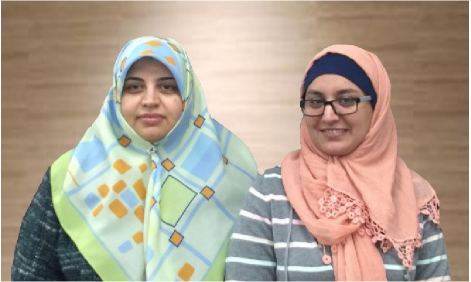
Figure 5. Sima Noghanian with Dr. Ala Alemaryeen, Sima’s graduate student at the University of North Dakota.
Another important goal for me is lifelong learning. After leaving my academic job, I transitioned into industry to see my work directly impact peoples’ lives. I wanted my contributions to be used in real-world applications. Currently, at Ruckus, I work on Wi-Fi access points as an antenna designer. These devices are essential for connectivity, education and information access. Being part of an incredible and talented team that develops innovative products is fulfilling.
In my research, computational electromagnetics has been central to many projects, including implantable and wearable antennas, wireless power transfer and microwave imaging for breast cancer detection (Fig. 6). This field, rooted in mathematical principles, has been a constant in my work. With advancements in artificial intelligence, machine learning, new materials and 3D printing, the possibilities for antenna design and wireless communication continue to expand. I am excited about the future of engineering and the innovations that will make technology more efficient, cost-effective and accessible.
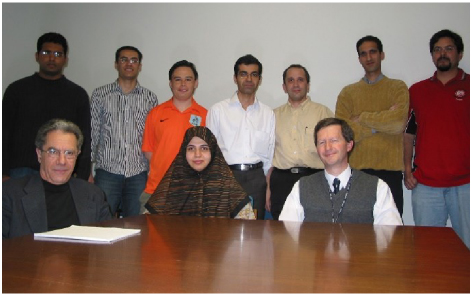
Figure 6: Sima Noghanian with the Microwave Imaging Research Group at the University of Manitoba.
Q4: What is some important career advice?
A4: Persistence is key. Any meaningful pursuit comes with challenges and, at times, giving up may seem easier. However, if you stay committed, you will find a way forward. Hardships shape us, making us stronger and more capable. I have faced moments of doubt, wondering why certain obstacles were placed in my path. However, by staying positive, I discovered new opportunities where I least expected them. Failures are often stepping stones to success, teaching us valuable lessons along the way.
Q5: What about work-life balance?
A5: Achieving perfect balance is impossible—there is always something left undone. I constantly ask myself: Am I a good mother? A good employee? A good teacher or mentor? But I remind myself that I have to do my best. No matter how much I accomplish, there will always be more to do and ways I could have done better. However, it’s important to look back and recognize what I have achieved, even if some things were missed along the way. On days when I feel like I’ve fallen short, I look at my children and students and see the impact I’ve made. That motivates me to keep going and give my best effort.
If there were ever a day when I had completed everything on my list, what would be the point of living? Life is about continuous growth—there will always be new challenges, unfinished tasks and opportunities for improvement.
Q5: Do you have role models?
A5: There are many individuals in the ACES and IEEE Antennas and Propagation (AP) Society whom I may not have interacted with directly, but who have served as inspiring role models. There was a time when the number of women in AP was very small. As a student, I saw only a few women in the field. However, witnessing their accomplishments—despite balancing family and other responsibilities—was incredibly motivating.
I remember one particular moment at our annual symposium when a senior female researcher was presenting awards for the student paper competition. Curious, I asked her about her research and she told me she was working on implanted antennas. I found the topic fascinating, and it ultimately became an area I pursued myself. Seeing women actively contributing to our society and excelling in leadership positions was encouraging. Inspired by these experiences, I strive to give back by mentoring and supporting the next generation of engineers.
I especially would like to mention my undergraduate and graduate advisors, Professors F. Farzaneh, M. Tebyani and L. Shafai, for their enormous support and their role in my education and becoming a professional in my field.
Finally, I would like to acknowledge and thank my family (Fig. 7), my husband Dr. Reza Fazel-Rezai and my sons Vahid and Hamed, for their unwavering support, inspiration and understanding.
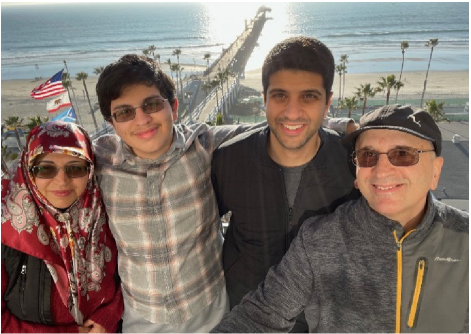
Figure 7: Sima Noghanian with Hamed, Vahid and Reza Fazel-Rezai.
III. CONCLUSION
We can be pioneers in many ways. It really is possible. This is why it’s good to have the story of women in our society, like this interview and others, to help inspire the next generation of women in electromagnetics.
REFERENCES
[1] S. Noghanian, A. Sabouni, T. Desell, and A. Ashtari, Microwave Tomography: Global Optimization, Parallelization and Performance Evaluation. New York: Springer, 2014.
BIOGRAPHIES
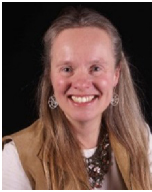
Cynthia Furse is a Distinguished Professor of Electrical and Computer Engineering at the University of Utah, USA. She applies electromagnetics to sensing and communication in complex lossy media such as the human body. She is a Fellow of the Applied Computational Electromagnetics Society, the IEEE and the National Academy of Inventors, and has received numerous teaching and research awards including the 2020 IEEE Chen To Tai Distinguished Educator Award.
ACES JOURNAL, Vol. 40, No. 3, 172–175
doi: 10.13052/2025.ACES.J.400301
© 2025 River Publishers