Synthesis of Thinned Linear and Planar Antenna Arrays, Using a Taguchi-Enhanced Binary Gold Rush Optimizer
Weibin Kong1, 2, Yiming Zong1, Lei Wang1, Wenwen Yang3, Botong Liu1, Binghe Sun4, and Feng Zhou1
1College of Information Engineering, Yancheng Institute of Technology, Jiangsu Yancheng 224051, China, kongweibin@ycit.cn, 949650915@qq.com, wanglei_ntu@outlook.com, liubot@ycit.edu.cn, zfycit@163.com
2Jiangsu Provincial Engineering Technology Center, Multimodal Perception and Intelligent Control of Offshore Wind Power Systems, Yancheng 224051, China
3School of Science and Technology, Nantong University, Nantong 226019, China, wwyang2008@hotmail.com
4Jiangsu Bomin Electronics Co. Ltd, Yancheng 224100, China, bh_sun@bominelec.com
Submitted On: August 03, 2025; Accepted On: January 08, 2026
Abstract
In this paper, a Taguchi-enhanced binary gold rush optimizer (TEBGRO) is proposed for designing thinned antenna arrays with a low peak sidelobe level (PSLL). The method integrates the Taguchi orthogonal experimental design into the population initialization phase, generating high-quality initial populations to improve convergence speed and stability. By combining a differential mutation interference factor and a time-varying transfer function, the algorithm further balances global exploration and local exploitation capabilities. Experimental results show that TEBGRO outperforms other binary optimization algorithms for both 100-element linear arrays and 2010 planar arrays.
Keywords: Antenna radiation pattern, gold rush optimizer (GRO), thinned array, Taguchi method..
1 INTRODUCTION
Offering advantages such as high signal gain, strong anti-interference capability, and flexible design, antenna arrays are widely used in wireless communication, phased array radar, aerospace, and other fields [1, 2]. Thinned arrays, as compared to traditional uniform arrays, achieve smaller size and weight by selectively removing (or deactivating) certain elements, thereby reducing system costs, power consumption, and complexity of the feeding network. However, the thinning process often results in a decrease in antenna gain and an increase in peak sidelobe levels (PSLL). Thus, the optimization challenge lies in reducing the number of array elements while simultaneously decreasing PSLL.
The thinning of large-scale antenna arrays is a high-dimensional, discrete, non-linear, and non-convex problem. Over the past few decades, numerous methodologies have been proposed to reduce the number of array elements while preserving desired radiation characteristics. To this end, researchers have developed a diverse array of optimization techniques, broadly categorized into two primary classes: deterministic methods and meta-heuristic methods.While deterministic methods like the Iterative Fourier Transform (IFT) are efficient, they are prone to local optima. Meta-heuristic algorithms offer global search capabilities but often face challenges such as reliance on empirical parameter tuning and premature convergence.
To address these limitations,this paper proposes a Taguchi-enhanced binary gold rush optimizer (TEBGRO). Through three enhancement strategies, this approach improves optimization performance for thinning antenna arrays. First, the systematic reasoning capability of the Taguchi method is integrated during population initialization to generate highly representative and uniformly distributed initial solution sets. Second, the time-varying transfer function enables both the mapping of continuous values to discrete states in binary optimization and the balancing of global search with local optimization. Furthermore, a differential mutation interference factor is incorporated to strengthen the capability of the algorithm to escape local optima. The effectiveness of TEBGRO is validated through two case studies involving 100-element linear arrays and planar arrays, with comparative analysis against optimization results from similar designs reported in other literature.
The main contribution of this work lies in the novel integration of the Taguchi method with the gold rush optimizer (GRO), creating the TEBGRO framework specifically for antenna array thinning. This integration features three synergistic components: Taguchi-enhanced initialization for high-quality binary sequences, a time-varying transfer function for effective continuous-to-binary mapping, and a differential mutation factor for maintaining diversity. Together, they effectively address premature convergence in this high-dimensional binary optimization problem, achieving balance between exploration and exploitation.
2 RELATED WORK
The IFT method stands as a classic deterministic technique. Leveraging the Fourier transform relationship between the array factor and the excitation distribution, this method first optimizes the array factor within the radiation pattern domain and subsequently deactivates specific elements in the aperture domain by nullifying their excitations. These two steps are executed cyclically until a thinned array configuration satisfying the requirements is obtained. While the IFT method is computationally efficient, its performance is heavily dependent on the initial solution. Furthermore, as it is essentially a gradient descent-based approach, it is prone to stagnation in local optima [3, 4].
In parallel, Genetic Algorithms (GA) [5, 6] and Ant Colony Optimization (ACO) [7] were among the earlier meta-heuristic algorithms applied to array thinning. Subsequently, Differential Evolution (DE) [8] and Biogeography-Based Optimization (BBO) [9] demonstrated superior convergence speeds. More recently, advanced algorithms such as the Fruit Fly Optimization Algorithm (FOA) [10] and Cuckoo Search Algorithm (CSA) [11] have been successfully utilized for the optimization of linear and planar arrays. These studies indicate that meta-heuristic algorithms can effectively suppress the PSLL and reduce the element count.
To synergize the strengths of distinct approaches, hybrid methods have emerged. For instance, frameworks combining the rapid convergence of IFT with the global search capability of meta-heuristics have been proposed [12]. In such frameworks, the meta-heuristic algorithm acts as a global explorer responsible for broadly scanning potential regions, while the IFT serves as a local optimizer for rapid fine-tuning; generally, the performance of these hybrid approaches surpasses that of stand-alone algorithms.
Despite the progress achieved by these methods, critical challenges persist, such as the reliance on empirical experience for parameter tuning and limited solution diversity caused by premature convergence.
Meta-heuristic algorithms, by simulating natural physical laws and biological social behaviors, perform global stochastic searches independent of gradient information. Consequently, they exhibit immense potential in solving complex non-linear and non-convex optimization problems. They have been successfully applied across numerous domains, including engineering optimization, scheduling problems, feature selection, and hyperparameter tuning for neural networks [13].
In this context, the GRO [14] has been introduced as a novel meta-heuristic algorithm mimicking the behavior of miners during the 19th-century gold rush. GRO balances exploration and exploitation by simulating the migration of miners towards affluent areas (“cooperative” behavior) and the stochastic exploration for new veins (“selfish” behavior). Characterized by a simple structure and few parameters, GRO has demonstrated outstanding performance on multiple benchmark optimization problems. Although GRO has found applications in other engineering optimization domains [15], it remains relatively new compared to mature algorithms like GA and DE, and its potential in the specific field of antenna thinning remains largely untapped. The intrinsic “cooperative” and “selfish” mechanisms of GRO provide a natural foundation for balancing exploration and exploitation, offering a solid starting point for mitigating premature convergence. Furthermore, the relatively concise structure of GRO facilitates its integration with other optimization strategies, enabling the construction of more robust hybrid models.
However, as the “No Free Lunch” theorem suggests [16], no single algorithm performs optimally on all problems. The versatility of meta-heuristic algorithms is invariably accompanied by inherent limitations. The standard GRO, when addressing high-dimensional binary thinning problems, may still be constrained by the loss of population diversity. Consequently, strategic enhancements are required to adapt GRO effectively for the antenna array thinning optimization.
3 THINNED ARRAY
3.1 Linear array
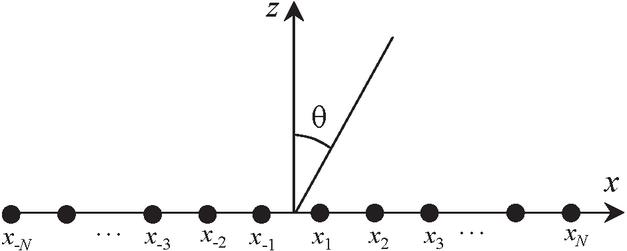
Figure 1 Geometry of a 2-element symmetric linear array.
The structure of the linear antenna array is illustrated in Fig. 1. The array consists of 2 isotropic elements symmetrically arranged along the -axis. The array factor (AF) of the linear antenna array in the - plane at an angle can be expressed as [17]:
| (1) | ||
where , and represent the excitation amplitude, phase, and position of element , respectively. The wave number is defined as , where is the wavelength.
In this study, a fixed inter-element spacing of 0.5 is utilized to mitigate mutual coupling and avoid the formation of grating lobes. if the -th element is “on,” and if it is “off”. Assuming symmetric excitation amplitudes (), symmetric element positions (), and zero excitation phase (). Under these conditions, the two summations in equation (1) are complex conjugates. For a fixed inter-element spacing of with element positions at where , and , Therefore, equation (1) can be expressed as [7, 9]:
| (2) |
3.2 Planar array
Figure 2 shows the structure of the planar array, which consists of elements. Each element is isotropic in the - plane and symmetric about the and axes. Under the same conditions as a linear array, the AF is given by [7, 9]:
| (3) |
where is the elevation angle relative to the -axis and is the azimuth angle relative to the -axis. represents the excitation amplitude, which takes a value of 0 or 1. The array elements in the other three quadrants can be obtained symmetrically based on the position of the array elements in the first quadrant.
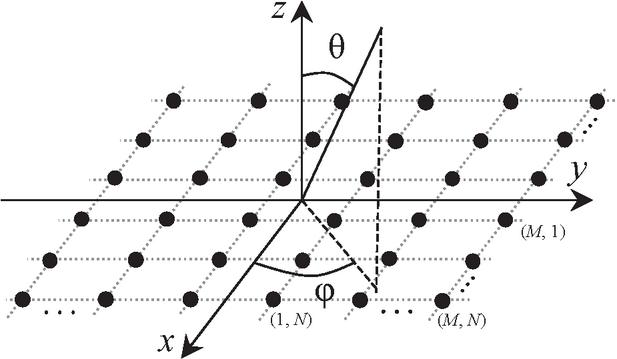
Figure 2 Geometry of a -element symmetric planar array.
3.3 Fitness function
As an important performance indicator of array antennas, the expression of PSLL is:
| (4) |
where denotes the side lobe region excluding the main beam and is the peak of main beam.
To suppress the PSLL, the fitness function is defined as:
| (5) |
The optimization goal is to minimize this Fitness value.
For planar antenna arrays, the fitness function is determined by the higher PSLL value between the and planes, which can be expressed as:
| (6) |
4 THE TAGUCHI-ENHANCED BINARY GOLD RUSH OPTIMIZER
4.1 Taguchi method
Based on statistical experimental design, the Taguchi method systematically optimizes product robustness through parameter design. It employs two core components: orthogonal arrays (OA) for efficient multi-factor analysis and the signal-to-noise ratio (SNR) to measure robustness. Using OA, the method reduces experiments while preserving statistical validity. Meanwhile, the SNR evaluates parameter stability against noise factors. Therefore, this method has been applied to various optimization problems [18, 19, 20]. To facilitate understanding, three key concepts used in this paper are defined as follows:
Levels: These represent the specific values assigned to the design variables. In the context of array synthesis, if a variable represents the excitation amplitude or element position, the “levels” are the candidate values selected for evaluation in each iteration.
OA: It is utilized here as a local search mechanism. The OA is dynamically constructed based on two candidate solutions randomly selected from the current initial population. Each column of the OA represents a dimension (i.e., a binary bit) where the parent vectors differ in value, while each row signifies a new candidate solution formed by the combination of the bit values from the parent vectors.
SNR: It is no longer used to measure robustness; instead, its mathematical form is adopted as a deterministic selection criterion to identify the optimal binary value for each feature dimension. For every position where the two parent solutions differ, the SNR values corresponding to both levels are calculated separately.
Traditional GRO employing random initialization often exhibit poor population diversity and inadequate solution space exploration. This study enhances population initialization by incorporating the Taguchi method.
First, randomly select two individuals, and , from the initial population. The chance of selecting two individuals with a Hamming distance of 1 is low, and even if this occurs, the negative impact remains relatively limited. The built-in diversity preservation mechanisms in TEBGRO ensure that the search process promptly recovers and continues progressing toward the global optimum. If they differ at bit positions, a corresponding two-level OA is generated. For each factor in this OA, the standard levels (1 and 2) are substituted with the respective bit values from and , yielding a modified OA tailored to these individuals.
Subsequently, the SNR is calculated for each run in the modified OA. The use of SNR adapts the classical concept for computational optimization, and it serves as a ranking metric (not a robustness measure) to select the optimal element combination from OA tests based on PSLL performance. Given that the objective function consistently produces negative values, the “smaller-the-better” quality characteristic is adopted for SNR computation, defined as:
| (7) |
where is the number of rows (experimental runs) in the OA, and where is the fitness value (PSLL) obtained from the -th experimental run.
The construction of the initial population proceeds as follows: in each iteration, two parent solutions are randomly selected. The Taguchi method, utilizing an orthogonal array and the SNR criterion, is then applied to this pair to systematically generate a single, high-quality offspring. This offspring is derived from the optimal combination of the parents’ differing element states and is directly accepted into the new population. This iterative process of “select-pair-generate-accept” continues until the newly formed population reaches the predefined target size, ensuring a high-performing starting point for the subsequent optimization.
4.2 Differential mutation interference factor
The GRO often exhibits limitations when dealing with complex, high-dimensional problems. These include insufficient population diversity during later iterations and limited convergence accuracy. To mitigate these issues, a differential mutation interference factor is incorporated into the cooperative search phase of GRO, formulated as:
| (8) |
where , , and represent the new position of the feasible solution, current solution and iteration count, respectively. and are two randomly selected gold mining prospectors, is a random number between [0, 1], and is the differential mutation interference factor, represented as:
| (9) |
where is the current optimal solution, and is the adaptive mutation factor, represented as:
| (10) | |
| (11) |
where is the mutation parameter, set to 0.5 in this case. This value was determined through testing and was found to provide an effective trade-off, offering sufficient perturbation without compromising convergence stability. The adaptive nature of further reduces dependence on its initial value. The adaptive mutation factor starts at and decreases gradually throughout the optimization process, approaching as the iteration count reaches the maximum, enabling TEBGRO to more easily escape local optima and avoid premature convergence [21].
4.3 Time-varying transfer function
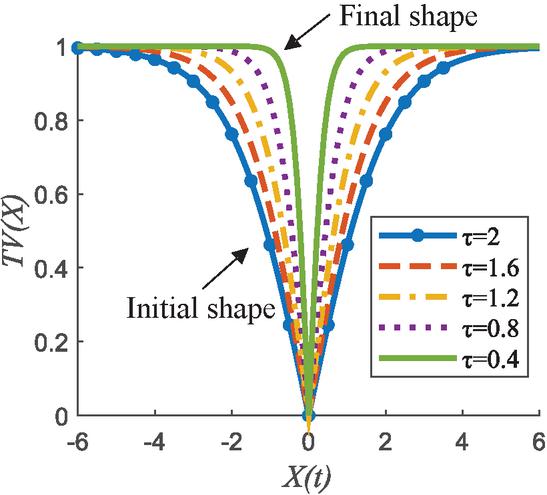
Figure 3 Demonstration of time-varying transfer function during iteration when and .
GRO and all its operations are based on evaluating solutions using real-valued variables in a continuous search space, which cannot be directly applied to solve thinned optimization problems for array antennas. Therefore, it is necessary to transform these operations to make them applicable to the binary search space.
Transfer functions effectively convert continuous algorithms into binary ones. The transfer function is independent of the algorithm, does not affect the search behavior of the algorithm, and does not change the computational complexity of the algorithm. A transfer function can play a crucial role in both the exploration and exploitation phases of an optimizer, not just converting a continuous search space into a binary search space [22, 23].
Optimization algorithms should initially prioritize exploration to avoid local optima, transitioning to exploitation in later stages to enhance solution quality. If the transfer function remains unchanged throughout the optimization process, it cannot provide enough diversity, leading to an imbalance between exploration and exploitation. These limitations can be addressed by introducing a time-varying transfer function [24, 25], expressed as follows:
| (12) | |
| (15) |
where is the time-varying transfer function, is the time-varying control parameter, which starts from an initial value and gradually decreases with iterations. This is achieved by the following:
| (16) |
where and are the bounds on the control parameter . The shape of the transfer function changes over time to smoothly transition from the exploration phase to the exploitation phase, depending on different values of , as shown in Fig. 3. Here, is set to 2, and is set to 0.4. A larger than 2 would overly flatten the transfer function, inhibiting exploration by preventing from approaching 1. A smaller than 0.2 would render the transfer function too steep, pushing to 1 for most inputs and preventing stable convergence.
To more intuitively illustrate the execution steps of TEBGRO, the flowchart of the improved algorithm is depicted in Fig. 4.
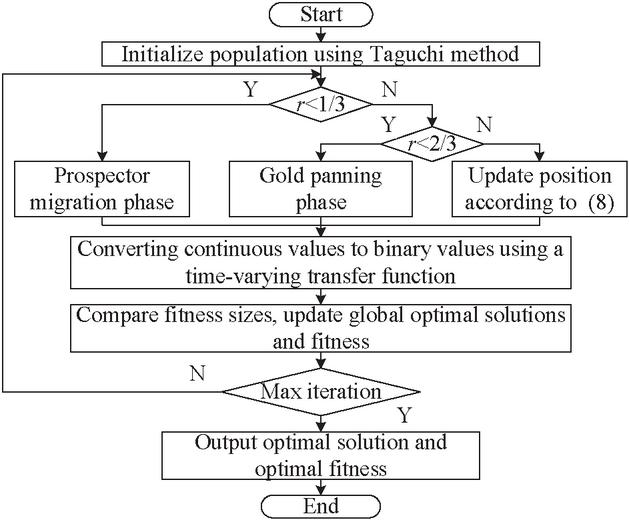
Figure 4 Flow chart of TEBGRO for array thinning, optimization.
5 NUMERICAL RESULTS
In this section, several numerical results are presented to demonstrate the effectiveness of TEBGRO. To ensure a fair comparison, the performance of TEBGRO is evaluated against the best-reported results from the cited literature for the identical linear and planar array specifications.
5.1 Linear array
The first scenario discusses a 100-element thinned linear array that is symmetrical along the -axis, with each element spaced at 0.5 and centered at the origin.
The distribution of excitation amplitude is symmetrical with respect to the center of the linear array, so only half of the amplitude needs to be optimized. The initial population size of TEBGRO is set to 50, and the maximum iteration limit is 300. The optimal value is obtained by running independently for 50 times.
Figure 5 illustrates the distribution of elements in the optimal linear array and provides a comparison of the radiation patterns between the full array and TEBGRO. The PSLL values for TEBGRO and the full array are 21.29 dB and 13.23 dB, respectively. The thinned array demonstrates a significant reduction in PSLL while concurrently decreasing the number of elements compared to the full array.
Table 1 presents the optimization results of the linear array obtained using TEBGRO. For comparison, the thinning results of the linear arrays obtained by BBO [9], ACO [7], and MICZT [4] are also included in Table 1. The PSLL values for BBO, ACO, and MICZT are 20.84 dB, 20.52 dB, and 21.13 dB, respectively. Among these results, TEBGRO exhibits the lowest PSLL, indicating that it achieves a higher convergence accuracy in the optimization of a linear array with 100 elements.
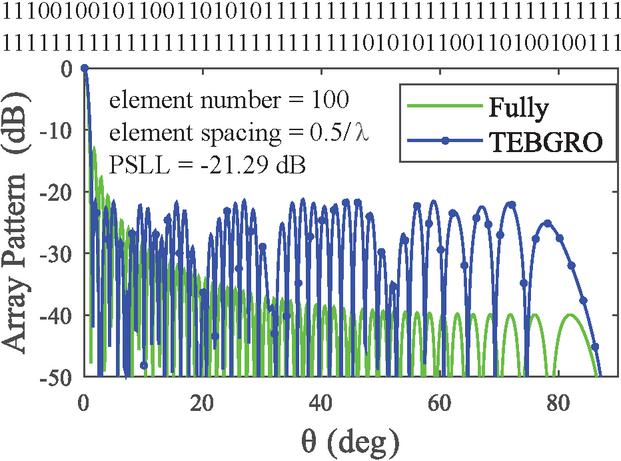
Figure 5 Element distribution of the optimal linear array and comparison of radiation patterns: Full vs. TEBGRO.
Table 1 Comparison results of linear array
| Algorithm | TEBGRO | BBO [9] | ACO [7] | MICZT [4] |
| PSLL (dB) | 21.29 | 20.84 | 20.52 | 21.13 |
| % of thinning | 20 | 22 | 20 | 20 |
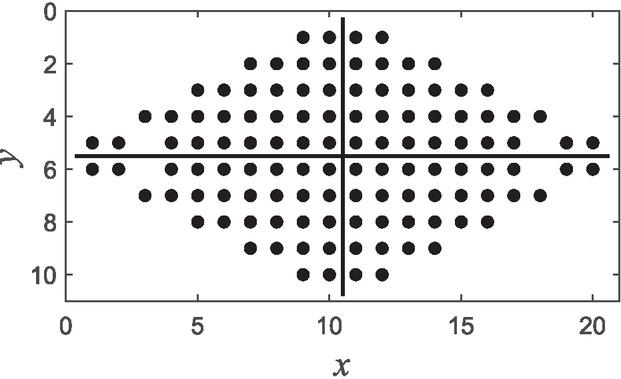
Figure 6 Element distribution of the optimal planar array.
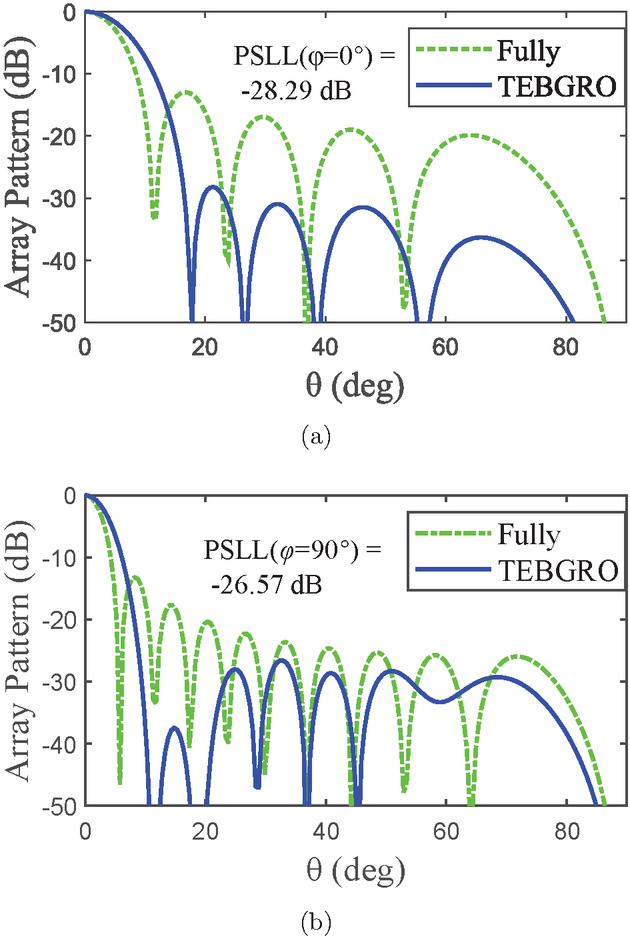
Figure 7 Planar array radiation pattern comparison (Full vs. TEBGRO) in the (a) and (b) planes.
5.2 Planar array
In the second example, a planar array with elements is used for thinning, and the PSLL is suppressed in the and planes. The excitation amplitude distribution of the planar array exhibits symmetry with respect to the coordinate axes, allowing for optimization of only a quarter of the array. All other experimental parameters remain consistent with those in the initial example.
Figure 6 illustrates the element distribution of the optimized planar array. For the azimuth angles and , the corresponding radiation patterns of the full array and the TEBGRO optimized array are compared in Fig. 7. The optimization successfully reduced the number of array elements from 200 to 116, while simultaneously lowering the PSLL by 15.33 dB (for the plane) and 13.38 dB (for the plane).
The same planar array was designed using M-cGA, BDE, and ACO in [6, 8], and [7], respectively. In order to further verify the performance of TEBGRO, the optimal results obtained from TEBGRO, M-cGA, BDE, and ACO are listed in Table 2. The corresponding entry in Table 2 remains blank due to the undisclosed array element arrangement in [6].
In the plane, TEBGRO achieved a PSLL of 28.29 dB, outperforming the values of 26.6 dB, 26.09 dB, and 25.76 dB reported in [6, 8], and [7], respectively. Similarly, in the plane, the PSLL obtained with TEBGRO was 26.57 dB, which is superior to the corresponding values of 23.8 dB, 25.09 dB, and 25.67 dB from the same references. In both evaluated planes, TEBGRO consistently yielded the lowest PSLL. The planar array results again demonstrate that TEBGRO is an effective thinned array optimization technique.
Table 2 Comparison results of planar array
| Algorithm | TEBGRO | M-cGA | BDE | ACO |
| [6] | [8] | [7] | ||
| 28.29 | 26.6 | 26.09 | 25.76 | |
| 26.57 | 23.8 | 25.09 | 25.67 | |
| % of thinning | 42 | 46 | 32 |
6 CONCLUSION
This paper presents the design of thinned antenna arrays using TEBGRO, aiming to reduce the number of array elements while minimizing PSLL. To enhance optimization convergence speed and precision, three improvement strategies are proposed: the Taguchi method, time-varying transfer function, and differential mutation interference factor. For a 100-element thinned linear array, TEBGRO achieves a PSLL of 21.29 dB. In the case of a thinned planar array, the algorithm obtains a PSLL of 28.29 dB at and 26.57 dB at . The results outperform other binary algorithms, demonstrating TEBGRO’s superior optimization capability for array thinning.
ACKNOWLEDGMENT
This work was supported in part by the National Key Research and Development Program of China under Grant 2024YFB2908601, in part by the Natural Science Research Project of Jiangsu Higher Education Institutions under Grant 24KJB510051 and 24KJB140020, in part by the Funding for School-Level Research Projects of Yancheng Institute of Technology under Grant xjr2024036, and in part by the Funding under the “Qinglan Project” for Jiangsu Universities.
References
[1] T. Zhang, R. Lian, D. Wu, Y. Li, and J. Zhang, “A broadband high-gain, patch antenna array for 5 G millimeter-wave applications,” IEEE, Antennas and Wireless Propagation Letters, vol. 24, no. 4, pp. 803–807, Apr. 2025.
[2] Z. Yu, C. Chen, W. D. Chen, X. Zhang, J. G. Lu, X. L. Zhang, B. J. Che, and, Q. Wang, “A low-profile LTCC phased array antenna with wideband and, high-gain for X-band satellite communications,” IEEE Transactions on, Antennas and Propagation, vol. 73, no. 1, pp. 659–664, Jan. 2025.
[3] W. P. M. N. Keizer, “Large planar array thinning using iterative FFT, techniques,” IEEE Transactions on Antennas and Propagation, vol. 57, no. 10, pp. 3359–3362, Oct. 2009.
[4] Z. Zhou, C. Zeng, and B. Chen, “Fast low-sidelobe pattern synthesis for, linear array thinning utilizing a modified iterative Chirp-Z transform, technique,” IEEE Sensors Journal, vol. 21, no. 20, pp. 23480–23491, Oct. 2021.
[5] R. L. Haupt, “Thinned arrays using genetic algorithms,” IEEE, Transactions on Antennas and Propagation, vol. 42, no. 7, pp. 993–999, July, 1994.
[6] B. V. Ha, M. Mussetta, P. Pirinoli, and R. E. Zich, “Modified compact, genetic algorithm for thinned array synthesis,” IEEE Antennas and, Wireless Propagation Letters, vol. 15, pp. 1105–1108, Oct. 2016.
[7] O. Quevedo-Teruel and E. Rajo-Iglesias, “Ant colony optimization in, thinned array synthesis with minimum sidelobe level,” IEEE Antennas and, Wireless Propagation Letters, vol. 5, pp. 349–352, Aug. 2006.
[8] L. Zhang, Y. C. Jiao, Z. B. Weng, and F. S. Zhang, “Design of planar, thinned arrays using a boolean differential evolution algorithm,” IET, Microwaves, Antennas & Propagation, vol. 4, no. 12, pp. 2172–2178, Dec. 2010.
[9] U. Singh and T. S. Kamal, “Optimal synthesis of thinned arrays using, biogeography based optimization,” Progress in Electromagnetics Research, M, vol. 24, pp. 141–155, Apr. 2012.
[10] A. Darvish and A. Ebrahimzadeh, “Improved fruit-fly optimization, algorithm and its applications in antenna arrays synthesis,” IEEE, Transactions on Antennas and Propagation, vol. 66, no. 4, pp. 1756–1766, Apr. 2018.
[11] G. Sun, Y. Liu, Z. Chen, S. Liang, A. Wang, and Y. Zhang, “Radiation, beam pattern synthesis of concentric circular antenna arrays using hybrid, approach based on cuckoo search,” IEEE Transactions on Antennas and, Propagation, vol. 66, no. 9, pp. 4563–4576, Sep. 2018.
[12] C. Cui, W. T. Li, X. T. Ye, and X. W. Shi, “Hybrid genetic algorithm, and modified iterative fourier transform algorithm for large thinned array, synthesis,” IEEE Antennas and Wireless Propagation Letters, vol. 16, pp. 2150–2154, May 2017.
[13] K. Rajwar, K. Deep, and S. Das, “An exhaustive review of the, metaheuristic algorithms for search and optimization: Taxonomy, applications, and open challenges,” Artificial Intelligence Review, vol. 56, no. 11, pp. 13187–13257, Apr. 2023.
[14] Z. Kamran, “Gold rush optimizer: A new population-based metaheuristic, algorithm,” Operations Research and Decisions, vol. 33, no. 1, pp. 112–150, Apr. 2023.
[15] L. Lyu, G. Kong, F. Yang, L. Li, and J. He, “Augmented gold rush, optimizer is used for engineering optimization design problems and UAV path, planning,” IEEE Access, vol. 12, pp. 134304–134339, Aug. 2024.
[16] D. H. Wolpert and W. G. Macready, “No free lunch theorems for, optimization,” IEEE Transactions on Evolutionary Computation, vol. 1, no. 1, pp. 67–82, Apr. 1997.
[17] C. Lin, A. Qing, and Q. Feng, “Synthesis of unequally spaced antenna, arrays by using differential evolution,” IEEE Transactions on Antennas, and Propagation, vol. 58, no. 8, pp. 2553–2561, Aug. 2010.
[18] L. Y. Chuang, C. S. Yang, K. C. Wu, and C. H. Yang, “Gene selection and, classification using Taguchi chaotic binary particle swarm optimization,” Expert Systems with Applications, vol. 38, no. 10, pp. 13367–13377, Sep. 2011.
[19] B. Vedik and A. K. Chandel, “Optimal PMU placement for power system, observability using Taguchi binary bat algorithm,” Measurement, vol. 95, pp. 8–20, Jan. 2017.
[20] X. Jia and G. Lu, “A hybrid Taguchi binary particle swarm optimization, for antenna designs,” IEEE Antennas and Wireless Propagation Letters, vol. 18, no. 8, pp. 1581–1585, Aug. 2019.
[21] B. Zhou, Y. Wang, B. Zi, and W. Zhu, “Fuzzy adaptive whale optimization, control algorithm for trajectory tracking of a cable-driven parallel robot,” IEEE Transactions on Automation Science and Engineering, vol. 21, no. 4, pp. 5149–5160, Oct. 2024.
[22] P. Hu, J. S. Pan, and S. C. Chu, “Improved binary grey wolf optimizer, and its application for feature selection,” Knowledge-Based Systems, vol. 195, p. 105746, May 2020.
[23] J. Wang, M. Khishe, M. Kaveh, and H. Mohammadi, “Binary chimp, optimization algorithm (BChOA): A new binary meta-heuristic for solving, optimization problems,” Cognitive Computation, vol. 13, pp. 1297–1316, Sep. 2021.
[24] M. J. Islam, X. Li, and Y. Mei, “A time-varying transfer function for, balancing the exploration and exploitation ability of a binary PSO,” Applied Soft Computing, vol. 59, pp. 182–196, Oct. 2017.
[25] M. Mafarja, I. Aljarah, A. A. Heidari, H. Faris, P. F. Viger, X. Li, and, S. Mirjalili, “Binary dragonfly optimization for feature selection, using time-varying transfer functions,” Knowledge-Based Systems, vol. 161, pp. 185–204, Dec. 2018.
Biographies

Weibin Kong received the B.S. degree in mathematics from Qufu Normal University, China, 2007, and the M.S. degree in mathematics from Southeast University, Nanjing, China, in 2010, and the Ph.D. degree in radio engineering from Southeast University, Nanjing, China, in 2015. Since 2020, he has been an associate professor with the College of Information Engineering, Yancheng Institute of Technology, Yancheng. His current research interests include computational electromagnetism, artificial intelligence, and wireless communication.

Yiming Zong received the B.S. degree in electronic information engineering from Yancheng Institute of Technology in 2022. He is currently pursuing the M.Eng. degree in electronic information at Yancheng Institute of Technology. His main research interests focus on computational electromagnetics and artificial intelligence.

Lei Wang received the B.S. degree in integrated circuit design and integrated systems and the Ph.D. degree in information and communication engineering from Nantong University, Nantong, Jiangsu, China, in 2017 and 2023, respectively. Since 2023, he has been a Lecturer with the College of Information Engineering, Yancheng Institute of Technology, Yancheng. His current research interests include artificial intelligence and antenna, millimeter-wave antennas and arrays, and characteristic mode analysis.

Wenwen Yang received the B.Eng. degree in information engineering and the M.Eng. and Ph.D. degrees in electrical engineering from the Southeast University (SEU), Nanjing, China, in 2007, 2010, and 2015, respectively. Since 2015, he has been with the School of Electronics and Information, Nantong University, Nantong, China, where he is currently an Associate Professor. From August 2018 to August 2019, he was a Visiting Researcher with the Polytechnique Montreal, Montreal, QC, Canada. He has authored or coauthored more than 80 internationally referred journal and conference papers. His research interests include RF, microwave and millimeter-wave passive devices, active antenna array, and antennas for wireless communication.

Botong Liu received the B.S. degrees and M.S. degrees from xidian University, xi’an, China and East China Normal University, shanghai, in 2015 and 2021 respectively. Since 2021, he is a lecturer with the College of Information Engineering, Yancheng Institute of Technology, and Yancheng, China. His research focuses on robotic control and applications, with a specialization in visual simultaneous localization and mapping (VSLAM).

Binghe Sun received the Ph.D. degree in Materials Science from Shanghai Jiao Tong University, Shanghai, China, in 2005. He is currently the Deputy General Manager of Jiangsu Bomin Electronics Technology. He has previously worked at well-known domestic and international companies such as ASE Semiconductor, Autech, and Founder Technology. In 2023, he was recognized as a ‘Double Innovation Talent’ of Jiangsu Province and was appointed as an industrial professor under the Jiangsu Province Graduate Mentor program. His current research interests include electronic packaging, artificial intelligence, and electromagnetic materials.

Feng Zhou received the B.S. degrees and M.S. degrees from Southeast University, Nanjing, China, in 2004 and 2012 respectively. Since 2023, he is a professor with the College of Information Engineering, Yancheng Institute of Technology, Yancheng, China. His research interests include cooperative communication, satellite communication, cognitive radio, physical layer security and UAV communication.
ACES JOURNAL, Vol. 41, No. 01, 10–18
DOI: 10.13052/2026.ACES.J.410102
© 2026 River Publishers