Women’s History Month Special Article: Interview with Professor Natalia Nikolova
Sima Noghanian
Ruckus Networks
Sunnyvale, CA, USA
Sima_noghanian@ieee.org
Submitted On: November 17, 2026; Accepted On: November 18, 2026
Abstract
In recent years, Applied Computational Electromagnetics Society (ACES) Journal has highlighted the work of women in applied and computational electromagnetics. These articles aim not only to showcase the contributions of outstanding female researchers and educators but also to inspire young students and professionals as they pursue their careers in the field. This year, we were fortunate to learn from Professor Natalia Nikolova, who shared her insights about her professional journey, as well as her advice and guidance for the next generation of scientists and engineers.
Index Terms: Women in STEM, women in applied and computational electromagnetics, women in microwave and antennas.
I. INTRODUCTION
This year, I had the opportunity to interview Professor Natalia Nikolova, a highly respected educator, mentor, leader, and researcher. I have followed her work for many years and have learned tremendously from her lectures and scientific publications. Her contributions to the field and dedication to education have been a constant source of inspiration. Beyond her impressive expertise, Professor Nikolova stands out for her humility and approachability. Despite her accomplishments, she remains down-to-earth, friendly, and genuinely supportive of others, making her not only an outstanding scholar but also a remarkable role model.
Professor Nikolova (Fig. 1) is a professor in the Department of Electrical and Computer Engineering at McMaster University and has received numerous recognitions for her contributions to microwave imaging and computational electromagnetics [1]. She is a Fellow of the IEEE and the Canadian Academy of Engineering (Fig. 2), and she held the prestigious Canada Research Chair in High-Frequency Electromagnetics. Her work and leadership have been widely recognized through professional honors, invited lectures, and service to the international electromagnetics community. Professor Nikolova has built a strong record of teaching, mentorship, and research leadership.
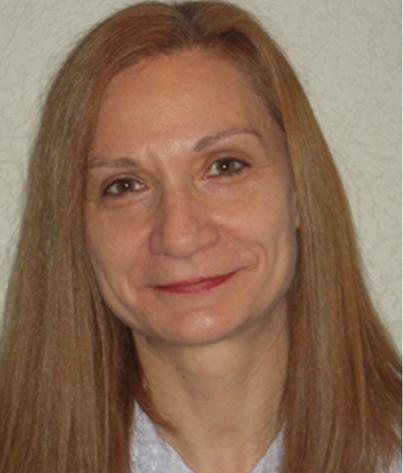
Figure 1 Professor Natalia K. Nikolova.
At McMaster University, she founded and leads the Electromagnetic Vision (EMVi) Laboratory, where her group develops advanced methods for microwave and millimeter-wave imaging, inverse scattering, and radar sensing. Her research includes pioneering contributions to microwave imaging and sensitivity analysis, developing computational techniques that reconstruct images from electromagnetic measurements and evaluate how variations in material properties or geometry affect system performance. These advances have important applications in medical diagnostics, security screening, and non-destructive evaluation. Prof. Nikolova has authored more than 310 refereed manuscripts, 7 book chapters, and 2 books, including the monograph “Introduction to Microwave Imaging” [2]. She has delivered 58 invited lectures, webinars, and short courses internationally on the subjects of microwave imaging and computer-aided electromagnetic analysis and design, including an inspiring lecture delivered at ACES EM School in February 2026.
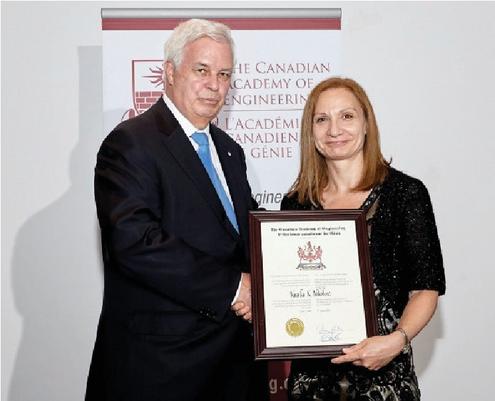
Figure 2 Professor Nikolova receiving her official certificate as a fellow of the Canadian Academy of Engineering.
II. Questions and Answers (Q & A)
Q1: Can you share a bit about your journey to becoming a professor? What was your motivation in your career path?
A1: As a student, I aspired to be a researcher and make discoveries, but being a professor was not my goal. As a post-doctoral fellow, however, I appreciated the academic freedom in research choices, the daily interaction with bright researchers and students in the university, and the feeling of accomplishment brought by teaching. The first exposure to teaching revealed that it requires as much focus, innovation, and creativity as research. I really enjoyed it, especially when I saw the spark of understanding and excitement in the eyes of the students. So, when an opportunity presented itself at McMaster University, I took it.
Q2: What initially sparked your interest in engineering, and how did you decide to specialize in electromagnetics (EM)?
A2: My career path was strongly influenced by my years as an undergraduate student in the Radio Engineering Department at the Technical University of Varna, Bulgaria, which, at the time, boasted the best antenna and microwave labs in the country. Seeing the antennas and the test instrumentation in action, along with a design project on a low-noise amplifier using the first microwave circuit simulator PUFF, made me an EM enthusiast. During my Ph.D. studies at the University of Electro-Communications, Tokyo, Japan (Fig. 3), I focused on time-domain full-wave simulations under the guidance of Prof. Eikichi Yamashita, one of Japan’s renowned pioneers in computational electromagnetics. On a more fundamental level, my career path has been driven by curiosity about how electromagnetism shapes nature and how we harness it.
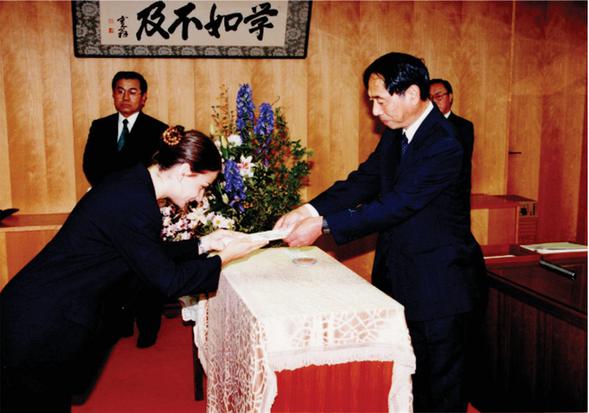
Figure 3 Professor Nikolova receiving her Ph.D. degree certificate at the graduation ceremony in 1997.
Q3: Could you describe your experience going from B.Sc. degree to a graduate degree and then a post-doctoral fellowship? I understand you did your B.Sc. in Bulgaria, your graduate degree in Japan, and your post-doctoral fellowship in Canada. How did the study and research in different countries and cultures influence you, your approach to solving difficult problems, and your points of view?
A3: I had the exceptional opportunity to pursue my Ph.D. studies in Japan thanks to a scholarship from the Japanese government (the Monbusho scholarship). I remember well my first days in Tokyo, when I was dazzled by the highly technological and orderly society that made the crowded multi-million city function like a clockwork. The Japanese people and culture had a marked influence on me. In their reserved but kind and calm ways, they taught me patience, persistence, time management, and punctuality, and the importance of paying attention to detail (Fig. 4). To this day, it is these qualities that I find essential in solving difficult problems.
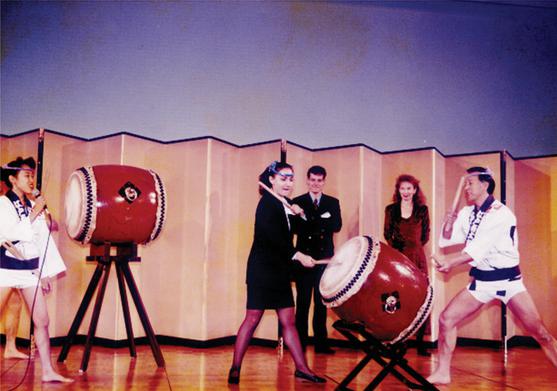
Figure 4 Professor Nikolov called on stage to perform at the Taiko Ceremony, held during the IEEE APMC 1996 conference.
On to Canada, where I met the kindest people and where I found my final career destination. In Canada, innovation and creativity are strongly encouraged, which directed my research into topics such as high-frequency electromagnetic sensitivity analysis and microwave imaging, which, at the time, were emerging and not well-understood topics.
Q4: Did you have a mentor who influenced your career path? How do you think mentorship impacts students’ and young professionals’ success?
A4: Both my Ph.D. and post-doctoral supervisors influenced my career path. They have influenced my choices of research topics as well as activities within professional societies such as the IEEE and ACES. The mentorship of my post-doctoral supervisor, Prof. John Bandler, was the most long-lasting as he was also a collaborator for over a decade in the research for efficient sensitivity analysis methods. Prof. Bandler (Fig. 5) was a strong proponent of women in the engineering profession. His encouragement and support helped me and numerous other female professionals pursue successful academic and industrial R&D careers. I think that mentorship is one of the most effective ways of setting young professionals on a path to success.
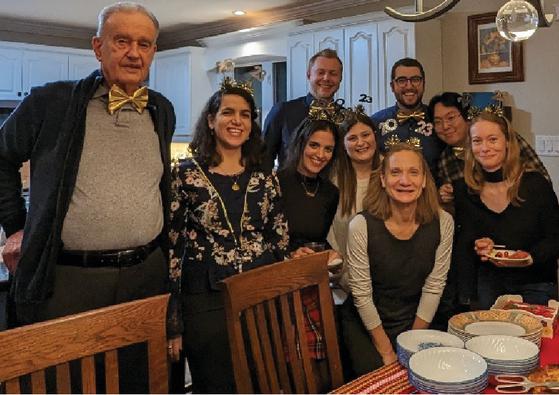
Figure 5 Professor Nikolova with the late Prof. John Bandler and her students, celebrating the new year.
Q5: Why do you believe it is crucial to have female role models in electromagnetics and engineering in general?
A5: Of course, female role models show that a successful career is possible in these demanding, male-dominated fields. Importantly, female senior researchers and academics also enable networking, mentorship, and support of female junior researchers in their career advancement. This latter role is crucial for expanding the presence of young female professionals in our fields (Fig. 5).
Q6: What are some of the biggest challenges women face in this field, and how can academia and/or industry better support diversity?
A6: The challenges that women in this field face likely depend on the region and the institution where they practice their profession. Discrimination and prejudice against female engineers seem to be on the decline worldwide, but the problem still exists. The technical qualifications and capabilities of female engineers may be unreasonably scrutinized, whereas those of their male counterparts are not. This puts much pressure on female engineers to prove themselves over and beyond the norm. In my experience, this is less of a problem in academia compared to industry. But another major challenge comes from balancing work and family. It is this challenge, in my opinion, that inhibits gender diversity in the demanding engineering professions. How can academia and industry address this? This is a difficult and long-standing question. In my opinion, there must be accommodation across all genders, to allow for work-life balance, as well as on-site facilities for childcare and health care in the case of larger organizations. But society and governments must also recognize the importance of such accommodations and give incentives to employers to implement them.
Q7: Can you share a particularly memorable moment from your teaching or research that reinforced your passion for academia?
A7: There are two “eureka” moments in my research that are indeed memorable. One is the derivation of the analytical response-sensitivity formula for scattering parameters. The second is the discovery of a new inverse-scattering formula, which led to a significant improvement of our microwave imaging reconstruction with the scattered-power mapping method. But my passion for academia is most strongly reinforced by the enthusiastic feedback from my undergraduate students in the electromagnetics courses and the antenna/microwave course. I feel that my biggest career accomplishment is getting my students excited about electromagnetics, microwave, and antenna engineering, and seeing them continue to graduate school to pursue advancement in this field.
Q8: What excites you the most about research in applied and computational EM? Are there any emerging trends that you find particularly promising? What do you see as the short- and long-term future for the applied or computational electromagnetics?
A8: Applied and computational EM is an intersection of engineering, mathematical physics, and applied mathematics. It is this interdisciplinarity that is exciting. One interesting trend for me is the rise of fast radar simulators that can emulate a true real-time imaging scenario, such as the imaging of a walking person, or that of an imaging radar mounted on a UAV. Another exciting trend is the development of novel fast image-reconstruction algorithms along with the fully electronic microwave and millimeter-wave imagers.
Q9: You are renowned for your work in microwave imaging, including cancer imaging. What motivated you to advance the research in this field?
A9: I am a believer in microwave technology as an alternative medical imaging modality, despite the numerous challenges it still faces. My microwave-imaging research was originally in the general field of inverse scattering and real-time image reconstruction with synthetic aperture radar. I took on the challenge of breast-cancer diagnostics because current screening methods are less effective than what is needed for early-stage treatment. I also believe that the success of this technology hinges on innovation in hardware, which is a very interesting and engaging engineering research.
Q10: How can one person be better at leadership in her field?
A10: Leadership begins with compassion, commitment to help others, and listening to your team and colleagues. Then comes the vision, the judgment of methods and opportunities, and the hard work.
Q11: What advice would you give to students and young professionals who are interested in pursuing careers in applied and computational electromagnetics?
A11: Think out of the box! There are always emerging new technologies (THz, sensing and imaging) and new materials (organics, semiconductors and plasmas), and so there is always a need for new EM and multi-physics analytical models and simulation tools.
REFERENCES
[1] Research Spotlight |Dr. Natalia Nikolova - Electrical & Computer Engineering, available online: https://www.youtube.com/watch?v=dq\_lxAEbd28.
[2] N. K. Nikolova, Introduction to Microwave Imaging. Cambridge, U.K.: Cambridge University Press, 2017. doi:10.1017/9781316084267.
BIOGRAPHY
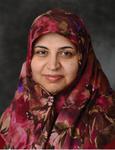
Sima Noghanian is the chair of the ACES Communication and Membership Committee and serves as the vice president of ACES in 2026. She received a B.Sc. degree in electrical engineering from the Sharif University of Technology, Tehran, Iran, and an M.Sc. and Ph.D. degrees, both in electrical engineering, from the University of Manitoba, Winnipeg, Canada. She is currently a Distinguished Hardware Engineer at Ruckus Networks. Her research interests include MIMO antennas for wireless communications, wearable and implanted antennas, 3D printed antennas, wireless power transfer, microwave imaging, and wireless channel modeling.
ACES JOURNAL, Vol. 41, No. 3, 203–206
DOI: 10.13052/2026.ACES.J.410301
© 2026 River Publishers