Power Management System of a Particle Swarm Optimization Controlled Grid Integrated Hybrid PV/WIND/FC/Battery Distributed Generation System
T. Praveen Kumar*, N. Subrahmanyam and Maheswarapu Sydulu
Electrical Engineering, National Institute of Technology, Warangal, Telangana, India
E-mail: praveent0317@gmail.com
*Corresponding Author
Received 27 February 2021; Accepted 19 April 2021; Publication 24 June 2021
Abstract
In this manuscript, the Power management of grid integrated hybrid distributed generation (DG) system with Particle swarm optimization (PSO) algorithm is proposed. The hybrid DG system combines with photovoltaic, wind turbine, fuel cell, battery. Depending on the use of hybrid sources and the changes of power production the variation of power can occurs in the DG system. The major purpose of the proposed method restrains the power flow (PF) on active with reactive power between the source and grid side. In the power system control the proposed PSO method is utilized to maximize the active with reactive PF and the controllers. The proposed method interact the load requirement energy and maintain the load sensitivity due to charging and discharging battery control. In the DG system, the proposed PSO method allows maximum power flow. To assess the PF, the constraints of equality and inequality have been evaluated and they are utilized to determine the accessibility of renewable energy source (RES), electricity demand, and the storage elements of charge level. The protection of the power system is enhanced based on the proposed PSO method. Additionally, for retaining a stable output the renewable power system and battery is used. The proposed method is activated in MATLAB/Simulink working platform and the efficiency is likened with other existing methods.
Keywords: Power management, distributed generation system, active with reactive power, load requirement.
1 Introduction
In the production of energy system the power production and power management attains important concerns between several studies. In the production of electrical power the fossil fuels are considered as one of the most important source in the previous years. Moreover, the global warming can cause due to the emission of CO2 by fossil fuels. In context of environmental issues such as reduction of greenhouse gases, the utilization of renewable energy sources (RES) has increased remarkably and is being accepted comprehensively as a major alternatives for conventional fuel-based energy generation [1–3].
In the production of electrical power the DG is one of the important components based on the RES. For the production of energy DG is a modernized forms and also it has minimum power loss, high voltage profile and between feeders suitable balance of load [4, 5]. DG systems are getting operated commonly in the production of power systems to converge the increasing demand of electrical power and to obtain best power quality to the users [6, 7]. DGS are utilized for minimizing pollution of fuel which is occurred by the emission of harmful gases by fossil fuels away from the quality of power [8, 9]. It is harmful to connect structure of conventional grid into advanced grid to interface the distributed systems with other power grids [10, 11].
For connecting several production of energy system a progressive grid is static and certain like PV, WT, FC and batteries [12–15]. Furthermore, in several cases the consolidation of DG systems into electrical grid systems presented several problems [16, 17]. Several literature works show that the consequence of DG is more influential when lined with distribution systems based on the power control, generation among disturbances, minimization of voltage variation, reliability and power quality [18–21].
In power production and utility grid to translate and reduce the effect of DG in this context many research is sufficient [22, 23]. It is predicted that in coming times, the application of DG systems will increase intensively and the connection of utility grid with hybrid distributed generation systems are regarded as one of the strong structure for improving industrial and business sectors [24]. Hybrid distributed energy production system (Hybrid DGS) demonstrates on the combination of different energy sources like WT, batteries, FC and PV. The technical development made in PV and WT are widely used for power production [25].
In micro grids, the energy management (EM) is generally designed as a nonlinear optimization issue. In the literature, several centralized models were presented to solve this issue, like mixed integer programming, sequential quadratic programming, PSO, neural networks (NN). The centralized models need higher computational capacity in microgrid central controller (MGCC), which is neither efficient nor scalable. Furthermore, a centralized EMS needs the MGCC for gathering DERs information (production costs, constraints, etc.) including loads (customer preferences, constraints, etc.) as the inputs for optimization. Nevertheless, certain DERs belong to various entities, which can maintain its information personal. Owing to privacy, the customers do not want to expose their information.
In this manuscript, a distributed EMS is proposed that is effectual, scalable including privacy protective. In the literature, many distributed approaches were presented for MGs operation. Here, the distributed approach is depending on the classical symmetrical assignment issue. The EM is created as the complexity of resource allocation as well as distributed approaches have been proposed for distributed allocation. Double distortion has been utilized to generate a distributed EMS for maintaining the demand supply balance in MGs, also convex problem formulation is found. At MGs, a privacy protection energy scheduling method is proposed, here the restrictions of privacy combined to the linear programming and distributed methods are generated. To upgrade the DER operations in a distributed manner, the additive-increase/multiplicative-decrease method is deemed.
The complexity of existing methods for micro grid EM is assume the supply–demand matching on an abstract manner, in which whole demand is equivalent to supply. Every generations with loads are linked with one bus, moreover the specified power distribution network along its corresponding PF is ignored (Kirchhoff’s law), system operational constraints (voltage tolerances). As a result, schedules created by these methods can break these obstacles, so they are practically impossible. It is noteworthy that distribution networks are deemed in certain recent demand response investigations. Notwithstanding, the idea of integrating distribution networks with distributed EM in micro grids, where supply-side and demand-side management (DSM) are determined has not researched.
Objectives and Contribution
(a) In the proposed work, grid integrated hybrid distributed generation system with PSO algorithm.
(b) The main novelty of the proposed work is the PSO algorithm for obtaining the entire optimal solution is gathered from the search space of these operators.
(c) The proposed study is useful for solving the optimization problem. In the proposed control scheme, PSO is utilized to maximize the active with reactive PF including controllers. The proposed method interact the load requirement energy and maintain the load sensitivity due to charge as well as discharge the battery control. In DG system, proposed PSO method allows maximum power flow. To assess the PF, the constraints of equality and inequality have been evaluated and they are utilized to determine the accessibility of RES, electricity demand, and the storage elements of charge level.
(d) The proposed method is activated in MATLAB/Simulink site and the efficiency is examined with existing methods, viz GA, PI controller. The efficiency of HRES power such as PV, wind turbine, fuel cell and battery of the proposed method is 87.1029%, 66.7390%, 89.0935% and 88.1193%.
The rest of this manuscript is: Segment 2 presents the recent investigation works. Segment 3 illustrates the Modeling of Grid Integrated Hybrid Renewable Energy Sources. Segment 4 explains the proposed PSO. Segment 5 demonstrates the result with discussion. Segment 7 concludes the manuscript.
2 Recent Research Works: A Brief Review
Several methods are previously presented in the literature depends on power management in smart grid. Some of the works are reviewed here.
Manuel and Shivkumar [26] have presented the GSA-PFC using SG when the changeable conditions. The parameters of the controller were described by gravitational search algorithm (GSA) based the power system. Alipour et al. [27] have presented a multi-follower bi-level programming way by linkinghe at and power (CHP) based MG. Here, the nonlinear moving average shows eachlevel as stochastic two-stage problems. Mohagheghi et al. [28] have developed a continuous active with reactive optimal PF (RT-AR-OPF) along WECS stations (WSs). Mohammadi et al. [29] have established integrated operators called TSO+DSO for maximum power flow system. Lim Nge et al. [30] introduced a constant EMS for PV-battery. Here, the demand functions based in the electricity networks, the EMS connected with SG. Aktas et al. [31] presented the HESS such as battery and UC. Here, the dynamic variants were developed by a power management system. Zolfaghari et al. [32] have introduced a power management of linked MGs based enhanced Unified Inter-Phase Power Controller (UIPC). H8 filtering system was developed and enhanced a Fuzzylogic controller. The robust multi-Surface Sliding Mode Control depending on non-linear disturbance observer was developed to adjust the fluctuations of DC link.
2.1 Background of the Research Work
The above mentioned works has maintains the RES power management with energy storage devices (ESD) for MG system. Here, various renewable devices, diesel power generator for economic energy management are utilized. Among the components the unbalance increasing up out of the RES load demand and difficulty interaction is efficiently because of countless issues connected in the system. Fuzzyi ncluding optimization approach is the method utilized to economic power management system. From the fuzzylogic controller the best output is accessed based power management in terms of WT/PV/FC/battery and itis not illustrate the theory of fuzzys chemes is a kind sort. Moreover, the GSA has been described good global inquiry capacity. Furthermore, in the last versions the searching speed GSA is slow. As per requirements, to direct the MG of DC bus voltage, to use highly energy sources, monitor the power requirement RES control system have been produced to more component. So, the maximum solution to clarify the issues a MG structure disevaluated. The revealed works could not solve these issues. The above mentioned drawbacks inspired to do this work problems.
3 Modelling of Grid Integrated Hybrid Renewable Energy Sources
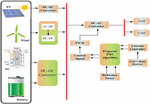
In this manuscript, the system contains RES like PV, WT, FC and battery, which is connected with a microgrid system. To integrate the hybrid system along the grid the power electronic converters are utilized like DC-AC converters. For gaining the high power a proper control of the power electronic converter is from the variation of RES like PV and WT [33]. Additionally, through DC link for regulating the PF from source to the load the DC-DC boost converter has been utilized. An efficient control of DC-DC converters is offered to maximum power point tracking at PV systems, also high power is collected from photovoltaic systems. The hybrid DG is obtained with stable controllers to operate the voltage and frequency, like Proportional-Integral (PI), Proportional Integral Derivative (PID) controllers. For ensuring the system stability these controllers are observed. The main aim of the stable system is measure the process of parameters to attain the dynamic performance i.e. control parameters. This can be done by maximizing the parameters process. Figure 1 depicts the structure of proposed method.
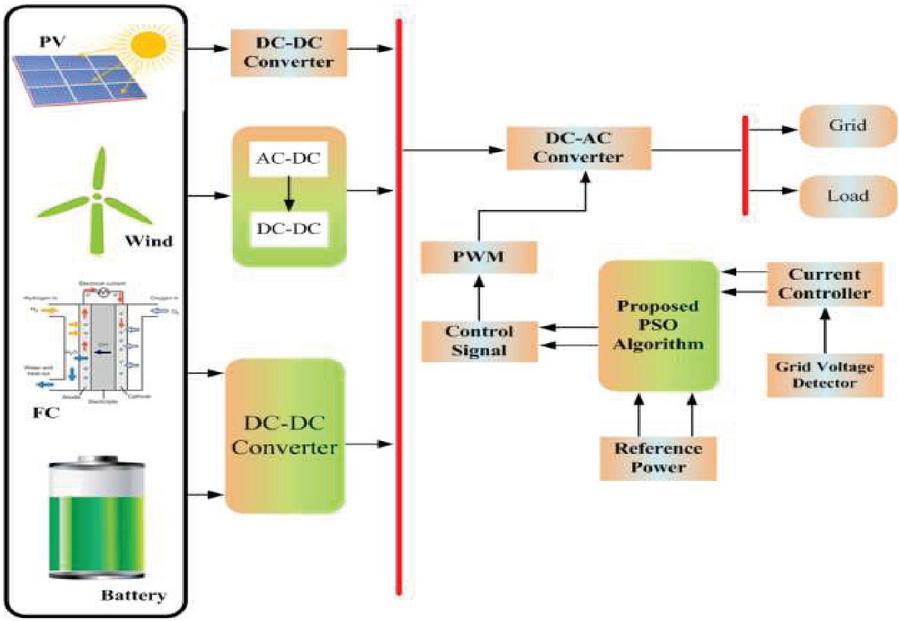
Figure 1 Structure of Hybrid distributed power generation system.
Several optimization algorithms were presented for optimization, they are genetic algorithms [28, 29] and particle swarm optimization (PSO) algorithms [30, 31]. In this study, PSO algorithm is used for maximizing several controller parameters.
3.1 Mathematical Modeling of Photovoltaic (PV) System
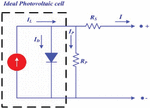
The single diode model is evaluated for developing the PV system. Figure 2 [33, 34] depicts the equivalent circuit of PV system.
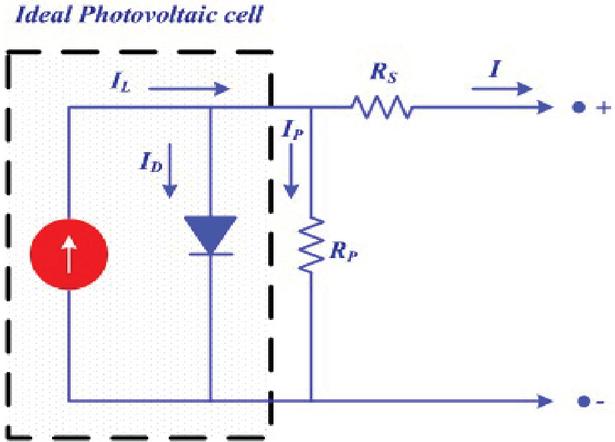
Figure 2 Equivalent circuit-PV cell.
The equations of PV system is given as follows,
| (1) | ||
| (2) |
From the above equation, is expressed as shunt current leakage, is represented as diode current, represents light produced current, denotes saturation current, implies charge of electron, is represented as Boltzmann’s constant, is denoted as the ideality factor, The temperature of PV system is expressed as , is denoted as the PV cell current, is denoted as the voltage in PV unit. The output performance of photovoltaic unit is evaluated based on open circuit voltage, short circuit (SC) current, maximal power point voltage and current. Under standard conditions then-linear interactions of PV system is developed as follows,
| (3) | ||
| (4) | ||
| (5) |
3.2 Mathematical Modeling of Fuel Cell (FC)
According to the equation the unit voltage of FC is expressed as follows.
| (6) |
From the above equation, is expressed as the constant of universal gas, is denoted as stack temperature, is represented as constant of faraday’s, based on the reaction free energy voltage is expressed as , is represented as the stack internal resistance, is denoted as the count of cell at stack, specifies FC system current, partial pressures of water is expressed as , partial pressures of hydrogen is denoted as , partial pressures of oxygen is expressed . The following equations show the dynamic modeling of FC:
| (7) | ||
| (8) | ||
| (9) | ||
| (10) | ||
| (11) |
here denotes molar index valve of hydrogen (H), denotes flow rate of hydrogen, is denoted as the constant time of hydrogen, is expressed as the molar index valve for oxygen, flow rate for oxygen (O) as , is expressed as the constant time of oxygen, is expressed as the molar index valve for water, as constant time of water as, constant , as constant time of fuel, ratio of H to O as , optimal utilization of fuel as .
3.3 Mathematical Modeling of Battery
An open circuit voltage, an internal resistance and two series RC circuits are presented in battery, [35, 36].
| (12) | |
| (13) | |
| (14) | |
| (15) |
From the above equation, is denoted as the open circuit voltage, as internal resistance, as terminal resistance, denotes polarization denotes incipient capacitance, implies optimal battery charge.
4 Proposed Particle Swarm Optimization
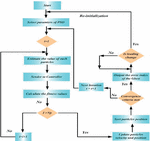
The major purpose of the proposed method restrains the PF on active with reactive power between source and grid side. In the power system control, the proposed PSO method is utilized to maximize the active with reactive PF and controllers. The proposed method interact the load requirement energy and maintain the sensitivity of load due to charge as well as discharge battery control. In DG system, the proposed PSO method allows maximum power flow. The proposed particle in swarm optimization shows a Figure 3. The step by step procedure of PSO is,
Step 1: At the process of initialization, the population of the MG models of system data like active with reactive power and limits of related production is deemed as input.
Step 2: After the initialization processthe population of the MG models are randomly produced and it can be expressed in the following. Here, typically chosen as uniform random numbers at [0, 1] range.
| (16) |
Where, random behaviour of the particles is expressed as .
Step 3: The fitness is calculated depending on the values of initial population and the equation is expressed as follows,
Step 4: Based on the position of particle swarm the below equation is described
| (17) |
From the above equation, the number of particles swarm is expressed as i, the iteration number is denoted as T.
Step 5: The velocity of particle swarm is,
| (18) |
here the number of particles swarm is expressed as i, weight of inertia is expressed as . Until the position of best particle and velocity are reached repeat for each particle.
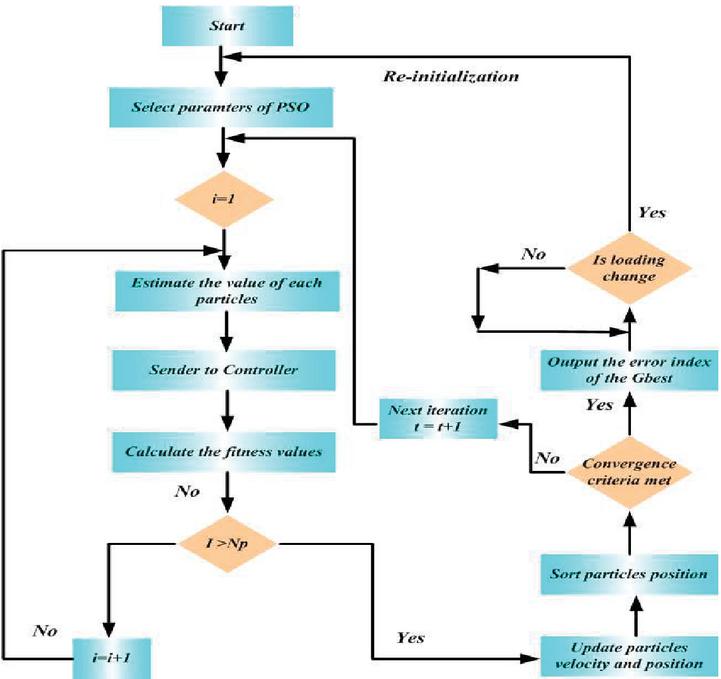
Figure 3 Flow chart of Proposed Particle swarm optimization.
Step 7: Final ProcessThe power management of the MG is obtained depending on the source and load side parameters variations using proposed model. Moreover, in terms of grid for producing the power requirement the proposed method is evaluated to regulate the energy sources through optimally HRESs and ESD.
5 Results and Discussion
The power controlling system based the particle swarm optimization algorithm is evaluated. The proposed model is activated in MATLAB/Simulink site. The intention of this work is “to achieve an optimal PF on hybrid DG system”. Table 1 tabulates the power of several sources used in this research.
5.1 Performance Evaluations
In grid connected hybrid DG system, for accessing the power management the PSO approach execution is defined. The flow of active with reactive power controllers are evaluated using PSO approach. The hybrid DG contains PV, WT, Battery model. The proposed model execution is analyzed under 3 different cases:
Case 1: Balanced distribution along unbalanced load condition (LC).
Case 2: Step variation on photovoltaic along balanced LC.
Case 3: Zero response on photovoltaic along balanced LC.
Case 1: Balanced distribution along unbalanced load condition
The primary objective is to analyze the power controller response under unbalanced
load conditions. Here, the balanced distribution time domain the when the load has
been highly unbalanced is examined for different input sources. The photovoltaic
output power model, wind turbine, battery are produced the power for load as well
as grid. The produced output power for individual sources is depicted in the given
Figures.
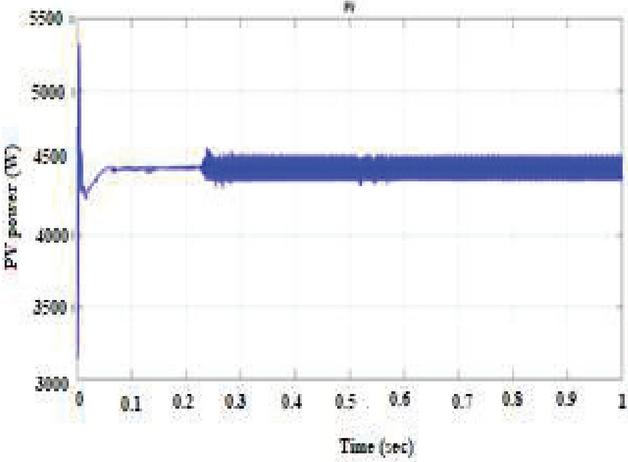
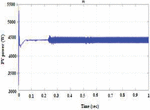
Figure 4 PV system output power.
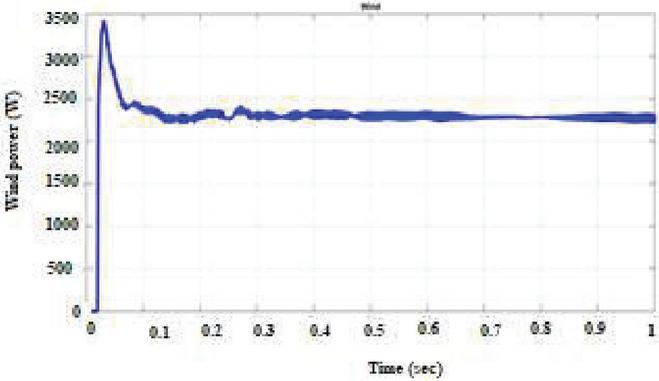
Figure 5 WT output power.
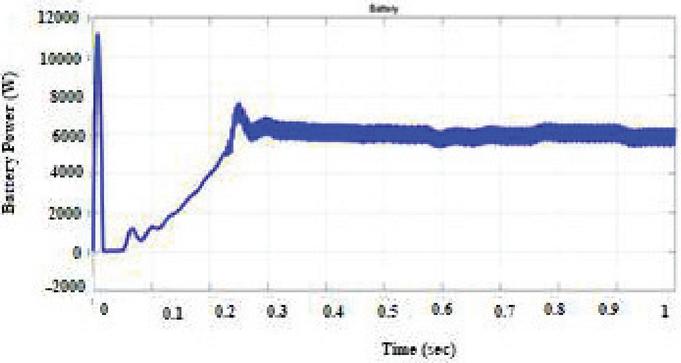
Figure 6 Battery output power.
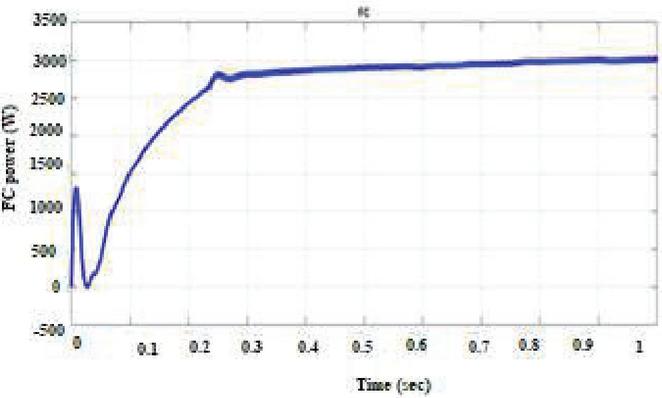
Figure 7 FC output power.
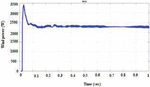
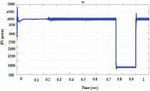
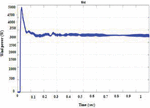
Initially, the irradiance presents for photovoltaic unit and power curve increases slightly. After time t 0.21 sec, it can be observed that the curve becomes constant which means that the uncertainties in the output power are eliminated effectively using the proposed controller. For the wind turbine system, the wind power kept rising at 3000 kW for t 0.02 sec time. After a few seconds the wind power reaches a constant condition at t 0.3 sec time, it reaches the stability. The efficiency of the proposed approach is assessed likened to other existing approaches. The output is assessed with respect to the time of settling, peak overshoot, rising.
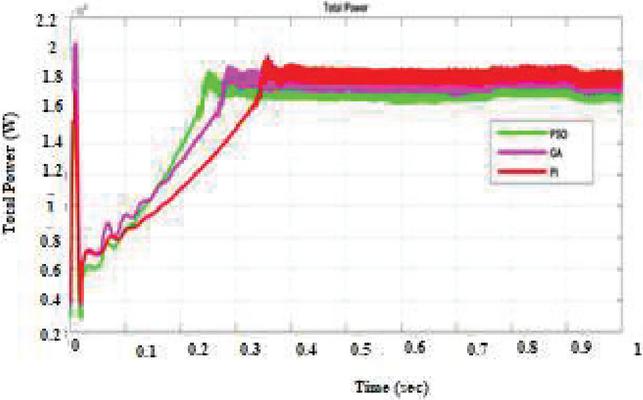
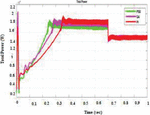
Figure 8 Overall power comparison of proposed and existing model.
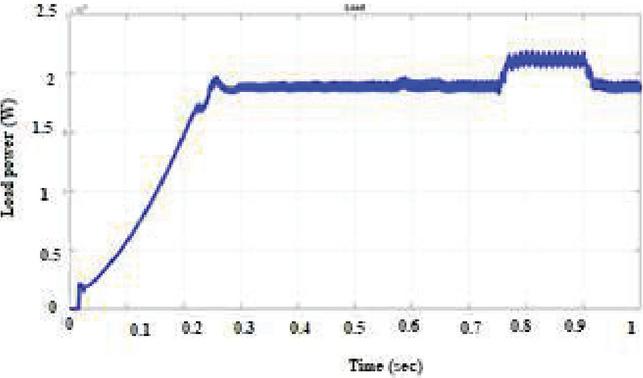
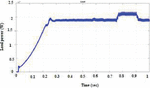
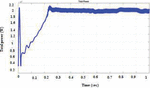
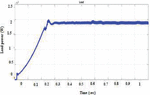
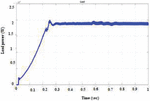
Figure 9 Load power under unbalanced load condition.
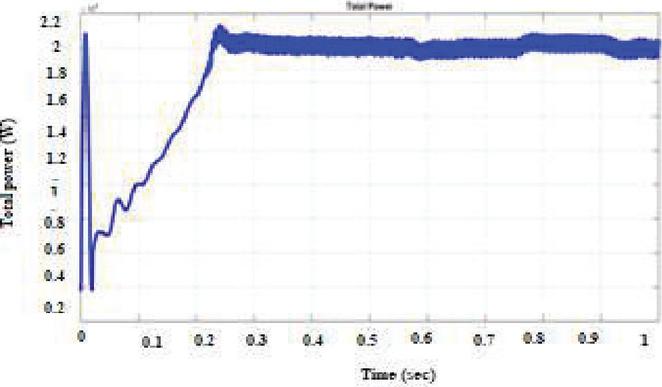
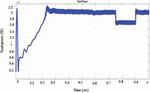
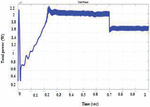
Figure 10 Total power under unbalanced load condition.
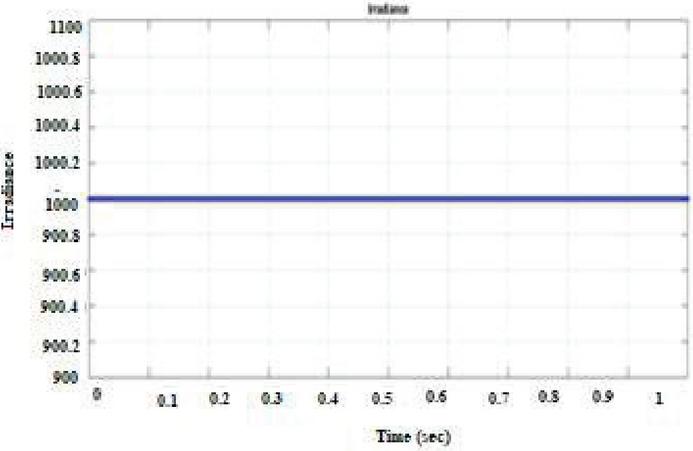
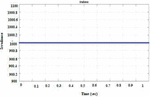
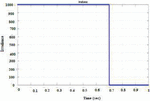
Figure 11 Irradiance of PV power.
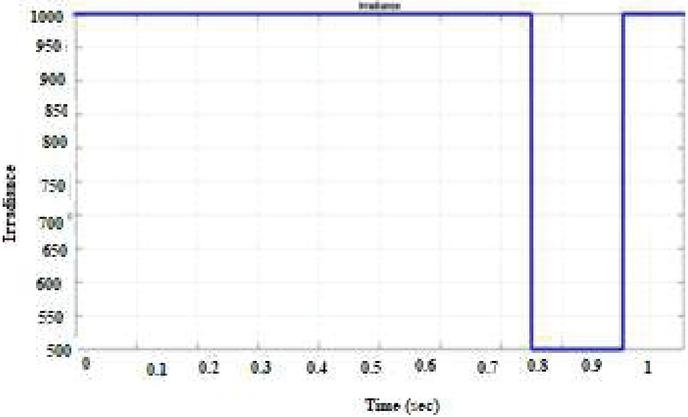
Figure 12 PV power irradiance of 500 W/m.
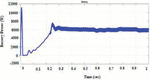
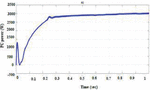
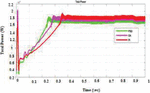
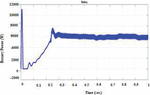
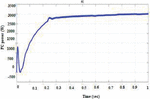
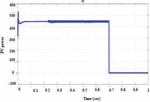
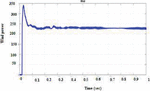
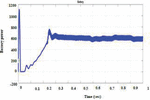
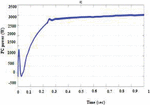
Figure 4 portrays the PV system output power. The photovoltaic power flows 3000 to 5400 kW at 0 sec time period then the PV power reduced at 4600kW and it remains steady at 4500 kW until the procedure end. Figure 5 shows the WT output power. The wind flows 0 to 3499 at 0sec time period the wind reduced up to 2500 then it remains steady until the procedure end. Figure 6 displays the battery output power. Here, the battery flows 0 to 1100 at 0 sec time period then it increased up to 7800 at 0.25 sec time period then until the operation end it remains steady. Figure 7 shows the FC output power. Here, the fuel cell flows 0 to 1400 w at 0 sec time period then it slightly increased up to 2600 w then the fuel cell remainders stable at the time period of 0.3. Figure 8 signifies the overall power comparison of proposed with existing methods. The left over power has shared by the grid which is shown in the response waveforms of load power when the load is varied under imbalanced load condition. Figures 9 and 10 indicates the variation of load and total power. The PV irradiance considers as 1000 W/m in step response as shown in Figure 11. Here, the output curve of the load power that is continuous rise in the output power till the curve reaches t 0.2 sec time. Between t 0.02–0.28 sec time period, a small amount of distortion occurs in the output power curve and after the output power of the load becomes constant and becomes stable. It can be inferred from the simulation results of load power and total power that the proposed approach attains stability in a low duration of time and significantly reduces the distortion level in the output power.
Case 2: Step variation of photovoltaic along balanced load
condition
Here, the step response of photovoltaic system is injected by system input along
the balanced load condition and changes on PV systems, wind, battery output power
are determined. Also, from the power graph the level of distortion is evaluated.
Figure 12 depicts the load power at time domain with photovoltaic
irradiance is considered into 500 W/m. The PV irradiance and output power
for different sources is illustrated in given Figures 13–16. It
is observed from the simulation outcomes, the control model contains minimum
disruption neglects including peak overshoot of curve is very lesser. Here, the
load and total power response is computed. Figure 17 displays the
simulation results of load and total power.
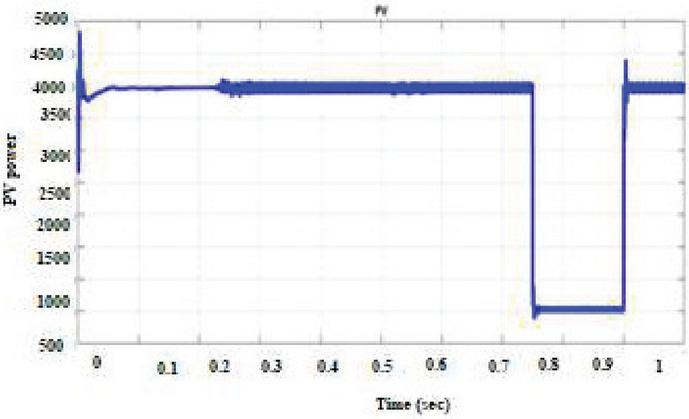
Figure 13 Photovoltaic output power with step variation.
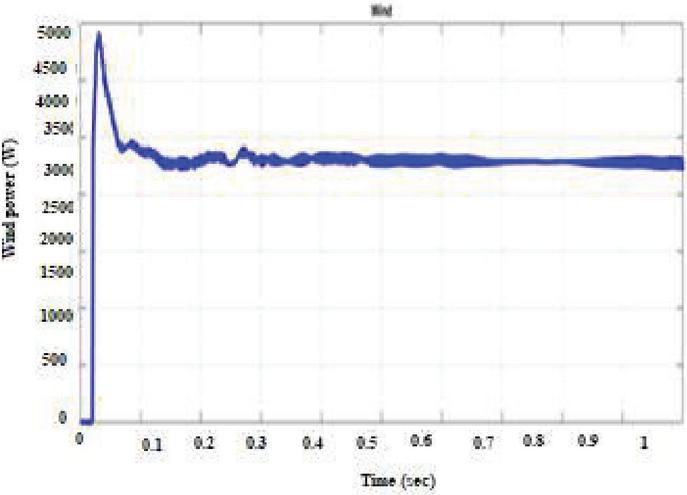
Figure 14 Wind output power with step variation.
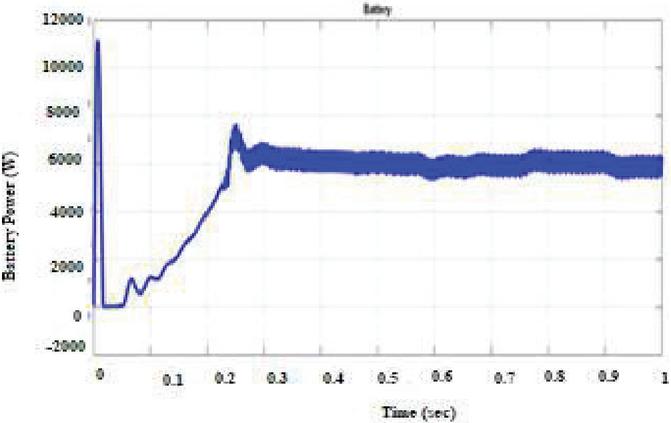
Figure 15 Battery output power with step variation.
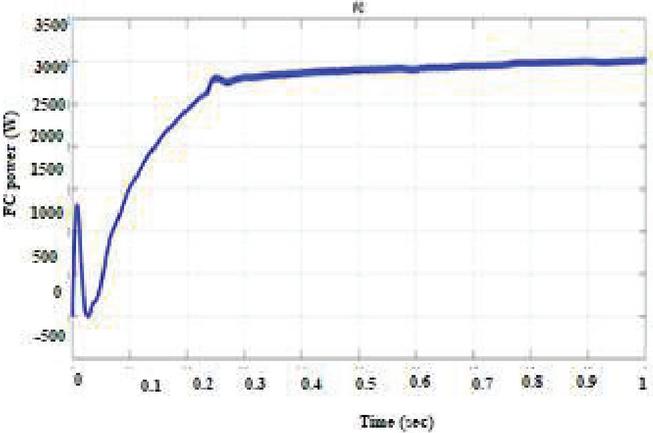
Figure 16 Output power of the fuel cell with step variation.
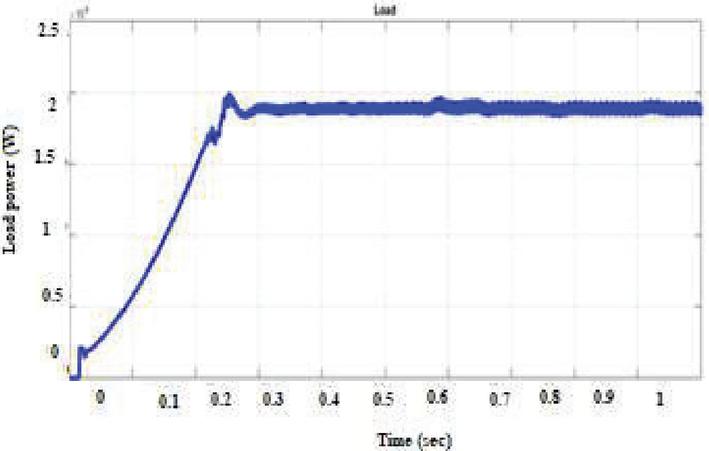
Figure 17 Load power with step variation in PV.
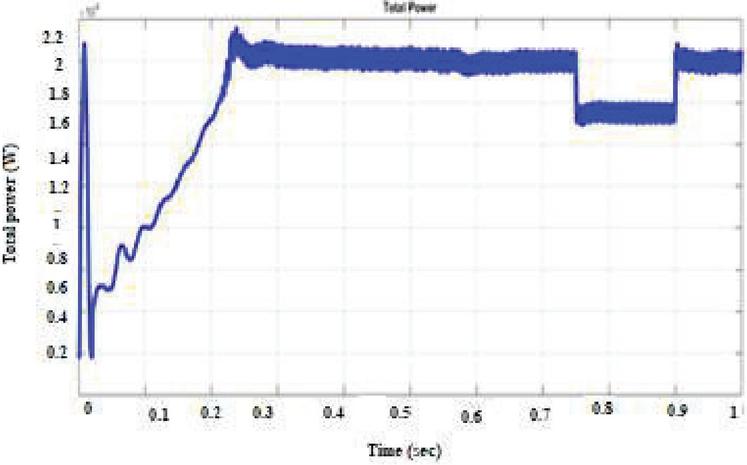
Figure 18 Total power with step variation in PV.
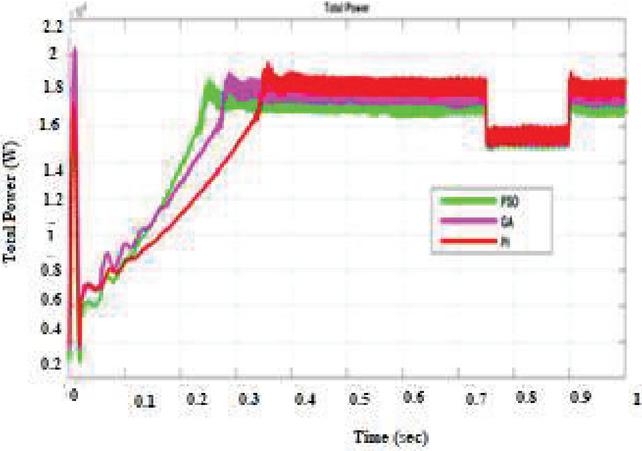
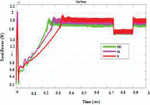
Figure 19 Comparison of total power with step variation in PV.
In case 2, the PV power is not full because of change in irradiance and the load requirement is supplied by the grid. In Figures 17 and 18, it can be observed that the distortion of output occurs after t 0.285 sec time period and after the curve reaches a standard value. In the total power curve, a step variation can be observed between the time interval of t 0.75 to 0.9 sec. After the curve again become stable. The comparison of total power for PSO, GA and PI is illustrated in Figure 19.
Case 3: Zero response in photovoltaic along balanced load
condition
Here, every input sources are considered under imbalanced condition, then the
photovoltaic has been zero response for determining the optimum PF in hybrid DGS.
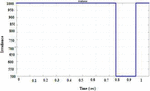
The Zero irradiance of PV is shown in Figure 20. In PV irradiance, the
photovoltaic, wind, battery output power for zero response in PV is illustrated in
given Figures 21–26.
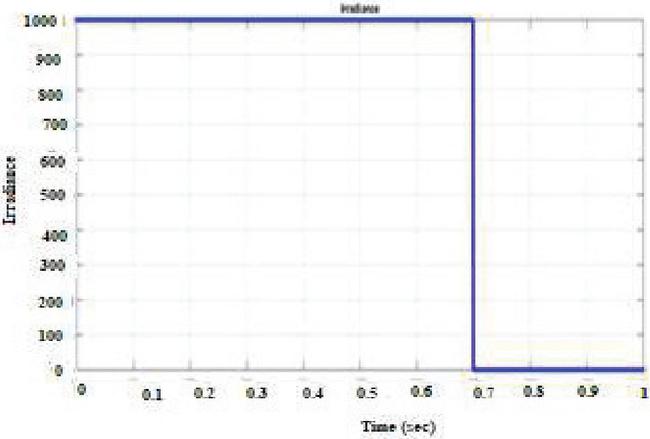
Figure 20 Zero irradiance of PV.
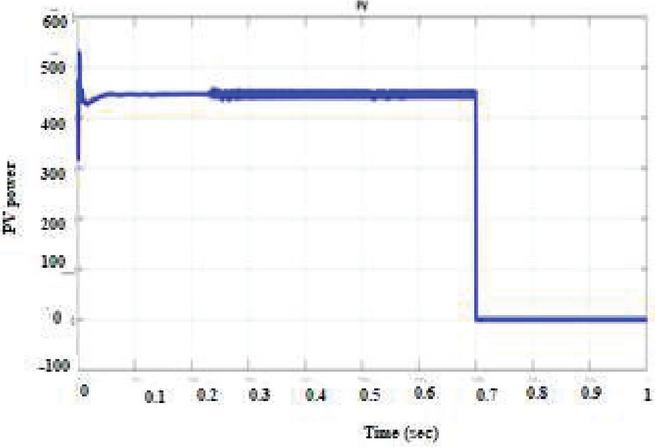
Figure 21 Photovoltaic output power along zero response in PV.
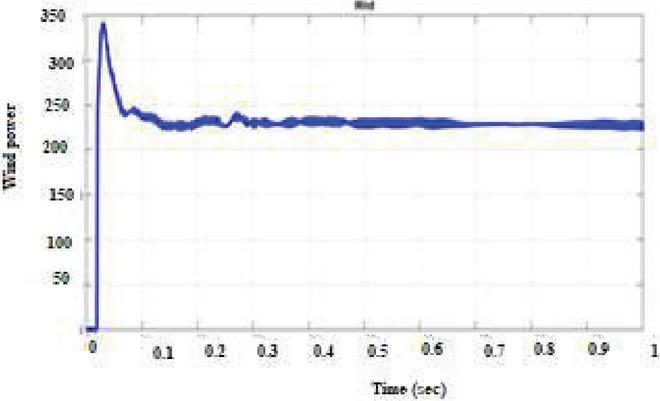
Figure 22 Wind output power along zero response in PV.
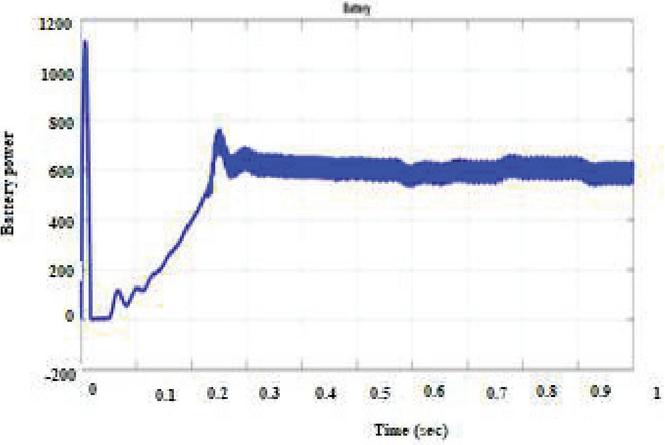
Figure 23 Battery output power along zero response in PV.
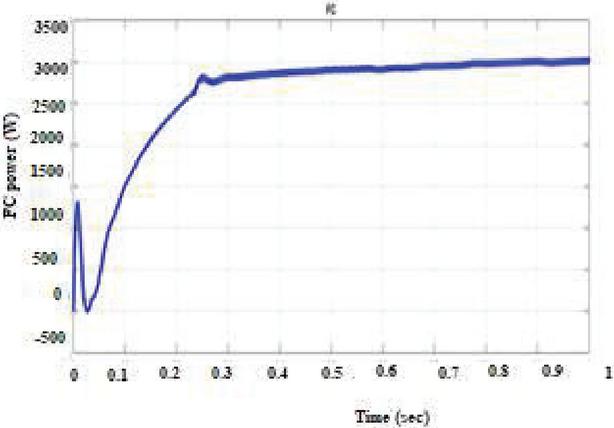
Figure 24 Fuel cell output power along zero response in PV.
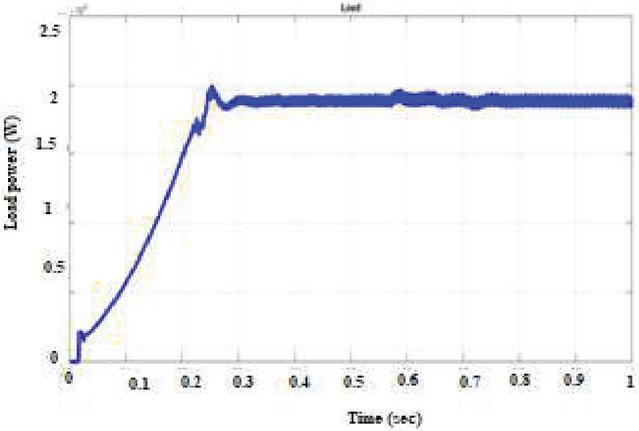
Figure 25 Load power for zero response in PV.
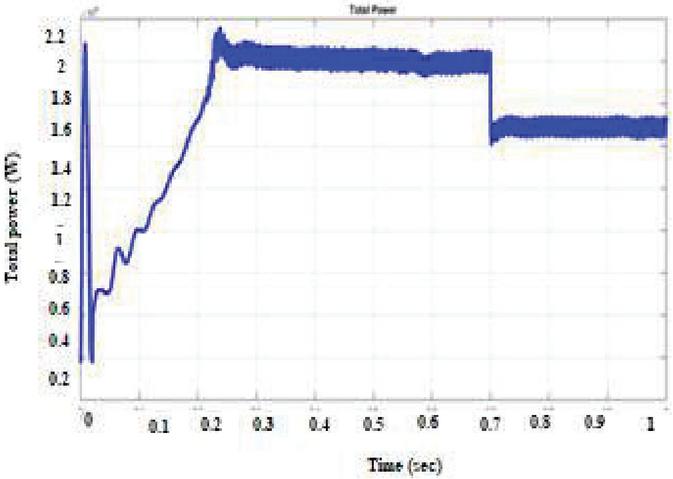
Figure 26 Fuel cell power for zero response in PV.
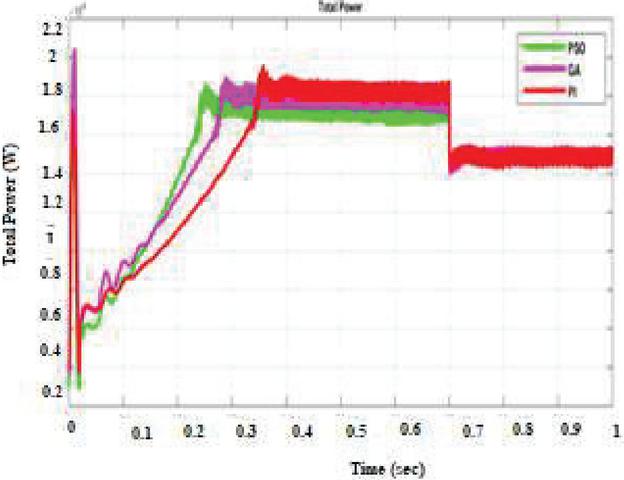
Figure 27 Comparison of total power with step variation in PV.
The simulation outcomes show the photovoltaic irradiance at t 0.7–1 sec particular time period indicates zero response, then analyze the output power of different input sources. The results show that the proposed approach achieves almost constant power. Here, at t 0–0.1 sec initial time period, few distortions have been noted at wind speed, then the maximal power attains 3000 W. Here, the load power, fuel cell power and the total power are also determined. At t 0–0.1 sec initial time period, few oscillations on the power curve can be observed and attains the maximal power. At t 0.3–0.7 sec time period, the power has almost constant at time interval between 0.7–1 sec, then the power has been slightly minimized by a step and regains stability later. The comparison of total power of GA and PI is illustrated in Figure 27. Here, the peak overshoots time of the proposed method occurs at zero. The settling time of existing strategies such as genetic algorithm PSO, GA and PI are t 0.25 s, t 0.38 s, t 0.44 s respectively.
Table 1 shows the power rating of different sources in hybrid distributed generation system. Here, the energy source and power ratings are calculated. Table 2 tabulates the efficiency comparison of sources power under 3 cases of proposed with existing methods. The efficiency denotes energy output and separated by energy input, which is expressed as percentage. Finally, the system power balance is attained by keeping stable direct current connection voltage that is efficiently attained utilizing proposed method.
Table 1 Power rating of different sources in hybrid DGS
| Energy Source | Power Rating (kW) |
| PV System | 4.5 kW |
| Fuel Cell | 3.0 kW |
| Wind Turbine | 2.5 kW |
| Battery | 6.0 kW |
Table 2 Efficiency comparison of HRES power
| Efficiency of HRES power (%) | ||||
| Solution Techniques | Sources | |||
| PV Panel | Wind Turbine | Fuel Cell | Battery | |
| PI [37] | 79.265 | 66.289 | 79.951 | 80.1326 |
| GA [38] | 82.237 | 65.236 | 78.92 | 73.3500 |
| PSO | 87.1029 | 66.7390 | 89.0935 | 88.1193 |
6 Conclusion
In this manuscript, the power management of grid integrated hybrid distributed generation system with Particle swarm optimization (PSO) algorithm is proposed. The hybrid distribution generation (DG) scheme combines with photovoltaic, wind turbine, fuel cell, battery. The variation of power can occurs in the DG system depending on the use of hybrid sources and the changes of power production. The purpose of the proposed method restrains the PF in active with reactive power amid the source and grid side. In the power system control, the proposed PSO method was utilized to maximize the active with reactive PF and controllers. The proposed method interact the load requirement energy and maintains the load sensitivity due charge as well as discharge battery control. In DG system, the proposed PSO method allows maximum power flow. To assess the PF, the constraints of equality and inequality were evaluated to determine the accessibility of RES, electricity demand, and the storage elements of charge level. The power system security was enhanced using the proposed PSO method. Additionally, the renewable power system and battery was used for retaining a stable output. The proposed model is activated in MATLAB/Simulink site, then the efficiency is compared with other existing models. Finally, the simulation results demonstrate that the proposed model is efficient than the existing models.
References
[1] R. Zhang and B. Hredzak, ‘Distributed Finite-Time Multiagent Control for DC Microgrids With Time Delays’, IEEE Transactions on Smart Grid, vol. 10, pp. 2692–2701, 2019.
[2] K. Utkarsh, D. Srinivasan, A. Trivedi, W. Zhang and T. Reindl, ‘Distributed Model-Predictive Real-Time Optimal Operation of a Network of Smart Microgrids’, IEEE Transactions on Smart Grid, vol. 10, no. 3, pp. 2833–2845, 2019.
[3] H. Qiu, B. Zhao, W. Gu and R. Bo, ‘Bi-Level Two-Stage Robust Optimal Scheduling for AC/DC Hybrid Multi-Microgrids’, IEEE Transactions on Smart Grid, vol. 9, no. 5, pp. 5455–5466, 2018.
[4] P. Lin, C. Jin, J. Xiao, X. Li, D. Shi, Y. Tang, and P. Wang, ‘A Distributed Control Architecture for Global System Economic Operation in Autonomous Hybrid AC/DC Microgrids’, IEEE Transactions on Smart Grid, vol. 10, no. 3, pp. 2603–2617, 2019.
[5] P. Rajesh, and F. Shajin, ‘A Multi-Objective Hybrid Algorithm for Planning Electrical Distribution System’. European Journal of Electrical Engineering. vol. 22, no. 4–5, pp. 224–509, 2020.
[6] D. Olivares et al., ‘Trends in Microgrid Control’, IEEE Transactions on Smart Grid, vol. 5, no. 4, pp. 1905–1919, 2019.
[7] N. Tummuru, M. Mishra and S. Srinivas, ‘Dynamic Energy Management of Renewable Grid Integrated Hybrid Energy Storage System’, IEEE Transactions on Industrial Electronics, vol. 62, no. 2, pp. 7728–7737, 2015.
[8] A. Jacob, R. Banerjee and P. Ghosh, ‘Sizing of hybrid energy storage system for a PV based microgrid through design space approach’, Applied Energy, vol. 212, pp. 640–653, 2018.
[9] S. Mythili, K. Thiyagarajah, P. Rajesh, and F.H. Shajin. ‘Ideal position and size selection of unified power flow controllers (UPFCs) to upgrade the dynamic stability of systems: an antlion optimiser and invasive weed optimisation algorithm’. HKIE Trans, vol. 27, no. (1), pp. 25–37, 2020.
[10] A. Serpi, M. Porru and A. Damiano, ‘An Optimal Power and Energy Management by Hybrid Energy Storage Systems in Microgrids’, Energies, vol. 10, no. 11, p. 1909, 2017.
[11] F. Shajin and P. Rajesh, ‘Trusted Secure Geographic Routing Protocol: outsider attack detection in mobile ad hoc networks by adopting trusted secure geographic routing protocol’. International Journal of Pervasive Computing and Communications, 2020.
[12] B. Muruganantham, R. Gnanadass and N. Padhy, ‘Challenges with renewable energy sources and storage in practical distribution systems’, Renewable and Sustainable Energy Reviews, vol. 73, pp. 125–134, 2017.
[13] K. Jia, Y. Chen, T. Bi, Y. Lin, D. Thomas and M. Sumner, ‘Historical-Data-Based Energy Management in a Microgrid With a Hybrid Energy Storage System’, IEEE Transactions on Industrial Informatics, vol. 13, no. 5, pp. 2597–2605, 2017.
[14] W. Jing, C. Lai, W. Wong and M. Wong, ‘Dynamic power allocation of battery-supercapacitor hybrid energy storage for standalone PV microgrid applications’, Sustainable Energy Technologies and Assessments, vol. 22, pp. 55–64, 2017.
[15] V. Miñambres-Marcos, E. Romero-Cadaval, P. González-Castrillo and M. Guerrero-Martínez, ‘Grid-connected photovoltaic power plants for helping node voltage regulation’, IET Renewable Power Generation, vol. 9, no. 3, pp. 236–244, 2015.
[16] C. Ye, S. Miao, Q. Lei and Y. Li, ‘Dynamic Energy Management of Hybrid Energy Storage Systems with a Hierarchical Structure’, Energies, vol. 9, no. 6, p. 395, 2016.
[17] M. K.Thota, F. H. Shajin and P. Rajesh, ‘Survey on software defect prediction techniques’. International Journal of Applied Science and Engineering, vol. 17, pp. 331–344, 2020.
[18] L. Chong, Y. Wong, R. Rajkumar, R. Rajkumar and D. Isa, ‘Hybrid energy storage systems and control strategies for stand-alone renewable energy power systems’, Renewable and Sustainable Energy Reviews, vol. 66, pp. 174–189, 2016.
[19] G. Venayagamoorthy, R. Sharma, P. Gautam and A. Ahmadi, ‘Dynamic Energy Management System for a Smart Microgrid’, IEEE Transactions on Neural Networks and Learning Systems, vol. 27, no. 8, pp. 1643–1656, 2016.
[20] M. Nehrir et al., ‘A Review of Hybrid Renewable/Alternative Energy Systems for Electric Power Generation: Configurations, Control, and Applications’, IEEE Transactions on Sustainable Energy, vol. 2, no. 4, pp. 392–403, 2011.
[21] N. Tummuru, M. Mishra and S. Srinivas, ‘Dynamic Energy Management of Hybrid Energy Storage System with High-Gain PV Converter’, IEEE Transactions on Energy Conversion, vol. 30, no. 1, pp. 150–160, 2015.
[22] H. Zhou, T. Bhattacharya, D. Tran, T. Siew and A. Khambadkone, ‘Composite Energy Storage System Involving Battery and Ultracapacitor with Dynamic Energy Management in Microgrid Applications’, IEEE Transactions on Power Electronics, vol. 26, no. 3, pp. 923–930, 2011.
[23] N.A. Prashanth and P. Sujatha, ‘Optimal Volume Design of Small Scale PMSG Using Multi-population Particle Swarm Optimization’. Journal of Advanced Research in Dynamical and Control Systems, vol. 11, no. 5, pp. 25–32.
[24] S. Salinas, M. Li, P. Li and Y. Fu, ‘Dynamic Energy Management for the Smart Grid With Distributed Energy Resources’, IEEE Transactions on Smart Grid, vol. 4, no. 4, pp. 2139–2151, 2013.
[25] L. Raju, R. Milton and S. Mahadevan, ‘Multiagent Systems Based Modeling and Implementation of Dynamic Energy Management of Smart Microgrid Using MACSimJX’, The Scientific World Journal, vol. 2016, pp. 1–14, 2016.
[26] R. Manuel and P. Shivkumar, ‘Power flow control model of energy storage connected to smart grid in unbalanced conditions: a GSA-technique-based assessment’.
[27] M. Alipour, K. Zare and H. Seyedi, ‘A multi-follower bilevel stochastic programming approach for energy management of combined heat and power micro-grids’, Energy, vol. 149, pp. 135–146.
[28] E. Mohagheghi, A. Gabash, M. Alramlawi and P. Li, ‘Real-time optimal power flow with reactive power dispatch of wind stations using a reconciliation algorithm’, Renewable Energy, vol. 126, pp. 509–523, 2018.
[29] A. Mohammadi, M. Mehrtash and A. Kargarian, ‘Diagonal Quadratic Approximation for Decentralized Collaborative TSO+DSO Optimal Power Flow’, IEEE Transactions on Smart Grid, vol. 10, no. 3, pp. 2358–2370, 2019.
[30] C. Nge, I. Ranaweera, O. Midtgård and L. Norum, ‘A real-time energy management system for smart grid integrated photovoltaic generation with battery storage’, Renewable Energy, vol. 130, pp. 774–785, 2019.
[31] A. Aktas, K. Erhan, S. Özdemir and E. Özdemir, ‘Dynamic energy management for photovoltaic power system including hybrid energy storage in smart grid applications’, Energy, vol. 162, pp. 72–82, 2018.
[32] M. Zolfaghari, M. Abedi and G. Gharehpetian, ‘Power Flow Control of Interconnected AC-DC Microgrids in Grid-Connected Hybrid Microgrids Using Modified UIPC’, IEEE Transactions on Smart Grid, vol. 1–1, 2019.
[33] A. Yazdani et al., ‘Modeling Guidelines and a Benchmark for Power System Simulation Studies of Three-Phase Single-Stage Photovoltaic Systems’, IEEE Transactions on Power Delivery, vol. 26, no. 2, pp. 1247–1264, 2011.
[34] M. Salam, K. Sayed, A. Ahmed, M. Amery and M. Swify, ‘Design, implementation and operation of a stand-alone residential photovoltaic system’, International Journal of Power and Energy Conversion, vol. 8, no. 1, p. 47, 2017.
[35] S. Ozdemir, N. Altin and I. Sefa, ‘Single stage three level grid interactive MPPT inverter for PV systems’, Energy Conversion and Management, vol. 80, pp. 561–572, 2014.
[36] R. Sedaghati and M. Shakarami, ‘A novel control strategy and power management of hybrid PV/FC/SC/battery renewable power system-based grid-connected microgrid’, Sustainable Cities and Society, vol. 44, pp. 830–843, 2019.
[37] T. Jumani, M. Mustafa, M. Rasid, N. Mirjat, M. Baloch and S. Salisu, ‘Optimal Power Flow Controller for Grid-Connected Microgrids using Grasshopper Optimization Algorithm’, Electronics, vol. 8, no. 1, p. 111, 2019.
[38] V. Jayadev and K. Swarup, ‘Optimization of Microgrid with Demand Side Management using Genetic Algorithm’, IET Conference on Power in Unity: a Whole System Approach, 2013.
Biographies

T. Praveen Kumar obtained his B. Tech degree in Electrical & Electronics Engineering and M. Tech degree in Power Electronics from Jawaharlal Nehru Technological University, Hyderabad, India in 2004 and 2008 respectively. Currently he is working towards his Doctoral degree at National Institute of Technology, Warangal, India. His current research interests include renewable energy sources, microgrids and integration issues of distributed generation.

N. Subrahmanyam received B.Tech in Electrical Engineering in 1978, M.Tech in Power Systems in 1980 and PhD in Electrical Engineering in 1998 from Regional Engineering college, Warangal (now known as NIT Warangal). His current areas of interest are distribution systems, Distributed generation Integration, Tariff modeling in Deregulated environment, power system operation and Distribution automation. Presently he is working as Professor in Department of Electrical Engineering, National Institute of Technology, Warangal (formerly RECW).

Maheswarapu Sydulu Received B.Tech (Electrical Engineering, 1978), M.Tech (Power Systems, 1980), PhD (Electrical Engineering – Power Systems, 1993) from Regional Engineering College, Warangal, Andhra Pradesh, India. His areas of interest include Real Time power system operation and control, ANN, fuzzy logic and Genetic Algorithm applications in Power Systems, Distribution system studies, Economic operation, Reactive power planning and management. Presently he is working as Professor in Department of Electrical Engineering, National Institute of Technology, Warangal (formerly RECW).
Distributed Generation & Alternative Energy Journal, Vol. 36_2, 141–168.
doi: 10.13052/dgaej2156-3306.3624
© 2021 River Publishers