Research on Multi-level Cooperative Detection of Power Grid Dispatching Fault Based on Artificial Intelligence Technology
Jianzhong Dou1,*, Zhicheng Liu1, Wei Xiong1, Hongzhong Chen1, Yifei Wu2 and Tao Sun2
1Central China Branch Of State Grid Corporation Of China, Hubei Wuhan 430077, China
2Wuhan Fenghuo Putian Information Technology Co., Ltd, Hubei Wuhan 430074, China
E-mail: dou_jianzhong@126.com; 411737391@qq.com
*Corresponding Author
Received 13 March 2021; Accepted 14 March 2021; Publication 28 April 2021
Abstract
The traditional power grid dispatching fault detection method has low detection efficiency and accuracy due to the lack of uncertainty in modeling. Aiming at the above problems, a multi-level cooperative fault detection method based on artificial intelligence technology is studied. After the preliminary processing of the dispatching data, the multilevel fault detection architecture is established. BP neural network is used to realize the multi-level cooperative detection of scheduling faults in the multi-level detection architecture. Through simulation experiment, it is proved that the failure rate and false detection rate of the proposed method are far lower than those of traditional methods, and the method has high stability and advantages.
Keywords: Artificial intelligence, power grid dispatch, scheduling fault, multilevel collaborative detection, neural network.
1 Introduction
Residents’ life, industrial production and other aspects need electric power support, and the increasing demand for electric power makes the grid structure gradually complex, and the amount of information to be handled by electric power dispatching work increases constantly. The rapid development of modern power grid has increasingly higher requirements on dispatching technology. As the core support and guarantee for the reliable operation of power grid, once the dispatching failure of power grid will affect the operation of power grid, or even lead to the collapse of power system [1]. Therefore, the detection of faults in the dispatching process of the power grid is conducive to the timely correction of power dispatching instructions to avoid abnormal operation of the power grid due to dispatching faults. The traditional fault detection method for power grid dispatching adopts the method of establishing mathematical model for the dispatching process, which makes the method ignore the uncertainty in power grid dispatching during fault detection, resulting in a high rate of missed detection and false alarm [2]. In addition, due to the increasing structural complexity of modern power grid, power dispatching needs to be conducted in a hierarchical way, while the traditional method is inefficient when applied to the fault detection of hierarchical power dispatching, which has great limitations and needs to be improved and optimized urgently.
As a branch of computer science, artificial intelligence technology enhances the efficiency of machine processing and calculation by simulating human thinking process, enabling computers to realize higher-level applications [3]. Artificial intelligence technology has many advantages and can efficiently handle complex computing processes. According to the research and analysis of the current research situation, this paper will study the multi-level cooperative detection method of power grid dispatching fault based on artificial intelligence technology.
2 Research on Multi-level Cooperative Detection Method of Power Grid Dispatching Fault Based on Artificial Intelligence Technology
2.1 Grid Dispatch Data Processing
Power dispatching data in power grid is usually transmitted through the Internet of things. In order to improve the efficiency and accuracy of power grid dispatching fault detection, power grid dispatching data needs to be processed first in processing operation. In modern power grid, the power dispatching data receives the feedback signals of electricity consumption information at all levels of the power grid, and then the dispatching system sends out corresponding dispatching instruction signals. The dynamic migration control is used to process the power dispatching data, and the energy signal characteristic quantity is extracted from the power dispatching data signal. Within a period of time , the statistical model of dispatching information issued by the power grid dispatching center is shown as follows [4]:
| (1) |
In formula (1), is the number of dispatching management network nodes in the power grid dispatching center; is the energy cost at the grid dispatching management node; is the dispatching information statistics issued by the network dispatching center; is the sampling amount of dispatching information in the process of power network dispatching; is the characteristic output of the power grid dispatch signal at the th sampling points; is the transfer function of power grid dispatching information transmission; denotes the bandwidth efficiency of information transmission; is the scheduling signal adoption time; represents the mutual information between two random sampling points when sampling the power grid dispatch signals. Modern power grid dispatching information has a large amount of data and a complex type of data. In this paper, the principle of big data fusion clustering processing is used to cluster power grid dispatching data, so as to obtain the normal information standards for global output of dispatching information as follows [5]:
| (2) |
In formula (2), is the fuzzy degree coefficient between the global scheduling information data; is the modulation element sequence for modulation processing of the scheduled signal; is the probability distribution density function of the interrelated characteristics among the dispatching information of the power grid; is the effective coverage of dispatching signal of power grid dispatching information management. If the Monte Carlo sampling characteristic distribution sequence of power grid dispatching information sampling is known, then Fourier changes are made to the nodes in the dispatching information sampling sequence, so as to obtain the abnormal map information of power grid dispatching data signal sequence [6]. According to the following formula, the information load in the power grid dispatching process can be obtained:
| (3) |
In formula (3), is the distributed attribute set of power grid dispatching data sequence; is the characteristic value of classification attribute of multi-level dispatching of power grid dispatching data; refers to the link offset during the transmission of power grid dispatching data signals; is the load extension phase of the power grid dispatch data signal. After processing the dispatching data, a multi-level dispatching fault detection architecture is established.
2.2 Establish Multilevel Fault Detection Architecture
Multilevel detection is common in the process of biological immunity, so this paper established a multilevel detection framework as shown in the figure below according to the principle of biological immunity. The multilevel detection architecture is divided into three layers. The first layer is the detection layer, which detects non-specific faults in the dispatching process of the power grid through autodetector and fault detector. The second layer is the fuzzy detection layer, which is mainly aimed at detecting the scheduling faults associated with time changes or the fault phenomena along with scheduling instruction propagation. The third layer is for the detection of new fault types, and the first layer detector is updated by remembering the new scheduling fault types and features, so as to reduce the response time in the next detection [7].
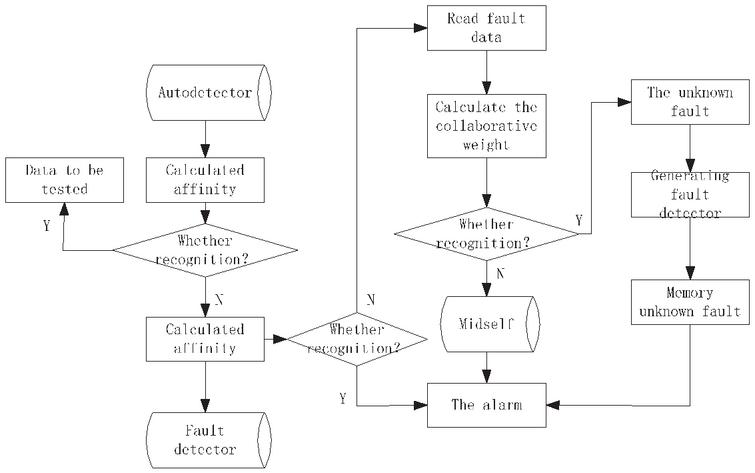
Figure 1 Multi-layer fault detection architecture diagram.
In the first layer, the self-detector is stored in the knowledge base after standardized and normalized processing of the dispatch data in the normal operation of power grid dispatching, and the knowledge base is updated at a fixed time interval. The fault detector consists of a database with known fault types and a negative selection algorithm. In the second layer of fuzzy fault identification, it is identified according to the correlation between faults and the behavior characteristics and parameter signals of feedback data of relevant scheduling execution units [8]. In the detection of this layer, the existence of time-related faults can be judged through steps such as feature extraction and information fusion. In the third layer, the unknown scheduling fault is further judged, and the fault type in the first layer of autodetector is updated. After the construction of fault detection architecture, artificial intelligence technology is used to realize the collaborative detection of scheduling faults.
2.3 Collaborative Scheduling Fault Detection is Realized by Artificial Intelligence Technology
Based on the multi-level fault detection architecture constructed in the previous section, this section introduces the principle of collaborative detection in the second fuzzy detection layer by using artificial intelligence technology. Considering the large amount of dispatching information data processing in power network, BP neural network and Bayesian network are selected to realize the cooperative detection of dispatching fault. The BP neural network with three-layer forward feedback is adopted. The connection weight between the input layer and the hidden layer of the neural network is the average value of the dispersion degree of the sample data , and the connection weight between the hidden layer and the output layer is . The specific calculation formula is as follows [9]:
| (4) |
In formula (4), is the dimension of sample data; is the eigenvalue of the dimensional attribute of the sample data. The activation function of neural network is ReLU function, which improves the training efficiency of fault detector. The loss function of BP neural network, namely the training target error calculation formula of the network, is as follows:
| (5) |
In formula (5), is the theoretical output value of BP neural network; is the actual output value of BP neural network. During the training process, the neural network parameters should be adjusted continuously until the loss function value reaches the minimum and the network training process should be stopped. Bayesian network was introduced to avoid the effect of BP neural network processing on the detection effect. Under the condition of ensuring the computational accuracy of the neural network, the calculation formula of bayesian network’s distributed probability is as follows [10]:
| (6) |
In formula (6), is the probability distribution statistic. According to the principle of collaborative detection, each dispatching object in the power grid is correlated and influenced by each other. When the dispatching instruction part fails, it may lead to the failure of its related dispatching instruction. After processing the dispatching data of the power grid to be detected, input the multi-level fault detection architecture. In the first layer, the autodetector selects the data matched with the normal value and deletes them according to the matching principle. The matching principle is the affinity threshold between the data sample in the detector and the data to be detected. If it is less than the affinity threshold, it will be judged as normal data and the normal data will be deleted. If it is greater than the affinity threshold, it is abnormal data. The remaining data will be deleted into the fault detector, and the known or unknown faults will be identified through the recognition negation algorithm. In the second layer of neural network, after extracting cooperative signal features and fuzzy fault data features, after information fusion processing, scheduling data with a large deviation degree are judged as fault data. In the third layer, after the unknown fault detector is generated, the fault type is updated to complete the detection and treatment of grid dispatching faults.
Based on the above, the research on the multi-stage cooperative detection method of power grid dispatching fault based on artificial intelligence technology is completed. The feasibility of this method will be verified in the following part.
3 Simulation Experiment
3.1 Experiment Content
This experiment will from non-response rates, the rate of false positives and detection speed of above three aspects put forward based on artificial intelligence technology of power grid dispatching validated the effectiveness of the fault multistage collaborative detection methods, in order to ensure the objectivity of this experiment conclusion enough, experiment will use compared with the traditional power grid scheduling fault detection method of the form.
3.2 Experimental Process
The multi-stage cooperative fault detection method based on artificial intelligence technology proposed above is taken as the experimental group, and the traditional fault detection method is taken as the comparison group. This experiment will be carried out in a certain power grid. By adjusting the power grid parameters, different number of faults will occur in the power grid dispatching process. The experimental group and the contrast group were used to detect the fault of power dispatching.
3.3 Experimental Results
The experimental data of omission rate and false alarm rate of two power grid dispatch fault detection methods in this experiment are shown in the following table. The data in the table are analyzed to compare the detection effect of the two methods.
Table 1 Experimental data of failure detection method omission rate and false alarm rate
| The | Actual | Experimental Group Method | Comparison Group Method | ||
| Serial | Fault | Non-response | False Alarm | Non-response | False Alarm |
| Number | Quantity | Rates /% | Rate /% | Rates /% | Rate /% |
| 1 | 456 | 11.9 | 11.3 | 30.9 | 19.8 |
| 2 | 879 | 11.8 | 9.2 | 28.1 | 24.9 |
| 3 | 193 | 12.4 | 10.6 | 30.4 | 18.5 |
| 4 | 236 | 11.7 | 9.0 | 27.3 | 24.6 |
| 5 | 354 | 11.6 | 10.4 | 27.0 | 19.1 |
| 6 | 627 | 11.4 | 10.1 | 31.6 | 23.3 |
| 7 | 279 | 12.1 | 9.9 | 29.2 | 28.2 |
| 8 | 318 | 11.3 | 10.2 | 33.8 | 21.7 |
| 9 | 356 | 11.5 | 10.5 | 29.5 | 22.0 |
| 10 | 228 | 12.2 | 8.9 | 33.2 | 24.4 |
Analysis of the data in the above table shows that the failure rate and false alarm rate of the experimental group method are far lower than those of the comparison group method. The highest false alarm rate and lowest false alarm rate of the experimental group were 12.4% and 11.3%, respectively, which were lower than the lowest false alarm rate of the control group 27.0% and 19.1%. The standard deviations of the false alarm rate and the false alarm rate in the experimental group were 0.34 and 0.73, respectively; the standard deviations of the false alarm rate and the false alarm rate in the comparison group were 2.21 and 2.87, respectively. The standard deviation of the two indexes corresponding to the comparison group method is greater than the two indexes corresponding to the experimental group method. In terms of the definition of standard deviation, the fluctuation of the two indexes data of the comparison group method is too large, which indicates that the experimental group method has better stability in detecting scheduling faults.
The following figure shows the detection time of the two groups of fault detection methods for the fault detection of power dispatching with different fault proportions. The final conclusion of this experiment is obtained by analyzing the relationship between the curves in the figure and the data in the above table.
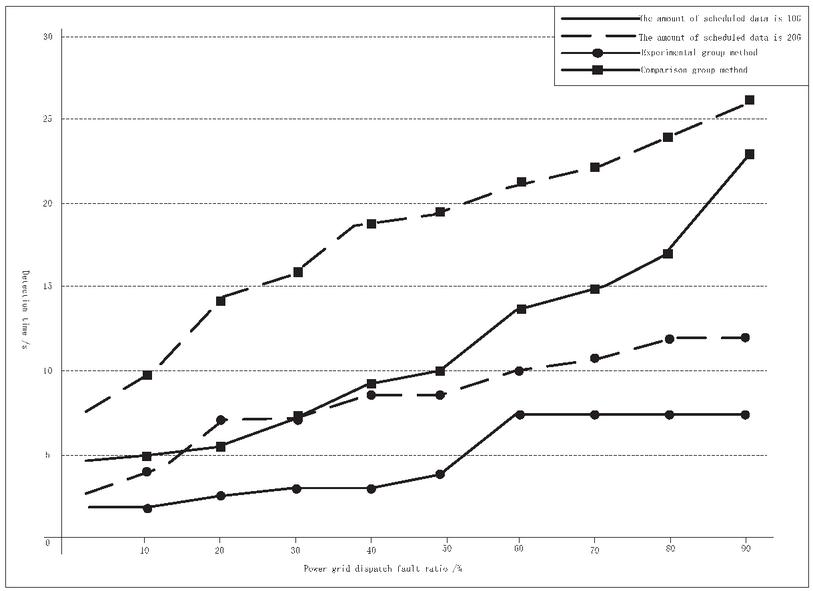
Figure 2 Comparison of scheduling fault detection efficiency.
The relationship between curves in the figure above was analyzed. When the power grid dispatching data volume was 10G, the detection time of the comparison group method increased rapidly with the increase of fault proportion, while the detection time of the experimental group method remained stable after the initial increase. And the time of scheduling fault in the experimental group is less than that in the contrast group. When the amount of dispatching data of the power grid is changed to 20G, the detection time of the comparison group method as a whole increases greatly compared with the amount of dispatching data when it is small, while the detection time of the experimental group method increases slightly as a whole. With the increase of fault proportion, the detection time of comparison group method increases rapidly. The above information indicates that the detection efficiency of the experimental group method is higher than that of the comparison group method under different scheduling detection conditions.
To sum up, the multi-stage collaborative fault detection method based on artificial intelligence technology proposed in this paper has a lower rate of missed detection and false detection than the traditional method, and a faster detection speed and better performance than the traditional method.
4 Conclusion
Power network dispatching can avoid the waste of power in the power supply process, which is very important for the normal operation of power system. Due to some problems in the actual use of traditional fault detection methods for power grid dispatching, this paper proposes a multi-level cooperative fault detection method for power grid dispatching based on artificial intelligence technology. Compared with the traditional detection method, the detection method proposed in this paper has higher recognition effect and is suitable for practical application. Although the method proposed in this paper has some advantages, it still needs to be optimized according to the specific situation in future practical application.
References
[1] Wang Pu, Zhang Zhaogui, Zhu Yu, et al. Research on Lightning Fault Monitoring Method of Power Grid Based on AI Technology [J]. Insulators and Surge Arresters, 2020(03):121—126.
[2] Xiao Fei, Yang Guojian, Deng Xiangli, et al. Complex Fault Diagnosis Based on Grid Fault Topology Analysis and Multi-data Synthesis [J]. Water Resources and Power, 2020, 38(02):189–192.
[3] Xu Yang, Lei Zhen, Gao Jie. Design of automatic fault diagnosis system for power network dispatching based on big data [J]. Automation & Instrumentation, 2020(01):204–207.
[4] Wang Zhe, Liu Zijian, Qiu Yu. Application research of artificial intelligence technology in power system fault diagnosis [J]. Electronic Design Engineering, 2020, 28(02):148–151+156.
[5] Li Jingbo. Simulation of Fault Detection and Restoration for Distortion Signal in Complex Smart Grid [J]. Computer Simulation, 2018, 35(12):64–67.
[6] Zhou Jiajie, An Changjun. Study on fault diagnosis of power transformer based on integration of multiple artificial intelligence technologies [J]. Electronic Test, 2018(19):102–103.
[7] Liu Zhaowei, Wang Hanjun, Li Dan, et al. Application of Improved SOM Neural Network in Fault Diagnosis of Electric Power Dispatching [J]. Computer Systems & Applications, 2018, 27(03):179–185.
[8] Zhang Shulin, Liu Jun, Yan Longchuan, et al. Failure Diagnosis and Intelligent Reconstruction Method Based on Deep Learning in Electric Backbone Communication Networks [J]. computer engineering & Software, 2018, 39(03):194–198.
[9] Li Juan, Gao Houlei, Gong Xinyue, et al. A novel fault instant detection scheme for fault data self-synchronization method in distribution network [J]. Power System Protection and Control, 2018, 46(04):92–98.
[10] Shan Xin, Wang Yiyu, Jin Yiding, et al. Scheme and Application of Integrated Monitoring and Fault Co-disposal Technology of UHV Interconnected Power Grid [J]. Automation of Electric Power Systems, 2018, 42(02):84–91.
Biographies

Jianzhong Dou (1988.10.06–), male, Han nationality, Qingyang, Gansu Province, Central China Power Dispatching and Control center, master’s degree, mainly engaged in big power grid operation and control technology, artificial intelligence application research in the field of power grid dispatching an control.

Zhicheng Liu (1981.09.08–), male, Han nationality, Wanan, Jiangxi Province, Central China Power Dispatching and Control center, master’s degree, mainly engaged in big power grid operation and control technology, artificial intelligence application research in the field of power grid dispatching an control.

Wei Xiong (1986.04.02–), male, Han nationality, Xishui, Hubei Province, Central China Power Dispatching and Control center, master’s degree, mainly engaged in big power grid operation and control technology, artificial intelligence application research in the field of power grid dispatching an control.

Zhongzhong Chen (1992.02.19–), male, Han nationality, Anqing, Anhui Province, Central China Power Dispatching and Control center, master’s degree, mainly engaged in big power grid operation and control technology, artificial intelligence application research in the field of power grid dispatching an control.

Yifei Wu (1991.02.22–), Female, Han nationality, Wuhan Hubei, Wuhan Fenghuo Putian Information Technology Co., Ltd, mainly engaged in machine learning and natural language understanding research.

Tao Sun (1984–), Male, Han nationality, Weifang Shandong, Wuhan Fenghuo Putian Information Technology Co., Ltd, master’s degree, mainly engaged in audio speech recognition and natural language processing research.
Distributed Generation & Alternative Energy Journal, Vol. 35_4, 331–344.
doi: 10.13052/dgaej2156-3306.3545
© 2021 River Publishers