Electric Vehicles Charging Infrastructure Framework for Smart Transportation
Ruchita1,* and Ravi Shankar2
1Bharti School of Telecommunication Technology and Management, Indian Institute of Technology Delhi, India
2Department of Management Studies, Indian Institute of Technology Delhi, India
E-mail: ruchitahoney91@gmail.com; ravi1@dms.iitd.ac.in
*Corresponding Author
Received 01 December 2021; Accepted 31 December 2021; Publication 09 December 2022
Abstract
The issue of increasing manufacturing of electric vehicles (EVs) in industries and adoption of EVs by the public has become a universal need of fast-growing society and developing countries but manufacturing and adoption of EVs are not satisfactory rather poor due to several reasons which are to be focused and need to be minimized very fast. Providing charging infrastructure to EVs for the public is also not up to the mark. So, it seems that ongoing technologies are to be modernized in developing countries. This paper analyzes the present scenario of developing countries’ markets and proposes a new system that may be effective and may minimize obstructions that are redundant in the way of manufacturing and adoption of EVs. Political Economic Social Technological Environmental Legal Industry (PESTELI) analysis has been employed to show the happenings in the economic & business environment. Soft system methodology (SSM) may be a suitable approach for studying reasons/root causes for not rapid enhancement of manufacturing and adoption of EVs. SSM is applied to develop a framework that provides the way to encourage a manufacturer to produce EVs in large no. and to adopt EVs by the public. The paper develops a framework for the management of transportation systems using PESTELI analysis and Soft System Methodology (SSM). The proposed framework also gives the reasons for the present situation.
Keywords: EVsCI, SSM, PESTELI, BMS, ITS.
1 Introduction
A better transportation system is a need of the public and society. The transportation system should be updated and modernized as per the need of the public and obstructions in the existing system may be minimized. Intelligent transportation systems (ITS) with modern technology are being applied aboard and in developed countries to make the transportation system more reliable, efficient, and friendly to the public. The transportation system plays an important and major role in the economical and social development of the country. The transportation sector utilizes major energy sources [1]. The rapid development and modernization of the transportation system are very essential for the fast economic development of a country. It is also necessary to minimize or overcome the drawbacks in the way of adopting smart and modernized transportation systems. EVs have replaced the transportation system in developed and in some developing countries. The EVs with a proper charging infrastructure system minimize or overcome the demerits and drawbacks of the existing transportation system to a greater extent.
The existing transportation system has a very important drawback of large CO emission which is nearly 23% globally [2]. EVs are the need for transportation in order to minimize CO emissions [3] which increases the temperature of the environment.
EVs decrease dependency on traditional fossil fuels which are responsible for CO emission and several other demerits. The CO emissions and other environmental issues have an adverse effect on human beings and Nature. The negative effect and demerits of EVs should be minimized and checked. Government and manufacturers should pay proper attention to drawbacks in the way of adopting EVs rapidly. The government is supposed to frame policy keeping in view of the adoption of EVs and modernized EVs charging infrastructure.
The most important concern in the path of adoption of EVs is not having proper and technically modernized electric vehicle charging infrastructure (EVsCI). There are several barriers including lack of proper charging space, lack of proper charging stations, high maintenance cost, insufficient electric supply, poor consumer perception, and knowledge & low revenue generation, etc. EVs may become the most suitable alternative to traditional transportation systems which can reduce air pollution also.
The current transportation system having EVs with charging infrastructure have several demerits and drawbacks. People have poor perception and knowledge which hinders the public to adopt EVs. Proper charging infrastructure is also not available and there is a lack of charging stations and space for installing a charging station.
This paper aims to develop a better system to encourage the manufacturer to produce EVs as per public demand and requirement and provide proper charging infrastructure so that the public may use EVs without any hesitation.
For this, PESTELI analysis and the SSM approach have been used in the present work. A PESTELI analysis is an analytical tool for business planning and provides a strategic framework for understanding the effect on the external environment. SSM can model complex real-world situations by considering issues at various levels of the organization.
One of the most important advantages of SSM is that it does not consider the system in isolation rather considers and facilitates the views of various organizational actors/stakeholders during the analysis of the problem [4]. Thus, considering the effectiveness of SSM methodology, a conceptual Barrier Management Framework (BMF) has been developed to help manufacturers and service providers to facilitate proper charging infrastructure to the public and to effectively monitor economic, environmental, technical, and social performance.
1.1 Contribution of the Work
A novel and unique barrier management framework have been developed with the help of PESTELI analysis and SSM to get proper EVsCI for the management of the transportation system. It may encourage the manufacturer to produce the right and suitable EVs for developing countries including India in large numbers and to adopt EVs by the public. The framework presented a model for organizational activities to get the long-term and short-term vision of the organization. This framework also monitors the performance of EVsCI and reviews the performance.
The rest of the paper is organized as follows: Section 2 gives a literature review, Section 3 describes PESTELI analysis, Section 4 presents the research methodology, Sections 5 and 6 present the discussion and conclusion respectively. Section 7 presents references.
2 Literature Review
In this section, an attempt has been made to review the literature work and different techniques regarding intelligent transportation systems. The recently published research articles related to supply chain management, transportation, EVs, and their charging infrastructure are undertaken in this study. The supply chain is the most important tool for smart transportation management in developed as well as in developing countries. Supply chain management can be done in several areas such as purchasing, manufacturing, and transportation, etc. It has been discussed, analyzed, and focused on the impact of smart cities initiative and big data on supply chain management and specifically investigated the connections between smart cities, big data, and network characteristics [5]. Many researchers suggested a unique modeling and simulation technique to address the Chemical Supply Chain Transportation (CSCT) system considering the different operating situations [6]. The researchers have reviewed Integrated Transportation Inventory (ITI) models for various supply chain configurations and the research gap has been established [7]. Transportation is a very important issue for a human being to go from one place to another and to send their goods to the destination. Some of the researchers paid attention to the opportunities and challenges of the applications related to transportation such as route-planning, car-parking, traffic safety, and pricing information, etc. [8]. An ITS having advanced technologies of electronics, communication, computer control, sensing, and detection in the transportation system is used to improve at par with the developed countries. Scientists have presented the effective use of ITS and other traffic data to develop a link-level and time-based dynamic vehicle emission inventory [9, 10]. The possibilities of vehicle-to-vehicle and vehicle-to-infrastructure communication modeling and computer simulations have been discussed and presented by some of the researchers [11]. In smart transportation, different forms of transportation are combined into one passenger to make arrangements for door to door journey. Several countries are providing this type of facility to passengers. The transformation of traditional transportation systems into smart transportation systems has been investigated by some researchers [12]. One researcher refers to the application of information and communication technologies to road transport, infrastructure, vehicles, and users to improve safety, increase productivity, and ensure a greener environment [13]. Attempts have been made by some researchers regarding deep learning models in multiple transportation systems [14]. EVs are considered an important transportation system to reduce dependency on petroleum products and CO emissions. EVs may be useful in solving some other problems also related to the environmental [15–18]. EVs are becoming an alternative to traditional fossil fuel vehicles. Production and selling of EVs are increasing worldwide. EVs are economical and have environmental benefits by substituting electricity in place of petroleum products with respect to traditional engine vehicles such as internal combustion engine vehicles (ICEVs) [19]. These EVs have reduced emissions of CO and greenhouse gases as well as enhanced energy security. These EVs also encourage to use of non-conventional energy sources [20]. Considering the advantages of EVs and improvement in atmosphere features, most of the countries are involved in making their policies to increase production and making people aware to adopt EVs [21]. Charging infrastructure is an important parameter for EVs. Lack of good charging infrastructure and space for charging stations are prime drawbacks in the way of adoption of EVs in an urban areas also [22–24]. The manufacturing cost of EVs has become very high due to the special type of batteries also [25, 26]. The battery required for EVs should have a large battery capacity to raise the driving range and initial expenditure [16, 27, 28]. EVs are driven by electric motors which should have less maintenance cost [27].
Tomislav Capuder et al., [29] presented grounds for applying PESTLI analysis by considering and analyzing internal and external factors as well as challenges that come in the way of achieving the goals. Mihaela Mihailova et al., [30] analyzed and pointed out the merits and demerits of the factors such as political, economic, social environmental, and legislation affecting the environment using PESTLI analysis. They suggested that this analysis can be applied for the improvement of the agricultural environment. In one paper, Christodoulou A. et al., [31] have identified the main factors which have a substantial effect on the implementation of management systems applying PESTLI analysis. This paper also highlighted the different factors that have an effect on the management system.
Research on Smart Transportation Management (STM) has been done by Yangyan Shi et al., [32]. They have discussed economic, environmental, and social dimensions in maintaining a sustainable transportation system in which SSM has been successfully implemented.
The SSM methodology has been successfully employed in social systems also [33, 34]. They have suggested a system-based problem using SSM techniques.
A conceptual framework for decision-making has been developed [35] to integrate EVsCI into the electric grid. In this work, a great amount of time has been reduced for both the developer who are interested in finding the optimal location and the utility companies who are interested in integrating the EVsCI into the electricity system which delivers benefits to public vehicles owner and society.
A research work proposed a method for a knowledge management system for new product development and knowledge management incentives [36]. SSM is applied to develop a framework for the same.
It has been observed that some researchers have used soft system methodology for developing framework in different aspects. A few researchers have applied PESTELI analysis with SSM. But no researcher has used PESTELI analysis with SSM for developing a framework for getting proper EVsCI.
Motivation: – Since no research work has been performed for developing a framework with PESTELI analysis and SSM for EVsCI, it inspired us to develop a framework for getting proper EVsCI with the help of above said analysis/methodology.
3 The PESTELI Analysis
The PESTELI Analysis shows happenings in the economic and business environment. The analysis is used for analyzing and monitoring the factors having an impact on an organization/Industry.
PESTELI is an acronym that stands for the different factors used in analyzing the impact of the external environment [37]. It stands for:
P Political
E Economic
S Social
T Technological
E Environmental
L Legal
I Industry
PESTELI analysis is used to find out forces in the macro-environment affecting a business presently and are expected to remain in the future also.
(1) Political Factors:
It gives an idea regarding how and to what extent a government and its policy interfere and affects the economic structure of the organization and the economy of the country. It may include political stability and instability in overseas markets, foreign trade policy, tax policy, labor law, environmental law, trade restrictions, etc. Political factors will have a severe impact on the organization and they need to be able to respond to the current and anticipated future.
(2) Economic factors:
Economic factors have a significant impact on the business of the organization. These factors include- economic growth, interest rate, exchange rate, inflation, the desirable income of consumers and businessmen, and so on. These factors also deal with the management of demand in any given economy.
(3) Social factors:
These factors involve the shared beliefs and attitudes of the population. These factors include population growth, age distribution, the health of the public, carrier attitudes, and so on. It has a direct impact on how we understand customers and what drives them.
(4) Technological factors:
Technological factors will change very fast and impact the business in different ways.
(5) Environmental factors:
These factors have become very significant in recent years. They have become so important due to the increasing scarcity of raw materials, increasing pollution & carbon footprint targets set by governments. Business leaders have to face these problems. Customers are also demanding ethically sourced products from a sustainable source.
(6) Legal factors:
Organizations or industries need to know the legal aspects as per law. If an organization’s trade is global, it becomes very difficult to know the law of each country as each country has its own law and regulations.
(7) Industry factors:
Each industry has different rules and regulations for production and operation. The organization has to follow rules and regulations leveled on that industry. Table 1 shows a brief idea regarding PESTELI analysis.
Table 1 PESTELI analysis related to the organization and customers
| Political factors | • Not having proper government policy for this industry. • Lack of political will and political interference to provide space for EVsCI and charging stations. • Non-availability of good and right EVs. |
| Economic factors | • Cost of modernized equipment’s will increase. • High maintenance as well as infrastructure cost. • High battery cost. |
| Social factors | • Focus on local recruitment. • Diversity of customers in ethnicity EVsCI. • Poor knowledge and perception regarding EVsCI. • Consumers limited understanding of the product quality of EVs. |
| Technological factors | • Frequent technological changes. • Lack of evidence on reliability and performance. • Short battery life. • Fewer EV models. |
| Environmental factors | • Lack of environmental awareness about EVs • The environmental balance between the customers’ needs, stakeholders, service providers and top leaders of organizations. |
| Legal factors | • Not proper compliance and enactment of the rules and regulations. • Absence of an annual tax exemption • Absence of awareness-raising about EVs. |
| Industry factors | • The organization has to be capable to produce a large no. of right and proper EVs and their accessories for charging infrastructure |
3.1 Advantages of PESTELI Analysis
1. It is helpful in getting better knowledge of the business models.
2. It raises perception and knowledge of the project.
3. It is helpful in anticipating future organizational problems, so that organization may prepare itself to reduce or eliminate their consequences.
4. It is useful in framing organizational assessement opportunities.
5. It is very easy to apply.
6. It is cost-effective.
7. It provides organizations to exploit opportunities etc.,
4 Research Methodology
In [38], a unique research approach has been proposed having observation experimentation to develop a system as per particular requirement. In this research, a multi-methodological approach is used to handle obstacles coming in a way of a particular requirement. A rich picture is drawn which reflects research questions in developing proper EVsCI.
SSM is used to develop BMF for proper and suitable charging infrastructure. SSM is a system-based structured methodology that can handle an ill-structured real-world problem by considering different perspectives on the situation [39].
SSM is considered a Soft Operational Research (SOFT OR) method that can help in structuring a problem by employing qualitative techniques whereas, Hard Operational Research (HARD OR) methodology requires system parameters to be expressed in numerical form which is not in the case of SOFT OR. Table 2 shows the difference between SOFT OR and HARD OR.
Table 2 Difference between SOFT OR and HARD OR methodology
| S. No. | HARD OR | SOFT OR |
| 1. | It has a clear objective having only one decision maker. | It has several persons for taking decision having some differences also. |
| 2. | It is well accepted. | In this methodology problem of nature is not clearly defined. |
| 3. | The factors of the issues may be quantified. | Many factors of the issues may not be quantified. |
| 4. | Mathematical/Computer based model may be applied to get solutions. | Mathematical model cannot be applied. |
| 5. | Applying probability theory, future challenges/uncertainties can also be included in modeling. | Not possible to include uncertainties. |
| 6. | Not necessary to be transparent. | It should be transparent as well as accessible. |
| 7. | It is for expert analysis. | It is a facilitator. |
| 8. | The users should have good speaking, good analytical skill and good knowledge of mathematics. | It requires researchers having sound people skill, good speaking and be capable to facilitate them in awkward situations. |
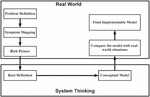
It is a SOFT OR methodology which has the capability to generate deep learning and understanding for interpreting, defining, and exploring complex unstructured problems. This system considers those people who run the organizational process or activity based on their wisdom which has a severe effect on the result of the system. This methodology can analyze, intercept and predict human behaviour by considering the main issues of the system. This approach has been successfully applied in several fields of the problem to develop a framework for our requirement. SSM methodology is used in this paper in a way to accommodate the perspective and interests of different stakeholders. The key reason for selecting the SSM approach is that it proposed an implementable systematic framework developed by capturing real-world perceptions and converting them into purposeful action. SSM technique can be shown as a seven-stage process (Figure 1) in which the concept of human activity is considered. These stages are as follows:
Stage 1: – Problem identification.
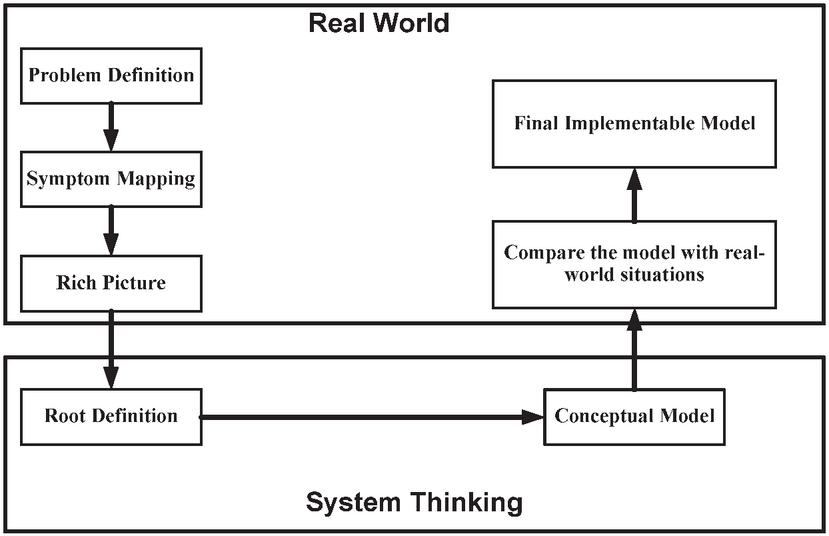
Figure 1 Different stages of Soft System Methodology (SSM).
Stage 2: – Identification and analysis of stakeholders’ perspective from developed symptoms map.
Stage 3: – Development of a rich picture and analysis of issues and root causes
Stage 4: – Root definition formulation.
Stage 5: – Development of an initial conceptual model.
Stage 6: – Comparison between the initial conceptual model and real-world condition & identification of changes.
Stage 7: – Development of final implementable model with desirable and feasible changes & actions to improve.
The seven steps of SSM can be classified into 4 major sections which are as follows:
• Symptoms map
• Rich picture
• Root definition
• Conceptual map
The above seven stages may be further divided into real-world activities and system thinking activities. Real-world activities include stages 1,2,3, 6 & 7 whereas system thinking activities include the 4 & 5 stages of the SSM model. The SSM approach starts with defining a problem followed by symptom mapping with the help of the identification of stakeholders involved in the organization to solve key issues related to the problem. After that, a rich picture is developed which gives a root definition that overcomes the root causes of the problem then a conceptual model is developed to address the root causes then this conceptual model is compared with a real-world situation. After identifying changes, modifications are done in the conceptual model and then the final implementable model is developed which defines the key action plans for the system which can be used in the real world.
EVsCI must be transformed into proper EVsCI for developing countries. By monitoring the performance of EVsCI in different dimensions, we can notice that at present there is no well-recognized management framework for getting proper EVsCI. Barrier Management System (BMS) plays a very important role in managing and implementing proper EVsCI for public utility. Soft system methodology (SSM) has been employed to consider various barriers in the way of adoption of EVs in place of the traditional transportation system. SSM has been used in the present study to overcome the limitations and barriers which hinder the sustainable charging infrastructure.
SSM has the capability to handle complex real-world situations by considering different issues at different levels of organizations and service stations. This methodology can accommodate the perspective of various stakeholders. It proposed a framework developed by considering real-world perceptions and transforming them into meaningful action.
4.1 Application of SSM in EVsCI
To understand the issues related to not manufacturing and adopting EVs on a large scale, some organizations are selected considering different aspects of this study. Data are collected through face-to-face and online (Skype) interviews with various experts working at the different organizational levels of the identified organization. The experts were identified based on their professional experience, and involvement in the related area. The research objectives are kept hidden in the interview so that any favour or against responses may be avoided. A preliminary set of questions was initially communicated to the experts before the 1st interview, which was then added by some more questions during the next rounds of interviews. Questions were framed considering different aspects of EVs in manufacturing and adoption by the public having proper charging infrastructure. Interviews were conducted for around 5–6 interview hours and each interview lasted for 30–45 minutes. Later, email and telephonic calls were used with some experts for clarification. In some cases, reminder emails were used. Then the final implementable model and BMS framework were validated by personal interaction with each expert. The data collected from the experts were complemented by secondary data provided by the organizations and websites. In this way, information received by the experts was cross-checked with the secondary data.
At the beginning problem of the study has been formulated which may be written as a problem statement.
“Why companies and the public are not reluctant and hesitant to manufacture/adopt EVs?
And, what are the reasons for poor charging infrastructure in developing countries?”
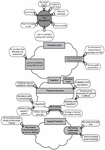
This problem statement states the decision situation, and defines the scope of the study and different dimensions of analysis. The main aim of this research work is to understand key reasons/barriers in EVsCI. It establishes the gap between the current status of EVsCI and desired state of proper EVsCI. Based on the problem statement, various stakeholders were identified from different organizational levels such as government, technology providers, transporter, consumers/public, and academicians of different organizations. Then a symptoms map (Figure 2) is developed which provides a holistic view of a context through the opinions of experts. This map shows the persisting issues, viewpoints, opinions, and perceptions of various stakeholders. The mapping was done at four levels, such as the top management level, core functions level, operating level, and support functions levels.
• The top management level comprises of stakeholders who are the top leaders or CEO who are involved in decision making.
• The second level includes experts of the executive level, and low-level employees working in various departments.
• The third level is the operating level having different functional departments that are involved in different operations.
• The fourth level consists of support functions such as staff at charging stations, administrations, etc.
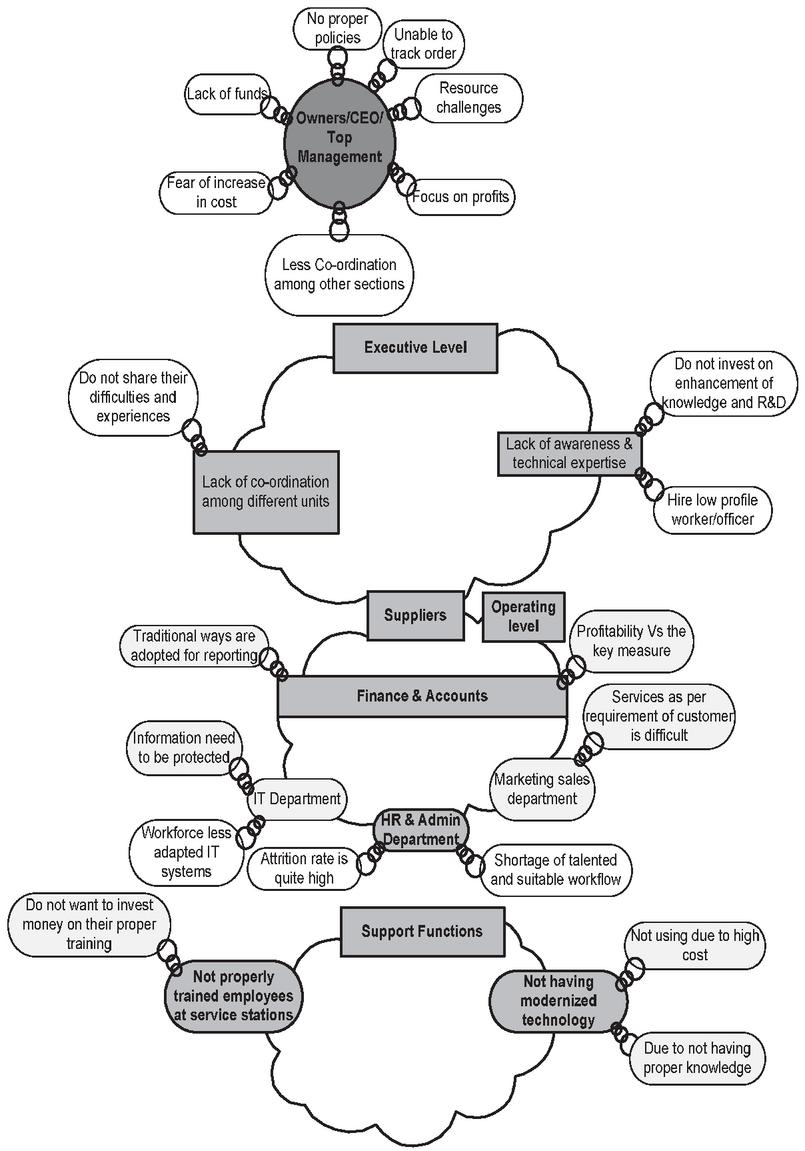
Figure 2 Symptoms map.
From the symptoms map, the issues underlining the perceptions of the key stakeholders were identified. It was observed that perceptions of experts on the sustainability of proper EVsCI are different at all levels. The top leaders/CEO think that although sustainability is good, but it is bad for the business purpose. Top leaders have a mindset that considers increased costs of the services. The participants who are involved in operational aspects of the organization have the opinion that they generally take the decision as per the top management and customers’ expectations. There is no clear-cut direction and strategic goal from top management that can encourage them to take the decision as per sustainability practices.
A rich picture is developed by analyzing the symptoms map defining problem statements in stage 3. Rich pictures are diagrammatic representations of a situation’s entities, structures processes, relationships, and issues. Figure 3. depicts the rich picture highlighting the various conflict areas. These conflicting areas are then mapped to identify the root causes of the problem as shown in Table 3.
These identified conflicts areas highlighted four major root causes persisting in present EVsCI that obstruct the adoption of EVs in place of traditional transportation systems.
1. High maintenance cost
2. Lack of proper government support
3. Poor consumer perception and knowledge
4. Lack of space of EV charging
5. Lack of charging stations
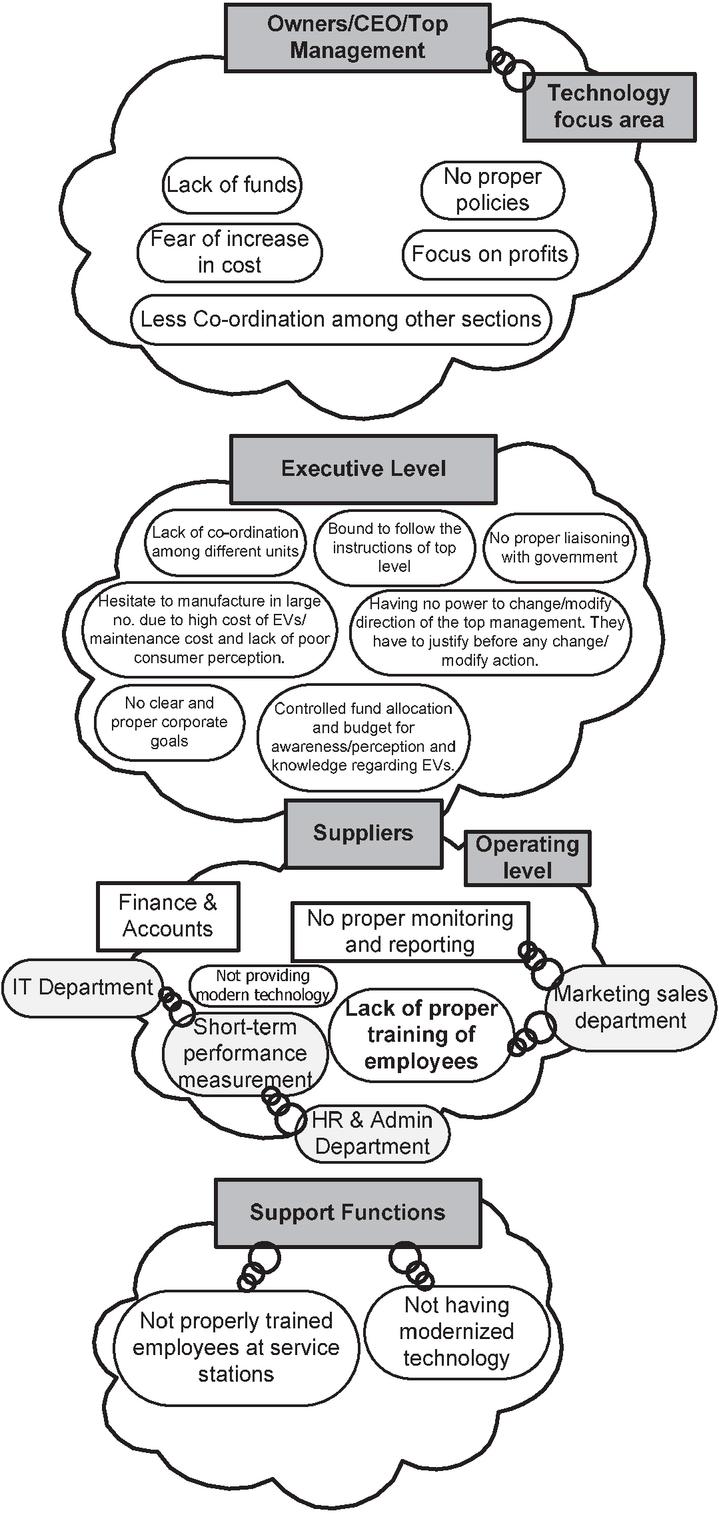
Figure 3 Rich picture.
The next step is the formulation of the root definition of the required systems. For these, CATWOE is defined for the system which is shown in Table 4.
Once a system boundary is defined through CATWOE, root definition is stated for the required system. The important thing of the root definitions is to examine the transformation from a different perspective as shown in Table 5. It helps in considering the viewpoints of each actor identified with the CATWOE. Root definition is an iterative process which is repeated for another perspective and finally, root definition for all the perspectives can be integrated into one. The final root definition is as follows:
“A BMS is developed for proper EVsCI with an objective to provide services at optimum costs, less emissions of CO and low social vulnerabilities”. These root definitions assert that there is a strong link between BMS and proper EVsCI.
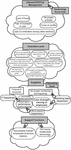
The next process is to start identifying lacunas in the existing process and set of action plans needed to achieve the proper set. Analyzing the root definition (Table 5), an initial conceptual map was developed that defines the required systems. Such maps are designed to do the job. Figure 5 shows the initial conceptual map which is a representation of the future developed system. The initial conceptual model highlighted three focused areas of the development system- existing EVsCI, proper EVsCI, and BMS.
Table 3 Root causes of the problem
| S. No. | Root Cause | Problems |
| 1 | High maintenance cost | Top Management
• Hesitate to manufacture in large no. due to high cost of EVs/maintenance cost and lack of poor consumer perception. Top Management-Operating Level• Not providing modern technology |
| 2 | Lack of proper government support | Top Management-Executive Level
• No proper liaisoning with government |
| 3 | Poor consumer perception and knowledge | Top Management-Executive Level
• Controlled fund allocation and budget for awareness/perception and knowledge regarding EVs. |
| 4 | Lack of space of EV charging | Top Management-Executive Level
• Not paying proper attention • Not providing adequate funds to acquire proper space • Lack of awareness |
| 5 | Lack of charging stations | Top Management-Executive Level
• No clear and proper corporate goals • No proper government support and policies • Low investment in technology and R&D • Resistance to change business process Top Management-Operating Support Level• Not properly trained employees at service stations • Not having modernized technology |
Table 4 CATWOE (System boundary is defined)
| S. No. | CATWOE | Abbreviation | Description |
| 1 | C | Customers | Customers, society |
| 2 | A | Actors | Logistics service providers, stakeholders, competitors |
| 3 | T | Transformation process | Organizational Policies Market Forces Innovation in operation → Customer requirement at minimum cost |
| 4 | W | Weltanschhaung (World-view) | The world is moving towards EVs. An increase in manufacturing and its adoption by people depends upon minimizing barriers in charging infrastructure. |
| 5 | O | Owners | Top management of the company provides policy, goals, and approvals to facilitate proper charging infrastructure |
| 6 | E | Environmental Constraints | Resources constraints, financial constraints, suitable space constraints |
Table 5 Root definitions formed from different world views
| Root Definitions | Description |
| Root Definition 1 (Service Quality World view) | An efficient charging infrastructure system providing to customers at low costs. |
| Root Definition 2 (R&D World view) | A system that involves policies driving technological recent development. |
| Root Definition 3 (Environmental World view) | Provides environment-friendly system with minimum cost and maximum facilities. |
| Root Definition 4 (Sustainable World view) | A sustainable based charging infrastructure provides logistics services to meet required facilities at a reasonable cost. |
The conceptual map developed in stage 5 was compared with the real-world expression at stage 6. The objective of these comparisons was to generate debate regarding the possibility of changes and then, possible changes are identified which may vary in desirability and feasibility.
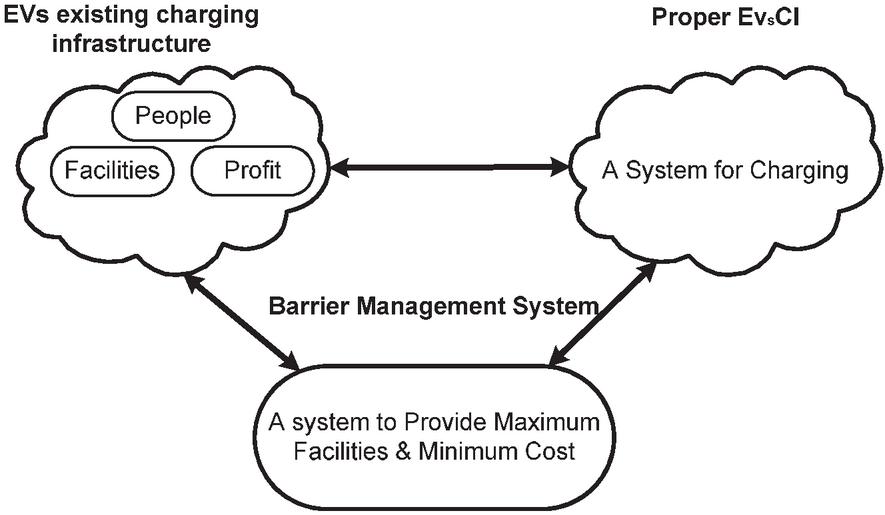
Figure 4 Initial conceptual map.
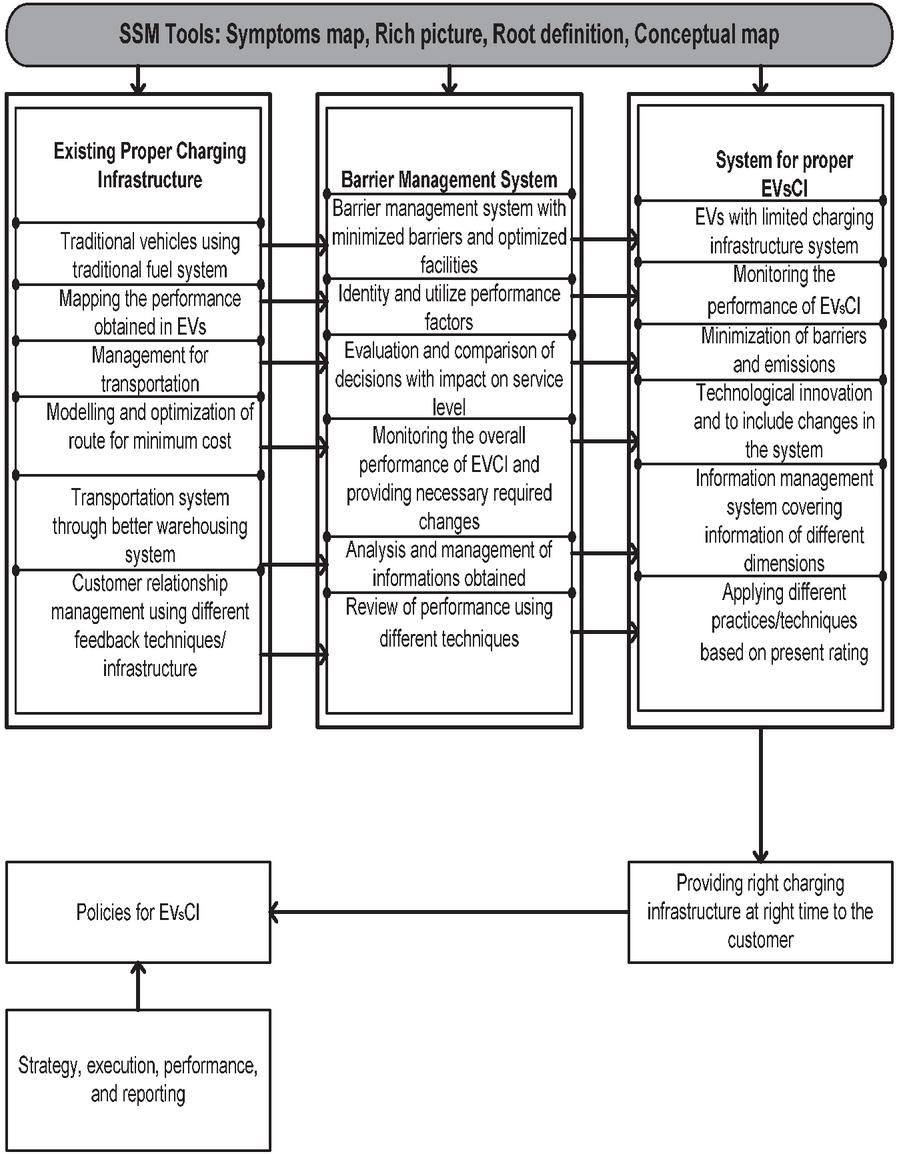
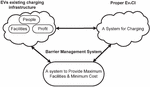
Figure 5 Final implementable model.
Proper EVsCI should meet the need of stakeholders. BMS is the criteria system that transforms existing EVsCI to proper EVsCI. Further analyzing each component of the initial conceptual map, a final implementable model is developed (Figure 5), implementing desirable and feasible changes identified in the previous stage. Figure 5 shows a final implementable model developed for getting the proper charging infrastructure of EVs from existing charging infrastructure with the help of BMS, policies for EVsCI, and providing the right charging infrastructure at right time with proper execution, reporting and performance.
The final implementable model also highlights existing EVsCI, proper EVsCI, and BMS. The next step was to develop a barrier management framework that gives proper EVsCI. The developed BMS framework is shown in Figure 6. shows inter-relationship among various elements.
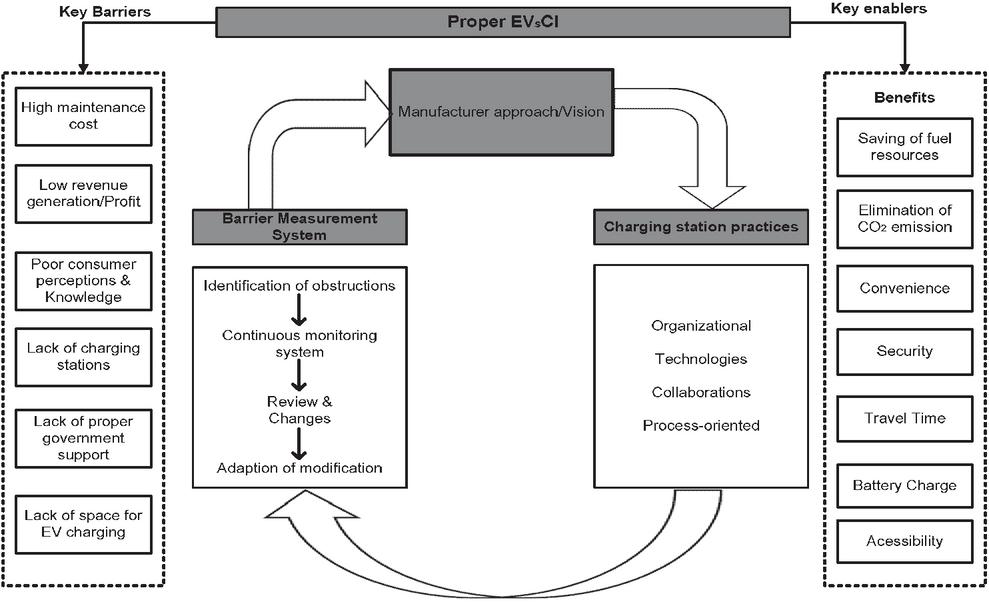
Figure 6 Barrier management framework for proper EVs charging infrastructure.
The framework presented a model for organizational activities and highlighted some elements which are described as follows:
(a) The long-term and short-term vision of the organization to achieve proper EVsCI.
(b) How the organization is monitoring and reporting the proper EVsCI performance.
(c) The organization needs to review its performance.
Each element of the proposed BMS is further described:
Element 1: – Where the organization/manufacturer wants to be At first, a good BMS is to develop a proper goal/vision towards suitable EVs for developing countries and proper EVsCI, so that the public may adopt EVs without hesitation and get proper services at charging stations. The main objective of the manufacturer and service provider is to transform existing EVsCI into proper EVsCI.
Element 2: – How the organization will do it This element consists of seven sub-elements that drive sustainability in the way of getting proper EVsCI. These sub-elements are:
• Developing a habit/culture, so that saving fuel resources and minimization of CO emissions is our priority.
• Improving convenience, security, and accessibility.
• Improving travel time after charging EVs
• Improving charging of the battery at charging stations.
Element 3: – How the organization is currently working This element has a barrier measurement system. It involves broad organizational engagement towards getting proper EVsCI by
• Identification of obstructions
• Continuous monitoring of economic, environmental, technical, social and overall performance.
• Review and changes of the system
• Adaption of changes and modification
Element 4: – How does the organization need to act This element comprises charging station practices developed by organizations/service providers to facilitate the public. After having a literature survey and detailed discussion with experts, these charging station practices are categorized into four categories such as organizational, technologies, collaborations, and process-oriented.
The implementation of the complete BMS framework is dependent on the determination of top leaders keeping their vision. The vicious circle among the elements of benefits, BMS, and charging station practices represents continuous improvement and learning of the organization.
5 Discussion
A proper EVsCI requires management of economical, environmental, technical along with societal issues. The formation of BMS must be shared by organizations and customers to make the system sustainable and proper EVsCI. A good BMS enables to manage the strategic goal of business strategy to achieve proper EVsCI to a greater extent. As per the final implementable model, the elements of the BMS for EVsCI are parameters which can monitor the performance of EVsCI on three dimensions to achieve proper EVsCI. It requires absolute mapping of the processes in order to achieve suitable matrices. These barriers should show the key drivers of strategic vision.
Proper EVsCI can be achieved by employing technologies to optimize the operations. A BMS monitors the overall performance of any small changes and modifications in the technologies/techniques to improve the EVsCI in the direction of achieving it as proper.
The BMS has the capability to monitor and analyze any information obtained through key barriers. Information received through BMS may be implemented to EVsCI in order to achieve proper and suitable EVsCI for developing countries. The framework gives the way to identify and use various barriers to achieve the desired goal.
6 Conclusion
This paper proposed the framework for getting proper EVsCI using PESTELI analysis and soft-system methodology (SSM). The framework was developed using a four-level analysis of the different views and opinions of stakeholders. This methodology identified the main root causes for the existing EVsCI. This paper has highlighted several issues in the way of manufacturing EVs in large no. and their adoption by the public. The SSM draws the attention of top leaders of the organization to the entire system. This methodology considers people as an important and internal part of the system and it considers the viewpoints and opinions of stakeholders also. This methodology is capable to capture the perceptions of all stakeholders regarding the entire procedure which will be ultimately beneficial. Using SSM, the process becomes as important as the outcome. The other advantage of this technique is that it compels the user not to work for technical but rather work for other solutions.
References
[1] Ratanavaraha, V. and Jomnonkwao, S. (2015) ‘Trends in Thailand CO emissions in the transportation sector and Policy Mitigation’, Transport Policy. Elsevier, 41, pp. 136–146. doi: 10.1016/j.tranpol.2015.01.007.
[2] IEA (2015) ‘CO Emissions from Fuel Combustion 2005’, CO Emissions from Fuel Combustion 2005. doi: 10.1787/co2\_fuel-2005-en-fr.
[3] Ehsani, M., Gao, Y. and Emadi, A. (2010) ‘Modern Electric, Hybrid Electric, and Fuel Cell Vehicles’, Modern Electric, Hybrid Electric, and Fuel Cell Vehicles, (CRC Press,New York), p. 2020. doi: 10.1201/9781420054002.
[4] Mehregan, M. R., Hosseinzadeh, M., & Kazemi, A. (2012). An application of soft system methodology. Procedia-Social and Behavioral Sciences, 41, 426–433.
[5] Tachizawa, E. M., Alvarez-Gil, M. J. and Montes-Sancho, M. J. (2015) ‘How “smart cities” will change supply chain management’, Supply Chain Management, 20(3), pp. 237–248. doi: 10.1108/SCM-03-2014-0108.
[6] Li, C., Ren, J. and Wang, H. (2016) ‘A system dynamics simulation model of chemical supply chain transportation risk management systems’, Computers and Chemical Engineering. Elsevier Ltd, 89, pp. 71–83. doi: 10.1016/j.compchemeng.2016.02.019.
[7] Mosca, A., Vidyarthi, N. and Satir, A. (2019) ‘Integrated transportation – inventory models: A review’, Operations Research Perspectives, 6(September 2018), p. 100101. doi: 10.1016/j.orp.2019.100101.
[8] Siuhi, S. and Mwakalonge, J. (2016) ‘Opportunities and challenges of smart mobile applications in transportation’, Journal of Traffic and Transportation Engineering (English Edition). Elsevier Ltd, 3(6), pp. 582–592. doi: 10.1016/j.jtte.2016.11.001.
[9] Din, S., Paul, A. and Rehman, A. (2019) ‘5G-enabled Hierarchical architecture for software-defined intelligent transportation system’, Computer Networks, 150, pp. 81–89. doi: 10.1016/j.comnet.2018.11.035.
[10] Zhang, S. et al. (2018) ‘Fine-grained vehicle emission management using intelligent transportation system data’, Environmental Pollution, 241, pp. 1027–1037. doi: 10.1016/j.envpol.2018.06.016.
[11] Petrov, T., Dado, M. and Ambrosch, K. E. (2017) ‘Computer Modelling of Cooperative Intelligent Transportation Systems’, Procedia Engineering. The Author(s), 192, pp. 683–688. doi: 10.1016/j.proeng.2017.06.118.
[12] Chen, Y., Ardila-Gomez, A. and Frame, G. (2017) ‘Achieving energy savings by intelligent transportation systems investments in the context of smart cities’, Transportation Research Part D: Transport and Environment, 54, pp. 381–396. doi: 10.1016/j.trd.2017.06.008.
[13] Sadiku, M. N. O., Shadare, A. E. and Musa, S. M. (2017) ‘Smart Transportation: A Primer’, International Journal of Advanced Research in Computer Science and Software Engineering, 7(3), pp. 6–7. doi: 10.23956/ijarcsse/v7i3/01312.
[14] Wang, Y. et al. (2018) ‘Green information, green certification and consumer perceptions of remanufctured automobile parts’, Resources, Conservation and Recycling. Elsevier B.V., 128, pp. 187–196. doi: 10.1016/j.resconrec.2016.07.015.
[15] Bradley, T. H. and Frank, A. A. (2009) ‘Design, demonstrations and sustainability impact assessments for plug-in hybrid electric vehicles’, Renewable and Sustainable Energy Reviews, 13(1), pp. 115–128. doi: 10.1016/j.rser.2007.05.003.
[16] Bubeck, S., Tomaschek, J. and Fahl, U. (2016) ‘Perspectives of electric mobility: Total cost of ownership of electric vehicles in Germany’, Transport Policy, 50, pp. 63–77. doi: 10.1016/j.tranpol.2016.05.012.
[17] Prud’homme, R. and Koning, M. (2012) ‘Electric vehicles: A tentative economic and environmental evaluation’, Transport Policy, 23, pp. 60–69. doi: 10.1016/j.tranpol.2012.06.001.
[18] Tran, M. et al. (2013) ‘Simulating early adoption of alternative fuel vehicles for sustainability’, Technological Forecasting and Social Change. Elsevier Inc., 80(5), pp. 865–875. doi: 10.1016/j.techfore.2012.09.009.
[19] Larson, P. D. et al. (2014) ‘Consumer attitudes about electric cars: Pricing analysis and policy implications’, Transportation Research Part A: Policy and Practice. Elsevier Ltd, 69(September), pp. 299–314. doi: 10.1016/j.tra.2014.09.002.
[20] Egbue, O. and Long, S. (2012) ‘Barriers to widespread adoption of electric vehicles: An analysis of consumer attitudes and perceptions’, Energy Policy, 48(June), pp. 717–729. doi: 10.1016/j.enpol.2012.06.009.
[21] Zheng, J. et al. (2012) ‘Strategic policies and demonstration program of electric vehicle in China’, Transport Policy, 19(1), pp. 17–25. doi: 10.1016/j.tranpol.2011.07.006.
[22] Lane, B. and Potter, S. (2007) ‘The adoption of cleaner vehicles in the UK: exploring the consumer attitude-action gap’, Journal of Cleaner Production, 15(11–12), pp. 1085–1092. doi: 10.1016/j.jclepro.2006.05.026.
[23] Nocera, S. and Cavallaro, F. (2016) ‘The competitiveness of alternative transport fuels for CO2 emissions’, Transport Policy. Elsevier, 50, pp. 1–14. doi: 10.1016/j.tranpol.2016.05.013.
[24] Potoglou, D. and Kanaroglou, P. S. (2007) ‘Household demand and willingness to pay for clean vehicles’, Transportation Research Part D: Transport and Environment, 12(4), pp. 264–274. doi: 10.1016/j.trd.2007.03.001.
[25] Browne, D., O’Mahony, M. and Caulfield, B. (2012) ‘How should barriers to alternative fuels and vehicles be classified and potential policies to promote innovative technologies be evaluated?’, Journal of Cleaner Production, 35, pp. 140–151. doi: 10.1016/j.jclepro.2012.05.019.
[26] Brownstone, D., Bunch, D. S. and Train, K. (2000) ‘Joint mixed logit models of stated and revealed preferences for alternative-fuel vehicles’, Transportation Research Part B:Methodological, 34, pp. 315–338. doi: 10.4324/9781351161084-16.
[27] Krause, R. M. et al. (2013) ‘Perception and reality: Public knowledge of plug-in electric vehicles in 21 U.S. cities’, Energy Policy, pp. 433–440. doi: 10.1016/j.enpol.2013.09.018.
[28] Sierzchula, W. et al. (2014) ‘The influence of financial incentives and other socio-economic factors on electric vehicle adoption’, Energy Policy, 68, pp. 183–194. doi: 10.1016/j.enpol.2014.01.043.
[29] Capuder, T., Sprčisć, D., M., Zoričić, D., Pandžić, H., (2020). Review of challenges and assessment of electric vehicles integration policy goals: Integrated risk analysis approach,International Journal of Electrical Power & Energy Systems, vol. 119, 1–12.
[30] Mihailova, M., (2020), The state of agriculture in Bulgaria – PESTLE analysis, Bulgarian Journal of Agricultural Science, 26(No. 5), 935–943.
[31] Christodoulou, A.; Cullinane, K. (2019). Identifying the Main Opportunities and Challenges from the Implementation of a Port Energy Management System: A SWOT/PESTLE Analysis. Sustainability, 11, 6046.
[32] Shi, Y., Arthanari, T., Liu, X., Yang B., (2019) “Sustainable transportation management: Integrated modeling and support”, Journal of cleaner production 212, 381–1395.
[33] Clayton, A.M.H. and Radcliffe, N.J. (1996), Sustainability: A systems approach, west view Press, Boulder, CO.
[34] Stowell, F.A. and West, D. (1989), “Expert systems: ramifications for the knowledge engineer”, System analysis modelling simulation, vol. 16, no. 9, pp. 673—678.
[35] Sultan, V., Bitar, H., Alzahrani, A., Hilton, B. (2017) A Conceptual Framework to Integrate Electric Vehicles Charging Infrastructure into the Electric Grid, International Journal of Smart Grid and Clean Energy, vol. 6, no. 3.
[36] Shankar, R., Acharia, S., Baveja, A. (2007). Soft-system knowledge management framework for new product development. Journal of knowledge management, vol. 13, no. 1, pp. 135–153.
[37] Iles, V., Sutherland, K. (2001). Organisational change: A Review for health care Managers, Professional and Researchers. National Co-ordinating Cenntre for NHS Service Delivery and Organisation R&D, London.
[38] Nunamaker, J., Chen, M., Pudin, T.D.M. (1991). Systems development in information systems research, J. Manag. Int. Syst. 7(4), 89–106.
[39] Tajino, A., James, R., and Kijima, K. (2005). Beyond needs analysis: soft systems methodology for meaningful collaboration in EAP course design. Journal of English for Academic Purposes, 4(1), 27–42.
Biographies

Ruchita currently a full-time research scholar at Bharti School of Telecommunication Technology and Management, Indian Institute of Technology Delhi, India, holds a bachelor’s degree in Electronics and Communication Engineering. She earned her M.Tech from Indira Gandhi Delhi Technical University for Women, India. Her areas of interest include supply chain management, smart transportation and electric vehicles. Currently, she is working in the area of Electric Vehicles Charging Infrastructure.

Ravi Shankar is currently ‘Amar S. Gupta Chair Professor of Decision Science’ and Professor of Operations and Supply Chain Management in the Department of Management Studies, Indian Institute of Technology Delhi, India. He is Fellow of prestigious Indian National Academy of Engineers (FNAE). He is also Honorary Visiting Professor of Decision Science at School of Economics & Management, Loughborough University, UK. His research citations exceed 32000 with an H-index of 75 (as on November 2021). His publications have appeared in various journals including Technology Forecasting and Social Change, Transportation Research Part E, Journal of Operations Management, European Journal of Operational Research, Omega, International Journal of Production Research, International Journal of Production Economics, Computers and Operations Research, etc.
Distributed Generation & Alternative Energy Journal, Vol. 38_1, 85–110.
doi: 10.13052/dgaej2156-3306.3815
© 2022 River Publishers