Transmission Congestion Management in Deregulated Power System Using Adaptive Restarting Genetic Algorithm
Madhu Mohan Gajjala* and Aijaz Ahmad
Department of Electrical Engineering, National Institute of Technology, Srinagar 190006, India
E-mail: madhumohan@nitsri.net
*Corresponding Author
Received 29 November 2021; Accepted 26 March 2022; Publication 09 December 2022
Abstract
Power systems in a deregulated environment have more intense and recurrent transmission line congestion than conventionally regulated power systems. With the help of generation rescheduling, this article shows how to effectively manage congestion in the day-ahead energy market by taking corrective measures to reduce congestion. The research employs an adaptive restarting genetic algorithm (ARGA) to provide an effective congestion management strategy in a deregulated power market (DPM). The study makes two significant contributions. First, the generator sensitivity factors (GSF) are calculated to choose re-dispatched generators. Second, the least congestion cost is calculated using the adaptive restarting genetic algorithm. Several different line outage contingency cases on IEEE 30 bus systems are used to examine the suggested algorithm’s implementation efficacy. The simulation results demonstrate a significant reduction in net congestion costs, resulting in a more reliable and secure power system operation. The proposed algorithm was tested in a python environment, and power flow analysis was done using the PANDAPOWER tool. The acquired results are contrasted using several contemporary optimization approaches to validate the suggested technique’s validity. The ARGA technique gives a lower congestion cost solution than the particle swarm optimization (PSO), real coded genetic algorithm (RCGA), and differential evolution (DE) algorithm.
Keywords: Congestion management, deregulated power system, genetic algorithm, optimization.
Nomenclature
| ARGA | Adaptive Restarting Genetic Algorithm |
| DPM | Deregulated Power Market |
| PSO | Particle Swarm Optimization |
| RCGA | Real Coded Genetic Algorithm |
| DE | Differential Evolution |
| CM | Congestion Management |
| GA | Genetic Algorithm |
| ISO | Independent System Operator |
| GSF | Generator Sensitivity Factors |
| P | change in the power flow in congested line -l, which connects buses p and q |
| P | change in the i generator active power generation |
| generators incremental bid cost | |
| generators decremental bid cost | |
| P | adjustment active power of the generator |
| the number of participating generators | |
| the active power produced by the i generator as determined by the system operator | |
| P | not participated generator active power generation |
| total system load | |
| power loss | |
| rescheduled generation of a specific generator | |
| active power of the i bus | |
| reactive power of the i bus | |
| conductance of the line connecting the i and j buses | |
| susceptibility of the line connecting the i and j buses | |
| maximum apparent power loading limit of the i line | |
| the apparent power loading of the i line |
| , | minimum and maximum voltage limits of the load bus. |
| P | maximum active power flow limit of the line |
| active power generation limits of the i generator | |
| power adjustment limits of the i generator | |
| V & V | voltage limits of the i bus |
1 Introduction
1.1 General
The restructuring and deregulation of the power industry have led to a significant shift in the electric power system’s planning, operations, and management. Since deregulation, electricity generation, transmission, and distribution companies have become self-governing entities. More traders are in the electricity market in response to the growing global demand for power. Transferring energy from one end to the other is required in a transaction. The network is said to be congested if all of the proposed transactions cannot be accommodated simultaneously. The congestion of a transmission system happens when a network’s physical limits, voltage limits, or line’s stability limits are all exceeded. Congestion is expected in a deregulated power market because electricity can be bought and sold without regard to the constraints imposed by the power system. Congestion is also caused by a variety of factors given as line failure, insufficient reactive power support, equipment failure, and weather diversity, all of which pose a real threat to the security of the power system and may increase electricity prices. Congestion management (CM) refers to the process of taking actions or putting in place control measures to relieve congestion in transmission networks. In CM, techniques like generation rescheduling, load shedding, market splitting, zonal pricing, line switching, and others are frequently employed [1].
1.2 Literature Survey
The main disadvantage of conventional CM approaches is that they necessitate the system operator’s time and effort in computation. The heuristic fuzzy adaptive bacterial foraging methodology was utilized to efficiently reschedule active power generation to reduce congestion [2]. Balaraman et al. [3] estimated the minimum congestion cost by finding the optimal generation rescheduling strategy to reduce congestion using a real coded genetic algorithm. Pandiarajan et al. in [4] have suggested using a hybrid DEPSO algorithm to manage transmission congestion. Using a differential evolution (DE) algorithm to control congestion in a DPM was proposed by Balaraman [5]. For optimal congested cost calculations, the severity index was minimized. Hazara and Sinha [6] presented the multi-objective PSO algorithm-based part optimum solutions to alleviate overloads and reduce operating costs. Yesuratnam and Thukaram [7] have proposed a generation rescheduling technique based on relative electric distance (RED). The RED algorithm has been used to reduce the load on the overloaded lines by accounting for the generator’s contribution. B.K. Panigrahi et al. [8] have proposed the Bacterial Foraging (BF) algorithm for CM. For the nonlinear congestion management cost problem, the authors I. Batra and S. Ghosh [9] proposed an improved tent map embedded chaotic particle swarm optimization (ITM-CPSO) technique. Balaraman and Kamaraj [10] developed an effective PSO algorithm to reduce line overloads with minimal generational deviations. Liu et al. [11] used an ant colony technique to solve the congestion cost problem after transforming it into a nonlinear programming problem.
Sarwar et al. [12] developed an efficient PSO optimizer to ease congestion. Boonyaritdachochai et al. [13] focused on an optimal CM method in a DPM by applying PSO with time-varying acceleration coefficients. CM in hybrid electricity markets, combining pool and bilateral transactions, was demonstrated by Esmaili et al. [14] using a modified Benders decomposition technique. Bender’s decomposition was used in congestion management, and an innovative subproblem and convergence criterion was established. Using the normalized normal constraint method, Hosseini et al. [15] developed a new effective multi-objective mathematical programming solution strategy. Meta-heuristic-based methodologies proposed by Verma and Mukherjee [16, 17] have reliable and efficient ways to reduce transmission network congestion via active generator power rescheduling by using firefly, ant lion optimizer algorithms.
The Chaotic Darwinian Particle Swarm Optimization (CDPSO) method proposed by Namilakonda et al. [18] is utilized for establishing the optimal schedules of demand response loads and the reschedules of conventional generators to reduce congestion. Sunnah Kim et al. [19] suggested a probabilistic power output model of wind generating resources for network congestion control. The hybrid PSO-DE and TCR-based method provided by Divya Asija et al. [20] is suggested for optimum size and position of the distributed energy storage system (DESS) hence reducing multi-objective fitness function for managing congestion of each hour in a 24-hour time frame.
1.3 Research Gaps
According to previous research, the following flaws in the CM cost evaluation procedure have been identified, and they are discussed in greater detail here.
• There is a deficiency in a robust algorithm requiring less information from generator units to determine the number of participating generators for rescheduling purposes.
• Due to its poor theoretical guarantee, stochastic optimization approaches provide a probabilistic guarantee of finding the optimal global solution. It is always preferable to have a GA capable of finding the optimal global solution with a high success probability.
• Nonexistence capability of immediately restarting search process in GA
• Nonexistence of comparison of the various convergence rate of different optimization algorithms at one place.
1.4 Contribution of the Current Work
This paper’s objectives can be summarized as follows:
• The suggested ARGA algorithm’s performance is evaluated on IEEE 30 bus standard power system, and the results are reported.
• A comparison was made between the best results obtained by ARGA and those obtained by various recently reported algorithms such as RSGA, PSO, and DE. Among the algorithms available for the CM problem, ARGA is the most efficient.
• Congestion management in a deregulated energy market necessitates the consideration of a variety of optimization approaches, including convergence rate, optimal rescheduling of generation, minimum congestion costs, and system losses after and before CM.
In this paper, the primary purpose is to provide a novel optimization technique for dealing with CM problems in a DPM for various situations by rescheduling the real power of generators while reducing the cost of congestion. The ARGA algorithm is being used in this investigation to finish the task. The primary goal of this study is to assist the ISO in limiting the overburden of transmission lines in the most efficient manner possible.
The Genetic Algorithm (GA) has been used as one of the most extensively used global optimization approaches in many works. Although GA can only provide a probabilistic assurance that the optimal global solution will be found, it does offer a weak theoretical guarantee like other search approaches. Finding the optimal global solution with a high probability of success is always desirable when using a GA. This paper proposes a new GA structure that incorporates adaptive restarting and the transfer of chromosomal elites to improve the algorithm’s success rate in locating the best global solution to the problem. Several case studies show that the proposed GA structure is robust when tackling CM problems.
2 Problem Formulation
Congestion control through generator rescheduling is a two-part problem. Part I of the problem is to determine the sensitivity of the generators for selecting the participation generators. We’ve managed to create congestion by employing various contingency tests in this case. Adaptive restarting genetic algorithm is used for Part II of the problem, which involves optimal rescheduling generators to reduce congestion. ARGA is used to calculate the deviation from the preferred schedule of a dispatch.
2.1 Participating Generators Selection
Generator sensitivity factors (GSF) are considered to select participating generators for the rescheduling process [13]. The GSF represents the variation in active power flow of a particular congested line due to the produced active power variation in the i generator. The GSF of the i generator is calculated using Equation (1).
| (1) |
2.2 Rescheduling of the Sensitive Generators
The GSF values mentioned earlier concern the slack bus as a reference. As a result, the slack bus generator’s sensitivity to any congested line in the system is always zero. When a line is congested, the ISO’s job is to identify the generators with the highest sensitivity values, non-uniform and high in magnitude. The ISO then engages in CM by rescheduling the generator’s active power outputs as essential to mitigate congestion. The bids obtained from the participating generators are utilized to compute the cost of congestion. According to this problem, the objective function is as follows:
Minimize congestion cost (CG).
| (2) |
Subjected to
1. Equality constraints
(a) Power equilibrium constraint
| (3) |
Where .
(b) Real and reactive power balance equations
2. Inequality constraints
(c) The transmission line’s apparent power flow limits are as follows:
| (6) |
(d) Load bus voltage limit constraints
| (7) |
(e) Power limit constraints of generation
| (8) | |
| (9) | |
| (10) |
(f) Security constraints
| (11) | |
| (12) |
3 Adaptive Restarting Genetic Algorithm
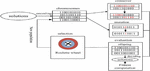
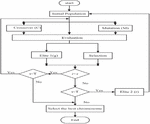
The essential components of conventional GA are selection, crossover, mutation, and chromosome encoding are shown in Figure 1. In addition to these, the algorithm structure also impacts the performance of this process. The ARGA is a framework that aims to improve the efficiency of a genetic algorithm by developing a structure that can increase its probability of finding the optimal global solution [21]. As can be seen from Figure 2, there are two loops in the proposed adaptive restarting GA. The smaller loop is, in essence, a traditional GA, which involves genetic operators: selection, crossover, evaluation, and mutation. The second loop contains several novel features of the ARGA organizational structure; they are given below.
• If the GA becomes trapped in a local optimum, it can restart its search process based on the adaptive state to escape.
• The GA includes a module for generating local solutions within the GA loop to maximize the GA’s exploitation.
• Using Taguchi Experimental Design as a foundation, a systematic approach has been proposed to fine-tune the general algorithm’s parameter set so that exploration and exploitation are equally weighted in the GA’s search for the best global solution. The genetic algorithm has been restarted in a smaller loop using the obtained high-quality chromosomes.
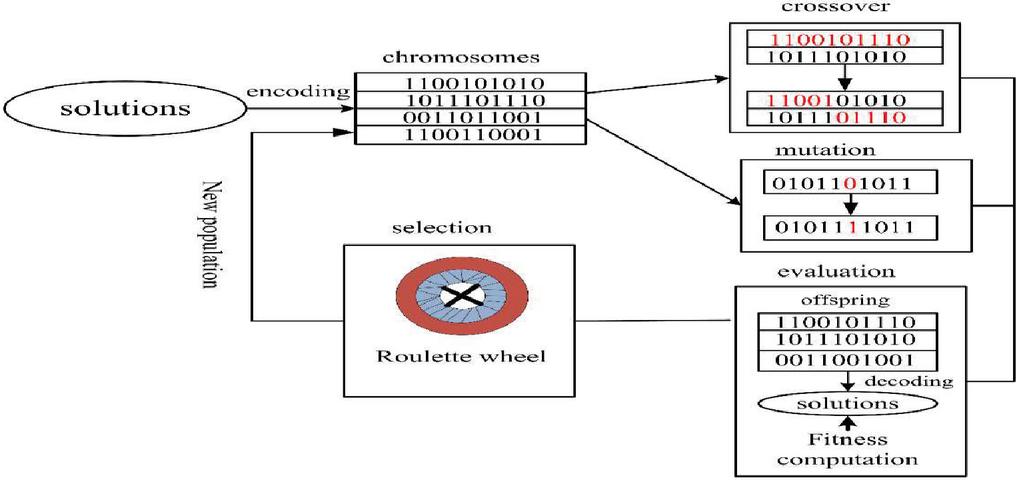
Figure 1 Traditional structure of GA [22].
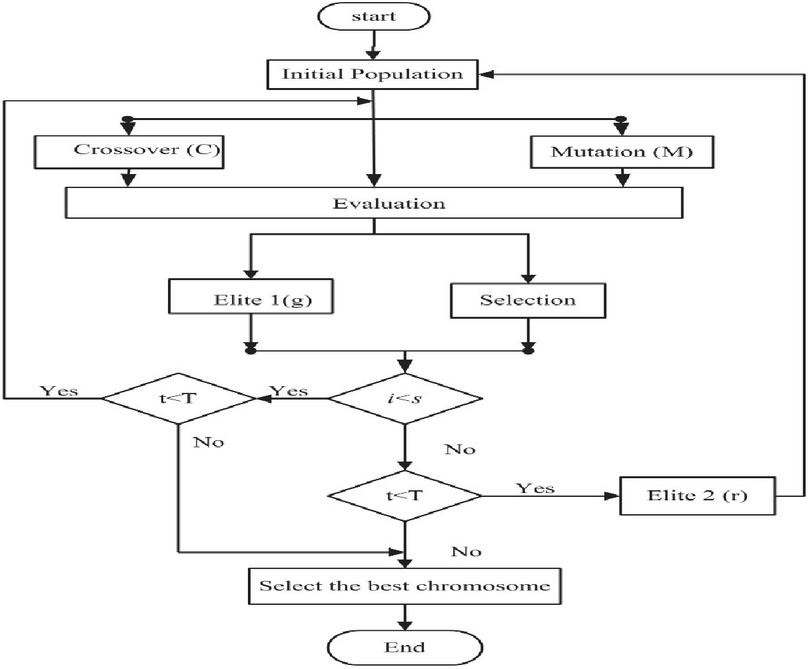
Figure 2 Flow chart of adaptive restart genetic algorithm [21].
Each loop is controlled by two termination criteria, one adaptive restarting condition (s), and one maximum number of generations. If the best solution obtained thus far does not improve after a specified number of consecutive generations, indicated by parameter s, the GA’s evolutionary process will be repeated. Consequently, the proposed ARGA would have numerous evolutions, each of which would begin with a different initial population than the previous evolution. The parameter ‘i’ indicates the number of successive generations that have passed without improving upon the best solution found thus far. In contrast, parameters T and t reflect the given computing period and current computing time, respectively. The proposed adaptive restarting GA can be explored and exploited by appropriate parameters (p,c,m,s,g,r) selected by users. As depicted in Figure 2, special elite chromosomes (r) will be updated and transmitted from one evolutionary stage to the next. Finally, the Taguchi experimental design approach fine-tunes the proposed GA’s parameters. which include crossover rate (c), population size (p), mutation rate (m), elite count 2 (r), elite count 1 (g) and adaptive restarting condition (s). Because of its popularity and robustness, roulette wheel selection is used in this work. The computing time is used as the termination condition for the proposed GA.
4 Implementation of ARGA for CM
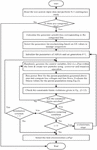
Solving the CM problem requires identifying decision variables such as generator power that must be rescheduled while congestion occurs. Selected generators are dispatched based on the minimum congestion cost arising from decision variables (PP stands for adjustable active power and is the difference in generator output power between the basic case and the power generation after the ease of congestion. Representation of the decision variables (P) and the construction of the fitness function are two of the most important aspects to consider when solving any optimization problem. It is necessary to evaluate the fitness values of each new population. As part of evaluating the population’s fitness, it is checked to see if any state variables have been violated. Figure 3 depicts an ARGA-based congestion management flow chart.
Six factors need to be tuned to maximize the GA performance, as stated in Section 4. As mentioned in Section 3, Table 1 displays the parameters and their experimental values. In this article, the crossover and mutation have given in the number of chromosomes crossed and mutated. Taguchi experimental design approach was used to select the parameters of the proposed GA, which was designed using the Taguchi Orthogonal Array Design—L25 (5) in MINITAB [23]. Table 2 is a list of the parameters that were selected for the proposed GA.
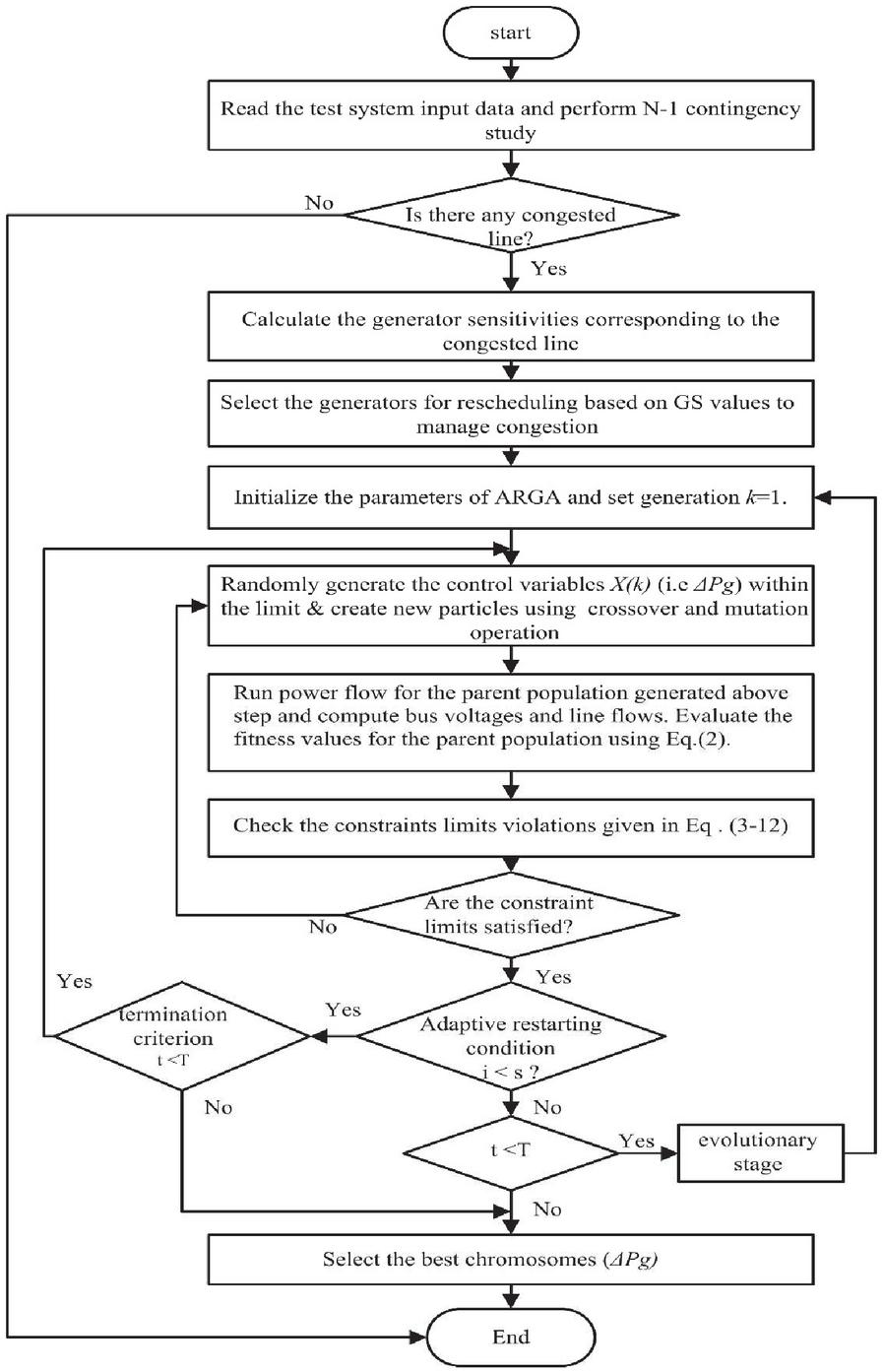
Figure 3 Flow chart of ARGA-based congestion management.
5 Results and Discussion
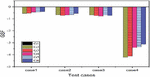
The proposed ARGA was implemented in a python environment to solve the CM problem given in Equation (2), and its selected parameters are shown in Table 2. The proposed approach for rescheduling generation is demonstrated using the IEEE 30 Bus system. Figure A in the appendix section represents the single line diagram of the IEEE-30 Bus test System. All system data and power flow analysis have been done using the PANDAPOWER tool [24]. N-1 contingency study is carried out to find severe outages. The different contingency test cases are listed in Table 3. Table 4 provides the pricing bids for CM submitted by the generator companies (GENCOS). The N-R power flow is done in each case, and the overloaded lines are identified. The anticipated number of power violations on the congested lines and the characteristics of the congested line are shown in Table 5. Generators’ GSF values for all test cases are depicted in Figure 4.
Table 1 Parameters of the proposed GA and their experimental levels
| Level | |||||||
| No | Parameter | Code | 1 | 2 | 3 | 4 | 5 |
| 1 | Population size | p | 20 | 40 | 60 | 80 | 100 |
| 2 | Crossover rate | c | 10 | 40 | 70 | 100 | 130 |
| 3 | Mutation rate | m | 10 | 20 | 30 | 40 | 50 |
| 4 | Adaptive restarting condition | s | 2 | 5 | 10 | 15 | 20 |
| 5 | Elite count 1 | g | 1 | 3 | 5 | 7 | 9 |
| 6 | Elite count 2 | r | 1 | 5 | 10 | 15 | 20 |
Table 2 Selected parameter set of the proposed GA
| p | c | m | s | g | r |
| 60 | 10 | 50 | 2 | 3 | 10 |
Table 3 Simulated test cases of the selected test systems
| Test System | Test Case | Considered Contingency |
| IEEE 30 bus system | Case1 | Line 2–5 has disconnected, the load on buses 2, 3, 4, and 5 is raised by 35%. |
| Case2 | The load on bus 19 increased by 130% when Line 1–3 disconnected | |
| Case3 | Line 3–4 disconnected, and the load at bus 2 increased by 250%. | |
| Case4 | Disconnect line 1–2, and all busloads are raised by 30%. |
Table 4 Price bids submitted by GENCOs for IEEE 30 bus system
| Bus | Incremental Bid | Decremental Bid | Bus | Incremental Bid | Decremental Bid |
| Number | Cost ($/MWh) | Cost ($/MWh) | Number | Cost ($/MWh) | Cost ($/MWh) |
| 1 | 22 | 18 | 4 | 43 | 37 |
| 2 | 21 | 19 | 5 | 43 | 35 |
| 3 | 42 | 38 | 6 | 41 | 39 |
Table 5 Details of congested lines for IEEE 30 bus system
| Line Flow (MW) | ||||
| Test Case | Congested Lines | Before CM | After CM | Power Flow Limit (MW) |
| 1 | 2–6 | 81.27 | 64.25 | 65 |
| 4–6 | 92.76 | 68.79 | 90 | |
| 5–7 | 102.61 | 68.5 | 70 | |
| 6–7 | 136.39 | 95.5 | 130 | |
| 2 | 1–2 | 155.66 | 129.71 | 130 |
| 3 | 1–2 | 196.32 | 128.05 | 130 |
| 1–3 | 266.34 | 128.12 | 130 | |
| 4 | 3–4 | 382.84 | 118.59 | 130 |
| 4–6 | 134.64 | 74.62 | 90 | |
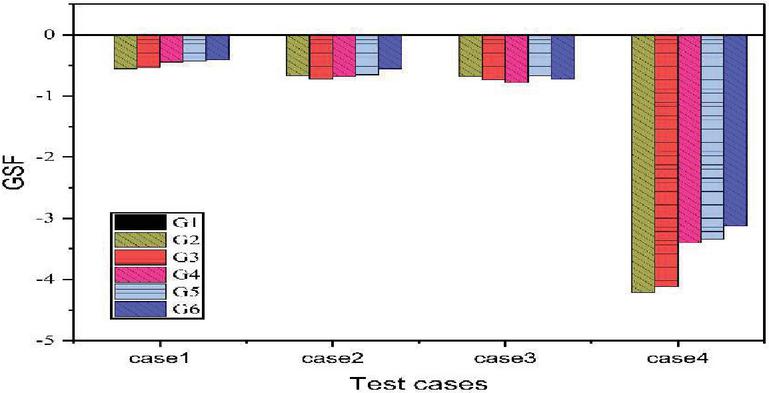
Figure 4 GSF factors for all test cases.
Test case 1:
Congestion has been caused in test case 1 due to a 2–5-line outage, a 35% rise in the load on buses 2, 3,4, and 5. From Figure 4, the GSF of the generators G2 and G3 significantly impact the congested line flow. It is possible to entirely ease this overloading of 58.06 MW by rescheduling generators optimally using the suggested ARGA. Because the GSF values of generators G2 and G3 are higher, the adjustment in the generation of these two generators is considered a control variable (apart from the first generator) for rescheduling. Initial populations are produced at random within the bounds of the limit. They are expressed as Ui {P, P; g 1, 2,…20}. With given parameters and a maximum of 500 iterations, the best solution was obtained with the following values: {5.8817, 31.75}. The solution suggests that the active power output of generators 2 and 3 has increased (except slack generator in bus 1). Finally, by executing the N-R power flow, it is possible to compute slack bus generation. In this case, it is determined that the slack generator should increase the generation by 13.539. The ARGA approach yields the lowest possible congestion cost of 1754.874$/MWhr, the lowest possible cost compared to the RCGA, PSO, and DE methods. The adjusted active power for congestion management in each test case is listed in Table 6. As indicated in Table 7, the minimal congestion cost attained by adopting the proposed ARGA method is the lowest compared to the minimum congestion costs achieved by previously reported algorithms.
Table 6 Control variable setting for corrective actions
| Generator Adjustment Power for Congestion | Net Power | ||||||
| Management (MW) | Adjustment | ||||||
| Test Cases | P | P | P | P | P | P | (MW) |
| Case1 | 13.539 | 5.8817 | 31.75 | 0 | 0 | 0 | 51.1707 |
| Case2 | 8.607 | 23.812 | 0 | 0 | 0 | 0 | 32.419 |
| Case3 | 6.8 | 60.29 | 0 | 0.012 | 0 | 0 | 67.102 |
| Case4 | 8.010 | 83.201 | 0 | 10.042 | 9.52 | 0 | 110.5051 |
Table 7 Congestion cost comparison for various approaches
| Congestion Cost ($/MWhr) | ||||
| Test Case | RCGA | PSO | DE | ARGA |
| Case1 | 1837.8 | 1914.5 | 1818.7 | 1754.874 |
| Case2 | 671.614 | 773.73 | 668.41 | 654.978 |
| Case3 | 1721.9 | 2150.5 | 1424.4 | 1416.206 |
| Case4 | 2737.2 | NR | NR | 2721.045 |
| *NR – not reported. | ||||
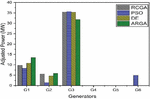
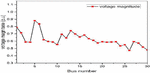
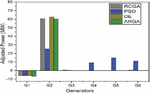
Comparison of adjusted active power for congestion control in different evolutionary algorithms is illustrated in Figure 5. Following the application of CM, the ARGA-based bus voltages have been depicted in Figure 6, which is a satisfactory result in this case.
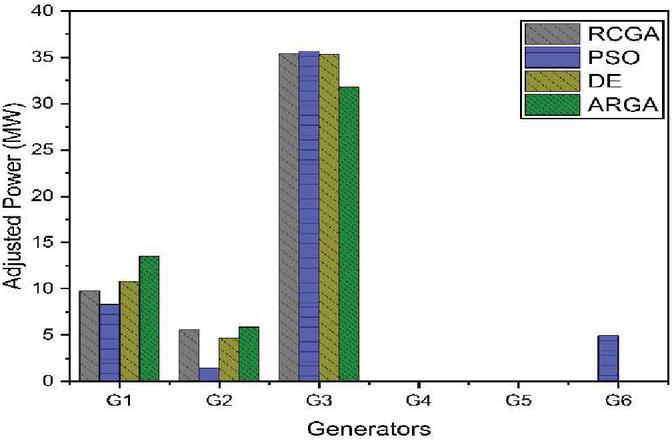
Figure 5 Comparison of adjusted generators power about to test case 1.
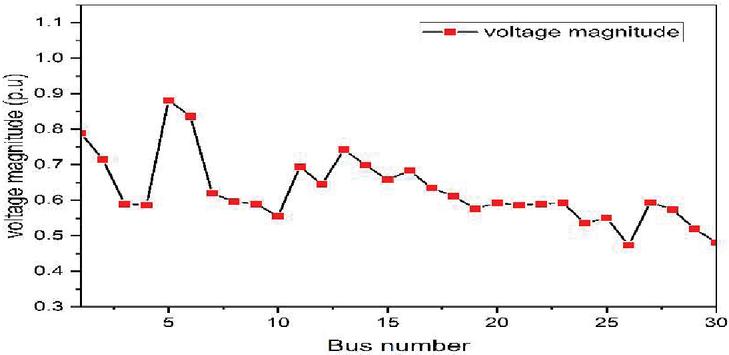
Figure 6 Voltage profile of all buses after ARGA-based CM of test case 1.
Test case 2:
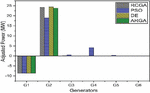
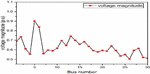
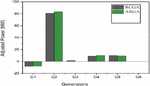
1–2 line has been overloaded in test case 2, causing a power violation of 25.66 MW, and generators G2 has been used as a control element for rescheduling. 23.812 MW of power has been increased to generator G2, and 8.607 MW of power has been reduced from generator G1 to mitigate congestion. The ARGA method was used to determine the lowest possible congestion cost of 654.978 $/MWhr. The comparison of adjusted generation values for different procedures for the test case 2 is depicted in Figure 7. Figure 8 illustrates the ARGA-based bus voltages for test case 2.
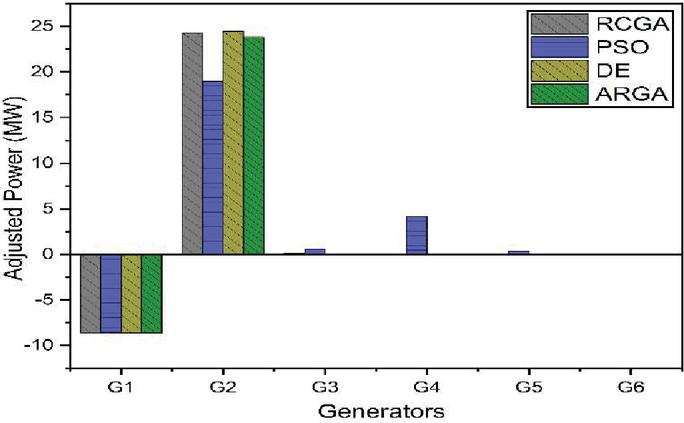
Figure 7 Comparison of adjusted generators power about to test case 2.
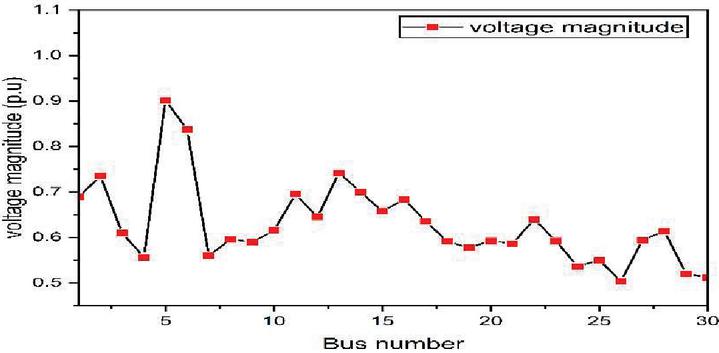
Figure 8 Voltage profile of all buses after ARGA- based CM of test Case 2.
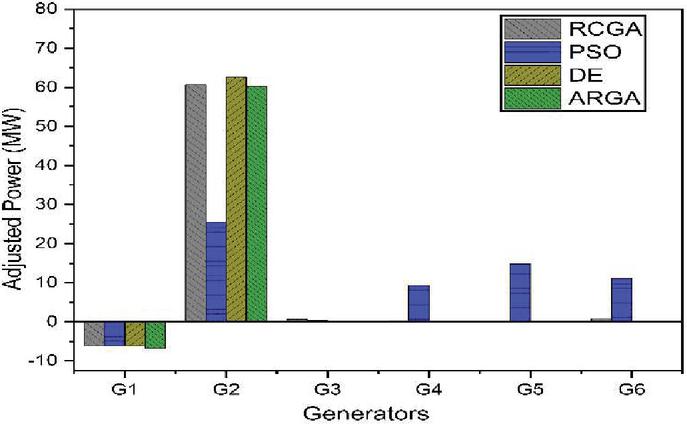
Figure 9 Comparison of adjusted generators power about to test case 3.
Test case 3:
congestion has been created due to the line 3–4 disconnection, and the load at bus-2 has grown by 250 percent. The minimal congestion cost calculated from the ARGA approach is 1416.206 $/MWhr, where one line has overloaded, and 70.241 MW power has been violated. As shown in Figure 9, there is a comparison between the adjusted power of various techniques for Test Case 3.
Test case 4:
In the final test scenario 4, three lines have been overloaded, and the 280.605 MW power has been violated. The ARGA method has been used to calculate the minimum congestion cost of 2721.045$/MWhr. Figure 10 illustrates the comparison of adjusted generation power for different strategies to mitigate congestion.
The overloads are eased in all scenarios with no load curtailment and only generation rescheduling. Various heuristic approaches are used to find solutions, and the results are compared. Compared to DE, RCGA, and PSO, it is discovered that ARGA provides good solutions.
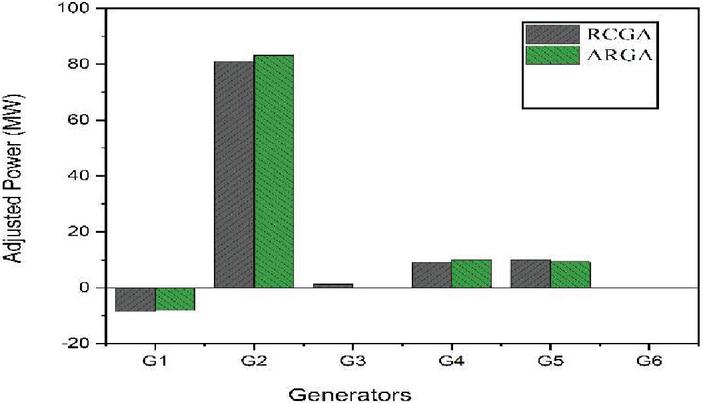
Figure 10 Comparison of adjusted generators power about to test case 4.
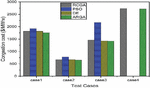
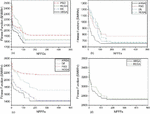
CM has improved social welfare, as evidenced by the reduction in overall congestion costs indicated in the report. By observing Figure 11, the ARGA method has minimum congestion cost compared to all approaches. Comparative fitness function convergence characteristics for all test cases are shown in Figure 12. This graph shows that the suggested ARGA-based approach’s fitness function has a good convergence profile.
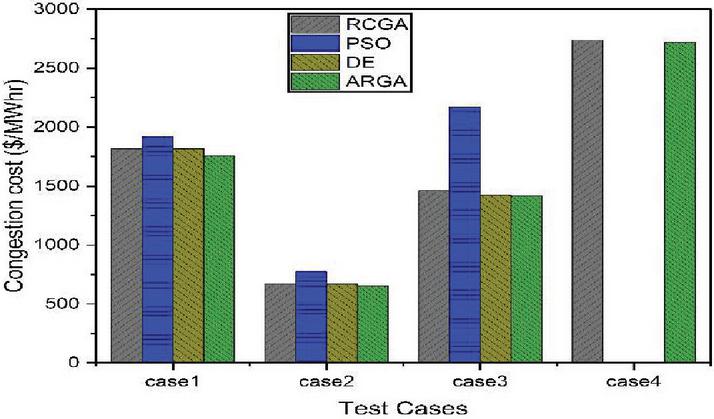
Figure 11 Comparison of congestion cost for various approaches for all test cases.
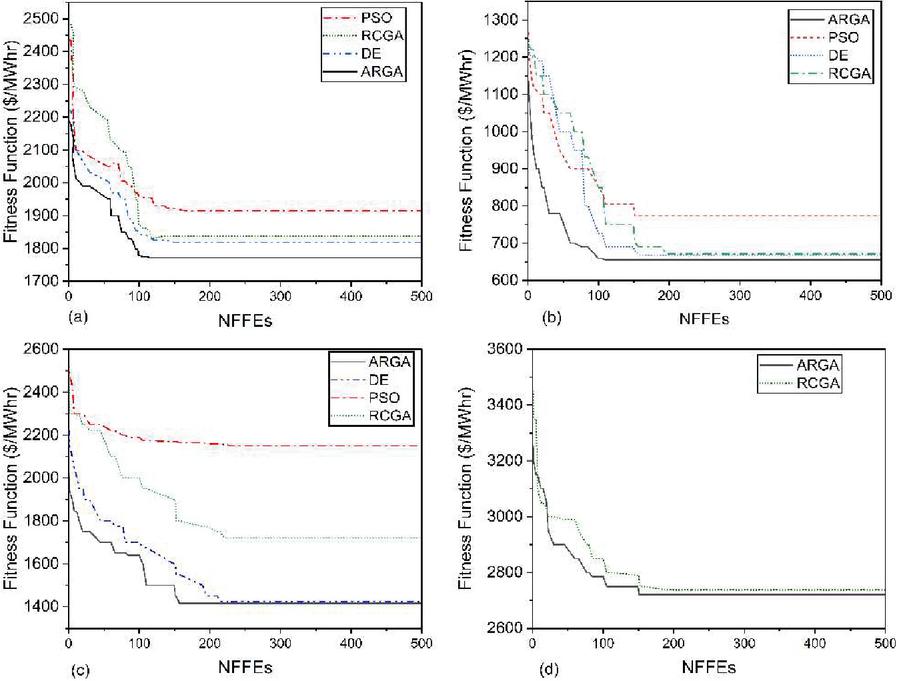
Figure 12 Comparison of convergence characteristics of all test cases.
6 Convergence Mobility of ARGA
The convergence rate (CR) is used to conduct the performance evaluation of ARGA for the suggested CM [25]. Applying this approach will evaluate the CR for each of the algorithms. CR analysis involves the following steps.
• All algorithms should be the run-up to the maximum number of NFFEs (Number of objective function evaluation) (NFFEs).
• When solving a minimization problem, determine the minimum objective function value consistent with the problem’s interest.
• Find the NFFE in which every method has attained minimum fitness value and set that NFFE as the NFFE.
• Calculate the value of CR for all algorithms by using the Equation (13).
| (13) |
The CR values vary from zero to one (CR [0, 1]), indicating the approach evaluation’s best and worst convergence profiles. The best-derived convergence profiles of the observed test cases are used to calculate the value of CR. Figure 13 depicts comparative graphs of the percentage of average CR for all methods under consideration. Overall, ARGA outperforms the other evaluated algorithms in this study by a significant margin. It determines that, among all approaches, ARGA has the lowest fitness cost value and the fastest convergence characteristics in the vast majority of instances.
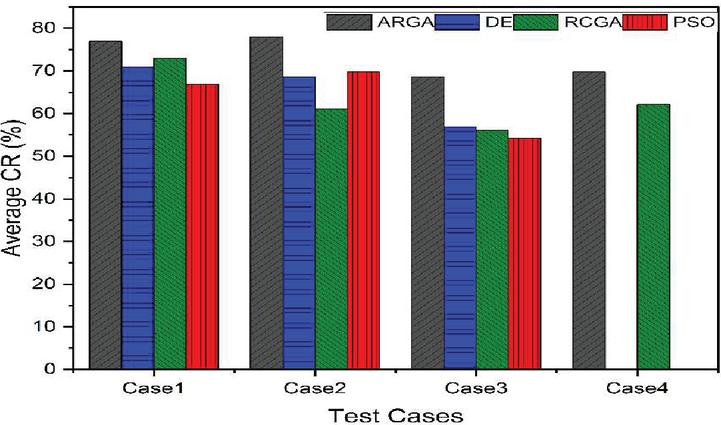
Figure 13 Comparison of average CR of various optimization approaches.
7 Conclusion
The proposed adaptive restarting genetic algorithm is highly suitable for the pool market when congestion develops due to a line failure or a sudden change in load. To the participating generators, the overall cost of congestion management is regarded as a source of revenue. ISO may bear this expense or be allocated to individual consumers as uplift costs. The suggested framework has been separated into two primary sections to facilitate optimization: Generator sensitivity factors pick participating generators in all test cases. The ARGA algorithm is applied to participating generator outputs to achieve an optimal congestion cost solution. Compared to PSO, DE, and RCGA, the ARGA produces the most effective outcomes across all test case statistical simulations. It is demonstrated by the test results the proposed method exceeds the standard practice in terms of higher computing precision, enhanced convergence characteristics, and the ability to search for the most efficient solution.
8 Scope of Future Work
• The current research work’s future scope could be expanded to incorporate the application of RES or distribution generation (DG). Heuristic algorithms can discover the best location for the DGs to be deployed to mitigate congestion by rescheduling the power output.
• Applications of machine learning algorithms (ML) in the power system, such as a strategy based on reinforcement learning (RL), are expected to be implemented soon to reduce transmission congestion and blackouts by acting on the output power of generators in real-time.
Appendix
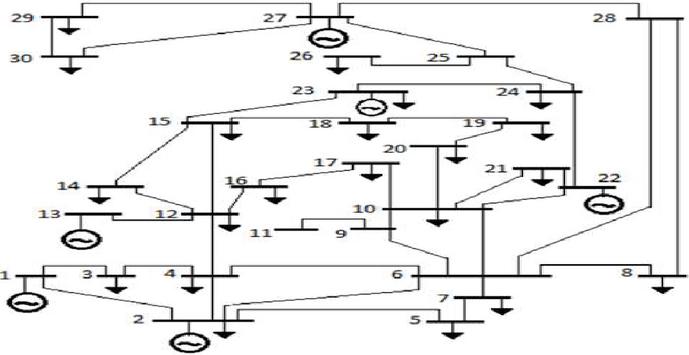
Figure A: Single line diagram of IEEE-30 bus test system.
References
[1] Gajjala, Madhu Mohan, and Aijaz Ahmad. “A survey on recent advances in transmission congestion management.” International Review of Applied Sciences and Engineering 13, no. 1 (2021): 29–41.
[2] Venkaiah, C. and Kumar, D.V., 2011. Fuzzy adaptive bacterial foraging congestion management using sensitivity based optimal active power rescheduling of generators. Applied Soft Computing, 11(8), pp. 4921–4930.
[3] Balaraman, S. and Kamaraj, N., 2010. Congestion management in deregulated power system using real coded genetic algorithm. International Journal of Engineering Science and Technology, 2(11), pp. 6681–6690.
[4] Pandiarajan, K. and Babulal, C.K., 2014. Transmission Line Management Using Hybrid Differential Evolution with Particle Swarm Optimization. Journal of Electrical Systems, 10(1).
[5] Balaraman, S., 2010. Application of differential evolution for congestion management in power system. Modern Applied Science, 4(8), p. 33.
[6] Hazra, J. and Sinha, A.K., 2007. Congestion management using multiobjective particle swarm optimization. IEEE Transactions on Power Systems, 22(4), pp. 1726–1734.
[7] Yesuratnam, G. and Thukaram, D., 2007. Congestion management in open access based on relative electrical distances using voltage stability criteria. Electric power systems research, 77(12), pp. 1608–1618.
[8] Panigrahi, B.K. and Pandi, V.R., 2009. Congestion management using adaptive bacterial foraging algorithm. Energy Conversion and Management, 50(5), pp. 1202–1209.
[9] Batra, I. and Ghosh, S., 2018. An improved tent map-adaptive chaotic particle swarm optimization (ITM-CPSO)-based novel approach toward security constraint optimal congestion management. Iranian Journal of Science and Technology, Transactions of Electrical Engineering, 42(3), pp. 261–289.
[10] Kamaraj, N., 2011. Transmission congestion management using particle swarm optimization. J. Electrical Systems, 7(1), pp. 54–70.
[11] Liu, B., Kang, J., Jiang, N. and Jing, Y., 2011. Cost control of the transmission congestion management in electricity systems based on ant colony algorithm. Energy and Power Engineering, 3(01), p. 17.
[12] Sarwar, M. and Siddiqui, A.S., 2015. An efficient particle swarm optimizer for congestion management in deregulated electricity market. Journal of Electrical Systems and Information Technology, 2(3), pp. 269–282.
[13] Boonyaritdachochai, P., Boonchuay, C. and Ongsakul, W., 2010, June. Optimal congestion management in electricity market using particle swarm optimization with time varying acceleration coefficients. In AIP Conference Proceedings (Vol. 1239, No. 1, pp. 382–387). American Institute of Physics.
[14] Esmaili, M., Ebadi, F., Shayanfar, H.A. and Jadid, S., 2013. Congestion management in hybrid power markets using modified Benders decomposition. Applied energy, 102, pp. 1004–1012.
[15] Hosseini, S.A., Amjady, N., Shafie-khah, M. and Catalao, J.P., 2016. A new multi-objective solution approach to solve transmission congestion management problem of energy markets. Applied Energy, 165, pp. 462–471.
[16] Verma, S. and Mukherjee, V., 2016. Firefly algorithm for congestion management in deregulated environment. Engineering Science and Technology, an International Journal, 19(3), pp. 1254–1265.
[17] Verma, S. and Mukherjee, V., 2016. Optimal real power rescheduling of generators for congestion management using a novel ant lion optimizer. IET Generation, Transmission & Distribution, 10(10), pp. 2548–2561.
[18] Namilakonda, S., and Guduri, Y. (2021). Chaotic darwinian particle swarm optimization for real-time hierarchical congestion management of power system integrated with renewable energy sources. International Journal of Electrical Power & Energy Systems, 128, 106632.
[19] Kim, S., and Hur, J. (2021). Probabilistic power output model of wind generating resources for network congestion management. Renewable Energy, 179, 1719–1726.
[20] Asija, D., and Choudekar, P. (2021). Congestion management using multi-objective hybrid DE-PSO optimization with solar-ess based distributed generation in deregulated power Market. Renewable Energy Focus, 36, 32–42
[21] Dao, S.D., Abhary, K. and Marian, R., 2015, October. An adaptive restarting genetic algorithm for global optimization. In Proceedings of the World Congress on Engineering and Computer Science (Vol. 1).
[22] Gen, M., and Cheng, R. (1997). Genetic Algorithms & Engineering Design, John Wiley & Sons. Inc., New York.
[23] Dao, S. D., Abhary, K., and Marian, R. (2016). Maximizing Performance of Genetic Algorithm Solver in Matlab. Engineering Letters, 24(1).
[24] L. Thurner, A. Scheidler, F. Schäfer et al., Pandapower – an Open Source Python Tool for Convenient Modeling, Analysis and Optimization of Electric Power Systems, in IEEE Transactions on Power Systems, vol. 33, no. 6, pp. 6510–6521, Nov. 2018.
[25] Gandomi AH. Interior search algorithm (ISA): A novel approach for global optimization. ISATrans 2014;53:1168–83. https://doi.org/10.1016/j.isatra.2014.03.018.
Biographies

Madhu Mohan Gajjala received his BTech (Electrical & Electronics Engineering) and M.Tech (Electrical Power Systems) degrees from Jawaharlal Nehru Technology University, Anantapuramu, India, in 2012 and 2015. He is a research scholar in the electrical department at the National Institute of Technology (NIT), Srinagar, India. His main research interests are Power System Operation & Optimization, Power System Restructuring, and Deregulation, Machine learning applications in power systems.

Aijaz Ahmad received his BE (Electrical Engg.) degree from National Institute of Technology (NIT), Srinagar, India in 1984, M.Tech. and Ph.D. from Indian Institute of Technology, New Delhi, India, in 1991 and 1998, respectively. He was an Assistant Professor in the Electrical Engineering Department, NIT, Srinagar. Since 2006 he has been working there as a professor. In between, he remained Head of the Department from 2012–2015. His main research interests are Power System Operation & Optimization, Power System Restructuring, Deregulation, Flexible AC Transmission, Energy System Planning & Auditing. Aijaz Ahmad is a Member IEEE, Fellow of Institution of Engineers (India), Life Member of Indian Society for Technical Education, and Member Global Science and Technology Forum.
Distributed Generation & Alternative Energy Journal, Vol. 38_1, 249–272.
doi: 10.13052/dgaej2156-3306.38111
© 2022 River Publishers