Advanced Machine Learning Solutions for Power Load Forecasting and Power Grid Planning Optimization
Chang Xu1,*, Jinsen Liu2, Ludong Chen2, Pengcheng Zhang2 and Wenzhong He3
1Guizhou Power Grid Co., Ltd Guiyang 550002, Guizhou, China
2Guizhou Power Grid Co., Ltd. Power Grid Planning Research Center, Guiyang 550003, Guizhou, China
3Guizhou Qianchi Information Corp., Ltd. Guiyang 550007, Guizhou, China
E-mail: yasio4@163.com
*Corresponding Author
Received 14 February 2025; Accepted 26 March 2025
Abstract
As new power systems are being developed and the pursuit of carbon neutrality intensifies, the existing power grid encounters dual uncertainty stemming from the extensive integration of renewable energy and fast load expansion. Precisely forecasting power demand and enhancing power grid planning have emerged as critical concerns for guaranteeing a secure and stable energy supply. This research presents a sophisticated deep learning approach for power load forecasting and optimization of power grid planning. Initially, deep neural networks (DNN) and long short-term memory (LSTM) models are employed to analyze historical load data and account for fluctuations in power load across several dimensions, including meteorological conditions, seasonal influences, and vacations, in order to achieve precise predictions of future loads. Subsequently, informed by the forecast findings, the grid’s power balance is modified to optimize the dependability and economic efficiency of the power supply. Experimental findings indicate that the suggested LSTM-CNN hybrid model achieves a root mean square error (RMSE) of 45.2 MW and a mean absolute percentage error (MAPE) of 1.8%, significantly outperforming the traditional GA-BP model (RMSE: 68.7 MW, MAPE: 2.9%). Specifically, the LSTM-CNN model reduces RMSE and MAPE by 34.2% and 37.9%, respectively, compared to GA-BP. This improvement demonstrates the model’s superior capability in capturing temporal and spatial patterns of power load, thereby markedly enhancing the efficiency and stability of power grid planning optimization.
Keywords: New power system, load forecasting, power balance, machine learning.
1 Introduction
The escalating worldwide demand for sustainable energy and the progress towards “dual carbon” objectives are presenting unprecedented difficulties to the restructuring of the power system. The twin uncertainty resulting from the extensive integration of renewable energy and the increase in electricity demand has exerted significant pressure on the stability of the power system and the security of electricity supply. In this context, precise forecasting of energy demand and efficient optimization of grid planning have emerged as critical factors for maintaining the steady functioning of power systems.
Electricity load forecasting is essential for the planning, scheduling, and administration of power systems. While conventional load forecasting methods, including statistical models and physics-based techniques, can achieve some accuracy under particular circumstances, they are constrained in predictive precision and generalization capacity due to their failure to comprehensively account for complex influencing factors such as weather fluctuations, holiday impacts, and other external variables. In recent years, the swift advancement of deep learning technology has created new prospects for electrical load forecasting. Advanced deep learning models, including deep neural networks (DNN) and long short-term memory networks (LSTM), can autonomously extract intricate characteristics and patterns from extensive historical load data, therefore enhancing the precision and resilience of forecasts.
Since the 1980s, international research on power load forecasting has been undertaken. Danish academic Landberg introduced an extensive load forecasting methodology in the early 1990s. The ongoing advancement and extensive implementation of this study have led to the maturation of the related technologies and products. International research primarily concentrates on enhancing the precision, dependability, and versatility of load forecasting through the use of statistical models, machine learning algorithms, and deep learning techniques. Research in China started in 2008, and after swift advancements over the years, several enterprises and research organizations have developed, specializing in power load forecasting. Domestic research primarily concentrates on enhancing the precision, dependability, and versatility of forecasting through the application of classical models, machine learning models, and deep learning models. Emerging artificial intelligence models, like LSTM, convolutional neural networks (CNN), and Transformers, are increasingly attracting interest. Reference [1] presents a daily maximum load forecasting model that utilizes sensitive temperature geographical distribution to examine the correlation between the fundamental load and factors like as GDP and the Consumer Price Index for predictive purposes. Reference [2] presents a continuous multi-day peak load forecasting model utilizing the Bagging framework and the XGBoost algorithm. System load forecasting aims to predict the electricity demand of the whole power system, whereas bus load forecasting concentrates on individual buses or substations, placing greater emphasis on localized power demands. The load factor, defined as the ratio of actual load to the system’s maximum capacity, indicates the power system’s load level at a given moment [3]. Reference [4] presents a load factor forecasting model utilizing Bayesian optimization and LSTM, evaluating several models under both variable and stable load factors. Net load denotes the demand remaining after deducting the generation from renewable energy sources, including wind and solar power. The variability of net load influences the requirement for power system regulatory skills, which is intricately linked to electricity demand and the attributes of renewable energy generation [5].
Frequently employed machine learning methods encompass support vector machines, artificial neural networks, and random forests. Reference [8] introduces an enhanced short-term load forecasting technique utilizing support vector machines, which establishes the correlation between load characteristics and influencing factors by grey relational analysis, and formulates an SVM load forecasting model that incorporates the weights of these components. Reference [9] presents a load forecasting technique utilizing random forests (RF) in conjunction with Variational Mode Decomposition (VMD). Reference [10] presents a load forecasting model that amalgamates convolutional neural networks (CNN) and long short-term memory networks (LSTM), effectively including the interrelations between load and other climatic parameters with the temporal dynamics of load. Reference [11] introduces a time-series Transformer network model that integrates a probabilistic density statistical model with the time-series Transformer model, with a prediction accuracy of 0.994. Reference [12] combines an enhanced whale optimization algorithm (WOA) with LSTM, employing full adaptive noise empirical mode decomposition (CEEMDAN) to increase model training efficiency, resulting in a prediction accuracy of 99.05%. Reference [13] integrates transfer learning with the TCN-BiGRU model, facilitating the transfer of highly correlated information via transfer learning and employing K-means clustering to decrease the RMSE by 40.7%, whilst enhancing accuracy by 4.9%.
In addition, grid planning optimization is another important factor in making sure that the supply of energy is both reliable and cost-effective. When building the power system, it is important to take into account not only the increase in demand for electricity but also the difficulties that arise from the inconsistency of renewable energy sources. Traditional grid planning optimization approaches frequently depend on simplified assumptions and models, which may not adequately represent the complicated interactions that exist in real-world systems. Reference [14] presents a grey model for predicting the demand for power in rural areas. This model is created by examining data such as energy generation and load from rural systems. The model shows tiny relative errors, accurately predicting the demand for power in rural areas and giving exact data assistance for constructing rural grids. Reference [15] describes the development of a novel decision support system for long-term power system planning. This system combines renewable energy forecasts, grid planning optimization, and multi-scenario analysis. The system has been shown to be effective in balancing investment costs, increasing renewable energy consumption, assuring reliable power supply, and enhancing grid flexibility, according to experimental results. It also provides unique concepts and technological tools for grid planning throughout the energy transition phase.
Reference [16] points out the shortcomings of the conventional methodologies used for grid planning. They suggest a novel approach that is based on smart grid architecture. This method assesses the danger of grid operation by employing system electricity deficiency values, which include load levels and reduction projections. This technique creates a grid planning model that takes into account variable loads and node reliability limitations. Reference [17] is centred on creating a planning evaluation system that is tailored to modern power systems. They choose four important areas – clean and low-carbon, safe and reliable, flexible and interactive, and transparent and efficient – based on the principles of scientific, systematic, hierarchical, independent, and feasible analysis. They then create indicators for these areas and determine the weights of the indicators and the criteria for evaluation using the Delphi method and hierarchical analysis. Practical studies of the grid in a southern area demonstrate that the system can objectively analyze grid construction levels and identify development gaps, offering vital support for grid planning and operational decision-making. Although significant advancements have been made in power grid planning research in areas such as load forecasting, renewable energy integration, flexible load and node reliability considerations, and planning evaluation system development, there are still some limitations. These include the need for further improvements in grey prediction models and insufficient responses to the variability of renewable energy sources.
The building of new power systems has become unavoidable due to the growing worldwide demand for sustainable energy and the progress made toward achieving the “dual carbon” targets. When it comes to predicting power loads and planning power grids, traditional approaches have difficulties because they do not take into account all of the many aspects that might affect the situation. They also have limits in terms of how accurately they can anticipate outcomes and how well they can apply their predictions to different situations. This is especially true when the power system environment is complicated and constantly changing. On the other hand, the advancement of artificial intelligence technologies has created new possibilities. Deep learning algorithms that use artificial intelligence can identify complicated traits and trends in large amounts of historical data, which may be very helpful for predicting future loads. When it comes to designing the power grid, artificial intelligence technologies can create more practical models by taking into consideration a variety of complicated elements in order to accomplish optimum. As a result, load forecasting and power grid planning that are based on artificial intelligence are extremely important for the dependable functioning of modern power systems, the most efficient distribution of resources, and the achievement of the “dual carbon” objectives. It is an unavoidable tendency in the evolution of the electricity industry.
2 Large-scale Model for Electric Power Load Forecasting Based on LSTM-CNN
2.1 Model Overview
Within the scope of this investigation, a model that utilizes a combination of deep learning techniques, namely Long Short-Term Memory networks (LSTM) and Convolutional Neural Networks (CNN), is proposed for the purpose of providing an accurate forecast of power system demands. Because this model is able to effectively capture both the sequential characteristics that occur across time and the local spatial features that occur within the load sequence, it is able to achieve higher performance in power load prediction tasks. With the help of LSTM, one may learn the time-related dependencies that are present in power load data, whereas CNN places more of an emphasis on uncovering the local patterns that are present in the data. The combination of these two strategies has the potential to fully capitalize on their respective advantages and improve the accuracy of the forecast.
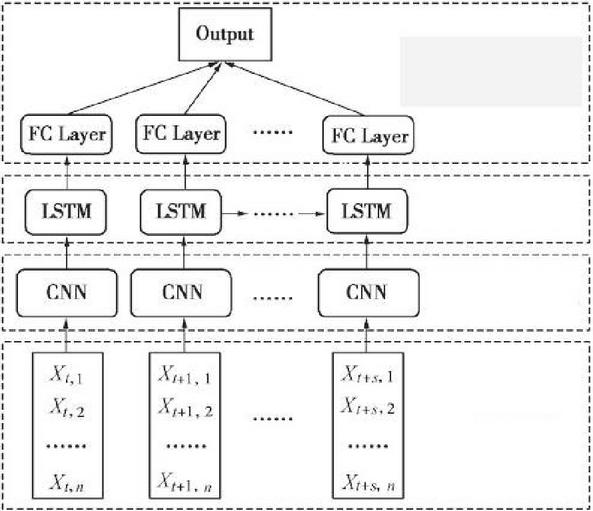
Figure 1 Schematic diagram of the LSTM network.
2.2 Model Overview
There are three gating mechanisms that make up the LSTM (Long Short-Term Memory) model. These gates are the forget gate, the input gate, and the output gate. The forget gate is called the forget gate. As input, each gate takes in the hidden state from the time step that came before it as well as the data that is now being introduced. These gates make it possible for the LSTM to selectively update or delete information, which allows it to efficiently capture the temporal quirks of data pertaining to wind power and solar system output.
Define the historical output dataset of wind power or solar generation as , where denotes the output value at time step . The operational concepts of the LSTM model can be articulated by the subsequent mathematical equations.
(1) Forget Gate
The forget gate is essential in the Long Short-Term Memory (LSTM) network. It determines the quantity of information from the preceding cell state to retain for the present state, functioning as a “information sieve” for historical data. In power load forecasting, historical load data, retained in the cell state, encompasses varied information. Over time, certain aspects become obsolete. For example, seasonal load patterns from a previous season may not be applicable to the present one. The forget gate subsequently eliminates irrelevant information, hence reducing its impact on the current forecast. However, for routine information, such as the distinctions in consumption between weekdays and weekends, the forget gate retains it. This allows the model to utilize this essential data for enhanced future load forecasts.
The proposed LSTM-CNN hybrid model consists of two LSTM layers with 128 hidden units each, followed by a 1D convolutional layer with 64 filters of kernel size 3 and stride 1. The ReLU activation function is applied after the convolutional layer. The model is trained using the Adam optimizer with a learning rate of 0.001 and a batch size of 32. To prevent overfitting, a dropout rate of 0.2 is applied between layers.
The forget gate regulates the extent of information from the preceding cell state that must be discarded. The output of the forget gate is a value ranging from 0 to 1, indicating the extent of forgetting:
| (1) |
Here, denotes the sigmoid activation function, and signify the weights and bias of the forget gate, respectively, while indicates the concatenation of the preceding hidden state and the current input .
(2) Input Gate
In the Long Short-Term Memory (LSTM) network, the input gate is essential for selectively accepting and integrating incoming information. It operates as a judicious “information selector,” meticulously assessing the incoming data at each time interval to identify which elements are pertinent for the model’s predictions. The chosen information is subsequently incorporated into the cell state. In power load forecasting, the input at any given instant includes several parameters such as temporal variables, meteorological conditions, and significant events. The input gate evaluates the importance of these components. For instance, amid abrupt meteorological shifts, it acknowledges the significance of weather-related data for forecasting electricity demands. This process permits pertinent information to enter the cell state while excluding extraneous elements that may compromise the prediction’s accuracy. The input gate continuously refreshes the cell state, providing the model with the most relevant and up-to-date information. This allows the model to swiftly adjust to the variable power loads, thereby improving the precision of its forecasts.
The input gate determines how much of the current input information will be used to update the cell state :
| (2) |
This formula uses the sigmoid function to control the strength of information updating.
(3) Candidate Memory Cell
In order to produce fresh memory content and select which information will be incorporated into the cell state, the candidate memory cell is utilized. This provides new information that can be used to update the cell state, which in turn enables the model to more accurately capture data characteristics and long-term relationships.
The candidate memory cell is utilized to produce new memory and ascertain the information to be included into the cell state :
| (3) |
This formula employs the tanh activation function to transform the current input data into a new candidate memory state.
(4) Cell State
The Long Short-Term Memory (LSTM) network relies heavily on the cell state as a carrier for the purpose of storing and delivering information that is relevant over the long term. It functions similarly to a “information highway” that travels across the time series. It is accountable for integrating, storing, and transferring crucial information at various points in time. This ensures that the model is able to make full use of the significant material that has been acquired in the past while processing the data that is now being processed.
The cell state is fundamental to the LSTM, transmitting long-term dependence information from the past to the present. The cell state update is accomplished via the synergistic function of the forget gate and the input gate:
| (4) |
In this context, and govern the weights of historical and current information within the cell state.
(5) Output Gate
The output gate defines the hidden state at the present time step:
| (5) |
The hidden state at the present time step is computed using the subsequent formula:
| (6) |
The concealed state , produced by the LSTM, may be utilized for computations in the subsequent time step or for the ultimate prediction task.
CNN is used to extract the local spatio - temporal features in power load data. We process the input data using one - dimensional convolution operations to capture the local relationships between different time steps. The calculation process of the convolutional layer is as follows:
| (7) | |
| (8) |
In the joint model, the LSTM layer first models the temporal dependence of power load, and then passes its output to the CNN layer to capture the spatial features. The overall structure of the model can be described as follows:
| (9) | |
| (10) |
Finally, the features output by the CNN layer are mapped to predicted values through a fully – connected layer:
| (11) |
To train the model and optimize its performance, the Mean Squared Error (MSE) is used as the loss function to measure the gap between the predicted values and the true values:
| (12) |
The objective of this loss function is to minimize the prediction error of the model, thereby enhancing the model’s accuracy.
The LSTM-CNN hybrid model utilizes the advantages of LSTM for collecting long-term temporal relationships and CNN for obtaining local spatial characteristics. LSTM adeptly manages the temporal dynamics of power load data, rendering it particularly appropriate for intricate nonlinear sequential data while mitigating challenges such as gradient vanishing that arise in conventional models while processing extended sequences. Concurrently, CNN autonomously identifies local patterns, including periodic fluctuations and short-term changes, from the load data through 1D convolutional layers, therefore augmenting the model’s responsiveness to local characteristics. The integration of both enables the model to discern global trends and local specifics, hence enhancing forecast accuracy and resilience. This model has robust time-series modelling skills and effectively adapts to the dynamic and intricate characteristics of power demand data, showcasing significant generalization capacity.
3 Traditional GA – BP Load Forecasting Model
3.1 Topology and Control Strategy of VSC
The BP neural network comprises three layers: input, hidden, and output. The mistake in the output layer is sent backward through the network, disseminating the error among all units in each layer to produce error signals. These signals are subsequently employed to modify the weights of the units. The Genetic Algorithm (GA), derived from biological evolution, is a stochastic optimization technique that emulates natural selection and inheritance. It effectively identifies worldwide solutions by progressively enhancing promising candidates through selection, crossover, and mutation according to their fitness levels. Gradually, the GA modifies the search methodology to identify optimal solutions. Recent research indicate that integrating Genetic Algorithms with Backpropagation neural networks enhances predictive accuracy by mitigating the constraints of Backpropagation and refining its parameters. Consequently, the incorporation of these strategies necessitates increased focus for improved performance.
(1) Historical Data
The first step involves collecting historical power load data and preprocessing it to ensure quality. This includes denoising, normalization, and other steps to improve model training performance. Next, an appropriate input layer is designed, typically including variables such as time, temperature, and date, which are relevant to power load forecasting.
(2) Network Structure Design and Initialization
The structure of the BP neural network is designed, determining the number of nodes in the input layer, hidden layers, and output layer. The initial weights and biases are randomly set, providing a starting point for subsequent training.
(3) Forward Propagation and Error Calculation
The input data undergoes forward propagation through the network, with the output layer generating the prediction result. The error between the predicted value and actual load is then calculated as feedback information.
(4) Backpropagation and Weight Update
Using the backpropagation algorithm, the error is propagated backward from the output layer to the input layer, adjusting the weights of neurons at each layer. Methods like gradient descent are used to optimize the network weights, gradually reducing prediction errors.
(5) Training and Prediction
Forward propagation and backpropagation are repeated until the error meets the predetermined accuracy requirements. Once adequately trained, the neural network can predict future power loads accurately, aiding in power system scheduling and planning.
LSTM and GA-BP(Genetic Algorithm-Backpropagation) exhibit unique attributes in power load forecasting. LSTM proficiently captures long-term dependencies in sequential data, rendering it appropriate for managing intricate, nonlinear power load sequences with extended dependencies. Its advantages encompass automated acquisition of temporal characteristics, robustness in managing intricate data, and formidable generalization capability. Nonetheless, LSTM necessitates an intricate training procedure and considerable computer resources. Conversely, GA-BP integrates genetic algorithms with backpropagation to globally optimize the weights of the BP network, rendering it appropriate for nonlinear optimization challenges. Nonetheless, GA-BP is sometimes less efficient, particularly when handling extensive datasets, resulting in prolonged training durations. LSTM demonstrates superior flexibility and accuracy in power load forecasting, but GA-BP is better appropriate for nonlinear optimization contexts.
4 Example Analysis
4.1 Scenario Setting for the Numerical Example
To ensure the reliability and representativeness of the data, the historical load data of a prefecture-level city in Inner Mongolia is carefully picked during the process of studying the load forecasting model. This is done in order to ensure that the data represents the population. Specifically, the data from February 1st to March 1st, 2024 are selected as the training set. These data span a pretty lengthy time period and can show a variety of load change patterns on a daily and weekly basis. It is via this training set that the model is able to acquire an understanding of the fundamental principles and features that govern variations in power load.
In contrast, the load statistics of the same city from March 12th to March 15th, 2024 are designated as the test set. This time period spans from March 12th to March 15th. It is the test set that is utilized in order to assess the effectiveness of the trained model. The capacity of the model to properly evaluate its accuracy and generalization ability may be reliably measured by comparing the predictions of the model with the actual load data that is contained in the test set.
For the GA-BP baseline model, the neural network architecture comprises a single hidden layer with 64 neurons. The genetic algorithm population size was set to 50, with crossover and mutation probabilities of 0.7 and 0.05, respectively. Training terminated after 200 generations or upon convergence of fitness values.
After the model has been trained using the training set, it is given the responsibility of forecasting the load that will be present for the following twenty-four hours. According to the following, the following are the outcomes of the prediction made by the load forecasting model that is based on LSTM – CNN and the GA – BP load forecasting model:
Table 1 Error analysis of predicted data
| Actual | LSTM-based | Error | GA – BP-based | ||
| TIME | Load | Load Prediction | Rate | Load Prediction | Error Rate |
| 0:00 | 1718 | 1754 | 0.020955 | 1782 | 0.037252619 |
| 1:00 | 1621 | 1652 | 0.019124 | 1633 | 0.007402838 |
| 2:00 | 1633 | 1620 | 0.00796 | 1590 | -0.026331904 |
| 3:00 | 1595 | 1543 | -0.0326 | 1510 | -0.053291536 |
| 4:00 | 1592 | 1537 | -0.03455 | 1510 | -0.051507538 |
| 5:00 | 1569 | 1508 | 0.03888 | 1488 | -0.051625239 |
| 6:00 | 1759 | 1704 | -0.03127 | 1801 | 0.023877203 |
| 7:00 | 1895 | 1832 | 0.03325 | 1903 | 0.004221636 |
| 8:00 | 1922 | 1960 | 0.019771 | 1990 | 0.035379813 |
| 9:00 | 1982 | 2037 | 0.02775 | 2054 | 0.036326942 |
| 10:00 | 1960 | 1998 | 0.019388 | 1998 | 0.019387755 |
| 11:00 | 1962 | 1965 | 0.001529 | 1965 | 0.001529052 |
| 12:00 | 1956 | 1920 | -0.0184 | 1920 | -0.018404908 |
| Model | RMSE (MW) | MAE (MW) | MAPE (%) |
| LSTM-CNN | 45.2 | 32.1 | 1.8% |
| GA-BP | 68.7 | 49.5 | 2.9% |
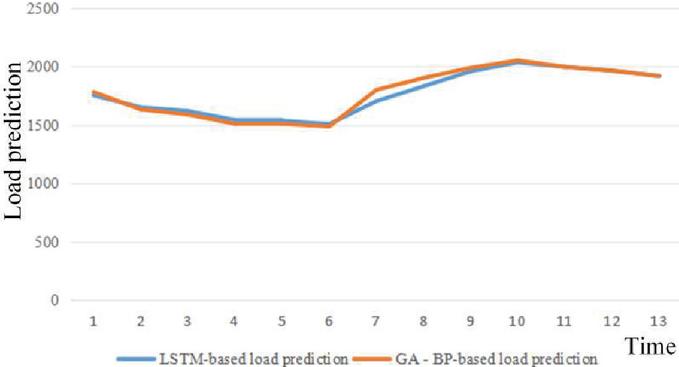
Figure 2 Comparison of the prediction results of the two models.
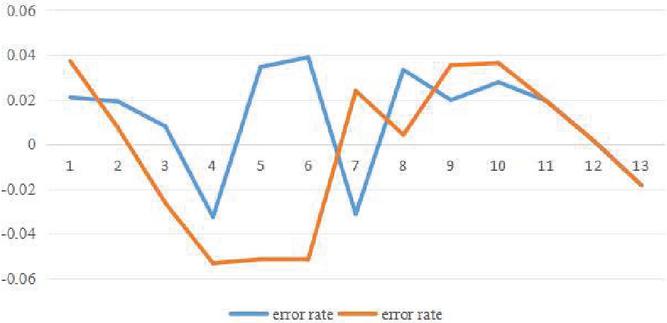
Figure 3 Comparison of the prediction results of the two models.
The positive and negative signs in Table 1 represent the positive and negative deviations of the prediction. For the purpose of this particular case study, the data from February 1 to March 1 of 2024 in a certain prefecture-level city in Inner Mongolia were chosen to serve as the training set, while the data from March 12 to March 15 were utilized as the test set. A comparison was made between the load forecasting model that was based on LSTM-CNN and the GA-BP load forecasting model in order to anticipate the load from the previous day’s 24-hour period. When it comes to power load forecasting, the findings demonstrate that the LSTM algorithm has substantial benefits over the GA-BP method. Furthermore, the accurate prediction results that the LSTM algorithm produces are particularly advantageous for power system planning.
The advantages of the LSTM algorithm are readily apparent when seen through the lens of the comparison of prediction error rates. The error rate of LSTM in forecasting load is often lower than that of GA-BP when it comes to the prediction of numerous time points being taken into consideration. For instance, the error rate of LSTM in estimating load is 0.020955 at 0:00, and the error rate of GA-BP may go as high as 0.037252619; at 4:00, the error rate of LSTM is 0.03455, and the error rate of GA-BP is 0.051507538. This indicates that LSTM is capable of more correctly capturing the shifting trend of power load, reducing the deviation of prediction, and providing more trustworthy data support for the planning of power systems.
5 Conclusion
This study addresses the challenges of power demand forecasting and grid planning optimization within the framework of developing new power systems and achieving carbon neutrality objectives. A deep learning-based solution is proposed, and via study and analysis, the following main results are derived.
(1) Substantial performance superiority of the model: The developed LSTM-CNN hybrid deep learning model integrates the advantages of LSTM for collecting long-term temporal relationships and CNN for extracting local spatial data. Utilizing empirical data from a prefecture-level city in Inner Mongolia, the LSTM-CNN model exhibits reduced error rates in predicting the 24-hour power load for the subsequent day in comparison to the conventional GA-BP load forecasting model. At time intervals such as 0:00 and 4:00, the anticipated load error rates of the LSTM-CNN model are markedly inferior to those of the GA-BP model. This approach can more precisely capture the trend of power load variations and significantly diminish forecasting bias. This signifies that the model may autonomously acquire intricate features and patterns from extensive historical load data, adjusting to the dynamic and complicated characteristics of power load data, hence offering more dependable data assistance for power system planning.
(2) The importance of grid planning optimization: Precise power load forecasting is essential for effective grid planning optimization. The LSTM-CNN model’s high-precision forecasting findings enable more scientific and rational grid planning. In the context of power balancing, power generating plans can be meticulously changed according to anticipated load fluctuations, therefore minimizing power wastage or supply deficits resulting from erroneous forecasts and enhancing the efficiency of power resource usage. The model facilitates the optimal allocation of substations, transmission lines, and other infrastructure in grid facility construction planning, preventing both overbuilding and underbuilding, hence minimizing investment costs and improving the dependability and economic efficiency of power supply. Furthermore, it positively influences the integration of renewable energy by improving the coordination between renewable energy output and load demand, augmenting the grid’s capacity to accommodate renewable energy, and fostering the sustainable growth of the new power system.
(3) The research presents creative and practical value by utilizing deep learning technology for power load forecasting and grid planning optimization, hence providing novel methodologies. The LSTM-CNN model offers innovative concepts and technological approaches for study in the power sector, in contrast to conventional methodologies. The successful implementation in real-world scenarios demonstrates the viability and efficacy of this method in realistic power systems, indicating a bright application future. In the future, as power system data proliferates and technology advances, enhanced optimization of model structures and algorithms is anticipated to significantly contribute to more intricate power scenarios, thereby offering robust support for the stable operation and efficient development of new power systems.
Funding
Research and Application of Distribution Network Pattern Recognition and Intelligent Planning Technology (GZKJXM20220093).
References
[1] Li Mingjie, Liang Zhifeng, Xu Tao, et al. Prediction and application of maximum daily load in summer and winter based on spatial distribution of sensitive temperatures. Power System Technology, 2023, 47(3): 1088–1097.
[2] Shi Jiaqi, Ma Liya, Li Chenchen, et al. Peak load forecasting method based on serial-parallel integrated learning. Proceedings of the CSEE, 2020, 40(14): 4463–4472+4726.
[3] Liu Xing, Wang Qiuchen, Wen Yunhao, et al. Natural gas treatment plant load factor prediction model based on BO-LSTM. Natural Gas and Oil, 2023, 41(05): 122–130.
[4] Tan Zhongfu, Pu Lei, Wu Jing, et al. Time-of-use transmission and distribution price optimization model based on differential loading rate. Systems Engineering – Theory & Practice, 2019, 39(11): 2945–2952.
[5] Dai Haonan, Zhang Chenhao, Zhen Zhao, et al. Short-term net load forecasting based on spatio-temporal feature clustering and two-layer dynamic graph convolutional network modeling. High Voltage Engineering, 1–11 [2024-09-06].
[6] Zhang Q, Zhou S, Xu B, et al. TCAMS-Trans: Efficient temporal-channel attention multi-scale transformer for net load forecasting. Computers and Electrical Engineering, 2024, 118(PB): 109415–109415.
[7] Rizi T E, Rastegar M, Forootani A. Power system flexibility analysis using net-load forecasting based on deep learning considering distributed energy sources and electric vehicles. Computers and Electrical Engineering, 2024, 117: 109305.
[8] Zhou Siming, Duan Jinchang, Li Yingjie, et al. An improved SVM short-term power system load forecasting method. Journal of Shenyang University of Technology, 2023, 45(06): 661–665.
[9] Wang Yongli, Liu Zeqiang, Dong Huanran, et al. Short-term load forecasting of integrated energy system based on VMD-CSO-RF. Journal of North China Electric Power University (Natural Science Edition), 1–10 [2024-09-06].
[10] Anping W, Qing C, Khalil A, et al. Short-term power load forecasting for combined heat and power using CNN-LSTM enhanced by attention mechanism. Energy, 2023, 282.
[11] Han Yuchao, Tong Qianqian, Deng Yaping. Probability-based density estimation and time-series Transformer network for day-ahead interval prediction of wind power. Proceedings of the CSEE, 1-11 [2024-09-06].
[12] Liu H, Li Z, Li C, et al. Research and application of short-term load forecasting based on CEEMDAN-LSTM modeling. Energy Reports, 2024, 122: 144–2155.
[13] Liu Jie, Zhou Bowen, Tian Ming, et al. Short-term load forecasting based on migration learning and TCN-BIGRU. Journal of Beijing University of Aeronautics and Astronautics, 1–12 [2024-09-14].
[14] Xu Gang, Pan Qichao. Research on township power grid planning based on power demand forecasting. Power Equipment Management, 2024, (19): 247–249.
[15] Wang Tao, Zhang Zhijing. Design of a decision support system for long-term planning of a new type of power system based on renewable energy integration. Automation Application, 2025, 66(01): 128–130. DOI:\nolinkurl10.19769/j.zdhy.2025.01.036.
[16] Zhang Yan, Zuo Ya, LI Xiangping, et al. Multi-parameter grid planning method considering flexible load and node reliability demand. Automation Technology and Applications, 1–5, 2025.02.06.
[17] Lin Chaobin, Wang Yanjie, Li Qingyao. Research on power grid planning evaluation system and practice under the background of a new type of power system. Electrical Engineering Technology, 2024, (23): 51–54. DOI:\nolinkurl10.19768/j.cnki.dgjs.2024.23.013.
Biographies

Chang Xu (1988.12–), female, graduated from the School of Urban Science and Technology, Chongqing University with a bachelor’s degree. After graduation, I worked as an economist at the Power Grid Planning and Research Center of Guizhou Power Grid Co., Ltd. My current research direction is engaged in primary planning work for distribution networks.

Jinsen Liu (1983.05–), male, graduated from Guizhou University with a master’s degree in Electrical Engineering. After graduation, I worked as an engineer at the Power Grid Planning and Research Center of Guizhou Power Grid Co., Ltd. My current research direction is engaged in distribution network planning work.

Ludong Chen (1986.11–), male, graduated from Guizhou University with a Bachelor’s degree in Electrical Engineering. After graduation, I worked as an engineer at the Power Grid Planning and Research Center of Guizhou Power Grid Co., Ltd. My current research direction is engaged in distribution network planning work.

Pengcheng Zhang (May 1996), male, graduated from Tongji University with a master’s degree in Electronic and Information Engineering. After graduation, I worked as an engineer at the Power Grid Planning and Research Center of Guizhou Power Grid Co., Ltd. My current research direction is engaged in primary planning work for distribution networks

Wenzhong He (1981.08–), male, graduated from Sichuan Agricultural University with a Bachelor’s degree in Computer Science and Technology. After graduation, I worked as a senior engineer at Guizhou Qianchi Information Co., Ltd. My current research direction is working in information technology.
Distributed Generation & Alternative Energy Journal, Vol. 40_2, 259–278.
doi: 10.13052/dgaej2156-3306.4023
© 2025 River Publishers