Development of a Mathematical and Heuristic Model for the Techno-Economic Design of Renewable Energy Systems Ensuring a Convex and Directly Optimizable Objective Function
Jorge Benjamin Wong Kcomt1,* and Luis Enrique Ramírez Huamán2
1Escuela de Posgrado, Universidad Nacional de Ingeniería, Lima, Perú
2Departamento Ingeniería Eléctrica y Electrónica, Universidad Nacional de Ingeniería, Lima, Perú
E-mail: jorgebwong@gmail.com; lramirezh@uni.edu.pe
*Corresponding Author
Received 14 October 2025; Accepted 25 February 2026
Abstract
This paper presents a techno-economic optimization framework for the design and sizing of a hybrid renewable energy system (HRES) integrating photovoltaic generation, wind energy, and battery storage for isolated and weak-grid coastal communities. The proposed methodology aims to minimize the annualized life cycle cost, also referred to as the equivalent annual total cost (CAET), while explicitly incorporating system reliability through the Value of Lost Load (VOLL), a concept widely adopted in power system planning and regulatory studies.
The optimization problem is formulated using an hourly energy balance over a full annual horizon of 8760 hours, allowing the explicit representation of load variability, renewable resource intermittency, and battery charge-discharge dynamics. Capital investment costs are annualized using the capital recovery factor based on established engineering economics principles, while operational costs and the economic valuation of unserved energy are jointly considered in the objective function. By embedding reliability costs directly into the cost formulation, the proposed approach modifies the mathematical structure of the optimization problem, leading to a convex cost behavior within the feasible design space.
The framework is applied to a real-world case study corresponding to the coastal community of Chérrepe, Peru, using site-specific solar irradiation, wind resource, and demand data. Simulation results demonstrate that the explicit inclusion of reliability valuation significantly influences optimal system sizing, discouraging undersized configurations with excessive unmet demand as well as oversized configurations with unnecessarily high capital costs. The resulting optimal design achieves a balanced and economically consistent trade-off between investment cost and supply reliability.
The results confirm that integrating reliability valuation directly into the techno-economic optimization process provides a transparent, robust, and replicable approach for the planning of hybrid renewable energy systems in isolated contexts. The proposed methodology can be readily adapted to other locations and technology combinations, offering a practical decision-support tool for distributed generation and alternative energy planning.
Keywords: Hybrid renewable energy system, value of lost load, photovoltaic solar panels, wind generators, battery banks, life cycle cost, convex objective function, design optimization.
1 Introduction
The provision of reliable and affordable electricity remains a critical challenge for isolated and weak-grid communities, particularly in coastal and rural regions where access to centralized power systems is limited or economically unfeasible. In recent decades, hybrid renewable energy systems (HRES), combining photovoltaic (PV) generation, wind energy, and energy storage technologies, have emerged as a viable alternative to conventional diesel-based solutions, driven by the availability of local renewable resources and the need to reduce fuel dependency and operational costs [25, 26].
The techno-economic design of HRES is commonly formulated as an optimization problem in which system capacities are selected to minimize economic performance indicators such as life cycle cost (LCC), net present cost, or equivalent annual cost. These indicators are grounded in classical engineering economics and investment valuation theory, incorporating discount rates, capital recovery factors, and cost annualization concepts [15, 16, 19–22]. From a methodological standpoint, the mathematical foundations of these optimization approaches rely on convex and nonlinear optimization theory, as well as global optimization and engineering design methods [1–8].
Despite the extensive body of literature on HRES optimization, conventional LCC-based formulations exhibit a fundamental limitation when system reliability is not explicitly modeled. In many practical cases, the cost function is monotonic or weakly nonlinear with respect to installed generation and storage capacity, resulting in ill-posed optimization problems in which no unique optimum exists [9, 11–14]. To overcome this limitation, numerous studies introduce external reliability constraints, penalty factors, or heuristic stopping criteria, often leading to solutions that are highly sensitive to parameter selection and difficult to interpret from an economic perspective [13, 22, 27].
A wide range of optimization techniques has been proposed to address these challenges, including linear and nonlinear programming, mixed-integer formulations, convex optimization, and metaheuristic algorithms such as genetic algorithms, particle swarm optimization, and whale optimization [9, 13]. While these approaches have demonstrated practical effectiveness in handling complex design spaces, their primary contribution lies in numerical solution strategies rather than in addressing the structural properties of the objective function itself.
In parallel, the economic valuation of electricity supply interruptions has been extensively studied in the context of power system planning, adequacy assessment, and electricity market design through the concept of the Value of Lost Load (VOLL). VOLL represents the economic cost associated with unserved energy and has been widely adopted by regulatory bodies and system operators as a key metric for reliability-oriented decision-making [17, 18, 23, 24]. However, in most HRES design studies, VOLL is treated either as an external reliability indicator or as a post-optimization metric, rather than being embedded directly into the techno-economic optimization framework.
Recent research in distributed generation and alternative energy systems has addressed various aspects of HRES planning, optimization, and operation, including renewable resource assessment, energy management strategies, power electronics and control, distributed generation hosting capacity, and integrated energy system optimization [21, 27–29]. In particular, several relevant contributions published in Distributed Generation and Alternative Energy Journal have explored barriers to solar power deployment, advanced control strategies for photovoltaic systems, optimization and power management of integrated energy systems, assessment of distributed generation capacity limits, and performance analysis of wind energy technologies [25–30]. These studies provide valuable insights into technological and operational challenges but generally do not address the structural formulation of the techno-economic optimization problem with explicit reliability valuation.
Motivated by these gaps, this paper proposes a unified techno-economic optimization framework for hybrid renewable energy systems in which reliability costs are explicitly incorporated into the objective function through the Value of Lost Load. By embedding the economic cost of unserved energy directly into the annualized life cycle cost formulation, the proposed approach alters the mathematical structure of the optimization problem, leading to a convex cost behavior within the feasible design space and enabling the identification of a unique global cost-minimizing solution without relying on externally imposed reliability constraints or ad hoc penalty factors [1–5].
The proposed framework is implemented using an hourly simulation over a full annual horizon, allowing the explicit representation of load variability, renewable resource intermittency, and battery operation. The methodology is applied to a real-world case study corresponding to an isolated coastal community in Peru, using site-specific demand, solar irradiation, and wind resource data. The results demonstrate that the explicit inclusion of VOLL significantly influences optimal system sizing decisions, providing a transparent and economically consistent trade-off between investment cost and supply reliability. Table 1 is a summary of the abbreviations used in this document:
Table 1 Abbreviations used
| Abbreviation | Meaning |
| CAET | Total Equivalent Annual Cost of the plant |
| FO | Objective Function |
| HERS | Hybrid Renewable Energy System |
| LCC | Life Cycle Cost |
| LCOE | Levelized Cost of Energy |
| MET | Mathematical, Economic, and Technical |
| SLCC | System Life Cycle Cost |
| VEP | Value of Lost Energy |
| VOLL | Value of Lost Load |
2 Contributions of this Paper
The main contributions of this work are summarized as follows:
2.1 A techno-economic optimization framework for hybrid renewable energy systems that explicitly embeds reliability costs through the Value of Lost Load, rather than treating reliability as an external constraint.
2.2 A reformulation of the annualized life cycle cost objective function that induces convex behavior with respect to system capacity, enabling the identification of a unique economically optimal solution.
2.3 An hourly simulation-based implementation that captures load variability, renewable resource intermittency, and battery dynamics over a full annual horizon.
2.4 A real-world case study demonstrating the practical implications of incorporating reliability valuation into HRES sizing decisions, with results that are transparent, reproducible, and economically interpretable.
2.5 The algorithms and methods developed in this research and executed in Python will be the basis for a simplified machine learning (ML) metamodel that will be made available to engineers and technicians tasked with designing and building, respectively, small distributed generation hybrid renewable energy systems in rural Peru. The development of such a simplified metamodel to enable efficient designs by field tech personnel will be presented in a forthcoming paper.
3 Related Work/Literature Review
The optimal design and planning of hybrid renewable energy systems (HRES) has been widely investigated in the literature, with particular emphasis on cost minimization, system reliability, and the integration of multiple renewable technologies. Most existing studies formulate the design problem as an optimization task in which system capacities are selected to minimize economic indicators such as life cycle cost (LCC), net present cost, or levelized cost of energy, subject to technical and operational constraints [10, 14, 21].
A significant portion of the literature focuses on the application of numerical optimization techniques to address the complexity of HRES design problems. Linear and nonlinear programming approaches, mixed-integer formulations, and a broad range of metaheuristic algorithms including genetic algorithms, particle swarm optimization, and whale optimization have been employed to explore large and nonconvex design spaces [20–22]. These approaches have proven effective in handling practical constraints and multiple decision variables; however, their primary contribution lies in the solution methodology rather than in the mathematical structure of the objective function itself.
Reliability considerations are commonly incorporated into HRES optimization through external constraints or penalty-based formulations. Typical reliability metrics include loss of power supply probability, unmet load ratio, or energy not served, which are imposed as minimum performance thresholds during the optimization process [17, 18]. While these approaches ensure feasible solutions, they often introduce subjectivity through the selection of constraint values and penalty coefficients, leading to results that may lack economic transparency or robustness.
The economic valuation of supply interruptions has been extensively studied in the context of power system planning and regulation through the Value of Lost Load (VOLL). Regulatory and academic studies have established VOLL as a key indicator for adequacy assessment, generation planning, and market design, providing methodologies for estimating the economic impact of unserved energy across different customer classes and outage conditions [17–20, 23, 24]. Despite its relevance, VOLL is rarely embedded directly into the objective function of HRES optimization models; instead, it is typically used as a post-processing indicator or as an externally defined reliability constraint.
In recent years, studies in the field of distributed generation and alternative energy systems have addressed complementary aspects related to the planning and operation of renewable energy systems. These include renewable resource assessment, energy management strategies, power electronics and photovoltaic system control, distributed generation capacity, optimization of integrated energy systems, and performance evaluation of wind energy technologies [21, 25–30]. These studies provide valuable information on the technological, operational, and grid challenges associated with distributed energy systems..
Recent contributions published in Distributed Generation & Alternative Energy Journal have addressed complementary aspects of distributed renewable energy systems, including optimization-based residential energy management, distributed generation carrying capacity assessment, solar integration challenges, hybrid system performance evaluation, and intelligent control strategies for residential applications. In particular, recent research has explored advanced heuristic optimization techniques such as sequential whale optimization algorithms combined with fuzzy logic to enhance distributed energy management performance. These studies collectively highlight the importance of integrated techno-economic modeling approaches within the distributed generation domain. Building upon these contributions, the present work extends the existing body of research by explicitly incorporating reliability valuation through the Value of Lost Load (VOLL) into a convex optimization framework, thereby strengthening the economic consistency and mathematical robustness of hybrid renewable system design methodologies [25–30].
In contrast to existing approaches, the present study reformulates the HRES optimization problem by explicitly embedding reliability costs through the Value of Lost Load within the annualized life cycle cost objective function. This structural integration alters the mathematical properties of the optimization problem, leading to a convex cost behavior within the feasible design space and enabling the identification of a unique economically optimal solution without relying on externally imposed reliability constraints or heuristic penalty terms. By focusing on the formulation of the objective function rather than on the choice of a specific optimization algorithm, the proposed framework complements existing solution-oriented approaches and contributes a transparent and economically consistent perspective to the HRES planning literature.
4 Mathematical Formulation
This section presents the mathematical formulation of the proposed techno-economic optimization framework for hybrid renewable energy systems. The formulation explicitly integrates demand modeling, renewable energy generation, battery operation, reliability assessment, and economic cost evaluation into a unified objective function.
4.1 Load Demand Modeling
The electrical demand of the studied community is represented using an hourly load profile over a full annual horizon of hours. The demand at hour is denoted as:
| (1) |
4.2 Renewable Energy Generation Models
The hourly energy produced by the photovoltaic system is expressed as:
| (2) |
Similarly, the hourly energy produced by the wind system is given by:
| (3) |
The total renewable energy generation at hour is therefore:
| (4) |
4.3 Battery Storage Modeling
The state of charge of the battery at hour tis defined as:
| (5) |
subject to the constraint:
| (6) |
4.4 Energy Balance and Unserved Energy
At each hour, the system energy balance is evaluated as:
| (7) |
where the unserved energy is defined as:
| (8) |
The total annual unserved energy is given by:
| (9) |
4.5 Economic Cost Formulation
4.5.1 Capital recovery factor
Capital investment costs are annualized using the Capital Recovery Factor (CRF):
| (10) |
4.5.2 Annualized life cycle cost
The equivalent annual total cost (CAET) is defined as:
| (11) |
4.6 Reliability Cost: Value of Lost Load
The economic cost of unserved energy is evaluated using the Value of Lost Load:
| (12) |
4.7 Optimization Problem Statement
The optimization problem is formulated as:
| (13) |
subject to:
• the energy balance constraint (7),
• the battery constraints (5)–(6),
• and non-negativity constraints on decision variables.
The explicit inclusion of VOLL modifies the shape of the cost function, leading to convex behavior within the feasible design space and enabling the identification of a unique global optimum.
5 Optimization Methodology
This section describes the optimization methodology employed to solve the proposed techno-economic design problem. The methodology is based on an iterative simulation framework that evaluates candidate system configurations and identifies the one that minimizes the annualized life cycle cost (CAET) as defined in the previous section.
It is important to note that in practical economic dispatch applications, commercial software like HOMER are used to model and design renewable energy systems. Similarly, solvers such as IBM ILOG CPLEX and Gurobi Optimizer are widely employed to solve large-scale linear, mixed-integer, and convex optimization problems. These solvers provide robust and efficient implementations of state-of-the-art algorithms; however, their effectiveness depends fundamentally on the mathematical structure of the formulated objective function. The target audience for this research is practicing engineers and technologists who need practical, inexpensive, and user-friendly design models and methods and have no access to commercial solvers. The proposed framework complements such tools by ensuring convexity and direct optimizability at the formulation level, independent of the specific solver used. The underlying framework, executed in Python, will serve as the computational basis for developing a forthcoming simplified Machine Learning design optimization metamodel, which, as a practical tool kit, will be made available to field personnel.
5.1 Decision Variables and Design Space
The optimization problem considers the installed capacities of the photovoltaic system , the wind energy system , and the battery storage capacity as decision variables. These variables define a three-dimensional design space in which each point corresponds to a specific HRES configuration.
The feasible ranges of the decision variables are determined based on technical, geographical, and economic considerations, ensuring that only physically meaningful and practically implementable configurations are evaluated.
5.2 Simulation-Based Evaluation Procedure
For each candidate configuration, an hourly simulation over a full annual horizon is performed. The simulation follows the sequence below:
1. At each hour renewable energy generation from photovoltaic and wind sources is computed using the normalized generation profiles.
2. The battery state of charge is updated according to charging and discharging decisions derived from the energy balance.
3. The hourly energy balance is evaluated, and any unmet demand is quantified as unserved energy.
4. Annual performance indicators, including total unserved energy, capital recovery costs, operation and maintenance costs, and reliability costs, are accumulated.
This simulation-based approach ensures that temporal dependencies and system dynamics are explicitly captured.
5.3 Objective Function Evaluation
The annualized life cycle cost (CAET) is computed for each configuration by combining annualized capital costs, operation and maintenance costs, and the economic cost of unserved energy evaluated through the Value of Lost Load. The explicit inclusion of reliability costs allows the optimization process to naturally balance investment and reliability considerations without the need for externally imposed reliability constraints
5.4 Optimization Strategy
Rather than relying on a specific commercial solver or advanced metaheuristic, the proposed methodology focuses on the structural properties of the objective function. The explicit integration of VOLL induces a convex behavior in the cost function within the feasible design space, enabling the identification of a unique global minimum through systematic exploration of the decision space.
This approach ensures that the obtained optimal solution is robust and not dependent on algorithm-specific parameters or initial conditions.
5.5 Convergence and Robustness Considerations
Convergence is assessed by verifying the stability of the minimum CAET value across successive refinements of the design space. Sensitivity analyses can be conducted by varying economic parameters such as discount rate and VOLL to evaluate the robustness of the optimal solution.
The methodology is inherently reproducible, as it relies on transparent simulation steps and clearly defined cost formulations.
5.6 Implementation Details
The optimization framework is implemented in Python, leveraging its numerical and data-processing capabilities. The code structure follows a modular approach, separating data input, simulation routines, cost evaluation, and optimization logic. The complete implementation is provided in Appendix A to facilitate reproducibility and further development.
6 Case Studies
This section presents the application of the proposed techno-economic optimization framework to a real-world isolated coastal community. The case study is used to demonstrate how the explicit integration of reliability costs through the Value of Lost Load (VOLL) modifies the behavior of the objective function and enables the identification of a unique economically optimal hybrid renewable energy system configuration
6.1 Description of the Study Area
The case study corresponds to the coastal community of Chérrepe, located in northern Peru (with coordinates 7.166 latitude and 79.68 longitude, it met the requirements for a HERS plant). The geographical location of the study area and the local wind resource characteristics are shown in Figure 1, which illustrates the coastal layout and prevailing wind conditions relevant to wind energy exploitation.

Figure 1 Location of the coastal community of Chérrepe and representation of local wind resource conditions.
The community is characterized by limited access to centralized electricity infrastructure and favorable renewable energy resources, making it suitable for the deployment of hybrid renewable energy systems. The electricity demand profile represents typical residential and small commercial consumption patterns and captures daily and seasonal variations over a full annual horizon.
6.2 Hybrid System Configuration
The general configuration of the proposed hybrid renewable energy system and the simulation framework is presented in Figure 2, which shows the interaction between photovoltaic generation, wind energy conversion, battery storage, and electrical loads.
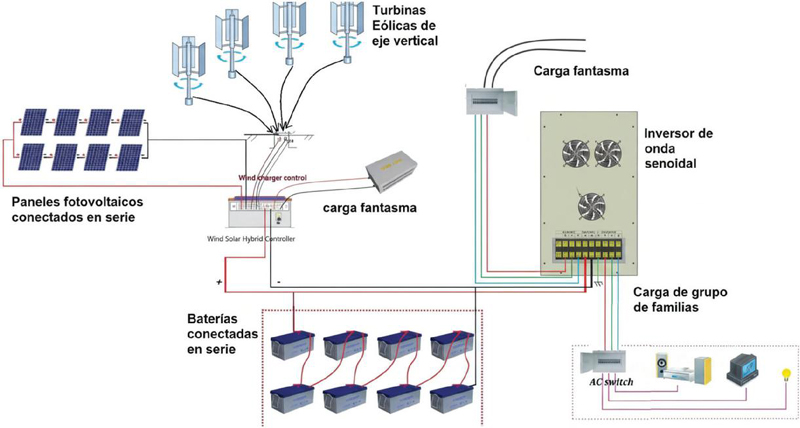
Figure 2 HER system for generating electrical energy.
Photovoltaic generation is modeled using site-specific solar irradiation data, while wind energy generation is based on vertical-axis wind turbine (VAWT) technology. The main technical characteristics of the selected VAWT are shown in Figure 3, and the three alternative VAWT configurations evaluated in the study are compared in Figure 4.
Battery energy storage is included to mitigate the temporal mismatch between renewable generation and electricity demand, with operational constraints explicitly considered in the simulation model.
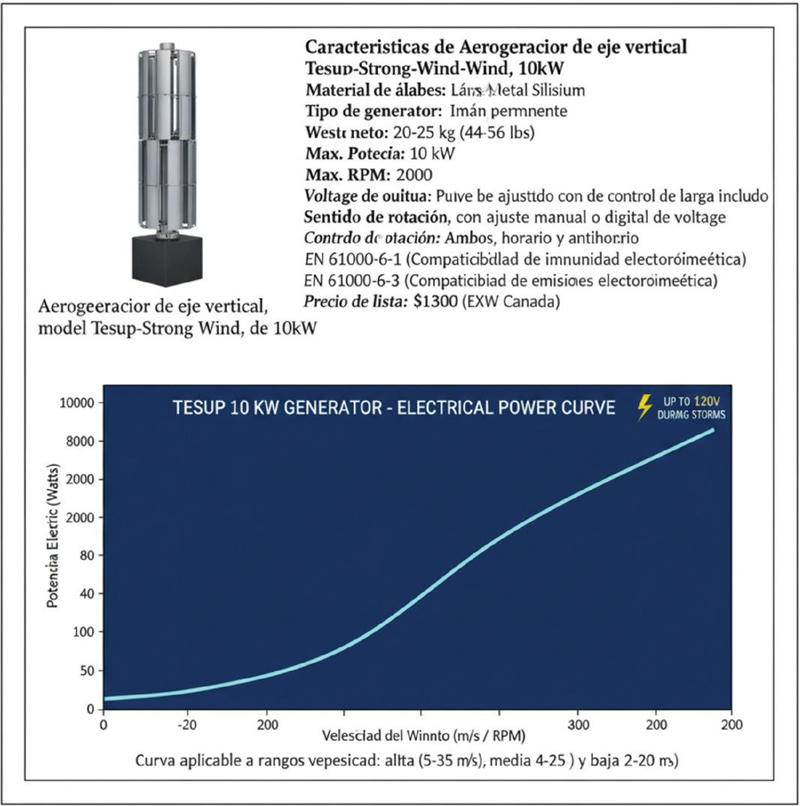
Figure 3 Technical characteristics of the selected vertical-axis wind turbine.
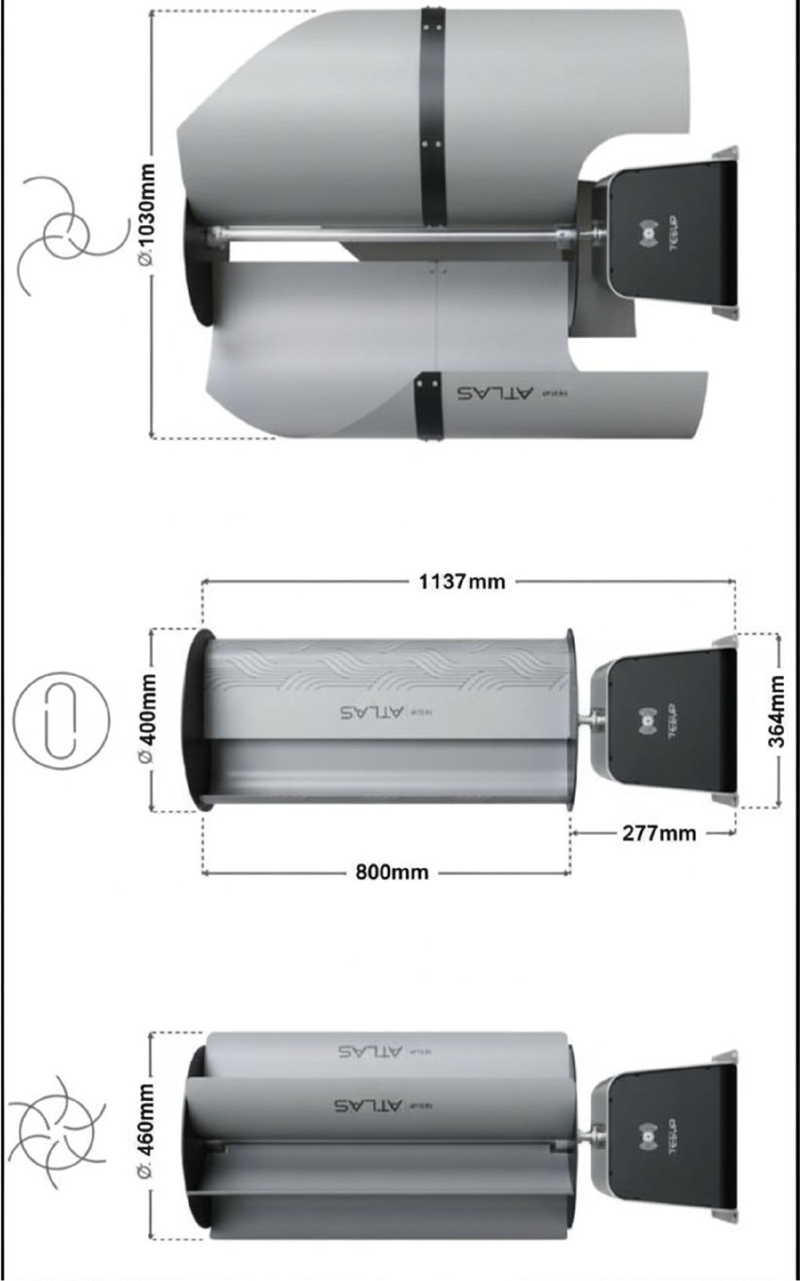
Figure 4 Comparison of the three alternative VAWT configurations considered in the study.
6.3 Simulation Framework and Energy Balance
An hourly simulation over a full annual horizon of 8760 hours is conducted for each candidate system configuration. At each time step, renewable energy generation, battery operation, and load demand are evaluated to determine the system energy balance.
The resulting supply profile on the load side is illustrated in Figure 5, confirming that the proposed system configuration ensures stable electricity supply under normal operating conditions.
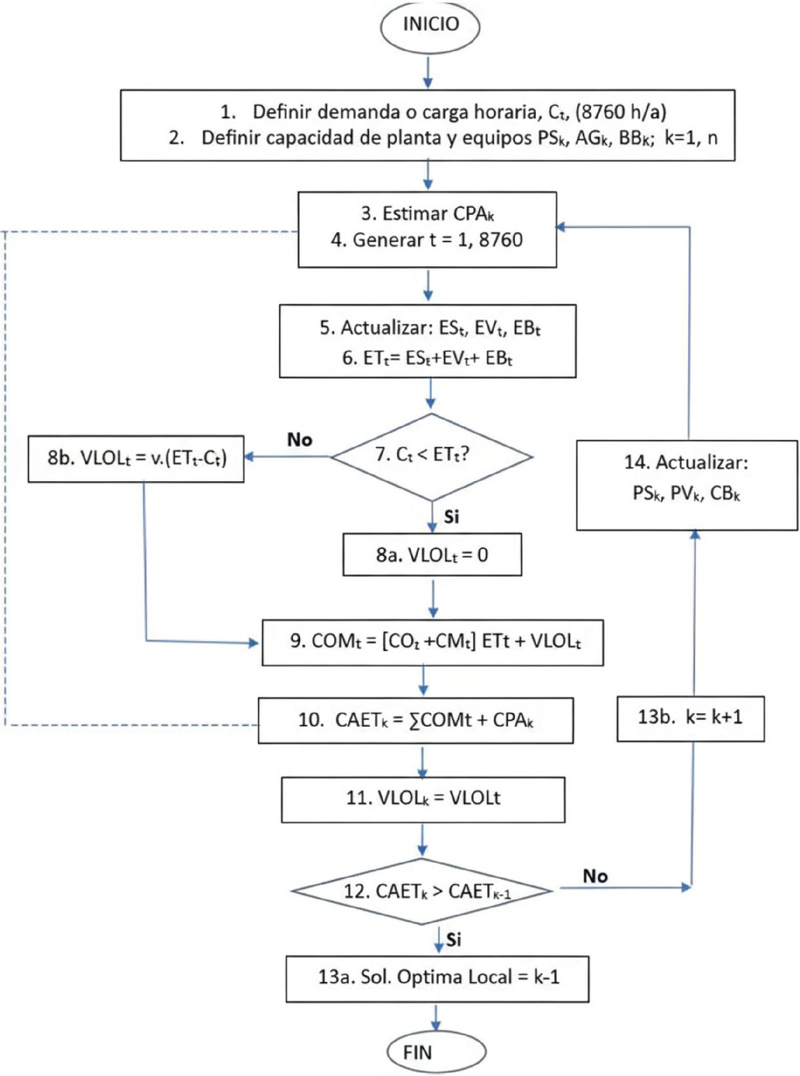
Figure 5 General simulation framework of the hybrid renewable energy system.
When renewable generation and available battery energy are insufficient to meet demand, unserved energy is recorded and accumulated for economic evaluation.
6.4 Economic Evaluation and Cost Behavior
The economic performance of each system configuration is evaluated using the annualized life cycle cost (CAET), which includes capital recovery costs, operation and maintenance costs, and the economic cost of unserved energy evaluated through VOLL.
The behavior of the cost function under conventional and proposed formulations is illustrated in Figure 6, which compares the cost behavior without including reliability costs and achieves an optimal value with cost constraint at point 8.00.
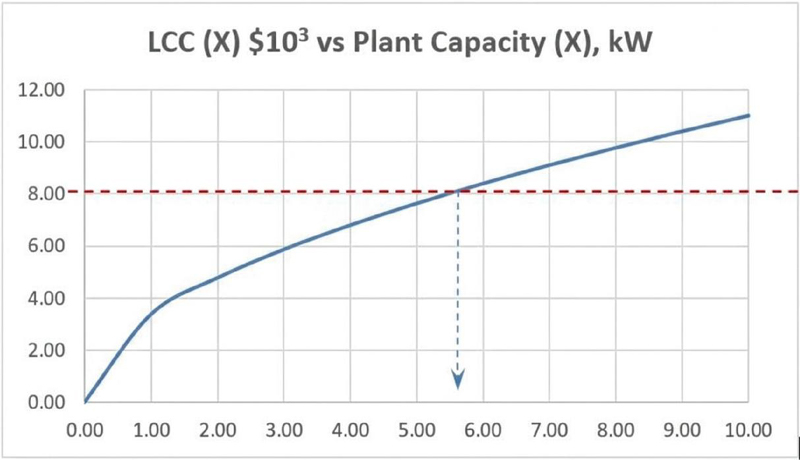
Figure 6 Present value of the conventional LCC(X) (without Lost Load Value).
Figure 7 shows LCC vs. Plant Capacity when the Head Loss Value is included. This function of effect (FO) can be convex and, in some cases, both concave and convex. The graph clearly shows a global minimum.
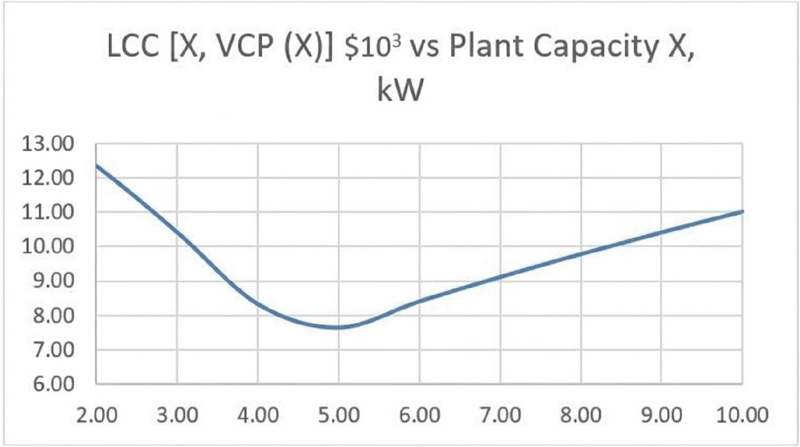
Figure 7 Plant Capacity when Lost Load Value is included.
6.5 Optimal System Identification
The simulation results reveal the existence of a unique economically optimal system configuration that balances investment cost and reliability. The optimal configuration avoids undersized systems with excessive unmet demand and oversized systems with unnecessary capital expenditures.
We are considering 28 dwellings. Average hourly consumption per household: 150 W (night) to 2500 W (peak day). We can estimate a typical profile for each household and for the entire community. Table 2 shows the demand simulation.
Table 2 Simulated demand profile for the Chérrepe community
| Hora | Average Load Per Household (W) | Total (28 Houses) (kW) |
| 00–06 | 200 | 5.6 |
| 06–08 | 500 | 14 |
| 08–18 | 1000 | 28 |
| 18–22 | 2500 | 70 (peak demand) |
| 22–24 | 400 | 11.2 |
Table 3 Optimal installed capacities of the hybrid renewable energy system components
| Parameter | Worth |
| Analysis horizon (years) | 10 |
| Discount rate (%) | 10 |
| Housing | 28 |
| Total daily demand (kWh) | 644 |
| Solar panel cost (USD/kW) | 950 |
| Wind turbine cost (USD/kW) | 350 |
| Battery cost (USD/kWh) | 400 |
| O&M cost (USD/kW/year) | 15 |
| Peak VOLL cost (USD/kWh) | 0.45 |
| VOLL cost per day (USD/kWh) | 0.2 |
| Peak hours per day | 4 |
| Off-peak hours per day | 20 |
| Equivalent hours of operation at full capacity: | |
| Solar generation (kWh/kW/día) | 4.4 |
| Wind generation(kWh/kW/día) | 6 |
The numerical results corresponding to the optimal configuration are summarized in Table 3, which presents the installed capacities of the photovoltaic system, wind turbine, and battery storage system. Table 4 summarizes the economic breakdown of capital, operation, maintenance, and reliability-related costs, while Table 5 reports annual energy production, unsupplied energy, and reliability indicators.
Table 4 Breakdown of annualized costs for the optimal system configuration
| Approximate Size or | Reference Cost | |
| Component | Exploratory Range | Installed (USD, $) |
| Solar panels | 146 kW | 120,000 175,000 |
| Wind turbines | 30–40 kW | 60,000 80,000 |
| Batteries(Li-ion) | 1431 kWh | 500,000 650,000 |
| Investors + EMS | 150–200 kW | 70,000 100,000 |
| Structures + Works | 100 m2 | 50,000 80,000 |
| Total Estimated, installed plant | 800,000 1,100,000 |
Table 5 Annual energy production, unserved energy, and reliability indicators
| HER | Wind (KW) | |||||
| PV | ||||||
| (KW) | 0 | 12 | 24 | 36 | 48 | 60 |
| 60 | 172,730.72 | 167,560.81 | 162,390.89 | 157,220.97 | 152,051.05 | 146,881.13 |
| 84 | 167,952.26 | 162,782.34 | 157,612.42 | 152,442.50 | 147,272.58 | 146,435.46 |
| 108 | 163,173.79 | 158,003.88 | 152,833.96 | 148,778.99 | 149,642.52 | 150,506.05 |
| 132 | 163,173.79 | 158,003.88 | 152,833.96 | 148,778.99 | 149,642.52 | 150,506.05 |
| 156 | 158,395.33 | 153,225.41 | 151,986.05 | 152,849.58 | 153,713.12 | 154,576.65 |
| 180 | 158,400.18 | 159,263.71 | 160,127.24 | 160,990.77 | 161,854.31 | 162,717.84 |
6.6 Reliability and Sensitivity Analysis
A sensitivity analysis is conducted to evaluate the influence of the Value of Lost Load on optimal system sizing. The results of this analysis are presented in Table 4, which shows how variations in VOLL affect installed capacities, unserved energy levels, and total annualized costs.
Additionally, Figure 8 illustrates system behavior under different simulation scenarios, confirming the robustness of the proposed formulation.
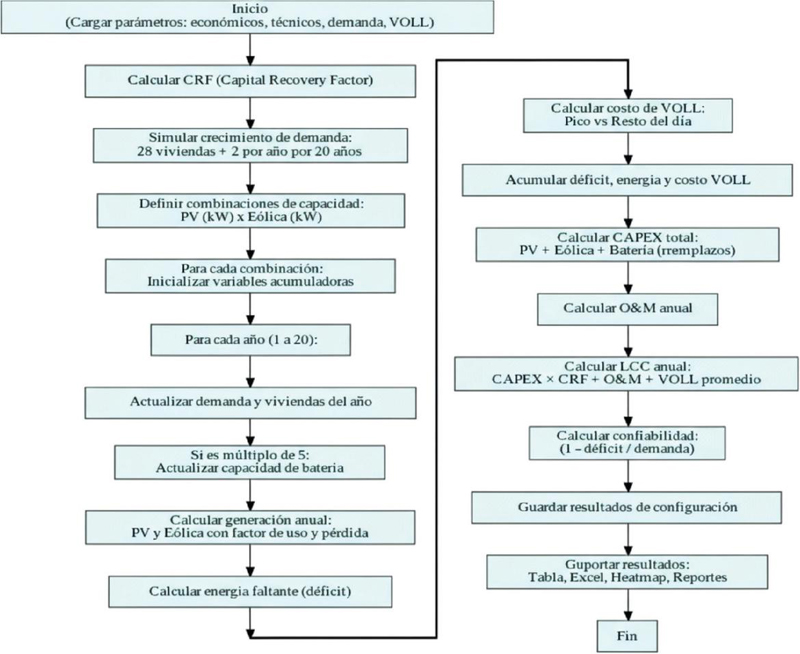
Figure 8 Simulation results under different reliability valuation scenarios.
6.7 Summary of Case Study Findings
The case study demonstrates that explicitly embedding reliability costs into the techno-economic optimization framework yields transparent and economically interpretable results. By valuing unserved energy directly through VOLL, the proposed approach allows decision-makers to quantify the trade-offs between investment and reliability in a consistent manner.
7 Discussion
The results obtained from the case study provide several important insights into the techno-economic design of hybrid renewable energy systems when reliability is explicitly valued within the optimization process. Unlike conventional approaches that treat reliability as an external constraint or a secondary performance indicator, the proposed framework embeds reliability directly into the objective function through the Value of Lost Load (VOLL), allowing economic and reliability considerations to be evaluated on a consistent basis.
One of the most relevant outcomes of this study is the modification of the cost function behavior when reliability costs are included. As demonstrated in the case study, conventional life cycle cost formulations tend to exhibit monotonic or weakly nonlinear behavior with respect to installed capacity, which often leads to ill-posed optimization problems and ambiguous sizing decisions. By contrast, the explicit valuation of unserved energy introduces a counterbalancing cost component that penalizes insufficient capacity, resulting in a convex cost structure within the feasible design space. This structural change enables the identification of a unique economically optimal system configuration without relying on arbitrary reliability constraints or penalty coefficients.
The results also highlight the critical role of the Value of Lost Load as a decision-making parameter. Variations in VOLL significantly influence optimal system sizing, reflecting the socio-economic context of the served community. Higher VOLL values lead to larger optimal capacities and reduced unserved energy, while lower values favor reduced investment at the expense of reliability. Importantly, despite these variations, the existence of a unique optimal solution is preserved, demonstrating the robustness of the proposed formulation. This finding underscores the importance of selecting VOLL values that accurately reflect local economic conditions and user preferences.
From a methodological perspective, the proposed approach shifts the focus of HRES optimization from algorithm selection to problem formulation. While numerous studies emphasize advanced numerical solvers and metaheuristic techniques, the present work demonstrates that reformulating the objective function to explicitly account for reliability can substantially improve solution interpretability and robustness. This perspective complements existing optimization methodologies and provides a transparent framework that can be readily understood by planners, policymakers, and system designers.
The case study further illustrates the practical implications of the proposed framework for isolated and weak-grid communities. By explicitly quantifying the economic trade-offs between investment cost and reliability, the methodology enables informed decision-making that aligns system design with local priorities and resource availability. The transparency of the cost breakdown facilitates stakeholder engagement and supports the justification of investment decisions in real-world planning contexts.
Despite these advantages, certain limitations of the present study should be acknowledged. The analysis assumes deterministic load and renewable resource profiles, whereas real-world conditions are subject to uncertainty and variability. Additionally, the Value of Lost Load is treated as a constant parameter, although it may vary across customer types, time of day, and outage duration. Addressing these aspects through stochastic modeling and differentiated reliability valuation represents a valuable direction for future research.
Overall, the discussion confirms that embedding reliability costs directly into the techno-economic optimization framework provides a coherent and economically grounded approach to hybrid renewable energy system planning. The proposed methodology bridges the gap between reliability assessment and cost-based optimization, offering a robust and interpretable alternative to conventional constraint-based formulations.
8 Conclusions
This paper has presented a techno-economic optimization framework for the design and sizing of hybrid renewable energy systems that explicitly incorporates reliability costs through the Value of Lost Load (VOLL). By embedding the economic cost of unserved energy directly into the annualized life cycle cost formulation, the proposed approach overcomes key limitations of conventional cost-based optimization methods that treat reliability as an external constraint or post-optimization indicator.
The results demonstrate that the explicit valuation of unserved energy fundamentally alters the structure of the optimization problem. Whereas traditional formulations often exhibit monotonic or weakly nonlinear cost behavior, the proposed framework induces a convex cost structure within the feasible design space. This property enables the identification of a unique economically optimal system configuration and eliminates the need for arbitrary reliability constraints or penalty factors.
The application of the methodology to a real-world isolated coastal community illustrates its practical relevance. The case study confirms that incorporating VOLL leads to system designs that balance investment cost and supply reliability in an economically transparent and interpretable manner. The results highlight the importance of reliability valuation in guiding system sizing decisions and demonstrate how the proposed framework can support informed decision-making in isolated and weak-grid contexts.
From a broader perspective, the proposed approach shifts the focus of hybrid renewable energy system optimization from the selection of increasingly complex numerical algorithms to the formulation of economically meaningful objective functions. This perspective complements existing solution-oriented methods and provides a robust and transparent planning tool for distributed generation and alternative energy applications.
Future research may extend the proposed framework by incorporating stochastic representations of load demand and renewable resource availability, as well as differentiated Value of Lost Load estimates reflecting customer type, time of use, and outage duration. Such extensions would further enhance the applicability of the methodology to real-world planning and policy analysis.
Finally, Table 5 shows the optimal solution for an 84 kW solar PV and 60 kW wind turbine installation, resulting in an annual LCC of $146,435. Based on this result, the daily household electricity rate is 2.25 soles/kWh, which is high compared to the average cost of residential electricity in Peru in July 2025, which is 0.72 soles/kWh according to [31] and [32]. It is important to note that the rate may have some type of temporary state subsidy because the chosen location is an economically productive area, and these families may be able to assume the cost without subsidies in the future.
Acknowledgements
The author, Luis Ramírez Huamán, would like to express his gratitude to Dr. Modesto Palm García, Coordinator of the Doctoral Program in Science with a Specialization in Energy, under the agreement between the Ministry of Energy and Mines and Carelec-UNI, for his valuable institutional support. Special thanks are also due to Dr. Jorge Wong, co-author of this article, for his support throughout the research process.
Conflict of Interest Declaration
The authors hereby declare that there are no financial or personal conflicts of interest that could have influenced the preparation and submission of this article.
Appendix A. Python Code for Simulation and Optimization
This appendix presents the Python code used to implement the simulation-based optimization framework described in the manuscript. The code executes the simulation flow illustrated in Figure 8 and generates the numerical results summarized in Tables 2–5 for the case study of the coastal community of Chérrepe.
The implementation evaluates multiple configurations of photovoltaic and wind generation capacities, computes annual energy balances, estimates unserved energy, and calculates the annualized life cycle cost (CAET) by explicitly incorporating the Value of Lost Load (VOLL).
A.1 General Parameters and Assumptions
import numpy as np import pandas as pd
# Simulation horizon n_anios = 10
# Demographic assumptions viviendas_iniciales = 28 viviendas_por_anio = 0
# Demand parameters demanda_diaria_promedio_hogar_kWh = 4.8 horas_pico = range(18, 22)
# Economic parameters capex_pv_kw = 950 capex_eolica_kw = 350 capex_bateria_kwh = 180 om_kw_anual = 25 tasa_descuento = 0.10
# Reliability valuation voll_pico = 0.45 voll_fuera_pico = 0.20
A.2 Design Space Definition
pv_sizes = np.linspace(5, 20, 4) # PV capacity range (kW)
eolica_sizes = np.linspace(2, 10, 4) # Wind capacity range (kW)
resultados = [ ]
A.3 Simulation Loop and Energy Balance
for pv_kw in pv_sizes:
for eolica_kw in eolica_sizes:
confiabilidad_total = 0 costo_total = 0 energia_perdida_total = 0 viviendas = viviendas_iniciales for anio in range(1, n_anios + 1):
demanda_diaria_total = viviendas *
demanda_diaria_promedio_hogar_kWh demanda_anual_total = demanda_diaria_total * 365
# Annual energy generation assumptions gen_pv = pv_kw * 4 * 365 # 4 effective solar hours/day gen_eolica = eolica_kw * 6 * 365 * 0.8 # 6 wind hours/day, 80%
availability gen_total = gen_pv + gen_eolica
# Unserved energy estimation if gen_total < demanda_anual_total:
energia_perdida = demanda_anual_total - gen_total else:
energia_perdida = 0 energia_perdida_total += energia_perdida
A.4 Reliability Cost and Annualized Cost Calculation
# Reliability cost costo_voll = (
energia_perdida * voll_pico * 0.3 +
energia_perdida * voll_fuera_pico * 0.7
)
# Capital Recovery Factor (CRF)
crf = (tasa_descuento * (1 + tasa_descuento) ** n_anios) / (
(1 + tasa_descuento) ** n_anios - 1
)
# Capital expenditure capex_total = (
capex_pv_kw * pv_kw +
capex_eolica_kw * eolica_kw +
capex_bateria_kwh * demanda_diaria_total * 2
)
capex_anual = capex_total * crf om_anual = om_kw_anual * (pv_kw + eolica_kw)
costo_total += capex_anual + om_anual + costo_voll confiabilidad = 1 - (energia_perdida / demanda_anual_total)
confiabilidad_total += confiabilidad
A.5 Results Storage and Export
resultados.append({
"PV_kW": pv_kw,
"Eolica_kW": eolica_kw,
"LCC_Anual": costo_total / n_anios,
"Confiabilidad": confiabilidad_total / n_anios
})
# Export results df = pd.DataFrame(resultados)
df.to_csv("resultados_cherrepe_n10.csv", index=False)
print(df)
A.6 Remarks on Reproducibility
The provided code implements a deterministic simulation framework consistent with the mathematical formulation presented in Section 4 and the optimization methodology described in Section 5. All parameters can be modified to reflect different economic assumptions, reliability valuations, or demand scenarios, enabling straightforward adaptation to other case studies.
References
[1] Lieven Vandenberghe. Convex optimization. Tutorial lectures, 18th Machine Learning Summer School, September 13–14, 2011, 2011. Electrical Engineering Department, UC Los Angeles.
[2] Leo Liberti. Introduction to global optimization. Technical report, LIX, École Polytechnique, Palaiseau, France, Oct. 2008. Mini-course on global optimization.
[3] Yurii Nesterov. Lectures on Convex Optimization, volume 137 of Springer Optimization and Its Applications. Springer, Cham, 2 edition, 2018.
[4] Rabah Debbar. Unconstrained optimisation. lecture notes, 3rd year degree in mathematics. Technical report, Department of Mathematics, University of 8 May 1945, Guelma, Guelma, Algeria, 2023. Academic year 2023–2024.
[5] Alan R. Parkinson, Richard J. Balling, and John D. Hedengren. Optimization methods for engineering design: Applications and theory. Technical report, Brigham Young University, Provo, UT, USA, 2013. Course textbook, available as online PDF.
[6] Stephen P. Boyd and Lieven Vandenberghe. Convex Optimization. Cambridge University Press, Cambridge, 2009.
[7] Joaquim R. R. A. Martins and Andrew Ning. Engineering Design Optimization. Cambridge University Press, Cambridge, UK, Jan. 2022.
[8] Dimitri P. Bertsekas. Nonlinear programming, 3rd edition: Theoretical solutions manual, chapter 6. Technical report, Athena Scientific, Belmont, MA, 2016. Last updated May. 2016
[9] Massimo Stefanoni, Peter Sarcevic, József Sárosi, and Akos Odry. Optimization techniques in the localization problem: A survey on recent advances, Aug. 2024.
[10] M. Talaat, M. H. Elkholy, Adel Alblawi, and Taghreed Said. Artificial intelligence applications for microgrids integration and management of hybrid renewable energy sources.Artificial Intelligence Review, 56:10557–10611, Sep. 2023.
[11] José Aguilar. Resolución computacional de un problema de optimización combinatorio híbrido. Ciencia e Ingeniería, 38(2):99–108, 2017.
[12] Ezequiel López Rubio. Tema 2: Optimización lineal. Technical report, Departamento de Lenguajes y Ciencias de la Computación, Universidad de Málaga, 2020.
[13] Zhi Yuan Wang and Hsiao Dong Chiang. On the nonconvex feasible region of optimal power flow: Theory, degree, and impacts. International Journal of Electrical Power & Energy Systems, 161:110167, Oct. 2024.
[14] Alphonce Ngila Mulumba and Hooman Farzaneh. Techno-economic analysis and dynamic power simulation of a hybrid solar-wind-battery-flywheel system for off-grid power supply in remote areas in kenya. Energy Conversion and Management: X, 18:100381, Apr. 2023.
[15] Gabriel Baca Urbina. Ingeniería económica. McGraw-Hill Interamericana, Ciudad de México, 6 edition, 2015.
[16] Julio Usaola. Economía de la generación y consumo eléctrico convencional. Technical report, Departamento de Ingeniería Eléctrica, Universidad Carlos III de Madrid, Oct. 2020.
[17] CEPA. Final report study on the estimation of the value of lost load of electricity supply in europe acer/op/dir/08/2013/lot 2/rfs 10 agency for the cooperation of energy regulators 06 july 2018 final report. Technical report, Cambridge Economic Policy Associates Ltd, 7 2018.
[18] SEM Committee. Information paper calculation of a single value of lost load within the single electricity market. Technical report, SEM Committee, Sep. 2023.
[19] Pedro Arroyo Gordillo and Ruth Vásquez Rivas Plata. Ingeniería económica: ¿cómo medir la rentabilidad de un proyecto? Fondo Editorial de la Universidad de Lima, Lima, 2016. Primera edición digital.
[20] Aswath Damodaran. Investment Valuation: Tools and Techniques for Determining the Value of Any Asset. Wiley Finance. John Wiley & Sons, Hoboken, NJ, 3 edition, 2012.
[21] Jolien Despeghel, Jeroen Tant, and Johan Driesen. Convex optimization of pv-battery system sizing and operation with non-linear loss models. Applied Energy, 353:121976, 12024.
[22] Dejan Glavas, editor. Valuation and Sustainability: A Guide to Include Environmental, Social, and Governance Data in Business Valuation. Sustainable Finance. Springer Nature Switzerland AG, Cham, 2023.
[23] J. P. Carvallo. The value of lost load: Concepts, methods, and applications. Technical report, Lawrence Berkeley National Laboratory, September 2024.
[24] Michael Robinson. Value of lost load (voll). Technical report, Midcontinent Independent System Operator, Aug. 2022.
[25] Tefera Mekonnen, Ramchandra Bhandari, Venkata Ramayya Ancha, and Baseem Khan. Analysis and ranking of barriers in development of solar power using interpretive structural modeling method: Ethiopian outlook. Distributed Generation and Alternative Energy Journal, 37:631–662, 2022.
[26] Tole Sutikno, Arsyad Cahya Subrata, and Awang Jusoh. A new fl-mppt high voltage dc-dc converter for pv solar application. Distributed Generation and Alternative Energy Journal, 37:1527–1548, 2022.
[27] S. Nethravathi and Venkatakirthiga Murali. A novel residential energy management system based on sequential whale optimization algorithm and fuzzy logic. Distributed Generation and Alternative Energy Journal, 37:557–586, 2022.
[28] Zongluo Zhao, Yabo Li, Qicheng Sun, Ruifeng Li, Zhenxu Ma, and Dongbo Guo. Assessment of the distributed generation carrying capacity in new-type distribution networks based on different load levels. Distributed Generation and Alternative Energy Journal, 39:1069–1096, 2024.
[29] Sheikh Suhail Mohammad and Sheikh Javed Iqbal. Optimization and power management of solar pv-based integrated energy system for distributed green hydrogen production. Distributed Generation and Alternative Energy Journal, 37:865–898, 2022.
[30] Bisma Hamid, Sheikh Javed Iqbal, and Ikhlaq Hussain. Performance investigation of grid connected dfig based wind energy system. Distributed Generation and Alternative Energy Journal, 38:273-292, 2023.
[31] Osinergmin. Informe técnico 462-2022-grt: Fijación de la tarifa rural para sistemas fotovoltaicos del período del 17/08/2022 al 16/08/2026. Technical report, Gerencia de Regulación de Tarifas, División de Distribución Eléctrica, Osinergmin, Lima, Perú, Jul. 2022.
[32] Manuel Ruiz. Las tarifas eléctricas residenciales en las regiones del Perú. Moneda, (196):82 86, 2023.
Biographies

Jorge Benjamin Wong Kcomt, PhD, CEM, is an industrial energy engineer with over 40 years of experience in energy management, industrial productivity, cogeneration, and distributed generation. As a Master Black Belt in design and reliability engineering for 6 Sigma-Lean at General Electric Company, he managed over 200 industrial improvement, automation, and modernization projects over more than a decade. He has served as a consultant for MIT startups in the design and production of high-precision surgical laser systems and advanced fiber technologies. Currently, Dr. Wong is an advisor professor for the Doctoral Program in Energy at the Graduate School of the National University of Engineering (UNI), Peru. He was the founding editor-in-chief of the Distributed Generation & Alternative Energy Journal and works as an international consultant in industrial ecology, circular economy, and technical sustainability. He holds a postdoctoral diploma in Strategy and Innovation from MIT Sloan School and obtained his PhD and MS in Engineering, Economics, and Management of Industrial Energy at Oklahoma State University (USA). He graduated in industrial and mechanical engineering from the National University of Trujillo, Peru. At present, he researches complex dynamic systems and is also engaged in precision organic farming as an entrepreneur.

Luis Enrique Ramírez Huamán is an electronic engineer from the National University of Engineering (UNI) in Lima, Peru, holding a Master of Science with a specialization in Automation and Instrumentation from the same university. He has more than 35 years of experience in both academic and industrial sectors, focusing on planning, coordinating, and supervising the repair of industrial electronic controls, designing and implementing industrial electronic and electrical equipment, and automating industrial processes. He has taught electronics and electrical engineering courses at UNI, the Technological University of Peru, the University of Lima, and SENATI. He is currently in his final semester of the PhD in Science with a specialization in Energy at the National University of Engineering.
Distributed Generation & Alternative Energy Journal, Vol. 41_3, 471–500
doi: 10.13052/dgaej2156-3306.4131
© 2026 River Publishers