Study on the Spatiotemporal Evolution Mechanism of Mine Pressure in Gold Mine Mines and its Prediction by FLAC3D Numerical Simulation
Bin Jiang1, He Huang1,* and Yalatu Su2
1Production Technology Department, Habahe Jinba Mining Co. Ltd., Aletai 836700, China
2Ministry of Geology and Mineral Technology, Zhengyuan International Mining Co. Ltd., Beijing101304, China
E-mail: he_huang48@outlook.com
*Corresponding Author
Received 08 April 2026; Accepted 28 August 2026
Abstract
Deep underground gold mining induces complex stress redistribution due to high in-situ stress, geological heterogeneity, and progressive excavation, resulting in roof instability, floor heave, and pillar deformation. This study aims to develop a physics-based predictive framework to forecast mine pressure evolution, displacement, and plastic deformation under multiple mining scenarios. The objective is to integrate geological zoning, in-situ stress conditions, and excavation sequences into a unified model to identify high-risk zones and optimize mining strategies. This study utilizes the publicly available FLAC3D Gold Mining Dataset from Kaggle to define mining layout, geometric parameters, in-situ stress, and rock mass properties for the simulation. Spatiotemporal analysis evaluates principal stresses, Von Mises stress, displacements, and plastic zone evolution at each excavation step, revealing areas prone to instability. In addition, the spatiotemporal stress development at baseline, high-stress, deep-mining, and critical scenarios was quantitatively assessed by means of parameters derived from the simulations, allowing for the mapping of high-risk areas and the examination of stress redistribution processes. Finally, the framework predicts stress redistribution and deformation trends under baseline, high-stress, deep-mining, and critical scenarios, validated through numerical comparison with FLAC3D outputs to ensure reliability and accuracy. Results indicate accumulated stress increases from 30 MPa to 750 MPa across mining stages, with prediction errors within , and MPa. The framework effectively identifies critical stress zones and informs optimal excavation planning, demonstrating its potential to enhance safety and operational efficiency in deep gold mining.
Keywords: Mine pressure evolution, FLAC3D numerical simulation, spatiotemporal stress analysis, rock mass deformation, plastic zone development, deep underground gold mining.
1 Introduction
Underground gold mining is becoming more and more related to complex geomechanical issues because of the great in-situ stress, geological heterogeneity, and continuous underground excavation [1, 2]. The stress environment at increased depths of mining is very anisotropic, leading to great mine pressure, roof instability, heaving of the floor, and deformation of pillars [3]. The responses following stress are dynamically changing with the excavation process, so mine pressure is a time-dependent and spatially changing process [4]. The spatiotemporal dynamics of mine pressure are thus important in the aspect of mine safety, optimization of excavation sequences, as well as design of support systems [5]. The redistribution and deformation behavior of stress has been studied in detail, and it offers important knowledge on the mechanism of failure of the adjacent rock masses in deep gold mining conditions [6].
The development of mine pressure is affected by several interacting variables, such as mining depth, the geometry of excavation, the order of excavation, the mass of rocks, and the stress situation as it exists in the host rock [7, 8]. Stress transfer and patterns of deformation are also complicated by geological discontinuities including faults and joints [9]. The state of the rock mass is changed by progressive excavation, resulting in the concentration of stress locally, differential deformation, and plastic yielding [10]. These effects are more acute under high-stress and deep mining conditions and can cause some dangerous situations like a rock burst or impromptu collapses [11]. Also, mine pressure does not form immediately but changes as the stress re-distributes and deformation occurs over time; thus, the structure in mine pressure analysis captures both the spatial and the temporal features [12].
The behavior of mine pressure has been studied in different ways, by empirical rock pressure theories, analytical stress models, physical similarity experiments, and field monitoring methods, which include stress meters and convergence measurements [13]. Surface deformation has also been measured using remote sensing techniques such as the InSAR technique [14]. Various numerical tools have been used in the analysis of underground mining; among [15, 16] are the finite element method (FEM), discrete element method (DEM), and finite difference method (FDM). Simulation of redistribution and deformation of stress has been widely applied using software like FLAC3D, UDEC, PFC, and ABAQUS [17]. Nevertheless, a significant number of literature sources concentrate on the static setting or individual excavation phases and are not systematically spatiotemporally predictive and weakly quantitatively validating the process of mine pressure development [18].
To eliminate these drawbacks, this paper presents a detailed FLAC3D-based spatiotemporal predictive model to examine mine pressure development in deep gold mines. It combines geological zoning, in situ stress conditions, progressive excavation simulation, and elastic-plastic rock behavior to realistically reflect the redistribution of stress, development of displacement, and evolution of the plastic zone. In contrast to the traditional ones, the given approach focuses on spatiotemporal monitoring and the quantitative forecasting of mine pressure in various mining conditions. The importance of this research lies in the fact that three-dimensional numerical simulation is combined with the metrics of prediction validation, and thus, there is an opportunity to identify the high-risk areas reliably and make informed decisions related to the mine design, hazard mitigation, and operational safety. This paper:
• Demonstrates a comprehensive investigation of spatiotemporal mine pressure evolution using the FLAC3D numerical simulation tool, integrating datasets on mining layout, geometry, in-situ stress, and rock mass properties for deep gold mines.
• Implements numerical modeling with FLAC3D to simulate stress redistribution, displacement, and plastic deformation, applying elastic-plastic rock behavior and the Mohr-Coulomb failure criterion under progressive excavation conditions.
• Analyzes spatiotemporal stress evolution by computing principal stresses , Von Mises stress (), and plastic yielding zones at each mining step to identify high-stress and potential failure regions.
• Develops a predictive framework that forecasts mine pressure, displacement, and plastic zone evolution over future mining sequences using cumulative stress increments and nodal displacement evolution without external analytical tools.
• Evaluates different mining scenarios and support configurations by comparing stress redistribution patterns, displacement magnitudes, and plastic zone development to select optimal excavation strategies for safety and operational efficiency.
1.1 Research Scope and Novelty
The scope of a research project is the 3D numerical modelling of mine pressure development in deep gold mining conditions in the presence of various stress and excavation conditions. The suggested framework allows tracking of the stress, displacement, and plastic deformation of space and time continuously through the FLAC3D simulations. The concept of combining spatiotemporal stress analysis and predictive modeling and validation measures into a single framework makes it novel to determine the main areas of stress and instability processes correctly. This is a physics-based methodology that builds on the classical numerical research by offering not only quantitative prediction capability but also greater decision support to mine design and ground control.
1.2 Research Organization
The paper is organized as follows: Section 2 presents the literature review on mine pressure analysis and numerical modeling techniques; Section 3 explains the proposed approach to FLAC3D methodology and predictive framework; Section 4 presents and discusses the simulation results, validation, and spatiotemporal stress development; Section 5 reveals the engineering implications of the results; and Section 6 concludes the study and recommends future research directions.
2 Literature Survey
Liu et al. [19] discuss the aspect of incorporation of 3D ore-forming numerical simulations in the prospectively modeling of minerals around the Xiadian orogenic gold deposit in China. Their model, which used fault geometry and ore-formation simulation variables, was shown to be more reliable and predictive than traditional methods by use of Bayesian decomposition to combine them. The effect of the underground mining of coal on the surface and slope deformation of the Guangfeng coal mine was examined by Tian et al. [20] using InSAR and FLAC3D. This research shows that there are specific regions of subsidence and four phases of mining slope deformation. The research is of value in terms of monitoring surface movement and predicting slope stability; when they are combined, InSAR and numerical simulations will offer a guiding input on the risks involved in landslides in mountainous mine areas, which can be reduced.
Meng et al. [21] suggest a new numerical model that can be used to simulate the complicated interactions of rock mechanics and the flow of fluids in the subsurface due to fracture. The model incorporates mechanical and flow models, which improves the success of predicting the rate of change of permeability and the rate of water inflow when extracting a resource. The model includes a damage coefficient associated with the strength of rocks, thus greatly enhancing the predictions of interactions between aquifer and mine water and effects of mining on the groundwater systems in a more accurate way. Liu et al. [22] examine how upper protective layer mining affects the change in stress and deformation on the underlying coal seams through similar experiments and FLAC3D simulations. Their analysis demonstrates that upper coal seam mining has a major effect on decreasing the pressure in the lower coal seam, which offers information on the pressure relief region and stress concentrate zones. This study has highlighted that protective layer mining is critical towards enhancing safety and maximizing the mining efficiency through the reduction of pressure in underlying coal seams.
Zhang et al. [23] interpret the stability of overlying strata and surface deformation as a result of underground mining, which is a combination of theoretical prediction and numerical analysis. Their work combines the probability approach and the FLAC3D model to estimate the influence of activities occurring near mining on the surface subsidence and redistribution of stress. The results are a holistic system of assessing the risks of mine stability and surface deformation in multi-mine districts, which is safe for surface buildings. Siddique et al. [24] introduce a two-work package that includes InSAR, infrared thermography (IRT), and numerical simulations to evaluate slope stability in open-pit mining. Their research is about the Sijiaying Iron Mine (China), and InSAR is applied to monitor the deformation of the surface, and IRT to reveal the underground anomaly. The results indicate that displacement has a significant correlation with stress, which proves the efficiency of this combined framework to enhance the safety and operational efficiency of the mining operations through overcoming the drawbacks of the traditional practices.
Yang et al. [25] discuss the stability of an iron mine in China and the effects of weight, groundwater, earthquake loading, and rainfall. Indoor testing and numerical simulation based on specific software such as GEO-SLOPE and AutoCAD are used in the study to compute the stability coefficients in different conditions. The results highlight the intervention factors that are vital in the stability of the slope, which enables safe and effective mining processes and also in maintaining safety standards. Liu et al. [26] introduce a new mining method, which is the pre-controlled top-to-middle and deep-hole upper and lower-wall goaf subsequent filling mining method, to control deep ground pressure problems in the Sanshandao Gold Mine. They come up with three different excavation plans and use FLAC3D to study the evolution of stress and displacement. The results from their study depict stress concentration and displacement features to verify not only the method’s effectiveness but also its practical applicability for enhancing stope stability.
Pang et al. [27] was concerned with the issues of deepening the mining of the gold mine at Jiaojia, with the emphasis on overburden stress and the possibility of mine water catastrophe. They forecast the elevation of the water-conducting fractured zone with the help of a three-dimensional geological model founded on borehole data and derive the effect of mining on the stress distribution. Their results emphasize the relevance of observing the concentration of stress and offer a sound technique for analyzing the stability of deep mining. Hou et al. [28] focus on the effect of freeze-thaw (FT) cycles on the stability of open-pit mine slopes in cold areas. They define the degradation of shear strength parameters through determining a temperature-depth correlation, carrying out direct shear tests, and suggest a model of fracture network. Their results emphasize how FT cycles affect slope safety and can provide essential information on long-term evaluation of service and the stability of cold-region mining slopes.
Gong et al. [29] consider hazards that are brought about by geo-stress in deep underground mining of coal in the Pingdingshan region, including the instability of the roads stemming from intricate fault-fold structures. Their analysis measures field in-situ stress properties, constructs a regression equation to calculate the major stresses, and compares the coefficients of lateral pressure. They suggest improved roadway arrangements using FLAC3D to reduce the risks by providing scenarios in which the geo-stress orientations are localized, which will result in more efficient and safer mining in the area. Wang et al. [30] examine the stability and deformation management of the Xiling auxiliary shaft in the Sanshandao Gold Mine in complex geological conditions. They come up with a thermal-hydraulic-mechanical coupling numerical model to investigate the stress distribution, deformation mechanisms, and long-term stability. The research focuses on the effects of excavation rates on deformation and optimal support systems in deformation-prone areas are advised, and the significance of monitoring in effective management of risk and safe construction of shafts is noted. Recent computational mechanics studies have demonstrated the effectiveness of advanced numerical approaches for engineering analysis. Yunhong and Shihao [31] applied a GA-BP-based computational framework for displacement inverse analysis and mechanical parameter estimation, while Li and Zhao [32] developed a CFD-DEM coupled simulation approach to investigate mechanical behavior and seepage mechanisms in fractured coal. These studies further highlight the capability of computational modelling techniques for analyzing complex stress and deformation responses in geotechnical engineering systems. Collectively, the reported studies confirm the capability of FLAC3D-based numerical simulation for characterizing stress redistribution, deformation behavior, and stability evolution in underground mining environments. The existing literature provides valuable insights into mine pressure mechanisms; however, variations in geological conditions, excavation processes, and mining environments continue to influence pressure evolution characteristics. Further investigation of spatiotemporal mine pressure behavior considering geological zoning and dynamic stress changes is essential for improving stability assessment in deep gold mining operations.
2.1 Problem Statement
The development of mine pressure during excavation poses a significant challenge in underground mining, particularly during different stress environments. The complex interaction between excavation geometry, rock mass properties, and induced stress changes causes an increase in the risk of instability and rock failure [19]. Although the current models concentrate on either stress or displacement, they are not able to encompass the spatiotemporal evolution and forecast instability in a dynamic mining environment [22]. That way, it is required to have an accurate physics-based model to estimate mine pressure, displacement, and plastic deformation with time [27].
The suggested framework incorporates a dynamic FLAC3D model with the ability to monitor dynamic spatiotemporal changes in mine pressure, migration, and plastic deformation throughout the mining phases. The model can be able to make more credible, flexible predictions by incorporating real-time numerical simulations under varying mining conditions (baseline, high stress, deep mining). This holistic approach will provide more accurate predictability in the development of pressure and possible instability, leading to risk control and optimization of excavation policies to make the mines safer and more efficient in their work.
3 Methodology
Figure 1 illustrates a combined FLAC3D pressure analysis and prediction model of mines. The process starts with input data preparation, including mining layout and stope zone information, geometry parameters, rock mass mechanical properties, and in-situ stress conditions before the excavation process. The FLAC3D numerical model is built based on these inputs such that the rock mass is modeled as a continuum and is discretized by a hexahedral grid with the right boundary conditions and initial stress fields. The established model allows intensive spatiotemporal variation of stress and deformation in the course of excavation, resulting in the changing of the major stresses, Von Mises equivalent stress, the redistribution patterns of stresses, the formation of plastic zones, and time-dependent deformation behavior. It incorporates all processes into a centralized system that uses FLAC3D and facilitates the process of predicting mine pressure by simulating future excavation phases, predicting the stress buildup, and locating the areas of maximum stress. This is a complex model that offers a good instrument in the assessment of excavation-induced instability and improves decision-making related to underground mine safety and ground control design.
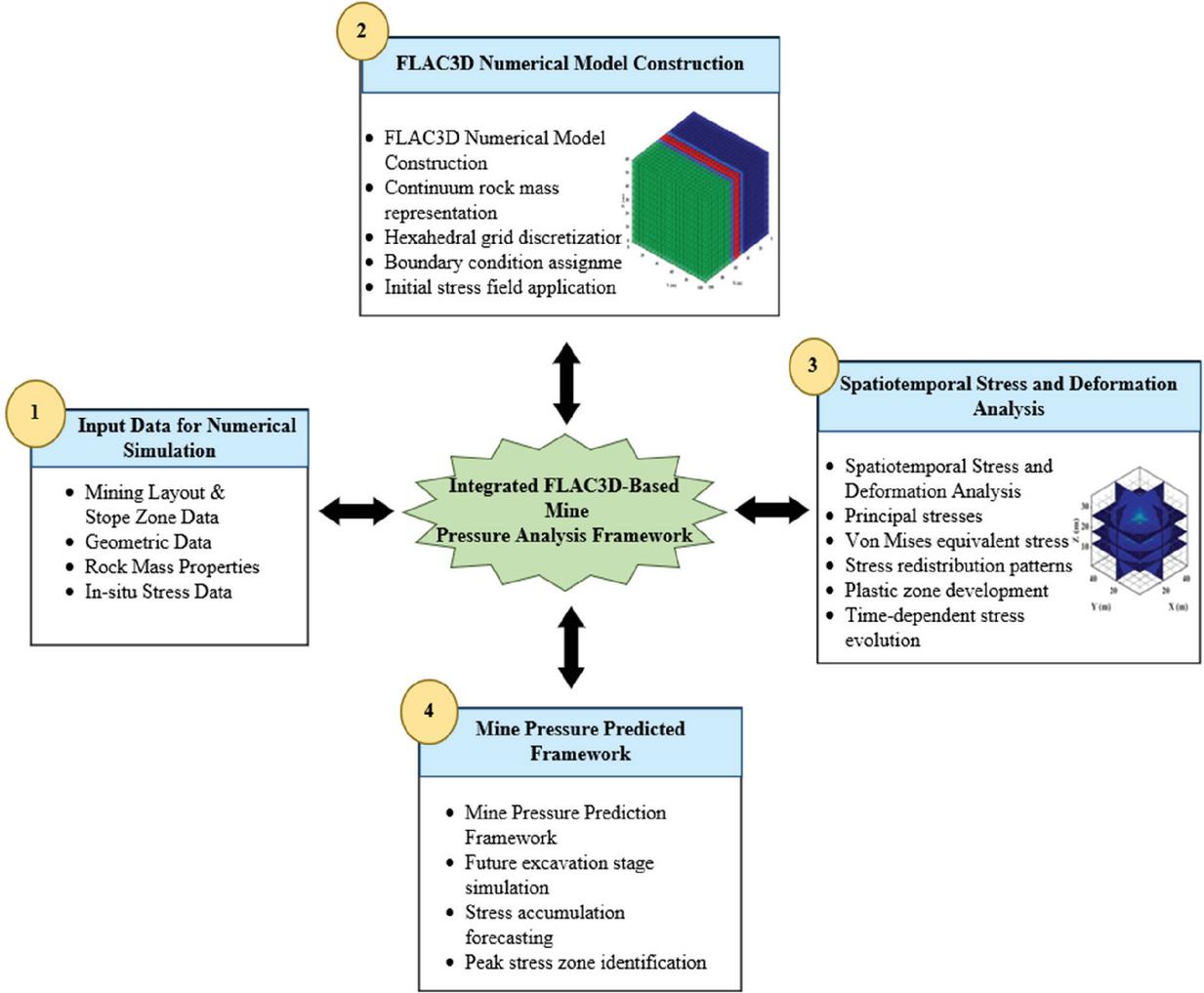
Figure 1 The overall proposed work.
3.1 Input Data for Numerical Simulation
The FLAC3D [33] simulation received its input data from four main sources: mine layouts, stope geometry, in-situ stress conditions, and rock mass properties. Data about the mining layout and stope zone indicate the order of extraction and the sites of mining sectors. The geometric data specify the dimensions and locations of the three-dimensional blocks for accurate model construction. The initial stress data reveal the vertical and horizontal geo-stresses existing before excavation, whereas the material property data contain the density, elastic parameters, and strength characteristics of the rock that regulate its deformation behavior. The integration of these datasets together enables a very realistic simulation of stress redistribution, displacement, and mine pressure evolution accompanying the excavation process.
3.2 Numerical Modeling Using FLAC3D
The development of mine pressure was modeled using FLAC3D, a numerical tool based on the finite-difference method that accounts for the elasticity and plasticity of rocks in a continuum. The numerical space is divided into hexahedra, which can be used to compute the responses of stress, strain, and displacement of every grid point during the disturbance caused by mining activities accurately.
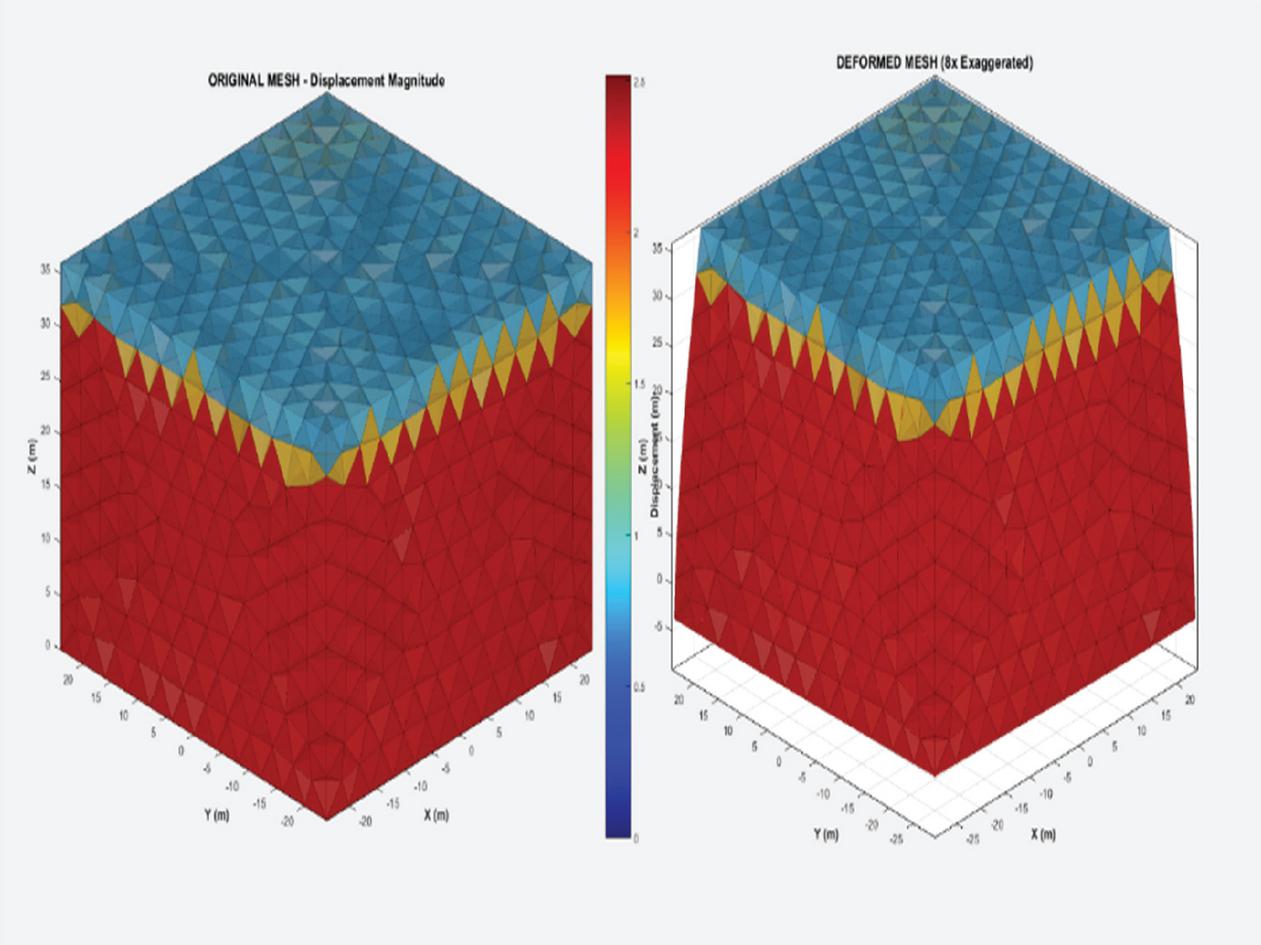
Figure 2 Original and deformed mesh showing displacement magnitude.
The original finite element mesh of the rock mass is illustrated by the left panel along with its colored displacement magnitude, whereas the right panel depicts the deformed mesh (with an 8× exaggeration) to show the displacement patterns caused by mining-induced stress, as shown in Figure 2. The color scale denotes displacement in meters, thus making it easier to see the areas of maximum deformation located close to the excavation zone. This image serves as proof of the rock mass deformation caused by progressive excavation and is a confirmation of the mesh refinement used in the numerical FLAC3D model. The dynamic equilibrium of three-dimensional equations is represented by the following in Equation (1):
| (1) |
where is the stress tensor, is for body forces like gravity, stands for the density of the rock, and is the displacement vector. This equation guarantees that the force within the rock mass is balanced even when the rock is excavated and then stressed again. In the continuum, the linkage of displacement to strain is expressed as Equation (2):
| (2) |
where indicates the strain tensor that is obtained from the gradients of displacement in space. This method of formulation permits the introduction of the rock mass deformation behavior at every excavation operation stage. Before the rupture, the rock mass behavior is linear and elastic, which can be represented by the generalized Hooke’s law, as shown in Equation (3):
| (3) |
where indicates the elastic stiffness matrix that is obtained through the elastic modulus and the Poisson’s ratio . This elastic description is what controls the stress build-up before the yielding takes place. The failure and yielding of the rock mass are simulated by the Mohr-Coulomb elastic-plastic failure criterion that portrays shear failure under a combination of normal and shear stresses, as shown in Equation (4):
| (4) |
where denotes the shear stress at which failure occurs, symbolizes the cohesion, is the normal stress acting on the hypothetical failure plane, and signifies the internal friction angle. This criterion facilitates the simulation of the areas of progressive yielding and failure that are initiated by mining activities. The initial in-situ stresses are applied based on the overburden depth, utilizing the vertical stress relationship, as shown in Equation (5):
| (5) |
where denotes the unit weight of the layer of earth above and stands for the depth of mining. Horizontal stresses are distributed correspondingly based on the stress conditions of the area. Proper boundary conditions are attached to render the simulation realistic in the re-creation of underground mining conditions. The base of the model is fixed to reflect the constraint that is given by deep and stable rock formations. Roller constraints are assigned to the lateral boundaries and allow vertical motion but prohibit horizontal motion to limit the effects of the boundaries.
The FLAC3D model was divided into a hexahedral grid composed of elements whose sizes varied from around the stopes to far away from the areas of interest. Mesh refinement was done surrounding the excavation areas to be able to precisely determine the stress concentration and plastic deformation. The rock mass was classified into three geological zones: hanging wall, orebody, and footwall, where each zone was assigned specific material properties (density , Young’s modulus , Poisson’s ratio , cohesion , internal friction angle ) that had been previously established by field and laboratory characterization. The elastic–plastic properties were then coupled with the Mohr–Coulomb failure criterion to make the yielding and failure processes more realistic. The boundary conditions (fixed base and lateral rollers) were selected in such a way that they would imitate the confinement effects of deep gold mining; consequently, very realistic stress redistribution and deformation patterns were obtained.
Mining activities are modeled by progressive excavation, which is the mining activity whereby ore fields are excavated in stages to replicate the real mining process and the effect of this on redistribution of stress. Using this framework, the model takes into account the dynamic nature of interaction between rock mass properties, excavation geometry, and mining progression, which is the foundation of spatiotemporal stress analysis.
3.3 Spatiotemporal Stress Analysis
One of the most important novelties of this methodology is that it is dynamic enough to monitor variations in stress both in space and time and identify the areas that are most liable to high stress or failure. Each mining step calculates the following in the model:
• By means of principal stresses (), it is possible to evaluate stress orientation and magnitude across the rock mass.
• Von Mises equivalent stress is the parameter used for determining the yield strength in the rock mass, calculated as Equation (6):
| (6) |
High values of indicative of the sites where the rock mass is nearing plastic failure, thus foreseeing roof or floor instability.
• Plastic yielding and stress concentration zones have been marked out to indicate the areas that are likely to undergo deformation or collapse. The temporal evolution of mine pressure is stated as Equation (7):
| (7) |
where is the initial in-situ stress and represents incremental stress changes due to mining that occur in increments. The stability of the rock mass surrounding the excavation is illustrated in Figure 3. The stable areas are in green, the partial-yielding areas in orange, and the fully-plastic areas or zones with very high instability risk in red. The arrows represent the possible directions of failure, thus pointing out the critical zones that require support and risk mitigation as a result of their location.
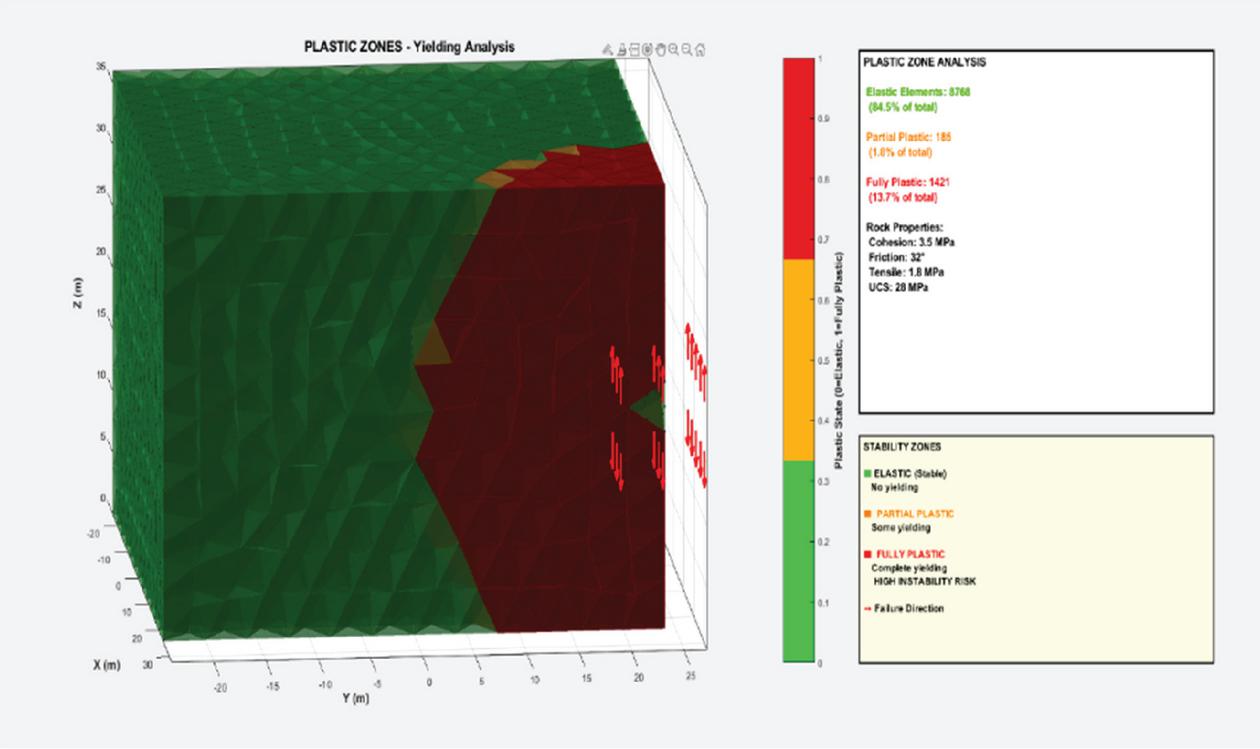
Figure 3 3D plastic zone distribution and stress concentration.
Rather than assuming instant stress redistribution, the model takes into account the time-related behavior of the entire rock mass to reproduce the viscoelastic and creep effects. Through the use of FLAC3D’s integrated creep and viscoelastic formulation, the incremental stress and displacement calculations are composed of the immediate elastic–plastic response and the slow time-dependent deformation. This leads to the simulation being able to represent the delayed yielding and the progressive strain accumulation in a realistic way, which in turn increases the accuracy of the spatiotemporal evolution of mine pressure and the location of potential instability zones.
The redistribution of stress dynamics at different excavation stages allows visualization of the 3D-stress contours, time-dependent stress curves, and plastic zone maps. These outputs are very informative in the mechanical response of the rock mass to the mining activities on which hazard prediction is based.
3.4 Predictive Framework for Mine Pressure Evolution
The FLAC3D predictive model is used to assess the spatiotemporal development of the mine pressure following a predetermined sequence of future mines. Forecasting is done directly based on quantitative numerical results and qualitative spatial interpretation of FLAC3D results without involving the use of other external analytical tools. Prediction of mine pressure at a given mining stage in the future is given as Equation (8):
| (8) |
where stress, , represents the in-situ stress at the beginning of the process, and is the stress from the last excavation step. This model makes it possible to provide a quantitative measure of stress redistribution during mining. Numerical differences between the maximum principal and Von Mises stress levels in the excavation phases are used to identify the location of peak regions of stress. Areas with a high concentration of stress or stress increasing rapidly are understood to be areas of potential instability, especially in the roof, floor, and pillar areas.
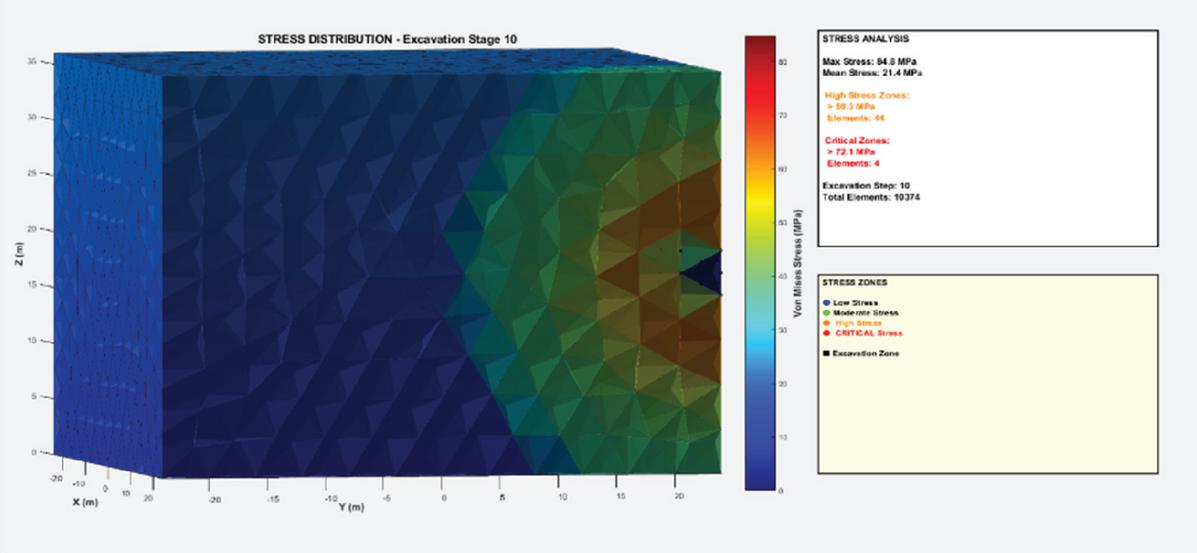
Figure 4 Stress distribution and deformation zones at excavation stage 10.
The stress distribution map shows the areas that will happen to be deformed and possibly even destroyed during the mining process, as shown in Figure 4. Blue and green reflect the stress conditions that are low to moderate and point to the presence of stable rock, whereas the spectrum from orange to red denotes the areas with high and even critically high stress that could lead to instability proneness. Thus, by placing the map of stress distribution on the mine site, the managers will be able to know where to direct their monitoring and reinforcement actions to secure the mine. The nodal displacement evolution is computed to measure deformation behavior depending on time as Equation (9):
| (9) |
where refers to the displacement at time , and represents mining-induced deformation increments. The accumulation of progressive displacement means the weakening of the rock mass and the risk of its instability. Moreover, mining sequences and support configurations are evaluated based on the comparisons of redistribution patterns of stress, magnitude of displacement, and development of plastic zones. The excavation schemes with lower stress concentration and lower deformation are more preferable for safe and efficient mining activities. The entire process of predictive evaluations and validation metrics in the research described is based on a series of forward numerical simulations using the same FLAC3D framework as the one that provided the stress trends from intermediate excavation stages. These stress trends were then extrapolated and compared with FLAC3D-computed stress values at the next excavation stages. The methodology offers itself as a reliable physics-based model predicting mine pressure behavior and aiding prudent decisionmaking in the gold mine design and gold mine safety measures.
4 Results
This section will analyze how stress, displacement, and plastic deformation of the rock mass change with time during the mining excavation. Different mining scenarios such as the baseline mining situation, high stress mining situation, deep mining situation, and critical conditions are discussed in the analysis about the effect each scenario produces on the accumulation of stress, ground displacement, and expansion of the plastic zone. The findings indicate that there are vast disparities in the deformation pattern, with critical conditions having the most stress and displacement; thus, the need to be careful and control the stability of the ground when excavation is being done.
4.1 Computational Resource
The minimum setup and the recommended setup of the FLAC3D modeling are provided with regard to the computational requirements to enable optimal capabilities. The bare minimum requirements are Windows 8.1 or Linux with a 64-bit operating system, a 64-bit Intel or AMD processor, 16 GB of RAM, 500 GB HDD/SSD storage, and OpenGL 3.3 compatible graphics. In its specifications, it recommends Windows 10/11 or Ubuntu LTS, an Intel i9 CPU, 64 GB of RAM, a 1 TB SSD/NVMe disk, and a dedicated graphics card to support 3D visualization, supporting 4 K displays. The application scenario will be the modeling of small to large 3D mining and geotechnical models using FLAC3D version 6, and the type of license may be USB dongles or a network/web license.
4.2 Prediction Performance and Validation of Mine Pressure Evolution
This section proves the suggested mine pressure prediction framework by comparing predicted values and FLAC3D output in terms of cumulative trends, error distribution, correlation, and residual value.
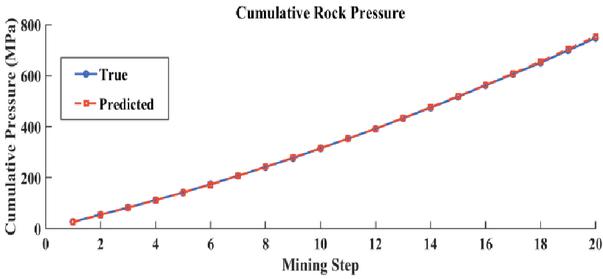
Figure 5 Accumulated stress evolution during sequential mining.
Figure 5 shows the development of the rock pressure cumulatively with more mining steps. The pressure is built gradually, with a value of about 30 MPa at the initial phase and up to approximately 750 MPa at the final stage of the excavation. The estimated values are very similar to the determinations of FLAC3D of the true values, with the deviation not exceeding 2%, which reveals consistent stress accumulation behavior and high predictive ability.
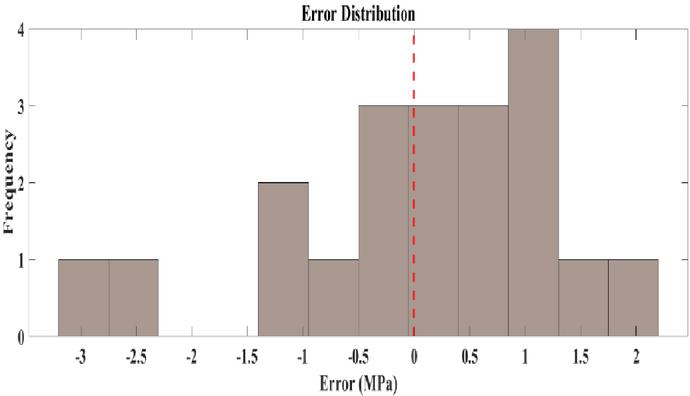
Figure 6 Distribution of prediction errors in rock pressure.
Figure 6 shows the error distribution of the predicted values of rock pressure. The majority of errors of the prediction are within the range of 3 MPa to 2 MPa; the average error is near to 0 MPa. The anti-skewed distribution around zero shows the lack of systematic bias and proves the strength of the prediction method.
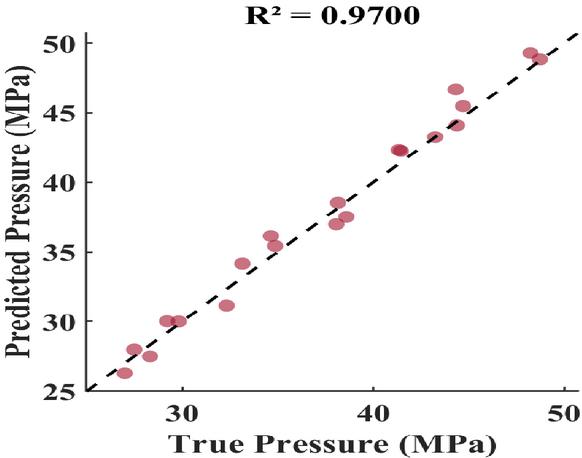
Figure 7 Comparison between predicted and true rock pressure values.
Figure 7 compares the predicted values of rock pressure to actual FLAC3D simulation outcomes. The data points do not deviate much from the 1:1 line, with a coefficient of determination of , a high value indicating high accuracy and correlation of the prediction framework at all stages of mining.
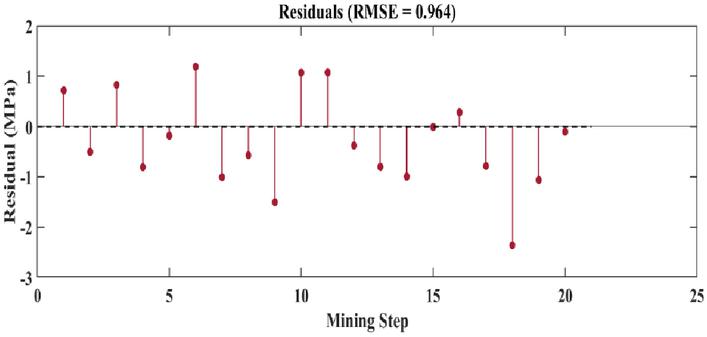
Figure 8 Residual analysis of rock pressure.
Figure 8 demonstrates residuals in the predicted and true rock pressure values at various steps during mining. The residual values vary around zero, with the maximum value of about 2.5 MPa and an overall RMSE of 0.964 MPa. The small dispersion is a guarantee of the predictive model being stable and reliable.
4.3 Spatiotemporal Evolution of Rock Pressure Under Different Mining Scenarios
This section compares the spatial and temporal change of rock pressure under the baseline, high stress, deep mining, and critical conditions, which points out stress redistribution and instability risks throughout the excavation.
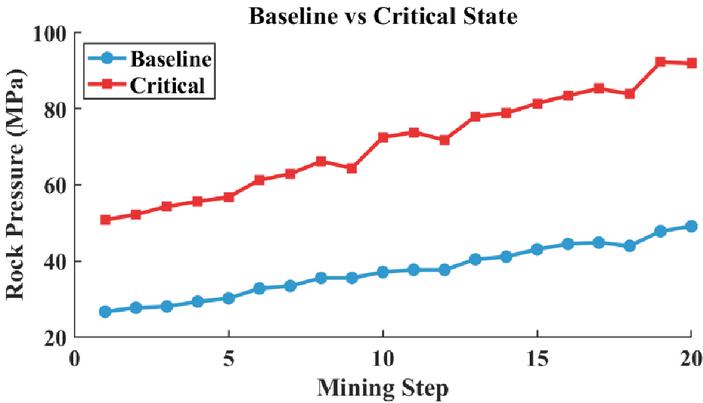
Figure 9 Baseline vs critical rock pressure evolution with mining step.
Figure 9 shows the development of the rock pressure is compared in both the conditions of the baseline and critical stress in the 20 mining steps. The zero scenario indicates a steady rise of about 27 MPa to 49 MPa, which is the redistribution of stress that is stable. By comparison, the critical condition has a much greater increase in pressure between approximately 51 MPa and approximately 92 MPa, which is a steep concentration of stress under the influence of excavation. The increasing dislocation between the two curves is an indicator of the growing instability with the critical conditions, and the need to observe the high stress areas when excavating deep gold mines.
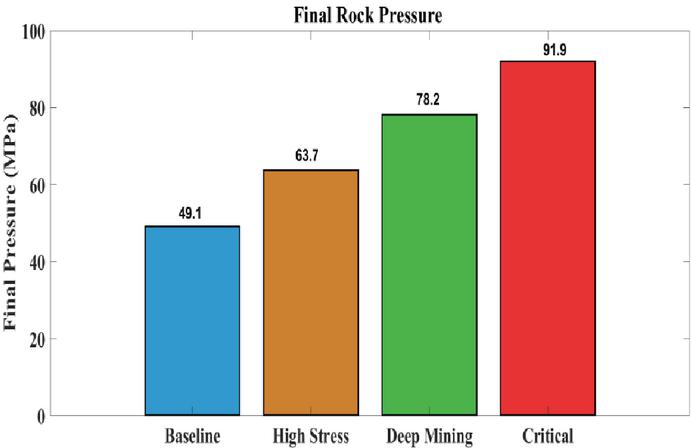
Figure 10 Final rock pressure under different mining stress scenarios.
In Figure 10, the values of final rock pressure were obtained at the final mining step under the four conditions, that is, baseline, high stress, deep mining, and critical condition. The last pressures are about 49.1 MPa, 63.7 MPa, 78.2 MPa, and 91.9 MPa, respectively. The obvious incremental process proves the effect of the growing mining depth and the stress environment on rock pressure. The critical scenario presents the most pressure, which means that the risk of rock instability is higher and more stringent ground control measures should be considered.
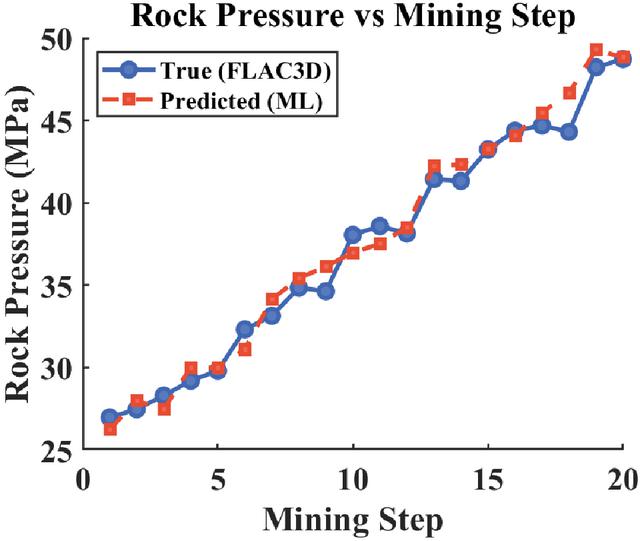
Figure 11 Rock pressure variation with mining progress.
In Figure 11, the pressure of rocks is shown to vary as more mining steps are made. The pressure of rock rises progressively from about 27 MPa during the first excavation level to almost 49 MPa during the last excavation level. The measured pressure values are very close to those of FLAC3D results, as not only an upward trend is observed but also local fluctuations caused by excavation.
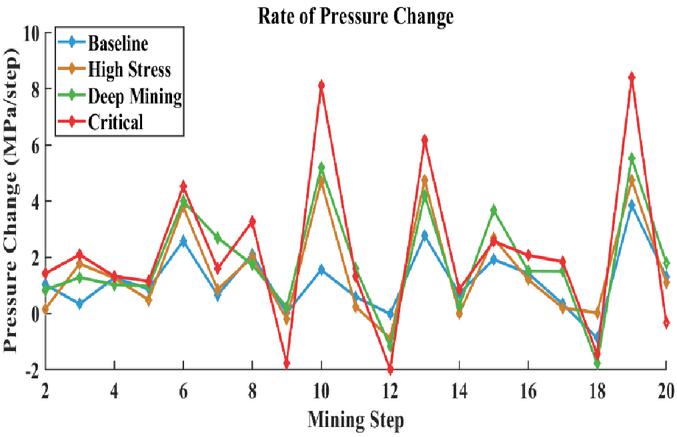
Figure 12 Rate of rock pressure change per mining step.
Figure 12 shows the rate of change in rock pressure with each mining step in the case of baseline, high stress, deep mining, and critical cases. The values of change in pressure vary between mild (1.8 MPa/step) and acute (more than 8 MPa/step) in critical situations. The sharp jumps at certain steps mean that the excavation activities redistributed the stress quickly. The critical and deep mining conditions are more fluctuated than the baseline, revealing the instability of the stress behavior and determining the excavation stages when the risk of rock failure is multiplied considerably.
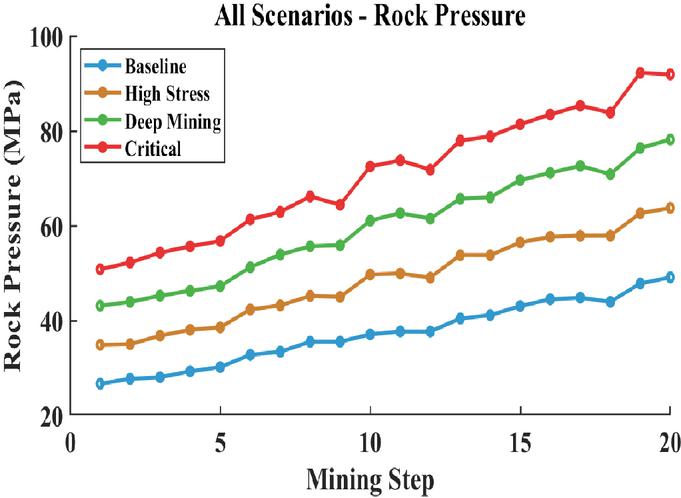
Figure 13 Rock pressure evolution for all mining scenarios.
Figure 13 displays the cumulative development of the rock pressure using the mining development in all four scenarios. Base pressure is gradually growing between a range of 27 and 49 MPa, with severe mining, demanding conditions, and extremely high stress reaching around 64 MPa, 79 MPa, and 92 MPa, respectively. The trend in moving the curves away indicates the growing concentration of stress as the depth and severity of the mining increase. The critical scenario has always shown the most significant levels of pressure, which implies areas that are more likely to be unstable. This analogy is useful in bringing out the influence of varied mining environments on the evolution of mine pressure.
4.4 Three-Dimensional Spatiotemporal Stress Evolution in Rock Mass during Mining Excavation
The section portrays three-dimensional spatiotemporal variations of principal and Von Mises stresses in the rock mass, which demonstrate stress redistribution, locations of stress concentration, and successive mechanical response caused by repeated mining excavation.
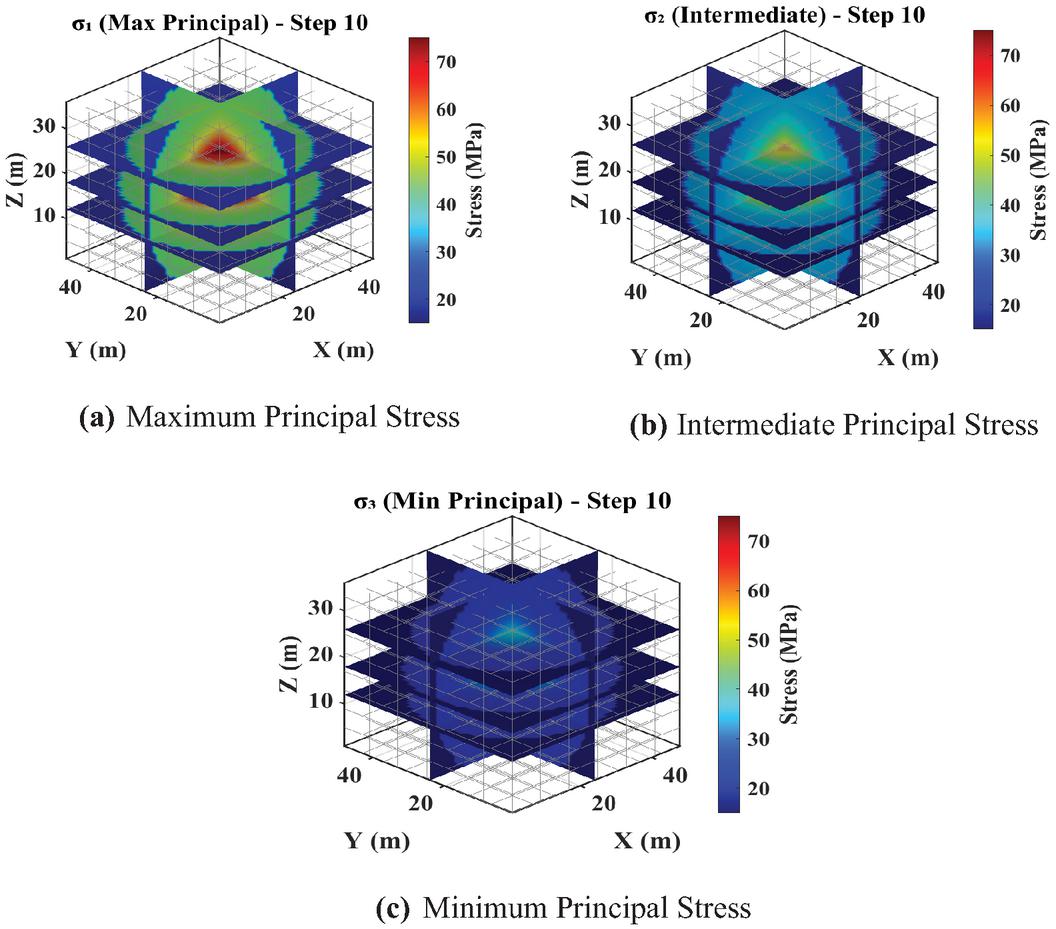
Figure 14 Principal stress distribution.
Figure 14 shows the 3-D distribution of the main stresses within the mass of the rock in the mining Step 10. Figure 14(a) shows the largest principal stress with strong stress concentration around the center of the excavation, with its value up to about 70 MPa. The intermediate principal stress () is illustrated in Figure 14(b), and it has a rather moderate and more consistent stress distribution with stress values of about 40–55 MPa. Figure 14(c) shows the minimum principal stress where the stress levels are lower and mainly below 35 MPa. In combination, these elements of stress will point out the anisotropic stress reallocation and localized accumulation caused by mining excavation
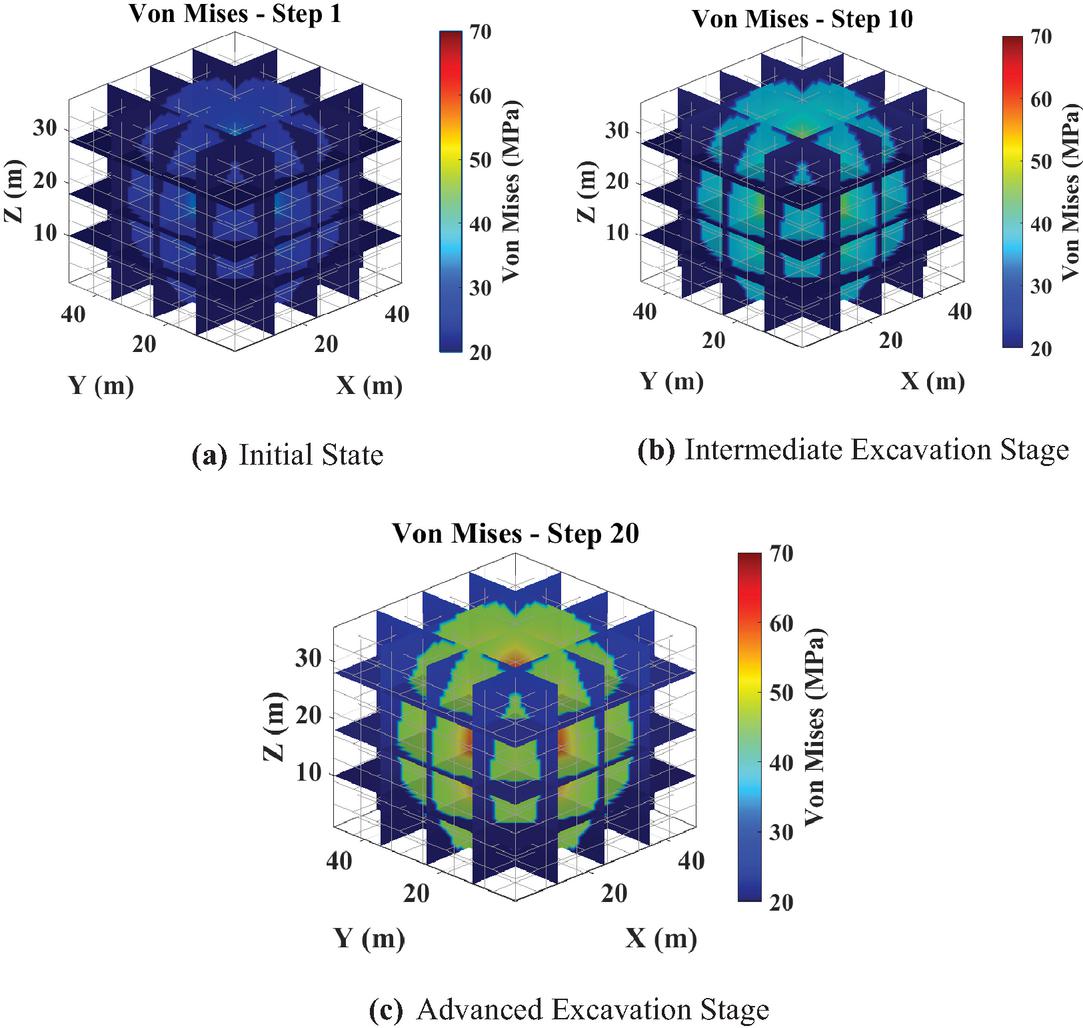
Figure 15 Von Mises stress evolution.
Figure 15 depicts the spatiotemporal development of Von Mises stress throughout progressive mining excavation. Figure 15(a) Step 1, the initial state would have a relatively low and uniformly distributed Von Mises stress, and this implies that there is a very low level of disturbance in the rock mass before excavation. At Step 10, which is the intermediate stage in the excavation, stress concentrations start to occur around the excavation region, and the concept can be explained by progressive stress redistribution and localized yielding. Figure 15(c) Step 20 illustrates the advanced excavation phase that exhibits eminent high-stress areas with amplified stress impact, increased potential deformation, and imperative stress state as excavation progresses.
4.5 FLAC3D Numerical Model
This section explains the FLAC3D numerical model setup, geological zoning, and stressdisplacement state prior to and following the excavation.
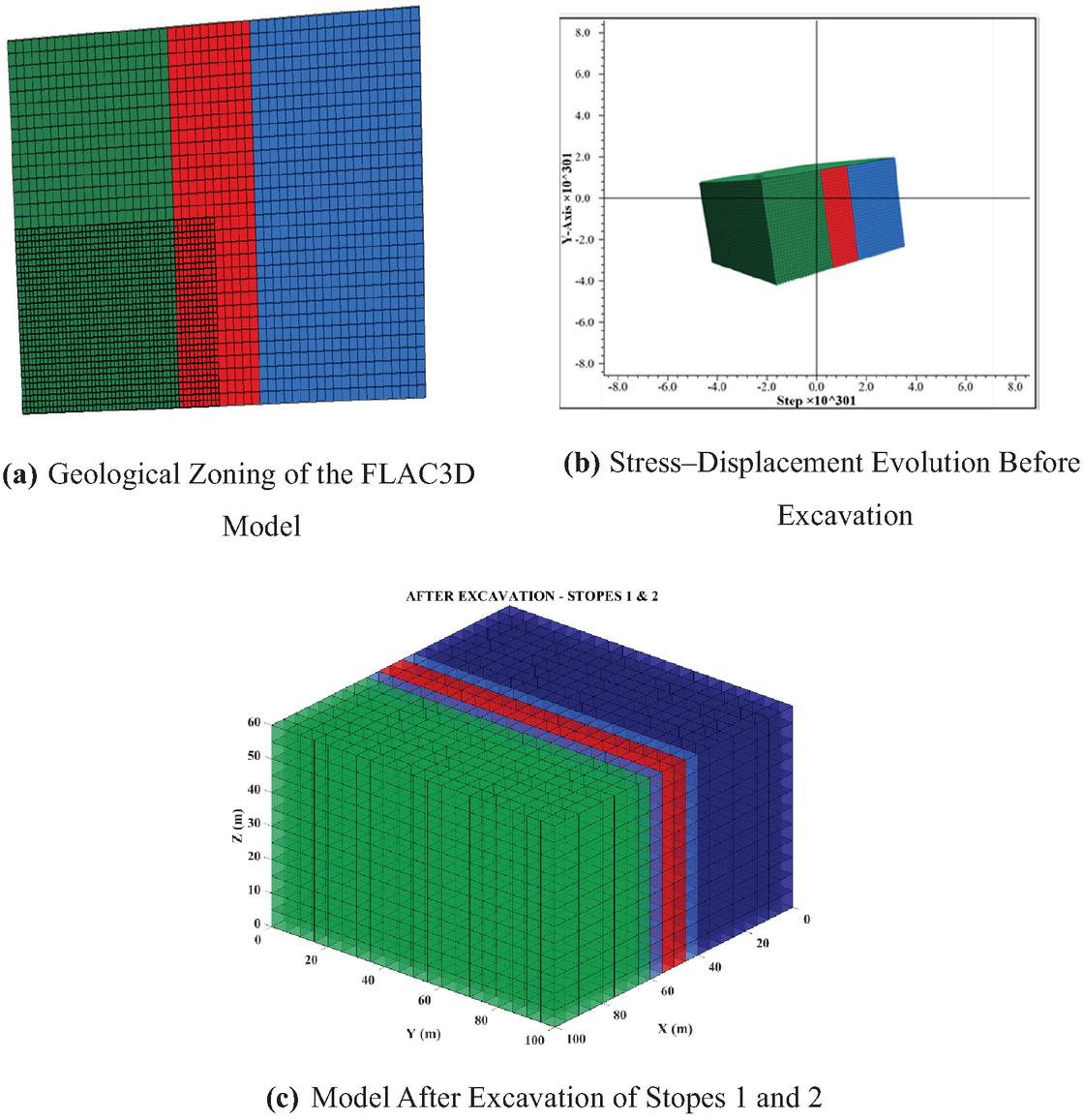
Figure 16 Three-dimensional FLAC3D numerical model and stress-deformation response after sequential excavation of stopes.
Figure 16 shows the FLAC3D numerical modeling system and excavation response of the gold mine. Figure 16(a), the geological zoning of the FLAC3D model has been shown with a clear distinction of the hanging wall, orebody, and footwall to reflect the mass heterogeneity in rock. Figure 16(b) demonstrates the evolution of the stress-displacement of the rock mass before excavation, which shows the initial equilibrium of the rock mass under the in-situ stress. Figure 16(c) is a model in three-dimensional mode that shows the redistribution and deformation of stress caused by mining after excavation of Stopes 1 and 2. The combination of all these figures shows the spatiotemporal dynamics of mine pressure and justifies the ability of the FLAC3D model to model the instability processes of excavation.
4.6 Temporal Evolution of Stress, Displacement, and Plastic Deformation in Underground Mining
In this section, the temporal changes of the stress accumulation, displacement development, and plastic zone evolution are studied, and the excavation deformation patterns and instability mechanisms are exposed to the change under different mining conditions.
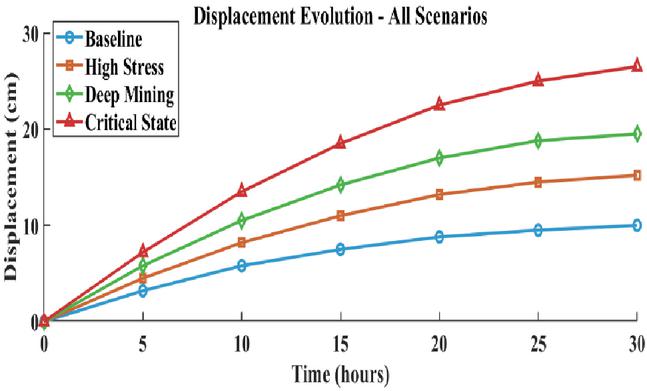
Figure 17 Displacement evolution under different mining scenarios.
Figure 17 shows the changes in displacement under baseline, under high stress, under deep mining, and under critical state conditions through time. All the cases experience progressive increases with time in displacement, which is a deformation due to excavation. At the baseline, the deformation is the least, whereas at the critical condition, the displacement is the most, with almost 27 cm at 30 hours. Intermediate behavior is observed in deep mining conditions, particularly because of the augmented overburden stress. The analytical findings are very clear to state that the intensity of stress environments highly increases deformation of the ground, and hence displacement monitoring plays a critical role in ground stability evaluation of mines.
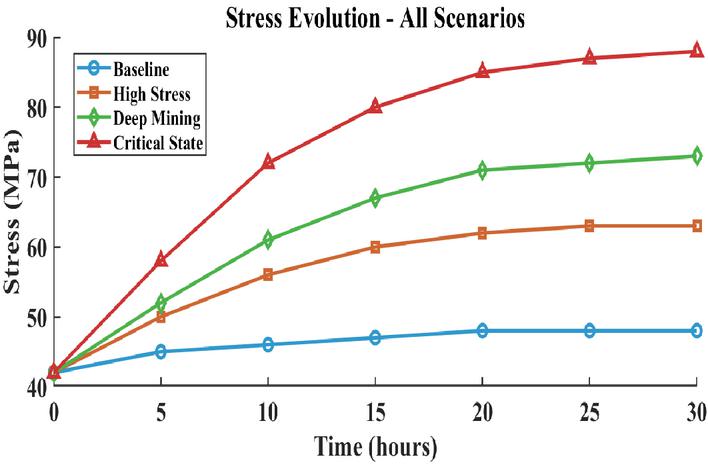
Figure 18 Stress evolution under different mining scenarios.
Figure 18 shows the change of stress with time under baseline, high-stress, deep mining, and critical state conditions. All the cases show increasing stress with excavation time, with the critical state having the largest stress of about 90 MPa at 30 hours. Deep mining conditions are characterized by high levels of stress because of high levels of depth and overburden pressure, whereas the conditions at the baseline are relatively stable. The findings prove a powerful impact that mining conditions have on stress accumulation and the possible development of instability.
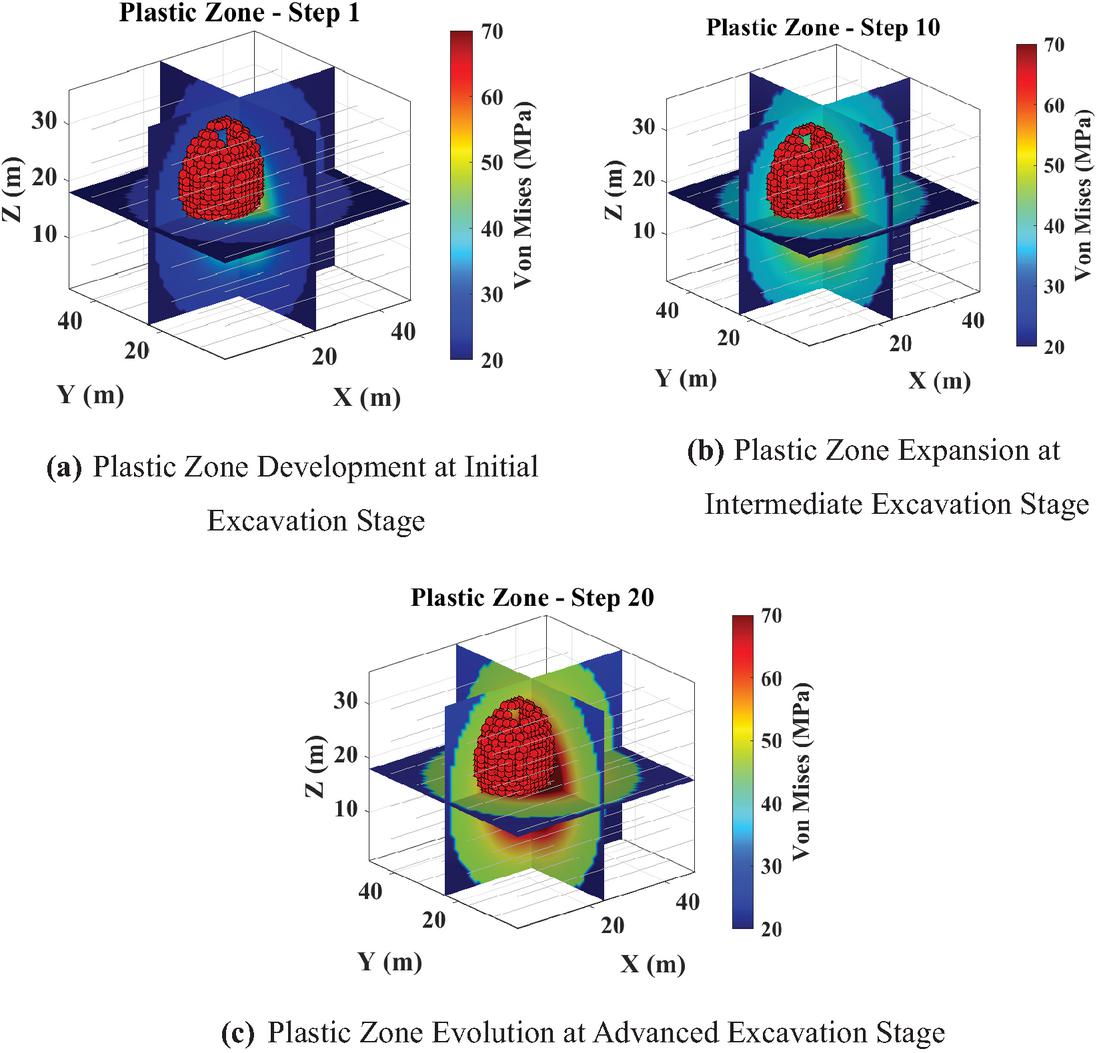
Figure 19 Temporal evolution of plastic zone during excavation.
Figure 19 shows the gradual development of the plastic zone surrounding the excavation of the various stages of mining. In Figure 19(a), at the first stage of excavation (Step 1), a plastic area is seen which is narrow at the opening, meaning that there is a localized yielding caused by the initial redistribution of stress. In Figure 19(b), the plastic zone at the intermediate excavation stage (Step 10) is both a lateral and vertical extension, showing stronger concentration of stress and progressive destruction in the adjacent rock mass. In Figure 19(c), the advanced excavation stage (Step 20), an extensive and continuous plastic zone can be observed which penetrates further into the roof, floor and sidewalls, indicating a strong rock mass yielding and subject to instability due to constant excavation-induced loading.
5 Discussion
The presented model of mine pressure prediction showed a high level of accuracy in modeling the dynamics of rock pressure in different mining conditions. The evolution of rock pressure cumulation is a gradual incremental rise, with about 30 MPa at the first excavation stage and 750 MPa in the last step of the excavation. This is also consistent with the FLAC3D calculated values, and the differences are always less than 2%, which is a testimony to the soundness of the model. Likewise, the error distribution analysis to establish the minimal bias, i.e., the errors fall within the range of 3 MPa to 2 MPa, and the mean is near 0 MPa, is another analysis that proves to be predictive of the model.
In addition, the analysis of the prediction and the actual rock pressure in the case of prediction versus actual pressure shows that there is a high correlation with the value of 0.97, which indicates that the prediction framework is accurate at all levels of the mining process. The results of the residual analysis reveal that there are few fluctuations and that the highest residual is 2.5 MPa, and the RMSE is 0.964 MPa, which confirms that the model is reliable and stable. These indicators confirm the idea that the framework is very efficient in forecasting the mine pressure development and can be reliably applied to the operation decision making in the gold mine design and safety evaluation context.
The proposed FLAC3D framework is superior to conventional methods such as FEM, DEM, or empirical models. It accurately simulates elastic-plastic behavior of the whole mass with progressive excavation and spatiotemporal resolution, manages large 3D domains quickly, and combines geological zoning, in-situ stress, and excavation sequences for quantitative prediction. Although FEM permits finer meshing and DEM shows discrete failure in fractured zones, FLAC3D offers a mix of accuracy, efficiency, and predictive power that is most appropriate for deep gold mine pressure analysis.
Comparable trends have been reported in recent international FLAC3D-based studies. Liu et al. [34] observed good agreement between numerical simulations and physical model tests for deep gold mine ground pressure evolution. Zhang et al. [35] reported progressive stress concentration during multi-slice excavation, consistent with the stress redistribution observed in the present study, while differences in stress magnitude are attributed to variations in mining depth, geology, and excavation geometry. Xiao et al. [36] combined FLAC3D simulations with machine learning and achieved prediction accuracies () comparable to the obtained in the present study. These comparisons demonstrate that the proposed framework is consistent with recent international research while providing comprehensive spatiotemporal mine pressure prediction through the integration of geological zoning and dynamic stress analysis.
6 Conclusion and Future Scope
This study presented a comprehensive numerical framework to investigate the spatiotemporal evolution of mine pressure in gold mines using the FLAC3D simulation tool. By analyzing principal stresses, Von Mises stress, displacement, and plastic zone evolution across multiple mining scenarios, the study demonstrated how excavation-induced changes in rock mass behavior evolve. The results showed that higher stress environments significantly amplified ground deformation, emphasizing the need for displacement monitoring to ensure mine stability. The findings also highlighted the importance of early identification of high-stress zones for risk mitigation in deep mining operations. The integration of geological zoning and dynamic stress analysis has proven effective in accurately predicting mine pressure behavior and identifying potential instability zones, providing valuable insights for mine design and operational safety.
Future research could expand on this methodology by incorporating more complex geological conditions, including fault zones and fractures, which might influence stress redistribution patterns. Additionally, the framework could be enhanced by integrating real-time monitoring data from in-situ sensors to validate and calibrate the FLAC3D model during actual mining operations. Further studies could explore the impact of various support systems on rock mass stability, aiming to optimize mining processes and improve safety standards. Incorporating more advanced machine learning techniques to predict mine pressure evolution based on historical data could also offer a more robust, automated prediction system for future mining scenarios.
6.1 Limitations
• The study relies solely on FLAC3D numerical simulations and does not include field monitoring or in-situ measurement data for direct validation of the simulated stress, displacement, and plastic zone results.
• The rock mass is assumed to be homogeneous and isotropic within each geological zone, which may not fully capture the effects of natural fractures, joints, groundwater, and time-dependent rock behavior in real mining conditions.
Data Acknowledgement
The data supporting the findings of this study are generated through FLAC3D numerical simulations. All simulation inputs and outputs are available from the corresponding author upon reasonable request.
Data Availability
The data that support the findings of this study are available from the corresponding author upon reasonable request. The FLAC3D Gold Mining Dataset used in this study is publicly accessible via Kaggle.
Conflicts of Interest
The authors declare that there are no conflicts of interest regarding the publication of this paper.
Funding Statement
This research did not receive any specific grant from funding agencies in the public, commercial, or not-for-profit sectors.
Author Contributions
Bin Jiang: Conceptualization, Methodology, Software, Data Curation, Writing – Original Draft Preparation. He Huang: Supervision, Validation, Formal Analysis, Writing – Review & Editing. Yalatu Su: Investigation, Resources, Visualization, Data Interpretation.
Ethical Approval
This study does not involve human participants or animals and therefore does not require ethical approval.
Consent to Participate
Not applicable.
Consent to Publication
All authors have read and approved the final version of the manuscript and consent to its publication.
Competing Interests
The authors declare that they have no competing interests.
References
[1] L. Bo, S. Yang, Y. Liu, Z. Zhang, Y. Wang, and Y. Wang, “Coal mine solid waste backfill process in China: current status and challenges,” Sustainability, vol. 15, no. 18, p. 13489, 2023.
[2] Y. Chen et al., “Fractal Evolution Characteristics of Isolation Layers in a Submarine Gold Mine: A Case Study,” Minerals, vol. 14, no. 2, p. 205, 2024.
[3] A. A. Elrasheed, Y. Y. Obaid, and S. Szabó, “Spatial expansion of artisanal and small-scale gold mining nearby the Nile River, Sudan and its potential environmental impacts: Insights from Planetscope data and machine learning,” Environmental Challenges, p. 101278, 2025.
[4] X. Li, G. Si, S. Jiang, Y. Wang, and W. Cai, “Mechanisms of Foreshocks and Seismic Hazards Under Mining-Induced Stress in Longwall Mines,” Rock Mech Rock Eng, Oct. 2025, doi: 10.1007/s00603-025-04938-2.
[5] Z. Li, K. Hou, T. Li, J. Tang, and G. Lu, “Numerical simulation of surface subsidence and fracture evolution caused by pulang copper mine mining,” Applied Sciences, vol. 14, no. 6, p. 2416, 2024.
[6] Y. Lu et al., “Risk factor mining and prediction of urine protein progression in chronic kidney disease: a machine learning- based study,” BMC Med Inform Decis Mak, vol. 23, no. 1, p. 173, Aug. 2023, doi: 10.1186/s12911-023-02269-2.
[7] L. Machuca, R. Lain, E. Silva, and K. Fleetwood, “Case study of using Flac 3D numerical modelling in the prediction of stress-related deformation of a sill pillar in an underground metal mine and the response of a roadway inside the pillar during mining,” in New Challenges in Rock Mechanics and Rock Engineering, CRC Press, 2024, pp. 1538–1543. Accessed: Jan. 09, 2026. [Online]. Available: https://www.taylorfrancis.com/chapters/edit/10.1201/9781003429234-237/case-study-using-flac-3d-numerical-modelling-prediction-stress-related-deformation-sill-pillar-underground-metal-mine-response-roadway-inside-pillar-mining-machuca-lain-silva-fleetwood.
[8] W. Song, L. Zheng, J. Liu, S. Cao, and Z. Xie, “Genesis, metallogenic model, and prospecting prediction of the Nibao gold deposit in the Guizhou Province, China,” Acta Geochim, vol. 42, no. 1, pp. 136–152, Feb. 2023, doi: 10.1007/s11631-022-00575-6.
[9] Y. Wang and A. Jin, “Research on Optimization of Orebody Mining Sequence Under Isolation Layer of Filling Body Based on FLAC3D Software,” Processes, vol. 13, no. 7, p. 2296, 2025.
[10] Z. Wang, J. Hou, L. Liu, and G. Xu, “Upward Segmented Backfilling in Multi-Step Mining: Self-Supporting Mechanism and Stability Control,” Geological Journal, p. gj.70148, Dec. 2025, doi: 10.1002/gj.70148.
[11] M. M. Zaki et al., “Optimized weighted ensemble approach for enhancing gold mineralization prediction,” Applied Sciences, vol. 13, no. 13, p. 7622, 2023.
[12] M. Bahri, R. Romero-Hernández, E. J. Mascort-Albea, C. Soriano-Cuesta, and A. Jaramillo-Morilla, “Predicting Maximum Surface Displacement from Mechanized Twin Tunnel Excavation in Seville Using Machine Learning and FLAC3D Simulation,” Geotech Geol Eng, vol. 43, no. 2, p. 70, Feb. 2025, doi: 10.1007/s10706-024-02969-0.
[13] J. Liu et al., “Geological Safety of Water Inrush in Complex Seabed Mining: A Case Study of X Gold Mine,” Mining, Metallurgy & Exploration, vol. 42, no. 2, pp. 751–768, Apr. 2025, doi: 10.1007/s42461-025-01174-8.
[14] W. Lu, R. Shirani Faradonbeh, H. Xie, and P. Stothard, “Deep Learning for Predicting Surface Elevation Change in Tailings Storage Facilities from UAV-Derived DEMs,” Applied Sciences, vol. 15, no. 20, p. 10982, 2025.
[15] A. A. Konaté, A. Koné, A. T. Vincent, S. Loua, M. Cissé, and K. S. Gemail, “Groundwater vulnerability to artisanal gold mining pollution: a modified DRASTIC-GIS framework for Siguiri, Republic of Guinea,” All Earth, vol. 37, no. 1, pp. 1–30, Dec. 2025, doi: 10.1080/27669645.2025.2546251.
[16] K. M. AbdelMaksoud, W. M. Al-Metwaly, and H. M. Hathout, “Tracking metal pollution from illegal gold mining: a health risk assessment in Edfu, Egypt,” Scientific Reports, vol. 15, no. 1, p. 3974, 2025.
[17] M. S. B. Atangana, P. Magermans, J. R. N. Ngoupayou, and J.-F. Deliege, “Quantifying Mercury Use and Modeling Its Fate and Transport in Artisanal and Small-Scale Gold Mining in the Lom Basin,” Hydrology, vol. 12, no. 4, p. 77, 2025.
[18] D. G. Elera-Gonzales et al., “Deforestation driven by illegal and informal gold mining in the southern Peruvian Amazon: a predictive land use analysis over the next 50 years,” Environ Monit Assess, vol. 197, no. 7, p. 792, Jun. 2025, doi: 10.1007/s10661-025-14209-w.
[19] Z. Liu et al., “Three-Dimensional Mineral Prospectivity Modeling with the Integration of Ore-Forming Computational Simulation in the Xiadian Gold Deposit, Eastern China,” Applied Sciences, vol. 13, no. 18, p. 10277, Jan. 2023, doi: 10.3390/app131810277.
[20] X. Tian et al., “Monitoring and numerical analysis of slope deformation in a coal mine in the southwest mountainous regions of China,” Nat Hazards, vol. 121, no. 6, pp. 6955–6979, Apr. 2025, doi: 10.1007/s11069-024-07066-2.
[21] S. Meng, Q. Wu, Y. Zeng, and L. Gu, “Enhancing mine groundwater system prediction: Full-process simulation of mining-induced spatio-temporal variations in hydraulic conductivities via modularized modeling,” International Journal of Mining Science and Technology, vol. 34, no. 12, pp. 1625–1642, Dec. 2024, doi: 10.1016/j.ijmst.2024.11.014.
[22] C. Liu, Z. Man, and M. Li, “Study on the Dynamic Evolution of Mining-Induced Stress and Displacement in the Floor Coal-Rock Induced by Protective Layer Mining,” Minerals, vol. 14, no. 11, p. 1084, Nov. 2024, doi: 10.3390/min14111084.
[23] G. Zhang, Y. Yuan, Y. Gao, Z. Luo, and L. Xie, “Stability Analysis of Surface Facilities in Underground Mining and the Cumulative Impact of Adjacent Mining Activities,” Applied Sciences, vol. 15, no. 23, p. 12424, Jan. 2025, doi: 10.3390/app152312424.
[24] A. Siddique et al., “Remote Sensing and Numerical Simulation for Slope Stability in Open-Pit Mining: Case Study of Sijiaying Iron Ore Mine, China,” Geotech Geol Eng, vol. 43, no. 6, p. 290, Jul. 2025, doi: 10.1007/s10706-025-03254-4.
[25] Z. Yang et al., “Slope Deformation Mechanisms and Stability Assessment under Varied Conditions in an Iron Mine Waste Dump,” Water, vol. 16, no. 6, p. 846, Jan. 2024, doi: 10.3390/w16060846.
[26] W. Liu, Z. Liu, and Z. Li, “Study on Optimization of Downward Mining Schemes of Sanshandao Gold Mine,” Applied Sciences, vol. 15, no. 15, p. 8296, Jan. 2025, doi: 10.3390/app15158296.
[27] C. Pang, Y. Wang, L. Shi, and Y. Shi, “Mechanism of formation of water-conducting fractured zones with deep mining in the Jiaojia gold mine, China,” Environ Earth Sci, vol. 81, no. 12, p. 327, Jun. 2022, doi: 10.1007/s12665-022-10443-4.
[28] J. Hou, P. Zhang, N. Gao, W. Yan, and Q. Yu, “Freeze–Thaw-Induced Degradation Mechanisms and Slope Stability of Filled Fractured Rock Masses in Cold Region Open-Pit Mines,” Applied Sciences, vol. 15, no. 13, p. 7429, Jan. 2025, doi: 10.3390/app15137429.
[29] W. Gong, K. Tian, L. Du, R. Zhang, Y. Zhou, and Y. Meng, “Geostress Characteristics and Roadway Stability in the East Pingdingshan Mining Area,” Geotech Geol Eng, vol. 43, no. 8, p. 441, Sep. 2025, doi: 10.1007/s10706-025-03417-3.
[30] G. Wang, W. Fan, X. Deng, L. Yu, Z. Song, and B. Hu, “Thermal–Hydraulic–Mechanical Coupling Effects and Stability Analysis of Surrounding Rock in Ultra-Deep Mine Shaft Excavation,” Applied Sciences, vol. 15, no. 23, p. 12433, Jan. 2025, doi: 10.3390/app152312433.
[31] G. Yunhong and Z. Shihao, “Application of GA-BP in Displacement Force Inverse Analysis and Mechanical Parameter Inversion of Deep Foundation Pits,” European Journal of Computational Mechanics, pp. 53–84, Jun. 2023, doi: 10.13052/ejcm2642-2085.3213.
[32] Y. Li and G. Zhao, “A CFD-DEM Coupled Simulation Study on Mechanical Properties and Seepage Mechanisms of Prefabricated Fractured Coal Under Triaxial Compression,” European Journal of Computational Mechanics, pp. 387–426, 2025, doi: 10.13052/ejcm2642-2085.3451.
[33] “FLAC3D Gold Mining Dataset.” Accessed: Jan. 12, 2026. [Online]. Available: https://www.kaggle.com/datasets/satheeshkriya/flac3d-gold-mining-dataset.
[34] W. Liu, Z. Liu, J. Qiu, T. Guo, and Q. Zhu, “Research on ground pressure control modes in a subsea mine by physical model test and numerical simulation analysis,” Sci Rep, vol. 16, no. 1, p. 2519, Dec. 2025, doi: 10.1038/s41598-025-32253-x.
[35] C. Zhang et al., “Investigation of surface subsidence behaviour in multi-slice longwall mining using numerical simulations in Barapukuria coal mine, Bangladesh,” Sci Rep, vol. 16, no. 1, p. 422, Jan. 2026, doi: 10.1038/s41598-025-31680-0.
[36] Z. Xiao, M. Tao, Q. Zhao, M. B. Memon, and Z. Hong, “Prediction of excavation damaged zone depth of chamber groups by damage initiation and spalling limit: Numerical simulation and machine learning algorithms,” Journal of Rock Mechanics and Geotechnical Engineering, vol. 18, no. 4, pp. 2686–2701, Apr. 2026, doi: 10.1016/j.jrmge.2025.05.019.
Biographies

Bin Jiang, male, Han ethnicity, born January 1993, holds a Bachelor’s and a Master’s degree in Mining Engineering from China University of Mining & Technology, Beijing, China. As a Mining Engineer, his research focuses on ground pressure control in backfill mining. He is currently primarily engaged in the exploration, mining, and technical research of metal deposits. He has contributed to the publication of several papers, including “Optimization and Design of Residual Ore Mining Method for Tuokuzibayi Gold Mine Based on CRITIC-VIKOR Method,” “Stability Analysis of Goaf Based on Mathews Method and Midas/GTS,” and “Research on the Relationship Between Support and Surrounding Rock in High-Density Cemented Backfill Mining.”

He Huang, male, Han ethnicity, born October 1986, holds a Bachelor’s degree in Resource Exploration Engineering from China University of Geosciences, China. As a Geological Engineer, his research specializes in the metallogenic theory and prediction of gold, manganese, and polymetallic mineral resources. He is currently primarily engaged in the exploration, mining, and technical research of metal deposits. His published work includes papers such as “Discussion on the Genesis and Prospecting Prediction of the Aortokanashi Manganese Deposit in Akto County, Xinjiang,” “Exploration and Rational Development of Geological Mineral Resources,” and “Research on Structural Ore-Control Characteristics and Prospecting in the Jinba Gold Deposit.”

Yalatu Su, male, Mongolian ethnicity, commenced his professional career in July 2007. As a Senior Engineer, he has long been engaged in geological exploration, mining development, and technical management. His research contributions include co-authored papers such as “Exploration Techniques and Methods for Gold Deposits in Deep Complex Structural Zones” and “Application of Activated Metal Ion Method in the Exploration of the Richard’s Sound Polymetallic Deposit in Canada.”
European Journal of Computational Mechanics, Vol. 35_1, 37–72
doi: 10.13052/ejcm2642-2085.3512
© 2026 River Publishers