Democratizing the Science of Wellness: Leveraging Real-World Personal Data and Decentralized Infrastructure to Accelerate Longevity and Regenerative Medicine
Noah Craft
Cofounder and Co-CEO, People Science, Inc. Los Angeles, CA
E-mail: noah@peoplescience.health
Received 02 July 2026; Accepted 19 September 2026
Abstract
Traditional clinical trial infrastructure is fundamentally bottlenecked by high costs, rigid protocols, and an over-reliance on centralized clinical settings. These limitations disproportionately impact the fields of health longevity, alternative medicine, nutraceuticals, and regenerative therapies, where interventions are highly personalized and real-world efficacy often diverges from idealized laboratory settings. This paper outlines a paradigm shift toward a decentralized, participatory research model, termed “The Science of You”. Utilizing the Consumer Health, Learning, and Organizing Ecosystem (CHLOE) infrastructure developed by People Science, we demonstrate how rigorous, Institutional Review Board (IRB)-approved, virtual and decentralized clinical trials (DCTs) can empower individuals to test interventions on their unique physiological profiles. By bridging the gap between consumer curiosity and clinical-grade evidence, this model accelerates translational science, reduces research costs, and builds a comprehensive, decentralized repository of real-world personal data. We review recent validation studies utilizing this infrastructure, including remote clinical trials on fasting mimetics and GABA-producing probiotics, to illustrate how structured, participant-led data collection can unlock scalable, ethical, and highly accessible paths toward healthy longevity.
Keywords: Longevity research, regenerative medicine, decentralized clinical trials (DCTs), real-world evidence (RWE), patient-led research; CHLOE infrastructure.
1 Introduction
The pursuit of human longevity and regenerative medicine has entered an era of unprecedented scientific interest. Breakthroughs in cellular reprogramming, senolytics, microbiome optimization, and metabolic therapies promise to compress morbidity and extend human healthspan. However, a significant chasm remains between the discovery of these interventions and their scalable, real-world translation.
The traditional clinical research pipeline, designed primarily for monotherapeutic pharmaceutical agents, is structurally ill-equipped to handle the multifaceted, highly personalized nature of longevity medicine. Classical randomized controlled trials (RCTs) prioritize homogenous cohorts, highly restricted environments, and single-endpoint outcomes to isolate a drug’s mechanism of action. In contrast, health longevity and preventative medicine rely on complex lifestyle modifications, nutraceuticals, dietary supplements and modifications, alternative medicine approaches, and regenerative therapeutics that interact dynamically with an individual’s unique genetics, microbiome (gut, skin, mucosal, etc.), lifestyle, and environment.
Furthermore, the financial and logistical barriers of traditional clinical trials prevent thousands of innovative, natural, or alternative interventions from ever being rigorously tested. Because many wellness and longevity compounds are non-patentable or naturally occurring, the financial incentive to fund a traditional, multi-million-dollar site-based trial is fundamentally lacking. As a result, the global public is left to navigate a multi-billion-dollar wellness industry driven by marketing claims rather than empirical evidence, while translational scientists lack the scalable infrastructure required to validate nascent discoveries.
To resolve these bottlenecks, we propose an alternative paradigm: “The Science of You” (see Figure 1). Rather than treating individual physiological variation as “noise” to be filtered out through massive, homogenous trial cohorts, this approach embraces personal data as the fundamental signal. By shifting the clinical trial framework from a centralized, top-down model to a decentralized, participant-forward architecture, we can truly democratize clinical research.
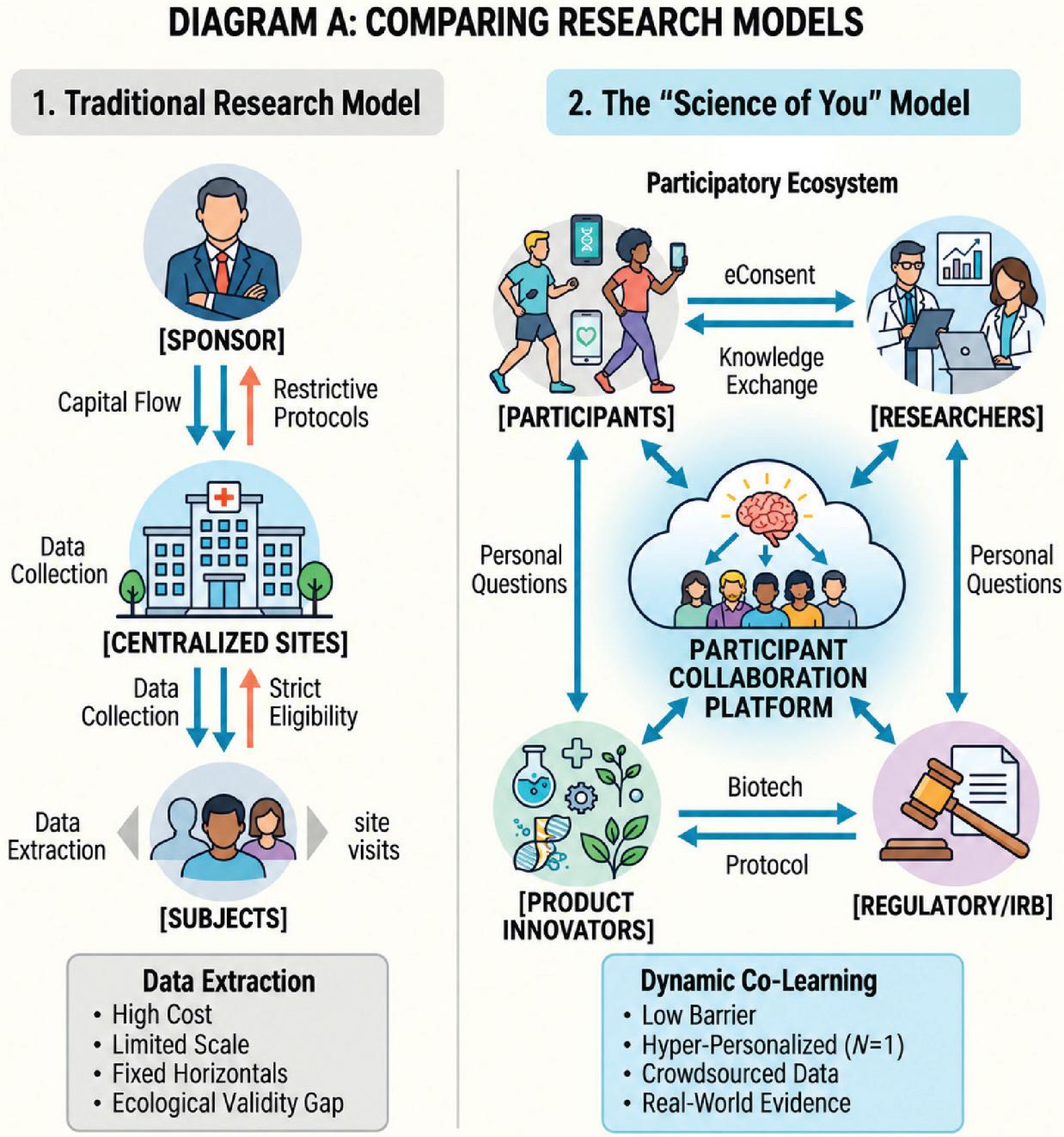
Figure 1 DIAGRAM A: Comparison of the traditional research architecture model (left panel) with participants as subjects at the bottom vs “The Science of You” model (right panel) that is centered on a collaborative platform and participatory research model.
This paper introduces the structural frameworks, technological ecosystems, and real-world validations of decentralized clinical trials (DCTs) optimized for longevity research. Central to this exploration is the Consumer Health, Learning, and Organizing Ecosystem (CHLOE), a software infrastructure designed to connect forward-thinking and empowered consumers with scalable, clinical-grade research protocols. Through this lens, we demonstrate that clinical rigor and consumer accessibility are not mutually exclusive, but rather complementary pillars necessary to advance the frontiers of translational medicine. This model of decentralized “direct-to-consumer” (DTC) clinical research, truly empowers people to engage and participate – it broadly expands who gets to ask rigorous scientific questions and ensures everyone’s voice (read data) can be heard.
2 The Bottlenecks of Centralized Clinical Trials in Longevity
To appreciate the necessity of decentralized models, one must first diagnose the systemic points of failure inherent in legacy clinical research methodologies when applied to preventive and regenerative health.
2.1 The Economic Gatekeeping of Evidence
Developing a single new drug through the conventional FDA-style clinical pipeline costs an estimated average of $1 billion to $2.6 billion. While this expenditure may be justified for highly profitable, patent-protected synthetic molecules, it represents an existential barrier for longevity interventions like botanical extracts, dietary protocols, probiotics, and generic metabolic modulators (e.g., metformin or NAD+ precursors). Because these interventions frequently lack robust intellectual property protections and currently are not covered by traditional healthcare insurers, classical sponsors cannot recoup traditional clinical trial expenses. Consequently, promising longevity strategies remain relegated to the domain of “anecdotal evidence” or preclinical animal models, stalling their clinical translation.
2.2 The Ecological Validity Gap
Traditional trials take place in artificial, highly controlled clinical environments. Participants are monitored at specific, discrete intervals, which fails to capture the continuous, nuanced fluctuations of daily life. Longevity and wellness therapies operate over extended horizons and are deeply influenced by real-world stressors, sleep patterns, dietary habits, and circadian rhythms. A therapeutic that shows efficacy in a rigid, stress-free clinical setting may fail completely in an individual experiencing chronic work stress or poor sleep hygiene. Centralized trials lack the ecological validity required to understand how interventions perform inside the messy, dynamic reality of human existence.
2.3 The Inclusion and Diversity Crisis
Centralized trials are inherently bound to physical geography. Participants must live within proximity to elite academic medical centers, possess the socioeconomic flexibility to travel to appointments during business hours, and meet highly restrictive inclusion/exclusion criteria. This results in trial populations that are overwhelmingly affluent, urban, disease-free, and non-diverse. Given that aging phenotypes and metabolic baselines vary dramatically across diverse demographic and socioeconomic populations, relying on restrictive cohorts severely limits the generalizability of longevity research.
2.4 The Ergodicity Problem in Personalized Health
In statistics, a process is ergodic if the average outcome of a large group represents the expected outcome for a single individual over time. Medicine has long operated under the assumption of ergodicity: if a clinical trial of 10,000 people shows a 15% average reduction in inflammation, it is assumed that the drug will work for any given individual.
However, biology is profoundly non-ergodic. An intervention that benefits 60% of a population might actively harm or have zero effect on the remaining 40% due to genetic variances, epigenetic differences, or unique microbiome profiles. In longevity science, where the goal is optimizing individual healthspan rather than curing acute pathology, the traditional average-based paradigm fails. The true unit of analysis must become , internally controlled by the same individual, and replicated at scale across thousands of distinct individuals.
3 The Paradigm Shift: From Geographic Decentralization to Participant-Centric Agency and “The Science of You”
The technical modernization of clinical research requires more than a structural upgrade in trial software; it demands a fundamental epistemological transformation in how medical evidence is generated. First-generation DCTs succeeded in moving the physical location of data collection away from traditional academic medical centers. However, they preserved an archaic, top-down infrastructure that treated human subjects as passive vectors from whom data is extracted.
The democratization of health data necessitates a profound philosophical shift from passive patient participation to active consumer collaboration. The CHLOE architecture operationalizes this shift by introducing an intentionally patient-centric model where individuals are no longer viewed merely as clinical trial subjects. Instead, they become active co-investigators of their own biology, a paradigm we term “The Science of You” (Figure 1). By leveraging a consumer’s intrinsic motivation to understand and optimize their unique health span, this framework transforms clinical research into a collaborative, decentralized ecosystem.
3.1 Defining Participatory Research and the Signal of Variance
Participatory clinical research blends the methodological rigor of classical science with the agility and scale of consumer digital technology. It acknowledges that human longevity is not a one-size-fits-all protocol, but a deeply individual biological negotiation that cannot be solved by forcing cohorts into artificial homogeneity. Traditional site-based studies remove real-world variance to preserve protocol purity, stripping out critical contextual data regarding sleep, real-world stressors, dietary variations, social environments, and nuanced adherence patterns.
“The Science of You” model challenges this paradigm by asserting that the average patient does not exist, and neither does the average intervention. When provided with user-friendly digital tools, continuous biometric sensors, and structured, scientifically validated protocols, consumers can generate high-fidelity, clinical-grade data directly from their home environments (Figure 2). Rather than filtering out individual variation as statistical “noise”, CHLOE embraces this real-world variance as the fundamental signal. This empowers translational science to investigate how therapies interact with the unique daily ecosystems of individual humans, which is a necessity for longevity medicine. Longevity happens in communities and daily life, and that is precisely where science must study it.
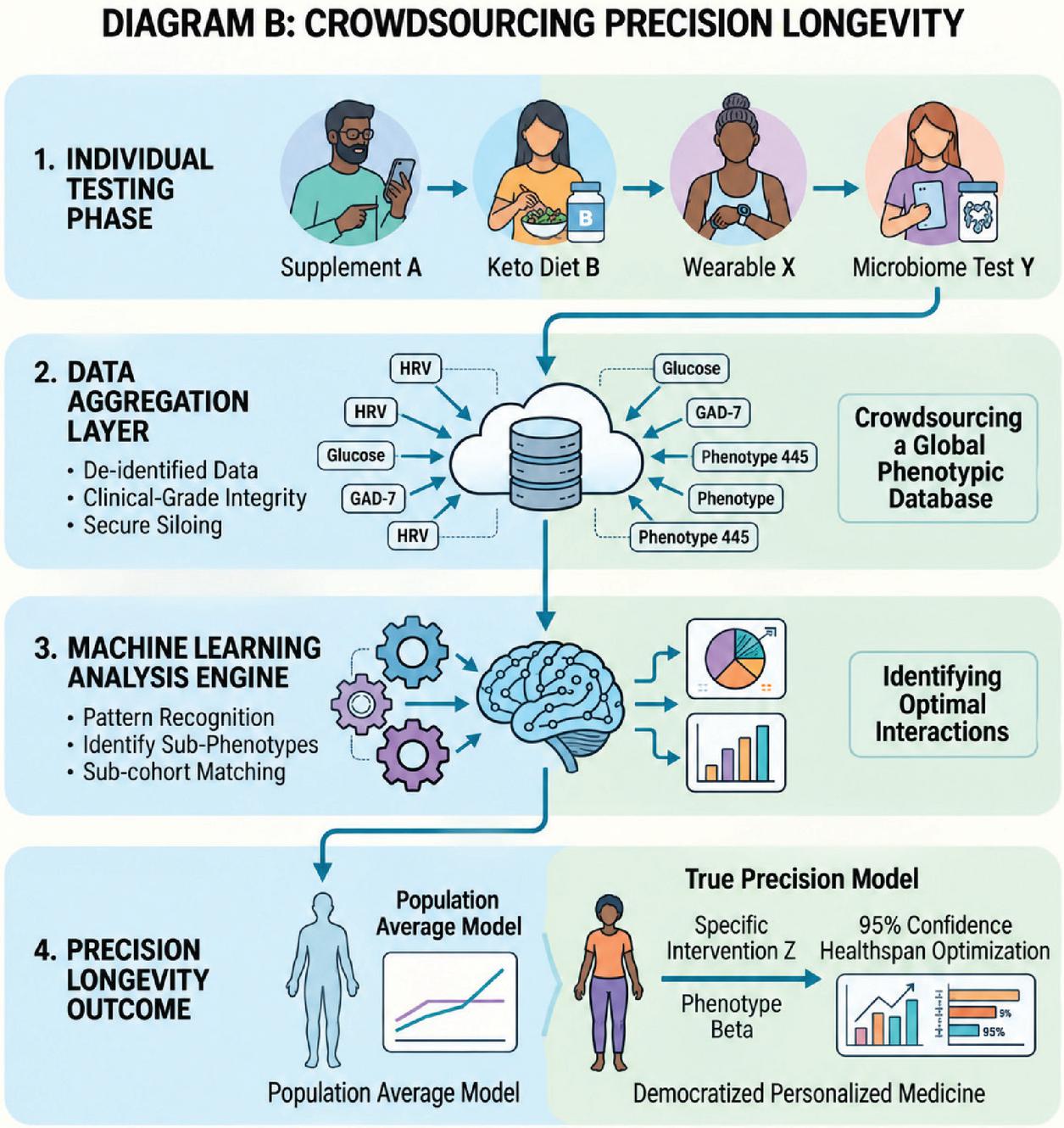
Figure 2 DIAGRAM B: A model for aggregation of science to innovate on the discovery of personalized longevity interventions.
3.2 Bridging Wellness and Clinical Rigor for Scalable Implementation
For decades, the health and wellness market and the clinical research sector operated in distinct, non-overlapping spheres. The wellness industry moved at high velocity, driven by consumer trends, but frequently lacked empirical validation. Conversely, the clinical research sector maintained high scientific standards but operated at a glacial pace with astronomical costs, making it unscalable for real-world implementation.
Decentralized, software-driven trial ecosystems like CHLOE bridge this chasm. By embedding institutional review board (IRB) oversight, standardized validation scales, electronic informed consent (eConsent), and real-time data verification into an accessible mobile interface, we can subject wellness interventions to clinical-grade scrutiny without losing the velocity and accessibility of consumer products. “The Science of You” meets people exactly where they are, transforming individual human variations and messy real-world experiences into standardized, regulatory-grade real-world evidence (RWE). This turns what was once an unscalable, site-bound process into a scalable, implemented reality for global human cohorts.
4 Architectural Overview of the CHLOE Infrastructure
To operationalize the “Science of You” at scale, a robust, compliant, and highly intuitive technological substrate is required. This need drove the development of the Consumer Health, Learning, and Organizing Ecosystem (CHLOE) by People Science. CHLOE acts as a bidirectional translation layer connecting consumers, researchers, product innovators, and ideally regulators.
4.1 Core Components of the CHLOE Platform
The platform is engineered to handle the end-to-end lifecycle of a decentralized clinical trial, abstracting away logistical friction while preserving regulatory and methodological integrity.
• Digital Recruitment and eConsent: Rather than relying on physical clinic flyers, CHLOE utilizes targeted digital recruitment pipelines to engage diverse demographics globally. The eConsent module uses interactive, multi-media interfaces to break down complex medical protocols into clear, comprehensible terms, ensuring participants are genuinely informed before enrolling.
• Participant-Facing Mobile Interface: The front-end application functions as a personalized “digital lab notebook” for the user. It prompts daily protocol adherence, captures patient-reported outcomes (PROs), and guides users through self-directed testing phases leveraging a friendly scientist avatar as a “coach”.
• Sensor and Wearable Aggregation Layer: Longevity research requires cross-referencing subjective experiences with objective biometrics. CHLOE integrates natively with a wide array of consumer wearables, continuous glucose monitors (CGMs), smart scales, sleep trackers, and biometric patches. This allows for the passive collection of high-density physiological data (e.g., heart rate variability [HRV], sleep architecture, glycemic variability) without increasing participant burden.
• Decentralized Lab and Product Logistics: To test physical compounds (such as nutraceuticals, probiotics, or regenerative supplements), CHLOE orchestrates blinded, direct-to-participant shipping logistics. The platform coordinates tracking numbers, automated unblinding schedules, and at-home biological sampling kits (e.g., stool kits for microbiome sequencing, finger-prick blood cards).
• Researcher Dashboard and Real-Time Analytics: Investigators and their staff can monitor trial adherence, adverse events, and emerging efficacy signals in real time via a secure, role-based cloud-based dashboard. This enables early detection of data anomalies or compliance drops, a capability absent in traditional trials where data is siloed until study completion.
4.2 Security, Privacy, and Trustworthiness
Given that the International Journal of Translational Science explicitly mandates that security, privacy, and trustworthiness be embedded across multiple layers of published frameworks, CHLOE utilizes a multi-tiered security architecture.
| Security domain | Technical implementation | Translational safeguard |
| Data at rest & in transit | AES-256 encryption at rest; TLS 1.3 protocol for all data in transit. | Prevents interceptive data breaches of sensitive physiological metrics. |
| Identity siloing | Strict de-identification protocols separating personal identifiable information (PII) from clinical trial datasets. | Guarantees compliance with HIPAA, GDPR, and international data privacy mandates. |
| Participant data sovereignty | Granular permissioning architecture allowing users to revoke data access at any time. | Establishes absolute trust, boosting enrollment and retention in sensitive longevity studies. |
| Audit trails | Immutable, cryptographically verified logging of all data entries and protocol modifications. | Prevents data manipulation and ensures inspection readiness for regulatory audits. |
5 Empirical Validation: Case Studies in Decentralized Longevity Research
The viability of the CHLOE infrastructure is best demonstrated through its execution of virtual, fully decentralized RCTs. Over the past few years, dozens of clinical trials have successfully utilized this ecosystem to validate novel wellness and longevity interventions. We use a few key examples here to highlight the success of this model.
5.1 Case Study 1: Decentralized Validation of a Novel Fasting Mimetic
Fasting and caloric restriction are among the most robustly validated interventions for extending healthspan in model organisms. However, long-term adherence to strict fasting regimens remains profoundly challenging for human populations. In response, biotechnology companies developed “fasting mimetic” formulations, nutraceutical compounds designed to stimulate cellular autophagy and metabolic pathways associated with caloric restriction without requiring actual food deprivation.
In 2025, a virtual, decentralized randomized controlled trial was deployed by People Science via the CHLOE platform to validate a novel fasting mimetic formulation (Mimio). This study was published in early 2026 [1].
• Methodology: The study enrolled a geographically distributed cohort entirely via remote channels. Participants received blinded packages directly to their homes containing either the active fasting mimetic formulation or a visually identical placebo.
• Data Collection: Over the course of the multi-week trial, participants tracked compliance and subjective energy levels using the CHLOE mobile application, while continuously collecting objective metrics via integrated consumer wearables and metabolic tracking devices. At-home blood spots were gathered to analyze systemic biomarkers.
• Outcomes: The trial successfully demonstrated statistically significant improvements in key cardiometabolic health markers, including postprandial glucose stability and lipid optimization profiles, within the active group compared to the placebo cohort. The trial achieved exceptional compliance rates (90%), demonstrating that high-fidelity clinical endpoints can be captured remotely without site-based intervention.
5.2 Case Study 2: Remote Assessment of a GABA-Producing Probiotic for Sleep and Mood
The gut–brain axis represents a vital frontier in longevity and regenerative health. Chronic sleep fragmentation and elevated stress accelerate biological aging by elevating systemic cortisol levels, worsening neuroinflammation, and impairing metabolic homeostasis. It is clear that poor sleep duration and quality can lead to a shortened health span.
In 2025–2026, two remote IRB-backed clinical trials were launched by People Science via the CHLOE platform to evaluate the efficacy of a novel, genetically characterized probiotic strain (Lactiplantibacillus plantarum LP815) that naturally produces gamma-aminobutyric acid (GABA), a primary inhibitory neurotransmitter, at a low pH.
• Methodology: The trials were completely virtual and direct-to-consumer. Participants exhibiting baseline mild-to-moderate anxiety and sleep disruption were onboarded remotely.
• Data Collection: Efficacy metrics were captured via standardized, validated psychological instruments (e.g., GAD-7 for anxiety, PSQI for sleep quality) embedded directly into the daily UI flow of the CHLOE app. Objective sleep architecture metrics (e.g., deep sleep duration, sleep latency) were gathered passively via study-provided consumer smart rings and wearables. Urine samples were collected at home and levels of urinary GABA were measured over the course of the study.
• Outcomes: The trial concluded with highly definitive data: 77% of participants utilizing the active GABA-producing probiotic demonstrated clinically meaningful improvements in validated sleep metrics, alongside a statistically significant reduction in self-reported anxiety scores (averaging a five-point drop on anxiety metric scales). The trials demonstrate that a live biotherapeutic product could be distributed, managed, and rigorously validated using a fully virtual, decentralized architecture [2, 3].
6 Discussion: Implications for the Future of Translational Medicine
The integration of decentralized trial platforms like CHLOE into the mainstream scientific ecosystem marks a profound inflection point for translational medicine. In fact, in the era of AI, suggested hypotheses generated by AI and suggested protocols generated by AI can easily be implemented, standardized, and tested by individuals and populations using the CHLOE platform and this democratized approach. The results are also more easily and quickly interpreted by modern ML/AI approaches. Additionally, while basket/umbrella trial approaches have been used for oncology research already, the combination of these approaches with sequential and longitudinal personalized approaches will accelerate the field even further. If this approach could be adopted by more and more patients undergoing oncology care, there is an even greater opportunity to learn about non-traditional and natural interventions that might be used alongside traditional oncology interventions and could impact oncology care tremendously, both for individuals and society. This approach may be even more impactful for rare diseases where traditional clinical trial models are not feasible or for treatment resistant conditions that demand innovation.
6.1 Accelerating the Velocity of Translation
The standard timeline to translate a basic science discovery into human clinical utility averages 17 years. By reducing the physical, bureaucratic, and financial overhead of human testing, decentralized platforms act as a high-velocity filter for translational science. Researchers can rapidly test dozens of nascent longevity interventions in pilot human cohorts () within a matter of months rather than years. Interventions showing robust real-world signals can then be fast-tracked into larger, confirmatory trials, while ineffective approaches can be quickly decommissioned, saving millions in research capital.
6.2 Crowdsourcing a Global Phenotypic Database
Traditional clinical trial methodologies treat individual lifestyle and environmental variation as confounding “noise” to be systematically filtered out in search of artificial homogeneity. However, because longevity and regenerative interventions are highly multi-dimensional, searching exclusively for homogenous data drastically limits real-world scalability and implementation.
CHLOE disrupts this paradigm by capturing and contextualizing real-world variance rather than averaging it away. As thousands of distributed individuals utilize the platform to run self-directed, structured protocols, they generate a massive, crowdsourced repository of human phenotypes. By applying artificial intelligence to cross-reference multi-layered datasets, spanning varying stress levels, sleep architectures, and metabolic baselines, investigators can execute advanced sub-cohort matching. Embracing this real-world variance is the exact mechanism that allows translational science to move past the myth of the “average patient” and realize true, scalable precision longevity.
6.3 Ethical Considerations and Democratic Access
Decentralized research models intrinsically democratize health access. They remove geographical and socioeconomic boundaries, allowing individuals from rural, underserved, or traditionally excluded backgrounds to actively engage in cutting-edge longevity science.
However, this democratization demands meticulous ethical stewardship. Platforms must ensure that direct-to-consumer recruitment practices are transparent, completely free of coercive language, and that the underlying protocols and products adequately inform the participants about the risks and benefits of participation. Moreover, data sovereignty must remain fundamentally in the hands of the individual, ensuring participants retain full ownership and transparency over how their biological data is utilized.
7 Conclusion
The future of longevity and regenerative medicine cannot be built solely within the confines of legacy, centralized clinical trial infrastructure. To truly understand the multi-dimensional, highly personalized nature of human healthspan extension, science must venture into the wild, into the daily lives and unique environments of individuals.
Platforms like CHLOE demonstrate that by combining mobile software ecosystems, consumer wearable integrations, and rigorous remote methodologies, we can successfully scale the “Science of You”. The empirical successes of recent virtual trials on metabolic mimetics and targeted probiotics validate this model as an efficient, highly rigorous, and accessible pathway for scientific discovery. By transforming global consumers from passive bystanders into active, data-driven research collaborators, we can dramatically accelerate the translation of cutting-edge therapies, ultimately paving the way toward a future of accessible, democratized, and personalized healthy longevity for all.
Acknowledgements
I would like to thank Laetitia d’Ursel, MBA, for assistance in manuscript and figure preparations and Dr Desiree Cox MD, PhD for inspiring and organizing the Healinc Summit conference where some of these ideas were presented in The Bahamas.
References
[1] A. D. Grant, M. C. B. Erfe, A. Kazaryan, P. L. Oliver, J. Moos, V. Luna, N. Craft, and C. H. Rhodes, “A novel fasting mimetic (Mimio) creates fasting-like benefits to hunger control, oxidative stress and cardiometabolic health in humans,” Sci. Rep., vol. 16, p. 7812, 2026, doi: 10.1038/s41598-026-38495-7.
[2] A. D. Grant, M. C. B. Erfe, C. J. Delebecque, D. Keller, N. P. Zimmerman, A. Kazaryan, P. L. Oliver, J. Moos, V. Luna, N. Craft, “GABA probiotic Lactiplantibacillus plantarum Lp815 improves sleep, anxiety and increases urinary GABA: a randomized, double-blind, placebo-controlled study,” Sci. Rep., vol. 16, p. 644, 2026, doi: 10.1038/s41598-025-27861-6.
[3] A. D. Grant, M. C. Erfe, C. J. Delebecque, D. Keller, N. Zimmerman, P. L. Oliver, B. Youssef, J. Moos, V. Luna, and N. Craft, “Lactiplantibacillus plantarum Lp815 decreases anxiety in people with mild to moderate anxiety: a direct-to-consumer, randomized, double-blind, placebo-controlled study,” Beneficial Microbes, vol. 16, no. 5, Apr. 2025, doi: 10.1163/18762891-bja00073.
International Journal of Translational Science, 2026, 109–122
doi: 10.13052/ijts2246-8765.2026.005
© 2026 River Publishers