CARE: A Cloud-enhanced Augmented Reality Model for Immersive Education Opportunities and Challenges
Zhongxia Liu
Modern Education Technology Center, Pingdingshan University, Pingdingshan 467000, Henan, China
E-mail: midsummer0218@163.com
Received 07 March 2025; Accepted 25 November 2025
Abstract
This paper presents the CARE framework that integrates cloud computing and augmented reality (AR) models. Remote learning through immersion has dramatically impacted the learning environment. Cloud computing facilitates the efficient delivery platform required to transform the learning environment. Furthermore, AR facilitates immersive learning by integrating digital information into the real world. However, challenges related to network latency, security issues, device supportability, and teacher readiness limit the effective implementation of this strategy. The CARE framework meets the teaching community’s requirements by implementing edge computing concepts to address network performance latency. Moreover, the framework enhances security by applying end-to-end encryption. This paper lays out proper definitions of the relevant topics and a platform for exploring the ultimate capabilities of immersive distance learning enabled by cloud computing and AR.
Keywords: Remote learning, cloud computing, augmented reality, pedagogical challenges.
1 Introduction
Recent advancements in science and technology have reshaped the organization of civilizations and driven rapid transformations in human characteristics. To accommodate the evolving nature of the human population, it has become imperative to implement educational reforms and enhance the educational setting with scientific and technical advancements [1]. In the wake of technological proliferation in today’s world, the efficient use of this technology in education has become of utmost importance [2]. Given that the concepts of science used to interpret nature and natural phenomena are inherently abstract, it is necessary to support the teaching of science through technological aid [3]. To improve students’ learning experience, there is a strong need to complement their visual and cognitive understanding through technology when teaching abstract concepts [4].
Technology in scientific classes helps students observe phenomena from multiple perspectives and improves their ability to analyze information and maintain focused attention throughout the lesson [5]. Science education utilizes educational technologies to enhance the quality of science curricula by implementing practical science activities that develop students’ cognitive skills in scientific disciplines, promote knowledge discovery, improve problem-solving abilities, and clarify complex scenarios that may be difficult to understand in everyday contexts [6]. Providing technology-integrated teaching materials for scientific courses and redesigning learning spaces to meet students’ needs are crucial steps in facilitating interactive, practical learning experiences [7].
Augmented reality (AR) educational applications have evolved over the last several years to support teaching and learning [8]. AR, coined in the early 1990s, refers to the integration of real-world environments with virtual components [9]. The integration of AR into mobile devices has dramatically increased accessibility and led to a surge in educational AR applications since 2010, despite the initial obstacle of high pricing [10]. AR principles allow the overlay of the virtual part onto the real environment, connecting the real and virtual realms [11]. This distinction from virtual reality (VR), in which interactions occur only in computer-generated worlds, emphasizes the fundamental nature of AR [12]. Specifically, AR applications that facilitate integrated learning in education have generated significant attention from the general public and the scientific community [13]. Advocates argue that AR can have a positive impact on education. The study conducted in [14] revealed that students showed great interest in incorporating AR into their education test preparation. The study also emphasized the need to investigate how AR could further enhance exam performance.
The COVID-19 pandemic has expedited the integration of remote learning technologies among instructors and prompted a transition towards synchronous learning approaches, including real-time virtual sessions for interaction [15, 16]. The efficacy of this transformation, which involves videoconferencing software, relies on educators’ readiness and educational institutions’ support through continuous training, ongoing support, and infrastructure investments [17]. Remote learning offers unparalleled access to learning materials at any time and from any location using various electronic platforms and communication tools [18]. Despite the many benefits of remote learning, various challenges remain to be addressed. The concept of the digital divide worsens the disparities in the availability of technological and internet access opportunities among students from diverse backgrounds [19]. In the context of remote learning in developing nations, it is challenging to sustain learners’ engagement and motivation due to limited interaction, thereby impeding collaborative learning. A robust cybersecurity framework should be implemented to secure learning information.
In this study, the role of cloud-based AR is introduced in detail as a practical aid for enhancing the learning experience in education. Cloud computing provides scalable, easy access to storage and processing capabilities to run large amounts of data and applications. However, AR can overlay information about the real world to create a fully immersive environment. The fusion of cloud computing and AR will empower teachers to create engaging learning environments. The cloud computing and AR fusion will automatically provide educational modules and facilitate group and immersive multimedia presentations, which will be part of the learning simulations that enhance the learning experience and foster a deeper understanding of the subject at hand. Cloud computing and the integration of AR will provide easy access to educational information from anywhere and can be used across various devices available.
In this study, cloud-based AR is explored in detail in the context of remote learning. The survey aims to identify the synergistic potential of cloud computing resources and AR technologies to enhance educational experiences. Additionally, this research evaluates the impact of cloud computing and AR on distance learning and the extent to which it can be used to improve immersion, engagement, and interactivity. As the third research objective, the study provides possible answers to the crucial challenges involved in implementing cloud-enabled AR in the learning environment. In essence, the research contributes to the development of educational technology and educational practices by providing vital information on the implementation of cloud-based AR in distance learning for educators and researchers.
2 Research Methodology
To ascertain the current state of cloud-based AR in remote learning, this study adopts a systematic literature review (SLR). The SLR involves a comprehensive scattering and collection of relevant research work within a particular field. This study adheres to the principles expounded in [20]. The study aims to fill gaps in the body of knowledge and outline avenues for future research. The SLR involves the following seven crucial stages: planning, scoping, searching, evaluating, synthesizing, analyzing, and writing/reporting. This is illustrated in Figure 1.
Planning: This step involved identifying the objectives and scope of the SLR. The reason for the review was clarified. The exclusion and inclusion criteria for the selected articles were also identified. A schedule for the review and the timeframe to complete it were also identified. The databases and sources to be searched were also identified. The search terms used were also identified.
Defining the scope: During this phase, the review’s scope was determined by identifying the study’s conceptual and variable framework. The evaluation’s targeted audience (cloud computing-based AR in remote learning), the nature of the interventions explored in the studies, and the results of interest were examined to ensure the review addressed the research questions posed.
Searching: This involved searching various databases and sources for relevant studies using predetermined search terms and phrases. The search took place from 2015 to 2025. The aim of this was to ensure the review captures the latest trends in the field. The predetermined search terms used were “cloud computing,” “augmented reality,” “remote learning,” “education,” “AR applications,” “cloud-based technologies,” and “educational technology.” The searching was done using the AND and OR operators. Scholarly databases and grey literature were used in the search to identify relevant information for the study. The research questions investigated through the review are:
• In what ways has cloud computing been employed in AR applications in remote learning?
• What are the benefits and challenges faced when cloud computing and AR are combined in a remote learning environment?
• What do the emerging trends, future outlooks, and research gaps presented in the existing literature concerning cloud-based AR in remote learning indicate?
• What are the applications of cloud AR in various educational streams (such as STEM and humanities)?
• How might cloud-based AR impact the teaching of methodologies and the development of curricula in remote educational environments?
Evaluation: This involved evaluating the relevance and quality of the articles retrieved through the predefined inclusion and exclusion criteria. This was done through the titles and abstracts of the articles and, later, the articles themselves if needed. The relevant information was extracted based on the study’s characteristics and results. The quality of the studies was also evaluated.
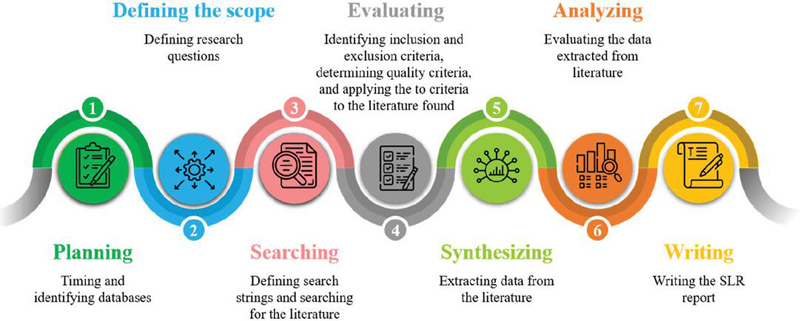
Figure 1 Research methodology process.
Synthesizing: In this part of the review cycle, the findings from the selected studies were synthesized to identify emerging trends in the field of study. The extracted information was organized according to the characteristics and relationships of the involved variables. This was done through various synthesis techniques that involved both quantitative and qualitative methodologies. These methodologies leaned towards conceptual analysis and meta-analysis.
Analyzing: In this stage, the synthesis results were used to interpret the findings, helping identify gaps evident in the existing body of literature. The findings of the previous studies reviewed were assessed for their strengths and weaknesses.
Writing: The final step was writing the manuscript for the SLR report, which described the research methodology and the study’s findings. The SLR results were presented in a structured format.
3 Background
This section provides the reader with the background information on the interaction between cloud computing and AR concepts in the context of remote learning. The section will first introduce the basic concepts of cloud computing, then move on to AR.
3.1 Cloud Computing
Cloud computing can be described as a model that provides effortless, secure, and wide access to configurable computing resources, such as services, applications, data centers, software/hardware components, and network resources, that can be readily deployed and undeployed with little management effort by cloud service providers [21]. The adoption of the cloud computing paradigm gained momentum after Google CEO Eric Schmidt introduced it in 2006, marking a significant development in the IT industry landscape. In recent years, the emergence of cloud computing has profoundly affected the IT field. The provision of virtually unlimited processing and storage capacity at cost-effective prices has introduced a novel computing concept in which virtualized resources can be rented on demand and deployed as standardized products. Major companies, including Amazon, Google, and Facebook, have extensively adopted this paradigm to deliver services over the Internet, achieving economic and technical benefits [22].
Cloud computing is a revolutionary technical innovation that significantly influences the delivery of internet-based services and the general IT sector [23]. Figure 2 illustrates the essential elements of cloud computing, including its key features contributing to its effectiveness as a model, its hierarchical structure, and the established service paradigms. The architectural structure of cloud computing can be broken down into four separate layers: the data center layer, which includes the physical hardware infrastructure; the infrastructure layer; the platform layer; and the application layer. In each layer, services are provided to the layer above and consumed by the layer below. Cloud services can be divided into three main categories: infrastructure as a service (IaaS), platform as a service (PaaS), and software as a service (SaaS). SaaS is defined as software delivered as a service, hosted in the cloud, and accessible via lightweight clients or web browsers. PaaS offers platform-level resources, including software development tools and operating system support. Meanwhile, IaaS provides users with computing, storage, and networking capabilities and allows them to manage operating systems, storage, and applications. As a result, IaaS has received considerable attention so far.
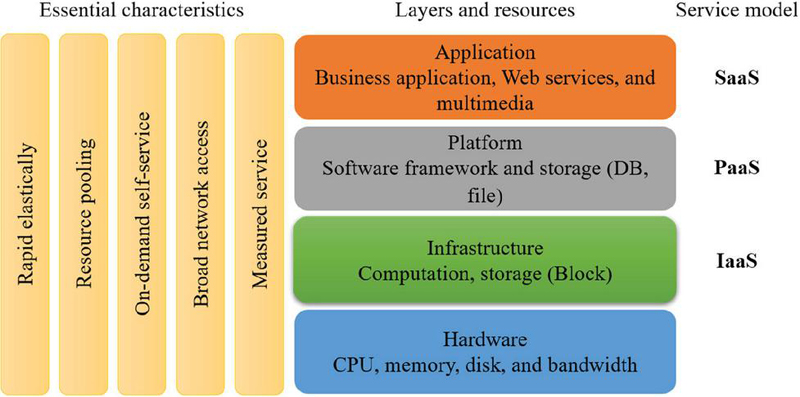
Figure 2 Cloud computing elements.
The scholarly discourse on cloud deployments encompasses various classifications: private clouds, which are primarily owned and managed by a single organization; community clouds, designed for a particular consumer group with shared requirements; public clouds, available for unrestricted consumption by the general public; hybrid clouds, which combine multiple cloud infrastructures (private, community, or public); and virtual private clouds, which offer an alternative to address challenges in both public and private cloud environments by utilizing virtual private network (VPN) technologies to configure necessary network parameters such as security and topology. Given the many concerns related to workplace applications and cloud environments, such as reducing costs and improving reliability, each cloud type has distinct benefits and drawbacks. Therefore, choosing the appropriate cloud model depends on the company’s specific requirements.
The cloud computing paradigm presents an attractive opportunity for business owners to free themselves from the need to invest in infrastructure (CAPEX). Instead, they can rent resources based on demand and only pay for actual consumption. In addition, it reduces operating costs (OPEX) because service providers no longer need to allocate resources to cope with high demand. Instead, resources are released when the demand for services is minimal. Additionally, outsourcing service infrastructure in cloud environments shifts business risk to the infrastructure provider, which is typically better positioned to manage it. In addition to these economic benefits, cloud computing offers a variety of technological advantages, including improved energy efficiency, optimized allocation of hardware and software resources, scalability, performance isolation, and operational flexibility.
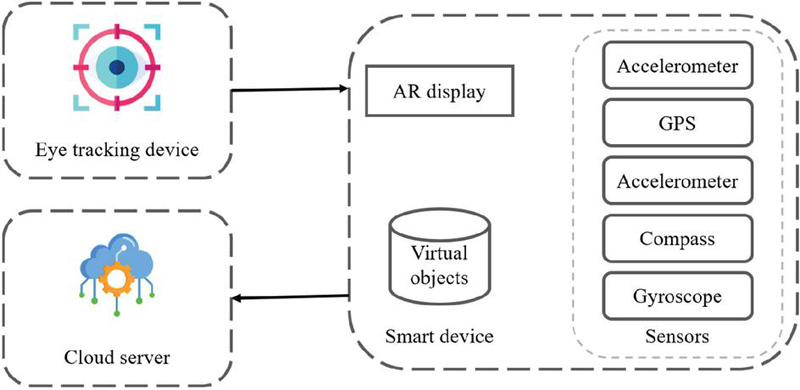
Figure 3 Structure of the AR system.
3.2 Augmented Reality
AR refers to the set of technological methods that aim to enhance the user’s experience in the real world by embedding relevant information about the surrounding environment. Various engineering experts and researchers are developing numerous applications and methodologies that leverage AR technology. However, according to [24], AR research remains an underexplored area compared to other educational technologies. The term “augmented reality” was coined by Tom Caudell in the early 1990s [25]. However, growth in this field has been observed mainly since 2010, driven by the increasing computational power of mobile devices. As a result, the development of AR-supporting systems became possible within the boundaries of mobile support. In addition to the medical field, the entertainment sector, and tourism businesses, AR has found applications in educational settings. The concept of “virtual reality” refers to the immersion of users in a “world” of virtually constructed realities. However, the idea of AR involves integrating virtual and physical components.
In AR, a virtual item may take many forms, such as introductory text, 2D shapes, 3D objects, or films. Every item can be associated with a specific position and may be related to other items and mobile users. Given the wide range of virtual objects, it is neither feasible nor practical for a mobile device to store them all locally. In these situations, AR applications rely on database-as-a-service (DBaaS) solutions and use caching and pre-fetching to keep the required virtual objects locally. Figure 3 depicts the essential elements of an AR system and provides a conceptual representation. Most of these components are located within the smart device, which runs the AR application. Eye-tracking technology may improve the user experience by reducing the need for manual engagement with the program. Moreover, a cloud server is required to store the virtual items.
In the education sector, AR is used to develop pedagogical tools to improve learning and teaching encounters. Numerous studies suggest that AR technologies enable students to acquire more profound knowledge and help develop specialized skills that are difficult to achieve with traditional educational resources. For example, AR allows learners convenient access to otherwise unobservable phenomena, such as the sun’s trajectory in simulated classroom environments or the dynamics of magnetic fields, which educators and previous research have identified as problem areas for students.
4 Cloud-based AR Applications in Remote Learning
This section reviews recent advancements in integrating cloud-based AR into remote learning environments. Table 1 compares key features, technologies, challenges, and outcomes of various applications in this field. The Romanian educational landscape faces a significant problem of early school leaving, particularly given its high prevalence, which reached 16.5% in 2018. Inequalities regarding educational facilities, the pronounced urban–rural divide, and barriers to integration are faced. The Roma population contributes to the exacerbation of social inequalities. Despite numerous reform initiatives and a significant increase in educational allocations, Romania has not met any of the EU education targets for 2020, particularly the target to reduce the number of early school leavers to 10%. Given the urgency of the education problem, there is an urgent need to find more contemporary solutions. Cidota and Datcu [26] have proposed an innovative technical framework to facilitate distance learning experiences, particularly tailored to students facing learning difficulties. Their research focuses on using AR and cloud computing to support collaborating virtually in educational institutions. This enables distant teachers to interact with isolated students more effectively and seamlessly engage in collaborative learning efforts.
Table 1 Comparison of cloud-based augmented reality applications in remote learning
| Author(s) | Study Focus | Key Features | Technologies Used | Applications | Challenges | Outcomes or Findings |
| Cidota and Datcu [26] | Virtual co-location for distance learning | AR and cloud computing to support remote teachers and students, especially those with learning difficulties | AR and cloud computing | Reducing early school leaving rates in Romania | Network latency, security, and curriculum integration | Effective in engaging students remotely, it holds the potential to reduce early school leaving |
| Essa, et al. [27] | Federated e-learning cloud system with mixed reality | Federated cloud system to deliver customized learning, accommodating learners with different abilities | Mixed reality and federated cloud architecture | General e-learning and learners with special requirements | Device compatibility, integration of existing resources | Enhanced accessibility to diverse learners, showing promise in adaptive content delivery |
| Sandu, et al. [28] | AR and mobile cloud technology in higher education | Integration of AR and AI into model learning management system to enhance user experiences | AR, artificial intelligence, and cloud-based mobile technology | Higher education in Australia | Scalability, AI–AR integration, and survey-based impact assessments | Positive feedback on improved user experiences, highlighting potential benefits for higher education |
| Ang and Lim [29] | Augmented reality learning for STEM education | AR items superimposed on 2D images to improve STEM comprehension, utilizing Google’s Cloud TPU and GCP for data processing | AR, Google Cloud tensor processing units, and cloud vision API | STEM education | High processing demands and limited functionality on standard computer systems | Improved student engagement in STEM courses, increased comprehension, but faced limitations due to hardware constraints |
| Liu, et al. [30] | AR-based physical education system for schools | Cloud-connected AR system for physical education, utilizing IoT and performance data for real-time feedback | AR, cloud network, IoT, remote user interfaces | Physical education in schools | High processing demands, difficulty in running AR simulations on typical computer systems | Improved physical education outcomes and engagement, especially in real-time performance feedback |
| Neffati, et al. [31] | AR platform for e-learning environments with smart devices | Integration of AR simulations into e-learning courses and enhancing course materials with virtual and graphical content | AR, mobile e-learning app, Mann–Whitney U test for evaluation | E-learning in higher technical education | Limited scope of initial evaluation, need for broader testing, and expansion to more diverse student populations | Positive preliminary findings on student interaction and further development required for broader application |
Essa, et al. [27] have developed a federated E-learning cloud system that aims to enhance the quality of E-learning by integrating mixed reality technologies. The method accommodates many learners with specific requirements, including those with outstanding skills and abilities. An essential characteristic of the suggested system is its ability to leverage pre-existing courses and learning materials available on the Internet and deliver them to end users in a customized manner. The planned system will be built on a federated cloud architecture consisting of widely available services that all users may access.
Sandu, et al. [28] studied potential improvements to learning in Australian higher education by combining AR with cloud-based mobile technology. Their analysis included a survey to assess the impact of integrating AR and artificial intelligence into Moodle on user experience. In addition, they conducted a thorough review of the literature to illustrate recent advances in virtual and AR technologies, as well as in cloud-based mobile technologies in education. Preliminary research suggests that combining augmented reality and artificial intelligence could improve educational experiences.
Ang and Lim [29] created a smartphone app called AUREL (augmented reality learning). They improved learning abilities by using AR materials superimposed on existing 2D images. The method of visualizing the AR has been targeted at improving understanding of STEM education (science, technology, engineering, and math). The ML Kit Firebase has been used to host TensorFlow Lite models tailored to specialized use cases to boost accuracy. Google Cloud Platform (GCP) provides data from STEM studies. This data also encompasses the processing of STEM information of the 3D type. The processed information can be visualized through the smartphone app using the Sceneform SDK from ARCore. AUREL is not limited to STEM education. In addition to this study, AUREL can be used in various scientific disciplines to create an efficient learning environment.
The AR approach has been effective in improving students’ involvement and performance in sports events and in enhancing physical education instruction for schoolchildren. Nevertheless, the significant processing demands of AR representations limit their functionality to expensive, intricate integrated modules, making it impractical to run AR simulations on typical computer systems. Liu et al. [30] have developed and proposed an AR solution explicitly designed for school physical education instruction. This solution utilizes AR technologies, a cloud network, the Internet of Things (IoT), and remote user interfaces to address the issues in this field. An examination of AR simulations, participants’ performance data, and sport trainers’ opinions indicates that AR environments enhance participants’ learning effectiveness in physical education classes.
Neffati et al. [31] analyzed research on smart devices to integrate visual simulations into e-learning environments. They then developed an AR platform to enrich course materials with graphical and virtual multimedia, thereby improving the learning experience for e-learning participants. Their recommendation culminated in the development of a mobile e-learning (MeL) application, aptly named the MeL app. The advanced functionality of the MeL app was tested using the Mann–Whitney U test in the classroom settings involving real-time learners. The intended MeL app aims to simplify the learning process, efficiently cater to the requirements of the e-learning community, and encourage learning interaction and communicative development in the context of higher technical education (THE). The software engineering community of learners tested the intended framework in the context of THE. Future work would involve incorporating new functionality, rigorous testing in extreme conditions, analyzing educational opportunities for a wider, more diverse group of learners, and, finally, extending the application area.
5 Discussion
Cloud computing offers numerous advantages for educational e-learning services, especially for computationally intensive tasks such as virtual worlds, simulations, and video streaming. It is also beneficial for massive open online courses (MOOCs). Table 2 outlines the various advantages for stakeholders, including learners, educational practitioners, educational institutions, and IT staff. Cloud technology permits students and instructors to access computing resources whenever they need them, tailored to their educational needs. Teachers can efficiently set up computing labs by creating virtual machines with pre-installed software tailored to specific needs. Educational institutions increasingly use cloud computing to delegate email services, promote collaboration, provide students with data storage, and host virtual learning environments (VLEs). In addition, cloud computing enables the development of innovative learning offerings by leveraging ubiquity, advanced Web-based tools, and collaboration capabilities. However, cloud computing also presents various challenges in the educational sector, as outlined in Table 3.
Table 2 Cloud computing benefits in the education sector
| Stakeholder | Benefits |
| Learners | • Access to a wide range of online applications for various learning situations • Ability to access programs from any location with an internet connection • Flexibility to establish personalized learning environments based on individual requirements and preferences • Overcoming constraints of mobile learning through unlimited computing resources and scalability • Easy access, sharing, and synchronization of educational materials via cloud storage |
| Educational practitioners | • Ability to establish personalized learning environments using various cloud services and apps • Facilitation of PLEs through easy integration of cloud services via APIs • Overcoming constraints of mobile learning (m-learning) through unlimited computing resources and scalability • Access to high processing power for instructional applications beyond mobile device capabilities |
| Educational institutions | • Dynamic customization of computing resources to match specific needs • Scalability to adjust computing resources in response to changing demand • Cost reductions through virtualization, on-demand provisioning, and a pay-per-use model • Access to a wide variety of tools without setup or upfront expenditure • Easy access to resources for students without individual software licensing |
| IT staff | • Decreased costs associated with acquiring hardware, maintaining equipment, and managing operating expenditure • Maximization of resource usage and reduction of unnecessary consumption through a pay-per-use approach • Effortless access to cloud solutions at no cost or via a pay-per-use model, eliminating the need for software licenses or infrastructure investment |
The role of cloud computing benefits various stakeholders in education. The multiple stakeholders who will benefit from cloud computing include the following: learners and teaching staff. The next group of stakeholders consists of institutions of learning. The final group of stakeholders comprises personnel responsible for information technology. The benefits of cloud computing also vary depending on the stakeholders who will benefit from the technology. Some of the benefits are learning-based, while others concern information technology in educational institutions. Cloud computing allows learners and teaching staff to access various cloud applications.
The ability to adapt across various cloud computing services has resulted in the development of learning environments tailored to educators’ and students’ needs. Using application programming interfaces (APIs), different cloud services can be interconnected to develop personal learning environments (PLEs). The challenges of mobile learning (m-learning) are addressed through the scalability of cloud computing services, which can scale up or down infinitely. Students will be able to run learning applications on their mobile devices while the cloud provides the necessary computing power. Cloud storage also offers easy access to learning files, providing sufficient quality of service (QoS).
Table 3 Cloud computing challenges in the education sector
| Challenges | Description |
| Security | Data security and privacy concerns, including unauthorized access, data breaches, and regulatory compliance. |
| Performance | Issues related to system performance, including latency, bandwidth limitations, and reliability of cloud services. |
| Interoperability | Challenges associated with integrating cloud-based services with existing educational systems, applications, and infrastructure. |
| Cost management | Difficulties in managing costs associated with cloud services, including unpredictable pricing models and potential hidden costs. |
| Technical skills | Lack of technical expertise among educators and IT staff to effectively utilize and manage cloud computing resources. |
| Accessibility | Accessibility issues for students with disabilities, including compatibility with assistive technologies and adherence to accessibility standards. |
| Data governance | Governance and control over educational data stored and processed in the cloud, including data ownership, stewardship, and accountability. |
| Vendor lock-in | Risks associated with dependency on a single cloud service provider, including limited flexibility and potential difficulties in migrating to alternative platforms. |
In many instances, pupils may require support from high-performance computing to facilitate learning activities beyond the capabilities of their smartphones and university computing resources. Cloud computing can be configured to address the specific needs of pupils and support computing work that complements their learning. The scalability of cloud computing enables institutions to address computing requirements as needs emerge and ensure the quality of computing power without over-specifying their requirements. This has significant applications in the context of massive open online courses (MOOCs).
The cost-saving opportunities presented to educational institutions lie in cloud computing’s virtualization, on-demand provision, scalability, and pay-per-use model. Cloud computing provides academic institutions with opportunities to reduce equipment procurement and operating costs. Additionally, through the pay-per-use model in cloud computing, institutions can maximize the use of software applications, even when used temporarily or for experimentation.
Cloud-based software allows the institution to benefit from various software applications without the costs of setup and installation. Free cloud software applications are available and can be used on a pay-per-use basis. Students also benefit from reduced software costs through cloud applications offered for free or on a pay-per-use basis. The requirement for the student to pay for software licensing is therefore eliminated through this model.
The cloud-enhanced augmented reality educational (CARE) framework presents a layered approach to integrating cloud computing and AR for immersive remote learning. As illustrated in Figure 4, the cloud infrastructure provides the basic framework for scalable computing services (IaaS, PaaS, SaaS) used to host, process, and manage educational materials. The edge computing environment increases task efficiency and speed by bringing computing resources closer to users. It thus enhances interaction capabilities, especially in AR-based academic modules. The AR interactive layer provides users with engaging AR materials in real time.
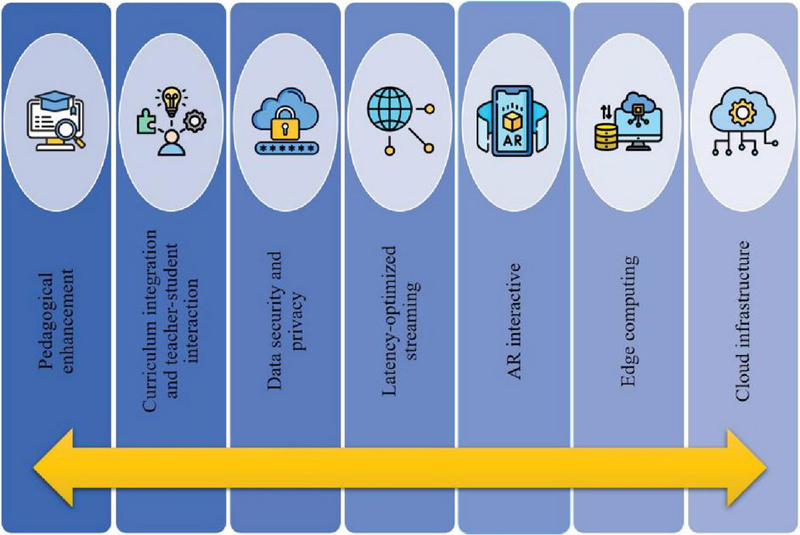
Figure 4 CARE framework.
The CARE framework has a technological dimension that addresses content-delivery problems through its latency-optimized streaming tier, which applies caching and adaptive streaming principles. The data security and privacy tier ensures the secure transmission of sensitive educational information through end-to-end encryption and blockchain certification. The higher levels address interaction challenges. The teaching and interaction levels help teachers develop learning materials that incorporate AR. The learning enhancement level provides academic support services through learning analytics and gamification features. The CARE framework levels are combined seamlessly to provide learners with a secure and engaging learning environment. The levels also offer support in designing learning materials on the concept of AR.
6 Challenges and Solutions
The use of cloud-based AR technology in the learning environment has received increasing attention due to its ability to provide unique learning experiences. However, the rollout of these technologies presents various challenges that require careful study and remediation.
6.1 Technical Challenges
Investigating the technological challenges involved in integrating cloud-based AR applications into the remote learning environment will be vital to ensuring learning effectiveness. The real-time functionality of the AR application requires a reliable internet connection to provide connectivity between the system’s virtual components and the learning context. This can occur when data transmission is delayed, disrupting synchronization between the AR application and the learning environment. The internet connection can cause latency due to limited bandwidth.
The storage and distribution of confidential educational information through cloud-based AR applications pose various security and privacy risks. In circumstances involving unauthorized access to educational information stored in cloud computing applications and fraudulent attacks on such information, security risks to confidentiality, integrity, and availability arise. Pre-distribution encryption of educational information is fundamental to protecting its privacy before it is stored and distributed through cloud computing applications. User approval is also a significant factor involved in the above measure.
The heterogeneous devices used to access AR content also create compatibility challenges in the remote learning environment. This might be due to differences in the devices’ technological requirements. In this case, the development of compatible AR applications will create opportunities to ensure learners have high-level access to AR content. Additionally, the development of AR applications will enable recommendations for selecting compatible devices to access AR content.
6.2 Pedagogical Challenges
To properly integrate cloud-based AR technology into the distance learning environment, both technological and educational considerations must be taken into account. The addition of AR support to the learning curriculum requires evaluating the learning objectives to ensure they are appropriate for the AR experience. The opportunities in the learning field where incorporating an AR experience can improve learning objectives should be systematically explored.
Equipping educators with the skills and knowledge needed to implement AR in the learning environment will be vital to the technology’s success. The educators may not be accustomed to the AR technology used on the learning platform and will therefore require adequate training. The needed topics will focus on the basic principles of the AR technology used in teaching and learning. Additionally, the new teaching skills will be required to empower educators in developing learning sessions using AR technology.
Evaluating the effect of AR-based learning experiences on learning outcomes poses its own challenges, which must be addressed through the development of innovative evaluation methods for this form of learning. The classical approach to evaluating learning may fail to capture the depth of learning in the AR learning environment. This type of learning involves learners’ active exploration and problem-solving skills. The teacher must develop tasks to evaluate the learner’s knowledge level through interaction in the AR learning environment. The application of analytics software can help evaluate learners’ performance in the AR learning environment.
6.3 Future Research Directions
Future trends and innovations of cloud-based AR applications in distant learning will also affect the field of education. The fusion of machine learning and AI in AR offers immense potential for adaptive learning. AI-based AR applications can serve as adaptive learning platforms, adjusting to learners’ learning behavior through speed and difficulty levels. The AI-based recommendation system can suggest learning materials in AR applications based on the learner’s learning patterns. Future applications of AR in distance learning might focus on “social learning,” enabling various users to interact within a community learning environment. This will be possible through multi-user platforms that offer simultaneous collaboration. The development of avatars and improved chatting options in the platform will also promote community engagement.
AR can revolutionize the evaluation and feedback process through immersive learning tasks. Future-oriented evaluations using AR can allow simulation tasks, quiz options, and scenario assessments that reflect real-life situations. Moreover, the AR feedback option can be combined with electronic commenting and coaching levels to benefit the learner. As the use of AR increases in the educational environment, there is a need to address its various implications from the perspectives of ethics, culture, and society. Issues of accessibility to AR tools, the digital divide, and the need to support diversity in AR representation must be addressed. Students’ rights to privacy in AR-enabled learning environments must also be upheld.
The availability of smartphones that support AR will boost the development of mobile AR applications for remote learning. Such applications allow users to access AR learning materials from anywhere, making it quite convenient and flexible. The mobile AR platforms will also allow group learning sessions for learners in different locations. Cloud AR provides real-time language translation and cultural immersion for distant students. Language apps that can identify and interpret various languages using AR can interpret written and oral texts in real time and provide learning materials in different languages. Immersion in culture using AR can aid in the study of replicas of historical sites and artifacts.
The integration of blockchain solutions and cloud-based AR applications can enable secure credentialing and authentication of educational credentials and qualifications. The use of blockchain credentials provides secure, tamper-proof documentation of learners’ accomplishments by storing and verifying credentials in decentralized credential verification systems. The adoption of blockchain credentialing allows remote learning platforms to ensure authenticity and transparency in verifying learners’ skills and competencies. As the volume of data generated and handled through cloud-based AR platforms increases in the coming years, protecting data privacy and security will become paramount. Future AR platforms will utilize advanced encryption methods and data anonymization algorithms to protect learners’ sensitive data from unauthorized access and use. This will be complemented by storing learner data across distributed nodes through federated learning.
7 Conclusion
This study explored the incorporation of cloud-computing-driven AR into remote learning and its potential to revolutionize learning through immersive technologies. The survey article has been valuable in providing a clear understanding of the concepts surrounding cloud computing and AR in learning. The study has been beneficial in highlighting the various technological issues arising from integrating cloud computing and AR in learning. Some of the technological challenges reported by the study include network latency, security issues related to the cloud computing architecture, and the ability of various learning devices to connect to the cloud computing platform. The study has also been informative in highlighting the various learning challenges involved in integrating cloud computing and AR into learning. This has been vital for highlighting the complexities involved with implementing cloud computing and AR in the learning environment. As the fields of cloud computing and AR in learning continue to grow and develop, various trends and challenges must be addressed. This helps develop cloud computing and AR technologies in the field of learning.
References
[1] J. Yang, “The impact of Industry 4.0 on the world of work and the call for educational reform,” in The frontier of education reform and development in China: Articles from educational research: Springer, 2023, pp. 285–298.
[2] N. Imjai, S. Aujirapongpan, and Z. Yaacob, “Impact of logical thinking skills and digital literacy on Thailand’s generation Z accounting students’ internship effectiveness: Role of self-learning capability,” International Journal of Educational Research Open, vol. 6, p. 100329, 2024.
[3] W. Park, J.-Y. Wu, and S. Erduran, “The nature of STEM disciplines in the science education standards documents from the USA, Korea and Taiwan: Focusing on disciplinary aims, values and practices,” Science & Education, vol. 29, no. 4, pp. 899–927, 2020.
[4] C. Tang, S. Mao, S. E. Naumann, and Z. Xing, “Improving student creativity through digital technology products: A literature review,” Thinking Skills and Creativity, vol. 44, p. 101032, 2022.
[5] N. Pellas, S. Mystakidis, and I. Kazanidis, “Immersive Virtual Reality in K-12 and Higher Education: A systematic review of the last decade scientific literature,” Virtual Reality, vol. 25, no. 3, pp. 835–861, 2021.
[6] P. Kumar et al., “Using empirical science education in schools to improve climate change literacy,” Renewable and Sustainable Energy Reviews, vol. 178, p. 113232, 2023.
[7] N. Kerimbayev, Z. Umirzakova, R. Shadiev, and V. Jotsov, “A student-centered approach using modern technologies in distance learning: a systematic review of the literature,” Smart Learning Environments, vol. 10, no. 1, p. 61, 2023.
[8] M. Pathania, A. Mantri, D. P. Kaur, C. P. Singh, and B. Sharma, “A chronological literature review of different augmented reality approaches in education,” Technology, Knowledge and Learning, vol. 28, no. 1, pp. 329–346, 2023.
[9] S. Dargan, S. Bansal, M. Kumar, A. Mittal, and K. Kumar, “Augmented reality: A comprehensive review,” Archives of Computational Methods in Engineering, vol. 30, no. 2, pp. 1057–1080, 2023.
[10] D. Kamińska et al., “Augmented reality: Current and new trends in education,” Electronics, vol. 12, no. 16, p. 3531, 2023.
[11] Y. Yin, P. Zheng, C. Li, and L. Wang, “A state-of-the-art survey on Augmented Reality-assisted Digital Twin for futuristic human-centric industry transformation,” Robotics and Computer-Integrated Manufacturing, vol. 81, p. 102515, 2023.
[12] K. Carr and R. England, Simulated and virtual realities: Elements of perception. CRC Press, 2023.
[13] M. Li and L. Liu, “Students’ perceptions of augmented reality integrated into a mobile learning environment,” Library Hi Tech, vol. 41, no. 5, pp. 1498–1523, 2023.
[14] X. Wang, S. K. Ong, and A. Y. Nee, “A comprehensive survey of augmented reality assembly research,” Advances in Manufacturing, vol. 4, no. 1, pp. 1–22, 2016.
[15] D. Turnbull, R. Chugh, and J. Luck, “Transitioning to E-Learning during the COVID-19 pandemic: How have Higher Education Institutions responded to the challenge?,” Education and Information Technologies, vol. 26, no. 5, pp. 6401–6419, 2021.
[16] F. Kamalov, B. Pourghebleh, M. Gheisari, Y. Liu, and S. Moussa, “Internet of medical things privacy and security: Challenges, solutions, and future trends from a new perspective,” Sustainability, vol. 15, no. 4, p. 3317, 2023.
[17] M. A. Camilleri and A. C. Camilleri, “The acceptance of learning management systems and video conferencing technologies: Lessons learned from COVID-19,” Technology, Knowledge and Learning, vol. 27, no. 4, pp. 1311–1333, 2022.
[18] M. Garlinska, M. Osial, K. Proniewska, and A. Pregowska, “The influence of emerging technologies on distance education,” Electronics, vol. 12, no. 7, p. 1550, 2023.
[19] M. J. Sosa Díaz, “Emergency remote education, family support and the digital divide in the context of the COVID-19 lockdown,” International Journal of Environmental Research and Public Health, vol. 18, no. 15, p. 7956, 2021.
[20] B. Kitchenham, O. P. Brereton, D. Budgen, M. Turner, J. Bailey, and S. Linkman, “Systematic literature reviews in software engineering–a systematic literature review,” Information and software technology, vol. 51, no. 1, pp. 7–15, 2009.
[21] B. Pourghebleh, A. Aghaei Anvigh, A. R. Ramtin, and B. Mohammadi, “The importance of nature-inspired meta-heuristic algorithms for solving virtual machine consolidation problem in cloud environments,” Cluster Computing, vol. 24, no. 3, pp. 2673–2696, 2021, doi: https://doi.org/10.1007/s10586-021-03294-4.
[22] V. Hayyolalam, B. Pourghebleh, M. R. Chehrehzad, and A. A. Pourhaji Kazem, “Single-objective service composition methods in cloud manufacturing systems: Recent techniques, classification, and future trends,” Concurrency and Computation: Practice and Experience, vol. 34, no. 5, p. e6698, 2022, doi: https://doi.org/10.1002/cpe.6698.
[23] V. Hayyolalam, B. Pourghebleh, A. A. Pourhaji Kazem, and A. Ghaffari, “Exploring the state-of-the-art service composition approaches in cloud manufacturing systems to enhance upcoming techniques,” The international journal of advanced manufacturing technology, vol. 105, no. 1, pp. 471–498, 2019, doi: https://doi.org/10.1007/s00170-019-04213-z.
[24] H.-K. Wu, S. W.-Y. Lee, H.-Y. Chang, and J.-C. Liang, “Current status, opportunities and challenges of augmented reality in education,” Computers & education, vol. 62, pp. 41–49, 2013.
[25] W. Barfield and T. Caudell, “Basic concepts in wearable computers and augmented reality,” in Fundamentals of wearable computers and augmented reality: CRC Press, 2001, pp. 19–42.
[26] M. A. Cidota and D. Datcu, “Remote Assistance System in Augmented Reality for Early School Dropout Prevention,” in 2020 IEEE International Symposium on Mixed and Augmented Reality Adjunct (ISMAR-Adjunct), 2020: IEEE, pp. 321–325.
[27] F. Essa, K. Jambi, A. Fattouh, H. Al-Barhamtoshy, M. Khemakhem, and A. Al-Ghamdi, “A fedearted e-learning cloud system based on mixed reality,” in 2016 IEEE/ACS 13th International Conference of Computer Systems and Applications (AICCSA), 2016: IEEE, pp. 1–5.
[28] N. Sandu, E. Gide, and S. Karim, “Improving learning through cloud-based mobile technologies and virtual and augmented reality for australian higher education,” in Proceedings of the 2019 International Conference on Mathematics, Science and Technology Teaching and Learning, 2019, pp. 1–5.
[29] I. J. X. Ang and K. H. Lim, “Enhancing STEM education using augmented reality and machine learning,” in 2019 7th International Conference on Smart Computing & Communications (ICSCC), 2019: IEEE, pp. 1–5.
[30] Y. Liu, V. Sathishkumar, and A. Manickam, “Augmented reality technology based on school physical education training,” Computers and Electrical Engineering, vol. 99, p. 107807, 2022.
[31] O. S. Neffati et al., “An educational tool for enhanced mobile e-Learning for technical higher education using mobile devices for augmented reality,” Microprocessors and Microsystems, vol. 83, p. 104030, 2021.
Biography

Zhongxia Liu was born in Nanyang, Henan, P.R. China, in 1982. She received her Ph.D. from Philippine Christian University, Philippines. Currently, she works in Modern Education Technology Center, Pingdingshan University. Her research interest includes education and computing.
Journal of ICT Standardization, Vol. 13_4, 405–426
doi: 10.13052/jicts2245-800X.1343
© 2025 River Publishers