Access Denied: Ignorance of Web Accessibility Standards by Dutch Business
Dante Göbbels1,*, Robert M. van Wessel2 and Henk J. de Vries2, 3
1Department of Industrial Engineering and Innovation Sciences, TU Eindhoven, Eindhoven, The Netherlands
2Department of Technology and Operations Management, Erasmus University, Rotterdam, The Netherlands
3Department of Values, Technology and Innovation, Faculty of Technology, Policy and Management, Delft University of Technology, Delft, The Netherlands
E-mail: d.b.gobbels@tue.nl
*Corresponding Author
Received 22 May 2025; Accepted 08 December 2025
Abstract
The Web Content Accessibility Guidelines (WCAG) facilitate equal accessibility to websites for people with impairments. However, the adoption of this standard remains low, leaving much of the web inaccessible to millions of users with an impairment. This paper seeks to understand why this standard has had limited impact. As the European Accessibility Act required businesses to have accessible websites from June 2025 there is growing pressure to make improvements. Moving beyond the technical evaluations that dominated past research, this study looks through a standardisation lens at likely reasons for the private sectors’ limited use of the web accessibility standard. We compare accessibility differences per industry quantitatively. We then go back to the literature and look at government practices to identify solutions for web accessibility barriers. This allows us to provide a new perspective on how web accessibility can be improved. Our findings identify two main obstacles: a lack of awareness of the WCAG standard, and difficulties in understanding and implementing it. Implementation is hindered by a shortage of developers with accessibility expertise, and by the absence of sanctions for non-compliance. To conclude, the new law first needs to tackle the barriers to web accessibility and introduce a reasonable risk on sanctions as impetus for change.
Keywords: Web accessibility, standards, human–computer interaction, WCAG, government policy.
1 Introduction
The internet has become an essential part of our daily lives. Websites are essential to retrieve information, connect with others, scan for job opportunities, conduct business, and access financial services such as banking. However, millions of people worldwide have an impairment that changes their ability to navigate websites, interpret multimedia content, or interact with online tools.
While people increasingly dependent on websites, they differ in how they use a website. For example, the technology’s visual nature is especially challenging for people with visual impairments or low vision. They may need assistive technologies to browse the web [1]. A standard was developed to allow people with various abilities, who may use assistive technologies, to have equal access to the to the information, multimedia content, and services on websites: the Web Content Accessibility Guidelines (WCAG) [63, 87, 88]. The first WCAG version arrived in 1999 and was followed by WCAG 2.0 in 2008 [82, 88]. This would be the official standard for website accessibility after its implementation by ISO and various governments (e.g., [28, 68]). Nevertheless, nearly fifteen years later, and with several revised versions of the WCAG, a large study showed that most websites remain inaccessible to many: 96.8% do not offer full accessibility in compliance with the WCAG 2.0 standard [11].
Previous studies on web accessibility have examined the status and limitations of current standards and evaluation methods (e.g. [15, 44, 54]). Most of the studies focused on the public sector as these organisations typically need to comply with accessibility regulations ([96] is an exception). However, with the increasing focus of accessibility regulations on the private sector, more research is needed to guide successful implementation of web accessibility for the private sector. Although formally there were no requirements for the private sector to work on web accessibility, it is surprising that minimal progress was made despite the growing importance of accessible websites as the internet-accustomed population in Western countries is ageing rapidly. For instance, by 2050, it is expected that 30% of the EU population will be older than 65 [53]. With the enforcement of the European Accessibility Act in June 2025, the urgency for the private sector to improve their limited web accessibility has risen even more.
In digitalisation, the Netherlands is one of the leading EU member states. This country shows a high proficiency of digital skills, and many facets of daily life are offered as online services [17, 19]. These services range from banking to applying for a new passport, and sometimes the online service is the only option available. Despite this, accessibility remains an issue. Therefore, we examine the state of accessibility in this country, across different sectors. First, we differentiate between the public and private sector as rules for web accessibility have already been mandatory for public sector organisations. Secondly, we look at industry classifications to determine if the implementation of the web accessibility standard differs across industries. This is important to study as previous literature frequently focused on small samples within a specific category (e.g., 50 websites of universities), and the level of awareness and implementation of web accessibility likely differs per sector.
This research analyses the adoption of accessibility measures, the factors influencing compliance, and the barriers to improving digital accessibility. Focusing on the private sector allows exploring the voluntary adoption of accessibility standards, and why the digital divide persists despite the WCAG. While the public sector is legally bound to follow guidelines, the private sector’s less-regulated approach makes it more relevant for understanding accessibility issues and gaps. Therefore, this research aims to answer: How accessible are the websites of private sector organisations? and Why does the digital divide still exist when there is a standard for web accessibility?
We can make use of a dataset from Web Accessibility In Mind (WebAIM). It focuses on the desktop experience; the mobile experience is excluded. We want to understand how internet users experience the web across different website categories in their daily lives. The focus is thus on the desktop/laptop computer user’s accessibility experience, rather than the development process. First, many studies have been conducted on the development process. However, the low levels of adoption might suggest that problems occur much earlier and there is not enough awareness of the issue. Secondly, the standard and testing tools have been developed for the computer user first, and the perspective of the mobile user has appeared later. Therefore, organisations have had less time to ensure mobile web accessibility. Moreover, desktop and laptop platforms remain critical access points for users with certain disabilities who rely on assistive technologies (e.g., alternative input devices) that are often more robust and configurable on non-mobile systems. Lastly, the variety of operating systems and screen sizes for mobile devices complicates the assessment of the accessibility standard; excluding mobile devices to focus on the computer users experience allows for more consistent testing of parameters.
This paper contributes to the body of knowledge in two ways. First, we argue for a more systematic approach to improving private website accessibility through a standardisation perspective. Second, we explore barriers to web accessibility and suggest potential solutions.
2 Setting the Scene
This section explores key aspects of web accessibility. It defines web accessibility, describes the standard for web accessibility, and addresses how compliance is verified. It also identifies barriers to compliance in the Netherlands and suggests potential solutions for the identified barriers.
2.1 Web Accessibility
Web accessibility is achieved when “all people, particularly disabled and older people, can use websites in a range of contexts of use, including mainstream and assistive technologies” [63]. Slatin and Rush [73] defined web accessibility as “people with some impairment can use it with the same effectiveness as non-disabled people”. From these definitions, we conclude that: all people should be able to use websites in a range of contexts of use, if needed with assistive technologies, with the same effectiveness.
Accessibility challenges, whether permanent or temporary, come from a disability or limiting factor. Disabilities encompass speech, cognitive, auditory, physical, and visual impairments [69]. Limiting factors are (1) language barriers, (2) lack of ability, and (3) situational limitations [8, 84]. Situationally induced impairments and disabilities come from the circumstances, environment, or device [72, 79]. The severity can vary depending on the location (e.g., being in a rural area with poor internet connection), and in duration (e.g., unable to afford a high-speed connection) [79, 90].
2.2 The Standard for Web Accessibility
Web accessibility is defined by first-wave inclusion, minimum functionalities such as the ability to obtain and enter information, and second-wave inclusion, which focuses on accessibility-in-use (i.e., how the interaction is perceived) [77, 83]. The primary standard, the Web Content Accessibility Guidelines (WCAG), began with WCAG 1.0 in 1999, marking the first wave of inclusion standards [88, 77]. WCAG 2.0, released in 2008, aligns with the second-wave inclusion and adopts a more technology-neutral approach [77, 82]. However, it faced criticism for being less specific, making it harder for smaller companies to interpret as it shifted from a design-based (WCAG 1.0) to a performance-based standard (WCAG 2.0) [22, 57, 82, 94]. Design standards provide clarity and ease of assessment by having prescribed a specific method, while performance standards offer flexibility and often lead to better outcomes by focusing on the results rather than the means [57].
The WCAG 2.0 standard includes 13 guidelines based on four principles: perceivable, operable, understandable, and robust [21, 80]. Success criteria are categorised into three levels of conformance: A (least strict), AA, and AAA (most strict) [81]. Perceivable refers to whether the information and user interface are interpretable for all users. Requirements include providing text alternatives for non-text content, captions for multimedia, and ensuring content remains understandable across different technologies, including assistive devices, without losing meaning. Operable relates to having navigation and interface components that are usable with a keyboard only, provide enough time to read a text, and avoid content that might trigger seizures. Understandable is when the information and use of the interface are clear, and both its use and content are not beyond the user’s understanding [80]. Robust refers to content that is interpreted similarly by different users, including those who use assistive technologies.
The European Union used the WCAG 2.0 at AA level in 2016 in a mandatory procurement law for government agencies and organisations receiving government funding to comply with the European standard EN 301 549 [28, 96]. This was followed by the Web and Mobile Accessibility Directive, which requires public sector websites (enforced from 2018) and mobile apps (enforced from 2021) to be accessible according to the standard [28, 96].
WCAG 2.1 added 17 criteria for mobile accessibility, addressing the needs of people with limited vision, as well as those with cognitive and learning disabilities [97]. More recently, the European Accessibility Act (EAA) was introduced to harmonise existing laws across EU countries, and it makes use of WCAG 2.1 [34]. By 2025, private and public organisations must ensure their apps and websites comply with WCAG, with an exemption for micro-enterprises with ten or fewer employees and a turnover below 2 million [29, 30]. WCAG 2.2 was released in 2021 to extend the number of means by which one can conform with the previous standards and is upward-compatible with WCAG 2.0 and 2.1 [92]. WCAG 3.0 is still a working draft; it attempts to be even more technology neutral and will be much more comprehensive, as the guidelines will cover accessibility of web content on desktops, laptops, and mobile devices, and adds accessibility for Internet of Things devices. Moreover, the guidelines extent to more types of web content such as static, dynamic, interactive, streaming content, visual and auditory media, virtual and augmented reality, and other alternative means of presentation and control, and will address web tools such as user agents (for the browser and assistive technologies), content management systems (e.g., WordPress), authoring tools for creating web content, and web accessibility testing tools [93].
2.3 Conformity Assessment
Web accessibility comprises (1) the content on a website (including the code, structure, text, and images or other media), (2) the web browser, media player, or assistive device that is used to access the resource, (3) the users’ experience and knowledge, and sometimes adaptive strategies to use the internet, (4) the developers (e.g., programmers, designers, and authors), (5) authoring tools (software to build websites like WordPress), and (6) evaluation tools (used to assess a website’s accessibility) [45].
WCAG compliance can be tested with three types of method: (1) automatic, (2) manual, and (3) semi-automatic [2]. The WCAG’s main limitations relate to validity and conformance assessments. Validity refers to how accurately the measurements represent the website’s accessibility for disabled users [76]. While parts of the guidelines can be tested automatically, the validity of WCAG 2.0 tests is low, as only 32% of accessibility problems were identified [70].
Thus far, automatic evaluation tools cannot check all the requirements (e.g., [7]). Nonetheless, they are useful for developers during website development. Manual assessments, whether by experts or users, present challenges. Roughly half of the success criteria of the WCAG 2.0 fail to meet the 80% agreement threshold; “experts produce 20% false positives and miss 32% of the true problems” [14]. Moreover, user and expert testing is expensive [10, 48]. Semi-automatic evaluations combine automatic and human assessment of web accessibility, in which human judgment is needed to check potential issues (e.g., checking code fragments to see whether their purpose matches the content) [2]. This is the most common method, as some aspects require manual verification. An example from WCAG 2.0 is “making the text easier to read” [2].
Challenges from automated and human evaluators show how difficult it is to develop reliable and accurate heuristics of web accessibility [7, 14]. In practice, web developers need to rely on the WCAG standard as even in large projects it is not feasible to include people with a representative diversity of impairments and digital skills [77]. Thus, conformance to the standard can provide a solid foundation that covers the main technical aspects [77]. At the same time, expectations need to be managed as compliance does not lead to good results in every case [77].
Only limited support is available for organisations to implement accessibility standards [20]. The code for interactive websites is complex and ever-changing, and guidelines must be updated time and again [26]. To make websites more accessible for users, artificial intelligence (AI) could provide help as a digital assistant, for instance Google Assistant or Apple Siri [20, 58]. While this helps users navigate the webpage, lasting accessibility improvements require a developer to implement the necessary changes [58]. To make a website permanently more accessible, AI can utilise image recognition and natural language processing through a visual appraisal system that checks the WCAG criteria, which evaluates of web accessibility more like the experience of a human [26]. Lastly, as developers are working with large language models such as Chat-GPT, AI can also improve the awareness of web accessibility and help with coding by suggesting code changes [3].
2.4 Web Accessibility Barriers
The foregoing shows that the implementation of web accessibility standards is not self- evident. This applies to many other standards as well. In particular, small and medium-sized enterprises (SMEs) do not reap the benefits or are hindered by standards [25]. SMEs may face a sequence of barriers to benefit from standards, including (ibid):
• Awareness of the existence of standards
• Awareness of the importance of standards for their own company
• Tracing standards
• Obtaining standards
• Understanding standards
• Implementing standards
• Evaluating the implementation of standards.
In the WCAG case, challenges may arise from a lack of awareness of the standard, its benefits, and understanding of its implementation. W3C tries to persuade organisations to adopt the standard by informing them about the potential benefits of conforming to the standard it: (1) makes web content more usable for all users, (2) stimulates innovation, (3) improves the brand image, (4) allows for a larger potential market, and (5) minimises legal risk [71, 86]. Because there is only one dominant web accessibility standard, this leaves little doubt about which standard to use. Moreover, the standard can be easily obtained online and is free of charge.
The WCAG is difficult to understand for some web developers [23, 67]. Furthermore, the standard’s comprehensiveness and the vast number of web pages and elements on some websites make implementation challenging. Hence, the main obstacles to the WCAG standard are the following: (a) awareness of the standard, (b) awareness of the importance of the standard for the company, (c) understanding the standard, and lastly, (d) implementing the standard. While evaluation is challenging as well, it is currently not one of the main obstacles, as there are many tools with varying capabilities that support web accessibility improvements.
2.5 Proposed Solutions
Many solutions to mitigate or remove obstacles to standards use are available [25]. First, a fundamental obstacle is that many companies seem unaware of accessibility standards like WCAG and their potential benefits. Since most standards are voluntary, highlighting the benefits of conforming is essential to persuade organisations to follow them [24]. The lack of awareness extends to future developers; Aquino found that while most computer science students know of web accessibility, only about one-third are familiar with WCAG guidelines [6]. This underscores the need for education and training. Possible solutions include teaching information sciences students about the benefits of web accessibility and training them to use the WCAG [16]. Furthermore, organisations hiring web developers should be informed of applicable policies or laws, alongside compelling statistics on the negative consequences of website inaccessibility for their organisation [25, 51].
Secondly, the standard itself may cause implementation difficulties, due to (1) its technical content, (2) the technical language, (3) lack of version in the national language, (4) references to other standards, (5) insufficient information to show how the new version of the standard differs from the previous, and (6) insufficient information explaining the context of the standard [25]. Technical language is problematic for the WCAG [61], as the status of guideline versions is ambiguous. For example, candidate recommendation, group note, proposed edited recommendation, proposed recommendation, recommendation, working draft, and retired when the standard is withdrawn [67]. Also, distinguishing between normative and non-normative requirements can be difficult [23]. Lastly, there are complaints about outdated code examples and the addition of new criteria without updating prior ones [67]. As official translations of the WCAG are missing for many languages, unofficial translations are provided [91]. Out of the 14 official translations, 12 are in European languages (the other two are Brazilian Portuguese and Mandarin).
Lastly, there might be organisational limitations that impede implementation of the standard such as lack of knowledge and skills to understand the standard, financial constraints, lack of web developers’ time, knowledge and skills, and insufficient managerial and client support [9, 25, 51]. Potential solutions include education, training, and assistance to implement the standard [25, 61]. Table 1 lists some solutions.
Table 1
| Problem Stage | Proposed Solution |
| Awareness (communication) | A leaflet from the Chamber of Commerce for all registered companies about web accessibility and the WCAG, explaining the regulations and providing statistics on the impact of inaccessible websites on companies and users [25, 51]. |
| Awareness (education) | Students studying IT or related studies receive training to use the WCAG and education on the benefits of web accessibility for organisations [16, 25]. |
| Understanding (assistance) | Government funding for the standardisation organisation that developed the WCAG to translate the new official version into the national language and test its user-friendliness with a representative variety of stakeholders [25]. |
| Implementation (training) | Government cooperation with the national standardisation organisation or other private organisations to provide webinars to train web developers to use the WCAG [25, 61]. |
3 Method
3.1 Empirical Setting and Sample
Despite the existence of newer versions of WCAG and the prevalence of mobile devices, we focus on WCAG 2.0 compliance from a computer user’s perspective for several reasons. First, understanding the barriers to adopting WCAG 2.0 is fundamental. Its adoption rate is alarmingly low, and later versions of WCAG are assumed to have even lower compliance rates, especially for the private sector. Secondly, the WCAG has traditionally been a desktop-centric standard, which changed after version 2.1. In our case country, the Netherlands, the standard version mentioned in the Dutch law for digital accessibility is 2.1. It applies to governmental organisations (national, provincial, municipal, and water authorities) and the (semi) public sector since June 2021 [89, 60]. Nonetheless, automated testing tools for mobile are a much more recent development, and the mobile-specific criteria of 2.1 or 2.2 have not been in use for long, which makes it harder to study. Therefore, by concentrating on WCAG 2.0 from a computer user’s perspective, this study aims to diagnose the most fundamental and widespread accessibility barriers within the private sector, providing insights into why even an established standard falls short, irrespective of device type or the nuances of later versions.
We use a country case to evaluate to what degree a nation can overcome the hurdles of implementing web accessibility standards. A case study allows us to go more in-depth [62]. The Netherlands was selected partly for the pragmatic reason that the researchers understand the Dutch system and language. This was needed to classify websites manually as belonging to the private or public sector. Additionally, not all EU countries provide information on web accessibility in English. This makes it difficult to study their implementation of the web accessibility standard. The Netherlands has a high degree of digitalisation, and online governmental services are frequently used (internet users as a percentage of all users 92% vs. 65% for the EU) [32]. Web accessibility in the Netherlands seems to be better than in most other European countries [31, 55]. Furthermore, the Netherlands is one of the countries with the most accessibility statements on government websites and has taken the extra step to require improvement plans [27, 31]. Nevertheless, over two million (out of 18 million) people in the Netherlands face accessibility issues [95].
The sample for our study is provided by WebAIM, a non-profit organisation from the Institute for Disability Research, Policy, and Practice at Utah State University [11]. Their “WebAIM Million 2022” report evaluates the accessibility of the homepage of one million websites worldwide [11]. They selected websites based on the page rank and the number of visitors according to three sources: the Majestic Millions list, Alexa Top one million websites, and the DomCop top ten million domains [11]. Out of these, we selected six categories of frequently visited websites: news/weather/information, careers, personal finance, education, law, government, and politics, and arts and entertainment. Websites were excluded from the WebAIM sample if (1) evaluation with the automatic testing tool is not possible as they only have a login screen, or (2) the site has fewer than the minimum of 10 elements for starting the web accessibility analysis [11]. The data from the WAVE testing tool for web accessibility was extended with additional tools to get sector parameters [11]. Moreover, because the total number of .us domains in the dataset was below 5000 and the U.S. is a key country to include, the Whois library was used to identify .com, .net, and .org domains registered in the U.S. using a Python script [74].
Additionally, we analysed Canada and the United Kingdom (UK), the two leading countries in web accessibility, for insights into government policy and strategy to support compliance with web accessibility regulations and standards.
3.2 Data Collection and Procedures
We used the “WebAIM Million 2022” dataset to investigate web accessibility worldwide. Websites are ranked based on their accessibility ranking in comparison to other websites (n 1 million). We also explored other variables, such as the top-level domains (TLDs), to identify the best-performing countries, and used six IAB industry categories to compare the accessibility of various sectors. See Figure 1 for an overview of the process. Subsequently, we repeated this process for the Netherlands by selecting all websites with a .nl TLD. Other TLDs with Dutch as the specified language were excluded because Dutch is also used outside the Netherlands (i.e., the Flanders region in Belgium, Suriname, and the Dutch Caribbean).
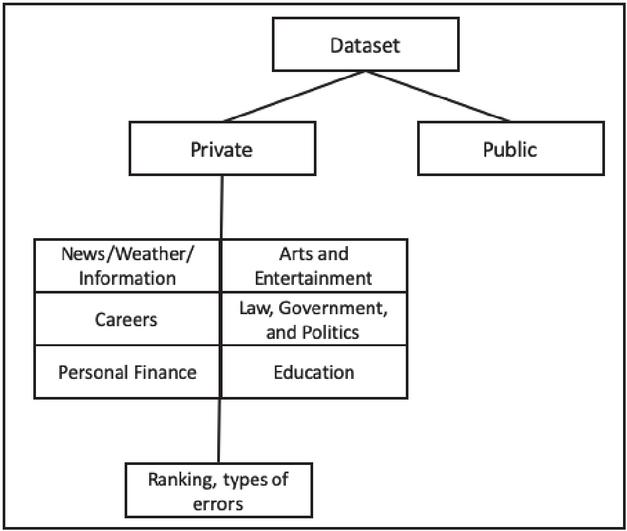
Figure 1 Overview of the data collection process.
Figure 1 provides an overview of the procedures that were taken to obtain a sample of private sector websites in the Netherlands. First, each website URL was classified as belonging to the private or public sector. Second, websites from the selected categories were used, and from this subset we looked at the most common WCAG errors.
3.3 Measures
Public or private sector: The Dutch law on digital accessibility applies to regulatory organisations (national, provincial, municipalities, and water authorities) and the (semi) public sector [89]. Therefore, we distinguish between the public sector (required by law to be accessible) and the private sector (encouraged but not obliged to conform to the standard). Some URLs are known to belong to the private sector (e.g., facebook.nl) or public organisations like GGD (the Dutch municipal health service). When in doubt, we marked the entry and visited the URL. The distinction between public and private organisations is based on the legal form, financing, purpose, authority, and accountability (see Table 2, based on [13], p. 343). If any of the above were unclear, we checked the companies’ annual reportsto verify funding.
Table 2 The distinction between the public and private sectors [13]
| Public | Private | |
| Legal form | Public legal entities established by law or regulation. | Association, foundation, public limited company, or private limited company. |
| Financing | Funds from public sources such as taxation or subsidies. | Based on voluntary contributions, donations, or through the market. |
| Purpose | General interest. | Specific interest or profit. |
| Authority | Vertical authority with powers, including the ability to exert coercion or issue orders. | Horizontal authority, where goals are achieved through negotiations, agreements, and contracts. |
| Accountability | Public organisations are accountable to the political sphere, including the government, parliament, voters, and media. | Private organisations are accountable behind closed doors to e.g., a general assembly of members, a board of directors, or shareholders. |
Table 2 summarizes how each URL was classified as belonging to the private or public sector.
IAB content taxonomy categories: The concept of disability has evolved from being viewed as an individual limitation to a societal issue that can be addressed by designing an inclusive environment where individuals of all abilities can participate equally [36]. To examine web accessibility in the private sector, we utilised a dataset categorised into 26 main content taxonomy categories, obtained from the Webshrinker categorisation service [11]. These categories align with IAB industry standards, widely used in IT security and advertising [47]. We focused on six key categories: news/weather/information, careers, personal finance, education, law, government, and politics, and arts and entertainment. Although these categories represent just 36.3% of the total IAM-homepage classification, they have the most substantial societal and economic impact on accessibility.
News/weather/information ensures that people with a disability can access essential updates, emergency alerts, and stay in touch with societal trends and topics of discussion. Careers covers employment opportunities and the digital barriers that can hinder workforce participation. Personal finance is critical as online banking and financial services are becoming the norm, and their accessibility is needed for financial independence. Education includes e-books and digital learning platforms, ensuring equitable access to knowledge and skill development. Law, government, and politics are vital for regulatory compliance and civic participation, as individuals must be able to engage with public services and policy information. Lastly, arts and entertainment allows for participation in cultural events alongside friends or family.
Other categories were excluded due to a lower bearing on inclusivity or lower regulatory emphasis, as rules prioritize inclusivity in education and the job market over other areas like fashion, real estate, and adult content. By prioritising these six categories, this study highlights the most impactful areas for improving digital accessibility in the private sector.
Web accessibility: For each web address, we use the WAVE testing tool to identify WCAG 2.0 web accessibility errors and alerts on the homepage [4]. This data provides three important variables: total errors (representing the overall number of errors detected), error density (score from 0–1, calculated as total errors divided by total elements of a homepage), and total alerts (reflecting the number of alerts, which notify potential WCAG violations). We compute the overall access rank based on a list of the total errors, error density, and total alerts, each sorted by accessibility. If there is a tie, the more popular website is ranked higher (see Equation (3.3) [85]).
| Access rank | ||
| (1) |
Country comparison: As the sampling methods for studies on web accessibility vary greatly in terms of the websites included and the countries included, a comparison across countries is not feasible. On top of that, the time when the studies were conducted, the version of the WCAG, and even the evaluation tools varied. The WebAIM dataset did provide a comparison of a large sample of countries and websites across different industries. We examine web accessibility policies and strategies of the two best-performing countries based on our dataset: Canada and the UK.
3.4 Analyses
First, we present descriptive statistics from the WebAIM Million 2022, focusing on common TLDs, country comparisons, and the characteristics of websites that tend to do well on accessibility. Secondly, we filter the data for the Netherlands and investigate the difference between the public and private sectors using Student t-test statistics for accessibility, errors, and popularity. Significance was set at . From the selection of private sector websites, we list the most and the least popular and accessible websites.
We present the average of total errors, the average of total elements, error density, frequencies of prevalent error types, website popularity, and the number of errors per IAB classification and their differences from the average for the whole dataset of the selection of private websites in the Netherlands. We perform statistical analyses using IBM SPSS Statistics for Windows, Version 27.0 (Armonk, NY: IBM Corp.).
We investigate the best-performing countries to discover how web accessibility can be improved. Finally, we examine government policy and strategy and investigate the literature for possible causes of problems, and their solutions.
4 Results
4.1 The WebAIM Million Dataset
We assessed the accessibility of popular websites using the WebAIM Million 2020 dataset and reported statistics and based on our analyses of a subset of the data [11]. On average, each homepage contained 50.8 errors and 955 elements. Users with disabilities encountered errors in approximately 5.3% of homepage elements, equating to one error in every 19 elements. As a result, it is not surprising that a high percentage (96.8%) of the homepages fail to comply with WCAG 2.0 standards. While the WAVE testing tool cannot detect all errors, it is presumed that the overall adherence to level A or AA standards is even lower. The most prevalent error types identified include low contrast text (83.9%), missing alternative text (55.4%), empty links (50.1%), missing form labels (46.1%), empty buttons (27.2%), and missing document language (the language that is used, e.g., English) (22.3%), see Figure 2. Furthermore, 96.5% of all errors were in these categories.
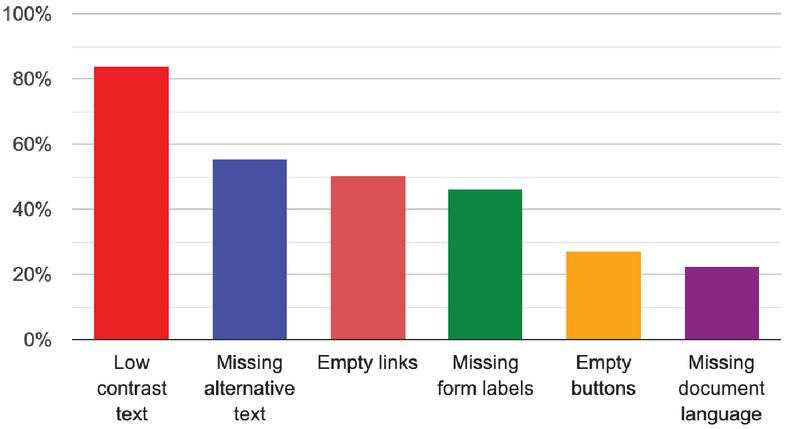
Figure 2 Most common WCAG errors on homepages [11].
The most common TLDs are .com (49.2%), .org (8.2%), and .net (4.2%). The .com domains score slightly above the average number of errors (1.1% errors), .org domains are generally more accessible (21.1% errors), and .net is slightly more accessible (10.1% errors).
The TLDs that perform the best for accessibility are .gov (0.6%) and .edu (1.4%). These websites showed the largest improvement in accessibility from the average (.gov: 58.0% errors and .edu: 40.7% errors). A comparison of the country code TLDs (with more than 5000 websites in the sample) shows that websites registered in Canada, the UK, and Australia are more accessible than the average homepage. This may be due to regulations in these countries. This will be investigated later in this paper. The worst performers are China, Russia, and Italy. Table 3 provides the statistics of the TLDs per country. The Netherlands performed slightly better than the average number of detected WCAG 2.0 errors. However, 47.4 errors on average are still a considerable barrier.
Table 3 Top-level domains of countries (n 5000) [11]
| Country Code | No. of | No. of Errors | |
| Country | Top-level Domain | Homepages (%) | (Difference From Average)* |
| Canada | .ca | 8269 (0.8) | 33.2 (34.8%) |
| United Kingdom | .uk | 25,867 (2.6) | 37.2 (26.8%) |
| Australia | .au | 9689 (1.0) | 51.4 (10.2%) |
| Japan | .jp | 15,663 (1.6) | 47.2 (7.2%) |
| the Netherlands | .nl | 7731 (0.8) | 47.4 (6.8%) |
| Germany | .de | 27,576 (2.8) | 48.6 (4.5%) |
| France | .fr | 9433 (0.9) | 49.4 (2.9%) |
| Brazil | .br | 5946 (0.6) | 55.4 (9.0%) |
| India | .in | 15,202 (1.5) | 60.6 (19.2%) |
| Poland | .pl | 6810 (0.7) | 60.6 (19.3%) |
| Italy | .it | 9810 (1.0) | 62.3 (22.6%) |
| Russia | .ru | 28,858 (2.9) | 73.0 (43.7%) |
| China | .cn | 6857 (0.7) | 78.7 (54.9%) |
| *The average number of errors per homepage is 50.8. | |||
The United States (.us) is missing in the data because the number of entries was below the cutoff value of 5000 websites. Also, .us is less popular than generic TLDs such as .com, .net, and .org [46]. Table 4 shows the most popular TLDs in the United States. Most websites with the .us domain are in use by federal and local government organisations [46]. The 4337 entries from .us show an average of 31.0 errors per homepage (39.0%).
Table 4 Accessibility of .com, .net, and .org websites registered in the US [11].
| Top-level Domain | No. of Homepages | No. of Errors (Difference from Average)* |
| .com | 9781 | 49.8 (2.0%) |
| .net | 553 | 66.9 (31.7%) |
| .org | 3498 | 42.7 (15.9%) |
| Total | 13,832 | 48.7 (4.1%) |
| *The average number of errors per homepage is 50. | ||
The homepages were also classified based on their IAB category (see Table 5). Categories are not mutually exclusive. For example, a career platform might also offer educational courses and would be classified under both categories. The category law, government, and politics performs the best (an improvement of 41.9% fewer errors in comparison to the average website). Websites in the news/weather/information category had the most errors on average (31.6% more errors).
Table 5 IAB classification from one million most popular websites [11]
| No. of | No. of Errors | |
| Category | Homepages (%) | (Difference from Average)* |
| Law, government, and politics | 30,570 (3.3) | 29.5 (41.9%) |
| Education | 58,032 (6.2) | 44.9 (11.6%) |
| Careers | 11,408 (1.2) | 49.8 (2.0%) |
| Personal finance | 31,452 (3.3) | 50.2 (1.2%) |
| Other1 | 689,188 (73.3) | 52.4 (1.6%) |
| Arts and entertainment | 45,883 (4.9) | 55.8 (9.7%) |
| News/weather/information | 73,153 (7.8) | 66.9 (31.6%) |
| *The average number of errors per homepage is 50.8. 1The other category includes twenty IAB categories: social media, science, technology and computing, society, business, food and drink, health and fitness, family and parenting, religion and spirituality, home and gardens, travel, pets, hobbies and interests, automotive, sports, style and fashion, real estate, shopping, and adult content. | ||
4.2 Benchmarking Countries
The two countries with the highest accessibility scores were selected as benchmarks. Canada is the forerunner in web accessibility and one of the first to develop web accessibility laws for the private sector. A 2018 standardised ICT skills questionnaire revealed that 91% of Canadians aged 15 or older had at least basic digital skills, compared to 57% in the EU, and 71% in the UK [32, 33, 78]. The UK ranks second in web accessibility and has also implemented indirect laws for the private sector. Although laws do not directly mandate the private sector to have web accessibility with a specified standard at a certain level, such as WCAG 2.1 at AA level, having an inaccessible website or app might result in a lawsuit. Furthermore, Canada and the UK are amongst the only countries at the time of this study to have implemented regulations that also target the private sector to improve their web accessibility.
Canada: In the province of Ontario, organisations with over 50 employees in the private or public sectors must ensure their websites comply with WCAG 2.0 at the AA level, according to the Accessibility for Ontarians with Disabilities Act [5]. Non-compliance can result in fines up to CAD50,000 per day for individuals, including negligent directors/officers, and up to CAD100,000 per day for corporations [59]. Similar legislation was passed in other provinces, including the Nova Scotia Act, which sets a timetable for compliance and provides grants to assist organisations [65, 66].
Inspired by provincial regulations, parliament introduced the Accessible Canada Act (ACA) in 2019 to guide the creation of accessible websites based on the WCAG. The ACA applies to federally regulated entities such as industry sectors (e.g., banking, telecommunications, and transportation), government agencies and departments, parliament, crown corporations (government-owned corporations), military and police, and First National band councils, an organisation advocating for indigenous peoples’ rights [38]. Failing to implement and maintain the guidelines can be penalised up to CAD250,000 [39].
Under the ACA, the Accessible Canada Regulations (ACR) were added to establish rules for organisations to follow in providing their accessibility plans, establishing feedback processes, and submitting progress reports. To ensure a barrier-free Canada by 2040, a five-year strategy was developed along four pillars (1) identify gaps in knowledge and data, and establish indicators, (2) promote standardised measurement, (3) expand and integrate data sources, and (4) data and knowledge mobilisation: increases awareness through infographics that display statistics on web accessibility’s importance [38].
Canada has an annual National AccessAbility Week, during which activities and events display the valuable contributions of people with disability to society, and the efforts of people who work to remove barriers in the physical and digital space [38]. Lastly, the government’s open-source Web Experience toolkit supports developers in implementing the web accessibility standard by providing accessible and mobile-friendly code components [49].
United Kingdom: In the UK, a key legislation for web accessibility is the Equality Act of 2010. The legislation obliges providers of goods and services, both public and private, not to discriminate against people based on age (with some exceptions, e.g. alcohol sales), gender reassignment, marital status, pregnancy or maternity leave, disability, race (including skin colour, nationality, and ethnicity), religion or belief, sex, and sexual orientation [42]. Organisations must make reasonable adjustments, depending on financial circumstances and other factors, so that disabled people can access the service [52]. This not only avoids discrimination but also anticipates the needs of potential disabled customers for reasonable adjustments [64]. Non-compliance with the Equality Act has not resulted in any court cases; however, websites that failed to comply have been taken up by the Royal National Institute of Blind People and settled out of court [64].
In 2018, the legislation on web accessibility was extended with the Accessibility Regulations [41]. Websites and apps from the public sector should display an accessibility statement and meet the WCAG 2.1 standard at level AA [41]. The Central Digital and Data Office (CCDO) checks conformance and can request information or demand access to web content [40]. Organisations with an inaccurate statement or without an accessibility statement are listed on the CCDO website [40]. Further enforcement of the law can be taken up by the Equality and Human Rights Commission, which can investigate the organisation and take legal action [40]. Lastly, despite Brexit, EU law remains relevant for all organisations that do business in the EU, as they are then required to comply with the European Accessibility Act.
4.3 Case Country: The Netherlands
The Netherlands’ top-level domain (.nl) is the 8th most popular globally, and the 4th among country code TLDs [75]. Large companies with 250 or more employees are more likely to have a website than micro-companies with 2–10 employees (98% vs. 76%), or people who are self-employed (34%) [18]. In 2022, the Netherlands had 2.2 million registered businesses, with 68.3% being self-employed professionals, 20.5% small and medium-sized enterprises (SMEs) with fewer than 250 employees1, 0.1% large companies, and 11.2% categorised as part-time businesses2 [50].
From the 7731 Dutch websites, we selected six IAB categories, resulting in 4133 entries. Given time constraints and the manual, resource-intensive process required to classify websites as public or private, 3597 websites were included in the review. Of these, 2758 (76.7%) were from the private sector, 566 (15.7%) from the public sector, and 273 (7.6%) were excluded. Excluded websites belong to a (semi) public organisation, produced errors or redirects, were removed by the owner, or resulted in errors (e.g., page not found).
Table 6 Differences in accessibility between the private (2758 homepages) and public (566 homepages) sectors for the selection of Dutch websites [11]
| Category | Group | Mean | Std. Deviation | p-value |
| Access rank | Public | 325,007 | 289,506 | p 0.001 |
| Private | 539,562 | 272,820 | ||
| Total errors | Public | 23.6 | 38.1 | p 0.001 |
| Private | 53.6 | 95.1 | ||
| Error density | Public | 0.038 | 0.049 | p 0.001 |
| Private | 0.059 | 0.054 | ||
| Total elements | Public | 719 | 1298 | p 0.001 |
| Private | 1185 | 2563 | ||
| Rank | Public | 409,853 | 299,986 | p 0.001 |
| Private | 546,372 | 274,352 |
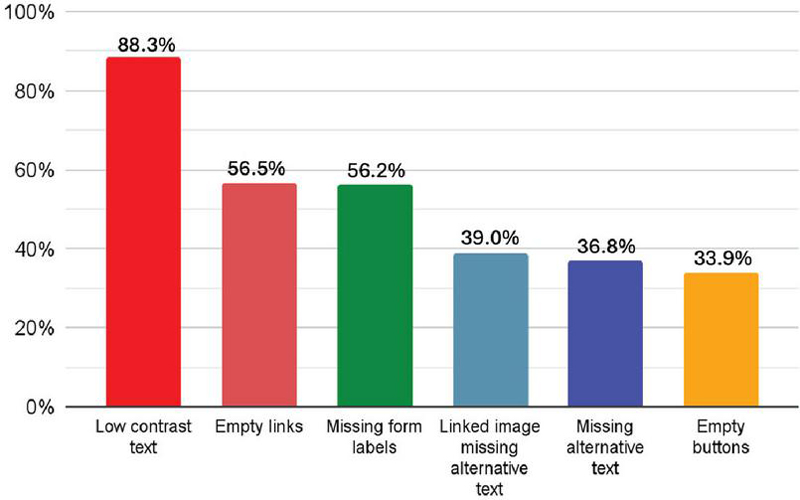
Figure 3 Most common WCAG errors on homepages (for the selection of private sector Dutch websites) [11].
We compared the accessibility, errors, and popularity of websites from the public and private sectors using the variables access rank (web accessibility), total errors (number of WCAG errors found), error density (score from 0–1, calculated as total errors divided by total elements), total elements (number of code components), and rank (website popularity). The Student t-test showed that on all the variables, websites from the private sector scored significantly worse in terms of accessibility than the public sector (p 0.001) (see Table 6).
Websites from the Dutch private sector had an average of 53.6 errors on the homepage and 1185 website elements. Users with a disability encountered errors in 5.9% of homepage elements, or one error per every 22 elements. As a result, 97.8% of the homepages failed to comply with the WCAG 2.0 standards. The most prevalent error types are shown in Figure 3.
The careers category is the most accessible, followed by education, law, government and politics, and arts and entertainment. The other category displayed the same percentage difference of errors per homepage as the average of the entire sample of one million websites. News/weather/information had 9.3% more errors than the average, and personal finance was the least accessible with an increase of 39.2% more errors than the average (see Table 7).
Table 7 IAB homepage classification from the six categories and the remainder [11]
| No. of | No. of Errors | |
| Category | Homepages (%) | (Difference from Average)* |
| Careers | 71 (2.6) | 36.5 (31.9%) |
| Education | 190 (6.9) | 38.2 (28.7%) |
| Law, government, and politics | 64 (2.3) | 47.4 (11.6%) |
| Arts and entertainment | 204 (7.4) | 47.7 (11.0%) |
| Other | 1758 (63.7) | 53.6 (0%) |
| News/weather/information | 284 (10.3) | 58.6 (9.3%) |
| Personal finance | 195 (7.1) | 74.6 (39.2%) |
| *Average number of errors per homepage: 53.6. | ||
5 Conclusions and Discussion
5.1 Conclusions
The focus of this study was to investigate the digital divide and its underlying causes. Unequal Internet accessibility hinders an inclusive society. Little progress has been made over the last three decades, and it remains a significant challenge. This paper addressed two questions: How accessible are the websites of private sector organisations? and Why does the digital divide still exist when there is a standard for web accessibility?
First, global web accessibility remains poor, though public organisations tend to perform better. The most accessible top-level domains (TLDs) are .gov and .edu, which are largely public, while .com domains perform worst – likely due to ads, a major source of accessibility issues [11]. In the Netherlands, the least accessible website categories are “news/weather/information” and “personal finance”, mostly privately owned. “careers” sites, predominantly private, were most accessible, followed by “education, law, government and politics”, which includes many public organisations.
Second, the digital divide persists despite the existence of web accessibility standards primarily due to challenges in the standard’s widespread and effective implementation. Key reasons for its limited use, which contribute to the ongoing divide, include a lack of awareness of the issue, costs, and shortage of web developers knowledgeable in web accessibility. The extent of this problem is expected to increase as demand for these services grows, especially with increasing web accessibility requirements from both the private and public sectors. Additionally, there is a pressing need to address the lack of consequences for failing to comply with web accessibility regulations. Past research focused on technical evaluations of the standard, rather than addressing these practical barriers to its use. We found additional and probably more important reasons for the standard’s limited use, including a lack of awareness, problems understanding the standard, and difficulties with its implementation.
Web accessibility is important as the Internet is a necessity in daily life. As the countries studied are leaders in digitalisation and digital skills, organisational barriers to web accessibility compliance in those countries can offer insights for other countries’ digitalisation strategies. By prioritising web accessibility and removing barriers, society can foster greater equality, diversity, and social cohesion to truly create an Internet for all.
5.2 Research Implications
This paper contributes to the body of knowledge on website accessibility by (1) arguing for a more systematic approach towards improving accessibility of private websites by making use of a standardisation perspective, and (2) to explore solutions to the barriers that seem to prevent further progress in web accessibility. Thereby, we address an important research gap in the understanding of the social problem of web accessibility by focusing on the applicable standard, WCAG. Our focus on the non-technical aspects of the standard provides better insight into the problem at hand.
From a standardisation literature perspective, our study can be seen as a case study on reasons for low standard adoption (see for another one [35]).
We examined various stages in the process, not only the technical aspects of the standard itself. De Vries et al.’s [25] report on barriers to benefit from standards showed that two out of the four barriers occur before the standard is implemented. We addressed all factors mentioned in that report. We can conclude that barriers to conformance arise due to limited awareness of the existence of the standard, its benefits for a company, and understanding the standard and its implementation. So, the theory on barriers to benefitting from standards describes the stages that have stalled progress in the past. Prior research focusing on the content of the standard does not address this, resulting in incomplete conclusions about accessibility. This is an example of a more general issue revealed by Grillo et al. [43]: technical research on standards tends to focus on the contents of the standard, extending this with input from social sciences leads to a better understanding.
5.3 Practical Implications
Web accessibility benefits many people in society, and greater WCAG compliance would help more internet users to achieve tasks efficiently. While compliance does not guarantee full accessibility, the WCAG provides a strong foundation.
The main barriers identified to new web accessibility regulations and the applicable standard are a lack of awareness of the standard and its benefits, difficulties in understanding the standard, and challenges in its implementation, including the perceived costs. Increased awareness is key to improving web accessibility. More detailed information on the accessibility problems faced by website visitors, the number of affected individuals, and the costs and benefits of making a website accessible could enhance the situation.
To further bolster efforts to improve web accessibility, enhancing the understandability of the WCAG is essential, as this supports the subsequent implementation step. Analysing the impact of government policies and strategies on web accessibility in the leading countries, Canada and the UK, alongside the literature provided potential lessons to be learnt: (1) train more web developers to use the WCAG standard, (2) raise awareness of web accessibility and its benefits, and (3) introduce sanctions for non-compliance. The order of these steps is relevant and can inform future research on the European Accessibility Act (EAA) (see Tables 8 and 9).
The European Accessibility Act (EAA), that took effect on 28 June 2025, extends accessibility requirements for apps and websites to the private sector but faces significant hurdles that may impede its success. Evidence from the Netherlands, where similar requirements already apply to the public sector, highlights potential challenges. Many government websites and apps lack clear ownership, making accessibility accountability difficult. Furthermore, compliance rates are low: recent Dutch government data indicates only 8.5% of 4434 public sector websites and apps fully meet requirements, with another 37.6% only partially compliant [56].
Table 8 Solutions to increase awareness of the web accessibility standard
| Problem Stage | Solution |
| Awareness (literature) | Communication: A leaflet from the Chamber of Commerce for all registered companies about web accessibility and the WCAG. Explaining the regulations and providing statistics on the impact of inaccessible websites for companies and users [25, 51]. |
| Awareness (literature) | Education: Students studying IT or related studies receive training to use the WCAG and education on the benefits of web accessibility for organisations and website visitors [16, 25]. |
| Awareness of benefits (practice, UK) | Communication: A national communication strategy on TV or social media that explains the benefits for organisations [25]. For example, accessible websites work better for everyone, as they are often faster, more user-friendly, and appear higher in the search results [41]. |
Table 9 Solutions to motivate SMEs to comply with the web accessibility standard (in brackets: solutions identified in the literature or in practise)
| Problem Stage | Solution |
| Understanding (literature) | Assistance: The national standardisation institute helps with authorised translation into the national language of new official versions of the WCAG and tests its user-friendliness with a representative variety of stakeholders [25]. |
| Implementation (literature) | Training: The government cooperates with the national standardisation institute or private organisations to provide webinars to train web developers to use the WCAG [25, 61] |
| Implementation (practice, Canada) | Code components: Accessible and mobile-friendly web apps are provided to support implementation [61, 49]. |
Compounding this challenge is a shortage of web developers skilled in accessibility standards, a bottleneck expected to worsen as the EAA increases demand. This situation raises critical questions: should we train more developers in the web accessibility standard, or invest in dedicated accessibility experts? What role could AI play in solving some of the challenges? Will sanctions for non-compliance be more effective than subsidies, and is risk of a lawsuit an insufficient deterrent if its likelihood is considered negligible?
Lastly, historical cases suggest that design methods that focus on demanding users may enhance innovation. For instance, Alexander Graham Bell invented the first telephone while trying to develop a hearing aid, Apple developed voice technology Siri for visually impaired users to control their touchscreen device, and Google started the auto-complete function for people with disabilities [12, 71]. Nowadays, these inventions can be enjoyed by all.
5.4 Limitations and Future Work
This study addressed a gap in the literature by examining barriers to using standards and potential ways of improving the current situation. One limitation is the focus on computer users, while mobile users are now arguably more important. We do not expect the results of this study to be generalizable to mobile phone users, as mobile accessibility is a more recent focus within the WCAG and involves a fundamentally different user interface. Further research is therefore needed to explore the state of web accessibility for mobile users, specifically in the context of how they typically interact with their devices, including the use of speech recognition and other assistive technologies they may rely on. Furthermore, subjective decisions in the theoretical framework can introduce bias by allowing prior beliefs to shape interpretation and reporting of findings. Lastly, data limitations arose from the difficulty of distinguishing between private and public sectors for some websites.
Since the enactment of the EAA in 2025, web accessibility laws also apply to the private sector. Therefore, future research could consider disregarding the distinction between private and public sector websites and instead focus on websites by specific functions or use cases (e.g., online banking, transportation, entertainment) as was done in this study. More research is required to guide its successful implementation. Future WCAG versions could be improved by testing user-friendliness by involving a representative variety of stakeholders, including web developers, organisations, and their website users from diverse organisational sizes, sectors, and countries [25]. Future research could also replicate this study in a country that scores low on web accessibility to provide a contrast. For instance, Italy could be selected. As Italian design is renowned across the world, it would be noteworthy to understand what effect it has on web design. Moreover, future research could examine web accessibility for mobile users, as mobile devices are the most popular for browsing. Advances in voice software and AI likely create a different accessibility experience [37].
Footnotes
The Dutch definition of SMEs deviates from the one in many countries where the term SME is coined for companies up to 500 employees.
“Part-time businesses do not fall into any of the other segments, often because no active personnel are listed in the Trade Register” [50].
References
[1] Acosta-Vargas, P., Salvador-Acosta, B., Novillo-Villegas, S., Sarantis, D. and Salvador-Ullauri, L. (2024).
[2] Aizpurua, A., Arrue, M., Vigo, M. and Abascal, J. (2011). Validating the effectiveness of EvalAccess when deploying WCAG 2.0 tests. Universal Access in the Information Society, 10, 425–441. https://doi.org/10.1007/s10209-011-0226-z.
[3] Aljedaani, W., Eler, M. M. and Parthasarathy, P. D. (2025, February). Enhancing Accessibility in Software Engineering Projects with Large Language Models (LLMs). In Proceedings of the 56th ACM Technical Symposium on Computer Science Education V. 1 (pp. 25–31).
[4] Alsaeedi, A. (2020). Comparing web accessibility evaluation tools and evaluating the accessibility of webpages: proposed frameworks. Information, 11(1), 40. https://doi.org/10.3390/info11010040.
[5] AODA. (2018, June 18). Complying with AODA WCAG 2.0 Distinguishable Content. Retrieved from Accessibility for Ontarians with Disabilities Act: https://www.aoda.ca/complying-with-aoda-wcag-2-0-distinguishable-content/ (accessed June 5, 2024).
[6] Aquino, M. (2017). Web Accessibility Perceptions Survey and Interview. Ph.D. Dissertation. Worcester Polytechnic Institute.
[7] Ara, J. and Sik-Lanyi, C. (2025). Automated evaluation of accessibility issues of webpage content: tool and evaluation. Scientific Reports, 15(1), 9516.
[8] Australian Government. (2022, October 10). Style Manual: Accessibility and Inclusion. Retrieved from Australian Government: https://www.stylemanual.gov.au/accessible-and-inclusive-content/design-accessibility-and-inclusion (accessed June 5, 2024).
[9] Azenkot, S., Hanley, M. J. and Baker, C. M. (2021). How accessibility practitioners promote the creation of accessible products in large companies. Proceedings of the ACM on Human-Computer Interaction, 5(CSCW1), 1–27.
[10] Bai, A., Mork, H. C., Schulz, T. and Fuglerud, K. S. (2016). Evaluation of accessibility testing methods. which methods uncover what type of problems?. In Universal Design 2016: Learning from the Past, Designing for the Future (pp. 506–516). IOS Press.
[11] WebAIM. (2022, March 31). The WebAIM Million 2022. Retrieved from Web accessibility in mind (WebAIM): https://webaim.org/projects/million/2022 (accessed June 5, 2024).
[12] Bodine, C. (Ed.). (2012). Assistive technology and science. Thousand Oaks, CA: Sage.
[13] Bovens, M.A.P., ten Hart, P. and van Twist, M.J.W. (2012): Openbaar bestuur; Beleid, organisatie en politiek. (Public governance; Policy, organization and politics), 7th edition. Wolters Kluwer. Alphen aan den Rijn, the Netherlands.
[14] Brajnik, G., Yesilada, Y. and Harper, S. (2010, October). Testability and validity of WCAG 2.0: the expertise effect. Proceedings of the 12th International ACM SIGACCESS Conference on Computers and Accessibility (ASSETS ’10). Association for Computing Machinery, New York, NY, USA, 43–50. https://doi.org/10.1145/1878803.1878813.
[15] Campoverde-Molina, M., Lujan-Mora, S. and Garcia, L. V. (2020). Empirical studies on web accessibility of educational websites: A systematic literature review. IEEE Access, 8, 91676–91700.
[16] Cao, S. and Loiacono, E. (2019). The state of the awareness of web accessibility guidelines of student website and app developers. In Social Computing and Social Media. Design, Human Behavior and Analytics: 11th International Conference, SCSM 2019, Held as Part of the 21st HCI International Conference, HCII 2019, Orlando, FL, USA, July 26-31, 2019, Proceedings, Part I 21 (pp. 32–42). Springer International Publishing.
[17] CBS. (2022, May 12). Dutch digital skills at the top in Europe. Retrieved from Centraal Bureau Statistiek: https://www.cbs.nl/en-gb/news/2022/19/dutch-digital-skills-at-the-top-in-europe (accessed June 5, 2024).
[18] CBS. (2023, May 10). Toepassing van internetstandaarden voor websites van bedrijven. Retrieved from Centraal Bureau voor de Statistiek: https://www.cbs.nl/nl-nl/longread/aanvullende-statistische-diensten/2023/toepassing-vaninternetstandaarden-voor-websites-van-bedrijven?onepage=true (accessed June 5, 2024).
[19] CBS. (2024). Bevolkingsteller. Retrieved from Centraal Burea Statistiek: https://www.cbs.nl/nl-nl/visualisaties/dashboard-bevolking/bevolkingsteller (accessed October 22, 2024).
[20] Chandramouli, K. (2022). Role of AI in Promoting European Accessibility Policy. In: Stephanidis, C., Antona, M., Ntoa, S., Salvendy, G. (eds) HCI International 2022 – Late Breaking Posters. HCII 2022. Communications in Computer and Information Science. vol. 1655, 613–618. Springer Nature. Cham, Switzerland. https://doi.org/10.1007/978-3-031-19682-9\_77.
[21] Chandrashekar, S. and McCardle, L. (2020). How WCAG 2.1 relates to online user experience with switch-based tools. The Journal on Technology and Persons with Disabilities, 223–236.
[22] Clark, J. (2006, May 23). To Hell with WCAG 2. From Alistapart: https://alistapart.com/article/tohellwithwcag2/ (accessed June 5, 2024).
[23] De Vries, H. (2021). What’s ‘normative’ in WCAG? Retrieved from Hidde’s Blog: https://hidde.blog/whats-normative-in-wcag/ (accessed June 5, 2024).
[24] De Vries, H. J. (2008). Standardisation: A Business Science Perspective. In Bargaining Norms Arguing Standards. The Hague: Stichting Toekomstbeeld der Techniek.
[25] De Vries, H.J., Blind, K., Mangelsdorf, A., Verheul, H., van der Zwan, J., (2009). SME Access to European Standardization – Enabling small and medium-sized enterprises to achieve greater benefit from standards and from involvement in standardization. CEN/CENELEC, Brussels.
[26] Draffan, E. A., Ding, C., Wald, M., Everett, H., Barrett, J., Sasikant, A., Geangu, C. and Newman, R. (2020). Can a Web Accessibility Checker Be Enhanced by the Use of AI? In Klaus Miesenberger, Roberto Manduchi, Mario Covarrubias Rodriguez, and Petr Penaz (eds.). Computers Helping People with Special Needs, pp. 67–73. Springer International Publishing. https://doi.org/10.1007/978-3-030-58796-3\_9.
[27] DigiToegankelijk. (2021). Web accessibility in your organisation: roles and responsibilities. From DigiToegankelijk: https://www.digitoegankelijk.nl/sites/default/files/202103/Web\%20accessibility\%20in\%20your\%20organisation.pdf
[28] EUR-Lex. (n.d.). Accessibility of public sector websites and mobile apps. Retrieved from: https://eur-lex.europa.eu/legal-content/EN/LSU/?uri=CELEX\%3A32016L2102 (accessed June 5, 2024).EUR-Lex. (n.d.-a). Accessibility of public sector websites and mobile apps. Retrieved from: https://eur-lex.europa.eu/legal-content/EN/TXT/HTML/?uri=LEGISSUM\%3An26026\&isLegissum=true (accessed June 5, 2024).
[29] EUR-Lex. (2019). Directive (EU) 2019/882 of the European Parliament and of the Council of 17 April 2019 on the accessibility requirements for products and services (Text with EEA relevance). Retrieved from: https://eur-lex.europa.eu/legal-content/EN/TXT/?uri=CELEX\%3A32019L0882\#d1e32-100-1 (accessed March 7, 2025).
[30] European Commission. (2022, January 4). Web Accessibility Directive – Monitoring reports 2020–2021. Retrieved from European Commission: https://digital-strategy.ec.europa.eu/en/library/web-accessibility-directive-monitoring-reports-2020-2021
[31] European Commission. (2023). The Netherlands in the Digital Economy and Society Index. Retrieved from European Commission: https://digital-strategy.ec.europa.eu/en/policies/desi-netherlands (accessed June 5, 2024).
[32] European Commission. (2023a). United Kingdom in the Digital Economy and Society Index. Retrieved from European Commission: https://digital-strategy.ec.europa.eu/en/policies/desi-uk (accessed June 5, 2024).
[33] European Parliament. (2019, September 7). Accessibility: making products and services in the EU easier to use. Retrieved from European Parliament: https://www.europarl.europa.eu/news/en/headlines/priorities/social/20190227STO28989/accessibility-making-products-and-services-in-the-eu-easier-to-use (accessed June 5, 2024).
[34] Fomin, Vladislav V., Henk J. de Vries & Yves Barlette (2008). ISO/IEC 27001: Exploring the reasons for low adoption. In: Proceedings EUROMOT 2008 – The Third European Conference on Management of Technology. Nice – Sophia Antipolis, France: CERAM Business School.
[35] Gannon, B. and Nolan, B. (2005). Disability and social inclusion in Ireland. Report for Equality Authority and National Disability Authority. Dublin, Ireland.
[36] Gibbs, S. (2016, November 2). Mobile web browsing overtakes desktop for the first time. Retrieved from The Guardian: https://www.theguardian.com/technology/2016/nov/02/mobile-web-browsing-desktop-smartphones-tablets (accessed June 5, 2024).
[37] Government of Canada. (2022, November 24). Towards an Accessible Canada. Retrieved from Government of Canada: https://www.canada.ca/en/employment-social-development/programs/accessible-canada.html (accessed June 5, 2024).
[38] Government of Canada. (2025, January 16). About an Accessible Canada. From Government of Canada: https://www.canada.ca/en/employment-social-development/programs/accessible-canada.html
[39] Gov.uk. (2021, December 20). Accessibility monitoring of public sector websites and mobile apps 2020-2021. From Gov.uk: https://www.gov.uk/government/publications/accessibility-monitoring-of-public-sector-websites-and-mobile-apps-2020-2021/accessibility-monitoring-of-public-sector-websites-and-mobile-apps-2020-2021?
[40] Gov.uk. (2022, August 22). Guidance: Understanding accessibility requirements for public sector bodies. Retrieved from Gov.uk:https://www.gov.uk/guidance/accessibility-requirements-for-public-sector-websites-and-apps (accessed June 5, 2024).
[41] Gov.uk. (2023). Discrimination: your rights. Retrieved from Gov.uk: https://www.gov.uk/discrimination-your-rights (accessed June 5, 2024).
[42] Grillo, Filippo, Paul Moritz Wiegmann, Henk J. de Vries, Rudi Bekkers, Stefano Tasselli, Amin Yousefi & Geerten van de Kaa (2024). Standardisation: Research Trends, Current Debates, and Interdisciplinarity. Academy of Management Annals, 18, 2 (published online 2024-07-10), https://doi.org/10.5465/annals.2023.0072.
[43] Hambley, A., Yesilada, Y., Vigo, M. and Harper, S. (2025). Optimising web accessibility evaluation: Population sourcing methods for web accessibility evaluation. International Journal of Human-Computer Studies, 198, 103472.
[44] Henry, S. L. (2018, February 27). Essential Components of Web Accessibility. Retrieved from: https://www.w3.org/WAI/standards-guidelines/wcag/faq/\#techsnot (accessed June 5, 2024).
[45] IONOS. (2022, October 17). Would you have guessed? These are the most popular domain extensions! Retrieved from Digital Guide IONOS: https://www.ionos.co.uk/digitalguide/domains/domainextensions/most-popular-domain-extensions/ (accessed June 5, 2024).
[46] Webschrinker. (2023). IAB Categories. Retrieved from Webschrinker: https://docs.webshrinker.com/v3/iab-website-categories.html\#tier-1-and-tier-2-categories (accessed June 5, 2024).
[47] Kumar, S., Shree DV, J. and Biswas, P. (2021). Comparing ten WCAG tools for accessibility evaluation of websites. Technology and Disability, 33(3), 163–185.
[48] Web Experience Toolkit. (2021, May 17). Web Experience Toolkit (WET). Retrieved from Web Experience Toolkit: https://wet-boew.github.io/wet-boew/index-en.html (accessed June 5, 2024).
[49] KvK. (2022, Januari). KvK data over de bedrijvendynamiek: Jaaroverzicht 2022. Retrieved from Kamer van Koophandel: https://www.kvk.nl/cijfers-en-trends/bedrijvendynamiek-jaaroverzicht-2022/ (accessed June 5, 2024).
[50] Lazar, J., Dudley-Sponaugle, A. and Greenidge, K. D. (2004). Improving web accessibility: a study of webmaster perceptions. Computers in Human Behavior, 20(2), 269–288. https://doi.org/10.1016/j.chb.2003.10.018.
[51] Legislation.gov.uk. (n.d.). Equality Act 2010. Retrieved from Legislation.gov.uk: https://www.legislation.gov.uk/ukpga/2010/15/section/20.
[52] Leitner, M. L., Strauss, C. and Stummer, C. (2016). Web accessibility implementation in private sector organizations: motivations and business impact. Universal Access in the Information Society, 15, 249–260.
[53] Lewthwaite, S. (2014). Web accessibility standards and disability: developing critical perspectives on accessibility. Disability and Rehabilitation, 36(16), 1375–1383.
[54] Luján-Mora, S. (2013). Web Accessibility Among the countries of the European Union: a comparative study. Actual Problems in Computer Science, 1(3), 18–27.
[55] Ministerie van Binnenlandse Zaken en Koninkrijksrelaties. (2023, July 3). Dashboard DigiToegankelijk. Retrieved from Ministerie van Binnenlandse Zaken en Koninkrijksrelaties (BZK): https://dashboard.digitoegankelijk.nl/ (accessed June 5, 2024).
[56] Montgomery, L., McLaughlin, P. A., Richards, T. and Febrizio, M. (2019). Performance Standards vs. Design Standards: Facilitating a Shift toward Best Practices. Mercatus Research Paper.
[57] Nacheva, R. and Jansone, A. (2023). Heuristic Evaluation of AI-Powered Web Accessibility Assistants. Baltic Journal of Modern Computing, 11(4), 543-557. https://doi.org/10.22364/bjmc.2023.11.4.02.
[58] Ontario. (2025, March 5). Accessibility for Ontarians with Disabilities Act, 2005, S.O. 2005, c. 11. Retrieved from Ontario e-Laws: https://www.ontario.ca/laws/statute/05a11\#BK3.
[59] Overheid.nl. (2025, May 14). Wet digitale overheid. Retrieved from Overheid.nl Wettenbank: https://wetten.overheid.nl/BWBR0048156/2023-07-01.
[60] Pandey, M. and Dong, T. (2023, October). Blending accessibility in UI framework documentation to build awareness. In Proceedings of the 25th International ACM SIGACCESS Conference on Computers and Accessibility (pp. 1–12).
[61] Yin, R. K. (2009). Case study research: Design and methods (Vol. 5). sage.
[62] Petrie, H., Savva, A. and Power, C. (2015, May). Towards a unified definition of web accessibility. Proceedings of the 12th International Web for All Conference (W4A ’15). Association for Computing Machinery, New York, NY, USA, 35, 1–13. https://doi.org/10.1145/2745555.2746653.
[63] Pinsent Masons. (2011, October 1). Disabled access to websites under UK law. From Pinsent Masons: https://www.pinsentmasons.com/out-law/guides/disabled-access-to-websites-under-uk-law (accessed June 5, 2024).
[64] Province of Nova Scotia. (2018). Accessibility Act: CHAPTER 2 OF THE ACTS OF 2017. From ns legislature: https://nslegislature.ca/sites/default/files/legc/statutes/accessibility.pdf.
[65] Province of Nova Scotia. (2025, March). Business ACCESS-Ability Grant Program. From Province of Nova Scotia: https://cch.novascotia.ca/business-access-ability-grant-program.
[66] Rietveld, R. (2021, May 18). We need to talk about WCAG. Retrieved from Level Level: https://level-level.com/blog/we-need-to-talk-about-wcag/ (accessed June 5, 2024).
[67] ISO. (2025). ISO/IEC 40500:2012. Retrieved from ISO: https://www.iso.org/standard/58625.html (accessed November 27, 2025).
[68] Rodríguez, G., Pérez, J., Cueva, S. and Torres, R. (2017). A framework for improving web accessibility and usability of Open Course Ware sites. Computers & Education, 109, 197–215. https://doi.org/10.1016/j.compedu.2017.02.013.
[69] Rømen, D. and Svanæs, D. (2012). Validating WCAG versions 1.0 and 2.0 through usability testing with disabled users. Universal Access in the Information Society, 11(4), 375–385. https://doi.org/10.1007/s10209-011-0259-3.
[70] Rush, S. (2018, November 9). The Business Case for Digital Accessibility. Retrieved from W3C: https://www.w3.org/WAI/business-case/ (accessed June 5, 2024).
[71] Rutter, R., Lauke, P. H., Waddell, C., Thatcher, J., Henry, S. L., Lawson, B., Kirkpatrick, A., Heilmann, C., Burks, M. R., Regan, B., and Urban, M. (2007). Web Accessibility: Web Standards and Regulatory Compliance. New York, NY, USA: Apress.
[72] Slatin, J. M. and Rush, S. (2003). Maximum accessibility: Making your web site more usable for everyone. New York: Addison-Wesley.
[73] The Python Package Index. (2024, March 24). python-whois 0.9.3. From The Python Package Index (PyPI): https://pypi.org/project/python-whois/ (accessed June 5, 2024).
[74] Verisign. (2023, April). Top 10 largest ccTLDs by number of reported domain names. Retrieved from Verisign: https://www.verisign.com/en\_US/domain-names/dnib/index.xhtml?section=cc-tlds (accessed December 20, 2023).
[75] Vigo, M. and Brajnik, G. (2011). Automatic web accessibility metrics: Where we are and where we can go. Interacting with Computers, 23(2), 137–155. https://doi.org/10.1016/j.intcom.2011.01.001.
[76] Vollenwyder, B., Petralito, S., Iten, G. H., Brühlmann, F., Opwis, K. and Mekler, E. D. (2023). How compliance with web accessibility standards shapes the experiences of users with and without disabilities. International Journal of Human-Computer Studies, 170, 102956. https://doi.org/10.1016/j.ijhcs.2022.102956.
[77] Wavrock, D., Schellenberg, G. and Schimmele, C. (2021, November 9). Internet-use Typology of Canadians: Online Activities and Digital Skills. Retrieved from Statistics Canada: https://www150.statcan.gc.ca/n1/pub/11f0019m/11f0019m2021008-eng.htm (accessed June 5, 2024).
[78] Wobbrock, J.O. (2019). Situationally-Induced Impairments and Disabilities. In: Yesilada, Y., Harper, S. (eds) Web Accessibility. Human–Computer Interaction Series. Springer, London. https://doi.org/10.1007/978-1-4471-7440-0\_5.
[79] W3C. (n.d.). Introduction to Understanding WCAG 2.0. Retrieved from W3C: https://www.w3.org/TR/UNDERSTANDING-WCAG20/intro.html\#introduction-fourprincs-head (accessed March 6, 2025).
[80] W3C. (n.d.-a). Understanding Conformance. From W3C: https://www.w3.org/TR/2015/NOTE-UNDERSTANDING-WCAG20-20150226/conformance.html?
[81] W3C. (2008, December 11). Web Content Accessibility Guidelines (WCAG) 2.0. Retrieved from W3C: https://www.w3.org/TR/WCAG20/ (accessed June 5, 2024).
[82] W3C. (2013, March 25). Research Report on Web Accessibility Metrics. Retrieved from W3C: https://www.w3.org/WAI/RD/2011/metrics/note/ED-metrics-20130325 (accessed June 5, 2024).
[83] W3C. (2015, April 29). Situational terminology. Retrieved from W3C: https://www.w3.org/WAI/EO/wiki/Situational\_terminology (accessed on June 5, 2024).
[84] J. Smith, Executive Director of WebAIM, personal communication, Jun. 8, 2023.
[85] W3C. (2018). Web Content Accessibility Guidelines (WCAG) 2.1. Retrieved from W3C: https://www.w3.org/TR/WCAG21/ (accessed on June 5, 2024).
[86] W3C. (2022, October 30). Making the Web Accessible. Retrieved from W3C Web Accessibility Initiative: https://www.w3.org/WAI/ (accessed on June 5, 2024).
[87] W3C. (2022a). Web Content Accessibility Guidelines 1.0. Retrieved from W3C: https://www.w3.org/TR/WCAG10/ (accessed June 5, 2024).
[88] WCAG.nl. (2023). Wet- en regelgeving. Retrieved from WCAG.nl: https://wcag.nl/kennis/wet-en-regels/ (accessed June 5, 2024).
[89] W3C. (2023). Social Factors in Developing a Web Accessibility Business Case for Your Organization. Retrieved from W3C: https://www.w3.org/WAI/business-case/archive/soc\#lolit (accessed June 5, 2024).
[90] W3C. (2023a). WCAG 2 Translations. Retrieved from W3C: https://www.w3.org/WAI/standards-guidelines/wcag/translations/\#wcag-21-completed-and-planned-translations (accessed June 5, 2024).
[91] W3C. (2024, December 12) Web Content Accessibility Guidelines (WCAG) 2.2. Retrieved from W3C: https://www.w3.org/TR/WCAG22/.
[92] W3C. (2024a, December 12) Web Content Accessibility Guidelines (WCAG) 3.0. Retrieved from W3C: https://www.w3.org/TR/wcag-3.0/.
[93] W3C Silver. (2018, March 16). Problem Statements. Retrieved from W3C Silver: https://www.w3.org/WAI/GL/task-forces/silver/wiki/Problem\_Statements\#Conformance\_Model (accessed June 5, 2024).
[94] Web Accessibility Award. (n.d.). Digitale toegankelijkheid. Retrieved from Web Accessibility Award (WAA): https://www.webaccessibilityaward.nl/digitale-toegankelijkheid/ (accessed June 5, 2024).
[95] Web-directive.eu. (2023). Web Accessibility Directive: Frequently Asked Questions. Retrieved from Web Directive: https://web-directive.eu/ (accessed June 5, 2024).
[96] Leitner, M. L., Strauss, C. and Stummer, C. (2016). Web accessibility implementation in private sector organizations: motivations and business impact. Universal Access in the Information Society, 15(2), 249–260.
[97] W3C. (2022b, May 13). WCAG 2 FAQ. Retrieved from W3C: https://www.w3.org/WAI/standards-guidelines/wcag/faq/ (accessed June 5, 2024).
Biographies

Dante Göbbels is a PhD-candidate at Eindhoven University of Technology in the industrial engineering department. He completed a master’s degree in innovation management at the Erasmus University in Rotterdam, and a master’s in data science from Tilburg University.

Robert M. van Wessel holds a master’s in electrical engineering from Twente University and a PhD in business administration from Tilburg University (Department of Information Systems and Management). He is lecturer and thesis coach at Rotterdam School of Management, Erasmus University and the Antwerp Management School. Robert’s research interests relate to the interaction of business and IT, in particular agile methods, enterprise architecture, information and data management, information security and privacy, and standardisation. Robert is a Strategic Advisor in digital public services and transformation at the Dutch government foundation ICTU, an independent consultancy and project organization and is founder of Apexis.

Henk J. de Vries is Professor of Standardisation Management at the Rotterdam School of Management (RSM), Erasmus University in Rotterdam, the Netherlands. He served the Netherlands Standardisation Institute NEN between 1984 and 2003, and has (also) worked at RSM since 1994. Henk is Visiting Professor at the Faculty of Technology, Policy and Management at the Delft University of Technology. Until recently he was President of the European Academy for Standardisation EURAS. He is the author or co-author of more than 400 publications in the field of standardisation, including dozens of books.
Journal of ICT Standardization, Vol. 13_4, 449–484
doi: 10.13052/jicts2245-800X.1345
© 2025 River Publishers