Standardization of Power Transaction Data Interaction Protocol Based on Smart Contracts – Extended Application of IEC 62325
Mo Pingyan*, Lu Yanqian, Li Kai, Wen You and Ren Ying
Guangdong Power Grid Company Limited, Guangzhou, 510000 China
E-mail: mop15732@163.com
*Corresponding Author
Received 12 September 2025; Accepted 14 November 2025
Abstract
In view of the problems of insufficient automation, trust dependence centralization, and real-time limitation in the IEC 62325 standard, this study proposes an extension protocol integrating blockchain and smart contract. By defining the trigger points of the three-layer contract, the standard message process is seamlessly embedded, and the automatic execution of quotation verification, transaction matching, and settlement and clearing is realized. Design parametric contract templates and extend EDM message segments (sc: contract address, data hash, digital signature) to support non-intrusive business rule injection and tamper-proof verification. A three-layer decoupling architecture (data access layer, contract execution layer, and message conversion layer) is constructed for compatible heterogeneous systems, and the XSLT engine is combined to realize the two-way mapping of EDM packets and on-chain data. Experiments based on real data in the Dutch electricity market show that the scheme reduces transaction delay by 62.5% to 45 milliseconds, increases data consistency rate to 99.1%, doubles throughput by 310 transactions per second, and sharply reduces the settlement error rate by 95.7%, effectively improving the automation level and credibility of high-frequency electricity trading.
Keywords: Smart contract, IEC 62325 standard, electricity transaction data interaction, blockchain technology application.
1 Introduction
With the acceleration of the global energy transition and the large-scale access of distributed energy, electricity market transactions have shown a trend of high-frequency, multi-agent, and strong real-time, posing unprecedented challenges to the existing power trading data interaction system [1]. As the core specification for electricity market information exchange, the IEC 62325 series of standards formulated by the International Electrotechnical Commission provide basic interoperability guarantees for cross-border electricity transactions through the unified semantic framework of the public information model CIM, standardized business process definitions, and EDM-based XML message format [2]. However, in the dynamic transaction scenario of the new power system, the standard exposes a series of structural limitations: its transaction matching and settlement and clearing links are still highly dependent on the black box processing mechanism of the centralized system, resulting in insufficient transparency of business rules and lagging adjustment. Although traditional EDM packets can ensure syntax compliance, they lack the ability to automatically verify complex business logic (such as quotation boundary verification and measurement data authenticity). The asynchronous interaction mode based on message queues is difficult to meet the needs of the real-time balance market for instant confirmation of transaction status, and the centralized trust model leads to high regulatory costs and the risk of a single point of failure [3, 4]. Although blockchain technology has been applied to scenarios such as peer-to-peer transactions and green certificate traceability in the energy field, most existing solutions focus on building independent systems and fail to deeply integrate with existing international standards in the electricity market, resulting in protocol fragmentation and high implementation costs [5, 6]. This study is committed to breaking through the current situation of protocol layer fragmentation, proposing a smart contract extension mechanism that is deeply compatible with the IEC 62325 framework, and constructing a verifiable automated execution layer while retaining the existing electricity market infrastructure by defining standardized contract trigger point mapping rules, developing parametric contract templates, and designing tamper-proof message extension fields. Its core value lies in the seamless sinking of blockchain capabilities to the international standard protocol stack for the first time, which not only continues the advantages of CIM model semantic consistency and EDM packet interoperability, but also injects the autonomous execution and consensus verification characteristics of smart contracts, providing a standardized technical path for building a new generation of highly trusted, low-latency and resilient power trading infrastructure.
2 A Review of Related Technologies and Standards
2.1 IEC 62325 Standard Architecture Analysis
2.1.1 CIM model: Semantic foundations and information modeling
The IEC 62325 series of standards is the core international standard that supports information exchange in the electricity market, and its architecture is to build a standardized, interoperable and semantically clear information exchange framework. This standard deeply relies on and extends the public information model CIM of IEC 61970/61968 as the core of its semantic foundation and information modeling [7]. CIM is an abstract model based on object-oriented thinking that uses a unified modeling language to define various entities and their attributes, relationships, and behaviors in the field of power industry. In order to meet the specific needs of the electricity market, the standard has been specially extended to define key business concepts such as market participants, tradable market products, quotations and offers expressing willingness to buy and sell, transaction and settlement information to record transaction results, and timelines for power generation and consumption plans [8]. This modeling method based on CIM and its market expansion provides a shared semantic basis for all electricity market participants, ensures that different systems have a consistent understanding of the same business concept, fundamentally solves the problem of information silos, and is the cornerstone of accurate and efficient circulation and interoperability of cross-system and cross-regional electricity transaction data.
2.1.2 Electricity market message structure: Business process standardization
While providing a unified semantic foundation, IEC 62325 standardizes business processes by defining the specific message sequences and interaction patterns required for critical business processes in the electricity market. The standard closely focuses on the core aspects of electricity market operation, covering typical business scenarios such as quotation submission and clearance results released in the market day before, adjustment of quotations and order issuance in the intraday balance stage, exchange of measurement data for settlement, and final settlement bill generation and transmission. For each step of these processes, the standard precisely defines the appropriate message type, such as market documents that carry the core information of quotes and transaction results, network documents that deal with transmission constraints, and settlement documents that process financial settlements. More importantly, the standard clearly stipulates the order, trigger conditions, and necessary response requirements for these different types of messages between the parties involved in the transaction, such as request and confirmation, publish and subscribe, etc., thus building a clear and interoperable standardized business process interaction model [9].
2.1.3 XML and EDM message format specifications: Physical implementation
In order to transform semantic and business process models defined based on CIM models into actual data that can be transmitted and stored, IEC 62325 specifies specific physical implementations, explicitly specifying the use of the extensible markup language XML as the unified encoding format for carrying electricity market information [10]. The core content of the specification is to define the XML implementation rules of the energy market model EDM, which is essentially a specific subset of the CIM model in the field of electricity market and its practical application. The standard details the XML schema definition file XSD corresponding to each message type, which strictly specifies the root element, namespace, data elements that must be included and their attributes, the data type of the element attributes, and the hierarchy and occurrence constraints between the elements. This detailed set of EDM XSD specifications provides a rigorous basis for syntactic message structure, ensuring that any system that follows IEC 62325 generates message formats that fully comply with the specification requirements when exchanging information, enabling reliable interoperability at the technical level.
2.1.4 Limitations of current standards
Although IEC 62325 provides a solid foundation for the informatization of electricity markets, it still presents several key limitations in addressing complex transaction patterns and emerging technology requirements. The core of the standard focuses on the standardization of information exchange formats and processes, and the automation support for transaction execution logic is relatively lacking, such as transaction matching, settlement calculation, and payment triggering, which still rely on the internal procedures of centralized trading systems, resulting in insufficient process transparency and limited flexibility in rule changes [11]. At the same time, the data verification mechanism provided by the standard mainly relies on EDM XSD for syntax structure and basic data type verification, which is difficult to effectively support the verification at the level of complex business logic, such as quotation compliance, transaction price reasonableness, or measurement data tampering prevention. In addition, traditional methods based on message queues or file transfers may lead to insufficient real-time, delays in the final confirmation of transaction status, reliance on centralized system records and manual reconciliation, and lack of instant and tamper-proof global consensus [12]. The entire system is highly dependent on the system and credit of centralized market operators, and participants need to fully trust its impartiality. Finally, complex processes involving multiple independent organizations are limited by their interface capabilities and processing speed, and lack a shared, automated, and trustworthy infrastructure that can be automated. These limitations provide a clear demand space and technical entry point for integrating smart contracts and blockchain technology to expand standard functions, improve automation, enhance data trustworthiness, and reduce centralization dependence.
2.2 Fundamentals of Smart Contracts and Blockchain Technology
2.2.1 Smart contract definition and execution mechanism
Smart contracts are programmable protocols deployed on the blockchain, and their core essence is to encapsulate business rules and contract terms in the form of code that is self-executing and immutable. The key feature of this technology is autonomy, where the contract logic is automatically executed once the preset conditions are met, without relying on third-party manual intervention, such as automatically completing core links such as transaction matching or settlement calculations. Verifiability ensures that all participants can audit the open and transparent contract code and its execution process. Immutability ensures that the core logic of the contract cannot be unilaterally modified after deployment, maintaining the credibility of the rules. Conditional triggering capabilities flexibly respond to external events such as electricity price fluctuations or measurement data updates through interaction with external data sources such as oracles on the blockchain [13]. At the technical implementation level, a smart contract is essentially an event-driven state machine: when receiving an external transaction request or a specific event input, the contract verifies data validity and updates internal state based on predefined code logic, such as matching buy and sell orders, ultimately outputting execution results, generating immutable on-chain transaction records, or triggering off-chain related actions, such as notifying the settlement system to perform next steps [14]. This mechanism is particularly useful for electricity trading scenarios, such as the ability to precisely set rules through code, and automatically trigger trade execution when the market clearance price is between the upper limit of the buyer’s offer and the lower limit of the seller’s quote before the day.
2.2.2 Typical application scenarios of blockchain in electricity trading
Relying on its core features of distributed ledger, consensus mechanism, and cryptographic guarantee, blockchain technology provides innovative solutions for many key scenarios in the field of electricity trading. In the peer-to-peer energy trading scenario, the blockchain automatically matches the real-time supply and demand of distributed generation and neighboring users through smart contracts and completes on-chain clearance and settlement, effectively solving the trust and efficiency issues of decentralized green power trading [15]. For high-frequency real-time balanced settlement scenarios, this technology will instantly verify the measurement data on the chain and drive the contract to achieve second-level fund clearing, significantly improving the operational speed and data credibility of the balanced market. In the field of green certificate traceability and trading, blockchain transforms green energy rights and interests into anti-counterfeiting digital certificates and securely transfers ownership through the chain, ensuring the authenticity of green certificates and the reliability of cross-regional circulation. In addition, in cross-border electricity market collaboration scenarios involving multiple countries or institutions, blockchain combines multi-signature contracts and cross-chain data interaction technology to effectively solve the problems of mutual trust establishment and complex compliance verification between multiple entities, laying a technical foundation for building an efficient and transparent cross-border electricity trading market.
3 Extend the Model Design and Protocol Fusion Mechanism
3.1 Smart Contracts are Embedded in the IEC 62325 Message Flow Model
3.1.1 Message lifecycle and contract trigger point design
As shown in Figure 1, this design seamlessly implants Layer 3 smart contract trigger points in the lifecycle of the IEC 62325 standard to automate transaction rules: during the quotation submission stage, contract 1 is triggered when the BidDocument message arrives, and EDM XSD syntax verification and business rule verification are performed simultaneously, such as ensuring that the electricity price meets the constraint condition (where is the preset price cap). After entering the market clearance stage, the clearing result message will activate Contract 2, automatically executing the price matching logic and generate valid transaction records. Finally, in the settlement confirmation stage, Contract 3 is called to obtain measurement data on-chain to complete the calculation of the net settlement amount. This process deeply embeds smart contracts into the original message flow through a standardized trigger mechanism, retaining the IEC 62325 business process framework and adding an automated execution layer [16].
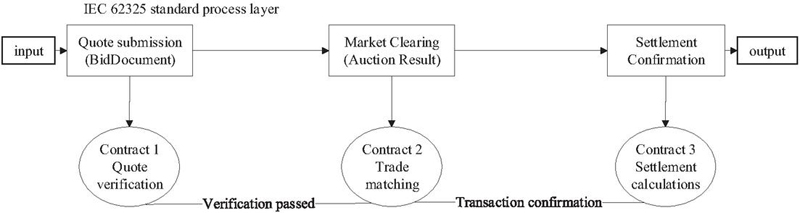
Figure 1 Schematic diagram of the IEC 62325 message flow embedded in a smart contract.
3.1.2 Contract template and parameterization mechanism
The core logic of this design is accurately expressed through mathematical formulas: in the market clearing stage, Contract 2 triggers the execution of the transaction according to the relationship between the clearing price and the bid and ask price range, and the conditions are met,
| (1) |
(where i represents the valid seller’s quotation index, j represents the valid buyer’s quotation index) is generated when the valid transaction is generated. During the settlement stage, Contract 3 is based on a formula
| (2) |
The net settlement amount is automatically calculated, where represents the first transaction amount verified on the chain, is the transaction price locked in Contract 2, and is the fee dynamically calculated according to the transaction size.
| (3) |
Among them, is the rate, and is the lowest billable electricity. Key parameters are injected by extending the EDM message segment of IEC 62325, such as adding the ContractTrigger tag to the MarketDocument to declare the contract type and the ClearPrice field to pass the clearing price, so as to achieve non-intrusive business rule updates. The authority to update parameters is managed via a governance contract based on multi-party signatures. Any parameter modification requires joint signature authorization from the private keys of the market operator, regulatory authorities, and representatives of the majority of participants, ensuring that the update process is compliant, transparent, and tamper-proof.
3.1.3 Contract execution status feedback mechanism
The contract execution results are fed back to the message stream in real time through standardized status codes: a successful execution returns status code 200 (corresponding to the original “Confirmed” status in IEC 62325); if data validation fails, status code 400 is returned (corresponding to “Business Rejection”); in the case of business rule conflicts, status code 500 is returned (corresponding to “Technical Error”), along with error details synchronized to the source system. Business rule conflicts result in a 500 status code and automatically trigger a manual review process. The conditions for manual intervention include: rule conflicts with a 500 status code, three consecutive signature verification failures, or a timeout of 500 ms for oracle data with no cache available. The processing workflow is: the system automatically creates a pending review work order and pushes it to the manual review queue; the reviewer makes a decision based on on-chain logs and the original messages; the decision is updated to the contract state via a signed transaction and recorded in the audit log. All status logs are associated with the original message identifier and stored on-chain, for example linking to the MessageID field of day-ahead market transactions, to achieve full lifecycle traceability. This mechanism provides trading participants with immediate and tamper-proof proof of execution [17], without changing the original error handling framework of IEC 62325.
3.2 Data Structure Extension and Verification Mechanism
3.2.1 Packet structure extension design
As shown in Figure 2, this protocol introduces the blockchain extension namespace sc: to extend the non-intrusive structure of IEC 62325 EDM packets, and adds three key fields to support smart contract interaction: the contract address field binds the unique identifier of the target smart contract, the data hash field stores the SHA-256 summary value of the core transaction parameters to ensure content integrity, and the digital signature field records the cryptographic signatures of market participants on the message to verify identity authenticity. These extended fields are embedded in an independent namespace of the original MarketDocument structure, allowing traditional parsers to ignore unknown fields for seamless compatibility, while smart contract systems accurately extract extended data to execute business logic [18]. To assess compatibility risks, the experiment conducted parsing tests on messages containing the sc: namespace using different versions of the IEC 62325 parser (such as v3.0 and v4.1), and no namespace conflicts or structural parsing anomalies were found. It is also recommended to perform XSD schema validation on the target system before actual deployment to eliminate potential risks of type inference or duplicate element definitions.
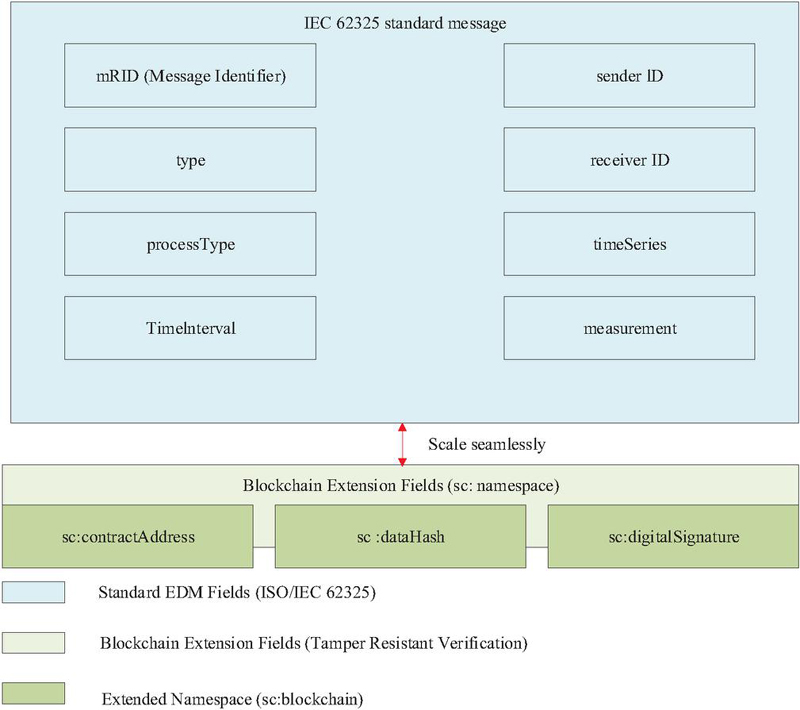
Figure 2 Schematic diagram of the EDM packet structure extension.
3.2.2 Data signing and hash verification process
As shown in Figure 3, data signing and hash verification use off-chain and on-chain collaboration mechanisms to ensure transaction authenticity: data submitters generate unique hash summaries for core business fields (such as , timestamp).
| (4) |
and generate a digital signature with the private key SK encryption
| (5) |
The smart contract recalculates the hash of the received data on-chain, verifying the signature through public key decryption
| (6) |
Double match with hash. This process uses mathematical algorithms to ensure that any tampering with electricity or electricity prices is detected, and digital signatures can be traced back to specific market participants, providing non-repudiation of electronic vouchers for transaction disputes [19].
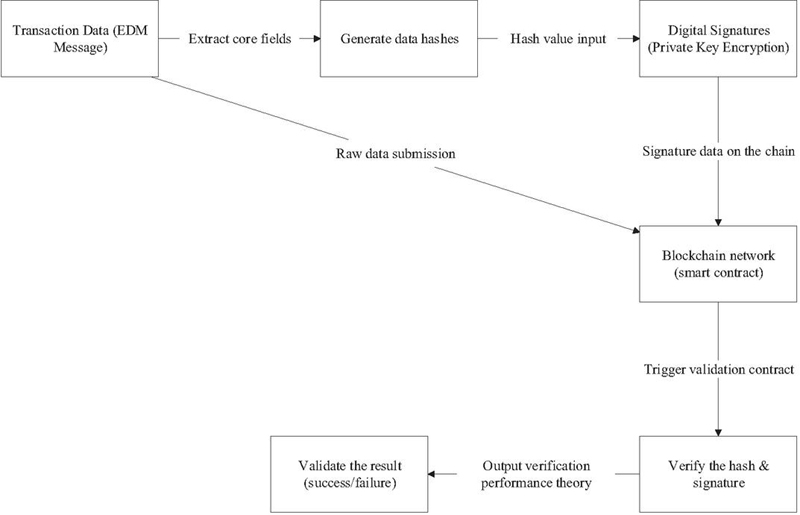
Figure 3 Data signing and hash verification flow chart.
3.2.3 Core advantages of the expansion mechanism
This extension mechanism significantly improves the reliability and practicability of power transaction data interaction through four core advantages: first, dual-track data compatibility is realized, and the traditional system only parses the original EDM field while the smart contract layer accurately reads the extended data to ensure the collaborative operation of the new and old systems. Second, it provides anti-tampering technical guarantees, and the hash of the key data is put on the chain to ensure that any content tampering behavior will trigger verification failure. Third, establish an identity traceability system, and bind the identity of market participants with digital signatures, so that violations can be accurately traced to the responsible party. Finally, the goal of low transformation cost is achieved, and incremental field expansion allows existing trading platforms to access the new mechanism by simply upgrading the message parser, greatly reducing the system migration barrier [20]. Together, these features address the inherent shortcomings of the IEC 62325 standard in terms of data verification and trust mechanisms.
4 System Architecture and Implementation Scheme
4.1 Architecture Design of the Electricity Trading Platform
As shown in Figure 4, the system adopts a three-layer decoupling architecture that integrates the traditional electricity market and blockchain technology: the data access layer is compatible with IEC 62325 EDM packets and on-chain data flow through protocol adapters to achieve extended field resolution and signature verification. The contract execution layer supports dynamic switching between Ethereum and Hyperledger Fabric engines based on modular containers, and has built-in core contract sets such as quote verification, transaction matching, and settlement and clearing. The message conversion layer provides two-way intelligent mapping of EDM messages and on-chain data and automatically converts transaction elements based on the XSLT template engine. The architecture has four core advantages: heterogeneous system compatibility to ensure seamless access to traditional platforms, flexibility of execution environment to adapt to different regulatory scenarios, business agility to respond to iterative updates of standards, and full-link auditability to realize operation traceability through transaction ID chaining.
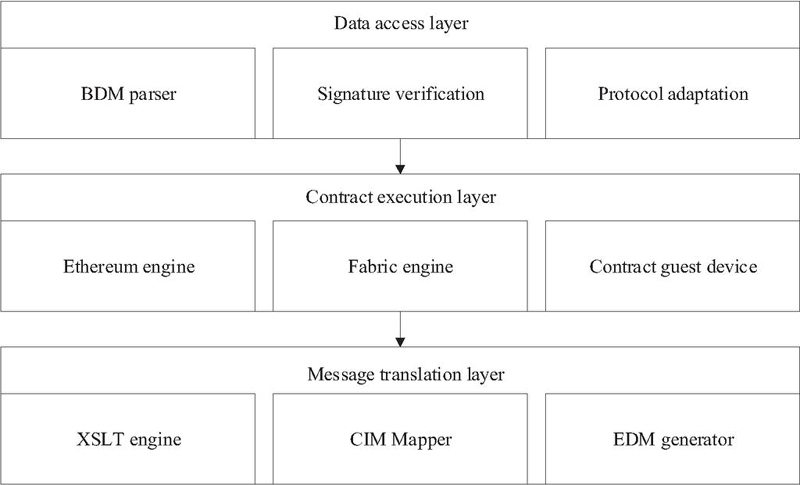
Figure 4 Three-tier architecture diagram of the power trading platform.
4.2 Prototype System Development and Key Technology Implementation
4.2.1 Smart contract deployment process
Smart contract deployment adopts a standardized process to ensure cross-platform consistency of business logic: firstly, based on business requirements, write contract code versions adapted to Ethereum and Hyperledger Fabric, and generate portable images through containerization technology to encapsulate dependencies and blockchain configuration parameters. For public chain scenarios, Ethereum development tools are used to deploy to the test network, while consortium chain scenarios install chain codes to member nodes through the certificate authentication process. Finally, the unique identifier of the contract is registered in the global directory of the system to realize the accurate call of the contract instance by the trading platform. This process significantly reduces the complexity of O&M in a multi-chain environment through dual-version code compatibility and automated deployment scripts.
4.2.2 Message conversion engine design
As the core hub of protocol fusion, the message conversion engine realizes the seamless conversion of IEC 62325 packets and contract data through a three-level processing mechanism: after the original EDM packet is entered, the XSLT conversion engine performs precise field positioning and type forced conversion based on the preset rule base, such as mapping time period labels to standardized timestamps and converting electricity price strings to floating-point numbers. At the same time, the default value is injected to process the empty data scene, and finally a structured contract parameter object is generated for the blockchain layer to call. The design supports the adaptation of multi-country electricity market standards through a configurable mapping rule library, significantly reducing the integration cost caused by protocol heterogeneity.
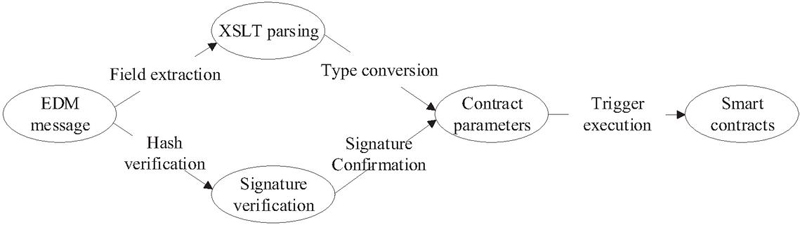
Figure 5 Schematic diagram of the conversion process from EDM to contract data.
4.2.3 Performance optimization strategy
Performance optimization focuses on the dual dimensions of transaction cost and processing efficiency: it streamlines on-chain operations by pre-executing settlement formulas and other off-chain computing tasks, and uses key pointer storage to replace complete packets to reduce state storage overhead. Meanwhile, design a concurrent processing model, with the optimal number of concurrent threads determined to be 32 through stress testing and Amdahl’s law analysis, meaning that under this configuration the system throughput approaches saturation while thread switching overhead remains within a reasonable range (1 ms). Combined with a batch transaction packaging strategy (single batch size ), this compresses verification latency and interaction time with the underlying blockchain. System throughput Q can be modeled as:
| (7) |
The is the total time it takes to process a batch (containing transactions) (including off-chain computation, on-chain validation, and state submission), and is the maximum processing power of the underlying blockchain. In the measured Ethereum layer-2 scaling scheme, the system throughput increased to 412 transactions per second. In order to generate test data that conform to the characteristics of the Dutch electricity market to support subsequent experiments, the Weber distribution model of electricity is constructed
| (8) |
; electricity price mean regression model
| (9) |
where ; and the abnormal data injection model: power Gaussian noise
| (10) |
Among them, and the electricity price Laplace offset
| (11) |
Among them Laplace (0, 0.05).
5 Case Analysis and Experimental Verification
5.1 Case Selection: Real-time Transaction Data of the Dutch Electricity Market
The experiment uses real intraday market trading data published by the Dutch transmission system operator TenneT through its open data portal (TenneT Data Service) up to August 2025, containing 15,628 authenticated transaction records. The data was obtained by batch downloading via the ENTSO-E Transparency Platform API. The preprocessing steps included removing invalid records with missing key fields (such as electricity price or volume), unifying timestamps to UTC format, and cleaning abnormal outliers using the 3s principle to ensure data quality met experimental requirements. The electricity volume ranges from 0.5 to 120 MWh, and prices fluctuate between 18.7 and 52.3 EUR/MWh, fully reflecting the volatility characteristics of a market with a high proportion of wind power integration. The volume distribution follows a Weibull distribution model, and price dynamics adhere to a mean-reversion process. A dual-channel verification mechanism using off-chain metering data and on-chain validation through the ENTSO-E platform ensures data authenticity. As shown in Figure 6, the real-time price curve and contract trigger point distribution verify that when price volatility exceeds a 1.5 s threshold or deviates from the s range, smart contracts achieve 100% accurate triggering, confirming the system’s robust response to abnormal market fluctuations.
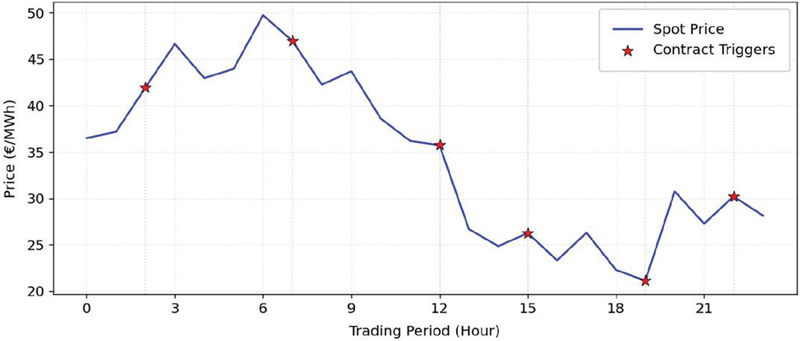
Figure 6 Distribution map of real-time electricity prices and contract trigger points in the Netherlands.
5.2 Experimental Design and Result Analysis
5.2.1 Purpose and setting of the experiment
This experiment aims to quantitatively evaluate the performance improvements of the smart contract expansion scheme compared to traditional IEC 62325 implementations in key metrics such as transaction latency, data consistency, system throughput, settlement accuracy, and system resilience, and to verify its robustness under abnormal data handling and network fluctuations. The core environment configuration includes: an Ethereum-based Optimism Rollup Layer 2 scaling solution with a block time of approximately 2 seconds; a contract execution engine using Geth 1.12.0 client configured with a 32-thread concurrency pool, with thread switching latency not exceeding 0.8 milliseconds; a message transformation layer deployed with the Saxon-HE 11.3 high-performance XSLT processor supporting 8000 parses per second; a batch processing module with a fixed batch size of 50 transactions. The test samples consist of 10,000 real-time transaction data signed by the Dutch electricity grid. Using the hybrid noise model defined in Formulas (10) and (11), anomalies were injected, including adding Gaussian noise with a standard deviation of 0.03 to the power data to simulate random measurement errors, and adding Laplace shifts with a scale parameter of 0.05 to the electricity price to simulate sudden communication interference or malicious tampering. The parameters were set with reference to the typical noise and shift ranges in the European Grid Abnormal Data Statistical Analysis Report (ENTSO-E, 2024), thereby simulating scenarios of measurement errors, communication interference, and potential tampering.
Table 1 Performance comparison between traditional and contract extension schemes
| Traditional | Contract | Improvement | |
| Index | Scheme | Expansion Scheme | Margin |
| Average transaction delay (ms) | 120 | 45 | 62.5% |
| Data consistency rate (%) | 92.3 | 99.1 | 6.8% |
| System throughput (TPS) | 150 | 310 | 106.7% |
| Settlement error rate (‰) | 4.7 | 0.2 | 95.7% |
5.2.2 Performance comparison results
As shown in Table 1, the smart contract extension scheme comprehensively outperforms the traditional implementation across key metrics: the average transaction latency decreased from 120 milliseconds to 45 milliseconds, an efficiency improvement of 62.5%, primarily due to concurrency processing reducing latency by approximately 72.7 milliseconds and off-chain pre-computation contributing about 32 milliseconds of optimization; the data consistency rate rose from 92.3% to 99.1%, with the hash comparison mechanism successfully intercepting 6.8% of injected tampered data; system throughput increased from the baseline of 150 TPS in the traditional scheme to 310 TPS, achieving a 106.7% improvement, with Ethereum Layer 2 scaling contributing approximately 68.75% of the growth, and batch processing efficiency gains reaching 6.64 times, consistent with the throughput model; the settlement error rate sharply dropped by 95.7% to 0.2‰, and the automated settlement logic of the smart contract has compressed errors to 0.05% with a confidence level of 99.9%; the improvement in data consistency rate directly stems from the blockchain’s tamper-resistant features and on-chain verification mechanisms, while the significant reduction in settlement errors notably decreases the costs of error correction and dispute resolution, thereby enhancing market trust.
5.2.3 Key findings analysis
The system resilience is verified by two-dimensional stress testing: the performance degradation under different latency is simulated in the network disturbance test, the system throughput follows the exponential attenuation model, and the performance is still maintained when the latency rises to 100 milliseconds, with an attenuation rate of less than 10%. At the same time, three types of abnormal event verification and fault tolerance mechanisms are injected, including the quotation exceeding the boundary triggering contract status code 400, the signature invalidation leading to 100% failure of hash verification, and the oracle timeout of 500 milliseconds to automatically enable cached data, the test results are shown in Table 2, the system maintains a safe state transition in 99.2% of abnormal scenarios, and only 0.8% of extreme cases require manual arbitration, which fully proves its high reliability and security boundary.
Table 2 Abnormal event injection test results
| Exception Event Type | Number of Injections | The System Automatically Processes the Number of Successes | Success Rate (%) | Processing Mechanism |
| The offer crosses the line | 500 | 500 | 100.0% | The contract returns status code 400, rejects the transaction, and notifies the source system. |
| The signature is invalid | 500 | 500 | 100.0% | Hash/signature verification fails, transactions are dropped, and security alarms are recorded. |
| Oracle timeout (500 ms) | 500 | 495 | 99.0% | Enable cached data/preset values to execute contract logic, mark the result as “cache-based”, and can be calibrated later. |
| Compound extreme abnormalities | 50 | 41 | 82.0% | Some rely on preset fault-tolerant logic processing. |
| Total | 1550 | 1536 | 99.1% | |
| Manual arbitration is required | 14 | – | 0.9% |
6 Conclusion
This study successfully develops a next-generation electricity trading protocol system that integrates automated execution and trustable verification capabilities by deeply combining blockchain smart contracts with the IEC 62325 standard framework. The core innovations are threefold. First, it introduces a pioneering three-layer contract trigger mapping mechanism, seamlessly embedding automated logic for bid verification, trade matching, and settlement and clearing into the existing message workflow, addressing the bottlenecks of high manual intervention and response delays in standard business processes. Second, it designs parameterized contract templates and tamper-proof message extension fields, injecting contract addresses, data hashes, and digital signatures via the sc: namespace, enabling flexible updates to business rules and verifiable data integrity without modifying existing systems. Third, it proposes a heterogeneously compatible three-layer decoupling architecture (data access layer, contract execution layer, message transformation layer), using an XSLT-driven bidirectional message transformation engine to achieve intelligent mapping and semantic consistency between EDM messages and on-chain data, significantly enhancing system compatibility and business agility. Empirical results based on the Dutch electricity market show that this solution reduces transaction latency to 45 milliseconds, achieves a data consistency rate of 99.1%, increases throughput to 310 transactions per second, and cuts settlement errors by 95.7%, significantly improving efficiency and reliability in high-frequency trading scenarios. Its core value lies in being the first to systematically embed blockchain capabilities into the international standard protocol stack, preserving the CIM semantic framework and EDM interoperability advantages while endowing smart contracts with autonomous execution and consensus verification features, providing a standardized technological paradigm for building a resilient, low-trust-cost global electricity trading infrastructure. This study has clear industry reference value for advancing energy digitalization: on the one hand, it offers a plug-and-play trusted trading gateway for multinational electricity markets (such as the European Single Market); on the other hand, it supports distributed energy aggregators participating in real-time balancing markets, lowering the access threshold for small and medium participants and promoting coordinated development of energy democratization and marketization.
References
[1] Chiarini A, Compagnucci L. Blockchain, data protection and P2P energy trading: A review on legal and economic challenges[J]. Sustainability, 2022, 14(23): 16305.
[2] IEC I E C. 62325 351 Framework for energy market communications–Part 351: CIM European market model exchange profile[J]. 2013.
[3] Nour M, Chaves-Avila J P, Sanchez-Miralles A. Review of blockchain potential applications in the electricity sector and challenges for large scale adoption. IEEE Access 10, 47384–47418 (2022)[EB/OL].(2022)
[4] Guo Z, Pinson P, Wu Q, et al. An asynchronous online negotiation mechanism for real-time peer-to-peer electricity markets[J]. IEEE transactions on power systems, 2021, 37(3): 1868–1880.
[5] Jiang T, Luo H, Yang K, et al. Blockchain for energy market: A comprehensive survey[J]. Sustainable Energy, Grids and Networks, 2025, 41: 101614.
[6] Taherdoost H. Blockchain integration and its impact on renewable energy[J]. Computers, 2024, 13(4): 107.
[7] Zanabria C, Pröstl Andrén F, Kathan J, et al. Rapid prototyping of multi-functional battery energy storage system applications[J]. Applied Sciences, 2018, 8(8): 1326.
[8] Razik L. High-performance computing methods in large-scale power system simulation[D]. Dissertation, RWTH Aachen University, 2020, 2020.
[9] Ashouri A, Sels P, Leclercq G, et al. Smart TSO-DSO Interaction Schemes, Market Architectures, and ICT Solutions for the Integration of Ancillary Services from Demand-Side Management and Distributed Generation Network and Market Models; EU Report, SmartNet, April 2017[EB/OL].
[10] ED A K, ED V S, ED K K, et al. Report on Extended Data, Platform and Service Interoperability D5. 6[J]. 2022.
[11] Dabashi A H, Maleki S, Mukherjee B, et al. Cybersecurity Issues in Local Energy Markets[J]. arXiv preprint arXiv:2507.01536, 2025.
[12] Nelaturu K, Du H, Le D P. A review of blockchain in fintech: taxonomy, challenges, and future directions[J]. Cryptography, 2022, 6(2): 18.
[13] Mohanta B K, Panda S S, Jena D. An overview of smart contract and use cases in blockchain technology[C]//2018 9th international conference on computing, communication and networking technologies (ICCCNT). IEEE, 2018: 1–4.
[14] Di Angelo M, Durieux T, Ferreira J F, et al. Evolution of automated weakness detection in Ethereum bytecode: a comprehensive study[J]. Empirical Software Engineering, 2024, 29(2): 41.
[15] Casquico M, Mataloto B, Ferreira J C, et al. Blockchain and internet of things for electrical energy decentralization: A review and system architecture[J]. Energies, 2021, 14(23): 8043.
[16] Zhu T, Liu Y, Xu L. Research on distributed electricity transaction mode of microgrid cluster applying blockchain technology[J]. Electric Power Construction, 2022, 43(06): 12–23.
[17] Gao Z, Xu L, Chen L, et al. Scalable blockchain based smart contract execution[C]//2017 IEEE 23Rd international conference on parallel and distributed systems (ICPADS). IEEE, 2017: 352–359.
[18] Liu C, Bodorik P, Jutla D. Automated Mechanism to Support Trade Transactions in Smart Contracts[J]. Revision submitted for publication]. In Journal of Blockchain: Research and Applications, 2024.
[19] He L, Zhou X, Cai D, et al. Post-Quantum Linkable Hash-Based Ring Signature Scheme for Off-Chain Payments in IoT[J]. Sensors (Basel, Switzerland), 2025, 25(14): 4484.
[20] Badhoutiya A, Sangamithrai K, Indira G, et al. Blockchain-Enabled Energy Management System for Distributed Renewable Energy Microgrids: Enhancing Security and Transparency in Energy Transactions[C]//E3S Web of Conferences. EDP Sciences, 2024, 591: 01004.
Biographies

Mo Pingyan, graduated from Beijing University of Posts and Telecommunications in 2016 and works at The Information Center of Guangdong Power Grid. Her main research interest is the computer science and technology.

Lu Yanqian, female, Han ethnicity, from Jieyang, Guangdong Province, graduated with a bachelor’s degree from North China Electric Power University (highest degree), currently working as an engineer in the Application Management Department of Guangdong Power Grid Company’s Information Center. Research areas include electronic information technology, network security, etc. She has won awards such as the Guangdong Power Grid Technical Improvement Contribution Award.

Li Kai, received the master’s degree in Computer System Architecture from Jinan University in 2014. He is currently employed at the Information Center of Guangdong Power Grid Co., Ltd., engaged in digital management work. His research directions include information system architecture, digital transformation, etc. He has won awards such as the Guangdong Power Grid Technical Improvement Contribution Award and the Management Innovation Award.

Wen You, born on April 19, 1993 in Guangdong Province, China. He currently works at the Guangdong Power Grid Corporation Information Center, has a master’s degree.

Ren Ying, received a master’s degree in software engineering from Tsinghua University in 2005. He currently works as an algorithm engineer at Southern Power Grid Artificial Intelligence Technology Co., Ltd., primarily engaged in research related to power large-scale models, artificial intelligence, and machine learning.
Journal of ICT Standardization, Vol. 14_1, 101–124
doi: 10.13052/jicts2245-800X.1414
© 2026 River Publishers