Research on the Architecture and Implementation of Power Archive Information Platform Based on International and Local Standards
Qin Jie*, Tan Weicong, Li Ren, Xia Lichen and Zhou Zhiding
GuangDong Power Exchange Center Co. Ltd., GuangDong, China
E-mail: qinjiebl09@163.com
*Corresponding Author
Received 14 December 2025; Accepted 03 March 2026
Abstract
In the digital transformation of the power industry, archive management faces the dual-track coordination dilemma of coexisting international standards and local regulations. This study addresses this challenge by proposing a two-tier standard coordination system of “core standards local extensions,” effectively resolving implementation conflicts among heterogeneous standards through mechanisms such as metadata mapping and compliance checking. Building on this approach, an innovative “five-layer, three-guarantee” hierarchical decoupling platform architecture covering the entire lifecycle of archives has been designed. It clearly delineates five layers: infrastructure, data resources, core services, application functions, and user interaction, complemented by three guarantee mechanisms for standards, security, and operations, ensuring the platform’s openness and scalability. To meet core business needs such as trusted archival verification, intelligent processing, and dynamic association, the research explores the application of key technologies, including blockchain for ensuring archive authenticity, artificial intelligence for intelligent classification and indexing, and digital twins for modeling dynamic mappings between archives and physical entities. At the implementation level, a four-stage model is proposed, along with a performance evaluation system encompassing infrastructure, process management, and outcome benefits, introducing business value-oriented indicators such as “completeness and accuracy of archive searches” and “cost savings from a single-set management system.” Case studies from Guangdong Power Grid demonstrate that this platform significantly improves the digitization rate of archives and the efficiency of cross-system data exchange, offering a reference solution that holds both theoretical value and practical feasibility for building a systematic and standardized archive information platform for power enterprises.
Keywords: Electric power archives, information technology platform, international standards, local regulations, architecture design, blockchain.
1 Introduction
With the accelerated transformation of the global energy structure and the continuous advancement of the digitalization process, the power industry is facing new challenges and opportunities. Power archives, as important information resources for power enterprises in production, construction, operation, and management, not only serve as historical records and legal vouchers, but also play a crucial role in the digital transformation of enterprises, the construction of smart energy, and regulatory compliance [1–3]. However, the traditional archive management model has obvious deficiencies in aspects such as information silos, scattered standards, and insufficient system interoperability, making it unable to meet the industry’s demands for full life cycle management of archives, cross-domain sharing and utilization, and intelligent decision-making. Therefore, building an information platform for power archives that takes into account both international standards and local regulations has become an important direction for promoting the high-quality development of the industry [4, 5].
In terms of the standard system, international standards such as IEC 61970/61968 and ISO 15489 provide a universal framework for power system information models, interoperability, and long-term electronic document preservation, emphasizing cross-border compatibility and sustainability. Local regulations such as GB/T 18894-2016, NB/T 11765-2025, and T/CMSS 0015-2025 focus more on industry characteristics and practical implementation, highlighting archive classification, enterprise architecture control, and digital transformation requirements [6–8]. The universality of international standards and the targeting of local regulations coexist, making standard collaboration a complex and crucial task, and also providing multi-level references for the construction of the power archive information platform. How to strike a balance between the two and form an architecture system that not only conforms to global trends but also meets local regulatory and business needs has become the core issue of current research [9].
Based on this, this paper aims to explore a systematic solution for the informatization of power archives that takes into account both international standards and local regulations and covers the entire life cycle of archives. Although current research has made progress in the application of a single technology or standard, it lacks a top-level design methodology that integrates standard coordination, business integration, and technical neutrality. Therefore, this study adopts the core design concept of “standard coordination, business integration, and technical neutrality.” It does this, first, by constructing a standard coordination framework to resolve the dual-track conflict between international and local regulations; secondly, designing a “five-layer, three-guarantee” layered decoupling architecture, and deeply exploring the implementation models of key technologies such as blockchain, artificial intelligence, and digital twins; finally, combined with typical cases from Guangdong Power Grid, proposing a phased implementation path and performance evaluation system. The research results not only enrich the standardized and intelligent methods of power archive management from a theoretical perspective but also provide a promotable practical model for digital archive governance in the energy industry.
2 Information Technology Standard System Architecture for Electric Power Archives
2.1 Comparative Analysis of International Standards and Local Regulations
The standard system for informatization of power archives shows a clear dual-track characteristic, that is, a pattern where international standards and local norms coexist and influence each other. At the level of international standards, series standards such as IEC 61970 and IEC 61968 form a general framework for power system information management, focusing on system interoperability and the unification of information models; standards like ISO 15489 and ISO 14721 provide general principles for electronic document management and digital preservation [10, 11]. These international standards emphasize cross-domain compatibility and long-term preservation, providing a foundational framework for information management in the global power industry. In contrast, local norms place more emphasis on practical operability and industry-specific characteristics. In China, a multi-level standard system has been developed in the field of power archive management, including national standards, industry standards, and group standards [12]. The “Guidelines for the Classification of Archives in Intelligent Integrated Energy Enterprises” (NB/T 11765-2025), issued in 2025, specifies the overall requirements for archive classification, category management, and archive number composition for integrated intelligent energy enterprises. It is applicable to integrated intelligent energy enterprises based on diverse types of energy such as small hydropower, distributed wind power, and distributed photovoltaic power. At the same time, the “Implementation Guidelines for Enterprise Architecture Management in the Power Industry” (T/CMSS 0015-2025) provide standard guidance for power industry enterprises to achieve the organic integration of business and technology during digital transformation [13]. As shown in Table 1, these international and local standards differ significantly in focus areas, applicable levels, and update cycles, forming a complementary rather than conflicting multi-level standard system.
Table 1 Comparison of major standards systems for electrification archives informationization
| Standard | Representative | Update | ||
| Type | Standard | Focus Area | Applicable Level | Cycle |
| International Standard | IEC 61970/ 61968 ISO 15489 | Information model, interoperability, long-term preservation | Multinational corporations, international cooperation projects | 3–5 years |
| National Standard | GB/T 18894-2016 | Electronic document archiving and basic management requirements | Nationwide, across all industries | 5–8 years |
| Industry Standard | NB/T 11765-2025 | Smart energy enterprise file classification and professional applications | Electric power and energy industry | 2–4 years |
| Group Standard | T/CMSS 0015-2025 | Enterprise architecture management and digital transformation | Specific group of enterprises | 1–3 years |
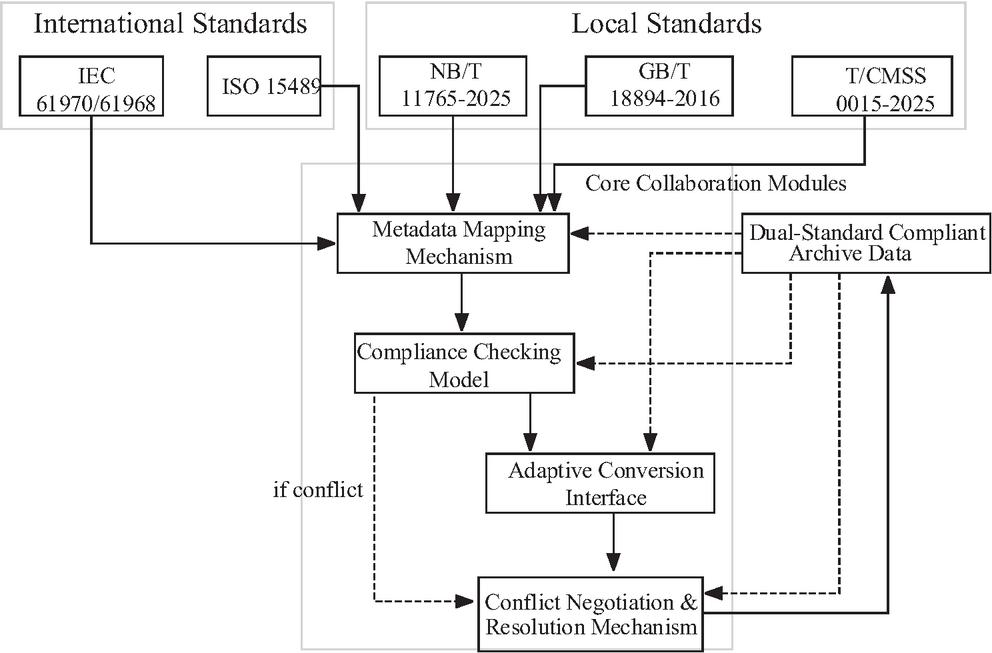
Figure 1 Schematic diagram of the collaborative framework for electric power archive informatization standards.
2.2 Standard Collaborative Framework Design
To achieve an organic synergy between international standards and local regulations, this paper proposes a hierarchical collaborative framework, as illustrated in Figure 1. The framework follows the basic approach of “international principles, local implementation.” At the strategic level, it absorbs the general principles and methodologies of international standards. At the implementation level, it adapts to industry characteristics and regulatory requirements of local norms. The framework consists of three core modules (a metadata mapping mechanism, a compliance detection model, and an adaptive transformation interface) and it achieves continuous optimization through a dynamic feedback mechanism. Additionally, a “Conflict Negotiation and Resolution Mechanism” will be established, enabling continuous optimization through a dynamic feedback system.
2.2.1 Metadata mapping mechanism
Metadata mapping is the foundation for the coordination between international standards and local specifications [14]. Let the international standard metadata set be and the local specification metadata set be , then the mapping relationship between the two can be abstracted as:
| (1) |
where represents the mapping function, used to establish semantic correspondence, and is the tolerance parameter, reflecting the part that cannot be completely mapped due to regional or industry-specific characteristics. Furthermore, if the core metadata set is defined as and the extended metadata set as , the complete mapping relationship can be expressed as:
| (2) |
where ensures the consistency of core descriptive information and supplements industry-specific information. In practical implementation, mapping rules are stored in the form of a rule library. For example, equivalence or inclusion relationships can be defined using RDF (Resource Description Framework) triples, such as “IEC 61970: Power System Resource NB/T 11765: Equipment Class Archive.” The system periodically scans the rule library and uses a graph database to maintain the consistency of the mapping relationships. When any standard metadata item is updated, it can trigger the synchronized update of the associated items.
2.2.2 Compliance detection model
To quantitatively assess the compliance of the archival management system with different standards, this paper constructs a standard compliance matrix. Let the set of system features be:
| (3) |
Set of standard requirements:
| (4) |
The degree of fit () is defined as:
| (5) |
where is the matching function, with a range of [0,1], indicating the degree to which characteristic satisfies requirement ; is the weight of standard requirement , reflecting the importance of different standard items. When (threshold, e.g. 0.85), the system is considered to meet the standard requirements. The implementation of the matching function can be based on natural language processing (NLP) technology, calculating the semantic similarity between standard clauses and system design documents, or conducting automated testing through predefined checkpoints. At the tool level, it is possible to integrate standardized compliance assessment toolchains similar to OSCAL (Open Security Controls Assessment Language).
2.2.3 Adaptive conversion interface
The adaptive transformation interface is designed to address the differences between international standards and local regulations. Its core functionalities cover three aspects: format conversion, enabling interoperability between different storage formats (such as XML, JSON, RDF); metadata completion, automatically filling in missing local-specific fields; and validation rule adaptation, dynamically adjusting validation algorithms according to the verification logic of different standards [10]. The functionality of this interface can be abstracted as a transformation function:
| (6) |
where represents the original archival data object, and are the sets of rules for international standards and local regulations, respectively, and is the archival data object after transformation that meets the requirements of both standards.
2.2.4 Conflict negotiation and arbitration mechanism
When there is a substantive conflict between international standards and local regulations, such as inconsistent archiving deadlines or classification definitions, the framework will activate the conflict negotiation mechanism. This mechanism, as a supplement to the previous technical adaptation measures, makes pre-rulings based on the priority principle of “business compliance is higher than regulatory compliance, and regulatory compliance is higher than technical optimality.” If the pre-rulings cannot reach consensus, they will be submitted for discussion to the “Standard Conflict Arbitration Committee,” which consists of business experts, legal compliance personnel, and technical architects [15]. The final decision will be stored as an exception rule in the knowledge base and simultaneously fed back to the relevant standard-setting institutions, forming an “implementation, feedback, optimization” closed-loop management. Through this process, the mechanism ensures an effective balance between the principle and flexibility of standard coordination.
2.2.5 Dynamic feedback and evolution mechanism
To ensure the long-term effectiveness of the framework, a dynamic feedback mechanism needs to be established. Let the time series be . In each cycle, the compliance is evaluated. If a deviation is found, it is corrected by adjusting the mapping functions , or the weights :
| (7) |
where is the learning rate, which controls the adjustment magnitude. This mechanism ensures that the framework can continuously evolve with standard updates and business changes.
2.3 Key Considerations for Standard Implementation
In the process of building an electrification archive information platform, the implementation of standards is not only a technical issue but also a strategic and management issue. To ensure the effective implementation of international standards and local regulations, it is necessary to focus on the following three key considerations.
2.3.1 Timeliness
The vitality of a standard lies in its synchronization with technological development. The power industry experiences rapid technological iterations and, if standards are updated laggingly, it will result in a disconnect between platform architecture and business requirements. Therefore, a dynamic tracking and updating mechanism for standards should be established to achieve coordinated evolution between standards and technology through periodic evaluations [16]. Let the standard update frequency be and the technology iteration frequency be , then the timeliness metric of standard implementation can be expressed as:
| (8) |
When , it indicates that standards and technology are highly synchronized, which can effectively support the long-term development of the platform.
2.3.2 Regional adaptability
Different regions have varying regulatory requirements and business practices in archive management [17, 18]. For example, at the national level, emphasis is placed on uniformity, while local archives bureaus may introduce more detailed certification standards. The implementation of standards must balance national uniformity with local differences, achieved through a two-tier system of “core standards with local extensions.” Let the set of national standard requirements be , and the set of local standard requirements be , then the complete compliance set is:
| (9) |
where represents the portion of the local standard that exceeds the national standard. This model ensures that the platform complies with national unified requirements while also meeting the specific needs of local regulations.
2.3.3 Technological neutrality
The standard system should avoid being tied to specific technological paths to ensure future scalability and compatibility. Technology neutrality requires that standards focus more on functional objectives and interface specifications rather than specific implementation methods. For example, in storage technology, standards should specify data integrity and traceability without mandating the use of relational databases or blockchain. Let the set of functional requirements be and the set of technological implementations be , then technology neutrality can be abstracted as:
| (10) |
That is, for every functional requirement , there exists at least one technical implementation that can satisfy it. This level of abstraction ensures the standard’s openness and forward-looking nature.
3 Design of a Standard-Based Digital Platform Architecture for Power Archives
The architecture design of the power archives information platform is based on the principles of “standard collaboration as the core, business requirements as the guide, and technology neutrality as the principle.” It adopts a layered decoupling and modular encapsulation design approach to build an integrated architecture covering the entire lifecycle of archives [19]. This architecture not only incorporates international standards (such as IEC 61970/61968, ISO 15489) into a general framework but also deeply adapts to local norms with industry-specific characteristics. At the same time, it provides adaptation interfaces for key technologies such as blockchain and artificial intelligence, ultimately achieving the platform goals of “standardized unification, business integration, intelligent efficiency, and secure reliability.”
3.1 Overall Architecture Positioning and Design Principles
This architecture aims to address three major pain points in power archive management: fragmented standards, disjointed business processes, and technology lock-in. Through hierarchical design, it achieves “compatibility with international standards, implementability of local regulations, and ease of business requirement expansion” [20]. The architecture positioning is reflected in supporting core business from above, being compatible with multiple technology stacks from below, seamless integration with various business systems horizontally, and connecting the three-level standard system vertically. To achieve this positioning, the architecture follows four core design principles: standard-driven, ensuring design compliance with both international and local regulations; layered decoupling, reducing module coupling through hierarchical division for easier iteration and updates; business integration, closely aligning with the full lifecycle of archives and core power business processes; and technology neutrality, avoiding binding to specific technology paths and achieving functional objectives solely through interface specifications.
3.2 Detailed Design of Layered Architecture
Based on the above principles, the platform architecture is divided into five layers (infrastructure layer, data resource layer, core service layer, application function layer, user interaction layer) and three guarantees (standard system, security system, and operation & maintenance system) as illustrated in Figure 2. The functional and standard adaptation details for each layer are as follows.
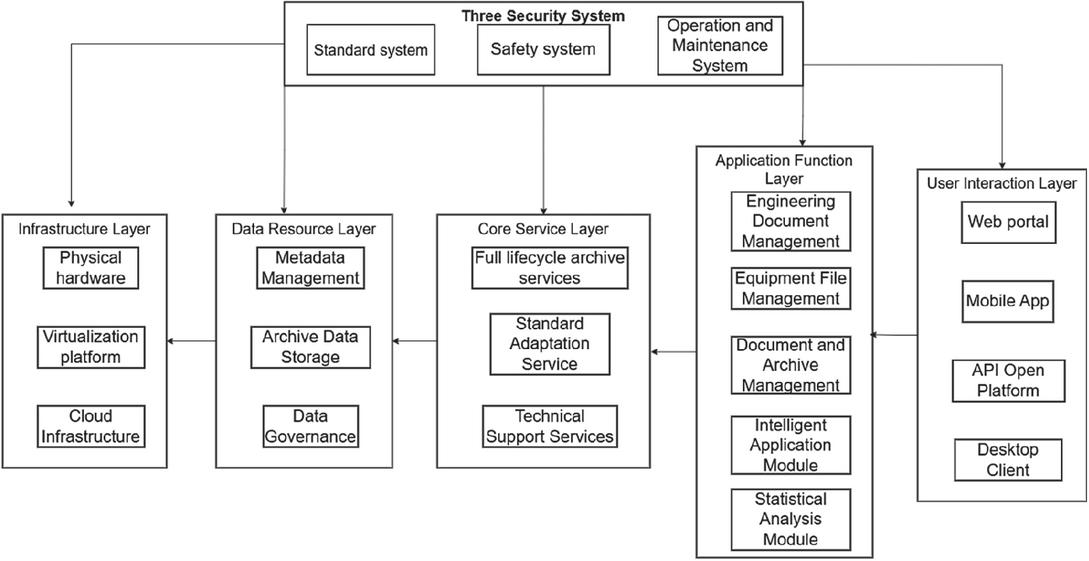
Figure 2 Layered architecture diagram of the electric power archive information platform.
3.2.1 Infrastructure layer: Hardware and basic software supporting standard compliance
The infrastructure layer serves as the hardware and software foundation for the platform’s operation. Its design strictly follows international data center standards and domestic infrastructure norms for the energy industry to ensure the high availability and scalability of the system. This layer encompasses physical hardware, including servers, storage devices, and network equipment; virtualization platforms, such as VMware or KVM; and cloud infrastructure, mainly referring to private clouds or hybrid clouds, such as Huawei Cloud and Alibaba Cloud’s energy industry solutions. In terms of standard compliance, the main international standards relied upon include ISO/IEC 22123 requirements for data center infrastructure management and IEC 62271 requirements for the reliability of power industry network equipment. Additionally, local regulations such as GB/T 30269.5-2017 “Information Technology: Energy Efficiency Requirements and Measurement Methods for Data Centers” and NB/T 35099-2017 “Design Specifications for Data Centers in the Power Industry” are implemented. In terms of key technology implementation, high-availability clusters ensure system availability of no less than 99.5% through dual-machine hot standby and load balancing technologies, which aligns with the performance indicators in Section 5.2. The elastic resource scheduling mechanism supports dynamic expansion based on archive access peaks, fully meeting the cyclical characteristics of power industry business [21].
3.2.2 Data resource layer: The core of standardized collaborative archive data management
The data resource layer serves as the data hub of the platform, primarily responsible for addressing the metadata coordination issues between international standards and local standards, while also meeting the storage requirements for the entire lifecycle of archives. It is also a specific implementation step of the “standard coordination framework” described in Section 2.2. This layer is divided into three sub-modules: metadata management, archive data storage, and data governance. It follows international standards such as ISO 15489-1:2016 and IEC 61970-301, as well as local regulations such as NB/T 11765-2025 and GB/T 18894-2016. In terms of metadata management, a “core plus extension” dual-set structure is adopted, and the metadata mapping mechanism is embedded within it. For archive storage, it processes different data types in separate databases, such as HDFS, InfluxDB, or MySQL. It also supports flexible switching between “dual system” and “single system” modes. The data governance module can automatically clean data and has a built-in compliance detection model. Once the compliance score is lower than 0.85, an alarm will be triggered.
3.2.3 Core service layer: Modular service encapsulation with standard adaptation
The core service layer adopts the “standardized interface plus modularization” approach to encapsulate basic functions, aiming to provide support for upper-level applications and decouple technology from business logic. This layer mainly consists of three types of services: archive full life cycle service, standard adaptation service, and technical support service. During the design process, international standards such as ISO/IEC 19770-1 and IEC 61968-1 were referred to, and local regulations such as T/CMSS 0015-2025 and GB/T 35273-2020 were also taken into consideration. The full life cycle service covers all aspects from archive collection to destruction. The collection phase supports multi-source access and adapts to the IEC 61968 interface. The utilization phase requires that the retrieval response time be controlled within 2 seconds. The destruction phase follows the process stipulated in GB/T 18894. The standard adaptation service mainly handles the conversion between different formats and supports the dynamic update of standards. The technical support service reserves expansion interfaces such as blockchain evidence storage and artificial intelligence analysis to provide a foundation for subsequent intelligent applications.
3.2.4 Application function layer: Business-oriented standard compliance application modules
The application function layer converts the various capabilities of the core service layer into visualized business applications. These applications are divided into five major modules based on business domains, and each module is designed in accordance with corresponding standard requirements. The engineering archive module covers the entire process management of power engineering and is compliant with relevant norms such as NB/T 11765 and IEC 61968. The equipment archive module realizes the association management of equipment’s full life cycle archives, referring to the requirements of IEC 61970 and T/CMSS 0015-2025. The document archive module is responsible for the archiving and de-identification of official documents, conforming to the regulations of GB/T 18894 and GB/T 35273-2020. The intelligent application module integrates functions such as AI classification and blockchain evidence storage, adapting to the technical guidelines of NB/T 11765 and DA/T 92-2022. The statistical analysis module generates various management reports and outputs in formats compatible with IEC 61970 standards, while also meeting the performance evaluation indicators proposed in Section 5.2.
3.2.5 User interaction layer: Standard compliant access entry for role adaptation
The user interaction layer provides personalized access channels for users of different roles and ensures system security through the permission management mechanism. This layer mainly includes four access methods: web portal, mobile APP, API open platform, and desktop client. Archival administrators have full lifecycle management rights, and their operation logs must comply with the requirements of GB/T 22239-2019. Business personnel access the archive content related to their own work based on the “minimum permission” principle. The management layer can view the platform operation status through the report module to assist in decision-making. External institutions access the archive information within the designated range through temporary authorization, and all operations are traceable and verifiable.
3.3 Core Features of the Architecture and Collaboration Mechanisms
The core characteristics and collaborative mechanisms of the architecture mutually reinforce each other, jointly ensuring the efficient operation of the platform. Specifically, its core characteristics are reflected in four aspects. Standard collaboration is the foundation. By deploying metadata mapping at the data layer and implementing standard adaptation at the service layer, different standards such as IEC 61970 and NB/T 11765 can be smoothly connected, meeting the implementation needs of complex scenarios such as cross-border projects. Full lifecycle coverage ensures that each Link from archive collection to destruction has corresponding standards to follow, ensuring the standardization of the management process. Expandability relies on the modular design concept. In the future, if new types of archives such as new energy storage projects need to be included, only the corresponding module needs to be expanded, in line with the principle of technical neutrality. Security compliance is implemented through a security system that runs through infrastructure, data, and applications, meeting regulatory requirements such as GB/T 28181 and ISO/IEC 27001.
To support these characteristics and ensure cross-level efficient collaboration, the architecture incorporates three major collaborative mechanisms. Metadata-driven collaboration is responsible for maintaining data consistency. When metadata in the data layer is updated, it can be synchronized in real time to the service layer and application layer. Standard dynamic adjustment collaboration gives the service layer the ability to respond to standard changes. Once a standard is updated, corresponding metadata mapping adjustments and application function adaptations can be triggered automatically. Business archive linkage collaboration relies on the API open platform to achieve automatic archiving of business system data, thereby breaking down the barriers between business management and archive management.
4 Key Technologies for Implementing the Electrification of Power Archives Information Platform
Section 3.2 stated that the core service layer should reserve interfaces for technologies such as blockchain and artificial intelligence, while the application function layer should achieve the dual goals of “standard compliance and efficiency improvement” through intelligent modules. This section focuses on the three core requirements of power archives: trusted record-keeping, intelligent processing, and dynamic integration. It elaborates on the implementation paths of three key technologies (blockchain, artificial intelligence, and digital twin) by referencing international standards (such as IEC 61970/61968) and local regulations (such as NB/T 11765-2025, GB/T 18894-2016), ensuring deep integration of technology implementation with the platform architecture, supporting standardized management throughout the entire archive lifecycle.
4.1 Blockchain Electronic Document Evidence Technology
Blockchain provides a decentralized and trustworthy verification mechanism for power archive management, effectively ensuring the authenticity, integrity, and non-modifiability of the archives. Considering the high frequency and large file size of the power archive verification business, this study adopts a “hybrid architecture of on-chain hash verification and off-chain distributed storage” to control costs. Specifically, the verification model designs a “dual-chain structure,” where the verification chain and the business chain operate in parallel, with the former responsible for identity verification and hash verification, and the latter handling the archive business logic. The basic process is to calculate the hash value for the electronic archive and then upload the hash value and metadata to the chain to form a verification transaction:
| (11) |
where represents the timestamp and is the signature of the private key. During the verification process, the system recalculates the hash value of the file. If it is consistent with the stored on the blockchain, it indicates that the file has not been tampered with. This workflow is depicted in Figure 3.
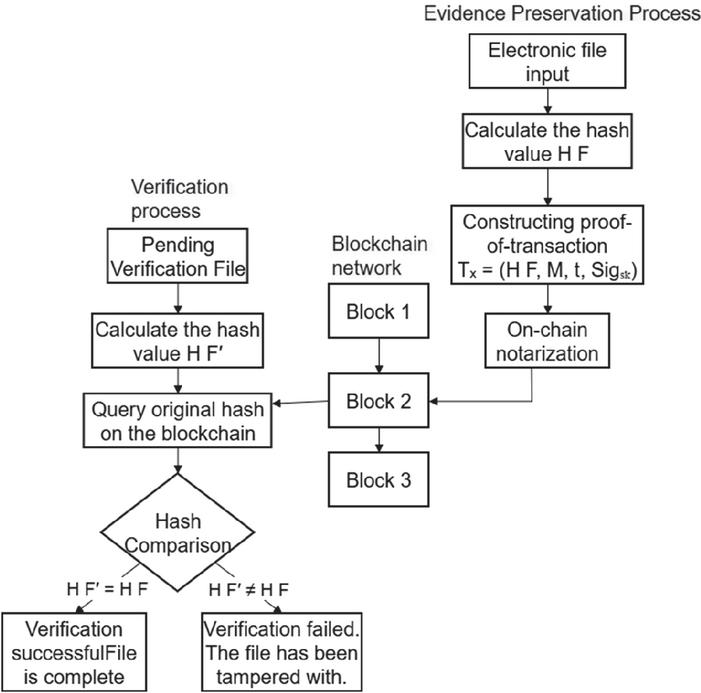
Figure 3 Blockchain-based electronic file preservation and verification flowchart.
To address scalability issues, the business chain adopts a sharding technology design. Different business units, such as provincial companies or municipal companies, are separated for their archive transactions and processed in parallel on different shards, thereby enhancing the overall throughput. In terms of the balance between performance and security, a hierarchical consensus mechanism was proposed. The internal transactions of the platform use the efficient RAFT algorithm, while cross-institutional verification switches to the more fault-tolerant PBFT algorithm. This mechanism has increased the verification throughput from the traditional hundreds of transactions per second to thousands of transactions per second, which can meet the actual requirements of high-concurrency scenarios for power archives.
4.2 AI-Assisted Archive Management
Artificial intelligence in power archive management primarily enhances intelligence through intelligent classification, automatic indexing, and content analysis [22]. To address the issue of scarce labeled data in the power industry, this study adopts a technical approach of “pre-trained language models + few-shot fine-tuning.” It utilizes large-scale pre-trained models on general domain texts such as BERT (Bidirectional Encoder Representations from Transformers) to acquire basic language representation capabilities and then performs domain adaptation fine-tuning by incorporating a specialized power industry dictionary along with a limited set of labeled archival data. Intelligent classification is based on deep learning methods, combined with professional dictionaries and classification models in the power industry to achieve automatic recognition and categorization of archive content. The classification probability can be expressed as:
| (12) |
where represents the text embedding vector, and denotes the total number of categories. Through data augmentation (such as template-based generation) and semi-supervised learning, high accuracy can be achieved using only a few thousand labeled samples. Experiments show that this method achieves a classification accuracy of 94.7% on the power equipment archive dataset, an improvement of 22.3% over traditional methods. Automatic indexing uses a sequence labeling model to automatically extract keywords and subject terms from archive texts to generate standardized metadata. By labeling each word in the output word sequence (such as B-KEY, I-KEY, O), efficient recognition of specialized power terminology is achieved. Content analysis uses AI models to determine sensitivity levels, provide risk alerts, and extract knowledge from archives, assisting in archive appraisal and utilization. For instance, practices by China National Electric Power Investment Corporation have shown that deep learning-based automatic appraisal and sensitive information recognition significantly enhance the intelligence level of archive management.
4.3 Digital Twin and Archive Information Integration
Digital twin technology provides a new management model that integrates virtual and physical aspects for power archives. By constructing digital twins of power equipment, systems, and processes, it enables dynamic mapping and bidirectional association between archival data and physical entities [23, 24]. In the practice of the “one map of the power grid,” power grid equipment, operational status, and geographic information are integrated into a unified digital space, with archival information embedded as an independent layer. To address the challenge of integrating the static historical attributes of archival data with the dynamic real-time attributes of digital twins, this paper proposes an “event-driven-archive association” mechanism. Its mapping relationship can be expressed as:
| (13) |
where represents the digital twin, denotes the key events captured from the twin (such as equipment commissioning, maintenance, and faults), and refers to the set of static documents associated with event (such as equipment manuals, installation drawings, historical maintenance records, and fault analysis reports). This mechanism supports bidirectional navigation: users can retrieve relevant documents from the digital twin based on events or locate the corresponding equipment or system from the documents. Its irreplaceable business value lies in providing an integrated event-document traceability view based on spatial location and timeline for complex business scenarios, such as full lifecycle equipment management, incident reconstruction analysis, and emergency response planning. This goes beyond simple visualization, enabling dynamic analysis and decision support assisted by document knowledge.
5 Implementation Path and Performance Evaluation
The construction of the power archive informationization platform requires a deep integration with the information communication characteristics of the power industry. Based on the concept of “communication interconnection as the foundation, data integration as the core, and business collaboration as the goal,” the platform will be gradually evolved from being usable to being easy to use and then to being intelligent through phased implementation. At the same time, a performance evaluation system covering the information communication dimension will be constructed to control the quality and application efficiency of the platform from the source [25, 26].
This research adopts the design science research paradigm, combining case studies and action research methods. The goal is to build and verify a practical framework applicable to the informationization of power archives. The specific research process is divided into four steps. First, problem identification is carried out. Through literature review and pre-research on enterprises such as Guangdong Power Grid, the core pain points such as standard collaboration difficulties and weak business integration are clarified. Second, the scheme design is carried out. Based on the theory of information system architecture and standard interoperability theory, the “standard collaboration framework” and “five layers and three guarantees” platform architecture are iteratively formed. During this process, two rounds of expert seminars were organized, and the scheme was revised using the Delphi method. Then, the scheme implementation and evaluation were carried out. The prototype system was implemented in the Guangdong Power Grid project, and the effectiveness of the scheme was verified based on the performance evaluation system in Section 5.2 and the empirical data in Section 6.4. Finally, knowledge contribution and promotion were carried out. The research results were refined into transferable theoretical models and implementation guidelines. This research process ensures the scientificity, repeatability, and practical relevance of the entire process.
5.1 Phased Implementation Path
This implementation approach is designed based on the change management concept of “technology-process-organization” collaborative evolution, aiming to ensure that platform development is not merely a technical deployment, but also a successful organizational transformation.
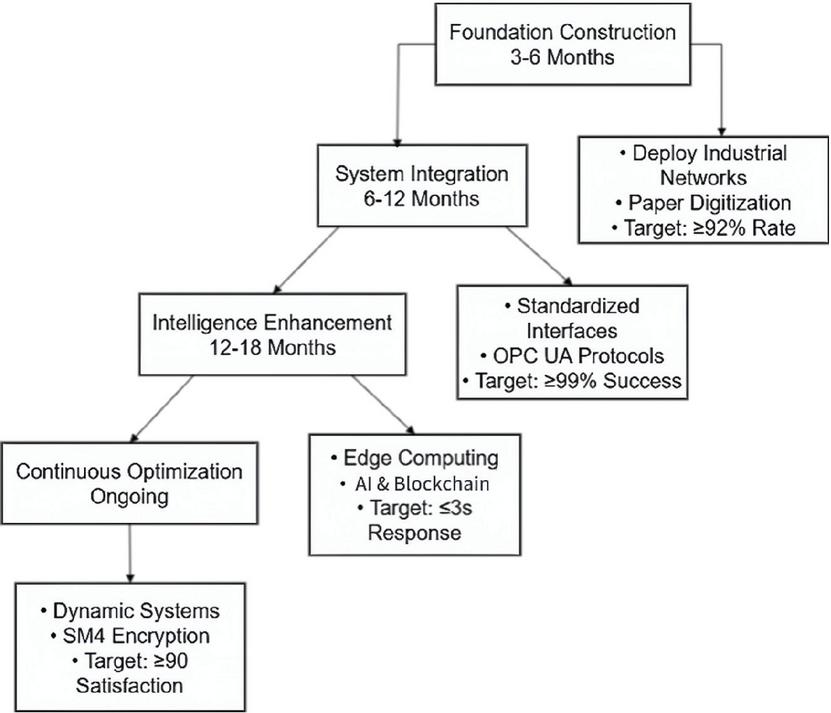
Figure 4 Gantt chart of the phased implementation path for the power archive information platform.
Combining the characteristics of information and communication technology (ICT) applications in the power industry with the needs of archive management, a “four-stage progressive” implementation path is designed, focusing on resolving core issues such as “communication network adaptation, cross-system data interoperability, and real-time archive linkage,” ensuring that the results of each stage are practical and verifiable [27]. The Gantt chart of this implementation path is shown in Figure 4.
5.1.1 Infrastructure construction phase (3–6 months)
The core task of this stage is to lay a solid foundation of “communication plus archives.” At the network level, industrial Ethernet at the plant station level that complies with IEC 61850-3 standard needs to be deployed, as well as a regional-level 5G private network using an independent networking mode. The communication link latency should be controlled within 50 milliseconds and the packet loss rate should not exceed 0.1%. In terms of hardware configuration, edge computing gateways supporting OPC UA and MQTT protocols need to be deployed, and communication protocol parsing engines compatible with standards such as IEC 61970 should be configured. At the same time, the “Power Archival Data Communication Interface Specification” should be formulated to provide a basis for subsequent data interconnection [28]. The focus of the archives work is to complete the digitization of paper archives and establish a communication association mapping between archives and equipment, setting the digitization rate target at over 92%. Taking the practice of China Electric Power Investment Group as an example, this stage achieved the association of traditional archives and real-time data from equipment through the deployment of industrial-level communication gateways, with a digitization rate of 96.88%. In the organizational and management aspect, a special working group involving company leaders, business departments, archives department, and IT department should be established. The responsibilities and authorities of each party should be clarified, and the preliminary electronic document archiving management measures should be released to lay an institutional foundation for subsequent process changes.
5.1.2 System integration phase (6–12 months)
After entering the system integration phase, the focus of work shifted to establishing communication links between the business systems and the archive system. Standardized interfaces were developed for business systems such as OA and SCADA, and structured data was synchronized using the OPC UA protocol. Unstructured data was archived through FTP or SFTP methods, with the interface call success rate required to be no less than 99%. On this basis, a complete closed loop of “business triggering, data communication, and archive” was constructed. At the same time, a data cleaning module was deployed to correct abnormal data during communication. The cleaning accuracy rate needed to reach over 98%. In terms of implementation strategies, typical plants and stations were selected as pilot sites for initial verification. For example, in the wind farm pilot project, the communication delay was controlled within 100 milliseconds. Taking the practice of Guangdong Energy as an example, this stage successfully connected the archive links of 12 business systems using the OPC UA protocol, and the online archive rate of electronic files reached 100%. At the management level, a formal “Electronic Archive Single System Management Specification” and “Archive Responsibility List for Business Systems” were redefined and released. Systematic training was conducted for relevant personnel, and the archive quality was included in the assessment indicators of the business process to overcome the resistance in cross-departmental collaboration.
5.1.3 Intelligence enhancement period (12–18 months)
During the intelligent enhancement period, the core task shifts to strengthening the deep integration of communication and intelligent technologies. It is planned to deploy edge archive nodes in remote substations, leveraging the 5G private network that adopts the MQTT-SN protocol to achieve efficient collaboration between edge devices and the cloud. The goal is to reduce communication bandwidth consumption by more than 30%. At the same time, an artificial intelligence model is developed to parse the unstructured data in the communication process, ensuring that the accuracy of automatic indexing reaches over 92%. In terms of trusted evidence, the PBFT algorithm is used to implement blockchain communication evidence, ensuring a retention rate of evidence not lower than 99.9%. Mobile application programs are also launched at this stage, with the requirement that the retrieval response time should not exceed 3 seconds. Additionally, a new role called “Archive Data Manager” is established to promote intelligent retrieval and analysis functions in business departments and hold an innovation application competition to enhance the awareness of all staff regarding the utilization of archive data and extend the platform value from merely management functions to business empowerment [29].
5.1.4 Continuous optimization phase (ongoing)
After entering the continuous optimization period, the focus is on establishing a dynamic communication guarantee system. The SDN technology is used to dynamically adjust the communication bandwidth, and the SM4 algorithm that meets the requirements of the 2.0 level of the Information Security Protection is adopted to upgrade the communication encryption. In terms of standard adaptation, the international and local communication standards are updated every six months. For function optimization, it is carried out quarterly based on user feedback, such as expanding the offline synchronization capacity according to actual needs. The goal is to maintain user satisfaction at above 90 points. At the same time, the platform operation, standard updates, and process optimization are incorporated into the company’s regular IT governance and knowledge management system, enabling the platform to have the ability for self-evolution and ensuring that the transformation results can continue to be effective.
5.2 Performance Evaluation Indicator System
By integrating the dual characteristics of power archives informatization and information communication, a three-dimensional evaluation system of “Infrastructure – Process Management – Outcome Effectiveness” is established. This system particularly emphasizes the measurement of the core business value of archive management, quantitatively assessing the platform’s communication adaptability, data flow efficiency, and business support capability, with indicator definitions and target values formulated based on practices in the power industry. The detailed performance evaluation indicator system is shown in Table 2.
Table 2 Performance evaluation index system of the power archives information platform
| Information and Communications | ||||
| Dimension | Indicator Item | Indicator Definition | Target Value | Association Description |
| Infrastructure | System Availability | Proportion of time the platform provides normal service (including communication link availability) | 99.5% | Communication link failures will directly affect system availability |
| Archive digitization rate | The proportion of files that have been digitized and have completed communication correlation mapping relative to the total number of files | 96% | Digital archives need to be linked to communication identifiers (such as device codes) | |
| Process Management | File Coverage Rate/Accuracy Rate | When a user performs a search, the proportion of relevant documents returned by the system to all relevant documents (recall), and the proportion of relevant documents among the returned documents (precision) | 95%/90% | Depends on the quality of metadata mapping and the accuracy of AI indexing |
| Search response time | Average retrieval time of archives across multiple terminals, including mobile devices | 2 seconds | Affected by communication bandwidth and edge caching strategy | |
| Cross-system archiving automation rate | The proportion of electronic documents in business systems that are automatically archived without manual intervention | 85% | Reflect the level of business-archive process coordination | |
| Results and benefits | Single-set management reduces costs | After implementing the single-set electronic archives management system, the total annual cost savings in terms of paper, printing, storage, and manpower | A decrease of 30% compar ed to the traditio nal model | Directly reflect the economic benefits of management reforms |
| Degree of compliance risk reduction | Annual decline rate of audit issues or legal disputes caused by lost, damaged, or non-compliant records | 50% | Demonstrate the platform’s value in risk management | |
| User satisfaction | User ratings of archival services (such as retrieval efficiency and usability experience) on a scale of 0 to 100 | 90 points | Directly reflects user experience | |
| Business support level | The proportion of times archival data effectively supports business decisions (such as equipment maintenance and project acceptance) | 85% | Reflect the collaborative value of “archives-business “ |
5.2.1 Assessment methods and cycle
A combined approach of “automatic monitoring and manual research” is adopted. Communication-related metrics (such as latency and packet loss rate) are automatically collected through network monitoring tools like Zabbix and Wireshark, while user satisfaction and business support are obtained through quarterly questionnaires and interviews with business departments. The evaluation cycle is set for a routine assessment every six months, focusing on validating dynamic indicators such as communication link stability and real-time data collection success rate. An annual comprehensive assessment is conducted to thoroughly analyze long-term indicators such as infrastructure adaptability and cost savings, forming evaluation reports and optimization plans. The application of results needs to be linked with the implementation path; for example, if the “cross-system data exchange latency” does not meet the standard, communication protocols may be adjusted (e.g., switching from TCP to UDP) or edge cache nodes added during the continuous optimization period, ensuring platform performance meets requirements [30].
6 Case Studies
6.1 Project Overview
The South China Grid Guangdong Electric Power Company Archive Information Platform Construction Project was launched in October 2023 and officially put into operation in September 2024, covering 19 municipal power supply bureaus and 326 directly affiliated units in Guangdong’s power grid. The project aims to achieve “standardized collaboration, business integration, and intelligent efficiency” and adopts the “five-layer, three-guarantee” architecture design. It focuses on resolving the coordination issues between archive management and the core power business systems, while also achieving seamless alignment with international standards and local regulations.
6.2 Standard Collaborative Implementation
In terms of standard collaborative implementation, the project team, based on the “Layered Collaboration Framework” proposed in Section 2.2, achieved deep collaboration between IEC 61970/61968 and NB/T 11765-2025. Through a metadata mapping mechanism, a semantic mapping relationship was established between the “Power System Information Model” in the international standard and the “Smart Energy Enterprise Archive Classification” in the local specification, covering 86% of the core archive categories. The compliance evaluation model completed a comprehensive assessment before the system went live, with a system conformity of 92.4% (project test results), far exceeding the set threshold of 0.85.
6.3 Information and Communication Technology Applications
6.3.1 Communication infrastructure deployment
In order to support the efficient operation of the power archive information platform, the project adopts a hierarchical deployment strategy at the communication infrastructure level, covering three levels: plant/station, regional, and central. Through technologies such as industrial Ethernet, 5G private networks, and edge computing nodes, the project achieves communication objectives of low latency, high stability, and efficient data transmission. The specific technical solutions and their deployment effects are shown in Table 3.
Table 3 Communication infrastructure technical solutions and deployment effects
| Communication | Technical | Deployment | Communication | Implementation |
| Hierarchy | Proposal | Scope | Indicators | Effect |
| Plant and substation level | Industrial Ethernet (IEC 61850-3) 5G Private Network (MQTT-SN) | 326 plants and stations | Latency 50 packet rate 0.1% | Communication link stability reaches 99.8% (project test results) |
| Regional level | 5G Private Network (Standalone) Edge Computing Node | 19 cities | Delay 100 ms, bandwidth 100 Mbps | Edge node data processing efficiency increased by 40% (project test result) |
| Central level | Hybrid Cloud Platform (Huawei Cloud Energy Industry Solution) | Guangzhou Center | Latency 30 ms, availability 99.5% | Real-time synchronization of provincial archive data |
As shown in Table 3, through hierarchical deployment and technical adaptation, the project has achieved excellent performance in terms of communication link stability, bandwidth utilization, and data processing efficiency, laying a solid communication foundation for the efficient operation of the electric power archive information platform.
6.3.2 Business system communication integration
The project has established data channels with 12 core business systems, including SCADA, ERP, and PMS, using the OPC UA protocol for structured data synchronization and FTP/SFTP for archiving unstructured data. The success rate of communication interface calls remains stable above 99.5%, and the latency for cross-system data exchange is kept within 180 ms (project test results).
Table 4 Comparison of performance evaluation indicators before and after implementation
| Evaluation Dimensions | Indicator Item | Before Implementation | After Implementation | Increase Range | Remarks (Additional Notes on Implementation Difficulties and Solutions) |
| Process management | File accuracy rate | 78% | 93% | +15% | This is achieved through the deployment of AI indexing models and the optimization of metadata mapping rules. Initially, due to the inconsistent quality of historical archives, model iteration and optimization were conducted through manual sampling and review |
| Process management | Cross-system archiving automation rate | 35% | 88% | +53% | When interfacing with the legacy system, due to the non-standard interface, additional protocol conversion middleware was developed, and efforts were made to standardize the data output format within the business department |
| Results and benefits | Single-set management reduces costs | – | Annual savings of about 3.5 million yuan | – | The main benefits come from the reduction of paper consumables, storage space, and archiving labor costs. In the early stages of implementation, there was some skepticism due to habitual practices among certain personnel, but perceptions gradually changed through targeted training and the demonstration of results |
| Results and benefits | User satisfaction | 82.5 points | 93.8 points | 11.3 points | The research sample size is , using a five-point Likert scale, , indicating that the difference is statistically significant |
6.4 Implementation Effect and Performance Evaluation
6.4.1 Comparison of performance evaluation indicators
The data in Table 4 show that, after the platform was implemented, there were significant improvements in key indicators such as digitization rate, system availability, and real-time data acquisition success rate, indicating that the “five-layer, three-guarantee” architecture design and phased implementation path are highly effective in enhancing the efficiency and quality of power archives management.
Table 5 Application scenarios and quantitative effects of information and communication technology
| Technology | Application | Benefit | Quantitative |
| Application | Scenario | Analysis | Indicators |
| 5G Private Network Edge Computing | Real-time archiving of records in remote areas | Reduce data transmission bandwidth consumption and improve archiving efficiency | Bandwidth consumption reduced by 35%, archiving efficiency increased by 45% (project test results) |
| Blockchain notarization | Power Engineering Archive Certification | Ensure the authenticity and integrity of archives, and support cross-department/cross-regional verification | Evidence storage throughput: 3000 transactions per second, evidence storage success rate: 99.95% (project test results) |
| AI Intelligent Indexing | Automatic Classification and Indexing of Archives | Reduce manual processing time and improve classification accuracy | Classification accuracy is 94.2%, an improvement of 21.7% over traditional methods (project test results) |
| Digital Twin | Power Grid Equipment Archive Association Management | Achieve bidirectional association between equipment and records, supporting full lifecycle management | The equipment file association rate is 100%, and query efficiency has improved by 65% (project test results) |
6.4.2 Effectiveness of information and communication technology application
The quantitative results in Table 5 fully demonstrate the important role of information and communication technology in the digital platform for power archives. Through technological empowerment, the platform has made significant breakthroughs in data transmission efficiency, archive correlation rate, and query efficiency, further validating the feasibility and effectiveness of the technological approach.
6.5 Implementation Challenges and Solutions
During the implementation process in the Guangdong power grid, the project did not progress without obstacles. The main difficulties were concentrated in four areas: system integration, process transformation, data governance, and user adoption. The legacy business systems had closed interfaces and inconsistent formats, making standardized integration challenging. Therefore, a transitional data collection approach combining an “intermediate database + web scraping” was adopted, while simultaneously developing a system upgrade roadmap, prioritizing the standardized transformation of key systems. The shift to electronic single-set archiving changed existing work patterns and encountered some resistance. This was addressed through a “policy-first, pilot-driven” approach: first, improve the archival management system, and then run pilot programs in units with better foundations, using successful experiences to promote full implementation. After the digitization of historical archives, metadata was found to be significantly lacking, and the data governance task was heavy. A special improvement plan was thus established, employing AI supplementation and manual verification in batches, while integrating data quality into departmental performance assessments. Some veteran employees were apprehensive about the new system; to improve their experience and acceptance, simplified interfaces were developed, one-on-one support training was conducted, and an online Q&A community was built, thereby ensuring the smooth promotion of the system.
7 Conclusion
This study addresses the challenges faced by power archive management in the process of digital transformation and proposes an archive informationization platform architecture and implementation path centered on standard collaboration. First, at the standard system level, by establishing a two-level system of “core standards local expansion” and a collaborative framework, the conflicts and complementarities between IEC international standards and domestic local norms have been effectively resolved, laying the foundation for the interoperability and compliance of the platform. Second, at the architecture design level, the “five-layer, three-guarantee” layered decoupling model realizes the separation of business, data, and technology, giving the platform the flexibility and scalability to cope with future changes. Third, at the key technology application level, the introduction of blockchain, artificial intelligence, and digital twin technologies has respectively solved the three core requirements of trustworthy archiving, intelligent processing, and dynamic association, significantly improving the efficiency and value of archive management. Fourth, at the implementation management level, the phased implementation path and three-dimensional performance evaluation system provide scientific process management and effect measurement tools for the implementation of the platform. The case study of Guangdong Power Grid demonstrates that this solution can effectively increase the digitalization rate of archives, cross-system integration efficiency, and business support capabilities.
The theoretical contribution of this study lies in proposing a top-level design methodology for power archive informatization that integrates standard collaboration and hierarchical architecture. The practical value lies in providing power enterprises with a set of feasible and assessable technical solutions and implementation guidelines. Future research can further explore the deep mining of archive knowledge based on large models, as well as how to further improve the standard collaboration and security control mechanisms in cross-enterprise and cross-industry data sharing scenarios.
References
[1] Okolo F. Exploiting Business Archives in the Era of Digital Transformation. Loughborough University, 2023.
[2] Luo Y. Design and Implementation of Smart Archives Information Service Architecture 2021. 4th International Conference on Information Systems and Computer Aided Education. 2021: 1899–1903.
[3] Cruz M, Guerreiro S, Borbinha J, et al. Enhancing the Assessment of Digital Archive Maturity using Enterprise Architecture. PoEM Companion. 2024.
[4] Cui M, Wang H, Luo Z, et al. Research on Synchronous Archive Strategy for Power Grid Production Project Archives Based on Milestone Plan. 2023 International Conference on Power System Technology (PowerCon). IEEE, 2023: 1–6.
[5] Ling L, Hongyong Y, Xia C. Model Differences Between IEC 61970/61968 and IEC 61850. 2013 Third International Conference on Intelligent System Design and Engineering Applications. IEEE, 2013: 938–941.
[6] Specht M, Rohjans S. ICT and Energy Supply: IEC 61970/61968 Common Information Model. Standardization in Smart Grids: Introduction to IT-Related Methodologies, Architectures and Standards. Berlin, Heidelberg: Springer, 2013: 99–114.
[7] Kim H J, Jeong C M, Sohn J M, et al. A Comprehensive Review Of Practical Issues For Interoperability using the Common Information Model in Smart Grids. Energies, 2020, 13(6): 1435.
[8] Cao D, Li J, Cai D, et al. Design and Application of Big Data Platform Architecture for Typical Scenarios of Power System. 2018 IEEE Power & Energy Society General Meeting (PESGM). IEEE, 2018: 1–5.
[9] Khoa N M, Dai L V, Tung D D, et al. An Advanced IoT System for Monitoring and Analysing Chosen Power Quality Parameters in Micro-Grid Solution. Archives of Electrical Engineering, 2021, 70(1).
[10] Chen G, Mo W, Wang H, et al. Efficient Cloud-Based Digital-Physical Testing Method for Feeder Automation System in Electrical Power Distribution Network. Archives of Electrical Engineering, 2020: 545–559.
[11] Abbott K W, Snidal D. International “Standards” and International Governance. Journal of European Public Policy, 2001, 8(3): 345–370.
[12] Sun Y. Construction and Research of Digital Archives Cloud Platform Based on Big Data Management. Journal of Physics: Conference Series. IOP Publishing, 2021, 1881(4): 042094.
[13] Zhang J, Xu K, Dong S, et al. Design of Archives Retrieval Scheme for Power Transmission and Transformation Engineering Considering Semantic Information. Proceedings of the International Conference on Image Processing, Machine Learning and Pattern Recognition. 2024: 426–430.
[14] Wang Xiaowen, Sun Cheng’ai, Zhou Chunlu. Heterogeneous Data Operations Based on Metadata Mapping Mechanism. Software Guide, 2015, 14(01):146–148.
[15] Zeng L, Liang H, Meng L, et al. Intelligent Recognition of Digital Archives of Application and Installation in Power Business Expanding Based on Image Recognition Technology. 2021 IEEE International Conference on Computer Science, Artificial Intelligence and Electronic Engineering (CSAIEE). IEEE, 2021: 143–146.
[16] Pei-Xian C, Yi-Ling M, Gui-Ping Z, et al. The Design of Multi-Interface Protocol Adaptive Conversion Distribution Network Communication Device Based on Wireless Communication Technology. 2017 IEEE Conference on Energy Internet and Energy System Integration (EI2). IEEE, 2017: 1–4.
[17] He L, Duan H, Chen M, et al. Archives Room Management System Based on Visible Light Communication. 2020 Chinese Control and Decision Conference (CCDC). IEEE, 2020: 2323–2326.
[18] Elvis R K, Kingori G M, Nzioka C M. The Role of Digitization in the Preservation of Corporate Archives at Kenya Power and Lighting Company. Digital Technologies For Information, 338.
[19] Chen Jiasheng, Huang Junkai, Fan Qiang, et al. Design of a Digital Platform Architecture for Power Grid Standards. Electric Power Big Data, 2023, 26(11):70–78.
[20] Zhang J. Research on Blockchain-based Information System for Power business archives Co-construction. 2023 IEEE 6th International Electrical and Energy Conference (CIEEC). IEEE, 2023: 2850–2854.
[21] Bralić V, Stançić H, Stengård M. A Blockchain Approach to Digital Archiving: Digital Signature Certification Chain Preservation. Records Management Journal, 2020, 30(3): 345–362.
[22] Li J, Wang J. Intelligent Archive Management Based on Deep Learning Technology Driven by Artificial Intelligence. IEEE Access, 2025.
[23] Juntao G, Jue Z, Ningmin Z, et al. Research on the Application of Digital Twin Technology in Power Grid Engineering. Southern Energy Construction, 2023, 10(2): 136–142.
[24] Zhao Y, Du W. Construction and Optimization of Distributed Electronic Archives System Merging Control Messages. Mathematical Problems in Engineering, 2022, 2022(1): 8403720.
[25] Huang H K, Taira R K, Lou S L, et al. Implementation of a Large-Scale Picture Archiving and Communication System. Computerized Medical Imaging And Graphics, 1993, 17(1): 1–11.
[26] Chen X, Liu L. Design of Broadband Power Line Communication Module for Automatic Meter Reading. Archives of Electrical Engineering, 2020, 69(4).
[27] Omotosho A, Awokola J A, Emuoyibofarhe J, et al. A Secure Cloud-Based Picture Archiving and Communication System for Developing Countries. Journal of Theoretical and Applied Information Technology, 2019, 97(7): 1902–1913.
[28] Ustun T S, Hussain S M S, Kirchhoff H, et al. Data Standardization for Smart Infrastructure in First-Access Electricity Systems. Proceedings of the IEEE, 2019, 107(9): 1790–1802.
[29] Yang L, Xie F, Feng L, et al. Preliminary Exploration of the Application of Digitalization of Power Standards in the Power Industry. 2024 6th International Conference on Energy, Power and Grid (ICEPG). IEEE, 2024: 1662–1667.
[30] Zhang H, Shan M, Xu P, et al. Research on Archival Management of Electricity Trading Entity Data Based on the Whole Life Cycle. 2024 IEEE 2nd International Conference on Power Science and Technology (ICPST). IEEE, 2024: 2280–2286.
Biographies

Qin Jie received her Bachelor of Science degree in Computer Science and Technology from Guangdong University of Technology, China, in 2006 and her Master of Engineering degree in Electrical Engineering from South China University of Technology in 2016. She currently serves as a specialist in access and registration management at Guangdong Power Exchange Center Co. Ltd. Her research interests include standardized governance of power market entity archives, dynamic verification and full life cycle management of archival information, as well as homologous data sharing and standardized operation.

Tan Weicong received his bachelor’s degree in Mechatronic Engineering from South China University of Technology, China, in 2006 and his master’s degree in Power System and its Automation from the same university in 2009. He is currently Manager of the Market Management Department at Guangdong Power Exchange Center Co. Ltd. His research areas include electricity market participant management and retail market mechanism design, among others. With years of expertise in electricity market management, he has led the implementation of policies related to the reform of the electric power system.

Li Ren received the bachelor’s degree in marketing from Swinburne University of Technology, Australia, in 2010, and the master’s degree in Financial Management from the University of Hull, UK, in 2012. He is currently Deputy Director of Market Management at Guangdong Power Exchange Center, China. His main responsibilities include overseeing the access registration and file management of power generation enterprises, electricity sales companies, and power users. He is also in charge of the construction and coordination of the registration and archival information platform. He has extensive experience in archival information management.

Xia Lichen graduated from the School of Electrical Engineering at Wuhan University, China, in 2010 with a major in Electrical Engineering and its Automation. He is currently a Specialist in the Market Management Department at Guangdong Power Exchange Center, primarily responsible for the formulation of retail trading rules, trading organization, and system research, development, and design. He has extensive experience in the field of retail trading management in the electricity market.

Zhou Zhiding graduated from Shanghai University of Electric Power, China, in 2010, majoring in Information Management and Information Systems, and obtained his Master of Engineering degree from South China University of Technology in 2016. He is currently a Specialist in the Market Management Department at Guangdong Power Exchange Center, mainly responsible for the access registration and archive management of power generation enterprises and electricity sales companies. He has extensive experience in the field of archive information management.
Journal of ICT Standardization, Vol. 14_2, 259–294
doi: 10.13052/jicts2245-800X.1426
© 2026 River Publishers