Investigating Advanced Technological Innovations Driving Value Creation in Unicorn AI Companies
Mohammadhassan Ostadazim, Iman Raeesi Vanani*, Mohammad Taghi Taghavifard and Mohamad Naghizadeh
Department of Operations and Information Technology Management, Allameh Tabataba’i University, Tehran 1489684511, Iran
E-mail: ostadazim_m@atu.ac.ir; imanraeesi@atu.ac.ir; taghavifard@atu.ac.ir; m.naghizadeh@atu.ac.ir
*Corresponding Author
Received 15 July 2026; Accepted 23 August 2026
Abstract
Artificial Intelligence (AI) is increasingly recognized as a driving force behind the current industrial revolution, which is fundamentally transforming societal structures and business dynamics. The IT industry, particularly AI, has emerged as a major source of strategic interest and investment in the broader context of technological advancement. The extent to which AI-focused unicorn companies provide genuine value is an important subject for CEOs, investors, and policymakers alike. The goal of this study is to look at a business value generation model for artificial intelligence in unicorn firms. Given the importance of value in this rapidly evolving market, the study proposes a value creation method tailored specifically to knowledge-based AI enterprises. To comprehensively examine data from 121 AI unicorn startups selected from the Unicorn List, the study used a web scraping and text mining approach. Furthermore, the findings indicate a strong emphasis on technologies such as deep learning, robotic process automation, and content development. Software outputs and keyword analysis were utilized to develop a framework of 10 primary technological areas. The selected fields include, among others, Emotion Recognition with Autonomous Vehicles, Biometric Systems with Automation, Natural Language Processing with Advanced Technologies, and Cybersecurity with Machine Learning. The report also identifies the leading firms in each industry, as well as how these technologies link to one another across industries.
Keywords: Artificial intelligence, Value creation, Unicorn, web scraping, Text mining.
1 Introduction
A prominent paradigm shift in the way business models are conceived and implemented has been brought about by the development of Artificial Intelligence (AI). Long considered a cornerstone of corporate strategy, value creation has been reinterpreted in the context of AI, focusing on the dynamic processes of creating and delivering value to ensure long-term competitive advantages. The capacity to recognize, create, and capitalize on value has emerged as a critical success factor, especially for tech-based, AI-driven businesses where developing a distinct value proposition is vital to strategic growth (Costa-Climent et al., 2023).
Industry leaders and scholars and have long been avid at the role of value in technology-driven business strategies. Although the value creation concept became popular in the early twenty-first century (Massa, Tucci, & Afuah, 2017), it essentially describes how an organization operates, delivers value to clients, and manages its financial aspects (Kim et al., 2022). As organizations incorporate developing technologies, scholars and practitioners have considered new models that aim to give greater value than outdated frameworks (Guerrero et al., 2021; Silva et al., 2020; Kulkov et al., 2020).
Moreover, the exponential growth of data, network capabilities, hardware developments, and enhanced algorithms have all contributed to the significant interest in AI (Alsheibani et al., 2020; Broo et al., 2022). But even with its widespread impact, the concept of AI is still wide-ranging and complex, covering a range of tools and uses (Dwivedi et al., 2019; Westerveld et al., 2023). Recently, AI was embraced by industries and sectors to improve their value-creation processes and rethink their strategy (Teece, 2010; Kulkov et al., 2021). For example, businesses in a variety of industries have used AI to boost revenue streams and improve customer value, while the financial sector has integrated AI for fraud detection. Mostly, people agree that AI is a key technical force behind the present industrial revolution, changing how businesses and society interact (Brynjolfsson & McAfee, 2017; Buch et al., 2018; Fleming, 2018). Its influence is particularly noticeable in fast-paced sectors adopting new technologies, such as design and logistics (Chien et al., 2020; Klumpp, 2018).
Hopefully, AI has been strategically applied by several businesses to change their value-generation mechanisms, decision-making procedures, and business frameworks (Teece, 2010; Kulkov et al., 2021). AI has shown its versatility and effect over the last 12 years by making major inroads into manufacturing, financial services, and logistics (Chien et al., 2020; Truby et al., 2020). In order to improve their financial performance and competitive posture, these companies frequently create AI-driven value propositions that are suited to the demands of their clients. The use of AI to evaluate fraud risks and put preventative measures in place has been particularly prominent in the financial sector, where AI solutions that aggregate and interpret important data for investors and customers are crucial in forming business strategies (Garbuio & Lin, 2019; Enholm et al., 2022). Prominent companies like Google and Sony have shown how superior value propositions, powered by AI, contribute to sustained success and competitive advantage (Fakoorsaghieh et al., 2017; Vera, 2015; Norinder & Norinder, 2022). Scholars generally acknowledge AI as a game-changing innovation that continues to reshape societal and commercial dynamics (Brynjolfsson & McAfee, 2017; Buch et al., 2018).
Moreover, businesses now have more options to proactively increase customer value, control uncertainty, and boost revenue streams and cost effectiveness thanks to the development of AI technologies. In order to fully utilize the transformative potential of such disruptive technologies, it is often necessary to make significant changes to conventional business models. As the studies by Mikalef et al. (2017) and Vaio et al. (2020) indicate, the growth of AI and its subfields has altered how information is produced and utilized in decision-making processes. This transformation has spurred a broader fundamental change in company operations, especially in industries striving to offer sustainable and competitive alternatives (Govindan et al., 2019; Kou et al., 2019; Garbuio & Lin, 2019; Tuan, Thanh, & Le Tuan, 2019).
It is considerable that the current study examines a thorough business value model of AI in unicorn firms in light of this environment. This study uses sophisticated analytical methods, such as web scraping and text mining, to codify a strong guideline for value creation in AI-driven, knowledge-based businesses, acknowledging the crucial relevance of value in this industry and its continuous development path. It should be emphasized that there is still a significant gap in the theoretical frameworks for examining unicorn businesses, despite of increasing enthusiasm in AI-driven business strategies from both academia and industry. The limitations noted in recent studies, which emphasize the need for more in-depth understanding of AI role across business functions, serve as the theoretical obstacle for this study. Through a practical standpoint, we are motivated by our participation in a project that investigates how new technologies help transfer creative practices from developed to developing economies.
In order to capture their distinct position at the forefront of innovation, market disruption, and international investment flows, this research focuses on rapidly expanding unicorn companies, especially those that use AI. A unique class of companies known as unicorns has effectively transformed cutting-edge technologies into scalable commercial value. Their rapid development and pioneering use of digital transformation strategies give them an attractive platform for studying contemporary company value models. Analyzing these significant companies provides insightful information on common mistakes, best practices, and strategic choices that influence competitive advantage in AI-driven marketplaces.
Accordingly, the present study seeks to address the following overarching research question: How do AI-driven unicorn companies create business value through the application of artificial intelligence technologies? To address this question, the study focuses on three complementary research questions: (1) What are the main technologies, products, services, and capabilities employed by AI-driven unicorn companies in creating business value? (2) What are the dominant themes and underlying patterns associated with AI-enabled value creation among these companies? (3) How can the identified themes and patterns be synthesized to provide a comprehensive understanding of business value creation in AI-driven unicorn companies?
Corresponding to these research questions, the study pursues three main objectives. First, it aims to identify and categorize the principal artificial intelligence technologies, products, services, and capabilities employed by AI-driven unicorn companies and associated with their value creation activities. Second, it seeks to identify and analyze the dominant themes and underlying patterns of AI-enabled value creation by examining textual data obtained from AI-driven unicorn companies through systematic text analysis and thematic analysis. Third, it aims to synthesize the identified themes and patterns into an integrated understanding of business value creation in AI-driven unicorn companies, thereby contributing empirical evidence to the emerging literature on AI and business value.
By addressing these questions and objectives, the study seeks to provide an empirical account of how leading AI-driven unicorn companies position their technologies, products, services, and capabilities in relation to business value creation. This approach responds to the continuing need for a more coherent understanding of the mechanisms through which AI can generate business value and extends existing research by examining these issues through empirical data derived from AI-driven firms rather than relying exclusively on conceptual or secondary evidence.
In conclusion, this study aims to answer the central query encountered by investors, executives, and legislators. A summary of the research contributions are shown in Table 1.
Table 1 Research contributions
| Promotes the efficient use of available information and insights on value creation, aiding in the development of customized value propositions that complement businesses’ strategic objectives. |
| A useful foundation for creating value propositions in knowledge-based businesses, accelerating their development into unicorn enterprises with a significant worldwide footprint can be created by the offered results and the conceptual model. |
| This research is leading the way in applying integrated web scraping and text mining methodologies – a novel approach that could establish a global precedent in order to gain insights into the value creation strategies used by unicorn companies. |
| Being among the first to investigate the relationship between AI and the creation of business value in this particular context, the study significantly develops the body of knowledge already in existence by illustrating the usefulness and effectiveness of AI in improving business operations. |
| Additionally, emerging AI technologies and businesses are acquainted with global business norms and the strategic application of cutting-edge to improve their value creation processes. This, in turn, helps enterprises to embrace and adapt global best practices, so boosting their competitive positioning in quickly developing markets. |
2 Literature Review
2.1 Value Creation
For many years, the concept of value has been the focus of much scholarly research and is considered a key factor in determining an organization’s performance and long-term viability (Fakoorsaghieh et al., 2015). It is acknowledged as a vital source of competitive advantage (Hanssens, 2008; Hult & Ketchen, 2001) and as a tactic for drawing in and maintaining clients (Moradi et al., 2017; Ittner & Larcker, 2003). Value can be interpreted in many different ways, including in terms of social, economic, and financial aspects. In essence, it symbolizes the importance people attach to different behaviors, conditions, or occurrences. Since the evaluator’s perspective, intent, timing, and contextual elements all affect how value is perceived, there are many different and perhaps conflicting ways to understand the idea (Khordyar, 2021).
Obviously, creating value is crucial to guarantee market success as well as for influencing consumer attitudes and improving the company’s ability to extract value, which in turn affects its position in the market and prospects for long-term growth (Parasuraman & Grewal, 2000). According to Sardo and Serrasqueiro (2017), providing customers with the ability to perceive and receive maximum value is a primary purpose for firms, and rivals actively work toward this goal. Thus, businesses need to constantly work to create value that sets them apart from their competitors, and one important component is consumer perception. The company can successfully profit from this perceived value through financial measures like profitability, market share, and sales volume after clients understand and value the supplied product.
In addition, value creation is challenging since it is a subjective process that requires careful conceptualization. The word itself defies a strict definition, having multiple connotations in different fields (Freudenreich et al., 2020). Value is often defined as the advantages that customers experience after using products or services, balanced against the costs, time, and effort that are incurred. Customers’ perceptions of value vary greatly depending on a variety of criteria, including the offering’s quality and price (Chowdhury, 2014). The complexity of value creation and its effects on many industries have drawn more attention from academics recently (Bai, 2018; Furtado et al., 2017; Rasool et al., 2017). Researchers have investigated value creation in innovation, business, and service ecosystems (Dai et al., 2018; Ketonen-Oksi & Valkokari, 2019; Jian et al., 2016), as well as in digital interactive platforms like social media, virtual communities, e-commerce, and the sharing economy (Chen et al., 2018; Fan et al., 2020; Li, 2022; Ramaswamy & Ozcan, 2018, 2019; Shaheer & Li, 2020; Zhou et al., 2018; Zhu et al., 2019). Furthermore, there has been much discussion about how value creation might cultivate enterprise intelligence and improve competitive advantage (Wang & Luan, 2019; Zhou, 2015; Zhu et al., 2019). However, there is still a large lack of empirical and systematic research on the consequences and usage of value creation.
Value, a fundamental component of human endeavors, is vital for companies and customers alike, embodying the advantages gained from any transactional exchange (Priem, 2007). While business value collects customer data to maximize the delivery of customer value within the market, customer value is dependent on distinct individual experiences (Oyner and Korelina, 2016). Modern consumers actively participate in internal and external value-creating processes, making value creation a fundamental component of business operations (Prahalad and Ramaswamy, 2004; Storbacka, 2019). It is emphasized by Suwannasri and Nuangjamnong (2022) and Ogunkoya (2019) that companies must constantly innovate their value propositions as a means of thriving in changing marketplaces and improving overall organizational performance. Value creation, which calls for constant enhancements to goods and services, is therefore recognized as a dynamic and essential element of sustainable corporate plans.
2.2 Value Creation Through AI
A thorough grasp of the AI technology – including its definitions, applications, and determinants of acceptance – is essential to fully utilize its potential to advance innovation across a range of industries and help society. Definitions of AI in addition to those already covered is presented in Table 2.
Table 2 Definitions of AI
| Author | Year | Definition |
| Mikalef & Gupta | 2023 | AI systems are frequently designed to mimic human cognitive functions, including information interpretation, inference, and experience-based learning. These skills enable AI to do a wide range of tasks that have historically required human intelligence, including decision-making, pattern and image recognition, natural language comprehension, and, in certain cases, creative problem-solving. |
| Javaid et al. | 2022 | AI is broadly defined as the simulation of human intelligence within machines programmed to think and act similarly to humans. |
| Mikalef & Gupta | 2021 | In order to make decisions or offer recommendations that are in line with predetermined goals, AI systems concentrate on finding patterns, evaluating complicated data, drawing logical conclusions, and learning from knowledge on their own. By revealing insights that human analysts would miss, these features are being used more and more to enhance decision-making, streamline operational procedures, and tackle larger societal issues. |
| Makarius et al. | 2020 | AI systems, which are made to process and learn from data, use what they have learned to accomplish particular objectives, frequently mimicking the cognitive processes of humans. Simple data handling, sophisticated problem solving, and independent decision-making are all within their purview. The ultimate goal is to allow AI to carry out activities in an adaptive manner, reacting to new information or changes in the environment without requiring manual retraining. |
| Schmidt et al. | 2020 | The goal of these systems is to replicate or even surpass some aspects of human cognition by using complex algorithms and large datasets to continuously learn and improve performances. |
| Demlehner & Laumer | 2020 | A computational framework that can see, learn, reason, and plan without rigorously following pre-programmed rules or set action sequences is known as AI. |
| Wamba-Taguimdje et al. | 2020 | Fundamentally, AI combines a variety of theories and approaches to enable machines to display intelligent characteristics, including language comprehension, learning, reasoning, problem-solving, and perception, frequently with little assistance from humans after early development. Similar to human adaptive behavior, AI systems are made to assess their surroundings and take actions that increase the likelihood that they will successfully complete assigned tasks or objectives. |
2.3 Technologies Utilized in AI to Create Value
Due to growing demand and a booming market for AI technology, a new field of computer science is drastically changing many aspects of daily life. To acquire and implement these cutting-edge technologies and services, start-ups and large technology companies are in fierce rivalry. Here, we showcase the top AI technologies that well-known AI firms use to create value.
Natural Language Generation (NLG): Humans face many obstacles in communicating effectively and clearly, and machines face much more. NLG, a branch of AI, converts structured data into comprehensible natural language writing so that systems can clearly communicate concepts. It is widely used in customer service applications like market summaries and report production.
Speech Recognition: By translating spoken language into machine-readable formats, this technology makes it easier for people to communicate with computers. Speech recognition is widely used and is constantly improving.
Machine Learning Platforms: A key area of study within AI and computer science is machine learning (ML), which focuses on creating techniques that let machines learn on their own and get smarter. These platforms use big data, training datasets, development tools, algorithms, and application programming interfaces (APIs) to carry out data-driven activities like prediction and classification.
Virtual Agents: They are AI-driven computer programs that can interact with people in an efficient manner. They are frequently used as intelligent managers in smart home settings and as chatbots in customer service.
Decision Management: By presenting rational frameworks that maximize training, upkeep, and tuning, AI improves decision-making procedures. To increase value and profitability, organizations use decision management systems to automate and streamline decision workflows.
AI Optimized Hardware: AI-specific tasks are executed by specialized hardware components, such as central processing units (CPUs) and graphics processing units (GPUs). Additionally, portable devices can use AI-optimized silicon chips to speed up AI calculations.
Deep Learning Platforms: A branch of ML, deep learning models simulate neural networks in the human brain to evaluate information and identify patterns in decision-making. Applications include predictive analytics and automated image and speech recognition.
Robotic Process Automation (RPA): Intended to supplement rather than replace human capabilities, automates repetitive commercial operations by simulating human behaviors.
Text Analytics and Natural Language Processing (NLP): Interprets phrase structure, semantics, and user intent. NLP serves as a link between human language and computing systems. In fields like cybersecurity and fraud detection, where it’s critical to comprehend linguistic and behavioral patterns, this technology is essential.
Biometrics: This technology allows for intuitive user-machine interaction by identifying and analyzing physiological and behavioral human traits. Biometrics are mostly employed for security, but they are also utilized to enhance market research by examining user engagement and response.
Cyber Defense: This area includes methods and resources for identifying, stopping, and lessening cyberthreats that target infrastructure and data. Cutting-edge techniques, such as ML algorithms and neural networks, track user activity to spot irregularities and possible security breaches instantly.
AI-Powered Content Creation: AI is widely utilized to create digital material, such as blogs, technical manuals, movies, and ads. For example, Automated Insights’ Wordsmith uses NLP to generate editorial and news content automatically. These techniques are used by major media firms like Hearst, USA Today, and CBS to increase the efficiency of content production.
Emotion Recognition: This technology, which is frequently used in law enforcement contexts like interrogations, analyzes audio and visual data to interpret human emotions.
Image Recognition: AI recognizes and evaluates characteristics in photos and videos to assist applications including psychological profiling, image search, license plate recognition, and medical diagnostics.
Marketing Automation: AI makes it easier for marketing and sales teams to automatically segment their customer base, integrate data, and manage campaigns.
Facial Recognition: This biometric technology uses a person’s facial traits to identify or validate them. It works in tandem with similar biometric techniques like voice, fingerprint, and iris identification, and its applications range from security and law enforcement to growing applications in other fields.
Peer-to-Peer (P2P) Networks: P2P networks allow devices to communicate directly with one another without the need for centralized servers. Distributed computing architectures that improve system speed, redundancy, and user autonomy are supported by these networks.
Virtual Reality (VR): Through specialized equipment like gloves and headsets, users can interact with VR, which creates realistic, computer-generated settings that mimic actual or imagined worlds. VR is extensively used in professional training, education, and gaming for delivering realistic sensory experiences.
Augmented Reality (AR): AR enhances reality rather than replaces it by superimposing digital content in real time over the actual world. Its applications, which offer a smooth transition between digital and physical components, include gaming, entertainment, and decision assistance systems.
Based on CB Insights data, Figure 1 shows the leading AI technologies that generate value.
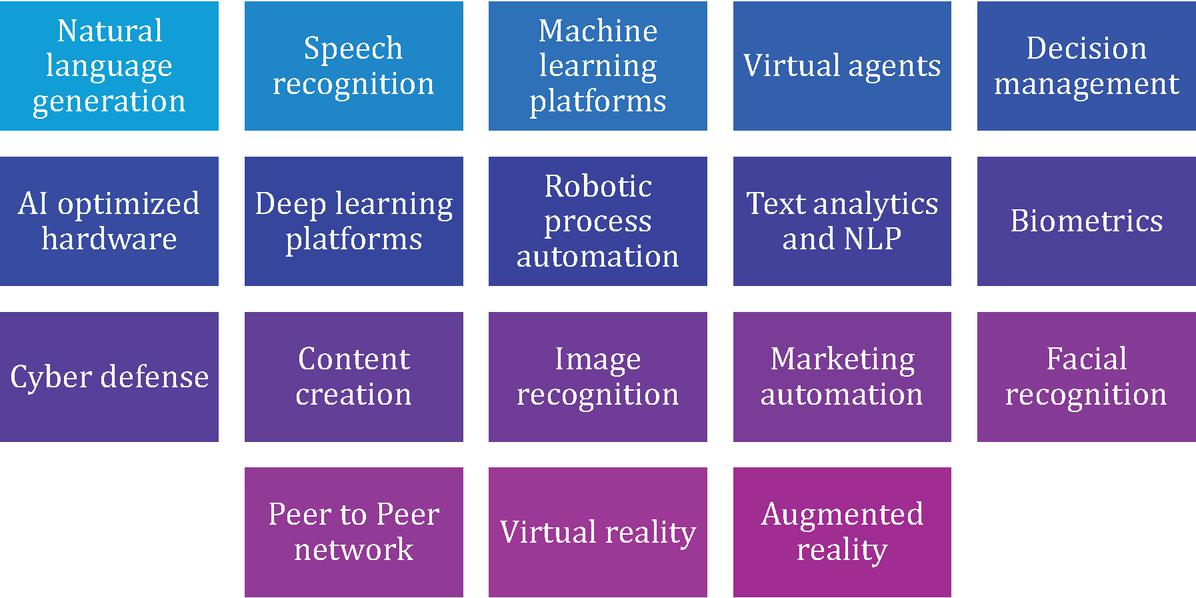
Figure 1 Top AI technologies used to create value (CB Insights, 2026).
2.4 Unicorn Companies
A private startup company valued at more than US$1 billion is explicitly referred to as a “unicorn” in the venture capital sector. Since its initial introduction by Aileen Lee in 2013, the idea has come to represent extraordinary achievement and significant room for expansion in the corporate world. There were over 1,300 unicorn firms as of March 2026, with the majority of them being in China and the United States. A number of variables, including aggressive expansion strategies, increased private capital investments, technical developments, and a strong focus on transformational innovation and customer-centric approaches, are responsible for this rapid increase.
The process of valuing unicorn companies is complex and goes beyond standard financial measurements. It includes assessments of media exposure, business development paths, corporate legacy, consumer value, and the larger institutional framework. Growth potential, the funding environment, patent activity, and venture capital support are important factors that affect a unicorn’s worth. Additionally, the founders’ traits, the company’s ability to innovate, the firm’s age, and the state of the local economy all have a big impact on valuation results. One significant AI technology for improving business evaluation techniques is text mining. The semi-automated method of text mining makes it easier to find patterns that might drive strategic business decisions by extracting information and insights from vast amounts of textual data. Text mining is used in consumer sentiment analysis, patent landscape analysis, social media research, and labor market research. These innovative approaches point to a change in valuation paradigms, as sophisticated data processing methods are being used more frequently to enhance conventional financial analyses and more precisely predict the future of high-growth businesses.
2.5 Research Methods
In order to thoroughly investigate the viability and results of web scraping and text mining, the current study used an integrated methodological approach that combined two different but complementary methodologies. In the first stage, data was systematically gathered using automated web scraping, which used sophisticated Python libraries to retrieve data from a subset of websites that satisfied predetermined inclusion criteria. This procedure made it possible to compile an extensive and pertinent dataset, which was then subjected to text mining tools for analysis. All actions were carried out with institutional clearances, in accordance with the terms of use of the targeted websites and, in conformity with applicable data privacy rules, ensuring strict adherence to ethical norms throughout the data gathering process. Any personal information was anonymized in compliance with the guidelines to protect participant confidentiality.
The data collection technique starts with the usage of advanced Python algorithms for automatic web scraping. Following retrieval, the material underwent a complete text mining operation that included advanced NLP methods for data pretreatment, such as text cleaning, normalization, and standardization. These steps were critical for maintaining consistency and boosting future studies. The text mining method’s major goal was to uncover significant patterns, trends, and insights in unstructured textual data, with an emphasis on statistical analysis such as frequency distributions and correlation studies.
Every phase of the study procedure included ethical considerations. The relevant institutional review board granted full ethical clearance, and all online scraping operations closely followed the ethical and legal guidelines regulating the targeted websites. In accordance with strict data protection guidelines, participant confidentiality and data privacy were strictly protected.
This study’s major goal was to determine which value-creation strategies were most successful for unicorn businesses involved in AI. This was accomplished by examining data taken from reliable industry databases, such as Crunchbase and CB Insights, as well as the companies’ own websites. First, the target population included all of the scientific and technical literature on the value propositions of AI-driven knowledge-based enterprises, including books, dissertations, peer-reviewed articles, and reports, both domestically and outside.
The emphasis switched to gathering data unique to AI-based knowledge startups that were included on reputable Unicorn Lists, CB Insights, and Crunchbase in the second phase. With its main office in New York, CB Insights is well known for compiling and sharing vast amounts of market and business knowledge, mainly to assist venture capital firms and investment banks in making superior investment choices. In a similar vein, investors and business strategists frequently utilize Crunchbase’s extensive data on public and private companies throughout the world to guide funding decisions, track market trends, and spot new opportunities locally and globally. The 121 AI unicorn companies examined in this study were selected from the global population of unicorn companies identified for the 2025 reference year. A unicorn company was defined as a privately held company with a valuation of at least US$1 billion. Rather than applying a random sampling procedure, the companies were purposively selected based on the availability, accessibility, and adequacy of publicly available textual data required for the objectives of the study. In particular, companies were included when sufficient information could be identified and systematically collected from their official websites and other relevant publicly accessible sources regarding their technologies, products, services, capabilities, applications, and value propositions.
Accordingly, the final sample of 121 companies represents AI-focused unicorn firms for which adequate and analyzable textual data were available. Companies for which sufficient relevant information could not be accessed or whose publicly available data were inadequate for systematic text-based analysis were excluded from the final dataset. This criterion was adopted to ensure the consistency, comparability, and analytical suitability of the data across the selected firms. The study therefore focuses not simply on the largest or most highly valued AI unicorns, but on companies for which sufficient empirical evidence was available to examine their technological and value-creation activities.
Table 3 Unicorn AI companies list
| databricks | Gong | nova systems | outreach |
| openAI | Automation anywhere | horizon robotics | weride |
| Pony.ai | datarobot | icertis | relativity space |
| Tempus | contentsquare | oaknorth bank | thoughtspot |
| scale AI | collibra | ubtech robotics | Dataminr |
| megvii | cerebras systems | olive | Fractal Analytics |
| harness | spring health | Mashgrin | Trax |
| vast data | Xtalpi | Jasper | Heartflow |
| dataiku | verbIT | Bolttech | BigID |
| tekion | Black sesame technologies | paradox | Enflame |
| highspot | Hive | k health | Insider |
| ECARX | 4paradigm | cognite | Viz |
| cars24 | concertAI | Notco | Seekout |
| innovaccer | lightricks | shukun technology | Ada support |
| highradius | Aiways | clarify health solutions | Alation |
| zuoyebang | Aiphasense | phenom people | Aibee |
| motive | H2O.ai | sparkcognition | Vectra AI |
| graphcore | cresta | Salt Security | SmartMore |
| clari | ASAPP | DeepBlue technology | Mininglamp Technology |
| uniphore | AfinitiTonal | Optibus | Rebellion Defence |
| uptake | Dental Monitoring | 1kmxc | Invoca |
| shield AI | Hailo | Haomao.AI | Sisense |
| dial pad | TensTorrent | Tractable | People.ai |
| YITU technologymoveworks | Standard | Vise | Gaussian Robotics |
| Skydio | Owkin | Interos | Stability ai |
| eightfold.ai | MOBVOI | Placer.ai | Xiaoice |
| hugging face | Feedzai | Momenta | weights &biases |
| preferred networks | Intellifusion | snorkel AI | Darwinbox |
| Fiture | Globality | Agile Robots | REEF technologyMoka |
| Augury | Tresata | patSnap | Morning Consult |
| MeeroiCarbonX |
The data collection and company identification process was conducted with reference to the 2025 period. The resulting dataset reflects the information publicly available for the selected AI unicorn companies during the 2025 study period. This temporal boundary was adopted to provide a consistent reference point for examining the rapidly evolving AI ecosystem and to capture the technological and business activities of AI unicorns within a clearly defined period. The selection of 121 companies consequently reflects the intersection of three criteria: (1) unicorn status, (2) an explicit or substantial focus on artificial intelligence, and (3) sufficient publicly accessible data for systematic textual analysis. Table 3 provides a comprehensive list of these companies.
Table 4 shows the corresponding industries for the chosen AI businesses based on the industry classifications supplied by CB Insights.
Table 4 List of unicorn companies along with related industry in 2024
| No. | Industry | Companies in the Unicorn List |
| 212 | Consumer & Retail | 1 |
| 387 | Enterprise Tech | 2 |
| 219 | Financial Services | 3 |
| 117 | Healthcare & Life Sciences | 4 |
| 185 | Industrials | 5 |
| 26 | Insurance | 6 |
| 83 | Media & Entertainment | 7 |
| 1229 | Sum | 8 |
This study employed an integrated web scraping and text mining procedure to systematically collect, preprocess, and analyze textual information from AI unicorn companies. Web scraping was adopted as the primary data collection technique because a substantial proportion of the information relevant to AI technologies, products, services, capabilities, and value propositions is published on corporate websites in HTML-based and semi-structured formats rather than in standardized machine-readable datasets. Compared with manual data collection, automated scraping provides a systematic and reproducible mechanism for retrieving large volumes of textual information while maintaining a consistent extraction procedure across companies. The data collection process was implemented using Python and its associated web-processing libraries. Python was selected because of its extensive ecosystem for web requests, HTML parsing, text processing, and data manipulation, which facilitates the development of a reproducible data collection pipeline. The scraping procedure followed a structured sequence consisting of (1) identification of the target companies and their relevant web domains, (2) identification of relevant web pages, (3) retrieval of HTML content, (4) extraction of visible textual content, (5) removal of irrelevant webpage elements, and (6) storage of the resulting textual data in a structured dataset for subsequent analysis.
For each of the 121 selected AI unicorn companies, the official corporate website was used as the primary source whenever relevant information was publicly accessible. The webpages examined were selected according to their relevance to the research objectives and included, where available, pages describing the companies’ technologies, products, services, AI capabilities, applications, platforms, APIs, solutions, and value propositions. The purpose of this procedure was not to collect all content available on a website indiscriminately, but to identify and retain textual material that contained substantive information about the technological and business activities of the selected companies. The crawler component was responsible for accessing the identified webpages and retrieving their HTML content, whereas the scraping component parsed the retrieved HTML and extracted the relevant textual elements. During extraction, non-content elements such as navigation menus, scripts, styling information, page metadata, repeated headers and footers, and other webpage components that did not contribute to the substantive meaning of the text were excluded. The extracted information was subsequently associated with the corresponding company and source webpage and stored in a structured dataset. This procedure allowed the textual information collected from multiple webpages and companies to be consolidated into a common corpus suitable for computational text analysis.
Following data collection, a systematic preprocessing procedure was applied to reduce noise and improve the consistency of the textual corpus. Text preprocessing is particularly important for topic modeling because irrelevant or highly frequent terms can introduce noise into the corpus and adversely affect the interpretability of the resulting topics. Recent methodological research similarly emphasizes the sensitivity of topic models to textual noise and the importance of appropriate preprocessing before model estimation. The preprocessing procedure consisted of several sequential operations. First, the extracted HTML content was converted into plain textual data. Second, all text was normalized to a common case to avoid treating the same word with different capitalization as separate terms. Third, punctuation marks, HTML artifacts, special characters, redundant whitespace, and non-informative numerical or symbolic elements were removed where they did not contribute to the substantive meaning of the text. Fourth, the text was tokenized into individual lexical units. Tokenization transformed each document into a sequence of analyzable terms and provided the basis for subsequent frequency analysis, keyword extraction, and topic modeling. Fifth, common English stop words were removed. In addition to standard stop words, domain-independent terms that occurred frequently across the corpus but provided little discriminatory information were examined and removed when appropriate. This step was particularly important because generic terms that occur across many documents can dominate topic models without contributing to meaningful topic differentiation.
Where appropriate, different morphological forms of semantically equivalent terms were normalized to reduce unnecessary vocabulary variation. In addition, highly repetitive terms originating from website templates or common corporate language were examined and excluded when they did not contribute meaningful information about the companies’ technologies, products, services, or capabilities. The objective of this preprocessing stage was therefore not simply to reduce the size of the vocabulary, but to construct a corpus in which the remaining terms retained substantive relevance to the research questions. After preprocessing, the corpus was represented using a document-term representation. Each document constituted a unit of textual analysis, while the terms extracted from the corpus constituted the vocabulary. The resulting representation captured the occurrence of individual terms across documents and provided the input required for frequency analysis and subsequent topic modeling. In addition to individual words (unigrams), frequently occurring two-word and three-word combinations (bigrams and trigrams) were considered in order to preserve meaningful technical expressions. This was particularly important for the AI domain because many relevant concepts are expressed through multi-word terms, such as large language models, natural language processing, ML, cloud computing, and application programming interfaces. Treating such expressions only as independent single words could reduce their semantic specificity.
The text mining stage combined frequency-based analysis, keyword extraction, clustering, and topic modeling. Initially, term frequencies were calculated to identify the most frequently occurring technological and business-related concepts across the corpus. Frequency distributions provided an initial empirical basis for identifying recurrent terms and comparing the relative prominence of technologies, products, services, and capabilities across the selected companies. However, frequency alone was not considered sufficient for identifying the underlying structure of the corpus because highly frequent terms may occur across multiple thematic areas. Therefore, frequency analysis was complemented by keyword and phrase-level analysis and subsequently by unsupervised topic modeling. Keyword extraction was conducted with a specific focus on terms associated with artificial intelligence technologies, technological capabilities, products, services, applications, platforms, infrastructure, and business solutions. The extraction process was guided by both corpus-level statistical evidence and the substantive context of the AI industry. Candidate keywords and phrases were initially identified from the preprocessed corpus based on their frequency and recurrence across company documents. The candidate terms were then examined in their textual context to distinguish substantive technological concepts from generic corporate language. Multi-word expressions were retained when their combined meaning represented a distinct technological or business concept. This procedure enabled the analysis to move beyond isolated high-frequency words and capture domain-specific concepts that more accurately represented the technological and value-creation activities of the companies. The extracted keywords were subsequently organized into broader conceptual categories according to their semantic and technological similarity. This stage provided an intermediate structure for examining the distribution of technologies and services across the companies and served as an additional basis for interpreting the results of the topic modeling procedure. In this respect, keyword extraction was not used as a substitute for topic modeling; rather, it was used to identify salient vocabulary and facilitate the interpretation and labeling of the latent topics generated by the model.
Following preprocessing and keyword extraction, Latent Dirichlet Allocation (LDA) was applied to identify latent thematic structures within the textual corpus. LDA is a generative probabilistic topic model in which each document is represented as a mixture of topics, while each topic is represented as a probability distribution over words. This property makes LDA particularly appropriate for the present study because individual corporate webpages may simultaneously describe multiple technological and business activities rather than belonging exclusively to a single thematic category. The preprocessed document-term representation was used as the input to the LDA model. The model estimated the probability distribution of words within each latent topic and the probability distribution of topics within each document. Consequently, the resulting topics were interpreted based on their highest-probability and most representative terms, together with their occurrence patterns across the corpus. The topic labels were not assigned automatically by the algorithm; instead, they were interpreted by examining the most salient terms associated with each topic and their contextual relationships within the original textual data.
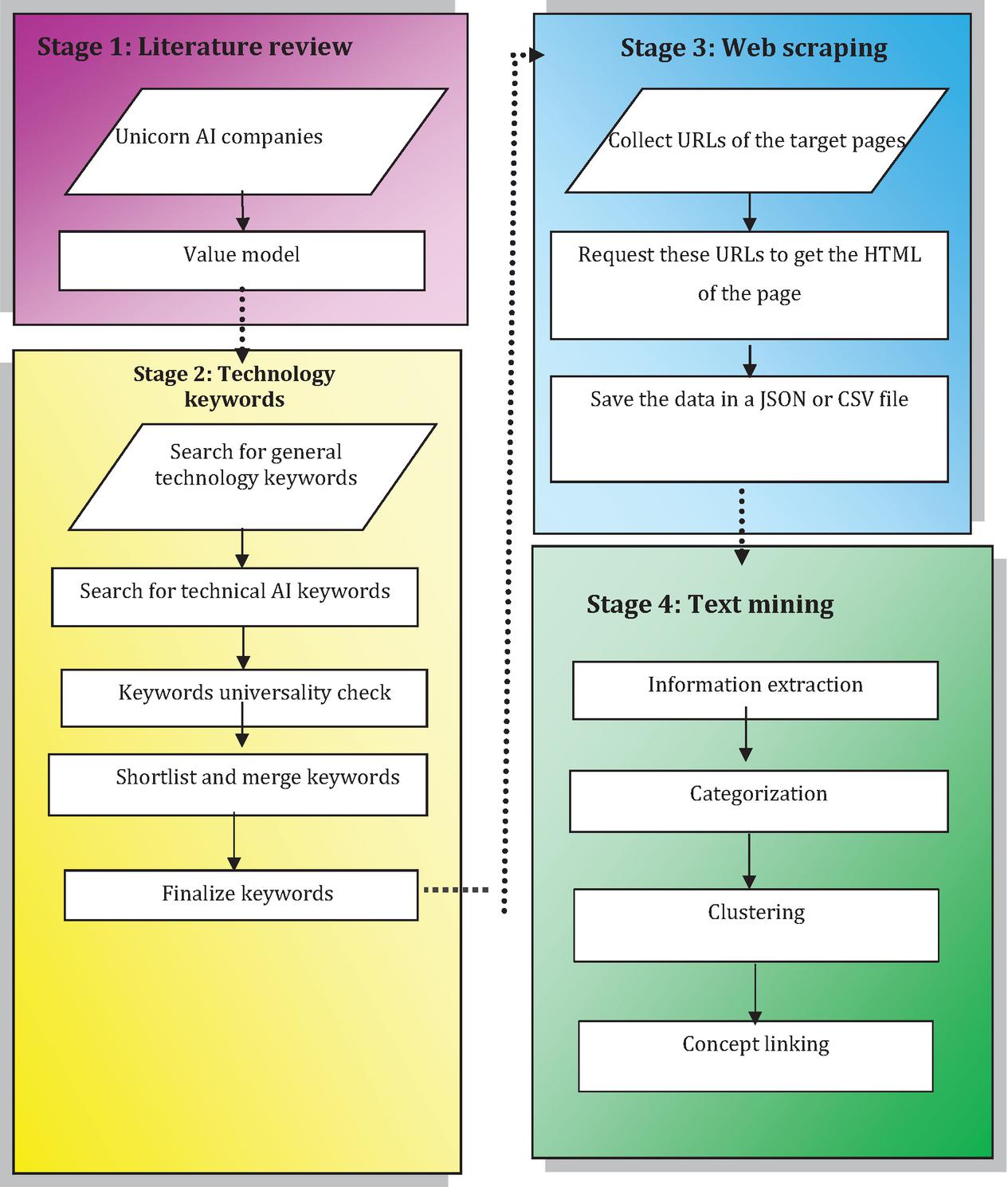
Figure 2 Research methodology.
An important methodological consideration in LDA is the selection of the number of topics, commonly denoted as k. Because an arbitrary specification of k can substantially influence the resulting topic structure, alternative topic solutions were evaluated using topic coherence. Topic coherence provides an indication of the semantic consistency of the terms constituting a topic and is commonly used to support the selection and interpretation of topic models. Recent methodological research also emphasizes the importance of evaluating topic-model quality and stability rather than relying solely on a single arbitrarily selected number of topics. In the present study, multiple candidate topic solutions were estimated and compared, and the final number of topics was selected based on the coherence criterion and the interpretability of the resulting topic structure. The 12-topic solution was ultimately selected as the most appropriate representation of the corpus. Finally, the results obtained from frequency analysis, keyword extraction, thematic interpretation, clustering, and LDA were examined jointly rather than independently. This triangulation allowed the study to distinguish highly frequent terms from more structurally meaningful latent themes and to connect computationally identified patterns with the substantive technological and business context of AI unicorn companies. The resulting analytical procedure therefore provided a systematic pathway from raw web-based textual data to a structured representation of the technologies, products, services, capabilities, and value-creation themes characterizing AI-driven unicorn companies. Figure 2 provides a detailed explanation of the research methods.
3 Discussion and Results
A comprehensive collection of keywords was used to determine the technologies used by AI companies that were categorized as unicorns in 2024. In order to provide more reliable and thorough findings, the goal was to include a wide range of phrases pertaining to technology, goods, and services. The analysis was carried out in two stages overall. In order to assess the organizations’ similarities and differences, an exploratory study was first conducted using the predetermined keywords. This provided first insights into the technical environment.
The generative probabilistic model LDA is used to model topics and organize themes in big text corpora. Latent refers to undiscovered patterns or hidden structures. Dirichlet shows that the model assumes a Dirichlet distribution for both the themes within documents and the words within subjects. The process of assigning words to themes in a probabilistic manner is known as allocation. At its core, LDA assumes that every document is a combination of several topics, and that each topic is made up of a collection of words with different probabilities. The LDA model’s output identifies popular subjects and the keywords that correspond with them by producing thematic groups with numerical proportions. The following steps were among the processes carried out at this phase:
Data Preprocessing: To concentrate on identifying unique themes, the text data was first processed to extract pertinent subjects, with frequencies originally ignored. After that, the extracted subjects were methodically saved for further examination.
Topic Modeling: The corpus was subjected to topic modeling using LDA, which revealed underlying linkages and latent theme patterns. Seven subjects were chosen for this study in order to provide a more detailed picture of the technology areas that the organizations covered.
Extraction of Topics and Keywords: To clarify the businesses’ thematic emphasis areas, the top keywords for each subject determined by the LDA model were gathered and examined.
Dimensionality Reduction: This approach was used to further analyze the data. In order to preserve as much discriminating information as possible, the high-dimensional word-frequency vectors had to be projected onto a lower-dimensional space. In this case, dummy labels were utilized for demonstration.
Visualization: Lastly, a scatter plot was used to display the outcomes of the dimensionality reduction. Every point on the plot represents a document, or a single text entry, and its category is indicated by its color. The distribution and clustering of thematic regions within the dataset are intuitively represented by the x and y coordinates, which correspond to the first and second main components derived from the LDA-based dimensionality reduction.
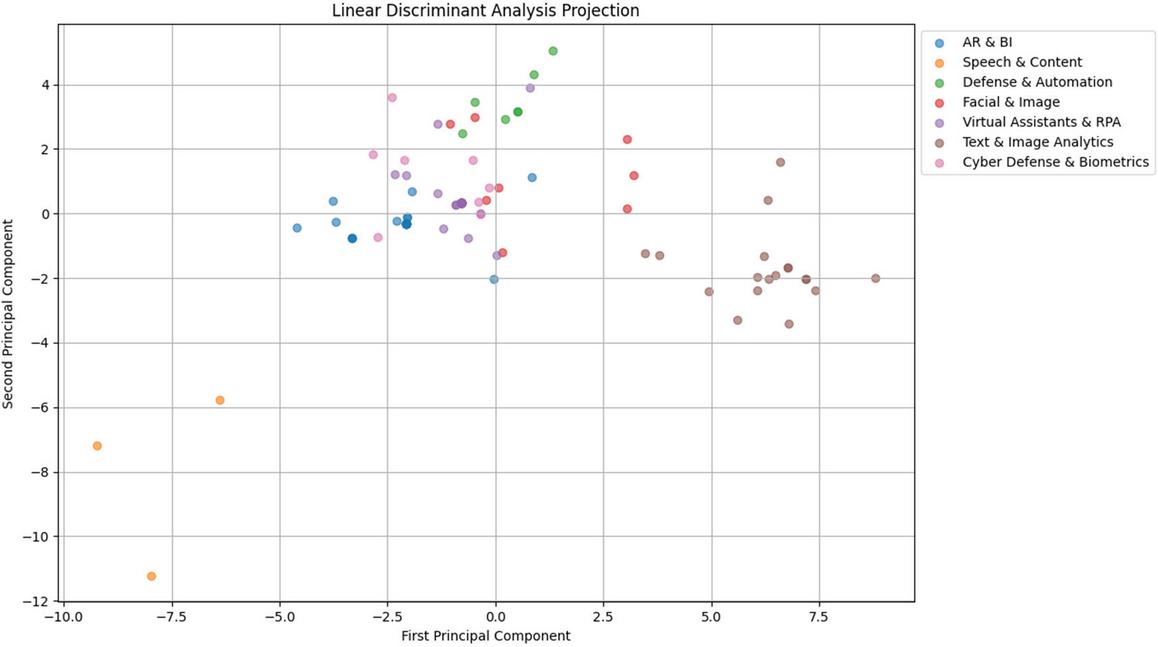
Figure 3 Linear discriminant analysis projection.
LDA projection is shown in Figure 3. The first principal component is represented by the horizontal axis, while the second principal component is represented by the vertical axis. With colors designating distinct categories named from category_0 to category_6, each data point represents a document. The ability of the LDA to differentiate between categories in the restricted feature space is demonstrated by the clustering of points inside each category, indicating the LDA’s usefulness for classification tasks and exploratory data analysis.
By projecting high-dimensional text data into a manageable two-dimensional space, this scatter plot makes it easier to see patterns, correlations, and differences between document groupings. Based on their linguistic characteristics, it makes it easier to identify the similarities and differences across groups.
Several recurring themes emerge from the examination of the LDA topic modeling output, each distinguished by unique keyword sets that emphasize the primary topics covered by the unicorn AI companies.
AR & BI: Advanced technologies like biometrics, augmented and virtual reality, cyber protection, and applications in marketing and automation are the focus of AR & BI.
Speech & Content: Focused on AI-powered content production and voice recognition, including virtual assistants and deep learning to improve processing capacity.
Defense & Automation: This area focuses on cybersecurity, network security, and automation technology, such as self-governing platforms and automated procedures.
Facial & Image: Emphasizes facial recognition and image processing technologies that have a wide range of uses in visual data analysis, deep learning, and content production.
Virtual Assistants & RPA: This field focuses on process automation and virtual agents, using intelligent automation to streamline processes and marketing.
Text & Image Analytics: Shows a thorough approach to AI-driven data analysis by combining text and picture analytics with deep learning and speech recognition.
Cyber Defense & Biometrics: Focuses on biometric identification and automated cybersecurity solutions, aided by virtual system and deep learning technology.
Further insights into the technological emphasis areas of AI unicorn firms are provided by Figure 4, which shows the distribution and positioning of companies across 10 diagrams, each of which shows how they correspond within these thematic categories.
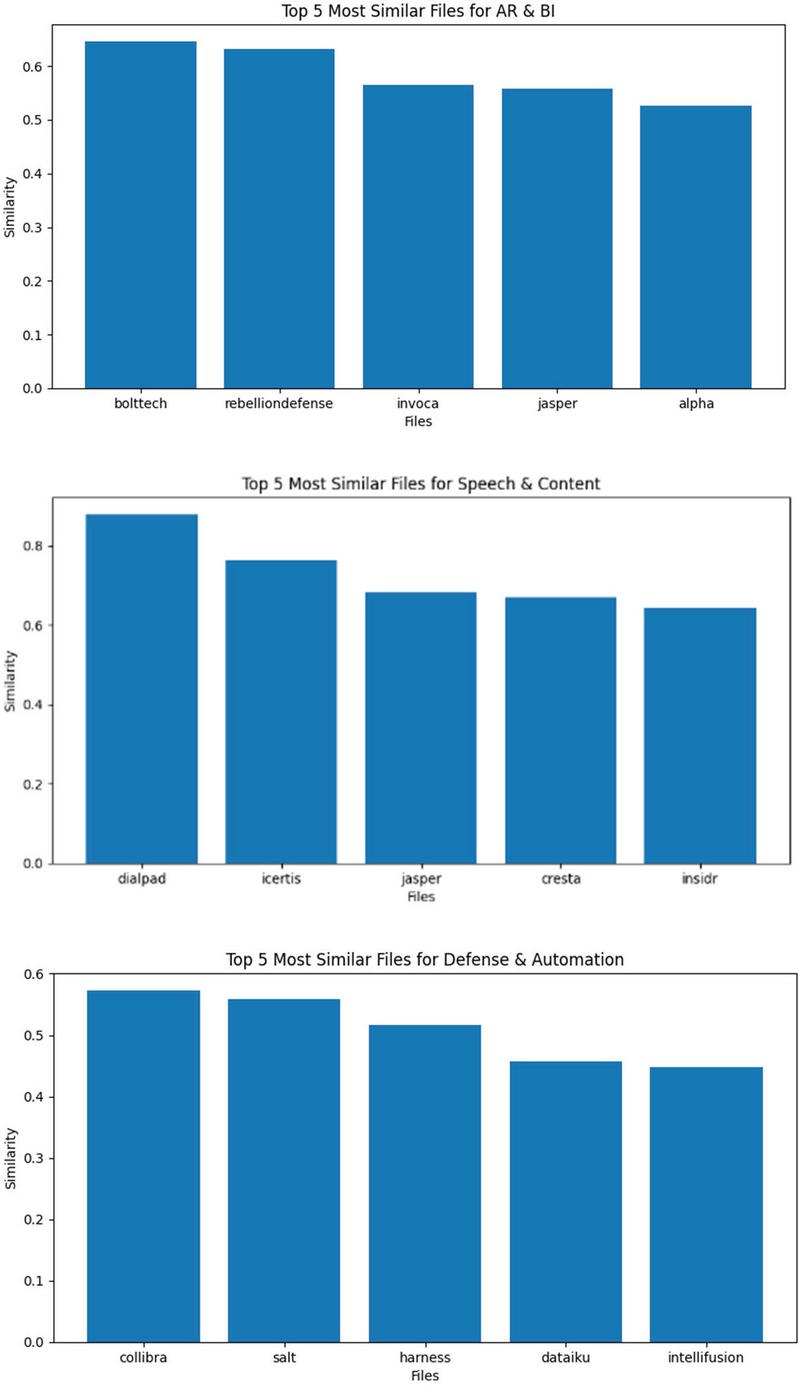
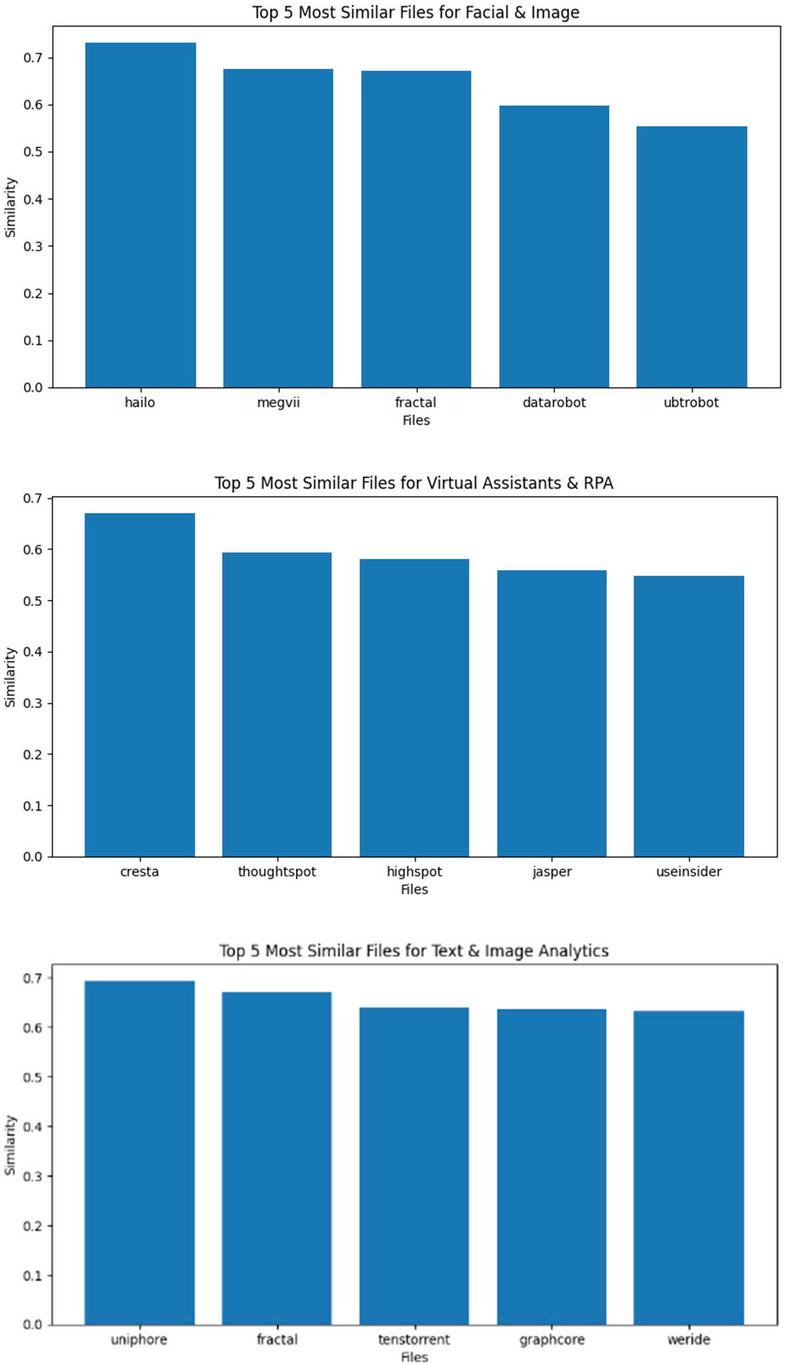
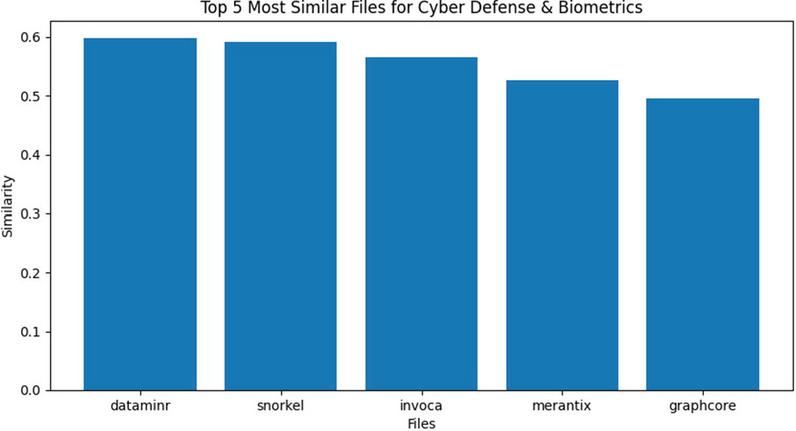
Figure 4 Top 5 most similar companies for the main thematic categories.
The topics outlined by LDA analysis offer a thorough summary of the many cutting-edge technologies and their real-world uses in unicorn businesses with an AI focus. The technology clusters that determine value generation techniques throughout the industry are shown in this thematic mapping. The most often used technology among these firms are then summarized in the Figure 5. It also highlights the business that is at the forefront of implementing or adopting each of the designated technologies, providing information on market trends and rivalry.
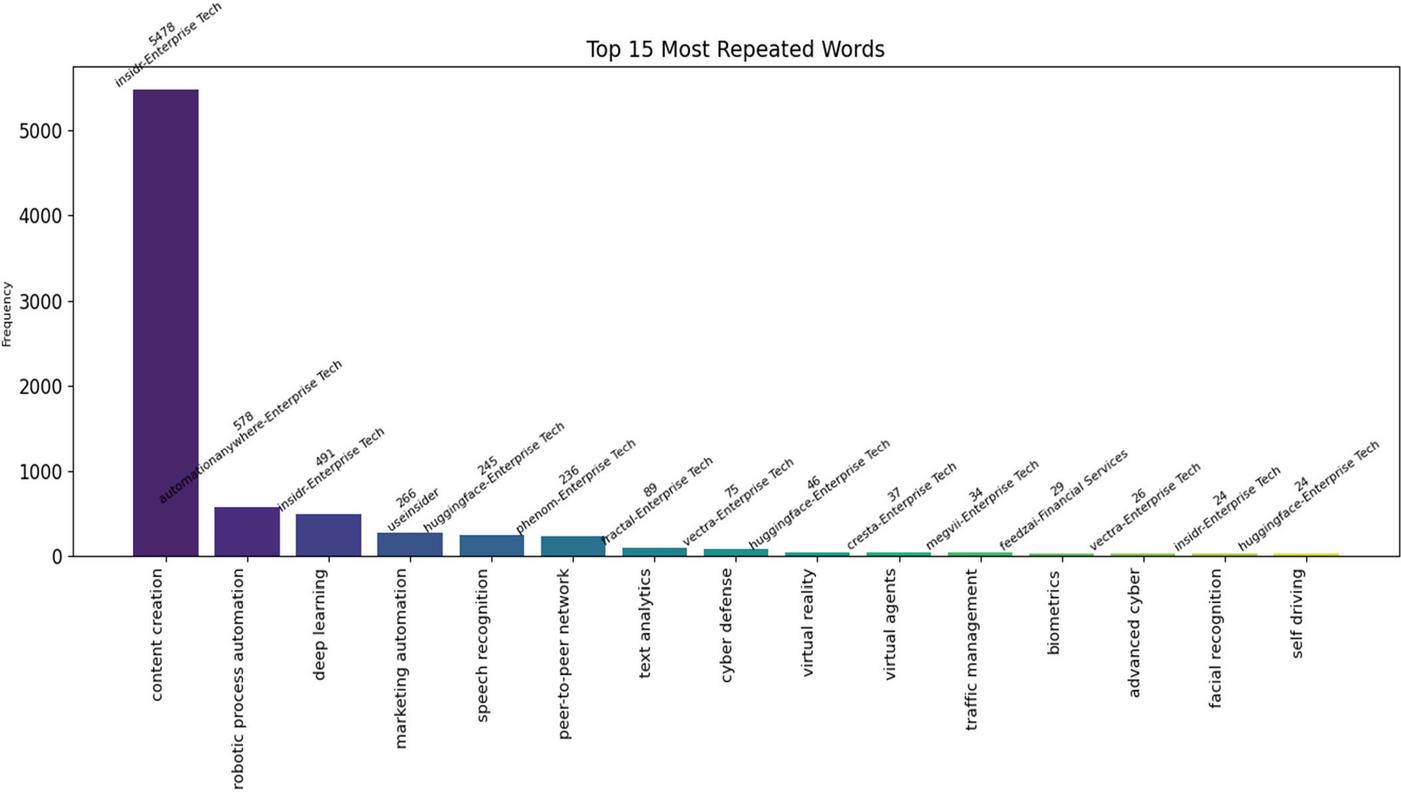
Figure 5 The most usable technologies by unicorn AI companies.
Content creation, robotic process automation, deep learning, marketing automation, and speech recognition are the most common technologies used by AI unicorn firms, as Figure 5 makes evident. The matching numbers in the graphic further demonstrate that companies like Insider, Automation Anywhere, Hugging Face, Phenom, and Fractal are among the top users of these particular technology. This chart offers a thorough overview of the technology environment inside the AI unicorn ecosystem by listing the top 15 technologies according to usage frequency. The CB Insights website’s categorization of AI unicorn businesses is then used to produce an industry-specific study. Table 5, which lists the industries to which the firms under investigation belong according to CB Insights, serves as the first part of our examination.
Table 5 Unicorn AI companies list based on industry
| Enterprise Tech | Sisense | graphcore | Salt Security | Globality | Consumer & Retail | DeepBlue technology |
| sparkcognition | H2O.ai | Ada support | Gong | Mashgrin | ||
| Stability ai | Hailo | AfinitiTonal | patSnap | Mininglamp Technology | ||
| TensTorrent | harness | Aibee | People.ai | Notco | ||
| thoughtspot | highspot | Aiways | outreach | Placer.ai | ||
| uniphore | Hive | Alation | paradox | Standard | ||
| vast data | hugging face | ASAPP | snorkel AI | Trax | ||
| Vectra AI | icertis | Automation anywhere | phenom people | zuoyebang | ||
| verbIT | Insider | BigID | dataiku | Healthcare & Life Sciences | clarify health solutions | |
| weights &biases | Invoca | cerebras systems | Dataminr | concertAI | ||
| YITU technologymoveworks | Jasper | clari | scale AI | Dental Monitoring | ||
| datarobot | Meeroi-CarbonX | collibra | Seekout | Fiture | ||
| dial pad | megvii | contentsquare | Fractal Analytics | Heartflow | ||
| eightfold.ai | Momenta | cresta | openAI | innovaccer | ||
| Enflame | nova systems | Darwinbox | databricks | k health | ||
| Industrials | 1kmxc | Haomao.AI | relativity space | cognite | Owkin | |
| Agile Robots | horizon robotics | shield AI | Gaussian Robotics | shukun technology | ||
| Aiphasense | MOBVOI | Skydio | preferred networks | Tempus | ||
| Augury | motive | SmartMore | Rebellion Defence | Viz | ||
| Black sesame technologies | Optibus | tekion | REEF technologyMoka | Xtalpi | ||
| cars24 | Pony.ai | uptake | weride | Financial Services | oaknorth bank | |
| Insurance | Bolttech | Media & Entertainment | Xiaoice | 4paradigm | Tresata | |
| Tractable | lightricks | ECARX | Vise |
The survey results, illustrating the most commonly utilized technologies across various industries, are presented in in Figure 6.
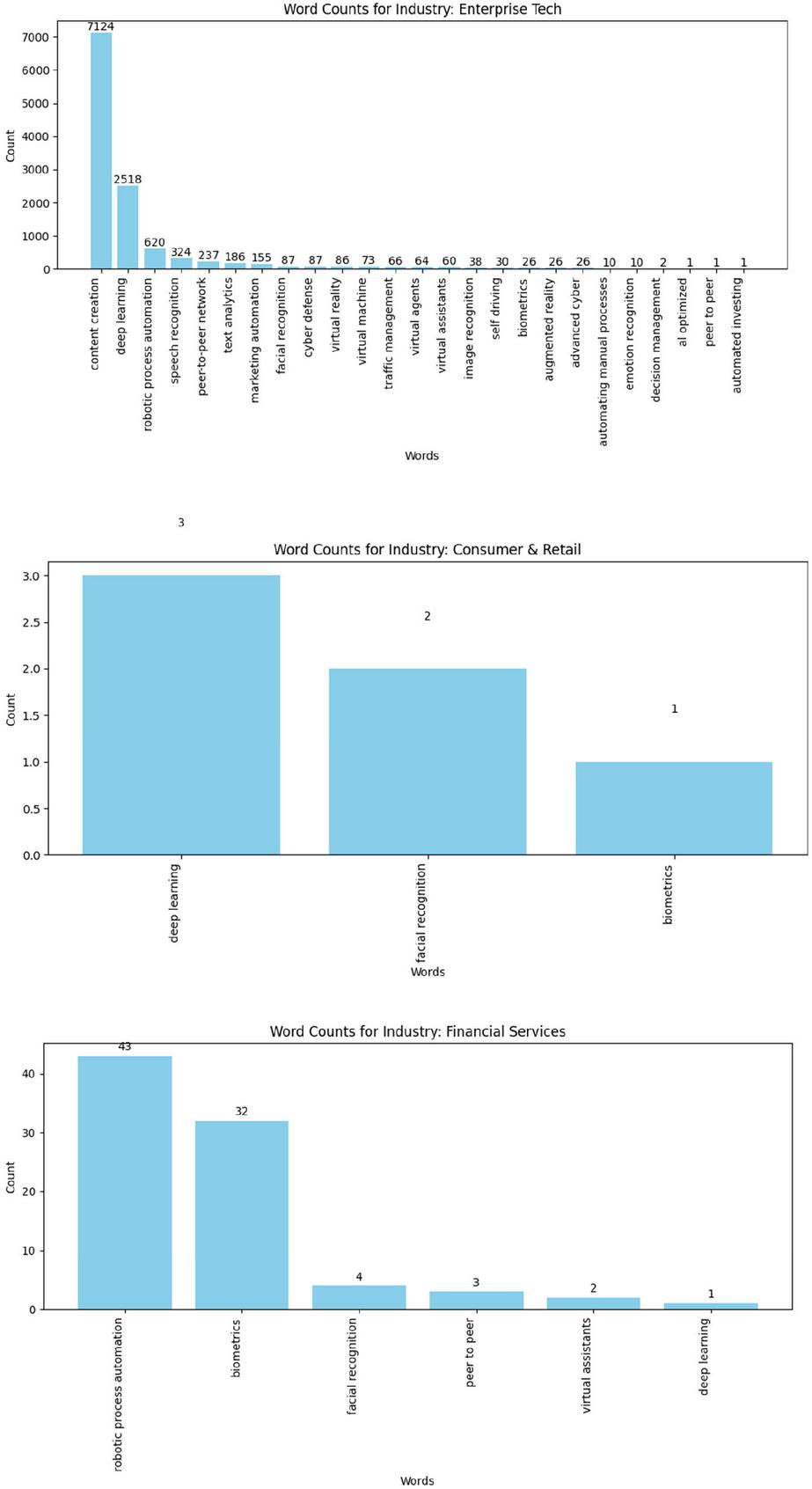
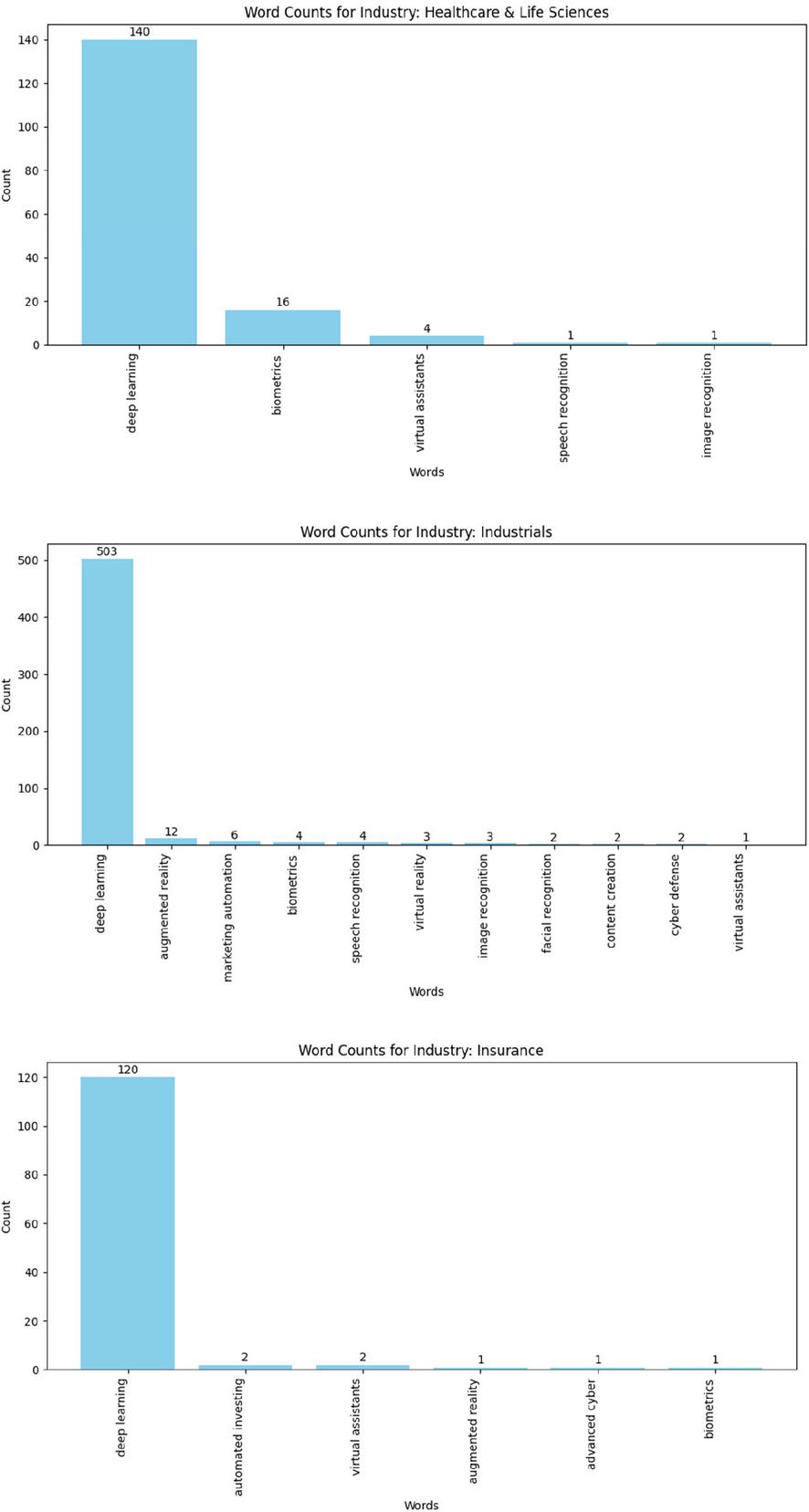
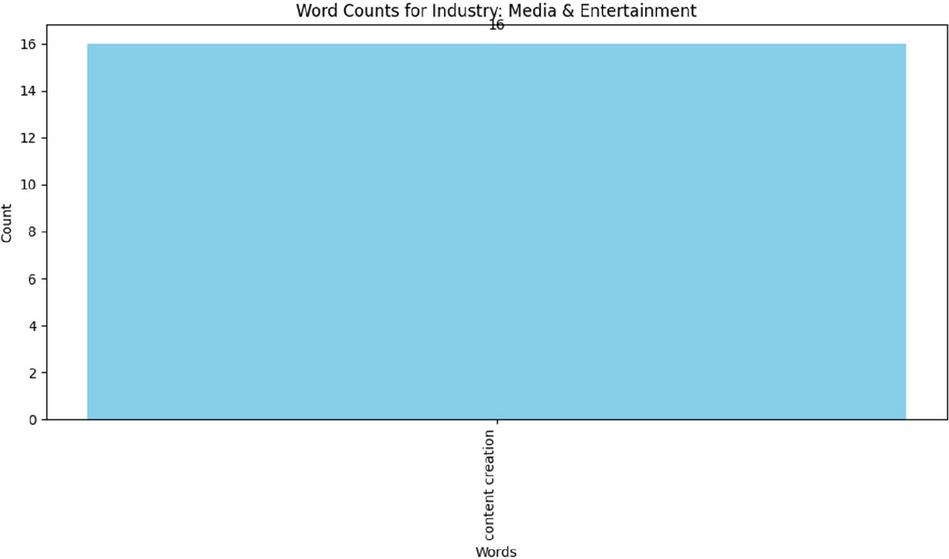
Figure 6 The most commonly utilized technologies across various industries.
The degree of interdependence between the technologies used in each area is another important discovery. The degree of relationship and alignment between the technologies, services, and technical goods across various sectors is depicted in Figure 7.
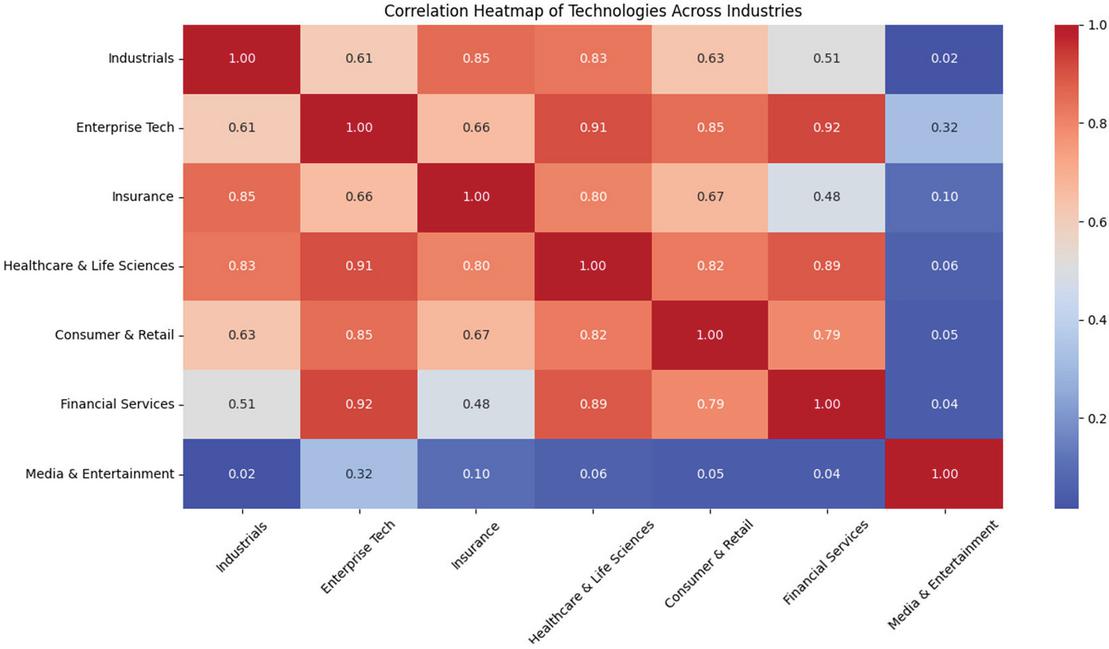
Figure 7 Correlation heatmap of technologies across industries.
The Figure 7 heat map demonstrates how technology use is integrated across different industries. Manufacturing, enterprise technology, health and life sciences, consumer and retail, financial services, and media and entertainment are among the industries included along both axes of the matrix format. With a color gradient from red to blue reflecting correlation coefficients from 1 to 1, each cell in the matrix measures the level of technical correlation across industries. Blue signifies a weak or negative correlation, whereas red suggests a strong positive association. Since the diagonal cells, which run from top left to bottom right, represent an industry in comparison to itself, they exhibit a perfect correlation value of 1. All things considered, this heat map offers a visual representation of how closely various industries embrace and impact technology, providing insightful information for spotting trends in the business and guiding strategic decision-making.
The findings of this study have several important managerial and strategic implications for AI-driven companies. First, the identified technological themes suggest that value creation in AI companies should not be viewed as the result of adopting a single technology. Rather, business value increasingly emerges from the combination and integration of complementary technologies within products, services, and business processes. The coexistence of content generation, speech recognition, deep learning, image and text analytics, robotic process automation, cybersecurity, and biometric technologies indicates that AI companies can create greater value by combining technological capabilities with specific customer and organizational needs. For managers, this implies that technology investment decisions should be guided not only by the technological novelty of an AI solution but also by its potential integration with existing processes, complementary capabilities, and clearly defined customer value propositions.
Second, the findings provide a basis for strategic technology prioritization. The frequency and thematic concentration of particular technologies among AI unicorn companies can help managers identify areas of technological maturity and areas of strategic opportunity. However, frequency should not be interpreted as a direct indicator of economic success. Rather, it can serve as an environmental scanning mechanism that enables managers to monitor technological developments, identify emerging patterns, and evaluate whether their current technology portfolios remain aligned with developments in the broader AI ecosystem. In this respect, the proposed value creation perspective can support technology road-mapping, product portfolio decisions, investment prioritization, and the identification of potential areas for innovation and differentiation.
Third, the cross-industry patterns identified in the study indicate that AI value creation is not confined to a particular industrial sector. The presence of AI technologies across enterprise technology, manufacturing, healthcare and life sciences, consumer and retail, financial services, and media and entertainment demonstrate the broad applicability of AI capabilities. For managers, this finding suggests that opportunities for innovation may arise not only from developing new technologies but also from transferring existing AI capabilities across industries and adapting them to sector-specific requirements. Consequently, organizations can benefit from examining successful AI applications in adjacent industries and identifying opportunities for technological recombination and business model adaptation.
From a strategic perspective, the findings further suggest that AI-driven firms should move beyond a technology-centric approach toward an integrated value creation approach. Technologies such as deep learning, natural language processing, computer vision, automation, and speech recognition become strategically valuable when they are embedded within scalable products, platforms, and services that address identifiable customer or organizational problems. This implies that sustainable competitive advantage in AI markets may depend increasingly on the firm’s ability to combine technological capabilities with proprietary data, domain knowledge, organizational capabilities, customer relationships, and scalable delivery mechanisms. The strategic challenge is therefore not simply to acquire or develop advanced AI technologies, but to transform these technologies into repeatable and scalable sources of customer and business value.
The findings also have implications for firms seeking to develop or scale AI-based business models. The technological patterns identified in the analysis provide a reference point for evaluating the positioning of an AI venture within the broader competitive landscape. Emerging firms can use these patterns to identify areas of technological concentration, assess potential market gaps, and determine whether their value propositions are sufficiently differentiated. At the same time, the presence of similar technologies across multiple industries suggests that competitive differentiation may increasingly depend on the quality of implementation, domain specialization, data assets, integration capabilities, and customer experience rather than on access to the underlying AI technology alone.
Another important implication concerns strategic resource allocation. The results indicate that AI value creation requires the alignment of technological resources with complementary organizational and business resources. Managers should therefore consider investments in data infrastructure, cybersecurity, human expertise, system integration, and organizational capabilities alongside investments in AI models and applications. Such an integrated perspective can reduce the risk of pursuing technologically sophisticated solutions that lack organizational readiness or a clearly defined pathway to value realization. In this sense, the proposed value creation framework can be used as a strategic lens for assessing whether technological investments are supported by the organizational and operational conditions necessary for their effective deployment.
The findings also provide implications for policymakers and other institutions responsible for developing AI ecosystems. The broad distribution of AI technologies across industries suggests that policies aimed at supporting AI development should extend beyond research and development incentives for core AI technologies. An effective AI policy environment should also facilitate access to digital infrastructure, computational resources, high-quality data, technical skills, cybersecurity capabilities, and mechanisms for responsible technology adoption. Supporting these complementary resources can help firms translate technological innovation into commercially and socially valuable applications.
From a policy perspective, the results further emphasize the importance of developing an enabling environment for responsible and scalable AI adoption. As AI technologies increasingly become embedded in areas such as healthcare, finance, manufacturing, cybersecurity, and consumer services, policymakers need to balance innovation with considerations related to data governance, privacy, security, transparency, and accountability. Rather than imposing technology-specific policies that may become obsolete as AI capabilities evolve, regulatory approaches can focus on establishing clear principles and standards for the responsible development, deployment, and use of AI while maintaining sufficient flexibility for technological innovation.
Finally, the findings suggest that policymakers seeking to strengthen national or regional AI ecosystems should consider the broader ecosystem conditions that enable firms to scale. The experience of AI unicorn companies indicates that technological capabilities alone are insufficient to create globally scalable businesses. Access to investment, skilled human capital, research capabilities, digital infrastructure, international markets, and networks connecting technology firms with established industries can contribute to the development of a supportive AI ecosystem. For emerging AI markets, these findings provide a basis for designing policies that connect technological development with entrepreneurship, industrial application, knowledge transfer, and international competitiveness.
Overall, the managerial, strategic, and policy implications of this study indicate that AI-enabled value creation should be understood as an integrated process rather than as the direct consequence of adopting individual AI technologies. The technological patterns identified through the analysis provide a structured view of the capabilities and applications that characterize AI unicorn companies, while their distribution across industries demonstrates the importance of contextualizing these technologies within specific business and organizational environments. Accordingly, the proposed value creation framework can serve as an analytical lens for managers and entrepreneurs in evaluating technology and business model choices, for organizations in identifying opportunities for AI-enabled transformation, and for policymakers in designing the infrastructure, skills, governance, and ecosystem conditions required to support sustainable AI-driven innovation.
4 Conclusion
The goal of this study is to identify value-creation methods for the use of AI-related technology, services, and products that support the competitive edge and success of unicorn businesses in this industry. Our investigation produced several revelations. Based on software outputs and keyword analysis, we were able to identify 11 technological areas, ranging from cybersecurity and ML to emotion recognition and autonomous vehicles. Leading businesses in each category were also identified in the report; for instance, Placer.com, Vectra AI, Bolttech, Salt Security, and Dataminr are excellent in ML and cybersecurity. According to these results, regulators, investors, and innovators involved in Iran’s AI sector should concentrate on developing technologies that have the potential to grow into highly valuable, market-leading companies.
Several significant methodological advances were achieved in this study. First, by combining sophisticated data analytics methods like text mining and site scraping, we showed how the vast and diverse digital footprints of unicorn companies can be methodically used to uncover the fundamental technological skills that generate value. This method gives the body of existing literature more empirical rigor and provides a reproducible platform for further research on digital ecosystems. Second, the established conceptual model provides a customized value creation framework based on the Unified Theory of Acceptance and Use of Technology (UTAUT), Data Network Effects (DNE), and Dynamic Capabilities. It does this by converting raw textual data into strategic insights that can be put into action. When used on 121 unicorn companies, this approach improves theoretical stability and usefulness. Third, by mapping 10 important technology areas with strategic consequences, this research is one of the first to specifically examine the relationship between advanced AI – particularly generative AI – and the production of corporate value. Fourth, the study adds to the global conversation by introducing businesses to global best practices and demonstrating how cutting-edge AI technology may be used to gain a competitive edge and expand globally. This provides a road map for domestic businesses hoping to meet global AI adoption standards. Fifth, by highlighting digital infrastructures, user-centric platforms, and responsible data stewardship as crucial elements influencing strategic AI results, the study enhances knowledge of value generation. These theoretically and practically based insights help businesses turn intangible technical promise into real economic value.
It must be emphasized that the discovery of the most common AI technologies among unicorns is noteworthy; in addition to ML and general AI, content production, robotic process automation, deep learning, marketing automation, and speech recognition are given top priority. Even though AI and ML are widely acknowledged, their incorporation into key sectors is still in its infancy, mostly because big businesses do not fully grasp them. Core AI domains are the focus of AI unicorns, and knowledge-based businesses may increase value by highlighting these technologies. But for adoption to be effective, investors and managers must understand both the cultural and technology aspects.
It is concluded that seven sectors – Enterprise Tech, Industrials, Consumer & Retail, Healthcare & Life Sciences, Insurance, Media & Entertainment, and Financial Services – each with unique technology goals were identified via an industry-specific study based on CBI Insight’s categories. For instance, Enterprise Tech prioritizes deep learning, RPA, speech recognition, and content creation; Consumer & Retail prioritizes deep learning, biometrics, and facial recognition; Financial Services prioritizes RPA, biometrics, and facial recognition; Healthcare emphasizes image recognition and virtual assistants; Industrials favors marketing automation and augmented reality; Media & Entertainment focuses on content creation; and Insurance prioritizes cybersecurity and automated investing.
Moreover, strong relationships were found between industries, insurance, and healthcare when inter-industry technical correlations were examined; media and entertainment had lesser ties. Healthcare, consumer and retail, and financial services have a significant correlation with enterprise technology, but media and entertainment and industrials have a less correlation. Overall, the industry with the least correlation is media and entertainment. Since it identifies chances for cross-sector cooperation and innovation, an understanding of these relationships is essential for strategic planning.
To learn how AI-driven efforts change and affect value generation over time, future research might follow AI unicorn firms over an extended period of time. Novel insights might be obtained by replicating this process using different segmentation methods or by concentrating on agentic and generative AI subfields. Understanding value generation processes would be strengthened by combining quantitative methods with qualitative techniques like grounded theory or theme analysis. Organizational studies might look at how businesses use AI and human talents to improve agility and creativity. The suggested framework should be empirically tested by startups and AI companies in order to evaluate its strategic usefulness. Businesses are urged to proactively set up ethical AI governance and compliance systems and to give top priority to innovation at the nexus of AI, cybersecurity, automation, and biometrics. It is crucial to create useful KPIs to gauge how AI improves customer satisfaction, corporate value, and operational effectiveness. Lastly, encouraging collaborations between academia and business may help develop AI roadmaps, guaranteeing that innovation keeps pace with advances in research and the market.
This study has several limitations that should be considered when interpreting the findings. First, the selection of the 121 AI unicorn companies was based on the availability and adequacy of publicly accessible information required for the analysis. Consequently, the sample may be subject to selection bias because companies with more comprehensive, accessible, and actively maintained digital footprints may be more likely to be included than firms with limited online disclosure. Although the selection criteria were applied consistently across the identified AI unicorn population, the findings should therefore not be interpreted as statistically representative of all AI unicorn companies. Second, the analysis relies primarily on publicly available textual information obtained from corporate websites and other accessible sources. Such information is generally produced for communication, marketing, investor relations, or customer engagement purposes and may therefore emphasize particular technologies, products, and capabilities while providing limited information about unsuccessful initiatives, internal processes, financial outcomes, or technologies that are not publicly disclosed. Accordingly, the identified technological themes reflect the observable representation of AI activities in public corporate communications rather than the complete set of technologies and value-creation activities within the companies. Third, the AI unicorn ecosystem is highly dynamic. Technologies, products, business models, company valuations, ownership structures, and market positions can change rapidly, while new AI technologies and applications continuously emerge. The findings of this study therefore represent the technological and business landscape captured during the study period rather than a permanent classification of AI unicorn companies. In particular, the rapid development of generative AI, foundation models, intelligent agents, and other emerging technologies may alter the relative prominence of the technological themes identified in the present analysis over time. Fourth, the use of text mining and LDA involves methodological constraints. Topic modelling identifies statistically recurring patterns in textual data, but the resulting topics require substantive interpretation by the researcher. Consequently, topic labels and their interpretation may involve a degree of analytical judgment. Although preprocessing, keyword analysis, topic coherence, and comparison with existing classifications were used to improve the robustness and interpretability of the findings, alternative preprocessing decisions or model specifications may produce somewhat different topic structures. Finally, the present study primarily identifies technological and thematic patterns associated with AI-driven value creation rather than directly testing causal relationships between specific AI technologies and measurable business performance outcomes. The presence or frequency of a technology in corporate communications should therefore not be interpreted as evidence that the technology directly causes higher valuation, profitability, growth, or competitive performance. Future research could address this limitation by combining textual data with longitudinal financial, operational, investment, and market-performance indicators and by examining how identified technological capabilities evolve over time and contribute to measurable business outcomes. These limitations also provide opportunities for future research. Subsequent studies could employ longitudinal datasets to examine how the technological priorities and value creation strategies of AI unicorn companies change as technologies and markets evolve. Future research could also combine public textual data with interviews, surveys, internal organizational data, patent information, investment data, and financial indicators to provide a more comprehensive assessment of AI-enabled value creation. Comparative studies across unicorn and non-unicorn AI firms could further clarify whether the technological and thematic patterns identified in this study are distinctive characteristics of high-growth AI companies or reflect broader trends in the AI industry.
Several directions can be pursued to extend the findings of this study. First, future research could adopt a longitudinal research design to examine how the technological priorities, products, services, and value creation patterns of AI unicorn companies evolve over time. Given the rapid development of artificial intelligence, particularly in areas such as generative AI, foundation models, intelligent agents, automation, and multimodal systems, a longitudinal analysis could reveal whether the technological themes identified in the present study remain stable, decline in importance, or are replaced by emerging technologies. Repeated collection and analysis of corporate web data could therefore provide a dynamic representation of the evolution of AI-enabled value creation. Second, future studies could conduct cross-country and cross-regional comparisons to investigate whether the technological and value creation patterns identified in AI unicorn companies vary across different institutional, economic, and technological environments. Comparing companies across regions such as North America, Europe, and Asia could provide insights into the influence of regulatory environments, access to capital, digital infrastructure, human capital, market characteristics, and national innovation ecosystems on AI-driven value creation. Such comparisons could also help determine whether the patterns identified in this study represent broadly shared characteristics of AI companies or are partly shaped by regional and institutional conditions. Third, future research could strengthen the empirical validation of the proposed value creation framework by integrating textual and technological data with financial and operational performance indicators. Variables such as revenue growth, profitability, valuation changes, investment raised, customer growth, employee growth, market expansion, product adoption, and operational efficiency could be examined alongside the technological themes identified through text mining. This approach would make it possible to investigate whether particular technological capabilities or combinations of technologies are systematically associated with superior business outcomes. Fourth, future studies could move beyond frequency-based and topic-based analysis by examining the relationships among technologies, capabilities, products, and industries using network analysis, co-occurrence analysis, or more advanced clustering techniques. Such approaches could reveal technological complementarities and identify technology combinations that frequently occur within successful AI business models. In particular, technology-industry and technology-value networks could provide a more detailed understanding of how specific AI capabilities are transferred and recombined across different sectors. Fifth, future research could extend the current methodology by incorporating advanced natural language processing and ML approaches, including contextual embeddings, transformer-based models, semantic similarity analysis, and dynamic topic modeling. These methods could complement traditional LDA by capturing contextual relationships among terms and identifying more fine-grained changes in technological and business themes. Combining these approaches with the thematic analysis used in the present study could improve the identification of emerging technologies and evolving value propositions.
Future studies could conduct comparative analyses between AI unicorn companies and other categories of firms including non-unicorn AI startups, established technology companies, and traditional firms undergoing AI transformation. Such comparisons could help determine whether the technological and value creation patterns observed in unicorn companies are distinctive characteristics of high-growth firms or reflect broader patterns of AI adoption across organizations. Finally, future research could validate and refine the proposed value creation framework through primary empirical research, including interviews with executives, technology managers, entrepreneurs, investors, and other relevant stakeholders, as well as large-scale surveys of AI-enabled organizations. Combining qualitative and quantitative evidence with the computational analysis of corporate textual data would provide a stronger basis for examining how technological capabilities are transformed into organizational and business value in practice. Taken together, these research directions can contribute to the development of a more dynamic and empirically validated understanding of AI-enabled business value. Moving from cross-sectional textual analysis toward longitudinal, comparative, performance-based, and multi-method research would enable future studies to examine not only which technologies characterize AI-driven unicorn companies, but also how these technologies evolve, how they are combined across industries and institutional contexts, and under what conditions they contribute to sustainable business performance and value creation.
References
Alsheibani, S., Qiu, X., Kulkarni, A., 2020. Hardware Advancements and AI Performance: A Comprehensive Survey. IEEE Transactions on Neural Networks and Learning Systems, Volume 31(8), pp. 2504–2517.
Bai, Y., 2018. How Does Co-Creation Affect Customers Purchase Intention? Journal of Industrial Integration and Management, Volume 3(01), p. 1850005.
Broo, D.G., Kaynak, O., Sait, S.M., 2022. Rethinking Engineering Education at the Age of Industry 5.0. Journal of Industrial Information Integration, Volume 25, p. 100311.
Brynjolfsson, E., McAfee, A., 2017. Machine, Platform, Crowd: Harnessing Our Digital Future. New York: W.W. Norton & Company.
Buch, R., Dietrich, P., Rosenthal-Sabroux, C., 2018. AI in Business and Society: Transformations and Challenges. AI & Society, Volume 33(3), pp. 345–355.
CB Insights, 2026. The Global Unicorn Club: Industry Insights and Trends. Available at: https://www.cbinsights.com/research-unicorn-companies.
Chen, J., Fan, Y., Li, Y., 2018. Value Creation in Digital Platforms: A Review and Research Agenda. Journal of Business Research, Volume 86, pp. 1–10.
Chien, C.-F., Chen, Y.-L., Huang, C.-Y., 2020. AI-Enabled Logistics: Innovation and Value Creation. International Journal of Production Economics, Volume 227, p. 107703.
Chowdhury, S., 2014. Customer Perceived Value: Concept and Application. International Journal of Business and Management, Volume 9(9), pp. 87–95.
Costa-Climent, R., Haftor, D. M., Staniewski, M. W., 2023. Using machine learning to create and capture value in the business models of small and medium-sized enterprises. International Journal of Information Management, Volume 73, 102637. https://doi.org/10.1016/j.ijinfomgt.2023.102637.
Dai, J., Jin, Y., Zhao, Q., 2018. Business Ecosystems and Value Creation: A Literature Review. International Journal of Innovation Management, Volume 22(4), p. 1850037.
Demlehner, C., Laumer, S., 2020. Artificial Intelligence as a Computational Framework: Perception, Learning, Reasoning, and Planning Beyond Rigid Rules. Journal of Artificial Intelligence Research, Volume 45(3), pp. 221–239.
Dwivedi, Y.K., Hughes, L., Ismagilova, E., et al., 2019. Artificial Intelligence (AI): Multidisciplinary Perspectives on Emerging Challenges, Opportunities, and Agenda for Research, Practice and Policy. International Journal of Information Management, Volume 49, pp. 1–5.
Enholm, I., Karlsson, A., Persson, M., 2022. AI in Financial Risk Management: Fraud Detection and Mitigation Strategies. Journal of Financial Technology, Volume 2(1), pp. 25–39.
Fakoorsaghieh, A., Salehi, S., Moradi, M., 2015. The Role of Value in Organizational Success. International Journal of Business Management, Volume 10(4), pp. 45–56.
Fakoorsaghieh, A., Salehi, V., Heidari, M., 2017. Strategic Value Creation Through AI Adoption: A Study of Leading Technology Firms. Journal of Strategic Information Systems, Volume 26(3), pp. 170–183.
Fan, Y., Luo, X., Du, L., 2020. Value Co-Creation in Digital Interactive Platforms. Information & Management, Volume 57(2), pp. 103–113.
Fleming, Q., 2018. AI as a Driver of the Fourth Industrial Revolution. Technology and Innovation Journal, Volume 19(2), pp. 145–160.
Freudenreich, B., Lüdeke-Freund, F., Schaltegger, S., 2020. A Stakeholder Theory Perspective on Business Models: Value Creation for Sustainability. Journal of Business Ethics, Volume 166(1), pp. 3–18.
Furtado, L., Dutra, M., Macedo, D., 2017. Value Creation in Big Data Scenarios: A Literature Survey. Journal of Industrial Integration and Management, Volume 2(01), p. 1750002.
Garbuio, M., Lin, N., 2019. Artificial Intelligence as a Value Creation Mechanism in Business Models. California Management Review, Volume 61(4), pp. 55–74.
Govindan, K., Jafarian, A., Nourbakhsh, V., 2019. Designing a Sustainable Supply Chain Network Integrated with Vehicle Routing: A Comparison of Hybrid Swarm Intelligence Metaheuristics. Computers & Operations Research, Volume 110, pp. 220–235.
Guerrero, M., Urbano, D., Cunningham, J.A., Organ, D., 2021. Entrepreneurial Ecosystems and Value Creation: A Systematic Review. Small Business Economics, Volume 57(2), pp. 545–563.
Hanssens, D.M., 2008. Customer Value and Competitive Advantage. Marketing Science, Volume 27(6), pp. 963–967.
Hult, G.T.M., Ketchen, D.J., 2001. Does Market Orientation Matter? Strategic Management Journal, Volume 22(9), pp. 899–906.
Ittner, C.D., Larcker, D.F., 2003. Innovations in Performance Measurement: Trends and Research Implications. Journal of Management Accounting Research, Volume 15(1), pp. 69–94.
Javaid, M., Khan, I., Haleem, A., 2022. Defining Artificial Intelligence: Simulation of Human Intelligence in Machines. International Journal of Computer Science and Technology, Volume 13(2), pp. 110–117.
Jian, Y., Li, X., Hu, Y., 2016. Innovation Ecosystems and Value Co-Creation: An Empirical Study. Technological Forecasting and Social Change, Volume 105, pp. 140–147.
Ketonen-Oksi, S., Valkokari, K., 2019. Innovation Ecosystems as Structures for Value Co-Creation. Technology Innovation Management Review, Volume 9(2), pp. 25–35.
Khordyar, S., 2021. Understanding Value from Multiple Perspectives. Journal of Business Research, Volume 132, pp. 25–34
Kim, D., Wang, Z., Brugger, J., Blum, D., Wetter, M., Hong, T., Piette, M.A., 2022. Site Demonstration and Performance Evaluation of MPC for a Large Chiller Plant with TES for Renewable Energy Integration and Grid Decarbonization. Applied Energy, Volume 321, p. 119343.
Klumpp, M., 2018. Agility and AI: Enablers of Innovation in Design Industries. Design Management Journal, Volume 13(1), pp. 21–30.
Kou, G., Chao, X., Alsaadi, F., Wang, G., 2019. Deep Learning for Business Value Creation: A Comprehensive Survey. Information Fusion, Volume 56, pp. 159–180.
Kulkov, V., Zhuravlev, I., Pavlov, A., 2020. Emerging Technology Business Models: A Value Creation Approach. Technological Forecasting and Social Change, Volume 161, p. 120278.
Kulkov, V., Zhuravlev, I., Pavlov, A., 2021. AI-Driven Value Creation in Business: Insights from Emerging Technologies. Technological Forecasting and Social Change, Volume 163, p. 120421.
Lee, A., 2013. Welcome to the Unicorn Club: Learning from Billion-Dollar Startups. TechCrunch. Available at: https://techcrunch.com/2013/11/02/welcome-to-the-unicorn-club/.
Makarius, E.E., Woznyj, H.M., Zahner, D.M., 2020. Adaptive Learning and Decision-Making in AI Systems: From Data Processing to Autonomous Problem-Solving. AI & Society, Volume 35(4), pp. 789–799.
Massa, L., Tucci, C.L., Afuah, A., 2017. A Critical Assessment of Business Model Research. Academy of Management Annals, Volume 11(1), pp. 73–104.
Mikalef, P., Boura, M., Lekakos, G., Krogstie, J., 2017. Big Data Analytics Capabilities and Innovation: The Mediating Role of Dynamic Capabilities. Information & Management, Volume 54(8), pp. 1032–1048.
Mikalef, P., Gupta, M., 2021. Artificial intelligence capability: Conceptualization, measurement calibration, and empirical study on its impact on organizational creativity and firm performance. Information & Management, Volume 58, 103434. https://doi.org/10.1016/j.im.2021.103434.
Mikalef, P., Gupta, M.P., 2023. Cognitive Replication in AI: Understanding and Executing Human-Like Tasks. Journal of AI Research and Development, Volume 50(1), pp. 12–30.
Moradi, M., Mirzaei, A., Rad, M., 2017. The Role of Value Creation in Customer Retention: A Case Study of the Automotive Industry. Journal of Business Strategy, Volume 38(3), pp. 21–29.
Norinder, U., Norinder, P., 2022. Predicting Amazon Customer Reviews with Deep Confidence Using Deep Learning and Conformal Prediction. Journal of Management Analytics, Volume 9(1), pp. 1–16.
Ogunkoya, O.A., 2019. Value Creation and Innovation Performance of Nigeria Manufacturing Firm. International Journal of Advanced Studies in Business Strategies and Management, Volume 7(1), pp. 1–17.
Oyner, O., Korelina, O., 2016. Customer and Business Value: Interactions and Implications. Journal of Business Research, Volume 69(10), pp. 4127–4132.
Parasuraman, A., Grewal, D., 2000. The Impact of Value on Customer Satisfaction and Loyalty. Journal of Marketing, Volume 64(2), pp. 15–31.
Prahalad, C.K., Ramaswamy, V., 2004. Co-Creation Experiences: The Next Practice in Value Creation. Journal of Interactive Marketing, Volume 18(3), pp. 5–14.
Priem, R.L., 2007. A Consumer Perspective on Value Creation. Academy of Management Review, Volume 32(1), pp. 219–235.
Ramaswamy, V., Ozcan, K., 2018. What is co-creation? An interactional creation framework and its implications for value creation. Journal of Business Research, Volume 84, pp. 196–205. https://doi.org/10.1016/j.jbusres.2017.11.027.
Ramaswamy, V., Ozcan, K., 2019. Digitalized interactive platforms: Turning goods and services into retail co-creation experiences. NIM Marketing Intelligence Review, Volume 11(1), pp. 18–23. https://doi.org/10.2478/nimmir-2019-0003.
Rasool, F., Koomsap, P., Costa, M. C., 2017. Characteristics and potential for successful co-creation. Journal of Industrial Integration and Management, Volume 2(4), 1750015. https://doi.org/10.1142/S2424862217500154.
Sardo, F., Serrasqueiro, Z., 2017. A European empirical study of the relationship between firms intellectual capital, financial performance and market value. Journal of Intellectual Capital, Volume 18(4), pp. 771–788. https://doi.org/10.1108/JIC-10-2016-0105.
Shaheer, N. A., Li, S., 2020. The CAGE around cyberspace? How digital innovations internationalize in a virtual world. Journal of Business Venturing, Volume 35(1), 105892. https://doi.org/10.1016/j.jbusvent.2018.08.002.
Silva, D. S., Ghezzi, A., de Aguiar, R. B., Cortimiglia, M. N., ten Caten, C. S., 2020. Lean startup, agile methodologies and customer development for business model innovation: A systematic review and research agenda. International Journal of Entrepreneurial Behavior and Research, Volume 26(4), pp. 595–628. https://doi.org/10.1108/IJEBR-07-2019-0425.
Storbacka, K., 2019. Actor engagement, value creation and market innovation. Industrial Marketing Management, Volume 80, pp. 4–10.
Suwannasri, I., Nuangjamnong, C., 2022. Determinants for open innovation and innovation performance towards value creation and organization performance for bureaucratic personnel development. ABAC ODI Journal Vision. Action. Outcome, Volume 10(1), pp. 153–170.
Teece, D.J., 2010. Business Models, Business Strategy and Innovation. Long Range Planning, Volume 43(2–3), pp. 172–194.
Truby, J., Brown, R., Dahdal, A., 2020. Banking on AI: Mandating a proactive approach to AI regulation in the financial sector. Law and Financial Markets Review, Volume 14(2), pp. 110–120. https://doi.org/10.1080/17521440.2020.1760454.
Tuan, M. N. D., Thanh, N. N., Le Tuan, L., 2019. Applying a mindfulness-based reliability strategy to the internet of things in health care – A business model in the Vietnamese market. Technological Forecasting and Social Change, Volume 140, pp. 54–68. https://doi.org/10.1016/j.techfore.2018.10.024.
Vaio, A. D., Palladino, R., Hassan, R., Escobar, O., 2020. Artificial intelligence and business models in the sustainable development goals perspective: A systematic literature review. Journal of Business Research, Volume 121, pp. 283–314.
Vera, J., 2015. Perceived brand quality as a way to superior customer perceived value crossing by moderating effects. Journal of Product & Brand Management, Volume 24(2), pp. 147–156. https://doi.org/10.1108/JPBM-04-2014-0551.
Wamba-Taguimdje, S.-L., Fosso Wamba, S., Kala Kamdjoug, J. R., Tchatchouang Wanko, C. E., 2020. Influence of artificial intelligence (AI) on firm performance: The business value of AI-based transformation projects. Business Process Management Journal, Volume 26(7), pp. 1893–1924. https://doi.org/10.1108/BPMJ-10-2019-0411.
Wang, C., Siau, K., 2019. Artificial intelligence, machine learning, automation, and their impact on jobs: A review and research agenda. Journal of Database Management, Volume 30(1), pp. 61–79.
Wang, L., Luan, H., 2019. Organizational distance, value co-creation and innovation performance of industry-university-research cooperation. Journal of Management, Volume 16(5), pp. 704–711.
Wang, Y., Kung, L., Byrd, T. A., 2018. Big data analytics: Understanding its capabilities and potential benefits for healthcare organizations. Technological Forecasting and Social Change, Volume 126, pp. 3–13.
Westerveld, P., Fielt, E., Desouza, K. C., Gable, G. G., 2023. The business model portfolio as a strategic tool for value creation and business performance. The Journal of Strategic Information Systems, Volume 32(1), 101758.
Zhou, W., 2015. Knowledge service, value co-creation and innovation performance – Multi-case study based on grounded theory. Research in Science of Science, Volume 33(4), pp. 567–573.
Zhou, W., Deng, W., Chen, L., 2018. Research on Didi Chuxing’s platform enterprise data empowerment to promote value co-creation process. Journal of Management, Volume 15(8), pp. 1110–1119.
Zhu, W. M., Jiang, M. K., Zhao, M., Wang, Y. L., 2019. Research on the improvement of EVA valuation model for internet enterprises. Finance and Accounting Monthly, Issue 24, pp. 90–99.
Biographies

Mohammadhassan Ostadazim is a Ph.D. student in the Department of Operations and Information Technology Management at Allameh Tabataba’i University, Tehran, Iran. His primary research interests lie in the areas of digital transformation, operations strategy, and the integration of emerging technologies into organizational processes. He has contributed to several scholarly projects and publications focused on enhancing organizational agility and competitiveness in the digital era.

Iman Raeesi Vanani is an assistant professor in the Department of Operations and Information Technology Management at Allameh Tabataba’i University, Tehran, Iran. His research focuses on information systems management, strategic technology planning, and data-driven decision-making. He has authored and co-authored numerous academic papers and has been actively involved in research projects exploring the intersection of technology, strategy, and organizational innovation.

Mohammad Taghi Taghavifard is a professor in the Department of Operations and Information Technology Management at Allameh Tabataba’i University, Tehran, Iran. His research expertise covers strategic information systems, organizational transformation, and innovation management. With extensive academic experience, he has supervised various doctoral and master’s theses and has published widely in leading international journals in the field of management and information systems.

Mohamad Naghizadeh is a lecturer and researcher in the Department of Operations and Information Technology Management at Allameh Tabataba’i University, Tehran, Iran. His research interests include IT-enabled services, technology adoption, and organizational performance improvement. He has participated in multiple interdisciplinary research initiatives aimed at understanding how digital technologies contribute to value creation and sustainable competitive advantage in organizations.
Journal of ICT Standardization, Vol. 14_4, 691–736
doi: 10.13052/jicts2245-800X.1447
© 2026 River Publishers