ASIS Edge Computing Model to Determine the Communication Protocols for IoT Based Irrigation
S. Premkumar* and AN. Sigappi
Department of Computer Science & Engineering, Faculty of Engineering & Technology, Annamalai University, Tamilnadu, India
E-mail: premambal@gmail.com; an.sigappi@gmail.com
*Corresponding Author
Received 14 October 2021; Accepted 04 December 2021; Publication 22 January 2022
Abstract
Internet of Things (IoT) provide a promising Smart irrigation facilitator for continual monitoring and control of environmental parameters, thereby leading to a huge volume of data to be efficiently collected, transferred, processed and stored. The deployment of cloud-based infrastructure with on-field connectedness, allowing information exchange among IoT nodes, and the usage of energy scavenging (e.g., solar power) in feeding them, become necessary, since agricultural fields are in lack of wired energy supply and, often, a reliable (Internet) network coverage. Therefore, these issues can be addressed through the integration of Edge computing in IoT scenarios. An efficient strategy is required to select the best communication technology with a motive of increasing the network performance between the IoT devices, Edge device and cloud. Application Specific Infrastructure Selection (ASIS) is an edge computing model developed to select the appropriate communication protocols according to the infrastructure requirements of three different real time scenarios namely: Assembly line automation, Smart parking system and Automatic irrigation system are deployed to get the most suitable application specific protocol from ZigBee, LoRa (Long Range) and LoWPAN (Low-Power Wireless Personal Area Network) to implement in real-time basis. ASIS model is proposed as a network resource manager that is capable of sensing, acting, signal processing, and/or communication abilities to perform a protocol selection according to their physical and technological limitations. Further Edge based ASIS model is developed to enhance the network performance even better when compared with cloud-based model. Automatic irrigation system is extended in the Edge based ASIS model. The overall ASIS system is evaluated by means of network parameters such as network usage, network delay and power consumption. The ASIS model and Edge based ASIS model is deployed in iFogSim simulator that compares each protocol used in the above IoT scenarios. Finally, the scenario of Automatic irrigation system is modeled using Edge based ASIS model where ZigBee with edge performs better compared with cloud-based model. Experimental results show that ASIS based Edge implementation lessen the overall network parameters in contrast to non-edge deployment in automatic irrigation scenario.
Keywords: Internet of Things, edge computing, network protocols, cloud infrastructure, Zigbee, LoRa, LoWPAN, iFogSim, irrigation system.
1 Introduction
The growing advancements in information technology have infused Internet of Things (IoT) in our routine life. IoT applications provide enhanced outcomes in terms of accuracy and efficiency to users by having different sensors/devices interconnected between each other for collecting and exchanging versatile data with the help of advanced communication frameworks inbuilt with millions of IoT nodes [1–3]. Different types of IoT methodologies are applied to interconnect all the nodes that in turn produce huge volumes of data and additional processing is necessitated to provide intelligence to both users and service providers. In cloud computing, a huge pressure is created on the network especially in terms of data transmission costs and bandwidth due to the uploading and downloading of all data and results to/from centralized servers respectively. Additionally, the performance of a network is inversely proportional to increased data size. Time receptive IoT applications face censorious situations because of the fact that short response times are unnegotiable in nature particularly for the smart transportation [4, 5], smart electricity grid [6, 7] smart city [8, 9] smart agriculture [10, 11] whereas the traditional cloud computing oriented services cannot fulfil this type of time critical demands. These results in the occurrence of large latency in networks due to the uploading of computation processes to the cloud, within the bandwidth and network resources limitations. Therefore, it becomes intolerable for time critical IoT applications and induces effect over safety and emergency related purposes. Additionally, majority of the IoT devices suffer from limited power constraint such as in smart sensors. There arises a need to stabilize the consumption of power for extending the lifetime with the help of devices scheduling concept. Computing nodes with minimal distance to the user can be utilized for processing the data to minimize the transmission time. In contrary, cloud computing-based service have huge network traffic and that leads to prolonged transmission times thereby increasing power consumption costs. In a nutshell, the process of scheduling and processing play a key role in the overall performance of the network. The abovementioned problems are addressed with some existing efforts and current scenario of IoT is presented in [12]. Edge computing encloses data computation and storage processes performed at the network “edge” [12, 13], nearer to user location to reduce the traffic peaks, bandwidth requirements and latency in transmission. IoT applications have comparatively reduced response times than the contemporary cloud computing mechanism by distributing and deploying the computation nodes at edge thereby traffic can be offloaded and pressure can be alleviated from centralized cloud [14]. Additionally, nodes’ lifetime can be extended with restricted battery power due to the migrating capability of edge computing in acquiring computational and communication overhead leading to the extension of entire IoT network lifetime. For this purpose, Edge computing model is the solution for the whole system integration of edge working in any IoT application. Edge computing analyses and processes a portion of data using the computing, storage and network resources distributed on the paths between the data sources and data cloud computing centers [15]. The source data is preprocessed, immediate decisions are taken and finally the computed results are sent to the cloud data centers by enabling the edge devices with enough computing power. Any application of Edge computing in IoT senses, communicates and preprocesses the data to interconnect many components thereby accomplishing many advancements in multiple areas having strong performance impact on edge computing model scenarios. Here in this paper in the overall IoT scenarios, the IoT framework compromises of communication technologies which can be enhanced with the help of edge computing model. A strategy of using the best communication technologies will directly increase the network performance between the IoT devices to Cloud, so the main objective is to establish low latency & high infrastructure utilizing model for various IoT Applications. Application Specific Infrastructure Selection (ASIS) is an edge computing model developed to select the appropriate communication protocols according to the infrastructure requirements of the IoT scenarios. ASIS model is deployed in three scenarios namely [16, 17] and [18] to find the best protocol from ZigBee, LoRa and LoWPAN for these scenarios to implement in real-time. This model will be evaluated to study the performance metrics like energy consumption, network delay and network usage with the comparison of the above protocols. Further ASIS model with Edge is developed to enhance the network performance even better compared it with non-edge model. Automatic irrigation system is further enhanced by implementing this scenario in the ASIS with Edge model. This deployed model is compared with the existing scenario of cloud-based irrigation system. The experimental results indicate that ASIS with edge outperforms in terms of the above performance metrics. In this work, the working model is deployed in iFogSim simulator. Due to the presence of complete stack environment in the iFogSim simulator, support for fog computing is made easier with the utilization of CloudSim toolkit [19]. Pragmatic network topologies can be constructed using this simulator since it has sensors, actuators and application processing elements embedded in it. Performance can be evaluated especially in-service deployment mechanisms like cloud only against fog computing with the factors of network bandwidth, control loop latency and energy utilization.
2 Related Work
IoT emerged as the global connecting point between multiple things. It is planned to have about 28 billion components to be connected through IoT in 2021 [20]. IoT is promising as an extraordinary domain in near future. The world-wide applications of IoT extending from smart housing to smart cities are described in the following sub sections. Some of the challenging issues in dealing IoT are also described and few comparative analyses of various protocols are too presented.
2.1 IoT Applications
Smart agriculture is one of the common IoT applications for analysing the status and temperature of soil using sensors. The most popular IoT application is the advent of smart city where the major information are perceived, stored and managed by using IoT with big data and cloud computing [21]. The progression of IoT, initiated from smart Agriculture to smart city and merged with other technologies like big data, data analysis has created the way to smart world. IoT brings wide solutions from smart houses to smart cities where the factors such as transportation, water supply, environmental conditions are at risk.
Even with the creation of specific devices for IoT, smartphones too possess the compatibility to work using several sensors, communication standards and storage space for data. A different outlook has been put forth by the researchers in [22] to employ smart mobiles in creating a new generation of civil monitoring frameworks. InterSCity – created by Esposte et al. [23] which is a smart city infrastructure providing cooperative development of services, applications, and systems due to the less availability of designing tools for smart cities. However, it is unfortunate that the above-mentioned infrastructure is time consuming and not cost effective. Therefore, researchers are focussed in making smart campus that acts as a bridge between smart homes and smart cities. Particularly, in agriculture domain, various researches have been conducted to enhance the quantity and quality of crop yield and reduce the human intervention with the support of different IoT based methodologies.
The technology of deploying wireless sensors in plant nurseries was carried out by Carnegie Melon University [24]. In [25, 26], factors like carbon dioxide, humidity, temperature and light are monitored using a WSN-based polyhouse monitoring system with the help of GPS and ZigBee protocol. A monitoring system specifically designed for rice crops is presented to enhance the overall productivity [27, 28]. The crop monitoring system forecast and reduces the risk factors such as loss of crops, decline in productivity by acquiring the rainfall and temperature information. A cost effective real time Bluetooth-based methodology has been designed in [29] for monitoring temperature with a microcontroller functioning as a weather station. The restricted range of communication and need of Bluetooth configuration with smart devices for continual monitoring is the major disadvantage.
A smart sensing ZigBee platform monitors various environmental parameters like temperature, amount of sunlight, pressure and humidity and provides rapidity in data transmission with cost effective hardware merged to efficient sensor based on mesh network has been proposed by [30]. A GSM based irrigation monitoring system using an Android application for analyzing temperature, humidity and water level in an affordable wireless system whereas the knowledge of operational commands becomes necessary for actuating the field motor [31]. A system combining GSM and Field Programmable Gate Array (FPGA) is cost effective and provides prompt monitoring services for measuring the soil and crop conditions [32]. In [33], a flexible low-cost networking system is framed using a fuzzy controlled system to observe the several greenhouse parameters. An advanced WSN based monitoring system is proposed to address problems of standardization of WSN components, packaging nodes and interference in electromagnetic field and to operate and control the greenhouse parameters [34].
2.2 Comparison Between Wireless Protocols
An interesting factor of researchers is finding the best suited wireless technology by comparing the various existing technologies. For instance, a relative analysis of Bluetooth, Ultrawideband (UWB), ZigBee and WiFi – wireless communication standards are performed and an evaluation of their properties in accordance with efficiency of data coding, complexity, transmitting time and consumption of power are explained by the authors in [35]. The comparative work did not arrive at a conclusion of proving one technique as more parameters like roaming capabilities, network reliability, cost of installation, recovery mechanism and chipset price. A comparative performance analysis and a quantitative evaluation of the wireless protocols such as WiFi, ZigBeeIP, Bluetooth, UWB, ZigBee, WiMax, and GPRS/GSM is performed in terms of transmission time, efficiency in data coding , the bit error rate, and energy consumption [36], and concluded that parameters like as network reliability the link capacity among various networks having multiple protocols, security, the chipset price, the assurance with the application and the cost of installation should also be taken into account for finding the most appropriate one. The LoWPAN oriented applications monitor the health equipment, environment and home automation systems. In [37, 38], a LoWPAN-enabled WSN as formulated to monitor the various aspects of soil and about the precision agricultural application respectively. The performance is evaluated at different baud rates and power constraints. An additional IoT methodology for smart agriculture domain is the arrival of Low-Power Wide-Area Networks (LPWANs) apart from WSN. It provides cost effectiveness and low-rate connectivity to a huge number of restrained devices (for instance, with respect to power source and processing capabilities) geographically distributed over large areas (e.g., a farm and its surrounding area). LPWAN possess two unique methodologies for communication are LoRa [39] and LoRaWaAN [40], which are most suitable options for Smart Farming and its related applications. The duration of a signal is defined by Spreading Factor (SF) which characterizes LoRa. SF is directly proportional to symbol timing and distance. The SF value ranges between 7 and 12, with SF 12 resulting in the highest sensitivity and range of transmission, but with the decreased data rate and increased energy consumption [41]. Precisely, when the duration of symbol persists for longer time, the radio transceiver will be more active. The rate of transmission is doubled by a decline of one unit in SF and energy consumption and transmission duration is halved. The LoRaWAN Gateways (GWs) receive several transmissions in the same frequency band owing to the presence of chirps in orthogonal orientation with various spreading factors.
Table 1 The usage of wireless communication protocol in various IoT applications
| Communication | Data Rate | Topology | Standard | Physical | |
| Protocols | Value | Used | Used | Range cm | Power |
| RFID | 50 tags/s | P2P | RFID | 10–20 cm | Ultra-Low |
| 6LoWPAN | 0.3–50 kb/s | Star, Mesh | IEEE 802.15.4 | 2–5 km urban | Low |
| LoRa WaAN | 27–50 kb/s | P2P | IEEE 802.11ah | 5–10 km | Very low |
| ZigBee | 250 kb/s | Star, Mesh | IEEE 802.15.4 | 10–100 m | Low |
| Bluetooth | 1–2 Mb/s | Star, Bus | IEEE 802.15.1 | 30 m | Low |
| Wi-Fi | 1–54 Mb/s | Star | IEEE 802.11 | 50 m | Medium |
Our research is directed towards providing a collective comparison between these wireless technologies: ZigBee, LoRa, and LoWPAN. These techniques gained huge adoption in several IoT applications owing to their cost effective and less energy consuming nature. According to above survey Table 1 these three protocols are taken into consideration to integrate with our model.
2.3 Motivation
Device-enablement platforms have an incredibly strategic advantage of enabling related IoT growth contributing to health, retail, transport, logistics, industry and agriculture. This technology is largely handled through cloud computing technology where the raw generated data from IoT sensors are stored and computed for decision making irrespective of the application areas. The adoption of IoT in different applications is confronted with numerous challenges such as latency, energy and bandwidth. The different applications/domain cannot adopt same set of infrastructure and computational needs for their communication due to which using existing IoT communications standards will create network issues. The motivation of this work is to elect the right protocol for application specific IoT use case among the following wireless technologies: ZigBee, LoRa and LoWPAN. These techniques are adopted in time sensitive, immune interference demand IoT applications due to their reduced cost and power consumption. Application Specific Infrastructure Selection (ASIS) is defined as the association of communication technology like ZigBee, LoRa and LoWPAN to enhance the energy efficient and minimized latency edge computing model with an application. The nature of ASIS is to find the suitable network protocol for dynamic infrastructure by considering network density, capacity of the network and sensitivity of the application. ASIS can be defined as a network resource manager that senses, acts, process the signals, and/or effectively communicates to carry out a specific task by taking their physical and technological constraints such as size, power transmission, energy consumption, computing capacity, frequency of operation, sensibility of interference into consideration. ASIS with Edge is also developed further to enhance the overall network performance compared it with cloud-based system. The key motivating factor to employ Edge computing in the proposed approach is to minimize the delay and also network usage and energy consumption in the automatic irrigation model.
3 Proposed Architecture
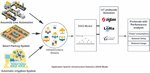
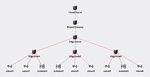
The proposed framework possesses two modules – ASIS model and ASIS with Edge layers. In ASIS model, three different IoT scenarios such as assembly line automation, smart parking system and automatic irrigation system are considered as depicted in Figure 1. Similarly, in ASIS model with edge, Irrigation system is taken for simulation as well as comparison by with and without the application of edge. ASIS model deals with choosing the best appropriate communication protocol for each application specifically in accordance with the infrastructure requirements. ASIS model with edge provides better enhanced communication between devices, edge server and cloud by merging the IoT application communication protocol with the edge infrastructure when compared to the non-edge infrastructure. This type of ASIS model is structured and implemented in iFogSim simulator and the performance is compared in terms of metrices such as network delay, power consumption and network usage. The proposed model is configured with IoT scenarios as mentioned before. The functioning and requirements of these scenarios is detailed in the next section.
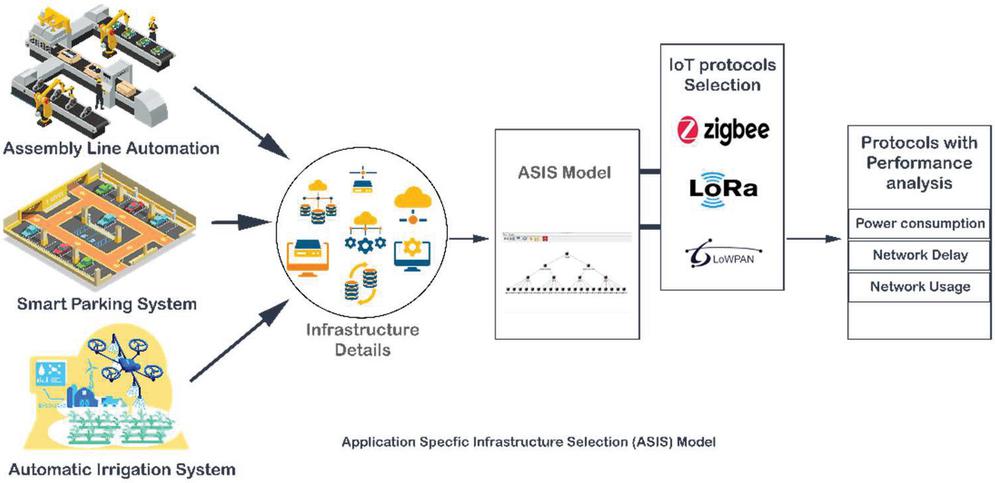
Figure 1 ASIS model with three IoT scenarios.
3.1 Schematic Plot of IoT Scenarios
Applications that are prone to delays in real time have notable restraint in network connectivity and capacity because of the dependency in cloud communication and generation of huge proportion of data by fog and edge applications. This is the particular scenario prevailing at the mobile edge. In mobile edge computing (MEC), mobility management is critical particularly in extreme dynamic environments and huge number of small cells are deployed for managing the demands in MEC scenarios. Therefore, in this case, the range of users can be very restricted and thereby inducing more frequent handovers, causing huge burden to the network [42]. Edge and fog devices use the diversity in communication technologies by extending from IEEE 802.11 to IEEE 802.15.4 (ZigBee/6LoWPAN) and LoRa which are low cost and energy efficient respectively. All these methodologies effect on the end performance with respect to service time, data processing, delays in data transfer etc. In network access technology, factors like performance and cost involve trade-off for achieving optimality [43]. The network communications protocols prescribed above provide improvements in network by optimizing the usage of mobile resources, pre-processing of data and context-aware services using user location, cell load and allocated bandwidth as information [44]. An exclusive mechanism is needed for discriminating delay-sensitive flows like network slicing, as every fog and edge application may possess dissimilar latency needs and therefore generate data and network traffic in different modes despite network improvements [45]. User mobility conditions are modelled for the accomplishment of geographic awareness logic like calculating the nearest mobile access point depending on user coordinate values at every simulation timestep. Additionally, availability and accessibility to real world data at end user mobility create legal and technical problems. Added calculations rise up the intricacies and computational resource demands of a given simulation platform. A unique solution to create workload models based on edge infrastructure by intelligent model generators based on third party socio-demographic and geographic data that can be utilized for simulation purposes [45]. The models in edge expand to thousands of distributed locations by initiating a network of resources traversing several locations. Even though at higher, producing such a model in real time becomes impractical in terms of time and effort. An automatic methodology is needed for solving the problem by constructing a model building. The already existing framework can be integrated with a system which performs data collection as well as monitor is possible to confront the issue with the help of acquiring snap-shot of the existing infrastructure [46]. The monitored data needs to encounter further processing for extracting the several trends of behavior in workload and application related demands to construct a meaningful system. This kind of process fetches big data management and processing issues into plot that need additional development within the extent of the simulation domain. Here in this research work three IoT scenarios are deployed in iFogSim Simulator. The working and the infrastructure architecture are detailed in below section.
Scenario 1: Assembly Line Automation
The IoT based Assembly line automation is presented in [16]. This architecture is further changed according to the implementation model for simulation where it consists of 2 tier structure with 8 nodes to communicate with router and cloud for networking. The working principle is as follows: data generates at the sensor end of fault identification module near the assembly line and it is collected by the nodes which in turn communicate with the cloud resource. This data is processed further in the cloud storage in which each fault data is crucial for analysis of fault prediction. The goal of this system is to maintain the high bandwidth with less network delay.
Scenario 2: Smart Parking System
The IoT enhanced parking system is developed in [17] that has two layers, first layer being the end nodes encompassing the cameras connected with a microcontroller affixed over the parking slots or lanes and it works by capturing the various images of parking slots for deciding the occupancy of parking lanes. The second layer has a cloud connected to router and it stores and manages the images of parking slots for prolonged time. If the driver arrives in the parking area, the footing of parking slots is shown in the LED screen. The smartphone is not required for verifying the information about the unoccupied slots in the parking area in this proposed framework. Then, the drivers are instructed towards the parking slot at the entry gate of parking. This mitigates the traffic blockage in the parking area and minimizes fuel consumption. This architecture is customized according to the simulation environment with 8 nodes communicated with router and cloud for networking.
Scenario 3: Automatic Irrigation System
A smart system is presented in [18] which forecasts the soil moisture underpinned by the information acquired from the sensors employed at the field along with the weather forecast data available at the Internet. An automated sensor node is dedicated to acquire the field data. Node side connectivity is put forth in the server-side software along with information related to visualization and decision support properties. A unique algorithmic approach is developed to predict the soil moisture by applying machine learning techniques over the sensor node and weather forecast related data. A standalone sensor node is employed to collect the field data in accordance with the field requirements. In such a type of standalone condition, field data collection device is made to process four sensors and the output of each is synchronized with the server database with the help of a developed web service. The assumption here considered is for huge farming area, a Wireless Sensor Network (WSN) [47] scenario with ZigBee [48, 49] methodology can be executed in which different sensor nodes can be fixed in the mentioned area. All the sensor nodes will resemble the standalone device. The output of these sensors is read by a microcontroller node connected to ZigBee for transmitting data to Gateway Node like the standalone device with ZigBee connectivity that cluster up the received data and store it locally in SQLite and also send the data to the server with the help of web service. So, this assumption is been taken an account with respect to edge comparing it with non-edge scenarios are implemented in the simulation environment. The scenario proposed here id developed as an extended model of the work stated in [50]. In the simulation environment model is deployed with 8 end nodes, 3 edge nodes with router and cloud connection.
3.2 ASIS Model Working
ASIS can be defined as a network resource manager that possess the capability to sense, act, process the signal, communicate for executing a specific task by taking account of their physical and technological restraints like size, energy consumption, power transmission, frequency of operation, computing capacity, sensibility of interference. It acts as an association of communication technologies like ZigBee, LoRa and LoWPAN to augment the energy efficiency and reduces the latency and power consumption with an application. In this process, the developed model gets the infrastructure details as an input to model a communication scenario for any kind of application. Here the model will compute the network usage, network delay and power consumption according to the infrastructure inputs for any type of IoT application scenarios. This proposed model facilitates the IoT application with robustness to decide the appropriation of communication protocols (ZigBee, LoRa and LoWPAN) with real-time deployment by considering the above networking parameters. In the proposed model, infrastructure details of three different IoT scenarios are given as an input to get the best protocol metrics for real time implementation.
3.3 Edge Based ASIS Model
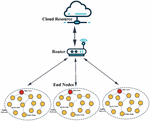
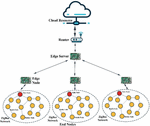
In edge based ASIS model, IoT scenarios is integrated with edge computing to enhance the performance better in the means of network usage, network delay and power consumption. In this proposed architecture, automatic irrigation system is deployed using edge-based model. The core concept of this work lies in collecting the physical features of a farming land with sensors and utilizing these sensors acquired data along with weather forecast information for designing an algorithm for predicting soil moisture for the upcoming days. Figures 2 and 3 denote the architectural framework of the proposed edge-based irrigation system for non-edge and multiple edge nodes respectively. If there are only microcontrollers, that alone is deployed in specific area, and it will transfer the data directly to the cloud server for prolonged usage as shown in Figure 2 whereas Figure 3 outlines the architecture of multiple node and edge nodes connected under a cloud server. Every controller has its own specialized edge node connected to the centralized cloud server.
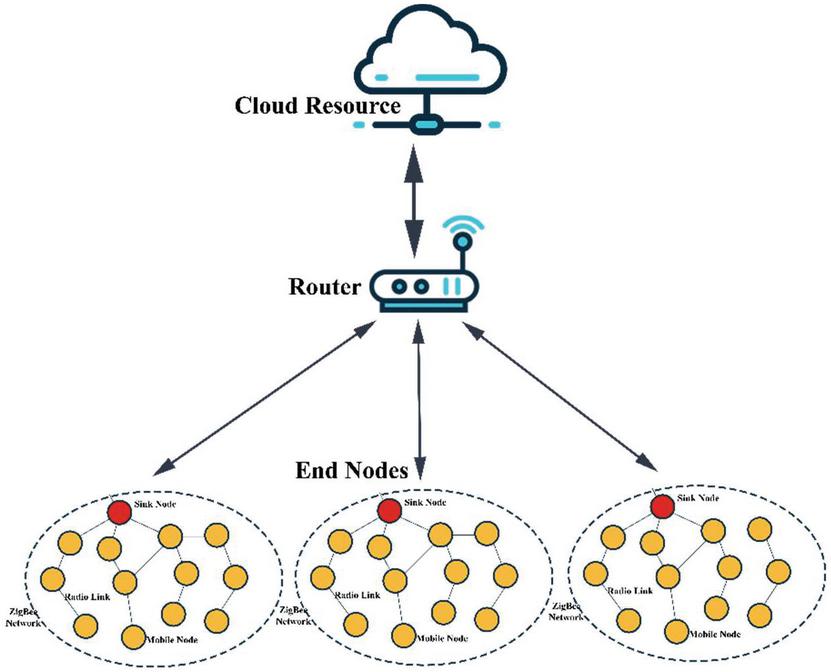
Figure 2 ASIS model with Cloud based communication network.
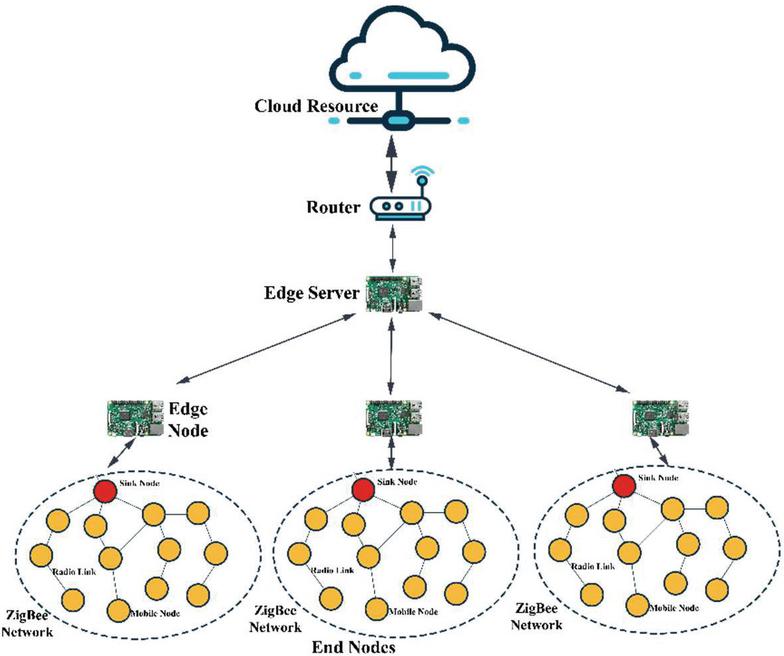
Figure 3 ASIS with Edge based communication network.
Here, usage and latency of network remain similar for each edge node whereas the time and network usage for uploading and retrieval of data will be declined by employing edge-based model in a centralized cloud server. This edge-based model is again merged with ASIS module to select the suitable communication protocol with edge integration. This integration improves the system by the means of network parameters like network usage, network delay and power consumption. So, this ASIS model can be used to propose an accurate infrastructure for the deployment of irrigation system.
4 Experimental Setup
The proposed model is configured in this simulation through two setup one with ASIS model for selecting the communication protocol for the chosen 3 IoT scenarios and other setup to add edge with ASIS model to improve the efficiency taking one scenario for experimentation. The first setup deals with end nodes to communicate with the central server of the nodes and communicate the data with the cloud server. Here the smart parking system, Assembly line automation and the Automatic irrigation system are processed with sample node details. In this second setup, simulation is done that involves the sensor nodes to acquire the values of each IoT scenarios as shown in Table 4. The values are consequently sent to the edge node. The edge node operates the data for finding the threshold value and actuate on a sensor connected to the edge node using the ZigBee, LoWPAN and LoRa. An edge server initiates the link between the edge nodes and the cloud server. This whole setup is compared with the non-edge model which is configured with WIFI communication protocol. iFogSim , the toolkit for IoT devices is applied as a simulator in this work and metrics such as the delay, power consumption and network usage can be evaluated in it. The number of nodes, type of network and range serve as an input. This is the overall configuration that has been given as input for the proposed system. The configuration parameters for cloud server, proxy server, and edge server are presented in Tables 2, 3 and 4 which is created and used as an input for simulating edge-based scenario.
Table 2 Simulation configuration of proposed model
| Cloud | Router | Edge | ZigBee | LoRa | LoWPAN | |
| CPU length (MIPS) | 44800 | 6000 | 6000 | 2800 | 2800 | 2800 |
| RAM (MB) | 40000 | 6000 | 4000 | 4000 | 4000 | 4000 |
| Uplink bandwidth (MB) | 10000 | 10000 | 10000 | 10000 | 10000 | 10000 |
| Downlink bandwidth (MB) | 10000 | 10000 | 10000 | 10000 | 10000 | 10000 |
| Level | 0 | 1 | 1 / 2 | 2 | 2 | 2 |
| Rate Per MIPS | 2 | 2 | 4 | 0.5 | 0.5 | 0.5 |
| Busy power (Watt) | 10*107.39 | 107.339 | 107.339 | 107.339 | 107.339 | 107.339 |
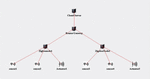
The various configuration parameters are processing capability in per million instructions, Random Access Memory (RAM), uplink and downlink bandwidth, cost of per million instruction processing, busy and idle power. Cloud-based setup in iFogSim is illustrated in Figure 4. Different nodes and actuators are affixed to cloud server by router for evaluating the cloud-based scenario performance. Nodes post the values of the sensor to the cloud server which process the irrigation data and the moisture data. Evaluation of edge scenario results are performed using the iFogSim created topology in Figure 5. Three edge nodes are created in the topology and all the sensors are attached to each edge node for evaluating the latency and network usage in iFogSim.
Table 3 Model configuration of the proposed system
| Infrastructure | Assembly Line | Smart Parking | Automatic Irrigation | |
| Details | Automation | System | System | |
| ASIS Model | Nodes | 8 | 8 | 8 |
| Router | 1 | 1 | 1 | |
| Cloud | 1 | 1 | 1 | |
| ASIS Edge Model | Edge | NA | NA | 3 |
Table 4 Simulation configuration of task parameters
| Simulation Variable | Value |
| Task | 3000 |
| Edge node computing capacity | 1.0–2.0 GHz |
| Edge server computing capacity | 20 GHz |
| Data size of Task | 300 MB |
| Bandwidth | 7 MHz |
| Noise | 15 W |
| Latency | 100–3000 ms |
| Task Priority | 1,2,3 |
| Scheduling Threshold 1 | 400 ms |
| Scheduling Threshold 2 | 900 ms |
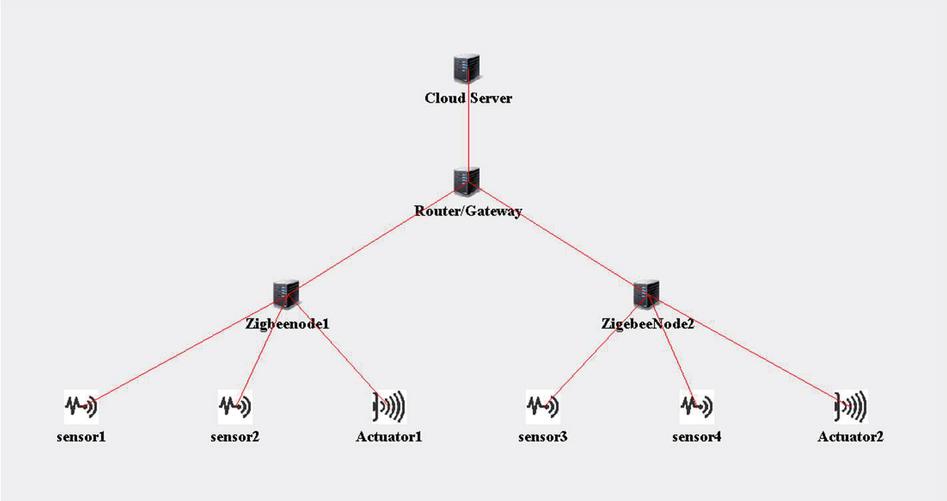
Figure 4 Cloud based communication network simulation in iFogSim.
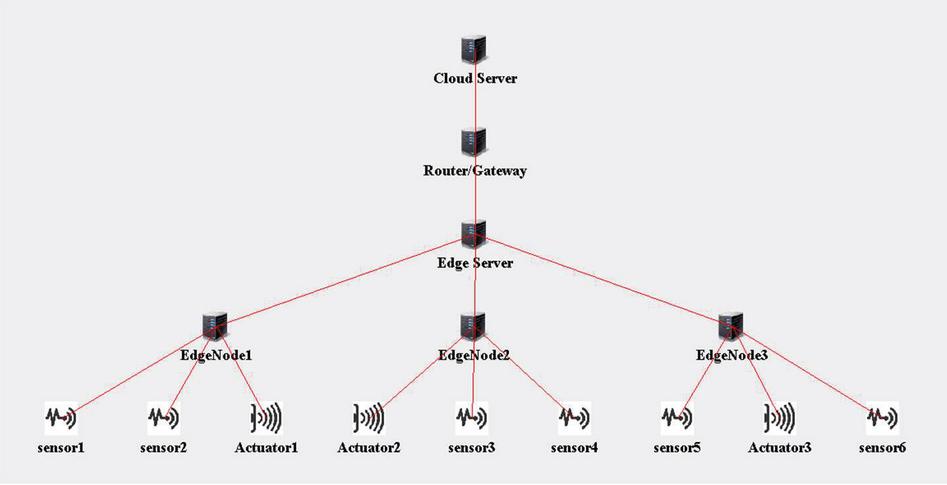
Figure 5 Edge based communication network simulation in iFogSim.
With the help of wireless channel, edge node sends the tasks. A similar MEC architecture was described by [51] and is been implemented for task offloading and scheduling. This model possesses two layers: mobile edge node and edge server layer. In this overall scheme, several task allocation methods are provided along with the specifications of how and where to handle tasks. Two models for allocation of tasks are framed in the proposed ASIS edge-based architecture: (i) offload process model (ii) partial offload process model [51].
4.1 Experimental Results and Analysis
The experimental results of the simulation carried out in iFogSim shows the comparison of efficiency of protocols namely ZigBee, LoRa and LoWPAN with respect to different IoT scenarios. This deployed model further integrated with ASIS Edge-based implementation of Irrigation system is compared with the Cloud based model. iFogSim is used to perform the simulations to assess the efficiency of proposed methodology and the results are evaluated over the performance metrics like energy consumption, network usage and average network delay.
Analysis of Energy Consumption
It is a notable factor in datacenters as many constraints are present in consumption of energy. In this simulation environment, energy consumption is evaluated between the end nodes and cloud server by their battery usage. ASIS model considers the power consumed by cloud, router and the end devices using ZigBee LoRa and LoWPAN protocol. In same way in the ASIS model with edge it does the same process but additionally it will add the edge node power consumption. Energy consumption is found using Equation (1) as given in [52]. Power consumption is calculated by the addition of idle power status and power value while the device is busy [50].
| (1) |
where b is the busy power value and i is the idle power status.
Analysis of Network Delay
Network delay is one of the needy factors to be decreased in environments that demand high real time performance. It is the total time taken for the node and the server to send and receive the data to actuate or store. The two endpoints that is the server or the endpoint wait to receive the data to act accordingly where the delay occurred. In our proposed model each scenario is having sensors and actuators at the end point which will send the data as well as wait for the data to actuate, so the delay here is considered in millisecond in the model. Further, in ASIS with edge, it will reduce the delay more in the sense of receiving the data from the edge itself instead of cloud. An additional benefit of edge computing is the evading of repeated accesses to the cloud and computations performed at the edge of network to provide immediate response back to the client device for reducing the delay. The network delay is estimated with Equation (2) as given in [52].
| (2) |
where
variable for CPU Execution Delay
time to upload the data on edge node for processing and storage
time taken to receive the data
Analysis of Network Usage
The cloud resources are used only when there is an increase in cloud server traffic which in turn induces elevated usage of network. Therefore, network data rates get declined because of the expanded traffic. Traffic denotes the net consumption of the network bandwidth between the end nodes and the cloud server in ASIS model. Each edge node is committed to a specific geographical area to deal upon the request of that particular area in ASIS with edge nodes which results in declining of network usage and expanding of rest of the traffic. The network usage is estimated using Equation (3) as given in [52].
| (3) |
where delay is the value that is calculated from the total network delay by that particular scenario and is the network size of the scenario taken into consideration.
ASIS model is constructed to evaluate the performance metrices such as energy consumption, Network usage and Network delay by acquiring the infrastructure details as input to the model. The performance measures– energy consumption, network delay and network usage for each application.
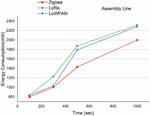
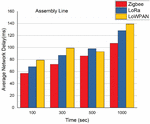
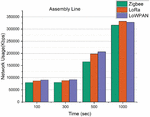
Evaluation of performance metrics in Assembly line automation: The configuration used for this first case is shown in Table 3. The ZigBee protocol outperforms other protocols as shown in Figures 6, 7 and 8 in accordance with consumption of energy, delay and usage of networks.
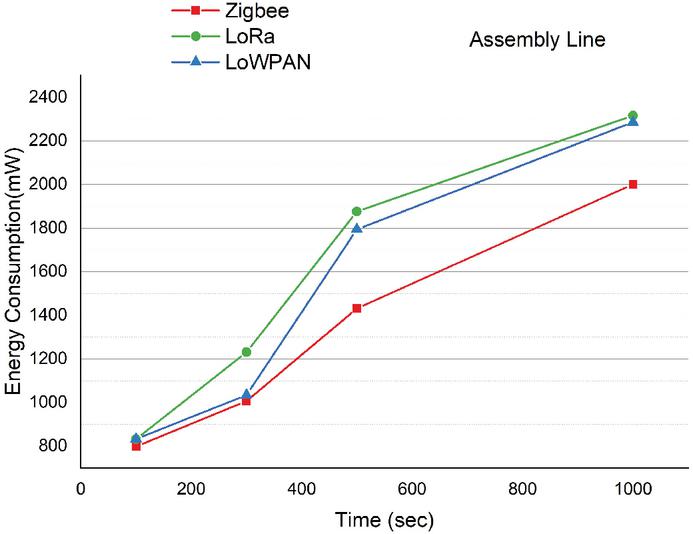
Figure 6 Comparison of energy consumption obtained from ASIS model in Assembly line automation.
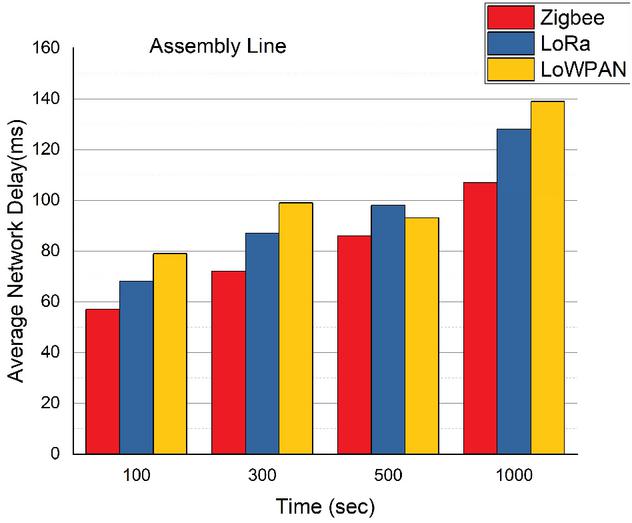
Figure 7 Comparison of Network delay obtained from ASIS model in Assembly line automation.
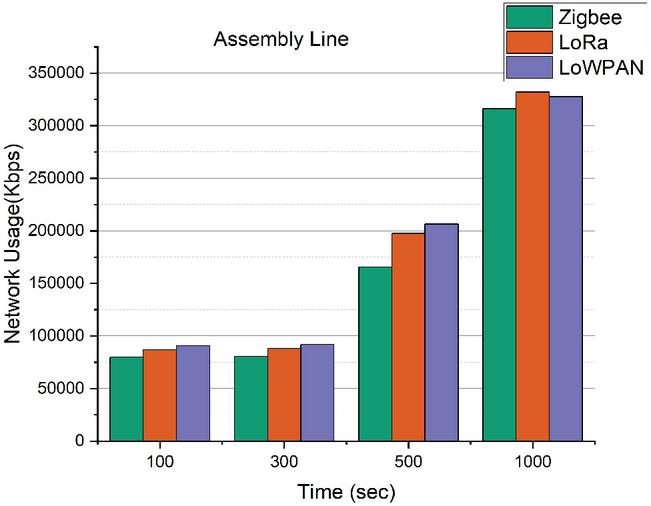
Figure 8 Comparison of Network usage obtained from ASIS model in Assembly line automation.
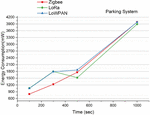
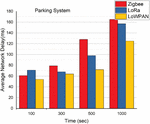
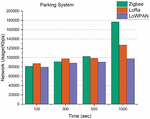
Evaluation of performance metrics in smart parking system: The configuration used for Smart Parking System is shown in Table 3. In this scenario, the LoRa protocol performs better with respect to energy consumption. LoWPAN yields good results with respect to network delay and network usage. Thus, in the smart parking system, both LoRa and LoWPAN produced better performance as shown in Figures 9–11.
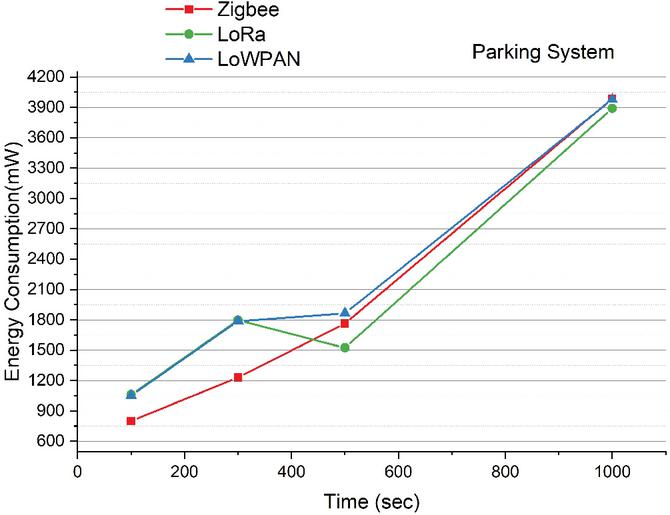
Figure 9 Comparison of energy consumption obtained from ASIS model in Smart parking system.
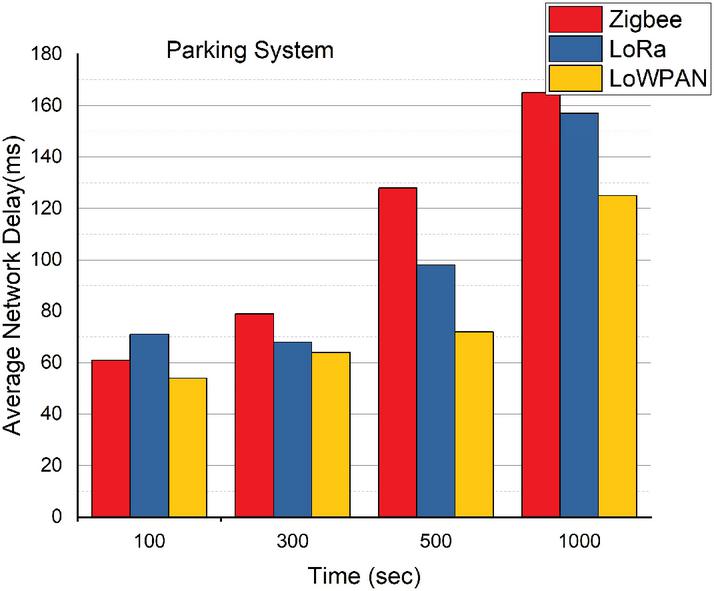
Figure 10 Comparison of Network delay obtained from ASIS model in Smart parking system.
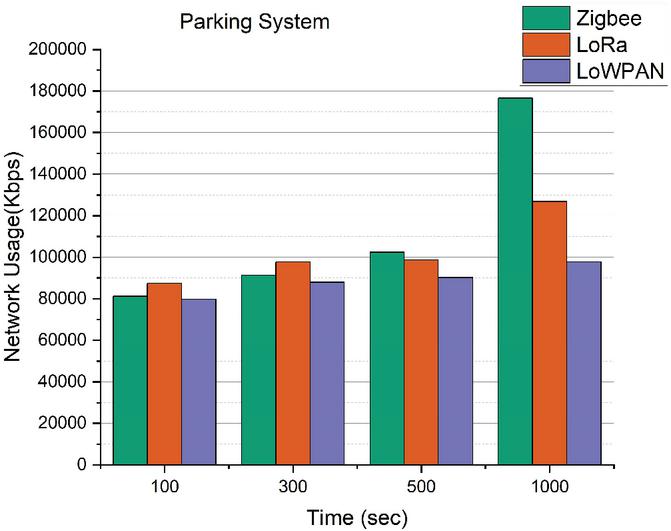
Figure 11 Comparison of Network usage obtained from ASIS model in Smart parking system.
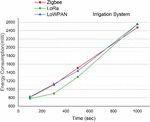
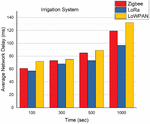
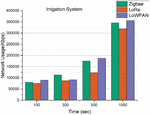
Evaluation of performance metrics in automatic irrigation system: The configuration used for Automatic Irrigation system is shown in Table 3. ASIS model demonstrate the energy consumption graph of this scenario in the terms of power usage versus total simulation time by the model as in below Figure 12. In terms of energy consumption, LoWPAN protocol provides higher performance than others whereas LoRa provides better performance in terms of network delay and network usage as shown in Figures 13 and 14.
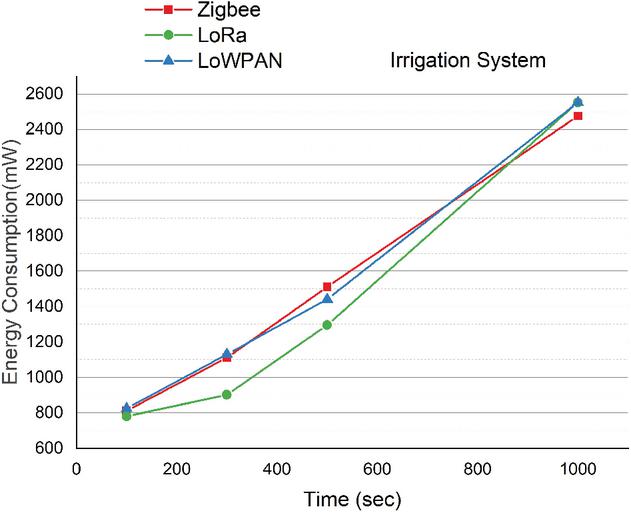
Figure 12 Comparison of energy consumption obtained from ASIS model in Automatic Irrigation system.
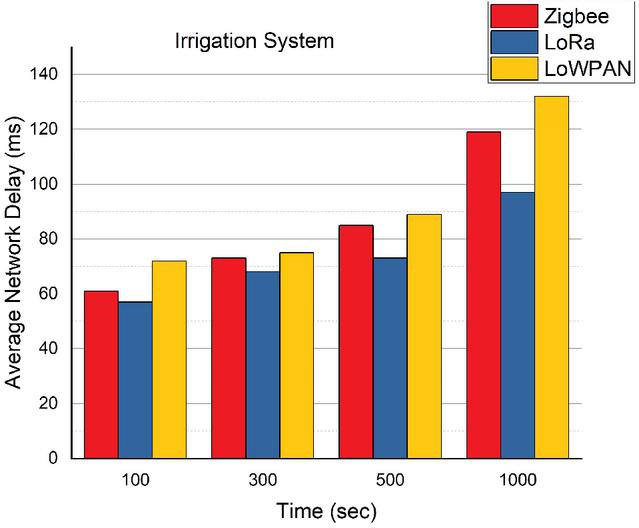
Figure 13 Comparison of Network delay obtained from ASIS model in Automatic Irrigation system.
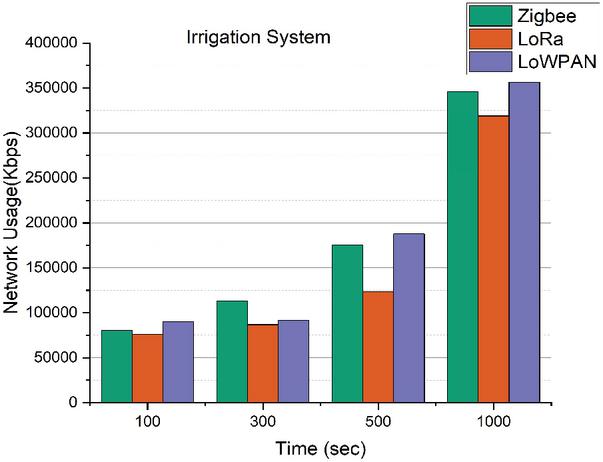
Figure 14 Comparison of Network usage obtained from ASIS model in Automatic Irrigation system.
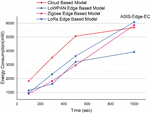
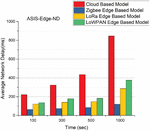
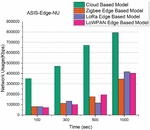
In the proposed model, the third scenario of automatic irrigation system is extended with ASIS model along with edge implementation. Therefore, the edge framework is built in the iFogSim to predict the soil moisture values and compare the values with cloud by and of edge itself. The configuration for this environment is given in the Tables 2 and 3. Finally, the Edge model is built to select the required and suitable communication protocol attached with edge according to the same performance metrics used in ASIS model. The Figures 15, 16 and 17 represents the energy consumption, network delay and network usage of the proposed model with edge in comparison with cloud-based model. ASIS Edge model demonstrates the energy consumption graph of this outline in terms of energy versus total simulation time as shown in Figure 15, network delay versus total simulation time in Figure 16 and network usage versus total simulation time in Figure 17.
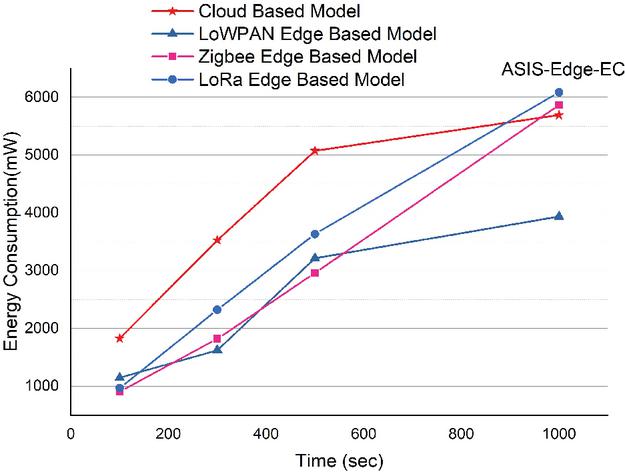
Figure 15 Comparison of energy consumption obtained from ASIS Edge model in Automatic Irrigation system.
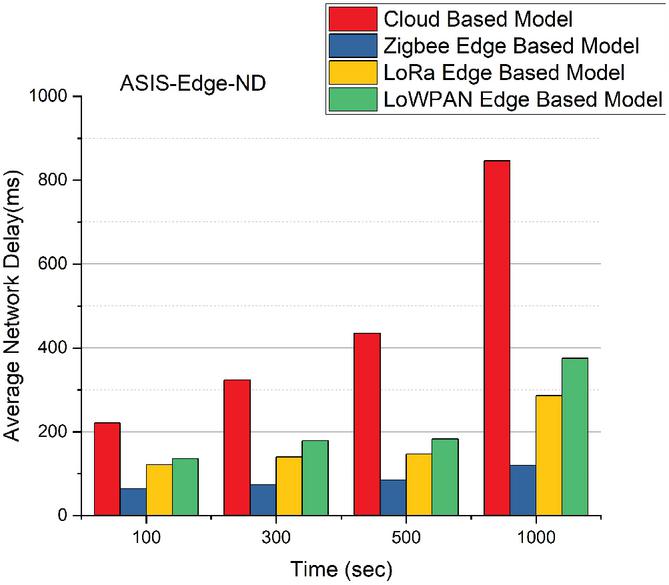
Figure 16 Comparison of Network delay obtained from ASIS Edge model in Automatic Irrigation system.
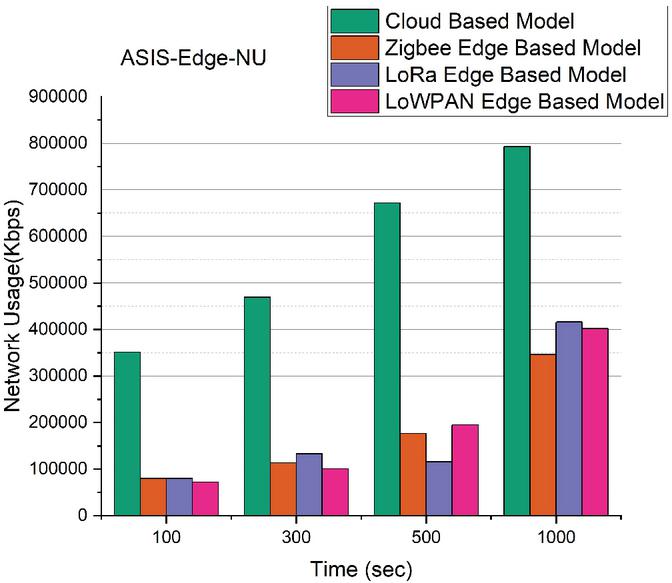
Figure 17 Comparison of network usage obtained from ASIS Edge model in Automatic Irrigation system.
5 Conclusion
In Edge computing, communication protocol plays a key role in the absolute functioning of IoT devices, Edge devices, Cloud Services. By considering this, an ASIS Model is developed which dynamically selects the communication infrastructure combined with edge enhancement using iFogSim simulator. The proposed approach accomplishes the infrastructure and communication requirements of IoT scenario deployment with respect to energy consumption, delay as well as network usage in implementation. Simulations are performed in iFogSim to illustrate the efficiency of the proposed methodology in reducing the lag and network usage and the results are compared with the cloud-based deployment for automatic irrigation system. Experimental results reveal that the proposed Edge-based implementation combined with ZigBee at the end network reduces the overall network usage by 70%, delay by 85% and energy consumption by 68%. When the number of nodes, endpoints and edge nodes get increased, it gives rise to privacy issues in data storage with the cloud which is the limitation in proposed research. By considering this privacy issue in cloud storage, future work can be directed towards devising suitable encryption techniques. Furthermore, widening the scope of the proposed work with extended number of geographical areas will need load balancing on edge nodes for maintaining the efficiency. Hence, the appropriate solution for the issues related to load balancing in edge nodes will be devised in future.
References
[1] J. Lin, W. Yu, N. Zhang, X. Yang, H. Zhang, and W. Zhao, “A Survey on Internet of Things: Architecture, Enabling Technologies, Security and Privacy, and Applications,” IEEE Internet Things J., vol. 4, no. 5, pp. 1125–1142, Oct. 2017, doi: 10.1109/JIOT.2017.2683200.
[2] L. Bajer and O. Krejcar, “Design and Realization of Low Cost Control for Greenhouse Environment with Remote Control,” IFAC-PapersOnLine, vol. 48, no. 4, pp. 368–373, 2015, doi: 10.1016/j.ifacol.2015.07.062.
[3] J. A. Stankovic, “Research Directions for the Internet of Things,” IEEE Internet Things J., vol. 1, no. 1, pp. 3–9, Feb. 2014, doi: 10.1109/JIOT.2014.2312291.
[4] L. Lou, Q. Li, Z. Zhang, R. Yang, and W. He, “An IoT-Driven Vehicle Detection Method Based on Multisource Data Fusion Technology for Smart Parking Management System,” IEEE Internet Things J., vol. 7, no. 11, pp. 11020–11029, Nov. 2020, doi: 10.1109/JIOT.2020.2992431.
[5] V. Chauhan, M. Patel, S. Tanwar, S. Tyagi, and N. Kumar, “IoT Enabled Real-Time urban transport management system,” Computers & Electrical Engineering, vol. 86, p. 106746, Sep. 2020, doi: 10.1016/j.compeleceng.2020.106746.
[6] H. M. Khan, A. Khan, F. Jabeen, and A. U. Rahman, “Privacy preserving data aggregation with fault tolerance in fog-enabled smart grids,” Sustainable Cities and Society, vol. 64, p. 102522, Jan. 2021, doi: 10.1016/j.scs.2020.102522.
[7] W. Yang et al., “EdgeKeeper: a trusted edge computing framework for ubiquitous power Internet of Things,” Front Inform Technol Electron Eng, Jan. 2021, doi: 10.1631/FITEE.1900636.
[8] E. Saavedra, G. del Campo, and A. Santamaria, “Smart Metering for Challenging Scenarios: A Low-Cost, Self-Powered and Non-Intrusive IoT Device,” Sensors, vol. 20, no. 24, p. 7133, Dec. 2020, doi: 10.3390/s20247133.
[9] M. Kumar, K. S. Raju, D. Kumar, N. Goyal, S. Verma, and A. Singh, “An efficient framework using visual recognition for IoT based smart city surveillance,” Multimed Tools Appl, Jan. 2021, doi: 10.1007/s11042-020-10471-x.
[10] F. B. Poyen, A. Ghosh, P. Kundu, S. Hazra, and N. Sengupta, “Prototype Model Design of Automatic Irrigation Controller,” IEEE Trans. Instrum. Meas., vol. 70, pp. 1–17, 2021, doi: 10.1109/TIM.2020.3031760.
[11] N. Abdullah et al., “Towards Smart Agriculture Monitoring Using Fuzzy Systems,” IEEE Access, vol. 9, pp. 4097–4111, 2021, doi: 10.1109/ACCESS.2020.3041597.
[12] W. Yu et al., “A Survey on the Edge Computing for the Internet of Things,” IEEE Access, vol. 6, pp. 6900–6919, 2018, doi: 10.1109/ACCESS.2017.2778504.
[13] M. Capra, R. Peloso, G. Masera, M. R. Roch, and M. Martina, “Edge Computing: A Survey On the Hardware Requirements in the Internet of Things World,” Future Internet, vol. 11, no. 4, p. 100, Apr. 2019, doi: 10.3390/fi11040100.
[14] H. Bangui, S. Rakrak, S. Raghay, and B. Buhnova, “Moving to the Edge-Cloud-of-Things: Recent Advances and Future Research Directions,” Electronics, vol. 7, no. 11, p. 309, Nov. 2018, doi: 10.3390/electronics7110309.
[15] J. Kang and D.-S. Eom, “Offloading and Transmission Strategies for IoT Edge Devices and Networks,” Sensors, vol. 19, no. 4, p. 835, Feb. 2019, doi: 10.3390/s19040835.
[16] M. Syafrudin, N. Fitriyani, G. Alfian, and J. Rhee, “An Affordable Fast Early Warning System for Edge Computing in Assembly Line,” Applied Sciences, vol. 9, no. 1, p. 84, Dec. 2018, doi: 10.3390/app9010084.
[17] K. S. Awaisi et al., “Towards a Fog Enabled Efficient Car Parking Architecture,” IEEE Access, vol. 7, pp. 159100–159111, 2019, doi: 10.1109/ACCESS.2019.2950950.
[18] A. Goap, D. Sharma, A. K. Shukla, and C. Rama Krishna, “An IoT based smart irrigation management system using Machine learning and open source technologies,” Computers and Electronics in Agriculture, vol. 155, pp. 41–49, Dec. 2018, doi: 10.1016/j.compag.2018.09.040.
[19] M. Chernyshev, Z. Baig, O. Bello, and S. Zeadally, “Internet of Things (IoT): Research, Simulators, and Testbeds,” IEEE Internet Things J., vol. 5, no. 3, pp. 1637–1647, Jun. 2018, doi: 10.1109/JIOT.2017.2786639.
[20] E. Sisinni, A. Saifullah, S. Han, U. Jennehag, and M. Gidlund, “Industrial Internet of Things: Challenges, Opportunities, and Directions,” IEEE Trans. Ind. Inf., vol. 14, no. 11, pp. 4724–4734, Nov. 2018, doi: 10.1109/TII.2018.2852491.
[21] C. Del-Valle-Soto, L. J. Valdivia, R. Velázquez, L. Rizo-Dominguez, and J.-C. López-Pimentel, “Smart Campus: An Experimental Performance Comparison of Collaborative and Cooperative Schemes for Wireless Sensor Network,” Energies, vol. 12, no. 16, p. 3135, Aug. 2019, doi: 10.3390/en12163135.
[22] A. H. Alavi and W. G. Buttlar, “An overview of smartphone technology for citizen-centered, real-time and scalable civil infrastructure monitoring,” Future Generation Computer Systems, vol. 93, pp. 651–672, Apr. 2019, doi: 10.1016/j.future.2018.10.059.
[23] A. de M. Del Esposte et al., “Design and evaluation of a scalable smart city software platform with large-scale simulations,” Future Generation Computer Systems, vol. 93, pp. 427–441, Apr. 2019, doi: 10.1016/j.future.2018.10.026.
[24] A. Medela, B. Cendón, L. González, and R. Crespo, “IoT Multiplatform Networking to Monitor and Control Wineries and Vineyards,” p. 10, 2013.
[25] Y. Song, J. Ma, X. Zhang, and Y. Feng, “Design of Wireless Sensor Network-Based Greenhouse Environment Monitoring and Automatic Control System,” JNW, vol. 7, no. 5, pp. 838–844, May 2012, doi: 10.4304/jnw.7.5.838-844.
[26] G. V. Satyanarayana and S. Mazaruddin, “Wireless Sensor Based Remote Monitoring System for Agriculture Using ZigBee and GPS,” p. 5.
[27] N. Sakthipriya, “An Effective Method for Crop Monitoring Using Wireless Sensor Network,” p. 6, 2014.
[28] D. Rajesh, “Application of Spatial Data mining for Agriculture,” IJCA, vol. 15, no. 2, pp. 7–9, Feb. 2011, doi: 10.5120/1922-2566.
[29] Yue Shaobo et al., “The appliacation of bluetooth module on the agriculture expert system,” in 2010 2nd International Conference on Industrial and Information Systems, Dalian, China, Jul. 2010, pp. 109–112. doi: 10.1109/INDUSIS.2010.5565902.
[30] M. Haefke, S. C. Mukhopadhyay, and H. Ewald, “A Zigbee based smart sensing platform for monitoring environmental parameters,” in 2011 IEEE International Instrumentation and Measurement Technology Conference, Hangzhou, China, May 2011, pp. 1–8. doi: 10.1109/IMTC.2011.5944154.
[31] PG Student, Department of ME, MCE, Hassan, India., P. D. S, and M. S. Srinath, “GSM based Automatic Irrigation Control System for Efficient Use of Resources and Crop Planning by Using an Android Mobile,” IOSRJMCE, vol. 11, no. 4, pp. 49–55, 2014, doi: 10.9790/1684-11414955.
[32] P. Sarwade, N. Shinde, and S. Tingre, “FPGA Based Real Time Monitoring System for Agricultural Field,” vol. 3, no. 3, p. 9, 2017.
[33] R. Castañeda-Miranda, E. Ventura-Ramos, R. del Rocío Peniche-Vera, and G. Herrera-Ruiz, “Fuzzy Greenhouse Climate Control System based on a Field Programmable Gate Array,” Biosystems Engineering, vol. 94, no. 2, pp. 165–177, Jun. 2006, doi: 10.1016/j.biosystemseng.2006.02.012.
[34] K. P. Ferentinos, N. Katsoulas, A. Tzounis, C. Kittas, and T. Bartzanas, “A climate control methodology based on wireless sensor networks in greenhouses,” Acta Hortic., no. 1107, pp. 75–82, Dec. 2015, doi: 10.17660/ActaHortic.2015.1107.9.
[35] J.-S. Lee, Y.-W. Su, and C.-C. Shen, “A Comparative Study of Wireless Protocols: Bluetooth, UWB, ZigBee, and Wi-Fi,” in IECON 2007 – 33rd Annual Conference of the IEEE Industrial Electronics Society, Taipei, Taiwan, 2007, pp. 46–51. doi: 10.1109/IECON.2007.4460126.
[36] C. Saad, B. Mostafa, E. Ahmadi, and H. Abderrahmane, “Comparative Performance Analysis of Wireless Communication Protocols for Intelligent Sensors and Their Applications,” IJACSA, vol. 5, no. 4, 2014, doi: 10.14569/IJACSA.2014.050413.
[37] A. Paventhan, S. K. Allu, S. Barve, V. Gayathri, and N. M. Ram, “Soil Property Monitoring Using 6LoWPAN-enabled Wireless Sensor Networks,” p. 7, 2012.
[38] Z. Suryady, M. H. M. Shaharil, K. A. Bakar, R. Khoshdelniat, G. R. Sinniah, and U. Sarwar, “Performance evaluation of 6LoWPAN-based precision agriculture,” in The International Conference on Information Networking 2011 (ICOIN2011), Kuala Lumpur, Malaysia, Jan. 2011, pp. 171–176. doi: 10.1109/ICOIN.2011.5723173.
[39] A. Augustin, J. Yi, T. Clausen, and W. Townsley, “A Study of LoRa: Long Range & Low Power Networks for the Internet of Things,” Sensors, vol. 16, no. 9, p. 1466, Sep. 2016, doi: 10.3390/s16091466.
[40] M. A. Ertürk, M. A. Aydın, M. T. Büyükakkaşlar, and H. Evirgen, “A Survey on LoRaWAN Architecture, Protocol and Technologies,” Future Internet, vol. 11, no. 10, p. 216, Oct. 2019, doi: 10.3390/fi11100216.
[41] F. Adelantado, X. Vilajosana, P. Tuset-Peiro, B. Martinez, J. Melia-Segui, and T. Watteyne, “Understanding the Limits of LoRaWAN,” IEEE Commun. Mag., vol. 55, no. 9, pp. 34–40, 2017, doi: 10.1109/MCOM.2017.1600613.
[42] S.-C. Hung, H. Hsu, S.-Y. Lien, and K.-C. Chen, “Architecture Harmonization Between Cloud Radio Access Networks and Fog Networks,” IEEE Access, vol. 3, pp. 3019–3034, 2015, doi: 10.1109/ACCESS.2015.2509638.
[43] S. Kitanov, E. Monteiro, and T. Janevski, “5G and the Fog—Survey of related technologies and research directions,” in 2016 18th Mediterranean Electrotechnical Conference (MELECON), Lemesos, Apr. 2016, pp. 1–6. doi: 10.1109/MELCON.2016.7495388.
[44] T. X. Tran, A. Hajisami, P. Pandey, and D. Pompili, “Collaborative Mobile Edge Computing in 5G Networks: New Paradigms, Scenarios, and Challenges,” IEEE Commun. Mag., vol. 55, no. 4, pp. 54–61, Apr. 2017, doi: 10.1109/MCOM.2017.1600863.
[45] A. Greasley and C. Owen, “Modelling people’s behaviour using discrete-event simulation: a review,” IJOPM, vol. 38, no. 5, pp. 1228–1244, May 2018, doi: 10.1108/IJOPM-10-2016-0604.
[46] S. Svorobej et al., “Towards Automated Data-Driven Model Creation for Cloud Computing Simulation,” presented at the Eighth EAI International Conference on Simulation Tools and Techniques, Athens, Greece, 2015. doi: 10.4108/eai.24-8-2015.2261129.
[47] T. Ojha, S. Misra, and N. S. Raghuwanshi, “Wireless sensor networks for agriculture: The state-of-the-art in practice and future challenges,” Computers and Electronics in Agriculture, vol. 118, pp. 66–84, Oct. 2015, doi: 10.1016/j.compag.2015.08.011.
[48] K. L. Krishna, J. Madhuri, and K. Anuradha, “A ZigBee based energy efficient environmental monitoring alerting and controlling system,” in 2016 International Conference on Information Communication and Embedded Systems (ICICES), Chenai, Tamilnadu, India, Feb. 2016, pp. 1–7. doi: 10.1109/ICICES.2016.7518849.
[49] J. Gutierrez, J. F. Villa-Medina, A. Nieto-Garibay, and M. A. Porta-Gandara, “Automated Irrigation System Using a Wireless Sensor Network and GPRS Module,” IEEE Trans. Instrum. Meas., vol. 63, no. 1, pp. 166–176, Jan. 2014, doi: 10.1109/TIM.2013.2276487.
[50] S. Premkumar and A. Sigappi, “A Survey of Architecture, Framework and Algorithms for Resource Management in Edge Computing,” EAI Endorsed Transactions on Energy Web, p. 167788, Jul. 2018, doi: 10.4108/eai.23-12-2020.167788.
[51] Y. Mao, J. Zhang, and K. B. Letaief, “Joint Task Offloading Scheduling and Transmit Power Allocation for Mobile-Edge Computing Systems,” in 2017 IEEE Wireless Communications and Networking Conference (WCNC), San Francisco, CA, USA, Mar. 2017, pp. 1–6. doi: 10.1109/WCNC.2017.7925615.
[52] H. Gupta, A. Vahid Dastjerdi, S. K. Ghosh, and R. Buyya, “iFogSim: A toolkit for modeling and simulation of resource management techniques in the Internet of Things, Edge and Fog computing environments: iFogSim: A toolkit for modeling and simulation of internet of things,” Softw. Pract. Exper., vol. 47, no. 9, pp. 1275–1296, Sep. 2017, doi: 10.1002/spe.2509.
Biographies

S. Premkumar Research Scholar, Computer Science and Engineering, Annamalai University, India. He has finished Master of Engineering (CSE) in Annamalai University. Currently he is also serving as a Project fellow (CSE) under UGC India granted DST-PURSE scheme at Annamalai University. His interested areas are Artificial Intelligence, Internet of Things, Edge computing and Cloud computing.

AN. Sigappi, Received her Ph.D in Computer Science and Engineering from Annamalai University in 2013. She did her Master Degree in Computer science and engineering from Anna University. Currently she is serving as a Professor in the Department of Computer Science and Engineering, Annamalai University, India. Her areas of interest include Image Processing, Machine Learning, Data Analytics and Internet of things. She has published more than 25 research articles in international journals and conferences.
Journal of Mobile Multimedia, Vol. 18_3, 885–916.
doi: 10.13052/jmm1550-4646.18321
© 2022 River Publishers