Deep Learning Based Power Allocation Schemes for NOMA System with Imperfect SIC
Worawit Saetan and Sakchai Thipchaksurat*
Department of Computer Engineering, School of Engineering, King Mongkut’s Institute of Technology Ladkrabang, Bangkok, Thailand
E-mail: worawit.saetan@gmail.com; sakchai.th@kmitl.ac.th
*Corresponding Author
Received 17 November 2021; Accepted 13 June 2022; Publication 15 September 2022
Abstract
Non-orthogonal multiple access (NOMA) has been a promising technology for 5G communication system. NOMA allows more than one user to utilize the same resource at the same time, which can lead to high performance in terms of spectral efficiency, energy efficiency or fairness. NOMA enables power domain multiplexing and separates the multiplexed signal by using successive interference cancellation (SIC). Therefore, the full benefit of NOMA depends on power allocation. However, in practical system, residual interference caused by SIC process can severely degrade a system performance. In this paper, we propose two power allocation schemes based on deep learning to alleviate the effect of imperfect SIC for downlink NOMA system, including a deep learning-based sum rate power allocation scheme (DL-SRPAS) and a deep learning-based energy-efficient power allocation scheme (DL-EEPAS). our two proposed schemes learn two optimal power allocation schemes provided through exhaustive search. We search the solution of the optimization problems, where two optimization problems are formulated to maximize the sum rate and the energy efficiency subject to a minimum user data rate requirement. The simulation results verify that our two proposed schemes can alleviate the effect of imperfect SIC and outperform two conventional power allocation schemes which maximize the sum rate and the energy efficiency without considering imperfect SIC. In addition, our proposed schemes achieve near-optimal performance with very low computational time.
Keywords: Non-orthogonal multiple access (NOMA), power allocation, deep learning, energy efficiency, imperfect SIC.
1 Introduction
Due to the rapid growth of cloud computing services and internet of things (IoT) devices and applications, there is a high demand in high speed internet access and large data transmission for wireless and mobile communication systems. Therefore, the 5th generation mobile network (5G) provides higher requirements in data transmission rate, more bandwidth per unit area, 99.99% availability, massive connectivity, low latency and better coverage area [1]. To meet these requirements, some emerging technologies, such as small cell network [2, 3], millimeter wave (mmWave) [4], device to device (D2D) communication [5] and massive multiple-input multiple-output (MIMO) wireless technology [6] are integrated into 5G mobile communications. Recently, non-orthogonal multiple access (NOMA), which is the physical layer technique that can improve the spectral efficiency of the system, support overload data traffic and also increase the network reliability within limited resources [7], has been one of the key technology in 5G mobile systems.
The traditional method in physical layer of mobile network, or orthogonal multiple access (OMA) is unable to serve a large number of mobile devices because they are allocated individually to orthogonal blocks to reduce and avoid multiple access interference [8]. Instead, new multiple access technique or non-orthogonal multiple access (NOMA) allows multiple devices to access the same resource block such as time and frequency at the same time [9]. This NOMA technique provides better performance metrics such as energy conservation, user data rate and user fairness indicator [10]. The main idea behind NOMA is to utilize the power multiplexing for multiple users. NOMA applies successive interference cancellation (SIC) decoding at users to allow them to access the same resource block by using different power levels [11]. Therefore, the power allocation is the key to achieve the full benefit of NOMA.
1.1 Related Work
In NOMA related works, power allocation problem has been investigated in many performance metrics. The most commonly used metric is the sum rate of the network system and there are a number of research works, including [12, 13, 14] and [15]. In [12], the authors proposed the optimal power allocation for maximizing the sum-rate of all user and also consider the quality of service of the system for only two-users based NOMA system. In [13], the authors investigated the weighted maximization problem on sum-rate of the system by deploying an orthogonal frequency division multiplexing access (OFDMA) based-NOMA system, where the authors used difference of two convex functions programming to solve the nonconvex problem of power allocation. In [14], a water-filling based power allocation was proposed to enhance the throughput of the system but the optimal solution was not guaranteed. In [15], the authors considered the sum-rate problem in power allocation subject to the minimum user rate requirements. The optimal user decoding was proved and verified that the optimization problem was convex, which guaranteed the optimal solution of the problem.
As energy efficiency has become a vital performance metric in today mobile and wireless communication, the resource allocation that maximizes this key metric in NOMA is needed to be investigated. [16] proposed the optimal power allocation for enhancing the energy-efficiency in the constraints of minimum data rate for all users on one channel. [17] investigated the joint channel assignment and power allocation for increasing the energy efficiency to its maximum value, which DC programming was used to achieve a sub-optimal solution. In [18], the authors examined the new hybrid multiple access (HMA) system in NOMA based system that represented a general case of the paper [16], which tried to extend one cluster to multiple clusters.
Most research on NOMA assumed the process of decoding the signal is in perfect SIC condition. This means that users with better channel conditions can perfectly remove the interference caused by users with poorer channel conditions. However, in realistic systems, error propagation during SIC decoding can always occur and this is called the imperfect SIC. Therefore, users with higher channel gains cannot remove other interference from users with lower channel gains. This residual interference that cannot be removed can downgrade the overall performance of the system [19].
There are a number of papers in communication field, which did not consider NOMA, have adopted AI and deep learning. For instance, In [20], applications of deep learning to wireless communications were introduced. In [21], deep learning based scheme (DL-PAS) was used to learn input-output mapping of the exhaustive search pilot allocation in a massive MIMO system. In [22], the authors applied deep learning to learn fractional programming for maximizing online energy efficiency. In [23], the authors trained a deep neural network to learn the weighted MMSE algorithm.
In summary, in almost all existing NOMA related works, the effect of imperfect SIC was not explicitly investigated. Furthermore, the application of deep learning to power allocation on NOMA-based system was not investigated in any performance metric.
1.2 Contributions
In this paper, we investigate power allocation in multi-users NOMA systems with imperfect SIC. Our contributions are summarized in the following:
• We consider power allocation in two performance criteria that lead to two problem formulations, including the sum rate and the energy efficiency maximization with QoS constraints.
• We take into account the imperfect SIC and analyze its impact on the sum rate and the energy efficiency of downlink NOMA systems.
• We formulate two optimization problems which maximize the sum rate and the energy efficiency subject to QoS for each user.
• We propose two deep learning-based power allocation schemes to alleviate the impact of imperfect SIC, including a deep learning based sum rate power allocation scheme (DL-SRPAS) and a deep learning based energy-efficient power allocation scheme (DL-EEPAS), which apply deep learning to predict the optimal power allocation scheme provided through exhaustive search.
• Finally, It is shown via simulations that our proposed schemes can mitigate the practical impact of imperfect SIC in both two criteria and outperform the conventional power allocation schemes which do not consider imperfect SIC. In addition, we compare our proposed schemes with the optimal scheme using exhaustive search. The simulation results show that our proposed schemes obtain near-optimal performance but need less computational time than the optimal power allocation.
The rest of the paper is organized as follows. System model and problem formulation are given in Section 2. The proposed schemes are described in Section 3. The simulation results are presented in Section 4. Finally, Section 5 summarizes the whole paper.
2 System Model and Problem Formulation
2.1 System Model
We simulate one base station which equipped single antenna to manage users in the direction of downlink communication. The system operates in NOMA environment and each user shares the same resource. The location of the base station (BS) is at the cell center and all users are randomly deployed in the cell area.
By employing the superposition coding (SC) technique at BS, the BS signal can be calculated as the equation
| (1) |
where is the transmission energy for the signal of the user , and is the transmission signal of the user . The received signal at the user can be formulated as
| (2) |
where is the channel gain between BS and the user , follows the Rayleigh distribution, and is the path loss function from BS to specific user with the distance . The noise term is the additive white Gaussian noise (AWGN) by variance .
Furthermore, we assume that BS has the complete information of the channel state information (CSI) and the channel gains of all users are arranged in descending order as follows
| (3) |
i.e., the user 1 and the user are the strongest and weakest devices, respectively. According to the NOMA protocol, successive interference cancellation (SIC) will be used at the stronger users to cancel other interference from the weaker users. The user will decode each signal with a weaker channel gain, and subtract it from the received signal. Until reaching its own information signal , the user will do this SIC process step by step. After SIC process is done, the user will decode and extract its own signal by looking at other interference (caused by the remaining stronger users) as some noise. If this process is perfectly done, then the user will delete totally all interference from the other weaker users.
Nevertheless, in any real system, regarding to the modulation schemes, the coding schemes, the detection ability and the signal to interference plus noise ratio (SINR), the interference caused by weaker users at any user might be still remaining. This imperfect SIC condition may cause a residual interference at the post-SIC signal of any user . Therefore, The SINR at the user is expressed as the equation
| (4) |
where indicates the channel-response normalized by noise (CRNN) of any user , is the noise density power, is the transmit power for the signal of user , is the power allocation unit factor of the signal of any user , is the total transmit power at BS, and is the uncancelled residual fraction of the signal’s power of the user at the user [24].
Moreover, the value of depended on the channel realization, which can be calculated by long-time measurement. By considering a large sample sizes, [24] approximated the residual interference of the system as Gaussian distribution. Then, can be computed to be the deviation or variance of the remaining interference divided by the received energy, which will be later returned to base station.
We can calculate the Shannon capacity equation, where each data rate of user can be written by the equation
| (5) |
where denotes the bandwidth of the system.
2.2 Problem Formulation
As seen in the Equation (2.1), the transmission power not only increases the signal strength but also increases the residual interference. When we compared to perfect SIC (or ideal case) ,the non-ideal case or the imperfect SIC can explicitly decrease the system performance. In the paper, we then investigate the effect of imperfect SIC on power allocation for a NOMA system in the following network performance metrics.
1. Sum rate: The objective is to maximize the sum rate of all users in the system. In order to avoid that the power is fully allocated to only one user, QoS constraint is usually applied to all users to prevent that situation and we take this constraint into sum rate optimization problem.
| (6) | |
where determines the limitation of the sum of the power factor for all users, defines that the signal power is always positive, and guarantees the quality of service for each user .
2. Energy efficiency: In the paper, we improve the energy efficiency (EE) of the system. It indicates the power saving or energy conservation capability of the system and it is defined by a ratio of the sum-rate and the power consumption of the user. The optimization problem in maximizing this metric can be formulated as follows.
| (7) | |
where is the circuit energy consumption of a base station, which is constant and includes the power usages in transmission filters, A/D converter or D/A converter [25]. guarantees that the power factor is always positive. limits the summation of all power factors and finally specifies the quality of service for each user .
Besides, the EE optimization (2) is non convex (the fractional expression). It is quite hard to achieve a globally optimal solution with a polynomial time.
3 The Proposed Schemes
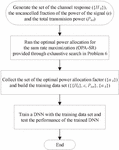
In this section, we proposed two deep learning-based power allocation schemes, including a deep learning-based sum-rate power allocation scheme (DL-SRPAS) and a deep learning-based energy-efficient power allocation scheme (DL-EEPAS). The main idea of our proposed schemes is to use a deep neural network to forecast the optimal power allocation (exhaustive search approach) in many performance network metrics. The proposed schemes are as follows
1. Deep learning-based sum rate power allocation scheme (DL-SRPAS)
DL-SRPAS uses a deep neural network to predict the optimal power allocation for the sum-rate maximization (OPA-SR), which solves the optimization problem (1).
2. Deep learning-based energy-efficient power allocation scheme (DL-EEPAS)
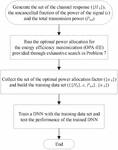
DL-EEPAS uses a deep neural network to learn the optimal power allocation for the energy efficiency maximization (OPA-EE) which will solve the following optimization problem (2).
Our two proposed schemes adopt a multiple-layer feed forward neural network, where the input feature of the network is the dataset of the channel response normalized by noise (CRNN) , the total transmit power and the uncancelled fraction of the signal’s power , and the output label of the neural network is the set of the power allocation factor .
In the data generation step, we use the dataset as the training data set, where the total transmission power and the uncancelled fraction of the signal’s power are constantly assigned in the fixed range, and the channel-response normalized by noise is derived from Rayleigh distribution of the channel realization and from uniform distribution of the users’ locations in the cell area. The optimal power factor is found by exhaustive search.
In the training step, We generate the dataset and feed to the neural network. We use the loss function as the mean square error (MSE) between the pre-trained output power factor and the output of our neural network. We use the scaled-conjugate gradient (SCG) optimization as back propagation process. We use the hyperbolic tangent (tanh) as the activation function of all nodes in all hidden layers and we use the logistic function as the activation function of all nodes in the output layer.
In the testing step, we build all parameters with the same distribution as the training step. The dataset is used as the test dataset. We input the test dataset to the trained neural network and compare its output with the output of the exhaustive search scheme.
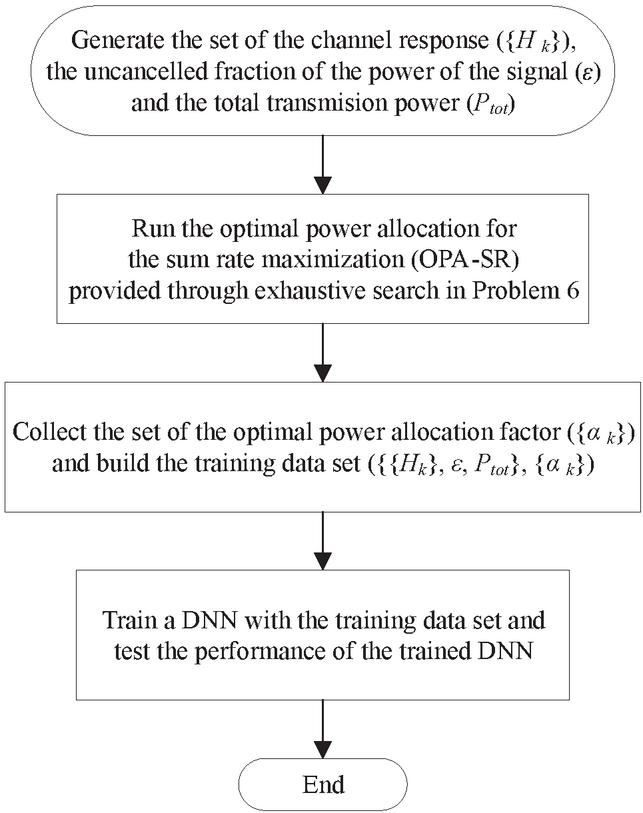
Figure 1 The overall process of DL-SRPAS.
In summary, the overall process of DL-SRPAS and DL-EEPAS is shown in Figures 1 and 2.
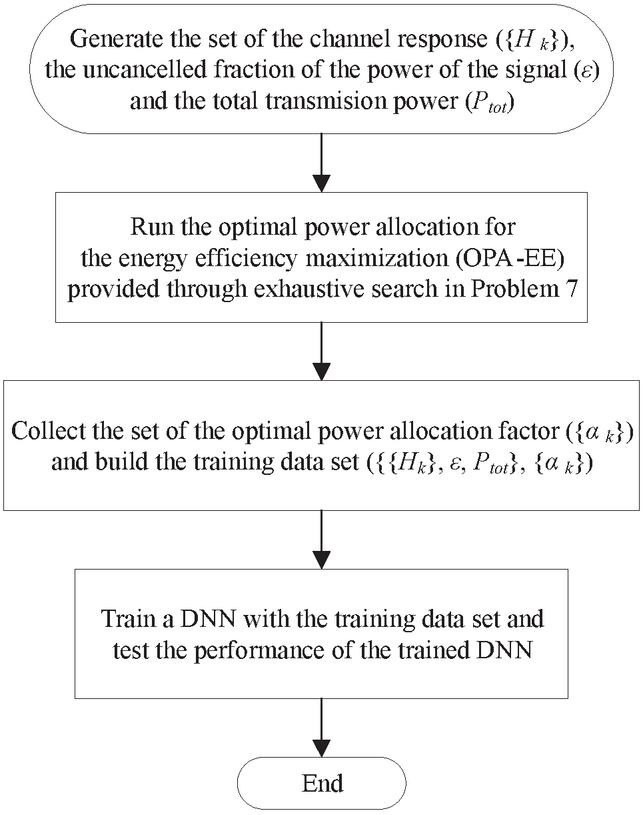
Figure 2 The overall process of DL-EEPAS.
4 Simulation Results
We assess the performance results of our proposed schemes through simulation. All performance results are achieved by averaging 10,000 random samples. We place one base station at the center of the circular area and a number of users are randomly deployed on that area which has the radius of 300 meters. The shortest distance between base station and each user is set to 40 meters. For simplicity’s sake, all residual interference factors are set to [24] and all minimum user data rates are set to the same variable . Table 1 represents the simulation parameters of NOMA system and Table 2 summarizes the architecture and the simulation parameters of the DNN scheme.
Table 1 The simulation parameters of NOMA system
| Parameters | Values |
| Bandwidth | 5 MHz |
| Path Loss Exponent | 2.3 |
| Noise Power Density | 174 dBm/Hz |
| Circuit Power Consumption | 1 W |
| Minimum User Data Rate | 1 Mbps |
| Number of Users | 2,3 |
| Total Transmission Power | 10–100 mW |
| Residual Interference Factor | 0.00–0.05 |
Table 2 The simulation parameters for the DNN scheme
| Hyperparameters | Values |
| number of hidden layers | 3 |
| number of nodes in each layer (DL-SRPAS) | 30/30/30 (layer 1/2/3) |
| number of nodes in each layer (DL-EEPAS) | 20/20/20 (layer 1/2/3) |
| number of output layer nodes | 2 (for 2 users), 3 (for 3 users) |
| batch size | 128 |
| number of epochs | 30 |
| activation function for hidden layers | hyperbolic tangent |
| activation function for output layer | sigmoid |
| loss function | mean square error |
| optimization algorithm | scaled conjugate gradient (SCG) |
The reasons for each parameter in Table 1 can be explained as follows.
1. Bandwidth – We follow the 3GPP TR release 13 standards in the use of studies cellular system with a downlink bandwidth of 5 MHz or 10 MHz. Many research in NOMA area tend to use a downlink bandwidth of 5 MHz and we use 5 MHz for the benefit of comparing results with other research.
2. Path Loss Exponent – The path loss exponent affects the channel gain between the base station and the user according to this equation : , where is the channel gain between the base station and the user, is the distance between the base station and the user and is the path loss exponent. In the equation, if the path loss exponent is low, the channel gain will be high and vice versa. The path loss exponent 1.0 2.0 is typically used in the free space environment (high channel gain) and the path loss exponent 2.7 3.5 is typically used in the urban environment (low channel gain). We decided to choose the path loss exponent 2.3, which is the middle value between the path loss exponent of the free space environment (1.0 2.0) and the urban environment (2.7 3.5), to achieve channel gains from both environments. Since channel gains are the input of DNN model, they will become the distribution of the data set. This mixed distribution captures properties of both environments. If the model works well on this mixed distribution, that means there is a high chance that the model should work well on the free space environment and the urban environment. This probably means that DNN model can learn channel gains regardless of environments whose path loss exponent could be any number.
3. Noise Power Density – This parameter is the noise power per unit of bandwidth and it is commonly set to 174 dBm/Hz in most NOMA research, To compare the results with those research, we then also set to this value.
4. Circuit Power Consumption – This parameter depends on the power consumed by circuit components in the base station, such as ADC and DAC, which is constant. The range values from 1 W to 10 W are used in most research. Therefore, we decided to choose 1 W due to the size of our NOMA simulation system with 2–3 users and coverage area of 300 m which is relatively small. The base station with power consumption of 1 W is sufficient to support this NOMA system.
5. Minimum User Data Rate – This depends on quality of studies of users. The larger value the better the system is. Many NOMA research set minimum user data rate to 1 Mbps because it is considered enough to support users in the NOMA system. Consequently, we decided to set to this value.
6. Number of User – In practical NOMA system and most research consider 2–3 users per cluster and then use multiple clusters to deploy in the NOMA system instead of considering more than 3 users such as 10 users or 30 users individually and deploying in the system. This is due to the decoding complexity when using SIC to decode the received signal. For example, for 10 users in the system without clustering, there is one user that need to use SIC to decode the received signal 9 times before extracting its own information. As a result, the decoding complexity of this user is very high.
7. Total Transmission Power – The reason for this parameter is quite similar to Circuit Power Consumption. We set to this range 10–100 mW because we consider a small size of the NOMA system, which has only 2–3 users and coverage area of 300 m.
8. Residual Interference Factor – In practical system, this factor can be estimated as Gaussian distribution to be mostly in a range of number between 0.0 and 0.5. We decided to choose this range.
Our proposed schemes, including a deep learning-based sum rate power allocation scheme (DL-SRPAS) and a deep learning-based energy efficiency power allocation scheme (DL-EEPAS), based on the feed forward neural network of 3 hidden layers. For DL-SRPAS, 15,000 samples have been created to solve the optimization (6) and then split into a training data set that contains 12,000 samples (80%) and a validation dataset that contains 3,000 samples (20%). For DL-EEPAS, 15,000 samples have been produced to solve the optimization (7) and then divided into a training dataset containing 12,000 samples (80%) and a validation dataset containing 3,000 samples (20%).
Typically, deep learning applications tend to use large training dataset, for example the order of 1,000,000 samples. However, the usage of 15,000 sample sizes to train our neural network is inspired by the objective of abbreviating the complexity and the storage of our proposed schemes.
We compare our proposed schemes, including DL-SRPAS and DL-EEPAS, with two conventional power allocation schemes labeled as “Max-SR conventional” in [15] and “Max-EE conventional” in [16]. “Max-SR conventional” and “Max-EE conventional” allocate the transmission power in order for maximizing the sum-rate and the energy efficiency of the system without considering residual interference.
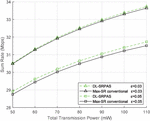
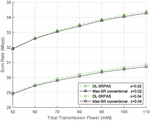
The sum rate of the proposed algorithm is better than the previous algorithm in both 2-users NOMA system and 3-users NOMA system. As seen in the Figures 3 and 4, the proposed algorithm achieves better performance in the entire region and all residual interference factors.
The energy efficiency of the proposed algorithm is better than the previous algorithm in both 2 users NOMA system and 3 users NOMA system. In Figures 5 and 6, the proposed scheme attains superior performance on all region of transmission power in all residual interference factors.
The main reason why the proposed algorithm is better than the previous related algorithms is because the previous related algorithms consider “perfect SIC”. As a result, these algorithms performed well based on perfect SIC condition. However, when it comes to practical systems, perfect SIC condition almost never happen. Then, the results of these algorithms in practical systems could be lower than expected. While the proposed algorithm considers “imperfect SIC” and its effects on NOMA, it is expected that the proposed algorithm could perform well on imperfect SIC condition, which usually happens in practical systems.
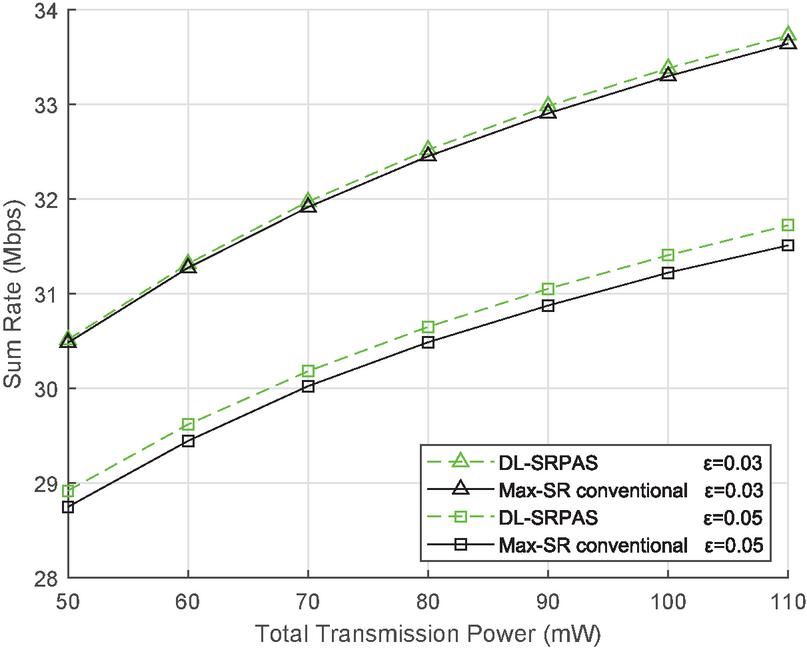
Figure 3 The sum rate of the proposed DL-SRPAS and MaxSR conventional scheme for 2-users NOMA system under various residual interference factors .
Figure 3 exhibits the sum rate metric and the total transmission power of base station for two users NOMA system with various residual interference factors. The proposed DL-SRPAS gains better metric performance than the conventional scheme “Max-SR conventional” throughout the whole region of the horizontal axis. As factor increases, the sum-rate performance gap becomes greater. It means that the imperfect SIC has an impact on this metric, and the proposed DL-SRPAS scheme can effectively mitigate the sum rate loss caused by the imperfect SIC.
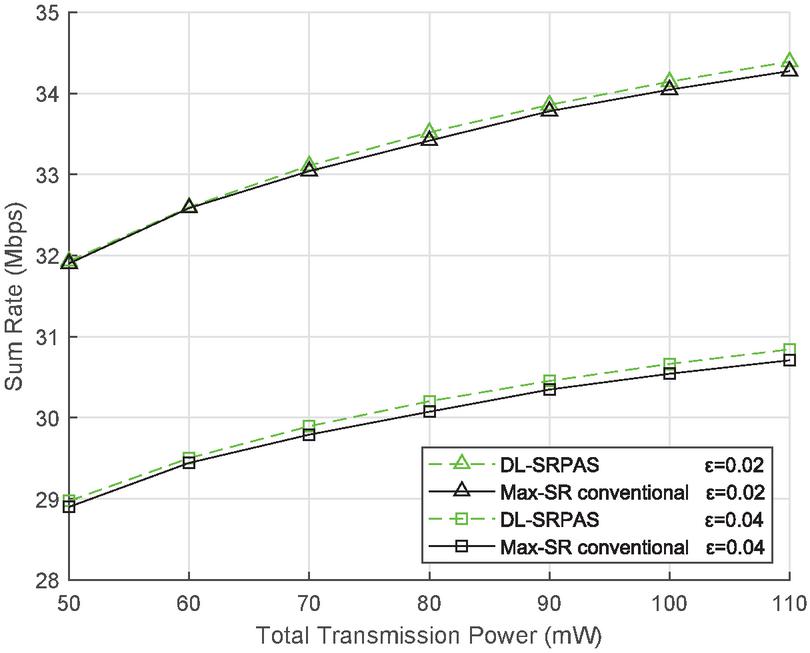
Figure 4 The sum rate of the proposed DL-SRPAS and MaxSR conventional scheme for 3-users NOMA system under various residual interference factors .
Figure 4 depicts the graph of the sum rate versus the total transmission power for three users NOMA system under different residual interference factors. The proposed DL-SRPAS gain better performance result than the scheme “Max-SR conventional” in the entire region. Especially, as value increases, the performance gap between two schemes becomes larger. It showed that the imperfect SIC affects the sum rate and our proposed DL-SRPAS decrease the performance loss caused by the imperfect SIC.
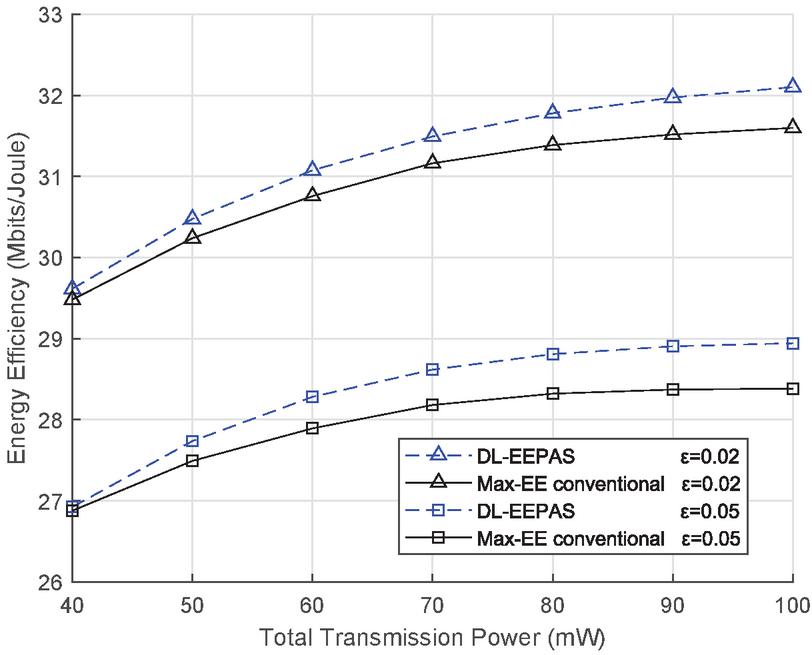
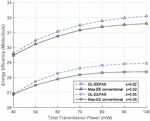
Figure 5 The sum-rate of our proposed DL-EEPAS and MaxEE conventional scheme for 2-users NOMA system under different residual interference factors .
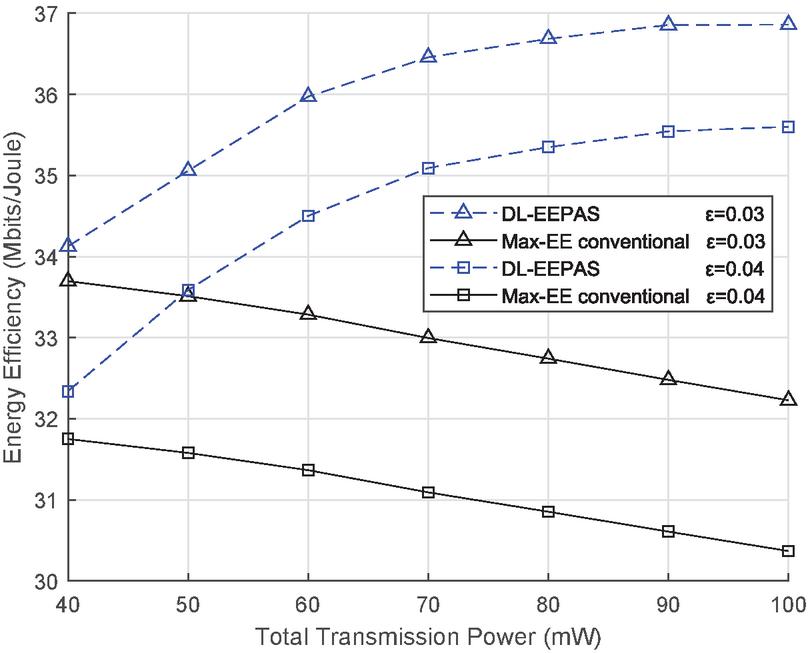
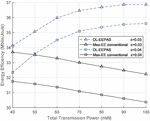
Figure 6 The sum rate of the proposed DL-EEPAS and MaxEE conventional scheme for 3-users NOMA system in different residual interference factors .
Figure 5 shows the energy efficiency performance versus the total transmission power of base station for 2-users NOMA system with different residual interference factors. Our proposed DL-EEPAS scheme outperforms clearly the “Max-EE conventional”. When the or the value increase, the EE performance interval are larger. This can conclude that the SIC residual in realistic system can have a great impact on the energy-efficient metric and thus the proposed DL-EEPAS can successfully reduce the EE loss.
Figure 6 shows the energy-efficient metric and the base station’s overall transmit power for 3 users NOMA system in different residual interference factor values. The proposed DL-EEPAS works much better than the “Max-EE conventional”. Specifically, while the value or the grow, the EE gap of 2 schemes will become larger. It is noticed that again the imperfect SIC has a great effect on EE performance and DL-EEPAS can increase the energy efficiency performance.
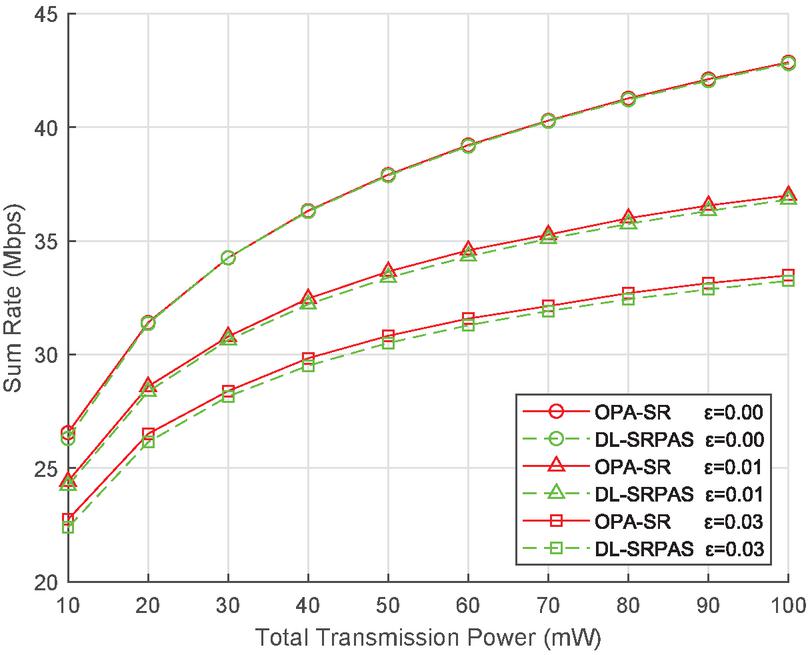
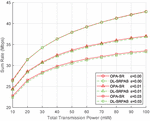
Figure 7 The sum rate of the proposed DL-SRPAS and OPA-SR for 2-users NOMA system in various residual interference factors .
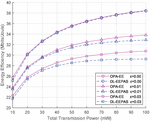
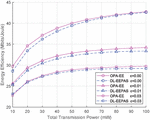
Furthermore, we compare the performance metrics of our two proposed schemes with those of two optimal power allocation (OPA) schemes (the ground truth that our algorithm learn from), which provide the optimal performance metrics We labeled them as “OPA-SR” and “OPA-EE”. By using brute force search, “OPA-SR” and “OPA-EE” assign the power to maximize the sum-rate metric and the energy-efficiency metric with taking SIC residual interference into consideration, respectively.
Figure 7 shows the total transmission power and the sum rate for 2-users system under different remaining interference factors . We compare the proposed DL-SRPAS with OPA-SR. The sumrate achieved by DL-SRPAS is quite close to the optimal sum-rate obtained from OPA-SR. In the case that the value of , and , DL-SRPAS can achieve 99.84%, 99.47% and 99.18% of the sum-rate performance of OPA-SR, respectively. From the graph, the sum rate of two schemes tends to decline because the effect of imperfect SIC.
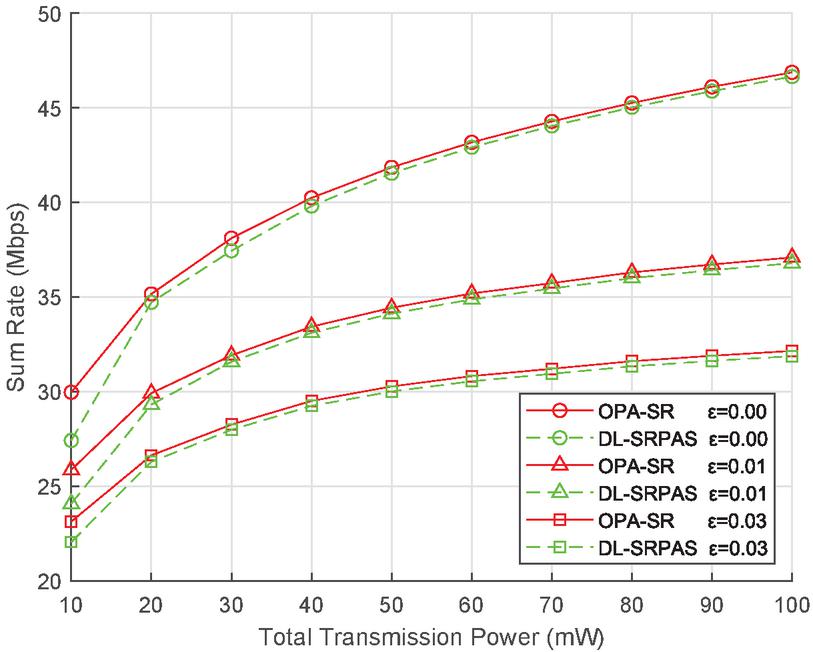
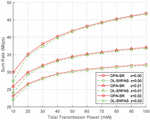
Figure 8 The sum-rate of the proposed DL-SRPAS and OPA-SR for 3-users NOMA system in different residual interference factors .
Figure 8 depicts the sum rate and the transmission power of BS for 3-users NOMA system in different residual interference factors . We compare the proposed DL-SRPAS with OPA-SR. The sum rate of DL-SRPAS is similar to the optimal sum rate result acquired by OPA-SR. For the value of the , and , DL-SRPAS can get 98.19%, 98.20% and 98.61% of the performance of the OPA-SR, respectively. However, due to the imperfect SIC impact, the sum-rate value of two schemes finally drop.
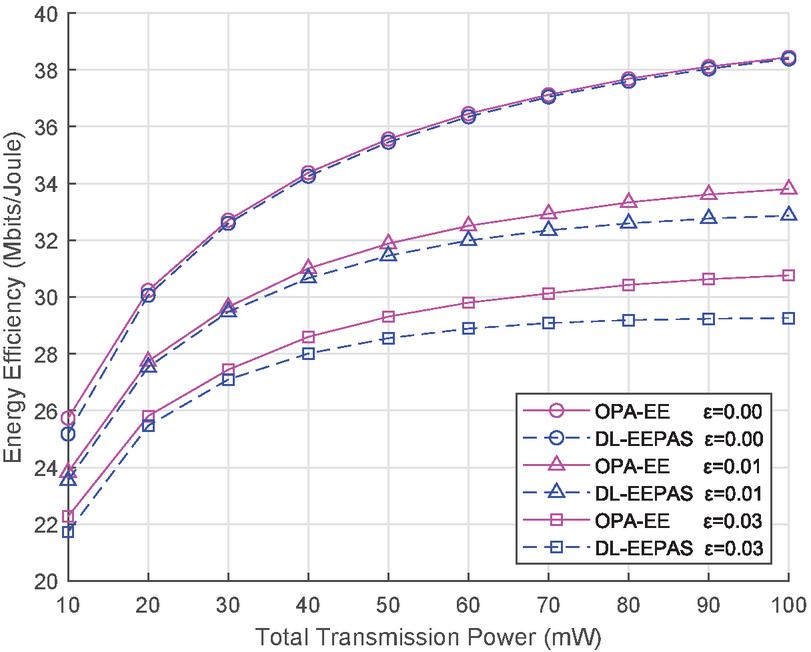
Figure 9 The energy efficiency of the proposed DL-EEPAS and OPA-EE for 2-users NOMA system under various residual interference factors .
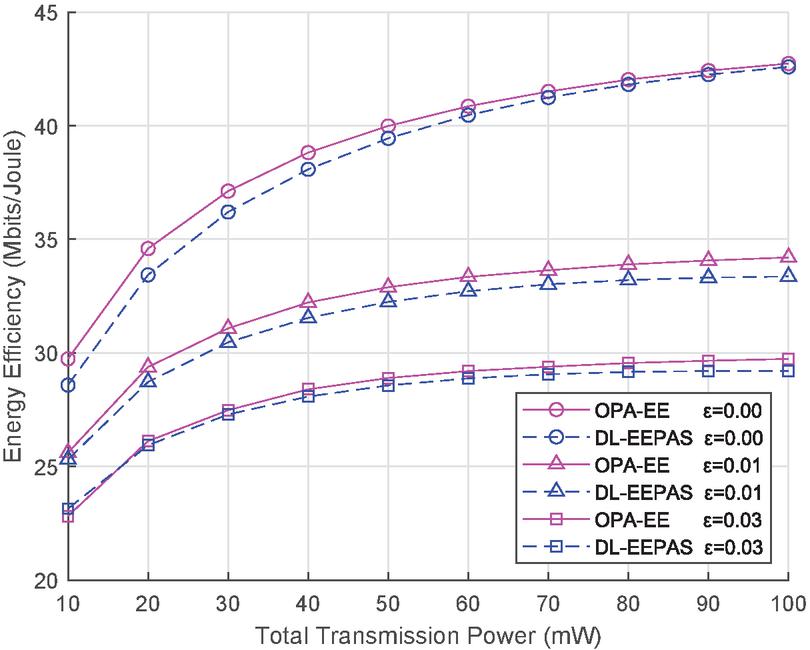
Figure 10 The energy efficiency of the proposed DL-EEPAS and OPA-EE for 3-users NOMA system in many residual interference factors .
Figure 9 shows the EE performance versus the total transmission power of BS for 2-users NOMA system under various residual interference factors . We compare our proposed DL-EEPAS with OPA-EE. The EE performance gained from the DL-EEPAS is close to the optimal EE obtained by the OPA-EE. For the case that , , , the DL-EEPAS can get 99.73%, 98.86% and 97.59% of the energy-efficiency performance of the OPA-EE, respectively. Nevertheless, the energy efficiency performance of 2 schemes decrease due to the imperfect SIC condition.
Figure 10 shows the energy efficiency versus the transmission power at base station for 3-users NOMA system in many residual interference factors . We compare the energy efficiency of the proposed DL-EEPAS with OPA-EE. The performance achieved by DL-EEPAS is close to the optimal performance achieved by the OPA-EE. For the case of , and , DL-EEPAS can achieve 98.50%, 97.74% and 98.66% of energy efficiency performance of the OPA-EE scheme, respectively. However, due to the effect from practical NOMA system, the energy efficiency performances of both two schemes will decrease.
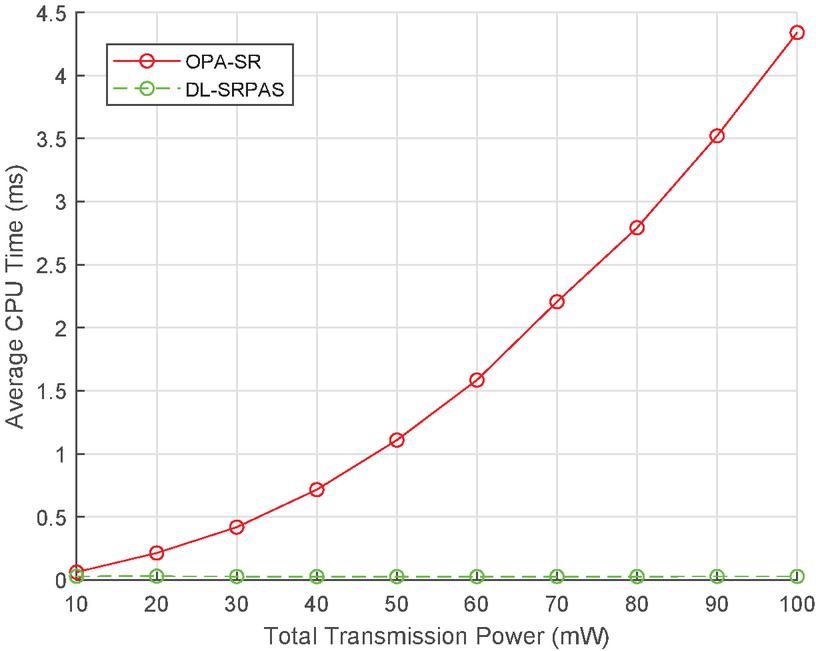
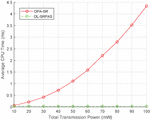
Figure 11 Average CPU time of the proposed DL-SRPAS and the OPA-SR for 2-users NOMA system.
Furthermore, we compare the CPU time of our two proposed schemes with CPU time of two optimal schemes, “OPA-SR” and “OPA-EE”.
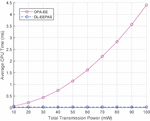
Figure 11 depicts the average CPU time in 2-users system. We compare the proposed DL-SRPAS with OPA-SR in the environment has the interference factor of . Clearly, the proposed DL-SRPAS takes the CPU time much less than the OPA-SR does. For example, when the transmission power is set to 90 mW, the average CPU time used by the DL-SRPAS is approximately 0.0028 ms but the average CPU time used by the OPA-SR algorithm is approximately 3.5659 ms, which is about 1273 times. Besides, while the total transmission power grows up, the average CPU time used by the proposed DL-SRPAS is still constant but the average CPU time obtained by OPA-SR grows dramatically. This is due to a combination through exhaustive search of the OPA-SR to solve the optimization problem but our proposed algorithm use simple linear calculation.
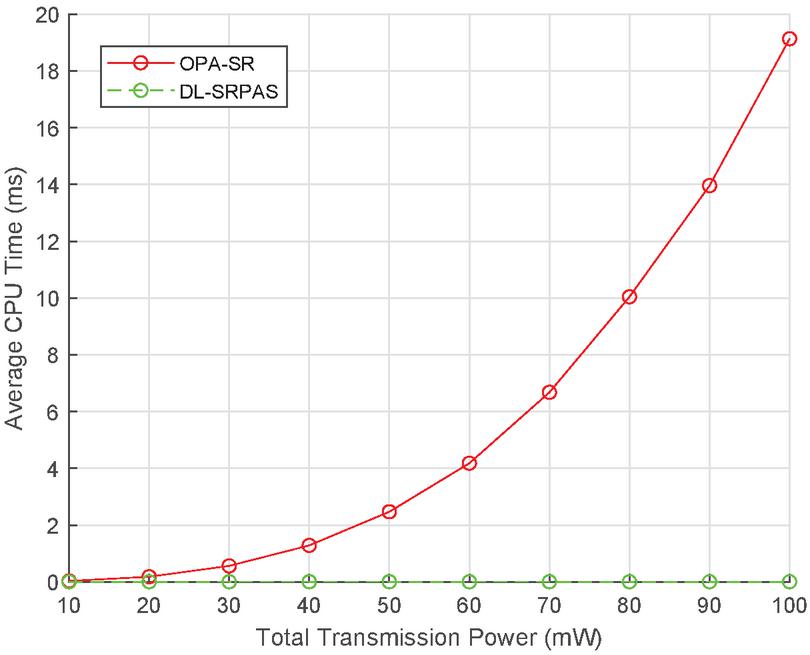
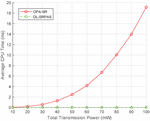
Figure 12 The average CPU time of the proposed DL-SRPAS and OPA-SR for 3-users NOMA system.
Figure 12 shows the average CPU time and the total transmit power at base station for 3-users NOMA system. We compare the proposed DL-SRPAS with the OPA-SR and set the residual interference value to the factor . Obviously, our DL-SRPAS needs the average computation CPU time much less than the OPA-SR. For instance, when the total transmit power at BS is set to 90 mW, the average computation time achieved by the DL-SRPAS is about 0.0045 ms but the computational time obtained by OPA-SR scheme is about 13.9610 ms, which is approximately 3102 times of our DL-SRPAS. Besides, when the transmit power increases, the average computational time of the proposed DL-SRPAS remains nearly constant but that computational time of the OPA-SR scheme goes exponentially. This is the same reason as the two users case.
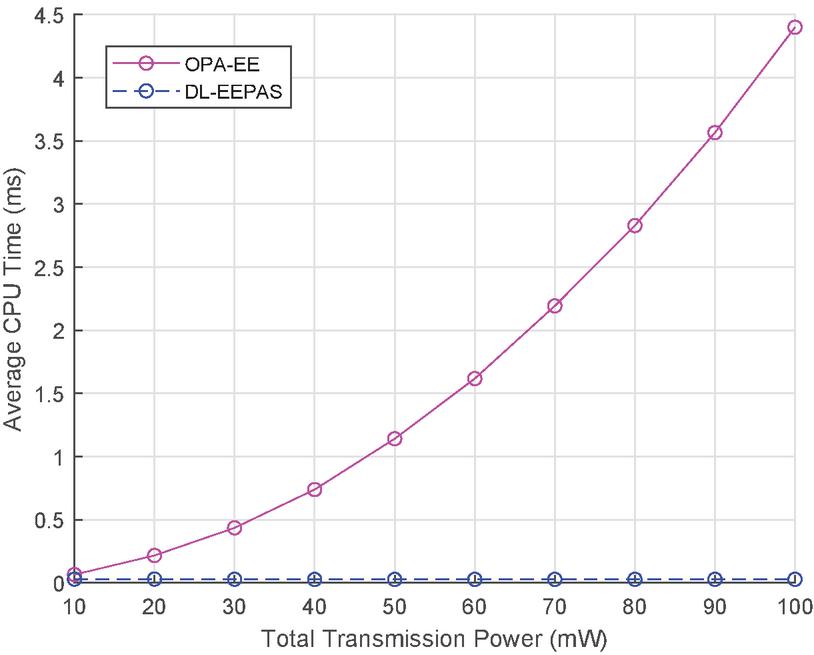
Figure 13 Average CPU time of the proposed DL-EEPAS and OPA-EE for 2-users NOMA system.
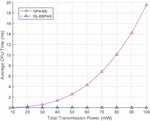
Figure 13 shows the average CPU time and total transmission power for 2-users system. We compare our proposed DL-EEPAS with OPA-EE with the residual interference factor set to the case of sum-rate . Again, DL-EEPAS requires the CPU time much less than OPA-EE. When the power is 90 mW, the CPU time is 0.0028 ms but the CPU time taken by OPA-EE is reaching 3.5656 ms, which is approximately 1273 times compared to our proposed scheme. Besides, the average CPU time used by the DL-EEPAS algorithm remains nearly constant but the CPU time used by the OPA-EE increases rapidly. This much time-consuming is the nature of exhaustive search approach while a pretrained deep neural network use simple calculation to predict the output.
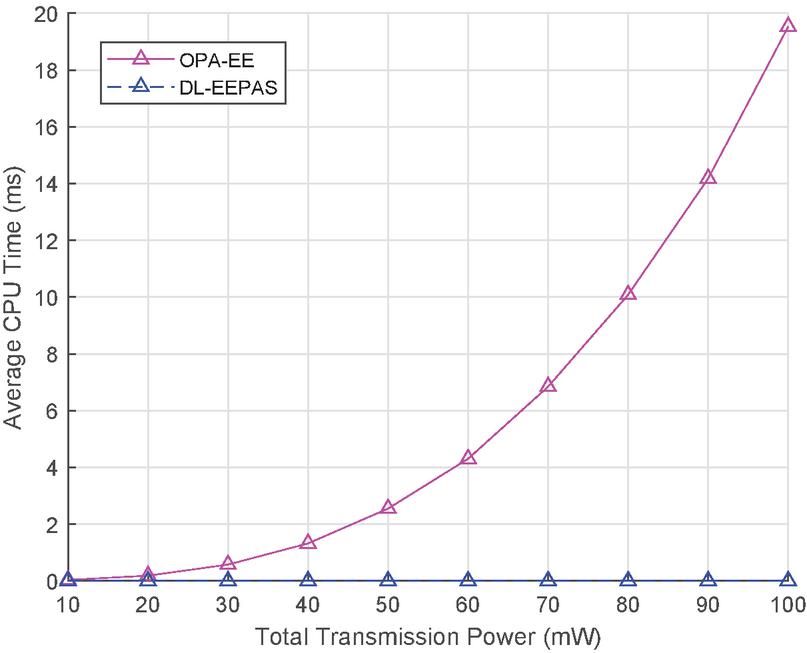
Figure 14 The average CPU time of the proposed DL-EEPAS and the OPA-EE for 3-users NOMA system.
Figure 14 is the graph to show the average CPU time and the total transmitted power for 3-users NOMA system. We compare our proposed DL-EEPAS with the OPA-EE and fix the value of the residual interference factor to . Clearly, the DL-EEPAS takes the CPU time less than the OPA-EE. For instance, when the total transmission power is fixed to be 90 mW, the CPU time consumed by our DL-EEPAS is about 0.0050 ms but the CPU time used by the OPA-EE is roughly 14.1803 ms, which is approximately 2,836 times. In addition, as the total transmission power at BS rises, the average CPU time consumed by the proposed DL-EEPAS remains nearly constant but that consumed by the OPA-EE goes exponentially. This is the same reason to the previous case of 2-users NOMA system.
5 Conclusion
In this paper, we proposed two deep learning-based power allocation schemes, including DL-SRPAS and DL-EEPAS, for down-link NOMA system with imperfect SIC. Both two schemes use the deep neural network model to learn two exhaustive-search optimal power allocation schemes, which consider imperfect SIC condition. The simulation results verify that our two proposed schemes outperform two conventional power allocation schemes which maximize two performance metrics without considering imperfect SIC, where those two metrics are the sum-rate and the energy efficiency. In addition, our proposed schemes achieve near-optimal performance with very low CPU time.
References
[1] J. G. Andrews, S. Buzzi, W. Choi, S. V. Hanly, A. Lozano, A. C. K. Soong, and J. C. Zhang. What will 5g be? IEEE Journal on Selected Areas in Communications, 32(6):1065–1082, June 2014.
[2] J. Wang, W. Guan, Y. Huang, R. Schober, and X. You. Distributed optimization of hierarchical small cell networks: A gnep framework. IEEE Journal on Selected Areas in Communications, 35(2):249–264, Feb 2017.
[3] J. G. Andrews, H. Claussen, M. Dohler, S. Rangan, and M. C. Reed. Femtocells: Past, present, and future. IEEE Journal on Selected Areas in Communications, 30(3):497–508, April 2012.
[4] X. Wang, L. Kong, F. Kong, F. Qiu, M. Xia, S. Arnon, and G. Chen. Millimeter wave communication: A comprehensive survey. IEEE Communications Surveys Tutorials, 20(3):1616–1653, thirdquarter 2018.
[5] J. Liu, N. Kato, J. Ma, and N. Kadowaki. Device-to-device communication in lte-advanced networks: A survey. IEEE Communications Surveys Tutorials, 17(4):1923–1940, Fourthquarter 2015.
[6] D. C. Araújo, T. Maksymyuk, A. L. F. de Almeida, T. Maciel, J. C. M. Mota, and M. Jo. Massive mimo: survey and future research topics. IET Communications, 10(15):1938–1946, 2016.
[7] Y. Saito, A. Benjebbour, Y. Kishiyama, and T. Nakamura. System-level performance evaluation of downlink non-orthogonal multiple access (noma). In 2013 IEEE 24th Annual International Symposium on Personal, Indoor, and Mobile Radio Communications (PIMRC), pages 611–615, Sep. 2013.
[8] P. Wang, J. Xiao, and L. P. Comparison of orthogonal and non-orthogonal approaches to future wireless cellular systems. IEEE Vehicular Technology Magazine, 1(3):4–11, Sep. 2006.
[9] Y. Saito, Y. Kishiyama, A. Benjebbour, T. Nakamura, A. Li, and K. Higuchi. Non-orthogonal multiple access (noma) for cellular future radio access. In 2013 IEEE 77th Vehicular Technology Conference (VTC Spring), pages 1–5, June 2013.
[10] L. Dai, B. Wang, Y. Yuan, S. Han, C. I, and Z. Wang. Non-orthogonal multiple access for 5g: solutions, challenges, opportunities, and future research trends. IEEE Communications Magazine, 53(9):74–81, Sep. 2015.
[11] S. M. R. Islam, N. Avazov, O. A. Dobre, and K. Kwak. Power-domain non-orthogonal multiple access (noma) in 5g systems: Potentials and challenges. IEEE Communications Surveys Tutorials, 19(2):721–742, Secondquarter 2017.
[12] C. Wang, J. Chen, and Y. Chen. Power allocation for a downlink non-orthogonal multiple access system. IEEE Wireless Communications Letters, 5(5):532–535, Oct 2016.
[13] P. Parida and S. S. Das. Power allocation in ofdm based noma systems: A dc programming approach. In 2014 IEEE Globecom Workshops (GC Wkshps), pages 1026–1031, Dec 2014.
[14] M. Hojeij, J. Farah, C. A. Nour, and C. Douillard. Resource allocation in downlink non-orthogonal multiple access (noma) for future radio access. In 2015 IEEE 81st Vehicular Technology Conference (VTC Spring), pages 1–6, May 2015.
[15] Z. Yang, W. Xu, C. Pan, Y. Pan, and M. Chen. On the optimality of power allocation for noma downlinks with individual qos constraints. IEEE Communications Letters, 21(7):1649–1652, July 2017.
[16] Y. Zhang, H. Wang, T. Zheng, and Q. Yang. Energy-efficient transmission design in non-orthogonal multiple access. IEEE Transactions on Vehicular Technology, 66(3):2852–2857, March 2017.
[17] F. Fang, H. Zhang, J. Cheng, and V. C. M. Leung. Energy-efficient resource allocation for downlink non-orthogonal multiple access network. IEEE Transactions on Communications, 64(9):3722–3732, Sep. 2016.
[18] M. Zeng, A. Yadav, O. A. Dobre, and H. V. Poor. Energy-efficient power allocation for hybrid multiple access systems. In 2018 IEEE International Conference on Communications Workshops (ICC Workshops), pages 1–5, May 2018.
[19] A. Benjebbour, Y. Saito, Y. Kishiyama, A. Li, A. Harada, and T. Nakamura. Concept and practical considerations of non-orthogonal multiple access (noma) for future radio access. In 2013 International Symposium on Intelligent Signal Processing and Communication Systems, pages 770–774, Nov 2013.
[20] T. O’Shea and J. Hoydis. An introduction to deep learning for the physical layer. IEEE Transactions on Cognitive Communications and Networking, 3(4):563–575, Dec 2017.
[21] K. Kim, J. Lee, and J. Choi. Deep learning based pilot allocation scheme (dl-pas) for 5g massive mimo system. IEEE Communications Letters, 22(4):828–831, April 2018.
[22] A. Zappone, M. Debbah, and Z. Altman. Online energy-efficient power control in wireless networks by deep neural networks. In 2018 IEEE 19th International Workshop on Signal Processing Advances in Wireless Communications (SPAWC), pages 1–5, June 2018.
[23] H. Sun, X. Chen, Q. Shi, M. Hong, X. Fu, and N. D. Sidiropoulos. Learning to optimize: Training deep neural networks for wireless resource management. In 2017 IEEE 18th International Workshop on Signal Processing Advances in Wireless Communications (SPAWC), pages 1–6, July 2017.
[24] A. Agrawal, J. G. Andrews, J. M. Cioffi, and Teresa Meng. Iterative power control for imperfect successive interference cancellation. IEEE Transactions on Wireless Communications, 4(3):878–884, May 2005.
[25] X. Chen, X. Wang, and X. Chen. Energy-efficient optimization for wireless information and power transfer in large-scale mimo systems employing energy beamforming. IEEE Wireless Communications Letters, 2(6):667–670, December 2013.
Biographies

Worawit Saetan received the B.Eng. degree in Computer Engineering from King Mongkut’s Institute of Technology Ladkrabang, Thailand, in 2015. He is currently pursuing the D.Eng. degree in Electrical Engineering at King Mongkut’s Institute of Technology Ladkrabang. His research interests are in the areas of resource allocation for 5G NOMA system.

Sakchai Thipchaksurat received the B.Sc. degree in Statistics from Srinakarinwirot Prasarnmitr University in 1988, the M.Eng. degree in Electrical Engineering from King Mongkut’s Institute of Technology Ladkrabang, Thailand, in 1996, and Ph.D. in Computer Sciences from Gunma University, Japan in 2002. He is now an associate professor in the Department of Computer Engineering, School of Engineering, King Mongkut’s Institute of Technology Ladkrabang, Bangkok, Thailand. His current research interests are in the areas of performance evaluation of communication networks, wireless and mobile communication.
Journal of Mobile Multimedia, Vol. 19_1, 187–214.
doi: 10.13052/jmm1550-4646.19110
© 2022 River Publishers