Fog-Enabled IoT Framework for Heart Disease Diagnosis Systems
Quang Tran Minh1, 2,*, Do Thanh Thai1, 2, Phu H. Phung3 and Phat Nguyen Huu4
1Faculty of Computer Science and Engineering, Ho Chi Minh City University of Technology (HCMUT), 268 Ly Thuong Kiet, District 10, Ho Chi Minh City, Vietnam
2Vietnam National University Ho Chi Minh City (VNU-HCM), Linh Trung Ward, Thu DucDistrict, Ho Chi Minh City, Vietnam
3Department of Computer Science, University of Dayton, Dayton, OH 45469, U.S.A.
4School of Electrical and Electronics Engineering, Hanoi University of Science and Technology, Hanoi, Vietnam
E-mail: quangtran@hcmut.edu.vn; dothanhthai161@gmail.com; phu@udayton.edu; phat.nguyenhuu@hust.edu.vn
*Corresponding Author
Received 24 March 2022; Accepted 09 July 2022; Publication 15 November 2022
Abstract
IoT technology has been recently adopted in healthcare systems to quickly detect abnormalities from patients, diagnose diseases and provide supports in time, even remotely. In the field of heart disease, timely diagnosis and prediction help to save people. This paper proposes a fog-based IoT approach to collect and analyze electrocardiogram (ECG) signals from patients to detect abnormalities or heart attacks with a short response time so that appropriate treatments can be provided. Commonly, ECG signals are transmitted to an eco-expert system deployed on the cloud to perform preliminary automatic diagnosis using a knowledge base built from medical experts. Although such an eco-expert system assists patients and supports physicians in performing treatment for their patients, there are several open technical challenges. First, noise in raw ECG signals makes the data imprecise and reduces the prediction accuracy. Second, involving data mining and machine learning on the cloud poses a significant latency since a huge amount of data needs to be transferred in the network. This paper proposes a novel framework that can provide the integrity of the ECG data by removing noise and then extract relevant knowledge for heart disease diagnosis at the network edge based on data mining techniques. Practical experiments demonstrate that the proposed framework not only guarantees the integrity of the data but also enhances the accuracy of the real-time detection compared with previous works.
Keywords: IoT, heart disease diagnosis, fog computing, data mining.
1 Introduction
Advances in sensor technologies allow electrocardiogram (ECG) signals to be automatically measured by sensors instead of using conventional discrete measurements [1–5]. Generated by cells in the heart, ECG reflects all activities in these cells, thus they are the most valuable data used in heart disease diagnosis [6]. Together with the Internet of Things (IoT) technologies, ECG signals can be transferred to the cloud [7] for processing. These technologies have led to the emergence of new applications that can perform heart disease diagnostics to assist patients and physicians remotely, in contrast to traditional offline expert systems [8–14]. For example, many such IoT-based heart disease expert systems provide a diagnosis without medical experts [15–17]. Since data can be collected in real-time and transmitted to the cloud for analysis, these expert systems can alert patients when they face potential heart issues and help physicians to reduce treatment time.
Typically, these applications are built and trained based on a large-scale labelled dataset wherein the system performs a diagnosis upon receiving data from sensors. Therefore, the accuracy of diagnosis depends on the integrity and reliability of sensor-supplied data and the training dataset. Many recent works, e.g., [18–21], introduce proposals to improve the accuracy of diagnosis systems using ECG. Study [19] allocates manually detected heartbeats to one of the five-beat classes recommended by ANSI/AAMI EC57 while study [18] implements a convolutional neural network (CNN) algorithm to detect normal and abnormal ECG beats. However, feature extraction or selection method have not been thoroughly discussed in these works, thus the accuracy/effectiveness of these studies are still questionable. Besides, these cloud-based approaches lead to large response time due to high end-to-end communication delays for transferring massive ECG data (and the diagnosed results in the reversed way) from IoT devices/users to the data centers (DC) on the cloud. High latency will ruin the meaning of the diagnosed information in practice, especially in the emergency of heart attacks.
To address the issue of the long response time of the cloud-based approaches, fog/edge-based approaches are adapted to utilize virtualized computing and storage resources available at network edges to compute and process local/regional data [22–24]. Most of these current works focus on the fog network architecture wherein fog nodes mainly serve as service brokers [23] while main service functions such as data pre-processing and data analytics utilizing data mining approaches are still deployed on the cloud. Consequently, the primary purpose of applying fog computing, which is maximizing the utilization of available resources at network edges, is not fully realized.
On the other hand, since the IoT-based healthcare system is an emerging trend to collect medical data in real-time from individuals for data mining and automatic diagnosis and prediction [25–28], it is crucial to obtain such medical data reliably. At the same time, medical data from devices and sensors contains noises with uncertainty and high-dimensional nature [17, 26, 29, 30]. As such, there are a couple of technical challenges in real-time IoT-based healthcare systems. Firstly, the data pre-processing steps need to be performed to ensure that there is no noise in the collected data. Secondly, mining and extracting features from raw medical data pose significant overhead for the central servers on the cloud. Thirdly, it is crucial to ensure end-to-end reliability and integrity of the collected data, from the devices to the edge and cloud. These technical challenges motivate us to design a new IoT-based framework for heart disease diagnosis systems. We adopt fog computing where fog nodes play critical roles in local data processing before communicating with the cloud to reduce the network load and response time. In particular, the fog nodes process three primary services that are typically deployed on the cloud in the existing architectures, e.g., [22, 23, 31–33]. The first fog-based service is to remove noises and smooth ECG signals collected from IoT devices or attached sensors; the second service is to normalize the cleaned ECG data and extract features based on a local copy of the dataset and based on this data machine learning models are trained on the cloud; and the third service can instantly perform the diagnosis and send notifications to users if there is an abnormality found in the ECG signals, even before synchronizing the data with the DCs on the cloud.
The main contributions of this paper are summarized as follows:
• A novel framework with three layers to provide reliable ECG data from physical devices to the cloud has been proposed. For each layer, appropriate algorithms and methods to remove noises in collected signals yet achieve high performance have been thoroughly designed.
• The proposed framework automatically extracts features related to heart diseases from filtered ECG signals to feed machine learning models. Advantages in fog-computing and machine learning have been integrated to bring intelligence close to users (patients, relatives, and physicians).
• A large-scale evaluation using extended and real dataset collected from humans through ECG sensors has been conducted. Extensive results and analyses demonstrate that the proposed framework yields better performance along with higher accuracy than the other methods.
The rest of the paper is organized as follows. Section 2 briefly describes the background and discusses related work on IoT-based expert systems for medical applications. The proposed framework is presented in detail in Section 3. Implementation of the prototype for the proposed framework and evaluations are presented in Section 4. Finally, concluding remarks and future work are presented in Section 5.
2 Related Work
This section reviews related work on IoT-based expert systems for medical applications that adopt various concepts including signal fusion, cloud computing, fog computing, and machine learning on ECG data. The idea of using the local cloud to support local networks has emerged in recent years. In this design, the local cloud provides local services to enhance the control of data privacy [34]. Nowadays, leveraging the increment of the population and personal devices, Mobile Edge Computing (MEC) has been widely applied for many mobile applications [35–37]. In addition to MEC, Mobile Cloud Computing (MCC) is a new model that brings computational resources to mobile users, network operators, and cloud computing providers [38–41].
Fog computing is also known as a novel computing model that enables more features from core to edge networks [42–45]. This model is considered as a complementary computing model as it provides the missing links in the cloud-to-thing continuum in the IoT paradigm [35, 46, 47]. Several studies, such as [48–50] discuss the challenges, potential applications, and benefits of fog computing. Study [51] analyzes the essential roles of fog computing for extending continuous links of IoT data and services from the cloud to the network edges. Meanwhile, study [52] proposes architectural imperatives for fog computing and analyzes use cases, requirements, and architectural techniques for Fog-enabled IoT networks. Study [48] provides an overview of fog computing with detailed discussions in various aspects, including the predominance of wireless access, heterogeneity, geographical distribution, and large scale of nodes. There have also been various IoT-based applications proposed in the literature [53–55]. However, these works have not taken advantage of fog-computing to bring intelligence close to users (patients, physicians) as the proposed approaches in this current paper.
In addition to fog computing, many related computing models have been widely studied, such as Cyber Foraging [56] and Roof Computing [57] wherein the authors use fog computing to construct the infrastructure for nodes located in patient’s areas. In [34], the authors introduce a concept of computation offloading that is built based on an instance of cloudlets, mobile cloud [39], or mobile devices [58]. Studies in [34, 44] introduce the cloudlet that is a fog computing-based model wherein they implement various modules such as a wireless router, OS-level virtualization, and ParaDrop [45]. There has been a surge in the attempts to study the cloudlet’s applications such as Google Glasses [59] and intrusion detection system – IDS [64]. In [43], an extension of fog computing has been proposed with an implementation of a programming model. It is worth mentioning that ubiquitous computing that enhances communications, awareness, and functionality is needed for everyday activities [60–64]. Difference from the above mentioned work, our work leverages the fog computing in three layers to provide reliable data for healthcare applications.
In recent years, there has been much effort aimed at fog computing security and privacy [49, 50]. Since the fog computing infrastructure is usually built at the edge network that contains a huge number of personal devices and fog nodes, the security problem of fog computing infrastructure becomes critical. Work [65, 66] designs the fog computing infrastructure with an implementation of Software Defined Network (SDN) to enhance the system’s flexibility and tolerance. Moreover, in [67], an effort is made to characterize the latency and bandwidth constraints in the fog computing infrastructure. In [68], the authors indicate that the data produced at the edge of the network often raises over the capacity of the cloud’s bandwidth. The authors in [69, 70] study the utilization of computing, storage, and networking resources available at the fog landscape for running IoT applications. Since these resources are close to sensors, this model can improve the system performance in terms of reducing energy consumption and latency [71]. Study [72] describes the deployment of fog-based solutions applied in different application domains. In the current paper’s proposed architecture fog nodes serve as communication proxies to communicate with sensors to collect patients’ data. Based on the rules learned from the data collected by sensors (representing specific features of different users/patients), the fog nodes can set periodical handshakes with sensors, and it can enter sleeping cycles when the system can be idle to save energy.
In addition to the theoretical research in the area of fog computing, there are many studies of implementing fog computing models in real applications [73, 74] wherein fog computing-based prototypes have been built to support applications deployed on the cloud. In recent times, fog computing-based applications have been widely studied for expert systems for heart disease diagnosis [22, 75–77]. In these applications, ECG signal analysis can be recognized and classified by neural networks [20].
Existing technologies discussed above mainly focus on specific issues such as IoT data fusion, communications in the fog, ECG data analytics, separately. This work integrates these domains into a complete medical support system, especially for heart disease detection, which can be applied in real-world applications. The novelties of this work stretch from proposing the use of fog computing in medical fields to the concrete ECG data mining methods for heart disease diagnosis. This integrated approach takes the advantage of fog-computing paradigm to bring intelligence close to patients to analyze their heart conditions efficiently, hence best supporting to both patients/relatives physicians.
3 FOG-Enabled IoT Framework for Smart Heart Disease Diagnosis Systems
This section describes the proposed framework entailing the design of each component in the framework which includes the filtering module at the device layer, the advanced data mining and feature extraction at the edge layer, and the machine learning model for heart disease diagnoses at the cloud layer.
3.1 Framework Overview
The main target of this work is to adopt the fog computing architecture [67, 71, 78–81] in an IoT-based framework for heart disease diagnosis systems. Different from existing works that rely on centralized cloud nodes, e.g., [7, 15–17, 82], the proposed approach focuses on fog nodes to perform critical operations, including data processing and machine learning. The objectives of this approach are to reduce the network load of raw data and response time, hence guaranteeing the integrity and accuracy of real-time data from devices. As a result, fog nodes can perform reliable and efficient diagnoses with a lightweight response time.
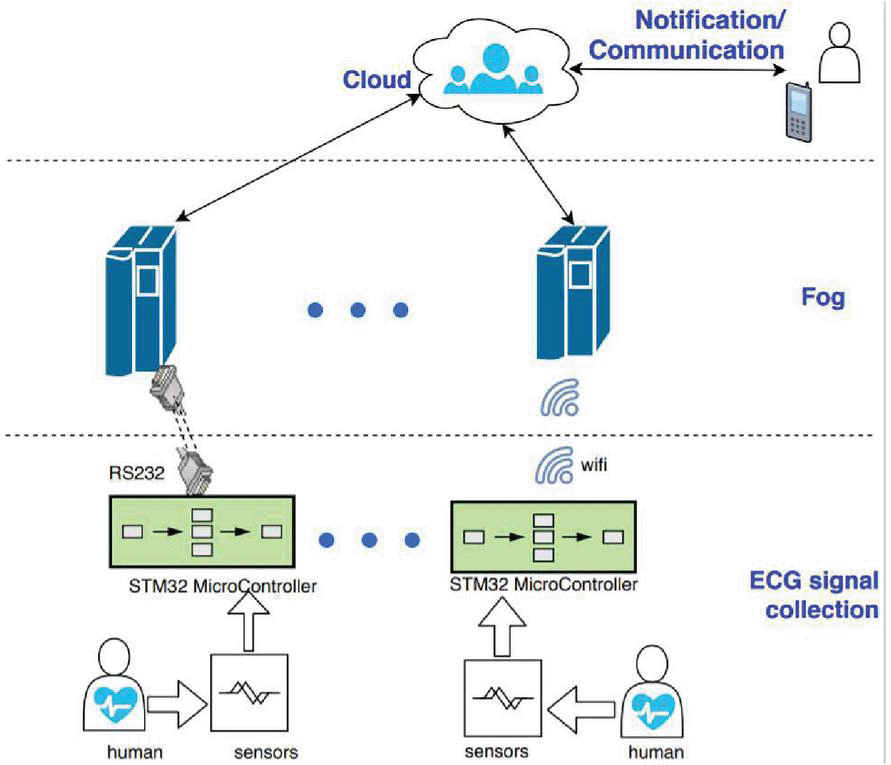
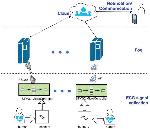
Figure 1 The proposed fog-enabled IoT framework for heart disease diagnosis systems.
The overview of the proposed framework is illustrated in Figure 1 which consists of three layers: (1) device-data collection layer, (2) fog layer, and (3) cloud layer. On the first layer, it ensures that collected data are reliably transferred to a fog node using different mediums such as wired or wireless communications. Next, on the fog layer, fog nodes perform noise removal on raw ECG signals and extract features from the cleaned data. A classifier (in which the model has been trained at the deployment stage on the cloud) is deployed on each fog node to perform diagnosis once receiving the extracted ECG features. The diagnosis results are transferred to a communication module to notify users. Also, on this layer, the data is temporarily stored and synchronized with the cloud to ensure the reliability of the collected data. These operations are implemented as web services so that they can be flexibly used for different purposes. Finally, at the cloud layer, machine learning steps are performed to generate the model for the diagnosis. These steps are based on an initial dataset, which is later updated from ECG data collected from fog nodes. The cloud layer also plays as a DC to store permanent data and interact with stakeholders including patients, their relatives, and physicians.
The characteristics of a healthcare system are urgent (the response time is as short as possible), reliable, and stable. This paper proposes a design of a micro-processing unit which is responsible for data collection, handling main tasks for data analytics and heart disease detection based on data mining models deployed on it. This unit is used as fog-node in the proposed fog-enabled heart disease diagnosis systems.
3.2 Device Layer – ECG Signal Collection
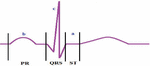
When collected from a sensor, an ECG cycle typically contains peaks, as illustrated in Figure 2. From the figure, it should be noted that the R peak has the maximum amplitude. Some of the noise types also have the same amplitude as the R peak [83–87]. Such noises in ECG make the collected data unreadable. Therefore, noise removal is a critical step during ECG processing. In this layer, a typical data filtering algorithm developed in a micro-controller to filter the raw data is implemented.
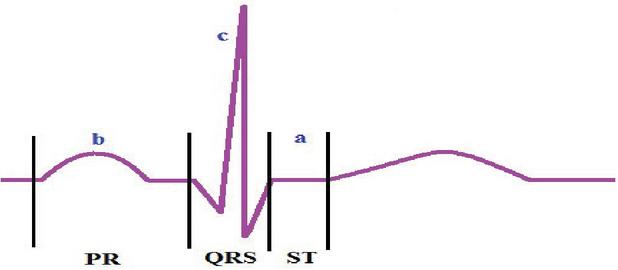
Figure 2 ECG cycle with 5 peaks: P, Q, R, S, T.
3.3 Fog Layer
Data fusion including filtering and advanced noise removal from ECG signals is performed on this layer. Then, features are extracted from the cleaned ECG to feed the classifier on the edge for instant diagnosis. A component in this layer also sends the mined ECG data to a DC on the cloud layer for synchronization and model updating.
3.3.1 Data fusion
Figure 3 illustrates the process of data collection and filtering for further analytics. ECG signals of patients are frequently measured by sensors/IoT devices, but these data contain a lot of noise that affect analysis quality. Here, Low and High pass filters are adopted to remove noise by the two middle steps in Figure 3 since ECG signals are sensitive to low and high frequencies. At the first step, the Remez FIR filter is applied to remove the first level noises, and then the FIR filter algorithm [88, 89] is utilized to remove the rests to provide cleaned ECG data for heart disease detection.

Figure 3 Structure of Low/High pass filtering to filter noises in ECG signals.
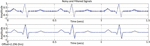
The output of these filters is ECG data without noise that can be used for the next module for data mining. Figure 4 illustrates the ECG signals with and without noise (lower part of the figure), before and after passing through Low and High pass filters. In the real implementation, the values of parameters of the FIR filter are calibrated to reach the best fit.
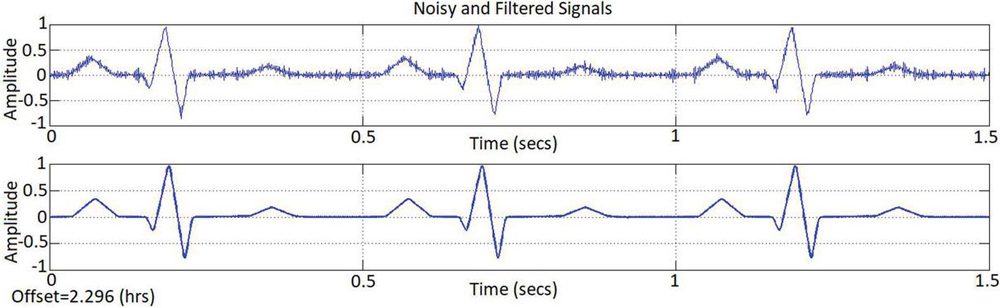
Figure 4 ECG signal with and without noises.
3.3.2 ECG data mining
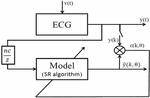
In this step, the Sequential Recursive (SR) Algorithm [82] which is illustrated in Figure 5 is adopted to mine the data further before extracting features for classification. The core of this adaptive model is the block Model (SR algorithm). As ECG signals of each patient have different characteristics, the proposed model performs an automatic adjustment to get the best match based on: (1) the backward step n in the previous block, and (2) the gap between the measured signals and estimated signals. In the proposed approach, the algorithm can perform quick convergence to generate the best fit model for a particular ECG data from each patient.
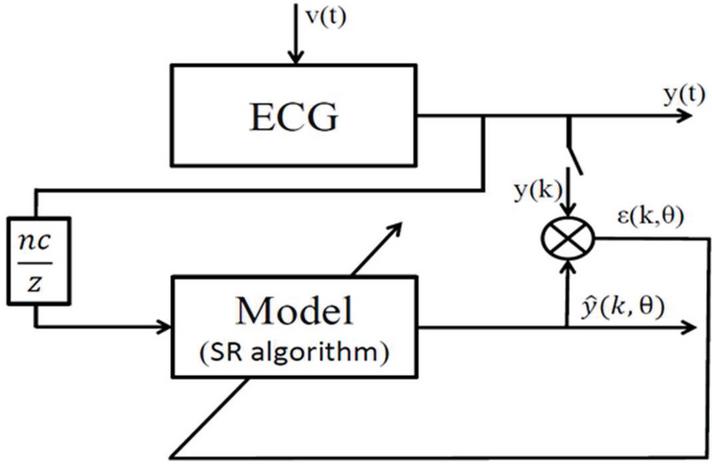
Figure 5 The proposed data mining model using the SR algorithm.
The proposed model is built based on the knowledge-base integrated with the SR algorithm, which uses the previous cycles of the ECG data, shown as v(t) in Figure 5, to predict the signal at a time (k). The signal produced by Block Model is considered as the standard signal, which is compared to the real signal at the time (k), along with the prediction period. The SR algorithm receives two inputs: (1) data from an ECG knowledge base such as MIT-BIH [90], and (2) real ECG data captured from patients after being filtered by the filter module. These datasets will be analyzed and stored so that if the difference between them is greater than a threshold, the data is generated as the output data for the feature extraction module. With the characteristics of ECG, time series representing the object need to be analyzed.
Give the equation:
| (1) | ||
| (2) | ||
| (3) |
Where,
y[k]: Signal at time k;
e[k]: Error at time k;
[k]: Regression vector at time k;
: Prediction parameter vector.
As presented in Equation (3), the signal at time k, denoted as y[k], is constituted by the product of the regression vector at k ([k]) and the prediction parameter vector , plus the error value at k (). Here, the regression vector is the signal at the time (k–1), and the prediction parameter vector is chosen based on the experienced values. In this work, the prediction parameters are decided by data mining models which are trained from historical data (i.e., historical series of EGC signals). The error value is the difference between the measure and estimated values.
The ECG signals have characteristics of Normally Independently Distributed, hence the mean value equals zero in . Equation (3) was used to predict one step ahead of output y(k) and error e(k). The ECG is not stationary, hence y(k) and e(k) are needed for modelling and diagnosing. The prediction data are used for de-noising (input for extended Kalman Filter), Auto-Regressive – AR (QRS detection). The purpose of processing data is to minimize the parameter, also named the cost function:
| (4) |
For comparison purposes, the collected and extracted data from the above steps are fed to a classifier for heart condition diagnosis described below.
3.3.3 Heart condition diagnosis
In the proposed framework, the diagnosis is performed at the fog layer to reduce the network latency and provide a reliable and fast response to users. The model used for this machine learning step is trained at the cloud layer and is updated frequently to the fog nodes. The implementation details is described in Section 4.
3.4 Cloud Layer
3.4.1 Model training and updating
This component, the critical component of the proposed framework, is used to classify the ECG signals to diagnose heart disease. Compared with the related existing works, the proposed method is unique. Here, the classifier is trained and built in a DC on the cloud using pre-defined expert data, while the trained model is deployed on fog nodes for analyzing local data and quickly detecting the abnormality in ECG signals of local patients.
The classifier can also be updated by using historical data collected from multiple users populated globally in the whole system to improve the effectiveness of the model. When this situation happens, the new model is downloaded back to the fog nodes for daily execution. The details of the building, the classifier utilizing a machine learning approach are presented in Section 4.1.
3.4.2 Data storage and mining and user communication
In the proposed framework, ECG data from various sources at the fog layer are transferred to the DC to store permanently. Here, the collected data can be mined further by experts so that they can be updated to the dataset which is used to retrain the classifier to get the best model for the diagnosis at the fog layer. Based on this updating process, the accuracy of the diagnosis will be improved over time.
There are different user roles in the proposed framework such as patients, relatives, and physicians. The communication component allows users to access and interact with the system via a mobile application or a web interface. The system also notifies users in real-time when a diagnosis is released from a classifier in a fog node.
4 Implementation and Evaluation
4.1 Implementation
This section describes in details the prototype implementation of the proposed framework which is used to evaluate the effectiveness and feasibility of the system. Figure 6 shows the main components of the prototype including those implemented and executed on the cloud and those on the fog nodes and IoT devices. The CORTEX ARM STM32F407VG (Flash memory up to 1 Mbytes, up to 192 Kbytes of SRAM, up to 4 Kbytes of backup SRAM, three AHB buses and a 32-bit multi-AHB bus matrix, Core: Arm 32-bit Cortex-M4 CPU with FPU, ART Accelerator, frequency up to 168 MHz) is used as a fog node to deploy the corresponding components including noise removal and data fusion, feature extraction, and classification. Any other micro control units (MCU) devices such as Raspberry Pi or NVidia Jetson can be used to implement such functionalities as a fog node.

Figure 6 Prototype implementation flow for the proposed framework.
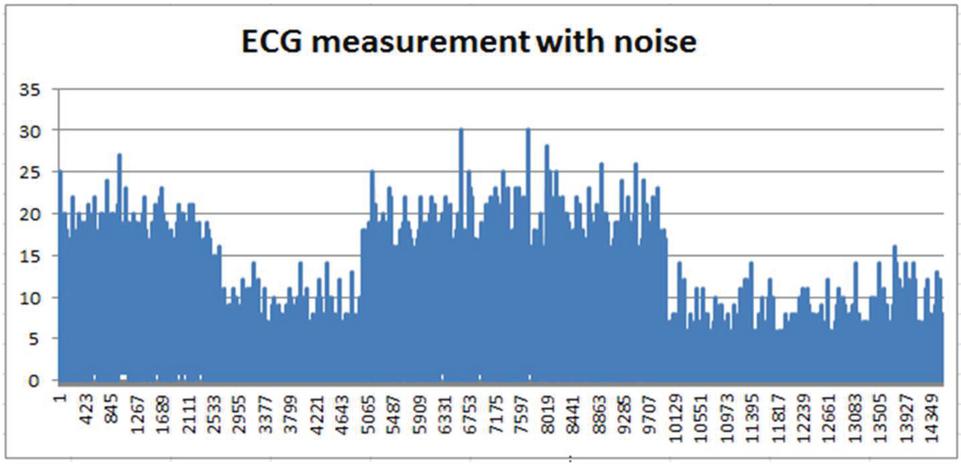
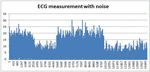
Figure 7 ECG measurement with noise.
ECG Signal Collection: This component consists of sensors, AD8232, and MCUs installed in IoT devices for collecting real-time ECG signals from patients. ECG signals are collected with a frequency of 250Hz. A simple raw data cleaning is performed by the flag bit provided by sensors to ensure that the collected signals are readable. A module in the MCU is implemented to transfer the collected signals to a fog node using the serial port RS232. In practice, this data transfer can be implemented via a wireless channel. The outcome of this component is that the collected ECG signals are sent to a fog node for further processing.
Data Fusion: This component is implemented and deployed on fog nodes to fuse the received ECG data. The data fusion process is to filter noise and conduct other data pre-processing steps before sending them to the next components. The proposed FIR filter algorithm introduced in Section 3.3.1 is implemented in this component. Figure 7 shows the noise existing in the received ECG signals. After going through the FIR filter, the noise is removed from these signals as shown in Figure 8. The experiments demonstrate that the FIR filter provides high efficiency of filtering with the characteristics of the ECG signal.
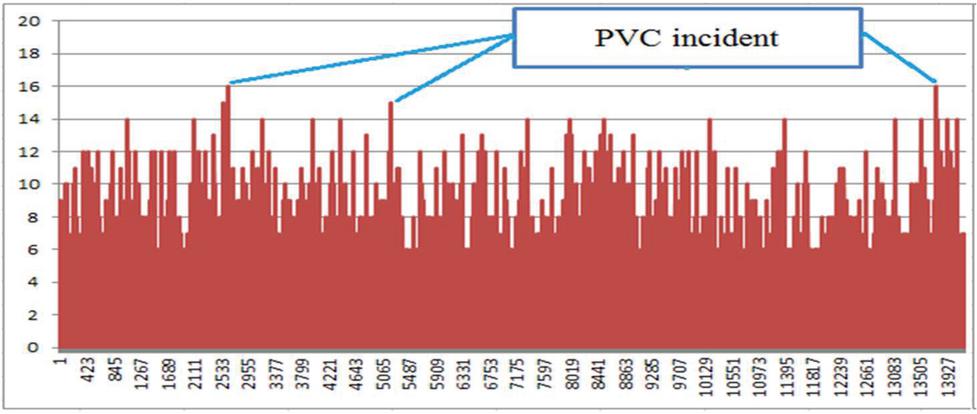
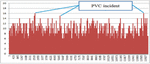
Figure 8 ECG measurement without noise.
Classifier: In this component, a machine learning model is adopted to perform the diagnosis using extracted ECG features. This model leverages a Convolutional Neural Network (CNN) [91] based on Long-Short Term Memory (LSTM) [92]. Here, CNN and LSTM are combined to handle the ECG time-series signals and help to reduce the time series size, thereby appropriate algorithms can be implemented to adapt different characteristics of data in each stage.
In addition, an iterative learning mechanism is adopted to support sequence-based prediction of the ECG series. The features are predicted and defined by the physicians, based on that, all results of predictions support for diagnosing. With this proposed method, both short and long-range are recorded by enforcing the consistent error frame in the LSTM cell regardless of sequence separation. The number of iterations depends on the convergence during the training procession.
In the proposed framework, the classification model is initially trained on the cloud and then is distributed it to fog nodes. In each fog node, once ECG signals are received from connected devices, the classifier performs diagnosis based on this model. The model is frequently re-trained on the cloud using ECG data received from fog nodes and labelled by physicians/experts. The retrained model is then updated to the fog nodes to adapt to the data revolution.
4.2 Evaluation
This subsection describes experimental results and analysis for the effectiveness of the proposed framework.
4.2.1 Dataset and experiments
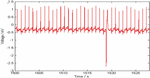
For training the classify model on the cloud, the ECG dataset with labels from Physionet [90] was utilized. This dataset consists of ECG sequences of 23 patients whose signals from 12 patients have been labelled. Each ECG sequence (i.e., for each patient) is large including around 20 million signals collected during 22 hours (250 signals per second). Signals in each sequence are grouped into patterns (or timesteps) of 1250 consecutive signals (i.e., data collected from 5 consecutive seconds), and each pattern is labelled as normal (denoted as N) or abnormal (denoted as V which stands for Ventricular Arrhythmia). Figure 9 illustrates the input data with abnormal points at time-steps 1518 and 1519 (the significantly low voltage signals) from a sample in the dataset.
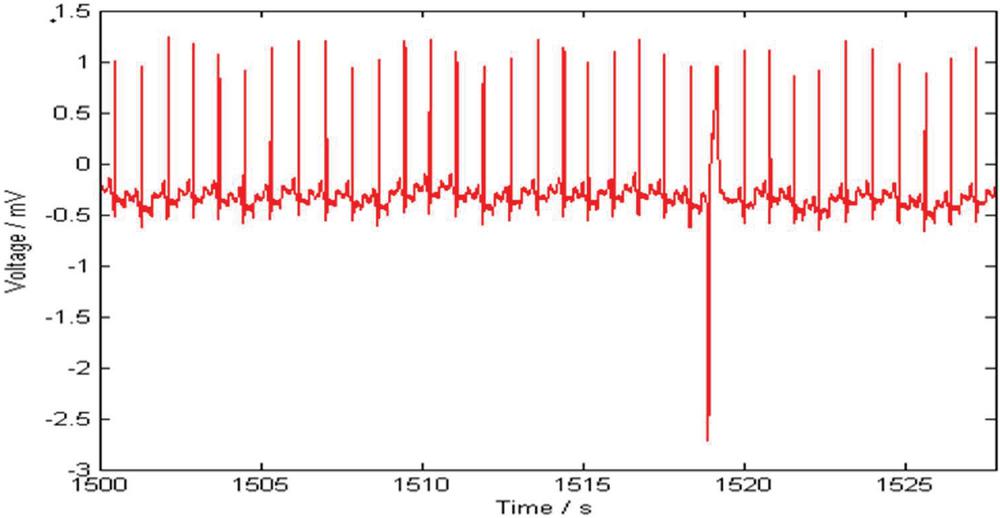
Figure 9 Input data for CNN-LSTM model with abnormal points at time-steps 1518 and 1519.
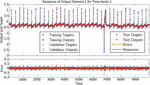
The classification model based on CNN-LSTM used in the proposed framework can detect these abnormal points when the difference between the output (i.e., the predicted value) and the target (i.e., the actual value) is relevant. Figure 10 shows a case of this detection where the abnormality is detected as step 546,793 in a dataset of 10,000 patterns/timesteps denoted as step 540,000 to step 549,999. Among several patterns, from the data of each patient, 300,000 patterns are selected randomly. These datasets consist of patterns from 12 patients which are divided into three parts, with the ratio 70%:15%:15% for training, validating, and testing, respectively. There are 2 parts in figure 10, the above part (first part) demonstrates the twisting between the real output and the targeted output, we found that the gap between them (called the error) is really small, i.e., the second part shows the error values almost less than 0.1 throughout the captured time range. The experimental results are shown and analyzed below.
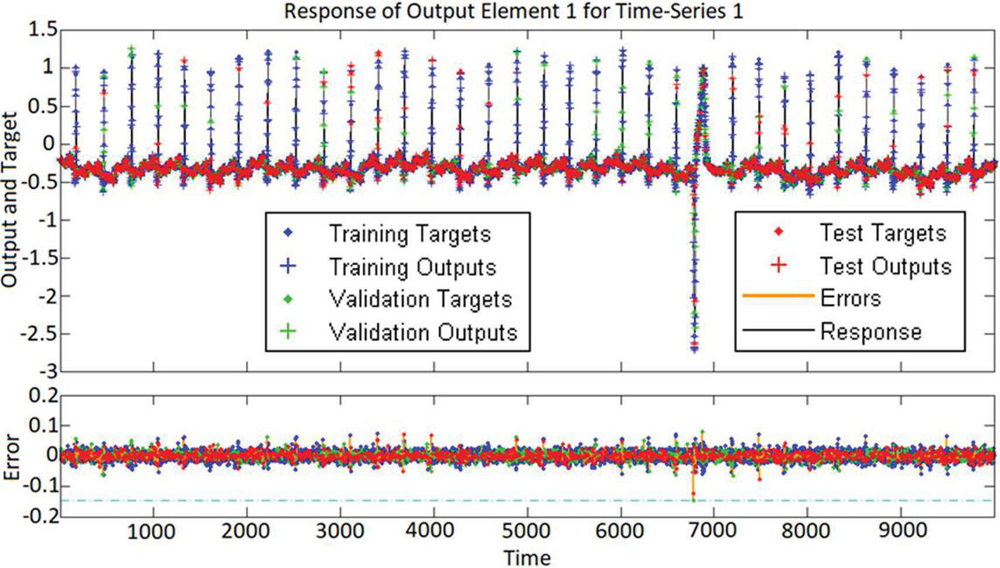
Figure 10 The CNN-LSTM model used in the proposed framework can detect an Figure 10: abnormal ECG pattern (at point 546,793).
4.2.2 Experimental results
The convergence of the CNN-LMST model used in the proposed framework is validated using the training dataset mentioned above to train a classifying model with 10 hidden layers. As demonstrated in Figure 11, the model is significantly converged at epoch 197th while it can provide an acceptable result (low error enough) at epoch 40. This figure reveals that the selected classify model works appropriately with the available training dataset. The mean squared error (MSE) sudden decline in range [19] epoch helps the whole process take place shortly and improves the overall effect. From epoch 10th the MSE reduces gradually with a small delta and is stable unstill it stops at epoch 197th.
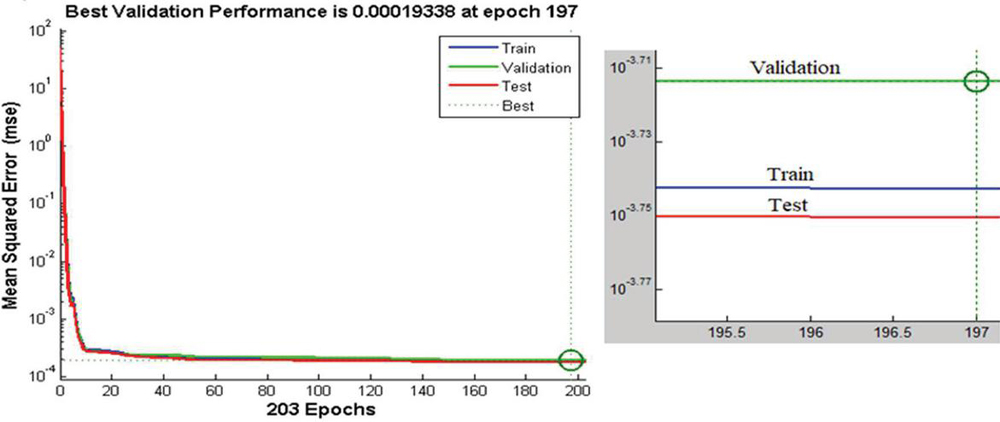
Figure 11 The effectiveness of the classification model in terms of convergence capability w.r.t to the available training dataset.
Figure 10 illustrates the effectiveness of the classification model in detail. The “Output and Target” plots outputs (i.e., the predicted values) and the targets (i.e., the actual values) of 10,000 patterns/timesteps, namely from step 540,000 to step 549,999 of a specific patient. The “Error” plots the errors by comparing the differences between predicted values and the target values. As shown in the figure, the machine learning model used in this framework can draw out a large gap between the output and the target (in both “Output and Target” and “Error”) at the timestep 546,793. This result demonstrates that the model can detect an abnormality at this point, which matches with the label “V” (Ventricular Arrhythmia) in the actual dataset.
Next, the effectiveness of the classification model is validated via experiments with real-field data. ECG data from 5 patients were collected during 30 minutes for each person with a frequency of around 250 Hz. After having the data, noise was filtered using the mechanism in the Data Fusion component of the proposed framework presented in Figure 6 (Section 4.1). Label annotations for different patterns in the collected ECG sequences were made. These data are then applied to the trained classification model to test its effectiveness.
To validate the effectiveness of the classification model with the real dataset, different factors were used, namely the overall accuracy, precision, and recall. The primary purpose of the classification model in this work is to detect the abnormal label “V” in ECG sequences, hence the “positive” detection means the model detects a pattern “V,” and otherwise “negative” detection. Let denote TP, TN, FP, FN true positive, true negative, false positive, and false negative, respectively, three evaluation factors mentioned above are defined as follows.
| (5) | |
| (6) | |
| (7) |
Table 1 shows the effectiveness of the classification model based on k-fold cross-validation. The table reveals that the effective factors become stable (i.e., has statistical meaning) when k reaches 4 or 5. As shown, the overall accuracy and precision are as high as around 85% and 87%, respectively. However, the recall is still low at around 50%, meaning that around 50% of other abnormal patterns could not be detected (recalled) by the model. The reason for this situation comes from “undefined” labels in the dataset. Concretely, in the collected data, there are unstable signals that form “undefined” patterns, i.e., neither normal nor abnormal ones. These patterns degrade the effectiveness of the classification model.
Table 1 The effectiveness of the classification model validated by real-field data via k-fold cross-validation (k from 2 to 5)
| Fold | Mean | True | True | Precision | Recall | Accuracy | ||
| (k) | Square Error | Positive | Negative | Positive | Negative | (%) | (%) | (%) |
| 2 | 0.1547 | 12162 | 450924 | 11401 | 439653 | 93.74 | 50.29 | 97.40 |
| 3 | 0.0154 | 195293 | 473257 | 147692 | 327720 | 75.62 | 50.37 | 71.11 |
| 4 | 0.0038 | 57838 | 330634 | 53937 | 277295 | 93.25 | 50.29 | 85.27 |
| 5 | 0.1015 | 38909 | 251843 | 36674 | 215592 | 94.26 | 50.29 | 87.27 |
Table 2 The effectiveness of the classification model when the undefined patterns have been filtered
| Fold | Mean | True | True | Precision | Recall | Accuracy | ||
| (k) | Square Error | Positive | Negative | Positive | Negative | (%) | (%) | (%) |
| 2 | 0.1732 | 12162 | 450924 | 11401 | 440512 | 93.74 | 52.27 | 97.59 |
| 3 | 0.0047 | 195293 | 473257 | 147692 | 455284 | 75.63 | 89.15 | 90.19 |
| 4 | 0.0178 | 57838 | 330634 | 53937 | 298262 | 93.26 | 62.49 | 90.66 |
| 5 | 0.1309 | 38909 | 251843 | 36674 | 235821 | 94.26 | 69.59 | 93.72 |
To make fairness for the evaluation, the “undefined” patterns mentioned above should be filtered from the dataset. Under this option, the effectiveness of the classification model is significantly improved, as shown in Table 2. Here, the recall is improved from around 50% in the previous validation (Table 1) to 62.49% and 69.59% in the 4-fold and 5-fold cases, respectively, while the precision is kept comparable with the previous validation. Moreover, the overall accuracy of the two cases is significantly improved to 90.66% and 93.72%, respectively. These figures reveal that the classification is relevant enough for applying in real-world applications.
The sensor AD8232’s accuracy depends on the quality of the contiguous between skin and sensor the pads. It is really tough when building the system from scratch. This work conducts the cycle “try-correct-try” process as follows:
– Read the signal from the sensor, recognize its tangible, and eliminate noise.
– Build the model (filter, regression, classification, mining, etc.), choose the appropriate model, and apply the model.
The performance of the data classification process depends on the hardware. When deploying the proposed mechanism in the computer (Intel Core i5 6400, RAM 8GB) the response time aligns the real-time requirement but it takes a longer response time when deploying CORTEX ARM took. All the result shown in this paper was collected from the computer deployment while the CORTEX ARM is used as an enabled proof-of-concept. The migration of deployment to the ARM is deferred the future work with following directions: reducing the dataset’s size while keeping enough features for classification models (both training and testing datasets), optimizing the deployment (e.g., resource awareness task deployment on the fog) since the limitation of the hardware resources.
5 Conclusions and Future Work
This work proposed a novel fog-enabled IoT framework for heart disease diagnosis systems. Difference from existing IoT-based healthcare expert systems, the proposed framework moves main computations to fog nodes which are close to users and locations where ECG data are generated, thus provides more instant responses to patients and physicians. The cloud layer in this framework is used for permanent data storage, model training and updating, as well as communications among stakeholders, including patients and physicians. The prototype implementation and experimental results from real datasets demonstrate that the system can effectively generate accurate diagnosis from real ECG signals.
Despite of the above advantages, the effectiveness especially the recall of the proposed data mining model is still not too high due to the quality of the training dataset (many data points have not been labelled yet). The effectiveness of the heart disease diagnosis model can be improved by validating more diverse datasets which are carefully labelled by domain experts (heart disease doctors). In addition, this new data should be continuously updated to the cloud layer for re-training the data mining model. We are planning to extend this work with the above research directions.
Acknowledgement
This research is funded by Vietnam National University Ho Chi Minh City (VNU-HCM) under grant number NCM2021-20-02.
References
[1] Marco Bazzani, Davide Conzon, Andrea Scalera, Maurizio A Spirito, and Claudia Irene Trainito. Enabling the iot paradigm in e-health solutions through the virtus middleware. In 2012 IEEE 11th International Conference on Trust, Security and Privacy in Computing and Communications, pages 1954–1959. IEEE, 2012.
[2] Abdelghani Benharref and Mohamed Adel Serhani. Novel cloud and soa-based framework for e-health monitoring using wireless biosensors. IEEE journal of biomedical and health informatics, 18(1):46–55, 2014.
[3] Aleksandar Milenković, Chris Otto, and Emil Jovanov. Wireless sensor networks for personal health monitoring: Issues and an implementation. Computer communications, 29(13–14):2521–2533, 2006.
[4] Alexandros Pantelopoulos and Nikolaos G Bourbakis. A survey on wearable sensor based systems for health monitoring and prognosis. IEEE Transactions on Systems, Man, and Cybernetics, Part C (Applications and Reviews), 40(1):1–12, 2010.
[5] Rita Paradiso, Giannicola Loriga, and Nicola Taccini. A wearable health care system based on knitted integrated sensors. IEEE transactions on Information Technology in biomedicine, 9(3):337–344, 2005.
[6] Henry Blackburn, Ancel Keys, Ernst Simonson, Pentti Rautaharju, and Sven Pun-sar. The electrocardiogram in population studies: a classification system. Circulation, 21(6):1160–1175, 1960.
[7] M Shamim Hossain and Ghulam Muhammad. Cloud-assisted industrial Internet of Things (IIoT)–enabled framework for health monitoring. Computer Networks, 101:192–202, 2016.
[8] Ali Adeli and Mehdi Neshat. A fuzzy expert system for heart disease diagnosis. In Proceedings of International Multi Conference of Engineers and Computer Scientists, Hong Kong, volume 1, 2010.
[9] Joanne T Brindle, Henrik Antti, Elaine Holmes, George Tranter, Jeremy K Nichol-son, Hugh WL Bethell, Sarah Clarke, Peter M Schofield, Elaine McKilligin, David E Mosedale, et al. Rapid and noninvasive diagnosis of the presence and severity of coronary heart disease using 1 h-nmr-based metabonomics. Nature medicine, 8(12):1439, 2002.
[10] Resul Das, Ibrahim Turkoglu, and Abdulkadir Sengur. Effective diagnosis of heart disease through neural networks ensembles. Expert systems with applications, 36(4):7675– 7680, 2009.
[11] John P Greenwood, Neil Maredia, John F Younger, Julia M Brown, Jane Nixon, Colin C Everett, Petra Bijsterveld, John P Ridgway, Aleksandra Radjenovic, Catherine J Dickinson, et al. Cardiovascular magnetic resonance and single photon emission computed tomography for diagnosis of coronary heart disease (cemarc): a prospective trial. The Lancet, 379(9814):453–460, 2012.
[12] Kameswari Maganti, Vera H Rigolin, Maurice Enriquez Sarano, and Robert O Bonow. Valvular heart disease: diagnosis and management. In Mayo Clinic Proceedings, volume 85, pages 483–500. Elsevier, 2010.
[13] Homer R Warner, Alan F Toronto, L George Veasey, and Robert Stephenson. A mathematical approach to medical diagnosis: application to congenital heart disease. Jama, 177(3):177–183, 1961.
[14] Hongmei Yan, Yingtao Jiang, Jun Zheng, Chenglin Peng, and Qinghui Li. A multilayer perceptron-based medical decision support system for heart disease diagnosis. Expert Systems with Applications, 30(2): 272–281, 2006.6
[15] Moeen Hassanalieragh, Alex Page, Tolga Soyata, Gaurav Sharma, Mehmet Aktas, Gonzalo Mateos, Burak Kantarci, and Silvana Andreescu. Health monitoring and management using internet-of-things (iot) sensing with cloud-based processing: Opportunities and challenges. In Services Computing (SCC), 2015 IEEE International Conference on, pages 285–292. IEEE, 2015.
[16] Chao Li, Xiangpei Hu, and Lili Zhang. The iot-based heart disease monitoring system for pervasive healthcare service. Procedia computer science, 112:2328–2334, 2017.
[17] Do Thanh Thai, Quang Tran Minh, and Phu H. Phung. Toward An IoT-based Expert System for Heart Disease Diagnosis. CEUR Workshop Proceedings, 2017.
[18] U Rajendra Acharya, Hamido Fujita, Shu Lih Oh, Yuki Hagiwara, Jen Hong Tan, and Muhammad Adam. Application of deep convolutional neural network for automated detection of myocardial infarction using ecg signals. Information Sciences, 415:190– 198, 2017.
[19] Philip De Chazal, Maria O’Dwyer, and Richard B Reilly. Automatic classification of heartbeats using ecg morphology and heartbeat interval features. IEEE Transactions on Biomedical Engineering, 51(7): 1196–1206, 2004.
[20] Serkan Kiranyaz, Turker Ince, and Moncef Gabbouj. Real-time patient-specific ecg classification by 1-d convolutional neural networks. IEEE Transactions on Biomedical Engineering, 63(3):664–675, 2016.
[21] Ya-tao Zhang, Cheng-yu Liu, Shou-shui Wei, Chang-zhi Wei, and Fei-fei Liu. Ecg quality assessment based on a kernel support vector machine and genetic algorithm with a feature matrix. Journal of Zhejiang University SCIENCE C, 15(7):564–573, 2014.
[22] Harishchandra Dubey, Admir Monteiro, Nicholas Constant, Mohammadreza Abtahi, Debanjan Borthakur, Leslie Mahler, Yan Sun, Qing Yang, Umer Akbar, and Kunal Mankodiya. Fog computing in medical Internet-of-Things: architecture, implementation, and applications. In Handbook of Large-Scale Distributed Computing in Smart Healthcare, pages 281–321. Springer, 2017.
[23] Sukhpal Singh Gill, Rajesh Chand Arya, Gurpreet Singh Wander, and Rajkumar Buyya. Fog-Based Smart Healthcare as a Big Data and Cloud Service for Heart Patients Using IoT. In International Conference on Intelligent Data Communication Technologies and Internet of Things, pages 1376–1383. Springer, 2018.
[24] Rita Zgheib, Emmanuel Conchon, and Rémi Bastide. Semantic Middleware Architectures for IoT Healthcare Applications. In Enhanced Living Environments, pages 263–294. Springer, 2019.
[25] Duong Trong Luong, Nguyen Thai Ha, and Nguyen Duc Thuan. Android Smart Phones Application in Tele-monitoring Electrocardiogram (ECG). American Journal of Biomedical Sciences, 11(1), 2019.
[26] M Nardelli, A Lanata, G Valenza, M Felici, P Baragli, and EP Scilingo. A tool for the real-time evaluation of ecg signal quality and activity: Application to submaximal treadmill test in horses. Biomedical Signal Processing and Control, 56:101666, 2020.
[27] Wullianallur Raghupathi and Viju Raghupathi. Big data analytics in healthcare: promise and potential. Health information science and systems, 2(1):3, 2014.
[28] Taiyang Wu, Jean-Michel Redouté, and Mehmet Yuce. A Wearable, Low-Power, Real-Time ECG Monitor for Smart T-shirt and IoT Healthcare Applications. In Advances in Body Area Networks I, pages 165–173. Springer, 2019.
[29] SangJoon Lee, Jungkuk Kim, and Myoungho Lee. A real-time ecg data compression and transmission algorithm for an e-health device. IEEE Transactions on Biomedical Engineering, 58(9):2448–2455, 2011.
[30] Thanh Nguyen, Abbas Khosravi, Douglas Creighton, and Saeid Nahavandi. Classification of healthcare data using genetic fuzzy logic system and wavelets. Expert Systems with Applications, 42(4):2184–2197, 2015.
[31] Behailu Negash, Tuan Nguyen Gia, Arman Anzanpour, Iman Azimi, Mingzhe Jiang, Tomi Westerlund, Amir M Rahmani, Pasi Liljeberg, and Hannu Tenhunen. Leveraging fog computing for healthcare iot. In Fog Computing in the Internet of Things, pages 145–169. Springer, 2018.
[32] Amir M Rahmani, Tuan Nguyen Gia, Behailu Negash, Arman Anzanpour, Iman Azimi, Mingzhe Jiang, and Pasi Liljeberg. Exploiting smart e-health gateways at the edge of healthcare internet-of-things: A fog computing approach. Future Generation Computer Systems, 78:641–658, 2018.,
[33] Madiha H Syed, Eduardo B Fernandez, and Mohammad Ilyas. A pattern for fog computing. In Proceedings of the 10th Travelling Conference on Pattern Languages of Programs, page 13. ACM, 2016.
[34] Mahadev Satyanarayanan, Victor Bahl, Ramoń Caceres, and Nigel Davies. The case for vm-based cloudlets in mobile computing. IEEE pervasive Computing, 2009.
[35] Yun Chao Hu, Milan Patel, Dario Sabella, Nurit Sprecher, and Valerie Young. Mobile edge computing—a key technology towards 5g. ETSI white paper, 11(11):1–16, 2015.
[36] Ben Liang. Mobile edge computing. Cambridge University Press, 2017.
[37] Pavel Mach and Zdenek Becvar. Mobile edge computing: A survey on architecture and computation offloading. IEEE Communications Surveys & Tutorials, 19(3):1628–1656, 2017.
[38] Hoang T Dinh, Chonho Lee, Dusit Niyato, and Ping Wang. A survey of mobile cloud computing: architecture, applications, and approaches. Wireless communications and mobile computing, 13(18):1587–1611, 2013.
[39] Niroshinie Fernando, Seng W Loke, and Wenny Rahayu. Mobile cloud computing: A survey. Future generation computer systems, 29(1): 84–106, 2013.
[40] Dijiang Huang et al. Mobile cloud computing. IEEE COMSOC Multimedia Communications Technical Committee (MMTC) E-Letter, 6(10):27–31, 2011.
[41] Gonzalo Huerta-Canepa and Dongman Lee. A virtual cloud computing provider for mobile devices. In proceedings of the 1st ACM workshop on mobile cloud computing & services: social networks and beyond, page 6. ACM, 2010.
[42] Flavio Bonomi, Rodolfo Milito, Jiang Zhu, and Sateesh Addepalli. Fog computing and its role in the internet of things. In Proceedings of the first edition of the MCC workshop on Mobile cloud computing, pages 13–16. ACM, 2012.
[43] Kirak Hong, David Lillethun, Umakishore Ramachandran, Beate Ottenwälder, and Boris Koldehofe. Mobile fog: A programming model for large-scale applications on the internet of things. In Proceedings of the second ACM SIGCOMM workshop on Mobile cloud computing, pages 15–20. ACM, 2013.
[44] Mahadev Satyanarayanan, Zhuo Chen, Kiryong Ha, Wenlu Hu, Wolfgang Richter, and Padmanabhan Pillai. Cloudlets: at the leading edge of mobile-cloud convergence. In 2014 6th International Conference on Mobile Computing, Applications and Services (MobiCASE), pages 1–9. IEEE, 2014.
[45] Dale Willis, Arkodeb Dasgupta, and Suman Banerjee. Paradrop: a multi-tenant platform to dynamically install third party services on wireless gateways. In Proceedings of the 9th ACM workshop on Mobility in the evolving internet architecture, pages 43–48. ACM, 2014.
[46] OpenFog Consortium. https://www.openfogconsortium.org/, accessed 3/2022.
[47] OpenFog Consortium Architecture Working Group. Openfog reference architecture for fog computing. Technical report, pages 1–162, 2017.
[48] Luis M Vaquero and Luis Rodero-Merino. Finding your way in the fog: Towards a comprehensive definition of fog computing. ACM SIGCOMM Computer Comm Review, 44(5):27–32, 2014.
[49] Shanhe Yi, Cheng Li, and Qun Li. A survey of fog computing: concepts, applications and issues. In Proceedings of the 2015 workshop on mobile big data, pages 37–42. ACM, 2015.
[50] Shanhe Yi, Zhengrui Qin, and Qun Li. Security and privacy issues of fog computing: A survey. In International conference on wireless algorithms, systems, and applications, pages 685–695. Springer, 2015.
[51] A. A. Carrillo R. S. Montero, E. Rojas and I. M. Llorente. Extending the cloud to the network edge. Computer, 50(4):91–95, 2017.
[52] C. C. Byers. Architectural imperatives for fog computing: Use cases, requirements, and architectural techniques for fog-enabled iot networks. IEEE Comm Magazine, 55(8):14–20, 2017.
[53] Adamu, A. Abdulkadir, Dong Wang, Ayodeji Olalekan Salau, and Olasupo Ajayi. “An integrated IoT system pathway for smart cities.” International Journal on Emerging Technologies 11, no. 1 (2020): 1–9.
[54] Salau, Ayodeji Olalekan, Lekhika Chettri, Tshering Kiden Bhutia, and Mayalmit Lepcha. “IoT based smart digital electric meter for home appliances.” In 2020 International Conference on Decision Aid Sciences and Application (DASA), pp. 708–713. IEEE, 2020.
[55] Kumar, Arun, Ayodeji Olalekan Salau, Swati Gupta, and Krishan Paliwal. “Recent trends in IoT and its requisition with IoT built engineering: a review.” Advances in Signal Processing and Communication (2019): 15–25.
[56] Rajesh Balan, Jason Flinn, Mahadev Satyanarayanan, Shafeeq Sinnamohideen, and Hen- I Yang. The case for cyber foraging. In Proceedings of the 10th workshop on ACM SIGOPS European workshop, pages 87–92. ACM, 2002.
[57] Maggie Kociecki and Hojjat Adeli. Shape optimization of free-form steel space-frame roof structures with complex geometries using evolutionary computing. Engineering Applications of Artificial Intelligence, 38:168–182, 2015.
[58] Charith Perera, Dumidu S Talagala, Chi Harold Liu, and Julio C Estrella. Energy-efficient location and activity-aware on-demand mobile distributed sensing platform for sensing as a service in iot clouds. IEEE Transactions on Computational Social Systems, 2(4):171–181, 2015.
[59] Kiryong Ha, Zhuo Chen, Wenlu Hu, Wolfgang Richter, Padmanabhan Pillai, and Mahadev Satyanarayanan. Towards wearable cognitive assistance. In Proceedings of the 12th annual international conference on Mobile systems, applications, and services, pages 68–81. ACM, 2014.
[60] Kirak Hong, David Lillethun, Umakishore Ramachandran, Beate Ottenwälder, and Boris Koldehofe. Opportunistic spatio-temporal event processing for mobile situation awareness. In Proceedings of the 7th ACM international conference on Distributed event-based systems, pages 195–206, 2013.
[61] Yu Cao, Peng Hou, Donald Brown, Jie Wang, and Songqing Chen. Distributed analytics and edge intelligence: Pervasive health monitoring at the era of fog computing. In Proceedings of the 2015 Workshop on Mobile Big Data, pages 43–48. ACM, 2015.
[62] Beate Ottenwälder, Boris Koldehofe, Kurt Rothermel, and Umakishore Ramachandran. Migcep: operator migration for mobility driven distributed complex event processing. In Proceedings of the 7th ACM international conference on Distributed event-based systems, pages 183–194. ACM, 2013.
[63] Jiang Zhu, Douglas S Chan, Mythili Suryanarayana Prabhu, Preethi Natarajan, Hao Hu, and Flavio Bonomi. Improving web sites performance using edge servers in fog computing architecture. In 2013 IEEE Seventh International Symposium on Service-Oriented System Engineering, pages 320–323. IEEE, 2013.
[64] Yue Shi, Sampatoor Abhilash, and Kai Hwang. Cloudlet mesh for securing mobile clouds from intrusions and network attacks. In Mobile Cloud Computing, Services, and Engineering (MobileCloud), 2015 3rd IEEE International Conference on, pages 109–118. IEEE, 2015.
[65] Sandra Scott-Hayward, Gemma O’Callaghan, and Sakir Sezer. Sdn security: A survey. In Future Networks and Services (SDN4FNS), 2013 IEEE SDN For, pages 1–7. IEEE, 2013.
[66] Salvatore Costanzo, Laura Galluccio, Giacomo Morabito, and Sergio Palazzo. Software defined wireless networks: Unbridling sdns. In Software Defined Networking (EWSDN), 2012 European Workshop on, pages 1–6. IEEE, 2012.
[67] Mung Chiang and Tao Zhang. Fog and iot: An overview of research opportunities. IEEE Internet of Things Journal, 3(6):854–864, 2016.
[68] Weisong Shi and Schahram Dustdar. The promise of edge computing. Computer, 49(5):78–81, 2016.
[69] Ivan Stojmenovic, Sheng Wen, Xinyi Huang, and Hao Luan. An overview of fog computing and its security issues. Concurrency and Computation: Practice and Experience, 28(10):2991–3005, 2016.
[70] Redowan Mahmud, Ramamohanarao Kotagiri, and Rajkumar Buyya. Fog computing: A taxonomy, survey and future directions. In Internet of everything, pages 103–130. Springer, 2018.
[71] Flavio Bonomi, Rodolfo Milito, Preethi Natarajan, and Jiang Zhu. Fog computing: A platform for internet of things and analytics. In Big data and internet of things: A roadmap for smart environments, pages 169–186. Springer, 2014.
[72] Jean-Paul Arcangeli, Raja Boujbel, and Sébastien Leriche. Automatic deployment of distributed software systems: Definitions and state of the art. Journal of Systems and Software, 103:198–218, 2015.
[73] Antonio Brogi, Stefano Forti, and Ahmad Ibrahim. How to best deploy your fog applications, probably. In Fog and Edge Computing (ICFEC), 2017 IEEE 1st International Conference on, pages 105–114. IEEE, 2017.
[74] Antonio Brogi and Stefano Forti. Qos-aware deployment of iot applications through the fog. IEEE Internet of Things Journal, 4(5):1185–1192, 2017.
[75] Harishchandra Dubey, Jing Yang, Nick Constant, Amir Mohammad Amiri, Qing Yang, and Kunal Makodiya. Fog data: Enhancing telehealth big data through fog computing. In Proceedings of the ASE bigdata & socialinformatics 2015, page 14. ACM, 2015.
[76] Tuan Nguyen Gia, Mingzhe Jiang, Amir-Mohammad Rahmani, Tomi Westerlund, Pasi Liljeberg, and Hannu Tenhunen. Fog computing in healthcare internet of things: A case study on ecg feature extraction. In 2015 IEEE International Conference on Computer and Information Technology; Ubiquitous Computing and Communications; Dependable, Autonomic and Secure Computing; Pervasive Intelligence and Computing, pages 356–363. IEEE, 2015.
[77] Octavian Fratu, Catalina Pena, Razvan Craciunescu, and Simona Halunga. Fog computing system for monitoring mild dementia and copd patients-romanian case study. In 2015 12th International Conference on Telecommunication in Modern Satellite, Cable and Broadcasting Services (TELSIKS), pages 123–128. IEEE, 2015.
[78] Pengfei Hu, Sahraoui Dhelim, Huansheng Ning, and Tie Qiu. Survey on fog computing: architecture, key technologies, applications and open issues. Journal of network and computer applications, 98:27–42, 2017.
[79] Cheng Huang, Rongxing Lu, and Kim-Kwang Raymond Choo. Vehicular fog computing: architecture, use case, and security and forensic challenges. IEEE Communications Magazine, 55(11):105–111, 2017.
[80] Soumya Kanti Datta, Christian Bonnet, and Jerome Haerri. Fog computing architecture to enable consumer centric internet of things services. In 2015 International Symposium on Consumer Electronics (ISCE), pages 1–2. IEEE, 2015.
[81] Nguyen B Truong, Gyu Myoung Lee, and Yacine Ghamri-Doudane. Software defined networking-based vehicular adhoc network with fog computing. In 2015 IFIP/IEEE International Symposium on Integrated Network Management (IM), pages 1202–1207. IEEE, 2015.
[82] Do Thanh Thai and Quang Tran Minh. Heart disease diagnosis using sequential recursive algorithm. 11th South East Asian Technical University Consortium Symposium, OS02(14):1–7, 2017.
[83] Mikhled Alfaouri and Khaled Daqrouq. Ecg signal denoising by wavelet transform thresholding. American Journal of applied sciences, 5(3): 276–281, 2008.
[84] Suranai Poungponsri and Xiao-Hua Yu. An adaptive filtering approach for electrocardiogram (ecg) signal noise reduction using neural networks. Neurocomputing, 117:206–213, 2013.
[85] M Sabarimalai Manikandan and KP Soman. A novel method for detecting r-peaks in electrocardiogram (ecg) signal. Biomedical Signal Processing and Control, 7(2):118–128, 2012.
[86] Naregalkar Akshay, Naga Ananda Vamsee Jonnabhotla, Nikita Sadam, and Naga Deepthi Yeddanapudi. Ecg noise removal and qrs complex detection using uwt. In 2010 International Conference on Electronics and Information Engineering, volume 2, pages V2–438. IEEE, 2010.
[87] Sarang L Joshi, Rambabu A Vatti, and Rupali V Tornekar. A survey on ecg signal denoising techniques. In 2013 International Conference on Communication Systems and Network Technologies, pages 60–64. IEEE, 2013.
[88] Per Christian Hansen and Søren Holdt Jensen. Fir filter representations of reduced-rank noise reduction. IEEE Transactions on Signal Processing, 46(6):1737–1741, 1998.
[89] Sami Kiriaki and William R Krenik. Fir filter architecture, March 7 2000. US Patent 6,035,320.
[90] MIT-BIHArrhythmiaDatabase. Available: https://www.physionet.org/physiobank/database/, accessed 3/2022.
[91] Alex Krizhevsky, Ilya Sutskever, and Geoffrey E Hinton. Imagenet classification with deep convolutional neural networks. In Advances in neural information processing systems, pages 1097–1105, 2012.
[92] Haşim Sak, Andrew Senior, and Françoise Beaufays. Long short-term memory recurrent neural network architectures for large scale acoustic modeling. In Fifteenth annual conference of the international speech communication association, 2014.
Biographies
Quang Tran Minh (quangtran@hcmut.edu.vn) is an associate professor at Faculty of Computer Science and Engineering, Ho Chi Minh City University of Technology, Vietnam and a visiting researcher at Shibaura Institute of Technology, Tokyo, Japan. He has been a researcher at Network Design Department, KDDI Research Inc., and a researcher at Principles of Informatics Research Division, National Institute of Informatics (NII), Japan. His research interests include mobile and ubiquitous computing, IoT, network design and traffic analysis, disaster recovery systems, data mining, and ITS systems. Prof. Quang received his Ph.D. in Functional Control Systems from Shibaura Institute of Technology. He is a member of IEEE, ACM.

Do Thanh Thai received his B.S and M.S degrees from Ho Chi Minh City University of Technology, VNU-HCM, Vietnam, in 2014 and 2018 respectively. His research interests include Social Network for Healthcare Services based on IoT Platform. His research works have been published on South East Asian Technical University Consortium Symposium (SEATUC) Sysposium and The Modern Artificial Intelligence and Cognitive Science Conference (MAICS).

Phu H. Phung received his Ph.D. degree in computer science from Chalmers University of Technology, Sweden in 2011. He is currently an Associate professor of computer science and director of the Intelligent Systems Security Lab at the University of Dayton. His research directions focus on security solutions for intelligent systems on the web, mobile, and IoT platforms. He is also interested in malicious software detection. He is a senior member of the IEEE.
Phat Nguyen Huu received his B.E. (2003), M.S. (2005) degrees in Electronics and Telecommunications at Hanoi University of Sceience and Technology (HUST), Vietnam, and Ph.D. degree (2012) in Computer Science at Shibaura Institute of Technology, Japan. Currently, he lecturer at School of Electronics and Telecommunications, HUST Vietnam. His research interests include digital image and video processing, wireless networks, ad hoc and sensor network, and intelligent traffic system (ITS) and internet of things (IoT). He received the best conference paper award in SoftCOM (2011), best student grant award in APNOMS (2011), hisayoshi yanai honorary award by Shibaura Institute of Technology, Japan in 2012.
Journal of Mobile Multimedia, Vol. 19_2, 389–418.
doi: 10.13052/jmm1550-4646.1922
© 2022 River Publishers