A Universal Design for an Adaptive Context-Aware Mobile Cloud Learning Framework Using Machine Learning
Aiman M. Ayyal Awwad
Department of Information Technology, Faculty of Information and Communications Technology, Tafila Technical University, Tafila, Jordan
E-mail: AimanAwwad@ttu.edu.jo
Received 06 April 2022; Accepted 19 September 2022; Publication 15 February 2023
Abstract
Mobile learning is becoming more and more popular today. It gained popularity recently due to the COVID-19 pandemic restrictions in 2020. However, to provide learners with appropriate educational materials in such a mobile environment, the characteristics and context of the learners must be considered. Therefore, in this paper, we propose a framework for providing an adaptive context-aware learning process considering a combination of student learning models and principles of Universal Design for Learning (UDL). The proposed system consists of components capable of detecting changes in context and adapting the way the application responds and behaves. The framework uses a machine-learning algorithm to predict learners’ characteristics and follow UDL principles to deliver enriched user experience and location-aware content and activities. An online survey was conducted with 20 undergraduate students. We analyzed their levels of satisfaction with the proposed m-learning system. From the analyzed data, we noticed that the average rating values are close to 4.5, which indicates that the proposed m-learning system complies with UDL principles and provides an adaptive and localized learning environment, thus enhancing the efficiency of the learning process and experiences. The study also investigated the impact of factors (i.e., noise level, physical activity, and location) on learners’ concentration towards the learning process. The results show that these factors have a significant impact on the learner’s concentration level.
Keywords: m-learning, mobile learning, e-learning, electronic learning, UDL, universal design for learning, adaptive learning, context awareness, ubiquitous learning, mobile cloud computing, personalized learning, machine learning.
1 Introduction
Due to the recent development in mobile computing and wireless technologies, smart mobile devices have become an essential part of our daily life and impact human lifestyles. In the current era, everything is possible with smartphones. Tasks like shopping, photo editing, education, social networking, surfing the Internet, etc. no longer require personal computers (PCs) anymore. Hence, the use of smartphones is growing day by day at a rapid pace [1, 2].
Recently, due to the COVID-19 pandemic, e-learning systems are witnessing rapid and great development. The COVID-19 pandemic has had an unprecedented impact on the lives of individuals. It has caused deaths and great suffering, caused an economic recession, and led to massive job loss. The pandemic has also led to schools shut all over the world [3]. During the pandemic, many countries ordered educational institutions to stop face-to-face teaching for their students, requiring them to switch to teaching online.
According to data released by UNESCO on March 23, 2020, more than 1.3 billion learners around the world were out of the classroom and were unable to attend a school or university [4]. Consequently, education has changed dramatically, with the noticeable growth of e-learning, where the teaching process is conducted remotely and on online platforms.
E-learning is usually fixed in terms of location, and it takes place in front of PCs within a school or home environment. Unlike e-learning, which can be accessed from desktop platforms (mostly desktop computers and laptops running Windows, Mac OS X, and Linux operating systems), learning is also offered using smart mobile devices (i.e., m-learning), particularly running Android and iOS mobile operating systems [5].
Usually, m-learning can be used in combination with the ubiquitous learning terms and e-learning. Mobile learning can be classified as a part of e-learning [6]. The learning process via mobile phone has evolved from traditional (face-to-face) learning to mobile learning. According to [7], a few characteristics of mobile devices make them suitable for educational objectives – mobility, social interaction, context awareness, communication, and individuality [6].
The benefits of m-learning in high-quality teaching and learning processes are numerous. Mobile learning refers to learning that requires the use of a mobile device, either alone or in combination with other forms of ICT, to enable students to learn at anytime and anywhere. This m-learning could be useful for students and teachers alike. In general, m-learning helps students enhance technical skills, and conversational skills, locate answers, develop teamwork spirit, and thus increase their learning outcomes [6, 8].
Mobile learning permits students to determine their learning location, which can be even outdoors or while on the move. Smart mobile devices (i.e., phones or tablets) have standardized user interfaces, application development platforms, and Internet navigators. Such devices also support multimedia applications and location-based services [9]. Smart mobile devices have built-in microphones, cameras, and sensors (acceleration, gyroscope, orientation) that detect physical activity [10]. This presents new opportunities for designing digital educational materials based on the student’s context [11].
Context-aware apps are increasingly becoming a major part of today’s mobile applications, i.e., applications change their behavior and react according to the user’s current context. However, most of these applications rely entirely on information coming from mobile sensor frameworks, such as geolocation information for location-based services or some simple types of contextual information, such as user preferences, gender, or language [9, 12].
Today, one of the most important areas in the development and use of the mobile learning system is the adaptation, content customization, and building of user profiles based on the learning style of each learner. This applies even more to the latest generation of m-learning – contextually sensitive learning applications. This generation focuses on designing applications that are aware of the user’s context. So that, educational materials and tasks can be matched, adapted, or delivered to students based on their current context in their mobile environment [13].
Numerous types of neurobiological research demonstrate the value of emotional involvement in forming life-long learning applications and recall [14]. Also, students learning outcomes can be improved when the three principles of Universal Design for Learning (UDL) (i.e., representation, expression, and engagement) are implemented in curriculum design. Furthermore, learning experiences, teaching methods, learning environments, and student assessments play a great role in the learning process [15]. The UDL is a pedagogical framework for teaching and learning that can help teachers address the issue of differences between learners and produce a flexible and accessible curriculum to provide all learners with equal opportunities, regardless of ability, age, gender, cultural background, or language [16, 17].
Therefore, in this paper, we focus on a context-aware and adaptable UDL for a mobile cloud computing system. Primarily, context-aware techniques and localization practices should be employed to address the issue of diversity in UDL and enhance students’ engagement during the learning process, by providing them with contextually related learning materials in relation to the students’ current contexts as well as based on their actual location, activity, and preferences.
Thus, the main purpose of the proposed system is to identify the learners’ context and provide them with useful and appropriate educational materials according to UDL principles. In the proposed framework, the contexts of physical and virtual sensors, provided by the learner’s mobile device, are used as important factors. Furthermore, a machine learning engine is used to determine the learner’s concentration level to provide adapted learning materials. For instance, while at home, learners can focus more, have fewer interruptions, etc., so that the system can deliver them with advanced material level.
The proposed system consists of components capable of detecting changes in context and adapting the way the application responds and behaves. So far, we have identified and designed the components required to initiate intelligent behavioral adaptation: learner profile and preferences, motion sensor, position sensor, and environmental sensor. Factors such as knowledge level, the interval of time to learn, learner’s activity, geolocation, noise level, and finally the expected concentration level are sent to a cloud server and are only used to discover learner characteristics and determine application behavior for a more appropriate and interactive user experience.
The contribution of our work is as follows:
• Physical and virtual sensors on a smart mobile device are used to collect context information about the students/learners and environmental information around them.
• Generic factors are collected to determine the student’s physical activity, geographic location, learning time, level of knowledge, and gender.
• A machine learning engine is used to determine the learner’s concentration level to provide adapted learning materials.
• To ensure UDL system personalization, adaptation, and localization, we have designed a context-aware mobile cloud learning system to provide learning contents and learning activities, as well as a learning engine to adapt the learning process according to the learner’s context, UDL principles, and localization practices.
• To assess learners’ acceptance and satisfaction with the proposed system, an online survey is conducted.
• We have designed test cases to make sure that features and requirements are implemented correctly. Test to ensure that all functions are working as they should.
The rest of this paper is organized as follows: Section 2 provides an overview of the background and related research on context-aware mobile learning systems. In Section 3, the proposed methodology is presented. System prototype implementation will also be described in Section 4. Experimental results and discussion are presented in Section 5. Finally, the conclusion and recommendation are summarized in Section 6.
2 Background and Related Works
2.1 Context-Aware Computing
Context-aware computing has been around for a few decennia, but with the omnipresent nature of mobile devices and the growth of the industrial Internet of Things, context-aware technologies are now helping drive the future of industries and services. Context is an information that can be employed to describe the state of an entity such as a person, location, or object that is regarded as relevant to the process of interaction between the end-user and an application [18, 19].
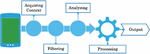
Context-aware technology is a system that recognizes information and adapts accordingly to produce a more appropriate and interactive user experience. It is the smartest way to deliver helpful services based on location, demand, and intent. Context-aware technology empowers services that take the desires and needs of different users into consideration. These interests can be expressed in terms that are relevant to these users and given their primary points of interest. Such applications intelligently conclude what, when, and where the service should be introduced to the end-user [9, 20, 21]. Figure 1 illustrates the workflow of context-aware phases.
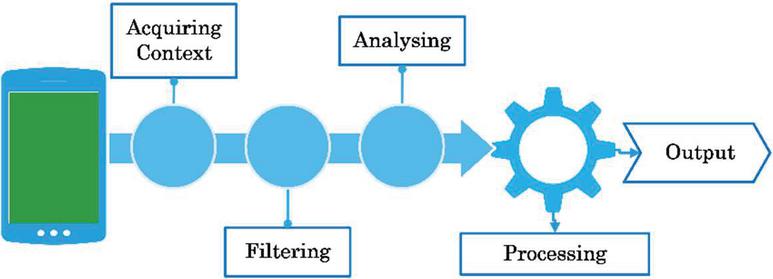
Figure 1 Workflow of context-aware phases.
Similarly, context-aware technology operates when physical and virtual sensors receive certain information on a smart device (such as temperature, illumination) and a user (e.g., real-time geographic location, gender, profiled interests, or user preferences). Then, according to a certain set of parameters to the user, the relevant contextual information is presented to the right user at the right time through a user interface [6, 22].
For example, a mobile application might inform parents that there is a high danger of exposure to pollen on the way of their children to school. In business environments, context can be built from data distributed in many applications. Here context-aware services can help detect fraud where perception can indicate fraudulent behavior of the customer. For traffic and transportation systems, a context-aware application uses a user’s geolocation, time, speed, and sensors in the mobile devices of other drivers connected to the app to measure traffic models and determine the optimal route for the driver to use to reach the destination [6, 9, 20].
Context-aware services expand the core capabilities of mobile applications via encoding of user-profiles which can be matched with content streams received in real-time. This empowers proactive information services where users can be informed of relevant contextual information. Context-awareness and personalization options are the most distinguishing feature that m-learning systems should have to enhance the efficiency of the learning process and experiences. This feature can be employed in the development of many mobile applications including education and learning management systems. However, context information of the user’s environment is taken into account when providing appropriate digital learning materials [6].
2.2 Universal Design Learning
Universal Design for Learning is one learning theory that has been proposed to satisfy diversity and a variety of student characteristics. The model is inspired by the Universal Design (UD) concept as used in architecture [23]. The term UD refers to a change in architecture with the purpose of creating places, buildings, and objects that are usable and adaptable to a diversity of individuals, including people with disabilities [17].
Both UD and UDL have a common goal of universal access, but in different contexts; UD concentrates on the “architecture” environment while UDL is manifested in education environments [24]. Based on previous literature, the UDL framework has attracted notable interest from educators to address limitations in curriculum design [15]. UDL addresses the fundamental impediment to learning: a firm, one-size-fits-all curriculum. It enables educators to satisfy the needs of various individual learners [23, 25].
Universal Design for Learning is a pedagogical approach that aims to address the issue of the variation between learners and meet the needs of all learners by designing flexible and accessible learning materials that can be adjusted according to the strength and need of each learner [26].
Universal Design for Learning is a collection of principles for teaching and learning, which guides the curriculum’s design to assist teachers to customize the common core curriculum to benefit all learners. Such a curriculum can be used by the widest range of learners, regardless of ability, age, language background, gender, and culture in order to provide them with equal opportunities to learn with diverse needs. When the UDL is applied, we assume that barriers to learning are not in the learner but in the design of the environment [15, 26]. The three principles of UDL are [15, 23, 26]:
1. Multiple means of representation: Educators need to deliver educational materials and information through multiple means and offer course materials and information in more than one format such as multimedia formats and hands-on learning. From the beginning, they should design flexible presentations and information for lessons. This can help learners to understand educational content with minimal effort. There is no one approach to teaching a lesson that meets every student’s needs in the class. If one approach is inefficient, another approach may work better.
2. Multiple means of action and expression: A vital step in the learning process is how students present their knowledge. These methods should be distinguished according to the learner’s individual preferences and capabilities. Empower students to show their learning through various styles (e.g., writing, drawing, speaking, or using technology tools). Follow the students’ strengths and introduce them to alternative ways of presenting their knowledge through different means such as small teamwork instruction, and self-learning. Other opportunities for multiple means of action and expression contain notetaking, in-class tasks, and feedback from various resources.
3. Multiple means of engagement: To engage learners and make learning important to their lives, tutors should look for ways to motivate learners, sustain their interest, and stimulate them in various ways and actions (e.g., interactive exercises, group discussions, and the Internet discussion boards). This principle shows the idea that learners have different motivations to engage in learning. For instance, some learners are engaged in what they are learning using new and spontaneous teaching techniques, while others are uncomfortable in such learning techniques and prefer routine and quiet teaching. Some learners prefer to work independently, while others succeed when working in teamwork. Also, some students may explore discussion forums while others will avoid such environments. There is no one way to engage all learners, but by implementing multiple means, you improve the chances for learning and interest. Learners who are entirely engaged in learning will be interested in applying their knowledge and will have a passion to learn more individually.
2.3 Related Works
One of the most challenging research features of context-aware mobile computing is how to develop applications that can effectively present timely and appropriate information to the end-user [18]. With regard to m-learning applications, during the development process, the mobile developers must consider pedagogical effectiveness, technical functionalities, and usability requirements. Contextually adaptive learning is the distinctive value of mobile learning [13]. Mobile learning has many advantages, such as enabling more realistic learning experiences as well as more adaptability in when and where a user can learn. It exploits the advantage of mobile computing so that it can be used to create personalized systems that provide context-aware learning [6].
In order to better understand how smart mobile devices are used in educational contexts and deliver personalized and motivating learning experiences, various studies on m-learning have been conducted. Context relates to the geolocation information of nearby persons, objects, ambient, conditions, environment, and other elements that describe a person’s current situation. The benefit of using context will lead to personalized, adaptive, intelligent m-learning systems.
Morales et al. [1] proposed a context-aware mobile language learning application, application focused on introducing language support to individuals who are living in foreign countries. The application offers contextually relevant vocabulary, considering some context factors such as the individual’s gender, location information, and native language. The architecture of the application consists of three components that can dynamically get the generated context and analyze it to deliver the appropriate information according to domain knowledge. The proposed concept was distributed to 27 users, then they analyzed users’ behaviors with the application for a period of two months. The results demonstrated that 37% of the users illustrated a great interest in using this type of app.
Tortorella and Graf [2] proposed an approach to deliver personalized learning materials in mobile settings, taking into account a mix of students’ contexts and learning styles. The purpose of the proposed system is to support students by providing them with appropriate learning materials in relation to the students’ current contexts and according to their favorable learning styles. The proposed approach contributes toward adaptive mobile systems in two ways: First, the goal is to show how students’ characteristics can be integrated with their context to provide adaptability in mobile learning systems. Second, the approach focused on how students with learning styles and in certain contexts utilize the technology of mobile learning systems.
A framework for a context-aware mobile learning system that delivers learners more effective and related learning experiences was proposed in [8]. The framework provides a learning environment that can be accessed anytime and anywhere, considering learner preferences, learning requirements, environmental conditions, etc. However, the proposed context-aware model only covers some functional areas. Their future work will try to extend the model to be more convenient to all careers. Also, they will use relevant technology to implement a prototype for the system and evaluate it in terms of acceptability and satisfaction among end-users in practical environments.
A theoretical framework for contextually adaptive mobile learning was proposed by [13]. The framework uses a proactive approach (i.e., the learner’s schedule) to get the physical location and time contexts. The framework also considers other contexts such as learning styles, level of knowledge, concentration level, and frequency of interruption. For usability feasibility, Yau and Joy used a diaryquestionnaire as a research methodology, in which 32 students participated in the study. The results showed that students were able to plan and conform to their schedules with appropriate accuracy. Noise level and students’ motivation played a great role in influencing students’ concentration levels.
Nguyen et al. [19] proposed the architecture for a personalized and context-aware mobile learning system, which was designed to support students to learn the English language as a foreign language to get ready for the TOEFL test. The system offers adaptive materials for various learners according to context-awareness. In the proposed model, the context information includes geolocation, time, learning style as well as learner’s knowledge. Through the chosen topics and test questions, learners will be provided with adaptive content satisfying their needs as well as their knowledge. Furthermore, they presented the prototype of CAMLES system that enables the learner to understand adaptive materials for the TOEFL test anywhere at any time with a mobile device. The authors focused on addressing critical issues such as content model representation, development of a learning model, and building adaptive engine techniques.
Pinjari et al. [6] proposed a mobile learning system based on fog computing. The purpose of the proposed system is to perform efficient context-aware learning. The combination of fog computing with cloud computing reduces the delay and time complexity of using the learning features on mobile devices. The result and analysis of the work performed showed that the proposed system is outstanding as compared to other mobile learning architectures. For future work, they need to involve many students in the assessment process and analyze various factors. Many issues should be covered in the future such as system content, security, privacy, etc.
However, building context-aware mobile cloud learning systems that adapt to learners’ characteristics and considering a combination of student learning models and UDL principles is not an easy task. To our knowledge, our work is the first that primarily uses a context-aware technique and applies localization practices to address the issue of diversity in the UDL and enhance students’ engagement during the learning process. The proposed system uses a machine-learning algorithm to predict the learner’s concentration level and follow UDL principles to deliver a rich user experience, which has not been researched in the above works.
3 Proposed Methodology
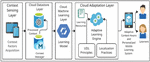
In this section, we present a framework for a UDL for an adaptive context-aware mobile system. The proposed framework consists of a set of layers that can sense context changes and adapt the system’s behavior and contents according to the context as well as the learner’s profile and preferences. The framework consists of cloud computing and mobile devices that work side by side with each other. The components of the proposed framework and their interconnections are illustrated in Figure 2. The main purpose of the proposed system is to sense and collect the learner’s context and provide an adaptive and appropriate learning environment that meets the learner’s needs and requirements.
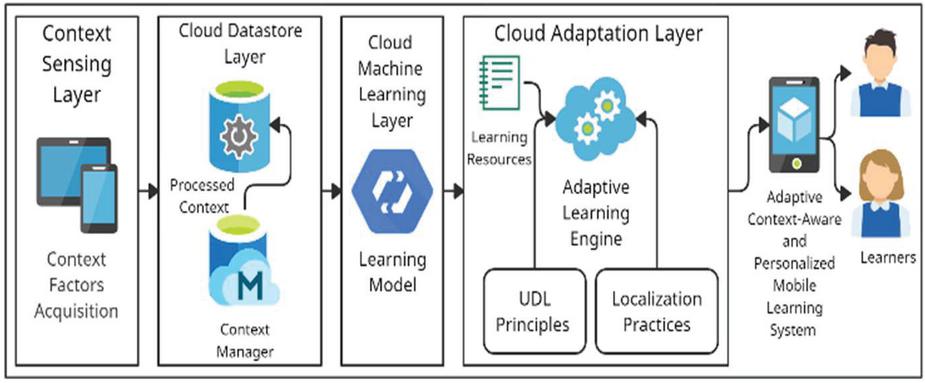
Figure 2 Architecture of the proposed mobile learning framework.
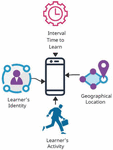
Context-awareness is a method in which context parameters are employed to provide adaptive learning materials to the learner in a reactive system according to the learner’s location and preferences as well as his/her level of knowledge. This method covers two main steps: (1) analysis of context and (2) implementation of context. The former gets the learner’s input data. After processing the context, the latter publishes the customized output according to the information that reflects the learning model. Contextual information can be classified into four basic types: geographical location, learner’s identity, learner’s activity, and interval time to learn as shown in Figure 3.
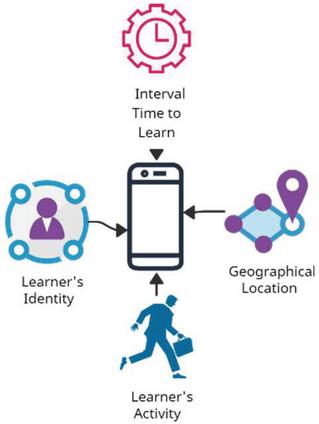
Figure 3 Classifications of contextual information.
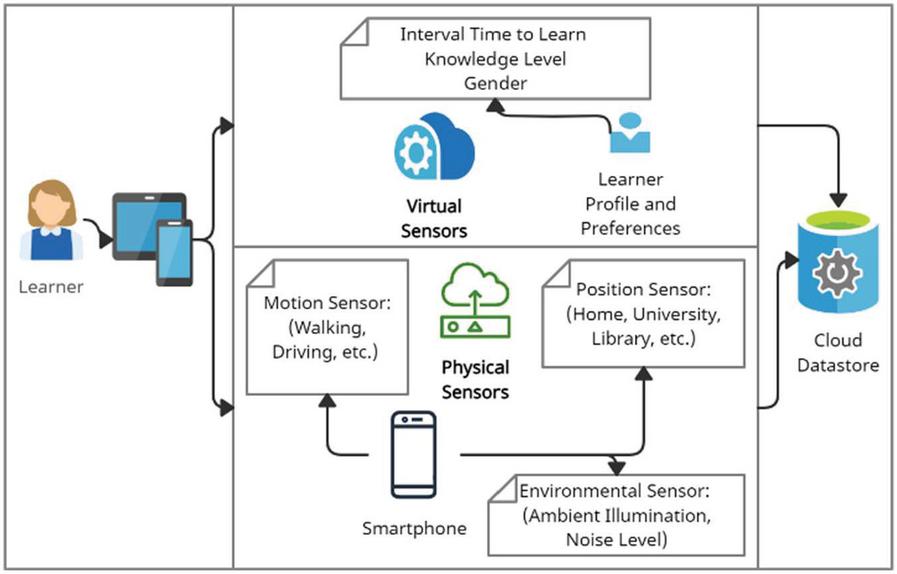
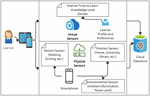
Figure 4 Virtual and physical sensors used as sources for context parameters.
The proposed UD for the m-learning system has components running in the cloud. There will be a flow of information through the system’s components. These components help cater to all different contexts. The architecture enables not only universal design for context-aware mobile learning but also an adaptive environment that directs the learner to perform the most meaningful and feasible tasks using effective learning tools or strategies.
3.1 Context Sensing Layer
In our mobile learning model, contextual information stems from various physical and virtual sources. The component applies a user-centric approach carried out by smart mobile devices. Smart mobile devices can use context information to offer personalized services or content to learners. Different technologies like virtual and physical sensors can be used to acquire learner’s context parameters as shown in Figure 4.
3.1.1 Virtual sensors
Virtual sensors can access virtual information, such as data from apps and services [27]. Apps and services such as calendars, email, and log files can be considered virtual sensors. For instance, we can use the calendar to get the user’s interests, location, or language. Learners specify their own settings and preferences that can be personalized for a particular learner and control how the context-aware learning system should behave or respond in each situation. These sensors have access to virtual information, such as data from learner profiles and preferences. In our model, the learner profile and preferences are composed of three learner factors: interval time to learn, knowledge level, and gender.
3.1.2 Physical sensors
The proposed system applies three classes of sensors:
• Motion sensors: These sensors measure the physical activity of the learner such as immobile, walking, running, etc.
• Environmental sensors: These sensors acquire context data from the ambient environment in which the user is operating and located, and they are employed to measure different environmental contexts, such as ambient illumination and noise levels.
• Position sensors: These sensors determine the physical location of the mobile device (e.g., home, university, library, shopping, etc.)
3.2 Datastores Layer
In cloud computing, digital educational resources are stored and maintained in cloud servers, thus solving the problems that mobile devices suffer from such as limited battery life, less storage resource, low bandwidth, restricted processing power, etc. Learning material is divided into chapters and each chapter into a group of lectures. The content of each of these chapters is designed in four different formats:
• Video format (MP4)
• Audio recording format (MP3)
• Written/ Text format (PDF)
• Slides format (PPTX)
Course materials are electronically stored in various convenient file formats on the cloud server and delivered via mobile device. These chapters should be short enough to allow an automatic adaptivity when the delivery mode is switched as required while maintaining continuity of content.
In this layer, the context manager component is responsible for fine-tuning and analyzing contextual information collected by smart device sensors: physical and virtual. The raw data collected from these sensors are processed by the component, and the resulting information is stored on the cloud server for use in the machine learning layer. The purpose is to identify important information in the context and the degree of relevance of the information that matches the learner’s context.
3.3 Machine Learning Layer
The learning model is one of the most important components in the proposed system for selecting adaptive and most-related course contents and delivering appropriate services. Thus, to make intelligent decisions, anticipate learner needs, and deliver adaptive and personalized content and service, context awareness is now a necessity for mobile computing and applications.
Our task is to create a neural network that can predict whether a learner’s concentration level is high, medium, or low. A machine learning technique is used to predict a user’s concentration level based on his/her context information. This model has more computational power and memory available to them than the on-device model, and as a result, can produce inference more accurately than an on-device model.
3.3.1 Neural network input parameters
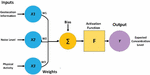
In our case, a neural network takes the following three factors as inputs, passes them through multiple hidden layers, and produces an expected concentration level. Particularly, the three parameters are chosen based on the research question mentioned in Subsection 5.2.
Learner’s activity
The physical activity context refers to the instant learner activity (immobile, walking, driving, etc.) For instance, an increase in device’s movement is less favorable towards a printed format or text. According to the learner mobility, we classify the learner’s activity into four levels: immobile, walking, running, and driving. Each level is represented with an integer value as shown in Table 1.
Table 1 Learner’s activity levels
| Learner’s Activity | Value |
| Immobile | 1 |
| Walking | 2 |
| Running | 3 |
| Driving | 4 |
Noise levels
A smartphone can detect environmental contexts and measure the surroundings of the learner such as crowded places, the light intensity of day/night, and noise levels. In a very bright or dark local environment, audio or video format is preferred. The noise level factor affects the students’ concentration level in terms of studying. The factor will be used as one of the machine learning input parameters. Three levels of noise are identified as shown in Table 2.
Table 2 The value of noise level
| Noise Levels | Value |
| Low | 1 |
| Medium | 2 |
| High | 3 |
Real-time Location
In the proposed mobile learning system, geographical location, determined by the location sensor, is a significant factor for delivering satisfactory learning material. The system uses location-tracking technologies, such as cell tower location providers, GPS, and Wi-Fi networks, to determine the physical location of the learner. For example, in a library, the learning materials are more favorable to be presented in a written format.
Once this has been determined, the geolocation information, noise level, and physical activity are used as inputs to the neural network in order to predict the level of concentration, and consequently, appropriate learning materials are selected for them as shown in Table 3.
Table 3 The adaptive learning materials based on context factors: physical activity and geolocation information
| Physical Activity | Geolocation Information | Appropriate Digital Materials |
| Immobile | Home | Video |
| Library | PDF File and Presentation | |
| Restaurant | ||
| Driving, Walking, | Shopping, Park, | Audio |
| Cycling, Running | Working Environment |
We have categorized the learner’s physical location into four categories. They are all represented by a distinct value that is 1, 2, 3, and 4 respectively as shown in Table 4.
Table 4 The value of physical location parameter
| Location | Value |
| Home | 1 |
| Library | 2 |
| Restaurant | 3 |
| Shopping, Park | 4 |
3.3.2 Expected concentration level
We have identified three levels of concentration (low, medium, and high). Each of them is also described by a separate value that is 1, 2, and 3 respectively as shown in Table 5.
Table 5 Learner concentration levels
| Concentration Levels | Value |
| Low | 1 |
| Medium | 2 |
| High | 3 |
Initially, the neural network makes some random predictions, these predictions match the correct output, and the error or difference between the expected and actual values is calculated. However, if the network gives us a poor output, the system adapts, adjusting the weights to improve predicted results. In particular, the backpropagation process is used for training neural networks. Weight values will be modified during the learning process to produce better and better output. This neural network uses the sigmoid function as the activation function. The sigmoid function is a nonlinear activation function with a range of (0–1).
Besides the geolocation information (home, library, shopping, park, working environment, etc.) for the learner, the sensing noise level (low, medium, or high) data, and physical activity (immobile, running, driving, etc.) can be used as inputs for the neural network to identify the concentration level (see Figure 5), and consequently build the learning model according to the context information.
This kind of machine learning falls into the category of supervised learning where we are given integer inputs and corresponding integer correct outputs, however, our task is to discover the mapping between the inputs and the targets. Machine learning is about mapping inputs to their associated targets, which is achieved by observing many examples of input and targets.
The machine learning model predicts the concentration parameter to identify learners’ requirements in terms of a student’s concentration on learning while using a mobile device to navigate the educational materials. For example, if the student is at home, the physical activity is immobile, the noise level is low, therefore, the expected level of concentration is high (see Table 6).
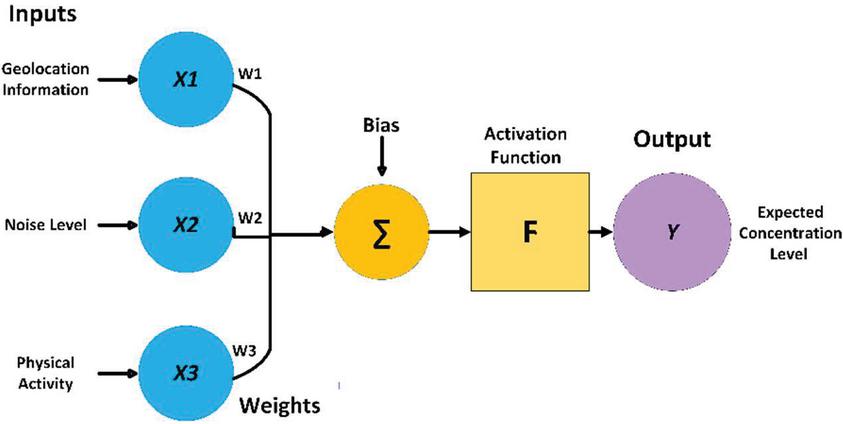
Figure 5 A neural network with three inputs parameters and the concentration level as output parameter.
Table 6 The expected concentration level and the three neural network inputs: geolocation, physical activity, and noise level
| Geolocation | Physical Activity | Noise Level | Expected Concentration Level |
| 1 | 1 | 1 | High, 3 |
| 1 | 1 | 2 | Medium, 2 |
| 2 | 1 | 1 | High, 3 |
| 3 | 1 | 1 | High, 3 |
| 3 | 1 | 2 | Medium, 2 |
| 4 | 2 | 2 | Medium, 2 |
| 4 | 3 | 3 | Low, 1 |
3.3.3 Learner Profile and Preferences
The suitable delivery mode for the student is determined by the learner profile and preferences which contain three categories (i.e., the interval of time to learn, knowledge level, and gender). The first category is interval time to learn, however, this category describes the available and preferred time the learner will spend learning. In practice, we use three-time interval options to choose the learning time. These are 20, 40, and 60 minutes.
The second one is the level of knowledge chosen to be a context parameter because of the differences in the level of knowledge among learners. Learner knowledge is a valuable factor in determining the course content to be learned in the system. In our model, the learner’s background knowledge is assessed through numerous test questions for the first-time learner taking part in the course. Depending on the test results as well as the learner’s background, the learner’s knowledge assessment component is used to classify the learner’s knowledge into three levels: acceptable, good, and excellent. Each level is represented by an integer value as shown in Table 7.
Finally, gender selection allows the system to define learner characteristics, behaviors, and experiences of a learner. In a mobile learning system, these attributes are important for the learning model because they determine how the learning materials are presented. Therefore, the system considers learner’s gender (female or male) as part of the target context to determine the corresponding learning contents and customize themes and colors.
Table 7 Knowledge level values
| Knowledge Level | Value |
| Acceptable | 1 |
| Good | 2 |
| Excellent | 3 |
3.3.4 Learning model
An interesting flavor has been added to e-learning due to the advent of multimedia tools and applications. The multimedia digital elements should be used in designing e-learning material to increase students’ motivation, confidence, and engagement. With the help of multimedia applications, instructors can present course content in different teaching methods using e-books and e-courses. The multimedia elements will help students learn the course’s topics in audio/video teaching. The flow of information and other related characteristics are presented dynamically [12].
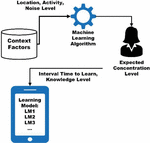
The design of the e-course must consider each learning model. For instance, while one student may learn from the visual presentations and multimedia animations of courses content, another student may be able to understand the information better when it is presented in textual form. An important component of this layer is the learning model required for the selection of adaptive digital learning materials. It is designed from contextual factors (i.e., anticipated concentration level and interval time) as well as the learner’s knowledge (see Figure 6). Since all context factors are represented by distinct values, the learning model also is defined by them.
In the proposed framework, we assume that the learning model relies on the learner’s background knowledge and current context. Using context factors, we design a learning model whose class is determined by the value of concentration level, learning interval time, and knowledge level as shown in Table 8. At this point in our model, we assume that the value of any learning model represents a combination of all context factors. Therefore, we get nine learning models with values ranging from 1 to 9.
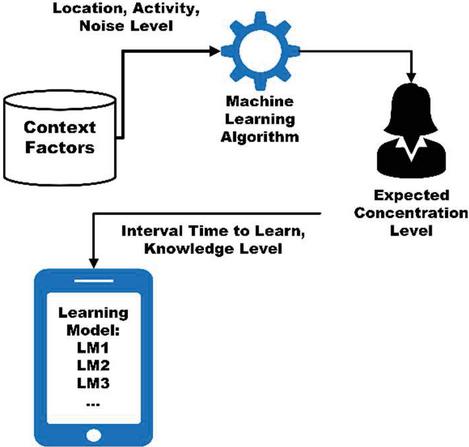
Figure 6 The process of designing a learning model using machine learning technique.
Table 8 The value describes the learning model based on factors: concentration level, interval time to learn, and knowledge level
| Concentration Level | Knowledge Level | Interval Time to Learn | Learning Model |
| Low | 1 | 20 | LM1 |
| 2 | 40 | LM2 | |
| 3 | 60 | LM3 | |
| Medium | 1 | 20 | LM4 |
| 2 | 40 | LM5 | |
| 3 | 60 | LM6 | |
| High | 1 | 20 | LM7 |
| 2 | 40 | LM8 | |
| 3 | 60 | LM9 |
Depending on the learner’s context and capabilities information, suitable learning materials are chosen, adapted, and delivered to students for learning. For example, if the learner level of concentration is high, the interval time to learn is 40 minutes, and the level of knowledge is good, the learner model value is LM8. Usually, at home, students can have a higher level of concentration and less frequency of interruptions, therefore, our system can provide them with complex learnings materials. At the same time, in a library, the course contents might be always presented in a text mode.
3.4 Cloud Adaptation Layer
The adaptation layer contains certain functions that are created to adapt educational materials for each learner. The purpose of this layer is to apply localization practices and UDL principles to each learning model as illustrated in Table 9.
Table 9 Examples of UDL principles
| Engagement | Representation | Expression |
| Providing Choices, Interactive Game, Teamwork, Real-life Examples, Group Discussions | Video, Audio File, PDF Books, PPT Presentation, Graphics, Lecture | Typing, Essay, Drawing, White Board, Oral, Multimedia |
Learning materials are adapted to various learners on two levels. The first level is to design a curriculum based on the principles of UDL to provide all learners with equal opportunities, thus, the instructor embraces learner diversity. The second level is to automatically localize the learning materials according to the user’s physical location using the approach proposed by [28].
3.4.1 Aligning UDL Principles with Learning Models
In this proposed system, we need to align UDL principles to adaptation factors. However, when designing course content, an effective m-learning approach always takes such diverse learning styles into account and this will satisfy one of the UDL principles (i.e., multiple means of presentation).
When students have a shorter time to learn/study, the system will select shorter and simpler activities, such as brainstorming or reading. When more time is available, students will perform more difficult tasks that require more concentration, such as performing assignments and/or research, programming, etc. Thus, this feature satisfies the “Multiple Means of Expression” principle.
Furthermore, learning engagement is likely the most critical aspect of learning. Learning engagement is the ability to engage learners in a motivating and behavioral manner in an effective learning process. In our proposed system, gamification is used as a solution to the lack of engagement in the learning process. It positively affects student motivation in the learning process and makes learning fun. Gamification involves integrating digital game elements into the m-learning applications to enhance learner engagement. Once the learning system delivers an appropriate and adaptive learning model, consequently, this will certainly satisfy the “Multiple Means of Engagement” principle.
Table 10 shows samples of the adaptive learning model consistent with UDL principles. The adaptive engine uses the learning preferences from the mobile learning system to offer the default presentation format for the student. Regarding the ambient lighting, the learning system will deliver appropriate material according to different modes (dark or light), for instance, presenting an audio recording or video format in a dark room. In the case where the provided mode (e.g., delivering a video stream while the student is walking or running) is favorable with respect to the context, the adaptive engine offers the student more appropriate delivery modes based on a combination of a learner’s preferences and current context.
Table 10 Adaptive learning models according to UDL principles
| Learning Model | Engagement | Representation | Expression |
| LM1 | Interactive Game | Video | Typing |
| LM4 | Providing Choices | Audio File | Drawing |
| LM7 | Group Discussions | PDF Books and PPT Presentation | Oral |
3.4.2 Localization Process
If the app is published for users who speak another language, you will need to internationalize it. This means that you need to develop the application in such a way that it is possible to localize contents like text and layouts for each language or locale supported by the application.
Geolocation enables educational materials and services to be automatically localized. Localization is the adaptation of a learning system to meet the needs of a particular language, culture, or desired market “look-and-feel.” The physical location of a learner is one of the most critical contextual factors that can be employed to modify the educational material that can be sent to a student.
Location information allows the system to adapt its content to a specific market or where learners are taking part in the course and provide learning material based on whether the learner is at home, at the library, or traveling by car. Digital learning materials can only be used within the scope of the specific location that is identified by the location-tracking feature used and the materials are delivered in the language spoken at that location.
4 System Prototype Implementation
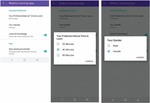
The initial prototype is implemented for learners using the Android Visual Studio. We integrate the Firebase Android Cloud Storage library to store and maintain educational resources and deliver the most appropriate and adaptive learning materials. Both learning interval and gender are context parameters that the learner must provide to the m-learning system. Android provides many ways to save and maintain the data of an application. One of the most interesting ways is Shared Preferences. Shared Preferences enable students to store and retrieve a small amount of data as a key, value pair to an XML file on the device storage such as String, int, float, and Boolean that make up student’s preferences within the app as shown in Figure 7.
Sensors on a smart mobile device are designed to collect learners’ context and the environmental information around them. General attributes are collected to determine the learner’s movement, location, and needs. A user’s significant motion leads to a change in the user’s physical location; for instance, walking, cycling, running, or sitting in a moving car. The following code snippet shows how to get an instance of the motion sensor.
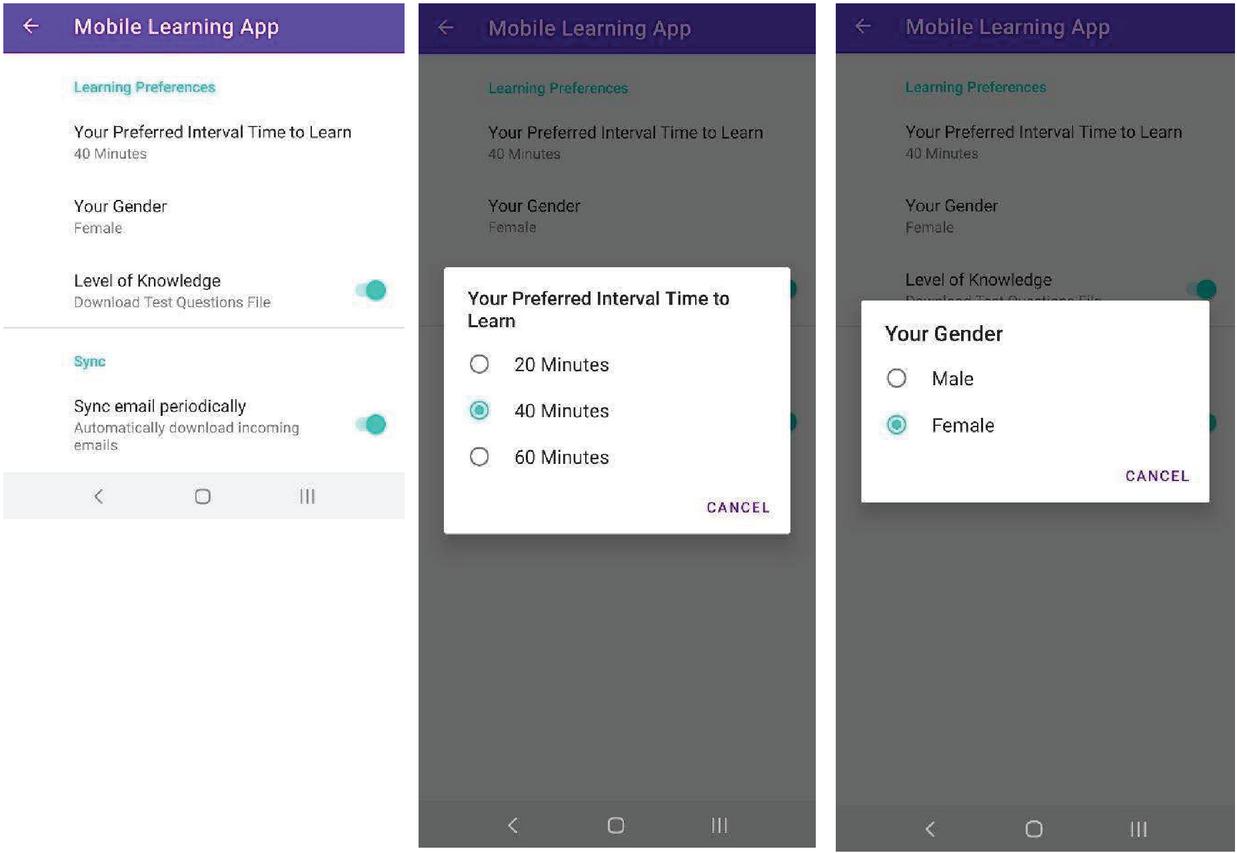
Figure 7 Learning shared preferences for the proposed system.
Furthermore, in this system, the student’s location is used to present the educational material according to the points of interest that are close to the student. Once the location services are created, the user can get the last known location of the smart device. When the m-learning system is connected to such services, the user can use the getLastLocation() method to retrieve the device location. The following code snippet illustrates the request of the last know location and handling of the response:
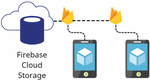
Cloud Storage for Firebase is used to upload the learning materials content, such as images, animations, and videos, which allows the learning system to create rich media for content. The data is kept in a Google Cloud Storage bucket. Firebase Cloud Storage allows the m-learning system to securely upload learning resources and lets students directly download and view resources from mobile devices as shown in Figure 8.
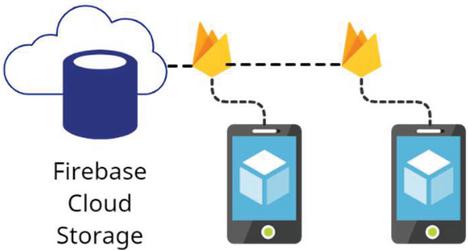
Figure 8 Firebase cloud storage for m-learning resources.
The proposed system can effectively collect and analyze context information and deliver adaptive and personalized materials effectively. The concentration parameter is anticipated by a machine learning model in the cloud. Once the required context information is collected, pre-processed, then sent to a cloud server (see Figure 9(a)), a Python code is launched to perform the prediction task. In the Python program, a neural network class is created. Neural networks require data to learn from, so we declare and initialize the input data array and the corresponding outputs array using the Numpy.array () function.
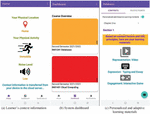
As mentioned above, there are nine models of learners based on contextual factors. These models are the base for the adaptation layer for selecting adaptive learning content for different students. In our proposed system, we create two courses for testing purposes. When a student selects one of these courses, the context from different sensors in a smart device will identify the different learning styles of delivery, and adaptive course material is presented as shown in Figures 9(b)–(c).
5 Experimental Results and Discussion
Our primary objective, in this section, is to evaluate learners’ acceptance and satisfaction with the proposed system. Accordingly, the study investigated several adaptation factors that influence the learning experience. On the other hand, we have conducted functional tests to check the proposed system features and gather qualitative feedback from learners.
5.1 Evaluating the Students’ Learning Experience
To assess the quality of the proposed system, experiments were performed on the participation of 20 university students in Jordan. From the total set of students, 50% were male and 50% female. Participants ranged in age from 18 – 22 years and had experience with some m-learning systems. To achieve this, we designed an online questionnaire that includes ten questions to survey students who used the m-learning system with their smartphones.
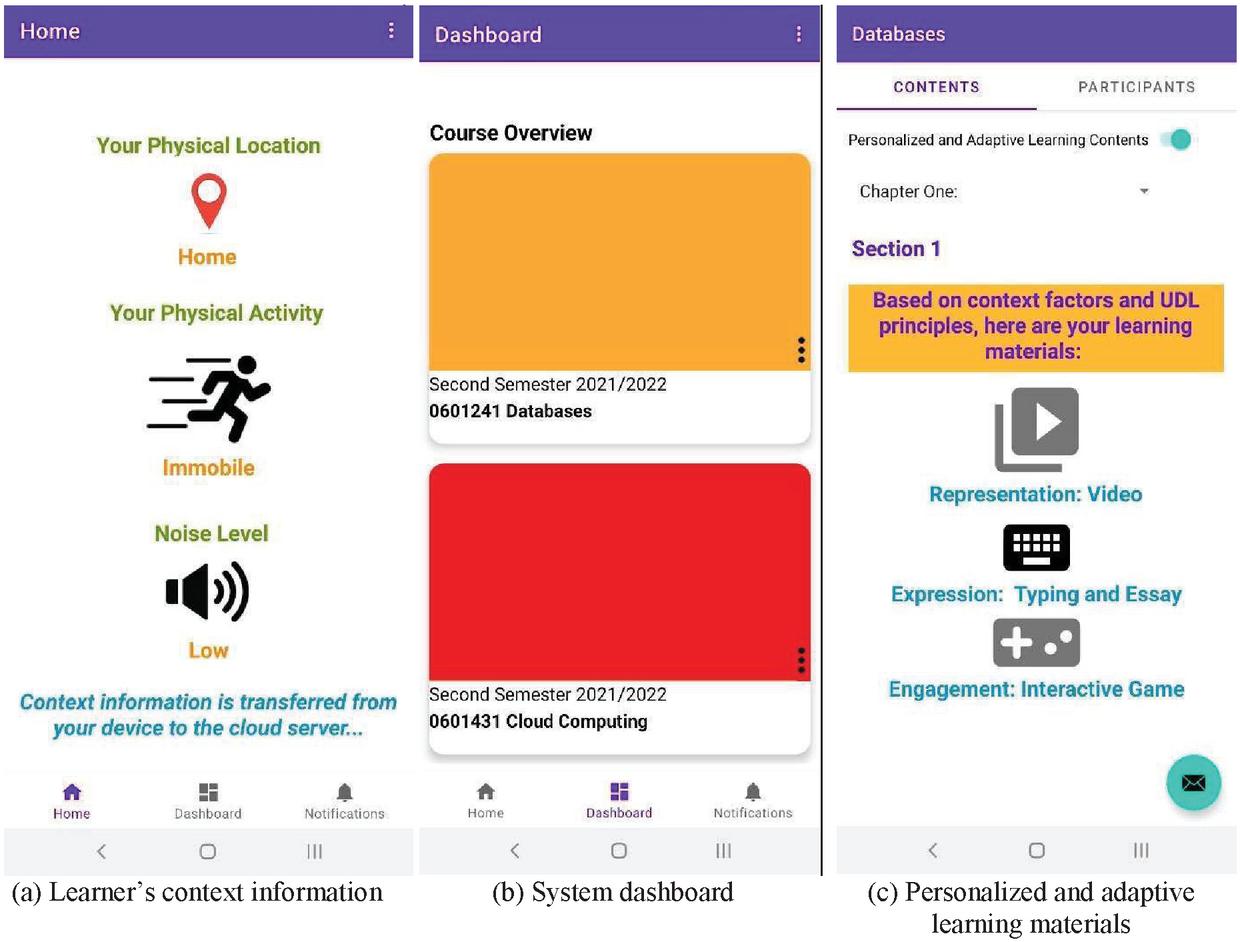
Figure 9 Screenshots for the proposed adaptive m-learning system.
To provide personalized and convenient learning experiences, the m-learning app must adopt users’ acceptance as well as their satisfaction. Therefore, after the application’s use, the questionnaire was distributed among 20 participants in two different courses, in which all participants responded to the questionnaire. Students were asked to answer surveys regarding their feedback (e.g., satisfaction, engagement, disengagement, or dissatisfaction). Survey responses were collected, organized, and analyzed automatically using Google Forms. We confirmed that the survey items are appropriate to achieve our research objectives and could be easily understood by the study participants.
To get consistent responses and correct attitudes, participants used a 5-point response scale. After using the proposed m-learning system, students were asked to answer, “How satisfied are you with each [Adaptation Factor]?” Basically, to assess users’ acceptance and satisfaction, the model “very satisfied, satisfied, neutral, dissatisfied, very dissatisfied” was adopted. This model was used to evaluate the factors of adaptation in terms of measuring learners’ satisfaction and knowing the degree of compliance to the following four categories:
1. Learner Context
2. Environmental Context
3. UDL Principles
4. Localization Elements
The scores of each item were computed based on a Likert Scale to identify the level of learner satisfaction and degree of engagement during system use.
Table 11 shows m-learning system adaptation factors and their corresponding ratings. From the analyzed data, we note that the average rating values are close to 4.5, which indicates that the proposed m-learning system complies with UDL principles, provides an adaptive learning environment, and applies localization practices, where the highest average was 4.90 and the lowest was 4.15.
Table 11 Adaptation factors concern context, UDL principles, and localization elements
| # | Adaptation Factors | Average Satisfaction Score |
| Category 1: Learner Context | ||
| 1. | Takes learner’s factors into account (interval time to learn, knowledge level, gender) | 4.15 |
| 2. | Takes concentration level factor into account | 4.25 |
| Category 2: Environmental Context | ||
| 3. | Detects and considers the ambient contexts: noise level | 4.20 |
| 4. | Detects and considers learner’s physical activity | 4.40 |
| 5. | Detects and considers learner’s physical location | 4.55 |
| Category 3: UDL Principles | ||
| 6. | Multiple means of representation: Adapts learning materials presentation to individual learners | 4.50 |
| 7. | Multiple means of engagement: Adapts assignments or activities to individual learners | 4.20 |
| 8. | Multiple means of action and expression: Adapts expression practice to individual learners | 4.80 |
| Category 4: Localization Elements | ||
| 9. | Adapts interface elements to individual learners | 4.75 |
| 10. | Supports bidirectionality aspects | 4.90 |
5.2 Which Contextual Factors Should be Used in an Adaptive m-learning System?
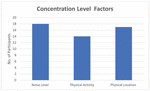
To answer this question, twenty university students were invited to participate in our study. Analysis of the preliminary data for the research question was presented: Participants were asked to determine whether the next factors influenced their level of concentration in terms of learning: noise level, physical activity, and location. The analysis of our study showed that these factors impact the student’s concentration level (positively or negatively), which is essential for the learning process as shown in Figure 10.
1. 18 participants indicated that noise level had an effect, whereas 2 indicated the opposite
2. 14 participants indicated that physical activity had an effect, whereas 6 indicated the opposite
3. 17 participants indicated that location had an effect, whereas 3 indicated the opposite
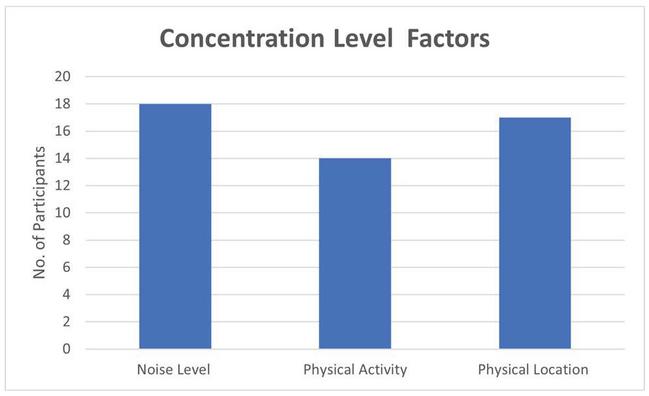
Figure 10 Factors that affect students’ concentration level from participants perspective.
5.3 Testing Methods
The Robotium testing framework is used to build the testing methods. These testing methods are performed to demonstrate the effectiveness and efficiency of the proposed system. Mobile functional testing is one of the most important aspects of every application. The m-learning system communicates with a backend system (cloud server). The m-learning sends requests to the cloud server, which then processes those requests and sends a response back. We design and execute the test cases to make sure that features and requirements are implemented correctly. Test to ensure that all functions are working as they should, for example, inputs, outputs, navigation, and processing of data.
We ran the system on a Samsung Galaxy A51. The test cases are used to compare expected and actual results. However, if the actual result and expected result are identical, in the “Result” column, the “Passed” is recorded; otherwise, “Failed” is recorded in the “Result” column to show a mismatch between the expected and actual results (see Table 12).
Table 12 Test cases and their corresponding results
| Testing Method | Result |
| Sensing a device’s physical location | Passed |
| Sensing a learner’s physical activity | Passed |
| Sensing an ambient noise level | Passed |
| Responding to sensing information (location, motion, and ambient sensors) | Passed |
| Measuring the loading time of the learning content | Passed |
| Considering the learner’s preferences and profile contexts | Passed |
| Localizing of UI elements, aesthetics (layout orientation), and visual language (icons that contains text or communicate direction) | Passed |
From Table 12, we can observe that, in the proposed system, the context awareness from the smart device’s sensors (i.e., learner’s location, activity, motion, and needs) is considered when delivering the appropriate learning materials. However, the features of the m-learning system are implemented correctly, and the functions work as they should.
6 Conclusion and Recommendation
In this paper, we proposed a framework to provide adaptability and personalization in a mobile cloud learning system by considering the learning models and context information. The proposed framework uses the expected concertation level, an interval of time to learn, and knowledge level, to identify cloud-hosted learning resources that are most appropriate for the learner. The appropriate learning model for the student is aligned with UDL principles and applies localization practices. Methodologically, the process of adaptation takes place at different levels: application content, user interface, and presentation format. Overall, 20 undergraduate students took part in the online survey, and we analyzed their satisfaction levels with the proposed m-learning system. The experimental results show that the proposed m-learning system enhances the learning experience to suit an individual learner’s diversity and learning needs, makes the learning process customized, flexible, and efficient for a learner, and enables students to learn learning materials more effectively, adaptively, and efficiently anytime and anywhere.
However, the current design does not take into account the privacy and security issues of learner contextual data collected by virtual and physical sensors, which have to be worked on in the future. It is clear that any type of location-based and adaptive service must operate in a transparent manner and that the user must always have the authority to stop or change an unwanted service. For future work, we need extensive research on this learning system by engaging more students and capturing and analyzing various factors.
Acknowledgement
The authors would also like to thank anonymous reviewers for their critical comments and suggestions on improving the presentation and organization of this paper. We also thank the students who participated in the study.
References
[1] Morales, R., Igler, B., Böhm, S. and Chitchaipoka, P., ‘Context-aware mobile language learning’, Procedia Computer Science, Vol. 56, No. 1, pp. 82–87, 2015.
[2] Tortorella R. A. W. and Graf S., ‘Personalized mobile learning via an adaptive engine’ in 2012 IEEE 12th International Conference on Advanced Learning Technologies, Rome, Italy, pp. 670–671. 2012.
[3] Muhammad G., Alqahtani S. and Alelaiwi A., ‘Pandemic management for diseases similar to COVID-19 using deep learning and 5G communications’, IEEE Network, Vol. 35, No. 3, pp. 21–26, 2021.
[4] Statista. (2020), COVID-19’s Staggering impact on global education. [online] https://www.statista.com/chart/21224/learners-impacted-by-national-school-closures/ (Accessed 18 January 2022).
[5] Nazar, M., Rusman, Puspita, K. and Yaqin, H., ‘Android-based mobile learning resource for chemistry students in comprehending the concept of redox reactions’, International Journal of Interactive Mobile Technologies (iJIM), Vol. 16, No. 3, pp. 123–135, 2022.
[6] Pinjari H., Paul A., Jeon G. and Rho S., ‘Context-driven mobile learning using fog computing’ in 2018 International Conference on Platform Technology and Service (PlatCon), Jeju, Korea (South), pp. 1–6, 2018.
[7] Klopfer, E., Kurt S., and Henry J., ‘Environmental detectives: PDAs as a window into a virtual simulated world’ In Wireless and Mobile Technologies in Education, Proceedings. IEEE International Workshop on, Tokushima, pp. 95–98, 2022.
[8] Zhang B., Yin C., David B., Chalon R. and Xiong Z., ‘A framework of context-aware mobile learning system for professionals’ in 13th International Conference on Advanced Learning Technologies, Beijing, China, pp. 23–25, 2013.
[9] Rivero-Rodriguez, A., Pileggi, P. and Nykänen, O. A., ‘Mobile context-aware systems: technologies, resources and applications’, International Journal of Interactive Mobile Technologies (iJIM), Vol. 10, No. 2, pp. 25–32, 2016.
[10] Mohammad S., ‘Effectiveness of m-learning in blended learning-design of prototype framework for AOU Bahrain’ in Fifth International Conference on e-Learning (econf), Manama, Bahrain, pp. 201–206, 2015.
[11] Liu Y., Li R., Xu C. and Yu F., ‘Design and application of multimedia mobile learning framework’ in International Conference on Machine Learning and Cybernetics, Hong Kong, China, pp. 4201–4205, 2007.
[12] Mushtaq Z. and Wahid A., ‘Mobile application learning: the next generation e-learning’ in 3rd International Conference on Inventive Computation Technologies (ICICT), Coimbatore, India, pp. 826–829, 2018.
[13] Yau, J. and Joy, M. ‘An adaptive context-aware mobile learning framework based on the usability perspective’, International Journal of Mobile Learning and Organisation, Vol. 4, No. 4, pp. 378–390, 2010.
[14] Immordino-Yang, M. H., 2016. Emotions, Learning, And the Brain: Exploring the Educational Implications of Affective Neuroscience, 1st ed., New York: W. W. Norton & Company, Inc.
[15] Al-Azawei, A., Serenelli, F., & Lundqvist, K., ‘Universal design for learning (UDL): A content analysis of peer-reviewed journal papers from 2012 to 2015’, Journal of the Scholarship of Teaching and Learning, Vol. 16, No. 3, pp. 39–56, 2016.
[16] Al-Azawei, A., Parslow, P. and Lundqvist, K., ‘The effect of universal design for learning (UDL) application on e-learning acceptance: a structural equation model’, The International Review of Research in Open and Distributed Learning, Vol. 18, No. 6, pp. 54–87, 2017.
[17] SPIN (2015) Universal Design for Learning and the benefits for all children, chrome-extension://efaidnbmnnnibpcajpcglclefindmkaj/viewer.html?pdfurl=https\%3A\%2F\%2Fspinhawaii.org\%2Fwp-content\%2Fuploads\%2F2014\%2F10\%2F2015-Special-Edition.pdf\&clen=1869350\&chunk=true.
[18] Bradley, N. and Dunlop, M., ‘Toward a multidisciplinary model of context to support context-aware computing’, Human-Computer Interaction, Vol. 20, No. 4, pp. 403–446, 2005.
[19] Nguyen V. A., Pham V. C. and Ho S. D., ‘A Context – aware mobile learning adaptive system for supporting foreigner learning English’ in IEEE RIVF International Conference on Computing & Communication Technologies, Research, Innovation, and Vision for the Future (RIVF), Hanoi, Vietnam, pp. 1–6, 2010.
[20] Schmidt C., ‘Context-aware computing’, Computer Science, Psychology Berlin Inst. Technology Tech, pp. 1–9, 2011.
[21] Bibri, S. E., Krogstie, J., ‘The core enabling technologies of big data analytics and context-aware computing for smart sustainable cities: a review and synthesis’, Journal of Big Data, Vol. 4, No. 38, 2017.
[22] Masango, M., Mouton, F., Nottingham, A. and Mtsweni, J., ‘Context aware mobile application for mobile devices’ in Information Security for South Africa (ISSA), Johannesburg, South Africa, pp. 85–90, 2016.
[23] Rose, D.H., and Meyer, A., ‘Teaching every student in the digital age: universal design for learning’, Alexandria, VA: Association for Supervision and Curriculum Development, Vol. 55, No. 1, pp. 521–525, 2002.
[24] Pisha, B. and Coyne, P., ‘Smart from the start: the promise of universal design for learning’, Remedial and Special Education – REM SPEC EDUC. Vol. 22, No. 4, pp. 197–203, 2001.
[25] Spieler, B., Schindler, C., Slany, W., Mashkina, O., Beltrán-Jaunsarás, M., Boulton, H. and Brown, D., ‘Evaluation of game templates to support programming activities in schools’, in 11th European Conference on Game-Based Learning, Graz, Austria, 2018.
[26] La, H., Dyjur, P., and Bair, H., ‘Universal design for learning in higher education’, Taylor Institute for Teaching and Learning, Calgary: University of Calgary, 2018.
[27] Baldauf M., Dustdar S., and Rosenberg F., ‘A survey on context- aware systems’, Int. J. Ad Hoc Ubiquitous Comput., Vol. 2, No. 4, pp. 263–277, 2007.
[28] Ayyal Awwad, A. M. and EL- Rez, N., ‘Automatic Internationalization and Localization Based on Android Location Services’, International Journal of Computer Science Issues (IJCSI), Vol. 15, No. 5, pp. 42–51, 2018.
Biography

Aiman M. Ayyal Awwad received the bachelor’s degree in computer science from Mutah University in 2007, the master’s degree in computer science from the University of Jordan in 2010, and the philosophy of doctorate degree in computer science from Graz University of Technology/Austria in 2017 with research interests related to mobile computing. Currently, he has intensively engaged with various administrative roles at Tafila Technical University such as heading the department of IT and heading of the Computer and Information Technology Center Council starting from mid of 2020. He is also a reviewer in several IEEE international conferences. He has more than 9 publications in various international journals and conferences. His research interests include mobile cloud computing and applications, digital image processing, deep learning, and cybersecurity.
Journal of Mobile Multimedia, Vol. 19_3, 707–738.
doi: 10.13052/jmm1550-4646.1934
© 2023 River Publishers