Quantum Mechanics for the Future 6G Cognitive RAN
Paulo Sergio Rufino Henrique* and Ramjee Prasad
Aarhus University, Department of Business Development and Technology, CGC, Denmark
E-mail: paulo@spideo.com; ramjee@btech.au.dk
*Corresponding Author
Received 30 April 2022; Accepted 31 May 2022; Publication 20 September 2022
Abstract
Quantum Mechanics is a branch of science that describes the interactions between photons and electrons. Quantum science completed more than 100 years of existence with pioneers research made by Max Planck to explain black body radiation. This theory, historically speaking, is new by comparison with classical physics. However, quantum physics is revolutionary. It adds novel scientific concepts about our universe and the atomic world, breaking some existing concepts of Isaacs Newton’s Laws in classic physics and Pierre Laplace’s calculus. Contribution for the quantum mechanics provided by notorious scientists such as Niels Bohr and Albert Einstein paved the way for quantum computation and quantum communications. Nowadays, quantum mechanics are being engineered to quantum technologies to start a new scientific revolution and perhaps move our society for Industry 5.0 and Society 5.0. It is known that by 2030 the Big Data will be even more prominent with the number of devices connected to the Internet. Therefore, it is vital to engineering a 6G Radio that is cognitive, fast to predict events, and prevent incidents. For this, 6G Radio must have Artificial Intelligence operating with machine learning with the combined quantum computer superpower to process and harness the incommensurable amount of big data in favor of excellent service level agreements (SLAs) and Quality of Experience (QoE). Thus, this is the proposal of this study presented here.
Keywords: 6G, cognitive radio, quantum mechanics, quantum computing, quantum communications, quantum technologies, cognitive radio, society 5.0, Industry 5.0.
1 Introduction
Quantum Physics is a branch of science that describes the interactions of particles at the atomic and subatomic levels at their exchange of energy. Quantum Mechanics is the mathematical and physical representation of quantum physics observation. As a science, it has completed more than 100 years of existence, and it began to have a shape with pioneer investigation carried out by Max Planck [1] to describe black body radiation. This theory, historically speaking, is new by comparison with classical physics. However, quantum mechanics reshaped the certainty vision of the world. It added different scientific concepts about our universe and the atomic world. It broke some pre-existing concepts of how the universe is arranged based on Isaacs Newton’s Laws in classical physics, including the mathematical contributions of Pierre-Simon Laplace. Improvements made in Quantum physics observations by the researchers like Paul Dirac, Erwin Schrödinger, and Werner Heisenberg created the mathematical models of this new science [2], which paved the way for the transition of Quantum Physics theory to the foundations of Quantum Mechanics. Quantum mechanics created a lot of scientific debates regarding its core theory of uncertainty principles, which is embedded in the concept of how it became almost impossible to be sure about a participle position in space and time. Nowadays, quantum mechanics are being engineered to quantum technologies to set up a new scientific revolution involving quantum computers and quantum communications. Possibly with the success of applying quantum mechanics for implementing quantum technologies, Moore’s laws [3] will be replaced wholly or partially by the Law of Accelerating Returns [4]. Thus, the advancement of quantum technologies will nurture more rapid implementation of Society 5.0, and it will inaugurate the era of Singularity [5] and create Industry 5.0.
It is understood that by 2030 there will have more than 500 billion connected devices, at the same time, a threat for digital services if a robust and intelligent network is not implemented. This threat will be more evident for a vast diversity of applications, service-level agreements (SLAs), and new trade of the radio frequency safely and in real-time to maintain quality of experience for users. The planning for the future next generation of wireless networks has begun. Therefore, 6G will be co-responsible for creating the ideal scenario to attend to such high demand created by big data. Then quantum mechanics came into play to propel the quantum computer evolution and become the first aider to support a 6G advanced cellular cognitive radio.
Consequently, it is crucial to engineering a 6G cognitive radio that can choose what frequency band allocates to a specific user or application, solving the issue of radio spectrum scarcity. Moreover, the 6G Cognitive Radio must intelligently avoid crowded frequency bands for critical services in a specific period, not compromising security for licensed and unlicensed users during this trading process. Then, quantum machine learning seems to be the best answer to solve this problem. This case enables the 6G cognitive radio to deal with an incommensurable amount of big data and harness the opportunity to select the optimal frequency bands available for users near to real-time in favor of excellent quality of experience (QoE). As the era of the Internet of Beings (IoB) is becoming a reality, 6G will need to answer many societal challenges with applied quantum speedup that classical computation cannot offer.
The article is separated into three parts. Firstly, it presents a holistic overview of quantum mechanics applied to quantum computers. The second part describes cognitive radios, and finally, it proposes a 6G Cognitive Radio embedded with Quantum Machine Learning.
2 Quantum Mechanics Applied for Quantum Technologies
Quantum Physics began with the investigation carried out by physicist Max Planck, who announced the quantum theory as part of his research to describe the emission of a source of light and its complete absorption in a theoretical blackbody. Max Planck was interested in studying the second law of thermodynamics [6]. He delved into this subject and presented his thesis in 1900, which describes that a perfect blackbody could not absorb the total light energy emitted incessantly but only discreetly. This examination led him to explain that light emission is transmitted in the form of packets of energy defined as quanta. This idea became revolutionary due to breaking the concepts of classical physics that energy is emitted continuously. In 1900, the scientific community could not agree whether light emission acted as particles traveling in the fabric of space and time or simply behaving like waves.
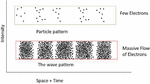
A few years later, in 1913, the physicist Niels Bohr studying the hydrogen atom, demonstrated how an atom would emit light, known as a photon while changing its orbit. Neils explained in this theory that once an electron orbiting a nucleus of an atom jumps from one orbit to another, it emits a photon in a different color of the wavelength spectrum according to its new position. For this, the results of the different orbit positions generate light emissions in different spectrums of wavelengths. Niels Bohr won the Nobel prize for his additional contribution to quantum theory with its mathematical models, defined as the evolution of quantum physics and designated quantum mechanics. The Quantum Mechanics theory initiated the concept of light quanta [7] presented by Niels Bohr. Also, Niels could define that light can act as a wave or particle following the scenario observed. Figure 1 above demonstrates the patterns of light behaving as particles and sometimes as waves.
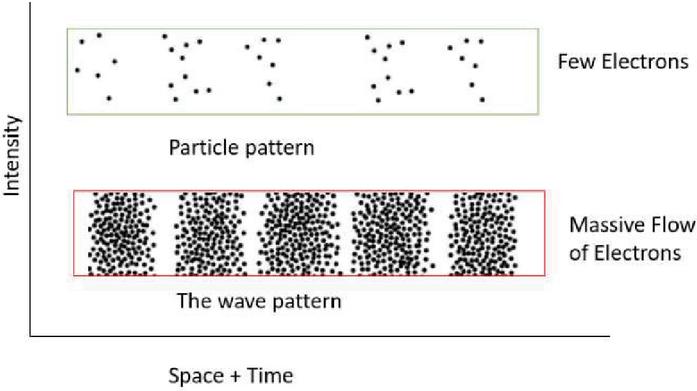
Figure 1 Light behaviour on quantum theory.
Niels’ observations and descriptions of reality generated strong reactions from the scientific community, especially Albert Einstein. For many years ahead of this discovery, the incessant talks between both scientists were known as the “great debate”.
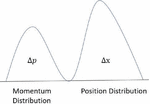
The additional principles of the quantum mechanics theory were developed during “the great debate”, which included Werner Heisenberg as a contributor. Heisenberg defined what has been described as the “principle of uncertainty”. In this principle, the mathematical models proposed illustrate that it is impossible to determine an electron’s orbit in a specific space and time. According to Heisenberg’s theory, It is only possible to estimate it using a mathematical resource of matrix equations. Then, Figure 2 explains Heisenberg’s uncertainty principle.
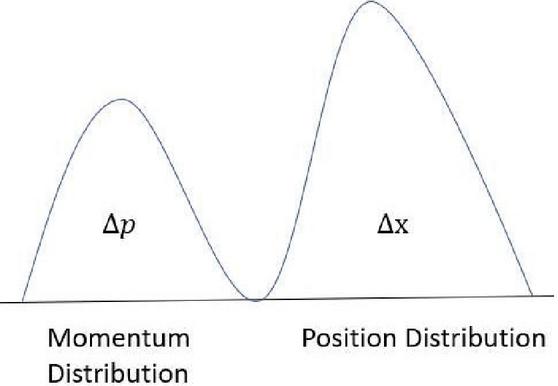
Figure 2 Heisenberg’s uncertainty principle.
As shown in Figure 2 above, Heisenberg’s uncertainty principle is based on momentum distribution and position distribution of a particle, which is represented by the equation indicated below:
| (1) |
The first part of the equation describes the uncertainty of a particle in position multiplied by the uncertainty of the particle’s momentum. The symbol greater than or equal to is proceeded by reduced Planck’s constant.
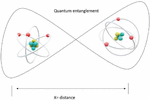
Albert Einstein disagreed with this principle of uncertainty. In March of 1935, Einstein and his colleagues Boris Podolsky, Nathan Rosen proposed a famous scientific article challenging this principle. This article became famously known as the “EPR paper”. In this paper, the scientists stated, “A sufficient condition for the reality of a physical quantity is the possibility of predicting it with certainty…In quantum mechanics, in the case of two physical quantities describing by non-commuting operators, the knowledge of one precludes the knowledge of others.” [8], which in their opinion, it was not possible. Therefore, the EPR paper proposed two possibilities for the quantum theory: the quantum mechanics theory wasn’t completed, or there would be hidden variables to cause such pairing between the two particles. The EPR paper was proved wrong to such extend later in history by another physicist John Bell, in the late ’60s. However, its contribution to the EPR paper brought the idea of quantum entanglement, which paved the way for the principles of Quantum Computers to become a reality. John Bell elucidated the mistake of Einstein, Podolsky, and Rosen. Bell mathematically proved that quantum entanglement was a reality without the need for hidden variables, which means the particles can be correlated co-dependent in a system without hidden variables and not need proximity or being local for this correlation. Figure 3 illustrates the quantum entanglement between two particles, which was presented in the EPR paper.
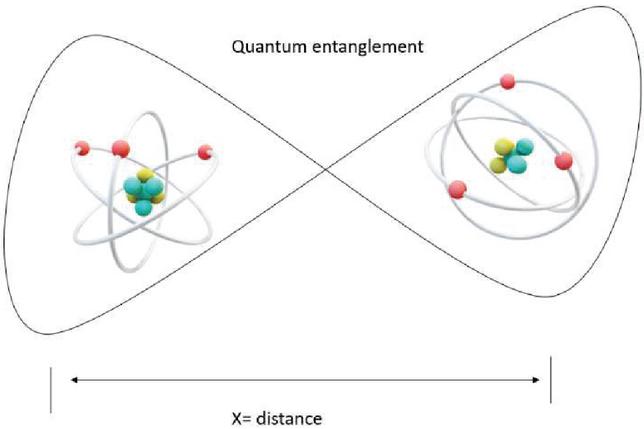
Figure 3 Quantum entanglement.
The quantum entanglement for many years was presented as a question of incompletion of the Quantum Theory due to the locality concept, which according to Einstein’s Relativity Theory, as nothing can travel faster than light.
2.1 Quantum Computers
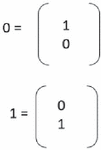
Classical computers use classical bits (cbits), in which a bit can have a unique value of 1 or 0. In contrast, quantum computers use quantum bits (qubits) to encode information. The classical vectors to represent the cbits are presented below in Figure 4:
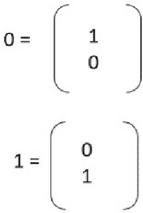
Figure 4 The matrix representing Cbits vector.
The process of allowing to deal with unique value is the limitation of classical computation. Paul A. Benioff, the North American physicist, recognized as one of the founding fathers of quantum computer logic and quantum information theory, was the first to propose a quantum computer to resolve complex problems, which was difficult for classical computers to solve. In the 1970s, Paul utilized the concept of Schrodinger’s equation to elaborate a theoretical Quantum Mechanical Touring Computer [9].
Quantum computers perform reversible operations, which means that input results can be calculated given an operation and the output value. As shown in the equation below, there is a simplified example of a quantum computation operation process.
| (2) |
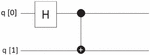
The description of Equation (2) can be explained as given the output B and the input A, then x can be found. In this case, the primary logic process utilized in quantum computers is a Controlled NOT Gate (C-NOT), also known as a quantum gate. Figure 5 shows the description of a C-NOT gate using a Hadamard gate to represent it.
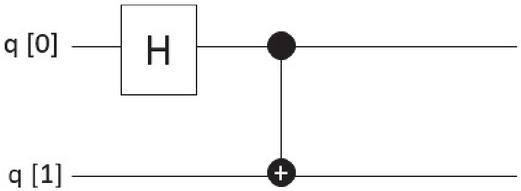
Figure 5 C-NOT gate.
Also, the CNOT gate has its representational state based on the permutation matrix delivered below in Table 1:
Table 1 Permuted Matrix shows CNOT gate
On the other hand, Classical computers are based on the main four functions shown in Table 2:
Table 2 Classical computers main functions
| Identify Function | |
| Negation Function | |
| Constant 0 Function | |
| Constant 1 Function |
The advantages of quantum computers versus classical computers are based on exploiting the quantum mechanics phenomenon of superposition and entanglement states that offer exponential computational power for quantum computation. Obeying the Quantum Mechanics theory, qubits can have a simultaneous value of 0, 1, or anything in between these values. This ability to have simultaneous value for a qubit is based on the quantum phenomenon of superposition. The superposition property of qubits enables quantum computers to process information at a higher speed, which overtakes the computer processing power of any classical computer. Superposition utilizes a complex linear combination of 0 and 1.
The general state of the qubit can be represented by:
| (3) |
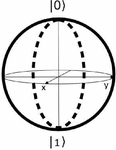
In this Equation (3), the and are complex numbers. Below there is a comparison of cbits versus qubits in a representation of two and three dimensions. The block sphere represents the single-qubit possibilities based on the superposition that brings the quantum exponential speed up by comparison with classical computers.
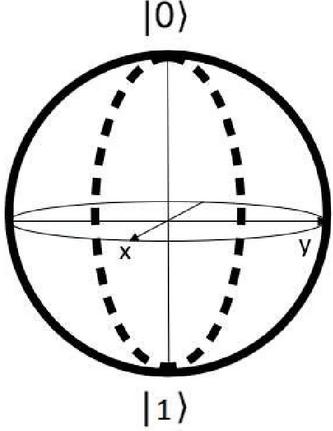
Figure 6 Quantum bits representation in a Block Sphere.
Figure 6 shows the 3D representation of a qubit state based on the superposition. Thus, any single qubit can be represented in the surface of the block sphere utilizing the following equation:
| (4) |
In the given Equation (3), the symbols and are responsible for spherical coordinates of which the magnitude is r 1. This explanation makes it easy to realize that qubits in superposition can offer a very safe computer architecture as the qubit’s values can have simultaneous values. For revealing the qubit results, measurement is needed to collapse the quantum state and provide the value.
To better understand quantum computational power, one can see the Google experiment creating a quantum processor to evaluate its computational exponential power. Google in 2019 declared the beginning of quantum supremacy. Google conducted an experiment utilizing a prototyped quantum processor named “Sycamore” [10] that performed a quantum computational task faster than any classical supercomputer. The Google Quantum Computer had 53 transmons qubits to calculate the probability distribution of all quantum random number generators. It results that Sycamore Quantum Processor simulates all the possible distribution in 3 minutes and 20s, something that is hard to achieve in a classical computer. Testing it would take approximately 10 000 (thousand) years of classical computer computational task to perform it on a current state of art super classical computer. For instance, in this whole experiment, the computer power of the Sycamore processor can be represented in exponential values .
Nevertheless, the quantum computer is still in its infancy of development. Most state-of-the-art quantum computers are limited by physical barriers to control the quantum states and reduce the probability of quantum errors due to quantum noise. In this regard, Microsoft recently presented [11] their cryo-quantum computer architecture and the latest chip for the quantum computing process. Microsoft Quantum cryo- computer also needs to operate in the interstellar temperature below the scale of absolute zero. The reason for quantum computers to operate at very low room temperature is the nature of the qubits, which, to preserve its quantum states, needs to avoid quantum noise. Quantum noise is any environmental disturbance that can induce errors in the qubits. The origin of this disturbance can vary from cosmic radiation to change in temperature. This is one of the reasons why building quantum computers require expensive techniques. Despite these challenges, the Microsoft Quantum stack is a good beginning for the future of manufacturing quantum computers efficiently.
2.2 Quantum Programming Language and Algorithms
Firstly, any computer needs to have an algorithm that enables it to rum any computational process. For quantum computers, an efficient algorithm is paramount to achieve such exponential computation while manipulating qubits. An algorithm has the responsibility of providing logical instruction to solve a computational task. One of the first Quantum algorithms proposed was Simon’s Algorithm [12], created by the computer scientist Daniel Simon in 1994. The objective of this algorithm was to measure the exponential computer power of a quantum computer against a classical computer. The most famous quantum algorithm is Shor’s algorithm [13], which Simon’s Algorithm inspired. It enables to factorize any prime number N faster than any classical computer applying the Quantum Fourier Transform in its calculation. Nowadays, exist many new quantum algorithms providing solutions for many problems. The following table shows a consolidated list of the leading quantum algorithms in use. Table 3 highlights the main quantum algorithms.
Table 3 Quantum algorithms
| Algorithm | Applications |
| Simon’s Algorithm | Evaluate Quantum Speed against Classical Computers |
| Shor’s Algorithm | Able to factory any prime number N |
| Deutsch-Jozsa Algorithm | It also demonstrates the quantum computer exponential power |
| Grove’s Algorithm | It enables a complex search in an unsorted database |
| Bernstein-Vazirani Algorithm | It is an evolution of the Deutsch-Jozsa algorithm, and it enables learning an encoded string in a function. |
| Quantum Approximate Optimization | It is a quantum algorithm design for approximating solving discrete combinatiorial optimazation problems. |
| Variational Quantum Eigensolver (VQE) | It enables the simulation of chemical reactions in the molecules. |
Together with a quantum algorithm is also necessary to have a quantum programming language. It is a quantum program language (QPL) that allows writing programs to quantum computers. Quantum computers are operating in a hybrid model as it has a classical computer operating its readings. As quantum computers are evolving, it will require a proper programming language to prosper. Table 4 below presents a summary of the key QPLs:
Table 4 Quantum programming language
| Quantum Programming Language | |
| Quantum Computer Language (QCL) | The syntax resembles C language |
| Uses Quantum data type, Quantum register, CNOT | |
| Q language | The syntax resembles the C++ language |
| it performs Hadarmad, Fourier, CNOT | |
| Quantum Guarded Command Language (QGCL) | It is based on Guarded Command Language. |
| Functional Quantum Programming (FQP) | Very advanced, and it is considered the most advanced generation of quantum computer languages. |
| Quantum Lambda Calculus (QLC) | Created to describe a quantum computer language |
3 The Principles of Cognitive Radio
3.1 Cognitive Radio Principles and Design
Cognitive Radio (CR) was first proposed to provide an intelligent radio network for 5G [14]. Since then, developments have been made in the scope of this novel technology. The main objectives of Cognitive Radio are to solve the question regarding congested radio frequency (RF) offloading part of this traffic to less crowded available frequencies in the radio spectrum. CR architecture was created to allow unlicensed users to use licensed RF bands via opportunistic usage of availability of optimal RF in a given period. In summary, These are the main benefits of CR for the future networks and not only for 5G:
• It offers opportunistic usage of Licensed RF bands by unlicensed users.
• It partially resolves the issue regarding the scarcity of wireless bands.
• Increases the spectral efficiency while CR is serving users.
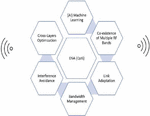
The Cognitive Radio Network operates in a cooperative spectrum and cooperative sensing applying Artificial Intelligence (AI) for this type of approach. Solutions to deploy such intelligent radio are based on Software Defined Radios (SDRs) and MIMO technologies employing Beamforming. Dynamic Spectrum Access (DSA) is the primary motivation for CRs deployments. DSA is a newer process that permits radio wireless technologies to share RF bands, avoiding interference with a combination of signal processing for shared resources via software algorithms [15]. DSM stack is responsible for offering the intelligent wireless traffic management policy, which consists of granting the DSA the ability to deliver Quality of Services (QoS) based on some principles of the CR requirements as presented:
I. Machine Learning with embedded software algorithm for control management and context awareness.
II. Link Adaptation and Co-Existence of Multiple RF bands. It offers physical layer control for the wireless channel.
III. Bandwidth Management – It senses the quality of allocated bandwidth, becomes aware of it for management purposes, and makes decisions about switching on or off access in a particular RF.
IV. Interference Optimization
V. Cross-Layer Optimization
Figure 7 shows the Dynamic Spectrum Management (DSM) based on the DSA design.
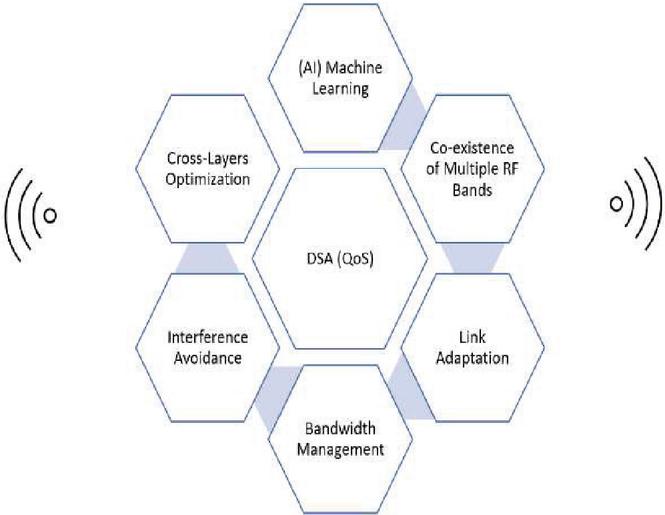
Figure 7 DSM design.
3.2 CR Current Challenges
Despite having a novel concept, CR has its challenges, and solutions must be found to address them. The main question faced by CR is divided into four main areas TCP/IP layers:
• Physical Layer and Data Link
• Transport and Application Layers
At the Physical and Data Layers, the main challenges for Cognitive Radio are Spectrum Sharing. It is a CR task to provide an agile scheduling method for users. It is complex to guarantee Spectrum sharing [16] in an open spectrum, especially near real-time. Considering Spectrum sharing as one of the biggest tasks of CR and DSM, it can be added the maintenance of high QoS for Spectrum Management, Spectrum Mobility, and RF interference. On the upper layers of TCP/IP, the mapped obstacle for granting QoS for CRs is digital processing due to the required perfect combination of hardware and software to deliver DSM. Also, cross-layer interaction is a difficult task to perform, as it requires CR networks to perform interprotocol collaboration, routing management, and self-defined networks (SDNs). One can see that all tasks presented so far as a core responsibility of a CR will require fine-tuning and optimal harmony to all relevant aspects of the DSM management. Distortion on the Cellular Radio stack can trigger a cascade of network events impacting the full cellular service. To avoid it, not only several orchestrations of software and hardware must be used but also a powerful AI to manipulate this amount of data for sensing and response purposes. As Big Data is a way without return in the digital world, the number of heterogeneous data exchanged in the wireless channel will grow exponentially. It also increases the different types of network services for specific use cases based on different Service Level Agreements (SLA), including the 5G Private Networks. Therefore, a new AI computational approach must be considered for better environmental control of the multiple environmental variables that can influence the QoS of services and users’ quality of Experience (QoE).
4 Quantum Machine Learning for 6G Cognitive Radio
The proposal here offered by the authors is to integrate quantum machine learning (QML) in the front haul and backhaul to guarantee QoS and QoE for the future 6G Cognitive Radio. Quantum Machine Learning is a new computational branch that overlaps quantum mechanics and machine learning to resolve problems beyond classical computers’ reach or where classical computers struggle to deliver in an optimized computing time. Quantum Machine Learning seems to be the best route for overcoming the obstacles faced by the current Cognitive Radios mentioned before. This new version ready of Cognitive Radio integrated with QML will tackle the massive increase of devices, services, and use cases that 6G Networks must handle.
Quantum machine learning is a new branch of quantum technologies devoted to solving intricated processes together with artificial intelligence. Quantum Machine Learning is built in two general concepts quantum data and quantum-classical models [17]. The quantum data “is any data source that occurs in a natural or artificial quantum system” [XX]. Most of the quantum data are based on probabilistic distribution, which requires an exponential amount of computer power to resolve. Therefore, quantum computers are ready to resolve such tremendous computer tasks based on the quantum mechanics phenomenon of quantum entanglement and superposition engineered in qubits, quantum processors, and quantum algorithms. Below there is a demonstration of the key areas in which quantum machine learning can support the 6G Cognitive Radio.
• Accelerating deployment of New Wireless Technologies
• Increase of M2M Applications
• Improving in video and imaging resolution (4K, 8K, 3D and holographic)
• Cloud Computing Services
• Growth of immersive audiovisual video streaming
• Shifting Demographics/Urbanization Trends
• Asymmetric Traffic
• Time-Space Subscriber variance
Consequently, to handle all these predictions of data, users, and devices growth and fully connected to the wireless network, Big Data will be continually growing exponentially by 2030 and beyond.
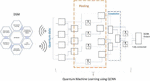
For the proposed solution envisaged to guarantee the Dynamic Spectrum Management of an intelligent 6G Cognitive Radio, quantum machine learning is proposed based on the Quantum Convolutional Neural Networks (QCNN) approach. QCNN was first proposed in 1998 [19] as an advanced version of neural networks for quantum computers. QCNN is based initially on Convolutional Neural Networks (CNN), which is used for classical machine learning purposes [20]. The idea of employing QCNN to 6G Cognitive radio is that this technique enables the identification of patterns to the quantum data, in this case, the living data lake of the CR network with multiple patterns and numerous variants that can reach an exponential change in the data. Figure 8 shows the 6G Cognitive Radio connected with Quantum Machine Learning to control the DSA fully with quantum optimization.
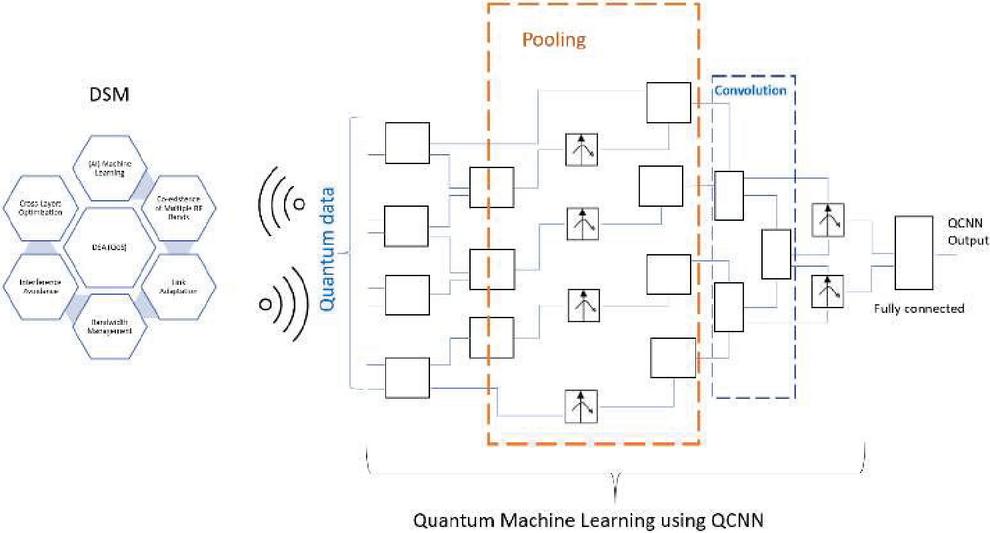
Figure 8 Quantum machine learning for 6G cognitive radio.
As shown in the figure above, the entire DSM system relies on absorbing and transmitting all the quantum data to the Quantum Machine Learning that quickly can compute the optimal adaptability for a large number of devices connected to the 6G Radio positioned on the output of the QCNN. Inside the QCNN the quantum data is ingested, and the quantum convolutional layers will harvest the input data and detect specific features of the network. After this primary process, the data is passed through the convolutional layers to the pooling layers responsible for downsampling the results and separating the most important features of the network and the environment sensed by the 6G Cognitive Radio. Consequently, the convolution process is performed, and the measurement is made with the optimal results in the output of the QCNN. This output is then fed to the multiple services as a guide in a format of a string of qubits instructions converted to classical bits for the proper response of the DSM. In summary, the DSA has a separated AI panel based on Quantum Machine Learning that optimizes the entire DSM ecosystem.
5 Conclusions
The roadmap for standardizing the next generation of wireless networks has been initiated. Thus, the technical challenges are enormous, and expectations for 6G [21] to offer support for advanced technological wireless are even higher. For achieving such expectations, quantum technologies will need to be mastered, and quantum computation is offered on a large commercial scale, at least via hyperscalers in a format as quantum as a service (QaaS). QML is a promissory solution to resolve such exponential growth of Big Data and control a large number of QoS and QoE for users and services. As quantum computers are still in their infancy, it is vital to increase the number of investigations in quantum technologies to bridge a better future beyond 2030. Society 5.0, as idealized by the Japan Cabinet Office [22], which merges the physical and cyber world to improve human life, definitely will rely on such quantum computational power to support such advanced society. Also, the quantum simulation needs to increase utilizing the quantum computers available via APIs in the market for research purposes. In this perspective, the authors will continue to be involved in the quantum revolution to propel quantum supremacy.
References
[1] “Quantum mechanics,” Encyclopædia Britannica. [Online]. Available: https://www.britannica.com/science/quantum-mechanics-physics. [Accessed: 28-Jul-2021].
[2] C. Orzel, “Six things everyone should know about quantum physics,” Forbes, 08-Jul-2015. [Online]. Available: https://www.forbes.com/sites/chadorzel/2015/07/08/six-things-everyone-should-know-about-quantum-physics/?sh=c77facb7d467. [Accessed: 28-Jul-2021].
[3] Intel, “Over 50 years of Moore’s law,” Intel. [Online]. Available: https://www.intel.com/content/www/us/en/silicon-innovations/moores-law-technology.html. [Accessed: 06-Nov-2021].
[4] R. Kurzweil, “The Law of Accelerating Returns,” Kurzweil The Law of Accelerating Returns Comments. [Online]. Available: https://www.kurzweilai.net/the-law-of-accelerating-returns. [Accessed: 06-Nov-2021].
[5] “Kurzweil claims that the singularity will happen by 2045,” Futurism, 05-Oct-2017. [Online]. Available: https://futurism.com/kurzweil-claims-that-the-singularity-will-happen-by-2045. [Accessed: 26-Nov-2021].
[6] “The Nobel Prize in Physics 1918 - Max Planck Nobel Lecture,” NobelPrize.org. [Online]. Available: https://www.nobelprize.org/prizes/physics/1918/planck/lecture/. [Accessed: 28-Jul-2021].
[7] “The Nobel Prize in Physics 1922 – Niels Bohr Facts,” NobelPrize.org. [Online]. Available: https://www.nobelprize.org/prizes/physics/1922/bohr/biographical/. [Accessed: 28-Jul-2021].
[8] A. Einstein, B. Yakovlevich Podolsky, and N. Rosen, “Can Quantum-Mechanical Description of Physical Reality be Considered Complete?,” CERN, 15-May-1935. [Online]. Available: http://cds.cern.ch/record/405662/files/PhysRev.47.777.pdf. [Accessed: 28-Jul-2021].
[9] Benioff, Paul. “The computer as a physical system: A microscopic quantum mechanical Hamiltonian model of computers as represented by Turing machines,” 1980. [Online]. Available: https://www.researchgate.net/profile/Paul-Benioff/publication/226754042\_The\_computer\_as\_a\_physical\_system\_A\_microscopic\_quantum\_mechanical\_Hamiltonian\_model\_of\_computers\_as\_represented\_by\_Turing\_machines/links/55c2360708aeb975673e3dce/The-computer-as-a-physical-system-A-microscopic-quantum-mechanical-Hamiltonian-model-of-computers-as-represented-by-Turing-machines.pdf. [Accessed: 28-Jul-2021].
[10] N. Savage, “Hands-on with Google’s Quantum Computer,” Scientific American, 24-Oct-2019. [Online]. Available: https://www.scientificamerican.com/article/hands-on-with-googles-quantum-computer/. [Accessed: 26-Nov-2021].
[11] “Quantum computing,” Microsoft Research, 01-Feb-2021. [Online]. Available: https://www.microsoft.com/en-us/research/research-area/quantum-computing/?facet\%5Btax\%5D\%5Bmsr-research-area\%5D\%5B0\%5D=243138\&sort\_by=most-recent. [Accessed: 28-Jul-2021].
[12] T. Q. Team, “Simon’s algorithm,” Qiskit, 17-Nov-2021. [Online]. Available: https://qiskit.org/textbook/ch-algorithms/simon.html. [Accessed: 26-Nov-2021].
[13] Quantiki, “Shor’s factoring algorithm,” Quantiki. [Online]. Available: https://www.quantiki.org/wiki/shors-factoring-algorithm. [Accessed: 06-Nov-2021].
[14] V. T. Nguyen, F. Villain, and Y. Le Guillou, “Cognitive Radio RF: Overview and Challenges,” VLSI Design, 22-May-2012. [Online]. Available: https://www.hindawi.com/journals/vlsi/2012/716476/. [Accessed: 26-Nov-2021].
[15] S. Lewis, “Dynamic Spectrum Access (Dynamic Spectrum Management),” SearchNetworking, 17-Sep-2019. [Online]. Available: https://www.techtarget.com/searchnetworking/definition/dynamic-spectrum-access-dynamic-spectrum-management. [Accessed: 26-Nov-2021].
[16] P. Ameta, N. Jain, and K. Mahima, “Cognitive Radio: A Review,” International Journal of Engineering Research & Technology, 30-Jul-2018. [Online]. Available: https://www.ijert.org/cognitive-radio-a-review. [Accessed: 26-Nov-2021].
[17] TensorFlow, “Quantum Machine Learning Concepts : tensorflow quantum,” TensorFlow. [Online]. Available: https://www.tensorflow.org/quantum/concepts. [Accessed: 26-Nov-2021].
[18] ITU, “IMT traffic estimates for the years 2020 to 2030,” ITU, 01-Jul-2015. [Online]. Available: https://extranet.itu.int/brdocsearch/R-REP/R-REP-M/R-REP-M.2370/R-REP-M.2370-2015/R-REP-M.2370-2015-MSW-E.docx. [Accessed: 26-Nov-2021].
[19] “Quantum Convolutional Neural Networks,” PennyLane. [Online]. Available: https://pennylane.ai/qml/glossary/qcnn.html. [Accessed: 26-Nov-2021].
[20] I. Cong, S. Choi, and M. D. Lukin, “Quantum Convolutional Neural Networks,” Nature News, 26-Aug-2019. [Online]. Available: https://www.nature.com/articles/s41567-019-0648-8. [Accessed: 26-Nov-2021].
[21] P. S. Rufino Henrique and R. Prasad, “6G - The Road to the Future Wireless Technologies 2030,” River Publishers: Professional Books, 31-Mar-2021. [Online]. Available: https://www.riverpublishers.com/book\_details.php?book\_id=920. [Accessed: 27-Jul-2021].
[22] Cabinet Office, “Soceity 5.0,” Society 5.0. [Online]. Available: https://www8.cao.go.jp/cstp/english/society5\_0/index.html. [Accessed: 26-Nov-2021].
Biographies
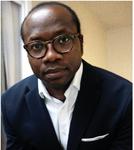
Paulo Sergio Rufino Henrique (Spideo – CGC, Aarhus University) Paulo S. Rufino Henrique holds more than 20 years of experience working in telecommunications. His career began as a field engineer at UNISYS in Brazil, where he was born. There, Paulo worked for almost nine years in the Service Operations, repairing and installing corporative servers and networks before joining British Telecom (BT) Brazil. Paulo worked five years at BT Brazil managing MPLS networks, satellites (V-SAT), IP-Telephony for Tier 1 network operations. During that period, he became the Global Service Operations Manager overseeing BT operations in EMEA, Americas, India, South Korea, South African, and China. After a successful career in Brazil, Paulo got transferred to the BT headquarters in London, where he worked for six and a half years as a service manager for Consumers Broadband in the UK and IPTV Ops manager for BT TV Sports channel. Additionally, during his tenure as IPTV Ops manager for BT, Paulo also participated in the BT project of launching the first UHD (4K) TV channel in the UK. He then joined Vodafone UK as a Quality Manager for Consumers Broadband Services and OTT platforms, and he worked in that capacity for almost two years. During his stay in London, Paulo completed a Post-graduation Degree at Brunel London University. His thesis was entitled ’TV Everywhere and the Streaming of UHD TV over 5G Networks & Performance Analysis’. Presently, Paulo Henrique holds the Head of Delivery and Operations position at Spideo, Paris, France. He is also a Ph.D. candidate under Professor Ramjee Prasad’s supervision at Global CTIF Capsule, Department of Business at Aarhus University, Denmark. His research field is 6G Networks – Performance Analysis for Mobile Multimedia Services for the Future Wireless Technologies.
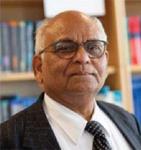
Ramjee Prasad (CGC and Aarhus University) Dr. Ramjee Prasad, Fellow IEEEIEEE, IET, IETE, and WWRF, is a Professor of Future Technologies for Business Ecosystem Innovation (FT4BI) in the Department of Business Development and Technology, Aarhus University, Herning, Denmark. He is the Founder President of the CTIF Global Capsule (CGC). He is also the Founder Chairman of the Global ICTICT Standardization Forum for India, established in 2009. He has been honored by the University of Rome “Tor Vergata”, Italy as a Distinguished Professor of the Department of Clinical Sciences and Translational Medicine on March 15, 2016. He is an Honorary Professor of the University of Cape Town, South Africa, and the University of KwaZulu-Natal, South Africa. He has received the Ridderkorset of Dannebrogordenen (Knight of the Dannebrog) in 2010 from the Danish Queen for the internationalization of top-class telecommunication research and education. He has received several international awards such as IEEE Communications Society Wireless Communications Technical Committee Recognition Award in 2003 for making a contribution in the field of “Personal, Wireless and Mobile Systems and Networks”, Telenor’s Research Award in 2005 for impressive merits, both academic and organizational within the field of wireless and personal communication, 2014 IEEE AESS Outstanding Organizational Leadership Award for: “Organizational Leadership in developing and globalizing the CTIF (Center for TeleInFrastruktur) Research Network”, and so on. He has been the Project Coordinator of several EC projects, namely, MAGNET, MAGNET Beyond, eWALL. He has published more than 50 books, 1000 plus journal and conference publications, more than 15 patents, over 140 Ph.D. Graduates and a larger number of Masters (over 250). Several of his students are today worldwide telecommunication leaders themselves.
Journal of Mobile Multimedia, Vol. 19_1, 291–310.
doi: 10.13052/jmm1550-4646.19115
© 2022 River Publishers