Reward Based Garbage Monitoring and Collection System Using Sensors
Deepti Aggarwal1,*, Sonu Mittal2, Kamal Upreti3 and Pinki Nayak4
1IMS Engineering College, Ghaziabad, Uttar Pradesh, India
2Amity University Uttar Pradesh, Noida, India
3Christ (Deemed to be University), Ghaziabad, India
4Dr. Akhilesh Das Gupta Institute of Technology & Management, New Delhi, India
E-mail: aggarwal.deepti@gmail.com; sonumittal.research@gmail.com; Kamalupreti1989@gmail.com; pinki.dua.nayak@gmail.com
*Corresponding Author
Received 01 December 2022; Accepted 29 November 2023; Publication 29 March 2024
Abstract
Most of the time in our surroundings we come across the overfilled garbage bins near the lakes. When the bins are full, people just throw the waste here and there, which eventually goes into the lakes and pollutes the water bodies. This is because of improper dumping of garbage that is practiced in our society. With the increase in population, this problem is taking really bad shape. The prime need is to maintain a clean and healthy environment with proper disposal of waste. This paper presents a small effort to reduce this garbage problem. An Android app has been created which keeps on checking whether the dustbin is full. Also, the people will be rewarded for throwing waste into the dustbins. A QR code has been attached to the dustbin which will be scanned for rewarding the people. The dustbins use an IR sensor that detects the receiver of waste in bins. Major part of this proposed system includes the proper working of mobile application and proximity sensors. Arduino is used to maintain the proper connection with sensors and application and that is done by Bluetooth sensor. The main objective of this proposed system is to lure people to put waste into the dustbin along with the contribution towards smart city vision. This paper also gives a brief overview of the technologies and work done so far in this field.
Keywords: Android, Arduino, Bluetooth sensor, IR sensor, QR Code.
1 Introduction
With the rise in population, the major problem today is proper disposal of waste, especially near our rivers and lakes. Lakes are the tourist spots in a city. Lot of waste is generated at such places, which needs to be disposed of properly to minimize the water pollution that happens because of this waste. Garbage bins are placed but due to their limited capacity, people ultimately throw the waste here and there. Unclean environment creates unhygienic conditions due to which people are suffering from various diseases. In India, collection of garbage is done by municipal committees but people throw waste around the dustbins or on the river banks instead of properly disposing it off in dustbins. What are people mostly fond of? What attracts them most? The answer to these questions is Money and that too easy money. Making the main motive to get rewarded for doing the right thing can make people do it. So, if throwing garbage is associated with getting rewards then people will do it. It is with time it becomes a habit to use public dustbins, then in that case no reward shall be required to get garbage to dustbins. In this proposed System we have considered this idea, wrapping it in a technical coat to create an accessible and easy to use product. Here in this proposed system, we have used IOT and Android based technologies to create an application where people can earn money for throwing waste in dustbins. Dustbins are used in rough environments, they should be able to withstand weather conditions, and bad handling in cases. This reason decreases the feasibility of technically sound dustbins to be used widely and replaces all traditional dustbins. This calls for a solution which uses a minimal number of sensors, since sensors need to be carefully handled for providing them a long working life. The proposed system supports a minimum number of sensitive components that a smart dustbin would require to full-fill the criteria of withstanding rough usage. This also keeps the cost of the proposed system to decrease, since less sensors in the dustbin means money saved equal to the cost of unused sensors. The system ought to be connected to a mobile application, to be able to give it a proper platform to add users, to give the rewards and to receive feedback. An application nowadays has a wide outreach. As the mobile app culture is widespread in every industry, the users can access information quickly without any wastage of time. Mobile apps are now an important solution for every industry even for this proposed system. Taking an example of the “Arogya Setu” app which became one of the most downloaded applications on mobiles. Thus, an app forms the other half of the proposed system which provides an interface to the user to connect to and see them rewarded for the garbage they throw.
It is critical for people’s health and the preservation of our ecosystem. Overflowing garbage on the ground may pollute the air and water. Humans can be harmed by waste that has been stored for a long time due to numerous respiratory ailments and other issues. Water pollution is also hazardous to the environment in our surrounding ponds and rivers, which includes fish and other creatures that enter and drink the water, as well as roadside garbage that is consumed by the animals, resulting in disease or death. They used to dig a hole and bury the garbage or refuse items back in the day. This was one of the most unusual techniques of those times when there was no trash recycling or garbage system, but nowadays dustbins are stored everywhere, but they are not monitored on a daily basis, so we can’t control the spread of diseases and other waste-related issues. Due to the rising population, the amount of garbage produced grows, as more people produce more waste. If garbage is not adequately managed, it has various potential hazards that might harm the environment. The garbage that is spread out during the rainy season has very severe side effects, as it attracts a lot of mosquitos and insects, which can lead to major diseases like dengue fever and malaria. The garbage is generated by several industries that discharge dangerous chemicals into connecting rivers and ponds. People also do not consider about their health and discard their junk and debris on the roadways or on vacant ground. During the stages of industrialization and urbanization, waste management becomes a serious concern for both developed and developing countries. We can employ IoT technology to solve the waste spillover problem in this technological era. The garbage level inside the bin can be measured using a sensor connected to an Arduino Uno, and the percentage of waste can be shown on an LCD. GSM module can be utilized to communicate with the concerned authority. This allows for more effective garbage management while also requiring less staff [22].
India’s economy is the second fastest expanding in the world, and urbanization is at an all-time high, resulting in increased pollution due to a lack of waste management systems. Municipal solid trash can become as valuable as gold as a result of organic decomposition, which leads to energy generation [23]. Many waste management algorithms and optimization strategies have been proposed; however, they have not shown to be effective in the real world. The rubbish in the bins can be controlled more efficiently by combining IoT and machine intelligence. The shortest path is used in machine learning and graph theory to optimize. The filled level of bins can be determined using Arduino uno and an ultrasonic sensor [24]. Place an infrared transmitter and receiver at the bottom of the bin to ensure good operation. When waste reaches level 3, i.e., 90% of the bin is filled, the authorities can be alerted using the IoT-based tool Thingspeak.
The proposed system would use IR sensors to detect when the waste has been thrown into the bins and to keep a check on the level of garbage thrown in dustbins. The Bluetooth sensor (HC-05) would be used to create a connection between the Arduino and mobile phones. A setup would be arranged in the bins consisting of the Bluetooth and IR sensors. On proper disposal the app would show the rewards earned thus attracting people to dispose of waste properly and thus contribute towards maintaining cleanliness in and around the city. This will also be a great initiative towards smart city vision. This System will be useful in monitoring all the bins around the city and help to reduce human effort i.e., will help in better scheduling of garbage trucks use by the management authorities.
Table 1 Summary of related work
| Paper | Author | Hardware Components/Technology | Sensors | Positive Impacts | Limitation |
| IoT based Smart Garbage and Waste Collection Bin | Navghane et al. [1] | Microcontroller (ARM LPC2148) with IR wireless system and | IR Sensor (TSOP 1738), Weight Sensor | Avoids spillover of garbage, reduce manpower, avoid fake reports and leads to less corruption | Message deliver to authorities when overflow done by animals. |
| Smart Wi-Fi Dustbin System | Bandal et al. [2] | NODE MCU with Arduino for sending data to cloud. GPS for location detection | Ultrasonic Sensor, Temperature sensor, gas sensor | Location and status-based detection to inform garbage collector, Find presence of harmful gases. Detect fire to avoid accidents | Misuse can be done if bin is replaced from its position |
| Iot Based Garbage Monitoring System | Mary et al. [3] | Advanced Virtual Reduced (AVR) Instruction Set microcontroller, Organic Light Emitting Diode (OLED) screen, Global system for mobile communication (GSM) | Ultra-Sonic Sensor | Energy efficient as power by solar cell and battery, cost effective | Alertness required towards sensors as they are sensitive |
| Smart Garbage Monitoring System using Internet of Things | Chaware et al. [4] | Global system for mobile communication (GSM), Wi-Fi module, Microcontroller | Ultra-Sonic Sensor | By using a unique code, user can dump trash in bin. | Major part of the system depends upon working of the wi-fi. |
| IOT Based Garbage Monitoring System | Pokalekar et al. [5] | GSM, Arduino, ESP8266, DC motor | Ultrasonic sensor | Reduce the total number of garbage collection on vehicle trip | Due to many hardware components in use, it is vulnerable |
| Smart Garbage Monitoring and Collection System Using Internet of Things | Jadhao et al. [6] | Arduino Uno, Wi-Fi module, Bluetooth Module | Infrared Sensor, Ultrasonic sensor, Weight sensor | Cost effective, user friendly and help to reduce human resource. | As size of bin increase, requirement of sensor will also increase. |
| Smart Bin: Internet-of-Things Garbage Monitoring System | Mustafa and Azir [7] | ARM microcontroller connected with Thingspeak | Ultrasonic sensor | Record type of garbage which can be used in future analysis | Limited network availability leads to collapse of whole system |
| A Review on Wastage Monitoring System Using IoT | Anoop et al. [8] | Arduino UNO | Ultrasonic sensor | Buzzer is attached to alert the head if not necessary action taken | Not work efficiently for wet waste |
| IoT based garbage monitoring system | Bhajekar et al. [13] | LCD display, Arduino Uno, Wi-Fi Module, Web Server | Ultrasonic Sensors | Durable, affordable and maintenance issues are addressed. | Wi-Fi connectivity is needed all time. |
| A Review on Home Automation Using Smart Phones | Aggarwal et al. [14] | Android OS, Bluetooth Technology, Arduino | No | Low cost, flexible, and secure | Maintenance may be difficult |
| IOT Based Solution for Waste Management: A Review | Aggarwal et al. [21] | Arduino Uno, Bluetooth Module, Wi-Fi Module, | Infrared Sensor, Weight Sensor, Ultrasonic Sensor | Use rewards for encouragement | Sensors can be spoiled by rough action of users. |
| Solid Waste Management Methods and Practices in India | Bharti et al. [23] | Composting Methods are used | No | Convert waste into useful form i.e., energy generation | Major focus only on municipal solid waste |
| Waste Management System using Iot based Machine Learning | Khoa et al. [11] | Machine Learning, LR and Graph Theory for prediction, application for displaying data | Ultrasonic Sensor | Efficiently predict the probability of waste level | Vulnerable to plundering of components |
2 Background
The idea of smart garbage bins has existed for many years. Oliver et al., introduced a model with Ethernet Module, Arduino Model, Ultrasonic Sensor and Infrared Sensor to operate as an automated system which requires minimal efforts [10]. To connect the hardware with the cloud platform, Arduino is connected to Internet via Ethernet module. And IR sensor with the ultrasonic sensors, verify that the waste is thrown in the bin or not. It stated that employing modern technologies for waste management will be helpful for the public as well as economical. Table 1 is the summarization of the related work. And also takes into account, the importance of factors like durability, affordability, and maintenance of these Smart Dustbin. Aggarwal et al., reflects how a home can be automated using smart phones [14, 15]. Chaudhary et al. proposed a real time information giving system for Dustbins which will send the message as soon as the dustbin is completely filled [16]. It is focused on keeping the cost of this system minimal. Improving the habitat by focusing on reducing the smell and keeping the cities clean remains the primary agenda. The system also includes an automatically opening lid. Sharma et al. developed a smart-bin that covers the entirety of the town or a city regarding sending of data about the information collected from several garbage collection bins all over the city/town [17]. Sahoo et al. proposed a smart home system using IOT [9]. The information received can be processed to analyze lots of insights. Over a long period of time the data collected can be used to generate historic datasets and can be used for further analysis. Aggarwal enlightens the importance of feedback and how sentiment analysis is important [9]. Aggarwal et al. reviewed the techniques of object tracking [12]. Bhajekar et al. used Ultrasonic sensors, Arduino Uno, Wi-Fi module, LCD display and Web Server to implement an IoT based garbage monitoring system, which is also cost-effective [13].
Kumar et al. describe another method for garbage management [18]. In this paper, Arduino UNO is used as the processor in the dustbin whose work is to collect data about the level of garbage that is in the dustbin and provide the input received as an alert to the municipal authority server when the garbage collection bin is filled. After the cleaning process initiated by the municipality for the dustbin, the worker from the corporation confirms the task of emptying the garbage with the help of RFID Tag technology. RFID is a computing technology that enables the verification process in this case and in addition to that, it also helps to generate the smart garbage alert system using automatic identification in case the garbage collection bin is filled and generates the information of the cleaning process for the server to affirm that the work has been done. Chadar et al. from their above study it is evident that there is immense need for current times to get a solution for solid waste pollution [19]. It can be reduced efficiently through solid waste management techniques. As it is a difficult task, the main objectives should be to minimize its injurious effects and find solutions for their recycling and further utilization. Solid waste is dangerous for the environment whether it exists in any of its forms. Solid waste pollution has expanded because of urbanization and large amounts of production of industrial waste. It has led to development of various diseases in humans such as diarrhea and amoebic dysentery, salmonellosis, hepatitis, trichinosis, bacillary dysentery, endemic typhus, cholera, plague, jaundice, gastro enteric diseases etc. Hence, management of solid waste becomes very important to create a pollution free and better living conditions for everyone.
Sultana and Praveen describes IoT based-garbage monitoring system using Load sensor, IoT Module, AT89S52 and embedded system [20]. The load sensor gets activated when the smart trash bin is filled up to a certain point and the sensor generates the signal transmitted by the transmitter and this signal is received by the receiver at the nearby authorities. Its data can be accessed from anywhere. Aggarwal et al. tells how IOT can be used as a solution of waste management, for ensuring cleanliness and encouraging the use of garbage bins by attracting the people through rewards [21]. It establishes a virtual web of bins for appropriate authorities to ensure adequate waste bin cleanliness and service, as well as get feedback or opinions from the users. This survey will aid in identifying areas where smart waste collection practices might be improved to maintain the town clean. This smart waste management system uses an Arduino Uno, Bluetooth Sensor (HC05 Bluetooth module), Infrared Sensor, Wi-Fi module, Ultrasonic Sensor, and Weight Sensor. Raj et al. proposed an attendance monitoring system using IOT [25]. Sohag et al. proposed a fully automated trash management system, which is integrated with IoT and is capable of sharing data [22]. It includes an identifying system that aids in identification of individual standing in front of the bin. An ultrasonic sensor together with LCD screen on the bin, is used for continuous monitoring of the garbage level and GSM module provides information to the corresponding authority to collect the garbage when the bin is about to be full. An Arduino board is used to control this whole automated system. Bharti et al. talks about the different methods to manage solid waste [23]. It divides these methods into two categories: Material Recovery and Energy Recovery. Material recovery comprises of Recycling, Aerobic Composting. Energy recovery is to recover the chemical energy in the solid waste and consists of Anaerobic Digestion, Refuse Derived Fuel, Waste to Energy Combustion (WTE). The chemical energy stored in these wastes is a part of input energy expanded in making those materials. Table 1 shows the summary of related work and Table 2 shows the comparison with State-of-the-Art technologies.
Table 2 Comparison with existing State-of-the-Art technologies
| S.No. | Existing Technologies | Hardware | Merits | Demerits |
| 1 | IoT Based Smart Garbage and Waste Collection Bin [1]. | Microcontroller, Weight Sensor, IR Module, WiFi Module | Reducing corruption in work and recognition of fake records. | Weight sensor cannot correctly define the quantity of weight generated. |
| 2 | Smart Wi-Fi Dustbin System [2]. | Wi Fi module, Arduino at mega | Engages higher authorities to the working process. | Vulnerable to plundering of components |
| 3 | Iot Based Garbage Monitoring System [3]. | Arduino Board, Ultrasonic Sensor, ESP8266, Sim900a | Makes the process transparent for public | High cost of maintaining the centralized server. |
| 4 | Internet of Things Based Garbage Bins Detection Sys. [5]. | ESP8266, Microprocessor | Creates an effective user participation | Lacks a systematic waste collection procedure |
| 5 | Garbage management system using Internet of Things [4]. | Ultrasonic Sensors, Wi-Fi module, microcontroller, LCD display | Accurate identification of the amount and type of garbage. | No user interaction |
3 Tools & Technology
The application of the proposed system requires the Internet of Things (IOT) to generate a better user experience on using the dustbin and facilitate its usage. The system lets the user provide proper feedback and generates an easy way to locate nearby dustbins for the users. The system is also capable of distinguishing usable bins from unusable ones with the involvement of the users. The proposed system is using infrared sensors as the input medium which are strategically placed at the top level of the bin (lid) with the Arduino microcontroller. The Arduino microcontroller controls the operations of the infrared sensors and receives the data. The number of infrared sensors can be increased or decreased as per the size of the dustbin to generate data of greater accuracy. At the same time a Bluetooth HC-05 module is also linked to the Arduino UNO which initiates data transfer to the application on the mobile device. The application on the mobile device needs to be activated when near a dustbin by scanning the QR code for the dustbin. Each QR Code is unique to a particular dustbin corresponding to its location. The application then allows the user to throw the garbage in the dustbin which is then detected by the infrared sensors. The gathered data is then transferred to the mobile application using Bluetooth. Following the correct procedure provides the user with reward points on the application. The application also houses several features such as dustbin tracking for users, registration process, etc.
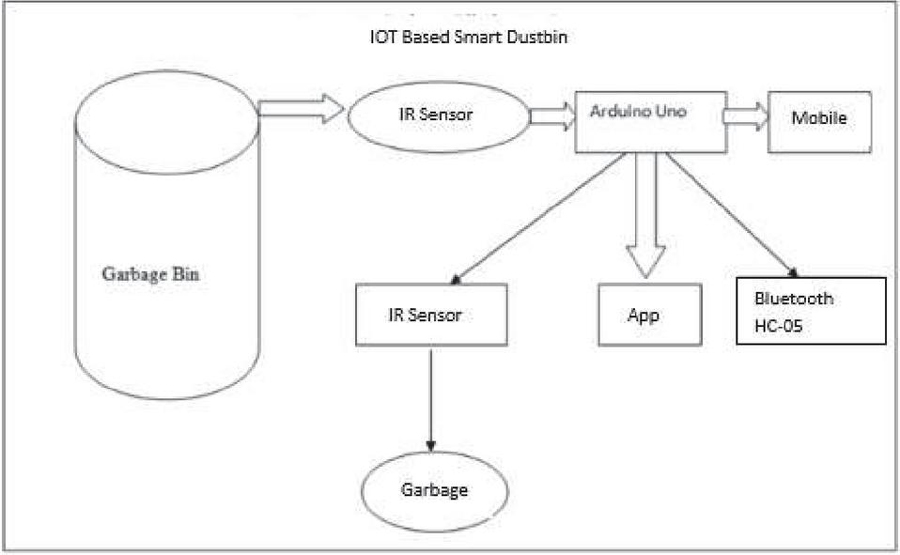
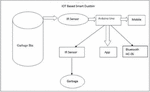
Figure 1 System architecture.
The system architecture (Figure 1) can be broadly categorized into two parts i.e. Arduino and Android. These both combine to create the IoT system architecture for the proposed system. The Proposed System is a combination of both hardware and software parts. It is a result of integration between IoT and Android Technologies and communication between them is done by Bluetooth. An overview of overall Architecture of the System can be given by saying that a microprocessor i.e., Arduino UNO which is used to operate Sensors, Infrared (IR) Sensor and Bluetooth Sensor, IR sensor can be said as input sensor as it provides value to Arduino and on the other hand Bluetooth sensor is output sensor as it takes the value from Arduino and provide it to android application. The Android application uses a real time database and has access to GPS, to track the bins located near the device. The Proposed Model uses many hardware so, below is the description for each hardware.
• Arduino Uno: A microcontroller board which has everything to assist a microcontroller. Arduino Uno is a microcontroller board having 14 digital pins and it is based on Microchip ATmega328P. All the support components of the Arduino Uno include 6 analog inputs, USB connection, a power jack, a 16 MHz quartz crystal, an ICSP header and a reset button. The Arduino Uno can be powered by one of the two ways, either by its simple connection to a computer using USB cable and another method is using an AC-to-DC adapter/ battery. The voltage range accepted by Arduino Uno is between 7 and 20 volts. The word “Uno” in Arduino Uno means “one” and it was named to mention the first release of the software. We can program the Arduino Uno board by using Arduino IDE using type B USB cable.
• Bluetooth Sensor: The Bluetooth Sensor used is HC-05 which can be defined as easy to use Bluetooth SPP (Serial Port Protocol) module. It is specifically designed to set up a transparent wireless serial connection. This HC-05 Bluetooth Module is used in more than one configuration i.e. a Master or Slave configuration, this makes it a good to be used in wireless communication. The configurations can be set by using AT COMMANDS. When this module is configured as slave it can’t begin a connection to another Bluetooth, it only can accept a connection requested by another Bluetooth. This module is competent for Bluetooth V2.0+ Enhanced Data Rate (EDR) 3Mbps Modulation with 2.4 GHz radio transceiver and baseband.
• IR Sensor: It is a type of proximity sensor that means a type of sensor which identifies the existence of nearby objects without any physical contact. There are two types of IR sensor i.e., Active and Passive. Active IR sensors can act as a proximity sensor as it can both detect and emit IR radiation on the other hand Passive IR sensor can only detect the traditions it cannot emit. A photo-coupler works as IR LED emits IR radiation; intensity of the radiation is read by photodiode which provides output for the same. The working of this module can be explained as the sensor emits radiation and if there are any obstacles nearby it will cause hindrance in the way of radiation emitted by the sensor thus that will make them reflected back to the sensor hence it detects the reflection and provides the output. Two varieties of IR sensors are present in the market, one with 3 I/O pins and the other with 4 I/O pins which have an extra pin which will give a voltage proportional to the amount of light detected by the sensor. This extra feature can be useful for increasing battery life used in the proposed system.
Below are the requirements that are necessary for a user to use our proposed model.
• Mobile Device
• Active internet connection
• Mobile Application of the proposed system
• Bluetooth and location permission enabled for the mobile device.
4 Proposed System
The Proposed system is an innovative solution which will help to keep the cities clean. This system’s main aim is to promote dustbin usage, also including the monitoring of the garbage bins and detecting the waste entering into bins, it can also be used to inform when the garbage bins are filled completely. In the proposed system, when someone throws waste in the dustbin, it is detected by IR sensor and if the garbage is detected, it provides rewards to the person. Several other constraints play an important role in security of the system before providing rewards, like location of the bin is authenticated from the database. For Rewards management android application is present with connectivity to IR sensor for data. The system updates on the map over the app when the amount of garbage collected crosses the set limit i.e., level of IR sensor in any particular dustbin. For this proposed system Arduino, IR sensor, Bluetooth, smartphone and android application is required. By using IOT, it provides a connection with smartphone using Bluetooth and android application and Microcontroller is used to interface the sensor. Some advantages of this system are:
• Very simple circuit.
• Helps monitor garbage levels
• Uses very small amount of power
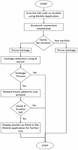
The application supports several features which add to the usability of the system such as location and security. Security is a major criterion which has to be taken care-of while creating any application. There could be a security issue if dustbins are displaced from their original position and taken somewhere else to be used in a wrong way. Thus, through this we have taken care of the issue. Figure 2 is workflow of the proposed system.
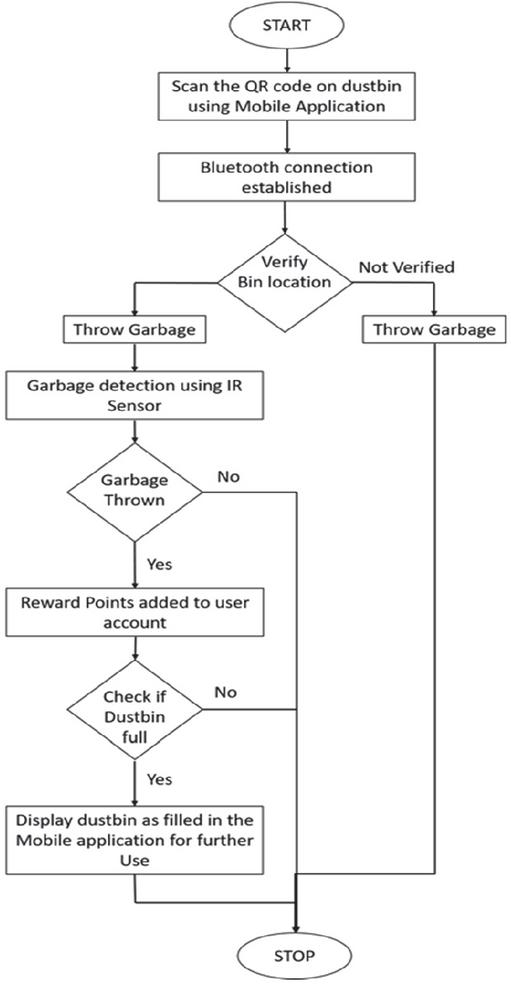
Figure 2 Workflow of the proposed system.
5 Discussion
In this application, after the user has scanned the QR code using Scanner of the app, if the scanned code location does not match with the already stored location of the dustbin in the database, the user gets an alert on the screen that the location of the user does not match with that of the dustbin. Thus, through this feature of the app security is maintained as nobody could take the dustbin away and use it for a large number of times to earn points. In the application, it will also show some alert on the user interface of the application when the dustbins are misplaced. Location of all the dustbins is required to be known beforehand so that people could easily trace the location of the nearby dustbins and use it as and when required. Through the map tab in the application, a person could easily see the locations of dustbins where green dustbins will indicate that they are not filled whereas red dustbins indicate that they are full. Thus, a user seeing the red sign on map can ignore going to that dustbin and move to the location where the next dustbin is placed thus saving users time.
This feature also includes having the data of garbage bins level i.e., bin is full or not, which can be detected when the IR sensor is permanently blocked. As the major problem today is labor work which is done by government authorities in making themselves aware of the dustbins which are full and needs to be replaced, this app resolves this issue as it can be used by many garbage management government authorities for various purposes and thus reducing human effort in monitoring of garbage bins. When the location of the user as well as the dustbin matches, then the application will show a success screen. The IR sensor will start working after the success screen occurs in a particular transaction. Through this a lot of power is saved as compared to the case where all the sensors are active all the time.
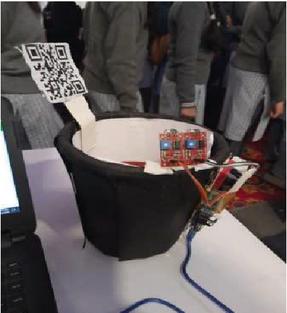
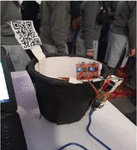
Figure 3 Prototype model.
If the attempt is more than three then the user can throw the waste in the dustbin but he will not be awarded any points. The reward will be provided only after this screen will appear and the number of times the user has used the app is less than four times. The user’s location is taken by the GPS system of the user’s phone. Thus, the screen shows that the user can throw the waste in the dustbin. This screen appears after all the security measures and authentication of the user has been done. The Buy Vouchers tab is clicked by the users to buy the vouchers from the reward points which they have earned by throwing the waste in dustbins. The user has to click on the Buy Vouchers button to buy the voucher which could be redeemed later in their respective stores. After selecting the buy voucher option, the voucher will be mailed to the user’s email id within a short amount of time thus helping him to redeem the same. If the number of reward points earned by the user is not enough to buy the vouchers, then an alert will appear on the screen informing the user that he has not earned enough reward points to buy these vouchers and should try after some time. There are Amazon vouchers, Flipkart vouchers and gift cards which can be redeemed thus attracting people to maintain cleanliness. These vouchers are having their expiry date for a month whose details will be shared to the user via email and thus the user has to complete his transaction within that period of time or he won’t be able to redeem the same. History of vouchers redeemed and vouchers expired will also be stored for future references. The budget needed to provide these vouchers will be earned by advertisements of various organizations in our android application. Thus, this application is purely for commercial use. The prototype model of the proposed system uses two IR sensors to increase the area coverage and sensitivity of the sensors. There is a QR code attached to the dustbin. In this model, all the sensors and Arduino are located outside of the dustbin but in the real model all the hardware parts should be installed inside the dustbin to increase the security for the hardware.
Figure 3 shows the prepared prototype model of the proposed system, in which 2 IR sensors have been used to increase the area coverage and sensitivity of the sensors. There is a QR code attached to the dustbin. In this prototype model all the sensors and Arduino is located outside of the dustbin but in the real model all the hardware parts should be installed on the inside of the dustbin carefully to increase security for the hardware.
6 Conclusion
Throwing the garbage outside the garbage bins pollute our environment. The proposed system provides a better version of garbage collection technique which is created using IR sensors and Bluetooth sensors along with the use of Android and Arduino technologies. This proposed system is completely beneficial as it rewards people for throwing waste in dustbins. Since at the end of the day it is mostly money which matters to most of the people and this application provides money for proper disposal of waste which is the main attraction. People have to throw the waste and earn rewards and redeem it later, the fastest and easiest way which causes no harm and improves hygiene and environment and thus helping in maintaining cleanliness in the society.
7 Limitation and Future Scope
In future, this system can be improved by adding more sensors, such as adding Global Positioning System (GPS) to hardware will make sure its security and adding moisture sensors can classify dry waste and wet waste. IOT technology is also developing day by day. Automatic opening and closing of the bins would increase its effectiveness. It can lead an initiative to make garbage management completely digitalized and make the country clean and advance. We can use machine learning algorithms to identify the type of waste thrown in the smart bin and if the user has thrown wrong type of waste in wrong bin, then less reward points should be awarded. For sustainable use of resources, we can implement this project with the help of solar panels which can provide power supply to the system. There may be harmful gases which are emitted from the hazardous waste so use of gas sensors can be implemented to detect such gases. Further, CCTV camera can be added at the location for better security and working of the system. Thus, this system has a wide scope for improvement in future. It can lead an initiative to make garbage management completely digitalized and make the country clean and advance.
References
[1] S. S. Navghane, M. S. Killedar, and V. M. Rohokale (2016), “IoT Based Smart Garbage and Waste Collection Bin,”International Journal of Advanced Research in Electronics and Communication Engineering (IJARECE), vol. 5, no. 5, pp. 1576–1578.
[2] A. Bandal, P. Nate, R. Manakar and R. Powar (2016), “Smart Wi-Fi Dustbin System,” International Journal of Advance Research, Ideas and Innovations in Technology, vol. 2, no. 5, pp. 1–4.
[3] K. A. Mary, P. Monica, A. Apsurrunisa, C. Sreekanth, and G. P. Kumar (2017), “Iot Based Garbage Monitoring System,”International Journal of Scientific & Engineering Research, vol. 4, no. 8, pp. 1478–1490.
[4] S. M. Chaware, S. Dighe, A. Joshi, N. Bajare, and R. Korke (2016), “Smart Garbage Monitoring System using Internet of Things,”. International Journal of Innovative Research in Electrical, Electronics, Instrumentation and Control Engineering, vol. 1, no. 5, pp. 74–77.
[5] K. Pokalekar, A. Salunkhe, P. Kachare, and N. C. Yadav (2018), “IOT Based Garbage Monitoring System,” International Research Journal of Engineering and Technology (IRJET), vol. 3, no. 5, pp. 3060–3062.
[6] P. A. Jadhao, S. D. Sakhare, K. G. Bhaldane, A. P. Narkhede, and V. S, Girnale (2018), “Smart Garbage Monitoring and Collection System Using Internet of Things,”International Journal of Advance Engineering and Research Development (IJAERD). vol. 6S, no. 5, pp. 1–7.
[7] M. R. Mustafa and K. N. F. Azir (2017), “Smart Bin: Internet-of-Things Garbage Monitoring System,”MATEC, Web of Conferences (ICEESI), vol. 140, pp. 1–4.
[8] K. J. Anoop, K. Kanchana, and M. Swarna (2018), “A Review on Wastage Monitoring System Using IOT,” International Journal of Pure and Applied Mathematics, vol. 15, no. 119, pp. 2705–2712.
[9] S. K. Sahoo, S. K. Pattnaik, S. R. Samal, C. K. Nayak, J. K. Das (2022), V. Poulkov, “STeSH: Intelligent Speech Technology Enabled Smart Home Automation Using IoT,” Journal of Mobile Multimedia, vol. 18, no. 6.
[10] A. S. Oliver, M. Anuradha, A. Krishnarathinam, S. Nivetha, N. Maheswari (2020), “IoT Cloud based Waste Management System,” ICCVBIC 2019, Computational Vision and Bio-Inspired Computing, pp. 843–862.
[11] T. A. Khoa, C. H. Phuc, P. D. Lam, L. M. B. Nhu, N. M. Trong, N. T. H. Phoung, N. V. Dung, N. Tan-y, H. N. Nguyen, D. N. M. Duc (2020), “Waste Management System Using IoT-Based Machine Learning in University,” Wireless Communications and Mobile Computing, article id: 6138637.
[12] D. Aggarwal, K. Banerjee, V. Bali, R. Sharma, S. Singh, V. Chaudhary, V. Bhaskar (2022), “A Review on Techniques and Applications of Object Tracking and Gesture Recognition,” 2022 International Mobile and Embedded Technology Conference (MECON), pp. 89–93.
[13] P. Bhajekar, D. Singupalli, P. Dwivedi, S. Sumbha, and P. Shingane (2019), “IoT Based Garbage Monitoring System,” International Journal of Advance Research, Ideas and Innovations in Technology, vol. 4, pp. 2036–2040.
[14] D. Aggarwal, S. Gupta, S. Katheria, and B. K. Verma (2019), “A Review on Home Automation Using Smart Phones,” International Journal of Computer Sciences and Engineering, vol. 5, no. 7, pp. 219–222.
[15] R. Nagar, D. Aggarwal, U. R. Saxena, and V. Bali (2020), “Early Prediction and Diagnosis for Cancer Based on Clinical and Non-Clinical Parameters: A Review,” International Journal of Grid and Distributed Computing, vol. 1, no. 13, pp. 548–557.
[16] V. Chaudhary, R. Kumar, A. Rajput, M. Singh, and T. Singh (2019), “Smart Dustbin,” International Research Journal of Engineering and Technology, vol. 5, no. 6, pp. 1–5.
[17] N. Sharma, N. Singha, and T. Dutta (2015), “Smart Bin Implementation for Smart Cities,” International Journal of Scientific & Engineering Research, vol. 9, no. 6, pp. 787–791.
[18] N. S. Kumar, B. Vijayalakshmi, R. J. Prarthana, and A. Shankar (2016), “IOT Based Smart Garbage alert system using Arduino UNO,” IEEE Region 10 Conference (TENCON) – Proceedings of the International Conference, pp. 1–4.
[19] S. Chadar, and K. Chadar (2017), “Solid Waste Pollution: A Hazard to Environment,” Recent Adv Petrochem Science, vol. 3. No. 2, pp. 41–43.
[20] Sultana and Praveen (2017), “IoT Based Garbage Monitoring system,” International Journal of pure and Applied Mathematics, vol. 3, no. 2, pp. 41–43.
[21] D. Aggarwal, P. Chaudhary, V. Jain, P. Sachan, and R. Gupta (2020), “IOT Based Solution for Waste Management: A Review,” 8th International Conference on Reliability, Infocom Technologies and Optimization (Trends and Future Directions) (ICRITO), Noida, India, pp. 17–20.
[22] M. U. Sohag, and A. K. Podder (2020), “Smart Garbage Management System for a Sustainable Urban Life: An IoT Based Application,” Elsevier Internet of Things, vol. 11, pp. 1–16.
[23] V. Bharti, J. Singh, and A. P. Singh (2017), “A Review on Solid Waste Management Methods and Practices in India,” Trends in Biosciences, vol. 10, no. 21, pp. 4065–4067.
[24] A. Kumar, A. Kumar, A. K. Singh, A. K. Choudhary (2021), “IoT Based Energy Efficient Agriculture Field Monitoring and Smart Irrigation System using NodeMCU,” Journal of Mobile Multimedia, vol. 17, no. 1–3, pp. 345–360.
[25] A. Raj, A. Raj, I. Ahmad (2021), “Smart Attendance Monitoring System with Computer Vision Using IOT,”Journal of Mobile Multimedia, vol. 17, no. 1–3, pp. 115–126.
Biographies

Deepti Aggarwal is currently working as Professor in Department of Computer Science and Engineering at IMS Engineering College, Ghaziabad. She has 23 years of teaching and research experience in teaching UG and PG computer science courses. She received her B. Tech., M.Tech. and Ph.D. in Computer Science and Engineering. She has been granted one patent “Reduce, Re-Cycle and Reuse (RRR) IOT Intelligence Waste Management System” and published one Patent on Smart Dustbin- Sanitation & Solid-Liquid Waste Management. She has published more than 25 papers in Journals and International conferences of repute. Her areas of interest include Machine Learning, Cyber Security, IOT and Data Mining. She has been author, reviewer and guest editor of several reputed Journals and Books.

Sonu Mittal is currently working as Professor in Amity University Uttar Pradesh, Noida. He received his Ph.D. from SGV University, Jaipur. Prior to that, he received his dual Master’s Degree M. Tech. and MCA. He has also UGC-NET qualified. He has more than 19 years of research and teaching experience. He has more than 50 publications in international journals and conferences. His area of research interest includes Machine Learning, Software Engineering and Computer Networks.

Kamal Upreti is currently working as an Associate Professor in Department of Computer Science at Christ (Deemed to be University), Ghaziabad, India. He is a Corporate Trainer in HCL company in the field of Cyber Security and Data Science. He completed his B. Tech (Hons) Degree from UPTU, M.Tech (Gold Medalist) from Galgotias University, PGDM(Executive) from IMT Ghaziabad and PhD in Computer Science & Engineering. He has published 25+ Patents, 35+ Books, 32+ Magazine issues and 60+ Research papers in in various international Conferences and reputed Journals. His areas of Interest are Cyber Security, Machine Learning, Health Care, Wireless Networking, Embedded System and Cloud Computing. He is having enriched years’ experience in corporate and teaching experience in Engineering Colleges.

Pinki Nayak is currently working as an Associate Professor in the Department of Information Technology at Dr. Akhilesh Das Gupta Institute of Technology and Management, Delhi. She has done her Ph.D. in Information Technology from Banasthali University, Rajasthan, India. She has research and teaching experience of more than 22 years. She has published many papers in Journals and International conferences of repute. Her research areas include Data Science, Machine learning, IoT, Ad hoc and Wireless Sensor Network.
Journal of Mobile Multimedia, Vol. 20_2, 391–410.
doi: 10.13052/jmm1550-4646.2026
© 2024 River Publishers