Sustainability and 6G Development: Case Study of Sustainable Spectrum Management
Marja Matinmikko-Blue
Infotech Oulu and Centre for Wireless Communications (CWC), University of Oulu, Finland
E-mail: marja.matinmikko@oulu.fi
Received 02 February 2023; Accepted 27 October 2023; Publication 07 February 2024
Abstract
Sustainable development and sustainability are overarching design aspects for the next generation of mobile communication systems (6G). The notion of sustainability is about ensuring that our actions today do not limit the range of social, economic and environmental options open to future generations, which needs to become the fundamental driver for global 6G R&D. To integrate sustainability principles into 6G, this paper presents an overview of current activities and focuses on a case study of including sustainability principles into spectrum management in 6G. The newly emerged sustainable spectrum management paradigm is further developed in the context of 6G highlighting the role of spectrum sharing as a fundamental enabling technology for making spectrum management decisions that do not limit the range of options open to future generations. Additionally, actions for sustainable spectrum management principles are proposed.
Keywords: 5G, 6G, sustainable development, sustainability, environmental, energy efficiency.
1 Introduction
Sustainability is about “ensuring that our actions today do not limit the range of economic, social and environmental options open to future generations” [1]. At the same time sustainable development is “development that meets the needs of the present without compromising the ability of future generations to meet their own needs” [2]. Sustainable development encompasses such development that meets the needs of the present without compromising the ability of future generations to meet their own needs. These principles of sustainability and sustainable development are fundamental for all sectors of society including information and communication technologies (ICTs).
In the global scale, the targets for sustainable development are captured in Agenda 2030 by the United Nations [3]. Countries are committed to achieving 17 goals with 169 targets by the year 2030 covering a number of social, environmental and economic sustainability challenges. The role of ICTs is important in the achievement of these goals [4]. Despite the acknowledgement of this role, there is vast discrepancy on how the ICT sector should evolve regarding sustainable development. ICT sector’s share of total emissions in a country as well as the proportions of different components of ICTs vary a great deal. The growing energy consumption and green-house-gas (GHG) emissions of the ICT sector are a fact, and the growth is expected to continue. The continuously increasing footprint of the ICT sector cannot be neglected and replaced by the ICT sector’s enablement effect which comes from the use of ICTs to help other sectors of society reduce their energy consumption and GHG emissions. Both facets are crucial and need to be properly quantified and measured.
The integration of sustainability and sustainable development principles into ICTs requires a paradigm shift in the entire life-cycle of ICT solutions and services including research, development, deployment, use, and decommission. Including sustainability as the new key design criteria for ICTs is the big responsibility that the sector needs to take seriously. Prior research on sustainability and the ICTs has addressed the connection to UN SDGs [5] and green communications [6], where resource efficiency is of interest. For example, today countries are measured in terms of the total consumed mobile data, which is not a sustainable metric.
The next generation of mobile communications (6G) has adopted sustainability and sustainable development as the starting point [4]. How this translates into the new design criteria for 6G is still an open topic. Attempts to include sustainability principles into 6G are taken globally in the IMT 2030 process at the United Nations based International Telecommunication Union Radiocommunication sector (ITU-R), which is in charge of the radio system aspects related mobile communication networks. In their recent report on future technology trends [7], sustainability is included.
Spectrum management is an integral part of future 6G networks as well as all wireless systems. Spectrum management decisions define, who is allowed to deploy wireless systems, where and how. 6G spectrum discussions have started and they cover a wide range of frequency bands ranging from low bands to sub-terahertz bands. Sustainability in the context of spectrum management is a new topic introduced in Europe by regulators in [8] and [9] by the Radio Spectrum Policy Group (RSPG) that assists the European Commission in the development of radio spectrum policy. Prior research has introduced sustainable spectrum management [10, 11] to include the principle of ensuring that our actions today do not limit the range of economic, social and environmental options open to future generations. For several decades the mobile network operators (MNOs) have received exclusive spectrum licenses from the regulators with long license durations, limiting the range of options open to future generations. Recent 5G spectrum awarding decisions have introduced local spectrum licenses in some countries as a new mode of operations with shorter license durations allowing different stakeholders to deploy local mobile communication networks.
This paper aims at further developing the connection between sustainability and 6G by further developing sustainable spectrum management in the context of 6G. The rest of this paper is organized as follows. Section 2 provides an overview of sustainability principles. Section 3 summarizes the overall design criteria for 6G. Section 4 presents the case study of sustainable spectrum management in the context of 6G. Finally, Section 5 concludes the paper.
2 Sustainability Concepts
Sustainability is about ensuring that our actions today do not limit the range of economic, social and environmental options open to future generations [1]. Sustainable development is the development that meets the needs of the present without compromising the ability of future generations to meet their own needs [2]. Both of these two sustainability related principles highlight three separate perspectives for sustainability including economic, social and environmental sustainability. This triple bottom line of sustainability has been widely adopted in a number of disciplines and complemented with additional perspectives, such as culture or ethics. The perspectives are interrelated and promoting one can negatively impact another.
The triple bottom line of economic sustainability, social sustainability, and environmental sustainability presents a baseline to characterize the different perspectives [1, 2]. To manage the interdependences of the three perspectives it is important to balance the different demands arising from the different perspectives instead of compromising them [10, 12]. Economic sustainability in general aims at securing profitability and liquidity. Economic sustainability is about the economic impact of operations and development including ensuring the profitability of business operations. Social sustainability can be considered to aim at contributing to human and societal capital. Environmental sustainability is about doing no harm to environment and minimizing the environmental impact via e.g. the consumption of reproducible resources, where the requirements from circularity should be considered. Ultimately, the solving of many social and environmental sustainability challenges is dependent on economic sustainability.
The globally agreed framework for sustainable development at the United Nations is presented in Agenda 2030 presenting the UN SDGs in [3], which also considers many aspects from the triple bottom line of sustainability. With its 17 goals that are detailed with 169 targets and 231 individual indicators, the framework in [3] is a very comprehensive objective that countries are committed to. Within the UN SDG framework, the ICT connection is only considered through six targets and seven indicators. In reality, ICTs play a central role to enable the the achievement of many of the targets via the indicators. The UN SDG framework presents the global goals guiding all sectors’ development, which makes it the key framework for the ICT and mobile communication sector too. However, additional sustainability requirements that are not included in the UN SDG framework are expected to appear to the different sectors of society.
Measurement of sustainability presents a challenge. One key approach is to use life cycle assessment (LCA), which is a common method to evaluate the environmental impact of a product, process or a service. LCA considers the different stages of product/process/service life-cycle comprehensively and therefore when conducted properly, it would give valuable information for users to make decisions. In practise, LCA is as good as its input data and it is difficult to conduct as it requires quantification of the environmental impact, which would provide important information to base our sustainable consumption decisions on. Circular economy principles play an important role in minimizing LCA impact of products/processes/services including ICT solutions and services aiming at production and consumption, where different forms of sharing, leasing, reusing, repairing, refurbishing and recycling will be critical to prolong life-cycles.
For ICT sector’s sustainability impact assessment, a number of methods exists to evaluate the enablement effect of the ICT sector in other sectors to reduce GHG emissions as well as to evaluate ICT sector’s own environmental burden. In particular, the International Telecommunication Standardization Sector of the ITU has developed comprehensive set of standards for these purposes. ICT sector’s own environmental impact with respect to to life cycle GHG emissions can be assessed with recommendation [13]. Most recently, recommendation [14] published in 2022 presents a structured methodology to provide guidance on the assessment of the use of ICT solutions including the net second order effect, which denotes the resulting second order effect after accounting for the emissions due to the first order effects of the ICT solution, and the higher order effects such as rebound.
3 Guidelines for Sustainable 6G Development
Next, we provide an overview of guidelines for sustainable 6G development together with a specific case of spectrum management.
3.1 Overall Sustainable 6G Development
In general, 6G is expected to combine communication services with other services including like imaging, sensoring, and locationing. As a result, 6G will be a measurement tool with hyper-local granularity [4]. 6G will require new mechanisms to reduce its GHG emissions and energy consumption through sharing and optimizing the use of all potential resources. One important approach in 6G is to optimize of the collection, processing, storage and transfer of data between different network equipment and locations.
Globally, the United Nations based International Telecommunication Union Radiocommunication sector (ITU-R) has published technology trends for IMT 2030 in 2022 [7]. Figure 1 presents a summary of the identified trends and drivers. Sustainability is identified as an important driver. Overall, emerging technology trends and enablers are expected enhance resource efficiency and provide new capabilities, which can support sustainable development, such as integrated sensing and communication as well as technologies for enhanced energy efficiency and low power consumption. The development of new technological enablers for the radio interface and the radio network will take sustainability principles into account.
6G will require the development of new technologies to significantly improve the energy efficiency of different parts of the networks and devices and to reduce the total energy consumption. This requires the development of new end-to-end measures, as well as measurement methodologies and techniques, building on top of the existing standardized methods for the ICTs.
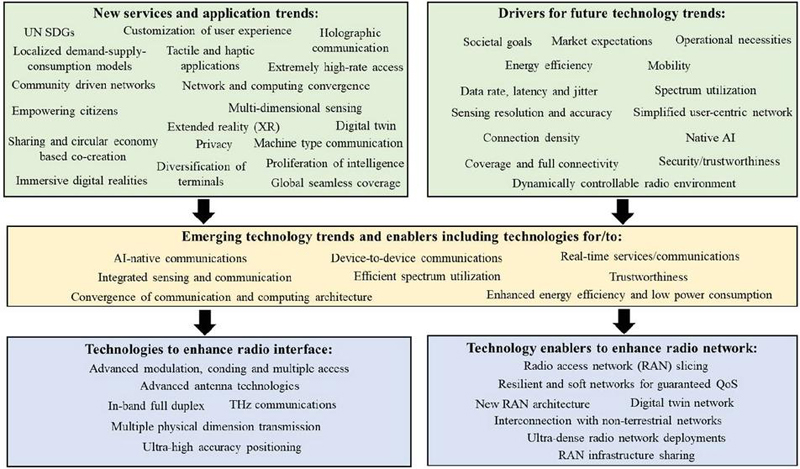
Figure 1 Drivers for 6G from ITU-R work.
3.2 Sustainable Spectrum Management for 6G
Spectrum management is important for all wireless systems including future 6G. Spectrum management approaches in general can be divided into administrative allocation [15], market-based mechanisms [16], and the unlicensed commons approach [17]. Administrative allocation and market-based mechanisms are based on defining and awarding spectrum property rights. The unlicensed commons approach does not award spectrum property rights but allows spectrum access to many, who comply to the rules set for access. Traditionally, cellular mobile communication networks are deployed by the MNOs with spectrum property rights awarded by the regulator to the MNO. Earlier, administrative allocation was used and 3G introduced market mechanisms (spectrum auctions) in many countries. Cellular systems are also approaching the unlicensed bands by developing variants that confirm to the rules of unlicensed access. Several countries have introduced local spectrum licenses in their 5G spectrum awards, where the local licenses can be awarded via administrative allocation or market-based mechanisms.
Spectrum sharing [18], where two or more radio systems operate in the same frequency band is an integral part of spectrum management. Vertical and horizontal spectrum sharing are two complementary models referring to the situation whether the systems have different level of access rights (vertical spectrum sharing) or same level of rights (horizontal spectrum sharing). Traditionally, cellular mobile communication systems have not required vertical or horizontal spectrum sharing because the spectrum bands have been cleaned from incumbent spectrum use and awarded nationwide to single MNOs. However, the cleaning of bands is timely and costly and therefore vertical spectrum sharing, where mobile communication systems protect other type of incumbent spectrum users, have become a reality in some cases. Most recently, local licensing has brought horizontal spectrum sharing between local license holders. Spectrum sharing is a paradigm shift in mobile communications and not yet widely adopted. Towards 6G, the role of spectrum sharing is expected to become crucial.
Sustainability has already been preliminary considered in the context of spectrum management. Prior work in regulation includes RSPG’s work on the role of radio spectrum policy to help combat climate change, which has resulted in an opinion [8] and a report [9]. The RSPG work identifies the fight against climate change as an important policy objective for spectrum management. The RSPG advises countries to make spectrum available in a timely manner for the development of innovative services to mitigate climate change. As spectrum needs to combat climate change can change over time, regular review of long-term spectrum needs is needed.
Prior research on sustainability in the context of spectrum management has introduced sustainable spectrum management [10, 11], which aims at ensuring that the spectrum decisions made today should not compromise the ability of future generations to meet their own needs. Design principle for sustainable spectrum management introduced in [11] include the following:
• Principle I: Exclusive spectrum licenses should come with obligations on sustainability.
• Principle II: Rapid access to spectrum to solve major sustainability challenges needs to be ensured with new sharing-based spectrum access models.
• Principle III: The most sustainable transmission solution must always be selected.
• Principle IV: Proper metrics and measurement methods need to be defined and developed for sustainable spectrum access.
• Principle V: Proper mix of spectrum management models is needed to allow a variety of stakeholders to deploy wireless systems.
• Principle VI: The role of spectrum sharing as the enabler needs to be acknowledged and developed.
• Principle VII: Proper stakeholder management needs to be incorporated into spectrum decision making.
The adoption of these principles would require major paradigm change since the field is strictly regulated. Introduction of new sustainability-based principles would change the status quo by introducing flexibility into traditionally rigid spectrum management.
4 Case Study: Sustainable Spectrum Management in 6G
Next, we study the case of sustainable spectrum management for 6G in more detail based on the specific principles for sustainable spectrum management in the context of 6G that were proposed in [11]. In the following, we elaborate these principles further and present examples and proposes actions for the future in the context of 6G.
Principle I: “Exclusive spectrum licenses should come with obligations on sustainability”. According to this principle, the awarding of exclusive spectrum licenses should come with so called “use-it-or-lose-it” principle, which means that the license holder is obliged to allow other(s) to access the spectrum or part of the spectrum in a given area, when the license holder is not using the spectrum. Thus, any new exclusive spectrum licenses in 6G should have this obligation. Additionally, previously granted spectrum access rights should also include this obligation. Another part of this principle is the introduction of social sustainability related obligations into 6G spectrum awards decision such as requirements to connect the unconnected, to cover challenge areas and specific buildings. Also, environmental sustainability requirements could be introduced on e.g. the energy consumption and GHG emissions in spectrum awards decisions. Proposed action: Define specific social sustainability conditions for 6G and propose them into regulation.
Principle II: Rapid access to spectrum to solve major sustainability challenges needs to be ensured with new sharing-based spectrum access models. Traditional spectrum awarding cycles are long requiring a decade for new spectrum to be made available. These long time spans do limit the range of options available to solve major sustainability challenges. Only the use of unlicensed bands is possible for rapid access the radio spectrum for new wireless solutions that solve major sustainability challenges. New local licensing and sharing-based mechanisms are needed in 6G to grant access to spectrum at different granularity levels in time and space for a variety of stakeholders. Also, here the principles of “use-it-or-share-it” from Principle I need to be included. Proposed action: Develop new spectrum access techniques and policies.
Principle III: The most sustainable transmission solution must always be selected. This principle emphasizes the selection of transmission media including spectrum band based on sustainability criteria. 6G systems are likely to operate in a wide range of frequency bands with different propagation characteristics, which are better suited for different use cases an services. Energy consumption is one such criteria that should be considered. Proposed action: Use standardized metrics and methods as baseline and further develop them for 6G to assess the sustainability of operations in different bands and conduct case studies between different technologies.
Principle IV: Proper metrics and measurement methods need to be defined and developed for sustainable spectrum access. There are no agreed metrics and measurements methods to quantify the sustainability of wireless solutions. Energy consumption is one metric but even the quantification of energy consumption needs to be defined in a comparable way. There is an urgent need to define relevant metrics and their measurement methods to allow a fair comparison of technology solutions to optimize various resource usage including impact on e.g., GHG emissions. Proposed action: Define sustainability related metrics and measurement methods for 6G and compare different spectrum access options with them.
Principle V: Proper mix of spectrum management models is needed to allow a variety of stakeholders to deploy wireless systems. Different spectrum access methods are more suitable in different frequency bands and by different stakeholders. This principle highlights the need to define and develop proper mechanisms for the different spectrum bands and to ensure a balance between the spectrum management models and stakeholder claims. The balance must consider the different propagation and deployment characteristics of the different spectrum bands for 6G, resulting in economically sustainable operations for different stakeholders. Proposed action: Develop alternative spectrum access methods and required techniques for 6G in selected frequency bands.
Principle VI: The role of spectrum sharing as the enabler needs to be acknowledged and developed. This principle highlights the role of spectrum sharing, where two or more radio systems operate in the same frequency band. Introduction of spectrum sharing into system design must be done in the beginning of the development as it significantly impacts many aspects of system design. 6G spectrum discussions should take proper spectrum sharing approaches as the starting point and consider both vertical and horizontal spectrum sharing. Vertical spectrum sharing will be critical to allow 6G to access to new spectrum bands while protecting the incumbent spectrum users. Horizontal spectrum sharing will also be important in 6G to allow different stakeholders to deploy local 6G networks. Proposed action: Promote vertical and horizontal spectrum sharing in technology and policy development.
Principle VII: Proper stakeholder management needs to be incorporated into spectrum decision making. This principle highlights the importance of stakeholder management to reach long-term compromises between conflicting stakeholder claims, while not restricting the options open to future generations. Mobile communications has traditionally been built around one strong stakeholder – the MNO. Regarding 6G, the current stakeholders with strong market positions dominate the spectrum management discussions about the future. It is important to reform spectrum regulatory processes to involve relevant stakeholders’ perspectives. 5G introduced local licenses for a variety of stakeholders. 6G should continue this development. Proposed action: Refine traditional regulatory processes on stakeholder involvement by including new forms of stakeholder interaction where non-dominant stakeholders can participate and be heard.
Figure 2 summarizes sustainable spectrum management principles in the context of 6G and the proposed actions. Many principles involve a tight interplay between technology development and policy making since spectrum management is about regulation. The development of new technologies and related change proposals to regulation need to go hand in hand. Sustainability is a new emerging requirement and a fresh look into existing policies is required for its successful introduction.
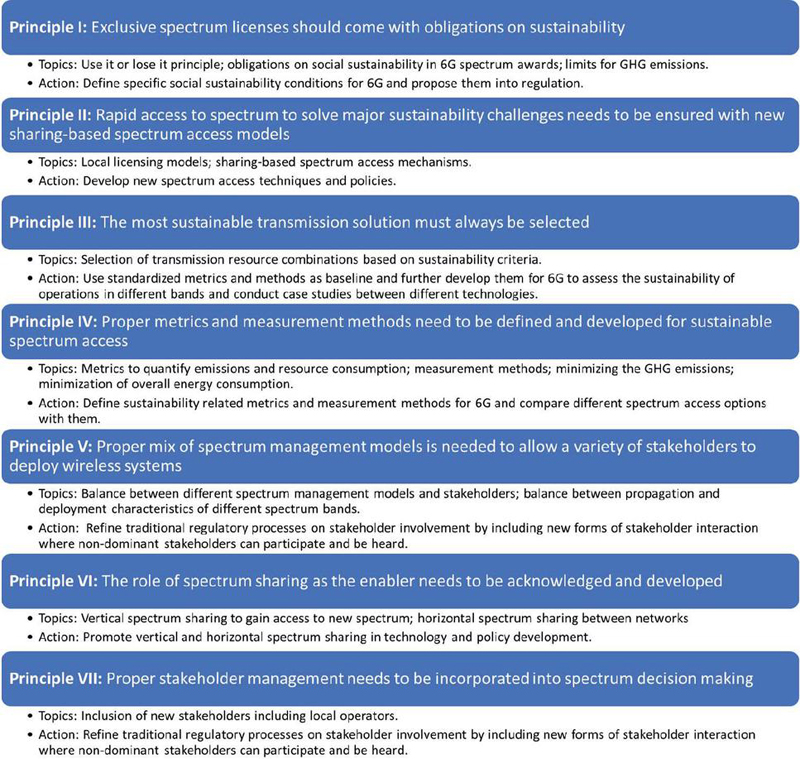
Figure 2 Sustainable spectrum management principles for 6G expanding [11].
5 Conclusions
The integration of sustainability principles into ICTs requires a paradigm shift in the development of future systems. This paper has further developed the connection between sustainability principles and 6G and presented an example study of sustainability in the 6G spectrum management context. Specific actions for sustainability principles are proposed. Introducing social sustainability obligations to spectrum awards in the form of coverage obligations and use-it-or-share-it principle will need to be seriously considered. Spectrum sharing via vertical and horizontal spectrum sharing will play an important role in the future 6G world where a number of local mobile communication networks are expected to appear to address major sustainability challenges. Many open research issues remain including defining proper metrics and methodologies to measure the metrics to properly assess and compare the environmental, social and economic sustainability of future ICT solutions and services.
References
[1] J. Elkington, ‘Cannibals with forks: The triple bottom line of 21st-century business’, Capstone Publishing Ltd. 1997.
[2] World Commission on Environment and Development’s Brundtland report ´Our Common Future‘, 1987.
[3] United Nations, ‘Agenda 2030. Resolution adopted by the General Assembly on Transforming our world: the 2030 Agenda for Sustainable Development’ (A/RES/70/1). United Nations, October 2015. https://www.un.org/ga/search/view\_doc.asp?symbol=A/RES/70/1\&Lang=E.
[4] M. Matinmikko-Blue, et al. (Eds.), ‘White Paper on 6G Drivers and the UN SDGs’, [White paper]. (6G Research Visions, No. 2). University of Oulu. http://urn.fi/urn:isbn:9789526226699. 2020.
[5] J. Wu, S. Guo, H. Huang, W. Liu, and Y. Xiang, Y, ‘Information and Communications Technologies for Sustainable Development Goals: State-of-the-Art, Needs and Perspectives,’ IEEE Communications Surveys & Tutorials, vol. 20, no. 3, pp. 2389–2406, 2018.
[6] S. Zhang, Q. Wu, S. Xu, and G.Y. Li, ‘Fundamental Green Tradeoffs: Progresses, Challenges, and Impacts on 5G Networks’,. IEEE Communications Surveys & Tutorials, vol. 19, no. 1, pp. 33–56, Firstquarter 2017.
[7] International Telecommunication Union (ITU), ‘Future technology trends of terrestrial IMT systems towards 2030 and beyond’, Report ITU-R M.2516. https://www.itu.int/pub/R-REP-M.2516-2022, Nov. 2022.
[8] RSPG; ‘RSPG Opinion on the role of radio spectrum policy to help combat climate change’, Radio Spectrum Policy Group, RSPG21-041 FINAL, November 2021.
[9] RSPG, ‘RSPG Report on the role of radio spectrum policy to help combat climate change’, Radio Spectrum Policy Group, RSPG21-026 FINAL, June 2021.
[10] M. Matinmikko-Blue, ‘Sustainability and spectrum management in the 6G era’, Keynote paper at ITU Kaleidoscope, 9 pages, 6–10 December 2021.
[11] M. Matinmikko-Blue, ‘Sustainable Spectrum Management for 6G’, Invited paper at 25th International Symposium on Wireless Personal Multimedia Communications (WPMC). Herning, Denmark, 30 October–2 November 2022.
[12] M. Matinmikko-Blue, S. Yrjölä, P. Ahokangas, K. Ojutkangas and E. Rossi, ‘6G and the UN SDGs - Where is the connection?’, Wireless Personal Communications, 121(2), 1339–1360, 2021.
[13] ITU-T, ‘Methodologies for the assessment of the environmental impact of the information and communication technology sector’, International Telecommunication Union Standardization sector, Recommendation ITU-T L.1450, 2018.
[14] ITU-T, ‘Enabling the Net Zero transition: Assessing how the use of ICT solutions impacts GHG emissions of other sectors’, International Telecommunication Union Standardization sector, Recommendation ITU-T L.1480, 2022.
[15] H. J. Levin, ‘Spectrum allocation without market’, The American Economic Review, vol. 60, no. 2, pp. 209–218, 1970.
[16] R. Berry, M.L. Honig, and R. Vohra, ‘Spectrum markets: Motivation, challenges, and implications’, IEEE Communications Magazine, vol. 48, no. 11, pp. 146–155, 2010.
[17] C. Bazelon, ‘Licensed or unlicensed: The economic considerations in incremental spectrum allocations’, IEEE Commun. Mag., vol. 47, no. 3, pp. 110–116, Mar. 2009.
[18] ITU-R, ‘Cognitive radio systems in the land mobile service’, International Telecommunication Union Radiocommunication sector, Report ITU-R M.2330. 2014.
Biography

Marja Matinmikko-Blue is Research Director of the Infotech Oulu Institute and Director of Sustainability and Regulation at the 6G Flagship at the University of Oulu, Finland, where she also holds the position of adjunct professor in spectrum management. She completed her Doctor of Science degree in communications engineering in 2012, and Doctor of Philosophy degree in industrial engineering and management in 2018 at the University of Oulu. Her multidisciplinary research focuses on technical, business, and regulatory aspects of mobile communication systems in collaboration with industry, academia, and regulators. She has published more than 200 scientific publications and prepared more than 160 contributions for regulatory bodies at national, European, and international levels.
Journal of Mobile Multimedia, Vol. 20_1, 201–214.
doi: 10.13052/jmm1550-4646.2018
© 2024 River Publishers