A Systematic Review of the Future of Education in Perspective of Block Chain
Shams Tabrez Siddiqui1, Haneef Khan2, Md Imran Alam2, Kamal Upreti3,*, Sarika Panwar4 and Sheela Hundekari5
1Department of Computer Science, Jazan University, 45142, Saudi Arabia
2Department of Computer and Network Engineering, Jazan University, 45142, Saudi Arabia
3CHIRST (Deemed to be University), Delhi NCR, Ghaziabad, India
4Department of Electronics and Telecommunication Engineering, AISSMS’s Institute of Information Technology, Pune, India
5MIT ADT University, Loni Kalbhor, Pune, India
E-mail: stabrez@jazanu.edu.sa; haneeskhan@jazanu.edu.sa; mimran@jazanu.edu.sa; kamalupreti1989@gmail.com; sarika.panwar@aissmsioit.org; sheelahundekari90@gmail.com
*Corresponding Author
Received 12 February 2023; Accepted 18 May 2023; Publication 11 August 2023
Abstract
Blockchain is one of the most revolutionary technologies in the past decade due to its decentralisation, data integrity, reliability, and security. Blockchain technology is the next popular topic, and it has the potential to significantly alter the educational environment in many ways. Blockchain technology must be used in the education sector despite its challenges. Education is one of the sectors where blockchain-based solutions are still in use. Many academics possess extensive knowledge of the societal benefits blockchain technology might bring. The vast potential of blockchain can only be realised if education expands its knowledge of the technology.
The primary goal of this research is to identify current problems related to educational institutions and identify blockchain features that could assist in addressing them. This research article will provide an overview of existing activities and address several perspectives on how blockchain can revolutionize the education sector. In prolongation, this article investigates the categories of blockchain technology applications, especially in the field of education. An in-depth discussion on the benefits and impact that blockchain brings to education is explored. Further, deliberate the abundant challenges of adopting blockchain in education. This study will direct the organizations/institutions to decide which blockchain application will benefit the most based on their requisites. The analysis will also provide information about other educational fields that may benefit from blockchain technology.
Keywords: Blockchain, digitialisation, cryptocurrency, education, bitcoin.
1 Introduction
Blockchain technology was introduced in 2008 and exponentially upsurges with the technologies of the era. Based on earlier work by Stuart Haber, W. Scott Stornetta, and Dave Bayer, a person using the name (or pseudonym) Satoshi Nakamoto constructed a blockchain to serve as the public distributed record for bitcoin cryptocurrency transactions. It was first used to record Bitcoin crypto-currency transactions as a peer-to-peer ledger [1]. The blockchain protocol described in Nakamoto’s research paper is similar to the one proposed by David Chaum, according to experts. Bitcoin’s proof-of-work consensus process, which is used for validating data blocks and mining currencies, is the only significant distinction. Still, the vast majority of individuals believe that Satoshi Nakamoto was the original inventor of blockchain.
In January 2009, the first modern blockchain and its related cryptocurrency, Bitcoin, were introduced. The intention was to eradicate the third-party intermediaries and sanction the users to transact directly. By 2024, Statista predicts that worldwide investment in blockchain technologies will total $19 billion. Additional hundreds of billions of dollars are needed to fully develop this technology. A compound annual growth rate of 56% is predicted for the blockchain sector between 2022 and 2029. The European Union’s planned multibillion-dollar expenditures in technical development are also promising news, and they include blockchain [2]. Blockchain is a new type of supply chain network and internet infrastructure based on distributed applications. The blockchain system was designed to operate as a decentralized network comprised of peer nodes [3, 4]. At its most fundamental level, blockchain technology consists of a decentralized network of computers, known as nodes, which are used to monitor and record the origin of the data being shared. By storing an exhaustive collection of past transaction ledgers, every node in the network guarantees that the data is safe and accurate at all times. The applications that are built on top of blockchain technology are being developed and organized under three primary junctures [5]:
1.1 Blockchain 1.0
1.0 was the standard version for cryptocurrencies, and its primary goal was to facilitate customers’ ability to conduct uncomplicated transparent monetary transactions.
1.2 Blockchain 2.0
After some time, version 2.0 of the smart contract and property platform was released. The transfer of monetary or physical assets between parties is governed by smart contracts when certain conditions are met. Prior to their registration on the blockchain, smart contracts had specific conditions and criteria that needed to be satisfied in order for them to be valid. There is no need for any other parties to be involved in the Blockchain’s registration process.
1.3 Blockchain 3.0
Medicine, education, the public sector, science, and technology are just a few of the many domains that benefited from the proliferation of applications.
Before using blockchain technology in any sector it should be clear when, where and how it should be utilized effectively for the institution to get benefit at maximum as the establishment cost is high [6]. For some specific needs or sets of criteria, the blockchain is very efficient, e.g., transaction interaction, when the database is formatted as a ledger, stores assets and records, transactions allowed with some precise conditions, transacting in the absence of trust, multiple writers at different locations, timestamped transaction list-from whom to who, and what transacted. Blockchain solutions have significant differences in governance and architecture; therefore, the technology should be selected and applied accordingly. Although many blockchain applications are yet to be conceptualized, we have observed that the implementation of blockchain technology in the education sector is expected to have an impact on the following areas shortly:
1. Blockchain technology will dematerialize paper-based certificate generation. Using Blockchain technology, any type of certificate produced by an educational institution, notably qualifications and success records, may be made durable and trustworthy. Blockchain technology is also utilized to automate, store, and verify complete formal and non-formal records and learning achievements in the form of awards, and transfer of credits throughout lifelong. Only a limited number of educational institutions have started to implement blockchain technology. The majority of educational institutions today verify and distribute verified proof of a student’s education and accomplishments [7]. Two of the most significant uses of blockchain in education are the digitalization and democratization of credentials and the enhancement and encouragement of lifelong learning.
2. Four persons can use blockchain technology to automatically validate the certificate’s integrity without contacting the institution that issued it. Finally, it will almost certainly do away with the need for educational regulation to verify credentials. It is also possible to utilize it for the administration of intellectual property, such as keeping track of publications and citations, and this does not necessitate the existence of a central authority to oversee the management of these databases. Quality assurance authorities issuing certificates of accreditation to institutions or training licenses to educators are publicly obtainable and verifiable through using blockchain by any user [8]. Nevertheless, according to the opinions of the industry’s leading experts, blockchain technology will further revolutionize the educational sector. The utilization of blockchain technology would undermine the central role of educational institutions as certifying agents while also expanding the number of learning alternatives available to students on a massive scale.
3. Blockchain technology can develop data management structures that give users full ownership and control over their data. The use of blockchain technology for data management in educational institutions significantly reduces data management costs and improves liability [9].
4. As an opinion, we came to the conclusion that numerous institutions make use of blockchain-based cryptocurrencies to facilitate payment transactions. Because of its potential to be used in the creation of one-of-a-kind cryptocurrencies, blockchain is likely to become widely utilized in the grant or voucher-based education funding of many nations [10].
In addition, it has been recommended that the advancement of education through technological means should be acknowledged as the joint responsibility of the private sector and the public sector in order to strike an appropriate balance between the promotion of private sector innovation and the safeguarding of the public interest. This research explores the potential challenges, applications, opportunities, and other impacts of blockchain implementation in the education sector. Alammary [3] explores two key questions and answered them inappositely by surveying private and public organizations. The first question was, how can blockchain technology optimize educational institutions’ efficiency and learning for their students? The second question raised and discussed was the obstacles faced towards implementing the blockchain in the educational sector.
The primary objective of this research is to;
1. Determine a specific set of opportunities, constraints, and difficulties that are associated with the implementation of blockchain technology in the educational sector. This research also investigates the difficulties associated with interoperability across different types of technology.
2. Bring attention to the ways in which students and educational institutions can use technology to share, secure and verify academic accomplishments in a way that is both trustworthy and transparent.
3. Discuss how blockchain technology can assist academic institutions in reconciling their legitimate need to protect their identities and reputations when awarding academic certificates/credentials to individuals to enrich their learning portfolios. The study will explore how institutions can play a central role in incorporating blockchain technology to increase access to formal, informal, and non-formal educational possibilities; and contribute to improvement in the educational and employment sector by strengthening qualification transparency.
Outlined below are the 9 sections that comprise this work: Section 2: A literature evaluation has been conducted, and it is based on the works that are linked to the subject area “blockchain in education.” Section 3: Research methodology used in the paper for conducting effective research. Section 4: The impact of technology in the education field. The potential academic disciplines that could benefit from blockchain-based applications are covered in Section 5. Section 6 discusses the benefits of incorporating technology in the education sector. In Section 7, we look into the challenges of applying blockchain technology in education. Section 8 explores the blockchain could be used to improve the learning experience and counties that adopted this technology in various areas of education. Section 9 contains the paper’s conclusion.
2 Literature Survey
Blockchain is a distributed ledger that securely transfers blocks of unalterable data between participants without middlemen. Blockchain and its usage progressed. From cryptocurrency to smart contracts in finance and real estate, blockchain technology evolved. Government, culture, and healthcare use third-generation blockchain. In 2017, 300 healthcare security and privacy breaches affected 37 million patient records [11]. Patient data privacy, ownership, and accessibility have been raised as medical treatment digitises. Blockchain can solve numerous healthcare issues, including data privacy and secure health information sharing. Fourth-generation blockchain technology integrates AI and immutable data [12]. Decentralised and trustless transaction settings explain blockchain’s many uses. Blockchain technology’s automated claim authentication and public health management suit healthcare. This technology addresses data sharing and ownership problems by giving patients authority over their data. Consensus protocols synchronise data integration, modification, secure exchange, and timely retrieval by responsible parties. This solution helps because current healthcare methods require third parties to keep data [13]. Last but not least, blockchain can improve data management accountability, reducing data mishandling and misuse. Recent research examined healthcare blockchain adoption, issues, and solutions that focus on researcher tradeoffs and design decisions [14]. These systematic literature analyses have improved our understanding of blockchain technology by synthesising patterns and domains. Due to the wide and various blockchain studies, academics will benefit from a concentrated discussion on its acceptance and specific difficulties and advancement opportunities.
Cutting-edge smart grid technology enables peer-to-peer (P2P) energy trading, which enables prosumers to buy and sell excess energy generated by their own distributed renewable energy sources with one another [15]. P2P energy trading is also abbreviated as “P2P energy trading.” Blockchain technology, with its decentralized structure and capacity to execute smart contracts, has seen widespread adoption as a tool for streamlining peer-to-peer (P2P) energy transactions [16]. Those who participate in peer-to-peer energy trading, on the other hand, run a significant risk to their privacy because every node in the network has access to the information and transactions stored on a blockchain. In a great number of earlier publications, attempts have been made to overcome this problem [17]. Even though these efforts guaranteed the anonymity of participants, they did nothing to protect the real data or the financial transactions [44]. In addition to these technologies, there is another one known as the blockchain that has the potential to alter the overall dynamics of the logistics industry [18]. Many people believe that the only use of blockchain technology is in the realm of cryptocurrency; however, the influence of blockchain technology on logistics and transportation is astounding. Businesses can use this technology to streamline their supply chains by using shorter routes and doing away with needless steps. Errors are cut down significantly, and time is saved, with distributed ledgers. In addition to this, blockchain technology supports smart contracts, which make it possible for businesses in the retail and logistics industries to draft agreements that will expire on their own if some or all of the conditions they stipulated are not met. These contracts promote transparency and profits while eliminating monetary blunders and reducing the amount of time it takes to deliver goods [19]. Blockchain technology can also assist firms in keeping track of the products they trade. Blockchain technology keeps a record of transactions that take place within a supply chain, complete with authors and timestamps [45]. These records are viewable by everyone who has access to the supply chain. In the interest of complete openness, these details are also made available to customers. Blockchain technology makes it simple to track the progress of a transaction throughout an entire supply chain. This is because the system keeps a complete record of all communications and transactions along the supply chain. Security measures can quickly and accurately detect any altered data [20]. As soon as the buyer meets all the necessary conditions, the smart contract is finalized, which lessens the possibility of fraud and improves the accuracy and timeliness of billing. When a smart contract is finalized, both parties automatically receive the payment.
Blockchain technology in the academic domain is still in its initial phase, and only a restricted number of educational institutions presently make institutions utilize it. Although a significant number of educational applications based on blockchain technology have been developed, only a limited handful of them have been released to the public [8]. Before deciding to implement blockchain technology in the educational sector, managers and policymakers should, according to Alammary [3], carefully consider the challenges associated with the technology, including those related to integrity, confidentiality, security, availability, scalability, and cost. In [8], Mara-Florina discusses the primary advantages of implementing blockchain technology in the educational sector. These benefits include enhancing the security and efficiency of educational institutions, students, and businesses; particularly learners who continue their education throughout their lives, empowering learners (self-sovereignty), and integrating more trust and transparency into the certification and identity management processes. According to Hafiza [10] argues that blockchain technology’s potentially useful applications have a special place in the realm of educational institutions, where it may provide students with more holistic support. Having up-to-date records of students, teachers, and the institution as a whole, as well as the ability to verify and authenticate records and provide easy access to these records for recruiters, is a huge aid in the recruitment process. Many authors mainly focused on verified and authenticated paper certificates and digital certificates. The author discourses the technical parts of blockchain technology suitable for education by using easy real-world examples for general audiences like distributed ledger, cryptography, and hash. According to Yang [21], distributed ledger technology can be used in institutions to provide certifications and credentials that can be viewed by multiple employers at once. The adoption of blockchain technology in E-learning systems has the potential to reduce the overall cost of the program’s infrastructure while simultaneously increasing the level of confidence and openness among students [22]. Abhishek [23] proposed a framework for record storing and transcripts of students. The decentralized environment provides immutability, security and flexibility in accessing and storing the student’s records. Since data in a blockchain-based education system cannot be altered at any stage by a third party, the system is more reliable on a wide scale to provide correct data. According to Wolfgang [24], the main advantage of blockchain technology in education is digital certificates. The blockchain is used as a distributed ledger to keep digital certificates in an immutable and secure way. The certificates’ legitimacy can be checked by a third party without any hassle. For the Brazilian higher education system, Palma [25] proposed a transparent and reliable framework that stores students’ academic records by applying Brazilian public key infrastructure in the form of blocks that manage students’ identities once they register. It enables to issue the of degree certificates, verification and transactions by using smart contracts and storing information on a decentralized ledger. Giulio [26] discussed some possible applications of permissioned blockchain technology in education, focusing on the authentication of academic credentials. The candidate’s educational data is accessed by relevant third parties or by interested stakeholders to verify the academic credentials.
According to Abhishek [23], credits can be transferred between educational and job organizations easily with transparency. The approach of viewing credits in a decentralized ledger will connect various organizations without barriers of language and demographic differences to a single homogeneous network. Felix [27] mentioned security and privacy as essential challenges of the technologies, i.e., the Internet of Things and Blockchain used for the Ubiquitous Learning Environment (ULE). Educational services can be delivered through ULE-based architecture on Blockchain technology [28]. Mikroyannidis [29] explored the BCT framework and implementation of Smart Blockchain Badges that uplift the data science learner’s career and bridge the gap between data science and industry. Similarly, Kaur [22] reconnoitred how educational institutions deployed BCT to issue the academic credentials and certificates that were shared with employers. BCT platform builds for E-learning systems to reduce cost and build trust and transparency in educational institutions’ education. According to Preeti [30], most of the studies based on systematic reviews observed that blockchain in education lacks qualitative research. The author contributes by highlighting the benefits, applications and challenges of blockchain to education. Srinivas [31] examine some of the challenges and essential use cases faced while implementing blockchain technology. The author explores the utility of blockchain technology in education, i.e., digitalization, trust and disintermediation. Faiza [32] claims that the primary functions of these organizations are to issue certificates to students and to take bitcoin payments via blockchain from the resulting blockchain ecosystems. According to the authors, blockchain technology’s implementation process in the education sector is at the initial stage.
3 Research Methodology
3.1 Systematic Review
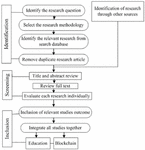
This systematic review involves three phases shown in Figure 1, i.e. (1) Identification which has further four sub-phases; (a) Identifying the research question, (b) Selection of research methodology, c) Identifying the relevant research article, (c) Removal of duplicate ones; (2) Screening which has three sub-phases to further define those phases; (a) Abstract review, (b) Review fully selected articles, (c) Evaluate each research individually; (3) The third phase is the inclusion of relevant articles which has two sub-phases; (a) Inclusion of relevant studies outcome, (b) Integrate all studies Education & Blockchain.
3.2 Research Questions
The following questions were formulated based on the scope of this investigation, and their answers were provided through the discussion.
1. Impact of blockchain technology on education?
2. What educational applications were developed using blockchain technology?
3. Advantages of blockchain technology in the field of education?
4. Challenges of blockchain technology in education?
5. Implementation priorities in the education sector?
3.3 Conducting Research
To produce the most substantial findings, several approaches during the initial stage of the research need to be executed, including a search strategy, screening processes and set up of inclusion and exclusion criteria for the article. Avoiding the article providing similar results with the same workflow.
3.4 Inclusion/Exclusion Criteria
To establish the answers to the questions concerning the scope, each research article was read in its entirety to extract the pertinent information for the systematic analysis. The inclusion and exclusion criteria for extremely significant literature were utilized to decide on which article to select.
3.5 Searching and Screening Process
We reviewed the entire text and went through a process to fine-tune the paper selection such that research questions were aligned with the content of the papers we chose. Each article’s title and abstract are also taken into consideration. To ensure consistency and academic standards, abstracts that are less focused on core topics or do not contain particular findings/contributions to the body of content have been removed.
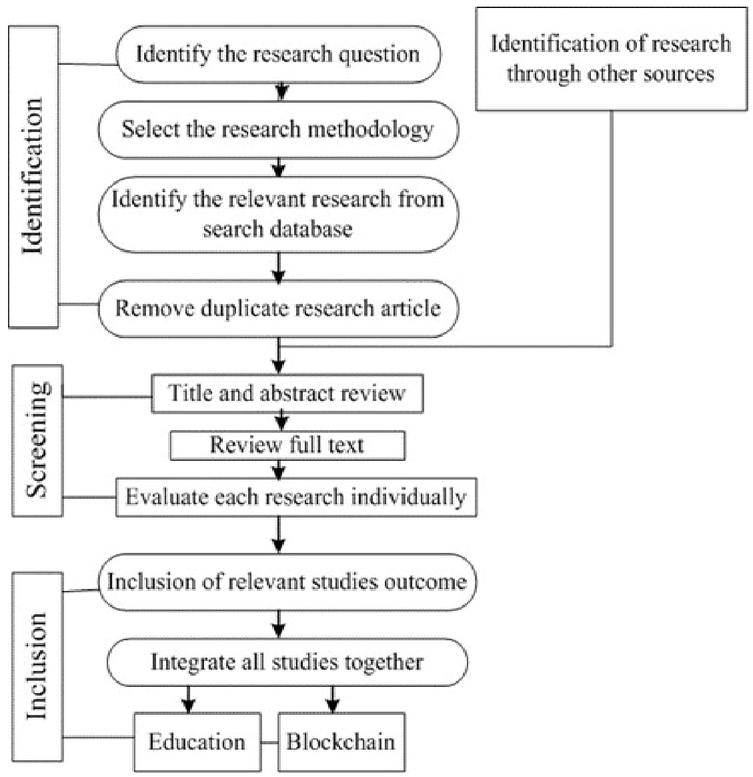
Figure 1 Flowchart for the systematic review process.
3.6 Impact of Blockchain on Education
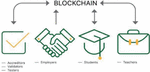
Blockchain has redefined the internet concept with its principles of decentralization, security and transparency [8]. Blockchain originated from the principle of technology, where the data are bounded together in blocks using cryptography principles. The ledger of data or records is a timestamp and immutable. Instead of a single authority, it is managed by a cluster of computers that enables verifiable decentralized transactions between two people. Records distributed over many computer nodes are public, and that makes blockchain technology unstoppable [31, 32]. It makes it possible to verify the data on all network computers, accessible and transparent while ensuring that no individual controls the flow of information or transactions [8]. A significant feature of the blockchain is the flow of information where digital information can neither be copied nor transmitted; this makes the technology fortified, especially for information flow (Figure 2).
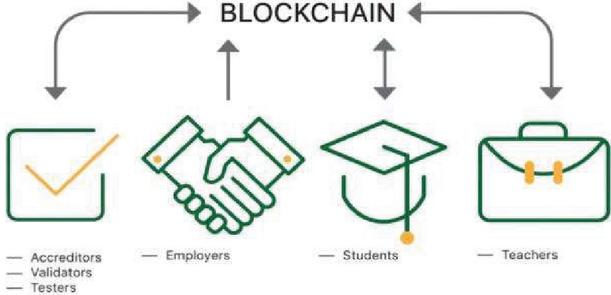
Figure 2 Blockchain in the education system.
4 Applications of Blockchain on Education
Various blockchain applications were developed for educational purposes and classified into various categories; some of them are discussed below [3].
4.1 Certificates Management
Instead of using a typical database for storing certificates, blockchain can be used. When a third party wants to access the certificates and other documents will be uploaded to the blockchain and transmitted securely. The university administrator has complete control over the uploading and management of student certificates. Other unauthorized parties (third party/organization/employer/others) can access the files with the consent of the college administration. These types of techniques are quite beneficial in today’s world when file storage and sharing are critical. Our method of certificate administration is decentralized, cryptographically safe, immutable, and efficient, which distinguishes it from existing certificate management systems [4].
4.2 Digital Degrees and Certification
Blockchain technology is a distributed, decentralized digital ledger that is maintained by interconnected networks known as nodes (networks of computers). A digital degree contains the same information but is generated electronically as a degree certificate in paper format. A person cannot change the data on the blockchain without the permission of everyone else who maintains the records. Digital certificates are made used of whenever two users must exchange information in a manner that is both private and secure. Digital certificates, also known as identity or public key certificates, are used to secure sensitive data by verifying its integrity, confidentiality, authenticity, non-repudiation, and regulating access [33].
4.3 Evaluating Students’ Professional Ability
The assessment of students’ professional ability is another factor that connects the students’ professionalism with specific companies for the aim of personnel referrals. Using blockchain technology, a bridge has been built between educational institutions and employment agencies. Through this connection, schools and recruiters can discuss and exchange any information relevant to the hiring process and the needs of the industry. This application [29] allows prospective employers to assess a candidate’s professional skills and qualifications in light of their academic performance. The clustering algorithm was used for the analysis of student ability. Distributed storage provided by blockchain technology to record the student’s monitored professional ability, student assessment data, evaluation processes, and learning credits that, if required, can be improved from anywhere, anytime by the authorities.
4.4 Protecting Learning Objects
Another area that highlights the relevance of deploying blockchain-based application infrastructure is the protection of academic objectives and student-specific data. This is an area where blockchain technology has a lot to offer. To put into action a blockchain-based method that is legitimately capable of preserving a significant number of essential scientific resources, a centralized repository of educational objectives has been established. This repository combines the Electronic Educational Environment (EEE) with the educational objectives that are being pursued to deploy a legal blockchain method to conserve a large number of essential scientific resources.
4.5 Competencies and Learning Outcomes Management
The application of blockchain technology improves learning objectives and makes the learning process more effective in the field of education. Enriching the education sector makes it simpler to acquire skills that fall under the purview of the education sector. Due to blockchain’s high level of efficiency, several applications could monitor and assess the academic performance of students based on qualitative and quantitative factors. A system was created to track students’ performance in their multi-learning activities. It accumulates all activity into a block on its own. This technology provides immediate/direct assistance and useful feedback. It was conceived to enhance the learning process by fostering analytical reasoning and problem-solving abilities in students, in addition to fostering improved teamwork and communication.
4.6 Identity Management
The credentials for the digital identity are stored on the devices, and they will only be valid if they are used on an authorized device. Validating identities, managing access, and ensuring the integrity of data are all critical components of blockchain identity management, which is increasingly gaining support. Blockchain Identity Management offers users a solution that is decentralized, secure, and trustworthy by utilizing the paradigm of distributed trust. This gives users more agency over their data. The blockchain has the potential to pave the path toward a self-sovereign identity. Identity documents can be authenticated, encrypted, and permissioned parties can provide their endorsement of identity documents under a privacy trust.
4.7 Fees and Credits Transfer
Blockchain technology has several potential applications, including the transfer of credentials or payments between businesses or educational institutions with a high degree of confidentiality and integrity. A third party/intermediary is usually entrusted with the handling and approval of credit or fee transfers by educational institutions. The blockchain’s high level of security makes it a promising candidate for use as an effective method of information transfer, perhaps eliminating the need for third or other intermediary parties.
4.8 E-transcript
E-transcript management system based on blockchain technology that is capable of removing the need for paper transcripts while also assuring that users have access to the service 24X7. The integrity of the verified transcript can be accessed by a third party at any time and from any location without jeopardizing its security when using an electronic transcript (also known as an e-transcript).
4.9 Obtaining Digital Guardianship Consent
Blockchain facilitated gathering the consent of guardians/parents electronically. Due to the decentralized nature of the blockchain, collecting parents’ consent is debauched without negotiating privacy. It has a huge impact on how easy for students, parents, and educational institutions to accumulate and disseminate information. It allows public organizations to grant permission rights to any third-party institution that wanted to see their students without having to obtain parental agreement every time. Blockchain established a nested authorization process to guarantee consent privacy and control access [34].
4.10 Competitions Management
Blockchain technology manages the competition operation, a decision-making system to examine the student’s professional knowledge, skill, and competence level. This system works as an evaluator that affects the privacy, integrity and non-repudiation of data [3]. Permissioned blockchain can be used to establish digital operations without transferring ownership to a single operator, ensuring a better level of competition. The digital platforms created on top of permissioned ledgers can change concentrated operations into significantly more competitive ones by allowing individuals and corporations to interact without attributing to a single intermediary.
4.11 Examination Review
Are there any other decentralized blockchain applications in the education sector? The “dapper” is a decentralized application for examination review that makes use of trustworthy ledgers; auditing questions and test papers make a significant improvement to the level of security while also preserving the quality [35]. When disrupting exam papers among external examiners, this technique was established to maintain and fulfil quality assurance criteria.
4.12 Enhanced Students’ Interactions in E-learning
Blockchain technology applications are adopted to solve and enhance students’ interactivity in E-learning systems. This application improves the learning engagement of the learners. It gives rewards in the form of virtual currency to performers [36]. Technology links educational institutions with employment enterprises to share essential information concerning requirements and appointment requirements [25].
4.13 Protecting Educational Documents
To overcome these obstacles, institutions migrating to infrastructure that supports open standards for data interoperability may explore integrating blockchain-based technology. For an interoperable data solution, this technology simplifies data flow while also providing verification and security. Blockchain has the impact of dismantling present silos by allowing enterprises to share data infrastructures while maintaining data privacy and security. Blockchain technology can be utilized to protect educational documents. Numerous authorities fail to confirm the legitimacy of documents, creating loopholes that can be accessed securely by a third party using the educational use of blockchain technology.
4.14 Supporting Lifelong Learning
Options for supporting lifetime learning are fast emerging to accommodate this desire for greater development opportunities. Many resources are available to assist a student in developing their professional abilities, including online courses, micro-credentials, and work-based learning opportunities. Lifelong learners who continue their education throughout their careers outline an effective educational journey that is based on a professional trajectory [37]. The use of blockchain technology is essential to lifelong learning because it helps learners improve their knowledge, abilities, and overall productivity throughout their education.
4.15 Micro-credentialing
Blockchain networks collapsed percentage is minimal; therefore, students’ or employees’ credentials can be stored for lifelong further, they can continue their professional qualifications for upliftment and enhancement of their skills. Students/employees self-updating CV option enabled, and further employers can verify the certificates after the owner’s permission.
5 Benefits of Blockchain to Education
Blockchain’s benefits that can escort education are highlighted in this section [3, 38].
1. Security privacy and integrity to students, teachers and administration.
2. Better control on how and by whom the data can be accessed.
3. Plummeting gratuitous costs associated with transactions and data storage.
4. Enhances accountability and transparency.
5. Authenticating the identities of the students along with their digital certificates.
6. Establish trust between the parties to ease communication.
7. Augments the tactic of quantifying the learning outcomes and students’ performances.
8. Ameliorate the efficiency of data exchange and manage student records.
9. Enhances system interoperability for interactive learning.
10. Supports learners in career decisions and creates opportunities for learning in future.
The articles related to blockchain in education discussing different aspects are the choice of the researchers and will increase drastically in the near future. As the organizations started implementing blockchain in various sections, the researchers’ curiosity intensifies to study and reflects the prominence of the technology.
6 Challenges of Adopting Blockchain Technology in Education
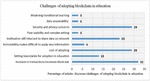
Nine difficulties were identified by Alammary [3] when discussing the implementation of blockchain technology in the academic setting. The author places a premium on blockchain scalability, which happens when there are more transactions in the blockchain network and thus the block size grows significantly. That eventually increases transaction latency. The privacy and security of blockchain are considered the second most crucial challenge. When technology is utilized, they experience different security and privacy apprehensions, i.e., data leakage and malicious attacks [30]. After security, the priority was given to the cost of establishing blockchain technology in education. Cost expenditure while changing the current infrastructure to new technological infrastructure, computing costs, massive data management and slow transactions are essential concerns. Trust is also considered one of the biggest challenges when utilizing blockchain technology in education. Educational institutes do not show trust to share their data through the blockchain network. As per the author, one of the difficulties that should be brought to light is the creation of boundaries for blockchain technology because it is archetypical to define which data and services can be delivered through the blockchain network [37]. This is one of the highlighted obstacles. Immutability is one of the most fundamental aspects of blockchain technology, but it also presents a significant obstacle to the implementation of blockchain in educational settings. Because immutability makes it difficult to amend faulty data or apply for modernization of information storage regulations on data for updation, educational institutions face challenges. Blockchain technology is not yet deemed mature, and there is a problem with data accessibility [34]. The immaturity problem results in a configuration that is difficult to use and poor usability. Putting data into the hands of users may affect applications that are dependent on specific data, and as a result, those applications may no longer have access to the data. A lifelong record register of educational achievements will undermine the role of educational institution certificate agents, which will result in a decline in the quality of the traditional learning environment. The many categories of issues that were mentioned earlier are outlined in Table 1, along with the proportion of publications that address each of those topics (Figure 3).
Table 1 Challenges of adopting blockchain in education
| Percentage of | |
| Types of Challenges Antagonized to Adopting Blockchain in Education | Articles |
| An increase in transactions increases the block size | 32 |
| Setting boundaries for adoption in education | 13 |
| Cost of adopting | 29 |
| Immutability makes it difficult to apply new information | 6 |
| The institution is still reluctant to share data on the network | 23 |
| Poor usability and complex setting | 3 |
| Security and privacy concerns | 29 |
| Data unavailability | 3 |
| Weakening traditional teaching | 3 |
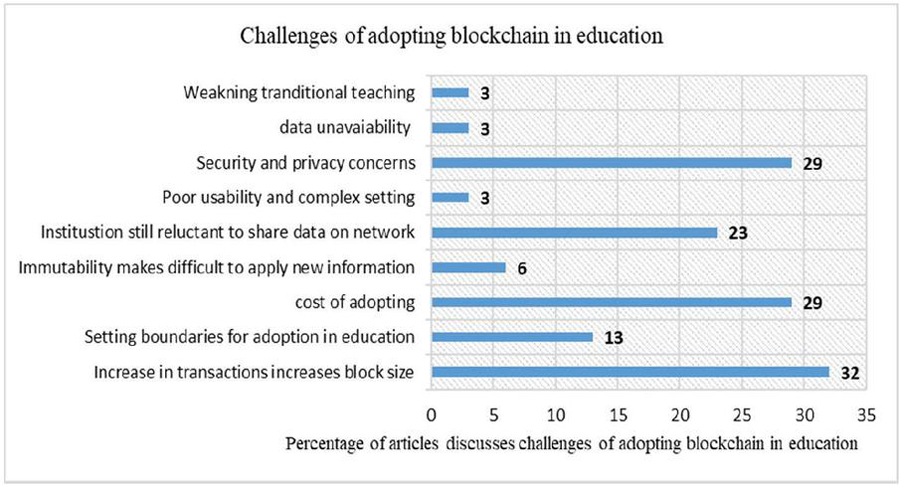
Figure 3 Percentage of articles that demarcated the challenges of adoption of blockchain in education.
7 Countries Adopted Blockchain Technology in Education
Blockchain technology acceptance has risen vividly in a short span of time. Although blockchain was founded in 2009, only a few countries have pushed their borders to investigate its enormous possibilities. However, in 2018 beginning, this rate skyrocketed. Many nations’ leaders have taken steps to regulate blockchain marketplaces, either directly or indirectly.
Cryptocurrencies are being implemented positively by many countries like the United Kingdom, China, Switzerland, the United States, Germany, Japan and Singapore. Even many African countries are joining the bandwagon, despite infrastructure challenges. In the bitcoin sector, there is a lot of consumer demand. However, the adoption of blockchain technology in the education sector is one of the essential revolutions which assist by allowing relevant stakeholders to prevent certificate fraud by verifying the validity of credentials, with an exclusive security guarantee. As a result, several nations are looking into its immense potential. Some countries implemented blockchain technology as an innovative concept in the education sector.
7.1 Malta
The application of blockchain technology in education is relatively new to many nations, but Malta, sometimes known as “the island of Blockchain,” is widely regarded as a leader in this field. In 2017, Malta became the first country to implement Blockchain in the education sector. Malta’s Ministry of Education and Employment and a multinational corporation, Learning Machine signed a Memorandum of understanding to investigate the feasibility of implementing a digital credentialing platform based on Blockcerts for four pilot programs in public institutions.
7.2 Brazil
The Brazilian Ministry of Education (MEC) has anticipated the establishment of a Blockchain-based platform to avoid the fabrication of degrees among non-state universities by issuing digital certificates. The aim was to promote credential coherence and, as a result, provide a space for self-regulation. The resources for the platform’s construction came from private educational institutions, as they were solely accountable for providing certificates. According to local media, the government’s intention to use such technology has piqued the interest of at least 14 commercial institutions.
7.3 Korea
Korea is not only the pioneering country to employ blockchain in education, but it has also made significant progress in other sectors i.e., finance, trading, intellectual property rights, logistics, and medicine through widespread blockchain usage. South Korea’s Ministry of Science and Technology has taken the lead in developing the next generation of blockchain professionals. The Ministry of Science and ICT involve government agencies to perform blockchain projects in the public sector. The South Korean government invested $90 million in a “blockchain technology development strategy” course. After a round of interviews and applications, 42 persons were picked for the training classes. Later students enrolled in this course for six months and received blockchain training eight hours per day to learn the state-of-the-art concept of blockchain in the education sector.
7.4 Vietnam
Fake certifications were used and bought in Vietnam, and this was a critical concern that needs to be addressed if the national education system is to be trusted. There was no technique in place that can efficiently bring all educational documents in one area while being secure, permissible, and accessible. To address this issue, Vietnam aspires to be one of the pioneer countries to use blockchain in the education sector to address societal issues and certificate administration in particular. Vietnam’s Ministry of Education and Training (MOET) has revealed that blockchain technology will be implemented to grant certificates. SotaTek and the MOET designed a Blockchain system that will handle all data and records pertaining to educational diplomas and certifications in Vietnam with maximum capacity.
8 Use Cases of Blockchain in Education
Blockchain is being used in various fields and industries beyond the conventional manner. In the field of education, the use of blockchain is at an initial level, but it is used in the furthermost surprising and innovative way [35]. This section discusses the application where blockchain usage to the systems was not pretty simplistic and tranquil. Education sectors should give high priority to implementing blockchain technology for maximum gain of the institutions/organizations [36–38].
8.1 Transcripts, Diplomas, Certifications
The use of blockchain technology in verifying transcripts, diploma degrees and certificates is a demand of time. Document verification is a complex domain that involves various challenging and tedious processes to authenticate. The use of blockchain technology in verifying diploma degrees, transcripts and certificates are time-sensitive requirement. Document authentication is a dynamic area that requires some complex and time-consuming procedures to authenticate. Furthermore, various documents, comprising bank records, transaction records, educational diplomas/certificates, government records, etc., call for distinct methods of verification and authentication. University diplomas are the most significant awards given to students [39]. However, false certificates are easily generated because the issuance procedure is not transparent or verifiable.
It is estimated that alone 200,000 fake degrees are sold every year by fake institutions and agents in the US. Even in the modern era, certifying transcripts, degrees, and certificates through a manual procedure [40] can cost anything from $100 to $50,000, depending on the university diploma, certificate and transcript being forged. MIT collaborated with the software organization Learning Machine and launched Blockcerts, an open standard for creating, issuing, viewing, and verifying blockchain-based certificates. They issue blockchain certificates to some instances in the following organizations, i.e., Global Entrepreneurship Bootcamp, Learning Machine-provided certificates to its staff and MIT Media Lab in its course.
The University of Nicosia, Malta’s Institute of Tourism Studies (ITS), and Malta College of Arts, Science, and Technology (MCAST) have released blockchain-based academic certificates, and the document’s authenticity can be checked on the Bitcoin blockchain. Arcnet is a blockchain company that, through the project ’ArcCert,’ allows universities and other educational institutions to produce and issue tamper-proof documents that are verifiable, such as transcripts, certificates, and diploma degrees [41].
8.2 Security and File Storage
The critical concern for schools and educational institutions is to protect the students’ information and other institutional network data. Filecon provides an opportunity for educational institutions to host a file potentially with a great option to store students’ data/ information without risk, in a safe way, evade information from being tempered or vanishing [42].
8.3 Human Resources
Organizations hire employees and HR managers for the daunting and time-consuming tasks to check their background in terms of previous employment and criminal history. However, if the information is stored on the blockchain, the hiring process can be fastened as it took less time to check the background history of the employee. A company known as Chronobank is itself an HR ecosystem with a hiring platform that improves recruitment practices and facilitates HR to develop an intact interaction with candidates.
8.4 Publishing
Blockchain in terms of rights, policies and management has various applications for academic publishing. The implementation of blockchain will resolve the issues of publishing that goes unnoticed. Authors with Authorship will publish their work on a blockchain platform. By using, Authorship Tokens (ATS), readers can purchase the books, and writers get 90% of ATS royalties. Authors have complete control over their work, where, when and format can be chosen by them.
8.5 Self-sovereignty
Maltese educational institutions deployed blockchain technology to facilitate the learners and workers to have ownership of their credentials and record their learning achievements. The primary objective was to make their learners self-sovereignty, and the secondary objective was to globalize the credentials to the outer world [42].
8.6 Bitcoin for Tuition
The University of Nicosia (UNIC) took advantage of endorsing blockchain in educational organizations. UNIC is the first university that facilitated degree course tuition through bitcoin. To familiarize the cryptocurrency introduces a MOOC course named ’Introduction to Digital Currencies [43].
9 Result & Discussion
In a short period, blockchain technology’s acceptability has skyrocketed. Although just a few countries have ventured beyond their borders to explore its vast potential. However, at the start of 2018, this rate surged. Many organizations have introduced initiatives, either directly or indirectly, to control blockchain platforms. Many countries, including the United Kingdom, Germany, China, the United States, Switzerland, Japan, and Singapore, are embracing cryptocurrency. Despite infrastructure concerns, several African countries are getting on board. There is a lot of consumer demand in the bitcoin business. However, the introduction of blockchain technology in the education sector is a critical innovation that aids relevant players in preventing certificate fraud by confirming the validity of credentials with a unique security guarantee. As a result, various countries are investigating its enormous potential. In the education sector, certain countries have used blockchain technology as an innovative concept. In the article, the authors examine the benefits and challenges to make acquainted the practitioners. Several areas where blockchain could be useful in education have been identified, including student data privacy, document protection, professional competence, and assessment. Additionally, it can be utilized in the areas of securing a collaborative learning environment, online education, competencies and learning outcomes, e-transcripts, educational records, improving student participation in e-learning, running competitions for operational skills, issuing certificates of completion, and so on. The study of other blockchain applications will enrich technological utilization in the field of education. This study will direct the institution to decide which blockchain application will benefit them based on institutional requisites.
Some limitations of the study are; (a) the technical explanations of blockchain technology are purposefully reduced to make them understandable, especially to non-technical audiences. As a result, this paper glosses over the cryptographic techniques that govern blockchain technology, as well as the consensus validation and mining mechanisms used by different blockchains. (b) Selective use cases have been utilized and qualitative research methodology taken into account for overall exploratory. Statements are not based on statistical evidence of the population’s use cases. (c) Findings and recommendations are based on analysis done at an early stage in the evolution of blockchain technology with limited adoption by education stakeholders, due to that revealing risks, opportunities and challenges may not be properly in the public domain.
In a future study, we plan to investigate the ways in which blockchain technology might be used to facilitate educational institution partnerships and other forms of academic cooperation. Smart contracts could be used by educational institutions to store and communicate information about their student’s academic records, such as a student’s academic transcript, lifelong learning credential, major/minor requirements, academic probation, and program description. Smart contracts are programmable computer protocols. After that, the student may enrol in classes at any of the colleges that are linked with the university. Educational institutions may also collaborate with one another to provide joint academic programs. If students had access to the comprehensive curriculum offered at all other educational establishments, it would raise the degree to which they could adapt to changing circumstances.
10 Conclusion
Blockchain applications in the education sector are at the initial stage. Researchers are observing the impact of blockchain on education. In the article, the authors examine the benefits, impact, use cases, applications and challenges to make acquainted between the practitioners. Additionally, it can be used to secure a collaborative learning environment, competencies and learning outcomes, educational records, electronic transcripts, student participation in e-learning, operational skill competitions, online education, and educational certificates of the learners and students. Additionally, research into various applications of blockchain technology will boost educational institutions’ usage of technology. This study will assist the institution in selecting which blockchain application will be most beneficial to them based on the specifications that have been established by the institution.
The study aimed to highlight the existing body of knowledge by discussing the impact, benefits, present applications, and establishment challenges of blockchain technology to the educational environment. The study yields several findings. Challenges like security, scalability, availability, privacy, and cost should be considered before adopting technology by managers and policy. The provision of a secure platform for the sharing of student data, the transfer of fees or credit, the security of educational documents, and the secure storage of personal data are all examples of the ways in which blockchain technology has been utilized in the education industry. Most commonly, this technology has been put to use in the following areas: granting and verifying academic credentials; evaluating students’ professional abilities, and disseminating students’ competence and the results of their learning. A third party is made available to check the credentials of the applicant. Still, limited educational institutes have adopted blockchain technology in education. Institutions that adopted the technology are applying blockchain applications to restricted educational areas only. Therefore, using the capability of blockchain in the education sector needs serious effort. Blockchain applications in the education sector are at the initial stage. Researchers are observing the impact of blockchain on education. In the article, the authors examine the benefits, impact, use cases, applications and challenges to make acquainted between the practitioners. Additionally, it can be used to secure a collaborative learning environment, competencies and learning outcomes, educational records, electronic transcripts, student participation in e-learning, operational skill competitions, online education, and educational certificates of the learners and students. Additionally, research into various applications of blockchain technology will boost educational institutions’ usage of technology. This study will assist the institution in selecting which blockchain application will be most beneficial to them based on the specifications that have been established by the institution.
References
[1] Aleksander Berentsen. ‘Bitcoin: A Peer-to-Peer Electronic Cash System’. In Frey B. and Schaltegger C., editors, 21st Century Economics, pp. 7–8. Springer, 2019.
[2] Andrii-Horiachko, 2023. Website [Online]: https://www.softermii.com/blog/hot-trends-in-blockchain-app-development
[3] Ali Alammary, Samah Alhazmi, Marwah Almasri and Saira Gillani. ‘Blockchain-based applications in education:. A systematic review’. Applied Sciences, vol. 9, no. 12, pp. 2400–2400, 2019.
[4] Alexander Grech and Anthony F Camilleri, 2017.
[5] U Padmavathi and Narendran Rajagopalan. ‘Concept of Blockchain Technology and Its Emergence’. Blockchain Applications in IoT Security, pp. 1–20.
[6] Miquel Oliver, Joan Moreno, Gerson Prieto and David Benítez. ‘Using blockchain as a tool for tracking and verification of official degrees: business model’. In 29th European Regional Conference of the International Telecommunications Society (ITS): Towards a digital future: Turning technology into markets, 2018.
[7] Guang Chen, Bing Xu, Manli Lu and Nian-Shing Chen. ‘Exploring blockchain technology and its potential applications for education’. Smart Learning Environments, vol. 5, no. 1, pp. 1–10, 2018.
[8] Saratchandran. Role of Blockchain in education, blockchain-technology-in-education. 2020. [Online]. Available: https://www.fingent.com/blog/role-of-
[9] Mara-Florina Steiu. ‘Blockchain in education: Opportunities, applications, and challenges’. First Monday, 2020.
[10] Hafiza Yumna, Muhammad Murad Khan, Maria Ikram and Sabahat Ilyas. ‘Use of blockchain in education: a systematic literature review’. In Proceedings of the Asian Conference on Intelligent Information and Database Systems, pp. 8–11. Springer, 2019.
[11] Anton Hasselgren, Katina Kralevska, Danilo Gligoroski, Sindre A. Pedersen and Arild Faxvaag. ‘Blockchain in healthcare and health sciences – A scoping review’. International Journal of Medical Informatics, vol. 134, p. 104040, 2020.
[12] Marko Hölbl, Marko Kompara, Aida Kamišalić and Lili Nemec Zlatolas. ‘A systematic review of the use of blockchain in healthcare’. Symmetry, vol. 10, no. 10, p. 470, 2018.
[13] Thomas McGhin, Kim-Kwang Raymond Choo, Charles Zhechao Liu and Debiao He. ‘Blockchain in healthcare applications: Research challenges and opportunities’. Journal of Network and Computer Applications, vol. 135, pp. 62–75, 2019.
[14] Huma Saeed, Hassaan Malik, Umair Bashir, Aiesha Ahmad, Shafia Riaz, Maheen Ilyas, Wajahat Anwaar Bukhari and Muhammad Imran Ali Khan. ‘Blockchain technology in healthcare: A systematic review’. Plos one, vol. 17, no. 4, e0266462, 2022.
[15] Timothy Capper, Anna Gorbatcheva, Mustafa A. Mustafa, Mohamed Bahloul, Jan Marc Schwidtal, Ruzanna Chitchyan, Merlinda Andoni et al. ‘Peer-to-peer, community self-consumption, and transactive energy: A systematic literature review of local energy market models’. Renewable and Sustainable Energy Reviews, vol. 162, p. 112403, 2022.
[16] Thammavich Wongsamerchue and Adisorn Leelasantitham. ‘An Electronic Double Auction of Prepaid Electricity Trading Using Blockchain Technology’. Journal of Mobile Multimedia, pp. 1829–1850, 2022.
[17] Adisorn Leelasantitham. ‘A business model guideline of electricity utility systems based on blockchain technology in thailand: A case study of consumers, prosumers and SMEs’. Wireless Personal Communications, vol. 115, pp. 3123–3136, 2020.
[18] Benjamin Müßigmann, Heiko von der Gracht and Evi Hartmann. ‘Blockchain technology in logistics and supply chain management – A bibliometric literature review from 2016 to January 2020’. IEEE Transactions on Engineering Management, vol. 67, no. 4, pp. 988–1007, 2020.
[19] Serkan Karakas, Avni Zafer Acar and Berk Kucukaltan. ‘Blockchain adoption in logistics and supply chain: a literature review and research agenda’. International Journal of Production Research, pp. 1–24, 2021.
[20] Sebastian Kummer, David M. Herold, Mario Dobrovnik, Jasmin Mikl and Nicole Schäfer. ‘A systematic review of blockchain literature in logistics and supply chain management: identifying research questions and future directions’. Future Internet, vol. 12, no. 3, p. 60, 2020.
[21] X M Yang, H Q Li, K Y Wu and Zhao. ‘The application model and challenges of blockchain technology in education’. Modern distance education research, vol. 2, pp. 34–45, 2017.
[22] J Jyotsna and Kaur. ‘A Review of Blockchain Technology in Education’. In JAC: A Journal of Composition Theory, vol. 13, pp. 392–400, 2020.
[23] Abhishek Srivastava, Pronaya Bhattacharya, Arunendra Singh et al. ‘A distributed credit transfer educational framework based on blockchain’. Second International Conference on Advances in Computing, Control and Communication Technology (IAC3T), pp. 54–59, 2018.
[24] Wolfgang Prinz, Sabine Kolvenbach and Rudolf Ruland. ‘Blockchain for education: Lifelong learning pass- port’. ERCIM News, vol. 120, pp. 15–16, 2020.
[25] Lucas M Palma, A G Martín, Fernando L Vigil, Jean E Pereira and Martina. ‘Blockchain and smart contracts for higher education registry in Brazil’. International Journal of Network Management, vol. 29, no. 3, 2019.
[26] Giulio Caldarelli and Joshua Ellul. ‘Trusted Academic Transcripts on the Blockchain:. A Systematic Literature Review’. Applied Sciences, vol. 11, no. 4, pp. 1842–1842, 2021.
[27] Felix Morsbach and Salman Toor. ‘DecFL: An Ubiquitous Decentralized Model Training Protocol and Framework Empowered by Blockchain’. Proceedings of the 3rd ACM International Symposium on Blockchain and Secure Critical Infrastructure, pp. 61–70, 2021.
[28] He Jiang, Xiaoru Li, Rajendra Prasad Mahapatra and Parthasarathy Poovendran. ‘Creating a ubiquitous learning environment using IoT in transportation’. Soft Computing, pp. 1–14, 2021.
[29] Alexander Mikroyannidis, Allan Third, Niaz Chowdhury, Michelle Bachler and John Domingue. ‘Supporting Lifelong Learning with Smart Blockchain Badges’. International Journal on Advances in Intelligent Systems, vol. 13, no. 3 & 4, pp. 163–176, 2020.
[30] Preeti Bhaskar, Chandan Kumar Tiwari and Amit Joshi. ‘Blockchain in education management: present and future applications’. Interactive Technology and Smart Education, vol. 18, no. 1, pp. 1–17, 2020.
[31] Srinivas Mahankali and Sudhir Chaudhary. ‘Blockchain in education: a comprehensive approach-utility, use cases, and implementation in a university’. Blockchain Technology Applications in Education, pp. 267–293, 2020.
[32] Faiza Loukil, Mourad Abed and Khouloud Boukadi, 2021. [Online]. Available: https://doi.org/10.1007/s10639-021-10481-8.
[33] Hsu Kyi, Ei Shwe Mon and Sin. ‘Educational Certification System Framework based on Blockchain Technology’. Journal of Computer Applications and Research, vol. 1, no. 1, 2020.
[34] Prasanth Kakarlapudi, Qusay H Varma and Mahmoud, 2021. [Online]. Available: https://doi.org/10.3390/healthcare9020137.
[35] Ian Mitchell, Sukhvinder Hara and Mohamed Sheriff. ‘dAppER: decentralised application for exam reviews’. IEEE 12th International Conference on Global Security, Safety and Sustainability, pp. 1–14, 2019.
[36] Casino, Thomas K Fran, Constantinos Dasaklis and Patsakis. ‘A systematic literature review of blockchain-based applications: Current status, classification and open issues’. Telematics and informatics, vol. 36, pp. 55–81, 2019.
[37] Tore Hoel, Li Yuan and Mengying Cao. ‘Blockchain in education: What are the benefits for lifelong learning?’, Global lifelong learning Journal, 2020.
[38] Lizcano, Juan A David, Bebo Lara, Shadi White and Aljawarneh. ‘Blockchain-based approach to create a model of trust in open and ubiquitous higher education’. Journal of Computing in Higher Education, vol. 32, no. 1, 2020.
[39] Website, https://www.sotatek.com/top-countries-applying-blockchain-technology-in-education/. Last accessed. 2021. [Online]. Available: https://www.sotatek.com/top-countries-applying-blockchain-technology-in-education/.
[40] ‘Blockchain Technology Adoption in Smart Learning Environments’. Sustainability, vol. 13, no. 4, 2021.
[41] Olivier Gakwaya, Uta Dr and Meier-Hahn. Dr Ralph Oyini Mbouna and Lars. ‘Wannemacher Blockchain In Africa: Opportunities and Challenges for the Next Decade: How African countries can take advantage of distributed ledger technologies as they are maturing.’ German cooperation, GIZ, Kigali, Rwanda.
[42] Alexandra Cernian and Andreea Maria Paul. ‘Review and Perspectives on How Blockchain can Disrupt Education’. ELearning & Software for Education, vol. 3, pp. 45–50, 2020.
[43] Omar S Saleh, Muhammad Ehsan Osman Ghazali and Rana. ‘Blockchain based framework for educational certificates verification’. Journal of Critical Reviews, vol. 7, no. 3, pp. 79–84, 2020.
[44] Osman Ghazali and Omar S Saleh. ‘A graduation certificate verification model via utilization of the blockchain technology’. Journal of Telecommunication, Electronic and Computer Engineering (JTEC), vol. 10, no. 3-2, pp. 29–34, 2018.
[45] Primasatria Edastama, Ninda Lutfiani, Qurotul Aini, Suryari Purnama and Isabella Yaumil Annisa. ‘Blockchain Encryption on Student Academic Transcripts using a Smart Contract’. Journal of Educational Science and Technology (EST), vol. 7, no. 2, pp. 126–133, 2021.
[46] Alex Grech, Ira Sood and Lluís Ariño. ‘Block chain, Self-Sovereign Identity and Digital Credentials: Promise versus Praxis in Education’. Frontiers in Blockchain, vol. 4, pp. 1–7, 2021.
[47] Olexander Shmatko, Tetyana Borova, Serhii Yevseiev and Oleksandr Milov. ‘Tokenization of Educational Assets Based on Blockchain Technologies’. ScienceRise: Pedagogical Education, vol. 3, no. 42, pp. 4–10, 2021.
[48] Haque, M., Kumar, V.V., Singh, P. et al. A systematic meta-analysis of blockchain technology for educational sector and its advancements towards education 4.0. Educ Inf Technol (2023). https://doi.org/10.1007/s10639-023-11744-2.
[49] S. Bhatnagar, M. Dayal, D. Singh, S. Upreti, K. Upreti, and J. Kumar, “Block-Hash Signature (BHS) for Transaction Validation in Smart Contracts for Security and Privacy using Blockchain”, JMM, vol. 19, no. 04, pp. 935–962, May 2023.
Biographies

Shams Tabrez Siddiqui currently working as an Assistant Professor in the Department of Computer Science, Jazan University, Jazan, Saudi Arabia. He has 12 years research experience and 8 years of teaching experience. He received his PhD degree from Aligarh Muslim University, Aligarh, India 2015. He has published more than 50 research papers in different reputed international/national journals and conference proceedings. He has authored chapters in many books. He has worked in several funded research projects. His research interest includes software requirement engineering and software security. He extended his research area to IoT, wireless sensor networks and blockchain. He is a member of the Computer Society of India, IAENG, ACM, IAENG, CSTA, ICSES and IACSIT. He worked as a reviewer for many Journals.

Haneef Khan has been working as Senior Lecturer in Department of Computer and Network Engineering, Jazan University, Jazan, KSA. He has received B.Tech and M.Tech in 2008 and 2012 respectively in Electronics stream and has more than 12 years of teaching experience. His research area mainly includes IoT, Communication, Semiconductor.

Md Imran Alam, received the B.Sc. degree in Statistics from Aligarh Muslim University (AMU), India, in 2003, and the master’s degree in computer application from Aligarh Muslim University (AMU), India, in 2007. He is currently a Senior Lecturer with the Department of Computer and Network Engineering, Jazan University, Jazan, Saudi Arabia. He has more than 15 years of experience in teaching computer science courses in university and more than one year of industry experience. He is actively involved in research from last five years. He has authored more than ten research articles. His academic/research interests include machine learning, IoT, blockchain and security.

Kamal Upreti is currently working as an Associate Professor, CHIRST (Deemed to be University), Delhi NCR, Ghaziabad, India.
He completed is B. Tech (Hons) Degree from UPTU, M. Tech (Gold Medalist) from Galgotias University, PGDM (Executive) from IMT Ghaziabad and PhD from OPJ University. Now, he is doing Postdoc in Big Data Analytics from National Taipei University of Business, TAIWAN funded by MHRD.
He has published 50 Patents, 35 Books, 32 Magazine issues and 70 Research papers in in various international Conferences and reputed Journals. His areas of Interest are Cyber Security, Machine Learning, HealthCare, Wireless Networking, Embedded System and Cloud Computing. He is having enriched years’ experience in corporate and teaching experience in Engineering Colleges.

Sarika Panwar has received her Doctorate in Electronics Engineering from Rahstrasant Tukdoji, Maharaj Nagpur University in 2018 and has more than twenty years of academia with two patents at her credit and 20 research articles in National and International conferences/Journals. She is the recipient of Honourable Mention award winner in 2022 at IEEE Internet for All Competition. She has also successfully implemented and deployed HAM Radio Set Up for Flood Management in Kolhapur region of Maharashtra. Her area of expertise includes Machine Learning, Biomedical Image Processing and Internet of Things. At present, she is working as an Assistant Professor in Electronics and Telecommunication engineering at AISSMS IOIT, Pune.

Sheela Hundekari, presently working as Associate Professor in MITCOM, MCA dept. at MIT ADT University, Loni Kalbhor, Pune 412201, Her research interests are Artificial intelligence, Machine Learning, Deep Learning. She has published research papers in reputed Scopus and Springer Journals. A certified full stack Java trainer.
Journal of Mobile Multimedia, Vol. 19_5, 1221–1254.
doi: 10.13052/jmm1550-4646.1955
© 2023 River Publishers