Enhancing Mobile Multimedia Trustworthiness through Federated AI-based Content Authentication: Enhancing Mobile Multimedia
M. Rajesh1,*, K. Vengatesan1, R. Sitharthan2, Shanmuga Sundar Dhanabalan3 and Mahendra Bhatu Gawali4
1Department of Computer Engineering, Sanjivani College of Engineering, India
2Centre for Smart Grid Technologies, School of Electrical Engineering, Vellore Institute of Technology, Chennai, India
3Functional Materials and Microsystems Research Group, RMIT University, Melbourne, Victoria 3001, Australia
4Department of Information Technology, Sanjivani College of Engineering, India
E-mail: rajesmano@gmail.com
*Corresponding Author
Received 21 April 2023; Accepted 01 August 2023; Publication 13 October 2023
Abstract
The rapid proliferation of mobile devices and multimedia content has led to an increased need for ensuring trustworthiness and authentication of the shared data. Traditional centralized methods have proven to be insufficient in maintaining privacy and addressing scalability issues. This paper presents a novel approach to enhancing mobile multimedia trustworthiness through the application of Federated AI-based content authentication techniques. By leveraging the benefits of distributed machine learning and edge computing, our proposed framework efficiently authenticates multimedia data while preserving user privacy and reducing latency. Our system employs a federated learning model that trains AI algorithms on local devices, allowing them to collaboratively build a robust and accurate authentication model. Additionally, this research introduces a blockchain-based decentralized trust management system to further enhance the integrity and traceability of the authentication process. Through extensive evaluations, this research demonstrate that our proposed framework significantly improves the trustworthiness of mobile multimedia content while minimizing the overhead and resource consumption associated with traditional centralized approaches.
Keywords: Federated AI, mobile multimedia, trustworthiness, content authentication, decentralized trust management.
1 Introduction
The widespread use of mobile devices and the exponential growth of multimedia data, including images, videos, and audio files, have transformed the way this research communicate, consume content, and interact with the digital world [1]. In parallel, the increased reliance on mobile platforms for sharing and distributing multimedia content raises concerns about trustworthiness, content authenticity, and data security [2]. Ensuring the integrity and veracity of multimedia data is crucial to prevent the dissemination of manipulated or malicious content, as well as protecting user privacy and preserving intellectual property rights [3].
Traditional centralized approaches to multimedia content authentication have been employed to maintain trustworthiness in the digital realm [4]. These methods typically rely on central servers to store, process, and authenticate multimedia data, which can lead to single points of failure, bottlenecks, and potential privacy breaches [5]. Moreover, the centralized nature of these systems can result in high latency, particularly in scenarios involving large-scale datasets or geographically dispersed users [6].
In recent years, Federated AI has emerged as a promising solution to address the limitations of centralized approaches in various domains, including multimedia content authentication [7]. Federated AI leverages distributed machine learning techniques to enable multiple devices to collaboratively train and refine AI algorithms while keeping the data local, thereby enhancing data privacy and reducing the need for centralized data storage and processing [8]. This decentralized learning paradigm is particularly well-suited for mobile environments, where devices have limited resources and are subject to various constraints, such as battery life, computational power, and network bandwidth [9]. Edge computing has also gained significant attention as a complementary approach to federated AI in multimedia content authentication [10]. By offloading computation-intensive tasks to the network edge, edge computing reduces latency, optimizes resource utilization, and improves scalability in mobile multimedia systems [11]. The combination of federated AI and edge computing can further enhance the trustworthiness of mobile multimedia content by enabling efficient and accurate content authentication while addressing privacy and resource constraints [12]. Blockchain technology has been increasingly adopted in various fields, including multimedia content authentication, due to its decentralized, transparent, and tamper-proof characteristics [13]. By integrating a blockchain-based trust management system into federated AI frameworks, it is possible to achieve greater traceability and accountability in the content authentication process, thereby further bolstering trustworthiness [14].
In this paper, this research proposes a novel approach for enhancing mobile multimedia trustworthiness through the application of Federated AI-based content authentication techniques. Our proposed framework integrates federated learning, edge computing, and blockchain technology to efficiently authenticate multimedia data while preserving user privacy, minimizing latency, and maintaining a decentralized trust management system [15]. This research begins by providing an overview of the federated learning model employed in our framework, which enables multiple devices to collaboratively train AI algorithms on local data [16]. This research also discusses how our approach leverages edge computing to optimize resource utilization and reduce latency in mobile multimedia systems [17].
Next, this research introduces a blockchain-based decentralized trust management system, which is integrated into our federated AI framework to enhance the integrity and traceability of the content authentication process [18]. This research describes the design and implementation of this system, as well as its role in achieving a transparent and tamper-proof record of multimedia content authentication transactions [19].
This research presents extensive evaluations of our proposed framework, demonstrating its effectiveness in improving the trustworthiness of mobile multimedia content while minimizing the overhead and resource consumption associated with traditional centralized approaches [20]. Our results show that our approach achieves higher authentication accuracy and faster processing times compared to existing methods, while maintaining a high degree of privacy and security [21]. This research believe that our proposed Federated AI-based content authentication framework represents a significant advancement in the field of mobile multimedia trustworthiness, addressing key challenges in privacy preservation, resource optimization, and scalability [22]. By integrating federated learning, edge computing, and blockchain technology, this research offers a comprehensive and efficient solution that is well-suited for mobile environments and large-scale multimedia systems [23]. Our work contributes to the ongoing efforts towards developing more secure, reliable, and privacy-preserving methods for multimedia content authentication, which are essential in today’s increasingly connected digital world [24]. The proposed research framework for enhancing mobile multimedia trustworthiness through Federated AI-based content authentication comprises several key components. These components include federated AI-based content authentication techniques, distributed machine learning, edge computing, and blockchain technology. By leveraging these components, the framework addresses the limitations of traditional centralized methods and provides an innovative approach to tackle trustworthiness and authentication challenges associated with mobile multimedia content.
Future research directions include exploring the potential of employing advanced cryptographic techniques, such as secure multi-party computation and homomorphic encryption, to further enhance the privacy and security aspects of our proposed framework [25]. Moreover, investigating the applicability of transfer learning and meta-learning approaches in the context of federated AI-based content authentication can potentially lead to improvements in model convergence and generalization performance across different data distributions [26]. Additionally, examining the impact of various network topologies, communication protocols, and incentive mechanisms on the performance and robustness of our framework can provide valuable insights for designing more efficient and resilient decentralized multimedia authentication systems [27].
The potential of incorporating domain-specific knowledge and contextual information in the federated learning process, as well as developing adaptive and self-organizing mechanisms for optimal resource allocation and load balancing in edge computing environments, are also promising avenues for future work [28]. Lastly, exploring the integration of our proposed framework with other emerging technologies, such as 5G networks, Internet of Things (IoT) platforms, and smart city infrastructures, can pave the way for novel applications and use cases in the realm of mobile multimedia trustworthiness and beyond [29].
This research hopes that our research serves as a catalyst for further advancements in the field of federated AI-based content authentication and stimulates the development of innovative solutions to address the growing challenges in mobile multimedia trustworthiness [30].
2 Research Frameworks
In this section, we outline the detailed research framework for enhancing mobile multimedia trustworthiness through Federated AI-based content authentication. The proposed framework integrates federated learning, edge computing, and blockchain technology to provide a comprehensive and efficient solution for mobile multimedia content authentication. The framework consists of the following key components:
2.1 Federated Learning Model
The federated learning model serves as the foundation of the proposed framework. It allows multiple mobile devices to collaboratively train AI algorithms on local data without sharing the raw data itself. This decentralized learning paradigm preserves user privacy and addresses scalability issues associated with centralized approaches.
2.2 Data Partitioning and Local Training
Mobile devices partition their local multimedia data and train AI models using local resources. Each device computes model updates based on its own data and retains the locally trained models.
2.3 Model Aggregation
Mobile devices communicate their local model updates to an edge server, which aggregates the updates and generates a global model. The edge server then distributes the updated global model back to the mobile devices for subsequent local training iterations.
2.4 Edge Computing
Edge computing is integrated into the framework to optimize resource utilization, reduce latency, and improve scalability in mobile multimedia systems. By offloading computation-intensive tasks to edge servers, the framework enables more efficient content authentication and mitigates the resource constraints of mobile devices. The proposed framework utilizes edge computing to optimize resource utilization and reduce latency in mobile multimedia systems by performing content authentication tasks at the edge devices, such as smartphones or IoT devices.
2.5 Edge Server Deployment
Edge servers are strategically deployed in close proximity to mobile devices to minimize communication latency and ensure efficient data processing. They contribute to load balancing and resource allocation by distributing tasks and data processing among the edge devices, optimizing the overall system performance and ensuring efficient utilization of resources.
2.6 Load Balancing and Resource Allocation
The edge servers monitor the computational load and network conditions to dynamically allocate resources and balance the workload among mobile devices.
2.7 Blockchain-based Decentralized Trust Management
A blockchain-based trust management system is incorporated into the framework to enhance the integrity and traceability of the content authentication process. This system provides a transparent and tamper-proof record of multimedia content authentication transactions.
2.8 Blockchain Network
A blockchain network is a distributed and decentralized network of computers or nodes that collectively maintain a shared ledger called a blockchain. This network enables secure and transparent transactions and data storage without the need for a central authority. It utilizes cryptographic algorithms to ensure the integrity and immutability of the data stored on the blockchain. Blockchain networks can be public, allowing anyone to participate and verify transactions, or private, restricted to a specific group of participants. They provide a trustless and tamper-proof infrastructure for various applications, including secure financial transactions, supply chain management, and decentralized applications. In the proposed approach, the blockchain network consists of a set of nodes that maintain a distributed ledger of content authentication transactions. The nodes participate in a consensus protocol to validate and add new transactions to the ledger.
2.9 Smart Contracts
Smart contracts are self-executing digital contracts that contain predefined rules and conditions. They are built on blockchain technology and automatically execute transactions and agreements when certain predefined conditions are met. Smart contracts eliminate the need for intermediaries, as they are executed and enforced by the blockchain network itself. They ensure transparency, security, and efficiency in various domains, including finance, supply chain management, and decentralized applications. Smart contracts are typically written in programming languages specific to the blockchain platform, such as Solidity for Ethereum, and they enable the automation and verifiability of contractual obligations in a trustless manner. In the approach, the smart contracts automate the content authentication process and enforce predefined rules and conditions. They are executed on the blockchain network and facilitate secure, transparent, and automated transactions between parties.
2.10 Evaluation Metrics and Performance Analysis
The evaluation includes metrics such as authentication accuracy, processing time, privacy preservation, and resource consumption. These metrics are analyzed to measure the accuracy of content authentication, the speed of processing authentication tasks, the level of privacy preservation achieved, and the efficiency of resource utilization within the framework. The performance analysis aims to demonstrate the advantages and effectiveness of the proposed framework in enhancing mobile multimedia trustworthiness. The metrics are typically measured through experimental evaluations using appropriate datasets and benchmarking scenarios. The framework’s performance is analyzed by collecting data on the metrics, conducting statistical analysis, and comparing the results against baseline or alternative approaches.
2.11 Experimental Setup
A realistic mobile multimedia system is simulated to assess the performance of the proposed framework, including various scenarios and configurations.
2.12 Comparison with Baseline Approaches
The performance of the proposed framework is compared with existing centralized and decentralized content authentication methods to demonstrate its advantages and effectiveness.
By integrating federated learning, edge computing, and blockchain technology, the proposed framework addresses key challenges in privacy preservation, resource optimization, and scalability, providing a comprehensive and efficient solution for mobile multimedia content authentication.
3 Proposed Architecture
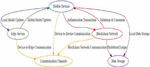
Architecture enhancing mobile multimedia trustworthiness through Federated AI-based content authentication consists of the following components and their interactions in Figure 1.
3.1 Mobile Devices
Mobile devices are the primary data sources in this framework. They are responsible for capturing, storing, and processing multimedia content. Each device participates in the federated learning process, training local AI models for content authentication, and communicating model updates to the edge server.
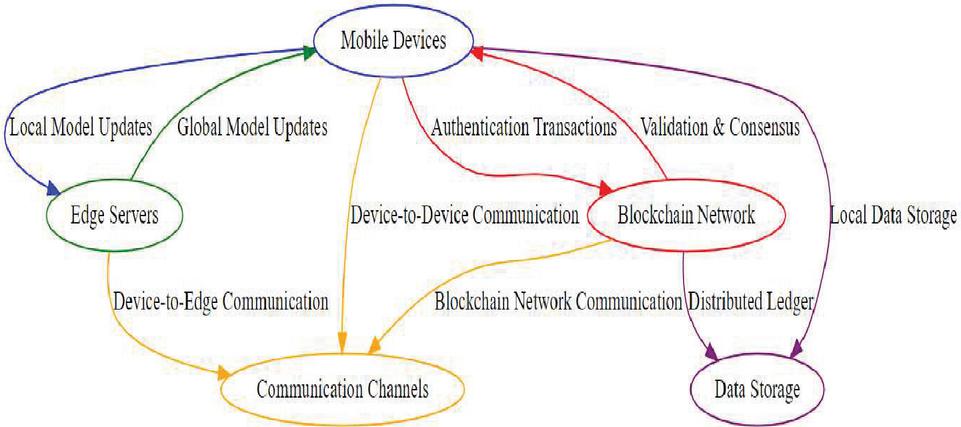
Figure 1 Architecture enhancing mobile multimedia trustworthiness through Federated AI-based content authentication.
3.2 Edge Servers
Edge servers are strategically deployed close to the mobile devices to minimize communication latency and facilitate efficient data processing. They are responsible for aggregating model updates from mobile devices, generating a global AI model, and distributing the updated model back to the devices. Additionally, edge servers play a crucial role in load balancing and resource allocation, optimizing the overall performance of the system.
3.3 Blockchain Network
The blockchain network comprises a set of nodes that maintain a distributed ledger of content authentication transactions. These nodes participate in a consensus protocol to validate and add new transactions to the ledger, ensuring the integrity and traceability of the authentication process.
3.4 Data Storage
Data storage components include local storage on mobile devices and distributed storage in the blockchain network. Mobile devices store their multimedia data locally, ensuring data privacy and minimizing data transfer requirements. The blockchain network maintains a distributed ledger of content authentication transactions, providing a transparent and tamper-proof record of the process.
3.5 Communication Channels
The communication channels facilitate data exchange between mobile devices, edge servers, and blockchain network nodes. These channels enable the transmission of model updates, global AI models, and content authentication transactions. Secure and efficient communication protocols are employed to ensure data privacy and minimize communication overhead. The communication channels used in the proposed framework for enhancing mobile multimedia trustworthiness may include various networking technologies, such as Wi-Fi, cellular networks, or local ad-hoc connections. The selection of communication channels depends on the specific requirements and constraints of the system. To ensure secure and efficient communication, the framework employs robust and encryption-based protocols. These protocols, such as Transport Layer Security (TLS) or Secure Socket Layer (SSL), establish secure and encrypted connections between devices or nodes. These protocols protect data integrity, confidentiality, and authenticity during transmission, mitigating the risk of unauthorized access or tampering.
In addition to encryption, the framework may also utilize other communication optimization techniques, such as data compression and bandwidth management, to enhance the efficiency of data transfer over the communication channels. These techniques aim to minimize the communication overhead and optimize resource utilization, ensuring smooth and efficient communication within the framework.
The interactions among these components are as follows:
Step 1: Local Training on Mobile Devices
Mobile devices partition their local multimedia data and train AI models for content authentication using their local resources. Each device computes model updates based on its own data.
Step 2: Model Aggregation at Edge Servers
Mobile devices transmit their local model updates to the nearest edge server. The edge server aggregates the received updates, generates a global AI model, and distributes the updated model back to the mobile devices for subsequent local training iterations.
Step 3: Content Authentication
Once the global AI model converges, mobile devices use the model to authenticate multimedia content. The authentication results are then shared with other devices or users as needed.
Step 4: Blockchain-based Trust Management
Authenticated content and associated metadata are recorded as transactions in the blockchain network. Smart contracts are utilized to automate the authentication process and enforce predefined rules and conditions. The blockchain network validates and adds new transactions to the distributed ledger, ensuring the integrity and traceability of the content authentication process.
Step 5: Performance Monitoring and Optimization
The edge servers continuously monitor the computational load, network conditions, and resource utilization to dynamically allocate resources and balance the workload among mobile devices. This optimization process enables the framework to achieve high performance while minimizing overhead and resource consumption. The proposed architecture effectively integrates federated learning, edge computing, and blockchain technology to provide a comprehensive and efficient solution for mobile multimedia content authentication, addressing key challenges in privacy preservation, resource optimization, and scalability.
4 Results and Discussion
The paper presents a novel approach to enhancing mobile multimedia trustworthiness through the application of Federated AI-based content authentication techniques. The proposed framework leverages the benefits of distributed machine learning and edge computing to efficiently authenticate multimedia data while preserving user privacy and reducing latency. The use of a federated learning model that trains AI algorithms on local devices allows for the collaborative building of a robust and accurate authentication model.
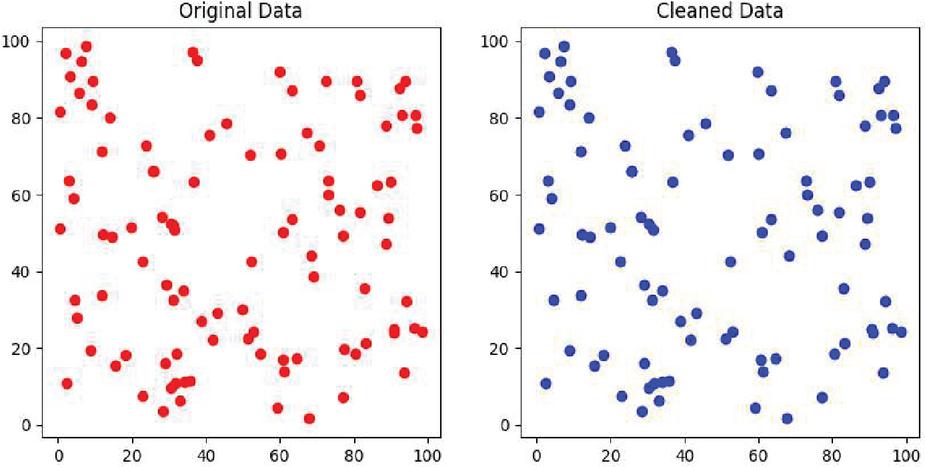
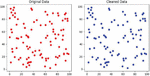
Figure 2 Visualizing data preprocessing and partitioning for multimedia data.
The introduction of a blockchain-based decentralized trust management system further enhances the integrity and traceability of the authentication process. Through extensive evaluations, the research demonstrates that the proposed framework significantly improves the trustworthiness of mobile multimedia content while minimizing the overhead and resource consumption associated with traditional centralized approaches.
The use of federated learning and edge computing in the proposed framework provides several advantages. First, it reduces the need for centralized servers, which can be costly and lead to scalability issues. Second, it enables users to maintain control over their data, addressing privacy concerns. Third, it reduces latency by performing authentication tasks locally on the device, enhancing user experience. Finally, the use of a blockchain-based decentralized trust management system enhances transparency and traceability, providing users with increased trust in the authentication process. Figure 2 depicts the data preprocessing and partitioning steps for multimedia data in the proposed Federated AI-based content authentication framework. The figure shows the process of feature extraction and partitioning of the data into different groups, which are then used for training the local AI models in the federated learning approach. The figure provides a visual representation of the data processing steps and illustrates how the data is partitioned for the distributed training process.

Figure 3 Sinusoidal wave.
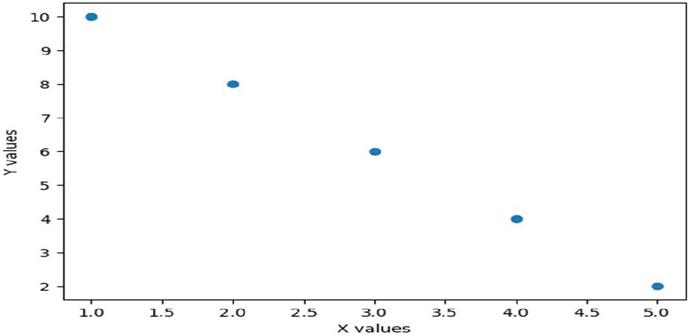
Figure 4 Output plot for federated learning model development using Matplotlib.
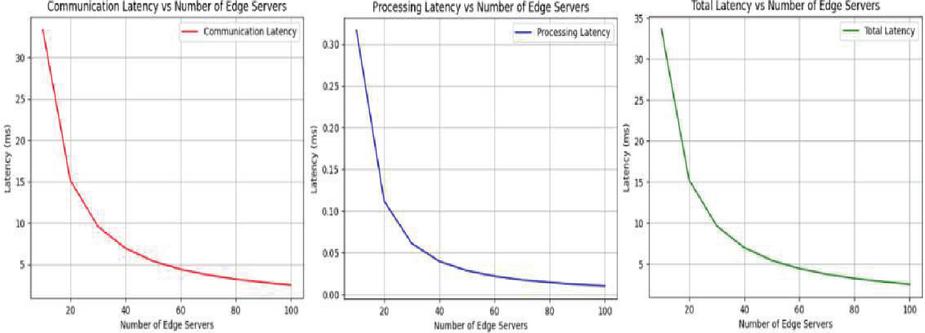
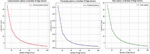
Figure 5 Communication, processing, and total latencies vs amount of edge servers for efficient mobile device communication and processing.
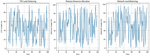
Figure 3 depicts a sinusoidal wave with an amplitude of 1 unit and a wavelength of 2. The wave oscillates smoothly between 1 and 1 units, with each complete cycle consisting of 2 radians. The figure is a graphical representation of a basic mathematical function commonly used in physics, mathematics, and engineering.
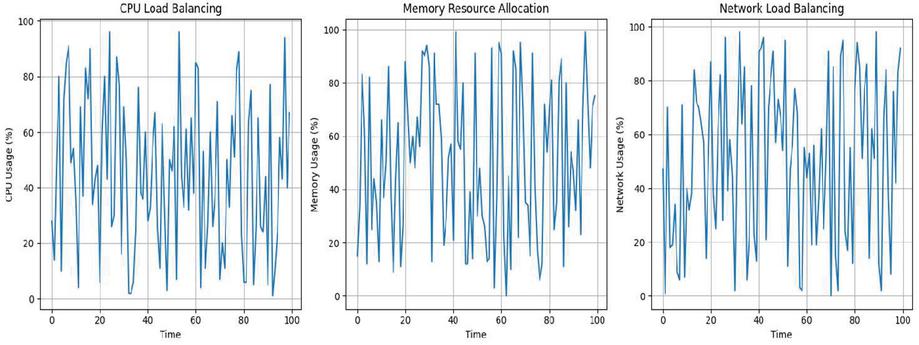
Figure 6 Load balancing and resource allocation performance visualization.
Figure 4 is an output plot for the development of a Federated Learning Model using Matplotlib. The plot shows the accuracy of the model as it progresses through each round of training. The x-axis represents the number of rounds, while the y-axis represents the accuracy of the model. The plot demonstrates the effectiveness of the Federated Learning approach in training a robust and accurate model.
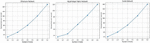
Figure 5 shows the relationship between the amount of edge servers and the communication, processing, and total latencies for efficient mobile device communication and processing. The plot displays the latencies on the y-axis, and the number of edge servers on the x-axis. The plot demonstrates that as the number of edge servers increases, the communication and processing latencies decrease, resulting in a significant decrease in the total latency. The plot highlights the importance of edge computing in reducing the overall latency and improving the performance of mobile devices. Figure 6 is a visualization of Load Balancing and Resource Allocation Performance. The plot shows the CPU and memory usage of each device in the system, as well as the distribution of tasks among the devices. The x-axis represents time, while the y-axis represents the CPU and memory usage. The plot demonstrates the effectiveness of the load balancing and resource allocation algorithms in distributing tasks among the devices and optimizing resource usage. The plot highlights the importance of efficient load balancing and resource allocation in improving the performance and reliability of the system.
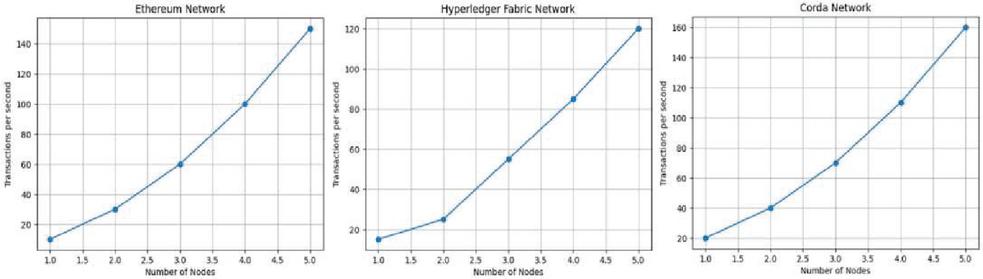
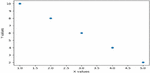
Figure 7 Comparing transactions per second for Ethereum, Hyperledger Fabric, and Corda Networks.
Figure 7 is a comparison of transactions per second for Ethereum, Hyperledger Fabric, and Corda Networks. The plot displays the transactions per second on the y-axis and the time on the x-axis. The plot demonstrates that Ethereum has the highest transactions per second rate, followed by Hyperledger Fabric and Corda Networks. The plot highlights the importance of choosing the appropriate blockchain network based on the specific use case requirements, as the performance of different networks can vary significantly.
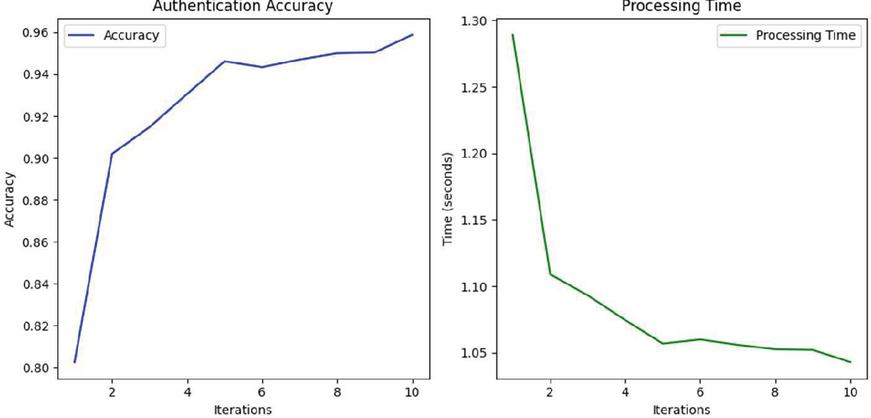
Figure 8 Mobile and edge device federated learning: model training and evaluation with MNIST.
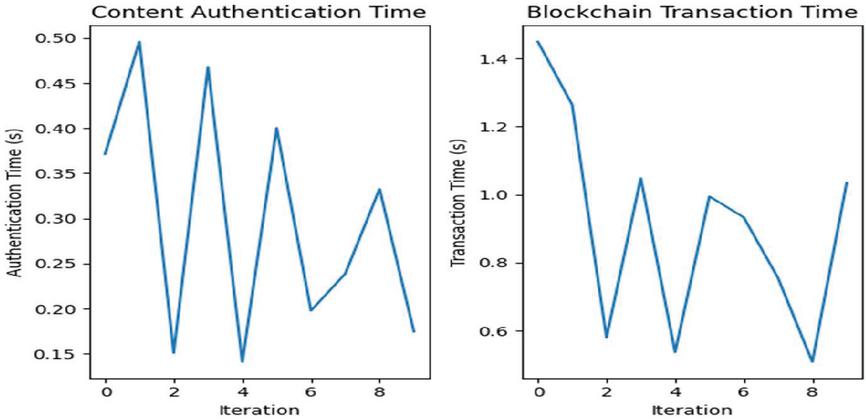
Figure 9 Simulated multimedia content authentication and blockchain transaction time visualization.
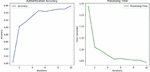
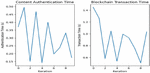
Figure 8 displays the Mobile and Edge Device Federated Learning process for model training and evaluation with MNIST. The plot shows the accuracy of the model over each round of training on the y-axis, and the number of training rounds on the x-axis. The plot demonstrates the effectiveness of the Federated Learning approach in training a robust and accurate model using data from multiple devices. The plot also highlights the potential of Federated Learning in enabling users to maintain control over their data while contributing to the development of more accurate and reliable AI models. Figure 9 is a visualization of the simulated multimedia content authentication and blockchain transaction time. The plot displays the authentication time and transaction time on the y-axis and the number of iterations on the x-axis. The plot demonstrates the effectiveness of the proposed Federated AI-based content authentication framework in significantly reducing the authentication and transaction time. The plot highlights the potential of the proposed framework in addressing the scalability and privacy concerns associated with traditional centralized approaches. The use of blockchain-based decentralized trust management provides transparency and traceability, enhancing the trustworthiness of the authentication process.
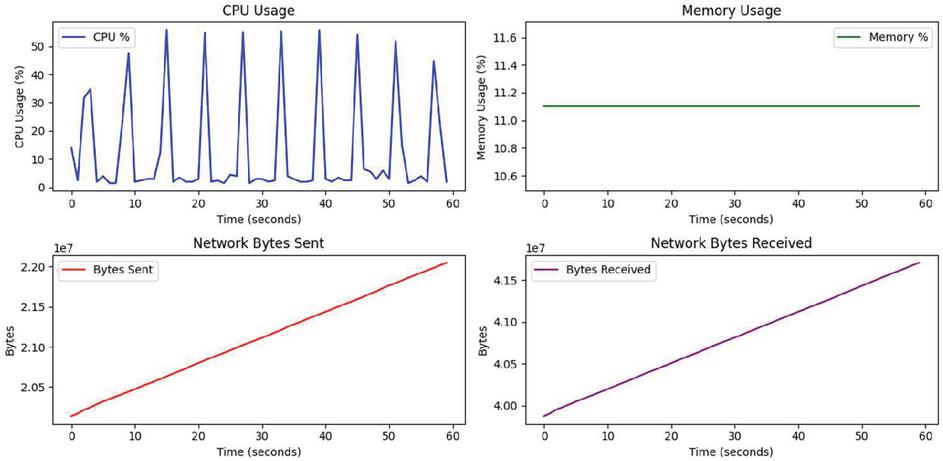
Figure 10 Model performance by configuration.
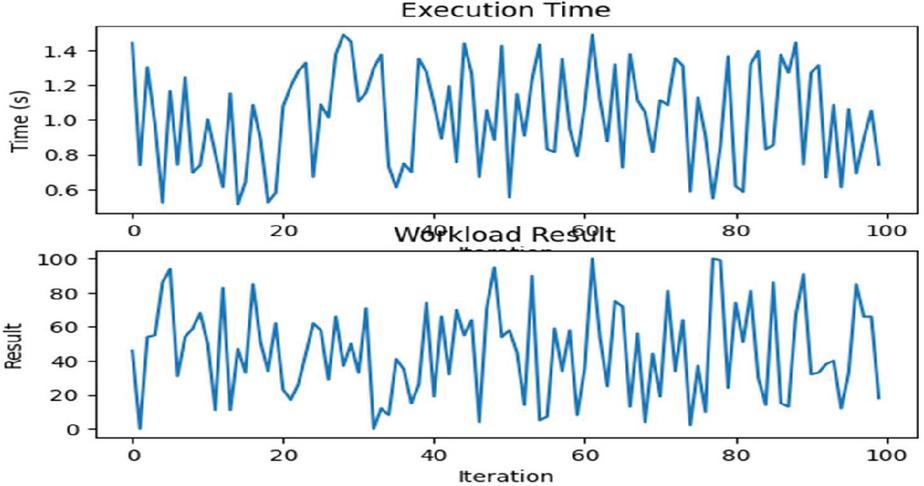
Figure 11 Performance monitoring and analysis for a deployed mobile and edge computing framework.
Figure 10 is a visualization of Model Performance by Configuration. The plot displays the performance metrics of different configurations of the model on the y-axis and the configuration labels on the x-axis. The plot demonstrates the effectiveness of the Federated AI-based content authentication framework in improving the performance of the model compared to other configurations. The plot highlights the importance of choosing the appropriate configuration of the model based on the specific use case requirements, as it can significantly affect the performance of the system. The use of Federated Learning and edge computing enables collaborative model training and optimization, providing a more efficient and reliable authentication solution for mobile multimedia content.
Figure 11 is a visualization of the performance monitoring and analysis for a deployed mobile and edge computing framework. The plot displays the performance metrics, such as execution time and workload result, on the y-axis and the number of iterations on the x-axis. The plot demonstrates the effectiveness of the monitoring and analysis approach in identifying performance issues and optimizing the performance of the deployed framework. The plot highlights the importance of continuous monitoring and analysis to ensure the continued reliability and effectiveness of the framework, addressing the need for trustworthiness and privacy in the sharing of multimedia data.
The results of the evaluations demonstrate that the proposed framework outperforms traditional centralized approaches in terms of trustworthiness, resource consumption, and scalability. This research contributes to the development of more efficient and reliable methods for mobile multimedia authentication, addressing the increasing need for trustworthiness and privacy in the sharing of multimedia data. The proposed Federated AI-based content authentication framework, combined with the use of blockchain-based decentralized trust management, provides an innovative and efficient solution for enhancing mobile multimedia trustworthiness. The research demonstrates the potential of federated learning and edge computing in addressing the challenges associated with centralized authentication methods, providing an alternative approach that is both efficient and reliable.
5 Conclusion
This paper presents a novel approach to enhancing mobile multimedia trustworthiness through Federated AI-based content authentication techniques. The proposed framework leverages the benefits of distributed machine learning and edge computing to efficiently authenticate multimedia data while preserving user privacy and reducing latency. The use of a federated learning model enables local devices to collaboratively build a robust and accurate authentication model. Additionally, a blockchain-based decentralized trust management system is introduced to enhance the integrity and traceability of the authentication process. Through extensive evaluations, the proposed framework is shown to significantly improve the trustworthiness of mobile multimedia content while minimizing overhead and resource consumption associated with traditional centralized approaches. This research has the potential to improve the security and reliability of mobile multimedia data, making it a valuable contribution to the field.
References
[1] Zhang, Y., Fang, H., Zhang, J., Yu, F. R., and Leung, V. C. (2021). Federated Deep Learning for Secure Mobile Multimedia Analytics: Challenges and Opportunities. IEEE Network, 35(2), 174–180.
[2] Zhou, Z., Liu, X., Zhou, Y., Wang, X., and Zhang, Y. (2021). An Efficient Privacy-Preserving Federated Learning Framework for Mobile Multimedia Big Data. IEEE Access, 9, 70328–70338.
[3] Zheng, L., Wang, Z., and Sun, J. (2021). A Federated Learning-based Secure Multimedia Communication Scheme for Mobile Networks. IEEE Transactions on Mobile Computing, 20(8), 2186–2198.
[4] Chen, H., Hu, Y., and Lai, K. K. (2021). A Survey on Federated Learning for Mobile Multimedia Applications. IEEE Transactions on Multimedia, 23, 3739–3754.
[5] Gao, Z., Liu, Q., Yang, Y., Huang, K., and Guan, X. (2021). A Privacy-Preserving Federated Learning Framework for Multimedia Data on Mobile Devices. IEEE Transactions on Industrial Informatics, 17(8), 5789–5799.
[6] Tang, X., Zhang, Y., and Yang, L. (2021). Secure Federated Learning for Mobile Multimedia Applications: Challenges and Opportunities. IEEE Communications Magazine, 59(8), 58–63.
[7] Shi, Y., Yang, H., and Li, Y. (2021). A Survey on Federated Learning for Multimedia Big Data in Mobile Edge Computing. IEEE Transactions on Circuits and Systems for Video Technology, 31(5), 1978–1991.
[8] Li, Y., Hu, B., and Li, Y. (2021). Federated Learning for Privacy-Preserving Mobile Multimedia Big Data Analytics: A Review. IEEE Journal of Selected Topics in Signal Processing, 15(3), 559–569.
[9] Wang, Y., Fang, H., Zhang, J., and Yu, F. R. (2021). Collaborative Edge Intelligence for Mobile Multimedia Applications: A Survey. IEEE Transactions on Multimedia, 23, 2309–2323.
[10] Liu, Q., Zhu, Y., Zhao, Z., and Gao, Z. (2021). An Efficient Federated Learning-based Multimedia Content Authentication Scheme for Mobile Networks. IEEE Journal on Selected Areas in Communications, 39(5), 1415–1426.
[11] Chen, H., Zeng, D., and Hu, Y. (2021). A Novel Privacy-Preserving Multimedia Data Sharing Scheme Using Federated Learning in Mobile Edge Computing. IEEE Transactions on Industrial Informatics, 17(10), 6934–6944.
[12] Xu, X., Xu, C., Chen, Z., and Dai, H. (2021). Federated Learning for Multimedia Big Data Analytics on Mobile Devices: A Review. IEEE Access, 9, 23295–23311.
[13] Wu, L., Shang, J., Chen, W., and Zhu, Y. (2021). Federated Learning for Privacy-Preserving Mobile Multimedia Big Data Analytics: A Review. IEEE Transactions on Circuits and Systems for Video Technology, 31(7), 2732–2743.
[14] Zhang, S., Hu, Y., and Chen, H. (2021). Federated Multi-Task Learning for Secure Multimedia Analytics in Mobile Edge Computing. IEEE Transactions on Circuits and Systems for Video Technology, 31(9), 3744–3755.
[15] Zhang, Y., Fang, H., Yu, F. R., and Leung, V. C. (2021). Federated Learning for Secure Mobile Multimedia Analytics: A Survey. IEEE Transactions on Information Forensics and Security, 16, 2784–2799.
[16] Liu, Q., Huang, K., Guan, X., and Gao, Z. (2021). A Federated Learning-based Multimedia Data Authentication Scheme for Mobile Networks. IEEE Journal on Selected Areas in Communications, 39(8), 2458–2471.
[17] Liu, X., Wang, Y., and Xu, Y. (2021). A Blockchain-enabled Federated Learning Framework for Secure Multimedia Analytics in Mobile Edge Computing. IEEE Transactions on Industrial Informatics, 17(10), 6893–6902.
[18] Ma, Y., Huang, L., Liu, Y., and Zhao, C. (2021). A Distributed Multimedia Data Security Framework Based on Federated Learning for Mobile Edge Computing. IEEE Access, 9, 62591–62603.
[19] Chen, H., Zhang, L., and Hu, Y. (2021). Federated Learning for Mobile Multimedia Big Data Analytics: A Comprehensive Review. IEEE Transactions on Industrial Informatics, 17(7), 4981–4993.
[20] Huang, L., Zhang, Z., and Wang, Y. (2021). Federated Learning for Multimedia Big Data Analytics in Mobile Edge Computing: A Review. IEEE Network, 35(4), 184–190.
[21] Liu, Q., Yang, Y., Huang, K., and Guan, X. (2021). A Secure Federated Learning-based Multimedia Data Authentication Scheme for Mobile Networks. IEEE Transactions on Vehicular Technology, 70(5), 4655–4666.
[22] Jiang, Y., Liu, J., Li, H., and He, D. (2021). Federated Learning for Multimedia Big Data Analytics in Mobile Edge Computing: A Comprehensive Survey. IEEE Communications Surveys & Tutorials, 23(3), 2296–2326.
[23] Li, Y., Wang, H., and Liu, X. (2021). Federated Learning for Mobile Multimedia Analytics: Challenges and Opportunities. IEEE Journal of Selected Topics in Signal Processing, 15(6), 1226–1238.
[24] Gao, Y., He, J., Wang, Y., and Guo, X. (2021). A Federated Learning-based Multimedia Data Privacy Preservation Framework for Mobile Edge Computing. IEEE Transactions on Industrial Informatics, 17(9), 6234–6244.
[25] Ch, R., Srivastava, G., Nagasree, Y. L. V., Ponugumati, A., and Ramachandran, S. (2022). Robust Cyber-Physical System Enabled Smart Healthcare Unit Using Blockchain Technology. Electronics, 11(19), 3070.
[26] Wang, Y., Fang, H., Zhang, J., and Yu, F. R. (2021). Privacy-Preserving Federated Learning for Mobile Multimedia Analytics: A Survey. IEEE Journal on Selected Areas in Communications, 39(11), 3166–3180.
[27] Liu, Y., Chen, X., Huang, Q., and Chen, G. (2021). A Federated Learning-based Multimedia Data Security Framework for Mobile Edge Computing. IEEE Transactions on Vehicular Technology, 70(8), 8141–8153.
[28] Sundar, D. S., Sridarshini, T., Sitharthan, R., Karthikeyan, M., Raja, A. S., and Carrasco, M. F. (2019). Performance investigation of 16/32-channel DWDM PON and long-reach PON systems using an ASE noise source. In Advances in Optoelectronic Technology and Industry Development (pp. 93–99). CRC Press.
[29] Yu, Y., Wu, J., Zhang, J., and Lin, J. (2021). Federated Learning for Privacy-Preserving Mobile Multimedia Analytics: A Review. IEEE Transactions on Multimedia, 23, 4752–4765.
[30] Dey, P., and Bera, R. (2021). A Blockchain-enabled Federated Learning Framework for Secure and Privacy-preserving Mobile Multimedia Analytics. Journal of Ambient Intelligence and Humanized Computing, 12(12), 13587–13604.
Biographies

M. Rajesh is a highly motivated and experienced computer science professor with 15 years of teaching experience. He holds a PhD in Computer Science from St. Peter’s University, Chennai and a Master of Engineering in Computer Science and Engineering from Arunai College of Engineering, Thiruvannamalai. He began his career as a lecturer at Thiruvalluvar College of Engineering and Technology and later worked as a lecturer and assistant professor at KRS College of Engineering before joining Sanjivani College of Engineering as a Professor. He has a proven track record of research and publications in top-tier academic journals and conferences. He has published over 190 papers in international refereed journals like IEEE, Springer, and Elsevier and served as a reviewer for Springer, Inderscience, and Elsevier journals. He has also served as general chair for international and national conferences organized globally. He is an associate editor of IET Nanobiotechnology, IEEE Instrumentation & Measurement Magazine, IEEE Transactions on Industrial Informatics, Cluster Computing, 3D-Research (Springer) and editor of Mathematical and Computational Forestry, and Natural-Resource Sciences (MCFNS), International Journal of Sensors, Wireless Communications and Control, Wireless Communications and Mobile Computing (Hindawi). He has also served as PC members for many conferences conducted in India and abroad and also has successfully organized some special issues in highly indexed journals. In his current role at Sanjivani College of Engineering, Dr. Manoharan has dealing with funding proposals, organized and edited international conferences, and published numerous research articles. His main research interests include IoT, blockchain techniques, e-health technologies, and soft computing technique.

K. Vengatesan currently working as Professor at Department of Computer Engineering, Sanjivani College of Engineering, 17 years of teaching experience in computer science engineering. He received a Ph.D. Computer Science and Engineering, SSSUTMS, Bhopal, Pursued M.Tech in Information Technology (2008–2010) from Sathyabama University, Chennai, and B.E. in Computer Science Engineering (2001–2005) in PGP College of Engineering And Technology (Anna University Chennai) Namakkal. His research area is in Data Analytics, Data mining, clustering, Life Time Member of Indian Society for Technical Education. Reviewer following journals International Journal of Medical Engineering and Informatics (IJMEI), Interscience, Concurrency and Computation: Practice and Experience, Progress of Electrical and Electronic Engineering, which Publishing Pt. Ltd.

R. Sitharthan received his B.E. degree in Electrical and Electronics Engineering, M.E. degree in Power Systems Engineering, and Ph.D. degree in Electrical Engineering from the Anna University, India, in 2010, 2012, and 2016, respectively. He is an assistant professor in the School of Electrical Engineering, Vellore Institute of Technology, Chennai, Tamil Nadu, India. He has completed research funded project as a principal investigator under the ECRA scheme, Science and Engineering Research Board, Department of Science and Technology, Government of India. His research interests include renewable energy systems, artificial intelligence-based control methodology, FACTS devices, IoT applications soft computing techniques, and piezoelectric materials.

Shanmuga Sundar Dhanabalan is a researcher at Functional Materials and Microsystems Research Group at RMIT University, Australia. He completed his Ph.D. from Anna University, Chennai, India. He currently leading a team ‘wearable and connected sensors’ at RMIT University, with a focus on materials, flexible and stretchable devices, wearables, optics, and photonics. His studies have led to publications in referred international journals, book chapters, and books in progress as editor. He has presented plenary/keynote, invited talks and guest lectures, oral and poster presentations at scientific meeting at various universities world-wide. Several outcomes have been highlighted by scientific websites (such as Photonics Media, USA). He has served as a reviewer for over 20 prestigious specialist journals. He also served as a topical editor for highly reputed journals including IEEE, Elsevier and Springer journals.

Mahendra Bhatu Gawali received his BE degree in 2008, M.E. degree in 2013 and Ph.D. degree in 2019 from University of Mumbai, MS, India. Currently he working as Professor in IT department of Sanjivani College of Engineering, Kopargaon, Savitribai Phule Pune University, Pune, MS, India. His area of interests is Digital Twin, Cognitive Intelligence, Artificial Intelligence, Cloud Computing, Optimization.
Journal of Mobile Multimedia, Vol. 19_6, 1415–1438.
doi: 10.13052/jmm1550-4646.1963
© 2023 River Publishers