Circular and Sustainable Multi Business Model Innovation and Development: How can Advanced Sensors, 5G, 6G and Beyond Technologies Support the Process and Progress?
Peter Lindgren
CTIF GLOBAL CAPSULE (CGC), Kuttervej 13, DK-9990 Skagen, Denmark
E-mail: lindgren.peter@ctifglobalcapsule.org
Received 07 August 2023; Accepted 27 October 2023; Publication 07 February 2024
Abstract
The circular economy is used as a concept to advance and push the green and sustainability transition process in businesses to a more circular, green, resource effective economy. However, it has turned out to be much more complex to innovate, develop, implement, operate and not least measure Circular and Sustainable business models for businesses – especially for SME’s and Startups – although the approach – by many – is emphasized as “easy” strategies and implementation. Achieving Circularity and Sustainability (environmentally, economically and socially parameters) – at the same time – related to business models has not yet been clearly defined, shown, proven and measured. Achieving environmental, economic and social goals – equal to sustainability – at the same time – the ”triple bottom line” approach – in a circular perspective is a great dilemma to many businesses because the parameters often conflict each other. Advanced sensor technologies, 5G and 6g technologies gives great hope to be able to make it more visual and transparent to what businesses are really doing and strategically want to do. Advanced technology could help to visualize the process and the dilemma – in close to real time.
Advanced sensor, 5G, 6G technologies imbedded in Business Model’s (BM) and Circular Sustainable Multi Business Model Innovation and Development processes gives hopes for a new leadership and management era together with better measurement tools, practice, and approaches. It also gives hope to a higher speed on circular and sustainable transition – visualizing and thereby hopefully preventing greenwashing.
The EU project Greenbizz II A and B’s vision is to speed up the Circular and Sustainable Multi Business Model Innovation and Development (CSMBMID) process in SME’s and Startups together with their business value network. The aim is to achieve and implement Scope 3 – but under the goal to also create at the same time effectiveness, efficiency and sociality in CSMBMID. By reengineering AS IS BM’s – and designing Circular and Sustainable Business Models (CSBM) – the vision of Greenbizz II A and B are however very complex by nature. It requires a manifold of activities, different network constellations and not least further research, innovation and development of sensors, 5G and 6G technologies, learning and traning and a CSMBMID Brain.
Greenbizz II A and B build on top of EU Greenbizz 1 project, as Green, Economic and Social parameters are seeked measured and achieved together with circularity at the same time in a new “Circular Sustainable Triple Bottom Line” measurement framework. A new advanced monitoring smartboard using advanced sensors and wireless technologies prototyped in SMEs/Startups – and their business value networks – will be prototyped and tried to be implemented from 2024 – 2026 in 96 SME and Startup businesses.
The paper discuss through 3 case examples in different Business Model ecosystems contexts, challenges to do CSMBMID and how advance sensor, 5G and 6G technologies is expected to help and support circular sustainable BM transition in businesses. It points to how CSBM’s can be innovated, developed and implemented supported by advance sensor, artificial intelligence, deep learning, persuasive technologies, Multi Business Model Innovation pattern analysis and libraries of BM archetypes.
Keywords: Circular sustainable multi business model design, reconfiguring and development, circular economy, advanced green business modelling, AI, advanced sensors, persuasive technologies, circular sustainable Capex and Capin, circular sustainable Capin and Opin.
1 Introduction
The Green Business transformation progress towards realizing the circular green economy unfortunately moves in a much slower speed as wanted related to the requirements set up by society and rule makers of Global Business Model Ecosystems (BMES) [1]. The global warming is in summer 2023 beginning to show its “disruptive face” resulting in extreme weather conditions and impact on living and social conditions worldwide.
SME’s and Startups are in this process particularly important because they make up a major part of global BMES’s. However, they are challenged as they are at great risk to be marginalized, with the circular green economy visions and requests – amongst others EU’s new green taxonomy [2] intended to begin fully to be implemented in 2024. These businesses lack’s resources, competences, and not least advanced sensor and wireless technologies able to monitor, measure, communicate, visualize, lead, and manage their green transformation – in real time. Several Standards and rulesets of green, Sustainable Development Goals (SDG) exist already. However, they are volatile, complex, uncertain and ambiguous. This requires that technology providers sensors, 5G and 6G technologies must be able to change continuously to adapt to continues changing requests, standards and rulesets.
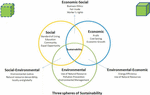
The circular economy [3, 4] is also today used in many different context – as a concept to advance the sustainability transition in businesses – in a environmental, economic and social spheres – and as a basis for creating a circular and sustainable economy. However, it has turned out to be very challenging to implement, operate and measure CSBM for businesses – especially SME’s and Startups – although the approach emphasizes “easy” strategies and implementation by many [1, 2]. A good starting point would be to ask ourself – How can and do we want to defined and measure Environmental-Economic, Economic-social and Social-Environmental parameters as seen in Figure 9 related to a circular and sustainable Business and BM?
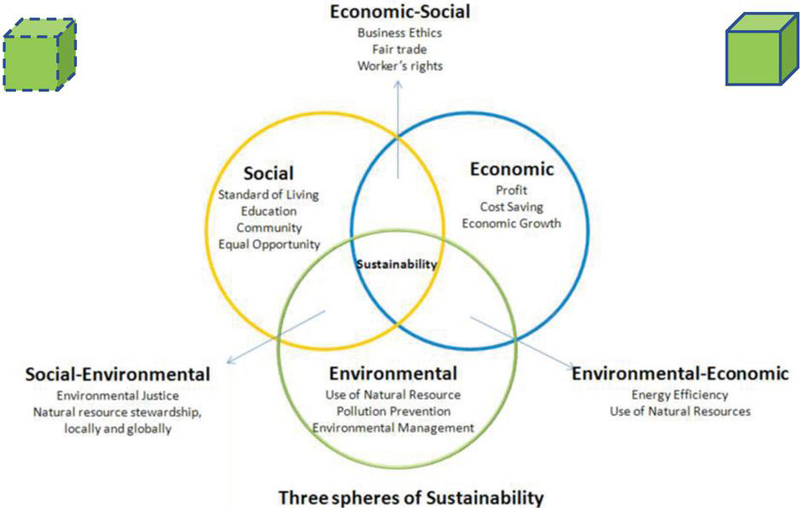
Figure 1 The Environmental-Economic, Social-Environmental and Economic-Social dimension of TO BE and AS IS Circular, Sustainable and Green Business Models adapted from Elkington [5].
In Greenbizz project from 2020 – 2022 businesses brought down and decreased CO2 emission on behalf of the above-mentioned businesses investments and initiatives. Installation of advanced sensors enabled the businesses to monitored the businesses business models energy-, water-consumption and Co2 emission.
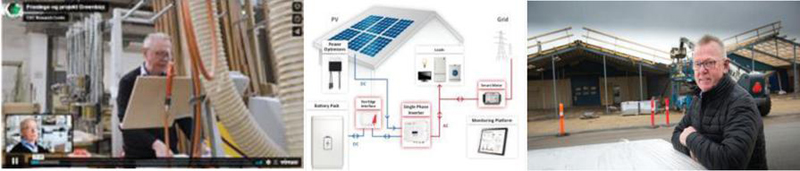
Picture 2, Figure 2 and Picture 3: Frontego establishing Solar Cell power to increase green energy production, Green Energy consumption and reduce energy procurement.
A “Green business model Dashboard” was innovated to measure material and resource consumptions in many of the Greenbizz businesses. Hereby some parts of the environmental parameter as seen in Figure 1 could be measured. In Picture 4 and Figure 4 one of the Greenbizz business installs the “Greenbizz Smart board” and monitors the energy consumption.
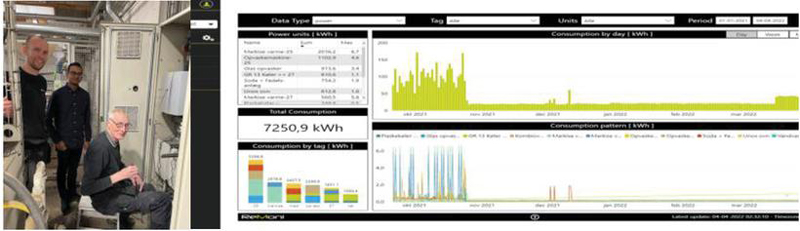
Picture 4 and Figure 4: Sensor installation and Sensor based Energy measurement dashboard at Frontego.
In some businesses it was not possible and relevant to install digital measurement equipment as they were strategically focusing on other green parameters – waste, spill, pollution and biodiversity – and the technology was not developed or available yet to measure these. Advanced sensors to e.g. measure content of material and resources in real time did e.g. not exist – although standards based on estimates and actual facts for the single material, resource and pollution exist. This initiated the idea of creating Greenbizz IIA and IIB projects to finally reach a level of actual fact based and real time based measurement.
In Greenbizz projects focus group 1 – 63 SME/Startups within 17 different Nace code line of businesses – participated in courses, workshops, events, vertical and horizontal network projects/collaborations workshops to gain knowledge – a competence lift – on Green Business Models (GBM). On behalf of this learning they could create, capture, deliver, receive and consume GBM’s that were of value to their business and business strategy.
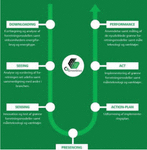
The Green Bizz project used through the project a special Green Business Model Innovation (GBMI) process model shown in Figures 5 and 6 when working with the businesses.
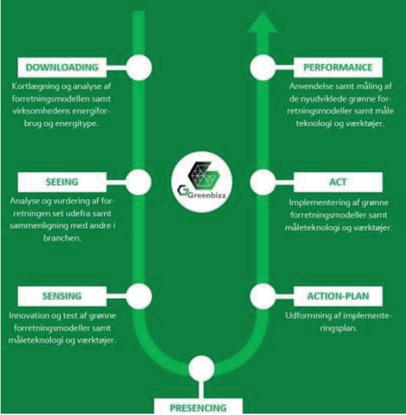
Figure 5 GBMI Process Model used in the Greenbizz project.
The process model secured continious knowledge and learning gathering with participants before the concrete sensing – GBMI process – took place. Hereby all participants had a commen knowledge background, GBMI language and platform on their GBMI projects.
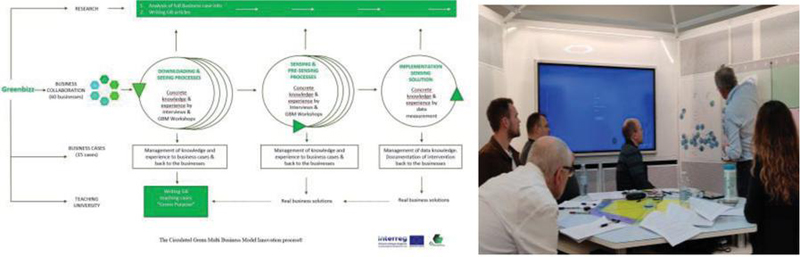
Figure 7 and Picture 5: The Greenbizz MBMI Process and a participant group in a Greenbizz lab.
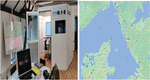
These workshops and GBMI processes were carried out in different GBMI Labs spread out in 30 places in Norway, Sweden and Denmark as seen in Figure 8 and Picture 6.
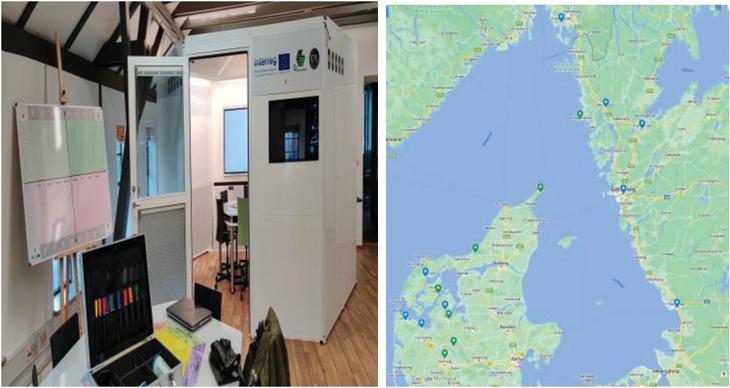
Picture 6 and Figure 8: Overview of Greenbizz Lab service centers in Norway, Sweden and Denmark.
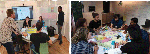
BA and Master students were also involved in the Greenbizz project and several GBMI challenge camps – as seen in Picture 7 and Picture 8 – working together with the businesses supervised by Greenbizz researchers and supervisors.
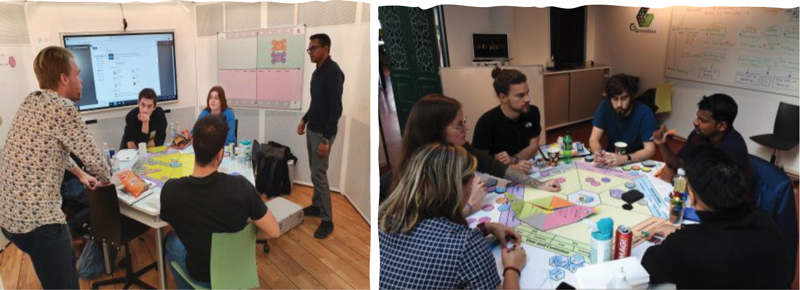
Picture 7 and Picture 8: BA and Master students from Norway, Sweden and Denmark working on Greenbizz GBM Challenges.
Greenbizz project was further involved in the Nordic Startup Award (NSA) [6] – as seen in Pictures 9 and 10 – to support further GBM Startups, Startup businesses and activities.
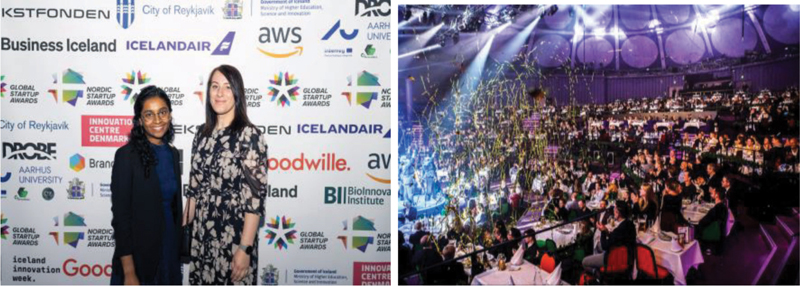
Picture 9 and Picture 10: Greenbizz researchers participating in the Nordic Startup event [6] in Iceland and Copenhagen.
The Greenbizz project [7] hereby resulted in CGBMI and development documented in several newsfeeds, video cases, Picture 11 research based tools and academic journal articles including a workshop and knowledge transfer session at a visit from Indian ambassador in Denmark. She wanted to see and experience the Greenbizz projects technologies and business models with the aim to pinpoint what could value India in their Green Transforamtion. Further she wanted to discuss increased collaboration between researchers, industry and universities of India and Denmark on GBMI.
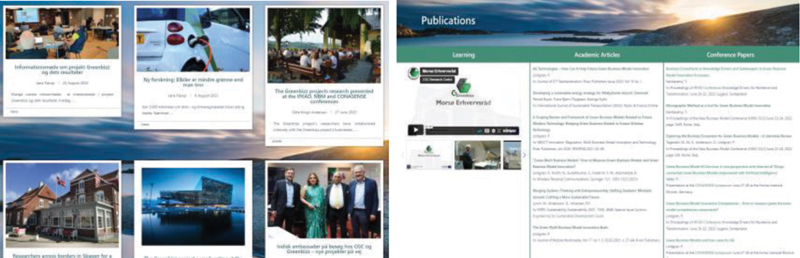
Picture 11: Greenbizz website with Greenbizz business cases, news, presentation of tools and links to academic journals [7].
2 From Greenbizz I to Greenbizz IIA and IIB
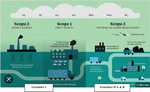
Greenbizz project was very much focused on the Environmental and Environmental Economic related Green Parameters divided in the project up to 4 areas Green BM Parameters inspired by Brundland Commitee – 1. Resource and Material 2. Waste and Spill 3. Pollution included Co2 4. Biodiversity [8] – as can be seen in several of the papers and video cases at Greenbizz website. Picture 11 had very much a focus on scope 1 and scope 2 projects [3] whereas Greenbizz IIA and Greenbizz IIB as seen in Figure 7 focus on Scope 3 [9]. Scope 1, 2 and 3 is a way of categorizing the different kinds of carbon emissions a business creates in its own operations, and in its wider value network as seen in Figure 9.
Scope 1 emissions— covers the Green House Gas (GHG) emissions that a business makes directly — for example while running its boilers and vehicles.
Scope 2 emissions — covers the emissions business makes indirectly – like when the energy it buys for heating and cooling buildings, is being produced on its behalf.
Scope 3 emissions —covers all the emissions associated, not with the business itself, but that the business is indirectly responsible for, up and down its value chain or value network. For example, from buying products, services or value proposition processes from its network (e.g. suppliers), and from its products, services or processes when its customers buy and users use these. Emissions-wise, Scope 3 is the most difficult to achieve and measure and requires much more advanced technologies.
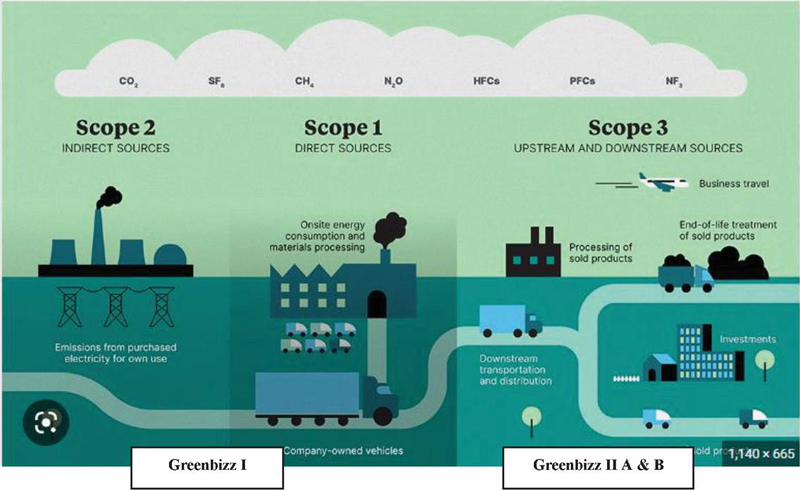
Figure 9 Scope 1, Scope 2 and Scope 3 related to Greenbizz and Greenbizz IIA and IIB [9].
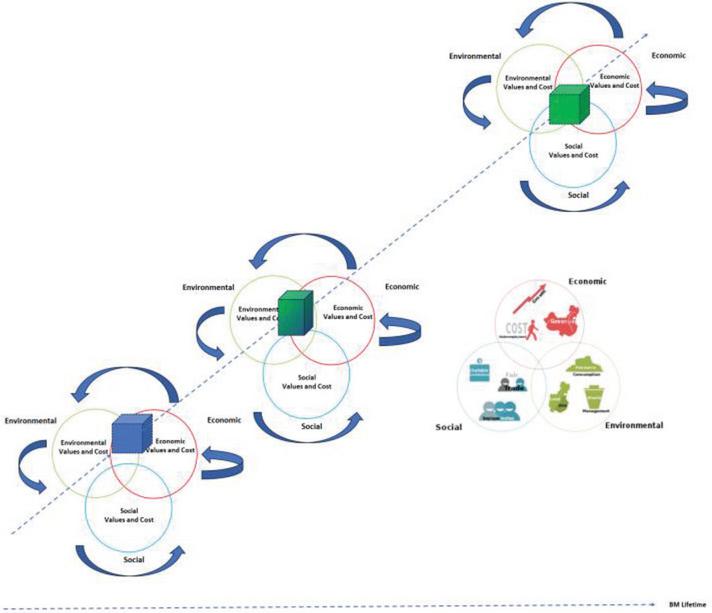
Figure 10 Circular Sustainability Tripple Bottom Line measurement framework and smartboard.
CGC’s new projects Greenbizz IIA and IIB’s vision is as mentioned above to speed up the circular green resource effective business model (CGREBM) innovation in 32 SME’s and Startups together with 64 of their business value network partners – Scope 3 – by reengineering existing AS IS BM’s and designing TO BE BM’s via CGREBM’s in and across value network collaboration.
The vision of Greenbizz II A and IIB is however larger than just achieving the scope 3 on the environmental level, as the projects also wants to focus on the economic environmental and social environmental parameters together with measuring these as close to real time as possible in a circular perspective. However, the first experiments in the businesses turned out to be much more complex to carry out and practice. To achieve the projects visions we found, it requires a manifold of transnational activities, different network constellations, changed or new technologies and much business model innovation and development. Ideas and concepts of 5G, 6G and beyond technologies created for Future Wireless Networks (SOUL) has been proposed and discussed at the presentation at the SW 2022 [10]. Greenbizz IIA and IIB wants to build on top of Greenbizz project results and findings and follows up on these Greenwall challenges on Environmental, Economic and Social parameters – the sustainability parameters. As seen in Figure 10 the projects will try to included and measured at the same time in a new proposed “Circular Sustainability Triple Bottom Line” measurement framework and smartboard CSMBMID.
A New advanced monitoring smartboard – “CS Triple Bottom Line dashboard” or “CS Smartboard” showing sustainability in a circular perspective will be prototyped on SMEs/Startups and their business value networks from 2023 – 2026. It is the aim to make it possible to verify to any stakeholder how environmentally (green), economically and social – sustainable – the business and its different business models are – and as close to real time as possible – for the entire value network.
The measurements are built on 3 common accepted sustainability parameters added with the circular parameter
1. Environmental (Green Values, Cost, Earning) – 4 overall green parameters – [8]
– Material and Resources, Waste and Spill, Pollution including Co2, Biodiversity
2. Economical (E) Economic Values, Cost, Earning) – potential, turnover, cost, earning, Efficiency [13]
3. Social – (S) (Social Values, cost, Earning) – Standard of Living, education, community, equal opportunities, other values than Environmental and Economic Values and Costs [15]
4. Circular – (C) Environmental, Economical and Social -effective and efficient system and process [16, 17]
Circularity describes in a CS business model (CSBM) context environmental, economic and social systems that aim to maximize the use and reuse of
Competences [8] consisting of
1. Technologies – product and service technologies (material and resources), production technologies and process technologies
2. Human Resource
3. Organizational Systems
4. Culture
CSBM eliminate waste and spill of competences, reduce pollution and increase biodiversity.
CSBM systems make use of design, recycling, reuse, remanufacturing and refurbishment to create a closed loop system, based on the ideal of preserving ‘virgin’ materials, reducing waste creation, maximizing waste reuse, reduce pollution and increase biodiversity.
CSBM’s is in a narrow BM context often interpreted as one way of achieving environmental and economic sustainability [17] of competences – especially technologies. However, it also has potential to and should at an optimum aim at generating positive effects also on the social sustainability area or parameter [18, 19, 25] as indicated in Figure 8.
To implement CS principles, societies, businesses and BMES’s will indeed need to shift their foundations – and thereby their core business model – to build more on renewable energy/materials sources, reduce waste and spill generation [20], reduce or create zero pollution – including reduce of Co2 emission – and improve biodiversity. This can be achieved by intentionally narrowing, slowing, and closing material and resources flows [21], waste and spill flows, pollution flows and increase biodiversity. This will eventually have impacts on economic and social parameters.
For businesses, the adoption of CSBM’s as a business strategy implies striving to provide and maintain BM’s with the highest value while consuming as little energy and as few material resources as possible [17], fight against structural waste [15] caused by inherent ineffectiveness of the value network systems and BMES’s due to bad design, reengineering and development, sub-optimal processes, outdated laws, lack of motivation or unconcerned behavior from users, customers, network and employees. Hence, building interorganizational competences and capabilities for CS is very important.
This could potentially disrupt existing Green Business Model (GBM)-[14], Circular Business Model (CBM)-, Social Business Model (SOBM), Sustainable Business Model (SBM) – standards and even standards for business model practice (BM) within the field of environmental (green), economic and social business model measurements – SBM – and CBM. As no standards have yet been able to measure, verify and show these 4 parameters of BM’s optimized at the same time society, businesses and BMES stands in front of a very large challenges – but also very potential business opportunity.
Table 1 Greenbizz II A and B initiatives and proposed support technologies and software
| Greenbizz II A and B Initiatives | Proposed Technologies | Technology Examples | Technology Provider and Systems – Examples |
| Support businesses via advance technology to analyze, innovate and develop existing business Models (AS IS BM) to become circular and sustainable to become resource – effective and efficient. Design, reengineer and develop (TO BE BM) as circular and sustainable resource effective and efficient business models by “their birth”. | Advanced sensor technologies AI 5G, 6G and beyond technologies Advanced economic software technologies |
Real time monitoring technology with sensors tracking energy-, water-, material consumption at single business – | Energy and resources Remoni – www.Remoni.dk Tracknamic – www.Tracknamic.com |
| Support businesses with the transformation to the circular sustainable BM by focusing and involving the entire value chain – the business value-network. | Advanced sensor technologies AI 5G and beyond technologies Block chain and similar technology |
Real time monitoring technology with sensors tracking energy-, water-, material consumption at entire value network | Energy and ressources Remoni – www.remoni.dk Tracknamic – www.Tracknamic.com |
| Innovate, develop and improve the digital platform (Circular Sustainable business model dashboard) where businesses can monitor – as close as possible to realtime – business models on environmental (green), economic and social competence parameters – “triple bottom line” and sustainability – as basis for change and innovation to green, economic and social business models – EU “green deal”. | Advanced sensor technologies AI 5G and beyond technologies Block chain and similar technology Advanced economic software technologies |
||
| Innovate and develop sustainability calculation tool, which businesses can use to calulate and monitore Green Capex, Green Opex, Green Liquidity, Financing related to the circular and sustainable business models and hereby make – Business cases – and “circular sustainable BM accounting” that match EU green taxonomy and beyond. | Advanced economic software technologies AI 5G and beyond technologies Block chain and similar technology |
Not Innovated and developed yet | Not innovated and developed yet |
| Support businesses with “CS Tripple Bottom Line” multi business model innovation, development and optimization with focus on circular, green, economic and social competence parameters in their business and value networks business models as illustrated in Figure 10. | Advanced sensor technologies AI 5G and beyond technologies Advanced economic software technologies |
Not Innovated and Developed yet | Not Innovated and developed yet |
Our preliminary research shows that these above mentioned parameters often have been sub optimized, they often contradict and conflict with each other. To increase and support the transformation to a circular green resource effective and efficient economy at SME’s and Startup businesses (goalgroup 1) the goals in Greenbizz IIA and IIB are to focus on several initiatives and to design, reengineer and develop different methods and tools together with advanced sensor-, 5G-, 6G- and Beyond technologies as indicated in Table 1. In Table 1 we propose supporting technologies and give technology examples together with technology providers that can be offered from some of the measurement technologies already. Further we propose technologies to be designed and reengineered to support further CSBM progress.
Several technologies – as seen in Table 1 already exists today. Others – marked with yellow in the Table 1 – have to be discovered, innovated and developed. Several AS IS BM’s are not able to communicate with sensor technologies and businesses are therefore facing a Greenwall here.
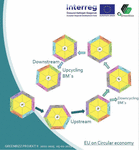
As can be seen Greenbizz IIA and IIB will go beyond a narrow focus on only the green parameter Pollution (Co2 emission) as the projects will include all kinds of circular and sustainable economy perspectives – as indicated in Figure 11.
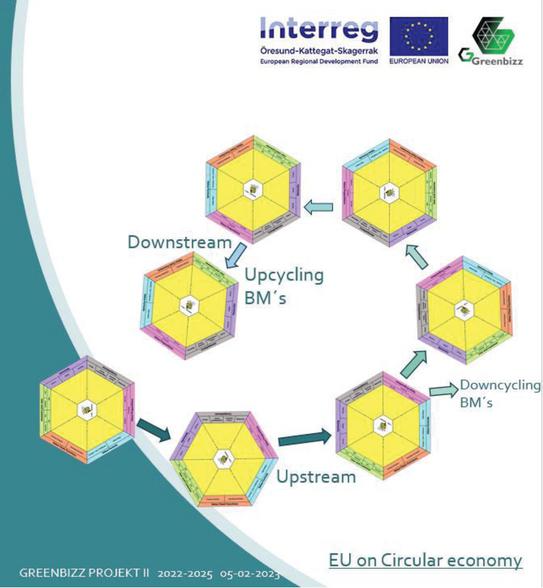
Figure 11 Upstream and downstream down and upcycling.
The sufficient perspectives [3] related to the sustainable and circular perspective will also be covered. To achieve and fullfill this purpose and related goals of Greenbizz IIA and IIB – the following activities will be carried out:
Table 2 Course modules to competence lift participants in Greenbizz IIA and IIB
| Course Module 1: Multi Business Model Innovation and development– basic course |
| Course modul 2: Green, Economic, Social, Sustainable and circular parameters in Multi business model design, reengineering and development (GBMID) with focus on mindset, vision, goals, strategies |
| Course modul 3: Circular and Sustainable Financial Multi Business model Innovation and Development with focus on circular, green economy – Capex, Opex, Capin and Opin |
| Course Modul 4: Green, Circular Social Multi Business Model Innovation and Development: (GSBMI) with focus on other values on Circular and Sustainable – Other Value mindset at SMV/Startup’s employees, users, customers, networkpartners, stakeholders |
| Course Modul 5: Strategic Circular and Sustainable Multi Business Model Innovation and Development |
WP 3: Innovation and Development of new Greenbizz II courses The researchers will firstly innovate, develop and hold Greenbizz II courses to competence lift businesses, business service/municipalities and researchers (goal group I, II and III) to enable them to learn, analyze and understand CSMBMI, their challenges and dilemmas. The aim is to make the participants able to join, support and run Greenbizz II workshops, innovation and development projects at businesses. 5 courses will be innovated and developed:
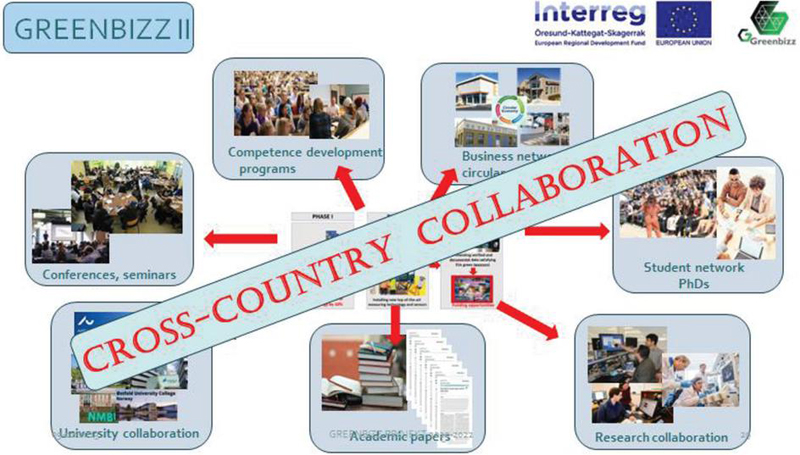
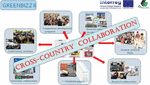
Figure 12 Cross Interdiciplinary and cross country collaboration in Greenbizz II A and B.
WP 4 [1]: Recruting of SME’s and Startup businesses to Circular Sustainable Multi Business Model Innovation and development – and Value network collaboration – through cross country business collaboration in workshops, innovation and development:
1. Reduce material – and resource consumption, and increase share of green material and green resources hereunder increase consumption of renewable material and energy in relation to total material and energy consumption, e.g. via advanced LCA – analysis, use of and innovation of advanced energy-measurement tools, advanced material and resource sensors that can measure origin of material and resources and track lifecycle of these.
2. Reduce waste and spills. Focus on waste and spill of resources and materials that can be reused as important resources – be included in circular and sustainable business model ecosystems. Use of advanced LCA analysis on waste & and spill including establishment of green circular business network to increase use of waste and spill.
3. Reduce pollution – direct and indirect polution in value networks e.g.via advanced pollution measurement including CO2 measurement in businesses tracking on e.g. transport – petrol, diesel, electricity – to reduce and diminish pollution.
4. Measurement of, Support/increase biodiversity in and around focal business and the focal business value network. Use and innovation of biodiversity measurement, sensoring, sensoring devices to enable realtime biodiversity measurement.
WP 4 [2]: Focus group 2 analysis, measurements, quantifying and qualifying degree of how circular and sustainable businesses business models and value network actual are: In Greenbizz IIA and IIB researchers will together with focus group 2 analyze, measure, quantify and qualify degree of how circular and sustainable businesses BM’s and value network actual is.
1. Analyze and describe AS IS BM’s and upcoming TO BE BM’s status on circular and sustainable BM’s
2. Decide on which circular and sustainable BM parameters the business want to focus on
3. Implement measurement via advanced technologies in the businesses.
(a) Measurement of consumption and reduction of energy, green energy, materials, waste, spill, emission of CO2 and other types of pollution, biodiversity
(b) Life-cycle assessment – LCA on materials in the businesses production, measurement of content of materials via advanced sensors – what is circular and sustainable, green and not green, origin of material, production of material, process of material production
4. Monitoring via Smart Dashboard with following datamining, analyze of data
5. Develop Circular and Sustainable BM cases: Calculate Circular and Sustainable cost and value (CS Capex and Capin), CS cost and value (Green Opex and Opin), CS Liquidity and Financing in CS BM’s – which means the business CS account statement (CS Business model Cases), which will enable the business to meet the requirements of EU Taxonomy and receive cheap Green loans [22]. Further CS BM case will enable the business to meet the financial institutes requirements and make them on behalf of the business case give Green Loans. Further CS Capin and CS Opin have to be analyzed and be included in the final CSBM business cases.
6. Final choice and decision on CSBM cases. project and implementation of the CS BM action plan
7. Continuous measurement and monitoring of the CSBM together with analysis.
WP 5 Innovation and Development of CSBM’s – ”CSBM Business Case tools” to focus group 1 businesses
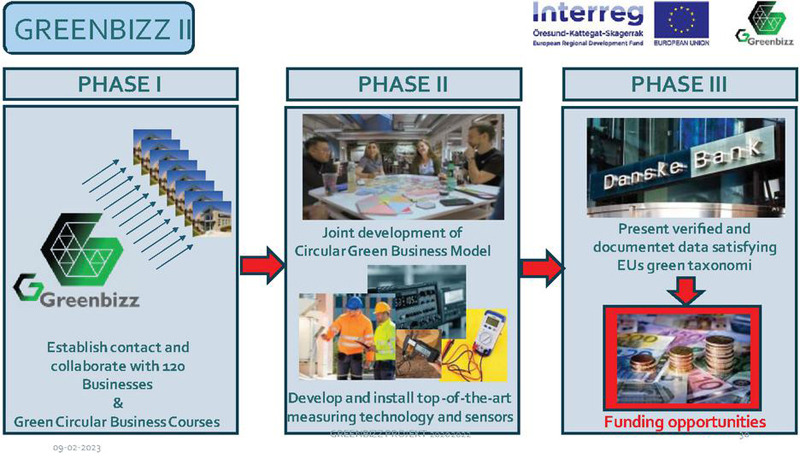
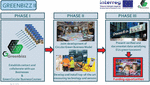
Figure 13 Greenbizz II A and B phase 1, 2 and 3.
Innovation and Development of financial, circular economy model and tools to calculate:
Circular Sustainable Capital cost (CS Capex) and Capital Income (CS CAPIN)
Circular Sustainable Operation cost (CS OPEX) and Operation Income (CS OPIN)
CSBM case and financing to meet EUs Green Finance Taxonomy – so financial institution (Banks and other funds) can verify business CS BM’s
Research and development of CSBM cases at focus group 1 businesses to get CSBM loans and investment.
Implementing ”CS Tripple Bottom Line” value set in focus group 1 businesses, so the CS transformation and/or innovation and development of new CSBM’s in the future must happen with a balanced innovation and development approach, that value and measure environment, economy, social and circular parameters equally – “The Circular Sustainable triple bottom line approach”.
WP 6 Innovation, Development, prototyping and test of CSBM – monitoring platform – CS Smart Dashboard
Technical State of the art analysis of AS IS and TO BE sensors, ICT platform, usersability, integration have been carried out and will be continuously carried out to ensure state of the art technology are embedded to the Greenbizz IIA and IIB projects. Innovation, development and test of dashboard monitoring platform: to monitor the CSBM’s parameters.
Innovation, development and test of calculation tools and algorithms will continuously calculate CSBM’s business cases and prognosis of:
CSBM capital cost and income (CSBM Capex and Capin)
CSBM operation cost and income (CS OPEX and Opin)
CSBM BM liquidity and financing
Hereby it is the vision to support and give better tools to those responsible of leadership and management in Circular Sustainable Multi Business Model Innovation and Development (CSMBMID).
3 Challenges/Reflections
The CSMBMID are challenged these days. New CSBM and Changed BMs that aim to be Circular and Sustainable at the same time challenge existing regulations and rule sets of AS IS BMES’s and calls for radical and even disruptive business model innovation and development with changed regulations and rulesets for many BMES’s. As a result of the CSMBMID process operations and formation of value networks have to change.
Material and Resources, waste, pollution including Co2 and Biodiversity from the past are not intelligent enough and often cannot communicate with existing sensors and sensor technologies – or can seldom communicate with existing known sensors and sensor technologies. Hereby it is not at the moment possible to measure CSBM’s close to real time and use this as transparent “proof” for a BMES, a Business, a Business Portfolio, a BM, a BM dimension a BM component and a BM process to verify if CSMBID processes are Circular and Sustainable – both on Scope 1, Scope 2 and Scope 3 level. There is therefore a very large potential for advanced sensors, 5G, 6G and beyond technologies to help and support these challenges. In most cases these technologies are not designed yet with focus on Circular GBM and GBMI – for a Circular economy BMES. However, some technologies already exist – especially within the material and resource measurement area – but others have to be innovated.
Advanced sensors and measurement technologies, AI, digitalization, operating and enabling measurement in real time supported by 5G, 6G and beyond technologies gives great hope of closer and more precise measurements, analysis, and validation in close to real time of material and resources, waste and spill, pollution – hereunder Co2 – and Biodiversity. In this case future materials and resources must be designed by origin for communication with advanced sensor technologies – but advanced sensor technologies must also be designed to measure materials and resources that by origin are not prepared for communication. Otherwise the Green transformation could face Greenwall challenges [23]. Both are very challenging technology inventions – some could be classified as radical and disruptive MBMI’s [24].
However, measurements are not limited to materials and resources related to – product technologies. It should also be related to service technologies, production- and process technologies in the BM dimension competence [8].
“Home” made and “domestic business based” production of energy, materials push to a degree of sufficiency [26] BM’s that are decoupled to the existing BMES’s and hereby decrease taxation possibilities and objects for governments – but increases degree of circular and sustainable BM. This have both negative and positive impact to many societies economy systems as “home based” or “domestic based” production can result in better economies in domestic businesses and even private homes that have possibilities to do this. However, the government must then find other taxation objectives or change taxation regulations over time to cover up the loss of tax on materials and resources – and even BM’s due to a transformation to a CSBM economy. This is e.g. the case on Electrical Vehicles in Nordic Countries [27] in 2023.
Increase in Circular Green Value Network MBMID push both to a trend of decentralization and centralization. As above mentioned, types of production of material and energy push to decentralization of material and energy production, but as can be seen to day there is also a heavy push to e.g. more centralized material and energy production like district heating systems and sharing economy [28–30]. Increase in Network Based and Shared new methods of BM design, reengineering and development for future CSBM is claimed to make it much easier to full fill the requirements and vision for CSBM and Scope 3. However, we still have to see the economic and social effects and the impact on business strategy and practice – and in large scale.
Many experiments with Symbiosis Value Network based business model “Islands” and “Harbors” like Sotanæs Industry Symbiosis [30], Greenlab Skive, [28], Kalundborg Industry Symbiosis [29] creates, capture, deliver, receive and consume new knowledge about how to create and practice future network based CSMBMID aimed at scope 3 and green value network collaboration. Most of these symbiosis network experiments are still established and operated under not “real life” BMES “rulesets”, which gives them some advantages and “protection” compared to other business networks and collaborations but also challenges them, when they in future have to operate under “normal BMES ruleset”. In this case advanced sensor-, 5G-, 6G- and beyond technologies are expected to be very helpful and support this transformation.
Increased CSMBMID – requires advanced and new knowledge in how to design, reengineering, analyse and develop AS IS BM’s and TO BE BM’s that are Circular and Sustaianble BM’s at the same time. Increased Strategic CSMBMID will be necessary as “blind”, “simple” and “random” MBMI will not be sufficient and sustainable in future CS BMES.
Increased cross interdisciplinary CSMBMID will be a fact soon in the circular green transformation and therefore the scope 3 cannot any longer be limited to value networks within a single competence field, single BMES and single country – but must include all global BMES and thereby all countries, digital and virtual worlds. It is expected in the next coming years to be extremely difficult to isolate businesses, BMES and countries to and from the CS Transformation and hide “black” value network partners – equal to green washing [31, 32] in isolated businesses and countries.
Increased Collaboration, Research, Innovation and development of CSMBMID will take place in the future and will call for faster, more secure and smarter CSMBMID collaborations technologies and forms – e.g. in Metaverse [33] or CSMBMID Labs. 6G and related technologies give great hope for these advanced CSMBMID solutions.
GDPR will in the above cases and contexts be a major challenge. GDPR will be more and more a must, but GDPR rulesets and technologies measuring GDPR must be innovated further to release the incredible burden that businesses and researchers have today handling GDPR. 6G and beyond technologies also give here great hope for better and more intelligent solutions.
Social Competence innovation and development [34] will get increasing focus in the future CS transformation as it is necessary to involve this often neclected “CS triple bottom Line” angle much more to “reach” the next goals of the CS transformation. Therefore, we expect a new great era for Humanity and sociality MBMID research, involvement and investment.
Artificial Intelligence (AI) and Deep Learning (DL) [35] in a world of persuasive business models [36] will be able to offer and propose all possible archetypes of CSBM’s to users and customers, networks and employees. CSMBMID Processes and corresponding interaction BM archetypes patterns of any CSBM interactions can be carried out with [36]
1. Pure Human Intermediary CSMBMID Interaction
2. Pure Machine Intermediary CSMBMID Interaction
3. Mix of Human and Machine Intermediary CSMBMID Interaction
CSMBMID patterns analysis, CSMBMID Library combine with AI and DL will be able to support a CSMBM Brain in its leadership and management of businesses CSMBMID and perform CSMBMID in any BMES and interrelated CSMBMID interaction process. The CSMBMID Brain will be able to collaborate, do coopetition and share agile, dynamic and fast its knowledge with other CSMBMID Brains in a network of BM’s. CSMBMID Brain embedded, supported and operated with AI, DL, CSMBMID pattern analysis, CSMBMID Library and advanced sensor technologies will have great strategic potential and importance in “greening” our businesses, BMES and society in a circular, resource effective and efficient way. It will soon be a basic business competence to any business – that want to participate in future Global Circular and Sustainable BMES vision.
However, the majority of businesses today are only able to “seeing”, “sensing” and realizing CSMBMID with classical human based MBMI leadership and management forms. Some businesses are mainly – compared to the above mentioned – capable of using very simple or even no CSMBMID tools and frameworks – often “of and from the past” or just copies of linear Business Model tools. This puts them into a very critical position in risk of marginalization in the CSMBMID process in a world of CSMBMID. When CSMBMID processes speeds up and larger and larger part of CSMBMID processes are taken over by “sensing intelligent CSMBMID machines” – and machines faster than human brains can work, it will be very difficult to access BMES that are CSBMES, gain shares of these CSBMES and/or gain/protect CSBMES leader position. Those businesses having the fastest and most intelligent CSMBMID Brains will thereby eventually harvest the majority of the CSBMES’s – and leave only very small bits and pieces – often non profitable behind.
These businesses – especially Startups and SME’s are in risk of marginalization as their CSMBMID approaches and tools seems not capable and able to “tailor made” CSMBMID fast, flexible and dynamic enough – especially in an exponential evolving world of CSMBM Transformation Requests. Sensing data can – by these advanced technologies – be collected within smaller and smaller areas, more precise, deeper and in real time. Businesses that do not adapt to these new technologies and setups soon enough – will have very large difficulties to interact with BMES’s and BM’s that demand documentation of CSBM’s. They are in other words not prepared to lead CSBM’s and CSMBMID into the future of CS business – meeting BMES competition with continuously changing, persuasive and virtual CSBM’s. They will not be advanced enough to create, capture, deliver, receive and consume the potentials of CSMBMID and related CSBMES in the right time, to the right cost and at the right performance [10]. They will not be able to do continuous CS improvement (CSMBMCIM), Continuous innovation (CSMBMICI) and Learning (CSMBMIL) fast enough.
Businesses will build CSMBMID competence and advanced CSMBMID Brains in the future capable to innovated and operate CSBM’s to all kinds of BMES. This will open up to new CSMBMI potential and create a new generation or archetypes of Business Models, new practice of Multi Business Model Innovation and development.
4 The Circular GMBMI Brain
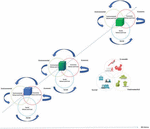
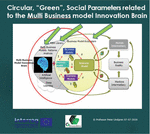
The Circular CSMBMID Brain is proposed to be supported by Artificial Intelligence (AI), Machine Learning, Deep Learning (DL), a CSMBMID Library and CSMBMID Patterns analysis. These parts of the CSMBMID Brain are expected to be special “centers” with “tools” placed outside the core CSMBMID Brain. Human and/or machine based sensors interacting in the BMES business reality – “at the frontend” in the BMES – as indicated in Figure 12 with the red circle continuously operating known CSBM’s and “learning” new CSBM’s.
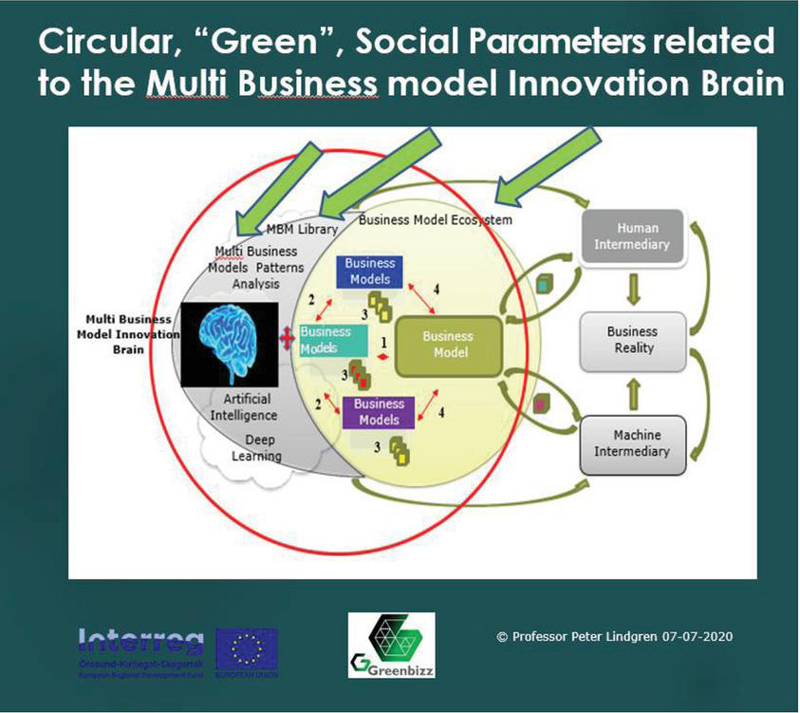
Figure 14 The Circular Sustainable Multi Business Model Innovation and Development (CSMBMID) BRAIN.
Sensors adapt and transmit sensor data to the CSMBMID Brain through tangible and intangible relations. These parts are proposed to lay outside the core CSMBMID Brain and the CSMBMI Brain operate now on behalf of these data transmitting backwards and forwards through the CSMBMID’s Brains relations to the Business CSBM’s in the respective BMES’s. CSMBMID AI, ML and DL algorithms help to optimize and suggest change of existing CSBM’s and help propose new CSBM’s directly to the responsible person or/and machine in the business to pass on to e.g. the users, customer, network and employees. Based on knowledge about other CSBM’s in other BMES’s AI, ML and DL algorithms will support implementing of change into the business reality based on its CSMBMID Brain analysis carried out together with the CSMBMID pattern analysis and available CSBM’s and knowledge of combination of CSBM’s in the CSMBMID library.
The complete CSMBMID process that the CSMBMID Brain must theoretically be able to take care of and operate were inspired by our previous articles inspired by Andersen et al. [37–39]. We now turn to some case examples to show and discuss the CSMBMID Brain process in operation in different BMES and business context.
5 Circular GMBMI Cases in Practice
The CSGMBMID Cases are elected examples from our first initial studies in Greenbizz IIA and IIB project Cases. We have to stress that the case studies are ongoing, increasing and will continue to at least 2026. They are in 2 cases anonymized because of confidentiality requirement from the businesses.
5.1 Case 1. – The FM Case – A CSMBMID Case with Circular, Environmental, Economic and Social Elements and Challenges
FM is a public business with more than 7000 employees. FM have several business units and delivers a variety of BM’s to citizens inside its own BMES and to BMES’s outside. FM has registered a manifold of unused, broken, old furniture’s as seen in picture 10 that FM would like to activate to become more circular and green sustainable, but also improve reuse of furniture’s to save cost on procuring new furniture – estimated yearly to be 0,7 mio. EUR.
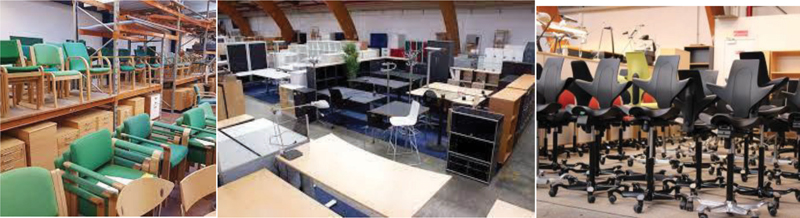
Picture 12: Examples of FM used and broken furniture.
FM formulated initially a questionnaire and send this out to 130 managers across FM’s business units inside FM. The result of this questionnaire showed that there was interest CSMBMI – to reuse and recycle the furniture. The majority of those involved in the questionnaire wanted the used furniture to be stored at a central storage and have a service included for repair of furniture. Managers also wanted an ICT platform/system to store and show data and pictures of the furniture. 3 other BM were generated though 3 workshops – 1 with just employees from FM, 1 with students from Master of Green Technology study building on top of the questionnaire and first workshop – and finally a workshop with both employees from FM and students. 3 BM was found extra through the 3 workshop – compared to initial questionnaire – and all of these “BM bobbles” were conceptualized more in detail.

Picture 13, Picture 14 and Picture 15: BMI workshop sessions.
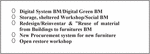
“The BM Bobbles” shown in Figure 15 were a merge of Municipality employees and students “bobbles”. These final 5 “Bobbles” out of several BM bobbles were each measured and proposed to the FM Board as shown beneath in Figure 15 with related business cases covering detailed explanation of the BM’s on CSBM dimensions – in “The CS Tripple Bottom Line” approach.
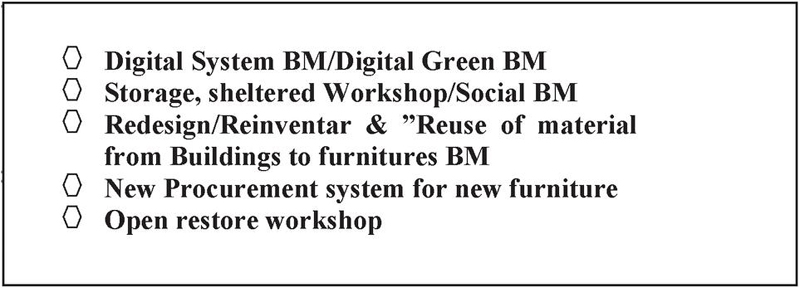
Figure 15 BMI workshop sessions bobble results.
The CSMBMI workshops resulted in 5 BM’s that could be judged related to the CS parameters and be taken to a CSBM Case analysis as shown in Table 3.
BM 1 Digital Green BM/ Digital System All kinds of information of the used and broken furniture was proposed to be stored in an easy and user friendly way stored at the proposed reuse furniture web platform. Used and extra furniture from the different municipality department should be digital stored and made digital available for all business units in FM
BM2 Social BM/Storage, and logistic Broken and used furniture brought to internal business unit for service or repair. A central storage/service and logistic center was proposed run by people out of job or with special needs for a work tasks during the week – “social service centers”. Used and extra furniture from the different municipality department should be stored at a central storage and made available for all business units in FM
BM 3 Redesign/Restore BM Broken and used furniture brought to external business unit for service or repair. All furniture were brought to a central service center at a network partner – Reinventar – or at a place at the municipality and then furniture were repaired or redesigned to be send out in new functions in the municipality. Used or old material broken down from buildings e.g. were reused for repair e.g.
BM 4 Change of procurement BM The buying process of new furniture’s was described to be complicated, long and involved a multitude of people inside and outside the buying center of FM. The procurement department argued therefore to standardization of furniture, to decrease variants of furniture, simplify procurement and repair of furniture.
BM 5 Open restore workshop Through the 3 workshops and Business Model iterations it was proposed that a central place in the municipality was used for open restore workshops. These workshops could be used to show the citizens how the municipality repair and restore used furniture. Broken and used furniture brought to internal business unit for service or repair.
Table 3 FM CSBM approaches
| FM Case | BM1 Digital Green BM/Digital System | BM2 Social BM/Storage, and Logistic | BM3 Redesign/Restore BM | BM4 Change of Procurement BM | BM5 Open Restore Workshop |
| Green | Neutral M/R W/S P |
Yes M/R W/S P |
Yes M/R W/S P |
Yes on new furniture M/R W/S P |
Yes M/R W/S P |
| Economy/Business case | Expensive (New ICT system) |
Very Expensive (New Storage) |
Expensive (Extra Payment to new network partner) |
Neutral | Neutral |
| Social | Neutral | Yes – inside Business | Yes – outside Business | No | Yes |
| Circular | Yes | Maybe | Yes | Maybe | Yes |
| Sustainable | No | Yes on two areas but not on economy and only maybe on circular | Yes except on economy | Only on new furniture | Yes |
| Challenge: | Cost, update, operation of ICT system Capex and Opex is estimated to be high Communication and update of database is considered to be a challenge |
Business Case negative on economy How Green and costly will the building of new storage be Capex is estimated to be too high |
Business Case negative on economy Dependency of network partner |
Limited to new furniture | Scaleup Capacity |
| Technology proposal | Advanced Sensors, AI and “Multi Business Model Brain” scans and identify furniture in individual FM departments and begin to identify new users and maybe customers and advice employees how to handle the furniture | Advanced Sensors, AI and “Multi Business Model Brain” scans and identify furniture decentral in each individual FM departments and begin to identify new users and maybe customers before the furniture is moved and then advice employees how to handle the furniture. The Multi Business Model Brain makes an overview of all FM Business furniture “furniture management”. | Advanced Sensors, AI and “Multi Business Model Brain” scans and identify furniture decentral in each individual FM departments at Networkpartner and begin to identify new users and maybe customers before the furniture is moved and then advice networkpartner how to handle the furniture. The Multi Business Model Brain makes an overview of all FM Business furniture “furniture management”. | No need for new technology | No need for new technology |
| NB: Under Green – M/R = On Material and Ressources, W/S = On waste and Spill, P = On Polution included Co2. | |||||
5.2 Case 2. The SA Case – A Radical CSMBMID Case with Environmental, Economic, Social and Circular Elements and Large Challenges
Salling Autogenbrug (SA) is a family-own and operated business. Auto recycling is the business of scrapping, dismantling used cars and other vehicles that are no longer suited for driving – used AS IS BM’s.
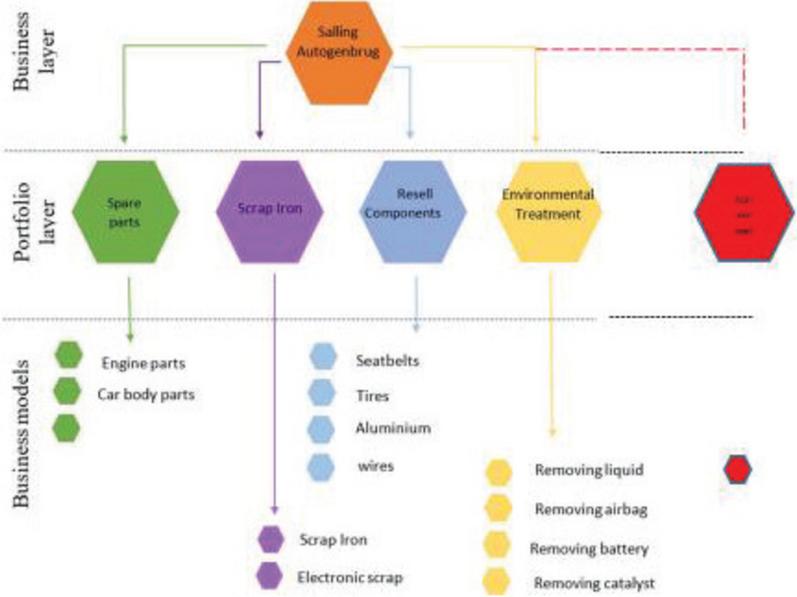
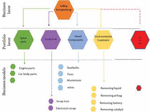
Figure 16 AS IS Business Model Portfolio’s (BMP) at SA.
The AS IS BM’s of SA can be structured in 5 main Business Model Portfolios (BMP) as seen in Figure 13; BMP 1 – Spare parts, BMP 2 Scrap Iron, BMP 3 Component resell, BMP 4 Environmental Treatment and BMP 5 Auto repair. All cars received at SA are today manual sorted and classified into:
A – cars – cars that can be serviced and repaired and sold as used cars
B – cars – cars that some parts can be sold for spare parts the rest are dismantle, scraped, and send for up-, down- or recyling
C – cars – cars that can only be dismantle, scraped, and send for up-, down- or recyling
A strategic business decision was made when relocating the business so SA no longer offer BMP 5 Auto repair services from 2022, because SA don’t want to compete with their customers. As shown in the Figure 16 Auto Repair service is no longer a BMP in SA. Instead SA would like to build up a new overall BMP with focus on sub BM within plastics, glass, rubber, electronic equipment and miscellaneous taken out of especially C-cars but also B cars as seen in Figure 17.
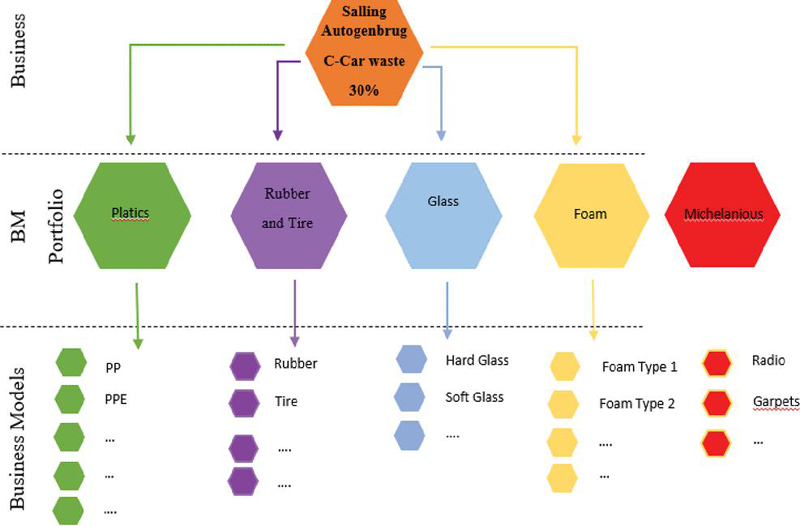
Figure 17 New BM Portfolio for SA related to C-car waste.
SA wants hereby to become Denmark’s greenest Auto recycling Business but several “Greenwalls” [40] challenges must be overcome before this can be achieved:
– Challenge 1 – Car plastic parts. When a car is scrapped It is very difficult or nearly impossible to know what are in the plastic parts – type, chemicals, mix of plastics e.t.c. Therefore it is incinerated or landfilled without being recycled or upcycled (resold, repurpose)
– Challenge 2 – Lack of production technology to upcycle or recycle the waste from C- car’s exist
– Challenge 3 – Lack of sorting and sorting guidelines of waste products from C-cars that could enter either technical cycle or a biological cycle. Many network (Suppliers) want “clean” waste
– Challenge 4 – Scale up difficulties as supply of enough C-cars are difficult and many recycling or upcycling customers (HJ Hansen, Stena Recyling, Plastic, Rubber and Glass buying customers) need and demand large amount of waste.
SA, at its previous location in Lindum near Skive, Denmark was authorized to scrap a maximum of 10 cars at a month. SA has since then grown and today has the authorization to recycle maximum 1500 vehicles pr. Year, but would like to scale production up to 2500 in 2025 and even to 5000 cars pr year 2030. The SA sparepart warehouse hold more than 30.000 quality controlled spare parts and the garage is licensed to do environmental treatment and dismantling of all types of cars.
Prices on metal and C-scrapped cars began in early 2020 to be very volatile especially in 2021 – 2022. This seemed to be a relation between scrap procurement prices of used cars and the prices on metal and scrapped cars. Further, the raw material prices began to show steep up-going price trends due to corona pandemic and war in Ukraine. SA focus was therefore to investigate scale up possibilities to the TO BE BMP. Scraped cars and environmental treatment of the cars should aim at reaching a “10% clean car” instead of today “30% clean car”. The waste was mainly send to waste treatment, landfill – or left in the cars to be treated by SA’s customers in shredding processes.
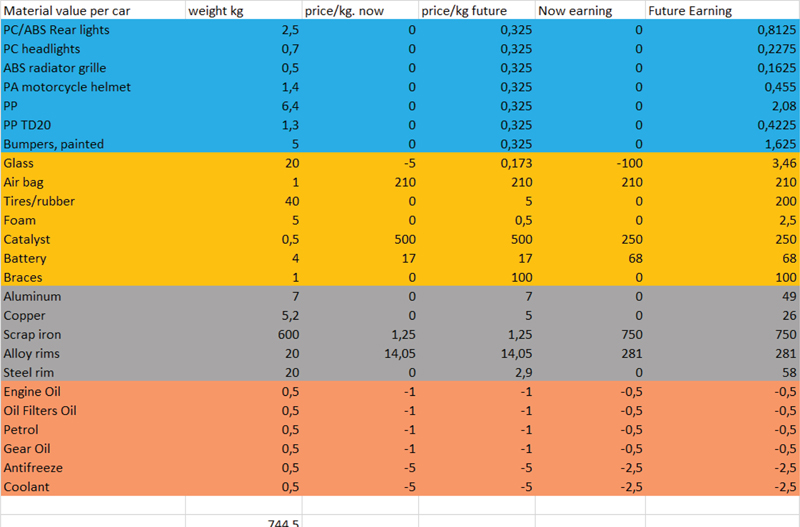
The “10% clean car” means that only 10% material is left in the car. The 10% materials is not iron or other useful material in the car. This would result in a higher price on the car to be supplied to shredder customers, but also a much greener BMP including a possibility to also make the BMP more social as young people in risk of falling out of labor market could be offered work at a new plant. However, several “green wall challenges” have been identified and realized by SA as seen in list above and Table 4. Through several experiments SA have begun to try to document the price, weight and process time for scrapping the cars more precisely. This has been shown in enclosure 1.
Table 4 SA Scrap Car green business model portfolio approaches
| SA Case | BMP1 Plastics BM’s | BMP2 Rubber and Tires BM’s | BMP3 Glass BM’s | BMP4 Foam BM | BMP5 Miscellaneous BM’s |
| Environmental (Green) | Yes On material and Resources On waste and Spill On Polution |
Yes On material and Resources On waste and Spill On Polution |
Yes On material and Resources On waste and Spill On Polution |
Yes On material and Ressources On waste and Spill On Polution |
Yes On material and Ressources On waste and Spill On Polution |
| Economy/Business case | No Recycle Plastic price is very low Very few customers for recycle plastics yet Capex cost for Plastic Schredder project high |
No Very low prices on rubber and tires Very few customers for rubber and tires |
No Negative price on recycle Glass Expensive (Extra Payment to new network partner to get rid of glass) |
No Very low price on foam Expensive (Extra Payment to new network partner to get rid of Foam) Very few customers to foam |
No Very low price on Miscellaneous BM’s |
| Social | Yes | Yes | Yes | Yes | Yes |
| Circular | Yes | Maybe | Yes | Maybe | Maybe |
| Sustainable | Yes on two areas but not on economy | Yes on two areas but not on economy and only maybe on circular | Yes on two areas but not on economy | Yes on two areas but not on economy and only maybe on circular | Yes on two areas but not on economy and only maybe on circular |
| Challenge: | Business Case negative on economy Prices on plastic too low Cost of “cleaning” the cars too high Difficult to find customers Opex cost too high Scaleup difficult |
Business Case negative on economy Prices on Rubber and Tires too low Difficult to find customers Opex cost too high Scaleup difficult |
Business Case negative on economy Prices on Glass too low Cost of “cleaning” the cars too high Opex cost too high Scaleup difficult |
Business Case negative on economy Prices on Foam too low Cost of “cleaning” the cars too high Opex cost too high Scaleup difficult |
Business Case negative on economy Prices on Miscellaneous too low Cost of “cleaning” the cars too high Opex cost too high Scaleup difficult |
| Technology Proposal | Advanced Sensors, AI and “Multi Business Model Brain” scans and identify fast parts in the car and begin to identify customers and advice employees how to dismantle the car | Advanced Sensors, AI and “Multi Business Model Brain” scans and identify fast parts in the car and begin to identify customers and advice employees how to dismantle the car | Advanced Sensors, AI and “Multi Business Model Brain” scans and identify fast parts in the car and begin to identify customers and advice employees how to dismantle the car | Advanced Sensors, AI and “Multi Business Model Brain” scans and identify fast parts in the car and begin to identify customers and advice employees how to dismantle the car | Advanced Sensors, AI and “Multi Business Model Brain” scans and identify fast parts in the car and begin to identify customers and advice employees how to dismantle the car |
| NB: Under Green – M/R = On Material and Ressources, W/S = On waste and Spill, P = On Polution included Co2. | |||||
5.3 Case 3. The RHB Case
The RHB Waste Energy’ project is a new scaleup energy technology prototype and test project that wash and dry different biomass materials – in the project Garden and Park waste energy – and hereby make this biomass into a higher quality to be ready to be used as biofuel (BM1, BM2) for all types of stoker boilers, for pyrolysis plants. In connection with the overheated steam drying process of the garden and parc waste reuse of up to 85% of the energy consumption will in the solution be recovered into the form of surplus heat (BM3). This BM3 will be used for district heating supply to heat local family homes, offices, sports arenas and for other heating purposes. The project will prototype and test in a new way a very challenging scale up energy technology solution with a mix of technologies as a demonstration project. Several technologies will be set up in a new challenging combination – new parc and garden waste cleaning/washing technology, patent overheated steam drying technology, advanced energy technology, advanced logistic technology to secure enough raw material supply to the energy plan and advanced sensor and wireless technologies. This will all be scaled up in a new energy technology solution never seen in Denmark before. The washing, drying and energy recovery technology will be prototyped, tried out and tested in a scaleup solution, so that similar combined technology and BMES solutions can be established in several other places – and for later system export of “cutting edge” Danish Energy technology solutions based on garden and parc waste biomass. This will potentially develop a new energy technology BMES and increase local workspaces of different kinds within the green energy technology BMES.
The new scale up energy project solution based on today often unused and neglected garden and parc waste biomass and inefficient use of this biomass will be able to transform, produce and secure use of local biofuel much more effective, efficient and green – hereby increase green biofuel production and district heating not just part time the year but all the year round. The consortium behind the CSMBMID project wants to initiate greener and more efficient biomass waste treatment for energy production with a new scale up biomass treatment and energy technology solution with the focus on increasing the quality of park and garden waste via a special washing and drying process in a large scale solution. The prototyping and test of the critical scale up ‘washer’ for cleaning the garden and park waste together with the scale up dryer technology is fundamental to transform garden and parc waste into solid biofuel that can be used in advanced bio boilers but also important to increase efficiency of energy production. Here is a great potential for existing and future advanced sensor and wireless technology – especially 6G technologies to play an important role in verifying garden and parc waste, controlling and documenting energy production, Co2 emissions and CSMBM’s. In Figure 18 a sketch of the RHB plant is shown to be operating in phase 1 in 2026.
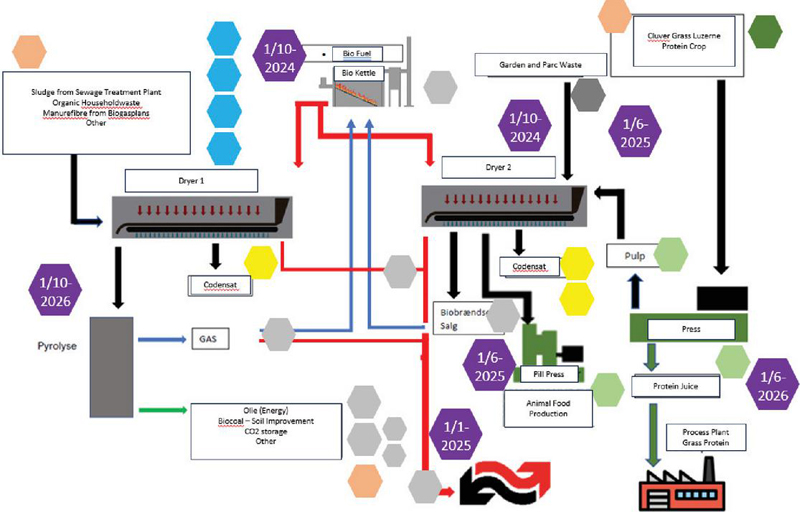
Figure 18 RHB Business Portfolio’s and BM’s.
Table 5 RHB green business model approaches
| RHB Case | BM1A Biofuel Internal Sales | BM1B Biofuel External Sales | BM2 Surplus Heat for Process Energy | BM3 Surplus Heat for District Heating | BM4 Sand, Stone and Soil BM | BM5 System Export | BM6 Energy Technology System Service Export | BM7 Water From Cleaning Process | BM8 Extraction of Grass Protein | BM9A Ecological Grass Pills | BM9B Conventional Grass Pills | BM10 Production of Biochar/ Biocoal for Soil Improvement | Production of Enriched Biochar/ Biocoal for Soil Improvement and nutrionBM11 |
| Green | Yes M/R W/S P |
Yes M/R W/S P |
Yes M/R W/S P |
Yes M/R W/S P |
Neutral | Neutral Directly but indirectly Green |
Neutral Directly but indirectly Green |
Yes M/R W/S P |
Yes M/R W/S |
Yes M/R W/S Indirectly as preventing Soya bean import |
Yes M/R W/S Indirectly as preventing Soya bean import |
Yes W/S P |
Yes |
| Economy/ Business case | Costsaving Very Good Business case | Turnover and earning generating Very Good Business case |
Cost Saving Good Business Case |
Turnover and earning generating Very Good Business case |
Not profit generating Neutral Business case | Very high potential Business Case estimate very positive. Business case to be launched in 2026 |
Very high potential Business Case estimate very positive. Business case to be launched in 2026 |
Costsaving Good Business case |
Very high potentiaf Business Case estimate very positive. Business case to be launched in 2026/27 |
High potentiaf Business Case estimate very positive. Business case to be launched in 2025 |
High potentiaf Business Case estimate very positive. Business case to be launched in 2025 |
High potentiaf Business Case estimate positive. Business case to be launched in 2026 |
Very high potential Business Case estimate very positive. Business case to be launched in 2026 |
| Social | Neutral | Neutral | Neutral | Neutral | Neutral | Neutral | Neutral | Neutral | Neutral | Neutral | Neutral | Neutral | Neutral |
| Circular | Yes | Yes | Yes | Yes | Maybe | Neutral | Neutral | Neutral | Neutral | Neutral | Neutral | Yes | Yes |
| Sustainable | Yes on two areas | Yes on two areas | Yes on two areas | Yes on two areas | Neutral | Yes but indirectly on two areas | Yes but indirectly on two areas | Yes on two areas | Yes on two areas | Yes on two areas | Yes on two areas | Yes on two areas | Yes but two areas |
| Challenge: | Supply of enough Garden and Parc Waste Volatile Prices Biodiversity |
Supply of enough Garden and Parc Waste Volatile Prices Biodiversity |
Supply of enough Garden and Parc Waste Volatile Prices Biodiversity |
Supply of enough Garden and Parc Waste Volatile Prices Biodiversity |
No paying customers | Not investigated Yet | Not investigated Yet | Purity of the water | Find Customers | None registered yet | None registered yet | Find Farmers that want to take the Bio coal | Find Farmers that want to take the Enriched Bio coal |
| NB.: Under Green – M/R = On Material and Ressources, W/S = On waste and Spill, P = On Polution included Co2, B = Biodiversity. | |||||||||||||
In the figure the different BM’s – BM 1 – 11 are shown. One of the unique things with the new plant is its multitude of BM’s which makes the Circular and sustainability of the project very high. This is explained in the paragraph beneath.
The new proposed energy technology and facility will have a unique multitude of business models, which will be highly beneficial when the complete plant later will be launched for system export of advanced Danish energy technology. It will offer not just Biofuel (Business Model 1 (BM1A) Internal Biofuel use and (BM1B) Biofuel sold to market price, but also (BM2) steam for local district heating – estimated to 2 – 4 MW. The plant has also the opportunity to realize several other business models (BM4, BM5, BM6) as described in the project proposal and the projects business case. The plant itself will use approx. 15% of the produced biofuel (BM1A) by itself and the rest 85% will be sold at market price to the biofuel market (BM1B). The surplus heat will be sold to local district heating plant (BM2) and overheated steam (BM3). Stone, sand, soil (BM4) is sold to best market price. Several businesses and district heating businesses have already agreed to test samples of the finished products (BM1, BM2, BM3 and BM4. BM2 is assessed as a very competitive and green alternative to other energy sources based on biomass waste, both in terms of quality and price – and not least as a green energy resource. The above described process, where biomass waste is transformed into usable, competitive, effective, efficient energy and the recycling of garden and park waste products, means that nothing goes to waste and energy can be produced and provided to a favorable cost and reasonable price. Furthermore, the prototype and test facility will be able to function as a base for creating a new Danish Energy technology system export adventure of the entire facility (BM 5) both nationally and globally. All core business models and related technologies (BM 1 – 5 together with BM9) are described and analyzed later with both the Business Model Canvas and an advanced BM framework that enables transferred of BM’s into to business cases to show and verify Capex, Opex and financing statements and opportunities.
6 Discussion
Sensors, wireless, persuasive, AI and Virtual technologies in businesses everyday CSMBMID will change Business Model’s (BM), Business Model Innovation (BMI) and Business Model Ecosystems (BMES) as known by today – and will support innovating and developing exponentially new types of CSMBM’s and CGMBMID processes – with a focus both on environmental, economic as we know – but with a stronger focus on the social and circular parameters – enabling the fulfillment of measuring BM’s in a CS Tripple Bottom Line perspective. Numerous new software, new advanced sensor technology and 5G/6G innovations will enhance the CSMBMID creating, capturing, delivery, receiving and consumption process and capability of designing, reengineering and developing CSMBM. These innovations and developments will disrupt the standards of measuring CBM, GBM, SBM, SOBM and BM in general. CSMBMID technologies will enable more precise and real time measurements – so Greenwashing will be pushed into something that businesses and societies did in the past – because they was not able to innovate CSBM’s and others (User, Customers, Network and stakeholders) were not able to transparently, visually and in real time see what was really going on.
These advanced technologies, frameworks, tools and persuasive CSBM’s will have great impact on the CSBM transition and trust to CSBM’s. They will enable managers along the value network responsible of CSMBMID to do better and more strategic CSMBMID in the future. When advanced technologies and advanced CSMBMID Brains “melt” and work together – meaning that CSBMs will act anywhere with anybody, anything, anytime and in any BMES – either physical, digital or virtual – then Greenwashing will be very difficult or impossible to operate. Hereby the potential for 5G and 6G together with business CGMBMI Brain’s and be released – because the individual GBM’s value proposition becomes more tailor made to the user, customer, network partner and not least the Business and societies vision and goals of a circular sustainable economy. The CSMBMI Brain’s could become critical infrastructure in future circular sustainable business model ecosystems.
By the introduction of a CSMBMID Brain construction, it will be possible to play more and more advanced strategies of CSMBMID – and faster CSMBMID games. The CSMBMID Brain would be able to combine the business different CSBM’s and play them together both inside and outside the business in the best value formula combination – including both monetary and nonmonetary values – in the preference of the business, BMES and the society. Not only scope 1 and scope 2 will be possible to achieve – but also scope 3 will now be possible to realize. EU’s new strategy on Green Deal and Taxonomy to be implemented in 2024 will hereby be possible to realize. Advanced Sensors 5G, 6G and beyond technologies is expected to play a major role in realizing this vision.
The CGBM community will definitely be pushed to adapt CSMBMID in the future – but as our research shows many businesses are at the moment not aware of this new CSMBMID ruleset coming. While the advance CSMBMID technologies grow mature, businesses will be more and more dependent on their CSMBMID Brains and CSMBM setup. That will enable them quickly to get a deep understanding in real time of how CSBM’s and related BMES really works and is expected to work – and do the CSMBMI Pattern analysis faster together with choosing the most suitable CSMBM archetypes to the CSMBMID context and BMES.
Businesses have continuously to “sense” and know how their CSMBM’s are operating (AS IS CGMBM’s) and how they should be constructed (TO BE CSMBM’s). This makes business very dependent on the relations to the CSMBM’s and the sensors embedded in their CSMBM’s. That is the reason why we see heavy upcoming investments in advanced sensor, 5G, 6G and beyond technologies. Businesses have to continuously know how and what their CSMBM’s really can “do” and how they “act”. Simulations of CSMBM’s and combinations of CSMBM’s becomes important CSMBMID support tools together with AI, DL, CGMBMI Pattern analysis and CSGMBM library.
From the above mentioned the conceptual model for the construction of a CSMBM Brain must have 5 key supporting sections as described above:
1. “CSMBM Artificial Intelligence
2. “CSMBM Deep Learning”
3. “CSMBM’s patterns analyses”
4. “CSMBM Library”
5. “CSMBMID” process tool box”
These would have been able to support the 3 different businesses mentioned in this paper to run and innovate CGSBM’s.
7 Conclusions
It has turned out to be very complex to implement, operate and measure CSMBM and CSMBMID for businesses – especially for SME’s and Startups – although the approach emphasizes “easy” strategies and implementation. Businesses are facing several “Greenwall’s” because AS IS BM’s material and resources, waste and spill, pollution and biodiversity are basically not constructed to communicate and sense. These ASIS BM’s are in most cases not embedded with advanced sensor and communication technology. More and more TO BE BM’s will be in the future but society and businesses still have to deal with the fact that majority of the AS IS BM are not circular, sustainable and are not able to communicate.
Advanced sensors, 5G and 6G technologies imbedded in BM’s and CSMBMID processes gives therefore great hope for a new leadership, management, measurement tool and approach to really measure CSMBM an CGMBMI and prevent Greenwashing. It also gives hope to higher speed and trust to CSMBM transformation and CSMBMID.
CSMBM’s have not yet been clearly defined and tried out related to the environmental, economic and especially the social and circular dimensions – the ”CS triple bottom line” approach. The paper proposes a new advanced monitoring smartboard – “a CS Triple Bottom Line dashboard” or “CS Smartboard” showing sustainability in a circular perspective to make it possible to verify transparently to any stakeholder how environmentally (green), economically and social – equal to sustainable – the business and its different business models are– as close to real time as possible – trough the lifetime of the BM.
The projects Greenbizz IIA and IIB’s vision GSMBMID Brains supported by AI, DL, advanced sensor, 5G and 6G technologies aim at doing this. The projects are and will be increasingly developed to fulfill the vision of the EU taxonomy scope 3 and more. The projects will be integrated in Businesses CSMBM’s and CSMBMID operations and this will happen both on strategic, tactical and operative CSMBMID level. This will create not just a new generation of CGBMs but also new combination of CGBM’s – an advancement of the MBMID approach. With the support of CSMBMID Brains businesses will be able to discover CSBM’s archetypes and combinations of CSBM’s not seen before and much faster than today.
The proposed CSMBMID Brain approach will allow development of CSBMs operating and innovating autonomously in all types of physical, digital and virtual layers of the business, BM, combination of BM, MBMI processes and BMES.
Hereby the agenda and practice of CSMBMID will change disruptively and both humans and machines will come to play a very different role in CSMBMID – with expected much more power to the machines and CSMBMID Brains.
The paper in this context elaborated on a conceptual model for how a generic CSMBMID Brain could be constructed and look like building on top of earlier article on The Multi Business Model Brain. In the present paper we discuss on how we experience and expect future CSMBMID Brain can be constructed and operate.
The paper describes and analyze 3 different CSMBMID cases in more details. The cases shows very different challenges and “Greenwalls” of CSMBM’s and CSMBMID. The importance of building the relations of CCMBM to the CSMBMID Brains and the advanced technologies is shown. The CSMBMID Brain is expected to be “the central organ” – or “spider” – of any CSMBMID business in the future. It will be the vital part of the CSMBMID’s “nerve system” – critical infrastructure. With the manifold of tangible and intangible relations forming the value transformation system in “the business internal and external nerve system” the CSMBMID Brain strategically will be able to lead most CGMBMI activities of the business. The CSMBMID Brain will take care of all CSBMID processing, integrating and coordination of the information it receives from related advance sensors. The CSMBMID Brain will analyze, create and deliver value back to each CSBM’s dimensions and components – either it is human and/or machine based CSBM’s and make decisions as to the instructions sent to the rest of the business. The above mentioned leaves great unused potential for future wireless technologies and advanced sensor technology.
8 Further Research
In our review of the current CSMBMID literature and the previous proposed conceptual CSMBM vision we found a gab in current body of knowledge on CSMBM business model literature. Even the current understanding of the CSMBMID process have not been investigated to its full extent related to the CSMBMID Brain and CSMBM. We propose a deeper study of advanced sensor, 5G, 6G and beyond technologies combined with CSMBMI Knowledge in our Global spread CGC Lab’s. This to increase our understanding of CSMBMID Brains, their BMES and their success factors and challenges, before extending the CSMBMID process with any further digitalization factors.
Secondly, we propose to use the output of the previously suggested study in conjunction with the proposed CSMBMID conceptual model and extend the CSMBMI process with further digitalization in the areas of interaction CSMBM archetypes and interaction CSMBM archetypes patterns of the conceptual model. We will from 2023 – 2026 in Greenbizz IIA and IIB projects further investigate the impact of the exponential growth of these CSMBM’s and advanced CSMBMID technologies discussed in our future research at the CGC MBMI and Technology research lab at CGC.
Enclosure 1 SA Scrap Car Parts – Prices, Weight
References
[1] World Economic Forum (2023) https://www.weforum.org/agenda/2023/01/we-have-everything-we-need-to-speed-up-the-energy-transition-davos-2023/.
[2] McKinsey (2022) McKinsey report January 25, (2022) The net-zero transition: What it would cost, what it could bring https://www.mckinsey.com/business-functions/sustainability/our-insights?cid=alwaysonsus-pse-gaw-mst-mck-oth-2112\&gclid=Cj0KCQiA0p2QBhDvARIsAACSOOMWZRNXBoYFjqhtT3QJMharnY\_k6aNbGvBWrRrbh3JXTfjR5BLyy08aAsc9EALw\_wcB\&gclsrc=aw.ds.
[3] Pieroni, Marina P.P., Tim C. McAloone, Daniela C.A. Pigosso (2019) Business model innovation for circular economy and sustainability: A review of approaches Journal of Cleaner Production.
[4] Bocken, Nancy M. P., Laura Niessen and Samuel W. Short (2022) The Sufficiency-Based Circular Economy—An Analysis of 150 Companies The Sufficiency-Based Circular Economy—An Analysis of 150 Companies Front. Sustain. 3:899289. doi: 10.3389/frsus.2022.899289.
[5] Elkington, j. 1994. Towards the Sustainable Corporation: Win-Win-Win Business Strategies for Sustainable Development. California Management Review, 36, 90–100.
[6] NSA (2022) https://nordicstartupawards.com.
[7] Greenbizz project (2023) – www.greenbizz.dk.
[8] Lindgren, P et al. (2021) “Green Multi Business Models” How to Measure Green Business Models and Green Business Model Innovation? Journal of Personal Wireless Communication Springer Article DOI: 10.1007/s11277-021-09189-2 https://dl.acm.org/doi/abs/10.1007/s11277-021-09189-2.
[9] Deloitte (2023) https://www2.deloitte.com/uk/en/focus/climate-change/zero-in-on-scope-1-2-and-3-emissions.html.
[10] SW 2022 (2022) Haralds Kilde, Skibet Denmark.
[11] DLR (2023) https://dlr.dk/gronnelan/.
[12] Spinverse (2023) https://info.spinverse.com.
[13] Datar, S. and Madhav Rajan (2017) Horngren’s Cost Accounting: A Managerial Emphasis Pearson ISBN: 9781292211541.
[14] Green Key Certificate – https://www.greenkey.global.
[15] UN 17 goals United Nations Environment Programme (UNEP). Archived from the original on 27 March 2016. Retrieved 11 May 2016 and UN SDG Goals (2023) https://sdgs.un.org/gsdr/gsdr2023.
[16] Ghisellini, P.; Cialani, C.; Ulgiati, S. A review on circular economy: The expected transition to a balanced interplay of environmental and economic systems. J. Clean. Prod. 2016, 114, 11–32.
[17] Geissdoerfer, M.; Savaget, P.; Bocken, N.M.P.; Hultink, E.J. The Circular Economy – A new sustainability paradigm? J. Clean. Prod. 2017, 143, 757–768.
[18] Pieroni, M.P.P.; McAloone, T.C.; Pigosso, D.C.A. Configuring new business models for circular economy: From patterns and design options to action. In Proceedings of the 4th International Conference on New Business Models, Berlin, Germany, 1–3 July 2019.
[19] Stahel, W.R. The Performance Economy, 2nd ed.; Palgrave Macmillan UK: London, UK, 2010; ISBN 978-1-349-36919-5.
[20] Böhringer, C.; Rutherford, T.F. The Circular Economy – An Economic Impact Assessment. Report to SUN-IZA 2015. pp. 1–33. Available online: https://www.sun-institute.org/wc/files/report-circular-economy.pdf (accessed on 30 July 2023).
[21] Bocken, N.M.P.; de Pauw, I.; Bakker, C.; van der Grinten, B. Product design and business model strategies for a circular economy. J. Ind. Prod. Eng. 2016, 33, 308–320.
[22] ICMA (2023) Green Bond Principles » ICMA (icmagroup.org) – https://www.icmagroup.org/sustainable-finance/the-principles-guidelines-and-handbooks/green-bond-principles-gbp/.
[23] Sarker, S., Kandasamy, T., Adomaityte, R., Sureshkumar, S., Ginnerup, A. G., Lindgren, P. (2022) Hitting a Greenwall: what it is and limits to going green Presentation at the 29th EurOMA Conference July 1 – 6, 2022, Berlin.
[24] Lindgren P. (2018) Disruptive, Radical and Incremental Multi Business Model Innovation Conference Paper u? November 2018. DOI: 10.1109/GWS.2018.8686679 Conference: 2018 Global Wireless Sum- mit (GWS).
[25] UN SDG Goals (2023) https://sdgs.un.org/gsdr/gsdr2023.
[26] Bocken, N. M.P., Laura Niessen, Samuel W. Short (2022) The Sufficiency-Based Circular Economy—An Analysis of 150 Companies Front. Sustain., 03 May 2022 Sec. Circular Economy Volume 3 – 2022 |https://doi.org/10.3389/frsus.2022.899289.
[27] From L., Claus Dohm (2023) Danmark er tæt på at være det land i EU, hvor andelen af nye elbiler er højest Jyllands Posten – https://jyllands-posten.dk/indland/ECE15967056/danmark-er-taet-paa-at-vaere-det-land-i-eu-hvor-andelen-af-nye-elbiler-er-hoejest/.
[28] Greenlab Skive (2023) https://www.greenlab.dk/.
[29] Kalundborg Industri Symbiosis (2022) https://www.nordicenergy.org/wordpress/wp-content/uploads/2022/10/Per-Moller-Kalundborg-Symbiosis.pdf.
[30] Sotanæs Industrial Symbiosis (2016) – https://archive.nordregio.se/en/Publications/Publications-2016/GREEN-GROWTH-IN-NORDIC-REGIONS-50-ways-to-make-/Circular-economy-/Sotenas-industrial-sy/index.html.
[31] Delmas, M. A., Burbano, V. C. (2011). The drivers of greenwashing. California Management Review, 54, 64–87.
[32] Sebastião Vieira de Freitas Netto, Marcos Felipe Falcão Sobral, Ana Regina Bezerra Ribeiro & Gleibson Robert da Luz Soares (2020) Concepts and forms of greenwashing: a systematic review Environmental Sciences Europe volume 32, Article number: 19.
[33] Ritterbusch, Georg David; Teichmann, Malte Rolf (2023). “Defining the Metaverse: A Systematic Literature Review”. IEEE Access. 11: 12368–12377. doi: 10.1109/ACCESS.2023.3241809. ISSN 2169-3536. S2CID 256562095.
[34] Greentransitiontogether (2023) https://greentransitiontogether.com/2023/07/13/green-and-fair-transition-requires-technology-and-education/.
[35] Valter, P., Lindgren, P., and Prasad, R. (2017) Artificial intelligence and deep learning in a world of humans and persuasive business models, GWS 2017 Proceedings IEEE Explorer, (in press).
[36] Valter, P., Lindgren, P., and Prasad R. (2018) The consequences of artificial intelligence and deep learning in a world of persuasive business models. IEEE Aerospace and Electronic Systems Magazine, 33, 80–88.
[37] Lindgren Peter (2020) The Multi Business Model Brain Proceedings BIT Sindry IEEE Conference February 2020 River Publishers.
[38] Andersen, G, Peter Lindgren, Jane Flarup (2019) Business Model Innovation Process Management in a Business Model Innovation Con- tinuum Wireless Personal Communications WIRE-D-19-00379 ISSN 0929-6212.
[39] Andersen, G.K., Susan Durst, Per Valter and Peter Lindgren (2019) Collaborative knowledge sharing and knowledge generation in Multi Business Model Innovation processes – A three-dimensional Knowledge Ecosystem Proceedings IFKAD Conference 2019.
[40] Sarker Sudipa, Ms. Thuvarakai Kandasamy, Ms. Rita Adomaityte, Mr. Sukanthan Sureshkumar, Anne Gervald Ginnerup, Peter Lindgren (2022) Hitting a Greenwall: what it is and limits to going green 29th EurOMA Conference 01 – 06 Jul 2022
Biography

Peter Lindgren is Vice President of CTIF Global Capsule (CGC) and hold a full Professorship in Multi business model and Technology innovation at Aarhus University, Denmark – Business development and technology innovation. He was Director of CTIF Global Capsule/MBIT Research Centre at Aarhus University – Business Development and Technology and is member of Research Committee at Aarhus University – BSS.
He has researched and worked with network based high-speed innovation since 2000. He has been head of Studies for Master in Engineering – Business Development and Technology at Aarhus University from 2014–2016 and member of the management group at Aarhus University BTECH 2014–2018. He has been researcher at Politechnico di Milano in Italy (2002/03), Stanford University, USA (2010/11), University Tor Vergata, Italy (2016/2017) and has in the period 2007–2011 been the founder and Centre Manager of International Centre for Innovation www.ici.aau.dk at Aalborg University, founder of the MBIT research group and lab – http://btech.au.dk/forskning/mbit/ – and is cofounder of CTIF Global Capsule – www.ctifglobalcapsule.org.
He has worked as researcher in many different multi business model and technology innovations projects and knowledge networks among others E100 – http://www.entovation.com/kleadmap/, Stanford University project Peace Innovation Lab http://captology.stanford.edu/projects/peace-innovation.html, The Nordic Women in business project – www.womeninbusiness.dk/, The Centre for TeleInFrastruktur (CTIF), FP7 project about “multi business model innovation in the clouds” – www.Neffics.eu, EU Kask project – www.Biogas2020.se, Central Project, www.Motor5G.eu, www.Recombine.eu, www.Greenbizz.eu, www.einst4ine.eu. He is cofounder of five startup businesses amongst others – www.thebeebusiness.com the www.thedigibusiness.com and www.vdmbee.com
He is author to several articles and books about business model innovation in networks and Emerging Business Models – https://pure.au.dk/portal/en/persons/peter-lindgren(244bfceb-2a4c-4ef0-8c5a-34ad8238b5eb).html. He has an entrepreneurial and interdisciplinary approach to research. His research interests are multi business model and technology innovation in interdisciplinary networks, multi business model typologies, sensing-, persuasive- and virtual- business models. He has been serving as quest editor and reviewer for many highly respected journals and conferences.
Journal of Mobile Multimedia, Vol. 20_1, 111–156.
doi: 10.13052/jmm1550-4646.2015
© 2024 River Publishers