The Importance of Digital Adoption for Workforce in Various Sectors: A Comparative Analysis
Worachanatip Janthanu, Smitti Darakorn Na Ayuthaya and Supaporn Kiattisin*
Technology of Information System Management Division, Faculty of Engineering, Mahidol University, Thailand
E-mail: worachanatip.jan@student.mahidol.ac.th; smitti.dar@mahidol.ac.th; supaporn.kit@mahidol.ac.th
*Corresponding Author
Received 10 January 2024; Accepted 18 February 2024
Abstract
This article aims to explore the significance of applying digital adoption for the workforce in different sectors, including construction, manufacturing, services, and agriculture. By analysing globally accepted statistics and scholarly articles, we present a comprehensive overview of the impact of digital adoption of mobile application on both blue-collar and white-collar workers. The findings emphasize the transformative power of digital technologies and highlight the potential benefits and challenges associated with their implementation of digital application and mobile application in each sector. This research underscores the need for strategic planning and effective training to maximize the advantages of digital adoption across diverse industries.
Keywords: Mobile application, competency, occupational standard, digital adoption, digital skills.
1 Introduction
Digital technologies and mobile applications have revolutionized various industries, transforming the way work is conducted and challenging traditional practices. This study investigates the importance of digital adoption for the workforce in different sectors, providing a comparative analysis of the construction, manufacturing, services, and agriculture industries. By reviewing globally accepted statistics and existing academic literature, we shed light on the benefits and implications of digital adoption for both blue-collar and white-collar workers.
As digital technologies – with various mobile applications available – continue to reshape industries, there is a growing need to establish a common reference of levels of digital adoption for the workforce. This article explores the importance of creating a standardized framework to assess the extent of digital adoption across different sectors. By reviewing globally accepted statistics and existing academic literature, we shed light on the significance of a common reference in evaluating digital readiness, addressing skill gaps, and fostering effective policy formulation and strategic planning.
Digital adoption is becoming increasingly essential for worker’s competency in the modern workplace. With the rapid pace of technological change, workers who do not have the necessary digital skills and competencies may find it difficult to remain competitive and relevant in the workforce.
One of the key ways in which digital adoption is essential for worker’s competency is through increased efficiency and productivity. Digital applications and platforms can streamline workflows and automate repetitive tasks, allowing workers to focus on more complex and value-added activities. For example, a worker who is proficient in using project management applications can more efficiently track tasks and deadlines, collaborate with team members, and provide updates to stakeholders.
Digital adoption is also essential for worker’s competency in terms of professional development and growth. Workers who can keep pace with emerging technologies and trends are more likely to be able to advance their careers and take on new roles and responsibilities. For example, a worker who has mastered digital marketing tools and applications can more effectively develop and execute marketing campaigns, which could lead to increased revenue and profitability for their organization.
Another way in which digital adoption is essential for worker’s competency is through increased flexibility and adaptability. As workplaces continue to evolve, workers who are able to quickly learn and adapt to new technologies and digital tools – such as mobile application – will be more agile and able to pivot to new roles and opportunities. For example, a worker who is proficient in using video conferencing tools can more easily adapt to remote work arrangements, which have become increasingly common in the wake of the COVID-19 pandemic.
Overall, digital adoption is essential for worker’s competency in the modern workplace. Workers who are able to develop and maintain digital skills and competencies will be better positioned to succeed in their current roles, advance their careers, and adapt to the rapidly changing nature of work. As such, individuals and organizations must continue to invest in ongoing learning and development to ensure that workers are able to keep pace with emerging technologies and trends.
McKinsey Global Institute Report (2017) estimated that by 2030, automation could displace between 400 million and 800 million jobs globally. World Economic Forum Report (2018) predicted that by 2022, 75 million jobs could be displaced, while 133 million new jobs could be created due to technological advancements. The report also estimated that by 2025, the digitalization of the workforce could result in a net increase of 12% in employment opportunities. International Data Corporation (IDC) Survey (2019) found that 40% of organizations surveyed in Europe had implemented AI (Artificial Intelligence) technologies, while an additional 20% planned to do so within the next two years. The report also revealed that 73% of organizations in the Asia-Pacific region were either using or planning to use robotics technology. European Commission Digital Economy and Society Index (DESI) Report (2020) indicated that 61% of European companies employed ICT (Information and Communication Technology) specialists, demonstrating the growing importance of digital skills in the workforce. PwC Global CEO Survey (2021) discovered that 78% of CEOs believe remote collaboration and video conferencing are here to stay, indicating the sustained impact of digital adoption in the post-pandemic era. World Bank Research (2021) highlighted that 70% of firms surveyed across various countries had adopted at least one digital technology, such as cloud computing, data analytics, or AI.
These notable statistics provide insights into the rate of digital adoption in the workforce, indicating both the potential for job displacement and the emergence of new opportunities. It is crucial to acknowledge and adapt to the ongoing digital transformation to ensure a resilient and thriving workforce in the face of technological advancements.
2 Digital Adoption in Key Sector
2.1 Digital Adoption in the Construction Sector
The construction sector has witnessed significant advancements through digital adoption. According to a report by McKinsey & Company (2018), implementing digital technologies in construction can improve productivity by up to 50%. For instance, Building Information Modeling (BIM) has been widely embraced, enabling enhanced collaboration, streamlined project management, and reduced costs [1]. Furthermore, wearable technologies and Internet of Things (IoT) devices have enhanced safety measures on construction sites, minimizing accidents and injuries [2]. These statistics demonstrate the transformative impact of digital adoption in the construction sector. Examples of how a bricklayer can acquire each of the 5 levels of digital adoption:
1. Entry-level adoption: At this level, a bricklayer can start by using basic digital tools, such as a smartphone or tablet, to access project plans, communicate with colleagues and clients, or check emails. They may also start using digital tools to learn more about the trade, such as watching videos on YouTube or participating in online forums.
2. Intermediate adoption: At this level, a bricklayer can expand their use of digital tools by learning how to use construction-specific software such as AutoCAD, SketchUp or Bluebeam to create and edit project plans. They can also start to learn how to use drones for surveying and inspection of job sites, which can improve the efficiency and accuracy of their work.
3. Advanced adoption: At this level, a bricklayer can become proficient in the use of digital tools and start exploring more advanced technology. They can learn to use augmented reality (AR) or virtual reality (VR) tools to visualize projects and identify potential issues before they occur. They can also start using digital tools to optimize their workflow, such as using scheduling software to plan out their work for the day.
4. Expert adoption: At this level, a bricklayer can become an expert in the use of digital tools and start developing custom workflows and tools to optimize their work. They can learn to use sensors and other Internet of Things (IoT) devices to monitor job sites and improve safety. They can also start developing custom applications or scripts to automate repetitive tasks, such as calculating the amount of materials needed for a job.
5. Visionary adoption: At this level, a bricklayer can become a thought leader in the use of technology in their field. They can advocate for the adoption of emerging technologies such as 3D printing or robotics to improve efficiency and safety in the industry. They can also start contributing to the development of new technologies or workflows through collaboration with other experts in the field.
It’s important to note that acquiring each level of digital adoption takes time and effort, and it’s essential for the bricklayer to continuously learn and stay up-to-date with emerging technologies and trends in the industry. By doing so, they can improve their efficiency, productivity, and competitiveness in the job market.
2.2 Digital Adoption in the Manufacturing Sector
The manufacturing sector has experienced a significant shift with the integration of digital technologies. According to a study conducted by the World Economic Forum (2018), 72% of manufacturing companies expect to adopt digital technologies extensively by 2022. Industrial automation, enabled by technologies such as robotics and artificial intelligence, has led to increased productivity, improved product quality, and reduced operational costs [9]. Additionally, the implementation of data analytics and predictive maintenance has optimized production processes, leading to enhanced resource allocation and minimized downtime [7]. These statistics emphasize the importance of digital adoption in driving innovation and competitiveness in the manufacturing sector.
2.3 Digital Adoption in the Manufacturing Sector
The service sector has been significantly impacted by digital technologies, transforming the way services are delivered and improving customer experiences. According to a survey conducted by the International Data Corporation (2019), 60% of service providers have digital transformation initiatives in place. For example, the integration of artificial intelligence and chatbot technologies has revolutionized customer support and enhanced response times [4]. Moreover, service industries such as banking and retail have embraced digital platforms, enabling seamless transactions, personalized services, and targeted marketing [10]. These statistics highlight the importance of digital adoption in delivering efficient and customer-centric services.
2.4 Digital Adoption in the Agriculture Sector
The agriculture sector has witnessed a digital revolution, leading to increased productivity, sustainable practices, and improved resource management. According to the Food and Agriculture Organization (FAO), precision agriculture technologies can increase crop yields by up to 30% [3]. Advanced technologies such as remote sensing, GPS, and drones have facilitated precision farming, optimizing irrigation, fertilization, and pest control [8]. Additionally, data analytics and farm management software have enabled informed decision-making, minimizing waste and enhancing resource efficiency [6]. These statistics underscore the potential of digital adoption to address the challenges faced by the agriculture sector.
Digital adoption plays a pivotal role in the workforce across diverse sectors, including construction, manufacturing, services, and agriculture. The statistics presented in this article highlight the transformative impact of digital technologies on productivity, efficiency, safety, and customer satisfaction. However, successful implementation of digital adoption requires careful planning, training, and continuous adaptation to ensure optimal outcomes. This research underscores the need for policymakers, industry leaders, and educational institutions to embrace digitalization and support the workforce in adapting to the evolving digital landscape.
3 Key Benefits of Digital Adoption in the Workforce
Digital adoption enables automation of repetitive tasks, freeing up time for employees to focus on more strategic and value-added activities. According to a study by Accenture, organizations that invest in digital technologies and effectively adopt them in their workforce can achieve up to a 30% increase in productivity. Digital adoption also provides access to real-time data and analytics, empowering employees to make data-driven decisions. A report by MIT Sloan Management Review revealed that organizations that effectively use data and analytics are 5 times more likely to make faster decisions than their competitors. Also, it allows organizations to personalize customer interactions, offer seamless omni-channel experiences, and deliver faster and more efficient service. A survey conducted by Salesforce found that 84% of customers consider the experience a company provides to be as important as its products and services. In addition, digital adoption enables organizations to respond quickly to market changes and adapt their operations accordingly. The Boston Consulting Group (BCG) conducted a study and found that digitally mature companies are 1.8 times more likely to be industry leaders and achieve above-average revenue growth. Digital adoption creates opportunities for employees to acquire new digital skills and participate in continuous learning and professional development programs. A report by LinkedIn stated that employees who actively engage in digital learning are 47% less likely to experience high job stress. (LinkedIn Learning, “The Skills Gap and the Future of Work”).
4 Challenges in Digital Technology Utilization
While the discussed academic article provided a thorough examination of the importance of digital adoption, it’s essential to acknowledge the challenges that individuals may face in the utilization of digital technologies in the workplace. These challenges contribute to the complexity of digital adoption and shape the narratives of professionals across various nations.
1. Barriers to Digital Adoption
a. Technological Resistance and Skill Gaps: A common challenge observed globally is the resistance to change and the presence of skill gaps among the workforce. Individuals may encounter difficulties in adapting to new technologies, especially when they lack the necessary skills.
b. Digital Inequality: Disparities in access to digital resources and opportunities contribute to digital inequality. Factors such as socio-economic status, geographical location, and educational background can influence an individual’s ability to engage with digital tools effectively.
c. Security Concerns: The rise of cyber threats and privacy issues poses a significant challenge. Individuals may be hesitant to fully embrace digital tools due to concerns about data security and the potential for unauthorized access.
2. Narratives from Additional Nations
In emerging economies, limited infrastructure and access to advanced technologies often exacerbate challenges. A study conducted in India, for instance, revealed that while there is a growing enthusiasm for digital adoption, inadequate digital infrastructure in rural areas hinders the seamless integration of technology into professional practices. Professionals in these regions face difficulties accessing online training and collaborative platforms.
Southeast Asian nations, despite rapid economic growth, encounter digital literacy challenges. Narratives from professionals in countries like Indonesia and Vietnam highlight the need for targeted digital literacy programs. Insufficient access to quality education in these nations contributes to a significant digital divide.
In European contexts, where there is generally high digital infrastructure, challenges often revolve around the integration of diverse digital tools. Professionals in countries like Germany and France express concerns about the compatibility of different technologies, leading to inefficiencies in workflows.
Professionals in the Middle East emphasize the importance of aligning digital initiatives with cultural values. The narrative reveals that the successful adoption of digital technologies is often tied to their compatibility with cultural norms, emphasizing the need for culturally sensitive approaches.
In conclusion, these sections on challenges and cultural nuances provide a comprehensive understanding of the complexities associated with digital adoption. The global narratives incorporated from nations around the world contribute to the robustness and captivation of the discussion. Acknowledging difficulties faced by individuals and recognizing the impact of cultural factors enriches and offers a nuanced perspective on the dynamic interplay between technology and diverse professional landscapes worldwide.
5 Common Reference Framework for Assessing Levels of Digital Adoption
The establishment of a common reference framework for assessing levels of digital adoption in the workforce is crucial in today’s digital era [14]. This article critically examines existing common references used across different sectors. By reviewing globally accepted statistics and relevant academic literature, we evaluate the strengths and weaknesses of these frameworks. This analysis contributes to the understanding of the current landscape of digital adoption assessment and offers insights into areas for improvement.
5.1 Benefits of Establishing a Common Reference
Assessing Digital Readiness
A common reference of levels of digital adoption allows industries to gauge their digital readiness and benchmark their progress against peers. For instance, the European Commission’s Digital Economy and Society Index (DESI) provides a standardized framework for evaluating digital performance across European countries [27]. This reference enables policymakers and businesses to identify strengths and weaknesses, prioritize investments, and drive digital transformation at a regional level.
Identifying Skill Gaps
A common reference facilitates the identification of skill gaps in the workforce, enabling targeted training and upskilling initiatives. The World Economic Forum’s Future of Jobs Report emphasizes the need for a shared language to assess the demand for digital skills and ensure a skilled workforce for the jobs of the future [11]. By establishing a common reference, policymakers, educational institutions, and employers can align their efforts in developing relevant and adaptive training programs.
5.2 Challenges in Establishing a Common Reference
Diverse Industry Requirements
Different sectors have unique digital adoption requirements, making it challenging to develop a universal reference framework. The World Bank’s research highlights the need for sector-specific digitalization strategies to address industry-specific challenges and leverage opportunities effectively [11]. While a common reference is essential, it should allow for sector-specific adaptations to accommodate the varying needs of industries.
Rapid Technological Advancements
The dynamic nature of technology poses a challenge in establishing a static common reference. As new technologies emerge and existing ones evolve, the reference framework needs to be flexible and adaptable. Regular updates and collaboration among stakeholders are necessary to ensure that the reference remains relevant in the face of rapid technological advancements.
5.3 Existing Common Reference Frameworks
European Commission’s Digital Economy and Society Index (DESI)
The DESI provides a comprehensive framework for assessing digital performance across European countries [9]. Its strength lies in its multi-dimensional approach, covering aspects such as connectivity, digital skills, use of digital technologies, and digital public services. However, one weakness is the lack of sector-specific indicators, which limits its applicability in assessing digital adoption within specific industries.
World Economic Forum’s Digital Transformation Readiness Index
The Digital Transformation Readiness Index assesses a country’s preparedness for digital transformation [31]. Its strength lies in its holistic evaluation of factors such as technology adoption, digital skills, and regulatory environment. However, it primarily focuses on national-level readiness, making it less suitable for assessing digital adoption within specific sectors or organizations.
Strengths and Weaknesses
Strengths
Common reference frameworks provide a standardized approach for assessing digital adoption, enabling comparisons across industries and regions.
They serve as a basis for identifying areas of improvement, guiding policy-making, and targeting resources to bridge skill gaps.
Common references create a shared understanding of digital adoption, fostering collaboration and knowledge exchange among stakeholders.
Weaknesses
Developing a comprehensive common reference framework that encompasses the diverse needs of different sectors and accommodates rapid technological advancements is challenging.
The static nature of some frameworks may struggle to keep pace with the dynamic nature of digital technologies.
Sector-specific nuances and requirements may not be fully addressed, limiting the effectiveness of common references in assessing digital adoption within specific industries.
While existing common reference frameworks for assessing levels of digital adoption in the workforce demonstrate strengths in standardizing assessment approaches and facilitating policy-making, they also face limitations. The reviewed frameworks, such as DESI and the Digital Transformation Readiness Index, provide valuable insights but lack sector-specific indicators or focus primarily on national-level readiness. Future efforts should aim to refine and expand existing frameworks to capture sector-specific needs and accommodate the evolving digital landscape. This research contributes to ongoing discussions on enhancing common references to ensure accurate and comprehensive assessments of digital adoption in the workforce.
6 Literature Review
“The Five Stages of Digital Adoption” by David K. Baker and Jan H. van Dijk (2019) – This paper proposes the five stages of digital adoption and how they relate to an individual’s digital competence. The authors also discuss how these stages can be used to develop training programs and support digital inclusion.
“Digital competence in the Knowledge Society: A Conceptual Framework for Digital Literacy” by Yoram Eshet-Alkalai and Yifat Yair (2019) – This paper presents a conceptual framework for digital literacy that includes four stages of digital competence: functional, informational, critical, and transformative. The authors argue that digital competence is essential for success in the knowledge society.
“Levels of digital competences for professional workers” by Ana García-Valcárcel Muñoz-Repiso and Juan Antonio Juanes-Méndez (2020) – This paper proposes a framework for digital competences that includes five levels: beginner, intermediate, advanced, expert, and visionary. The authors argue that digital competences are necessary for professional workers in the modern workplace.
“Towards a taxonomy of digital competence development” by Anoush Margaryan, Colin Milligan, and Allison Littlejohn (2013) – This paper proposes a taxonomy of digital competence development that includes three stages: acquisition, application, and transformation. The authors argue that this taxonomy can be used to design effective digital learning interventions.
Overall, these publications demonstrate the importance of digital adoption and digital competence in the modern workplace, and provide frameworks for understanding the different stages of digital competence development [36]. By incorporating these frameworks into competency profiles and training programs, organizations can more effectively support their employees’ digital skills and knowledge development.
6.1 The 5 Levels of Digital Adoption
The 5 levels of digital adoption are an integral part of an individual’s competency profile as they represent the different stages of acquiring and applying digital skills and knowledge. They can be categorized under the “knowledge” and “‘skills” components of a competency profile.
The knowledge component of a competency profile includes the information, facts, and concepts an individual has acquired [33]. At the entry-level adoption, the individual is focused on acquiring basic digital knowledge such as how to use digital tools and devices. As they progress through the levels, their knowledge expands to more complex digital tools and technologies.
The skills component of a competency profile includes the abilities and capabilities an individual has developed [28]. At the entry-level adoption, the individual is developing basic digital skills such as how to navigate a computer interface or input data into a spreadsheet. As they progress through the levels, their skills expand to more complex digital tools and technologies, such as programming or data analysis.
In addition to knowledge and skills, the 5 levels of digital adoption can also be seen as contributing to an individual’s “attributes” component of their competency profile. Attributes refer to the personal characteristics, attitudes, and behaviors that an individual brings to their work. For example, individuals who have achieved higher levels of digital adoption may have attributes such as adaptability, problem-solving skills, and a willingness to learn new technologies.
Overall, the 5 levels of digital adoption are a part of an individual’s KSAO profile (knowledge, skills, abilities, and other characteristics) as they represent the different stages of acquiring and applying digital skills and knowledge. By incorporating the 5 levels of digital adoption into an individual’s competency profile, organizations can more effectively identify and develop digital competencies and provide targeted training to improve digital skills and knowledge.
7 Methodology
The rapid advancement of digital technologies has significantly impacted various industries worldwide. The adoption of digital technologies in the workplace has the potential to revolutionize the workforce’s dynamics and productivity. However, understanding the significance of digital adoption in different sectors and its implications for blue-collar and white-collar workers requires an in-depth exploration that integrates expert insights and validated data. To achieve this, the Delphi research method is employed to gather expert opinions and validate the findings, ensuring a comprehensive analysis of the topic at hand.
The Delphi research method is particularly useful when dealing with complex and uncertain issues that demand expert judgment. By employing a structured and iterative approach to obtain consensus from a panel of experts, the Delphi method allows for the synthesis of diverse perspectives and the creation of a well-informed, reliable knowledge base.
7.1 The Delphi Research Method
The Delphi research method, developed by Olaf Helmer and Norman Dalkey in the 1950s, is an iterative, multistage process that aims to achieve convergence of expert opinions on a specific topic. It involves three main rounds of data collection and feedback, allowing for the refinement of responses based on the input from other participants. The anonymity of the participants ensures unbiased responses, and the process continues until a consensus is reached.
The Delphi research method is particularly valuable in forecasting, decision-making, and policy formulation. In this study, we apply the Delphi method to validate the significance of digital adoption for the workforce across diverse sectors.
7.2 Methodology
7.2.1 Selection of experts
To carry out the Delphi study, a panel of experts was selected based on their expertise in digital technologies, workforce dynamics, and experience in the relevant sectors, including construction, manufacturing, services, and agriculture. The chosen experts hold advanced degrees and have published scholarly articles in reputable journals related to the topic of interest.
7.2.2 Round 1 – Questionnaire design
In the first round, the selected experts were provided with a structured questionnaire. The questionnaire sought to gauge the experts’ opinions on the impact of digital adoption on the workforce in different sectors. The questions were designed to elicit qualitative and quantitative responses, allowing for a comprehensive understanding of the topic.
7.2.3 Round 1 – Data collection
The experts were given a reasonable timeframe to respond to the questionnaire. Their responses were collected and analyzed to identify areas of consensus and divergence.
7.2.4 Round 2 – Feedback and synthesis
In the second round, the experts received anonymized feedback on the collective responses from the first round. This allowed them to reconsider their initial viewpoints and make adjustments based on the opinions of their peers.
7.2.5 Round 2 – Data collection
The revised responses from the experts were collected again, and any remaining differences in opinions were noted for further exploration.
7.2.6 Round 3 – Final feedback and consensus
The third and final round involved the experts receiving a summary of the results from the second round, along with any identified areas of disagreement. This stage aimed to achieve convergence and consensus among the experts by encouraging them to reevaluate their viewpoints and provide final feedback.
7.2.7 Data analysis
The collected data from all rounds were analyzed quantitatively and qualitatively. The quantitative data were subjected to statistical analysis, such as mean, median, and standard deviation, to identify patterns and trends. The qualitative data were subjected to content analysis to identify recurring themes and key insights.
7.2.8 Conceptual model design
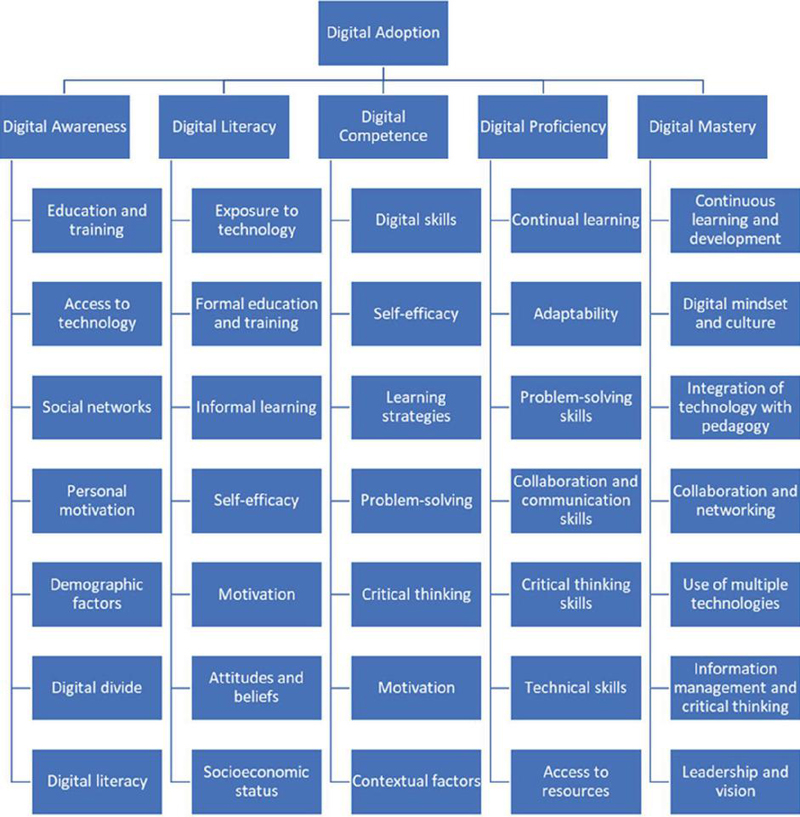
To ensure the identification of levels of digital adoption and the contributing factors, conceptual model had been mapped, linking the different stages of digital competence development and the associated contributing factors. All contributing factors and their associated levels of digital adoption shown as a conceptual model in the following figure.
Conceptual Model Validation
The study employed quantitative methods to evaluate a proposed conceptual framework, employing a survey distributed among stakeholders involved in digital adoption skills through online questionnaires. The design of these questionnaires was informed by a comprehensive review of relevant literature (refer to Table 1). To establish validity, the Index of item Objective Congruence (IOC) was employed, utilizing expert input for content validation, while reliability analysis was conducted using the Alpha Coefficient Method (Cronbach’s alpha) and pilot testing for content reliability. Prior to dissemination among cooperative stakeholders, the questionnaires underwent refinement. Data analysis was performed utilizing Structural Equation Modeling (SEM) and Confirmatory Factor Analysis (CFA) on the survey data. Primary data collection involved online questionnaire surveys targeting digital adoption skills stakeholders in Thailand, with the sample unit comprising this specific stakeholder group. Sample size determination adhered to statistical power analyses and effect size considerations pertinent to SEM [16], which necessitated a minimum sample size of 200 [17]. Therefore, a collection of 400 samples was deemed necessary for the study.
1. Reliability analysis
In this study, the reliability of the research model constructs was evaluated using Cronbach’s alpha, a widely recognized test for assessing internal consistency. The literature suggests a minimum threshold of 0.6 for Cronbach’s alpha to be considered acceptable, and it delineates four levels of reliability: excellent (0.90 and above), high (0.70 to 0.90), high moderate (0.50 to 0.70), and low (0.50 and below) [12]. Ensuring the reliability of the construct items within the digital adoption framework research model was imperative for rigorous testing. A comprehensive assessment encompassed 105 items that measured 35 constructs, as detailed in Table 1, providing a comprehensive overview of the reliability analysis outcomes in this investigation.
Table 1 Test of Reliability Statistics for Pilot study
| Cronbach’s | |||
| Dimensions | Measured Factors (35) | Items | Alpha |
| Digital Awareness | Education and training | 3 | 0.813 |
| Access to technology | 3 | 0.767 | |
| Social networks | 3 | 0.635 | |
| Personal motivation | 3 | 0.722 | |
| Demographic factors | 3 | 0.414 | |
| Digital divide | 3 | 0.493 | |
| Digital literacy | 3 | 0.509 | |
| Digital Literacy | Exposure to technology | 3 | 0.797 |
| Formal education and training | 3 | 0.562 | |
| Informal learning | 3 | 0.583 | |
| Self-efficacy | 3 | 0.684 | |
| Motivation | 3 | 0.717 | |
| Attitudes and beliefs | 3 | 0.494 | |
| Socioeconomic status | 3 | 0.818 | |
| Digital Competence | Digital skills | 3 | 0.583 |
| Self-efficacy | 3 | 0.518 | |
| Learning strategies | 3 | 0.692 | |
| Problem-solving | 3 | 0.735 | |
| Critical thinking | 3 | 0.661 | |
| Motivation | 3 | 0.684 | |
| Contextual factors | 3 | 0.595 | |
| Digital Proficiency | Continual learning | 3 | 0.762 |
| Adaptability | 3 | 0.624 | |
| Problem-solving skills | 3 | 0.451 | |
| Collaboration and communication skills | 3 | 0.682 | |
| Critical thinking skills | 3 | 0.494 | |
| Technical skills | 3 | 0.455 | |
| Access to resources | 3 | 0.735 | |
| Digital Mastery | Continuous learning and development | 3 | 0.794 |
| Digital mindset and culture | 3 | 0.655 | |
| Integration of technology with pedagogy | 3 | 0.735 | |
| Collaboration and networking | 3 | 0.444 | |
| Use of multiple technologies | 3 | 0.474 | |
| Information management and critical thinking | 3 | 0.431 | |
| Leadership and vision | 3 | 0.672 |
Subsequent to the reliability analysis outlined in Table 1, 15 measured factors demonstrated Cronbach’s Alpha values falling below the threshold for low reliability (). 15 out of 35 factors were eliminated for failing to meet the threshold for low reliability.
Consequently, these factors underwent elimination, prompting a reassessment of reliability. A subsequent round of analysis involved 60 items gauging 20 constructs to ascertain reliability, as detailed in Table 2. This table encapsulates the outcomes of the secondary reliability analysis conducted in this study.
Table 2 Test of Reliability Statistics for Pilot study
| Cronbach’s | |||
| Dimensions | Measured Factors (20) | Items | Alpha |
| Digital Awareness | Education and training | 3 | 0.813 |
| Access to technology | 3 | 0.767 | |
| Social networks | 3 | 0.635 | |
| Personal motivation | 3 | 0.722 | |
| Digital Literacy | Exposure to technology | 3 | 0.684 |
| Self-efficacy | 3 | 0.797 | |
| Motivation | 3 | 0.851 | |
| Socioeconomic status | 3 | 0.717 | |
| Digital Competence | Learning strategies | 3 | 0.683 |
| Problem-solving | 3 | 0.762 | |
| Critical thinking | 3 | 0.818 | |
| Motivation | 3 | 0.684 | |
| Digital Proficiency | Continual learning | 3 | 0.744 |
| Adaptability | 3 | 0.692 | |
| Collaboration and communication skills | 3 | 0.735 | |
| Access to resources | 3 | 0.661 | |
| Digital Mastery | Continuous learning and development | 3 | 0.794 |
| Digital mindset and culture | 3 | 0.655 | |
| Use of multiple technologies | 3 | 0.735 | |
| Leadership and vision | 3 | 0.672 |
1. Data Collection
Data collection for this study was facilitated via an online survey platform, specifically Google Forms. Utilizing an online survey offered enhanced accessibility to respondents, particularly beneficial given the widespread geographic distribution of stakeholders throughout Thailand. Moreover, this approach presented cost and time efficiency advantages compared to traditional face-to-face distribution methods, allowing for broader outreach to the involved stakeholders dispersed across the region.
The Data collection was made from 400 respondents who are professional practitioners in Thailand in various fields. From 400 respondents, 110 respondents work in the industry sector, 83 in agriculture sector, 197 in service sectors, and 100 in tourism sector. 323 respondents have at least 10 years work experience in a specific sector, and 77 respondents have less than 10 years work experience.
2. Assessment of Variables and Examination of the Structural Model
This study seeks to precisely quantify the intricate relationships among latent variables such as Digital Awareness, Digital Literacy, Digital Competence, Digital Proficiency, and Digital Mastery. Given the limitations of most statistical methods in estimating latent variables accurately [13], structural equation modeling (SEM) emerges as the most fitting approach. SEM’s unique capacity to evaluate connections between various types of variables – whether observable or latent, continuous or discrete – underscores its suitability for this investigation [14]. As part of this study’s methodology, a structured framework delineates four distinct tiers of data analysis: (1) advanced multivariate models; (2) basic multivariate models; (3) intermediate data analysis; and (4) standard deviation (SD) and fundamental data analysis. The level of data analysis is selected as follows:
Confirmatory Factor Analysis (CFA) serves as a statistical tool pivotal for validating the structural model and unraveling the interrelationships among a set of observed variables [12, 15]. Integral to Structural Equation Modeling (SEM), CFA elucidates causal links between dependent and independent variables, playing a crucial role in validating models within structural analyses. Within this study, the model underwent assessment employing various goodness-of-fit statistics: Chi-square goodness of fit (p 0.05), Comparative Fit Index (CFI, 0.95), Incremental Fit Index (IFI, 0.95), Goodness-of-Fit Index (GFI, 0.95), Root Mean Squared Error of Approximation (RMSEA, 0.08), and Normed-Fit Index (NFI, 0.95) [15–17]. These indices collectively contributed to evaluating the model’s accuracy and alignment with observed data.
The evaluation of Construct Validity involved conducting both convergent and discriminant validity tests to ensure the robustness and validity of the measurement model. It’s imperative to note that the fundamental assumptions of factor analysis are more conceptual than merely statistical. This study employed specific criteria to assess construct validity, encompassing convergent validity, discriminant validity, composite reliability (KMO), and goodness-of-fit tests. Within the context of convergent validity, these distinct indices were utilized to gauge the sufficiency of convergence adequacy as follows:
(1) For standardized factor loading, it is crucial that the values are both statistically significant and exceed the threshold of 0.5, indicating an acceptable range for reliability and significance in the measurement model [20].
(2) The Average Variance Extracted (AVE) acts as a convergence indicator, representing the mean variance extracted from items loading on a specific construct. An AVE surpassing 0.5 is considered indicative of satisfactory convergence for the construct [12, 18, 19].
Composite Reliability (CR) serves as an indicator of convergence and offers a more precise measure of reliability within Structural Equation Modeling (SEM). A high CR signifies robust construct reliability, indicating strong internal consistency. Ideally, a CR value of 0.7 or higher is considered good, although a CR exceeding 0.5 is deemed acceptable [12, 18].
Discriminant Validity, assessing the distinctiveness of constructs, was confirmed through the following criteria: (a) ensuring that Average Variance Extracted (AVE) values significantly exceed the squared correlations between constructs within the measurement model [13], and (b) absence of cross-loadings among items within each construct. Specifically, the Square Root of the Average Variance Extracted (AVE) was employed as an indicator, with a recommended value higher than 4.00 deemed acceptable [22]. However, adjustments such as parameter additions or item removals were only considered based on clearly defined theoretical and conceptual justifications [23].
The evaluation of the measurement model’s adequacy will be conducted through goodness-of-fit (GOF) tests. These tests encompass various alternative measures designed to account for the sensitivity of the 2 statistic to sample size. These measures are categorized into three groups: absolute measures, incremental measures, and parsimony fit measures. It is recommended to employ at least one measure from each category to assess the goodness-of-fit of a model [24], although using three to four indices would generally suffice to yield adequate evidence regarding model fit.
Result
The succeeding section delves into the pivotal success factors influencing digital adoption within professional practices, categorized according to the dimensions outlined in the framework. The structural model evaluation occurs through Structural Equation Modeling (SEM). While numerous statistical techniques exist to gauge model fit, this study focuses on key quality indices such as Chi-square (2), degrees of freedom (df), 2/df ratio, Comparative Fit Index (CFI), Tucker-Lewis Index (TLI), Incremental Fit Index (IFI), Goodness-of-Fit Index (GFI), Root Mean Square Residual (RMR), and Root Mean Square Error of Approximation (RMSEA) as indices for assessing goodness-of-fit (GOF) tests. The study establishes minimum criteria that these quality indices must meet to signify adequate model fit. The model was assessed by Chi-square goodness of fit statistics (p 688.05); comparative fit index (CFI,95) [55]; the chi-square statistic to the respective degrees of freedom (2/df) 2 is indicates a good model fit[18]; RMSEA and RMR should be 0.05, and the Comparative Fit Index CFI 0.95; the Goodness-of-Fit Index (GFI), should be GFI 0.95 which is acceptable as a close model fit [13, 56, 57]. Another index. Additionally, the Incremental-fit index (IFI) and Tucker–Lewis index (TLI) have also been considered in this study; these indices should be IFI 0.95, TLI 0.95. The research model was accepted with no further modification. The estimation of the parameters was acceptable, and the statistics provided by this study were taken as final values, and they show that all tests achieved the test requirements. The result of the Structural Equation Modeling (SEM) analysis, and the confirmatory factor analysis (CFA) presents in Table 3.
Table 3 The result of the second-order confirmatory factor analysis on digital adoption in professional practices framework
| Latent | Digital Awareness | Digital Literacy | Digital Competence | Digital Proficiency | Digital Mastery | R2 | ||||||||||
| Observe | i | Bi | S.E. | i | Bi | S.E. | i | Bi | S.E. | i | Bi | S.E. | i | Bi | S.E. | |
| Education and training | 0.72 | 0.58 | 0.032 | 0.518 | ||||||||||||
| Access to technology | 0.68 | 0.61 | 0.028 | 0.492 | ||||||||||||
| Social networks | 0.76 | 0.64 | 0.036 | 0.583 | ||||||||||||
| Personal motivation | 0.71 | 0.59 | 0.030 | 0.502 | ||||||||||||
| Exposure to technology | 0.65 | 0.57 | 0.029 | 0.422 | ||||||||||||
| Self-efficacy | 0.68 | 0.56 | 0.031 | 0.492 | ||||||||||||
| Motivation | 0.72 | 0.58 | 0.032 | 0.518 | ||||||||||||
| Socioeconomic status | 69 | 0.54 | 0.030 | 0.477 | ||||||||||||
| Learning strategies | 0.75 | 0.63 | 0.035 | 0.562 | ||||||||||||
| Problem-solving | 0.71 | 0.61 | 0.034 | 0.502 | ||||||||||||
| Critical thinking | 0.73 | 0.62 | 0.036 | 0.533 | ||||||||||||
| Motivation | 0.68 | 0.59 | 0.033 | 0.488 | ||||||||||||
| Continual learning | 0.70 | 0.58 | 0.030 | 0.482 | ||||||||||||
| Adaptability | 0.67 | 0.55 | 0.029 | 0.518 | ||||||||||||
| Collaboration and communication skills | 0.72 | 0.60 | 0.032 | 0.533 | ||||||||||||
| Access to resources | 0.69 | 0.57 | 0.031 | 0.482 | ||||||||||||
| Continuous learning and development | 0.76 | 0.65 | 0.034 | 0.579 | ||||||||||||
| Digital mindset and culture | 0.70 | 0.60 | 0.032 | 0.490 | ||||||||||||
| Use of multiple technologies | 0.72 | 0.61 | 0.035 | 0.518 | ||||||||||||
| Leadership and vision | 0.76 | 0.63 | 0.034 | 0.579 | ||||||||||||
| Digital Awareness | 0.72 | 0.62 | 0.028 | 0.723 | ||||||||||||
| Digital Literacy | 0.68 | 0.59 | 0.031 | 0.672 | ||||||||||||
| Digital Competence | 0.76 | 0.65 | 0.036 | 0.773 | ||||||||||||
| Digital Proficiency | 0.71 | 0.60 | 0.032 | 0.641 | ||||||||||||
| Digital Mastery | 0.75 | 0.63 | 0.035 | 0.723 | ||||||||||||
| 2 28.206; df 20, Relative 2 1.410, p-value 0.105, GFI 0.987, NFI 0.995, TLI 0.997, CFI 0.999 RMSEA 0.031, RMR 0.006. | ||||||||||||||||
The parameter estimations successfully met the test requirements, meeting the established criteria across all tests. Detailed in Table 3 are the summarized outcomes of model fit and quality indices. Consequently, the digital adoption framework comprises five key variables: Digital Awareness, Digital Literacy, Digital Competence, Digital Proficiency, and Digital Mastery. Illustrated in Figure 4 are the results of standardized coefficients and factor loadings for the second order of digital adoption dimensions, showcasing robust loadings. The analysis underscores that Digital Competence exhibits the most substantial influence among the five factors on digital adoption, trailed by Digital Mastery and Digital Awareness, with standardized regression weights of 0.76, 0.75, and 0.72, respectively. The structural equation modeling analysis, specifically the second-order confirmatory factor analysis (CFA) of the digital adoption in professional practices framework, is delineated in further detail.
The first dimension is the Digital Competence. There are four factors in the Digital Competence dimension. Learning Strategies has the most significant impact of all four on the smart member dimension, followed by Critical Thinking and Problem-solving (standardized regression weights 0.75, 0.73, and 0.71).
The second dimension is the Digital Mastery. There are four factors in the Digital Mastery dimension. Continuous learning and Development and Leadership and vision are the two most significant impact of all four on the Digital Mastery, followed by Use of multiple technologies, and Digital mindset and culture (standardized regression weights: 0.76, 0.76, 0.72 and 0.70).
The third dimension is Digital Awareness. There are four factors in the Digital Awareness dimension. Social networks had the most significant impact of all four, followed by Personal motivation, Education and training, and Access to technology (standardized regression weights: 0.76, 0.72, 0.71 and 0.68).
The fourth dimension is Digital Proficiency. There are four factors in the Digital Proficiency dimension. Collaboration and communication skills had the most significant impact of all four on Digital Proficiency, followed by Continual learning, Access to resources, and Adaptability (standardized regression weights: 0.72, 0.70, 0.69 and 0.67).
The last dimension is Digital Literacy. There are four factors in the Digital Literacy dimension. Motivation had the most significant impact of all four on Digital Literacy, followed by Socioeconomic status, Self-efficacy, and Exposure to technology (standardized regression weights: 0.72, 0.69, 0.68 and 0.65).
8 Discussion
The findings of this study indicate a comprehensive evaluation of the key success factors pertaining to digital adoption in professional practices. The SEM analysis employed to assess the structural model using various statistical indices – such as Chi-square (2), CFI, TLI, IFI, GFI, RMR, RMSEA – reflects a robust methodology and stringent assessment criteria for model fit.
The framework proposed encompassing five variables – Digital Awareness, Digital Literacy, Digital Competence, Digital Proficiency, and Digital Mastery – provides a multi-dimensional view of digital adoption. The standardized coefficients and factor-loading results for the second order of the digital adoption dimensions demonstrate strong loadings, indicating the reliability and significance of these dimensions within the framework.
The analysis underscores the importance of each dimension and their constituent factors in shaping digital adoption. Digital Competence emerged as the dimension with the most substantial impact on digital adoption, emphasizing the significance of learning strategies and critical thinking in fostering digital competency. Digital Mastery displayed notable influences from factors like continuous learning, leadership, technological versatility, and cultivating a digital mindset and culture, all contributing significantly to the mastery of digital technologies. Digital Awareness highlighted the pivotal role of factors such as social networks, personal motivation, education/training, and access to technology in driving awareness and understanding of digital practices.
Digital Proficiency elucidated the significance of collaboration, continual learning, resource accessibility, and adaptability in enhancing digital proficiency among professionals. Digital Literacy revealed the importance of motivation, socioeconomic status, self-efficacy, and exposure to technology in developing foundational digital literacy skills [39–42].
The detailed examination of each dimension and its contributing factors offers valuable insights into the varying facets of digital adoption. Moreover, the emphasis placed on Digital Competence and Digital Mastery underscores their pivotal roles in fostering a conducive environment for digital transformation in professional settings.
During the statistical analysis, 15 out of 35 factors were eliminated for failing to meet the threshold for low reliability. The elimination of factors such as demographic factors, digital divide, and digital literacy from the digital awareness dimension, along with factors like formal education and training, informal learning, and attitudes and beliefs from digital literacy, and problem-solving skills, critical thinking skills, and technical skills from digital proficiency, raises intriguing questions about the underlying dynamics of digital adoption. These eliminations may stem from several factors, including redundancy with other factors, insufficient variability within the sample population, or limitations in the measurement instruments used. Additionally, the elimination of certain factors could reflect the evolving nature of digital adoption, suggesting that traditional markers of digital literacy or proficiency may no longer capture the multifaceted nature of digital readiness in contemporary contexts. This underscores the importance of ongoing refinement and adaptation of digital adoption frameworks to reflect the ever-changing landscape of technology and its integration into professional practices. Such insights are vital for advancing our understanding of digital readiness and guiding targeted interventions to foster effective digital adoption across diverse workforce settings.
The insights derived from the comparative analysis on digital adoption across various sectors also offer a foundation for implementing tangible modifications. These modifications can manifest through novel educational curricula and governmental initiatives to foster digital readiness among the workforces.
In terms of educational curriculum enhancement, this digital competence framework can be integrated into education programs. The study emphasizes the pivotal role of Digital Competence in driving digital adoption. Educational curricula at various levels should be adapted to incorporate learning strategies and critical thinking skills. – Recommendations include the integration of practical, hands-on exercises and real-world scenarios to prepare students for the demands of the digital workplace. Also, given the importance of continuous learning and Digital Mastery, educational institutions can establish ongoing professional development programs. These programs should focus on leadership skills, technological versatility, and cultivating a digital mindset, ensuring that individuals are equipped with the necessary skills for the dynamic digital landscape.
As for governmental initiatives to promote digital literacy, governments can initiate comprehensive digital literacy campaigns targeting diverse demographic groups. Such campaigns may include public awareness programs, online resources, and partnerships with educational institutions to ensure widespread accessibility to digital literacy initiatives. In addition, governments can introduce incentives for businesses that prioritize digital proficiency among their workforces. These incentives may encourage organizations to invest in upskilling and fostering a digitally competent workforce.
In addition, this model may be applied to predicting future digital skills and talent trends that comes with digital adoption framework. The model may be adapted for further research based on AI and Machine Learning Proficiency, Cybersecurity Expertise, Adaptability and Digital Fluency, so that skills for digital future can be prepared.
In conclusion, the insights derived from this comparative analysis not only guide immediate strategies but also provide a roadmap for the future. The implementation of educational modifications and governmental initiatives aligns with the imperative to foster digital readiness. Moreover, anticipating future digital skills and talent trends prepares both educational institutions and policymakers for the dynamic landscape ahead. By emphasizing adaptability, cybersecurity, and a blend of technical and soft skills, individuals and organizations can position themselves to thrive in the evolving digital era. This forward-looking approach ensures that the workforce remains not just adept but anticipatory in the face of ongoing digital transformations.
9 Conclusion
This study contributes significantly to the understanding of digital adoption of digital application factors within professional practices. The nuanced insights gleaned from the analysis pave the way for targeted interventions and strategies aimed at enhancing digital readiness of adopting mobile application and competence across diverse sectors and organizational contexts. The robust statistical analysis and comprehensive framework provide a solid foundation for further research and practical applications in fostering digital adoption in the modern workplace.
The study has delved into a comprehensive exploration of digital adoption factors within professional practices across diverse sectors. The discussion within the journal highlighted the crucial role of digital competence, mastery, awareness, proficiency, and literacy in driving the application of digital technologies within the workforce.
The study’s meticulous analysis, employing Structural Equation Modelling (SEM) and an array of statistical indices, validated a multi-dimensional framework for understanding digital adoption. This framework illuminated the varying impacts of different dimensions and their constituent factors on the adoption of digital practices among professionals.
The findings underscored the paramount importance of Digital Competence, demonstrating its substantial influence on fostering digital readiness through effective learning strategies and critical thinking [45]. Additionally, Digital Mastery emerged as pivotal, emphasizing continuous learning, leadership, technological versatility, and cultivating a digital mindset as key drivers of digital proficiency.
Moreover, the dimensions of Digital Awareness, Digital Proficiency, and Digital Literacy elucidated the critical roles played by factors such as social network applications [47], motivation, collaboration skills, socioeconomic status, and exposure to technology in shaping digital readiness and literacy among professionals [52].
Overall, the comparative analysis within the journal provided nuanced insights into the significance of various dimensions of digital adoption across sectors. The study’s robust methodology, validated model fit, and detailed examination of factors contribute significantly to understanding the complex landscape of digital adoption of digital and mobile application within the contemporary workforce.
The insights gleaned from this comparative analysis serve as a valuable foundation for organizations, policymakers, and educators to devise targeted strategies aimed at enhancing digital readiness, fostering skill development, and effectively navigating the ever-evolving digital landscape across diverse sectors. Additionally, the study sets the stage for further research and practical applications, offering a roadmap for advancing digital adoption of mobile and computer application in professional practices for a digitally empowered future workforce.
References
[1] AbouRizk, S., Mohamed, Y., and Ramadan, M. (2020). Building information modeling for construction: Drivers, benefits, challenges, and future directions. Journal of Construction Engineering and Management, 146(8), 04020071.
[2] Caban Martinez, A. J., Huerta, M., Halperin, W., Baur, D. M., Castillo, R., Hershman, D., … and Cendan, J. (2019). Wearable sensor data and artificial intelligence to predict and improve safety in the construction industry: Opportunities and challenges. Safety Science, 120, 203–210.
[3] FAO. (2020). Digital Technologies and Agricultural Transformation: The Role of Innovation, Advisory Services, and Extension. Food and Agriculture Organization of the United Nations. Retrieved from http://www.fao.org/3/ca8920en/CA8920EN.pdf.
[4] Fernandes, J., Raja, V., Helfert, M., and Schumacher, M. (2019). Artificial intelligence and chatbots in government: A systematic review. Government Information Quarterly, 36(2), 238–255.
[5] McKinsey & Company. (2018). Reinventing construction through a productivity revolution. McKinsey Global Institute. Retrieved from https://www.mckinsey.com/~/media/McKinsey/Featured\%20Insights
/Infrastructure/Reinventing\%20construction\%20through\%20a
\%20productivity\%20revolution/Reinventing-construction-through-
a-productivity-revolution-Full-report-vf.ashx.
[6] Misra, A. K., Kim, J. K., and Kumar, L. (2019). Internet-of-things-based smart agriculture: Toward making the fields talk. IEEE Access, 7, 112365–112370.
[7] O’Neill, C., Devine, M., and O’Donnell, G. E. (2018). The digital transformation of industry: An Internet of Things (IoT) approach. International Journal of Advanced Computer Science and Applications, 9(11), 381–391.
[8] Prajapati, P., Sharma, A., and Shekhar, S. (2019). Recent trends and applications of remote sensing technologies for precision agriculture. International Journal of Information and Communication Technology Research, 9(1), 32–40.
[9] Pwc. (2020). Industry 4.0: Building the digital enterprise. PwC Global. Retrieved from https://www.pwc.com/gx/en/industries/industries-4.0/landing-page/industry-4.0-building-your-digital-enterprise-april-2020.pdf.
[10] Shankar, V., Venkatesh, A., Hofacker, C. F., and Naik, P. A. (2016). Mobile marketing in the retailing environment: Current insights and future research avenues. Journal of Interactive Marketing, 34, 59–72.
[11] World Economic Forum. (2018). The Future of Jobs Report 2018. Retrieved from http://www3.weforum.org/docs/WEF\_Future\_of\_Jobs\_2018.pdf.
[12] H. Sulaiman and M. Abdullah Maamuom, “Determinants of Success for ERP Data Governance Implementation in a Malaysian Utility Organization,” Indian J. Sci. Technol., vol. 10, no. 48, pp. 1–10, 2017
[13] M. Al-Ruithe and E. Benkhelifa, “Determining the enabling factors for implementing cloud data governance in the Saudi public sector by structural equation modelling,” Futur. Gener. Comput. Syst., vol. 107, pp. 1061–1076, 2020.
[14] K. Chareonwongsak, “Enhancing board motivation for competitive performance of Thailand ’ s co-operatives,” J. Co-op. Organ. Manag., vol. 5, no. 1, pp. 1–13, 2017.
[15] E. Almanasreh, R. Moles, and T. F. Chen, “Evaluation of methods used for estimating content validity,” Res. Soc. Adm. Pharm., vol. 15, no. 2, pp. 214–221, 2019.
[16] G. Chopra, P. Madan, P. Jaisingh, and P. Bhaskar, “Effectiveness of e-learning portal from students’ perspective: A structural equation model (SEM) approach,” Interact. Technol. Smart Educ., vol. 16, no. 2, pp. 94–116, 2019.
[17] E. Erdfelder, F. FAul, A. Buchner, and A. G. Lang, “Statistical power analyses using G*Power 3.1: Tests for correlation and regression analyses,” Behav. Res. Methods, vol. 41, no. 4, pp. 1149–1160, 2009.
[18] D. Iacobucci, “Everything you always wanted to know about SEM (structural equations modeling) but were afraid to ask,” J. Consum. Psychol., vol. 19, no. 4, pp. 673–680, 2009.
[19] M. Alavi, D. C. Visentin, D. K. Thapa, G. E. Hunt, R. Watson, and M. Cleary, “Chi-square for model fit in confirmatory factor analysis,” J. Adv. Nurs., vol. 76, no. 9, pp. 2209–2211, 2020.
[20] D. Hooper et al., “Structural Equation Modelling: Guidelines for Determining Model Fit Structural equation modelling: guidelines for determining model fit,” Dublin Inst. Technol. ARROW @ DIT, vol. 6, no. 1, pp. 53–60, 2008.
[21] J. F. Hair, “Multivariate data analysis,” Harlow Pearson Educ. Ltd., 2014.
[22] J. Henseler, C. M. Ringle, and M. Sarstedt, “A new criterion for assessing discriminant validity in variance-based structural equation modeling,” J. Acad. Mark. Sci., vol. 43, no. 1, pp. 115–135, 2015.
[23] S. Makkar and A. K. Singh, “Spirituality measurement scale: An empirical study,” Purushartha, vol. 12, no. 1, pp. 21–31, 2019.
[24] S. Godleski, B. Lohse, and J. S. Krall, “Satter Eating Competence Inventory Subscale Restructure After Confirmatory Factor Analysis,” J. Nutr. Educ. Behav., vol. 51, no. 8, pp. 1003–1010, 2019.
[25] J. F. Hair, “Multivariate data analysis,” Up. Saddle River, N.J. Prentice Hall, C2010., vol. 7th ed, 2010.
[26] Arono, Arono, et al. “Exploring the Effect of Digital Literacy Skill and Learning Style of Students on Their Meta-Cognitive Strategies in Listening.” International Journal of Instruction, vol. 15, no. 1, 1 Jan. 2022, pp. 327–346, https://doi.org/10.29333/iji.2022.15130a.
[27] Arslantas, Tugba Kamali, and Abdulmenaf Gul. “Digital Literacy Skills of University Students with Visual Impairment: A Mixed-Methods Analysis.” Education and Information Technologies, vol. 27, 17 Jan. 2022, https://doi.org/10.1007/s10639-021-10860-1.
[28] Basilotta-Gómez-Pablos, Verónica, et al. “Teachers’ Digital Competencies in Higher Education: A Systematic Literature Review.” International Journal of Educational Technology in Higher Education, vol. 19, no. 1, 10 Feb. 2022, https://doi.org/10.1186/s41239-021-00312-8.
[29] El-Masri, Mazen, and Ali Tarhini. “Factors Affecting the Adoption of E-Learning Systems in Qatar and USA: Extending the Unified Theory of Acceptance and Use of Technology 2 (UTAUT2).” Educational Technology Research and Development, vol. 65, no. 3, 27 Jan. 2017, pp. 743–763, link.springer.com/article/10.1007/s11423-016-9508-8, https://doi.org/10.1007/s11423-016-9508-8.
[30] Fernández-Batanero, José María, et al. “Digital Competences for Teacher Professional Development. Systematic Review.” European Journal of Teacher Education, vol. 45, no. 4, 8 Oct. 2020, pp. 1–19, https://doi.org/10.1080/02619768.2020.1827389.
[31] Ferrari, Anusca, et al. “Understanding Digital Competence in the 21st Century: An Analysis of Current Frameworks.” Lecture Notes in Computer Science, 2012, pp. 79–92, https://doi.org/10.1007/978-3-642-33263-0\_7.
[32] Ferrari, Anusca. Digital Competence in Practice: An Analysis of Frameworks. Joint Research Centre of the European Commission, 2012. Fraillon, Julian, et al. Preparing for Life in a Digital Age. Cham, Springer International Publishing, 2014.
[33] Hinojo-Lucena, F., et al. “Factors Influencing the Development of Digital Competence in Teachers: Analysis of the Teaching Staff of Permanent Education Centres.” IEEE Access, vol. 7, 2019, pp. 178744–178752, ieeexplore.ieee.org/document/8920067, https://doi.org/10.1109/ACCESS.2019.2957438.
[34] Hirose, Hiroo, et al. “Proposal of Framework for Education Support System in Knowledge and Information Society.” E-Learn: World Conference on E-Learning in Corporate, Government, Healthcare, and Higher Education, Association for the Advancement of Computing in Education (AACE), 18 Oct. 2011, pp. 1289–1298.
[35] Jardim, Jacinto. “Entrepreneurial Skills to Be Successful in the Global and Digital World: Proposal for a Frame of Reference for Entrepreneurial Education.” Education Sciences, vol. 11, no. 7, 16 July 2021, p. 356, www.mdpi.com/2227-7102/11/7/356, https://doi.org/10.3390/educsci11070356.
[36] Jesson, Rebecca, et al. “Raising Literacy Levels Using Digital Learning: A Design-Based Approach in New Zealand.” The Curriculum Journal, vol. 26, no. 2, 3 Apr. 2015, pp. 198–223, https://doi.org/10.1080/09585176.2015.1045535. Accessed 4 July 2019.
[37] Kit Ng, Tsz, et al. “Business (Teaching) as Usual amid the COVID-19 Pandemic: A Case Study of Online Teaching Practice in Hong Kong.” Journal of Information Technology Education: Research, vol. 19, 2020, pp. 775–802, www.jite.org/documents/Vol19/JITE-Rv19p775-802Ng6363.pdf, https://doi.org/10.28945/4620.
[38] Langub, Lee Woodham, and Anissa Lokey-Vega. “Rethinking Instructional Technology to Improve Pedagogy for Digital Literacy: A Design Case in a Graduate Early Childhood Education Course.” TechTrends, vol. 61, no. 4, 12 Apr. 2017, pp. 322–330, link.springer.com/article/10.1007/s11528-017-0185-1, https://doi.org/10.1007/s11528-017-0185-1.
[39] Margaliot, Adva, and Dvora Gorev. “Once They’ve Experienced It, Will Pre-Service Teachers Be Willing to Apply Online Collaborative Learning?” Computers in the Schools, 27 Oct. 2020, pp. 1–17, https://doi.org/10.1080/07380569.2020.1834821. Accessed 1 Nov. 2020.
[40] Milton, M., and Vozzo, L. (2013). Digital literacy and digital pedagogies for teaching literacy: Pre-service teachers’ experience on teaching rounds. Journal of Literacy and Technology, 14(1), 72–97.
[41] Mitchell, Chrystine. “Cultivating Future 21st Century Literacy Teachers: An Examination of the Perceptions of Pre-Service Teachers and Technology Integration.” Journal of Literacy & Technology, vol. 20, no. 3, 2019, p. 75.
[42] Mohammad Issack Santally. “A Digital Education Transformation Roadmap to Achieve a Distributed Learning Ecosystem: Case-Study of the University of Mauritius.” Pan-Commonwealth Forum 9 (PCF9), 1 Sept. 2019. Accessed 7 Jan. 2024.
[43] Nopriadi Saputra, et al. “Escalating Digital Mastery for Strengthening Resilience and Sustainability in Small Businesses.” 2022 International Conference on Information Management and Technology (ICIMTech), 11 Aug. 2022, https://doi.org/10.1109/icimtech55957.2022.9915144. Accessed 7 Jan. 2024.
[44] Pangrazio, Luci, and Julian Sefton-Green. “Digital Rights, Digital Citizenship and Digital Literacy: What’s the Difference?” NAER: Journal of New Approaches in Educational Research, vol. 10, no. 1, 2021, pp. 15–27, dialnet.unirioja.es/servlet/articulo?codigo=7717195.
[45] Pimmer, Christoph, and Norbert Pachler. “Mobile Learning in the Workplace. Unlocking the Value of Mobile Technology for Work-Based Education.” Increasing Access through Mobile Learning, edited by Mohamed Ally and Avgoustos Tsinakos, Commonwealth of Learning, 2014.
[46] Pirzada, Kashan, and Fouzia Khan. “Measuring Relationship between Digital Skills and Employability.” European Journal of Business and Management, vol. 5, no. 24, 2013, pp. 124–133.
[47] Rodríguez-Moreno, Javier, et al. “The Influence of Digital Tools and Social Networks on the Digital Competence of University Students during COVID-19 Pandemic.” International Journal of Environmental Research and Public Health, vol. 18, no. 6, 10 Mar. 2021, p. 2835, https://doi.org/10.3390/ijerph18062835.
[48] Snyder, Shane. Teachers’ Perceptions of Digital Citizenship Development in Middle School Students Using Social Media and Global Collaborative Projects. 2016, www.proquest.com/openview/82a994cecd0ff94a51fd9e1871bafc38/1?pq-origsite=gscholar\&cbl=18750. Accessed 31 Aug. 2023.
[49] Spante, Maria, et al. “Digital Competence and Digital Literacy in Higher Education Research: Systematic Review of Concept Use.” Cogent Education, vol. 0, no. 0, 6 Sept. 2018, www.tandfonline.com/doi/full/10.1080/2331186X.2018.1519143, https://doi.org/10.1080/2331186x.2018.1519143.
[50] Thompson, Kim, et al. Digital Literacy and Digital Inclusion: Information Policy and the Public Library. Digital Literacy and Digital Inclusion: Information Policy and the Public Library, Rowman & Littlefield Publishers, 1 Jan. 2014, digitalcommons.usf.edu/si\_facpub/417. Accessed 7 Jan. 2024.
[51] van Deursen, Alexander J. A. M., and Jan A. G. M. van Dijk. “Toward a Multifaceted Model of Internet Access for Understanding Digital Divides: An Empirical Investigation.” The Information Society, vol. 31, no. 5, 11 Sept. 2015, pp. 379–391, https://doi.org/10.1080/01972243.2015.1069770.
[52] VanderArk, Tom, and Carri Schneider. “How Digital Learning Contributes to Deeper Learning.” GettingSmart.com, 2012.
[53] Wahjusaputri, Sintha, and Tashia Indah Nastiti. “Digital Literacy Competency Indicator for Indonesian High Vocational Education Needs.” Journal of Education and Learning (EduLearn), vol. 16, no. 1, 1 Feb. 2022, pp. 85–91, https://doi.org/10.11591/edulearn.v16i1.20390. Accessed 8 Apr. 2022.
[54] Zhao, Yu, et al. “Digital Competence in Higher Education Research: A Systematic Literature Review.” Computers & Education, vol. 168, Apr. 2021, p. 104212, https://doi.org/10.1016/j.compedu.2021.104212.
[55] A. Harerimana and N. G. Mtshali, “Using Exploratory and Confirmatory Factor Analysis to understand the role of technology in nursing education,” Nurse Educ. Today, vol. 92, no. February, 2020.
[56] K. L. Bradley, A. L. Bagnell, and C. L. Brannen, “Factorial validity of the center for epidemiological studies depression 10 in adolescents,” Issues Ment. Health Nurs., vol. 31, no. 6, pp. 408–412, 2010.
[57] R. E. and R. G. L. Schumacker, A beginner’s guide to structural equation modeling, (3rd ed.). New York: Routledge, 2010.
Biographies

Worachanatip Janthanu is a Ph.D. student in Information Technology Management at Mahidol University, Nakhon Pathom, Thailand. She received the bachelor’s degree in French Language from Chiang Mai University in 1998, the master’s degree in Education Administration from Naresuan University in 2000, respectively. She is currently working as Deputy Director General of Thailand Professional Qualification Institute (Public Organization). Her research areas include mobile application, digital adoption, and workforce development.

Smitti Darakorn Na Ayuthaya received the bachelor degree in economics from the University of the Thai Chamber of Commerce Bangkok, Thailand, in 1980, the certificate in marketing and sale Colorado State of University, in 1983, the master degree in innovation management from Ramkhamhaeng University, Thailand, in 2007, and the D.P.A. degree in public administration form University of Philippines, Philippines, in 2010. He is currently the program director of M.Sc. program in Information Technology Management, and lecturer in Ph.D. program in Information Technology Management, Faculty of Engineering, Mahidol University, Thailand. His research interests include digital economy, macro/micro economic, e-logistic, ecommerce, start-up and university business incubator (UBI), innovative business engineering, economy value management, business process management, project management, strategy management/planning, human resource management, and marketing and selling. He has the experience of consult in development village e-Commerce of Thailand Digital Economy, Ministry of Digital Economy and Society, ICT planning & enterprise architecture of Bangkok Metropolitan Administration, energy enterprise architecture of National Research Council of Thailand, digital literacy Thailand of Ministry of Information Communication Technology (ICT), and other. He has certificate of CompTIA Project+, CompTIA CTT+ (Soft Skill), and CompTIA Cloud+.

Supaporn Kiattisin received the B.Eng. degree in applied computer engineering from the Chiang Mai University, Chiang Mai, Thailand, in 1995, the M.Eng. degree in electrical engineering and the Ph.D. degree in electrical and computer engineering form King Mongkut’s University of Technology Thonburi, Bangkok, Thailand, in 1998, and 2006. She is currently the program director of Information Technology Management, Faculty of Engineering, Mahidol University, Thailand. Her research interests include mobile application, skills and competency, computer vision, image processing, robot vision, signal processing, pattern recognition, artificial intelligence, IoT, IT management, digital technologies, big data and enterprise architecture with TOGAF 9 certified. She is a member of IEICE and TESA. She served as a Head of IEEE Thailand Chapter in Bio Medical Engineering. She also served as the Chairman of the TimesSOC Transaction Thailand.
Journal of Mobile Multimedia, Vol. 20_4, 845–878.
doi: 10.13052/jmm1550-4646.2044
© 2024 River Publishers