Design an RF Up-Down Convertor using Software Defined Radio and GNU Radio
Aniket Thavai, Mansi Subhedar*, Yash Thakur and Mrunal Patil
Department of Electronics and Telecommunication Engineering Pillai HOC College of Engineering and Technology, Rasayani Dist. Raigad, Maharashtra 410207 India
E-mail: mansisubhedar@ieee.org
*Corresponding Author
Received 02 February 2024; Accepted 20 July 2024
Abstract
There is a need to design of RF Up/Down- converter for (from C/Ku to/from L band) signals required for several applications. The proposed work presents a design of an RF Up/Down Converter that makes use of GNU Radio and Software-Defined Radios (SDRs). The converter helps in frequency translation between the C/Ku and L bands, leading to a cost-effective and versatile solution for RF signal processing. By using open-source GNU Radio software, the proposed system enhances accessibility, enabling its deployment in diverse applications, from satellite communication to radar systems. The converter’s unique features include real-time processing capabilities, customization through an intuitive graphical interface, and Python scripting. This idea presents the design considerations, signal processing techniques, and performance evaluation of the RF Up/Down Converter. The advantages of an open-source solution over other available alternatives are in terms of cost, flexibility, and rapid prototyping. Simulation and hardware results demonstrate the efficacy of the proposed work.
Keywords: RF signal processing, frequency up-down conversions GNU radio, software defined radio (SDR).
1 Introduction
The demand for efficient satellite communication systems has driven the need for versatile RF Up/Down converters capable of translating signals between high-frequency bands, such as C and Ku, to an Intermediate Frequency (IF), notably the L band. Software-Defined Radio (SDR) is a revolutionary approach to radio system design, replacing traditional hardware components with software-based processing. It enables the creation of flexible and adaptable radio communication systems by implementing signal processing tasks in software rather than relying on dedicated hardware components. SDRs enable the implementation of RF signal processing in software, offering dynamic control over parameters such as modulation, frequency, and bandwidth. In the context of RF Up/Down Conversion, SDRs play a pivotal role in realizing versatile and adaptable solutions for frequency translation.
The RF Up/Down Conversion process is crucial in scenarios where signals need to be shifted between frequency bands, such as converting high-frequency C or Ku bands to a more manageable Intermediate Frequency (IF) like L band. This conversion is essential for compatibility between different communication systems and devices. This work presents a study on the design and implementation of an RF Up/Down Converter using GNU Radio and Software-Defined Radios (SDRs) [1]. It aims to facilitate seamless signal translation, ensuring compatibility and uniformity in the transmission process. Leveraging open-source signals for its design, our approach emphasizes innovation and flexibility in addressing the challenges of RF signal conversion. The success of the tool will be evaluated based on its efficacy in Up/Down converting signals, showcasing its practical utility in satellite communication and related applications [2]. SDR platforms, such as the HackRF One and Ettus Research USRP series, provide the necessary hardware infrastructure to capture, process, and transmit radio signals [3].
By integrating SDR technology, the proposed work seeks to harness the flexibility and programmability of SDRs to achieve efficient RF Up/Down Conversion. The synergy between SDR and RF conversion aligns with the contemporary trend of software-centric approaches in communication systems, providing a powerful tool for addressing diverse communication challenges.
1.1 Basics of RF Up-Down Conversion
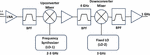
Figure 1 depicts a basic RF up-down converter, a system used to shift a radio frequency (RF) signal to either a higher or lower frequency range [4]. It achieves this using a mixer and a local oscillator (LO). The signal voyage begins with the low-noise amplifier (LNA) enhancing the incoming signal while minimizing noise build-up. Following this, a band-pass filter (BPF) eliminates unwanted frequencies outside the desired band. The central heart of the process lies in the mixer, where the amplified and filtered signal encounters the LO signal, resulting in multiplication and a change in frequency. For up-conversion, the LO frequency surpasses the original RF signal, producing a sum frequency at the output. Conversely, down-conversion involves an LO frequency lower than the RF signal, generating a difference frequency [5].
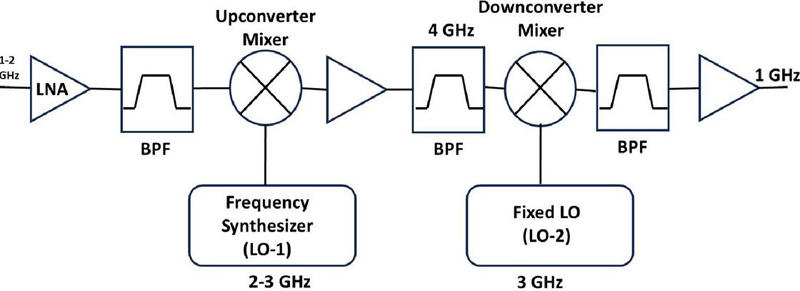
Figure 1 RF up down converter.
The final stage involves another BPF, meticulously removing unwanted by-products and noise, leaving solely the intended output signal. This dual-mixer setup allows for application in both transmission and reception, showcasing its versatility across a wide array of fields, including communication systems, radars, and electronic warfare.
To enhance the performance of GNU Radio and SDRs for the up-down conversion, several studies have been reported in the literature. In the work presented in [6], HackRFOne (Software defined Radio SDR) is tuned to the required radio frequency by employing GNU Radio Companion and Gqrx (spectrum viewer), where both GNU Radio and Gqrx are open-ended software. A brief overview of SDR is presented in [7]. SDR-Based Transceiver of Digital Communication System Using USRP and GNU Radio is presented in [8]. In a master’s thesis by Marappa, Nagarjuna, the design of a Digital Down Converter Chain is discussed based on FPGA [9]. As the area has yet not been explored much, studies that exactly match to design of an up-down converter using GNU radio are only referred.
2 Proposed Work
The proposed work presents a design of a dynamic RF Up/Down Converter using the powerful combination of GNU Radio and Software-Defined Radios (SDRs). This converter serves as a pivotal tool in the RF signal processing domain, facilitating the seamless translation of signals between the widely used C/Ku and L frequency bands [9]. The proposed idea conceives of transformation in RF signal processing through the implementation of an innovative RF Up/Down Converter. By integrating the robust capabilities of GNU Radio and SDRs, we aim to provide users with a cost-effective and adaptable solution for seamless frequency translation. The design revolves around fostering accessibility, allowing both seasoned professionals and aspiring enthusiasts to engage in RF signal manipulation effortlessly [10]. The convergence of affordability, versatility, and real-time processing sets the stage for various applications in satellite communication, radar systems [11].
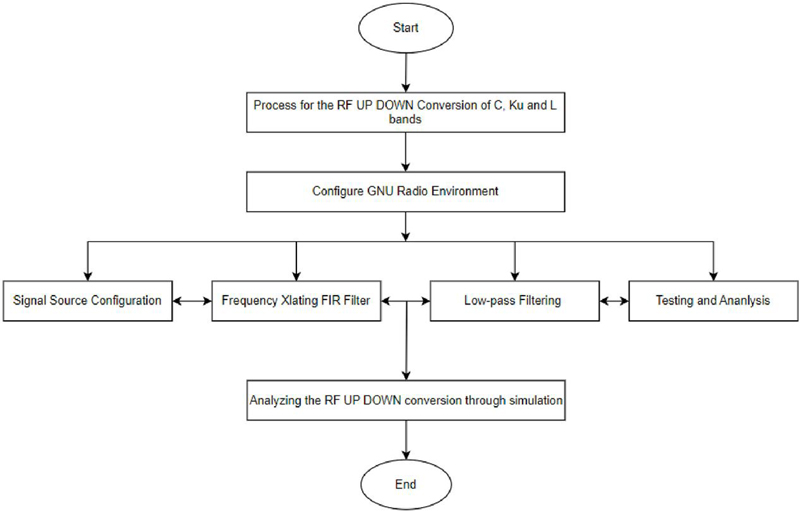
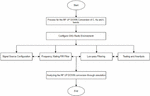
Figure 2 Proposed work.
2.1 GNU Radio
GNU Radio is an open-source toolkit widely utilized for the development of software-defined radios (SDRs) and signal processing systems. At the core of GNU Radio is the GNU Radio Companion (GRC), a graphical user interface that simplifies the creation of signal-processing flowgraphs. Users can employ GRC to visually design intricate signal processing chains by dragging and dropping predefined signal processing blocks onto a canvas and connecting them. These blocks, which cover functions like signal generation, modulation, filtering, and frequency translation, collectively construct the RF signal processing pipeline [12]. Its explained in details as follows.
• GNU Radio Configuration: The project harnesses the capabilities of GNU Radio, an open-source toolkit, for building Software-Defined Radio systems. This entails configuring the environment and installing essential software packages.
• Signal Source and Frequency Xlating FIR Filter: Signal sources are configured to generate RF signals in the C/Ku band, and the Frequency Xlating FIR Filter is employed for precise frequency translation.
• Decimation/Interpolation: Depending on the operation (up-conversion or down-conversion), decreasing, and increasing the sampling rate stages are incorporated to adjust the sampling rate.
• Low-Pass Filtering: A low-pass filter is applied to the converted signal to eliminate unwanted high-frequency components, ensuring compatibility with the new frequency band.
• Real-Time Operation: The system is configured for real-time processing, critical for applications like satellite communication and radar.
• User Interface (Optional): For user convenience, a graphical user interface (GUI) can be created using GNU Radio Companion or other tools for parameter control and signal visualization.
3 Design Methodology
In this section, we derive a systematic methodology for the development of an RF Up/Down Converter utilizing the GNU Radio framework and Software-Defined Radios (SDRs). The initiation involves a clear definition of objectives, specifying target frequency bands, with a focus on C/Ku and L bands. Selection of suitable SDR hardware follows, considering factors such as frequency range, cost, and availability, with notable options being the [5] HackRF One or Ettus Research USRP series. Subsequently, the GNU Radio software is set up on the designated Linux platform, ensuring compatibility and resolving any software dependencies [13]. The complete flow of work is depicted in Figure 2. The signal source generation is implemented using the Signal Source block, configuring parameters such as frequency, amplitude, and modulation to generate C/Ku band RF signals [7]. The Frequency Xlating FIR Filter is then employed for up-conversion or down-conversion, with essential parameters like center frequency carefully configured. Decimation or interpolation stages are integrated as needed to adjust the sampling rate, aligning it with the target frequency band requirements. A Low-Pass Filter is applied to eliminate undesired high-frequency components, with specified characteristics including cut-off frequency and transition width [5]. Optimization for real-time processing is an important step, considering system resources and ensuring minimal latency for efficient processing. Throttle blocks are introduced for sample flow control, and Python scripting is leveraged for customization, allowing the implementation of custom algorithms if needed. This systematic methodology ensures a comprehensive approach to the development of the RF Up/Down Converter, facilitating its successful implementation and future enhancements. The configuration of each block in the GNU Radio block diagram involves setting specific parameters based on the desired functionality and system requirements [13] as described as follows:
1. Signal Source Block
• Frequency Setting: Set the center frequency to the desired value, representing the center frequency of the generated RF signal.
• Sample Rate: Define the sample rate of the generated signal.
2. Frequency Xlating FIR Filter Block
• Type: Choose the filter type, such as low-pass or band-pass, based on the application.
• Taps: Configure the filter taps based on the desired filter characteristics.
• Center Frequency: Define the center frequency for the translation.
3. Decimation/Interpolation Block
• Decimation Factor (for Down-Conversion): Set the factor by which the sample rate is reduced.
• Interpolation Factor (for Up-Conversion): Set the factor by which the sample rate is increased.
4. Low-Pass Filter Block
• Filter Type: Choose between low-pass, band-pass, or other filter types
• Cut-off Frequency: Specify the frequency at which the filter begins attenuating.
• Transition Width: Define the width of the transition region between the passband and stopband.
• Filter Design Method: Select the filter design method, such as Kaiser or Parks-McClellan.
5. Throttle Block:
• Sample Rate: Adjust the sample rate to control the flow of data through the flowgraph.
3.1 Down Conversion C (4GHz) to L (2GHz) Band using HackRF One SDR
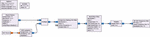
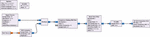
Down conversion refers to converting a high frequency into a low frequency without changing its characteristics. In the proposed design, we have used a 4 GHz cosine signal as a message signal and a carrier frequency to carry the message signal. Both the frequencies are fed as input to the multiplier that subtracts the carrier frequency from the message signal and passes further to the Frequency Xlating FIR filter. This filter is used to boost the signal the signal that is fed as input from the multiplier. The boosted signal is passed through a Band Pass filter that allows only a particular frequency band to pass through it [14]. The throttle block is used to run the QT GUI Frequency Sink that displays the generated signals to the system user. The soapy HackRF Sink block is used to transmit the obtained signal [15]. Figures 3 and 4 present the proposed work block diagram for down conversion and up conversion respectively.
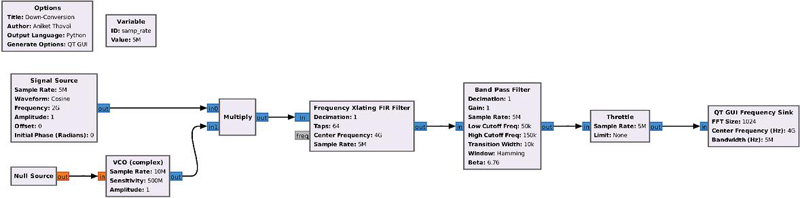
Figure 3 Proposed work: down-conversion to 2 GHz.
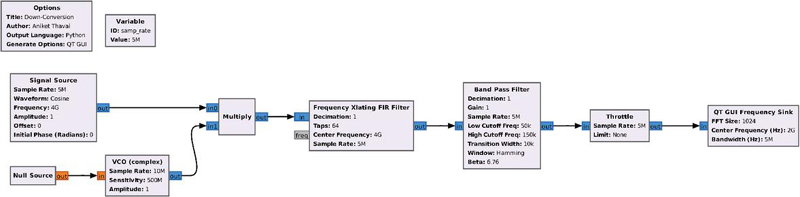
Figure 4 Proposed work: Up-conversion to 4 GHz.
3.2 Up Conversion L (2GHz) to C (4GHz) Band using HackRF One SDR
Up conversion is the process in which the signal source generates the frequencies for the carrier signal we have used VCO(complex) that generate the frequency after that we have used a Multiply block that performs two operations addition and subtraction of two frequencies for the up conversion signal source generates 2 GHZ and VCO(complex) generates 2 GHZ then Multiply block adds the Frequencies so we get 4 GHZ Up converted frequency after that we have used frequency Xlating block for the translation of frequency and finally we have used band-pass filter that passes 4 GHZ up converted frequency [16]. The applications of the proposed work include:
• Satellite Communication: Enabling interfacing with satellite communication systems for signal reception and transmission in the L band.
• Radar Systems: Finding applications in remote sensing and radar systems where signals may need down-conversion for analysis [17].
• Educational Tool: Serving as an educational tool for students to gain hands-on experience in RF signal processing and SDR technology.
• In essence, our project strives to democratize RF signal conversion by offering an affordable, versatile, and user-friendly solution that opens doors to innovation, learning, and cost-efficient solutions across various domains
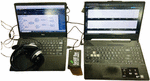
Figure 5 shows the hardware connection performed to obtain the results. The advantage of the proposed idea of using SDR over FPGA and Raspberry is the ability to receive and transmit various modulation methods using a common set of hardware. It is effective in reducing the complexity of programming and making multiple connections. It also provides the possibility of adaptively choosing an operating frequency and a mode best suited for prevailing conditions [18].
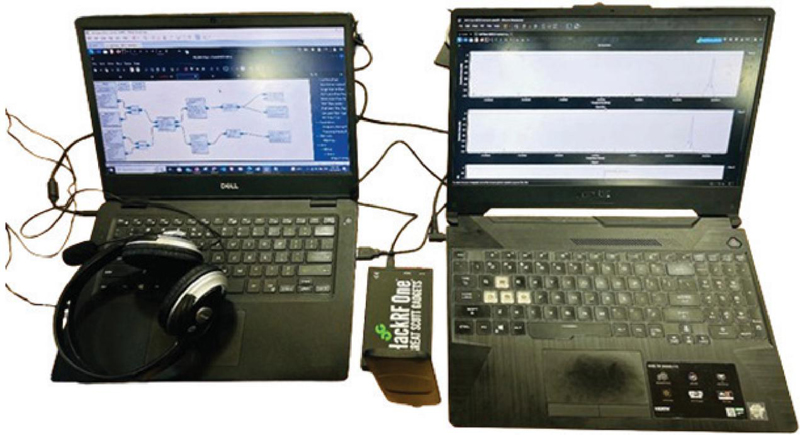
Figure 5 Hardware implementation using HackRF SDR.
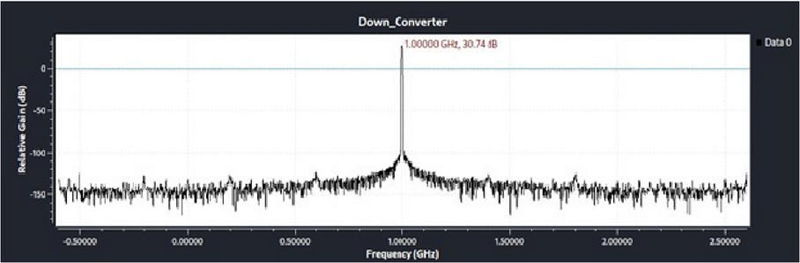
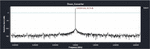
Figure 6 Down-conversion to 1 GHZ.
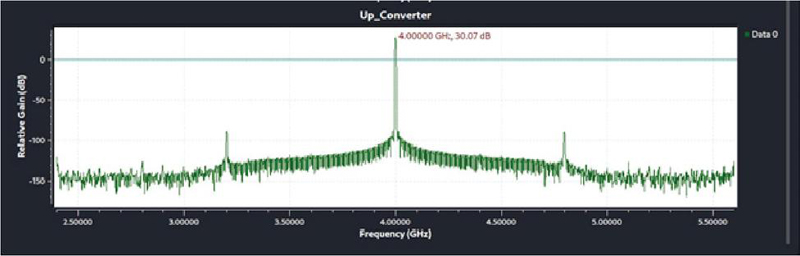
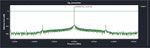
Figure 7 Up-conversion to 4 GHz.
4 Simulation Results
The results obtained in the proposed work demonstrate the successful implementation of the RF Up/Down Conversion system using GNU Radio. Through simulation, the system showcased efficient frequency translation capabilities, achieving accurate down-conversion to 1 GHz shown in Figure 6, and up-conversion to 4 GHz shown in Figure 7. The signal processing blocks, including the Frequency Xlating FIR Filter, Decimation/Interpolation stages, and Low-Pass Filters, were effectively utilized to ensure precise frequency shifts and maintain signal quality. Thorough testing and analysis validated the system’s performance, affirming its suitability for applications in satellite communication, radar systems, and other RF signal processing domains. The positive outcomes pave the way for further refinement and real-world testing, solidifying the project’s contribution to the advancement of RF signal processing methodologies within the GNU Radio framework [19].
4.1 Hardware Results
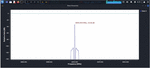
The results obtained in the practical work demonstrate the successful implementation of the RF Up/Down Conversion system using GNU Radio and HackRF One SDR. The output includes a graphical representation of the result i.e. 2 GHz output shown in Figure 8 for Down conversion and stable 4GHz output for Up conversion shown in Figure 9.
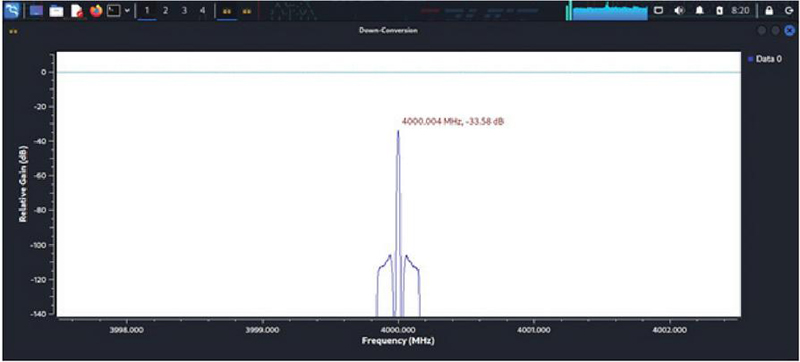
Figure 8 Down-conversion to 2GHz using HackRF One SDR.
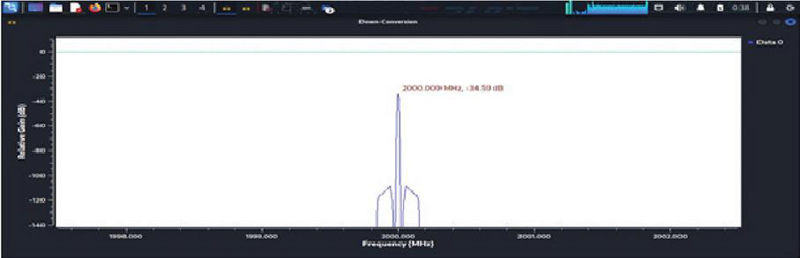
Figure 9 Up-conversion to 4GHz using HackRF One SDR.
This output is obtained using various blocks like Signal source to generate a message signal and VCO (complex) block to generate the carrier frequency. Multiplier blocks either add or subtract the signals accordingly. The frequency Xlating filter and the band pass filter perform the necessary operations and transmit the signal using a soapy HackRF sink [20]. Figure 10 shows a comparison of results with existing works in literature.
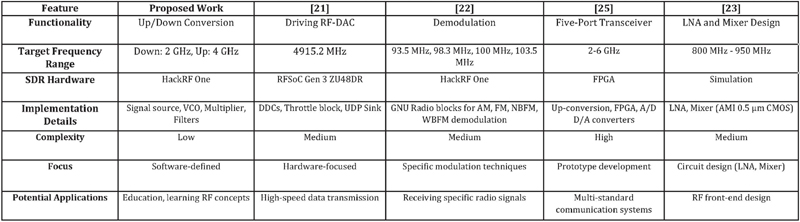
Figure 10 Comparison of results.
Our research depicts a compelling combination of practical implementation of RF Up Down conversion using GNU radio and SDRs. While works presented in [21–23] and [25] provide valuable introductions to specific functionalities (up/down conversion, demodulation) using software-defined radio (SDR), our work delves deeper into a specific application or system design. Additionally, works in [21] and [25] showcase the potential of hardware-focused approaches with high-frequency conversion from 2–6 GHZ with a high complexity level, but our research achieves a similar level of results while potentially offering greater flexibility and control over the signal processing chain with Low Complexity. Moreover, the other works such as [21] and [25] have used hardware that gives less accurate results compared with our work. The work presented in [22] also has used HackRF but the proposed results are more accurate while maintaining less complexity. Also, work in [23] has only performed the simulation process of frequencies 800 MHZ–950 MHZ, as proposed system provides the RF UP Down conversion using GNU radio and SDRs with more accuracy and Less Complexity with high frequencies ranges from 2GHZ–4GHZ.
5 Conclusion
The design and implementation of the RF Up/Down Converter using GNU Radio showcase a versatile and cost-effective solution for RF signal processing. The use of open-source GNU Radio software for the design of the converter allows seamless frequency translation between the C/Ku and L bands. Using the HackRF SDR, up-conversion from 2 GHZ to 4 GHZ and down-conversion from 4 GHZ to 2 GHZ is successfully implemented. The same is demonstrated using hardware and simulation results. The proposed design provides the possibility of adaptively choosing an operating frequency and a mode best suited for prevailing conditions.
References
[1] A. A. Abidi. Direct-conversion radio transceivers for digital communications. IEEE Journal of Solid-State Circuits, vol. 30, no. 12, pp. 1399–1410, Dec. 1995, doi: 10.1109/4.482187.
[2] J. Mitola. The software radio architecture. IEEE Commun. Mag, vol. 33, no. 5, pp. 26–38, May 1995.
[3] R. H. Walden. Analog-to-digital converter survey and analysis. IEEE Journal on Selected Areas in Communications, vol. 17, no. 4, pp. 539–550, April 1999, doi: 10.1109/49.761034.
[4] M. Löhning, T. Hentschel and G. Fettweis. Digital down conversion in software radio terminals. 10th European Signal Processing Conference, Tampere, Finland, pp. 1–4, 2015.
[5] T. Hentschel and G. Fettweis. Sample rate conversion for software radio. IEEE Communications Magazine, vol. 38, no. 8, pp. 142–150, Aug. 2000, doi. 10.1109/35.860866.
[6] Sanjit Mitra. Digital Signal Processing A Computer-Based Approach Second Edition. Tata McGraw-Hill Publishing Company Limited, 2001.
[7] W. Tuttlebe. Software Defined Radio: Enabling Technologies. John Wiley & Sons Ltd, 2002.
[8] M. N. O. Sadiku and C. M. Akujuobi. Software-defined radio: a brief overview. IEEE Potentials, vol. 23, no. 4, pp. 14–15, Oct.–Nov. 2004, doi: 10.1109/MP.2004.1343223.
[9] Valerio, Danilo. Open Source Software-Defined Radio: A survey on GNU-radio and its applications. Technical Report FTW-TR-2008-002, 2008.
[10] S. Katz and J. Flynn. Using software defined radio (SDR) to demonstrate concepts in communications and signal processing courses. 39th IEEE Frontiers in Education Conference, San Antonio, TX, USA, 2009, pp. 1–6, doi: 10.1109/FIE.2009.5350716.
[11] T. Ulversoy. Software Defined Radio: Challenges and Opportunities. IEEE Communications Surveys and Tutorials, vol. 12, no. 4, pp. 531–550, Fourth Quarter 2010, doi: 10.1109/SURV.2010.032910.00019.
[12] Emil Krantz. Design of a Digital Down Converter for LTE in an FPGA. Bachelor’s Thesis in Electronics, University of GAVLE, June 2010.
[13] A. L. G. Reis, A. F. B. Selva, K. G. Lenzi, S. E. Barbin and L. G. P. Meloni. Software defined radio on digital communications: A new teaching tool. WAMICON 2012 IEEE Wireless & Microwave Technology Conference, Cocoa Beach, FL, USA, 2012, pp. 1–8, doi: 10.1109/WAMICON.2012.6208436.
[14] S. Wenmiao. Designing modified digital down conversion using modern digital signal processing. 2nd International Conference on Consumer Electronics, Communications and Networks (CECNet), Yichang, China, 2012, pp. 268–271, doi: 10.1109/CECNet.2012.6202009.
[15] M. B. Sruthi, M. Abirami, A. Manikkoth, R. Gandhiraj and K. P. Soman. Low cost digital transceiver design for Software Defined Radio using RTL-SDR. International Mutli-Conference on Automation, Computing, Communication, Control and Compressed Sensing (iMac4s), Kottayam, India, 2013, pp. 852–855, doi: 10.1109/iMac4s.2013.6526525.
[16] Chandrasekhar K., Farooq Ulla Khan, Shobha C. R. Design of Digital Up-Down Converter for LTE-RRH in Digital Radio System. International Journal of Electronics Communication and Computer Engineering Vol. 4, Issue 4, ISSN (Online): 2249–071X, ISSN (Print): 2278–4209.
[17] Costanzo, S., Spadafora, F., Borgia, A., Moreno, O.H., Costanzo, A., Di Massa, G. High Resolution Software Defined Radar System for Target Detection. Rocha, Á., Correia, A., Wilson, T., Stroetmann, K. (eds) Advances in Information Systems and Technologies. Advances in Intelligent Systems and Computing, vol. 206. Springer, Berlin, Heidelberg. https://doi.org/10.1007/978-3-642-36981-0-94.
[18] R. M. Mani and A. I. Rasheed. Design and implementation of WDF for digital down converter on FPGA for LTE application. International Conference on Advances in Electronics Computers and Communications, Bangalore, India, 2014, pp. 1–4, doi: 10.1109/ICAECC.2014.7002447.
[19] Siauciulis, M., Crockett, L., and Stewart, R. Ultra-wideband SDR architecture for AMD RFSoCs and PYNQ based GNU Radio blocks. Proceedings of GNU Radio Conference, 8(1), 2023.
[20] J. Muslimin, A. L. Asnawi, A. F. Ismail and A. Z. Jusoh. SDR-Based Transceiver of Digital Communication System Using USRP and GNU Radio. International Conference on Computer and Communication Engineering (ICCCE), Kuala Lumpur, Malaysia, 2016, pp. 449–453, doi: 10.1109/ICCCE.2016.100.
[21] Gummineni, M., Polipalli, T.R. Implementation of Reconfigurable Transceiver using GNU Radio and HackRF One. Wireless Pers Commun 112, 889–-905 (2020). https://doi.org/10.1007/s11277-020-07080-0.
[22] Del Barrio AA, Manzano JP, Maroto VM. HackRF – GNU Radio: A software-defined radio to teach communication theory. International Journal of Electrical Engineering & Education, 2023;60(1):23-40. doi: 10.1177/0020720919868144.
[23] Wei Zhuo, S. Embabi, J. P. de Gyvez and E. Sanchez-Sinencio. Using capacitive cross-coupling technique in RF low noise amplifiers and down-conversion mixer design. Proceedings of the 26th European Solid-State Circuits Conference, Stockholm, Sweden, 2000, pp. 77–80.
Biographies

Aniket Thavai. He has completed B.E. in Electronics and Telecommunication Engineering from the Department of Electronics and Telecommunication Engineering at Pillai HOC College of Engineering and Technology, Rasayani, Maharashtra, India. He is currently working as an assistant engineer at Ambetronics Engineers Pvt. Ltd., Mumbai, Maharashtra, India.

Mansi Subhedar. She completed her Ph.D. in Electronics Engineering in 2019. She has more than 17 years of teaching experience. She is currently working as IQAC Coordinator, and Head, at the Department of Electronics and Computer Science at Pillai HOC College of Engineering and Technology, Rasayani, Navi Mumbai, Maharashtra. She has published 49 papers in peer-reviewed international journals and conferences. She was a reviewer and technical committee member of 19 reputed international conferences. She is a life member of ISTE, IEI, and CSI, Fellow IETE, Senior Member IEEE. Her research interests include IoT, Telecommunication networks, Industry 4.0 and Machine learning.

Yash Thakur. He has completed B.E. in Electronics and Telecommunication Engineering from the Department of Electronics and Telecommunication Engineering at Pillai HOC College of Engineering and Technology, Rasayani, Maharashtra, India.

Mrunal Patil. He has completed B.E. in Electronics and Telecommunication Engineering from the Department of Electronics and Telecommunication Engineering at Pillai HOC College of Engineering and Technology, Rasayani, Maharashtra, India.
Journal of Mobile Multimedia, Vol. 20_4, 901–916.
doi: 10.13052/jmm1550-4646.2046
© 2024 River Publishers