Developing an Augmented Reality-based Learning Tool for Gedi Plant Cultivation
Meike Paat, Zusje Wiesje Merry Warouw and Yohanes Bery Mokalu*
Universitas Negeri Manado, Indonesia
E-mail: meikepaat@unima.ac.id; warouw@unima.ac.id; yohanesmokalu@unima.ac.id
*Corresponding Author
Received 01 November 2024; Accepted 21 April 2025
Gedi (Abelmoschus manihot) plants have considerable economic potential, but their successful cultivation is strongly influenced by environmental and educational factors. This paper summarizes research identifying the most effective educational media and multimedia for learning about Gedi plant cultivation. To overcome the limitations of existing AR-based educational tools and introduce innovative solutions, this research designs new tools that integrate the strengths of current platforms while addressing their shortcomings. The goal is to develop an AR-based learning prototype that is easy to install and user-friendly. The study focuses on developing an augmented reality (AR) application using the augmented reality development method. This process includes data collection from relevant literature, design and development of the application, and practical experiments in farming environments with farmers, agricultural practitioners, and educators. A mixed-method approach was employed, with the collected data analyzed both quantitatively and qualitatively to evaluate the effectiveness of the proposed AR application in learning. The findings are expected to contribute to curriculum development and improve teaching methods for educating farmers, agricultural practitioners, and Gedi cultivation managers. The research demonstrates that the AR application is highly feasible for development and implementation.
Keywords: Gedi, Gedi cultivation, learning, augmented reality (AR), augmented reality development method, multimedia learning.
The Gedi plant (Abelmoschus manihot) is a tropical plant from the Malvaceae family [1]. It is native to or originates in specific regions or ecosystems, including North Sulawesi and is typically grown as a hedge plant for kitchen use. This plant is often used for medicinal purposes due to its phytochemical compounds that function as antioxidants [2]. Challenges include selecting the appropriate growth medium; understanding cultivation concepts and enhancing practical skills will improve production yields.
Currently, there are various media detailing cultivation of the Gedi plant: guidebooks, learning modules, tutorial videos, scientific articles, and digital applications [3]. Each media has limitations that can affect their effectiveness. Learning modules and guidebooks are often text-heavy, making it difficult for learners to visualize the cultivation process, and their static nature limits interactivity and engagement. Tutorial videos, while providing visual demonstrations, offer one-way communication with no interactive elements, restricting hands-on learning and making it challenging to revisit specific sections without disrupting the learning flow. Scientific articles, on the other hand, are typically written in technical language, making them less accessible to non-experts and often focusing more on research findings rather than practical step-by-step guidance. Meanwhile, digital applications, although offering multimedia elements, may still be limited to static images and text rather than fully interactive experiences. Additionally, many apps require internet access [4], which can be a barrier in remote areas, and the overall learning experience depends on the usability and quality of the app’s design.
Recognizing these limitations, AR-based learning tools can be developed as a more engaging, interactive, and accessible solution to enhance understanding and practical skills in Gedi plant cultivation. AR applications can display 3D visualizations of Gedi plants for interactive learning, while VR modules simulate farming environments for practical training [5].
Gedi is cultivated for its edible leaves, flowers, and pods. The plant is highly valued for its nutritional content and versatility. Gedi thrives in tropical climates and requires fertile, well=drained soil.
In this study, “learning” refers to the process of understanding Gedi plant cultivation concepts and developing practical skills in managing it through effective learning methods and media [6]. Some learning media include:
• Multimedia-Based Learning which uses various types of media, such as text, images, audio, video, animations, and interactive elements [7];
• Game-Based Learning, which integrates game elements into the learning process [8].
Learning based on virtual reality (VR), augmented reality (AR), and mixed reality (MR) is an online learning approach [9] that utilizes these technologies to create immersive and interactive learning experiences. VR creates a fully immersive digital environment where users are completely isolated from the real world and feel as if they are in a virtual environment [10]. AR combines digital elements with the real world, allowing users to see their surroundings but with additional digital information overlaid on top [11]. MR combines elements of VR and the real world [12] into one integrated environment.
The current state of AR applications in education shows promising potential, though it remains in the early stages of development. A significant body of literature has explored the use of AR across various educational fields, yet research on its full impact on education is still emerging. Spector & Kim [13] suggest that ongoing research is necessary to uncover the unique features and advantages of AR that set it apart from other technologies in educational contexts. A deeper analysis will help to identify the distinctive value of AR-based learning environments. As Karthik et al. [14] highlight, we are only beginning to understand how to design effective instructional strategies for this emerging technology, and the full potential of AR in education is just starting to be explored. According to Bacca et al. [15], AR is highly valuable for implementation in education due to its ability to enhance interactive and immersive learning experiences. They argue that AR offers unique opportunities to engage students by blending virtual elements with the real world, allowing learners to visualize complex concepts in a more tangible and accessible way. This technology can cater to various learning styles, making abstract subjects easier to understand, improving retention, and fostering more active participation. Sutopo et al. emphasize that AR’s potential to create dynamic and engaging educational environments makes it worth adopting in educational settings to support and enhance traditional learning methods.
Augmented Reality (AR) has been increasingly integrated into educational tools to enhance learning experiences by providing immersive, interactive, and engaging content. Below is a comparison of existing AR-based educational tools, highlighting their features, strengths, and limitations, as shown in Table 1.
Table 1 The comparasion of AR-based educational tools
| Description | Strengths | Limitations | |
| 1. Google Expeditions [16] | A VR/AR platform that allows teachers to guide students through virtual field trips and 3D models |
– A wide range of virtual tours and AR experiences. – Easy to use for both teachers and students. – Supports collaborative learning. |
– Limited interactivity in AR mode. – Requires specific hardware (smartphones/tablets and AR viewers). – Discontinued in 2021, though some features are integrated into Google Arts & Culture |
| 2. Microsoft HoloLens [17] | A mixed reality headset for immersive AR experiences. |
– High-quality, immersive AR experiences. – Suitable for advanced applications like medical training and engineering. – Hands-free interaction |
– Expensive and not accessible for most schools. – The steeper learning curve for educators and students. – Limited content specifically designed for K-12 education. |
| 3. zSpace [18] | An AR/VR platform combining a display, stylus, and glasses for interactive learning. |
– Highly interactive and immersive. – Covers a wide range of subjects (STEM, anatomy, etc.). – Encourages hands-on exploration. |
– Expensive hardware and setup. – Requires training for educators. – Limited portability. |
To address the limitations of the existing AR-based educational tools and create novel solutions, we can design new tools that combine the strengths of these platforms while overcoming their weaknesses. This research aims to create an AR-based learning prototype that is easy to install and use. Experts believe it is important to examine the challenges associated with digital game-based learning. The research questions in this study are:
1. What feedback from learners is there on the development of AR-based learning?
2. What types of AR applications are implemented in the learning process, and how do they differ in functionality and usage?
3. How do respondents perceive the effectiveness and usability of AR-based learning, and what factors influence their perceptions?
The research has been conducted in Manado, North Sulawesi, Indonesia, beginning in November 2023, focusing on AR learning application for Gedi cultivation that can be accessed via mobile devices. The development of AR for entrepreneurship involves various tasks carried out by an information technology team, which includes an art designer, model designer, AR programmer, and video specialist.
Participants were selected through purposive sampling. This research included farmers and agricultural practitioners. The farmers were chosen from various small towns and villages in North Sulawesi, a region where Gedi cultivation is actively practiced, ensuring a diverse representation of agricultural communities. The practitioners were professionals from the Agricultural Government Office. Additionally, the study involved three subject matter experts specializing in Agriculture, Educational Technology, and Computer Science, drawn from both academic institutions and industry. Their inclusion provided a multidisciplinary perspective, contributing valuable insights into educational media.
Polcar et al. [19] in their research entitled “Methodology for Designing Virtual Reality Applications” argued that after several brainstorming and evaluating sessions with their colleagues who had been involved in previous virtual reality projects and analysis of the methodologies, they put all this experience together and made a suggestion for a new methodology.
Researchers adapted the Virtual Reality (VR) methodology to Augmented Reality (AR) methodology because both technologies share common principles in immersive learning, user interaction, and digital content integration [20]. Here’s why adaptation is possible:
1. Shared Immersive Learning Principles – Both VR and AR enhance education by providing interactive, experiential learning environments. The structured approach used in VR (e.g., simulations, scenario-based training) can be modified for AR by integrating digital overlays into the real world.
2. Similar User Interaction Models – VR methodologies often focus on user engagement, interaction design, and cognitive load management, which are also crucial in AR. Techniques such as gamification, real-time feedback, and gesture-based controls can be adapted to AR learning experiences.
3. Digital Content Development – VR and AR both rely on 3D models, animations, and interactive multimedia. The development workflow, including content creation, usability testing, and instructional design strategies, can be applied to both technologies with minor adjustments.
4. Evaluation and Assessment Frameworks – Research methodologies used to assess VR effectiveness, such as usability testing, user engagement analysis, and knowledge retention studies, can also be applied to AR. The key difference is considering how digital elements integrate with real-world contexts in AR.
5. Technology and Hardware Considerations – While VR requires fully immersive headsets, AR works with mobile devices, smart glasses, or projectors. However, methodologies for optimizing user experience, reducing motion sickness, and improving accessibility can be adapted across both technologies.
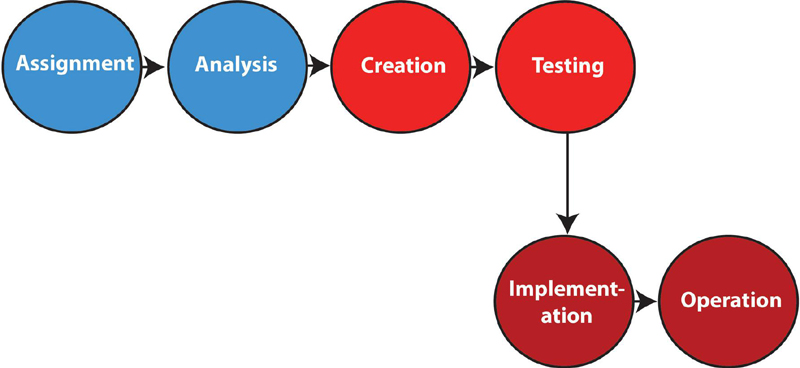
By leveraging VR methodologies, AR-based learning tools can benefit from established best practices while refining them to suit the unique blended reality of AR environments. So, this study adapts the VR development method [19], which consists of six stages, illustrated in Figure 1. The process is as follows:
1. Assignment: This initial phase lays the foundation for developing the AR application. The team establishes the concept, including all necessary system and user requirements.
2. Analysis: During this phase, the team designs instructional materials and mock-ups, ensuring they align with the objectives for objects, storylines, and application performance.
3. Creation: The team searches for assets in marketplaces. If assets are unavailable, they must be custom created. During this phase, various tools and platforms are used to develop the AR application, resulting in a prototype for testing.
4. Testing: The prototype is tested for functionality, including tangible assets, coding, and interactivity, to ensure it meets the application’s objectives. User interactivity is also thoroughly evaluated.
5. Implementation: After testing, the product is revised based on feedback from user testing to enhance the AR application.
6. Operation: In this final phase, the developer monitors the implementation of the AR application. Users provide feedback to improve the application for future development.
Figure 1 The method for developing AR applications falls into six stages.
Source: Developed by the author.
At the analysis stage, the focus is on identifying relevant sources related to Gedi plant cultivation, learning media, and educational theories. Researchers reviewed and analyzed literature to understand the foundational concepts of Gedi cultivation and the learning tools used in educational settings. Based on the literature review, research instruments were developed for future stages.
Data analysis and processing were performed in five phases that began with data collection and, then continued with data preparation, intensive reading, coding, and, analysis of the data describe [21]. Data was collected through interviews and completing questionnaires (1), which were used to get important information for creating an AR application (2). The qualitative approach was used to gather information from different perspectives for developing the application (3). In addition to conducting interviews and collecting questionnaires, observations were made when researchers performed the AR prototype. Finally, the testing stage ensured it met the application’s objectives.
The data collected from the literature offers a comprehensive understanding of the core concepts of Gedi plant cultivation and the various types of learning media used in education. Through the analysis of these sources, researchers gained valuable insights into best practices for cultivating Gedi plants and the educational theories that support effective learning. This knowledge informed the creation of research instruments, ensuring they are grounded in the latest findings from the literature. This stage provided a crucial foundation for the later phases of the research.
Researchers were able to draw reliable conclusions and predictions from the data, including five key areas: understanding of values, integration of experience and knowledge, Gedi plant management process, learning methods, and engagement and satisfaction.
Descriptive-analytical methods were used for data analysis and interpreted narratively based on the study results. It involved collecting data, preparing data for qualitative processing, creating codes, queries, and data presentation [22]. Based on research findings after a preliminary survey using questionnaires, interviews, and literature, the AR application is shown developed in Table 2.
Table 2 The concept of AR Gedi learning
| Object | Description |
| User | Farmers, educators, practitioners |
| Topics | 1. Opening |
| 2. Table of Content | |
| 3. Learning | |
| 4. Gedi plant | |
| 5. Gedi Cultivation | |
| Application | AR application for running on a mobile device |
| Multimedia object | Text, image, video, animation, AR |
| Interactivity | Button, touch screen |
| Source: Developed by the author. | |
Table 3 Objects for creating AR application
| Object | Type | Name | Description |
| 3D model | Gedi plant | Bought from sketchfab | |
| https://sketchfab.com | |||
| Video | Gedi cultivation | Bought from Envato | |
| https://envato.com | |||
| Image | Gedi | Bought from | |
| Envato https://envato.com | |||
| Video | Gedi plantation | Youtube | |
| Source: Developed by the author. |
The development team collected and created various assets and objects for the project. Many of these assets were sourced from online marketplaces, where the team purchased 3D models, such as a Gedi plant, and downloaded the video, 3D model, and image assets, as shown in Table 3. These assets were then integrated into the development of the AR application.
Several popular software tools were used, including Unity, Vuforia Engine, and Android Studio [23]. Unity Editor is a widely used platform for creating immersive AR experiences on mobile devices and digital glasses. It can be downloaded and set up via https://unity.com. Vuforia Engine is easily added to Unity projects, with a prime example available on the Unity Asset Store to help developers get started. This example provides comprehensive knowledge on using Vuforia targets and trackers to create AR applications for real-world objects and environments.
Vuforia Engine, a software development kit, enables developers to add advanced computer vision functionality to their applications, allowing recognition of images and objects and interaction with real-world spaces [24]. It supports various operating systems and tools necessary for AR development in the official integrated development environment (IDE) for Google’s Android operating system, based on JetBrains’ IntelliJ IDEA.
Numerous online platforms facilitate the rapid development of AR applications, allowing users to create applications even without prior knowledge or experience in algorithms and programming. To this end, the researchers utilized Assemblr Studio for their AR development [25]. Assemblr is recognized as one of the leading 3D applications that empower users to learn and engage with content through the processes of building and designing. Its user-friendly interface offers an interactive learning environment that fosters creativity in projects utilizing augmented and virtual reality.
Another feature of Assemblr is Assemblr Studio Web, which enables users to create applications simply by dragging and dropping objects within a web browser. This accessibility means that even those without design skills can easily participate in the creative process [26].
Once the objects were finalized for the AR application, the programmer built the application using Assemblr Studio, as illustrated in Figure 2. Figure 3 depicts an AR feature that displays text, a 3D model, and a video about the Gedi plantation. The completed AR application can be accessed independently through a web browser on both computers and smartphones [21].
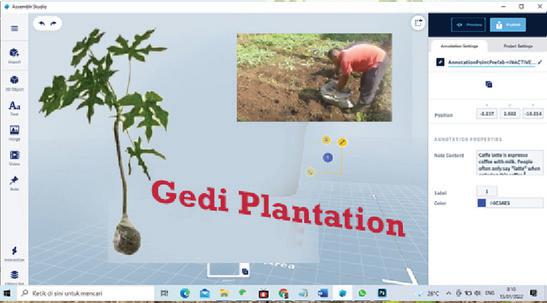
Figure 2 The work area of Assemblr Studio.
Source: Developed by the author.
The participants of this research included 30 farmers and 6 agricultural practitioners. The farmers were selected from various small towns and villages within regions where Gedi cultivation is actively practiced, ensuring a diverse representation of agricultural communities. The practitioners were professionals from the Agricultural Government Office, bringing expertise in policy implementation and field management.
Additionally, the study involved three subject matter experts specializing in Agriculture, Educational Technology, and Computer Science, drawn from both academic institutions and industry. Their inclusion provided a multidisciplinary perspective, contributing valuable insights into the integration of AR technology in agricultural education. The combination of farmers, practitioners, and experts ensured a well-rounded evaluation of the AR application, considering both practical and technological aspects of its implementation.
After researchers developed the prototype, which was used in the learning, and audiences accessed it on their mobile phones by typing the URL in a web browser. Figure 3 shows the Gedi plant’s AR on a smartphone.
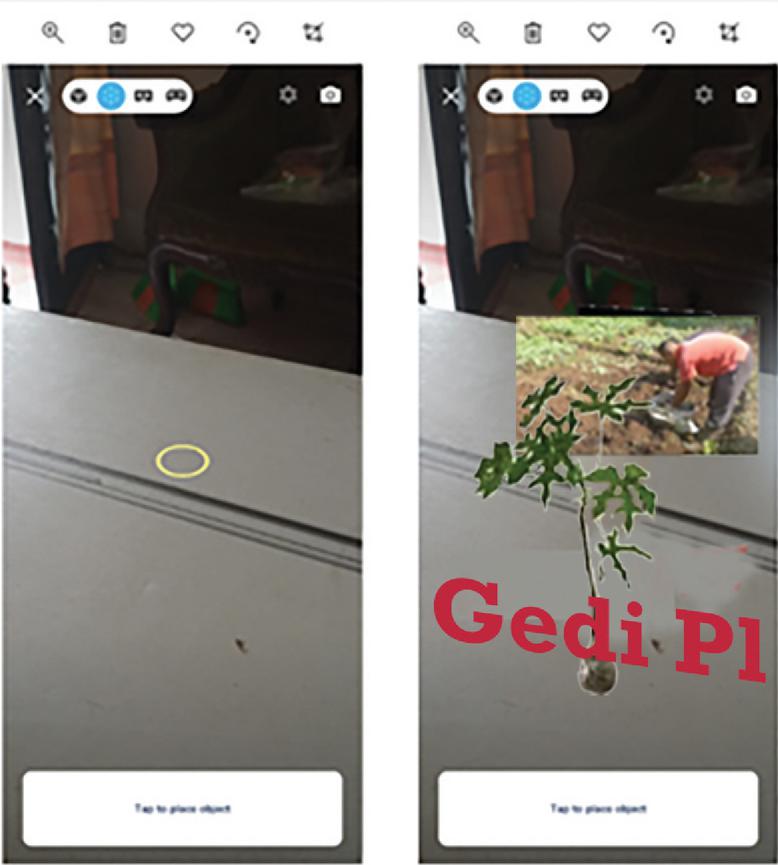
Figure 3 Accessing the AR of Gedi growth using a smartphone.
Source: Developed by the author.
Three experts in education technology, agriculture, and computer science evaluated the prototype of the AR application. The instruments for assessing were questionnaires and interviews. In addition, respondents gave comments and suggestions for revision to improve the application. Table 4 shows the questions and responses.
Table 4 Results of evaluation by experts in education technology, agriculture, and computer science
| Statements | Most Answers |
| CONTENT | |
| 1. The application of AR is well organized. | good |
| 2 The information on the AR application is easy to understand. | fair |
| 3. The AR application gives valuable knowledge. | useful |
| 4. The AR application is interesting to use. | interesting |
| ELEMENTS | |
| 1. The system presents the information sequentially so users can understand it easily. | sequential |
| 2. The layout of elements is arranged using graphic design principles. | fair |
| 3. The colors used in the application are appropriate to the characteristics of the Gedi project. | fair |
| 4. The symbols in the application are easy to understand. | easy |
| USER EXPERIENCE | |
| 1. Users can access the application easily with the available device. | easy |
| 2. The resolution of the mobile device is not a barrier. | good |
| 3. The buttons to the link work correctly. | correct |
| Source: Developed by the author. | |
In the next step, the prototype was tested by farmers, practitioners, and educators after it had been revised. The participants accessed the Gedi learning program based on AR by typing its URL into their smartphones. Then they answered the questions with a score between 1 and 5 and found the results as shown in Figure 4. It shows that 4.5% of respondents stated that the application was very good, 50.1% that it was good, 38.8% that it was fair, and 6.6% that it was bad. There were no respondents who stated the application was very bad.
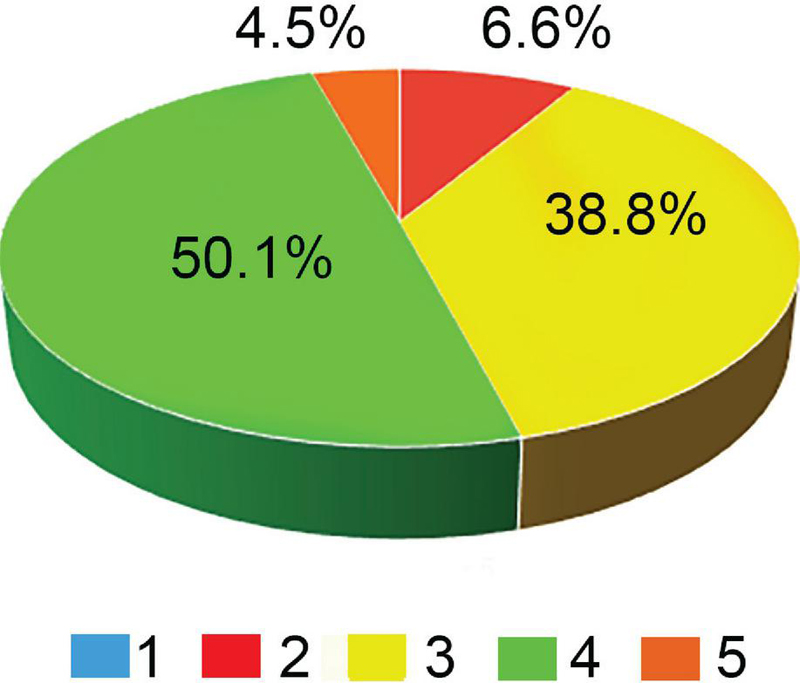
Figure 4 Chart of the respondent answers.
Source: Developed by the author.
To assess the effectiveness of the AR application in enhancing learning outcomes, a two-phase testing approach was implemented. In the first phase, respondents were introduced to Gedi cultivation through conventional learning materials, including printed modules and books. This phase aimed to establish a baseline understanding of Gedi cultivation practices, relying on traditional instructional methods.
In the second phase, respondents engaged with an AR application designed to provide an interactive and immersive learning experience. Through the AR platform, they could visualize 3D models of Gedi plants, observe growth stages in real-time, and explore planting techniques with guided, step-by-step animations. This hands-on approach allowed learners to interact with the content dynamically, reinforcing their comprehension of key agricultural concepts.
Following the AR learning experience, respondents were assessed through a structured knowledge test focused on Gedi cultivation. The test included both conceptual and application-based questions, covering essential topics such as plant growth cycles, optimal planting conditions, pest management strategies, and maintenance best practices. By comparing the test results from both learning phases, the study aimed to determine whether AR-based instruction led to improved knowledge retention, deeper conceptual understanding, and greater engagement compared to traditional learning methods.
Table 5 Test outcome of respondents designed to evaluate their understanding of Gedi cultivation practices and knowledge using only print media
| Score | ||||||||||||
| No | Respondent | 1 | 3 | 5 | 6 | 7 | 6 | 7 | 8 | 9 | 10 | Average |
| 1 | Learner 1 | 60 | 50 | 73 | 63 | 54 | 66 | 53 | 43 | 80 | 65 | 60,7 |
| 2 | Learner 2 | 74 | 63 | 67 | 60 | 72 | 87 | 84 | 40 | 55 | 74 | 67,6 |
| 3 | Learner 3 | 54 | 67 | 54 | 87 | 66 | 75 | 57 | 56 | 76 | 54 | 64,6 |
| 4 | Learner 4 | 67 | 73 | 88 | 59 | 68 | 54 | 67 | 73 | 84 | 49 | 68,2 |
| 5 | Learner 5 | 63 | 54 | 66 | 50 | 73 | 63 | 54 | 66 | 75 | 66 | 63 |
| 6 | Learner 6 | 60 | 72 | 87 | 63 | 67 | 60 | 72 | 68 | 57 | 67 | 67,3 |
| 7 | Learner 7 | 54 | 87 | 66 | 75 | 54 | 67 | 54 | 87 | 66 | 53 | 66,3 |
| 8 | Learner 8 | 88 | 59 | 68 | 54 | 67 | 73 | 88 | 59 | 87 | 84 | 72,7 |
| 9 | Learner 9 | 66 | 50 | 73 | 63 | 63 | 54 | 66 | 50 | 75 | 57 | 61,7 |
| 10 | Learner 10 | 72 | 87 | 84 | 40 | 87 | 63 | 67 | 60 | 68 | 54 | 68,2 |
| 11 | Learner 11 | 66 | 75 | 57 | 56 | 66 | 75 | 54 | 67 | 73 | 63 | 65,2 |
| 12 | Learner 12 | 68 | 54 | 67 | 73 | 68 | 54 | 67 | 73 | 67 | 60 | 65,1 |
| 13 | Learner 13 | 73 | 63 | 54 | 66 | 73 | 63 | 63 | 54 | 54 | 67 | 63 |
| 14 | Learner 14 | 67 | 60 | 72 | 68 | 59 | 68 | 54 | 75 | 54 | 67 | 64,4 |
| 15 | Learner 15 | 54 | 67 | 54 | 87 | 50 | 73 | 63 | 54 | 67 | 73 | 64,2 |
| 16 | Learner 16 | 60 | 72 | 87 | 84 | 87 | 84 | 40 | 63 | 63 | 54 | 69,4 |
| 71 | Learner 17 | 87 | 66 | 75 | 57 | 75 | 57 | 56 | 66 | 50 | 75 | 66,4 |
| 81 | Learner 18 | 59 | 68 | 54 | 67 | 54 | 67 | 73 | 57 | 60 | 68 | 62,7 |
| 19 | Learner 19 | 50 | 73 | 63 | 54 | 63 | 54 | 66 | 67 | 67 | 73 | 63 |
| 20 | Learner 20 | 63 | 67 | 60 | 72 | 60 | 72 | 68 | 54 | 73 | 67 | 65,6 |
| 21 | Learner 21 | 66 | 73 | 63 | 63 | 54 | 54 | 60 | 72 | 87 | 84 | 67,6 |
| 22 | Learner 22 | 68 | 59 | 68 | 54 | 75 | 54 | 87 | 66 | 75 | 57 | 66,3 |
| 23 | Learner 23 | 87 | 50 | 73 | 63 | 54 | 67 | 59 | 68 | 54 | 67 | 64,2 |
| 34 | Learner 24 | 84 | 87 | 84 | 40 | 63 | 63 | 50 | 73 | 63 | 54 | 66,1 |
| 25 | Learner 25 | 57 | 75 | 57 | 56 | 66 | 50 | 63 | 67 | 60 | 72 | 62,3 |
| 26 | Learner 26 | 67 | 60 | 72 | 60 | 60 | 72 | 87 | 84 | 87 | 67 | 71,6 |
| 27 | Learner 27 | 73 | 63 | 63 | 54 | 87 | 66 | 75 | 57 | 75 | 73 | 68,6 |
| 28 | Learner 28 | 59 | 68 | 54 | 75 | 72 | 60 | 67 | 60 | 60 | 72 | 64,7 |
| 29 | Learner 28 | 72 | 60 | 60 | 72 | 63 | 54 | 73 | 63 | 87 | 66 | 67 |
| 30 | Learner 30 | 63 | 54 | 87 | 66 | 75 | 57 | 75 | 63 | 54 | 87 | 68,1 |
| 31 | Learner 31 | 60 | 72 | 87 | 84 | 87 | 72 | 87 | 84 | 87 | 75 | 79,5 |
| 32 | Learner 33 | 87 | 66 | 75 | 57 | 75 | 66 | 75 | 57 | 75 | 67 | 70 |
| Mean | 66,42 | |||||||||||
| Standard Deviation | 3.631 | |||||||||||
Table 6 Test outcome of respondents designed to evaluate their understanding of Gedi cultivation practices and knowledge after using AR application
| Score | ||||||||||||
| No | Respondent | 1 | 3 | 5 | 6 | 7 | 6 | 7 | 8 | 9 | 10 | Average |
| 1 | Learner 1 | 72 | 87 | 84 | 84 | 93 | 87 | 84 | 87 | 87 | 63 | 82,8 |
| 2 | Learner 2 | 74 | 63 | 67 | 88 | 84 | 75 | 82 | 84 | 93 | 88 | 79,8 |
| 3 | Learner 3 | 87 | 84 | 87 | 84 | 93 | 84 | 93 | 88 | 84 | 54 | 83,8 |
| 4 | Learner 4 | 75 | 82 | 84 | 93 | 84 | 88 | 84 | 84 | 93 | 49 | 81,6 |
| 5 | Learner 5 | 63 | 54 | 88 | 84 | 84 | 93 | 82 | 88 | 84 | 66 | 78,6 |
| 6 | Learner 6 | 60 | 72 | 87 | 78 | 88 | 84 | 88 | 84 | 93 | 93 | 82,7 |
| 7 | Learner 7 | 54 | 87 | 84 | 93 | 93 | 84 | 93 | 88 | 84 | 84 | 84,4 |
| 8 | Learner 8 | 88 | 59 | 88 | 84 | 84 | 82 | 67 | 73 | 88 | 84 | 79,7 |
| 9 | Learner 9 | 66 | 82 | 73 | 63 | 87 | 84 | 87 | 87 | 63 | 57 | 74,9 |
| 10 | Learner 10 | 72 | 87 | 84 | 87 | 75 | 82 | 84 | 93 | 88 | 54 | 80,6 |
| 11 | Learner 11 | 66 | 75 | 82 | 84 | 93 | 88 | 88 | 84 | 93 | 63 | 81,6 |
| 12 | Learner 12 | 68 | 56 | 87 | 88 | 84 | 93 | 87 | 88 | 84 | 60 | 79,5 |
| 13 | Learner 13 | 73 | 63 | 75 | 84 | 93 | 84 | 93 | 90 | 82 | 67 | 80,4 |
| 14 | Learner 14 | 67 | 60 | 87 | 88 | 84 | 88 | 84 | 78 | 88 | 67 | 79,1 |
| 15 | Learner 15 | 72 | 87 | 75 | 87 | 88 | 73 | 88 | 75 | 93 | 82 | 82 |
| 16 | Learner 16 | 60 | 72 | 87 | 84 | 93 | 84 | 93 | 87 | 63 | 88 | 81,1 |
| 71 | Learner 17 | 87 | 66 | 75 | 84 | 93 | 88 | 84 | 84 | 93 | 93 | 84,7 |
| 81 | Learner 18 | 72 | 87 | 84 | 88 | 84 | 67 | 84 | 93 | 84 | 68 | 81,1 |
| 19 | Learner 19 | 50 | 73 | 84 | 93 | 84 | 87 | 88 | 84 | 93 | 73 | 80,9 |
| 20 | Learner 20 | 63 | 67 | 88 | 84 | 82 | 84 | 93 | 88 | 75 | 67 | 92 |
| 21 | Learner 21 | 66 | 73 | 89 | 82 | 84 | 93 | 84 | 84 | 93 | 84 | 83,2 |
| 22 | Learner 22 | 68 | 82 | 68 | 88 | 88 | 84 | 87 | 88 | 84 | 90 | 82,7 |
| 23 | Learner 23 | 87 | 87 | 75 | 93 | 92 | 78 | 84 | 93 | 84 | 93 | 86,6 |
| 34 | Learner 24 | 84 | 75 | 84 | 90 | 84 | 93 | 88 | 84 | 88 | 84 | 85,4 |
| 25 | Learner 25 | 57 | 75 | 82 | 78 | 88 | 84 | 90 | 84 | 93 | 88 | 81,9 |
| 26 | Learner 26 | 89 | 75 | 87 | 92 | 60 | 84 | 93 | 88 | 84 | 93 | 84,5 |
| 27 | Learner 27 | 73 | 63 | 75 | 90 | 87 | 88 | 84 | 82 | 84 | 93 | 81,9 |
| 28 | Learner 28 | 59 | 68 | 82 | 78 | 84 | 93 | 93 | 87 | 88 | 84 | 81,6 |
| 29 | Learner 28 | 72 | 60 | 87 | 84 | 88 | 84 | 84 | 93 | 87 | 66 | 80,5 |
| 30 | Learner 30 | 63 | 67 | 75 | 88 | 84 | 90 | 88 | 84 | 90 | 87 | 81,6 |
| 31 | Learner 31 | 60 | 90 | 87 | 84 | 87 | 78 | 87 | 88 | 78 | 75 | 81,4 |
| 32 | Learner 33 | 87 | 78 | 75 | 72 | 87 | 84 | 75 | 93 | 75 | 67 | 79,3 |
| Mean | 81,93 | |||||||||||
| Standard Deviation | 2,866 | |||||||||||
The data presented in Tables 5 and 6 compare the outcomes of learners who used print media and AR application, revealing differences in average scores and score consistency. In Table 4, learners achieved a mean score of 66.42 with a standard deviation of 3.631, indicating a moderate performance level with some variability in individual scores. In contrast, Table 6 shows a higher mean score of 81.93 and a lower standard deviation of 2.866, suggesting that learners performed better on average and that their scores were more consistent. The increase in mean score and the reduction in score variability shown in Table 5 indicate an improvement in learning outcomes. Positive test results indicate that the AR application effectively enhances respondents’ understanding.
These ten questions help evaluate the understanding of Gedi (Abelmoschus manihot L.) cultivation practices and knowledge:
1. Did the AR application help you better understand soil texture, pH levels, and nutrient requirements compared to traditional learning materials?
2. How did the AR application enhance your understanding of temperature, humidity, and seasonal factors affecting Gedi growth compared to reading about them?
3. Did the AR tool’s interactive guides help you understand the soil preparation process better than static images or text descriptions?
4. Did the AR simulation of watering schedules and plant health changes improve your ability to apply this knowledge in real farming conditions?
5. Did the 3D AR visualization of different growth stages make it easier to identify the right time for harvesting compared to other learning methods?
6. How did the AR feature that identifies pests and diseases help you recognize and understand pest control methods more effectively?
7. Did the AR demonstration of plant spacing and growth impact help you understand the importance of proper spacing more effectively than traditional diagrams?
8. How did the AR-based comparison of organic vs. chemical fertilizers influence your understanding of their benefits and drawbacks?
9. Did the AR-guided step-by-step propagation process make it easier for you to understand and remember the technique compared to text-based instructions?
10. Did the AR application’s interactive content on Gedi’s nutritional and medicinal properties enhance your awareness and understanding of its market potential?
To provide a more balanced perspective, a stronger discussion of these limitations should be included, addressing potential challenges in both the AR learning approach and the assessment methodology. While AR enhances engagement and provides interactive visualizations, its effectiveness may vary depending on factors such as user familiarity with technology, accessibility of AR-compatible devices, and potential cognitive overload due to excessive digital stimulation. Additionally, the study’s reliance on printed materials as the baseline for comparison may not fully capture the diversity of traditional learning experiences, such as hands-on training or expert-led workshops, which could influence the effectiveness of AR-based learning.
Furthermore, the assessment method primarily focuses on knowledge retention through testing, which may not fully reflect practical skill acquisition or long-term comprehension. A more comprehensive evaluation could include observational studies, user feedback on learning experiences, and performance-based assessments to measure the real-world applicability of AR-enhanced learning. Addressing these limitations would strengthen the discussion by providing a more nuanced understanding of AR’s role in education while acknowledging areas for improvement and future research directions.
The findings are: (1) Feedback from learners can be helpful in the development of AR-based learning. (2) Various types of AR application can be applied in the learning and (3) Respondents’ perceptions of AR-based learning are good.
The findings highlight the potential benefits of AR [27] in improving knowledge of Gedi cultivation for farmers, practitioners, and academics. For farmers, the AR application can serve as an accessible, practical tool for grasping complex cultivation techniques, which could lead to more effective crop management and improved productivity. Practitioners in agriculture may use these insights to develop more engaging, technology-driven training programs that help standardize learning outcomes and enhance practical skills across diverse learner groups. Academics can leverage these findings to expand research on the educational impact of AR technology in agriculture, potentially leading to new learning models and methodologies that improve knowledge retention and application in various agricultural practices. Overall, the increase in mean scores and consistency with AR use underscores its value in deepening understanding and providing a more effective learning experience.
Future research could explore several areas to further understand the impact of AR on Gedi cultivation and agricultural learning. Studies could investigate the long-term retention of knowledge gained through AR compared to traditional methods, examining whether AR leads to sustained improvement in farming practices over time. Additionally, the research could focus on the scalability of AR applications in different agricultural contexts and regions, assessing its effectiveness across varying literacy levels and technological familiarity among farmers. Another important avenue would be to evaluate the cost-effectiveness and accessibility of AR for smallholder farmers, considering potential barriers such as device availability and internet connectivity. Lastly, future studies could expand on the educational design of AR content, exploring ways to integrate it with other digital tools, like mobile applications or online learning platforms, to create a comprehensive and flexible learning ecosystem for agricultural development.
The authors declare that the research was conducted in the absence of any commercial or financial relationships that could be construed as a potential conflict of interest.
This research was funded by Republic Indonesia Ministry of Education, Culture, Research, and Technology under the master contract number 067/E5/PG.02.00.PL/2024, and subcontract number 398/UN41.9/TU/2024.
The authors are thankful to the the Republic Indonesia Ministry of Education, Culture, Research, and Technology for funding this work, under the master contract number 067/E5/PG.02.00.PL/2024, and subcontract number 398/UN41.9/TU/2024.
[1] E. Indrawati and L. E. Setijorini, “Prospects of Gedi Plant (Abelmoschus manihot L.) as a Functional Food and Herbal Medicine,” E3S Web Conf., vol. 483, 2024, doi: https://doi.org/10.1051/e3sconf/202448302004.
[2] K. Athmouni, T. Belghith, A. El Fek, and H. Ayadi, “Phytochemical composition and antioxidant activity of extracts of some medicinal plants in Tunisia,” Int. J. Pharmacol. Toxicol., vol. 4, no. 2, p. 159, 2016, doi: https://doi.org/10.14419/ijpt.v4i2.6477.
[3] R. F. Aldya, R. F. Arifendi, Y. Pantiwati, and L. Chamisijatin, “Utilization of Various Type of Learning Media to Engage Students’ Learning Interest in Education Department,” vol. 7, no. 2, pp. 127–135, 2024.
[4] M. Munoto, M. S. Sumbawati, and S. F. M. Sari, “The Use of Mobile Technology in Learning With Online and Offline Systems,” Int. J. Inf. Commun. Technol. Educ., vol. 17, no. 2, pp. 54–67, 2020, doi: https://doi.org/10.4018/ijicte.2021040104.
[5] LSU, “How Virtual Reality Is Changing Education,” LSU Online & Continuing Education, 2020. https://online.lsu.edu/newsroom/articles/how-virtual-reality-changing-education/ (accessed May 05, 2022).
[6] H. P. Rini and D. K. Sawitri, “Effectiveness of Online Learning: The Learning Methods and Media,” Ilomata Int. J. Soc. Sci., vol. 3, no. 1, pp. 330–339, 2022, doi: https://doi.org/10.52728/ijss.v3i1.389.
[7] L. Tuhuteru, D. Misnawati, A. Aslan, Z. Taufiqoh, and I. Imelda, “The Effectiveness of Multimedia-Based Learning To Accelerate Learning After The Pandemic At The Basic Education Level,” Tafkir Interdiscip. J. Islam. Educ., vol. 4, no. 1, pp. 128–141, 2023, doi: https://doi.org/10.31538/tijie.v4i1.311.
[8] V. S. Zirawaga, A. I. Olusanya, and T. Maduku, “Gaming in Education: Using Games as a Support Tool to Teach History,” J. Educ. Pract., vol. 8, no. 15, pp. 55–64, 2017, [Online]. Available: https://files.eric.ed.gov/fulltext/EJ1143830.pdf.
[9] K. Wang, “Research and Application of VR in Training and Learning,” Highlights Sci. Eng. Technol., vol. 85, pp. 1306–1313, 2024, doi: https://doi.org/10.54097/anhqyy16.
[10] J. D. Dayag, “Virtual Learning Environment?: Enriching 21 st Century Academic Landscape Abstract?:,” vol. 2, no. January, 2024, doi: 10.59324/ejtas.2024.2(1).19.
[11] A.-G. Agape, D. Stoenciu, and C.-C. Chircu, “Virtual Reality (VR), Augmented Reality (AR) and Mixed Reality (MR), A Necessity of The Modern Diving Technology,” L. Forces Acad. Rev., vol. 29, no. 2, pp. 179–184, 2024, doi: https://doi.org/10.2478/raft-2024-0019.
[12] N. Sala, “Virtual Reality, Augmented Reality, and Mixed Reality in Education,” no. January 2021, pp. 48–73, 2020, doi: 10.4018/978-1-7998-4960-5.ch003.
[13] J. M. Spector and H. Kim, “Emerging Technologies in Education: A Review,” J. Educ. Technol. Soc., vol. 22, no. 1, pp. 56–68, 2019, doi: https://doi.org/10.13140/RG.2.2.32845.45285.
[14] B. Karthik, B. Chandrasekhar, D. David, and D. Kumar, “Identification of Instructional Design Strategies for an Effective E- Identification of Instructional Design Strategies for an Effective Elearning Experience learning Experience,” 2019. doi: https://doi.org/10.46743/2160-3715/2019.3870.
[15] J. Bacca, S. Baldiris, R. Fabregat, and S. Graf, “Augmented Reality Trends in Education: A Systematic Review of Research and Applications,” Educ. Technol. Soc., vol. 17, no. 4, 2014.
[16] Y. B. Shapovalov, Z. I. Bilyk, A. I. Atamas, V. B. Shapovalov, and A. D. Uchitel, “The potential of using google expeditions and google lens tools under STEM-education in Ukraine,” CEUR Workshop Proc., vol. 2257, no. August, pp. 66–74, 2018, doi: https://doi.org/10.31812/pedag.v51i0.3659.
[17] S. Park, S. Bokijonov, and Y. Choi, “Review of microsoft hololens applications over the past five years,” Appl. Sci., vol. 11, no. 16, 2021, doi: https://doi.org/10.3390/app11167259.
[18] K. Shoylekova, D. Atanasova, and R. Rusev, “Application of zSpace Technology in the Disciplines of the STEM Cycle APPLICATION OF ZSPACE TECHNOLOGY,” Strateg. Policy Sci. Educ., no. October, 2024, doi: https://doi.org/10.53656/str2024-5s-16-app.
[19] J. Polcar, M. Gregor, P. Horejsi, and P. Kopecek, “Methodology for designing virtual reality applications,” Ann. DAAAM Proc. Int. DAAAM Symp., vol. 2015-Janua, no. January, pp. 768–774, 2015, doi: https://doi.org/10.2507/26th.daaam.proceedings.107.
[20] A. Dembe, “The Integration of Virtual Reality (VR) and Augmented Reality (AR) in Classroom Settings,” no. May, 2024, [Online]. Available: https://rijournals.com/engineering-and-physical-sciences/.
[21] D. Byrne, “A worked example of Braun and Clarke’s approach to reflexive thematic analysis,” Qual. Quant., no. 0123456789, 2021, doi: https://doi.org/10.1007/s11135-021-01182-y.
[22] A. O. Abari and I. A. Akinyemi, Fundamentals of Educational Research (A Pragmatic Approach), no. May. HIS LINEAGE PUBLISHING HOUSE, 2023.
[23] J. Glover, Unity 2018 Augmented Reality Projects, vol. 66. Packt Publishing, 2018.
[24] Vuforia Engine Development Portal, “Vuforia Engine,” Vuforia Engine Development Portal, 2020. https://developer.vuforia.com/.
[25] Assemblr, “When your creative rush strikes, you may want to express it fast and easily. With Assemblr Studio Web, you can create your dream creations.,” Assemblr, 2021. https://www.assemblrworld.com/ (accessed Jan. 12, 2022).
[26] N. I. M. Enzai, N. Ahmad, M. A. H. A. Ghani, S. S. Rais, and S. Mohamed, “Development of Augmented Reality (AR) for Innovative Teaching and Learning in Engineering Education,” Asian J. Univ. Educ., vol. 16, no. 4, pp. 99–108, 2020, doi: https://doi.org/10.24191/ajue.v16i4.11954.
[27] N. M. Alzahrani, “Augmented reality: A systematic review of its benefits and challenges in e-learning contexts,” Appl. Sci., vol. 10, no. 16, 2020, doi: https://doi.org/10.3390/app10165660.

Dra. Meike Paat received her bachelor’s degree in Biology Education from Manado State University in 1985, her master’s degree in Educational Technology from Jakarta State University in 1993, and her Doctorate in Educational Technology from Jakarta State University in 2013. She is currently a Professor in the field of Biology Education Technology at Manado State University. Her research focuses on biology education technology, biology education, instructional media, and other areas relevant to biology education.

Zusje Wiesje Merry Warouw completed her undergraduate studies in the Department of Biology Education at Manado State University in 1992. Her Master’s degree in Science Education was pursued at Surabaya State University in 2002. She became a lecturer in the Department of Biology at Manado State University in 2005. She completed her doctoral studies in the Biology Education Program at Malang State University in 2009. Her research interests include biology education, instructional media and natural science education.

Yohanes Bery Mokalu received his bachelor’s degree in Biology Education from Manado State University in 2019 and his master’s degree in Natural Sciences Education from Manado State University in 2021. He is currently a Lecturer in the Department of Science Education, Faculty of Mathematics and Natural Sciences, at Manado State University. His research interests include biology education technology, biology education, natural science education, instructional media, and other areas related to biology education and natural science education. Additionally, he serves as a reviewer for several highly respected academic journals.
Journal of Mobile Multimedia, Vol. 21_2, 221–244.
doi: 10.13052/jmm1550-4646.2122
© 2025 River Publishers