Factors Affecting Human Resource Development for Industry 5.0 in Thailand
Sirichai Panapongpaisan and Yod Sukamongkol*
Technology of Information System Management Division, Faculty of Engineering, Mahidol University, Nakhon Pathom, Thailand
E-mail: sirichai.panapongpaisan@gmail.com; yod.suk@mahidol.ac.th
*Corresponding Author
Received 28 June 2025; Accepted 05 November 2025
Abstract
As Thailand’s manufacturing sector advances toward the human-centric collaborative paradigm of Industry 5.0, identifying the factors that shape organizational preparedness has become a strategic concern. This study investigates how transformational leadership, individual self-efficacy, and collective team effectiveness contribute to Industry 5.0 readiness within the Thai industrial context. A quantitative design was employed, drawing on survey data from 400 manufacturing professionals. The dataset was analyzed using structural equation modeling (SEM) with bootstrapped confidence intervals to assess both direct and mediated effects. The analysis demonstrates that transformational leadership enhances both self-efficacy ( 0.334, p 0.001) and team effectiveness ( 0.285, p 0.001). Self-efficacy, in turn, strongly improves team outcomes ( 0.683, p 0.001). Team effectiveness emerges as the most influential direct predictor of Industry 5.0 readiness ( 0.757, p 0.001), while also mediating the influence of leadership and self-efficacy. Collectively, these results confirm that leadership, confidence, and teamwork operate as interdependent drivers of organizational transformation. Theoretically, this research advances understanding of human resource development for Industry 5.0 by clarifying the mechanisms linking leadership, individual capability, and team performance. The findings extend social cognitive theory by validating collective efficacy as a critical mediating mechanism in Industry 5.0 preparedness. Practically, results recommend that human resource managers prioritize high performing team models, while Government agencies should operationalize policy around a human capital preparation index to guide upskilling initiatives.
Keywords: Industry 5.0, human resource development, IT/OT integration, social cognitive theory, structural equation modeling, sustainability, resilience, human-centric.
1 Introduction
The global industrial landscape is rapidly evolving, with the Thai manufacturing sector actively engaging in the transition toward Industry 4.0 [1–4] and the emerging paradigm of Industry 5.0 [5]. This shift is imperative for sustaining national competitiveness and embracing advanced production capabilities. Existing literature widely establishes the foundational principles of efficient business models for long-term competitiveness [6] and the critical role of IT demand management [7] in strategically aligning technology with business objectives [8]. Globally, Industry 4.0 and 5.0 are well characterized, emphasizing sophisticated technological integration, human-centric design, resilience, and sustainability in industrial operations [5, 9]. It is also broadly understood that skill deficits and challenges in integrating information technology (IT) and operational technology (OT) systems are common hurdles in contemporary industrial transformations [10, 11]. Within Thailand, the manufacturing sector’s economic importance is recognized, alongside its general challenges in adopting advanced paradigms, including skill mismatches and IT/OT integration complexities, as shown in Figure 1.
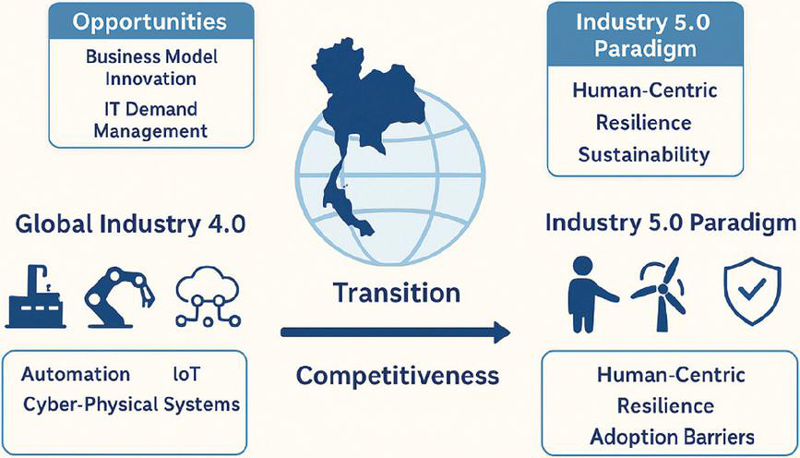
Figure 1 Industrial transition toward Industry 5.0 in Thailand.
Despite these established understandings, a significant empirical void exists concerning the specific interplay of human factors within the distinct cultural and operational context of Thai manufacturing as it progresses towards Industry 5.0. Specifically, direct empirical evidence is lacking in several critical areas. While transformational leadership is globally acknowledged for its role in fostering innovation [12], its precise influence on organizational readiness for Industry 5.0 within Thai industrial environments remains empirically underexplored. Similarly, digital transformation initiatives often prioritize technical training, yet the critical role of individual self-efficacy [13] essential for employee adaptability, confidence, and effective engagement with new digital technologies is insufficiently studied within the Thai workforce. Furthermore, cross functional collaboration, particularly crucial for seamless IT/OT integration [11] in Industry 5.0, lacks specific research regarding its key drivers within the Thai manufacturing context and its subsequent impact on organizational readiness. Crucially, a comprehensive, empirically validated framework that synthesizes the roles of leadership, self-efficacy, and team effectiveness to foster Industry 5.0 readiness through human resource development (HRD) initiatives, specifically tailored for Thai manufacturing, is currently absent.
This study directly addresses these identified empirical and contextual knowledge gaps by providing a nuanced, data driven investigation into the interplay of key human factors leadership, individual self-efficacy, and team effectiveness and their collective influence on organizational readiness for Industry 5.0 specifically within the Thai manufacturing sector. By focusing on these under researched dimensions within a localized context, this study aims to uncover the precise mechanisms through which leadership styles impact organizational preparedness for Industry 5.0 in Thailand, elucidate how individual self-efficacy among Thai manufacturing employees contributes to team outcomes and overall organizational readiness for advanced industrial paradigms, and identify the critical elements contributing to team effectiveness within Thai manufacturing and explain why these elements are crucial for successful Industry 5.0 adaptation, particularly concerning IT/OT convergence. Ultimately, this work seeks to develop a context-specific, empirically supported understanding that will inform more effective human resource development (HRD) strategies and policy interventions for the Thai manufacturing sector’s transition to Industry 5.0. The overarching research question guiding this study is: How and for what underlying reasons do key human factors specifically leadership, individual self-efficacy, and team effectiveness collectively influence organizational readiness for Industry 5.0 within the Thai manufacturing sector? To comprehensively address this central question, the study will further explore (1) how leadership impacts organizational preparedness, (2) how self-efficacy influences team outcomes and overall readiness, and (3) why team effectiveness is critical for successful Industry 5.0 adaptation
1.1 The Primary Objectives of This Study Are
To analyze the impact of team performance effectiveness and leadership approaches on enhancing organizational efficiency within a human-centric, technology integrated framework for Industry 5.0 in Thailand.
To investigate the influence of social factors such as social learning, peer modeling, and organizational culture in fostering adaptability, creativity, and innovation via cross-functional IT/OT convergence models within Thai manufacturing.
To evaluate the strategic impact of human resource development (HRD) initiatives integrated with social cognitive theory (SCT), aiming for technology integration readiness, long term success, and sustained industrial competitiveness, thereby supporting organizational goals of sustainability, resilience, and human-centric development [14] in the Thai context.
This study will employ a quantitative research methodology, collecting data from professionals in the Thai manufacturing industry actively involved in the Industry 5.0 transformation. The gathered data, focusing on leadership, self-efficacy, team performance, and Industry 5.0 readiness, will be analyzed using structural equation modeling (SEM) to test the proposed hypotheses and research model. Grounded in social cognitive theory (SCT), with its emphasis on observational learning and social interaction, this framework will provide valuable insights into the mechanisms by which human capabilities are developed for adaptation in the Industry 5.0 era, ultimately bolstering the competitiveness of the Thai manufacturing sector.
The structure of this paper is organized into seven sections. Section 1 introduces the research by presenting its background, motivation, problem statement, objectives, and guiding questions. Section 2 synthesizes prior studies and theoretical foundations relevant to the topic. Section 3 outlines the conceptual framework and specifies the hypotheses. Section 4 elaborates on research methodology, including design, sampling, data collection procedures, and measurement instruments. Section 5 presents the findings and structural equation modeling (SEM) results. Section 6 provides a critical discussion, linking the findings with existing scholarships and addressing the initial research questions. Finally, Section 7 highlights the study’s contributions, draws out theoretical and practical implications, acknowledges its limitations, and recommends directions for future research, aiming to generate insights that can strengthen the readiness of Thailand’s manufacturing sector in the transition toward Industry 5.0.
2 Literature Reviews
Industrial competitiveness in the modern era is profoundly shaped by continuous innovation, operational efficiency, and an acute understanding of evolving market dynamics. The advent of Industry 5.0 marks a significant paradigm shifts from the automation-centric Industry 4.0, emphasizing the intricate integration of advanced technologies with ethical, environmental, and human-centered practices to foster sustainable and resilient industrial ecosystems [15–17] This transition necessitates a holistic approach that integrates sophisticated technologies [18], robust human resource development, organizational cultural shifts, and stringent adherence to cybersecurity and ethical standards [19]. However, achieving this human focused Industry 5.0 model presents considerable challenges, including talent shortages, inherent resistance to change, and the imperative for continuous adaptation [20]. This section reviews the core technological and human-centric pillars of Industry 5.0, situating them within relevant theoretical frameworks to establish a robust foundation for the study’s hypotheses, as shown in Figure 2.
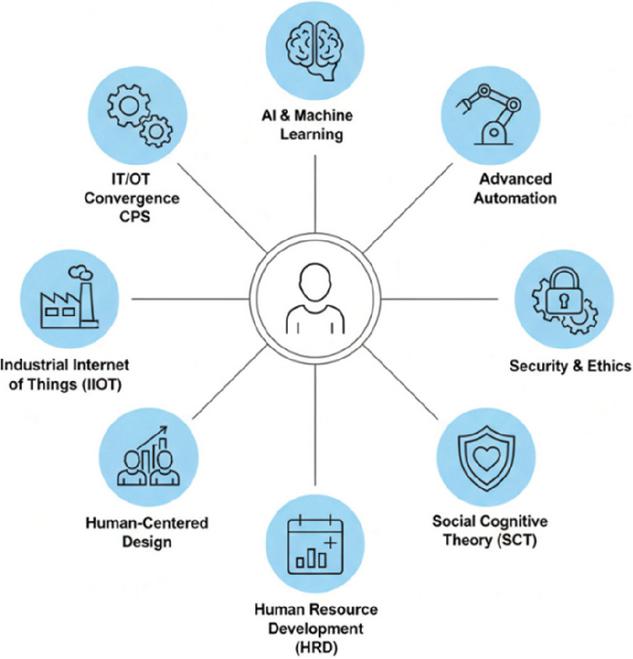
Figure 2 Proposed conceptual framework for the Thai manufacturing sector’s transition to Industry 5.0.
2.1 Key Technological Pillars of Industry 5.0
Industry 5.0 is supported by a range of advanced digital and industrial technologies, most notably the convergence of information technology (IT) and operational technology (OT). On the IT side, systems such as servers and data management platforms enable processing and analysis of customer and operational data, while OT systems oversee and regulate physical processes and machinery, including supervisory control and data acquisition (SCADA) systems in manufacturing [21]. The integration of IT and OT enhances efficiency, reliability, and data driven decision making within production environments [22].
This combination contributes to lowering operational costs, improving decision-making, and optimizing resource use in sectors such as manufacturing, energy, and logistics, thereby promoting sustainability. Other critical technological enablers of Industry 5.0 include artificial intelligence (AI) [23] and machine learning (ML). These tools employ algorithms and data mining techniques to anticipate future trends from historical datasets [17, 24, 25]. In practice, AI and ML help refine scheduling, predict maintenance requirements, improve decision making, and provide actionable insights for managers. Alongside these, advanced automation spanning robotics, AI applications, and the Internet of Things (IoT) boosts productivity, flexibility, and operational efficiency while reducing human involvement in repetitive activities [4, 21, 25].
Furthermore, the integration of digital and physical domains is exemplified by cyber-physical systems (CPS) [25]. CPS combines real world physical operations with advanced digital monitoring and control, enabling manufacturers to increase efficiency, enhance performance, and make data driven decisions [26]. In addition, the Industrial Internet of Things (IIoT) acts as an extension of IoT within industrial settings [27]. IIoT enhances CPS capabilities by linking devices, sensors, and machinery to exchange real-time information, which empowers smart factories and facilitates intelligent operations [28].
2.2 The Imperative of Human-centricity in Industry 5.0
While technological advancements are foundational, Industry 5.0 fundamentally shifts focus towards integrating humans into the manufacturing system [20]. This paradigm, unlike Industry 4.0 which primarily sought automation and efficiency, prioritizes human wellbeing, health, and safety [8, 16, 17]. Human-centered design aims to create systems that not only amplify productivity but also cultivate healthier, safer, and more fulfilling work environments by seamlessly integrating human factors engineering into technology development [10]. Despite this ideological emphasis, much of the existing research remains heavily focused on technological development, leaving a gap in empirical studies that explicitly demonstrate effective human integration strategies within industrial settings [8].
2.3 Addressing the Security Risks and Ethical Implications of IT/OT Integration
The increasing integration of IT and OT systems, while offering substantial operational benefits, simultaneously introduces vulnerabilities that can compromise industrial security [27]. Documented attacks on critical infrastructure, such as electrical power plants [24], highlight the urgent need for stringent cybersecurity protocols. A successful Industry 5.0 transition requires collaborative efforts from both public and private sectors to address these challenges effectively, ensuring operational safety [29] and meticulously considering the associated ethical and societal ramifications for workers and society [1]. This holistic approach aligns with the triple bottom line (TBL) of sustainability, which extends organizational performance assessment beyond financial profit to include social equity (fair labor, community wellbeing) and environmental stewardship (ecological footprint, resource consumption) [1]. TBL guides organizations toward a resilient and ethical balance, ensuring long term economic viability in harmony with societal and environmental responsibilities.
2.4 Social Cognitive Theory (SCT) as a Theoretical Framework
Social cognitive theory (SCT), prominently developed by Albert Bandura [30], provides a robust framework for understanding how individuals acquire knowledge and develop behavioral patterns through the continuous, dynamic interplay of personal factors, behavior, and the surrounding environment [31]. A foundational tenet of SCT posits that learning occurs significantly through observation, imitation, and self-control, rather than solely direct reinforcement [32].
Observational learning: Individuals learn by observing the actions and outcomes of others, particularly perceived role models. This is crucial for skill transfer in new industrial environments, both in structured training and informal assimilation of cultural norms [31].
Self-efficacy: Defined as an individual’s belief in their ability to successfully execute specific tasks and achieve desired goals, self-efficacy is a critical determinant of behavior [33, 34]. Individuals with high self-efficacy typically demonstrate greater perseverance and adaptability when facing complex technological challenges inherent in Industry 5.0. This aligns directly with the need for employee confidence in digital environments [13].
Reciprocal determinism: This principle highlights the continuous, interactive influence that individual factors (e.g., beliefs, cognitive abilities), behavior (e.g., performance, effort), and environmental conditions (e.g., organizational culture, technology availability) exert upon one another [32]. This concept is vital for understanding how an organizational environment and individual behaviors co-evolve during an industrial transformation.
Behavioral capabilities: Possessing the requisite knowledge and skills to effectively perform a particular behavior is essential [32]. This directly supports the need for robust HRD initiatives to equip the workforce with Industry 5.0 competencies.
SCT offers a powerful and comprehensive framework for understanding the mechanisms underlying human learning and behavioral development, emphasizing active engagement with one’s environment and social interactions [32]. Its pronounced emphasis on observational learning, the pivotal role of self-efficacy, and interconnected concepts [33] provides valuable insights for promoting positive behavioral changes and fostering the adaptability, creativity, and innovation required for successful Industry 5.0 adoption, as shown in Figure 3.
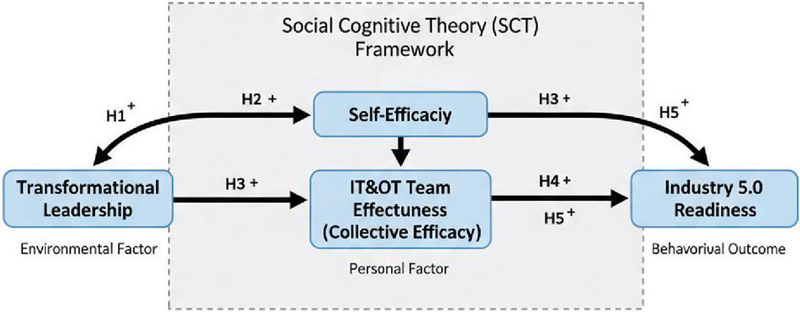
Figure 3 Conceptual research model based on social cognitive theory (SCT).
2.5 Human Resource Development (HRD) for Industry 5.0
Human resource development (HRD) is a comprehensive approach extending beyond mere training programs, encompassing personnel management, performance enhancement, and the development of individual potential [35]. Effective HRD creates an environment where employees are engaged, empowered, and contribute to organizational success while pursuing personal career growth. Aligning HRD with business objectives, promoting continuous learning, and forecasting future labor demands are crucial for organizations to adapt, innovate, and thrive in the rapidly changing Industry 5.0 environment. HRD initiatives, when integrated with SCT, can strategically address skill gaps and foster the psychological preparedness (e.g., self-efficacy) necessary for technological integration readiness and sustained industrial competitiveness, supporting organizational goals of sustainability, resilience, and human-centric development [14].
2.6 Structural Equation Modeling (SEM) as a Methodological Tool
Structural equation modeling (SEM) is an advanced statistical method that integrates factor analysis and multiple regression techniques to analyze complex relationships between observed and latent variables [36]. Widely utilized in social, behavioral, and other sciences where theoretical constructions cannot be directly observed, SEM provides a comprehensive framework for examining theoretical constructions, testing causal relationships, and validating measurement instruments. Its application is crucial for developing scientific research and theoretical development, particularly in understanding the intricate human-centric dynamics within the Industry 5.0 production environment.
2.7 Literature Review Factors
The literature review reveals a fragmented research landscape where individual studies often focus on specific facets – be they personal, team, or technological – without providing a holistic view. Consequently, there is a clear lack of an integrative framework that comprehensively connects success factors for the transformation into Industry 5.0 [16, 37].
This study addresses this gap by developing a holistic model that links foundational human elements and organizational dynamics with technological readiness to achieve core Industry 5.0 outcomes. The theoretical foundation for the human elements is rooted in social cognitive theory (SCT), which posits that self-efficacy and observation are key drivers of individual behavior and learning [30].
The model synthesizes the most impactful factors for Industry 5.0 success into a comprehensive framework:
Human factors (SCT based): Individual elements like motivation, self-efficacy, and cognitive ability [46] are paramount, as strong self-efficacy enhances individual and team competency.
Leadership factors: Leadership is critical for managing the technological approach, particularly the adoption of technologies like artificial intelligence (AI) [41–43] and for fostering a collaborative culture that influences team performance.
Technological factors: Effective implementation requires integrating robust technologies, such as interactive cyber-physical systems (CPS) and standardized work protocols [27, 38]. This is essential for optimizing human and machine collaboration.
Contextual factors: Organizational success is also shaped by team performance factors like collaboration and mutual recognition [44, 45], and by the ability of learning factors to overcome resistance to change [34]. These internal dynamics are set against broader external and context factors [20, 40].
Ultimately, achieving a state of high performance requires optimizing human and machine collaboration factors, ensuring the dynamic interaction between employees and intelligent systems is seamless, trusted, and effective [19, 50]. Success is measured against the Industry 5.0 goals of human-centricity, sustainability, and resilience [1, 17, 39].
2.8 Research Gaps
The primary gap this study fills is the absence of a comprehensive model that simultaneously examines the interactions between all these identified factors [16, 37].
The objective is to develop a validated structural model that explicitly connects the SCT-derived human factors, technological approach, and team effectiveness to the achievement of the three core Industry 5.0 outcomes: human-centricity, sustainability, and resilience. This integrative approach [36, 52] provides the explicit, empirically testable linkages required for the study’s hypotheses and offers the complete understanding needed for organizations to navigate the transformation into a human-centric Industry 5.0 [19, 53].
3 Research Model and Hypothesis
A comprehensive, thorough, and rigorous analysis of the multifaceted factors affecting strategic human resource development during Thailand’s transition to Industry 5.0 was conducted. This study intentionally used a quantitative methodology to facilitate the collection of detailed, intensive, and systematic numerical data, which, once collected, were subjected to sophisticated statistical analysis, particularly through structural equation modeling (SEM) [54], a key multivariate technique in talent development that allows for precise and sensitive analysis of how human factors are related and affect overall organizational readiness. It thus provides a solid and empirical foundation necessary for drawing reliable and well supported conclusions about key factors in human resource development and the application of social cognitive theory to this changing industrial landscape. The concepts governing this process and the derivation of these conclusions are presented in Figure 4.
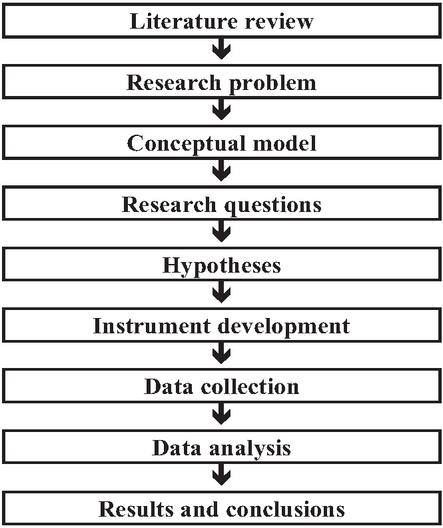
Figure 4 Research process.
3.1 Research Design
To rigorously examine the research questions and objectives stated here, this investigation employs a quantitative research model. Within this model, structural equation modeling (SEM) was chosen as the primary analytical framework. The use of SEM is particularly useful for this study as it provides a robust and sophisticated statistical methodology that simultaneously examines the complex relationships between multiple latent and observed variables, thus enabling comprehensive testing of the proposed theoretical hypotheses. The empirical basis for this analysis was provided through primary data collection, which involved the administration of a specifically structured survey instrument. The survey was targeted at a carefully selected group of professionals working in the Thai manufacturing industry who are either actively and explicitly involved in or directly affected by the ongoing organizational and technological transformations towards the Industry 5.0 framework.
This methodological approach is based on a broader understanding derived from a thorough review of relevant literature and a critical examination of past industrial challenges, where Industry 5.0 technologies are increasingly strategically employed to achieve sustainable development goals. The pursuit of sustainability through Industry 5.0 is often guided by three fundamental criteria, which draw from the core tenets of this new industrial model. These criteria, which together contribute to achieving more sustainable industrial practices and outcomes, are characterized by increased operational resilience, a deep and central emphasis on human wellbeing and expansion within the production ecosystem, and an overall commitment to building resilience [14, 37]. Therefore, the quantitative data collected in this study will be analyzed to understand how human factors align with these principles in the context of Thailand’s industrial evolution.
3.2 Research Model
A successful transition to Industry 5.0 requires more than just technological advances; it demands a major shift in how we approach workforce development. This can be effectively modeled by integrating systems theory with the principles of social cognitive theory (SCT). In this approach, leadership serves as the input, an external force that initiates change within the organization. This leadership, which focuses on creating a human-centered environment, doesn’t directly create a ready workforce. Instead, its influence is mediated by self-efficacy, an individual’s belief in their own ability to succeed [45]. As leaders foster this confidence, it acts as the mechanism linking to team effectiveness, where enhanced individual capabilities combine to create a powerful, collaborative force [51].
This team based approach, which leverages social learning, goes beyond traditional training methods by promoting a culture of continuous learning and human focused innovation. Ultimately, this successful interplay culminates in readiness for Industry 5.0 as the output, which is the organization’s ability to drive innovation, adapt to change, and fully leverage the potential of the new industrial era. This entire process is a continuous loop, reflecting SCT’s triadic reciprocal causation, where the environment (leadership) influences personal beliefs (self-efficacy) and behaviors (team effectiveness), and these outcomes, in turn, reinforce the environment, creating a self-sustaining cycle of growth and adaptability [43], as shown in Figure 5.
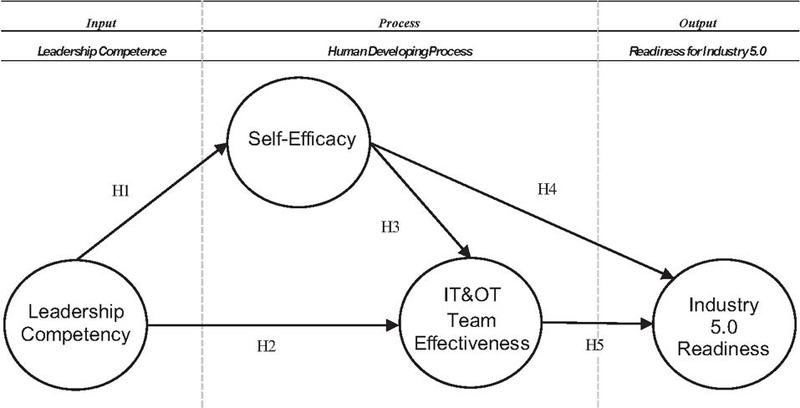
Figure 5 Proposed model.
3.3 Research Hypotheses
The conceptual model is fundamentally grounded in Bandura’s social cognitive theory (SCT) [33], utilizing the principle of reciprocal determinism to explain human behavior and organizational change. In this framework, transformational leadership serves as the environmental factor (input). This influence is channeled into the personal factor (self-efficacy) and, subsequently, the collective form of confidence, represented by IT/OT team effectiveness (collective efficacy). These factors then drive the final behavioral outcome (Industry 5.0 readiness) [52]. This unified theoretical perspective justifies the pathways and supports the following five testable quantitative hypotheses.
H1: Leadership competence has a positive effect on personal competence
This hypothesis proposes that effective leadership is a crucial catalyst for developing individual potential within an organization. Leaders who provide clear direction and opportunities for growth help employees build the confidence and skills needed for complex tasks. This relationship is essential for Industry 5.0’s emphasis on adaptability and innovation [13]. It’s a key part of the social cognitive theory (SCT) framework, as leadership represents the environmental factor that directly influences an individual’s personal factor, which is their competence or self-efficacy.
H2: Leadership competence has a positive effect on team effectiveness
This hypothesis states that strong leadership creates the necessary conditions for teams to work together cohesively and perform well [55]. It shapes team dynamics by fostering collaboration and shared goals, which is essential for integrating advanced technologies and human values in the Industry 5.0 transformation [53]. This relationship reflects a direct link between the environmental factor (leadership) and the behavioral factor (team effectiveness) within the SCT framework.
H3: Personal competence has a positive effect on IT/OT team effectiveness
This hypothesis posits that personal skills, including technical knowledge, adaptability, and problem solving, are the foundation for effective participation within integrated IT/OT teams [55, 56]. When individuals are competent, they can better understand how systems interrelate and engage in collaborative efforts that drive team performance [45]. This is a central component of SCT, as it explains how the personal factor of competence directly influences the behavioral factor of team effectiveness.
H4: Personal competence has a positive effect on Industry 5.0 readiness
According to this hypothesis, readiness for Industry 5.0 requires employees who not only have the skills but also the confidence to apply those skills in new environments [52]. Personal competence helps individuals embrace new technologies and contribute to sustainable innovation, making it a key factor in Industry 5.0 readiness [56]. This relationship links the personal factor to the ultimate outcome of the entire process, demonstrating that individual readiness is a prerequisite for organizational readiness.
H5: IT/OT team performance has a positive effect on Industry 5.0 readiness
This final hypothesis argues that IT/OT teams are critical to executing Industry 5.0 initiatives as they integrate digital infrastructure with operational processes [18]. High performing teams provide the strategic insights and technical execution needed to align technology adoption with organizational goals, which directly impacts overall readiness for Industry 5.0 [54]. This highlights how the behavioral factor of team performance serves as the final driver of the entire system’s output.
4 Research Methodology
This chapter details the research methodology used to investigate the factors affecting human resource development for Industry 5.0 in Thailand. The research design is a quantitative, cross-sectional survey. This approach was selected to measure and analyze relationships between variables and to generalize findings to a larger population. The following sections describe the study’s data collection, instrument development, ethical procedures, and data analysis plan.
4.1 Data Collection and Sampling
This study collected primary data through a survey administered to a target population of 400 industry professionals in Thailand’s manufacturing sector. The sampling method used was purposive sampling, where participants were strategically selected based on their active professional engagement and expertise in a representative range of the sector. This ensured the data would reflect a broad spectrum of perspectives relevant to the study’s core objectives [4, 12, 56]. This sample size is considered adequate for conducting robust statistical analyses, including structural equation modeling (SEM) [36].
4.2 Sampling Method
The study employed a stratified purposive sampling technique. Participants were selected based on their active involvement in IT/OT integration projects within manufacturing facilities. The sample was deliberately distributed across four strata of factory size (SME to large scale) and three major industrial regions (Eastern Economic Corridor, Central, and Northern) to ensure representativeness across the Thai industrial base.
4.3 Instrument Development and Data Preparation
The instrument was adapted from established and validated scales [64]. To ensure both linguistic and conceptual equivalence for the Thai participants, a rigorous translation/back-translation protocol was implemented [57]. The original English instrument was translated into Thai by a bilingual expert, and then independently back-translated into English by a second expert. Discrepancies were resolved by a committee to ensure conceptual meaning was maintained [57]. The final instrument utilizes a 5-point Likert scale format (1 strongly disagree, 5 strongly agree), selected for its superior sensitivity in capturing nuanced responses in social science research [57]. Prior to analysis, data screening ensured the handling of missing values via mean substitution, preparing the data for the structural equation modeling (SEM) analysis.
4.4 Ethical Approval and Pilot Test
Before formal data collection, the research protocol, including the questionnaire and informed consent forms, was submitted for ethical review. Following this review, Mahidol University’s Institutional Review Board (IRB) granted formal approval under the reference number MU-CIRB 2025/015.1001. This approval ensures that the study complies with established ethical guidelines, thereby protecting the rights, confidentiality, and wellbeing of all participants.
A pilot study was carried out with a sample of 30 professionals from the manufacturing sector to evaluate the clarity, comprehensibility, and relevance of the survey items. The reliability of each multi-item scale was tested using Cronbach’s alpha. All constructions achieved alpha values above 0.70, which meets the widely recognized threshold for social science research and indicates strong internal consistency. In addition, feedback from the participants was incorporated to make minor adjustments and ensure the final instrument was appropriate for use in the main study.
4.5 Data Preparation and Demographic Analysis
Once the data collection phase was complete, the raw survey responses were prepared for meticulous statistical analysis. This preparation process involves a rigorous data cleaning procedure to identify and rectify inconsistencies, missing values, or outliers. This is crucial for ensuring the integrity of the data and preventing bias in subsequent analysis. Any missing values were handled using an appropriate technique to maintain a complete dataset. The responses were then coded and entered a statistical software package to create the final dataset. These steps are a foundational part of preparing data for robust analysis, especially for models like structural equation modeling (SEM), as they directly impact the validity and trustworthiness of the results [36, 58].
The demographic characteristics of the participant sample were analyzed to provide context for the study’s findings. The gender distribution indicated most male respondents, with 287 (71.8%) identifying as male and 113 (28.2%) as female. The age distribution reflects a younger workforce, with 132 participants (33%) under 25 years of age and 128 (32%) between 25 and 35. These figures, along with educational and work experience data, highlight the active representation of early to mid-career professionals in the sample. A detailed breakdown is provided in Table 1.
Table 1 Demographic data of respondents
| Total (N 400) | |||
| Demographics | Measurement | Quantity | Proportion |
| Gender | Man | 287 | 71.80% |
| Woman | 113 | 28.20% | |
| Age | 25 Y | 132 | 33% |
| 25–35 Y | 128 | 32% | |
| 36–45 Y | 73 | 18.30% | |
| 46–55 Y | 42 | 10.50% | |
| 55 Y | 25 | 6.20% |
The educational qualifications and work experiences of the 400 respondents provide valuable information about the professional context of individuals involved in or influenced by the development of human resources for Industry 5.0 in Thailand. The participants has mostly completed a bachelor’s degree. This accounted for 77.5% of the sample. Respondents with master’s degrees accounted for 19.8% , while those with doctoral degrees (Ph.D.) accounted for 2.8% . In terms of work experience, 34.8% of respondents had less than 5 years of working experience. 39% had between 5 and 10 years of experience and 26.2% had more than 10 years of experience. This distribution reflects a diverse group of respondents in terms of both academic qualifications and exposure to industry experience. This is important for understanding the multi-faceted nature of human resource development in the transition to Industry 5.0 shown in Table 2.
Table 2 Educational history and work experience of the respondents
| Total (N 400) | |||
| Work Experience | Measurement | Quantity | Proportion |
| Graduation | Bachelor | 310 | 77.50% |
| Master | 79 | 19.80% | |
| Ph.D. | 11 | 2.80% | |
| Work experience | 5 Y | 139 | 34.80% |
| 5–10 Y | 156 | 39% | |
| 0 Y | 105 | 26.20% |
The departmental position analysis provides an overview of the professional roles held by the 400 respondents. This will help provide context for their perspectives on human resource development in the landscape of Industry 5.0. More than half of the respondents (51%, ) work as production personnel. This indicates that there are many representatives from operational roles directly involved in the production process. Plant managers accounted for 23% of the sample. This indicates that there is important information from operational leaders. In addition, researchers accounted for 7.3% , while IT staff accounted for 7% , reflecting the importance of innovation and digital integration in the Industry 5.0 context. A smaller proportion of respondents acted as solution providers and were in management roles (5.8%, ), highlighting the presence of a strategic perspective and level of support within the dataset. This dispersion highlights the multidisciplinary nature of Industry 5.0 shown in Table 3.
Table 3 Position in the respondent’s department
| Total (N 400) | ||
| Department Measurement | Quantity | Percentage |
| Production staff | 204 | 51% |
| Factory manager | 92 | 23% |
| Researcher | 29 | 7.30% |
| Solution provider | 24 | 6% |
| Management | 23 | 5.80% |
| IT officer | 28 | 7% |
5 Research Analysis and Results
Using the advanced multivariate statistical technique of structural equation modeling (SEM) as the primary and complex analytical method, this study investigates and attempts to quantify the complex, direct, indirect, and potentially mediated relationships that exist within a carefully defined set of key organizational constructs: multifaceted leadership (LS), self-efficacy (SE) as a psychological resource, collective team effectiveness (TE) reflecting collaborative collaboration, and the overarching concept of Industry 5.0 readiness (I5). All of these are primarily and centrally aimed at rigorously and empirically examining a theory-based, human-centered development model specifically designed and developed to provide solid and evidence-based support for Thailand’s ongoing and strategically necessary national transition to a diverse and ever-changing Industry 5.0 model. This is intended to be achieved through a systematic and comprehensive assessment of the different psychological traits at the individual level and wider organizational systemic factors of the significant and interconnected technological and cultural changes that are clearly necessary for organizations to achieve successful and sustainable adaptation.
5.1 Results – Coefficient of Determination (R2)
The explanatory power of the model was assessed using the coefficient of determination for each endogenous construct. The results indicate that self-efficacy was explained at 39.1% , which is considered a moderate level of predictive accuracy [58]. Team effectiveness was explained at 42.7% , representing a moderate to substantial explanatory level, suggesting that leadership and self-efficacy together play an important role in shaping team performance, though additional organizational and contextual factors may also contribute. In contrast, Industry 5.0 readiness demonstrated an exceptionally high explanatory power, with , indicating that the proposed predictors account for nearly all variance in the construct. While this reflects the strong predictive capacity of leadership, self-efficacy, and team effectiveness in explaining organizational readiness for Industry 5.0, such an unusually high value also warrants caution. Extremely high values may signal potential issues such as multicollinearity or overfitting. To address this concern, complementary validity checks (e.g., VIF analysis and HTMT ratios) were performed, which confirmed the absence of critical collinearity and supported the robustness of the structural model, as shown in Table 4.
Table 4 Coefficient of determination ()
| Construct | |
| Self-efficacy (SE) | 0.391 |
| Team effectiveness (TE) | 0.427 |
| Industry 5.0 readiness (I5) | 0.851 |
Table 4 presents the values of the endogenous constructs, showing that self-efficacy () and team effectiveness () demonstrate moderate explanatory power, while Industry 5.0 readiness () exhibits substantial explanatory power.
It is important to note that the construct leadership does not have a reported value in this study. This is because is only calculated for endogenous variables, i.e., constructs that are explained by other latent variables in the model. In contrast, leadership was modeled as an exogenous variable, serving as a predictor of self-efficacy and team effectiveness but not being predicted by any other construct. Therefore, it does not have an value.
5.2 Model Fit Assessment
The model’s overall fit was evaluated using a series of standard fit indices, showing an excellent fit with the collected data. The comparative fit index (CFI) and the Tucker–Lewis index (TLI), both of which are incremental fit measures, were both 1.00. These values are well above the conventional threshold of 0.90, which suggests that the proposed model accurately represents the data and accounts for the covariances in the observed variables [58].
The root mean square error of approximation (RMSEA), a measure of absolute fit, was 0.027. The 90% confidence interval for the RMSEA ranged from 0.018 to 0.034, with a p-value of 1.00, confirming a close model fit. This value falls well below the recommended threshold of 0.08, indicating minimal discrepancy between the hypothesized model and the observed data.
Finally, the standardized root mean square residual (SRMR), which measures the average difference between the observed and predicted correlations, was 0.024. This value is also well below the 0.08 threshold, providing further evidence of a good fit. Collectively, these fit indices demonstrate that the hypothesized model provides a robust and accurate representation of the relationships among the study’s constructs, as shown in Table 5.
Table 5 Model fit indices
| Index | Value | Recommended Threshold |
| CFI | 1.000 | 0.90 |
| TLI | 1.000 | 0.90 |
| RMSEA | 0.027 (90% CI: 0.018–0.034; p 1.000) | 0.08 |
| SRMR | 0.024 | 0.08 |
5.3 Confirmatory Factor Analysis: Reliability Assessment
To appraise the measurement model’s dependability and internal coherence, Cronbach’s alpha (), composite reliability (CR), and average variance extracted (AVE) were the primary metrics employed. The findings indicated a strong degree of reliability across all latent constructions. Cronbach’s alpha values, which fell within the range of 0.987 to 0.991, comfortably surpassed the accepted 0.70 criteria, thereby demonstrating excellent inter-item consistency.
Composite reliability (CR) scores further supported these findings, with values ranging from 0.908 (Industry 5.0 readiness) to 0.941 (leadership). This range indicates robust internal consistency, appropriately not exceeding the 0.95 level where item redundancy might be inferred. The average variance extracted (AVE), a measure of the variance accounted for by each latent construction compared to measurement error, spanned from 0.756 to 0.863. These
AVE scores are substantially higher than the recommended 0.50 minimum. Collectively, these metrics provide strong evidence for the convergent validity and internal consistency of the measures, validating the measurement model, as shown in Table 6.
Table 6 Reliability and validity
| Cronbach’s | Composite | Average Variance | |
| Construct | alpha () | Reliability (CR) | Extracted (AVE) |
| Leadership | 0.988 | 0.941 | 0.863 |
| Self-efficacy | 0.991 | 0.937 | 0.823 |
| Team effectiveness | 0.987 | 0.919 | 0.788 |
| Industry 5.0 readiness | 0.988 | 0.908 | 0.756 |
The results presented in Table 7 confirm that the measurement model has strong discriminant validity according to the Fornell–Larcker criterion. This criterion is met because for all constructs, the square root of the average variance extracted (vAVE), shown in bold across the diagonals, is greater than the correlation coefficients with all other construct values below the diagonal in each column.
For example, the vAVE for leadership style (LS) is 0.929, which is higher than the correlations with self-efficacy (SE) (0.682), team effectiveness (TE) (0.598), and the Industry 5.0 readiness (I5) construct (0.554). This pattern holds for all constructs, indicating that each construction is statistically distinct and measures a unique concept that the other constructions in the model do not capture.
Table 7 Fornell–Larcker criterion
| Construct | LS | SE | TE | I5 |
| LS | 0.968 | |||
| SE | 0.682 | 0.970 | ||
| TE | 0.598 | 0.732 | 0.965 | |
| I5 | 0.554 | 0.688 | 0.700 | 0.959 |
5.4 Heterotrait–Monotrait (HTMT) Ratios
All HTMT values are below the conservative threshold of 0.85, confirming discriminant validity among the constructions. The highest correlation (0.652 between team effectiveness and self-efficacy) indicates a strong but acceptable relationship, supporting theoretical assumptions that self-efficacy enhances team effectiveness. The lowest correlation (0.367 between leadership and Industry 5.0 readiness) demonstrates that leadership and readiness for Industry 5.0 are clearly distinct constructs. Overall, the results confirm that the measurement model adequately differentiates between theoretical concepts while reflecting their logical interconnections, as shown in Table 8.
Table 8 Heterotrait–monotrait (HTMT) ratios
| HTMT | Threshold | |
| Construct Pair | Value | (0.85) |
| Leadership Industry 5.0 | 0.367 | |
| Self-efficacy Industry 5.0 | 0.528 | |
| Self-efficacy leadership | 0.440 | |
| Team effectiveness Industry 5.0 | 0.641 | |
| Team effectiveness leadership | 0.418 | |
| Team effectiveness self-efficacy | 0.652 |
5.5 Measurement Model
The measurement model was evaluated for internal consistency, convergent validity, and discriminator validity. All items showed high reliability, with external loadings exceeding the acceptable threshold of 0.70 (ranging from 0.888 to 0.981), indicating a high level of reliability of the indicators across all constructs. The variant inflation factor (VIF) values for all indicators were below the recommended cutoff of 5.00, indicating the absence of multicollinearity and the reliability of the supporting constructs.
The leadership indicator (LS) had high loadings (0.960–0.976), as did the indicators for self-efficacy (SE) (0.961–0.981), team effectiveness (TE) (0.888–0.977), and Industry 5.0 readiness (I5) (0.896–0.977). The mean scores of the items ranged from 4.43 to 4.47, while the standard deviations ranged from 0.55 to 0.61, indicating consistent response patterns and appropriate variance across respondents.
These results confirm that the constructions in the model demonstrate sufficient internal consistency and convergent validity, thus confirming the robustness of the measurement framework used in this study, as shown in Table 9.
Table 9 The reliability and validity of the results
| Loading | VIF | Adapt | |||||
| Factor | Index | Questionnaires | Mean | S.D. | (0.70) | (5.00) | Source |
| LS | LS_Q1 | A leader who can effectively navigate and resolve conflicts. | 4.470 | 0.546 | 0.975 | 3.01 | [59] |
| LS_Q2 | Leaders who provide the resources and support needed for team members to succeed. | 4.460 | 0.550 | 0.976 | 3.10 | [60] | |
| LS_Q3 | A capable leader provides the resources and support needed for team members to succeed. | 4.460 | 0.552 | 0.975 | 3.11 | [60] | |
| LS_Q4 | Someone who can influence and inspire others to pursue common goals. | 4.450 | 0.562 | 0.963 | 3.08 | [61] | |
| SE | SE_Q1 | People who have good knowledge in the responsibility for which they are responsible. | 4.445 | 0.560 | 0.965 | 2.98 | [30] |
| SE_Q2 | Those who are always eager to learn and improve themselves. | 4.452 | 0.561 | 0.981 | 3.00 | [62] | |
| SE_Q3 | Someone who can work smoothly and effectively with others. | 4.455 | 0.564 | 0.961 | 3.02 | [63] | |
| SE_Q5 | Someone who can work smoothly and effectively with others. | 4.465 | 0.570 | 0.961 | 3.03 | [63] | |
| SE_Q6 | Develops the ability to network and build good relationships with others. | 4.445 | 0.563 | 0.968 | 3.05 | [55] | |
| TE | TE_Q1 | The team has expertise in using technology relevant to the task. | 4.442 | 0.564 | 0.958 | 2.96 | [64] |
| TE_Q2 | The team is proposing and developing new technologies to increase work efficiency. | 4.435 | 0.566 | 0.965 | 2.95 | [42] | |
| TE_Q3 | The team can use the technology to increase productivity and process efficiency. | 4.450 | 0.562 | 0.974 | 2.97 | [65] | |
| TE_Q4 | The team has clear and consistent communication about the status of systems and projects. | 4.442 | 0.560 | 0.975 | 2.98 | [66] | |
| TE_Q5 | The team monitors and protects against cyber threats. | 4.450 | 0.610 | 0.888 | 3.01 | [38] | |
| TE_Q6 | Integrated team collaboration helps create systems that effectively support goals. | 4.440 | 0.570 | 0.977 | 3.04 | [67] | |
| I5 | In5_Q1 | The organization invests in reskilling and upskilling employees to adapt to new technologies. | 4.473 | 0.560 | 0.953 | 3.00 | [52] |
| In5_Q2 | Energy use in production is minimized through effective energy management. | 4.468 | 0.565 | 0.969 | 3.01 | [48] | |
| In5_Q3 | Product development processes are flexible and customer responsive. | 4.447 | 0.566 | 0.896 | 3.02 | [52] | |
| In5_Q4 | The organization enhances productivity and efficiency through advanced technologies. | 4.463 | 0.563 | 0.958 | 3.04 | [52] | |
| In5_Q5 | The organization enables mass customization to meet individual customer needs. | 4.438 | 0.570 | 0.929 | 3.05 | [52] | |
| In5_Q6 | The organization fosters a culture of continuous learning and improvement. | 4.455 | 0.562 | 0.977 | 3.06 | [49] | |
| In5_Q7 | Ability to customize automation systems based on customer needs. | 4.468 | 0.561 | 0.971 | 3.07 | [49] | |
| In5_Q8 | Product development processes are flexible and customer responsive. | 4.460 | 0.564 | 0.968 | 3.08 | [52] |
5.6 Coefficient of Determination (), VIF, and HTMT
The explanatory power of the model was examined using values for each endogenous construct. The findings show that self-efficacy was explained at 39.1% (), representing a moderate predictive accuracy, while team effectiveness was explained at 42.7% (), indicating a moderate to substantial explanatory level. Industry 5.0 readiness demonstrated an exceptionally high explanatory power with , suggesting that leadership, self-efficacy, and team effectiveness together account for nearly all the variance in organizational readiness.
To address potential concerns related to collinearity, the variance inflation factor (VIF) was assessed. All indicators demonstrated VIF values between 2.95 and 3.11, which are well below the conservative threshold of 5, confirming the absence of multicollinearity. Furthermore, discriminant validity was assessed using the heterotrait–monotrait ratio (HTMT). All HTMT values ranged from 0.367 to 0.652, remaining below the recommended cutoff of 0.85. These results confirm that each construction is empirically distinct and not redundant. In summary, the very high for Industry 5.0 readiness warrants caution.
The complementary diagnostics provided by VIF and HTMT analyses support the robustness of the measurement and structural models. This indicates that the predictors collectively provide a strong and valid explanation for Industry 5.0 readiness in the Thai manufacturing context.
5.7 Bootstrap Confidence Intervals (Direct and Indirect Effects)
Self-efficacy had a strong indirect effect on Industry 5.0 readiness through team effectiveness (SE TE I5: 0.517, CI [0.495, 0.539], p 0.001). Leadership also exhibited significant indirect influences: first, via team effectiveness (LS TE I5: 0.217, CI [0.196, 0.238], p 0.001) and second, through the sequential chain leadership self-efficacy team effectiveness Industry 5.0 readiness (LS SE TE I5: 0.173, CI [0.160, 0.186], p 0.001). Additionally, leadership indirectly enhanced team effectiveness via self-efficacy (LS SE TE: 0.229, CI [0.208, 0.250], p 0.001).
These findings confirm that Industry 5.0 readiness is primarily driven by team effectiveness, which functions as the key mediator linking self-efficacy and leadership to organizational readiness. Reporting the bootstrap CIs for these mediation effects enhances the robustness and transparency of the model evaluation, as shown in Table 10.
Table 10 Structural path coefficients with bootstrap CI
| Path | 95%CI (Bootstrapped) | -value | Effect Type | |
| LS SE | 0.334 | [0.285, 0.384] | 0.001 | Direct |
| LS TE | 0.285 | [0.239, 0.333] | 0.001 | Direct |
| SE TE | 0.683 | [0.655, 0.711] | 0.001 | Direct |
| TE I5 | 0.757 | [0.749, 0.765] | 0.001 | Direct |
| SE TE I5 | 0.517 | [0.495, 0.539] | 0.001 | Indirect |
| LS TE I5 | 0.217 | [0.196, 0.238] | 0.001 | Indirect |
| LS SE TE I5 | 0.173 | [0.160, 0.186] | 0.001 | Indirect |
| LS SE TE | 0.229 | [0.208, 0.250] | 0.001 | Indirect |
5.8 Structural Model: Path Coefficients
The structural equation model (SEM) analyzed the direct relationships among the key constructs: leadership (LS), self-efficacy (SE), team effectiveness (TE), and Industry 5.0 readiness (I5). The following results reflect statistically significant and meaningful relationships that underpin the theoretical model proposed in this study, shown in Table 11 and Figure 5.
Table 11 The path coefficient
| Path | SE | -value | -value | Interpretation | |
| Leadership self-efficacy | 0.334 | 0.091 | 3.662 | 0.001 | Significant |
| Leadership team effectiveness | 0.285 | 0.088 | 3.232 | 0.001 | Significant |
| Self-efficacy team effectiveness | 0.683 | 0.058 | 11.693 | 0.001 | Strongest |
| Self-efficacy Industry 5.0 | 0.122 | 0.058 | 2.105 | 0.035 | Significant |
| Team effectiveness Industry 5.0 | 0.757 | 0.024 | 31.868 | 0.001 | Strongest |
Effective leadership enhances both individual self-efficacy ( 0.334, p 0.001), by building psychological readiness for change, and team effectiveness ( 0.285, p 0.001), by fostering collaboration and cohesion; in turn, self-efficacy strongly promotes team effectiveness ( 0.683, p 0.001) as confident individuals contribute more effectively to group performance, and although its direct impact on Industry 5.0 readiness is smaller ( 0.122, p 0.035), it remains significant, while team effectiveness emerges as the most powerful predictor of Industry 5.0 readiness ( 0.757, p 0.001), emphasizing that empowered, high functioning teams are essential for navigating and sustaining human-centric, technology integrated industrial transformation.
6 Discussion
The structural equation modeling (SEM) analysis provides compelling empirical evidence for the interrelationships between leadership, team effectiveness, and organizational readiness for Industry 5.0. A central and pivotal finding of this study is that team effectiveness emerged as the most potent predictor of an organization’s readiness, as illustrated by the hypothesis testing results. While leadership and individual self-efficacy are significant antecedents, their influence on successful Industry 5.0 adoption is largely mediated by their contribution to team performance.
This outcome is particularly profound when contextualized within the unique challenges of the Thai manufacturing sector, where human capital development and skill gaps are prevalent [49]. The high predictive power of team effectiveness in this environment can be attributed to a few key factors:
Bridging skill gaps: In a context with skill deficits, a well-functioning team acts as a social safety net. Individuals can compensate for each other’s weaknesses, and knowledge can be shared organically. A highly effective team is a microcosm of a learning organization, where formal training may be limited but peer to peer learning is constant. This collective capability becomes the primary catalyst for change [53], allowing organizations to adapt and innovate even with individual skill gaps.
Social amplification of efficacy: While leadership can foster individual self-efficacy [37], the team environment provides the stage for this confidence to be amplified. Collective efficacy, the shared belief of a group in its combined capabilities is a more powerful predictor of group behavior than the sum of its individual members’ self-efficacy. In the Thai context, where a strong sense of community is often valued, this collective belief becomes a powerful force for change, motivating the team to take on complex, integrated IT/OT tasks that no single individual could manage alone.
Resource and infrastructure constraints: While global literature often emphasizes technological infrastructure and seamless integration [20, 26], SMEs and manufacturers in Thailand may face significant resource constraints. In such scenarios, the ability of a team to innovate with what they must creatively solve problems and optimize existing resources becomes paramount. The high performance of these collaborative human groups is not merely a “soft” approach but is the most effective and direct pathway to readiness in this specific context [68]. This highlights a fundamental shift from individual-centric performance to the critical role of collective, synergistic effort, a core principle of the human-centric Industry 5.0 paradigm [10, 19].
6.1 Discussion of Theoretical Results
The finding that team effectiveness ( 0.757) is the dominant predictor of readiness provides the core theoretical extension. This result confirms the critical role of collective efficacy as theorized by SCT [64]. The study extends SCT by showing that in a rapidly changing technological environment like Industry 5.0, the team’s shared belief in its capability (collective efficacy) acts as a stronger driver of organizational readiness than an individual’s belief alone (self-efficacy), validating its role as a key mechanism linking leadership to change outcomes. This high reliance on team cohesion contrasts with some Western literature that prioritizes individual autonomy in change readiness. For the Thai manufacturing context [63], this finding suggests that readiness is fundamentally a collaborative challenge, possibly reflecting a cultural emphasis on group harmony and shared responsibility in the face of complex, integrated IT/OT systems, as shown in Figure 6.
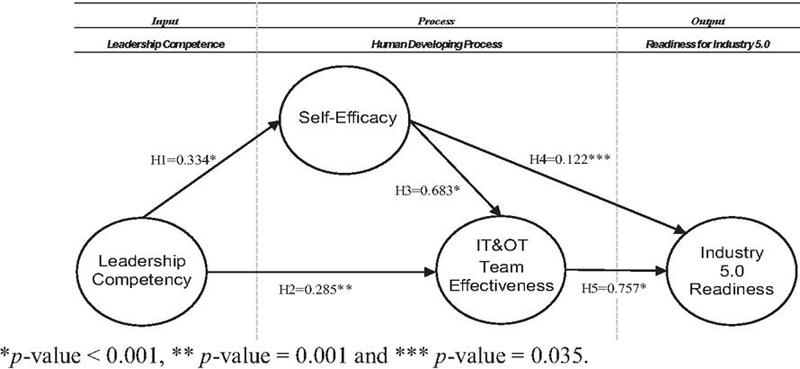
Figure 6 The hypothesis testing result.
This study, therefore, supports and expands upon the sociotechnical perspective of industrial evolution [53], providing quantitative evidence that human systems are not secondary to technology but are, in fact, foundational drivers of success. The findings challenge a technologically determined viewpoint by illustrating that a leader’s ability to foster individual confidence and a team’s subsequent capacity to function cohesively are the key mechanisms for translating strategic goals into tangible organizational readiness. This suggests that for many countries in the Global South, a focus on building resilient and effective teams may be the most viable and efficient path to Industry 5.0 adoption.
6.2 Practical Implications
6.2.1 Practical implications for industry (HR managers)
Instead of sporadic training, manufacturing firms should redesign organizational structure around high performing, cross functional IT/OT teams. Management must invest in targeted leadership coaching programs that specifically train supervisors in inspirational motivation and intellectual stimulation. Furthermore, SMEs should be supported with pilot programs for enterprise resource planning (ERP) adoption structured as collaborative team projects, not individual training mandates, to immediately leverage collective efficacy.
6.2.2 Policy implications for government agencies
Government stakeholders must operationalize support through a measurable framework. We recommend developing a human capital preparation index (HCPI) as a national benchmark. This index should prioritize and measure the three core dimensions validated by this study leadership competence, collective efficacy, and self-efficacy to ensure public funding is efficiently allocated toward systemic, team based readiness.
6.3 Policy and Educational Implications
This study underscores the crucial role that policymakers and educational institutions must play in cultivating a national ecosystem for Industry 5.0 readiness. From a policy perspective, government stakeholders should operationalize support by creating incentives and frameworks that promote Industry 5.0 capabilities [40]. A concrete policy framework could involve the development of a human capital preparation index (HCPI). This index would serve as a national benchmark, measuring a country’s readiness for human-centric technological change and guiding the design of targeted interventions, such as subsidized training for team collaboration and digital skills. Furthermore, it is recommended that Thailand’s human resource policies be strategically aligned with its industrial transformation frameworks such as Thailand 4.0, the BCG Economy Model, and the Eastern Economic Corridor (EEC) using this study’s model to guide agencies like the Ministry of Industry, the Ministry of Higher Education, Science, Research and Innovation (MHESI), and the Digital Economy Promotion Agency (DEPA) in designing targeted upskilling initiatives. Educational institutions must reform their curricula to produce graduates who possess not only technical literacy but also the critical thinking, ethical leadership, and collaborative skills required by future industries [11]. This holistic approach is vital for building a resilient, innovative, and globally competitive national workforce.
7 Conclusion
This study successfully validated a structural model linking human factors to Industry 5.0 readiness in the Thai manufacturing sector. The research confirmed that transformational leadership acts as an essential antecedent, driving readiness indirectly through individual self-efficacy and team effectiveness. Crucially, the analysis confirmed that IT/OT team effectiveness is the most substantial factor. The model achieved strong predictive power and statistical rigor across all assessed fit indices. This evidence underscores that a human-centric approach is vital for navigating the complexities of Industry 5.0, a perspective highly relevant to national strategic frameworks.
7.1 Limitations of the Study
Despite the important insights, this study has several limitations that must be considered. First, the use of a purposive sampling method for the target population may have introduced a degree of sampling bias into the dataset. Second, the reliance on self-reported data presents a potential for response bias, which may have artificially inflated the relationships between the constructs. Lastly, as the research was confined to a single industry within a specific national context, the generalizability of these findings to other sectors or cultural settings remains to be confirmed.
7.2 Recommendations for Future Research
The insights from this investigation provide a strong foundation for future inquiry. To establish more robust causal inferences, future research should employ longitudinal designs to track the evolution of these constructions over time. It is also recommended that advanced statistical methodologies, such as multigroup analysis, be used to conduct comparative studies across diverse industries or countries [49]. This would help to determine whether the prominent role of team effectiveness is a context specific phenomenon tied to the Thai manufacturing sector or if it is a more universal principle. Additionally, future research could explore the practical implementation of a national human capital preparation index for Industry 5.0 to guide policy and resource allocation [40, 52].
References
[1] Bag, S., C., W.L., Arnesh, T., and and Venkatesh, V.G.: ‘Application of Industry 4.0 tools to empower circular economy and achieving sustainability in supply chain operations’, Production Planning & Control, 2023, 34, (10), pp. 918–940.
[2] Benitez, G., Ferreira Lima, M., Ayala, N., and Frank, A.: ‘Industry 4.0 technology provision: the moderating role of supply chain partners to support technology providers’, Supply Chain Management, 2021.
[3] Brozzi, R., Forti, D., Rauch, E., and Matt, D.T.: ‘The Advantages of Industry 4.0 Applications for Sustainability: Results from a Sample of Manufacturing Companies’, in Editor (Ed.) (Eds.): ‘Book The Advantages of Industry 4.0 Applications for Sustainability: Results from a Sample of Manufacturing Companies’ (2020, edn.).
[4] Mason, C.M., Ayre, M., and Burns, S.M.: ‘Implementing Industry 4.0 in Australia: Insights from Advanced Australian Manufacturers’, Journal of Open Innovation: Technology, Market, and Complexity, 2022, 8, (1), pp. 53.
[5] Sarkar, B.D., Shardeo, V., Dwivedi, A., and Pamucar, D.: ‘Digital transition from industry 4.0 to industry 5.0 in smart manufacturing: A framework for sustainable future’, Technology in Society, 2024, 78, pp. 102649.
[6] Tang, B., Han, Y., He, G., and Li, X.: ‘The chain mediating effect of shared leadership on team innovation’, Heliyon, 2024, 10, (3), pp. e25282.
[7] Leelasantitham, A.: ‘A Novel Guideline Framework for Research and Development in the Field of Management of Technology and Innovation’, in Editor (Ed.) (Eds.): ‘Book A Novel Guideline Framework for Research and Development in the Field of Management of Technology and Innovation’ (2024, edn.), pp. 1–5.
[8] Wongverawatanakul, R., and Leelasantitham, A.: ‘Strategic IT Demand Management for Business and Innovation Organization’, Journal of Mobile Multimedia, 2022.
[9] Passalacqua, M., Robert, P., Florian, M., Philippe, D.-P., Laurène, D.-A., Jared, B., and and Léger, P.-M.: ‘Human-centred AI in industry 5.0: a systematic review’, International Journal of Production Research, 2025, 63, (7), pp. 2638–2669.
[10] Alves, J., Lima, T.M., and Gaspar, P.D.: ‘Is Industry 5.0 a Human-Centred Approach? A Systematic Review’, in Editor (Ed.) (Eds.): ‘Book Is Industry 5.0 a Human-Centred Approach? A Systematic Review’ (2023, edn.).
[11] Leng, J., Sha, W., Wang, B., Zheng, P., Zhuang, C., Liu, Q., Wuest, T., Mourtzis, D., and Wang, L.: ‘Industry 5.0: Prospect and retrospect’, Journal of Manufacturing Systems, 2022, 65, pp. 279–295.
[12] Wamalwa, L.S.: ‘Transactional and Transformational Leadership Styles, Sensing, Seizing, and Configuration Dynamic Capabilities in Kenyan Firms’, Journal of African Business, 2023, 24, (3), pp. 444–466.
[13] Horvat, D., Angela, J., and and Lerch, C.M.: ‘Fostering innovation by complementing human competences and emerging technologies: an industry 5.0 perspective’, International Journal of Production Research, 2025, 63, (3), pp. 1126–1149.
[14] Adel, A.: ‘Future of industry 5.0 in society: human-centric solutions, challenges and prospective research areas’, Journal of Cloud Computing, 2022, 11, (1), pp. 40.
[15] Siqueira, F., and Davis, J.G.: ‘Service Computing for Industry 4.0: State of the Art, Challenges, and Research Opportunities’, ACM Comput. Surv., 2021, 54, (9), pp. Article 188.
[16] Ghobakhloo, M., Mahdiraji, H.A., Iranmanesh, M., and Jafari-Sadeghi, V.: ‘From Industry 4.0 Digital Manufacturing to Industry 5.0 Digital Society: a Roadmap Toward Human-Centric, Sustainable, and Resilient Production’, Information Systems Frontiers, 2024.
[17] Suciu, M.C., Plesea, D.A., Petre, A., Simion, A., Mituca, M.O., Dumitrescu, D., Bocaneala, A.M., Moroianu, R.M., and Nasulea, D.F.: ‘Core Competence – As a Key Factor for a Sustainable, Innovative and Resilient Development Model Based on Industry 5.0’, in Editor (Ed.) (Eds.): ‘Book Core Competence – As a Key Factor for a Sustainable, Innovative and Resilient Development Model Based on Industry 5.0’ (2023, edn.).
[18] Seiger, R., Malburg, L., Weber, B., and Bergmann, R.: ‘Integrating process management and event processing in smart factories: A systems architecture and use cases’, Journal of Manufacturing Systems, 2022, 63, pp. 575–592.
[19] Grosse, E.H., Fabio, S., Cecilia, B., and and Neumann, W.P.: ‘Human-centric production and logistics system design and management: transitioning from Industry 4.0 to Industry 5.0’, International Journal of Production Research, 2023, 61, (22), pp. 7749–7759.
[20] Martini, B., Bellisario, D., and Coletti, P.: ‘Human-Centered and Sustainable Artificial Intelligence in Industry 5.0: Challenges and Perspectives’, in Editor (Ed.) (Eds.): ‘Book Human-Centered and Sustainable Artificial Intelligence in Industry 5.0: Challenges and Perspectives’ (2024, edn.).
[21] Yadav, G., and Paul, K.: ‘Architecture and security of SCADA systems: A review’, International Journal of Critical Infrastructure Protection, 2021, 34, pp. 100433.
[22] Marcucci, G., Sara, A., Emanuele, C.F., and and Bevilacqua, M.: ‘The impact of Operations and IT-related Industry 4.0 key technologies on organizational resilience’, Production Planning & Control, 2022, 33, (15), pp. 1417–1431.
[23] Nirapai, A., and Leelasantitham, A.: ‘A new adoption model for quality of experience assessed by radiologists using AI medical imaging technology’, Journal of Open Innovation: Technology, Market, and Complexity, 2024, 10, (3), pp. 100369.
[24] Stadnicka, D., Sêp, J., Amadio, R., Mazzei, D., Tyrovolas, M., Stylios, C., Carreras-Coch, A., Merino, J.A., ¯abiñski, T., and Navarro, J.: ‘Industrial Needs in the Fields of Artificial Intelligence, Internet of Things and Edge Computing’, in Editor (Ed.) (Eds.): ‘Book Industrial Needs in the Fields of Artificial Intelligence, Internet of Things and Edge Computing’ (2022, edn.).
[25] Dillinger, F., Bernhard, O., Kagerer, M., and Reinhart, G.: ‘Industry 4.0 implementation sequence for manufacturing companies’, Production Engineering, 2022, 16, pp. 1–14.
[26] Oñate, W., and Sanz, R.: ‘Analysis of architectures implemented for IIoT’, Heliyon, 2023, 9, (1).
[27] Valette, E., Bril El-Haouzi, H., and Demesure, G.: ‘Industry 5.0 and its technologies: A systematic literature review upon the human place into IoT- and CPS-based industrial systems’, Computers & Industrial Engineering, 2023, 184, pp. 109426.
[28] Li, L., and and Duan, L.: ‘Human centric innovation at the heart of industry 5.0 – exploring research challenges and opportunities’, International Journal of Production Research, pp. 1–33.
[29] Patera, L., Garbugli, A., Bujari, A., Scotece, D., and Corradi, A.: ‘A Layered Middleware for OT/IT Convergence to Empower Industry 5.0 Applications’, in Editor (Ed.) (Eds.): ‘Book A Layered Middleware for OT/IT Convergence to Empower Industry 5.0 Applications’ (2022, edn.).
[30] Bandura, A.: ‘Social Cognitive Theory: An Agentic Perspective’, Asian Journal of Social Psychology, 1999, 2, (1), pp. 21–41.
[31] Lee, K.-W., and Tseng, Y.-F.: ‘Driving the dual learning process of management knowledge: A social cognitive theory perspective’, The International Journal of Management Education, 2024, 22, (1), pp. 100940.
[32] Majeed, R., Hamilton, K., Watts, G.F., and Hagger, M.S.: ‘Social cognition correlates of self-management behaviors in patients with familial hypercholesterolemia (FH): A meta-analytic review’, Social Science & Medicine, 2024, 351, pp. 116968.
[33] Lee, C.G., Park, S., Lee, S.H., Kim, H., and Park, J.-W.: ‘Social Cognitive Theory and Physical Activity Among Korean Male High-School Students’, American Journal of Men’s Health, 2018, 12, (4), pp. 973–980.
[34] Park, J., Yoo, J., and Park, H.: ‘Understanding user resistance of smart factory adoption: a focus on small and medium-sized enterprises’, Asia Pacific Journal of Marketing and Logistics, 2024, 36.
[35] Ganotice, F.A., Chan, L., Shen, X., Lam, A.H.Y., Wong, G.H.Y., Liu, R.K.W., and Tipoe, G.L.: ‘Team cohesiveness and collective efficacy explain outcomes in interprofessional education’, BMC Medical Education, 2022, 22, (1), pp. 820.
[36] Guangju, W., Batool, F., Hussain, S., Jabeen, M., Ali, M., and Afzal, A.: ‘Impact of Industry 4.0 and 5.0 Technologies on Circular Economy and Sustainable Performance Using Hybrid PLS-SEM and ANN Approach’, Human Behavior and Emerging Technologies, 2025, 2025, (1), pp. 9920983.
[37] Pacheco, D.A.d.J., and Iwaszczenko, B.: ‘Unravelling human-centric tensions towards Industry 5.0: Literature review, resolution strategies and research agenda’, Digital Business, 2024, 4, (2), pp. 100090.
[38] Gaggero, G.B., Armellin, A., Portomauro, G., and Marchese, M.: ‘Industrial Control System-Anomaly Detection Dataset (ICS-ADD) for Cyber-Physical Security Monitoring in Smart Industry Environments’, IEEE Access, 2024, 12, pp. 64140–64149.
[39] Birkel, H., and Müller, J.M.: ‘Potentials of industry 4.0 for supply chain management within the triple bottom line of sustainability – A systematic literature review’, Journal of Cleaner Production, 2021, 289, pp. 125612.
[40] Mukherjee, A.A., Raj, A., and Aggarwal, S.: ‘Identification of barriers and their mitigation strategies for industry 5.0 implementation in emerging economies’, International Journal of Production Economics, 2023, 257, pp. 108770.
[41] Sun, U.Y., Xu, H., Kluemper, D.H., McLarty, B.D., and Yun, S.: ‘Ethical leadership and knowledge sharing: A social cognitive approach investigating the role of self-efficacy as a key mechanism’, Journal of Business Research, 2024, 174, pp. 114531.
[42] Al Naqbi, H., Bahroun, Z., and Ahmed, V.: ‘Enhancing Work Productivity through Generative Artificial Intelligence: A Comprehensive Literature Review’, in Editor (Ed.) (Eds.): ‘Book Enhancing Work Productivity through Generative Artificial Intelligence: A Comprehensive Literature Review’ (2024, edn.).
[43] Panya, V., Sa-nga-ngam, P., and Leelasantitham, A.: ‘AI-Powered Personalization in Online Shopping: Key Factors Influencing Customer Retention’, Journal of Mobile Multimedia, 2025, 21, (02), pp. 307–342.
[44] Kerrissey, M., and Novikov, Z.: ‘Joint problem-solving orientation, mutual value recognition, and performance in fluid teamwork environments’, Frontiers in Psychology, 2024, 15, pp. 1288904.
[45] Abouzeid, E., and and Sallam, M.A.: ‘Teaching by concordance: Individual versus team-based performance’, Innovations in Education and Teaching International, 2023, 60, (4), pp. 513–523.
[46] Kokkoris, M.D.: ‘Self-control and self-expression’, Current Opinion in Psychology, 2024, 58, pp. 101846.
[47] Fu, Q., Zhang, L., Xu, Y., and You, F.: ‘The Review of Human–Machine Collaborative Intelligent Interaction With Driver Cognition in the Loop’, Systems Research and Behavioral Science, 2025, n/a, (n/a).
[48] Aduba, J., Jr., Asgari, B., Ennajih, Y., and Shimada, K.: ‘Impact of learning on energy consumption and energy efficiency: Empirical evidence from manufacturing industry’, Journal of Cleaner Production, 2025, 492, pp. 144843.
[49] van Assen, M.F.: ‘Training, employee involvement and continuous improvement – the moderating effect of a common improvement method’, Production Planning & Control, 2021, 32, (2), pp. 132–144.
[50] van Oudenhoven, B., Philippe, V.d.C., Rob, B., and and Demerouti, E.: ‘Predictive maintenance for industry 5.0: behavioural inquiries from a work system perspective’, International Journal of Production Research, 2023, 61, (22), pp. 7846–7865.
[51] Wang, Q., and Wang, J.: ‘A Study of Student Leadership Development in the Integration of Civic and Psychological Education Based on Social Cognitive Theory’, Applied Mathematics and Nonlinear Sciences, 2023, 9, (1).
[52] Brückner, A., Wölke, M., Hein-Pensel, F., Schero, E., Winkler, H., and Jabs, I.: ‘Assessing industry 5.0 readiness – Prototype of a holistic digital index to evaluate sustainability, resilience and human-centered factors’, International Journal of Information Management Data Insights, 2025, 5, (1), pp. 100329.
[53] Frank, A.G., Thürer, M., Godinho Filho, M., and Marodin, G.A.: ‘Beyond Industry 4.0 – integrating Lean, digital technologies and people’, International Journal of Operations & Production Management, 2024, 44, (6), pp. 1109–1126.
[54] Ruso, J., Isidora, M., Anðelka, S., Maja, G., Ana, R., and and Arsić, S.: ‘Regional variations in digital transformation: the impact of industry 5.0 on business quality performance’, Total Quality Management & Business Excellence, 2024, 35, (15-16), pp. 1879–1899.
[55] Słupska, U., Drewniak, Z., Drewniak, R., and Karaszewski, R.: ‘Building Relations between the Company and Employees: The Moderating Role of Leadership’, in Editor (Ed.) (Eds.): ‘Book Building Relations between the Company and Employees: The Moderating Role of Leadership’ (2022, edn.).
[56] Eampoonga, I., and Leelasantitham, A.: ‘Overall Success Factors Affecting the Performances of Hybrid Cloud ERP: A Case Study of Automobile Industries in Thailand’, Journal of Mobile Multimedia, 2023, 19, (05), pp. 1153–1194.
[57] Kusmaryono, I., and Wijayanti, D.: ‘Number of Response Options, Reliability, Validity, and Potential Bias in the Use of the Likert Scale Education and Social Science Research: A Literature Review’, International Journal of Educational Methodology, 2022, 8, pp. 625–637.
[58] Hair, J., and Alamer, A.: ‘Partial Least Squares Structural Equation Modeling (PLS-SEM) in second language and education research: Guidelines using an applied example’, Research Methods in Applied Linguistics, 2022, 1, (3), pp. 100027.
[59] Song, S., Shi, Y., Ge, X., Wang, W., Yu, H., and Tian, A.W.: ‘Leader empowering and upper echelons decision-making: How and when does top managers’ empowering leadership promote decision-making speed and comprehensiveness in public organizations?’, Public Administration, 2025, 103, (1), pp. 136–165.
[60] C Lewaherilla, N., Rahayu, M., and Limpo, L.: ‘Exploration of Transformational Leadership Style in Improving Employee Performance in the Creative Industries’, Journal of Management, 2024, 3, (1), pp. 281–295.
[61] Sánchez-García, E., Montalvo-Falcón, J.V., Marco-Lajara, B., and Martínez-Falcó, J.: ‘Guiding organizations toward sustainable success: The strategic role of leadership in environmental corporate governance in the wine industry’, Corporate Social Responsibility and Environmental Management, 2024, 31, (6), pp. 6438–6456.
[62] González-Mohíno, M., J., D.M., Fátima, G., and and Cabeza-Ramírez, L.J.: ‘Knowledge-oriented leadership for improved coordination as a solution to relationship conflict: effects on innovation capabilities’, Knowledge Management Research & Practice, 2024, 22, (4), pp. 388–403.
[63] HoustonIii, L., Kraimer, M., and Schilpzand, P.: ‘The Motivation to Be Inclusive: Understanding How Diversity Self-Efficacy Impacts Leader Effectiveness in Racially Diverse Workgroups’, Group & Organization Management, 2023, 50, (3), pp. 983–1019.
[64] Shu, Q., Tu, Q., and Wang, K.: ‘The Impact of Computer Self-Efficacy and Technology Dependence on Computer-Related Technostress: A Social Cognitive Theory Perspective’, Int. J. Hum. Comput. Interaction, 2011, 27, pp. 923–939.
[65] Amin, A., Bhuiyan, M.R.I., Hossain, R., Molla, C., Poli, T.A., and Milon, M.N.U.: ‘The adoption of Industry 4.0 technologies by using the technology organizational environment framework: The mediating role to manufacturing performance in a developing country’, Business Strategy & Development, 2024, 7, (2), pp. e363.
[66] Abdallah, A.A., Shaawat, M.E., and Almohassen, A.S.: ‘Causes of miscommunication leading to project delays and low work quality in the construction industry of Saudi Arabia’, Ain Shams Engineering Journal, 2024, 15, (3), pp. 102447.
[67] Urton, D., and Murray, D.: Project manager’s perspectives on enhancing collaboration in multidisciplinary environmental management projects’, Project Leadership and Society, 2021, 2, pp. 100008.
[68] Zhang, C., Wang, Z., Zhou, G., Chang, F., Ma, D., Jing, Y., Cheng, W., Ding, K., and Zhao, D.: ‘Towards new-generation human-centric smart manufacturing in Industry 5.0: A systematic review’, Advanced Engineering Informatics, 2023, 57, pp. 102121.
Biographies

Sirichai Panapongpaisan is a Ph.D. student of Information Technology Management, Faculty of Engineering, Mahidol University, Thailand. He received his bachelor’s degree in electrical engineering from King Mongkut’s University of Technology Thonburi, Thailand and his Master’s in public and private management (MPPM) from National Institute of Development Administration Thailand.

Yod Sukamongkol is currently an assistant professor in the Technology of Information System Management Division at Mahidol University. He has over two decades of experience in energy engineering, solar technology, and electrical systems. He has served in various academic roles, including as the head of the Energy Engineering Program at Ramkhamhaeng University and has been involved in multiple research projects, particularly in renewable energy, energy conservation and sustainable industry. He has contributed to numerous publications, with research interests spanning energy systems, electric vehicles, and greenhouse gas emissions. His notable works include studies on solar energy systems simulation model, hybrid PV-Th systems, and the economic potential of peer-to-peer electricity trading in Thailand. Currently, his areas of expertise and interest are solar energy systems, energy conservations, carbon footprint organization (CFO), carbon footprint product (CFP), and sustainable roles.
Journal of Mobile Multimedia, Vol. 22_1, 1–40
doi: 10.13052/jmm1550-4646.2211
© 2026 River Publishers