Urban Agriculture through IoT-based Resilient Hydroponic Farming – A Machine Learning Approach
Sushant Kumar Pattnaik1, Soumya Ranjan Samal2, 3, Shuvabrata Bandopadhaya4, Debi Prasad Pradhan3, Jitendra Kumar Das1, Antoni Ivanov2,*, Vladmir Poulkov2 and Albena Mihovska5
1School of Electronics Engineering, KIIT University, Bhubaneswar, India
2Faculty of Telecommunications, Technical University of Sofia, Sofia, Bulgaria
3Silicon University, Bhubaneswar, India
4Banasthali Vidyapith, Rajasthan, India
5Research and Development and Innovation Consortium, Sofia, Bulgaira
E-mail: astivanov@tu-sofia.bg
*Corresponding Author
Received 07 July 2025; Accepted 25 August 2025
Abstract
Procuring resilience, resource efficiency, productivity, pest and malady control in agrarian production is imperative when climate change poses a threat. In recent years, hydroponics is considered as an emerging farming technique and is popular in urban areas due to its minimal water use and ability to grow plants without soil. In the Nutrient Film Technique (NFT) based hydroponics system, plants are cultivated by using water content nutrient solutions. Integration of Internet of Things (IoT) technology to NFT based hydroponic systems, many advancements such as minimizing water usage, real-time plant growth monitoring, efficient nutrient diffusion and reduction in human efforts can be achieved. In this work, an IoT based smart hydroponics system using NFT is proposed. Key components of the proposed solution include sensor networks for data acquisition, a robust Machine Learning (ML) framework for data analysis and prediction, as well as actuators for automated control of environmental conditions. The system monitors different real-time environmental parameters and the status of the plant’s growth and controls the nutritional value of water in an automated and cost-effective way. A Support Vector Machine (SVM) algorithm is used to predict the pH values with an accuracy of 89.6%, surpassing the Decision Tree (DT) and Random Forest Regression methods.
Keywords: Automated-soilless culture, hydroponics, internet of things, machine learning, nutrient film technique, smart agriculture.
1 Introduction
Looking towards the future perspectives of sustainability, it is desired to make intelligent decisions concerning how to use the available resources in urban agriculture. Science and technology have the potential to assist us in finding various solutions for effective resources (water, nutrients, etc.) utilization and can also address challenges like pollution and climate change [1, 2]. Sustainable agriculture is a way to protect nature without jeopardizing the basic needs of future generations, and at the same time, improve the efficiency of agriculture. Substantially, the advancements and innovations in technology immensely impact the scalability and productivity of modern agriculture [3]. It has truly changed the means of farming in terms of its management, pest/fertilizer control, soilless cultivation, use of nutrient solutions, application of smart sensors, use of Internet of Things (IoT) etc. [4, 5, 6]. In ancient times, traditional farming process included wide land areas, large water resources, etc. which made harvesting more complex and expensive. Soil harvesting was more prone to various kinds of plant diseases, leading to the use of more pesticides, which cause water and air pollution. Nowadays, many countries around the globe such as Indonesia, Thailand, India, the European Union, etc., are adopting innovative farming techniques for plant and crop cultivation. Originating from the ancient Greek language, the word “hydroponics” is a combination of the terms “hydro” (water), and “ponics” which means effort or toil. This neologism represents the basic concept of a modern farming approach, resulting in resource-efficient and sustainable crop cultivation. Unlike traditional farming, which requires wide land and large amount of water, hydroponics is a soilless technique that allows for plant roots to be immersed in a precisely measured nutritional solution. The roots extract the necessary elements and minerals from the nutrient enriched aqueous solution and transfer them to the developing plants.
In contrast to Controlled Environment Agriculture (CEA), hydroponics offers an innovative way to cultivate plants without soil. This technique not only conserves water and land but also allows for year-round, climate-independent farming, addressing key challenges in food security and sustainable agriculture [7, 8, 9, 10]. The key component of hydroponic systems lies in the meticulous management of the nutrient solution and the environmental conditions, necessitating a sophisticated, integrated approach for optimal plant growth and resource efficiency. To advance the capabilities of traditional hydroponics, the integration of sensor arrays that monitor the key parameters such as nutrient levels, pH, humidity, and temperature, is becoming increasingly prevalent. These sensors facilitate automated monitoring and real-time data acquisition, enabling precise control and intelligent analysis of the environment where the plants grow. Using a closed-loop control system, deviations from the ideal growth conditions can be quickly remedied, thereby ensuring consistent and optimized nutrient delivery to the plants. In this regard, Nutrient Film Technology (NFT) is an advanced hydroponic system that represents a paradigm shift in modern agriculture. NFT systems leverage the fundamental biological requirements of plants, providing a tailored environment that maximizes growth potential. NFT involves circulating nutrient-rich solutions over plant roots, promoting efficient nutrient uptake and healthy development [11]. This system creates an optimal microclimate, enabling higher yields and faster growth cycles. Integrating NFT with IoT provides a multitude of biological benefits, including ideal root zone environment, oxygenation, and disease prevention, as well as technological advancements such as automation and remote monitoring [11, 12, 13, 14, 15]. Furthermore, the judicious application of nutrient solutions, guided by real-time sensor data and intelligent control algorithms, mitigates the risk of oversaturation or nutrient deficiency, thereby reducing the environmental impact of excess nutrient drainage and optimizing resource utilization. This virtue has been underscored by a comprehensive analysis conducted by the National Aeronautics and Space Administration (NASA), which highlighted the potential of automated hydroponic systems to support sustainable food production in extra-terrestrial environments with limited resources [16].
In the field of CEA, the advent of automated hydroponic systems has marked a paradigm shift, which promotes sustainability, efficiency, and precision of crop cultivation. Automated hydroponic systems, combining advanced sensor technologies, actuators, and control algorithms, offer numerous benefits over traditional agricultural practices through unparalleled resource usage optimization, facilitating sustainability in environmentally challenging circumstances. A seminal study conducted by the University of Arizona’s Controlled Environment Agriculture Center (CEAC) revealed that these systems reach water conservation rates of up to 90% compared to conventional agricultural methods, an achievement that holds profound implications for regions grappling with water scarcity [17]. Automated hydroponic systems also overcome the limitations of traditional agriculture by providing a remarkable control over the CEA. These systems can maintain an intricate equilibrium between critical parameters like temperature, humidity, lighting, pH, and nutrient levels by utilizing the combined effect of robust actuators and advanced sensor arrays. This allows the systems to generate an optimized environmental condition that is specific to each cultivar’s needs [18]. Furthermore, incorporating artificial intelligence (AI) and ML algorithms into these systems improves their predictive and decision-making capabilities. By evaluating the sensor data, these algorithms can identify comprehensive patterns and correlations, which facilitates for the necessary modifications as well as preventative minimization for prospective problems. The Massachusetts Institute of Technology (MIT) has introduced an AI-powered hydroponic system, where ML methods are trained on historical data to optimize nutrient recipes and environmental parameters, resulting in a remarkable increase in crop yield compared to conventional methods [19, 20]. NFT-based automated hydroponic systems not only maximize resource utilization and yield production, but also support organic agriculture by reducing the need of pesticides and chemical fertilizers. A comprehensive review of existing hydroponics system and related works is presented in Table 1.
Table 1 Comprehensive survey of existing hydroponics related works
| Reference | Research Topic | Technology | Objectives/Key Contributions |
| [21] | Design of an IoT-based smart hydroponic system | IoT | Gather pH, humidity, and temperature data through remote sensors. |
| [22] | IoT based hydroponics farming | ||
| [23] | IoT-based hydroponic system | ||
| [24] | Automation of hydroponics greenhouse farming using | IoT | IoT Focuses on the automation of pH level and maintenance of electrical conductivity. A mobile app is developed to report the status of the aqueous solution. |
| [25] | AI-based system design to develop and monitor a hydroponic farm | AI | An AI-enabled automated system for hydroponics farming is proposed to deliver a precise mixture of water, nutrients, and light to plant roots. |
| [26] | IoT-based hydroponic system using ML | IoT, KNN and LASSO regression and LASSO regression | An IoT-automated system has been designed that processes sensor data using k-nearest neighbor (KNN) and least absolute shrinkage and selection operator (LASSO) regression to enhance plant cultivations. |
| [27] | A ML approach for improved crop growth within the hydroponics system | IoT and ML | A framework using ML for the growth rate prediction of tomatoes within hydroponic system. |
| [28] | Design and implementation of smart hydroponics using IoT-based AI controller | AI of Things (AIoT), CNN | A smartphone application for nutrient suggestions and malady detection. The real-time data from the sensors and camera module are gathered through IoT and analyzed by a convolutional neural network (CNN). |
| [29] | AI-driven hydroponic system | AIoT, Linear Regression, LASSO, Multi-Layer-Perceptron (MLP), and random forest (RF) | Various prediction models are used for estimating the lemon basil plant growth. The Foundation MIT-Media-Lab dataset is used. Richard growth model was implemented to depict the biological growth of plants. |
| [30] | AIoT, Logistic Regression, and Decision Tree (DT) | An IoT system for sustaining the growth of the Ocimum Tenuiflorum plant. The sensor data is stored and analyzed on the cloud. | |
| [31] | Hydroponic lettuce nutrition adaptive control system | Fuzzy Logic (FL) | Controls the nutrient requirements for the growth of the hydroponic lettuce plant. |
| [32] | An AIoT-based hydroponic system for crop recommendation and nutrient parameter monitorization | AIoT, RF, DT, SVM, KNN, XG-Boost | Performance prediction and crop recommendation for hydroponic farming. |
| [33] | NFT hydroponic monitoring system based on a wireless sensor network (WSN) | WSN | Remote greenhouse monitoring through WSNs. |
| [34] | NFT-based hydroponic automated control | Linear Regression | Regulates the quantity of nutrients, achieving an accuracy rate of 87.84%. |
| [35] | IoT, ANFIS | The system monitors and controls pH and nutrition levels for plants using the ANFIS algorithm. | |
| [36] | IoT, Mamdani Fuzzy Inference | Nutrient control system to monitor pH and total dissolved solids (TDS) levels. |
With increasing constraints of arable land, water, ecological impacts, and the need for sustainable agriculture, implementing advanced hydroponic systems, particularly NFT is a promising methodology for urban farming through resource-efficient precision agriculture. The literature review shows that the most effective way to achieve precision and sustainability is to integrate various technological advancements with intelligent NFT-based hydroponic farming. Many research works gather information about ecological elements e.g. pH, humidity, temperature, nutrient parameters, etc. through remote sensors (such as [22, 23]). Thus, in order to promote sustainable agricultural growth, IoT, ML, and sensing converge to provide real-time monitoring, predictive analytics, and cultivation parameter optimization. Works such as [28] propose an AI-enabled automated hydroponics farming system, which incorporates sensors that provide a mixture of water and nutrients, along with light, to plant roots.
These advanced technologies can support sustainable agricultural production while improving yield production, resource usage efficiency, and conservation of the environment. Consequently, this work presents a data-driven, intelligent, and ecologically sensitive smart farming method for metropolitan environments.
Today’s sustainable agricultural practices are largely a result of the integration of sensors and actuators with IoT technology and ML, which transformed the traditional farming methods. As we stand at the cutting-edge of modern agricultural technology, the proposed system model presents a completely automated NFT-based hydroponic farming methodology, empowered by ML. IoT devices monitor different real-time environmental parameters and the status of the plant’s growth in a cost-effective way. These parameters are used to control the nutritional value of water, causing the improved growth of the plant. The paper’s key contributions include the following:
• Our indoor hydroponic farming system minimizes water waste by allowing continuous circulation of the nutrient filled aqueous solution from a fixed water tank. The key parameters that characterize the plant’s growth are monitored in real-time through remote sensors.
• The ML algorithm enhances the decision-making capabilities for the nutrient diffusion to improve the plant’s growth. The effectiveness of the proposed system is evaluated by the mean absolute error (MAE), mean square error (MSE), and accuracy metrics. A Support Vector Machine (SVM) algorithm is used to predict the pH values with an accuracy of 89.6%, surpassing the decision tree (DT) and RF regression methods.
2 Materials and Methods
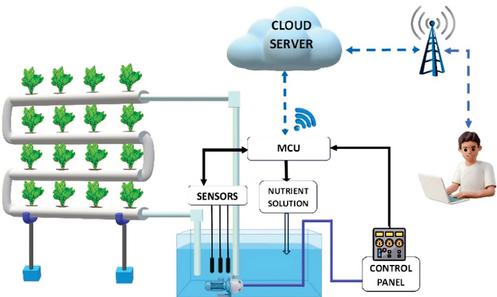
Figure 1 General diagram of the proposed system model.
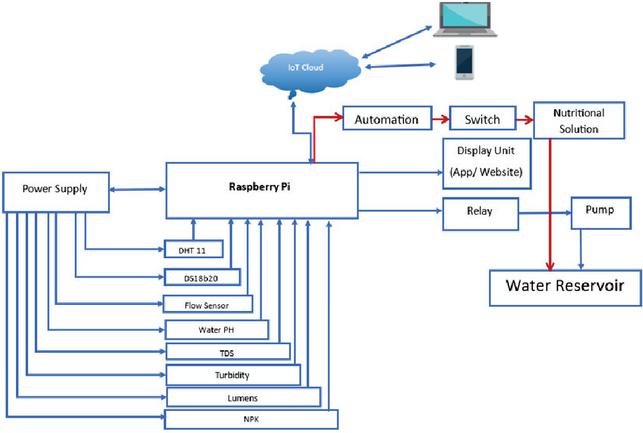
Figure 2 Detailed block diagram of the proposed system model.
The proposed system model as shown in Figures 1 and 2 establishes hydroponic farming in a closed environment, which is automated and uses standard amount of nutrients and water composition for a specific temperature, to grow small plants such as lettuce, spinach, and basil. The general diagram of the system is illustrated in Figure 1. An ESP32 microcontroller unit (MCU) is used in conjunction with various sensor types to provide intelligence to the hydroponic system. Several sensors monitor parameters such as water temperature, humidity, electrical conductivity, and the content of nutrients in the water. Their measurements are continually fed to the IoT-based cloud server through the MCU to train the ML-based prediction method. Thus, the performance of the system is monitored remotely, while it can be operated on-site through the Control Panel. A more detailed diagram of the system is illustrated in Figure 2). The MCU is operated using a Raspberry Pi, connected to the eight sensors (the functions of which are detailed below) and the mechanisms that control the distribution of the nutritional solution into the water reservoir. The flowchart as shown in Figure 3, represents the control logic and operational sequence that governs this automated hydroponic cultivation system, embedded with advanced sensor technologies and intelligent automation. The process initiates with the cultivator precisely defining the crop specifications, which are considered as the essential parameters that determine the system’s operation. The DHT11 humidity sensor, DS18B20 temperature sensor, pH sensor, TDS sensor, and turbidity sensor are used to monitor and analyze the environmental and nutrient solution parameters. These essential measurements are then transmitted to the dashboard in real time. The Raspberry-Pi microcontroller processes the acquired sensor data and compares it with the predefined values to ensure optimal plant growth. The system maintains its operational state when sensor data falls within the prescribed thresholds, while the state changes if any parameter deviation occurs.
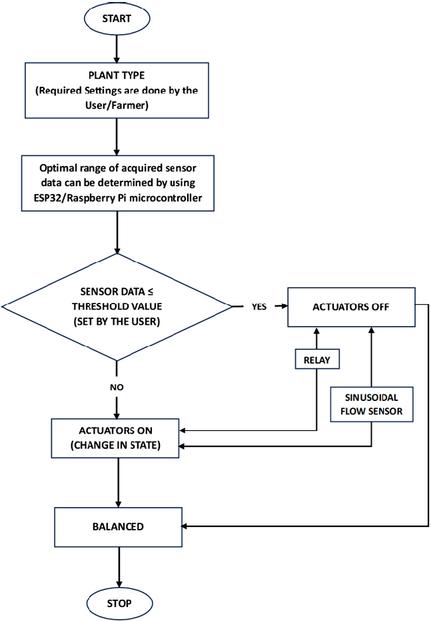
Figure 3 Flow-chart of the control logic.
The actuator includes a relay module, which orchestrates its operation and the solenoid flow sensor, which are responsible of regulating the delivery of the nutrient-rich solution through the pipe to reach at the plant roots. These actuators dynamically adjust the nutrient compositions based on the value of the received parameters. The goal is to reestablish the optimal parameters to support an ideal condition for the hydroponic crops to grow. Once the actuators have successfully balanced the system, bringing all parameters within the optimal range, the process enters a state of equilibrium, denoted as ”Balanced” in the flowchart. This cyclic process continues by utilizing the real-time data from the continuous monitoring of sensors. The flowchart concludes with the ”Stop” state, which may represent the end of the growth cycle or a manual intervention by the cultivator to recalibrate the system for a new crop cycle. The overall working of the system is elaborated below:
• Data collection
– Sensor Integration: In hydroponic systems, an array of sensors is deployed to monitor various environmental parameters critical for plant growth. These sensors include pH meters, TDS sensors, temperature and humidity sensors, light intensity sensors, water level sensors, and nutrient concentration sensors (denoted as NPK, which corresponds to the three nutrients used - nitrogen, phosphorus, and potassium). Each sensor continuously collects data at regular intervals.
– Data Sources: Apart from the direct sensor measurements, supplementary data sources may be integrated into the system. These include plant growth stage information, and nutrient solution compositions. Integration of diverse data sources enriches the dataset, enabling a more comprehensive analysis of environmental conditions.
• Data preprocessing
– Noise Reduction: Raw sensor data is susceptible to noise and outliers, which can arise from various sources such as sensor drift, electromagnetic interference, or environmental fluctuations. To mitigate these effects, preprocessing techniques like moving average filtering and median filtering are employed to smooth the data and remove spurious fluctuations.
– Normalization: Due to the variability of sensor data with different scales and units, it is essential to use normalization as a means of maintaining standardized scale for all functions. Robust scaling, min-max scaling, and z-score normalization, and are common normalization approaches that convert the data into a predefined range suited for ML algorithms.
• Implementation of the ML algorithm: The application of ML includes data processing, feature engineering, and data classification for method selection. The acquired data is separated into two sets: training data and testing dataset. The former is utilized to train the method, while the latter is kept separate and utilized to evaluate its performance. The ML process is shown in the Figure 4. We employ the SVM method that takes temperature, humidity, and plant growth hormones as input and predicts the pH required for the crops’ growth. The same process is performed for the reference methods (RF and DT).
• Prediction method (model) evaluation: In the proposed system, the ML algorithms’ effectiveness is evaluated through the metrics of MAE, MSE, and accuracy to measure how close the numerical predictions are to the ground truth values.
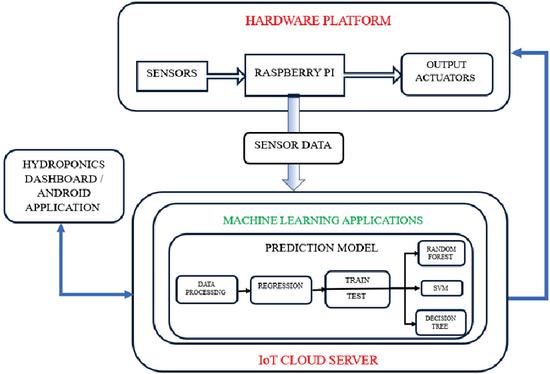
Figure 4 Implementation of the ML methods.
• Deployment
– Real-time decision making: Once trained, the ML method is deployed within the hydroponics system to make real-time decisions based on incoming sensor data. The method continuously analyzes the latest sensor readings and generates predictions to optimize environmental conditions for plant growth.
– Automation: Automated control systems, integrated with actuators and feedback loops adjust the nutrient concentrations, water flow rates, light intensity, and temperature based on the predictions provided by the ML method. By automating these processes, hydroponics systems achieve greater efficiency, consistency, and precision in managing crop cultivation.
– Feedback Loop: To facilitate continuous improvement, a feedback loop is established wherein the system collects data on the outcomes of its decisions (e.g., plant growth rates, yield quantities). This information is then used to refine the ML method’s hyperparameters over time, ensuring adaptability to the changing environmental conditions and optimizing performance in the long term.
By following these steps, ML enables the hydroponics system to optimize resource allocation, and maximize crop yields in a sustainable and efficient manner.
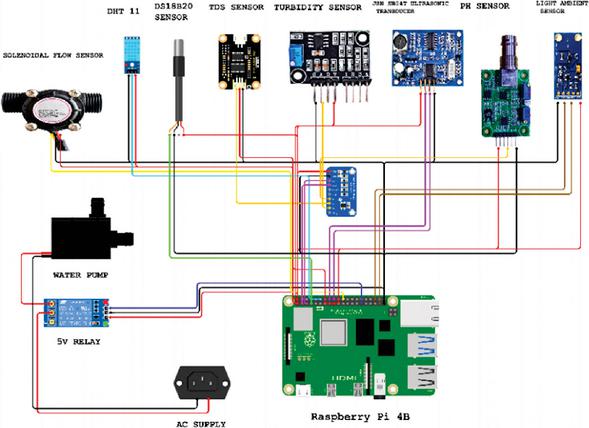
Figure 5 Circuit schematic of the sensing and control in the hydroponics system.
3 Model Execution Framework
The proposed system model is comprised of advanced sensors, an actuator, an MCU (Raspberry Pi) and a control panel. Three analog sensors monitor pH, TDS, and turbidity, while the two digital sensors DHT11 and DS18B20 are used to track atmospheric and solution temperatures respectively. The nutrient solution, a composition of NPK) in a standard ratio of 10:20:10 (respectively for nitrogen, phosphorus, and potassium), is circulated through the channels (pipe) with the help of a 18kW Submersible Pump, nourishing the plants’ roots. The solenoidal flow sensor regulates the nutrient solution flow, while a 5V relay controlled by the microcontroller allows for automated regulation of the submersible pump based on the sensor parameters. A complete schematic circuit diagram of the sensing and control is presented in Figure 5 and the complete model setup is shown in Figure 6. The Figure 7 illustrates the display dashboard (user interface) where the real-time information collected from various sensors are displayed. The Raspberry-Pi MCU processes this information and gives the necessary instructions to the actuators to regulate the delivery of the solution. To achieve the optimal plant growth, the MCU maintains the operational state when the measurements fall within prescribed thresholds and changes state if they deviate. The data from the output of Raspberry-Pi is also used to update the ML method as shown in Figure 4.
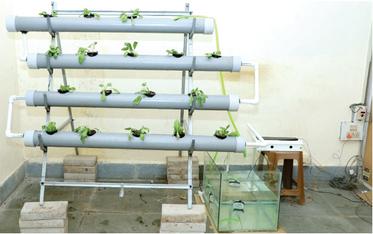
Figure 6 A picture of the complete system.
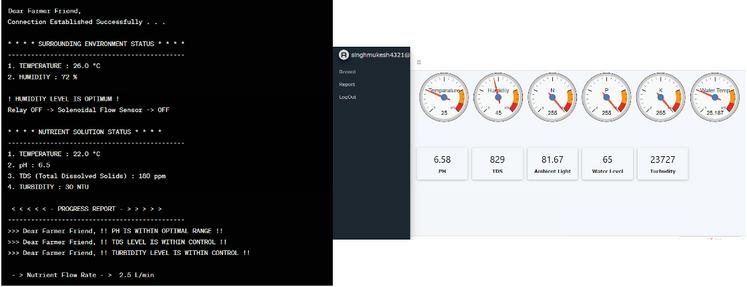
Figure 7 Control interface for the user
4 Results and Discussion
The proposed NFT hydroponic system is developed for CEA, where its performance metrices are evaluated with conventional soil-based cultivation. The evaluation focused on crop growth rate, yield and water use efficiency. Each observation consists of eighteen spinach plants cultivated over two successive crop cycles under identical light and environmental conditions. Plant height, leaf count, and fresh biomass are recorded at weekly intervals, while the integrated sensors continuously logged pH, TDS, turbidity, solution flow, temperature, and humidity at 15-minute intervals. Sensor calibration was performed prior to each cycle (the pH electrode was calibrated using standard buffer solutions at pH 4.0 and 7.0, the TDS sensor with 342 ppm and 1413 ppm standards, and the turbidity sensor with Formazin reference solutions). The DS18B20 and DHT11 modules were validated against a laboratory thermometer and hygrometer to ensure accuracy. The growth rate is expressed in terms of yield and is reported both as average fresh weight per plant and as yield per square meter per cycle. Water consumption is measured from cumulative flow readings, and water use efficiency is expressed in liters of water consumed per kilogram of fresh produce. Water savings relative to soil cultivation are calculated as the percentage reduction in liters per kilogram. For each evaluation, results were extrapolated over two successive cycles.
Table 2 Quantitative comparison of NFT hydroponics and soil cultivation for spinach production
| Parameter | Soil Control | NFT Hydroponics | Savings in % |
| Sample size (n plants) | 18 | 18 | – |
| Cycle length (days) | 30 | 30 | – |
| Fresh biomass per plant (g) | 170 | 205 | 20.5 |
| Yield per m per cycle (kg/m) | 0.7 | 0.9 | 28.5 |
| Total water used per cycle (L) | 120 | 40 | 33.3 |
| Water use (L/kg) | 60 | 4 | 93.3 |
| Energy consumption (kWh/cycle) | 2.0 | 2.3 | 15 |
| Nutrient input (g NPK/kg yield) | 12 | 10 | 16.6 |
| Pesticide use (g/cycle) | 5.0 | 0.0 | Eliminated |
As shown in Table 2, spinach production under soil-cultivation requires approximately 60 liters (L) of water per kilogram (kg) of biomass, whereas NFT hydroponics reduces this to 4 L/kg, achieving 90% water savings. While soil cultivation yield increased from 2.0 to 2.3 kg/m per cycle under NFT (15% gain). Although the financial feasibility of the system remains sensitive to local electricity and nutrient costs, significant long-term savings can be realized through reduced water consumption, lower energy consumption and minimum pesticide usage.
Table 3 Comparison of the Regression Machine Learning Algorithms for pH prediction
| ML Algorithm | MAE | MSE | Accuracy (in %) |
| Random Forest | 0.308 | 0.129 | 87.099 |
| Support Vector Machine | 0.2 | 0.103 | 89.61 |
| Decision Tree | 0.5 | 0.344 | 65.51 |
Furthermore, the process of creating a method for pH prediction in a hydroponic system begins with data collection. The parameters are adjusted based on the pH in normal settings to determine the best variables and labels and formed in a dataset for the ML. As the values of the selected parameters are obtained using the sensors, and the corresponding labels are made through human supervision (i.e., direct observation). Table 3 illustrates the performance of three regression ML methods on the training dataset in terms of MAE, MSE, and accuracy. As observed, the SVM outperforms the two other regression ML methods in terms of all three metrics. Table 3 illustrates the performance of three regression ML methods on the training dataset in terms of MAE, MSE, and accuracy. As observed, the SVM outperforms the two other regression ML methods in terms of all three metrics. Due to the SVM achieving the lowest error, it is used to the predict the pH value for the model by taking inputs for four given parameters, namely isopentenyladenosine, adenosine, zeatin, and abscisic acid. The predicted pH value is 7.74, which translates to accuracy of 89.6% which outperforms the DT and RF methods.
5 Conclusions
The paradigm shift in precision agriculture, facilitated by the convergence of advanced sensing technologies, closed-loop control algorithms, and data-driven optimization, represents a significant stride towards achieving sustainable and scalable food production systems. The proposed NFT-based automated hydroponic system model is integrated with a monitoring and control system, which utilizes the combined effect of advanced sensors and intelligent automation for precision and environmental parameter regulation. The sensing of various parameters such as TDS, turbidity, pH, temperature, and humidity, allows the accurate control necessary for the healthy growth of plants. The presented comprehensive monitoring and control approach preserves the required conditions (10:20:20 ratio of NPK) of each cultivar’s specific requirements by dynamically adjusting the nutrient solution composition. Furthermore, through the system’s data logging, the ML algorithm is optimized, causing improvement in the crop management. SVM-based prediction is employed to estimate the pH value, achieving greater accuracy (89.6%) in comparison with the baseline DT and RF methods. Finally, this proposed system redefines the concept of CEA for urban faming toward a commitment to sustainable development. Further advancements of this farming methodology can be achieved by incorporating other modern technologies like AIoT and image processing.
Further advancements of this farming methodology can be achieved by integrating modern technologies such as AIoT and computer vision. Embedding lightweight AI models within IoT devices can enable decentralized decision-making, reduce dependence on cloud processing, and enhance system scalability. Computer vision techniques can be applied for early detection of plant diseases through real-time image processing. In addition, advanced machine learning and deep learning models can be employed to forecast crop yields using historical sensor and environmental data to support better harvesting. Adaptive lighting and climate control can also be incorporated to optimize photosynthesis while improving energy efficiency. These enhancements will make the system more intelligent, resilient, and profitable for urban hydroponic farming.
Acknowledgments
This work was funded by the European Union NextGenerationEU, through the National Recovery and Resilience Plan of the Republic of Bulgaria, BG-RRP-2.005 – “Twinning” with Project No. BG-RRP-2.005-0002 titled “Twinning for Excellence in Research in Sustainable Future Communication Networks in the Context of a Green Economy – GREENBEAT”.
References
[1] National Academies of Sciences, Engineering, and Medicine, The Challenge of Feeding the World Sustainably: Summary of the US-UK Scientific Forum on Sustainable Agriculture. Washington, DC: The National Academies Press, 2021.
[2] National Academies of Sciences, Engineering, and Medicine, Science Breakthroughs to Advance Food and Agricultural Research by 2030. Washington, DC: The National Academies Press, 2019.
[3] B. Brower-Toland et al., “A crucial role for technology in sustainable agriculture,” ACS Agricultural Science & Technology, vol. 4, no. 3, pp. 283–291, 2024.
[4] N. Shanmugasundaram, G. S. Kumar, S. Sankaralingam, S. Vishal, and N. Kamaleswaran, “Smart agriculture using modern technologies,” in 9th International Conference on Advanced Computing and Communication Systems (ICACCS), (Coimbatore, India), pp. 2025–2030, 2023.
[5] M. Dhanaraju, P. Chenniappan, K. Ramalingam, S. Pazhanivelan, and R. Kaliaperumal, “Smart farming: Internet of things (iot)-based sustainable agriculture,” Agriculture, vol. 12, p. 1745, 2022.
[6] A. Raj, V. Sharma, S. Rani, A. K. Shanu, A. Alkhayyat, and R. D. Singh, “Modern farming using iot-enabled sensors for the improvement of crop selection,” in 4th International Conference on Intelligent Engineering and Management (ICIEM), (London, UK), pp. 1–7, 2023.
[7] C. I. Gan, R. Soukoutou, and D. M. Conroy, “Sustainability framing of controlled environment agriculture and consumer perceptions: a review,” Sustainability, vol. 15, p. 304, 2023.
[8] A. Dsouza, L. Newman, T. Graham, and E. D. G. Fraser, “Exploring the landscape of controlled environment agriculture research: a systematic scoping review of trends and topics,” Agricultural Systems, vol. 209, p. 103673, 2023.
[9] A. L. Garcia, M. A. C. Griffith, G. P. Buss, X. S. Yang, J. L. Griffis, S. Bauer, and A. K. Singh, “Controlled environment agriculture and its ability to mitigate food insecurity,” Agricultural Sciences, vol. 14, pp. 298–315, 2023.
[10] A. Banerjee, K. Paul, A. Varshney, R. Nandru, R. Badhwar, A. Sapre, and S. Dasgupta, “Soilless indoor smart agriculture as an emerging enabler technology for food and nutrition security amidst climate change,” in Plant Nutrition and Food Security in the Era of Climate Change, pp. 179–225, Academic Press, 2022.
[11] G. Rajaseger, K. L. Chan, K. Y. Tan, S. Ramasamy, M. C. Khin, A. Amaladoss, and P. K. Haribhai, “Hydroponics: current trends in sustainable crop production,” Bioinformation, vol. 19, no. 9, pp. 925–938, 2023.
[12] E. A. van Os, T. H. Gieling, and J. H. Lieth, “Technical equipment in soilless production systems,” in Soilless Culture (Second Edition) (M. Raviv, J. H. Lieth, and A. Bar-Tal, eds.), pp. 587–635, Elsevier, 2019.
[13] G. Niu and J. Masabni, “Hydroponics,” in Plant Factory Basics, Applications and Advances (T. Kozai, G. Niu, and J. Masabni, eds.), pp. 153–166, Academic Press, 2022.
[14] J. E. Son, H. J. Kim, and T. I. Ahn, “Hydroponic systems,” in Plant Factory (Second Edition) (T. Kozai, G. Niu, and M. Takagaki, eds.), pp. 273–283, Academic Press, 2020.
[15] E. Navarro, N. Costa, and A. Pereira, “A systematic review of iot solutions for smart farming,” Sensors, vol. 20, p. 4231, 2020.
[16] NASA, “Technology transfer (t2) program, next-level farming,” 2024. Available at: https://spinoff.nasa.gov/Next-Level_Farming (accessed 9 January 2025).
[17] V. Palande, A. Zaheer, and K. George, “Fully automated hydroponic system for indoor plant growth,” Procedia Computer Science, vol. 129, pp. 482–488, 2018.
[18] A. Nursyahid, H. Helmy, A. Karimah, and T. Setiawan, “Nutrient film technique (nft) hydroponic nutrition controlling system using linear regression method,” in IOP Conference Series: Materials Science and Engineering, vol. 1108, p. 012033, 2021.
[19] A. Johnson, E. Meyerson, J. de la Parra, T. Savas, R. Miikkulainen, and C. Harper, “Flavor-cyber-agriculture: optimization of plant metabolites in an open-source control environment through surrogate modeling,” PLoS ONE, vol. 14, no. 4, p. e0213918, 2019.
[20] S. Patil, L. Mathews, A. G, S. Motgi, and U. Sinha, “Ai-driven hydroponic systems for lemon basil,” in International Conference on Network, Multimedia and Information Technology (NMITCON), pp. 1–6, 2023.
Biographies

Sushant Kumar Pattnaik received his M. Tech degree in Electronics and Communication from NIT, Rourkela in 2010. He received his B. E. (Electrical and Electronics Engineering) from Berhampur University in 2001. He is now working as Assistant Professor, Electronics & Communication Engineering, Silicon Institute of Technology, Bhubaneswar. He has got more than 11 years teaching and research experience in the field of VLSI Design, IoT & Embedded Systems. He was having 3 years of Industrial Experience in the field of power electronics (UPS Manufacturing Company) and 3 years of Research experience in the field of VLSI & Embedded Systems at NIT Rourkela.

Soumya Ranjan Samal received his Ph.D. degree in Communication Networks, Faculty of Telecommunications from Technical University of Sofia at Sofia, Bulgaria. He received his B.Tech. degree in Electronics & Instrumentation Engineering from Biju Patnaik University of Technology, India in 2004. Soumya then went on to pursue his M.E. in Computer Science & Engineering from the Utkal University of Bhubaneswar, India in 2009. He, as an Associate Professor in Silicon University, India has acquired a solid experience about 18 years of teaching in Communication Engineering. Soumya also worked as a Project Engineer in Indian Institute of Technology, Bombay, India in 2005. His research area of interest includes, Interference Management in 5G cellular network, Green Communication movement to develop Energy Efficient solutions through antenna parameters and IoT.

Shuvabrata Bandopadhaya is currently working as an associate professor in the department of electronics at the School of Physical Sciences, Banasthali Vidyapith, Rajasthan. He has received his M.Tech. and Ph.D. degrees in communication systems specialisation from KIIT University, Bhubaneswar, India. He has nearly 20 years of experience in teaching and research at various reputed institutes and universities in India. His areas of research interest include wireless communication and networks, Internet of Things, and AI.

Debi Prasad Pradhan is currently working as a Technical Assistant at the IoT Lab and Industrial Control Lab at Silicon University, Bhubaneswar. He holds an M.Tech. degree in Electronics and Communication (2018) from CET Bhubaneswar, Odisha, and a B.Tech. in Electronics and Communication (2015). With over 15 years of academic and mentoring experience at Silicon University, India. His research interests include AI-integrated wireless systems for IoT, optical sensor network design, and emerging technologies in industrial control, particularly PLC and DCS systems for Industry 5.0.

Jitendra Kumar Das has received his Ph. D. degree in Electronics and Communication from NIT, Rourkela in 2011. He received his B. E. (Electronics and Telecommunication) from Utkal University in 1992. He received his M. Tech in EE (Electronics System and Communication) from NIT, Rourkela in 2004. He is now working as Associate Professor, School of Electronics Engineering, KIIT Deemed to be University, Bhubaneswar. He successfully guided 3 Ph. D. student and 20 MTECH students. He has got more than 15 years teaching experience in the field of VLSI Design, Embedded Systems and Signal Processing.

Antoni Ivanov received the PhD degree in Communication Networks and Systems from the Technical University of Sofia (TUS), Bulgaria. He holds a Master degree in Innovative Communication Technologies and Entrepreneurship from TUS, and Aalborg University, Denmark in 2016. He is currently a Postdoctoral researcher at the “Teleinfrastructure Lab”, Faculty of Telecommunications, TUS. His research interests include cognitive radio networks, adaptive algorithms for dynamic spectrum access, deep learning-based solutions for cognitive radio applications, volumetric spectrum occupancy assessment, and graph signal processing for resource allocation in current and future wireless networks.

Vladimir Poulkov has received the M.Sc. and Ph.D. degrees from the Technical University of Sofia (TUS), Sofia, Bulgaria. He has more than 30 years of teaching, research, and industrial experience in the field of Telecommunications. He has successfully managed numerous industrial, engineering, R&D and educational projects. He has been Dean of the Faculty of the Telecommunications at TUS and Vice Chairman of the General Assembly of the European Telecommunications Standardization Institute (ETSI). Currently the Head of the “Teleinfrastructure” R&D Laboratory at TUS and Chairman of Cluster for Digital Transformation and Innovation, Bulgaria. He is Fellow of the European Alliance for Innovation; Senior IEEE Member. He has authored many scientific publications and is tutoring BSc, MSc, and PhD courses in the field of Information Transmission Theory and Wireless Access Networks.

Albena Mihovska is currently a distinguished Senior Academic Research Professional with a versatile role in the realm of technology and research. She is the CTO with SmartAvatar B.V., where her visionary leadership drives innovation and fosters the creation of cutting-edge solutions. Concurrently, she holds the position of Research Director with CGC, where she actively shapes the future of telecommunications. Her influence extends to her role as WG3 Vice Chair with one6G and her dedicated involvement as a Board Member with EUROMERSIVE. In a testament to her leadership and expertise, she was elected as the President of the INFORMS Telecommunications and Network Analytics Cluster for the year 2023. Previously, within the CGC Research Group, BTECH, she leads the 6G Knowledge Research Lab and acts as the Technical Manager for multiple EU-funded projects in Beyond 5G networks coordinated by Aarhus University. Her extensive and impactful contributions are mirrored by her impressive portfolio of more than 150 publications. As a member of both IEEE and INFORMS, she underscores her unwavering dedication to advancing knowledge and technology in her field.
Journal of Mobile Multimedia, Vol. 21_6, 1049–1070.
doi: 10.13052/jmm1550-4646.2163
© 2025 River Publishers