LightAgro: Lightweight Blockchain IoT Based Fabrication for Smart Irrigation
Priya Saha* and Ditipriya Sinha
National Institute of Technology Patna, Department of Computer Science & Technology, Patna, Bihar 800005, India
E-mail: priyas.ph22.cs@nitp.ac.in; ditipriya.cse@nitp.ac.in
*Corresponding Author
Received 08 January 2025; Accepted 01 May 2025
Abstract
India is supposed to be the global agricultural powerhouse. Around three-quarters of Indian family rely on agriculture for their livelihood. Water is the most crucial resource that must be accounted for to create a better irrigation system. The introduction of IIoT 4.0 also expanded its contribution to smart irrigation (SI). IoT-based innovative irrigation management achieves optimum water-resource utilization, bridging the gap between cyber-physical Systems (CPS). This paper improves the prediction rate needed for irrigation by sensing different parameters like temperature, pH value, humidity, NPK fertilizer, and rainfall of the crop field. In this paper, Deep Learning, an AI-based proposed system, integrates remote sensor data to predict irrigation in intelligent agriculture correctly. As open-source technology is involved in decision-making, security and trust issues are at stake. We propose a shallow neural network model, namely, LightAgro autonomous network, to recover intruder issues. LightAgro outputs (local prediction) are securely signed using a lightweight secp256k1 curve for users’ authentication. The vast amount of sensor data stored in client-server architecture in traditional systems is challenging. The result shows ML accuracy of 85.26 % using Gradient boosting techniques.
Keywords: SF, SI, LightAgro, ML, SC, Blockchain.
1 Introduction
According to a 2024 UN World Water Development Report, the agricultural share of freshwater demands 70 % of the world’s freshwater, much higher than industrial needs. According to the demographic report, estimation shows that by 2050, India’s population will reach a surplus of up to 1.69 billion. But current food availability is not sufficient as per the need. To make India a self-resilient nation, we should focus on the agricultural sector by maximizing production and minimizing resource utilization using advanced technologies. SI is an emerging phenomenon that alludes to overseeing data integrity and communication in ranches to extend the advancement requirement in human work and retain good quality crop production. In [14], D Vallejo-Gomez et al. proposed a literature review on innovative irrigation systems. A modified PRISMA 2020 method analyzes detailed analytical phrases on this topic. Automation in rural and urban agriculture is the prior most interest of the researchers. In [17], M Gupta et al. suggested a multi-layer architecture in the precision agriculture sector. This paper has mainly focused on the different distributed cyber-physical environments. It highlights the cyber-attack scenario broadly and also focuses on open research challenges. In [18], authors proposed an innovative farming technique to enhance information communication technology. They have introduced big data to deal with a large volume of information related to socio-economic challenges. This paper gives an insight into the food supply chain network to overcome governance issues in business models. In [20], Mohy-iodine et al. focused mainly on network instruction systems to reduce vulnerabilities in the smart agricultural field. Various ML techniques, such as XGBoost (XGB) and AdaBoost (ADA), are used to find model accuracy and detect anomalies. The Matthews-correlation coefficient (MCC) gives 96.92% accuracy in overcoming NF-Bot-IoT lopsidedness. In [21], Cordeiro et al. announced a fog-enabled intelligent irrigation system using a deep neural network to meet agricultural needs. Optimizing the use of water is the primary concern of this paper. The fog computing system resolves the connectivity problem in the farm area. The performance metrics show predictions based on CPU and RAM usage. The maximum consumption increases by 10% CPU and 1% RAM.
1.1 Research Contribution
Effective water management is the primary impacting factor of irrigation to assist SF. The primary objectives of SI for SF are labor minimization, timely monitoring, and other resources to maximize efficiency and accuracy. Hence, the contribution of the paper –
1. We proposed a three-layer architecture of the LightAgro framework. The first layer promotes the data collection layer from IoT devices and sensors, followed by the edge and lightweight blockchain layers. The last layer signifies the SC for the authentication of users and the global blockchain layer.
2. Evaluate the ANN-based model incorporated with remote sensor data for the correct prediction of irrigation.
3. We suggested an IoT-Blockchain-based distributed, secured system to assist SF.
4. The predicted results are stored in the local blockchain only after authentication of the user encrypted using the Elliptical curve Digital Signature (ECDSA) algorithm sec256k1 curve is mentioned.
5. The multi-objective proposed system’s performance evaluation is observed with constraints on model accuracy, latency, execution time, and gas consumption.
1.2 Construction of this Article
The rest of the paper is as follows: Section 2 presents the related work of different research papers. Section 3 explains the proposed architecture of the work. Section 4 explains the workflow of the proposed system. The result and performance analysis are discussed in Section 5. The last section describes the conclusion and, finally, the references.
2 Related Works
Till now, several ML-IoT-based projects and research have been carried out on agricultural systems. In [2], Sitharthan R et al. explained AI and 6G-enabled smart agricultural irrigation system models based on a prediction algorithm based on rainfall patterns and tremendous climatic changes. Based on the weather history and traces of soil moisture, it is possible to predict with 86.34% accuracy.
In [3], Md. Mamun Hossain et al. presented a review of research on the development of distance monitoring to control irrigation management. The machine learning model helps to decide on water control and fertilizer utilization recommendations. Blockchain has been introduced to ensure data integrity, man-in-the-middle MITM attacks, and denial of service (DDOS)attacks.
In [5], the authors describe a case study of water storage solution techniques for agricultural production. Ethiopia is mainly a rainfall-shortage country, so water conservation is the utmost priority for cultivation. This paper describes an MVP model to enhance water storage capacity in the agricultural field.
In [6], Asif Irshad Khan et al. show novel SI energy management to promote IoT-enabled SF. The proposed Emperor Penguin Jellyfish Optimizer (EPJO) method shows energy optimization in latency, throughput, and cluster selection compared to traditional methods.
In [7], Nestor Michael Tiglao et al. introduced a novel wireless mesh-based Agrinex system. This system is handy for large-scale farming. It vacillates sensor node reorganizations if any changes are noted in the network. Drip irrigation is feasible in terms of water conservation at a large scale.
In [4, 9], Various weather forecast parameters like temperature, humidity, and precipitation are monitored and collected over cloud-based web services – analysis of forecast data using ML techniques to improve smart irrigation systems.
In [10], A case study of strawberry plants cultivated in a greenhouse cloud-based approach for smart irrigation is mentioned using edge computing.
In [12], Pius Agbulu, G. et al. suggested a water management system LoRa-based smart irrigation control using a hybrid classifier CNN-SVM. The experiments are covered in real-time fields for routine irrigation systems. The solution assured experimental analysis regarding precision, recall, accuracy, and energy efficiency.
In [15], Nawandar et al. proposed a neural network system to monitor irrigation requirements from a distant location based on the current crop situation. It makes the system low-cost and portable.
In [16], Laura and Parra et al. explained a smart farming technique using IoT and WSN technologies to assist intelligent systems. This paper aims to describe the most useful nodes using wireless sensor networks to determine weather conditions and initiate irrigation.
3 Proposed Architecture
Our LightAgro smart irrigation system architecture is described below in Figure 1. It is divided in three Parts-Data Collection Layer, Edge Layer and local Blockchain Formation and lastly Smart Contract Based Management Layer.

Figure 1 Proposed architecture of LightAgro.
3.1 Data Collection Layer
We have implanted sensors connected to routers (R1, R2…Rn) in this first layer. It collects suitable data from the environment and transmits it over the network. It is more of an interconnected embedded system that helps to determine decisions in an agricultural management system accurately.
1. Our proposed system consists of various sensors, namely soil moisture (VH-400) sensor, humidity sensor (DHT-11), NPK fertilize Sensor (RS485), pH meter, and ample amount of sunlight, all of which are observed and connected to the Arduino Uno Board. Now, these k sensors, including both irrigation sensors, k1, and ambient irrigation sensor (AIS), k2, are mapped to n users effectively with a trivial condition, k k1+k2. A mapping of En k is quintessential to achieve SI for SF. Where En represents the entity of n users, and k represents the total number of sensors.
2. To establish communication with the edge network, routers (R1, R2…Rn) are connected to the Universal Asynchronous Receiver-Transmitter (UART) protocol via the representational state transfer (REST) method. It stores and sends data to the next layer for analyzing and visualizing appropriate data.
3. The desired amount of soil moisture (Threshold value 60%) and NPK fertilizer (Threshold value, 50–75%) based on crop variety controller sets the pump “ON” or “OFF.” It is monitored continuously to check whether irrigation is needed or not. Here, we have considered a sprinkler irrigation system.
3.2 Edge Layer and Local Blockchain Formation
This edge layer is divided into three parts. Firstly, selecting the dataset features sensor data (sunlight, moisture, pH value, NPK fertilizer, humidity) available online. Unwanted NaN values are discarded at the time of feature selection. Secondly, preprocess data with the favorable conditions of irrigation factors –
1. Sunlight – The ample amount of sunlight must vary from 50-75F. The variety of seasonal crops will vary. The proper amount of temperature is the most influential parameter for seed germination and nurturing plant growth.
2. Soil Moisture – Irrigation primarily depends on soil moisture. If the soil moisture threshold value is below 60%, immediate irrigation must be initialized. It provides moisture present over the crop plane for the growth of plants.
3. Humidity – During breathing, plants lose moisture in the dry air. Hence, it is the utmost important factor for watering plants. Depending upon crop season (e.g., mid summer), humidity is lowest. Generally, 50–60% of the humidity is aquainted.
4. NPK fertilizer – With a lack of soil nutrients in plants germination process may be hampered. The ideal ratio of NPK is 4:2:1. This improves macro-level monitoring of soil directly affecting irrigation.
5. pH value – As for the growth of plants, fertilizer is used in farms; it varies pH levels present in the soil. For best-case crop growth, pH ranges between 5.5 to 6.5.
With the help of ANN, the AIS features act as the input layer for irrigation. Metadata in the hidden layer take correct decisions using an ensemble classifier (Random Forest, bagging, Gradient Boosting) and gives the best result. This result is conveyed to the cloud and fed to the local blockchain formation.
In the Local Blockchain, the result of significant features of the hidden layer (HL1, HL2, HLn) gives rise to the lightweight Blockchain of our proposed LightAgro system. It significantly works with the user authentication (uses Lightweight elliptical curve sec256k1) for signing and verification purposes. It is previously instantiated to get access control via smart contract (SC).
3.3 Smart Contract-based Management Layer
At this level, data is stored in a heavily weighted Cloud. The user (farmer, admin) controls the application interface, allows AIS as input through ANN, and generates insight (using a pseudo-random generator) over AIS activities. The predicted result via application interface to initiate irrigation Iirr. Provides cloud results along with local BC for the execution of rule-based SC. It ensures authorization norms of the National Mission for Sustainable Agriculture (NMSA) and General Data Protection Regulation (GDPR) standard guidelines. For peer-to-peer communication, IPFS is used, containing a key hash of ck requires 32 bytes. Subsequently, the result is stored in the Global Blockchain.
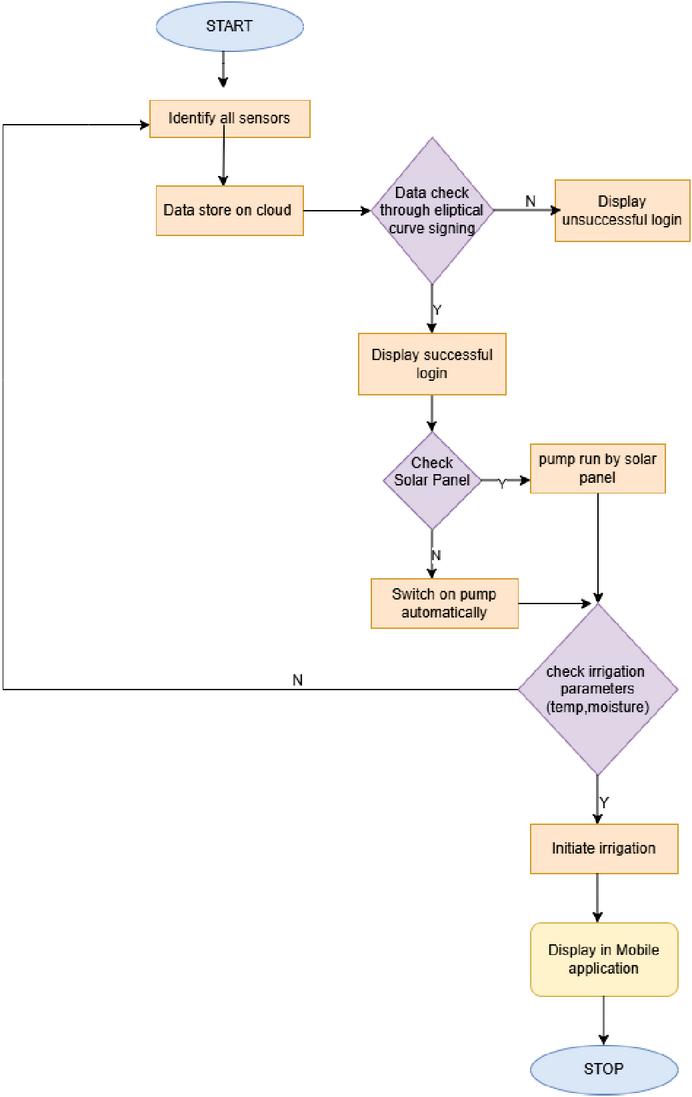
Figure 2 Workflow of LightAgro.
4 LightAgro: Dataflow of the Framework
Improving plant health and optimizing water usage, making irrigation systems faster and better. The flowchart of our proposed system is described in Figure 2. It includes remote control and monitoring capabilities, helping farmers from overwatering or under watering the plants. The end device node consists of Arduino UNO, 6G, motor, soil moisture sensor, JXCT soil NPK sensor, temperature sensor, and humidity sensor. The list of devices applicable for smart irrigation is listed in Table 1. The micro-controller device is used as the coordinator device in the network system. An interface Module like MAX485 needs to connect the sensor to the microcontroller. Data can be viewed on the Android mobile after receiving from the server. Blockchain is introduced in our proposed system to ensure data tampering and forgery. As blockchain nodes are too small, using them in lightweight calculations over DES and AES is beneficial. Blockchain refers to a distributed ledger system where data are stored in blocks connected through a hash function having a unique ID by maintaining the integrity of the blocks. The previous block’s hash is attached to the next block along with its data. If any intruder wants to tamper or alter the block data, all the consecutive block hash will be affected. Therefore, any intruder attempts to change the data or spoof any particular block of the Blockchain will not be possible. The web service is written in Blockchain with a lightweight REST API to convey the information between the field gadget and the sensors.
| Sl. No | Device Name | Function |
| 1 | Arduino UNO | Used as a microcontroller |
| 2 | MAX485 | Interface of Arduino |
| 3 | Temperature Sensor | For sensing temperature |
| 4 | DHT-11 | For sensing humidity in the soil |
| 5 | VH-400 | For sensing moisture in the soil |
4.1 Algorithm 1: Sign-in Verification Using Lightweight sec256k1 Elliptical Curve
Algorithm 1 describes the authentication of lightweight sec256k1 elliptical curve signing and verification of the user. After the initial setup of a smart contract is built it will check whether the farmer requesting to monitor his land is registered or not in the system. The validators in the local BC do the signing process, which is explained as follows:
| (1) |
Where is the authenticated digital signature of the ith local prediction is , and Kpri is the farmer’s private key. It is assumed that n signed prediction is mined over . We have considered the standard hashing function H(…). The hash output are represented as Hs H(S1), H(S2),…H(Sn). At IPFS this data is stored as a reference. The curve order is n, a prime number that presents several points in the curve. The curve has a base point B as the starting point of the curve functionality.
| Algorithm 1 Lightweight sec256K1 verified Curve Signing |
| 1: Input: Range [1, n 1] |
| 2: Output: n is the order of the sec256K1 curve ensuring the correct signing. |
| 3: Process: |
| 4: Sign (Z, K) |
| 5: r random value in the range [1, n 1] |
| 6: Compute P = r B, where B is the base point of the lightweight curve. |
| 7: Extract the x-coordinate of the point P and denote it as d |
| 8: Find r mod n and denote it as r |
| 9: Compute the message digest of the prediction Z and denote it as H(Z) Generate the hash of the input data (message digest). |
| 10: Compute the second component of the verifying signature: |
| 11: return signature (d, S) |
| 12: Verify: (Z, , K) |
| 13: Compute the message digest of the prediction Z and denote it as H(Z) |
| 14: Calculate the inverse of S modulo n and denote it as S |
| 15: Compute the first component of the signature, denoted as S: |
| 16: Compute the second component of the signature, denoted as S: |
| 17: Calculate the elliptic curve point C = S B + S K |
| 18: If the x-coordinate of C = d then |
| 19: return signature is valid |
| 20: Else |
| 21: return signature is invalid |
| 22: End if |
| 23: End process |
4.2 Algorithm 2: LightAgro-Evapotranspiration Generate Rate of Irrigation
Algorithm 2 describes the calculation of evapotranspiration required for irrigation in the crop field. Potential crop evapotranspiration () varies from actual crop evapotranspiration () based on soil nutrient, and water level in the ground. The potential crop evapotranspiration follows standard conditions as below:
| (2) |
| Algorithm 2 Impact of evapotranspiration on irrigation |
|
1. Input: Evapotranspiration of the crop field. 2. Output: How evapotranspiration affects irrigation. 3. Process Begin 4. Calculate potential crop evapotranspiration () from the water level of the root of the plant. 5. Calculate actual crop evapotranspiration () from the water level of the ground. 6. The reduction in is estimated by irrigation needed to maintain daily water balance: Where K is the crop coefficient that measures the difference between evapotranspiration of the crop and reference water level. 7. Compute stress coefficient, K, that affects Kori estimated as: C = Consumption of water in the root zone, WAR Water available readily for irrigation [mm]. 8. The degree of stress coefficient K is calculated and termed as D. 9. If D WAR, then K. The degree of stress is presumed to be fine, and no irrigation is needed. 10. Else 11. Irrigation State: Revert and check again all conditions. 12. End if 13. End |
5 Result and Performance Analysis
5.1 Dataset Description
This dataset is taken from an open-source Kaggle platform. The dataset contains weather condition data about rainfall, humidity, and temperature. Data about soil quality and the nitrogen, phosphorus, and potassium ratio in the soil. Soil’s pH is also collected to calculate the evapotranspiration of plants. For training and testing purposes, a different ML model is used. 70% of the data undergo training and 30% for testing. All these data are scaled by standard scalar imported from sklearn.
5.2 Data Analysis
Before execution, any ML classification and estimate data needs to be preprocessed. A correlation heatmap is used to observe the correlation matrix between variables in the dataset. The results of the analyzed data are shown in the Figures 3–7. This correlation heatmap is expressed in Equation (3).
| (3) |
Here, is the covariance, and , and are the standard deviation of A and B respectively.
In the correlation heatmap, a score close to 1 determines a strong relationship whereas a score close to 0 determines a weak relationship respectively.
5.3 Performance Measurement of ML Models
The accuracy of different models is calculated and verified based on precision, recall, and F1-score. The mathematical formulation of the measurement metric is as follows –
Precision calculates the classifier differential rate and correctly predicted observations to all expected true positive observations in Equation (4).
| (4) |
Recall calculates the number of correctly predictive true positive observations for all actual class observations in every classifier in Equation (5).
| (5) |
F1 score measures the overall accuracy combining precision and recall in Equation (6).
The more the F1 score means it has a smaller number of FP and FN.
| (6) |
| (7) |
For the calculation of the accuracy of the total samples, Equation (7) is used. It indicates how a model is trained successfully and predicted correctly.
5.4 Data Normalization
To achieve accuracy, all data has to be normalized to discard missing values in the dataset’s feature selection. Different processing layers produce the final output by linear convolutions of inputs. The ReLU activation function transforms the input data nonlinearly. Activating a layer after individual convolution involves batch normalization.
5.5 Hidden Layer Calculation
The input of all hidden neuron HL1…HLn is calculated as a weighted sum of inputs ( plus a bias(b).
| (8) |
The ReLU function is defined as
| (9) |
The range of ReLU activation function is taken between 0 to x.
| (10) |
The value of the output is updated after each convolution in the hidden layer.
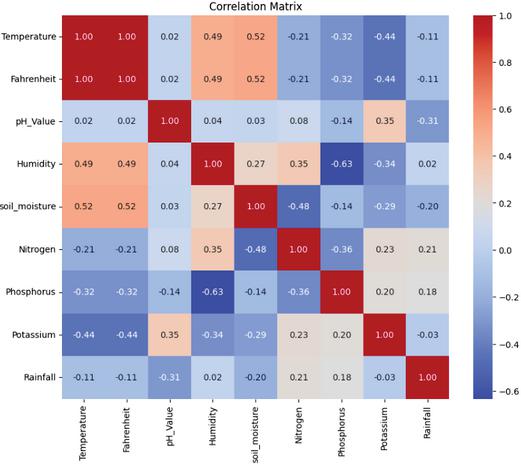
Figure 3 Co-relation matrix of different data features of the dataset.
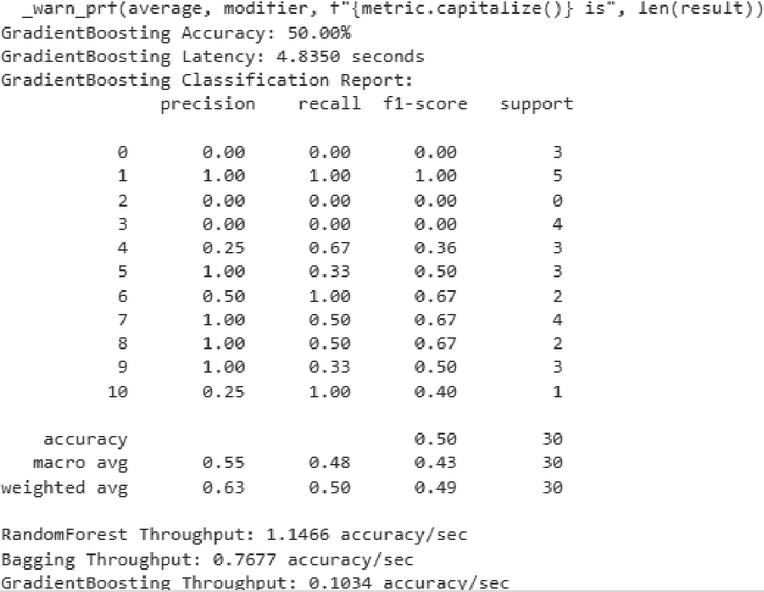
Figure 4 Comparison over ML models.
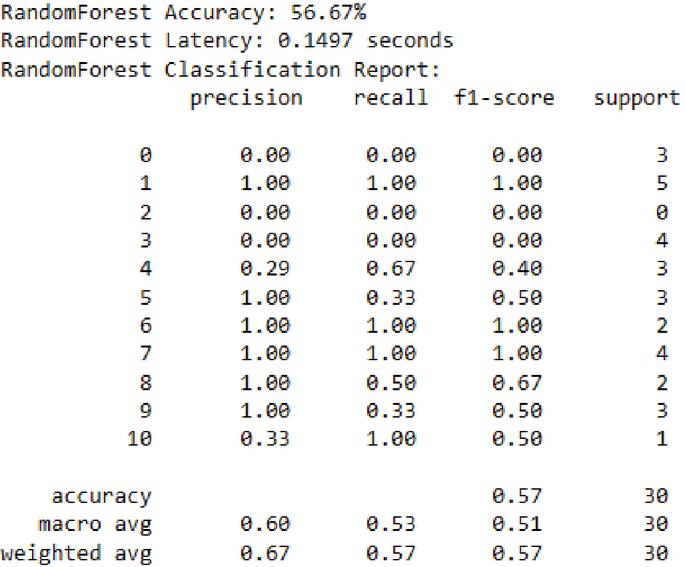
Figure 5 Accuracy calculation over random forest ML technique.
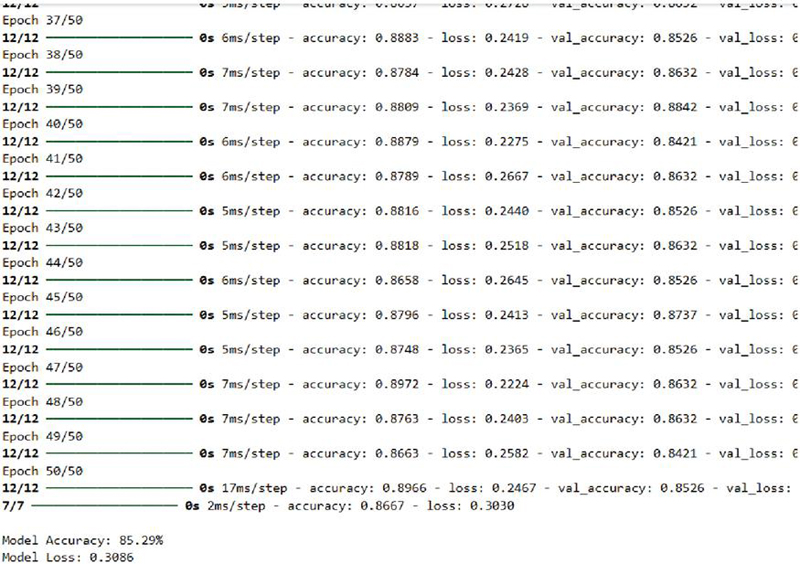
Figure 6 Accuracy calculation over gradient boosting.
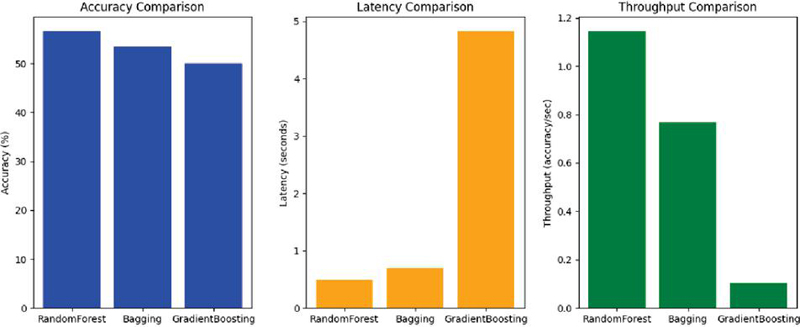
Figure 7 Comparison of different ML models.
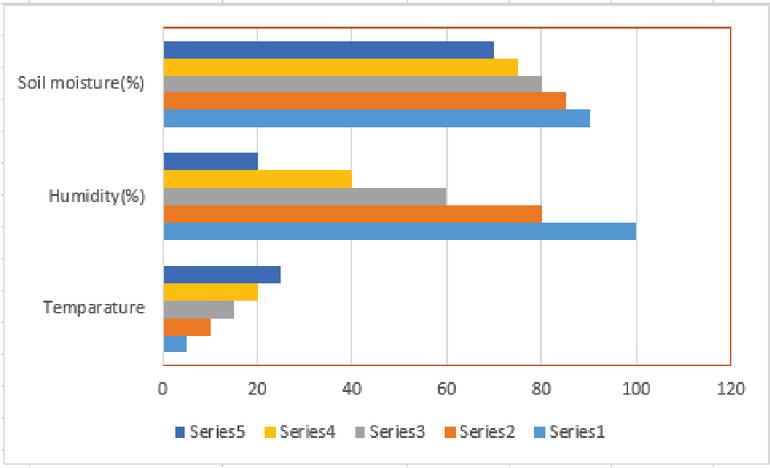
Figure 8 Variation over different parameters of irrigation.
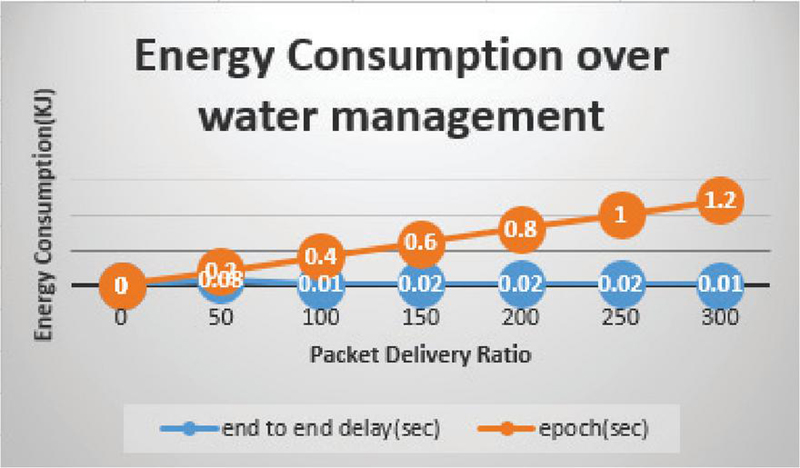
Figure 9 Variation over different parameters of irrigation.
In Figure 8 it has been observed how different parameters of irrigation effect on crop production widely. Figure 9 compares the energy consumption over water management [6, 7].
5.6 LightAgro Model Performance in Blockchain Layer
• Prevention against unauthorized access: Any anonymous attacker may try to modify or insert data to hamper the system’s performance. Blockchain protects against such attacks through hash value checking every time for authentication. It is capable of identifying any alteration made over the network chain.
• Prevention from data duplicity and data loss: Decentralization is a notable feature of Blockchain. As data is not stored only at a single point location, it reduces the possibility of data loss in the network. Moreover, keeping information of data in distributed form removes data duplicity problems in the system.
• Prevention from DoS attack: The denial-of-service attack may include user log in details and parameter details of the irrigation process, leading to a slowdown of the services. Trespassers may try to stop transactions under a DoS attack. So, to prevent Blockchain, the network must operate in a fixed time frame.
5.7 Permission-based Smart Contract
This subsection uses the permission-based smart contract to generate access control over the network. Data is fetched from local BC and IPFS to perform SC. For this purpose, we have used different functions to authorize entry into the Blockchain network. A mapping function is helpful to map the details of other parameters to view the functionalities of the parameters.
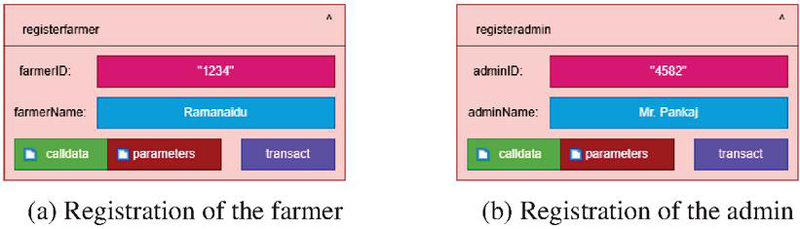
Figure 10 Registration process.
Figure 10(a) represents the farmer registration. Similarly, Figure 10(b) represents the admin registration satisfying only authenticated admin is invoked. Both of the records of registration of user will be store in the global blockchain.
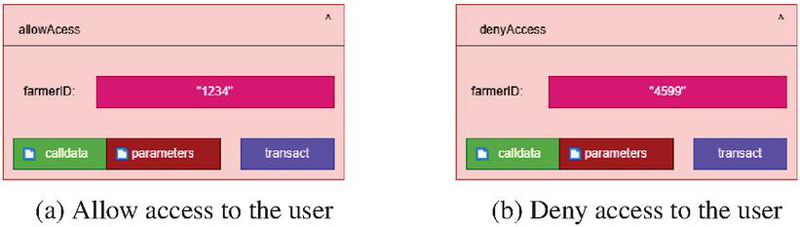
Figure 11 Authentication for access.
Figure 11(a) shows if the user login matches it will allow user to enter in the LigtAgro system. Figure 11(b) shows that if the data is not found in cloud access is denied immediately.
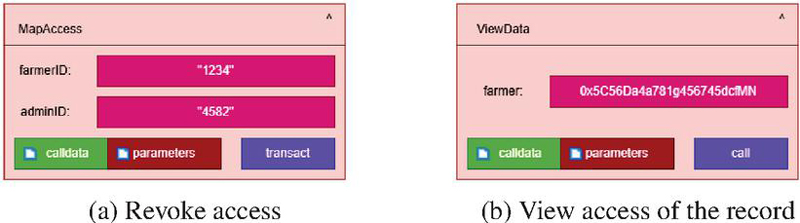
Figure 12 Mapping.
The Mapaccess function is invoked to check the need for irrigation in crops. Figure 12(a) authorizes and limits the admin to view the particular farmer details. Finally, Figure 12(b) shows the details of parameters of the hashed farmer details.
6 Conclusion
We have tried to resolve farmers’ most common challenges to enhance productivity. With the integration of IoT, machine learning (ML), and blockchain, profitability is maximized in crop production. Calculating the evapotranspiration of plants helps initiate irrigation. As it depends on the leaf area of plants and the ground-level water absorbed by the root, it helps to monitor plant health promptly. The user-friendly application recommendation for NPK fertilizer usage gives an insightful approach to crop production. Less expenses and higher productivity enrich agricultural management through our LigtAgro proposed System. Introducing blockchain technology improves trust and makes for higher throughput. Trusted devices achieve data transparency and integrity when they participate in the network. Evapotranspiration attains the water consumption, making the environment sustainable. Remote monitoring of crop fields automatically makes the System more effective and promising. We have applied a random forest ML model to achieve 85.29 % accuracy.
Furthermore, the suggested framework enhances information exchange. Over- or under-irrigation systems may give birth to several plant diseases that degrade landscape conditions. Wastewater management is a boon in drought-prone areas to maximize agricultural growth. Solar energy harvesting increases the battery life of motors, leading to a green environment. Researchers can explore the interoperability of parameters in the farm sector through further research and enhancement. Technological achievement with a larger area of device connectivity in real-time will make it more efficient and robust and create an eco-friendly environment.
References
[1] R. Santhana Krishnan and E. Golden Julie and Y. Harold Robinson and S. Raja and Raghvendra Kumar and Pham Huy Thong and Le Hoang Son, Fuzzy Logic based Smart Irrigation System using Internet of Things, Journal of Cleaner Production, volume 252, pages 119902, year 2020.
[2] Sitharthan R, Rajesh M, Vimal S, Saravana Kumar E, Yuvaraj S, Abhishek Kumar, Jacob Raglend I, Vengatesan K, A novel autonomous irrigation system for smart agriculture using AI and 6G enabled IoT network, Microprocessors and Microsystems, Volume 101,2023,104905, ISSN 0141-9331, doi.org/10.1016/j.micpro.2023.104905.
[3] Hossain, Md Mamun and Rahman, Md Ashiqur and Chaki, Sudipto and Ahmed, Humayra and Haque, Ahsanul and Tamanna, Iffat and Lima, Sweety and Most, Jannatul Ferdous and Rahman, Md Saifur, International Journal of Advanced Computer Science and Applications, volume 14, number 7, year 2023.
[4] Goap, Amarendra and Sharma, Deepak and Shukla, A Krishna and Krishna, C Rama, An IoT based smart irrigation management system using Machine learning and open source technologies, Elsevier, Computers and electronics in agriculture, volume-155, pages-41–49, 2018.
[5] Jilito, Mideksa Fufa and Wedajo, Desalegn Yadeta and Feyisa, Bekele Wegi and Tuke, Tsegaye Woldetsadik, Water storage practices for small-scale irrigation systems in East Hararghe zone, Ethiopia, Water Supply, IWA Publishing, voume 21, number 4, pages 1674–1686, year 2021.
[6] Khan, Asif Irshad and Alsolami, Fawaz and Alqurashi, Fahad and Abushark, Yoosef B and Sarker, Iqbal H, Novel energy management scheme in IoT enabled smart irrigation system using optimized intelligence methods, Elsevier, Engineering Applications of Artificial Intelligence, volume 114, pages 104996, year 2022.
[7] Tiglao, Nestor Michael and Alipio, Melchizedek and Balanay, Jezy Verence and Saldivar, Eunice and Tiston, Jean Louise, Agrinex: A low-cost wireless mesh-based smart irrigation system, Elsevier, Measurement, volume 161, pages 107874, year 2020.
[8] Zeng, Yuan-Fu and Chen, Ching-Tien and Lin, Gwo-Fong, Practical application of an intelligent irrigation system to rice paddies in Taiwan, Elsevier, Agricultural Water Management, volume 280, pages 108216, year 2023.
[9] Nawandar, Neha K and Satpute, Vishal R, IoT based low cost and module for smart irrigation system, Elsevier, Computers and electronics in agriculture, volume 162, pages 979–990, year 2019.
[10] Angelopoulos, Constantinos Marios and Filios, Gabriel and Nikoletseas, Sotiris and Raptis, Theofanis P, Keeping data at the edge of smart irrigation networks: A case study in strawberry greenhouses, Elsevier, Computer Networks, volume 167, pages 107039, year 2020.
[11] Behzadipour intelligent, F., Ghasemi Nezhad Raeini, M., Abdanan Mehdizadeh, S. et al. A smart IoT-based irrigation system design using AI and prediction model. Neural Comput Applic 35, 24843–24857 (2023). https://doi.org/10.1007/s00521-023-08987-y.
[12] Pius Agbulu, G and Joselin Retna Kumar, G, A LoRa-Based Internet of Things Smart Irrigation Control Solution with Hybrid Classifier CNN-SVM, Springer, Wireless Personal Communications, volume 137, number 1, pages 523–539, year 2024. Gamal, Yomna and Soltan, Ahmed and Said, Lobna A and Madian, Ahmed H and Radwan, Ahmed G, Smart irrigation systems: Overview, IEEE, IEEE Access, 2023.
[13] Vallejo-Gomez, David and Osorio, Marisol and Hincapie, Carlos A, Smart irrigation systems in agriculture: A systematic review, MDPI, Agronomy, volume 13, number 2, pages 342, year 2023.
[14] Nawandar, Neha K and Satpute, Vishal R, IoT based low cost and intelligent module for smart irrigation system, Elsevier, Computers and electronics in agriculture, volume 162, pages 979–990, 2019.
[15] Laura and Parra, Lorena and Jimenez, Jose M and Lloret, Jaime and Lorenz, Pascal, IoT-based smart irrigation systems: An overview on the recent trends on sensors and IoT systems for irrigation in precision agriculture, MDPI, Sensors, volume 20, number 4, pages 1042, year 2020.
[16] Gupta, Maanak and Abdelsalam, Mahmoud and Khorsandroo, Sajad and Mittal, Sudip, Security and privacy in smart farming: Challenges and opportunities, IEEE, IEEE access, volume 8, pages 34564–34584, year 2020.
[17] Wolfert, Sjaak and Ge, Lan and Verdouw, Cor and Bogaardt, Marc-Jeroen, Big data in smart farming – a review, Elsevier, Agricultural systems, volume 153, pages 69—80, year 2017.
[18] Patrizi, Gabriele and Bartolini, Alessandro and Ciani, Lorenzo and Gallo, Vincenzo and Sommella, Paolo and Carrat, A virtual soil moisture sensor for smart farming using deep learning, IEEE, IEEE Transactions on Instrumentation and Measurement, volume 71, pages 1–11, year 2022.
[19] Mohy-eddine, Mouaad and Guezzaz, Azidine and Benkirane, Said and Azrour, Mourade, Malicious detection model with artificial neural network in IoT-based smart farming security, Springer, Cluster Computing, volume 27, pages 1–16, year 2024.
[20] Cordeiro, Matheus and Markert, Catherine and Ara, Towards Smart Farming: Fog-enabled intelligent irrigation system using deep neural networks, Elsevier, Future Generation Computer Systems, volume 129, pages 115–124, year 2022.
Biographies

Priya Saha received the bachelor’s degree in Information Technology from Maulana Abul Kalam Azad University (MAKAUT), West Bengal in 2011, the master’s degree in Computer Science & Engineering from Maulana Abul Kalam Azad University (MAKAUT), West Bengal in 2015, and pursuing philosophy of doctorate degree in Computer Science & Engineering from National Institute of Technology Patna (NITP), respectively. She is currently working as an Assistant Professor at the Department of Computer Science & Engineering, Sikha ‘O’ Anusandhan (Deemed To Be) University. Her research areas include Blockchain, Deep Learning, IoT and Machine Learning.

Ditipriya Sinha has received PhD degree in the Department of Computer Science and Technology, Indian Institute of Engineering Science and Technology (IIEST), Shibpur and Master of Technology from West Bengal University of Technology in the department of Software Engineering. She is the silver medallist during M.Tech. She is presently serving as an Assistant Professor in the department of Computer Science and Engineering, National Institute of Technology Patna. She was an Assistant Professor in the department of Computer Science and Engineering, Birla Institute of Technology, Mesra. Her area of research is Mobile Ad-hoc Network, Wireless Sensor Network, Blockchain, Cyber Security and Scheduling algorithms.
Journal of Mobile Multimedia, Vol. 21_3&4, 555–576.
doi: 10.13052/jmm1550-4646.213413
© 2025 River Publishers