Development of Secure Remote Health Monitoring System: A Survey
Unnati Sharma1,*, Sibaram Khara1 and Nihar Ranjan Roy2
1Sharda University, Greater Noida, India
2Vivekanand Institute of Professional Studies, New Delhi, India
E-mail: dr.unnati.sharma111@gmail.com; sibaram.khara@sharda.ac.in; niharranjanroy@gmail.com
*Corresponding Author
Received 08 January 2025; Accepted 01 May 2025
Abstract
Remote patient health monitoring systems have acquired vital attention because of its significant potential to enhance healthcare services. With the advancement of Internet of Things and “cloud computing technologies”, the development of secure and energy-efficient remote monitoring systems has become more achievable. The ability to remotely monitor a patient’s vital signs is one of the most impactful applications in the medical field. The COVID-19 pandemic underscored the need for systems that enable patients to transmit vital health data to hospitals without physically visiting them. Remote health monitoring systems integrate various cutting-edge technologies, including IoT, machine learning, and virtual machines. However, one of the primary challenges in these systems remains security. This paper provides a in-depth review of the technologies currently in use, categorizing them based on parameters such as the type of sensors employed and the attributes they monitor. Additionally, it highlights the limitations of existing models, identifying potential areas for future research that can guide emerging scholars in this field.
Keywords: Fog computing, Machine learning, Internet of Things (IoT), “Remote patient monitoring”, Raspberry Pi, Security of remote monitoring systems.
1 Introduction
In the recent past world has witnessed scarcity of medical infrastructure. Especially, during COVID-19, almost every party of globe felt the need of a system through which patients can be monitored remotely. Such a system avoids the need to move patients to hospitals unless and until the condition is very critical, saves need of large medical in hospitals as infrastructure is at the patients location. The evolution of Internet of Things (IoT) has brought tremendous changes in every aspect of life including healthcare. IoT has been widely adopted in healthcare, revolutionizing the way medical resources are utilized to deliver reliable, intelligent, and efficient care. In the past, health monitoring systems were characterized by bulky and complex circuitry that consumed significant amounts of power. However, advancements in semiconductor technology have led to the development of compact sensors and microcontrollers that are faster, more energy-efficient, and affordable. These innovations have made it feasible to implement remote health monitoring systems, which play a critical role in modern healthcare.
The following scenarios demonstrate the practical applications of remote health monitoring systems:
i. When a new medication is administered to a patient with an existing medical condition, their vital signs can be closely monitored to assess the effects of the drug and detect any adverse reactions in real-time.
ii. To maintain the stability of a patient’s general health, vital signs pertaining to vital body functions, such as heart rate, blood pressure, breathing rate, and oxygen saturation, can be regularly monitored.
iii. For patients with pre-existing cardiac conditions or those at risk of heart attacks, remote monitoring allows the tracking of vital signs to predict and provide early warnings of potential cardiac events, enabling timely medical intervention.
iv. Patients in critical or deteriorating health conditions can be monitored to predict the onset of life-threatening events, allowing for prompt responses to emerging medical crises, which could be lifesaving.
v. Remote monitoring is also valuable for tracking long-term health trends in chronic conditions such as diabetes or hypertension, helping physicians make data-driven decisions to optimize ongoing treatment plans.
vi. The system can be used to monitor post-operative patients, ensuring their recovery process is smooth, and any complications that arise can be addressed immediately. In the last decade many researchers have proposed models for remote health monitoring for different types of diseases like diabetes, and chronic diseases as presented in [1–4]. We emphasized on privacy and security of systems for remote health monitoring. The remaining paper contains ‘Section 2’ discusses operations or performance, thereafter ‘Section 3’ provides the analysis By Comparison and finally ‘Section 4’ ends the survey. The development of secure and energy-efficient remote health monitoring systems, along with improved network performance, remains a challenging task. In this literature review, we aim to integrate and synthesize research findings related to this topic and identify knowledge gaps to suggest potential future research directions.
1.1 Energy-Efficient Communication and Fault Tolerance
While designing such a system energy efficient and fault tolerant are two features which are very important. In [5], authors have proposed ‘a cooperative fault-tolerant and energy efficient Communication approach for WBANs’,1 which can enhance the reliability of (health monitoring systems). That highlighted the importance of fault tolerance in ensuring continuous and reliable data transmission in WBANs. Furthermore, [6] introduced ‘an energy-efficient data collection method with an adaptable rate for wireless body sensor networks used for health monitoring, emphasizing the need for energy-efficient communication protocols to prolong the network lifetime.
1.2 Security and Privacy Preservation
Security of the remote monitoring system and privacy of the data in storage and transit is very important. In [7] authors have presented ‘a lightweight anonymous authentication Scheme for WBAN that preserves privacy and Confidentially’, addressing critical aspects of security and privacy in remote health monitoring. Additionally, [8] proposed wireless body area network using a better lighter authentication mechanism, focusing on enhancing the security of communication in WBANs. However, [9] discussed the issues and advancement in WBAN’s safe routing procedures for healthcare, emphasizing the need for further comparative analysis of existing secure routing protocols to identify the most suitable approach for health monitoring applications.
1.3 Energy Harvesting and Resource Management
In [10] authors have reviewed the application and hybridization of triboelectric nano-generators for energy harvesting in oceans. The study highlighted the potential of energy harvesting techniques to power remote health monitoring systems in resource-constrained environments, such as oceanic settings. Furthermore, [11] proposed an ‘A deep reinforcement learning system-based solution to resource management and network virtualization for IoT-assisted physical education instruction’, emphasizing significance of efficient resource management to optimize network performance and energy consumption.
1.4 Future Research Directions
Despite the significant developments in the creation of energy-efficient and safe remote health monitoring systems, several knowledge gaps and potential research directions can be identified. Firstly, Future studies must to concentrate on creating comprehensive frameworks that integrate energy-efficient communication, fault tolerance, security and privacy preservation for ‘Remote health monitoring’ applications. Furthermore, exploration of innovative energy harvesting techniques, such as miniature battery-free bioelectronics [12], could significantly contribute to sustainability of ‘Remote health monitoring’ systems. Additionally, optimization of node deployment algorithms in wireless sensor networks [13] can further enhance the network performance and energy efficiency of (health monitoring systems). Finally, the incorporation of energy-efficient communication, fault tolerance, security, privacy preservation, energy harvesting, and resource management is essential for the development of secure and energy-efficient remote health monitoring systems with improved network performance. Future research should focus on addressing the identified knowledge gaps and exploring the suggested research directions to advance the state-of-the-art in this domain.
2 Operational Performance
Numerous technologies, such as “modern communications and artificial intelligence (AI)” and the “Internet of Things (IoT),” can help lower the cost of medical services while improving their quality. [14] The goal of standard “Remote Patient Monitoring-RPMs” is to enable doctors to frequently monitor utilizing sensors and gather medical data. The following is a summary of the main steps involved in creating a patient monitoring system:
i. Data acquisition: Both invasive and non-invasive methods are used to routinely monitor vital signs. This main objective is to extract vital indicators, such as heart rate, blood pressure, ECG, and EEG. Devices are utilized to gather other background variables, including room temperature, pressure.
ii. Data transmission and storage: All information is collected and sent to the cloud for processing, sorting, and analysis. A variety of sources, such as laboratories, ambulances, clinics, pharmacies.
iii. Backend systems: Medical professionals will be able to make informed decisions about patients’ conditions in real time once all the data has been collected and carefully examined. The general architecture of RPMs is depicted in Figure 1 [3].
A portable “patient monitoring system-PMs” that is based on the Internet of Things (IoT) can be attached to a distant patient without requiring wire restraints. Additionally, the gadget can continuously monitor a patient’s health, which is essential for improved medical care. The monitoring system’s central controller is a Raspberry Pi. Selected Sensors transmitted data to the database using Wi-Fi, which is built into the “Raspberry Pi” platform. Similar to this, each of the related sensors – the “LM35 temperature sensor,” “AD8232 ECG sensor,” and “MAX30100 pulse oximeter sensor” – transmits data to NodeRed and “ThingSpeak” for monitoring via the “MQTT” server protocol. The “ThingSpeak” can be seen on a webpage and shows data from real-time sensors. If necessary, an alarm is also transmitted via “ThingTweet.” The data collected by the sensors is stored on a database webpage for the patient’s future offline smart pattern analysis [15].
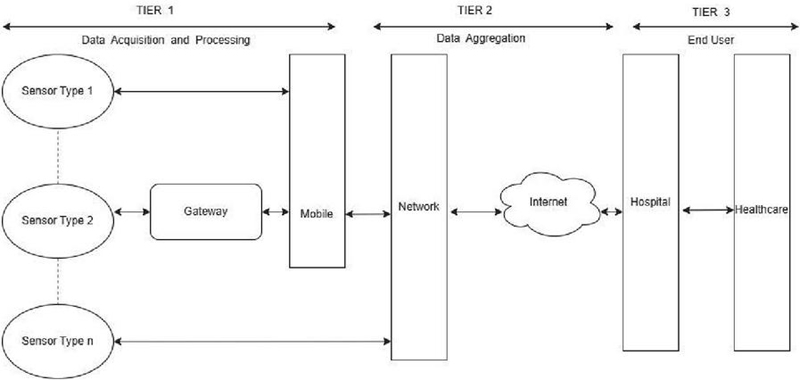
Figure 1 Architecture of RPM [3].
Some issues that impact QoS include security, energy loss in IoT devices, and communication delays. Therefore, it is expected that a “Remote patient monitoring system-RPMs” that uses energy-efficient IoT sensors will satisfy security requirements. So, the proposed “SS-ROW algorithm,” which combines the “squirrel and sparrow” characteristics with “Ciphertext Key 2 Policy (CK2P) encryption” on data, optimizes “network clustering” and “cluster head” selection based on trust, “inter and intra-cluster distance,” and energy level. Additionally, “CP-ABE (Ciphertext-Policy Attribute-Based Encryption) and KP-ABE (Key-Policy Attribute-Based Encryption)” provide a crucial trust mechanism [16].
The present approach uses active technology to connect sensors to the patient’s body without giving them any discomfort. An explanation of RPMS demonstrates how the design may change depending on how many levels are created. such as wireless connectivity, the type of sensor, and the Mobile Control Unit being used. as illustrated in Figure 2 [17].
Healthcare issues are growing commonplace in developing countries as the population grows and so does the demand for medical care. It may be possible to boost the reliability of complex instruments and reduce the amount of time needed for personalized training. In order to ensure the precision and safety of the vital’s real-time signal, this study supports “a real-time remote patient monitoring system-RPMS” built on the Internet of Things (IoT). The “Message Queuing Telemetry Transport (MQTT)” protocol is used to transmit the vital’s real-time signal from the predicted technique to the website. A “MQTT” broker that functions as both a receptor (website or mobile application) and a communication module. Vital indicators such as body temperature, heart rate, and blood pressure (BP) will be noted. Then, a variety of sensors are used to integrate these data. The Raspberry Pi microcontroller will use Wi-Fi 33 to transmit the assimilated data to the “(MQTT)” broker. These readings are then published to the web server or mobile application by the “MQTT” broker. Data from the heart patient is gathered using a sensor called a “AD8232.” Starting with the electrical activity of the heart muscle, it locates and intensifies the signal. An “Arduino ESP 32” with WiFi 33 serves as the main controller for the system. The primary controller will examine the data it has already gathered before sending real-time data to a “MQTT” broker via a Wi-Fi 33 module. The data is sent to the website using a “MQTT (Message Queuing Telemetry Transport)” broker that runs on a Raspberry Pi 3 [18].
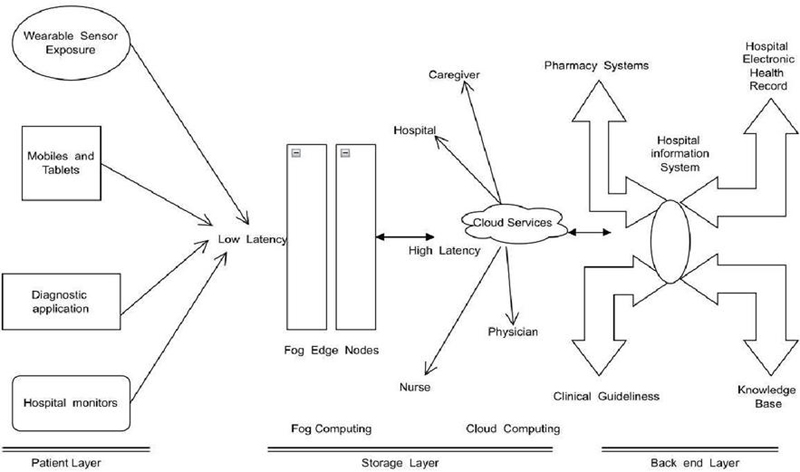
Figure 2 Remote patient monitoring system [17].
After performing a thorough various reviews, the identified gaps are mentioned as follows:
i. Security of Remote Health monitoring system is a major concern where relatively less work is done.
ii. Lack of error detection and prevention, only few studies available on Tele-medicine Integration.
iii. Energy efficiency of Remote patient Health monitoring are the major issues.
iv. Accuracy of sensors /devices is another concern.
v. There are only limited number of papers on the Predictions of diseases using AI/ML.
vi. Prediction of physical parameters of patient and prevention actions are less explored area.
vii. Most of the researchers generally focused on particular diseases like-diabetes, chronic fever, heart disease etc.
3 Analysis
In this section we do a comparative analysis of the existing models. Our focus is primarily on nature of attributes being monitored and the type of sensors used. We have also recorded the limitations of each such systems.
The findings are tabulated in Table 1.
| S.No | Document Title | Reference | Attribute Monitor | Sensor Used | Limitations |
| 1 | “An Intelligent Diabetic Patient Tracking System Based on Machine Learning for e-Health Applications” | [14] |
1. Diabetic Patient Tracking based on Machine Learning algorithm. |
1. Used various sensors to obtain body measurement like – Glucometer, Pulse Oximeter etc. 2. BP Sensor. |
1. They have not given enough consideration to accuracy and parameters during transmission. 2. Shortage of diagnosis method and Risk prediction needed lengthy training period. 3. Large number of sensors used may lead to increase in cost. 4. Prediction of diseases are less explored. |
| Remarks
1. The most important i.e. Normalization Approach is used to normalize pre-processed data. 2. LDA is used to extract features. 3. Data categorization (ASV-RF) with (PSO). |
|||||
| 2 | “Developing a Low-Cost IoT-Based Remote Cardiovascular Patient Monitoring System in Cameroon” | [19] |
1. Patient’s systolic and patient’s diastolic heart rates. 2. Monitor Cardiovascular disease. |
1. Wearable devices such as patches, watches which can measure BP, blood glucose concentration, body posture and body temperature. 2. Cardiac implantable devices such as pacemaker and ICDs. |
1. Energy efficiency of Remote Patient Health monitoring system are not addressed. 2. Security algorithm is not discussed. 3. Software components are not yet developed to accommodate a secure, Reliable and efficient wireless network. 4. Even though various sensors are used to monitor patient’s vitals. However, prediction cannot be determined. |
| 3 | “A remote healthcare monitoring framework for diabetes prediction using machine learning” | [1] |
1. 1. Remote monitoring (end-to-end) framework for risk prediction techniques for management. |
1. Pulse Oximeter 2. Glucometer 3. Smartwatch 4. Smartphone |
1. Accuracy upto 83.20% only. 2. Narrow scope of data set and small-scale testing. 3. Limited to diabetes only. 4. Dataset include sample of women only. |
| 4 | “Smart home health monitoring system for predicting type 2 diabetes and hypertension” | [2] |
1. Recorded patient’s BP and Analyse glucose reading at their Residence. |
1. BP and glucose detection machine. |
1. Accuracy not discussed. 2. Relation between hypertension and other disease such as diabetes has not been discussed. 3. Energy efficiency of Remote patient monitoring is not discussed. 4. Limited to diabetes only. |
| 5 | “Mobile Health in Remote Patient Monitoring for Chronic Diseases: Principles, Trends and Challenges” | [3] |
1. 1. AI in building remote patient monitoring systems. 2. Data mining techniques. 3. Clinical decision support system in many areas. 4. Electronic health record applications. 5. Cloud computing fields. 6. Internet of things (IoT). 7. Wireless body area network. |
1. Wearable sensors. |
1. Data security and privacy not discussed. 2. Energy efficient IoT devices not discussed. 3. Limited to chronic diseases. 4. Telemedicine integration issues are not addressed. |
| 6 |
1. “Development of a Remote Health Monitoring System to Prevent Frailty in Elderly Home-Care Patients with COPD” |
[4] |
1. Physical activities. 2. Patient behaviour modification. |
1. Pedometer |
1. Less number of participants. 2. Duration of process is quite large (4 month) 3. The accuracy of the system is not tested. 4. Physical Demand of the patient in the hospital is another concern |
| 7 | 1. “IoT COVID-19 Portable Health Monitoring System using Raspberry Pi, Node-Red and ThingSpeak” | [15] |
1. Pulse of the patient is being measured by ECG for the heart rate reading. 2. SPO2 is measured. 3. Temperature is measured. |
1. Raspberry Pi 2. LM35 temp sensor 3. AD 8232 ECG 4. MAX 30100 pulse oximeter sensor |
1. Number of attributes can be increased. 2. Security and accuracy algorithm not defined. 3. Costly. 4. Energy efficiency of Remote health monitoring are not addressed. |
| 8 |
1. “The internet of things healthcare monitoring system based on MQTT protocol” |
[18] |
1. Analysed patients vitals and reduce the latency while transmitting the various signals. 2. The MQTT based systems performance was assessed. |
1. Blood Pressure. 2. Blood Glucose. |
1. Not considering real time ECG signal. 2. More attribute can be measured. 3. Limited to diabetes only. 4. Reliability. |
4 Conclusion
In conclusion, reviews highlight the importance of developing secure and energy-efficient remote patient health monitoring systems. While several studies have contributed to various aspects of remote health monitoring, there is a need for further research to integrate these findings and address the knowledge gaps in the development of comprehensive and secure monitoring systems. Future research should focus on the assimilation of IoT, cloud computing and blockchain technologies to create scalable, flexible and energy-efficient systems. The major concern while designing a remote patient health monitoring system is Security and energy efficiency. The objective is to provide more Accuracy and to develop Energy efficient RPHMS and this can be done by using Fog computing. Various work on similar field have been already developed, still more work needs to be done in this field.
References
[1] Ramesh, J., Aburukba, R., Sagahyroon, A.: A remote healthcare monitoring framework for diabetes prediction using machine learning. Healthcare Technology Letters 8(3), 45–57 (2021).
[2] Chatrati, S.P., Hossain, G., Goyal, A., Bhan, A., Bhattacharya, S., Gaurav, D., Tiwari, S.M.: Smart home health monitoring system for predicting type 2 diabetes and hypertension. Journal of King Saud University-Computer and Information Sciences 34(3), 862–870 (2022).
[3] El-Rashidy, N., El-Sappagh, S., Islam, S.R., M. El-Bakry, H., Abdelrazek, S.: Mobile health in remote patient monitoring for chronic diseases: Principles, trends, and challenges. Diagnostics 11(4), 607 (2021).
[4] Ohashi, C., Akiguchi, S., Ohira, M.: Development of a remote health monitoring system to prevent frailty in elderly home-care patients with copd. Sensors 22(7), 2670 (2022).
[5] Mehmood, G., Khan, M.Z., Abbas, S., Faisal, M., Rahman, H.U.: An energy-efficient and cooperative fault-tolerant communication approach for wireless body area network. IEEE Access 8, 69134–69147 (2020).
[6] Shawqi Jaber, A., Kadhum Idrees, A.: Adaptive rate energy-saving data collecting technique for health monitoring in wireless body sensor networks. International Journal of Communication Systems 33(17), 4589 (2020).
[7] Subramani, J., Maria, A., Rajasekaran, A.S., Al-Turjman, F.: Lightweight privacy and confidentiality preserving anonymous authentication scheme for wbans. IEEE Transactions on Industrial Informatics 18(5), 3484–3491 (2021).
[8] Alzahrani, B.A., Irshad, A., Albeshri, A., Alsubhi, K., Shafiq, M.: An improved lightweight authentication protocol for wireless body area networks. IEEE Access 8, 190855–190872 (2020).
[9] Singla, R., Kaur, N., Koundal, D., Bharadwaj, A.: Challenges and developments in secure routing protocols for healthcare in wban: A comparative analysis. Wireless Personal Communications, 1–40 (2022).
[10] Matin Nazar, A., Idala Egbe, K.-J., Abdollahi, A., Hariri-Ardebili, M.A.: Tribo-electric nanogenerators for energy harvesting in ocean: A review on application and hybridization. Energies 14(18), 5600 (2021).
[11] Li, Q., Kumar, P., Alazab, M.: Iot-assisted physical education training network virtualization and resource management using a deep reinforcement learning system. Complex & Intelligent Systems, 1–14 (2022).
[12] Nair, V., Dalrymple, A.N., Yu, Z., Balakrishnan, G., Bettinger, C.J., Weber, D.J., Yang, K., Robinson, J.T.: Miniature battery-free bioelectronics. Science 382(6671), 4732 (2023).
[13] Yao, Y.-D., Li, X., Cui, Y.-P., Deng, L., Wang, C.: Game theory and coverage optimization based multihop routing protocol for network lifetime in wireless sensor networks. IEEE Sensors Journal 22(13), 13739–13752 (2022).
[14] Menon, S.P., Shukla, P.K., Sethi, P., Alasiry, A., Marzougui, M., Alouane, M.T.-H., Khan, A.A.: An intelligent diabetic patient tracking system based on machine learning for e-health applications. Sensors 23(6), 3004 (2023).
[15] Kamarozaman, N.B., Awang, A.H.: Iot covid-19 portable health monitoring system using raspberry pi, node-red and thingspeak. In: 2021 IEEE Symposium on Wireless Technology & Applications (ISWTA), pp. 107–112 (2021). IEEE.
[16] Kapoor, B., Nagpal, B., Alharbi, M.: Secured healthcare monitoring for remote patient using energy-efficient iot sensors. Computers and Electrical Engineering 106, 108585 (2023).
[17] Boikanyo, K., Zungeru, A.M., Sigweni, B., Yahya, A., Lebekwe, C.: Remote patient monitoring systems: Applications, architecture, and challenges. Scientific African 20, 01638 (2023).
[18] Alshammari, H.H.: The internet of things healthcare monitoring system based on mqtt protocol. Alexandria Engineering Journal 69, 275–287 (2023).
[19] Armand, T.P.T., Mozumder, M.A.I., Ali, S., Amaechi, A.O. and Kim, H.C.: Developing a Low-Cost IoT-Based Remote Cardiovascular Patient Monitoring System in Cameroon. In Healthcare (Vol. 11, No. 2, p. 199), 2023.
Footnotes
1Wireless Body Area Network.
Biographies

Unnati Sharma received the bachelor’s degree in Electronics and communication engineering from Sharda University in 2012, the master’s degree in Communication engineering from Galgotias University in 2014, and Pursuing philosophy of doctorate degree in Computer & Science Engineering from Sharda University. Her research areas include Control Systems, Internet of Things, and Principle of communication.

Sibaram Khara is an Electronics & Communication Engineer. He received Ph.D. in engineering from Jadavpur University, Kolkata. He did PG in Digital Systems from National Institute of Technology, Allahabad. He successfully completed the project for the defense services, to enhance the automation of Terminal Equipment of Message Switching network for efficient information management. Currently he is serving as Vice Chancellor in Sharda University. Previously, he has served as Pro Vice Chancellor in Galgotias University. Before joining Galgotias University he served as Division Chair for Communication Engineering Division and officiating Program Chair in the school of Electronics Engineering at VIT University, Vellore.

Nihar Ranjan Roy Heads the Department of Computer Science & Engineering at VIPS School of Engineering and Technology, Vivekanand Institute of Professional Studies-Technical Campus, Delhi, India. Dr. Roy has over 21 years of dedicated teaching experience. Dr. Roy holds a Doctorate and an M.Tech in Information Technology from Guru Gobind Singh Indraprastha University, Delhi, and a Bachelor of Engineering degree from Biju Patnaik University of Technology, Rourkela (formerly Utkal University, Orissa). His extensive research contributions focus on Artificial Intelligence, Computer Networks, Cyber Security and Forensics, and Machine Learning. He has authored and co-authored numerous research papers in esteemed journals and international conferences and is an active reviewer for SCI-indexed journals from IEEE, Wiley, Elsevier, and Springer. His research achievements include 4 published patents and 1 granted patent, alongside 4 edited books. Dr. Roy is currently supervising Ph.D. scholars in lightweight cryptography, Machine Learning, and IoT. Dr. Roy is a senior member of IEEE and a Lifetime member of the Cryptological Research Society of India.
Journal of Mobile Multimedia, Vol. 21_3&4, 619–632.
doi: 10.13052/jmm1550-4646.213416
© 2025 River Publishers