Realizing the Bharat 6G Vision: A Circular Sustainable Clean Energy Framework Supported by AI and Multi-Business Model Innovation
Rajesh Gade1,*, Shivaleela Arlimatti1, Suresh D. Mane2 and Peter Lindgren3
1Dept. of Computer Science & Engineering, Tatyasaheb Kore Institute of Engineering & Technology Warananagar, Kolhapur, Maharashtra, India
2Dept of Mechanical Engineering Dr. D. Y. Patil Pratisthan’s College of Engineering, Kolhapur, Maharashtra, India
3Copenhagen Business School Copenhagen, Denmark
E-mail: rajeshdgade@gmail.com; sarlimatti@gmail.com; mane.suresh@gmail.com; lindgren.peter@ctifglobalcapsule
*Corresponding Author
Received 08 January 2025; Accepted 01 May 2025
Abstract
The Bharat 6G Vision aspires to transform India into a digitally advanced, economically robust, and environmentally sustainable nation through the deployment of cutting-edge 6G technology. To achieve this, it is imperative to integrate clean energy, Artificial Intelligence (AI), and multi-business model innovations. The urgency for such integration stems from the need to address escalating energy demands, mitigate climate change, and enhance economic sustainability. The current energy framework faces challenges in efficiency, cost, and environmental impact, necessitating a comprehensive solution. Our proposed methodology involves developing AI-driven energy management systems that optimize energy consumption in real-time, integrating renewable energy sources into a smart grid infrastructure, and employing advanced energy storage solutions. We also advocate for the creation of circular sustainable multi-business model approach with Energy-as-a-Service (EaaS) and circular economy principles to reduce financial barriers and promote sustainability. Central to our approach are the establishment of Green Industry Zones (GIZ) and Green Residential Zones (GRZ), which serve as practical applications of these business model innovations. Our research direction includes scaling these initiatives to develop smart sustainable cities that encompass both residential and industrial sectors. Case studies highlight successful implementations in these smart cities, demonstrating enhanced clean energy efficiency and sustainability. By integrating AI, clean energy, and innovative business models, we contribute to the realization of the Bharat 6G Vision.
Keywords: Bharat 6G, clean energy, multi business model innovation, artificial intelligence.
1 Introduction
The rapid evolution of global telecommunications technology is poised to enter a transformative phase with the advent of sixth-generation (6G) networks. India’s energy sector, while undergoing significant transformation, continues to face challenges related to efficiency, sustainability, and security. Traditional energy management approaches are increasingly inadequate in the face of rising demand, environmental concerns, and the need for real-time responsiveness. The integration of AI in energy management systems offers a promising solution, enabling real-time optimization of energy consumption, enhanced integration of renewable energy sources, and predictive maintenance to reduce operational disruptions [1, 2]. The need for innovative business models and combination of business models – the multi business model approach [3] that reduce financial barriers to adopting advanced technologies has become more pressing. Multi-business model innovations, such as EaaS and circular economy principles, provide viable pathways for circular sustainable energy business models by spreading costs and promoting resource efficiency. These business models support the economic viability and scalability of clean energy technologies, making them accessible to a broader range of users, customer, networks, and Business Model Ecosystems [3, 4]. Sustainable means energy sources and technologies that meet present energy needs without compromising the ability of future generations to meet their needs. And Circular sustainable clean energy builds upon the principles of sustainable clean energy by integrating concepts from the circular economy [5]. It emphasizes the use of renewable resources, recycling, reuse, and efficient management of energy and materials throughout their lifecycle. This could result in waste from one BM could be a resource to another BM with an economic and social surplus to an entire chain of business models in a Business Model Ecosystem (BMES) or across vertical and horizontal BMES [6].
Even, Bharat 6G vision leverages advanced telecommunications infrastructure to integrate AI, innovative business models, and clean energy practices into a cohesive and scalable energy framework. Bharat 6G’s high-speed connectivity, low latency, and massive device connectivity capabilities are essential for real-time data collection, analysis, and management across distributed environments and business models [7]. However, the pursuit of the Bharat 6G vision presents a multifaceted challenge that requires a cohesive integration of advanced technologies and innovative business models to establish a circular sustainable clean energy framework. India’s growing energy demand, coupled with the imperative to reduce carbon emissions and enhance energy security, underscores the need for a transformative approach to energy business model leadership and management. Traditional energy systems and related business models are plagued by inefficiencies, high costs, volatile prices, and a heavy reliance on non-renewable sources, which are unsustainable and environmentally detrimental. The current energy infrastructure lacks the flexibility and intelligence to adapt to real-time demands and integrate renewable energy sources effectively. The financial barriers hinder the widespread adoption of advanced energy solutions, while existing business models do not adequately incentivize sustainability [8]. Further the existing clean energy technology do not secure measurement of the energy production if it is circular and sustainable on all 3 dimensions of the triple bottom line parameters [6].
To realize the Bharat 6G vision and establish a circular sustainable clean energy framework, a comprehensive methodology integrating artificial intelligence, clean energy technologies, and multi-business model innovations will be implemented. AI-driven systems will be developed to optimize real-time energy consumption, predict renewable energy generation, and manage storage solutions, thereby enhancing efficiency, sustainability and circularity. Clean energy technologies, such as solar and wind, will be integrated into the energy grid, supported by AI for optimal utilization. Innovative Circular Sustainable business models, including EaaS will be crafted to lower financial barriers and promote circular sustainable practices. Bharat 6G’s advanced connectivity will underpin all these efforts, ensuring seamless integration and real-time responsiveness.
2 Literature Survey
2.1 Bharat 6G Vision
The Bharat 6G Vision, developed by the Government of India, is a cornerstone of the “Atma Nirbhar Bharat” Movement, aiming to deliver affordable, sustainable, and ubiquitous connectivity. This vision seeks to bridge the urban-rural divide, thereby contributing significantly to the United Nations Sustainable Development Goals (SDGs) [9] and enhancing the quality of life for citizens both in India and globally. The vision document outlines a three-phase implementation strategy. The first phase focuses on basic research in key interdisciplinary areas to create new intellectual properties. The second phase aims at translating these research outcomes into potential commercial technologies. The third phase involves financial support to roll out commercially successful products. One of the core recommendations is to foster innovative solutions through startups and Centers of Excellence, leveraging 6G technologies to address critical sectors such as water, renewable energy, healthcare, smart power grids, smart cities, and digital twins. Industrial parks in India are expected to benefit from the Bharat 6G Vision by contributing to clean energy initiatives through energy-efficient networks, smart grids, AI-driven optimization, collaborations with green startups, and multi-business model innovations. These efforts aim to replicate successful frameworks globally, fostering a cleaner and greener future energy production that at the same time are economical and socially sustainable [10].
The integration of renewable energy sources (RES) into power systems is crucial as RES grows due to decarbonization and sustainability policies. Reliable communication networks are essential for connecting RES components and ensuring quality power delivery. The need for fast and efficient communication networks to support RES is emphasized, as explored [11]. Key drivers for 6G include connectivity for all things, time-sensitive applications, and the creation of a high-fidelity holographic society. These advancements promise to revolutionize communication networks and find applications in wireless and ultra-massive machine-type communication. Emerging technologies like the Internet of Everything (IoE) and B5G/6G connectivity are expected to transform manufacturing, creating highly connected, intelligent, and automated factories capable of predictive maintenance, optimized production, and remote monitoring [12].
2.2 Green Lab
The concept of Green Symbiosis Business Value Networks (GSBVN) – like Green Lab in Skive Denmark suggests that integrating future wireless technologies, such as 5G and beyond, can enhance economic, environmental, and social impacts by enabling real-time monitoring and detailed calculations to support circular sustainable business models [13]. Researchers and practitioners have explored several key areas for measuring these models: Green Business Model Design involves creating and consuming business models that align with environmental goals; Business Model Reconfiguration focuses on transforming existing business models into green ones; and Green Business Model Development emphasizes strategic and tactical parameters specific to green business models. However, challenges persist in defining green parameters and conducting real-time measurements alongside traditional business metrics [14] and increasing important social metrics [6]. The study in [15] highlights the significant impact of green HRM practices and green innovation on sustainability performance, emphasizing the importance of environmental management practices in achieving greater sustainability.
Industrial eco-parks exemplify the circular economy, promoting collaborations between businesses across BMES and local communities to generate environmental, economic and social, benefits. These parks focus on energy, water, and materials/waste management, often adopting renewable energy sources and efficient water practices to support industrial symbiosis and recover waste and material flows [16].
2.3 Multi Business Model Innovation Approach
The study on energy synergies within eco-industrial parks aims to facilitate the uptake of renewable energy sources at the industrial level, highlighting the potential for urban-industrial energy symbiosis where excess energy from industrial plants benefits nearby towns or other Businesses BM´s in the Symbiosis network [17]. The Multi-Business Model Innovation Approach posits that businesses operate with multiple business models, encompassing both current (“as-is”) and future (“to-be”) models. This comprehensive approach considers all levels and dimensions of a business, including value proposition, user/customer segments, value chain functions, competencies, network relations, and value formulas, promoting sustainable and inclusive growth [3].
The literature focused on the need for innovative frameworks and technologies to achieve SDGs. The Bharat 6G Vision integrates interdisciplinary research, commercial technology translation, and financial support to foster connectivity and sustainability. The Green Lab concept and the Multi-Business Model Innovation Approach highlight the importance of collaborative networks, advanced technologies, and comprehensive business model perspectives in driving green and inclusive growth to achieve Circular and sustainable business. Together, these initiatives provide a holistic approach to realizing the Bharat 6G Vision and promoting sustainable innovation across sectors.
3 Methodology
The integration of AI, multi-business model innovation, and the clean energy creates a synergistic effect where each component enhances the effectiveness of the others, collectively driving the realization of the Bharat 6G vision. AI-driven energy management systems play a crucial role by optimizing the use of energy solutions developed through innovative business models, ensuring maximum efficiency and minimal waste.
The Figure 1 explains sequence of steps in the process such as developing AI-driven energy management systems, focusing on creating algorithms for real-time monitoring and optimization, implementing predictive analytics for renewable energy generation, and developing dynamic adjustment systems based on real-time data. Then clean energy technologies are integrated by incorporating solar, wind, and other renewables into a smart grid infrastructure, along with advanced energy storage solutions to ensure a stable supply. Multi-business model innovations are then developed, EaaS models to reduce upfront costs, circular economy principles to promote sustainability, and financial incentives to encourage adoption. Green Labs are established in various settings to serve as hubs for testing and implementing sustainable practices, aiming for green certifications, and providing comprehensive training. Pilot testing follows, with diverse sites selected for data collection and analysis, refining solutions based on the results. Successful initiatives are scaled up through roadmap development, partnerships, and advocacy to ensure widespread adoption. Continuous monitoring and improvement are maintained through real-time tracking of key performance indicators, data analytics, and regular reviews. Finally, knowledge dissemination and advocacy efforts involve publishing findings, presenting at conferences, and developing policy briefs to promote sustainable energy practices and influence industry standards.
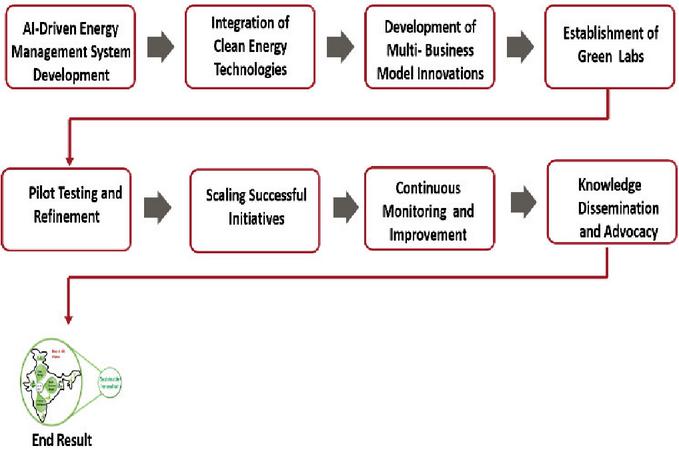
Figure 1 The process of sustainable clean energy framework under the Bharat 6G vision.
Bharat 6G’s advanced telecommunications infrastructure provides the necessary connectivity for each step, ensuring seamless integration and real-time responsiveness. The high-speed, low-latency network facilitates effective AI-driven energy management, supports the dynamic operation of smart grids, enables efficient data collection and analysis during pilot testing, and ensures continuous monitoring and improvement. Furthermore, Bharat 6G enhances knowledge dissemination and advocacy efforts through robust communication platforms, promoting the adoption of sustainable energy solutions and influencing policy development.
The proposed methodology aims to create an efficient, resilient, and sustainable energy framework, addressing India’s energy challenges and advancing towards a technologically advanced and environmentally responsible future.
The proposed framework shown in the Figure 2 the integration of multiple components within the Bharat 6G Vision to achieve sustainable innovation. Central to this vision are clean energy, multi-business models, and AI, all interconnected with a focus on GIZ and GRZ. Clean energy emphasizes the use of renewable sources such as solar and wind power, integrating these into various sectors to ensure a stable and sustainable energy supply. AI is utilized for real-time energy management, predictive analytics, and dynamic adjustment of energy usage, optimizing consumption and distribution. Multi-business models, including EaaS and circular economy principles can make advanced energy solutions accessible without large upfront investments and promote recycling and sustainability. Financial incentives and structures are designed to encourage the adoption of these sustainable practices. GIZ and GRZ serve as practical applications, demonstrating the feasibility and benefits of these integrated solutions in industrial and residential settings. The Bharat 6G Vision provides the high-speed, low-latency connectivity essential for the seamless integration of these components. The synergy between AI, clean energy, and innovative business models drives sustainable business model innovation, ensuring environmentally responsible and operationally efficient solutions.
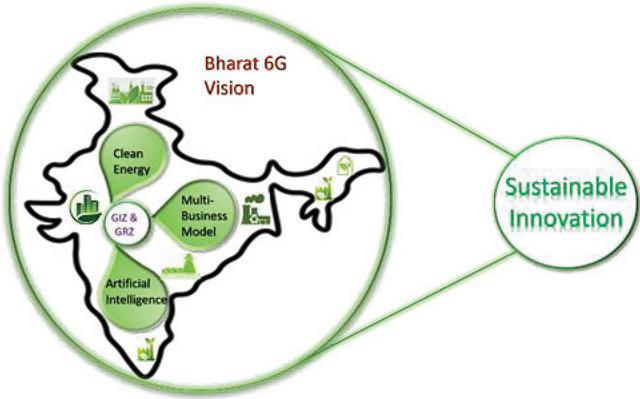
Figure 2 Proposed sustainable clean energy framework under the Bharat 6G vision.
4 Smart Sustainable City with GIZ and GRZ: A Case Study
Smart City Initiatives represent comprehensive urban development projects that integrate advanced technologies, including AI and clean energy solutions, to enhance the efficiency of city services, improve quality of life for residents, and promote sustainability [18, 19]. These initiatives leverage data analytics, IoT, and connectivity to optimize various aspects of urban living, such as transportation, energy usage, waste management, public safety, and healthcare.
In alignment with the Bharat 6G Vision, the development of a Smart Sustainable City showcases the integration of AI-driven energy management, clean energy technologies, and multi-business model innovations within GIZ and GRZ. In the GIZ, AI algorithms and machine learning models optimize energy consumption in real-time, leveraging predictive analytics for energy forecasting and management. Renewable energy sources such as solar and wind are integrated into the industrial infrastructure, supported by a smart grid for efficient energy distribution and advanced storage solutions like large-scale batteries to ensure stability. This has led to significant reductions in energy wastage, operational costs, and carbon footprints, benefiting businesses economically and environmentally. Similarly, the GRZ initiative implements smart home systems for real-time energy monitoring and adjustment, integrates solar panels and community wind turbines, and promotes sustainable practices like recycling and the use of energy-efficient appliances. Residents experience lower energy bills and enhanced living standards, while the community contributes to substantial carbon emission reductions. Extensive pilot testing in both zones provided data for refining AI algorithms and optimizing energy solutions, demonstrating significant improvements in energy efficiency and sustainability. The success of these pilots facilitated the development of a roadmap for scaling these initiatives across wider regions and sectors, driven by collaborative efforts from government agencies, private businesses, and research institutions. This case study illustrates the effectiveness of combining AI, clean energy, and innovative business models to realize the Bharat 6G Vision, providing a replicable blueprint for sustainable urban development and underscoring the importance of stakeholder collaboration, continuous innovation, and supportive policies.
5 Research Directions
The research aims to provide a holistic approach to achieving the Bharat 6G Vision by integrating cutting-edge technologies, promoting sustainable energy practices, and fostering innovative business models. This comprehensive scope will address the specific needs of India and contribute to global efforts in sustainable development and technological advancement.
Bharat 6G Vision: The scope includes the development and deployment of next-generation 6G technologies that offer ultra-high-speed, reliable, and ubiquitous connectivity. Research will delve into advanced communication techniques such as terahertz waves, ultra-reliable low-latency communication (URLLC), and massive machine-type communication (mMTC). Additionally, the study will address the digital divide by ensuring that rural and underserved areas benefit from these technological advancements. This involves creating affordable and scalable infrastructure, exploring interdisciplinary research to generate new intellectual properties (IPs), and transforming these IPs into commercially viable solutions. The research will also investigate the role of 6G in enhancing digital services in key sectors such as healthcare, education, agriculture, and smart cities.
Clean Energy: The research scope in clean energy focuses on integrating RES like solar, wind, and hydroelectric power into the national grid, facilitated by 6G-enabled smart grids and AI-driven energy management systems. This includes developing predictive analytics for optimizing energy generation and consumption, real-time monitoring systems using IoT devices, and advanced energy storage solutions. The research will explore the establishment of GIZ and GRZ, where sustainable energy practices are implemented and tested. Collaborations with green startups will be a key area of focus, promoting innovation in clean energy technologies and applications.
Multi-Business Model Innovation: The scope includes studying how businesses can innovate and operate multiple business models simultaneously to achieve sustainability goals. This involves analysing current (as-is) and future (to-be) business models across various dimensions such as value propositions, customer segments, value chain functions, and network relationships. Research will focus on creating frameworks for businesses to transition smoothly between models, incorporating green business practices and leveraging AI for operational efficiency. The scope also extends to developing metrics for evaluating the economic, environmental, and social impacts of these multitude of business models. Additionally, the research will explore international cooperation for replicating successful business frameworks, fostering global sustainability efforts.
6 Conclusion
The work offers a comprehensive approach to achieve the ambitious goals set forth by the Bharat 6G Vision under the “Atma Nirbhar Bharat” Movement. The integration of cutting-edge 6G technologies, sustainable clean energy solutions, and innovative multi-business models forms the crux of this visionary framework. Establishing GIZ and GRZ as innovation hubs for piloting these sustainable technologies will drive significant environmental benefits and operational efficiencies. The multi-business model innovation approach emphasizes the need for businesses to adopt and transition between multiple business models, focusing on sustainability and operational excellence. By analysing current and future business models, the research provides a framework for businesses to innovate and incorporate green practices, thereby enhancing their economic, environmental, and social impacts. The research directions outlined offer a roadmap for further exploration and development, ensuring continuous improvement and adaptation to emerging technologies and evolving best practices. The paper provides a holistic strategy for realizing the Bharat 6G Vision, presenting a synergistic blend of advanced communication technologies, sustainable energy practices, and innovative business models. This integrated approach addresses the specific needs of India but also contributes significantly to global efforts in achieving sustainable development and technological advancement. The envisioned smart sustainable city case study exemplifies the practical application of these concepts, highlighting the potential for creating resilient, efficient, and environmentally responsible urban ecosystems.
References
[1] Kumar, Rohit, Saurav Kumar Gupta, Hwang-Cheng Wang, C. Shyamala Kumari, and Sai Srinivas Vara Prasad Korlam. “From Efficiency to sustainability: Exploring the potential of 6G for a greener future.” Sustainability 15, no. 23 (2023): 16387.
[2] Chataut, Robin, Mary Nankya, and Robert Akl. “6G networks and the AI revolution—Exploring technologies, applications, and emerging challenges.” Sensors 24, no. 6 (2024): 1888.
[3] Lindgren, Peter. The Multi Business Model Innovation Approach: Part 1. Taylor & Francis, 2018.
[4] Bocken, Nancy MP, and Samuel W. Short. “Transforming business models: towards a sufficiency-based circular economy.” In Handbook of the circular economy, pp. 250-265. Edward Elgar Publishing, 2020.
[5] MacArthur, Ellen. “Towards the circular economy.” Journal of Industrial Ecology 2, no. 1 (2013): 23–44.
[6] Valter, Per, Peter Lindgren, and Ramjee Prasad. “The consequences of artificial intelligence and deep learning in a world of persuasive business models.” IEEE Aerospace and Electronic Systems Magazine 33, no. 5–6 (2018): 80–88.
[7] https://dot.gov.in/circulars/bharat-6g-vision-statement.
[8] Aditi. “India’s Energy Security and Renewable Energy Sector Growth: How far has India reached till now?” Energy Insights 2 (2024): 1–5.
[9] https://www.undp.org/sustainable-development-goals.
[10] https://iasscore.in/free-downloads/gist-of-india-year-book-2023.
[11] Yap, Kah Yung, Hon Huin Chin, and Jiøí Jaromír Klemeš. “Future outlook on 6G technology for renewable energy sources (RES).” Renewable and Sustainable Energy Reviews 167 (2022): 112722.
[12] Hakeem, Shimaa A. Abdel, Hanan H. Hussein, and HyungWon Kim. “Vision and research directions of 6G technologies and applications.” Journal of King Saud University-Computer and Information Sciences 34, no. 6 (2022): 2419–2442.
[13] Lindgren, Peter, and Emma Ek. “Green Business Model Innovation in Symbiosis Business Value Networks: Bridging Green Business Model Innovation to Different Green Symbiosis Business Value Networks with Future Wireless Technologies.” Journal of Mobile Multimedia (2023): 147–164.
[14] Lindgren, Peter, Niklas Stoyan Hornbæk Knoth, Sukanthan Sureshkumar, Mathilde Fogh Friedrich, and Rita Adomaityte. “Green Multi Business Models” How to Measure Green Business Models and Green Business Model Innovation?.” Wireless Personal Communications 121 (2021): 1303–1323.
[15] Awwad Al-Shammari, Awwad Saad, Shaher Alshammrei, Nishad Nawaz, and Muhammad Tayyab. “Green human resource management and sustainable performance with the mediating role of green innovation: a perspective of new technological era.” Frontiers in Environmental Science 10 (2022): 901235.
[16] Aggeri, Franck. “Industrial eco-parks as drivers of the circular economy.” Field Actions Science Reports. The journal of field actions Special Issue 23 (2021): 60–61.
[17] Butturi, M. A., F. Lolli, M. A. Sellitto, E. Balugani, R. Gamberini, and B. Rimini. “Renewable energy in eco-industrial parks and urban-industrial symbiosis: A literature review and a conceptual synthesis.” Applied Energy 255 (2019): 113825.
[18] Bouzguenda, Islam, ChahamAlalouch, and Nadia Fava. “Towards smart sustainable cities: A review of the role digital citizen participation could play in advancing social sustainability.” Sustainable cities and society 50 (2019): 101627.
[19] Bibri, Simon Elias, and John Krogstie. “Smart sustainable cities of the future: An extensive interdisciplinary literature review.” Sustainable cities and society 31 (2017): 183–212.
Biographies

Rajesh Gade holds a Master of Engineering in Computer Science and Engineering and a Bachelor of Engineering in Information Technology. With extensive experience in the technology and business sectors, Rajesh has worked with leading companies such as Infosys, Wipro, and Juniper Networks. A practitioner of Multi-Business Model Innovation and the Business Model Canvas, he has been instrumental in helping organizations develop innovative business strategies. Rajesh served as the Chief Operating Officer (COO) for KITE – KIT’s Incubation for Technology Entrepreneurship, where he played a key role in fostering technological innovation and entrepreneurship. In addition to his work in technology and academia, Rajesh has hands-on experience in cashew manufacturing and jaggery trading and exports, further expanding his business expertise across diverse sectors. Rajesh was also a Task Manager for the European Union’s ERASMUS+ project CENTRAL, where he contributed to the development and management of the project across several countries, including Denmark, Thailand, Malaysia, and other parts of Europe. This international exposure allowed him to work on significant cross-border initiatives, fostering collaboration between academic and industry stakeholders globally. Currently, Rajesh serves as an Assistant Professor and Central Learning Management Head at Warana University, where he is focused on advancing education and learning management. He is also the Founder and Director of Crystal Clear Imports and Exports and Founder Director of INNOeVERSITY, focusing on global business development and innovation. Rajesh is passionate about mentoring aspiring entrepreneurs and professionals, helping them navigate the complexities of business development, international trade, and global collaborative projects.
Shivaleela Arlimatti is accomplished individual in the field of Computer Science and Engineering. She completed her PhD at the University Utara Malaysia, Malaysia, and holds a Master of Technology degree from the University of Mysore, Mysore. Currently, she serves as a Professor and the Head of the Department of Computer Science and Engineering at Tatyasaheb Kore Institute of Engineering & Technology, Warana University Warananagar, Kolhapur, Maharashtra, India. With a remarkable teaching career spanning 20 years, Dr. Arlimatti has made significant contributions to the academic community. Her expertise and dedication are evident in her extensive research work. She has published 25+ research papers in both national and international journals and conferences, showcasing her commitment to advancing knowledge in her field. She has contributed to the academic literature through book chapters. She has two patents and one copyright published on her name.
Dr. Arlimatti’s professional affiliations include being a life member of the Indian Society for Technical Education (ISTE) and the Indian chapter of the Internet Society (ISOC). She is also a member of the Malaysian chapter of ISOC, further highlighting her international connections and collaborations. Through her research, teaching, and active involvement in professional organizations, Dr. Shivaleela Arlimatti continues to make valuable contributions to the field of Computer Science and Engineering, inspiring and guiding future generations of students and researchers.

Suresh D. Mane has an extensive professional background, having served the South Western Railways for a period of twenty years. However, in 2012, he made the decision to transition from his position as a Gazetted Officer at Diesel Loco Shed, KJM, Bangalore to pursue a career in academia. Since 2015, Dr. Mane has been working as a Principal, initially at a VTU affiliated Institution and currently at Dr. D. Y. Patil Prathisthan’s College of Engineering Salokhe Nagar, Kolhapur, Maharashtra since January 2022.
Throughout his career, Dr. Mane has conducted research in various fields, including Biofuels, IC engines, Solar PV, and Accreditation systems. His contributions to these areas have resulted in the publication of numerous articles in various esteemed International Journals. He has been invited to deliver talks at AICTE STTPs, ATAL FDPs, and more than 26 institutions across Karnataka, Maharashtra, and Goa. Dr. Mane holds an international Certification in Management and Leadership from the Chartered Management Institute in London, UK. He is a life member of several professional organizations, including ISTE, ISHMT (IIT M), CEGR, SESI, IARP, and Fellow Institution of Engineers. Dr. Mane has demonstrated his expertise in guiding research scholars, having successfully supervised three Ph.D. scholars in 2023 and he has supervised 18 undergraduate projects, with six of them being sponsored by the Karnataka State Council for Science and Technology (KSCST).

Peter Lindgren is Vice President of CTIF Global Capsule (CGC) and is External Lecturer at Department of International Economics, Government and Business (EGB) Copenhagen Business School. Peter Lindgren held a full Professorship until 1st December 2023 in Multi business model and Technology innovation at Aarhus University, Denmark – Dept. of Business Development and Technology (BTECH) and i. He was Director of CTIF Global Capsule/MBIT Research Centre at Aarhus University – BTECH and member of Research Committee at Aarhus University – BSS. He has researched and worked with network based high-speed innovation since 2000. He has been head of Studies for Master in Engineering – BTECH at Aarhus University from 2014–2016 and member of the management group at Aarhus University BTECH 2014–2018. He has been researcher at Politecnico di Milano in Italy (2002/03), Stanford University, USA (2010/11), University Tor Vergata, Italy (2016/2017) and has from 2007–2011 been the founder and Centre Manager of International Centre for Innovation at Aalborg University (AAU), founder of the MBIT research group and lab, and is cofounder of CTIF Global Capsule www.ctifglobalcapsule.org. He has worked as researcher in many different multi business model and technology innovation projects and knowledge networks among others, E100 – http://www.entovation.com/kleadmap/, Stanford University project Peace Innovation Lab, The Nordic Women in business project, The Centre for TeleInFrastruktur (CTIF), FP7 project about ”multi business model innovation in the clouds” – www.Neffics.eu, EU Kask project – www.Biogas2020.se, Central Project, www.Motor5G.eu, www.Greenbizz.eu, www.einst4ine.eu.
He is cofounder of six startup businesses amongst others – www.ctifglobalcapsule.org, www.mountmedia.dk, www.thebeebusiness.com, the www.thedigibusiness.com and www.vdmbee.com He is author of several articles and books about business model innovation in networks and Global Business Models – https://vbn.aau.dk/da/publications/ict-a-key-enabler-in-innovating-new-global-business-models. He has an entrepreneurial and interdisciplinary approach to research. His research interests are multi business model and technology innovation in interdisciplinary networks, multi business model typologies, sensing-, persuasive- and virtual- business models. He has been serving as guest editor and reviewer for many highly respected journals and conferences
Journal of Mobile Multimedia, Vol. 21_3&4, 661–678.
doi: 10.13052/jmm1550-4646.213418
© 2025 River Publishers