Electromagnetic Compatibility in Wearable Devices: A Fuzzy Logic Approach
Itu Snigdh*, Nisha Gupta and Ashish Raj
Birla Institute of Technology, Mesra, Ranchi, India
E-mail: itusnigdh@bitmesra.ac.in; ngupta@bitmesra.ac.in; raj.ashish.2890@gmail.com
*Corresponding Author
Received 08 January 2025; Accepted 01 May 2025
Abstract
Wearable devices, integral to IoT Applications, require stringent performance and reliability constraints. Due to their heterogeneous nature and ideal placement strategies, they may be susceptible to unattended Electromagnetic Interference (EMI). EMI in wearables ideally addresses strategies considering the environment, materials, design, and regulatory compliance. However, most wearables may be used collectively and oriented along paths that may cause disruptions and imprecision in expected behaviours. Our article presents a fuzzy inference system (FIS) that models discrepancies like non-ideal placement positions and movement of devices. The model presents the impact of parameters like frequency, power level, proximity, and size on predicting variation in electromagnetic Interference.
Keywords: Fuzzy Logic, electromagnetic interference, compatibility (EMC), wearables.
1 Introduction
Wearable devices categorically belong to IoT applications that focus on health tracking and fitness monitoring and require providing quick access to notifications or apps. These electronic gadgets can be worn on the body and are primarily hands-free and portable. Having a significant role in the Internet of Things (IoT) ecosystem, these gadgets enhance connectivity, data collection, and real-time analytics. Examples include smartwatches and fitness bands to track vital health metrics (e.g., heart rate, sleep patterns, physical activity, and chronic disease management like diabetes and heart disease. The objective is to alert users to potential health issues, facilitate proactive management and intervention, and provide users and healthcare providers with valuable health data. In industrial and corporate contexts, wearables monitor employee health and safety by being integrated into clothing and accessories. These devices offer functionalities like activity tracking, temperature regulation, and interactive features while ensuring prevention and alert systems in cases of exposure to harmful conditions. Other wearables applications include location tracking, emergency alerts, and behavioural studies. Monitoring performance and reliability have become critical since such devices are concerned with health and fitness [1–4].
Ideally, wearables can integrate seamlessly with other IoT devices, such as smart home systems, providing users with a connected and automated environment. For example, smartwatches enable communication through notifications, messaging, and calls, enhancing user connectivity without needing a smartphone. However, the increase in the number of devices and the device-per-user ratio shifts the focus on the impact of electromagnetic Interference and coupling caused by such devices. Electromagnetic Interference (EMI) can significantly impact the performance and reliability of wearable devices by causing signal disruptions, sensor accuracy, reduced battery life, data corruption, or loss. Standard methods of mitigating EMI in wearables include shielding, grounding, filtering, and effective, optimized design. The gadgets may be EMI compliant as standalone devices but may falter when used collectively on a body.
As we are aware, the minimum separation distance between wearable devices depends on the communication technology adopted, like Bluetooth, Wi-Fi, etc., as well as the transmission power and frequency bands; the article focuses on studying the impact of variable positioning of such heterogeneous devices on the obtained electromagnetic Interference.
The contribution of the article is to present an inference system that suggests the expected Interference for different positions and orientations of on-body sensors in an indoor environment with multiple other communicating devices.
2 Related Work
In the context of literary works, the effects of EM waves have been investigated on wearable antennae near the human body [6] considering tissue properties, air gap, bending, body movement, and battery radiation [7]. Extensive studies on proximity effects focus on interference and coupling sources, specifically on miniaturized wearables, which are found in related literature [8–10]. Also, interference factors on human body systems (HBC) present an analysis of the effects of frequency, power, modulation, symbol rate, and distance between source and receivers [11]. Further, investigations on wireless On-body propagation characteristics of a smartwatch have depicted S11 parameters, radiation paths, and path loss [12]. Relevant articles, however, focus on something other than the relative positioning of the wearable sensors that may be heterogeneous, with different ideal positions, communication technology, and body movements. Most literary works focus on the experimental evaluation of static sensor positions using simulation software. The complexity and computational cost involved in the full-wave EM simulation motivates us to use an FIS to determine the impacts of EMI. Moreover, FIS is known to perform well under high variability and uncertainty scenarios.
Among the various EMI factors that impact wearable devices, the proposed work focuses on the impact of position, orientation, and how the wearable is worn (e.g., wrist, chest, head). We also analyse user movements and activities to see whether they impact the device’s interaction with surrounding electromagnetic fields, affecting performance. Figure 1 presents literary works studied as factors that impact wearable devices due to EMI [11, 13–16].
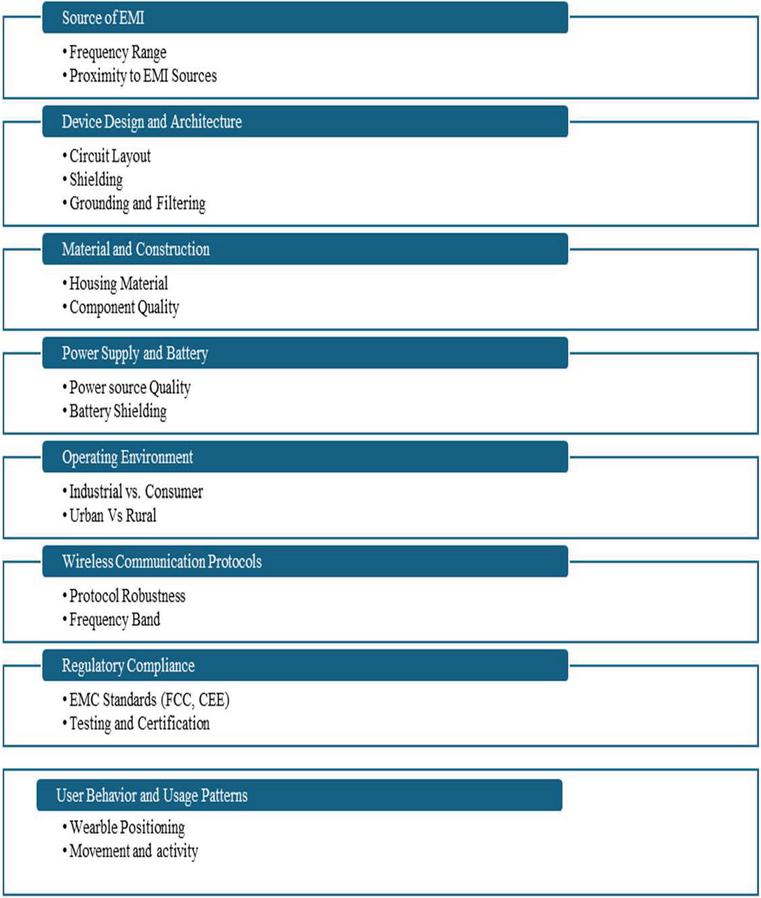
Figure 1 Existing research on EMI for wearable devices.
3 Methodology
EMI/EMC depends on factors such as design, which includes circuit layout and design, shielding, and signal integrity. The electrical factors that impact this are signal frequency and power levels. Usually, higher frequency and power levels result in higher levels of EMI. Impedance matching grounding and bonding are also used to reduce the potential for emission and improve EMC. Other factors, such as the ambient electromagnetic environment, affect both emission and susceptibility. In context to wearable devices, these factors can be modelled as fuzzy rules to their underlying imprecision caused due to movement, proximity, type and functionality of the applications. The frequency range becomes uncertain due to factors like modulation techniques, harmonics, and frequency drift. Similarly, the power levels may vary due to operating conditions, aging of the components, power management systems like temperature changes, and power supply voltage. Therefore, the need arises to account for these imperfections by incorporating margin into the design and using components with higher tolerance to EMI. Placement among multiple devices can significantly affect EMI/EMC performance. The reason primarily is due to various communication protocols with close transceivers, the shielding effect of the human body at the sides, and vulnerable areas with less natural shielding. Clothing layers and materials may also attenuate EM waves.
3.1 Fuzzy Inference System
We consider a fuzzy inference system to predict the causes of varying electromagnetic Interference observed in contrast to the set rules and attribute it to the Interference caused by location placement and orientation of wearable devices that are not fixed. Typical wireless body area networks encounter multiple sensors that collaborate to monitor the human body. Restricting only SaO2, Pulse, and Thoracic sensors, the article aims to observe variations in received data due to interference among them under the movement of body parts housing the sensors. Further, owing to the large number of parameters affecting EMI, we restrict our analysis by considering the following assumptions:
• Shielding and grounding are adequate for individual devices.
• Devices are placed on the body without direct body contact.
• The environment considered is indoor (controlled environment with predictable conditions).
3.2 Experimental Set Up
An equivalent IoT scenario was configured in Netsim, which comprised 11 sensors [17]. However, applications from only three sensors were considered, as most wearable devices integrate multiple functions on a single wearable. The applications periodically generated packets and forwarded them to the server via a 6LowPAN gateway. The application packet inter-arrival time was set to 4 msecs. Figure 2 depicts the data collected from multiple sensors deployed on the human body. For analysis, we consider SaO2, Pulse and Thoracic sensors which are placed at different positions and the impact of varying signal frequency, power levels and distance are measured. Multiple experiments were carried out by placing the sensors in close proximity. With the help of Net Sim simulator, we collected data related to SNR, packet losses, increased latency and observed for discrepancies in the collected data. On the basis of data patterns observed, we propose a fuzzy inference model to predict EMI.
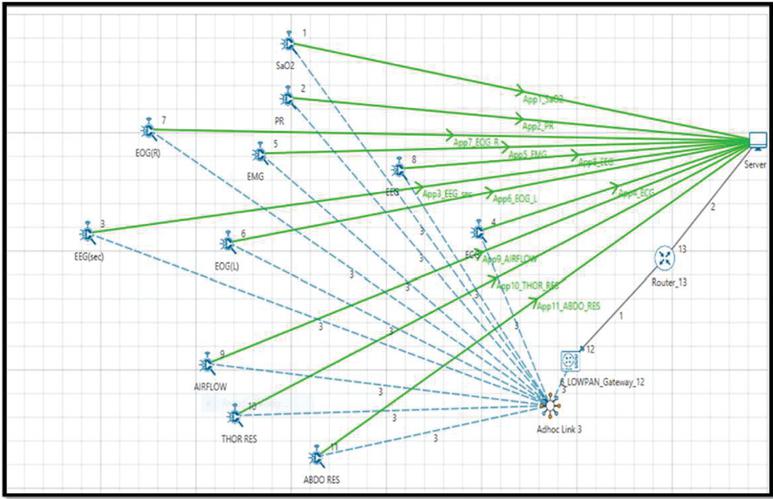
Figure 2 Simulation of Multiple sensors on the human body on the basis of real-world dataset.
| Parameter | Membership | Value |
| Signal Frequency | Low | 0–1 GHz |
| Medium | 1–5 GHz | |
| High | 5 Ghz and above | |
| Power level | Low | 0–10 dBm |
| Medium | 10–20 dBm | |
| High | 20 dBm and more | |
| Proximity and coupling | Close | less than 10cm |
| Near | 10–50 cm | |
| Far | more than 50 cm | |
| Size and Compactness | Compact | A normalized scale of 0–1. |
| moderate spread | ||
| large spread |
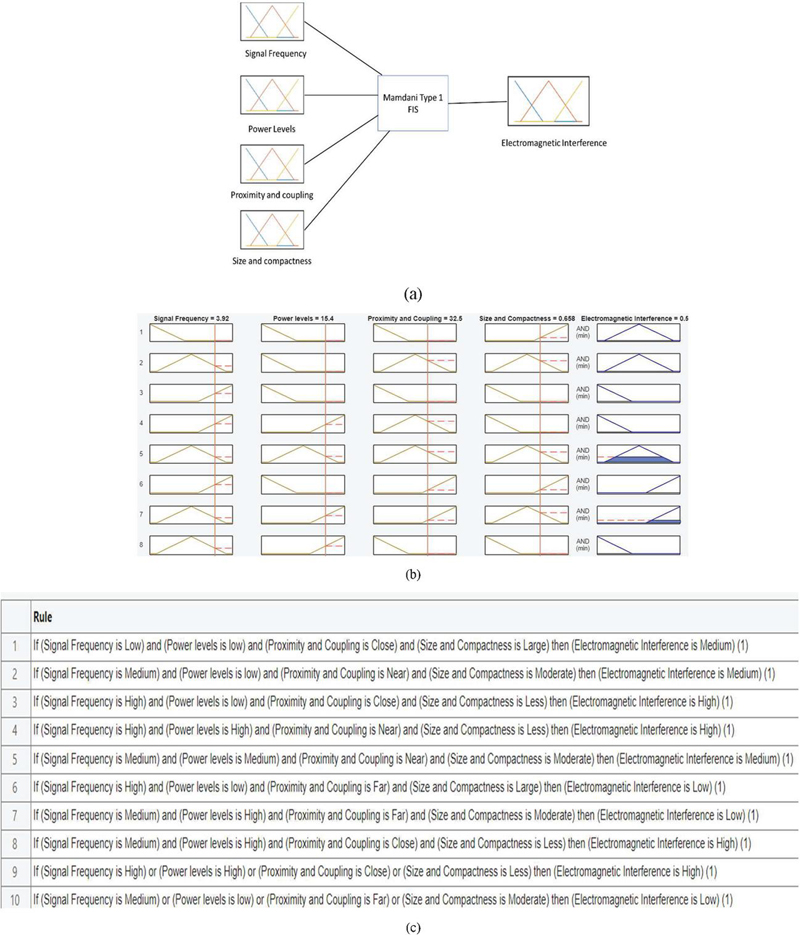
Figure 3 FIS (a) Representation (b) Rule Map (c) Sample rules.
4 Results and Analysis
Designing wearables to minimize the impact of electromagnetic Interference (EMI) involves careful consideration of their positioning on the body, the frequency of operation, and the power levels they use. Even though most devices are tested and certified individually, they are not tested in a combined environment. Therefore, the FIS model considered four antecedents: signal frequency, power level, size and compactness, proximity and coupling for indoor environments. We restrict our discussion to only indoor environments. The model predicts expected variation in data values when simulated caused by Interference. The details of the membership functions are presented in Table 1. We adopt the Mamdani model for our analysis.
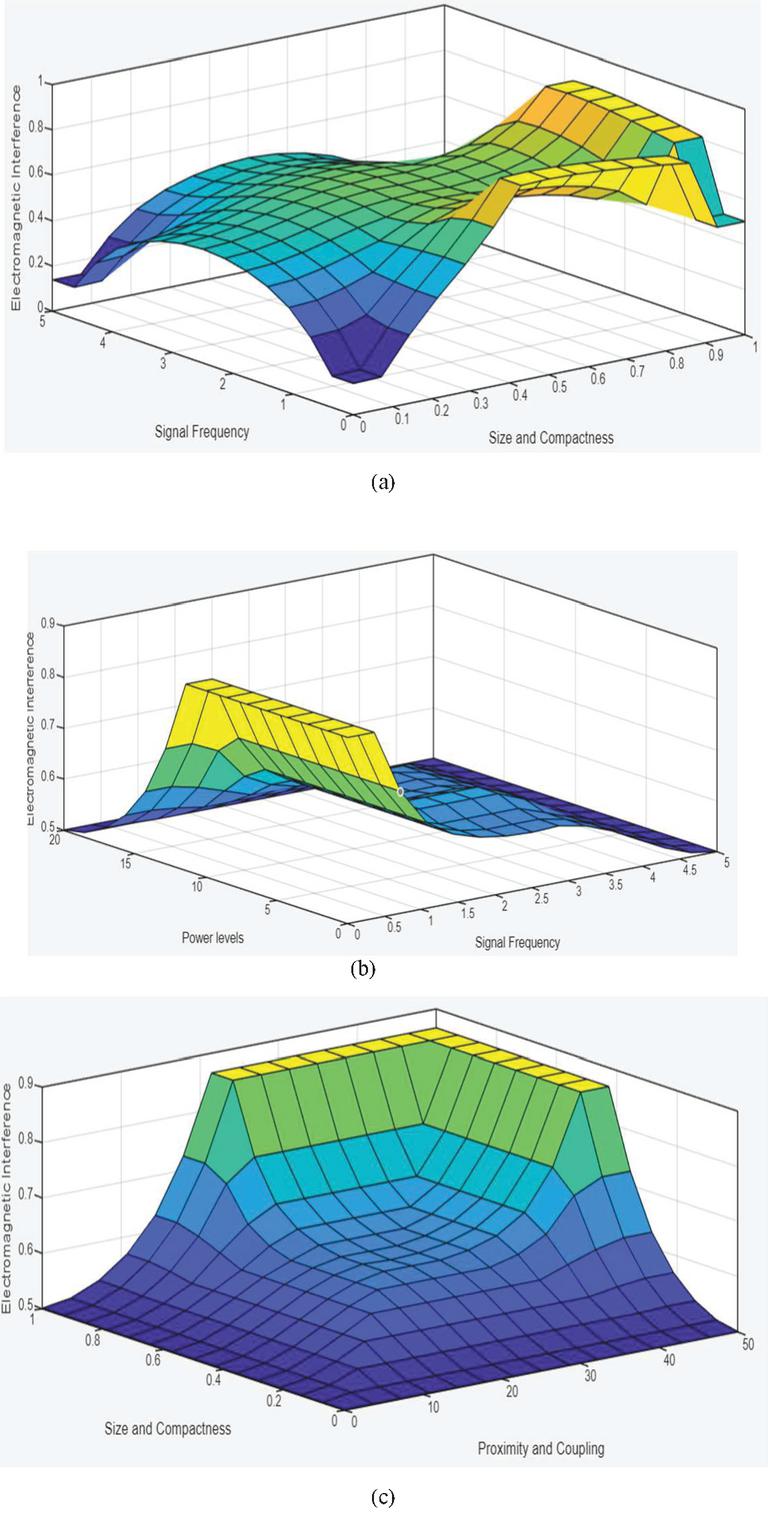
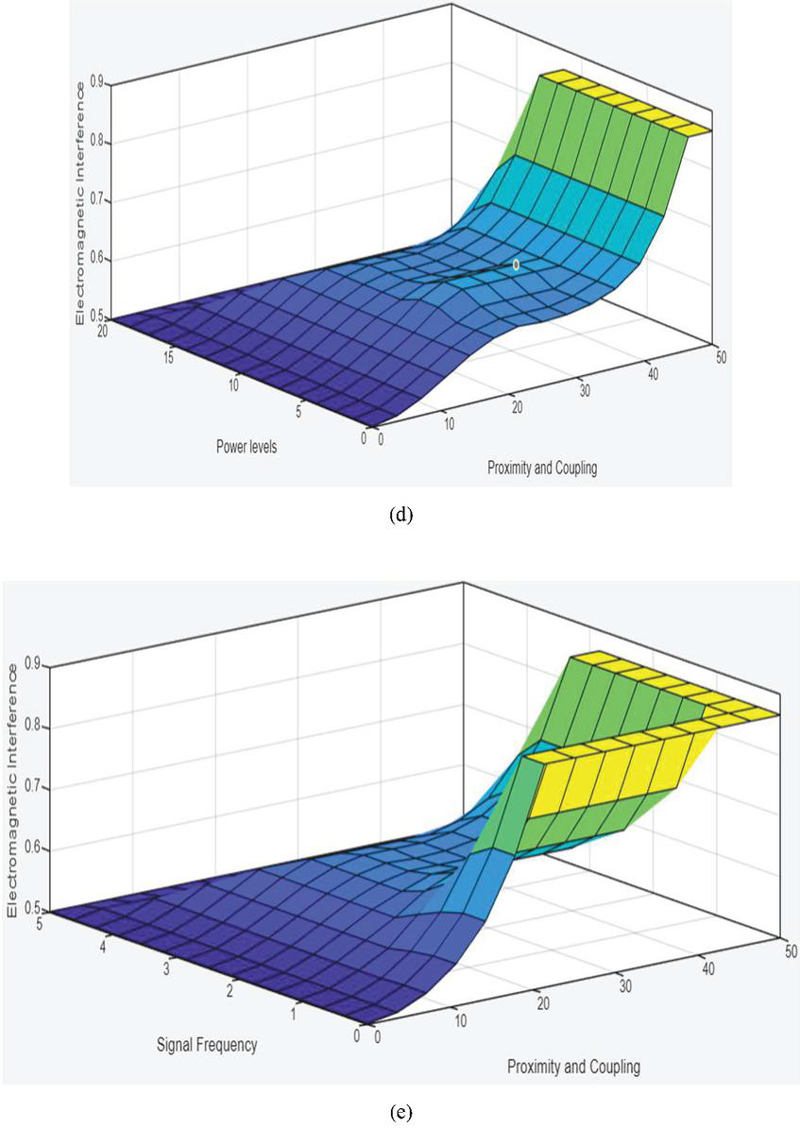
Figure 4 Electromagnetic Interference observations under (a) Size and signal frequency variations, (b) Power levels and frequency, (c) Size and proximity and coupling of devices, (d) Power levels and proximity, (e) Signal frequency and proximity.
Based on relevant literature and the corresponding simulations, the FIS developed and the corresponding rule map with sample rules are depicted in Figures 3(a), (b), and (c), respectively. The key factor considered was signal frequency, which was the operational frequency of the wearable device. The power levels refer to the device’s transmission power levels. Proximity and interference coupling were the distance of the device from the source of Interference. The physical size and design compactness were also considered. Table I refers to FIS parameters considered for the categorization of these parameters as low, medium or high; close near and far etc. The FIS used a set of rules to model the relationship between the placement strategy of the devices and the EMI impact.
Figures 4(a), (b), and (c) present the impact of varying levels of parameters on electromagnetic Interference. We observe that the highest value of EMI is obtained for higher values of proximity rather than the signal frequency or power level of devices. We can observe from Figure 3(b) that for a fixed distance and orientation, a change in signal frequency generates low to moderate EMI. However, for fixed values of frequency at 2.4 GHz, the EMI increases to high when the sensor distance is reduced or the proximity is altered. Thus, we validate our model to show the impact of positioning and orientation of placed sensors on the human body. For analysing the impact of proximity of devices with varying levels of signal frequency and power levels, Figures 4(d) and 4(e) depict higher EMI for higher proximity among the devices.
5 Conclusion
With our established FIS model, we confirmed that wearables’ placement on the body is a major factor in determining how exposed they are to electromagnetic fields (EMI) and how that exposure affects their performance. To guarantee maximum performance and user experience across all contexts and usage circumstances, manufacturers must consider these positioning aspects during the design and testing phases. We also suggest that appropriate placement can lessen the negative impacts of electromagnetic Interference (EMI) on wearable devices when paired with design techniques like shielding and filtering. The limitations, however, of the FIS is that its performance depends on the quality of fuzzy rules and membership function accuracy, which are derived from expert knowledge. Any incompleteness or inaccuracy would result in unreliable predictions. Therefore, as a countermeasure, we employed a simulation-based experimental scenario to derive and confirm the rules designed. Further analysis of parameters like user body interaction, sensitivity analysis, and validation on real-world scenarios will be presented in future work.
Acknowledgement
The authors gratefully acknowledge the financial support received from DST, under SERB Power grant no. SPG/2021/002212 for carrying out this research.
References
[1] Raikar, Kritesh, et al. “Mitigation of Electromagnetic Interference in high-speed circuits.” 2021 12th International Conference on Computing Communication and Networking Technologies (ICCCNT). IEEE, 2021.
[2] Paul, Clayton R., Robert C. Scully, and Mark A. Steffka. Introduction to electromagnetic compatibility. John Wiley & Sons, 2022.
[3] Morrissey, Joseph James, Mays Swicord, and Quirino Balzano. “Characterization of electromagnetic interference of medical devices in the hospital due to cell phones.” Health Physics 82.1 (2002): 45–51.
[4] Van der Togt, Remko, et al. “Electromagnetic interference from radio frequency identification inducing potentially hazardous incidents in critical care medical equipment.” Jama 299.24 (2008): 2884–2890.
[5] A. Legros, William Bailey, Tim Harrington, Akimasa Hirata, Robert Rob Kavet, et al. Synopsis of IEEE Std C95.1-2019 “IEEE Standard for Safety Levels With Respect to Human Exposure to Electric, Magnetic, and Electromagnetic Fields, 0 Hz to 300 GHz”. IEEE Access, 2019, 7, pp.171346–171356. ff10.1109/ACCESS.2019.2954823ff. ffhal-03499674f].
[6] Faishal, Adilah, Suryanata, Naufal, Fikri, Muhammad, Nur, Natasha, Amyra, Ahmad, Azizi, Raimi, Dewan, Bappadittya, Roy. (2023). Performance Analysis of Wearable Antenna Worn in Close Proximity with Human Body. doi: 10.11113/jmeditec.v1n1.28.
[7] Xiaolong, Yue, Min, Zhang. (2023). An Investigation of Lithium-ion Battery Induced Near Field Electromagnetic Interference in Wearable Audio Devices. doi: 10.1109/emceurope57790.2023.10274331.
[8] David, Yang, Parikha, Mehrotra, Scott, Weigand, Shreyas, Sen. (2021). In-the-Wild Interference Characterization and Modelling for Electro-Quasistatic-HBC With Miniaturized Wearables. IEEE Transactions on Biomedical Engineering, doi: 10.1109/TBME.2021.3082078.
[9] Parikha, Mehrotra, David, Yang, Scott, Weigand, Shreyas, Sen. (2020). In-The-Wild Interference Characterization and Modelling for Electro-Quasistatic-HBC with Miniaturized Wearables. bioRxiv, doi: 10.1101/2020.11.06.372060.
[10] Parikha, Mehrotra, David, Yang, Scott, Weigand, Shreyas, Sen. (2020). In-The-Wild Interference Characterization and Modelling for Electro-Quasistatic-HBC with Miniaturized Wearables.
[11] Jingna, Mao. (2019). Investigating on the Interferences on Human Body Communication System Induced by Other Wearable Devices. doi: 10.1109/EMBC.2019.8857102.
[12] Haryo, Dwi, Prananto, Aditia, Nur, Bakti, Wuwus, Ardiatna, Irawan, Sukma, Dwi, Mandaris. (2023). Measurement of Wireless on Body Propagation Characteristics from e-Health Monitoring Wearable Device. doi: 10.1109/GEMCCON57842.2023.10078213.
[13] Giuseppina, Monti, Diego, Masotti, Giacomo, Paolini, Laura, Corchia, Alessandra, Costanzo, Marco, Dionigi, Franco, Mastri, Mauro, Mongiardo, Roberto, Sorrentino, Luciano, Tarricone. (2018). EMC and EMI issues of WPT systems for wearable and implantable devices. IEEE Electromagnetic Compatibility Magazine, doi: 10.1109/MEMC.0.8339550.
[14] Jingna, Mao. (2019). Investigating on the Interferences on Human Body Communication System Induced by Other Wearable Devices. doi: 10.1109/EMBC.2019.8857102.
[15] Seungmo, Kim, Yakub, Ahmed, Sharif, Imtiaz, Nasim. (2019). Human Electromagnetic Field Exposure in Wearable Communications: A Review. arXiv: Signal Processing.
[16] Jingna, Mao. (2019). Investigating on the Interferences on Human Body Communication System Induced by Other Wearable Devices. doi: 10.1109/EMBC.2019.8857102.
Biographies

Itu Snigdh is an Associate Professor in the Department of Computer Science and Engineering. She received her Ph. D from B.I.T Mesra in the area of Wireless Sensor Networks, Department of Electronics and Communication Engineering, master’s degree in (Software Engineering) from B.I.T Mesra (Ranchi), India in 2002 and her bachelor’s degree in Electrical Engineering from B.I.T Sindri, India in 1996. She was a member of the Board of Governors of BIT Mesra. She has authored and coauthored several journal articles, book chapters and conference papers. Her areas of interest include Cyber physical systems, IoT, Software Engineering, Database Management Systems and Wireless Sensor Networks.

Nisha Gupta received the Bachelor’s and master’s degrees in Electronics and communication and Electrical and Electronics engineering both from Birla institute of Technology, Mesra, Ranchi, India. She obtained her Ph.D. degree from Indian Institute of Technology, Kharagpur, India. She was a postdoctoral fellow at University of Manitoba, Canada from 1997 to 1998 before joining the Department of Electronics and Communication Engineering, Birla Institute of Technology in 1999 as an Associate professor. Currently, she is a Professor in the same department. She has authored and co-authored more than 150 technical journal articles and conference papers. Her research interests are Computational Electromagnetics, Antennas, AI techniques in Wireless and Mobile Communication, and EMI/EMC.

Ashish Raj was born in Ranchi, India in 1991. He received the master’s degree in Electronics and Communication Engineering from Gandhi Institute of Technology and Management, Visakhapatnam, India in 2016. He is currently pursuing Ph.D. in Electronics and Communication from Birla Institute of Technology, Mesra, Ranchi, India. His research interests involve Electromagnetic Compatibility, absorber, and its applications in high frequency circuit design.
Journal of Mobile Multimedia, Vol. 21_3&4, 679–692.
doi: 10.13052/jmm1550-4646.213419
© 2025 River Publishers