Future Directions in Wind Energy: Automation, Robotic Maintenance, and Cutting-Edge Communication Solutions
Gyan Wrat1,*, Mohit Bhola1 and Ramjee Prasad2
1Aalborg University, Aalborg, 9220, Denmark
2CTIF Global Capsule (Founder President), Dept. of Business and Technology Arhus University Herning, Denmark
E-mail: gywr@energy.aau.dk; mobh@energy.aau.dk; Denmark ramjee@btech.au.dk
*Corresponding Author
Received 08 January 2025; Accepted 01 May 2025
Abstract
The increasing need for renewable energy has catalyzed advancements in wind turbine technology, especially in automation and robotic networking for the monitoring and control of wind turbines. This article discusses about the innovative turbine control techniques, that optimize efficiency, decrease the maintenance expenses, and improve safety. The integration of Automation and AI/ML facilitate predictive maintenance and offers robust control systems. Advanced control algorithms enhance turbine performance through wake steering, yaw alignment, and shadow flicker reduction. Real-time data sharing and guaranteed connectivity are enabled by wireless sensor networks and communication infrastructures, including Long Term Evolution (LTE), 5G, and Ethernet passive optical networks (EPON). Robots systems as, BladeBUG inspection robot and the Aerones cleaning robot execute efficient autonomous maintenance tasks. Emerging trends depend on AI/ML-driven predictive analytics and flexibility in robotics to enhance turbine performance, reduce downtime, and ensure the reliability of wind power supply.
Keywords: Wind turbine automation, robotic networking, predictive maintenance, AI and machine learning, sensor networks.
1 Introduction
The increasing demand for renewable energy has driven great growth in wind turbine technology, and among them is the progress made in more efficient and more reliable control systems. Automation and robotic networking have also been effective solutions for enhancing wind turbine control with better performance, reduced maintenance costs, and improved operator safety. This review article aims to give a systematic survey of state-of-the-art in this field, with emphasis on the prospect and challenge involved in adopting contemporary turbine control systems through automation and robotic networking.
Applications of automation, communication, and robot networks in controlling and optimizing wind turbines have been the area of extensive research due to the increasing demand for high-efficiency and reliable wind power generation. The complexity of wind turbine machines and uncertainty in wind speeds have necessitated the use of advanced and reliable control systems and communication equipment to enhance wind power generation and reduce downtime. Non-linearities of the wind device and system complexities of the device, along with environmental uncertainty, rank among the most challenging issues to deal with in controlling wind turbines [1, 2].
The incorporation of ML and AI in wind turbine control systems has further led to autonomous robotic systems capable of executing small-scale wind turbine system repairs. These systems utilize an optimization-enabled autoencoder/decoder algorithm for predicting electrical and mechanical failures before they take place, then dispatch an autonomous repair robot to perform the small-scale repairs.
The importance and discussion about wind turbine control systems are discussed in [3]. The adaptive robust controller for turbine speed maintenance has been designed and evaluated in [4] which shows the importance of robust control system requirement for turbine systems.
This review confirms that hybridizing automation with robotic networking of wind turbine pitch control can dramatically enhance the reliability and efficiency of wind power generation. The use of advanced control systems, such as AI and ML algorithms, can optimize wind power generation, reduce downtime, and enable the prediction and correction of faults in wind turbine systems [5].
This paper has been organized into three sections i.e. Section 2 demonstrates the level of automation utilized in wind turbine systems, Section 3 demonstrates the character of communication systems and requirements in wind turbine systems, Section 4 demonstrates the designed robotic system for condition monitoring and self-service repair of the turbines minimizing the requirements of human efforts in remotely controlled wind farms.
2 Automation in Wind Turbine Control Systems
Automation in wind turbine control systems has evolved the significantly with automated control algorithms and sensor networks. The Blade angles are optimized in real time by sophisticated algorithms to enhance responsiveness as well as energy capture. At the same time, sensor networks are offering real-time monitoring of wind conditions to enable anticipatory adjustments as well as predictive maintenance approaches, ultimately increasing turbine efficiency and reliability.
2.1 Automated Control Algorithms
In this Section 2.1, the advanced control algorithms are discussed which can optimize the performance of wind turbine power plants, and instrumentation requirements are discussed.
Wake Steering: – Wake steering is a method of misaligning upstream wind turbines from the wind direction in order to steer their wake away from downstream turbines within a wind farm. This technique optimizes overall power output and reduces the fatigue loads on turbines. An experiment by [6] demonstrated that a wind steering control algorithm could increase a wind farm’s power output by 5.6%. The experiments involved additional instrumentation and made use of supervisory control and data acquisition (SCADA) systems to monitor important components at a sampling rate of 1 Hz. Testing the ability to send and receive data on wireless networks is an exciting avenue for advancing the development of these technologies in wind turbine applications.
Yaw Alignment: – Data related to wind direction and collective control of wind turbines lead to efficient control of wind turbine power plants, which has the capability to enhance electricity production by 10.5 TWh. The highlights as the necessity of automation and supervisory control algorithms for the wind turbine-based power plants.
Automatic Shadow Flicker: – Shadow flickering is a phenomenon in which rotation of wind turbines sometimes eclipses sunlight on residential houses. This results in turbines shutting down periodically, leading to loss of income. Machine learning algorithms for automation offer a potential solution. Techniques like the RES Dynamic Flicker Optimization System (DFOS) use machine learning to recognize site images, predict weather conditions, and offer optimized choices for the operation mode of the turbine.
2.2 Automation in Fault Detection and Decision Making
The Autonomous Renewable Smart Operations Software (AROS) was developed by Green Eagle Solutions. AROS automated the wind farm operation protocol through its logic engine, reducing decision-making time for remote operation centers. AROS also includes turbine maintenance tactics, optimally utilizing poorly conditioned turbines to gain the most operating hours and automatically shutting them down at higher wind velocities. The automation enhances the turbine availability, which results in higher power output and lower levelized energy costs.
So, in order to implement these advanced control algorithms for power output optimization and parameter monitoring of wind speed, humidity, and weather conditions as well as for enabling intelligent decision-making automation, the latest reliable wireless communication technologies, i.e., 5G/LTE, are being employed now for remotely located wind farms. This ensures the safety of turbines and human resources at maintenance sites. Current technology engineered by industry leaders in this field has a throughput of 150 Mbps download and 50 Mbps upload speed per customer i.e. per SIM Card with standard frequency ranging from 800 MHz to typically 3.8 GHz.
2.3 Integration of Wireless Sensor Networks
Monitoring of the turbine performance continuously is achievable through the use of high-technology sensor networks. Furthermore, sensor data are a key factor in predictive maintenance practices [7]. Possible issues could be identified from trends and patterns in sensor data prior to leading to serious failures. Downtime is reduced while the lifespan of the turbines’ components is prolonged through this method of maintenance [8]. For instance, sensors detect the unusual change in vibrations or temperature that may indicate wear and tear or pending mechanical failures, allowing for early interventions [9].
The integration of sensor networks also enables the predictive capability of turbine control systems. Advanced algorithms can use real-time data to predict the future condition of the turbines and adjust and plan the operations accordingly. Predictive control enables optimal performance in spite of varying wind conditions to provide efficient and reliable operation of the turbines [10].
The combination of wireless communication technology, sensor networks, and sophisticated control algorithms makes the efficiency and reliability of wind turbines significantly higher. Real-time optimization and predictive maintenance are possible with these technologies, reducing downtime and increasing turbine life. Ongoing innovation with these technologies ensures improved performance and safety of operation for wind power systems.
3 Communication Systems in Wind Turbine
The communication system of wind turbines is essential for ensuring the proper operation, monitoring, and management of wind farms. It facilitates the exchange of real-time data between turbines and control centers through instantaneous communication, hence enabling automation and robotic networking. Modern wind farms include advanced communication network infrastructure using high-level architectures, including wireless technologies such as LTE, 5G, and ZigBee, as well as wired technologies like Ethernet Passive Optical Networks (EPON). These technologies provide the necessary bandwidth, low latency, and reliability required for real-time monitoring and control [11]. Utilization of the Internet of Things (IoT) in wind turbines has revolutionized their management. IoT sensors collect data from various sensors fitted on the turbines, such as those that sense rotor speed, blade pitch, and nacelle orientation. This information is then sent to a central control system that analyzes it for optimizing performance and maintenance needs [12].
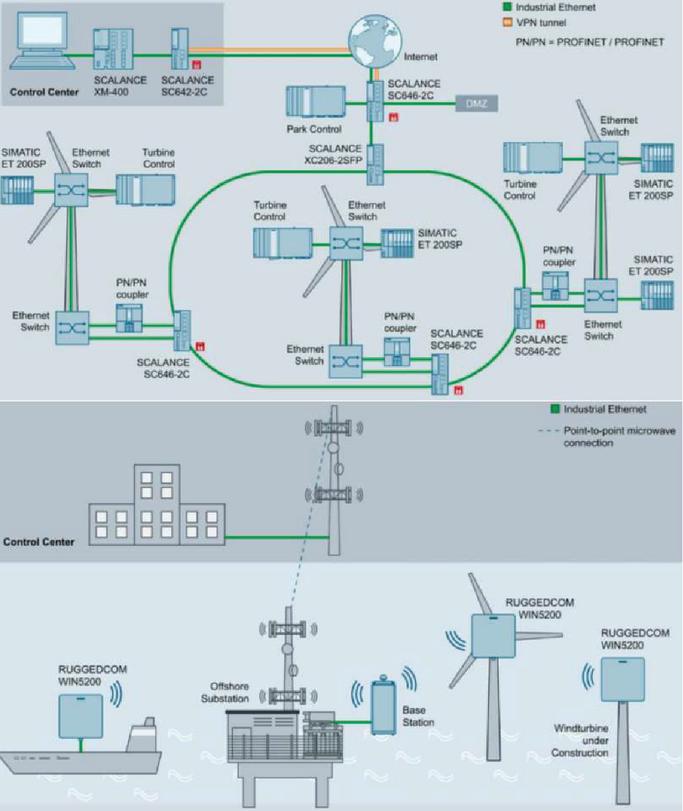
Figure 1 Communication for wind farm [15].
Ramos et al. [13] report on a communication system designed to enable data communication between the nacelle and control panel of wind turbines. Through the utilization of Digital Signal Controllers and an Embedded PC, the system enhances overall and local field communication. A test of the prototype in the laboratory validated its feasibility and effectiveness with regard to facilitating automation and real-time monitoring. This development is crucial for optimizing the performance and reliability of wind turbines, allowing better maintenance strategies and operational effectiveness in wind power systems. Automation in wind turbines involves the use of advanced algorithms and machine learning in managing the operations of turbines. Robotic systems can perform tasks such as blade inspection and maintenance, reducing human intervention and improving safety. Communication systems play an important role in coordinating these robot activities and ensuring that they work properly [14]. Communication systems for wind turbines face one of the important challenges in providing stable connectivity in remote locations. Cellular communication networks, i.e., 5G, are a solution that offers broad coverage and high-speed data transmission [15]. Robust cybersecurity protection is also essential to protect the communication networks from potential attacks [15]. Advanced communication systems are an integral part of the robotic networking and automation of high-tech wind turbines. By means of modern technologies and the elimination of connectivity problems, these systems enhance the efficiency, reliability, and safety of wind power generation [16–18]. Figure 1 illustrates the functionality of the communication system in a wind farm.
The sophisticated communication systems are key to optimizing the operations of wind turbines, enabling real-time monitoring and automating processes. The integration of IoT, advanced wireless technologies, and robust cybersecurity features dramatically enhances performance and reliability. Surpassing connectivity challenges, particularly in remote areas, ensures effective and secure wind energy production.
Table 1 Key features and benefits of robotic inspection systems for wind turbines
| Feature | Benefits | Applications |
| High-resolution Cameras | Detailed Visual inspections, detects minor damages | Turbine blade inspection |
| Autonomous Operation | Reduce Human risk, operates in harsh conditions | Maintenance in adverse weather |
| Real-time Data Analysis | Immediate maintenance decisions, reduce downtime | Predictive maintenance |
| Frequent Inspections | More thorough inspections, early damage detection | Preventive maintenance |
4 Robot Networking for Maintenance
Robotic networking for wind turbine maintenance involves using autonomous robots to inspect, maintain, and repair turbines. These robots, equipped with advanced sensors and AI, can operate in harsh weather conditions, reducing human risk and downtime. The robots perform tasks such as blade inspection, cleaning, and minor repairs that enhance the efficiency and reliability of wind power systems [19, 20].
4.1 Robot-Based Inspection Systems
Robotic inspection systems are revolutionizing wind turbine maintenance by rendering it safer, more efficient, and more precise. Robotic inspection systems, such as climbing robots equipped with high-resolution cameras, have the ability to perform close-up visual inspections of turbine blades, identifying damage or wear without requiring human technicians to ascend the turbines. This not only prevents the risk of accidents but also facilitates more frequent and closer inspections. For instance, robots can detect cracks, erosion, and other types of damage that cannot be discovered through manual inspection [21]. Moreover, these robots can work under harsh environmental conditions, which implies that inspections are not delayed due to inclement environmental conditions. The data collected by these robotic systems can be analyzed in real time, enabling immediate maintenance decisions and reducing turbine downtime. Table 1 outlines the key features and benefits of robotic inspection systems for wind turbines, highlighting their advantages and various applications. Overall, the integration of robotic inspection systems into wind turbine maintenance cycles is a milestone in the field, resulting in more efficient and stable wind energy production. Figure illustration of a Robotic Inspection System for Wind Turbines, as illustrated in Figure 2.
4.2 Collaborative Robotics
Collaborative robots, or cobots, can work alongside human technicians, performing repetitive or dangerous procedures and allowing humans to focus on more complex procedures. This cooperation enhances safety and productivity in maintenance operations. The application of collaborative robotics in wind turbine maintenance has emerged as a revolutionary technique for enhancing safety and efficiency. Robotic machines, such as Rope Robotics’ BR-8 robot, are able to perform maintenance procedures on turbine blades automatically, eliminating much manual labor under dangerous conditions. The robot is programmed with artificial intelligence to move through the complex geometries of turbine blades and perform repair procedures such as filling, grinding, and painting, which were previously performed by human climbers ascending tall buildings [22]. Besides, wind turbine maintenance multi-robot system design has been proposed to enhance operations further. The systems allow several robots to collaborate on maintenance activities, increasing the speed and efficiency of inspection and repair [23]. Through a robotic network, operators can attain comprehensive coverage of turbine components, leading to enhanced predictive maintenance strategies with decreased downtime and operational costs. Table 2 indicates robotic versus conventional maintenance comparison and mentions the disparity of safety, efficiency, and expense.
Table 2 Comparison of traditional vs. robotic maintenance approaches
| Aspect | Traditional Maintenance | Robotic Maintenance |
| Safety | High risk for Workers | Reduced Risk |
| Time Efficiency | Longer Downtime | Quicker Inspections |
| Cost | Higher Operational Costs | Lower Operation Costs |
| Data collection | Manual Logging | Automated Data Capture |
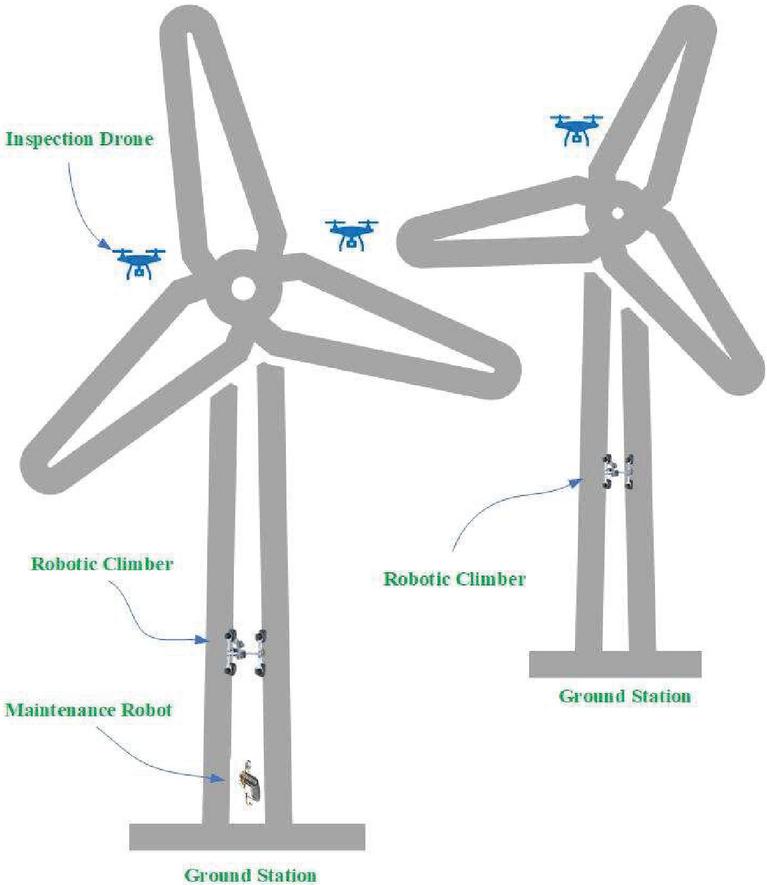
Figure 2 Illustrating figure of robotic inspection system for wind turbines.
The Combination of automation, robotized maintenance, and next-generation communication solutions is driving the efficiency, safety, and cost-benefit maximization of wind power systems. There is a requirement for innovation in these technologies to meet the growing world demand for clean energy and ensure sustainability. Table 3 provides the comparison of available wind energy technologies with respect to functionalities, advantages, and applications.
Table 3 Comparison of existing technologies for wind energy
| Technology | Description | Benefits | References |
| Automation | Use of Automated fiber placement (AFP) and automated tape laying (ATL) in blade production | Enhances precision, reduces labor costs, produces lighter and stronger blades | [24] |
| Robotic Maintenance | Use of ROVs, AUVs, and UAS for inspection, repair, and maintenance | Improve Safety, Reduces Human Intervention Performs tasks in Hazardous environments. | [25] |
| Communication Solutions | Integration of IoT devices and advanced sensor networks for real-time monitoring and data collection | Enables predictive maintenance, operational optimization, reduces downtime and maintenance costs | [26] |
5 Case Studies
5.1 BladeBUG Inspection Robot
The BladeBUG robot, developed in the UK, will perform autonomous checks of wind turbine blades, considerably quicker than conventional method. The six-legged robot walks along the blades on vacuum-padded feet and is equipped with high-res cameras and sensors that detect cracks, erosion, and other damage. It has the ability to undertake an inspection in around 35 minutes, presenting a cost-saving and secure approach when compared to traditional rope access techniques. The BladeBUG robot not only presents a greater safety advantage through the exclusion of human technicians to climb the turbines but also facilitates more frequent and precise inspections, hence improving maintenance efficiency and turbine reliability [27].
5.2 Aerones Cleaning Robot
Aerones has developed a robot system that is able to clean and examine turbine blades using liquid cleaning agents and ultrasound scanning. The robot can eliminate dust, insects, salt, algae, and oil stains on the blades, thereby achieving maximum blade performance and longevity. The system has serviced over 300 turbines and has been successful at achieving maximum turbine efficiency. Aerones robot cleans under all weather conditions and collects contaminated liquid for disposal without any damage to the environment. With inspection and cleaning functionalities together, the Aerones robot minimizes downtime and maintenance, allowing greater efficiency in wind power production [28]. Table 4 captures comparison of important features between the BladeBUG inspection robot and Aerones cleaning system from case study analysis.
| Feature | BladeBUG Insepection Robot | Aerones Cleaning Robot |
| Inspection time | 35 minutes | Integrated with cleaning tasks |
| Key functions | Visual inspections, damage detection | Cleaning, ultrasound scanning, visual inspections |
| Safety | Eliminates need for human technicians to scale turbines | Operation in various weather conditions, safe disposal of contaminated liquid |
| Efficiency | More frequent and thorough inspections | Reduces downtime and maintenance costs |
| Environmental Impact | NA | Minimizes environmental impact |
6 Future Directions
Employing AI for real-time monitoring and control of the turbines will yield additional learning and more adaptive control structures. This also incorporates modifications to fault diagnosis, predictive maintenance, and optimization processes that analyze real-time data to improve power output.
Further research regarding the growth of 5G and its practical applications for even greater bandwidth, reduced latency, and altogether greater dependability will become essential as the technology develops. Moreover, upcoming investigations can aim at incorporating 6G and other novel communication technologies for next generation operation of wind turbines.
Considering the enhanced data interchange and network access, the development of more robust security policies to defend against new forms of attacks will become more critical. A well-structured wind farm operation will be assured while protecting crucial operational information through development of sophisticated encryption and intrusion detection systems.
7 Conclusions
New technologies, including automation, new control algorithms, and advanced communications systems have completely transformed operations and maintenance of turbines. In semiautonomous systems, operational costs and downtime is minimized while capturing ideal energy capture – turbine output is maximized. These include, but are not limited to, yaw alignment, wake steering, and shadow flicker optimization. Predictive maintenance that allows parts to function optimally while extending their lifespan is continuously possible with real-time data from wireless sensor networks. Advanced communication and monitoring with robotic control are enabled by novel solutions such as LTE, 5G, and IoT. These technologies facilitate the continuous data flow transfer between turbines and control centers. The introduction of robotic systems such as the Aerones and BladeBUG robots transforms maintenance from manually intensive work to safer, faster, and cost-effective cleaning and inspections while undergoing greatly reduced human input. AI and machine learning adaptation will provide much more accurate predictive control systems, while the developing 5G and 6G technologies increase the global data transfer speed and connectivity to turbines. Renewed emphasis on strengthening cybersecurity is necessary to protect the communication systems from new threats which will guarantee safe and efficient operation of the wind farms. All these advancements position wind energy in a more favorable light as it relies, its efficiency and sustainability is improved which further establishes it as an industry necessity within renewable energy.
References
[1] Sierra-García JE, and Santos M.“Exploring reward strategies for wind turbine pitch control by reinforcement learning,” Applied Sciences, vol. 10, October 2020, pp. 7462.
[2] Bati, A. F., and S. K. Leabi. “NN self-tuning pitch angle controller of wind power generation unit.” 2006 IEEE PES Power Systems Conference and Exposition. IEEE, 2006.
[3] Apata, O., and D. T. O. Oyedokun. “An overview of control techniques for wind turbine systems.” Scientific African vol 10, 2020, pp. e00566.
[4] Bashetty, Srikanth, et al. “Design of a robust adaptive controller for the pitch and torque control of wind turbines.” Energies vol. 13 no. 5, 2020, pp. 1195.
[5] Routray, Abhinandan, et al. “A comparative study of optimal individual pitch control methods.” Sustainability, vol. 15, no. 14, 2023, pp. 10933.
[6] Simley E, Fleming P, Girard N, Alloin L, Godefroy E, Duc T. Results from a wake-steering experiment at a commercial wind plant: investigating the wind speed dependence of wake-steering performance. Wind Energy Science. Nov 2021;6(6), pp. 1427–53.
[7] Gong L, Chen Y. Machine learning-enhanced loT and wireless sensor networks for predictive analysis and maintenance in wind turbine systems. International Journal of Intelligent Networks. Vol. 1, no. 5, Jan 2024, pp. 133–44.
[8] Demkowicz J. “Measuring Tilt with an IMU Using the Taylor Algorithm.” Remote Sensing. Vol. 16, no. 15, 2024, pp. 2800. https://doi.org/10.3390/rs16152800.
[9] Wang L, Zhang L, Ke J, Fan Z, Chen J, Yang W. “Design of an individual pitch controller for offshore wind turbines based on neuro-adaptive control.” IET Renewable Power Generation. vol. 14, no. 17, Dec 2020, pp. 3500–3507.
[10] Abbas N, Abbas Z, Zafar S, Ahmad N, Liu X, Khan SS, Foster ED, Larkin S. “Survey of Advanced Nonlinear Control Strategies for UAVs: Integration of Sensors and Hybrid Techniques.” Sensors. 21 May 2024, Vol. 24 no. 11, pp. 3286.
[11] Ahmed MA, Kim YC. “Communication network architectures for smart-wind power farms”. Energies. vol. 7, no. 6, Jun 2014, pp. 3900–21.
[12] Karad S, Thakur R. “Efficient monitoring and control of wind energy conversion systems using Internet of things (IoT): a comprehensive review”. Environment, development and sustainability, vol. 23 no. 10, Oct 2021, pp. 14197–214.
[13] Ramos AJ, Grigulo J, Franchi CM, Schaf FM, PinheiroH. Development of communication system for wind turbines. In 2015 IEEE 15th International Conference on Environment and Electrical Engineering (EEEIC) 2015 Jun 10 (pp. 1311–1316). IEEE.
[14] Solving wind energy’s connectivity challenge. (2024). Ericsson.com. https://www.ericsson.com/en/industries/energy-utilities/solving-wind-energys-connectivity-challenge.
[15] Wind Equipment. (n.d.). Siemens.com Global Website. https://xcelerator.siemens.com/global/en/industries/wind/equipment.html.
[16] Industrial automation in the wind energy sector - TTTech Industrial. (2023, April 24). TTTech Industrial. https://www.tttech-industrial.com/resource-library/blog-posts/industrial-automation-in-the-wind-energy-sector.
[17] Graso, J. (2021, January 13). Green Eagle Solutions. WindEurope. https://windeurope.org/2020successes/green-eagle-solutions/.
[18] LTE/4G and 5G technology offshore. (n.d.). Retrieved March 28, 2025, from https://campaigns.semcomaritime.com/hubfs/LTE\%20and\%205G\%20technology\%20offshore.pdf.
[19] Franko J, Du S, Kallweit S, Duelberg E, Engemann H. “Design of a multi-robot system for wind turbine maintenance.” Energies. 18 May 2020, vol. 13, no. 10, pp. 2552.
[20] Jui-Hung L, Padrigalan K. “Design and Development of a Climbing Robot for Wind Turbine Maintenance.” Applied Sciences. Vol. 11, no. 5, 2021, pp. 2328.
[21] Cieslak C, Shah A, Clark B, Childs P. Wind-Turbine Inspection, Maintenance and Repair Robotic System. InTurbo Expo: Power for Land, Sea, and Air 2023 Jun 26 (Vol. 87127, p. V014T37A004). American Society of Mechanical Engineers.
[22] Frecon EN. “Robot for cleaning and maintaining wind turbine blades – Frecon EN,” May 1, 2024. https://frecon.dk/en/case/robot-for-cleaning-and-maintaining-wind-turbine-blades/.
[23] Franko J, Du S, Kallweit S, Duelberg E, Engemann H. “Design of a multi-robot system for wind turbine maintenance.” Energies. 18 May 2020, vol. 13, no. 10, pp. 2552.
[24] Firoozi, A.A.; Firoozi, A.A.; Hejazi, F. Innovations in Wind Turbine Blade Engineering: Exploring Materials, Sustainability, and Market Dynamics. Sustainability 2024, vol. 16, no. 19, pp. 8564. https://doi.org/10.3390/su16198564.
[25] Koltsidopoulos, A., Wavell, D. and Gray, A., 2021. Quantifying the impact of robotics in offshore wind. Offshore Wind Innovation Hub Industry Insight Series.
[26] Desai, K.P., Binu, D., Pavan, A.V.V.D. and Kamath, A.P., 2022. Automation advancements in wind turbine blade production: A review. Recent Advances in Manufacturing Processes and Systems: Select Proceedings of RAM 2021, pp. 209–222.
[27] The Engineer. “BladeBUG unveils new robot,” August 4, 2022. https://www.theengineer.co.uk/content/news/bladebug-unveils-new-robot/.
[28] Robotic Wind Turbine Care Systems – Aerones. “How it works – Robotic Wind Turbine Care Systems – Aerones,” April 16, 2024. https://aerones.com/how-it-works/.
Biographies

Gyan Wrat is a Postdoctoral Researcher at Aalborg University’s Energy Department, specializing in wind turbine technology. He earned his Ph.D. and Master’s in Mechatronics from the Indian Institute of Technology (IIT) Dhanbad, India, and holds Bachelor’s degree in Mechanical Engineering from ITER, SOA University, Bhubaneswar. With a strong expertise in Fluid Power, Fault Diagnosis, and Control, he is dedicated to advancing renewable energy systems through cutting-edge research and innovation.

Mohit Bhola is currently working as a Post Doctoral Researcher at the Mechatronics Section, Energy Department at Aalborg University located in Aalborg, Denmark. He holds a PhD degree in Mechatronics from the Indian Institute of Technology (Indian School of Mines), Dhanbad, India. His current research interests are Fault Tolerant Control of Hydraulic Pitch Systems for Wind Turbines, Digital Hydraulics, Hybrid Hydrostatic Transmission Systems, System Modeling, Control, Hardware in Loop (HIL) Simulations, and Automation.

Ramjee Prasad is Director of the Center for TeleInfrastruktur (CTIF) and Chair of Wireless Information and Multimedia Communications. He coordinates the EU Sixth Framework Project MAGNET and has led multiple international research initiatives, including the ACTS FRAMES project. With over 500 technical papers and 11 books, he is a leading voice in telecommunications. He serves on editorial boards of top journals, including IEEE Communications Magazine, and is the founding chairman of HERMES, the European Center of Excellence in Telecommunications.
Journal of Mobile Multimedia, Vol. 21_3&4, 713–728.
doi: 10.13052/jmm1550-4646.213421
© 2025 River Publishers