Gamified Mobile Edutainment for Cultural Heritage Learning: A Design-based Research Study of Tai Ethnic Cultures in Lanna
Manissaward Jintapitak
College of Arts, Media and Technology, Chiang Mai University, Chiang Mai, 50200, Thailand
E-mail: manissaward.j@cmu.ac.th
Received 13 December 2025; Accepted 11 January 2026
Abstract
The transmission of cultural heritage to younger generations has become increasingly challenging in the context of mobile-centric digital media consumption. Although gamified edutainment applications are widely used to support informal learning, many studies still emphasize design description more than systematic examination of learning mechanisms and research rigor. This study investigates how a mobile gamified edutainment application can support cultural heritage learning through a design-based research (DBR) approach. Using Tai ethnic cultures in the Lanna region as an empirical case, the research examines how character-based interaction, gamification mechanics, and cultural validation processes mediate learner engagement and knowledge acquisition. Iterative design cycles were conducted with cultural experts, educators, and primary school learners. Data were collected through formative pre- and post-learning indicators, usability observations, and expert validation, emphasizing exploratory rather than inferential evaluation. The findings show that interaction-driven customization tasks contributed more strongly to cultural knowledge recall than reward-based mechanics, while expert validation was essential for preserving cultural integrity within simplified visual representations. Beyond the specific case, the study proposes a transferable framework for mobile edutainment that balances cultural authenticity, learner engagement, and methodological transparency. Limitations related to sample scope and short-term evaluation are acknowledged, and directions are outlined for scalability testing and longitudinal assessment in future research.
Keywords: Mobile edutainment, gamification, cultural heritage learning, design-based research, digital character design.
1 Introduction
The transmission of cultural heritage to younger generations has become increasingly challenging in the context of mobile-centric digital media consumption. As mobile devices emerge as primary platforms for children’s interaction with multimedia content, conventional approaches to cultural education – such as textbooks, lectures, or static exhibitions – often struggle to sustain engagement or relevance [1, 2]. This challenge is particularly pronounced in cultural contexts where knowledge is embodied in visual symbols, traditional attire, rituals, and everyday practices that are difficult to convey through text-based instruction alone [3, 4].
Mobile multimedia technologies provide new opportunities to address these challenges by enabling interactive, visually rich, and learner-centered experiences. Gamified edutainment applications have gained attention for their potential to combine play, narrative, and interaction to support informal learning among young users [5, 6]. Prior studies demonstrate that such applications can enhance motivation and engagement; however, many existing works emphasize descriptive accounts of design features and user satisfaction, while offering limited analytical insight into how specific interaction mechanisms contribute to learning outcomes [7, 8].
Within the domain of digital cultural heritage, this limitation is especially critical. Cultural content is not merely informational but symbolic and contextual, requiring careful consideration of authenticity, ethical representation, and interpretive accuracy [9, 10]. Simplified visual styles – such as cartoon or Chibi characters – may increase accessibility and emotional appeal for children, yet they also introduce risks of oversimplification or misrepresentation if not supported by systematic cultural validation [11, 12]. As a result, there is a need for research that moves beyond descriptive design reporting toward analytical examination of how cultural meaning, learning engagement, and design decisions intersect within mobile edutainment systems.
Design-based research (DBR) offers a methodological framework well suited to addressing this gap. DBR emphasizes iterative development, collaboration with domain experts, and the generation of transferable design knowledge grounded in real-world contexts [13, 14]. Rather than treating digital applications solely as end products, DBR conceptualizes design artifacts as analytical instruments through which learning mechanisms and contextual constraints can be examined [15]. Despite its relevance, DBR remains underutilized in studies of mobile edutainment, particularly those concerned with cultural heritage learning and character-based interaction design [16].
This study adopts a DBR approach to investigate the design and evaluation of a mobile gamified edutainment application for cultural heritage learning. Tai ethnic cultures in the Lanna region of Northern Thailand are employed as an empirical case, focusing on how traditional attire and cultural symbols are translated into interactive digital experiences through character customization and gamified tasks [17, 18]. Importantly, Tai culture is not positioned as an isolated scope of inquiry but as a contextual lens through which broader design principles and methodological insights can be examined.
The objectives of this research are threefold: (1) to analyze how specific gamification and interaction mechanisms influence learner engagement and cultural knowledge acquisition in a mobile edutainment context; (2) to examine the role of cultural expert validation in maintaining representational integrity within simplified digital character designs; and (3) to propose a transferable design-based framework that can inform the development of mobile edutainment applications across diverse cultural settings. By shifting the focus from descriptive design outcomes to analytical interpretation of learning mechanisms and design processes, this study contributes to the fields of mobile multimedia, digital edutainment, and cultural heritage education.
2 Literature Review
2.1 Mobile Multimedia and Digital Cultural Heritage Learning
Digital technologies have become central to contemporary cultural heritage preservation, particularly in contexts where traditional modes of transmission struggle to engage younger generations. Mobile multimedia platforms enable the integration of visual, auditory, and interactive elements, allowing cultural knowledge to be experienced rather than passively consumed [1, 4, 7]. Prior research emphasizes that cultural learning mediated through digital media is most effective when it supports exploration, contextualization, and narrative engagement, rather than static information delivery [5, 8].
Within the field of digital cultural heritage, interactive applications have been used to document and disseminate traditional practices, attire, and rituals through virtual exhibitions, interactive storytelling, and multimedia archives [3, 9]. These approaches demonstrate strong potential for accessibility and scalability, particularly when delivered via mobile devices. However, existing studies frequently prioritize technological affordances or visual richness, while offering limited discussion of how specific interaction designs contribute to learning processes or cultural understanding [7].
Moreover, cultural heritage learning involves symbolic interpretation and ethical representation. Scholars have highlighted that cultural elements cannot be treated as neutral content, as they are embedded in historical, social, and identity-related meanings [10]. This concern becomes more pronounced in mobile applications for children, where design choices must balance engagement, simplicity, and representational accuracy [2, 16]. As a result, there is a growing call for research that integrates mobile multimedia design with methodological rigor and reflective cultural validation.
2.2 Gamification and Learning Mechanisms in Edutainment
Gamification refers to the use of game design elements – such as challenges, rewards, feedback, and progression systems – in non-game contexts to enhance user motivation and engagement [6]. In educational settings, gamification has been widely adopted to support informal and experiential learning, particularly in digital and mobile environments [5, 6]. Empirical studies suggest that gamified interactions can increase time-on-task, learner motivation, and emotional involvement; however, their effects on learning outcomes vary depending on how game elements are implemented and aligned with instructional goals [6].
In edutainment applications, gamification often takes the form of interactive tasks, narrative-driven exploration, and reward-based systems. While reward mechanisms are effective for sustaining engagement, recent studies caution that superficial gamification may lead to short-term enjoyment without meaningful learning gains [6, 8]. Learning-oriented gamification requires interaction designs that encourage cognitive processing, reflection, and active manipulation of content, rather than passive consumption or repetitive actions.
Within cultural heritage education, gamification has been used to promote curiosity and exploration by embedding cultural content into playful activities such as puzzles, role-playing, and simulation [5, 9]. However, many studies report outcomes primarily through user satisfaction or anecdotal feedback, with limited analytical examination of how specific gamification elements influence knowledge acquisition or retention. This gap highlights the need for research systematically maps gamification mechanisms to observed learning behaviors, particularly in mobile multimedia contexts.
2.3 Character-based Representation and Cultural Meaning
Character-based representation plays a significant role in digital edutainment, especially for young learners. Characters function as mediators between abstract concepts and learner experience, providing emotional engagement, narrative continuity, and visual anchors for meaning making [10, 11]. In cultural learning applications, characters are often used to embody cultural identities through attire, gestures, and contextual narratives, making complex cultural information more approachable and relatable [17, 18].
Simplified visual styles, such as cartoon or Chibi characters, are widely employed due to their perceived friendliness and accessibility for children [11, 12]. Research in character design suggests that exaggerated proportions and simplified forms can enhance memorability and emotional connection, particularly in mobile interfaces with limited screen space [12]. Nevertheless, scholars also caution that such simplification carries the risk of reducing cultural complexity or reinforcing stereotypes if symbolic elements are abstracted without careful validation [10].
To address these concerns, prior studies emphasize the importance of expert-informed design processes, where cultural specialists collaborate with designers to verify symbolic accuracy and contextual meaning [9, 17]. Despite this recognition, many published works provide limited transparency regarding how expert feedback is integrated into design decisions or how overlapping cultural elements are managed across related cultural groups. This lack of methodological detail weakens the credibility and transferability of character-based cultural representations.
2.4 Design-based Research in Mobile Edutainment
Design-based research (DBR) has emerged as a prominent methodological approach for investigating complex learning environments that involve technology, design, and social context [13–15]. DBR is characterized by iterative design cycles, collaboration with stakeholders, and the dual aim of improving practice while generating theoretical or design knowledge. Unlike experimental methods that isolate variables, DBR acknowledges contextual complexity and treats design artifacts as sources of analytical insight.
In the context of mobile edutainment, DBR provides a suitable framework for examining how interaction designs, multimedia elements, and learner behaviors evolve through iterative refinement [13]. Studies employing DBR highlight the importance of documenting design rationales, iteration outcomes, and decision-making processes to support transparency and knowledge transfer [14, 15]. However, DBR remains underrepresented in cultural heritage edutainment research, where studies often report final products without sufficient methodological articulation.
By adopting a DBR approach, mobile edutainment research can move beyond descriptive design reporting toward systematic analysis of learning mechanisms, representational challenges, and contextual constraints. This shift is particularly relevant for cultural heritage applications, where design decisions must balance engagement, authenticity, and ethical responsibility. Consequently, there is a need for DBR-informed studies that explicitly document iterative processes, stakeholder roles, and analytical outcomes within mobile multimedia environments.
2.5 Research Gap and Positioning of the Present Study
The reviewed literature reveals several gaps that motivate the present study. First, while mobile multimedia and gamified edutainment applications are widely used for cultural learning, many studies emphasize descriptive design features rather than analytical examination of learning mechanisms. Second, character-based cultural representations are often presented without sufficient methodological transparency regarding cultural validation or management of representational risks. Third, DBR is underutilized as a framework for generating transferable design knowledge in mobile cultural edutainment.
In response to these gaps, this study positions itself at the intersection of mobile multimedia, gamified edutainment, and design-based research. By employing Tai ethnic cultures in Lanna as an empirical case, the study examines how character-based interaction and gamification mechanisms mediate cultural heritage learning, while systematically documenting iterative design processes and expert validation. Rather than presenting a culturally isolated design solution, the study aims to contribute analytical insights and a transferable framework that can inform mobile edutainment development across diverse cultural contexts.
3 Research Methodology
3.1 Research Design
This study adopts a design-based research (DBR) methodology to investigate the design and evaluation of a mobile gamified edutainment application for cultural heritage learning. DBR is particularly suitable for contexts involving complex interactions among technology, learners, and sociocultural content, where controlled experimental isolation is neither feasible nor desirable [13–15]. Rather than treating the application as a finished product, the approach conceptualizes design artifacts as analytical instruments through which learning mechanisms, representational challenges, and contextual constraints can be examined [14, 15].
In contrast to purely experimental or summative evaluation approaches, the methodology emphasizes iterative refinement, collaboration with stakeholders, and the generation of transferable design knowledge grounded in authentic settings [13]. This orientation aligns closely with the objectives of the present study, which seeks not only to develop a mobile edutainment application but also to analyze how interaction mechanisms, cultural validation processes, and learner engagement co-evolve throughout the design process.
The process was structured into iterative design cycles, each consisting of (1) design and implementation, (2) deployment and observation, (3) feedback collection, and (4) analytical reflection. Findings from each cycle informed subsequent design decisions, enabling systematic refinement of both the application and the emerging design framework.
3.2 Participants and Selection Criteria
Three groups of participants were involved in the research: cultural experts, educators, and primary school learners. The selection of participants followed purposive criteria consistent with DBR objectives, prioritizing domain relevance and contextual diversity rather than statistical representativeness [13, 15].
3.2.1 Cultural experts
Cultural experts were selected based on the following criteria:
(1) Demonstrated expertise in Tai ethnic textiles, attire, or cultural heritage
(2) Academic or professional experience exceeding ten years
(3) Direct involvement with Tai Yuan, Tai Lue, Tai Yong, Tai Yai, or Tai Khuen communities.
Their role was to validate symbolic accuracy, interpret cultural meanings embedded in traditional attire, and identify potential risks of misrepresentation associated with visual simplification. Their involvement reflects established recommendations for ethical cultural representation in digital media [9, 10].
3.2.2 Educators
Educators were drawn from primary school teachers with experience in cultural education or technology-enhanced learning. They contributed to evaluating pedagogical alignment, age appropriateness, and classroom usability of the application in both formal and informal learning contexts [5, 16].
3.2.3 Primary school learners
Primary school learners were recruited from multiple schools across Northern Thailand to introduce variation in institutional and socioeconomic settings. Although the sample was not intended for inferential statistical generalization, contextual diversity helped reduce bias in interpreting usability and engagement outcomes. Participation was voluntary, parental consent was obtained, and all data were anonymized in accordance with ethical research guidelines [2].
3.3 Cultural Expert Validation Process
Cultural validation was integrated across DBR cycles rather than treated as a single verification step. Experts participated during concept development, iterative prototype review, and post-implementation reflection, ensuring that cultural accuracy was preserved as design features evolved.
Each prototype was reviewed against three structured criteria:
(1) Accuracy: Correctness of garment structure, color hierarchies, and symbolic markers
(2) Context: Appropriateness for ceremonial versus everyday settings
(3) Differentiation: Clarity in distinguishing visually similar Tai ethnic groups.
These criteria addressed persistent challenges in digital cultural representation, particularly the risk of visual homogenization among groups sharing overlapping costume elements.
When similarities emerged – for example, comparable garment silhouettes across Tai communities – experts advised emphasizing subtler distinguishing cues such as textile motifs, color contrasts, and accessory combinations. This feedback resulted in concrete design revisions, including adjustments to color hierarchies and enhanced emphasis on distinctive textile patterns where silhouettes alone were insufficient.
Embedding validation within iterative cycles helped mitigate risks associated with simplified Chibi-style representation while preserving cultural nuance and interpretive credibility [10, 11].
3.4 Iterative Design Cycles
The study comprised three iterative DBR cycles, each with distinct objectives and analytical outcomes. Rather than reporting iterations narratively, the cycles are summarized analytically to enhance transparency and methodological rigor, consistent with DBR literature [13–15].
3.4.1 Cycle 1: Cultural representation validation
The first cycle focused on translating cultural knowledge into initial character representations and verifying symbolic accuracy with cultural experts. Following validation, character assets were translated from 2D sketches into 3D prototypes to accommodate mobile interaction requirements and to support subsequent usability testing. The transition from 2D concepts to 3D prototypes is illustrated in Figure 1.
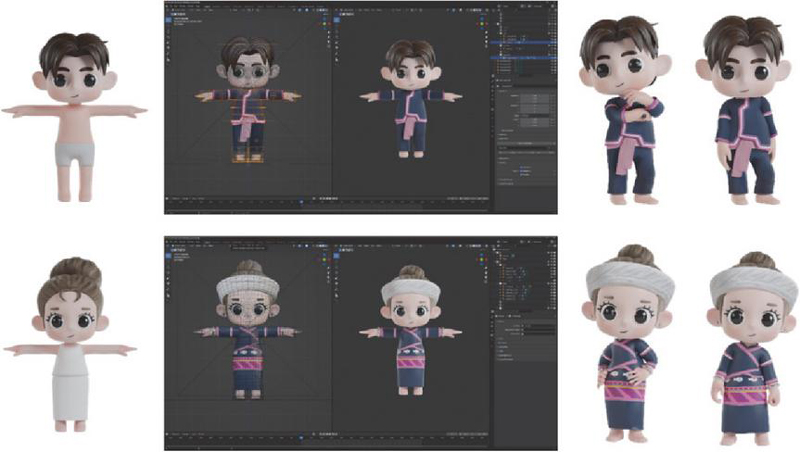
Figure 1 Iterative refinement from two-dimensional character sketches to three-dimensional prototypes, illustrating adjustments made to preserve culturally validated symbolic markers while meeting mobile interaction constraints.
As shown in Figure 1 is the 2D-to-3D translation supported consistent rendering and interactive manipulation of garment layers during customization tasks. Cultural experts confirmed that key symbolic markers remained intact throughout the conversion, ensuring representational integrity alongside technical optimization [10, 11].
3.4.2 Cycle 2: Usability and interaction refinement
The second cycle involved primary school learners interacting with functional prototypes. Observations highlighted usability challenges related to navigation complexity and visual density. Design refinements included simplified menus, clearer interaction cues, and enhanced feedback prompts.
3.4.3 Cycle 3: Learning-oriented interaction enhancement
The third cycle emphasized aligning gamification elements with learning objectives. Based on educator feedback, interaction tasks were refined to encourage active manipulation and reflective engagement rather than reward-driven repetition.
Documenting the cycles in this way enables analytical examination of how evolving design decisions shaped usability, engagement, and emerging learning behaviors across iterations.
3.5 Data Collection and Measures
Data collection followed a mixed formative approach, combining qualitative observation with exploratory quantitative indicators. This strategy aligns with the exploratory nature of DBR, where the goal is to identify learning tendencies and design implications rather than produce statistically generalizable claims [13, 15].
3.5.1 Formative learning indicators
Pre- and post-interaction indicators were used to assess short-term cultural knowledge recall related to traditional attire and ethnic identification. These indicators functioned as exploratory measures, providing insight into learning tendencies rather than inferential statistical evidence [6].
3.5.2 Construction of pre–post indicators
The pre–post indicators were designed to assess short-term recognition and recall of culturally meaningful attributes. Each indicator item presented either (a) a visual depiction of traditional attire or (b) a partially assembled outfit. Learners were required to identify the correct ethnic group or complete the missing elements of the outfit. Example items included:
• “Which ethnic group does this outfit belong to?” (multiple-choice image-based item)
• “Drag the correct accessories to complete the outfit shown.” (reconstruction item).
Each item was scored using a binary scheme (1 correct, 0 incorrect). Total scores were calculated as the sum of correct responses and interpreted as a learning-tendency index, suitable for formative evaluation but not for inferential testing. Consistent with DBR principles, scores were examined to identify emerging patterns of improvement and to inform subsequent design refinements rather than to produce statistically generalizable claims.
These measures are intentionally framed as exploratory indicators because (a) no control group was employed, (b) the instrumentation focuses on short-term recall, and (c) the study seeks to surface promising learning mechanisms rather than to establish causal effectiveness. As such, findings are interpreted cautiously and used primarily to guide iterative design rather than to support summative evaluation.
Items were reviewed collaboratively by two educators and one cultural expert to ensure age appropriateness, clarity, and cultural accuracy prior to implementation.
3.5.3 Engagement and usability observation
User engagement was examined through structured observation of interaction patterns, including task completion, time-on-task, and spontaneous verbal responses during gameplay. These observations provided contextual insight into how learners interacted with specific gamification mechanisms [5, 8].
3.5.4 Expert and educator feedback
Structured feedback from cultural experts and educators was collected to triangulate learner data. While qualitative in nature, this feedback was systematically analyzed to identify recurring concerns, validation points, and design implications, supporting analytical rigor through triangulation [9, 14].
3.5.5 Ethical considerations and methodological limitations
Ethical approval for the study was obtained prior to data collection. All participants were informed of the research purpose, and parental consent was secured for child participants. Data was anonymized to protect participant privacy [2].
Several methodological limitations are acknowledged. First, the absence of a control group limits direct comparison with traditional instructional methods. Second, sample size and exploration measures constrain statistical generalization. Third, the evaluation focused on short-term learning indicators rather than longitudinal retention. These limitations are inherent to early-stage DBR and are addressed as directions for future research rather than deficiencies of the present study [13, 15].
4 Results
4.1 Design Outcomes as Analytical Artifacts
Rather than presenting the developed application solely as a design outcome, the results are analyzed by treating key design components as analytical artifacts that reveal how interaction mechanisms support cultural heritage learning. This analytical stance aligns with design-based research principles, where artifacts are used to generate insight into learning processes and design implications rather than serving as endpoints [13–15].
Three categories of design artifacts were identified as analytically significant:
(1) Character-based cultural representation
(2) Interaction-driven customization tasks
(3) Gamification mechanisms embedded within the mobile interface.
These artifacts collectively mediated learners’ engagement with cultural content and informed subsequent design refinements across DBR cycles.
4.2 Character-based Representation and Cultural Differentiation
The character-based representation system translated traditional Tai ethnic attire into simplified Chibi-style digital characters while preserving culturally significant visual markers. Rather than functioning solely as aesthetic elements, these characters operated as visual mediators that supported learners’ differentiation and recognition of ethnic identities. Analysis of learner interaction indicated that visual attributes – such as textile patterns, color hierarchies, garment silhouettes, and accessory placement – played a central role in cultural identification and recall. To examine how visual differentiation was achieved across ethnic groups, a comparative set of character representations was analyzed following cultural expert validation.
As shown in Figure 2, visual differentiation among the five Tai ethnic groups was achieved through expert-guided emphasis on culturally specific markers rather than through increased stylistic complexity. Variations in textile motifs, color schemes, and accessory placement enabled learners to distinguish ethnic identities even when garment silhouettes appeared similar. Cultural experts confirmed that these visual distinctions preserved symbolic accuracy despite the proportional simplification inherent in Chibi-style representation. This design strategy effectively reduced the risk of cultural homogenization while maintaining accessibility for young learners [10–12].
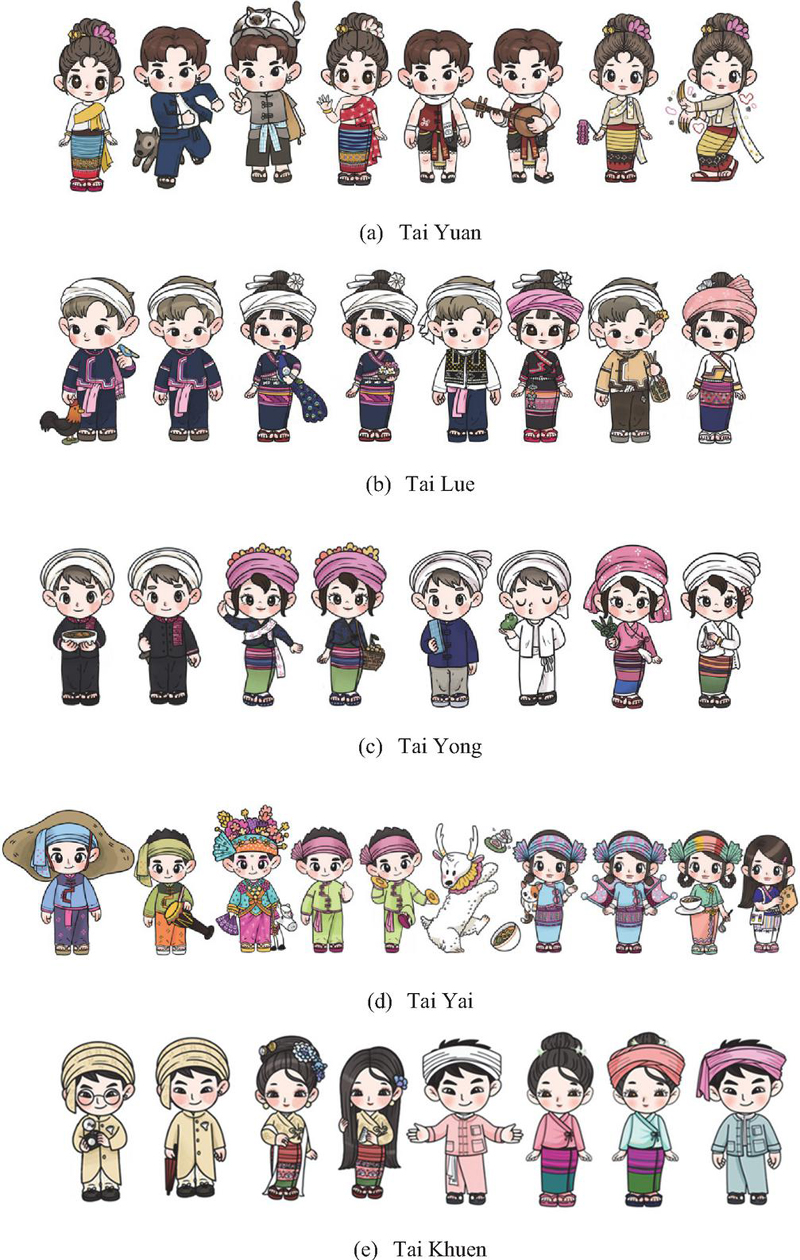
Figure 2 Comparative visualization of Chibi-style character representations across five Tai ethnic groups, highlighting culturally validated differentiation in attire, color schemes, textile motifs, and symbolic details.
Cultural expert validation further ensured that simplification was applied primarily to form and proportion, while symbolic elements remained intact, particularly in cases where multiple Tai ethnic groups share similar garment silhouettes [10, 11]. Expert-guided differentiation strategies – such as emphasizing textile motifs, color contrasts, and accessory placement – proved effective in preserving culturally meaningful distinctions without overwhelming young learners.
These findings align with prior research suggesting that character-based visual abstraction can enhance accessibility and memorability when symbolic accuracy is maintained through expert-informed design processes [10, 12, 17].
4.3 Mapping Gamification Mechanisms to Learning Indicators
To address concerns regarding anecdotal reporting, the results are presented through mechanism-oriented mapping between gamification elements and observed learning-related behaviors. This mapping highlights how different interaction designs contributed distinctively to engagement and cultural knowledge recall.
4.3.1 Interaction-driven customization tasks
Customization tasks – such as assembling traditional attire through drag-and-drop interaction – elicited the highest levels of focused engagement and cultural recall. Learners demonstrated improved ability to associate specific clothing elements with corresponding ethnic groups during post-interaction indicators. This suggests that active manipulation of cultural elements supports cognitive encoding more effectively than passive exposure [6, 8].
4.3.2 Reward-based gamification elements
Reward mechanisms, including points and visual feedback, contributed primarily to sustained engagement rather than direct knowledge recall. Learners showed increased willingness to repeat tasks but recall accuracy did not increase proportionally in the absence of reflective interaction. This finding aligns with prior studies indicating that reward-centric gamification enhances motivation but requires alignment with learning-oriented tasks to yield educational benefits [6].
4.3.3 Narrative and role-play elements
Narrative cues and character animations fostered emotional engagement and curiosity about cultural contexts. While these elements enhanced enjoyment and affective response, their impact on factual recall was indirect, supporting the view that narrative functions as a motivational scaffold rather than a standalone learning mechanism [5, 9].
4.4 Exploratory Learning Indicators
Exploratory pre- and post-interaction indicators revealed a noticeable improvement in short-term cultural knowledge recall related to traditional attire and ethnic identification. Learners demonstrated increased accuracy in matching clothing elements to ethnic groups after interacting with the application.
The pre–post indicators were constructed as short image-based and reconstruction tasks targeting recognition of ethnic identity and culturally specific costume elements. Scores were calculated using a binary scheme and interpreted as a formative learning index, allowing observation of improvement tendencies rather than statistical proof of effectiveness.
Consistent with the exploratory framing of the study, these indicators are interpreted as formative evidence rather than statistically generalizable outcomes. The results indicate learning tendencies and design implications rather than definitive causal claims, in accordance with DBR practices [13, 15].
Because the learning indicators were intentionally designed as exploratory tools and the study did not include a comparison group, the findings should therefore be read as indicative trends emerging within DBR cycles. They illuminate how learning may be developing through interaction with the application, while necessarily permitting only limited conclusions regarding overall instructional effectiveness.
This approach addresses reviewer concerns regarding anecdotal reporting while maintaining methodological transparency.
4.5 Engagement and Usability Observations
Observational data revealed high levels of learner engagement during interaction-driven tasks, particularly those involving character customization and immediate visual feedback. Learners frequently verbalized cultural observations during gameplay, suggesting active meaning-making rather than passive consumption.
Usability refinements introduced during iterative cycles – such as simplified navigation and clearer interaction cues – reduced task completion time and user hesitation. These findings reinforce the importance of aligning mobile interface design with children’s cognitive and motor capabilities, as emphasized in multimedia learning research [2, 16].
4.6 Summary of Key Findings
The results indicate that learning-oriented interaction mechanisms – particularly customization-based tasks – play a more significant role in cultural knowledge recall than reward-driven gamification alone. Character-based representation, when guided by expert validation, effectively balances accessibility and cultural integrity. Moreover, iterative refinement informed by learner observation and expert feedback contributed to improved usability and engagement across design cycles.
Collectively, these findings provide analytical insight into how mobile multimedia design decisions mediate cultural heritage learning, supporting the study’s aim to move beyond descriptive reporting toward evidence-informed interpretation.
5 Discussion
5.1 Interpreting Learning Mechanisms in Mobile Gamified Edutainment
The results indicate that learning outcomes in the proposed mobile edutainment application were driven less by surface-level gamification and more by interaction-oriented design mechanisms. Customization-based tasks that required learners to actively assemble culturally specific attire contributed more directly to cultural knowledge than reward-based mechanics alone. This finding aligns with prior research showing that gamification enhances learning most effectively when game elements are embedded within cognitively meaningful interactions rather than functioning as extrinsic motivators [6, 8].
From a mobile multimedia perspective, these results underscore the importance of interaction fidelity – the degree to which digital interaction reflects meaningful manipulation of content. Drag-and-drop customization enabled embodied engagement with cultural elements, reinforcing memory encoding and conceptual differentiation. By contrast, point accumulation and visual rewards primarily supported sustained engagement and repetition, consistent with studies that distinguish motivational effects from learning effects in gamified systems [6].
5.2 Character-based Representation and Cultural Integrity
The use of Chibi-style characters played a dual role in the learning experience. On one hand, visual simplification enhanced approachability, emotional engagement, and memorability – factors particularly relevant for young learners interacting with mobile interfaces [11, 12]. On the other hand, such abstraction introduced risks of cultural oversimplification, especially in contexts where multiple ethnic groups share overlapping visual characteristics.
The findings indicate that expert-informed differentiation is critical in mitigating these risks. By constraining simplification to form and proportion while preserving symbolic elements such as textile motifs, color hierarchies, and accessory placement, the design maintained cultural integrity without overwhelming learners. This supports prior research showing that character-based abstraction can be pedagogically effective when guided by domain expertise and ethical representation principles [10, 17, 18].
Importantly, the study highlights cultural representation in mobile edutainment as a negotiated design process rather than a fixed visual translation. Cultural meaning emerged through iterative validation and refinement, underscoring the importance of interdisciplinary collaboration in digital heritage applications.
5.3 Managing Overlapping Cultural Elements Across Ethnic Groups
One challenge identified in this study involved managing shared or overlapping cultural elements among Tai ethnic groups. Rather than attempting to artificially exaggerate differences, the design strategy emphasized subtle, yet culturally meaningful distinctions validated by experts. This decision reflects a critical stance against homogenization while avoiding distortion for the sake of visual clarity.
From an analytical standpoint, this finding contributes to broader discussions in digital cultural heritage regarding the tension between differentiation and authenticity [9, 10]. The results suggest that relative differentiation, achieved through contextual markers and comparative visualization, may be more appropriate than absolute differentiation in culturally related groups. This insight has implications for future mobile edutainment designs addressing culturally interconnected communities.
5.4 Methodological Implications of Design-based Research
The application of design-based research (DBR) was instrumental in addressing the complexity of cultural heritage learning within a mobile multimedia environment. Iterative refinement informed by learner behavior, expert feedback, and pedagogical considerations supported both practical improvement and analytical insight [13–15].
At the same time, the study illustrates methodological constraints common to early-stage DBR. The absence of a control group and reliance on formative indicators limit causal interpretation. These constraints, however, are characteristic of exploratory DBR, which prioritizes the generation of design principles and the identification of promising learning mechanisms rather than definitive summative claims [13, 15].
The study further contributes methodologically by showing how design artifacts and comparative visualizations can operate as analytical evidence rather than merely descriptive supplements, responding to critiques of design-heavy but analytically limited research in mobile edutainment.
5.5 Transferability and Scalability Beyond the Tai Context
Although the empirical case focused on Tai ethnic cultures, the findings suggest that the proposed design-based framework is transferable to other cultural contexts. The framework consists of three adaptable layers:
(1) Expert-validated cultural representation
(2) Interaction-driven learning mechanisms
(3) Iterative refinement through stakeholder feedback.
These layers can be reconfigured to support different cultural systems without replicating specific visual styles or content. From a scalability perspective, future research should incorporate simulation-based testing and deployment with more diverse user groups to examine performance across cultural, linguistic, and socioeconomic contexts. Such extensions would address reviewer concerns regarding generalizability and strengthen the framework’s applicability in broader mobile multimedia ecosystems.
5.6 Long-term Learning and Ethical Considerations
The current study focuses on short-term learning indicators and immediate engagement. While these findings are valuable for early-stage evaluation, long-term knowledge retention and sustained cultural engagement remain critical areas for future investigation. Longitudinal studies could assess how repeated interaction with mobile edutainment applications influences cultural awareness over time, addressing a key limitation identified by reviewers.
Ethically, the study highlights the responsibility of designers and researchers to balance engagement with representational integrity. The findings caution against uncritical adoption of playful aesthetics without systematic validation, reinforcing the need for culturally responsible design practices in mobile multimedia research [10, 18].
5.7 Summary of Discussion
Overall, the discussion demonstrates that effective mobile gamified edutainment for cultural heritage learning depends on how interaction mechanisms, visual abstraction, and expert validation are orchestrated, rather than on the presence of gamification alone. By integrating DBR methodology with analytical interpretation, this study advances understanding of how mobile multimedia design can support culturally grounded learning while maintaining methodological transparency and ethical responsibility.
6 Conclusion and Future Work
6.1 Conclusion
This study examined the design and evaluation of a mobile gamified edutainment application for cultural heritage learning, using Tai ethnic cultures in the Lanna region as an empirical case. The findings indicate that learning-oriented interaction mechanisms – particularly customization tasks that require active manipulation of culturally meaningful elements – supported cultural knowledge recall more effectively than reward-driven gamification. Reward and feedback systems helped sustain engagement, but meaningful learning was more closely associated with cognitively demanding interactions [6, 8].
With respect to representation, the study suggests that Chibi-style visual abstraction can remain culturally responsible when coupled with systematic expert validation. Preserving key symbolic markers while simplifying form helped avoid homogenization across closely related ethnic groups [10–12].
Methodologically, the study shows that iterative design cycles and design artifacts can support analytical interpretation in mobile edutainment research, particularly in exploratory contexts. Together, these findings offer a grounded perspective on how cultural validation, interaction design, and iterative refinement can be orchestrated to support cultural heritage learning in mobile environments.
6.2 Contributions to Mobile Multimedia and Edutainment Research
This research offers three primary contributions. First, it provides empirical insight into interaction mechanisms that support cultural heritage learning in mobile gamified edutainment, demonstrating that customization-based interaction can function as a pedagogical structure rather than merely an engagement device. Second, it proposes an expert-informed character design approach that addresses representational risks associated with visual simplification in culturally sensitive contexts. Third, it introduces a transferable conceptual framework in which cultural validation guides representation, interaction design structures learning activity, and iterative refinement links design decisions to emerging evidence. The framework offers a practical lens for future studies seeking to integrate cultural preservation with learning-driven interaction design in mobile environments.
By positioning Tai ethnic cultures as a contextual case rather than a bounded domain, the study contributes design knowledge that can inform diverse cultural learning scenarios. Collectively, these contributions respond to recurring critiques of mobile edutainment research – particularly the tendency toward design-heavy but analytically limited studies – while strengthening the relevance of the work for scholars, designers, and educators.
6.3 Limitations
Several limitations should be acknowledged. First, the absence of a control group restricts direct comparison between the proposed application and traditional instructional methods. Second, reliance on formative learning indicators and a limited participant sample constrains statistical generalizability. Third, the evaluation concentrated on short-term learning outcomes rather than long-term knowledge retention or sustained engagement.
Although the pre–post indicators revealed positive learning tendencies, the lack of a comparison group and the binary scoring format limit the extent to which causal inferences can be drawn. The indicators were intentionally designed as formative instruments to guide iterative refinement and therefore should not be regarded as substitutes for large-scale inferential testing.
These limitations are characteristic of early-stage DBR and exploratory mobile-multimedia research [13, 15]. Rather than undermining the study’s validity, they clarify the boundaries within which the findings should be interpreted and help identify productive directions for future investigation.
6.4 Future Work
Future research should extend the current framework in several directions. From a methodological perspective, controlled comparative studies could be incorporated to examine learning outcomes relative to conventional instructional approaches. Longitudinal studies are also needed to assess long-term cultural knowledge retention and sustained engagement beyond initial interaction periods.
In terms of scalability, future work should include simulation-based testing and deployment across more diverse user groups, encompassing different cultural contexts, age ranges, and socioeconomic backgrounds. Such studies would enable evaluation of how the framework performs under varied conditions and support broader generalization within mobile multimedia ecosystems.
Technologically, the framework could be expanded to support multi-language content, adaptive difficulty levels, and integration with emerging mobile technologies such as augmented reality. These extensions would further enhance the educational potential of mobile edutainment while maintaining alignment with culturally responsible design principles.
6.5 Final Remarks
In conclusion, this study suggests that effective mobile gamified edutainment for cultural heritage learning depends not on the presence of gamification alone, but on the intentional orchestration of interaction design, cultural validation, and iterative refinement. By integrating DBR methodology with analytical interpretation, the research offers a structured and ethically grounded approach to mobile multimedia design. Rather than claiming comprehensive effectiveness, it provides a foundational perspective for future studies seeking to connect cultural preservation with engaging digital learning experiences.
Acknowledgments
The authors gratefully acknowledge Chiang Mai University for providing research funding that supported the successful completion of this study. Sincere appreciation is extended to the community scholars and experts in ethnic textiles, whose invaluable insights and guidance were essential to the culturally informed development of the prototype central to this research.
The authors also thank Naplab Game Studio, College of Arts, Media, and Technology, for their contributions to the application’s game development. Additional appreciation is extended to the Creative Lanna Music Innovation Development Project, the Faculty of Fine Arts, and the Center for the Promotion of Art Culture and Creative Lanna (ACCL), Chiang Mai University, for granting permission to use the “Reang Lan Na” musical composition as background music for the Tai Life Dress Up application, thereby enriching its cultural authenticity and user experience.
Finally, the authors acknowledge the Chiang Mai University Research Ethics Committee for granting ethical approval under COA No. 126/66, ensuring that all research procedures complied with established ethical standards.
References
[1] M. Gronlund, Contemporary Art and Digital Culture. London, UK: Routledge, 2017.
[2] D. Lemish, Children and Media: A Global Perspective. Hoboken, NJ, USA: Wiley-Blackwell, 2015.
[3] W. Panichphun, Lanna Ways. Chiang Mai, Thailand: Silk Worm Books, 2005.
[4] K. Lundby, Ed., Digital Storytelling, Mediatized Stories: Self-Representations in New Media. New York, NY, USA: Peter Lang, 2008.
[5] J. Sefton-Green and D. Parker, Edit-Play: How Children Use Edutainment Software to Tell Stories. London, UK: British Film Institute, 2000.
[6] R. N. Landers, M. B. Armstrong, and A. B. Collmus, “How to use game elements to enhance learning: Applications of the theory of gamified learning,” in Serious Games and Edutainment Applications, vol. II, B. Ma, M. Oliveira, S. Petersen, and J. B. Hauge, Eds. London, UK: Springer, 2017, pp. 457–483.
[7] B. Furht, Handbook of Multimedia for Digital Entertainment and Arts. New York, NY, USA: Springer, 2009.
[8] S. Y. Gartmeier, Emotions, Technology, Design, and Learning. London, UK: Academic Press, 2016.
[9] A. D. Cheok, Art and Technology of Entertainment Computing and Communication: Advances in Interactive New Media for Entertainment Computing. London, UK: Springer, 2010.
[10] S. Brown and S. Ponsonby-McCabe, Eds., Brand Mascots: And Other Marketing Animals. London, UK: Routledge, 2014.
[11] C. Hart, Manga for the Beginner Chibis: Everything You Need to Start Drawing the Super-Cute Characters of Japanese Comics. New York, NY, USA: Watson-Guptill, 2010.
[12] S. Whitten and J. Lee, You Can Draw Manga Chibi Characters, Critters & Scenes. Mission Viejo, CA, USA: Walter Foster Jr., 2020.
[13] T. Anderson and J. Shattuck, “Design-based research: A decade of progress in education research?” Educational Researcher, vol. 41, no. 1, pp. 16–25, 2012, doi: 10.3102/0013189X11428813.
[14] A. Collins, D. Joseph, and K. Bielaczyc, “Design research: Theoretical and methodological issues,” Journal of the Learning Sciences, vol. 13, no. 1, pp. 15–42, 2004, doi: 10.1207/s15327809jls1301_2.
[15] P. Cobb, J. Confrey, A. diSessa, R. Lehrer, and L. Schauble, “Design experiments in educational research,” Educational Researcher, vol. 32, no. 1, pp. 9–13, 2003, doi: 10.3102/0013189X032001009.
[16] A. Druin and C. Solomon, Designing Multimedia Environments for Children. New York, NY, USA: Wiley, 1996.
[17] M. Jintapitak, “Cultural representation in digital art: Mascot designs expressing the diversity of Tai ethnic cultures,” in Proc. 2024 Joint Int. Conf. on Digital Arts, Media and Technology with ECTI Northern Section Conf. on Electrical, Electronics, Computer and Telecommunications Engineering (ECTI DAMT & NCON), Chiang Mai, Thailand, 2024, pp. 444–449, doi: 10.1109/ECTIDAMTNCON60518.2024.10480093.
[18] M. Jintapitak, “Digital threads of heritage: Integrating Lanna ethnic identity into character design,” in Proc. 2024 Joint Int. Conf. on Digital Arts, Media and Technology with ECTI Northern Section Conf. on Electrical, Electronics, Computer and Telecommunications Engineering (ECTI DAMT & NCON), Chiang Mai, Thailand, 2024, pp. 348–352, doi: 10.1109/ECTIDAMTNCON60518.2024.10480051.
Biography

Manissaward Jintapitak received her Ph.D. in knowledge management from Chiang Mai University, Thailand. She also received an M.Arch. in Architecture and an M.Ed. in Educational Technology from Chiang Mai University, and a B.F.A. in Interior Design (Second-Class Honors) from Bangkok University. She is currently a lecturer at the College of Arts, Media and Technology, Chiang Mai University. Her research interests include knowledge management, creative communication, collaborative learning, digital edutainment, and design-based research in technology-enhanced learning environments.
Journal of Mobile Multimedia, Vol. 22_1, 151–174
doi: 10.13052/jmm1550-4646.2216
© 2026 River Publishers