Wi-Fi for Affordable Broadband & 5G in Rural Areas
Kishore Kumar Thakur1,* and Ramjee Prasad2
1IETE University, Ranchi, Chairman, IETE Ranchi Centre, Jharkhand, India
2Future Technologies for Business Ecosystem Innovation (FT4BI), Aarhus University, Denmark
E-mail: kkthakurhyd@gmail.com; ramjee@btech.au.dk
*Corresponding Author
Received 18 September 2020; Accepted 30 November 2020; Publication 26 January 2021
Abstract
The importance of Internet in our lives today cannot be overemphasized. So much so that access to Internet has been declared a fundamental right of citizens in several countries such as Finland, Spain, and Greece [1]. In most of the developed countries, high-speed Internet connectivity is enabled through wired communication infrastructure such as Fiber-to-the-Home (FTTH) and Very high bit-rate Digital Subscriber Line (VDSL). Unfortunately, the situation is not particularly encouraging in developing countries due to non-availability of such a pervasive communication infrastructure. The difference in the fiber-deployed-to-population ratio across developed and developing countries further underscores this disparity; while this ratio is 1.2 in USA, it is barely 0.1 in India [2]. Owing to this inadequacy of fiber/DSL availability, cellular access technology has emerged as the primary broadband access mechanism in developing countries.
However, the penetration of cellular network is limited in rural areas as its deployment becomes unviable due to challenges such as low average revenue per user, sparse population density, and intermittent availability of electricity. This situation leaves majority of the rural people unconnected thereby creating a massive rural urban digital divide. The next generation cellular system along with the use of unlicensed Wi-Fi Technology can bridge this divide if we overcome the above-mentioned challenges. However, since the Fifth Generation (5G) cellular technology has focus on requirements such as 10 Gbps data rate, 1 ms latency, and very high speed mobility, the problems of coverage and affordability are likely to persist, further widening the digital divide [3]. This article explains how Wi-Fi is being used for affordable high speed broadband in rural areas. A successfully implemented case study of Jharkhand state is also presented, and it can be adopted as reliable business model for 5G or 5G type services in rural areas [4].
Keywords: Broadband, Wi-Fi, 5G.
1 Introduction
We are stepping into a new age of mobile communication where everything is expected to be connected: high-speed information sharing shall be enabled between all kinds of devices, i.e. cell phones, tablets, smart watches and wearable’s, at any time and no matter where we go. Thus, to meet the ever-increasing user demand in high data rate service with seamless connectivity, 5G wireless access must extend far beyond the previous generations of mobile networks with revolutionary solutions utilizing new radio access technologies.
A cross-nation study of mobile broadband affordability in ethic perspective pointed out that affordable broadband internet connectivity should be considered as a vital aspect in social justice and 5G is at the danger of losing its next million users entirely without affordable wireless access. It is widely observed in global map the close relation of internet connectivity gap and GDP growth gap between urban and rural communities [5]. The rapid growth in internet connectivity and mobile internet access has accelerated the economic boost in the urban communities around the world, and it in turns leads to improvements in public service sectors, such as education, health, and banking, and attract investment in business and industrialization, which motivates further development of the region. Thus, there is an urgent need for continuous efforts from governments and information and communication community to devote in development of mobile broadband access network and related researches to connect the remote rural areas.
Mobile access to internet in all areas is considered to be one important component of social justice that cannot be compromised due to economic reasons, just as the equal rights to other important resources for everyone like water, electricity and education. Low revenue per user in rural area compared with case in urban scenarios has been dragging down the development of mobile network in rural areas for years. With growing attention and support from governmental and academicals filed, In this scenario our Government should motivate network operators to better drive network development in rural areas, by proposing and evaluating cost efficient solutions targeting rural scenario.
Rural areas of countries continue to be sparsely covered and are not considered as a viable business case by telecommunication operators. Recent growth of tele-density in urban areas, fuelled by mobile technology, has shown that the digital gap between rural and urban areas has widened. Rural population needs to be provided with mobile telephony with data and wireless broadband access in addition to simple voice mobile telephony, by connecting remote areas to the broadband core networks. Choosing efficient, cost-effective and fast-deployment technologies – whether wired or wireless networks – will improve digital accessibility.
The key challenges for the provision of telecommunication services in rural areas are driven by both technological and economic considerations. Setting up backhaul connectivity remains a high-cost exercise. Erratic power supply or complete lack of power sources is a major barrier, wherein Solar Power supply is increasingly becoming a viable alternative. However, the requirement to maintain alternate backup systems raises capex costs substantially.
There is a gap in internet adoption between rural and urban areas and a lack of infrastructure is responsible in many cases for this division. In 2019, enabling digital connectivity in rural areas is still an underlying issue for the developing nations; however, there are upcoming developments in place to ensure there are ranges of technologies that can deliver next generation connectivity.
To achieve country-wide Internet access is an important goal to sustain the progress of our societies. Nevertheless, there is important gap between the urban and rural areas in terms of Internet Connectivity that is mainly due to a lack of interest by Internet Service Providers (ISPs) in deploying a wired infrastructure in these areas; such lack of interest is expected to be maintained since the estimated Return of Investment (ROI) is not attractive. In addition, it is widely accepted that new information and telecommunication technology are needed to alleviate a wide range of obstacles for economic and social development in rural areas. This is particularly true for internet accessibility, since it offers a global platform for retrieving and sharing information. During past few years, there has been a remarkable progress in the most developed countries in terms of telecommunications facilities. However, outside the main urban areas, there are significant handicaps that make Internet connectivity a complex and costly task.
2 Importance of 5G for Rural
We are stepping into a new age of mobile communication where everything is expected to be connected: high-speed information sharing shall be enabled between all kinds of devices, i.e cell phones, tablets, smartwatches and wearables, at any time and no matter where we go. Thus, to meet the ever-increasing user demand in high data rate service with seamless connectivity, 5G wireless access must extend far beyond the previous generations of mobile networks with revolutionary solutions utilizing new radio access technologies.
A cross-nation study of mobile broadband affordability in ethic perspective pointed out that affordable broadband internet connectivity should be considered as a vital aspect in social justice [6] and 5G is at the danger of losing its next million users entirely without affordable wireless access. It is widely observed in global map the close relation of internet connectivity gap and GDP growth gap between urban and rural communities. The rapid growth in internet connectivity and mobile internet access has accelerated the economic boost in the urban communities around the world, and it in turns leads to improvements in public service sectors, such as education, health, and banking, and attract investment in business and industrialization, which motivates further development of the region. Thus there is an urgent need for continuous efforts from governments and information and communication community to devote in development of mobile broadband access network and related researches to connect the remote rural areas.
Mobile access to internet in all areas is considered to be one important component of social justice that cannot be compromised due to economic reasons, just as the equal rights to other important resources for everyone like water, electricity and education. Low revenue per user in rural area compared with case in urban scenarios has been dragging down the development of mobile network in rural areas for years. With growing attention and support from governmental and academically filed, In this scenario our Government should motivate network operators to better drive network development in rural areas, by proposing and evaluating cost efficient solutions targeting rural scenario [7].
5G is expected to handle services that 4G cannot handle efficiently, such as IOT services, M2M etc. Therefore, 5G is one technology, in which service possibilities exist before the network is perfected. In addition, some of these services will be of great value to rural areas. An example of such services is platform services aimed at enhancing commercial activities. It was cited that network operators shy away from rural areas because they are not commercially viable. However, research has proven that mobile and wireless networks can also enhance the commercial viability of rural areas. An example is the mobile money phenomena in Africa, South America and Asia. The secret to such endeavours has been the provision of tailor-made mobile or wireless services that support existing commercial activities in such rural areas.
However, with the expected technical and operational capabilities of 5G; the existing and near future services these will no more be occurrences but reality. This is because, for the first time, there will be a mobile network where specialized services can be delivered to meet specific commercial, social and political needs. In addition to the network and service possibilities, it is expected that the cost of deploying 5G will be reduced compared to 4G. Also in most part of the world, there are different arrangements, where the public sector forms a partnership with a network operator and a community to facilitate a telecom network. These partnerships provide inspiration on a financial and organizational strategy that may be adapted to extend 5G infrastructure and services into rural areas. These visions, arrangements and cost advantages create possibilities towards extending 5G infrastructure into rural areas, by extending base stations delivering relevant services to meet the commercial needs of a rural area.
3 The Possible Solutions
Knowing the fact that there is no business case for the telecom operators in rural areas. So, there arises a question – Are we prepared for that and how this rural-urban digital divide will be bridged? Actually, objective is to reach the bottom of India’s digital pyramid with the inclusion of these far-flung rural areas, Digital India programme of Govt. of India is really helping to bridge the digital divide, but lot is still to be done. It is the fact that rural Indians have been increasingly getting online and are expected to catch up with urban India by 2020 where 48% of the online population will be from Rural India. But such trends would exist during 5G also? That we have to check.
The penetration of the broadband networks in such remote and rural areas demands new thinking and methods to make the broadband network operations economically viable. Suitably modified deployment architecture needs to be explored to address the rural broadband internet requirements and innovative business model developed to operate in a sustainable mode [8]. Actually, the connectivity requirements of the rural areas are very different from that of the urban areas. Thus, in order to make rural broadband connectivity better feasible and have better penetration in the un-served and under-served remote and rural areas, we need low cost, indigenous and high-performance solutions.
3.1 A Tested Solution of Jharkhand
One of the best solutions which is already implemented in Jharkhand state by provisioning of LWE BTS in rural areas, (funded by Govt. of India)and provisioning of Wi-Fi services on these LWE towers & around, (sponsored by Jharkhand state government) is a perfect solution or can be a Business model also. A detail report of this solution implementation in Jharkhand state is given in section-4 and further 5G or 5G type services can also be given with the help of latest Wi-Fi in pockets of rural areas based on this or similar models.
4 Possibility of Rollout of 5G or 5G Type Services in Rural Areas
It is useful and timely to pose the question on the future of communications – a future that talk of 5G & also goes beyond 5G. Notably, it is also important to understand which technology disruptions are required to enable ‘Wi-Fi Technology’ [9] not only to survive but also to thrive in an increasingly competitive technology and business landscape for affordable solutions.5G is the next big revolution in mobile connectivity, is expected to be able to handle the increasing traffic related to the higher need for mobile data. The 5G wireless technology aims at providing better mobile broadband connectivity and speed for a wider range of customers.
The cellular technology is mostly an urban technology that has been unable to serve rural areas in same manner. This is because the traditional cellular models are not economical for areas with low user density and lesser revenues. In 5G cellular networks, the coverage dilemma is likely to remain the same or increase only, thus widening the rural-urban digital divide further. It is about time to identify the root cause that has hindered the rural technology growth and analyse the possible options in 5G architecture to address this issue. We firmly believe that it can be accomplished [10].
Our aim is to ensure the availability of Internet in a cost-effective manner. This is only possible if the 5G rural model adopted is able to attract the attention of service provider in the first place. By focusing on cost effectiveness, parameters such as throughput and latency can be compromised because these are managed according to the user requirements and are not deemed critical for a new user located at a remote/sparsely populated area. In addition, the infrastructure cost has also to be practicable because the vendor would never risk a huge sum for a pilot project. Since the profit-loss breakeven point would occur at lower revenues, therefore more rural population would be encouraged to reap the benefits of low-cost Internet. Once the rural access to Internet gains momentum and results an increase in number of users, the core problem would be addressed and would subsequently be wiped off the ‘investment blacklist’ [11] from a service provider’s perspective, then the increased rural demand would motivate the service providers in facilitating the users with better connectivity and improved performance that would invariably lead to technological advancement in the rural areas and bridge this technology gap [12].
In the recent years, there has been a significant growth of cellular wireless communications. Despite this growth, a large part of the world is still deprived of broadband connectivity. For example, in India, while the number of cellular subscribers is over 1.2 Billion, the broadband penetration is mere 600 million [13]. Moreover, the broadband penetration in rural areas is even marginal. It is estimated that 3–4 Billion population of the world still do not have access to Internet. Using existing cellular wireless systems including Third Generation (3G) and Fourth Generation (4G) technology, there are significant challenges in providing broadband access. These include – High capital and operations expenditure with low Average Revenue Per User (ARPU), lack of affordable backhaul, energy cost which is worsened by lack of reliable power supply and geographic accessibility including issues such as right of way.
These challenges require a re-thinking on developing next generation wireless system for connecting the unconnected world. Mobility is not a major driver for designing such systems, rather fixed primary broadband access is the most important requirement. A simplified IP based network architecture with dynamic spectrum sharing and a low-cost wireless backhaul can set the vision of 5G for Rural Areas for connecting the unconnected [14].
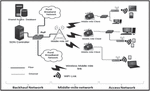
While affordable fixed access can be provided using a dense deployment of IEEE 802.11 based Wi-Fi Hotspots, one of the major impediments for widespread deployment of such Hotspots is the lack of connectivity to Wi-Fi access points. Fiber [15] connectivity in terms of backhaul is limited in such countries and may currently reach only at designated points in a town or city. In such a scenario, the problem of connecting the core network to the access network can be addressed using wireless middle-mile network as shown in Figure 1.
This paradigm opens up several directions for technology solutions. These include dynamic spectrum sharing for multi-operator co-existence, scalable control and management of such access and middle mile network through software defined network controller among others.
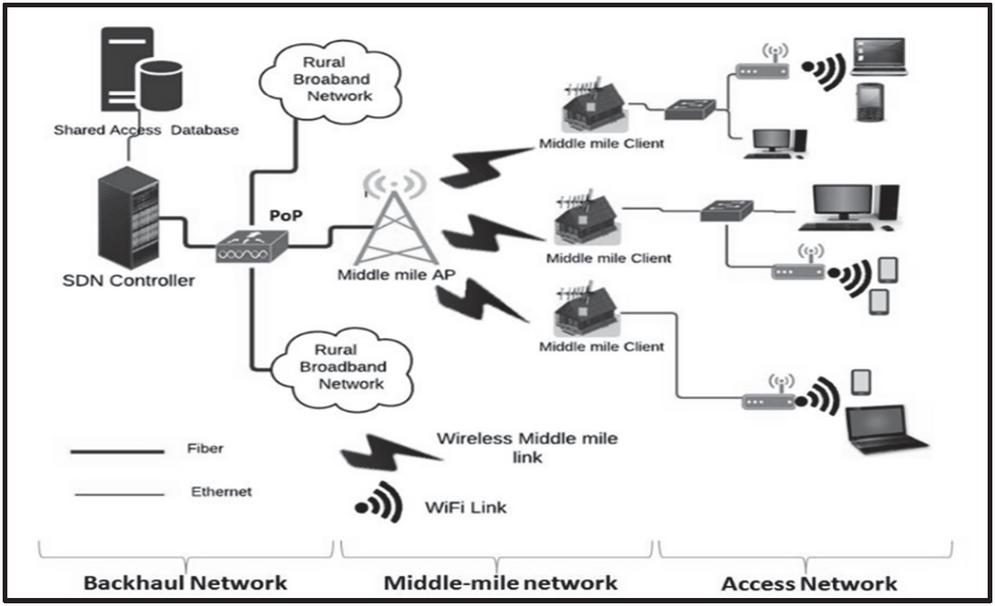
Figure 1 Envisioned architecture for Backhaul issues.
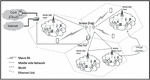
To enable a broadband access network that is calibrated according to rural connectivity requirements. We can consider a tiered wireless communication network involving a Core Network and an Access Network as shown in Figure 2 below. Access Network facilitates last mile connectivity to end-users, whereas Core Network provides connectivity with the external data network. In some scenarios, Access Network may also provide connectivity with the external data network. Access Network, considered here, is heterogeneous in nature, i.e., it consists of a Macro Base Station (BS) and a number of Wi-Fi Access Points (WLANs). The Macro BS is collocated with the PoP, which is available approximately the given rural area. In addition, provides blanket coverage to the end users in a large geographic area. Owing to the clustered settlement of people in rural areas, Wi-Fi Access Points are deployed only in clusters.
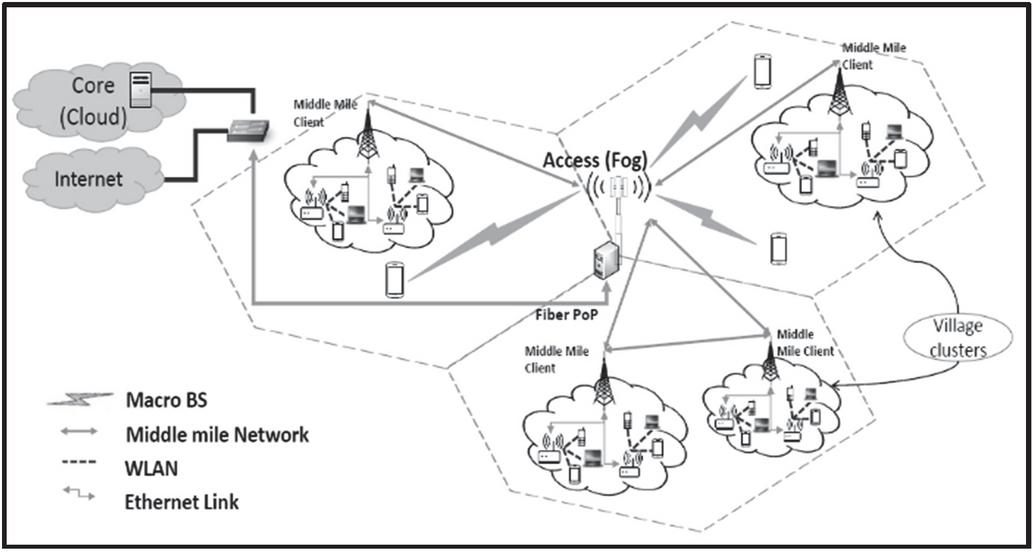
Figure 2 Deployment architecture for 5G in rural.
IEEE 802.11 based Wi-Fi Access Points can be chosen for the last mile as it facilitates fixed high-speed broadband access to the end-users in a cost-effective manner. The major challenge in designing the Access Network is to backhaul the traffic generated by WLAN APs. This is enabled via wireless Middle Mile Network that connects the WLAN APs to the PoP. The architecture proposed here (Fig 2) mirrors the rural population distribution and helps in efficient delivery of services to the users.
There’s a lot of work happening in Wi-Fi industry around how do you take Wi-Fi connectivity and make it work better, but also make it work better in conjunction with other technologies whether they come from the Wi-Fi side of things, the broadband side to connect people, or the narrowband side to connect things. 5G [16], which is expected to make its debut in fixed-wireless form in 2019/2020, also the 802.11ax chipsets are already being announced and products are likely to hit the market soon. We have to ensure their commercial rollout, and whatever roadmap or arrangement we take should have concurrent milestones.
Here are some other reasons why Wi-Fi will continue to thrive in a complimentary way along with the launch of new cellular technologies like 5G:
• The Wi-Fi market is growing, not shrinking. According to an international survey report by Market stand Markets, the global Wi-Fi market will be worth 33.6 billion by 2020. Wi-Fi traffic, from both mobile and Wi-Fi-only devices, will account for more than 50 percent of total IP traffic by that time.
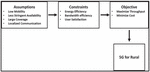
• Also, Wi-Fi understands dense deployments. The 5G future is dense. Grids will be composed of small cells and ubiquitous antenna to enhance capacity and coverage – a scenario that Wi-Fi already understands. Also, the rural Last Mile connectivity is possible using WLANs only because Wi-Fi provides best implementable business strategies for rural & remote geographies. The detailed Scheme is shown in Figure 3.
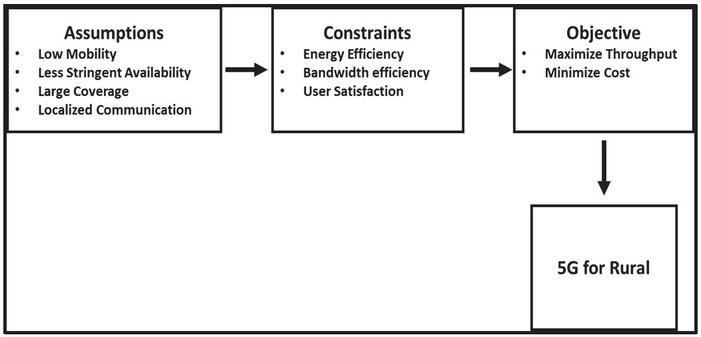
Figure 3 Wireless broadband network for rural connectivity – aimed at providing affordable primary broadband connectivity to rural areas.
5 Wi-Fi Services in LWE Areas of JHARKHAND [17]
Poor socio-economic indicators characterize the Left wing Extremism (LWE) affected areas in India. Lack of infrastructure development has been identified as one of the causes for its backwardness. Telecom connectivity (both voice & data) would help in fostering economic development of the region and enable security forces to deal effectively with extremism in their areas.
In recent years, mobile connectivity has emerged as one of the transformational phenomena. Mobile telephony has transformed access to communication in emerging markets. However, rural areas have traditionally been no-go for incumbent telcos as far as Data Connectivity is concerned due to perceived lack of a business case. Today, almost 90% of the country’s population is covered by mobile phone signals, yet there are still two third of the population who do not have access to voice and data connectivity.
Earlier, reaching out to the rural areas presented particular technology and economic challenges. Solutions that worked typically well in urban settings – copper, fibre, cable and mobile – were unreliable in rural areas or prohibitively expensive. For example, premises near bigger town, small towns and villages are often too dispersed to make the rollout of fast fixed-line solutions economically viable. In these, there are limits on asymmetric digital subscriber line (ADSL) speeds and the cost per premise for fibre to the node (FTTN) is several thousand dollars. At the same time, rural areas are not remote enough to justify satellite technology’s incremental cost per unit of performance. Therefore, we came out with our quite efficient and innovative technological solution, which made the use of unlicensed Wi-Fi Technology.
On August 20, 2014, the Union Cabinet approved the extension of mobile telephonic services to 2,199 locations affected by Left Wing Extremism (LWE) in the states of Andhra Pradesh, Bihar, Chhattisgarh, Jharkhand, Maharashtra, Madhya Pradesh, Odisha, Telangana, Uttar Pradesh and West Bengal. Bharat Sanchar Nigam Limited (BSNL) executed the Project. BSNL through VNL has already installed towers at these locations giving a network coverage to many villages as well as camps of security forces. BSNL has created 782 GSM sites in the un-connected areas of the state of Jharkhand under LWE project phase-I.
These 782 sites are pure 2G GSM BTSs indigenously developed by VNL, equipped with solar panels and last mile RF connectivity to take care of any outage due to fibre cut & power failures. These BTSs are low power equipment designed to cope up to 72 hours of “black out” environment also. Initially even GPRS service was not provided. So with commission of these towers though very good mobile services were made available in these in-accessible areas, but without any data services.
Traditionally entering a typical rural area for private telecom operators’ means not just capex & opex issues but the perception of existing hostility in these regions make the organisation vulnerable and think twice before they enter these areas. However, on initiative of BSNL, state government came forward for viability gap funding for provision of Wi-Fi services at these LWE towers with revenue gap funding. After that, BSNL with GoIP & Blue-Town (as technology partner of GoIP) took this project on revenue share basis.
BSNL & state government initiative to promote an alignment between technology, demand, standards & regulations has enhanced efficiency in network reach into zero-data access regions. Now people living in these regions have access to better education, better and timely medical services all because of BLUETOWN’s efforts as Managed Hotspot Service Provider (MHSP) with BSNL, which complimented the Govt. initiatives to bridge the Digital Access deficit.
6 Wi-Fi Broadband Access on LWE Towers Project: Data Limitation of Existing LWE 2G Services
As on these existing 2G GSM BTSs, there are 48 timeslots for voice and data both. Effective speed of data is only 20Kbps. This speed was not sufficient for data communication and cashless transaction. As Govt. of Jharkhand is trying to expand digital network in rural areas so that the mass can get benefit of e-Governance services. For effective implementation of Digital India scheme, data speed should be high. Hence, Govt. of Jharkhand decided to install Wi-Fi hotspots in those areas using existing mobile towers.
The objectives of this project were:
a. High speed connectivity to citizens
b. Provisioning of data connectivity to Govt. offices
c. Penetration of Digital India Programme in LWE areas.
BSNL issued the Work Order in 2016 for setting up, own and operate Wi-Fi Hotspots at public places through BSNL POP on Revenue Share basis to GOIP, in turn to Blue-Town business & Technology partner.
Project was monitored directly by DoIT (Government of Jharkhand) or the agency authorized by DoIT. DoIT or its authorized agency will inspect working of Wi-Fi system.
6.1 Responsibilities of BSNL-BLUETOWN Partnership for the Project
Roles and responsibilities of BSNL-BLUETOWN and the activities expected to be carried out in the process are summarized below:
1. BSNL ensured Internet Bandwidth of 2Mbps with Public IP Addresses at all the LWE Locations.
2. BLUETOWN Installed operated and maintained the equipment required to create Wi-Fi hotspots at these LWE sites.
3. Uptime SLA: Uptime of 98% is guaranteed, as below:
– Avg. annual uptime full payment
– Avg. annual uptime and 98%, 4% shall be deducted
– Avg. annual uptime , full 10% payment shall be deducted at the end of year.
4. Revenue Sharing: BSNL will share the revenue (received from the Jharkhand State Government i.e. Bulk Revenue and any revenue received from Retail Customer Recharges i.e. Retail Revenue) as per the Work Order Referred above.
5. All DoT Guidelines: Regarding Wi-Fi Hotspots and user interfaces and records were to be maintained.
6. BLUETOWN have to provide dashboard for monitoring of the function of Wi-Fi system.
6.2 The Solution Provided for this Project
All the Wi-Fi network equipment’s such as antennas, Access Points and Controller are utilizing the BSNL towers and Backhaul infrastructure. The special equipment integrated is a miniaturized, low-powered and low-cost Wi-Fi Access Point Controller powered by solar panel and rechargeable SMF batteries. The power requirement of 3APs and a Controller being less than 20 Watts only, the system can work up to 30 hrs. Without any charging. The AP Controller provides the functionalities of Power control, Charge control, RF control, Content server, bandwidth management, quality, security and authentication management as well as POE for APs. In its functionality, it is similar to BTS of a cellular network and facilitates the creation of a managed Wi-Fi Hot-spot, while utilizing off-the-shelf outdoor APs.
The innovative solution deployed is summarised, as below:
Outdoor Solution – Everything on Tower
• Access Point Controller (Housed in an IP67 weatherproof outdoor box)
• Three weatherproof Sector Antenna assembly located on BSNL existing Tower. This includes following components;
(a) 120 Degree Sector Antennae’s (3 in Number)
(b) Bandpass filters (3 in Number)
(c) 2.4 GHz Access Points (3 in Number)
(d) Backplates to support the Antennae assembly (3 in Number)
(e) Antennae Mounts
(f) Solar Power system including the following: Solar Power Unit with Batteries (Housed in an outdoor IP67 box); Solar Panel; Solar Cables & Connectors.
(g) 4th Access Point with an OMNI/Sector Antennae (as per requirement) to be installed at a location upto 1 Kms (like a school, PHC or GP etc.) away from the tower
(h) Internet backhaul was provided by BSNL using existing network.
6.3 Salient Features of the Project
1. Range of 0.5 Km radius with 15-meter tower height and 0.3 Km radius with 5-meter (rooftop) mast was achieved, while restricting the APs power to permissible limits.
2. System can sustain for 30 hrs. Without availability of any electricity and can charge itself through solar panel beyond that.
3. All the requirements of Authentication were achieved through pre-paid coupons or OTP based authentication through mobile connection.
4. Users experience has been better than 3G Data connection even it can be said as 4.5G like experience.
5. Use of miniaturized SMF batteries in the project having 30 hrs capacity without charge.
6. Miniaturized, integrated Wi-Fi Access Point Controller powered by solar power which were capable of handling:
• AAA Authentication
• Bandwidth Management & RF Control
• Power Control & Battery Management
• Remote Access for system maintenance
7. Extremely low voltage (16V) and power consumption (20W) of access point controller and outdoor access point.
8. Use of existing infrastructure of BSNL to reduce the CAPEX.
6.4 General Network Architecture
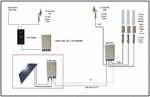
The Figure 4 network architecture was implemented at the LWE sites most of which are located in remote areas. The Wi-Fi infrastructure was installed at existing BSNL towers where Backhaul was provided by BSNL, through unlicensed radio channel.
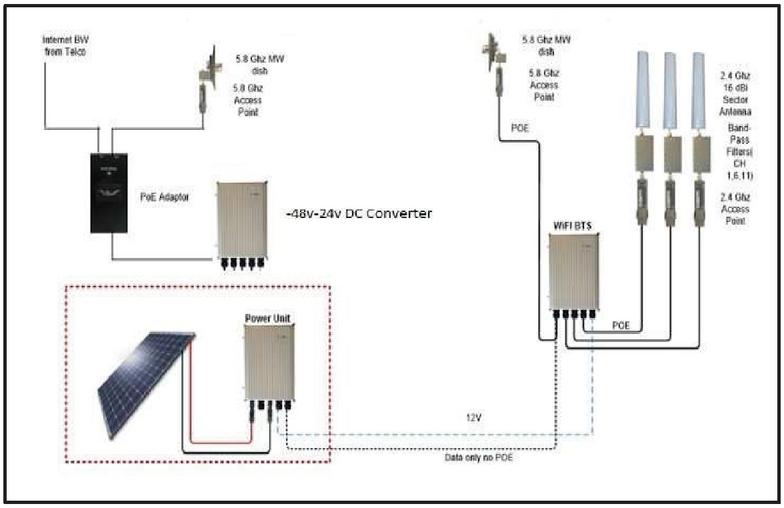
Figure 4 LWE architecture.
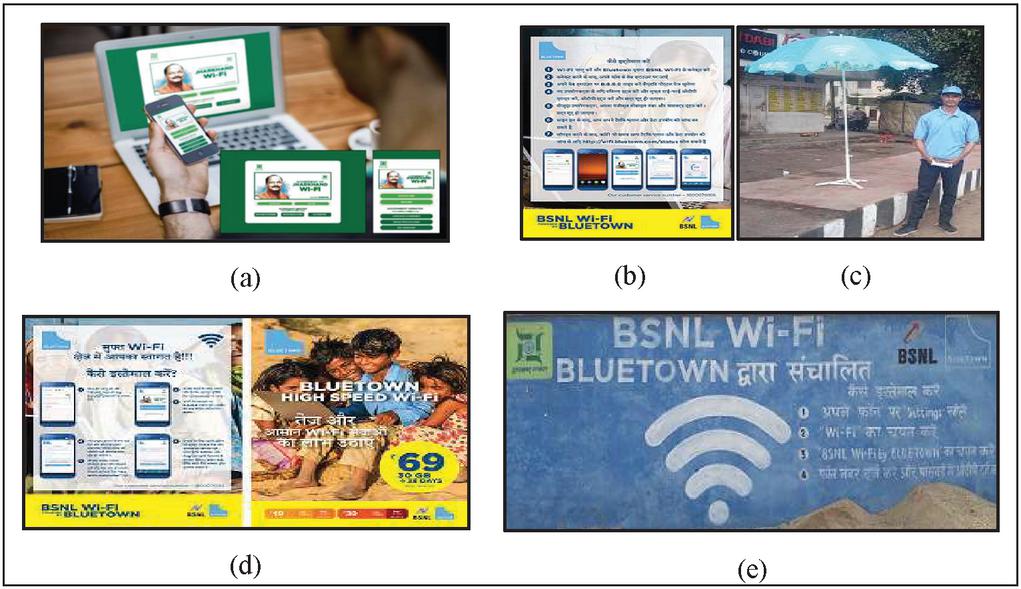
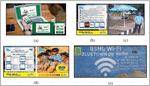
Figure 5 Posters for knowledge awareness (a) mobile app (b) banner (c) poster leaflets (d) umbrella with promoter (e) wall painting.
6.5 Promotional and Educational Efforts
i. As the project is funded by state government under viable gap funding. So, the opening page is designed for state government.
ii. Figure 5 shows, Wall painting Banners and Posters were used for proper knowledge awareness in public in addition to those Leaflets were also distributed for value addition.
iii. Organization of road shows& door to door campaign to do survey as well as spread awareness of services with practical demonstration of how villagers can use different government schemes & e-commerce services.
7 Conclusions
Success of this project has vindicated our belief that there is a sustainable business case for Broadband in Rural parts of the country whereas the incumbent Telco’s are not there yet as they are concentrating in the urban areas and it has been showcased that this LWE project, was mainly possible because of our innovative solution (Low cost, Low maintenance, Low power and our “Managed Service” based business model.
BSNL-BLUETOWN partnership vision & mission would enable the people living in rural areas with no data connectivity to the world of Internet at an affordable price. In addition, with each hotspot being created there was one job also that was created as a local person would be required to do the sales/marketing & basic maintenance of the Wi-Fi hotspot.
This synergy strategy amongst manufacturers, R&D centres, and service providers for achieving efforts for deployments into the remotest parts of the country would eventually lead to a roadmap for Grand India Dream. Because a good connectivity is citizen right, they say, not a privilege.
References
[1] https://www.diplomacy.edu/blog/right-access-internet-countries-andlaws-proclaim-it
[2] Broadband Infrastructure for Transforming India https://www2.deloitte.com/in/en/pages/technology-media-andtelecommunications/articles/broadband-infrastructure-for-transformingindia.html
[3] I. Vision, “Framework and overall objectives of the future development of IMT for 2020 and beyond,” International Telecommunication Union (ITU), Document, Radio communication Study Groups, 2015.
[4] Cullen, R. 2001. Addressing the digital divide. Online information review, 25 (5): 311–320.
[5] Mutula, S.M. 2002. The digital divide in sub-Saharan Africa: implications for the revitalisation and preservation of indigenous knowledge systems. In SCECSAL 2002: From Africa to the world-the globalisation of indigenous knowledge systems. Proceedings of the 15th Standing Conference of Eastern, Central and Southern African Library and Information Associations, 15-19 April 2002, Caesars Gauteng Conference Centre, edited by R Snyman. Pretoria: Library and Information Association of South Africa, 119–141.
[6] Paul, J. 2002. Narrowing the digital divide: initiatives undertaken by the Association of South-East Asian Nations (ASEAN). Program: electronic library and information systems 36(1): 13–22.
[7] Salinas, R. 2003. Addressing the digital divide through collection development. Collection building, 22(3): 131–136.
[8] Sheth, A., Nedevschi, S., Patra, R., Surana, S., Subramanian, L., and Brewer, E. Packet Loss Characterization in WiFi-based Long Distance Networks. IEEE INFOCOM (2007).
[9] R. Flickenger, S. Okay, E. Pietrosemoli, M. Zennaro, and C. Fonda, “Very Long Distance Wi-Fi Networks,” in Proc. 2nd ACM SIGCOMM Workshop on Networked Systems for Developing Regions, 2008.
[10] I. Latif, F. Kaltenberger, R. Ghaffar, R. Knopp, D. Nussbaum, H. Callewaert, and G. Scot, “Performance of LTE in Rural Areas-Benefits of Opportunistic Multi-User MIMO,” in Proc. 22nd IEEE International Symposium on Personal Indoor and Mobile Radio Communications, pp. 2004–2008, 2011.
[11] Topology and Orchestration Specification for Cloud Applications Version 1.0. 25 November 2013. OASIS Standard. [Online] http://docs.oasisopen.org/tosca/TOSCA/v1.0/os/TOSCA-v1.0-os.htm
[12] A. Kumar, A. Karandikar, G. Naik, M. Khaturia, S. Saha, M. Arora, and J. Singh, “Toward enabling broadband for a billion plus population with TV white spaces,” IEEE Communications Magazine, vol. 54, pp. 28–34, July 2016.
[13] Telecom Regulatory Authority of India, the Indian Telecom Services Performance Indicators, October-December, 2018, New Delhi, India, 4th April, 2019
[14] L. Chiaraviglio, N. Blefari-Melazzi, W. Liu, J. A. Gutierrez, J. Van De Beek, R. Birke, L. Chen, F. Idzikowski, D. Kilper, J. P. Monti, et al., “5G in rural and low-income areas: Are we ready?,” in ITU Kaleidoscope: ICTs for a Sustainable World (ITU WT), 2016, pp. 18, IEEE, 2016.
[15] Connecting the Unconnected: Towards Frugal 5G Network Architecture and Standardization by Meghna Khaturia, Pranav Jha and Abhay Karandikar
[16] https://www.qorvo.com/resources/d/qorvo-5g-or-wi-fi-6-11ax-white-paper
[17] Long Tail – Walking the Extra Mile on Rural Broadband Business by Satya N. Gupta ISBN-10: 1684665841; ISBN-13: 978-1684665846
Biographies

Kishore Kumar Thakur, FIETE is Hon. Director (Admin.), IETE University, Ranchi, Jharkhand, India and also the Chairman, IETE Ranchi Centre. He recently retired as the Chief General Manager Telecom, Jharkhand Circle in February 2020. He obtained his B. Tech. (Electronics and Communications Engg.) from BIT Sindri in 1983 and MBA (Marketing) from BR Ambedkar Open University, Hyderabad in 2009. Currently pursuing PhD under the supervision of Ramjee Prasad, Professor, Future Technologies for Business Ecosystem Innovation, Aarhus University, Herning, Denmark. Possesses 37 years of work experience. Served as Assistant Computer Engineer in TISCO Jamshedpur.
Worked in Bharat Sanchar Nigam Ltd, Department of Telecommunications for last 33 Years, mostly in Hyderabad Telephones. Worked with all technologies, namely manual exchanges, strowger, cross-bar, E10B (Local/Tax), C-DOT, System-X, EWSD, OCB, 5ESS, LG (CDMA) and GSM. Associated with development works during the periods of major technological changes.
Worked for one year as DGM in Nagaland in2002–2003. Served as GMTD, at Cuddapah and Warangal, districts and as GM (Marketing), AP Circle Hyderabad in-charge of sales and distribution, franchisee management, marketing and PR activities. Also worked as GM (Mobile), J&K Circle for 2 years and as GM (Projects) Hyderabad for two years. Attended workshops, seminars and training on switching, transmission, mobile and management courses. Also attended comprehensive Lucent Technology training in the USA on 5ESS switch. Leading a balanced life with Sahaj Yoga Meditation and advise others also the same.

Ramjee Prasad is a Professor of Future Technologies for Business Ecosystem Innovation in the Department of Business Development and Technology, Aarhus University, Denmark. He is the Founder President of the CTIF Global Capsule (CGC). He is also the Founder Chairman of the Global ICT Standardisation Forum for India, established in 2009. GISF has the purpose of increasing of the collaboration between European, Indian, Japanese, North-American and other worldwide standardization activities in the area of Information and Communication Technology (ICT) and related application areas.
He has been honored by the University of Rome “Tor Vergata”, Italy as a Distinguished Professor of the Department of Clinical Sciences and Translational Medicine on March 15, 2016. He is Honorary Professor of University of Cape Town, South Africa, and University of KwaZulu-Natal, South Africa.
He has received Ridderkorset af Dannebrogordenen (Knight of the Dannebrog) in 2010 from the Danish Queen for the internationalization of top-class telecommunication research and education.
He has received several international awards such as: IEEE Communications Society Wireless Communications Technical Committee Recognition Award in 2003 for making contribution in the field of “Personal, Wireless and Mobile Systems and Networks”, Telenor’s Research Award in 2005 for impressive merits, both academic and organizational within the field of wireless and personal communication, 2014 IEEE AESS Outstanding Organizational Leadership Award for: “Organizational Leadership in developing and globalizing the CTIF (Center for TeleInFrastruktur) Research Network”, and so on.
He has been Project Coordinator of several EC projects namely, MAGNET, MAGNET Beyond, eWALL and so on. He has published more than 30 books, 1000 plus journal and conference publications, more than 15 patents, over 100 PhD Graduates and larger number of Masters (over 250). Several of his students are today worldwide telecommunication leaders themselves.
Journal of Mobile Multimedia, Vol. 17_1-3, 225–244.
doi: 10.13052/jmm1550-4646.171312
© 2020 River Publishers