5G Business Models & Trends in Rural Communication
Knud Erik Skouby
CMI, Aalborg University, AC Meyers Vænge 15, DK-2450 Copenhagen, Denmark
E-mail: skouby@cmi.aau.dk
Received 24 September 2020; Accepted 30 November 2020; Publication 26 January 2021
Abstract
The 5G suite of technologies currently rolled out globally represent the potential to establish internet access and connect rural communities to the already connected modern, global community, i.e. closing the digital divide. Further 5G can provide substantial support to UNs 17 Social Development Goals (SDGs). There is also no doubt that there is a substantial risk that the promising potentials are not realized, mainly due to the lack of viable business models leading to that the private sector will not provide all the investments necessary to establish 5G technology in developing countries. This uncertainty makes it relevant – even necessary – to consider the alternative solutions to rural internet access.
Keywords: 5G, Business Models, SDG, Rural communication.
1 Introduction
5G – the latest version of the mobile technology - is reported to be currently (late 2020) rolled out globally motivated by expectations that this new technology has enormous socio-economic potentials. The World Economic Forum has, e.g., indicated that by enhancing connections and interactions, an economic output of 3.6 trillion USD and 22.3 million jobs will by 2035 be created in the global 5G value chain leading to a global economic output of 13.2 trillion USD [1, p. 6]. Even if the 5G-numbers are high, this type of loosely founded huge expectations to socio-economic impact has been seen during the launch of also the preceding generations of mobile communication technologies. They are rarely seriously tested during or after deployment – the idea is mostly for the numbers to serve as arguments for the necessity to invest in these technologies. Also, it is not new that ‘global roll out’ of 5G means deployment in the developed/ industrialized countries, whereas it – as has been the case with the preceding generations of mobile technology – only will be available in especially rural areas in developing countries later, creating a digital divide. What is new is that it from start is argued that 5G is well suited to serve the developing economies, e.g., by serving key features of 11 of the UN’s Sustainable Development Goals (SDGs), e.g., in [1, p. 5]. This was hardly an argument during the introduction of 2–4 G where the focus clearly was on the industrialized countries (as an example see, e.g., [2] on the impact of 4G). One has to go back to ITU’s so-called Maitland Report [3] to find explicit arguments for the introduction of communication technologies to serve developing economies. The arguments in the report that rolling out of telecommunication (i.e. fixed line telephony) would seriously benefit rural economies by reducing transport to get market information and market products did not motivate governments; donor agencies or telecom companies to act. By the turn of the century, the penetration of communication technology in developing countries remained below 10% and in rural Africa around 1% [4].
This was changed dramatically by the introduction of mobile technology; there is a 44% penetration of mobile phones in Sub-Saharan Africa in 2018 [5]; the development in India has been even more impressive with the number of subscription equaling the number of inhabitants (not implying that everybody has a subscription). This is, however, not due to a deliberate policy promoting economic development; it is rather a result of individuals demanding personal communication where mobile technologies have provided profitable business models first for voice communication in the cities and then for mobile internet access where the most relevant commercial information is to be found today. There is, however, huge differences between rural and urban access especially in Africa. There is an overall average of 23% mobile internet access in Sub-Saharan African [5], but many rural areas do not have mobile access at all; this is also the situation in India. It seems not very obviously how and if a business model for 5G can be established that will change this in a foreseeable future.
These issues are discussed below based on developments and examples from Africa and India.
2 Business Models
5G technologies require very high investments to cover development and implementation and the classical business models (BMs) with subscription as the core element are not likely to produce enough turnover and profit to cover these. Turnover on subscription fees are going down and cost of business model innovation and implementing 5G will be extremely high. It has been predicted that network-related capital expenditures will have to increase 60 percent from 2020 through 2025, roughly doubling total cost of ownership during that period [6]. Sufficient return on investment (RoI) will, within a relevant time span based on subscription BM for tele operators and other 5G investors, not be possible to be achieve by mobile operators traditional BM’s alone [6]. 5G networks are, however, expected to provide new, diversified services such as, enhanced mobile broadband, ultra-reliable, low-latency communications and massive machine-to-machine type communications (Internet of Things, IoT communication).
Technically, this requires the networks to efficiently and flexibly provide diversified services such as: enhanced mobile broadband, ultra-reliable, low-latency communications and massive machine type communications. It should support a framework of multiple operational standards, coordinate a heterogeneous network with different types of base stations (BSs), process information generating from a huge volume of traffic, stay robust against all potential security threats, and support intelligent informed decisions by adapting to appropriate network functionality under constraints of time-varying workload and diverse user devices to meet guarantees.
Mobile operators seem to be convinced that such new 5G networks will open new, great opportunities/BM’s providing the way out of the RoI challenge. This way out is generally seen in large and emerging Business Model Ecosystems (BMES) related to hyped concepts like smart cities and ‘Manufacturing 4.0’ including a focus on IoT communication. To use this way, out capturing value from these new 5G use cases, communication businesses and their allies, however, have think out of the box and begin to adapt the approach of multi business innovation modelling. This approach involves integration of ecosystems that not traditionally are linked directly as business actors [7].
The combined challenge of heavy network investments and unproven business models is strong, but apparently accepted by investors in developed countries with ongoing roll out of 5G, but this is not likely to happen in rural areas in developing countries where no or very poor communication infrastructure exists. 5G technologies will therefore face difficulties to be implemented in rural areas – also in developed countries. It is estimated that providing universal access to mobile internet in rural areas in Sub-Saharan Africa by 2030 will require investments in the order of 100 billion USD [8, p. 16]. It is concluded that the private sector will not provide all of these investments; there is called for a global coalition to achieve Africa’s digital transformation [8, p. 21]. The transformation is seen as a crucial element in the SDGs and the African governments; international bodies including OAU; EU; the World Bank; ITU have been called to collaborate – in a sense taking up the initiative put forward in the Maitland Report. In India the government and telecom companies has promoted internet access also outside urban areas, but still rural areas are without access.
3 5G and the SDG’s
UNs Sustainable Development Goals (SDGs) are high on the international political agenda and has led to many industry reports finding arguments for deployment and investment in 5G as this technology potentially support realization of the SDGs [e.g., 9, 10]. It is generally claimed that 5G will provide substantial support directly to 11 of the 17 SDGs and indirectly to all of them.
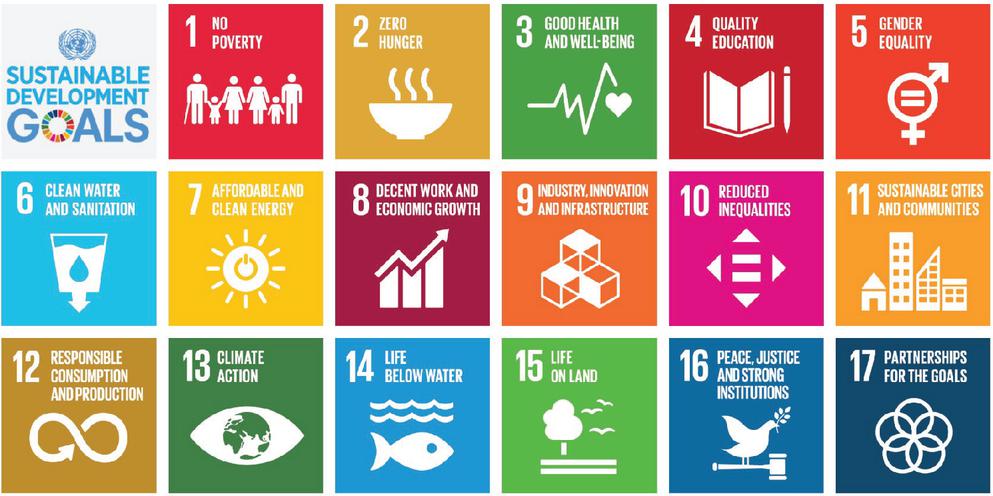
Figure 1 UN 17 SDGs [10].
5G will contribute directly to SDG’s 2–5; 7–12 and 16 mainly contributing to good health and well-being, enhancing infrastructure, promoting sustainable industrialization and fostering innovation and further to responsible consumption, enabling sustainable cities and communities, and promoting decent work and economic growth [1, p. 5]. This is based on the following use cases most commonly explored so far showing an upgrade in service quality moving to 5G:
• Manufacturing: Industry 4.0 is emerging as a major deployment area within especially large or medium-sized manufacturing companies for with wireless connected robots and production lines needing massive IoT and low latency to function
• Healthcare: Telesurgery – benefitting from increased capacity, lower latency and (the promised higher reliability); Patient Monitoring; Medical Wearable Iot Devices, both of these needing the higher reliability
• Autonomous car communication: Self-driving cars requiring especially higher reliability
• Energy: Connecting critical infrastructures requiring IoT communication and high reliability
• Smart Cities: including Transportation; Smart Buildings; and Smart Metering all requiring massive IoT communication
All of this presents good arguments for usefulness of 5G, but bumps on the road to the situation where 5G is serving the SDGs are clearly visible:
• The sector is struggling with viable business models
• For users outside big industry and major cities in the developed world, the most noticeable difference from 4G to 5G will be a massive increase in downstream data rates and reduced latency
The paradox that the services delivered by communication technologies are valuable tools in socio-economic development also in rural areas and yet not implemented here is not a new phenomenon. Since the Maitland report mentioned above [3] communication technology has been discussed as a means to close the digital divide and create more equal opportunities globally. Today, the argument seems even more forceful as it technical is possible to provide internet access at broadband speeds for rural consumers, promoting the creation of a ‘clever countryside’ based on the SDGs corresponding to the smart cities of the developed world.
But the bumps on the road need more attention along with the visions in the SDG discussion. Even with the impressive growth of mobile penetration in Africa and India, 1/3 of the world population do not have access to mobile phones – and even fewer have access to the services based on internet access. Associated with this, more than 700 million people live in extreme poverty [11]. Little attention is given to this in the communication industry’s discussion of advanced solutions or contributions to the SDGs. Especially therefore there is a need to discuss how to implement the new technologies/ what to implement in view of the struggle for still more advanced solutions giving marginal ‘improvements’ and benefits to users and presenting financial challenges to the industry. This is made even more acute by the ongoing COVID-19 crisis that is influencing the economic activity, driving investments generally and also in communications downwards. This has enhanced the interest in an ongoing search for communication technologies targeting the needs in developing countries.
3.1 Global Infrastructures for Development
A number of technological solutions providing global internet connectivity and targeting developing countries more directly than 5G has been put forward [12]:
• Facebook Drones
∘ Drones powered by the sun, flying for months without landing, 60,000 feet above far-flung areas.
∘ Dis-continued
• OneWeb Low Earth Orbit satellites
∘ Producing 900 satellites, which will circle the Earth to enable affordable access. OneWeb’s satellites will be closer to the earth allowing for better web performance.
∘ Launch of first 6 satellites done
• Google Baloons
∘ The company uses high-altitude balloons placed in the stratosphere at an altitude of about 18 km (11 mi) to create an aerial wireless network with up to 4G-LTE speeds.
∘ Testing ongoing
• SpaceX Low Earth Orbit satellites
∘ Starlink is a satellite constellation development project underway by SpaceX to develop a low-cost, high-performance satellite bus and requisite customer ground transceivers to implement a new space-based Internet communication system.
∘ In planning stage
• O3b Medium Earth Orbit satellites
∘ O3b Networks Ltd. is a network communications service provider building and operating a medium Earth orbit (MEO) satellite constellation primarily intended to provide voice and data communications to mobile operators and Internet service providers
∘ In Service
3.2 Alternative Local Infrastructure Solutions
So far, none of these technologies has made much contribution to global internet access in rural areas. Especially in India other solutions are, however, being explored in a situation where there are 400 million people in rural areas without access to communication services. Despite this, it has proven difficult for Indian mobile operators to develop a business case with positive return on investment addressing this market with traditional mobile infrastructure. This has inspired to alternative solutions where two suggestions stand out:
(a) Frugal 5G promoted by Department of Electrical Engineering, IIT Mumbai where the idea is to connect the unserved areas by the Frugal 5G Access Network (AN) providing last-mile access over a wireless medium. The Frugal 5G AN can be connected to a standard cellular Core Network (CN) or a fixed broadband network, similar to a public Wi-Fi network. The proposed solution enables an affordable, uncomplicated and flexible realization of internet access to remote, unserved areas.
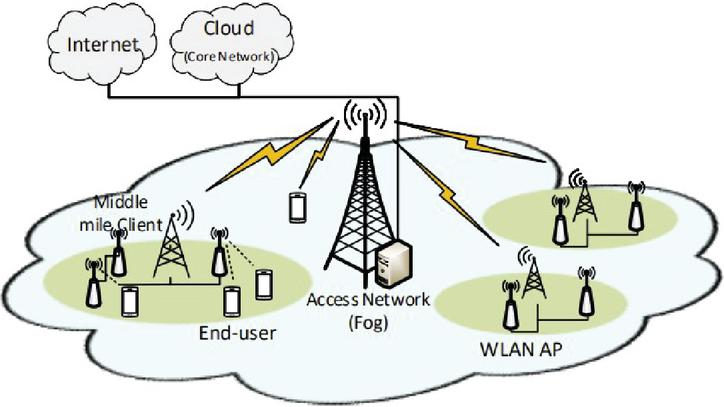
Figure 2 Example of Frugal 5G architecture.
The Frugal 5G concept is implemented in a testbed at Indian Institute of Technology, Mumbai [13, p. 6] providing a proof of concept.
(b) The solution developed Bluetown [14] provides low cost, last mile connections over Wi-Fi. Bluetown have set up working systems in, e.g., India and Ghana. The base station is a turnkey installation that is powered by solar energy overcoming the ever-present challenge of power failure.
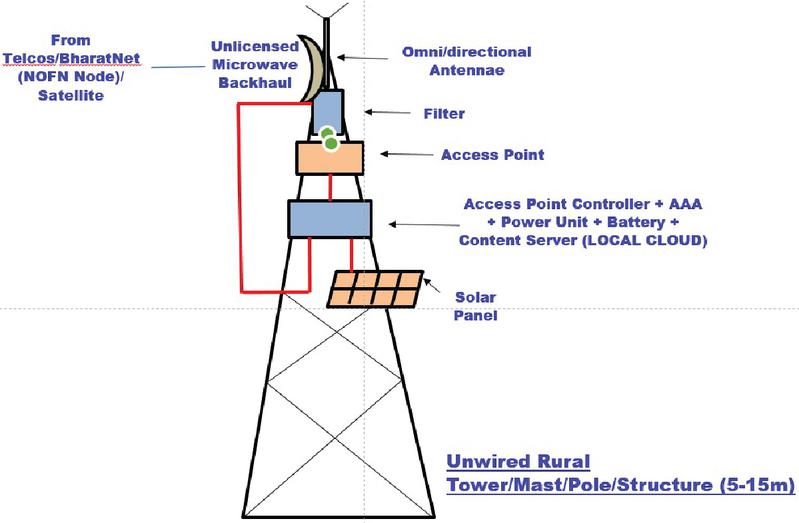
Figure 3 The key element in the Bluetown technology: The turn-key tower [14].
The Bluetown solution includes both connectivity and a platform for end users to connect to services as e-Health, e-Learning, agricultural e-Content, entertainment, news, weather reports etc. The solution has been demonstrated both technologically and commercially as implemented systems.
4 Conclusion
The 5G suite of technologies represent without doubt a new step in the digital transformation potentially providing new business opportunities and disruption of the socio-economic growth trajectory. This also includes the potential to connect rural communities to the already connected modern, global community, i.e. closing the digital divide. As discussed above, there is also no doubt that there is a substantial risk that the promising potentials are not realized, mainly due to the lack of viable business models. There is an increasing understanding that it is necessary to operate with a business model concept with a conceptual differentiation between the socio-economic use value of 5G networks/ services and the commercial value that it may have to the suppliers of these. This is made clear by the Broadband Commission [8] when it is stated that that the private sector will not provide all the investments necessary to establish internet access for all in Africa – even if the concept is not stated explicitly. This conceptual exercise relates to another distinction, relevant here, the differentiation between the intrinsic and extrinsic value of a network/ service. The intrinsic value denotes the ’inherent’ core value offered - meaning, for instance, that the intrinsic value of 5G is the immediate use value that it has to a user whether residential or industrial. The extrinsic value is the ’additional’ value offered – in the 5G case from the fact that society at large have implemented the technology making it a ‘connected society’ making each service more powerful both to residential and industrial users (an extension of network effect in telephony discussed as ‘Metcalfe’s Law’). Both dichotomies use value/ commercial value and intrinsic/ extrinsic value represent challenges to conventional business models and to the realization of the potentials of 5G as they are based on both sides of the dichotomies. This uncertainty makes it relevant – even necessary, not least in a COVID-19 situation with diminishing investments – to consider the alternative solutions to rural internet access even if they may prove temporary and of course not substituting an encompassing 5G deployment.
References
[1] World Economic Forum, The Impact of 5G: Creating New Value across Industries and Society. 2020 http://www3.weforum.org/docs/WEF_The_Impact_of_5G_Report.pdf. Accessed 05 Sept 2020.
[2] Deloitte, The impact of 4G technology on commercial interactions, economic growth, and U.S. competitiveness. 2020 https://www2.deloitte.com/content/dam/Deloitte/us/Documents/technology-media-telecommunications/us-tmt-impactof-4g-060612.pdf. Accessed 05 Sept 2020.
[3] ITU, The Missing Link, 1985 http://search.itu.int/history/HistoryDigitalCollectionDocLibrary/12.5.70.en.100.pdf. Accessed 17 Aug 2020.
[4] ITU, 2008, https://www.itu.int/ITU-D/ict/statistics/ict/graphs/fixed.jpg. Accessed 17 Aug. 2020.
[5] GSMA, The Mobile Economy. Sub-Saharan Africa 2019. https://www.gsma.com/mobileeconomy/sub-saharan-africa/. Accessed 20 Aug 2020.
[6] McKinsey (2018), The Road to 5G: The inevitable growth of infrastructure cost. https://www.mckinsey.com/industries/technology-media-and-telecommunications/our-insights/the-road-to-5g-the-inevitable-growth-of-infrastructure-cost. Accessed 25 Jan 2020.
[7] Lindgren, Peter, The Multi Business Model Innovation Approach. River Publishers, 2018.
[8] Broadband Commission for Sustainable Development, A “Digital Infrastructure Moonshot” for Africa. 2019. https://www.broadbandcommission.org/Documents/working-groups/DigitalMoonshotforAfrica_Report.pdf. Accessed 15 Aug 2020.
[9] GSMA, The Mobile Economy. Sub-Saharan Africa 2020. https://www.gsma.com/mobileeconomy/wp-content/uploads/2020/03/GSMA_MobileEconomy2020_SSA_Eng.pdf. Accessed 20 Aug 2020.
[10] UN 17 SDGs. https://www.un.org/sustainabledevelopment/news/communications-material/. Accessed 20 Aug 2020.
[11] World Bank (2020), Poverty. https://www.worldbank.org/en/topic/poverty/overview. Accessed 10 Sept 2020.
[12] Blue Town; www.bluetown.com has provided the overview of technologies to the author, Jan 2020.
[13] Khaturia, Meghna; Jha, Pranav; Karandikar, Abhay, Realizing the Frugal 5G Network. www.researchgate.net/publication/337855254_Realizing_the_Frugal_5G_Network. Accessed 6 Feb 2020.
[14] www.bluetown.com
Biography

Knud Erik Skouby is professor and founding director of center for Communication, Media and Information technologies, Aalborg University-Copenhagen – a center providing a focal point for multi-disciplinary research and training in applications of CMI. Working areas: Techno-economic Analyses; Development of mobile/wireless applications and services: Regulation of telecommunications
Project manager and partner in a number of international, European and Danish research projects. Served on a number of public committees within telecom, IT and broadcasting. Further served as a member of boards of professional societies; as a member of organizing boards, evaluation committees and as invited speaker on international conferences; published a number of Danish and international articles, books and conference proceedings. Editor in chief of Nordic and Baltic Journal of Information and Communication Technologies (NBICT); Chair of WGA in Wireless World Research Forum; Past dep. chair IEEE Denmark.
Journal of Mobile Multimedia, Vol. 17_1-3, 175–186.
doi: 10.13052/jmm1550-4646.17139
© 2020 River Publishers