Optimising Indian Railways Infrastructure by AI
Chandrika Prasad1 and Sudhanshu S. Jamuar2,*
1PNCS Rail Consultancy, Former Adl Member Signal Indian Railway Board, Noida, India
2IIIT Delhi, New Delhi, India
E-mail: cprasad2009@gmail.com; ssjamuar@gmail.com
*Corresponding Author
Received 26 September 2020; Accepted 30 November 2020; Publication 26 January 2021
Abstract
The pressure on the Indian railway (IR) networks has increased due to higher demand for mobility and growth in India’s population over past several decades. In order to meet the higher demand, IR has put priority in capacity building by increasing number of coaches per train, running more trains and building more tracks. Building more tracks or increasing the number of coaches or increasing the number of trains have potential to solve the problem with high infrastructure cost. Unfortunately it also come with added vulnerability in safety in running the system. IR with its investment of over 5,00,000 Cr is presently struggling to make its Operating ratio (expenditure / earning) below 100 %. During the last 166 years of its operation many technological input has been made on its Infrastructure, Locomotives and Rolling stock but its Train Control practices have remained Conventional – locally controlled and experience based. The developments in the area of signal processing, communication systems and artificial intelligence (AI) etc. has great potential for applications in Indian Railway right from ticketing to movement of trains, maintenance etc. The potential of AI has been felt in different applications like predicting delays, preventive maintenance of tracks and rolling stocks, forecasting algorithm for railway system. The use of AI in operation of IR will improve the performance by using clever algorithms with efficient software and hardware. This in turn will provide lower latency with information sharing and use of AI in rail operation will surely improve the efficiency in train operation. This paper highlights the potential contributions of AI in improving the operation of India’s railway system and how the application of recent technological advancement in Information Science and Artificial Intelligence can bring a change in the train operation scenario at a railway station and Control Centre and add to the profitability of Indian Railways.
Keywords: Indian railway, signalling, artificial intelligence, signal maintenance.
1 Introduction
The Indian Railway (IR) system is a government-owned entity [1]. It has a route length of 1,15,000 kilometres. It is the fourth largest railway network in the world by size [1]. It runs around 11,000 trains everyday having 7,000 passenger trains and ferries 23 million passengers per day and transports 3 MT freight. Train operation on 7312 stations of Indian Railways is controlled from 66 control centers located all over its network. A revenue close to INR 2 trillion was generated by ferrying 8.26 billion passengers and 1.16 billion of freight in the fiscal year 2017–2018 [2]. Almost two third of the revenue was generated through freight movement. It employed more than 1.3 million people in 2017 with added benefits to the users [2]. IR system requires constant maintenance and repair cheaply to deliver greater value as the demand efficient transport grows year on-year.
The signalling system is vital for safe and efficient train operations. One of the major reasons for train accidents causing loss of lives are signal failure resulting in delays in running of trains and damages to infrastructures. The health of signalling system with real time information is very important for safe and timely running of trains. Remote monitoring of signalling is operational in many countries aiming to reduce the possibilities of signal failure. Currently, IR follows a manual maintenance system by using adopt find-and-fix methods [3–6]. But with modernization this will not be used. Modernization of the signalling system will involve remote monitoring of signals and use of Artificial Intelligence (AI). In this scheme the failure of the signals will be predicted by remote monitoring and effective use of artificial intelligence (AI). There has been extensive studies with regard to scheduling of trains and minimizing fatalities all over world [7–12].
A key reason to introduce AI is to effectively follow a predict-and-prevent approach. In the proposed system, the visual, navigational and spatial data will be collected at predetermined intervals and sent to a central station for taking appropriate action. In real time, the signalling faults would be detected and then appropriate measures would be initiated to avoid any possible mishaps and delays. The system envisages data transfer through a wireless medium (3G, 4G, 5G and high-speed mobile). The received data would be utilized with AI for prediction and taking corrective measures by utilizing big data analytics. The system using AI would be implemented on trial basis in two sections namely Western Railway (Ahmedabad-Vadodara Sector) and South Western Railway (Bengaluru-Mysuru Section). Prediction of signalling failures, automated self-correction and decisions on intervention strategies is expected in the trial run. The feedback from successful trial implementation will allow IR to implement the AI based system in other Sections of IR. In next few paragraphs, we will discuss about system being used in IR and then give our suggestion for the signal monitoring using AI.
2 Control Centre
Indian Railways has 18 zones and 73 divisions [13]. Every division has a Control Centre in its head quarter. The movement of all trains in a particular zone is monitored and appropriate actions are taken for safe running of trains in control center. The control room coordinates with operating control and employees of the respective departments such as engineering control, mechanical control etc. At the Signaling Control Centre, the arrival/departure information of trains from station masters of his section are plotted on the section Train Chart and the movement of trains are monitored. In recent years Train Charting is getting automated by using Data Loggers. The Controller takes into account, the train actual arrival status, arrival/departure schedules as given in the published time table and any priority order for the train movement. Based on his own experience the Controller gives instruction to Station Master for movement of the train at his station. Thus the entire process of scheduling the movement of trains is completely human experience based conventional. The Controller at the conventional Control Centre of IR has no modern technological aid/support system in his train operation decision making. He also has no radio communication with drivers running the train on his section except on some important trains.
3 Station Operation
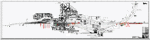
Train Operation on Indian Railways are conventional. A bird’s eye view of the Ghaziabad railway station in Northern Railway, which is on the Kanpur-Delhi section of Howrah-Delhi main line, Howrah-Gaya-Delhi line and New Delhi-Moradabad-Lucknow line is shown in Figure 1. There are 6 Platforms and the station handles 241 Halting Trains, 2 Originating Trains and 2 terminal Trains. Local Electric trains also run regularly from Ghaziabad for stations like Old Delhi station, Hazrat Nizamuddin station and Anand Vihar. Local trains, which run on a regular interval, are EMUs, MEMUs, and Passengers Local trains. They start in early morning hours and run till midnight.
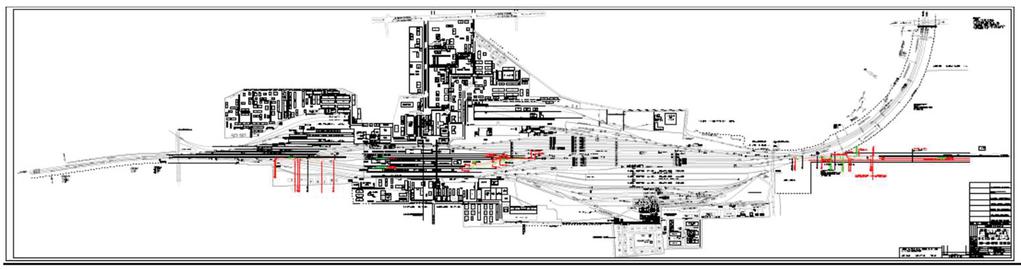
Figure 1 View of Ghaziabad Railway station of Indian Railways.
Train operation at each station is in stand-alone mode with exchange of block working with neighbouring stations situated 8–10 km apart. Station Master controls the train operation within his station limits i.e. Home Signal to Advance Starter Signal in each direction based on specific instructions from Control Centre.
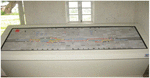
To control train operation by station masters, signalling panel (Figure 2) station panel/VDU key Board (Figure 3) are provided. It enables him to set the route and give Signal for reception/ dispatch of the trains, the line to which the train is to be received or dispatched, priority of train at junction station, stoppage timing at the station, waiting time etc. This is all experience based and manual, which is likely to have errors.
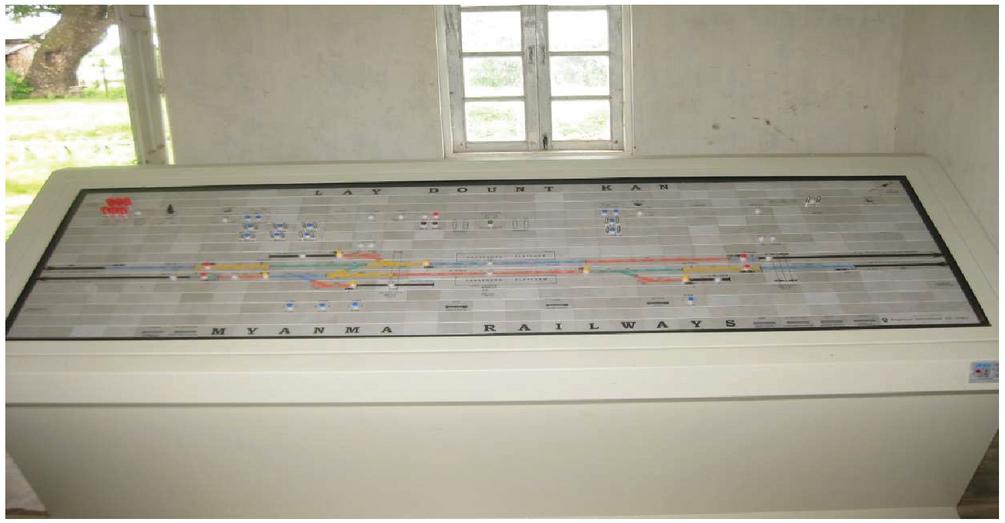
Figure 2 Signaling Panel at IR station.
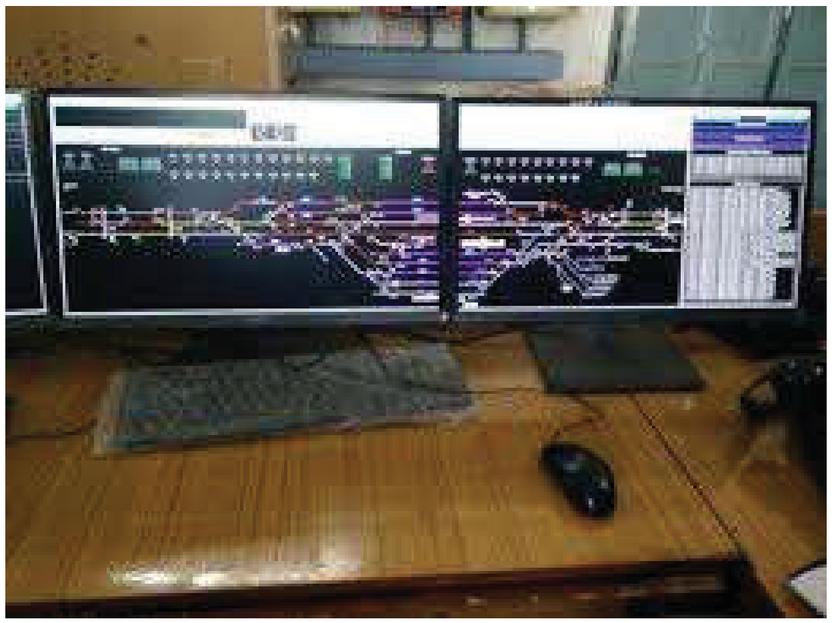
Figure 3 VDU and Key Board based Station Control at station.
4 Station Master
There are Station Master at each station and he directs and control the movement of trains passing by his station. The Station Master (SM) is responsible for arranging reception and dispatch of all trains and other shunting movements in accordance with the latest issue of G&SR’s, Block Working Manual and Operating Manual. The shunting, which takes place in between the arrival/departure of trains or during slack period as frequently as possible to the maximum extent, is also controlled by SM. Besides these operations, SM is also responsible for testing the interlocking gears of the station to ensure safe operation of trains and to avoid any conflicting movements.
Section Controllers looks after the movement of trains in his sections and directs SM to take appropriate action, SM attends Section controller command promptly and furnishes the Section controller with the arrival and departure of trains at his station well in time. The command from Section controller has to be adhered to strictly. Any noncompliance would be treated as dispute provided they do not contravene any G&SR’s, SWR’s or otherwise leads to any kind of unsafe working.
SM will promptly attend all accidents and assist in relief measures and enquiry. He shall ensure that all failures are brought to the notice of the S&T maintainer immediately and entries made promptly in Signal failure register. He must also see that proper Disconnection/Reconnection memo is issued without loss of time.
We observe from above description that SM is under stress all the time and there is a possibility of error in attending to above function resulting in accidents and loss of lives
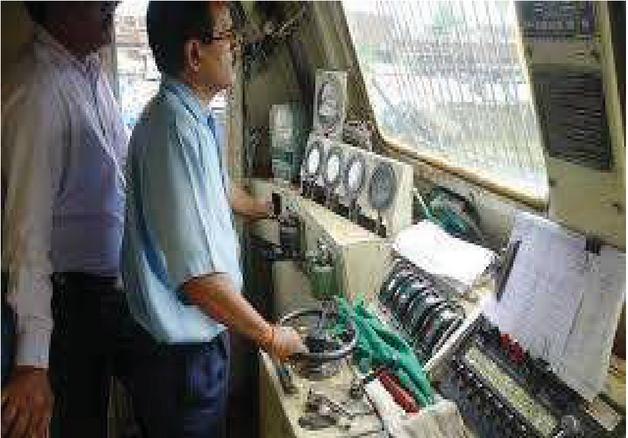
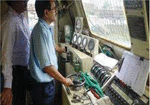
Figure 4 Inside view of cab of loco pilot.
5 Loco Pilot
The Loco Pilot is responsible for reception and dispatch of his train and maintaining punctuality in accordance with the rules and regulations in vogue. He identifies and recognizes each signal, and interprets that signal aspects. He recollect the action to be taken for a particular signal and safely controls his train. He monitors inside and outside the cab surroundings as shown in Figure 4. The loco pilot perceives, interpret, anticipate and act according to the situation taking into account weather conditions, maximum permitted speed on the section and any obstacle on the track. The moment the train leaves the station and enters the block section, he is practically alone in the cab. He is cut off from Control Centre except for the GSMR radio communication system over 2500 kms stretch. It is observed that the tasks of Loco Pilot are multiple and complex with little support system provided in cab.
6 Maintenance of Signalling on Indian Railways
The maintenance of Signalling systems is carried out presently as per time schedule laid down in Indian Railways signal Engineering Manual. Over 4000 stations Data loggers have been provided to record the status of Signalling systems and send it to Control Centre/Test Room. Where as in all developed countries, Remote Condition Monitoring and Condition Based Maintenance using artificial intelligence are being used.
7 New Technological Development on Indian Railways
Although Indian Railway have got new technology installed to modernize its infrastructures, but it is limited to a few sections. The trial is going on these installations and if successful, these modernization will be installed all over country. Some of the installations are described now
7.1 Centralized Traffic Control
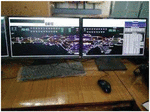
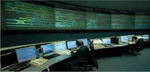
Centralized Traffic Control (CTC) has been recently installed in Tundla section using GSMR Train Radio Communication system. It has been installed over 2500 Kms of Indian Railways where voice communication between Controller/Station Master and Driver has been provide. A view of the CTC is shown in Figure 5. It has visual several displays with computer control to monitor the real life movements of trains. The operator looks at the real time movement of a train on monitor and control its future course of actions.
7.2 Train Management system (TMS)
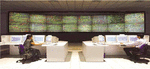
Train Management System has been introduced at Mumbai Control Centre for Suburban services. It is very similar to CTC control and manages the movement of suburban trains in Mumbai. TMS is already being used in control of Metro trains. The control room is shown in Figure 6.
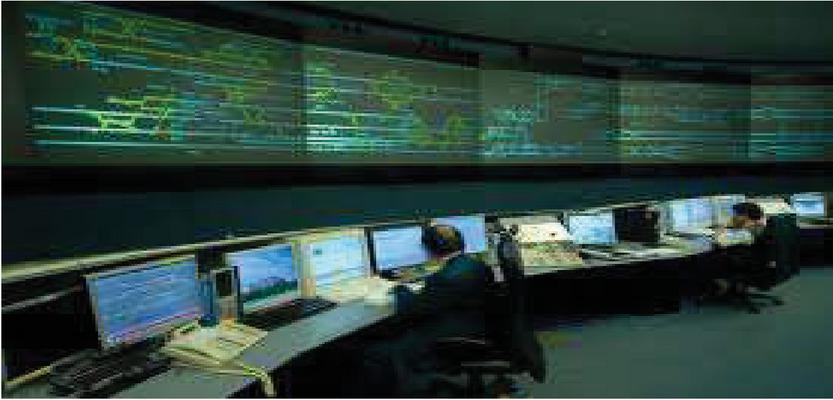
Figure 5 CTC Control Centre at Tundla.
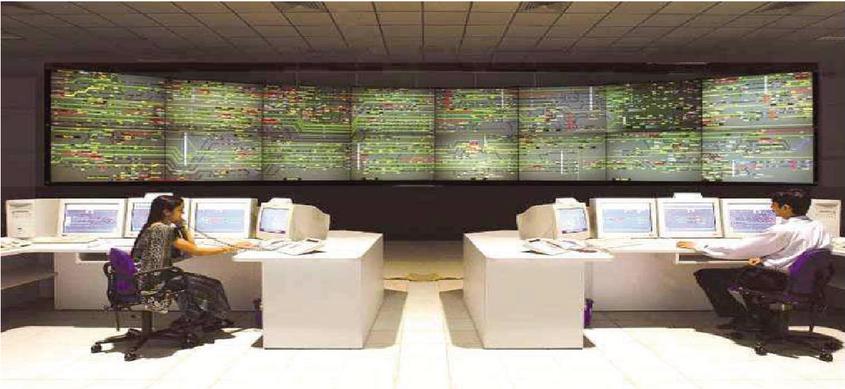
Figure 6 Train Management System at Mumbai.
7.3 ETCS Level 2 System
In ETCS Level 2 system there will be visual display of train movement at Control stations as well as at Sectional control stations on a Video Display Board. This is illustrated in Figure 7. In this system, the Sectional Controller will also be able to control the reception & dispatch of trains at way stations. Indian railway has initiated the process for installation of ETCS Level 2 systems on 635 Kms route on Vizianagaram – Palasa, Yerraguntla – Reniguntla, Jhansi – Bina, Nagpur – Badnera sections.
8 Application of Data Analysis and AI
In order to monitor the status of Track occupancy, the data on occupancy of tracks are either collected manually or by using data logger at stations on Indian Railways by point machine operation, signal aspects etc. The status report is sent to Station and Control Centre using digital transmission and Networking. AI can be used in efficient running of trains without failure [14, 15].
In future Artificial intelligence (AI) and machine learning Systems will be the buzz word in the train operation. It’s going to be used widely in operation and control of train movements.
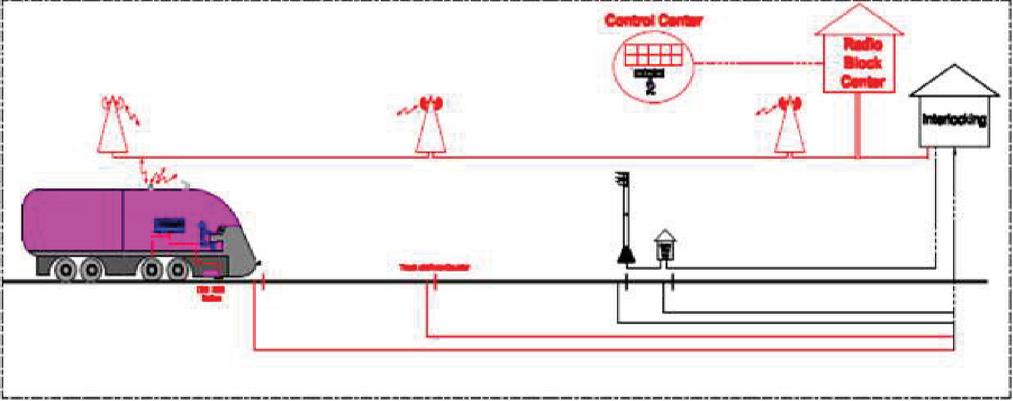
Figure 7 Future Control Centre after introduction of ETCS level 2.
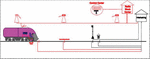
While the train is in movement, the train knows its location and the track by identifying known infrastructures and remembering it by using ML and AI. Visual referencing plays an important role in identifying the known infrastructures. It checks and anticipates any registered infrastructure. The obstructions or trespassing around tracks are monitored visually and appropriate actions are initiated by AI to prevent any mishap, thus relieving drivers looking for abnormalities in train movements.
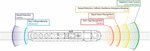
The rail environment and road environments are different. The distance sensors must be advanced for long distance estimation. New and advanced algorithms are required to support rail operations. The information are collected from GPS, inertial navigation, odometers, radars, LIDARs, cameras, and ultrasound sensors. AI brings operations, IoT and imaging together to complete the picture. The sensor data is integrated to create a digital virtualization of the operating environment for deeper processing. AI is used to monitor the total environment.
Figure 8 shows a futuristic locomotives with all the accessories for AI and machine learning.
Artificial intelligence (AI) and machine learning (ML) require deep learning. This involves detection of multiple sensors applicable to rail as illustrated in Figure 7. The deep learning process also require localization, awareness, dynamics and monitoring along with sensor data. The use of AI and ML in complex systems does not require to work on pre-set rules. The decisions are based on real time autonomous identification of objects and hazards. This involves visual, spatial and navigation data integration accurately with reference to known infrastructure for localization. In a multiple track location, GPS data may not be sufficient in localization, Image processing allows multiple track segmentation. Thus it can be used to generate route reference record making on board decision making possible.
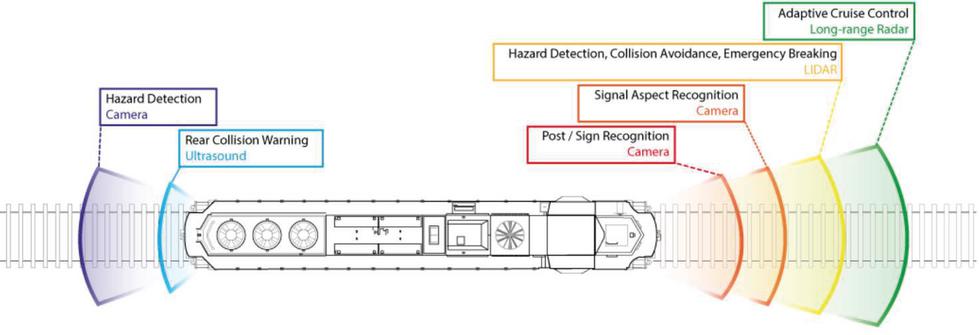
Figure 8 Future locomotive with all accessories.
Neural networks allows continual learning of differences of signal colour, signal types and sign recognition for train awareness. The system must be aware of detected data using ML and methodology to interpret these data. The dynamics involves managing and checking actual operations against allowed operations. It is necessary to monitor the train running parameters by checking the reports.
The track detection is usually carried out by identifying the track with the camera mounted in the center line of travel on engine in multi-track locations. It is built off the existing body of work on autonomous cars. This will help in improving the GPS accuracy by localizing efficiently because we know where we are on the track.
Geographical information are obtained from pre-recorded geographic information obtained from GPS points located at some fixed distance, level crossings and aspect locations. This is helped by GPS data streaming, video streaming and display information on particular object of interest as we approach that object.
OEMs of Rail Technologies in countries abroad have developed advanced sensors based remote monitoring, data analysis and prediction using latest development in Information Sciences and Artificial Intelligence in Rail sectors. Some examples are Thales (ThalesMan), Siemens (On Track), Bombardier (Orbita), IBM (Smarter Railroad), Via Telemetry (WEAVE), Balfour Beatty (AssetView), Lloyd’s Register (GOTCHA), CDS Rail (Asset Watch), Strukton Rail (POSS Online Monitoring), Indra (DaVinci System), Alstom (Iconis), Invensys (Avantis) [16].
Modern sensor based data monitoring, Data Analysis and application of AI for Signalling, Track, OHE and rolling stock systems will enable us to predict the system deterioration in advance and introduction of predictive maintenance. The application of modern sensor based data monitoring, data analysis and application of AI will greatly improve punctuality of train services, sectional capacity and reduce equipment failures. With these application the shape of future Train Control and infrastructure maintenance will take a new shape as visualized in Figure 9.
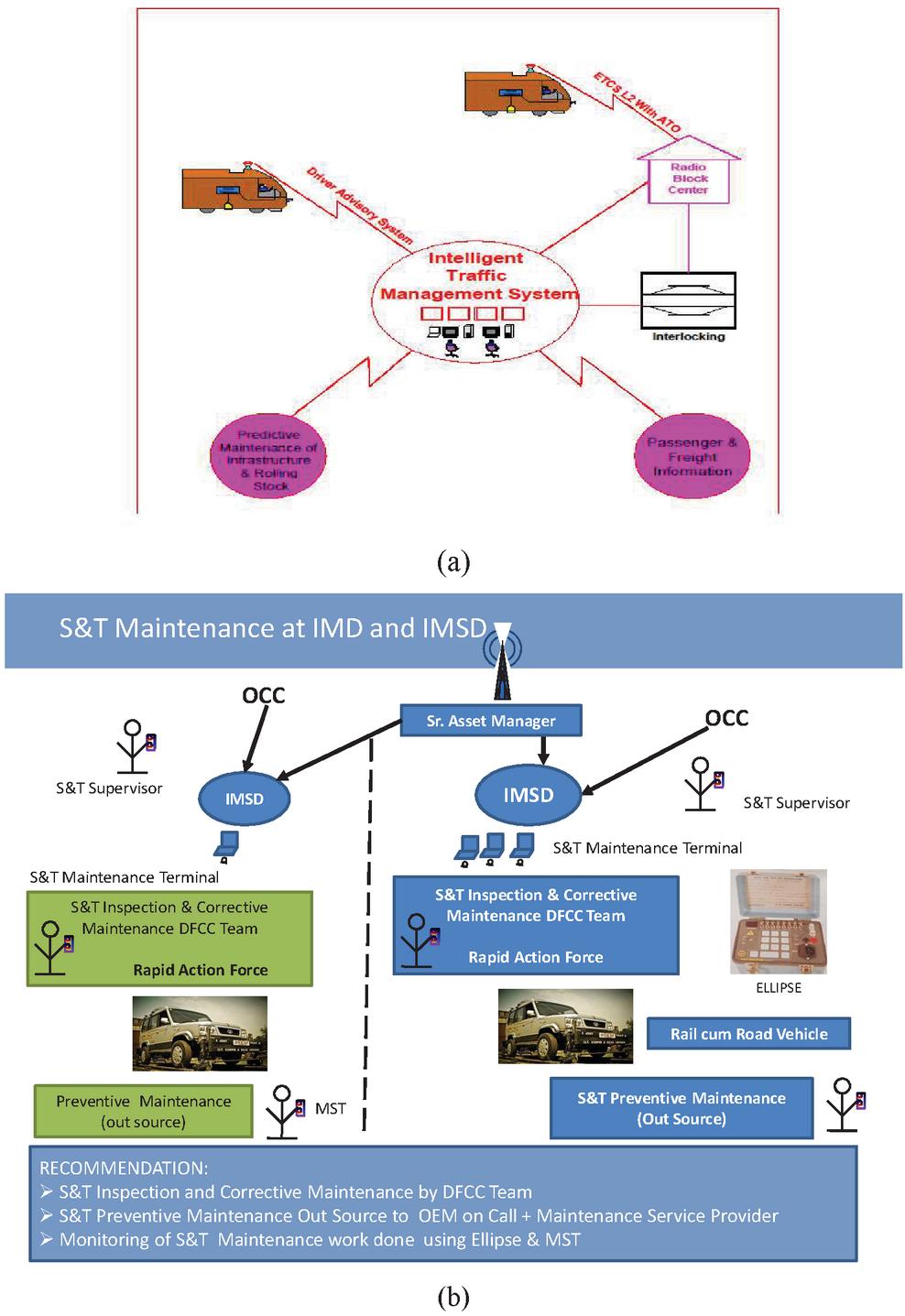
Figure 9 Block diagram (a) Intelligent Traffic Management System (b) Train control and infrastructure maintenance.
9 Present and Future Scenario
The delays in running of trains have been one of the measure cause of poor efficiency of train operations. In normal times, the delay take away a lot of scheduled time when the train is detained even for a short time, because making up the lost time during the remainder of the journey is a tricky business. It’s not that a train can just run faster to make up for lost time, because in a network a train hardly ever has such leeway built into its pre-set path. Any train that gets delayed inordinately due to whatever reason during the journey theoretically eats into the “path” – or time slot allotted on the track – of another train. It then becomes a matter of which train to priorities.
The delay could be reduced by systematically eliminating the cause of delays. The delays could be attributed to followings unforeseen situations:
Failure of assets like the signaling system and overhead power equipment and the breakdowns could related to rolling stock, tracks, etc., could make a train loose time along the way.
The external unforeseen problems could occur due to running over cattle and human beings, agitations on the tracks, and the like.
Network capacity is a major constraints, which .means that there are more trains in the network that it can handle in a given time bracket.
IR has started monitoring the running of trains at the Division level. If the punctuality is maintained in every division, then overall punctuality will certainly increase in practice. IR has taken steps to improve the delay due to due to failure of its assets by adopting to regular maintenance of tracks during the lean period (for example during Covid 19, fewer trains are running and critical sections have been improved). This allowed trains to run at constant speed and minimize the slowing down due to signaling failure and overhead power equipment. Better and modern signaling is also making an impact.
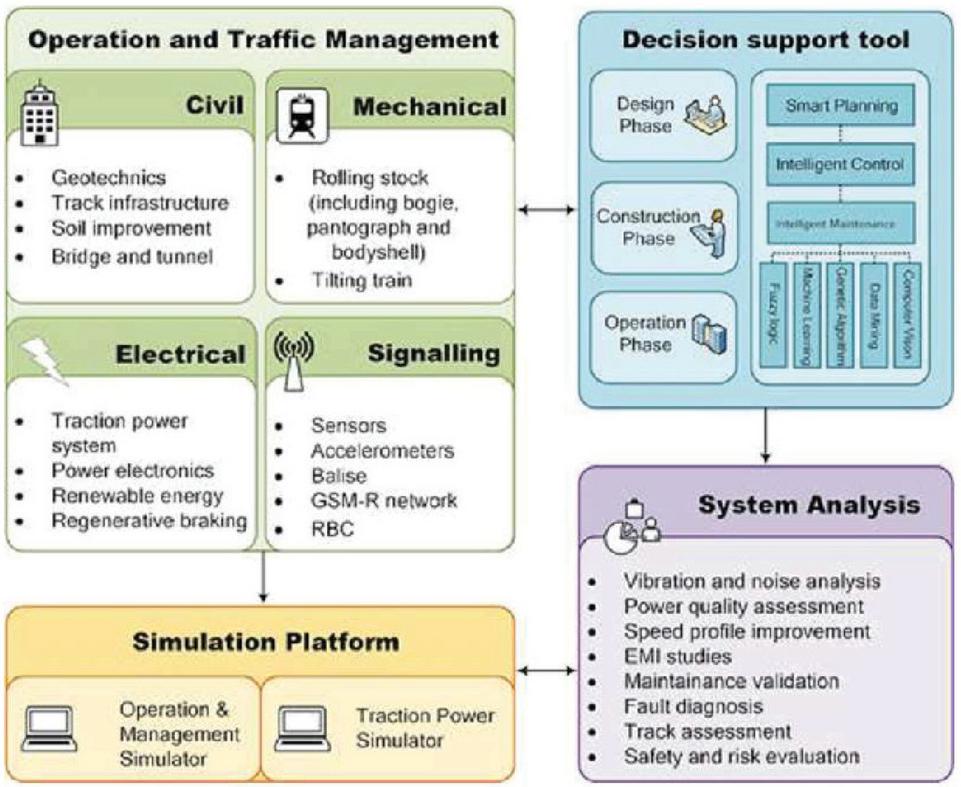
Figure 10 A systematic framework for future Railway system [17].
Usually in railway operations, a train running on time, maintaining its schedule on its given path, is not disturbed to make space for a train that has suffered irredeemable delays along the way and is now hopelessly “out of path”, so to speak. Freight trains, whose runs are not exactly time-sensitive, are usually held up to make way for passenger trains.
The operation of railway is constantly a dynamic scenario in which railway operations professionals take calls all the time.
Figure 10 shows a system block schematic for future railway system that will take care of following support systems based on AI mythologies proposed earlier:
a. On line analytical tool to support system operations and management,
b. Traction power analytic tools and
c. Decision support tool system during design phase, construction phase and operation phase.
This will take into account the operational efficiency to satisfy the passenger comforts.
The online analytical tool will take care of rolling stock modelling, Driver Advisory System, fault prediction and emergency timetable rescheduling. Each computation module requires a huge amount of input data and generates many raw outputs, a common data format would be required for cross-platform applications.
A user-friendly traction power analytic tool would monitor the input data from traction power supply system (TPSS) and would ensure a steady and high efficient operation of the supply system. It would be required to develop advanced database management technique to support the smooth running.
The decision support tool system would run through the design phase, construction phase and operation phase. In previous analysis, AI related techniques might show improved performance on the operation phase. AI-aided analysis such as soil-structure interaction and terrain layout can reshape the customary procedures, in particular with the further maturity of 5G communication and big data technologies.
It is projected that AI will continue to play a crucial role in supporting decision and analysis for new locomotives and TPSS. .The design of intelligent railway is required to be coincided with the development of railway stations and other transportation means to improve the efficiency of energy consumption, on-board security and labor saving.
10 Conclusion
Indian Railways having 68000 route kms rail network carried 3.65 billion originating non suburban passengers during 2018–19. There almost 88.5 million waitlisted passengers could not be accommodated. To resolve this problem Indian Railways have identified and floated tender for 100 origin destination pairs of additional trains by the private operators. These private trains have been grouped into 12 (twelve) clusters, located all over Indian Railways. Prespecified penalties shall be recovered from the Concessionaire for failure to meet the prescribed performance standards and outcomes eg. Penalties shall be recovered from the Private Operator if his train punctuality falls below 95%.
During the financial year 2017–2018, the punctuality of mail and express trains on Indian Railways was only 71. 39%. The main reasons for delays were Signal failures, track and loco failures, non-availability of reception lines at stations, shortage of rake maintenance facilities viz washing lines etc.
The above requirements necessitates, modernisation of Indian Railways existing manually controlled Control Centres into an Intelligent Traffic Control Centres by adopting train running data analysis & prediction using IOT and Artificial Intelligence and advisory to Traffic Controller and automatic train control for on-board systems as explained in this paper.
Artificial Intelligence is already a reality for several applications. It has proven its value by doing high complex tasks that humans could never comply or doing simple tasks very efficiently. Programming and teaching an AI can be a lot cheaper and faster than classical logical programming. AI should never be allowed to have full authority in critical functions because it’s likely to fail as well. An alternate algorithm must be provided in the critical function operation. Use of AI in Indian Railway is likely to reduce infrastructures because with a train location and performance are being easily managed on board. This in turn will not distract the driver’s attention. Continuous machine learning will be operational in real time. The master data sequence will be updated in real time for track reference due to improvement in locomotive’s computer system. The data on hazards & changes in real-time from all locomotives operating on a route can be easily shared with other rail users, which is completely absent in present scenario. The infrastructure systems and train control can be separated safely by use of AI. This results in ultimate interoperability that a locomotive is able to independently operate over any line. Finally with a never distracted drivers’ assistant and technology based operation of autonomous trains in future is going to have improved safety.
References
[1] Ministry of Railway. Indian Railways Statistical Publications 2016.
[2] Ministry of Railway. Indian Railways Budget Document 2018–19.
[3] Indian Railways general and Subsidiary Rules.
[4] Indian Railways Station Working Rules.
[5] Indian Railways Signal Engineering Manual.
[6] Indian Railways Telecommunication Manual.
[7] G. Raghuram, ‘Turnaround’ of Indian Railways: A Critical Appraisal of Strategies and Processes (PDF), Working Paper No.2007-02-03, Ahmedabad, India: Indian Institute of Management, (February 2007).
[8] G Bocchetti, F Flammini, C Pragliola, and A Pappalardo. Dependable integrated surveillance systems for the physical security of metro railways. In 2009 Third ACM/IEEE International Conference on Distributed Smart Cameras (ICDSC), pages 1–7. IEEE, 2009.
[9] R Borndörfer, M Reuther, T Schlechte, K Waas, and S Weider, Integrated optimization of rolling stock rotations for intercity railways. Transportation Science, 50(3):863–877, 2015.
[10] A Caprara, M Fischetti, P Toth, D Vigo, and P Guida. Algorithms for railway crew management, Mathematical programming, 79(1–3):125–141, 1997.
[11] F Flammini, A Gaglione, F Ottello, A. Pappalardo, C Pragliola, and A Tedesco, Towards wireless sensor networks for railway infrastructure monitoring. In Electrical Systems for Aircraft, Railway and Ship Propulsion, pages 1–6. IEEE, 2010.
[12] H Khadilkar. A scalable reinforcement learning algorithm for scheduling railway lines. IEEE Transactions on Intelligent Transportation Systems, 20(2):727–736,
[13] http://www.indianrail.gov.in, “Indian Railway’s zone’s & their divisions with heaquarters” (pdf), Archived (PDF) from the original on 17 April 2012. Retrieved 23 February 2018.
[14] https://www.linkedin.com/pulse/artificial-intelligence-railway-applications-alexandre-pires-pmp- Alexandre Pires, Artificial Intelligence in Railway Applications.
[15] Derel Wust, Using Machine Learning for Safer and More Efficient Train Operations, NVIDIA GTC 2018, San Jose, CA 2018.
[16] Intelligent Infrastructure for Next-Genration Rail Systems – COGNIZANT 20-20 insights:August 2013.
[17] Mingijia Yin, Kang Li, Xiaoqing Cheng, A review on artificial intelligence in high speed rail, Transpotation Safety and Envioronment, 2020, Vol. 0, No. 0, pp. 1–13 (https://doi.org/10.1093/tse/tdaa022).
Biographies

Chandrika Prasad is Managing Director of PNCS Rail & Metro Consultancy. He was Additional Member Signal of Indian Railway Board and was responsible for introducing state of art Signaling & Telecom technologies and creating islands of Signaling excellence over Indian Railways. He was Principal Consultant Delhi Metro and Member of UIC Paris ETCS Task Force. He has provided/is providing consultancy for various Railway Projects in India viz. Mumbai – Ahmadabad High Speed, DFCC, RRTS and rail projects in UK, Middle East, Africa, Bangladesh, Myanmar, Shri Lanka etc. He has been Member of several High Level Committee for Railways. Over 32 of his papers have been published/presented in International & National Journals/conferences. For his outstanding contribution to Railway Signaling, he has been conferred with “Honorary Fellow” by Institution of Railway Signal Engineers London and ‘Life Time Achievement Award’ by Institution of Rly Signal & Telecom Engineers India.

Sudhanshu S. Jamuar received his Ph. D. in Electrical Engineering from Indian Institute of Technology, Kanpur, India in 1977. From 1968 to 2017, he served in India (IIT Kanpur, IIT Delhi, HAL Lucknow and IIT(ISM) Dhanbad) and in Malaysia (UPM, UM and UNIMAP). He is presently Visiting Faculty at IIIT Delhi. In 1996, he visited Nigeria as UNESCO consultant. He has been teaching and conducting research in the areas of Electronic Circuit Design, Instrumentation and Communication Systems. He is Fellow of IET (UK), Senior member of IEEE and Fellow of Institution of Electronics and Telecommunications Engineering (India) and IET International Professional Registration Advisor. He was DLP speaker for IEEE CAS during 2008–2009. He is on the Editorial Board of Wireless Personnel Communication Journal. He was the Chapter Chair for IEEE CAS in Delhi Section and Malaysia Section from 1999 to 2007. He has published 75 papers in the International Journals and has presented more than 70 papers in International Conferences. He was General Chai for IEEE APCCS 2010 (Malaysia). He has 3 patents and is recipient of IETE Meghnad Saha Memorial 1976, Distinguished Alumni Award from BIT Sindri in 1999, Best paper award in IETE Journal of Education 2004.
Journal of Mobile Multimedia, Vol. 17_1-3, 157–174.
doi: 10.13052/jmm1550-4646.17138
© 2020 River Publishers