Rice Plant Disease Detection Using Sensing Recognition Strategy Based on Artificial Intelligence
T. Daniya1,*, Ch. Vidyadhari2 and Srilakshmi Aluri2
1Department of Information Technology, GMR Institute of Technology, Rajam, Andhra Pradesh, India
2Department of Information Technology, Gokaraju Rangaraju Institute of Engineering and Technology, Hyderabad, Telangana, India
E-mail: daniya.t@gmrit.edu.in; chalasanividyadhari@gmail.com; alurisrilaxmi@gmail.com
*Corresponding Author
Received 14 July 2021; Accepted 11 September 2021; Publication 11 January 2022
Abstract
In current history rice infections have often appeared, causing severe destruction of rice cultivation. As one of the top ten countries that creates and destroys the world, India relies heavily on rice for its economy and to meet its food needs. To ensure the sound and legal growth of rice crops it is important to identify any diseases in the schedule and to pre-apply the expected treatment to the affected plants. Since the detection of disease is time-consuming and labor-intensive, it is certainly wise to have a system with robots. Infection of rice crops is considered to be a growing factor behind the horticultural, financial and general situation in the future development of the rural field. However, leaf scald and eyespot are the pivotal trouble in paddy fields. Hence, to conquer these issues a novel Sensing Recognition Strategy has been proposed. In Proposed method, optical sensors identify identification of disease and Enhanced Grasshopper Detection Algorithm utilizing the grasshoppers’ forces, path and position carries out detection. The accuracy of the suggested framework is to attain 97.94% with healthy rice crops.
Keywords: Rice plant disease, grasshopper, sensing recognition strategy, artificial intelligence.
1 Introduction
Rice, (Oryza sativa), an eatable oat and grass plant (Poaceae family) is created. About a large portion of the total populace, including practically the entirety of East and Southeast Asia, depend altogether on rice as a staple food; About 95% of the world’s rice crop is devoured by people. Rice is bubbled, or it tends to be ground into flour. It is eaten alone and has a wide assortment of soups, side dishes, and primary dishes in Asia, the Middle East, and numerous different plans. Different items incorporate rice for breakfast grains, noodles, and cocktails like Japan. Rice is the staple food of a great many people on the planet today. Without rice is the most significant of the numerous illnesses that plague rice. It is found any place rice is developed, it is consistently significant, and it is consistently hazardous.
The disappointment of the entire rice crop is straightforwardly brought about by illnesses brought about by rice. The test for research keeps on being to deliver great food, with consistently expanding costs and minimal expense, which is all an indefensible and constant microorganism. All examination strategies and procedures for the treatment of plant illnesses created by research have been brought into the blast of rice, however they have normally had restricted achievement. The rice blast has never been killed from the rice-developing area, and a solitary change in rice development or hereditary obstruction can prompt huge infection misfortunes even following quite a while of effective administration.
This infection is an illustration of the reality, nonattendance, and life span of other plant sicknesses. The rice blast has been broadly concentrated all throughout the planet. Numerous specialists have accepted it to act as an illustration of examining hereditary qualities, the study of disease transmission, parasitic cell pathology and science. Ongoing advances in understanding the qualities that control the mix of avirulence (obstruction) and harmfulness (vulnerability) have been made through the blast of rice, and each progression has assisted us with seeing how other plant illnesses work. Note that all genome of rice impact growth and rice are followed and that M. oryzae is the main pathogenic organism to develop its genome and be delivered to people in general.
Rice is a key foodstuff that devoured huge numbers of people. The rice fields are harmed every year by several parasites and illnesses, which are of considerable importance to the farming if they are not properly monitored and handled [1]. In order to properly mitigate illnesses, on-going surveillance and diagnosis are therefore needed. Illnesses can have a serious impact the growth without prompt action. The computerized diagnosis of plant illness is thus an important issue for Agro-informatics [2]. Plant health during the past several years has therefore been an interesting research topic concentrating on the management of illness and the manipulate of the proportion of pesticide to be addressed [3].
Many diseases are frequently tracked during crop development, including rice blasting, sheathing, spotting in the leaf, rice curling, bacterial leaf blight, and bacterial strain infections. Numerous diseases occur in all rice components, including leaves, neck and ears [4]. During the previous two centuries there have been a lot of attempts to diagnosis diseases with leaf pictures of various crops. Some researchers are striving to establish a high categorization of healthy and unhealthy plant image processing algorithms in this domain [5]. Hence, the critical challenges in rice plant disease are leaf scald and eyespot provoke considerable sterility, flower deformation and discoloration. Therefore, to vanquish these illnesses an innovative methodology has to developed. The IoT [21] is the major application for plant monitoring system for identification of diseases in the plants.
The configuration of the article is Ordered as Section 2 decipher the literature survey of Previous methods Section 3 portrays the Proposed Methodology to detect the disease Section 4 designates the results and Section 5 narrates the conclusion.
2 Literature Survey
Chen et al. [6] proposed the Bacterial Leaf Streak (BLS) Net method to detect the BLS leaf lesion recognition and segmentation for rice plant leaves. The accuracy of the proposed method achieved 98.2%. Senan et al. [7] introduced the Convolutional Neural Network (CNN) technique to classify and detect the paddy disease as well as accuracy attained 93.60%. Chen et al. [8] proposed that Rice talk project with innovative spore germination mechanism based on IoT devices to recognize the rice blast disease. The Rice talk prediction achieved the accuracy 89.4%. Sethy et al. [9] proposed Fuzzy Logic with K Means Segmentation technique to estimate the severity in leaves as well as to detect the disease in rice crops then accuracy reached upto 86.35%. Matin et al. [10] proposed that Alexnet framework to discern the bacterial blight, brown spot and leaf smut. This framework was unique classification mechanism based on deep learning and achieved high accuracy as 99%.
In [6] cannot determine the leaf scald disease in rice plant also [7] not utilized the entropy and gain parameters for studying high order features from paddy photographs. Similarly [8] barometric pressure of multiple location in paddy fields are not investigated. In [9] more diseases and large dataset in rice plant cannot be studied and [10] has context of accuracy and processing time is still not having an opportunity to use K means clustering. Hence to tackle these difficulties a novel framework has to be proposed.
This paper audits practically all papers somewhere in the range of 2007 and 2018. This exploration helps the specialist in social occasion data on paddy shortcoming according to their development. Likewise, this paper gives a concise outline of pre-handling, grouping, include evacuation, determination of characterization methods and strategies. Different issues identified with the conclusion of foot-and-mouth illness are examined and a worthy structure has been raised. Here is likewise a synopsis of other reasoning methods, for example, hyperspectral and warm imaging. These imaging frameworks rely straightforwardly upon the picture quality, number of preparing pictures and test highlights. In case there is a deformity in the filtering framework, it meddles with its immediate activity. Additionally, becoming accustomed to CNN needs earlier development with PC and memory assets [11]. One answer for this is a shrewd blend of master programming ideas in PC vision and AI procedures. Endeavors to foster such a framework would be of extraordinary premium to examiners in this field.
Recognizing sicknesses in photos of this plant is quite possibly the most intriguing regions for research in the PC and farming fields [12]. This paper gives research on the different imaging modalities and mechanical techniques used to analyze rice plant illnesses dependent on pictures of tainted rice plants. This paper presents a multidisciplinary examination as well as sums up the critical ideas of picture handling and AI utilized for diagnostics and arrangement. We did a definite 19-page study, consolidating crafted by illnesses of rice plants with different plants and different leafy foods, and introduced the investigation of these papers as indicated by the key conditions. These strategies incorporate picture data set size, no. of classes (infections), handling, characterization strategies, sorts of order, exactness of classifiers and so on We utilize our examination and study to propose and plan our work in the location and arrangement of rice plant sicknesses.
This paper traces how to adapt precisely to recognize three infections of the rice leaves: leaf filth, bacterial scourge curse and neighborhood earthy colored illness [13]. The work has a huge financial meeting 2019 International on Sustainable Technologies for Industry 4.0 (STI), 24–25 December, Dhaka the significance of Bangladesh. Examinations between four AI calculations (counting those of KNN, Decision Tree, Logistic retreat and Naive Bayes) in the space of rice leaf discovery have been made. Calculations foresee rice leaf illness with differing levels of precision. It was tracked down that the choice tree performed very well with 97.9167% exactness in the test information. Since we have recognized the nearest calculation, we desire to grow this examination further as excellent informational collections will be accessible later on.
Illnesses of rice harvests can cause genuine agrarian misfortunes if not enough tended to. Utilizing PC and correspondence innovation, a robotized framework can be fostered that can recognize the illness early. Simultaneously, we attempted to give our commitments to the utilization of pictures and AI for that program [14]. We have discovered that there are a wide range of approaches to work distinctively in the utilization of pictures and AI. This paper has looked into and summed up the procedures for picture handling and AI used to analyze illnesses. We tracked down that the expulsion of the illness area from the leaf picture is a main impetus, which we have contemplated and thought about various grouping methods. We have utilized our examination and study, introduced in this paper, to propose our work similarly. This paper introduced an unmistakable sketch of the proposed project and examined the key advances. Right now, we are attempting to finish the execution of the proposed project. The blend of picture preparing and AI procedures can offer specialists the chance to manage issues in an assortment of areas that straightforwardly or by implication influence society
This paper tells the best way to identify rice leaf illnesses from the knowledgeable AlexNet convolutional neural organization to accomplish analytic information arrangement dependent on preparing information. An information base of this work was gathered from https://www.kaggle.com called the analysis of rice leaf curse [15]. The information base contained three picture records of rice leaf scourge named after bacterial curse, earthy colored spot and leaf filth. Each document contained 40 pictures. From this information base, we have 120 pictures altogether relating to three rice leaf infections. These 120 pictures were too little to even consider working with our proposed interaction. Thus, we have expanded the size of our data set by utilizing picture improvement. After picture broadening, our information base size was expanded to 900 pictures. In our work, we have stacked our custom data set as a picture information store that isolates rice leaf sicknesses from envelope names and stores information as a picture information store thing. The plan measures for our proposed project are displayed in Figure 2. We separated our data set into two sections, for example, preparing information and test information. 70% and 30% of our information base is utilized as preparing and testing information separately. In this way, our data set contained 630 preparing photographs and 270 test pictures.
Sicknesses that influence the leaves of plants, particularly rice leaves, are one of the serious issues confronting ranchers. Along these lines, it is truly challenging to bring the measure of food required for more seasoned individuals. Infection illnesses have made usefulness and financial misfortunes in the rural area. It can similarly affect the pay of ranchers who rely upon agribusiness and nowadays ranchers are ending it all because of the awful circumstance they face in horticulture. The recognition of irresistible infections in plants will assist with arranging different infectious prevention measures. The proposed strategy portrays the different strategies utilized with the end goal of the rice leaf illness. Harm to the leaves of the microorganisms, Leaf muck and Brown tainted region pictures were partitioned utilizing the Otsu strategy [16].
In the current setting, the Indian economy is vigorously reliant upon agrarian creation and horticulture. Thusly, recognizing and distinguishing illnesses in plants or plants is vital, as it is normal for plants in the fields to be contaminated with specific infections brought about by microorganisms or growths. If not dealt with from the start, this could appear to be a calamity for the quality and amount of the item, or it might be said that the creation all in all. To be viable in such manner, AI ideas can be extremely valuable, as opposed to simply visual and visual. The accompanying investigation gives an outline of the finding and arrangement of sicknesses in rice crops, one of the biggest Indian food crops, utilizing pictures of polluted rice crops. The three illnesses were chiefly gathered in Bacterial leaf curse, Brown region, and Leaf filth. The Rice Leaf Disease Dataset, from the UCI Machine Learning Repository, was utilized. To characterize pictures into the ideal sickness classifications, the Residual Neural Network was discovered to be a quicker, more productive and more successful way than plain Convolutional Neural Network and different classifiers like Support Vector Machines, by not permitting the model to arrive at full information levels or more profound organizations. We found about 95.83% exactness in the data set [17].
Populace development requires an expansion in agrarian creation. By and large, the main factor in farming is influencing the amount and nature of plants for infection illnesses. Normally, the rancher realizes that his yield is helpless to infection in a positive manner. Notwithstanding, this interaction is at times mistaken. With the improvement of AI innovation, the recognition of plant sicknesses can be computerized utilizing inside and out learning. In this examination, we report on a thorough rice-based learning program that we have created, which comprises of an AI program on a cloud worker and a program on a cell phone. The elements of the cell phone application are to take photos of the leaves of the rice plant, send them to the application on the cloud worker, and get the consequences of the precise data on the sorts of plant illnesses. The outcomes showed that the cell phone based rice sickness identification framework functioned admirably, which had the option to identify diseases in rice plants. The viability of the VGG16 rice sickness recognition framework has a substantial train worth of 100% and a test precision of 60%. The worth of test precision can be improved by expanding the quantity of data sets and expanding the nature of the information base. It is trusted that through this program, the control of rice illnesses should be possible successfully to build yields [18]. Daniya et al. [19, 20] Reviewed and proposed a deep neural network, which effectively detects the diseases on plants.
3 Sensing Recognition Strategy Based on Artificial Intelligence
In several places around the globe, rice is the predominant foodstuff. The rice harvests in the agricultural business today take a leading role since the quality and quantity of the cereals are influenced by pathogens. Multiple fungal illnesses affect the growth of rice crops. One of the most fungal diseases are Leaf scald and eyespot. Therefore, a novel Sensing Recognition Strategy has been proposed to overcome these challenges.
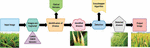
At first the images are captured using latest CMOS sensors then the images of disease are identified by new sensor named as optical sensors. This optical sensor sensed the illness of rice leaf diseases as leaf scald and identified infections are detected using Grasshopper Detection Algorithm based on Artificial intelligence. Figure 1 depicts the overall architecture of Sensing Recognition Strategy is given below
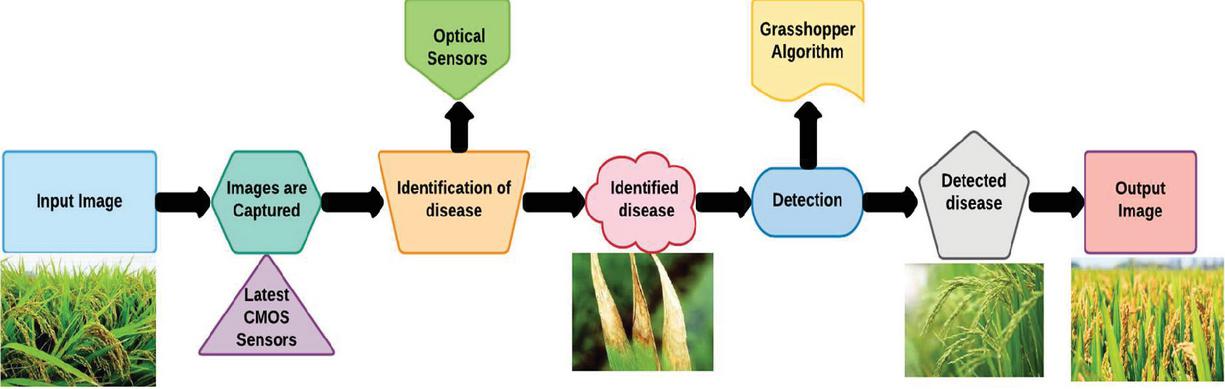
Figure 1 Overall architecture of Sensing Recognition Strategy.
The detection algorithm of the proposed method based on Artificial Intelligence can be discuss in the below section.
3.1 Enhanced Grasshopper Detection Algorithm
Grasshoppers are pests that ruin cultivation, reducing the effectiveness to consume. Consequently, insects are also called pests. Grasshoppers are forming enormous swarms that cause producers the overwhelm fears. There are 2 kinds of grasshoppers in the environment, such as the juvenile shape and the maturity, i.e., the completely developed shape.
The mathematical theorem called the GDA is used to imitate grasshoppers’ swarming characteristics, as demonstrated below. The position of every grasshopper in the swarm is a viable way to address the issue of recognition. Equation (1) represents the position of ith grasshopper as
| (1) |
Where Environment connection Gravitational force Wind boundary layer
Grasshoppers’ swarming strength is defined by their attracting forces, repulsive forces and grasshoppers’ path. Equation (2) depicts the current location of the grasshopper
| (2) |
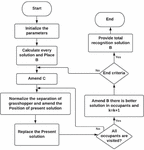
The improved Grasshoppers Algorithm is given below,
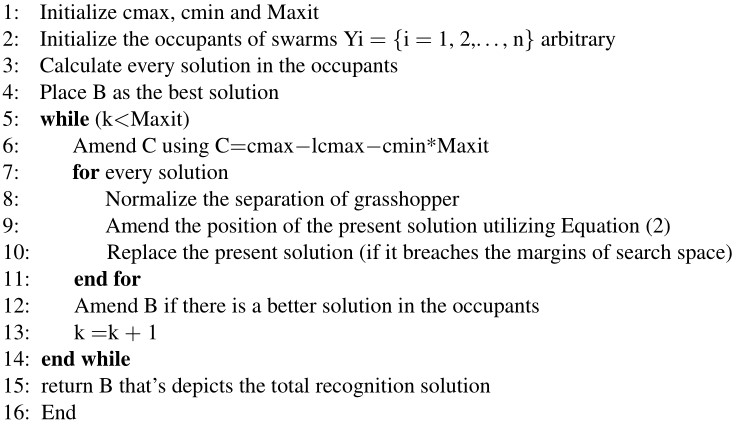
At last, the Sensing Recognition Strategy has been identified by optical sensors and detected the diseases by Grasshopper Detection Algorithm with high accuracy. The result section will be discuss in the below section.
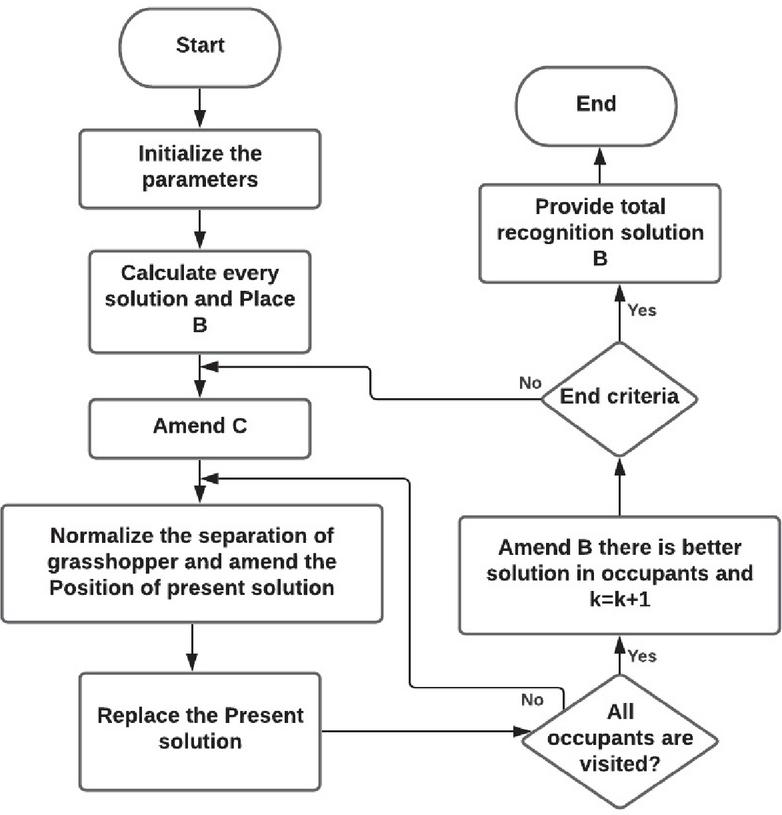
Figure 2 Flow chart of the Enhanced Grasshopper Detection Algorithm.
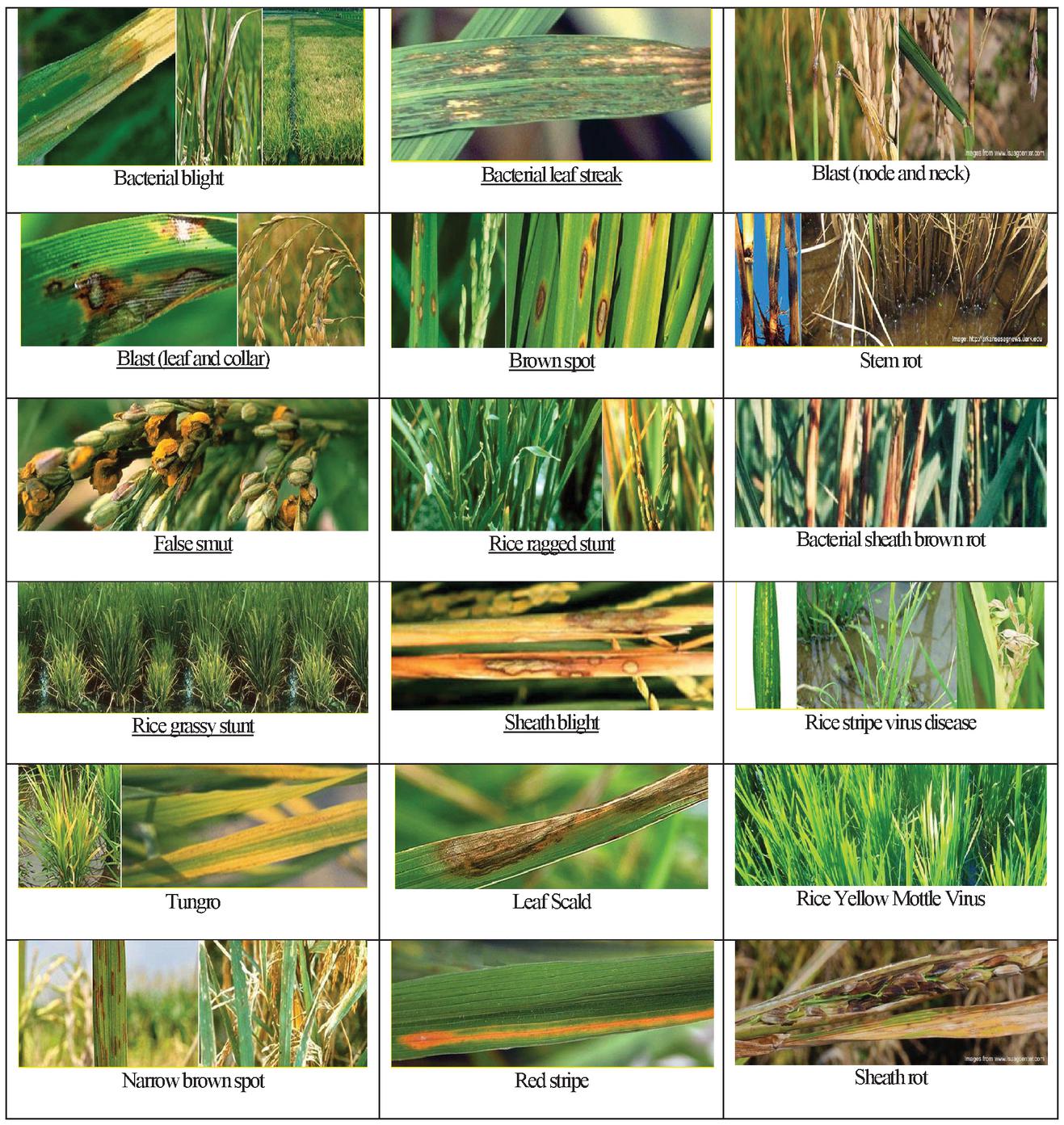
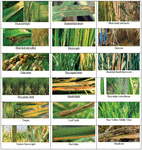
Figure 3 Sample various type of Rice Plant Diseases.
4 Results
The proposed algorithm is developed using python tool and the sample image of the affected disease images collected from internet source are depicted in Figure 2. The data set collected from github [22] and work carried out using Core i3 machine with 8GB RAM and Windows 10 Operating system. The following Figure 3 shows the sample various type of plant diseases [23].
The outcomes of the proposed method are discussed by performance metrices and comparison results are given below.
4.1 Performance Metrics
Accuracy: It is directly Proportional to the summation of true positive and true negative and inversely proportional to the summation of true positive, true negative, false positive and false negative.
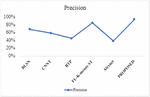
Precision: It is measured as the correlation of true positives to the aggregate of true positives and false positives.
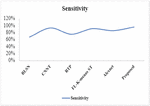
Sensitivity: It proclaimed as the proportion of positives accurately recognized via test out of the entire quantity of positive substantially evaluated.
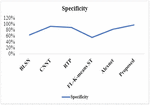
Specificity: It is denoted as the proportion of negatives adequately distinguished via test out of the whole amount of negative literally assessed.
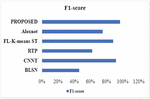
F1-Score: It is calculated as the Harmonic mean of precision and recall
4.2 Comparison Results
The comparison results of Proposed method are compared with existing methodologies including BLS Net Method (BLS Net), Convolutional Neural Network Technique (CNNT), Rice Talk Project (RTP), Fuzzy logic with K means Segmentation Technique (FL-K-means ST) and Alexnet.
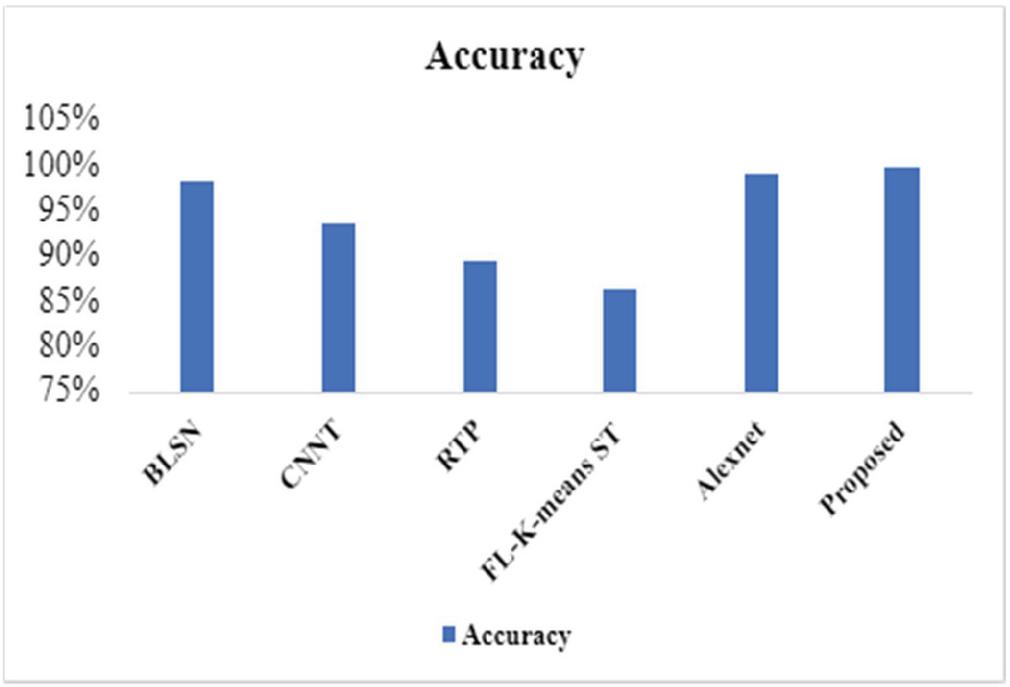
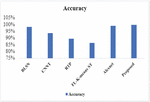
Figure 4 Accuracy of the SR Strategy.
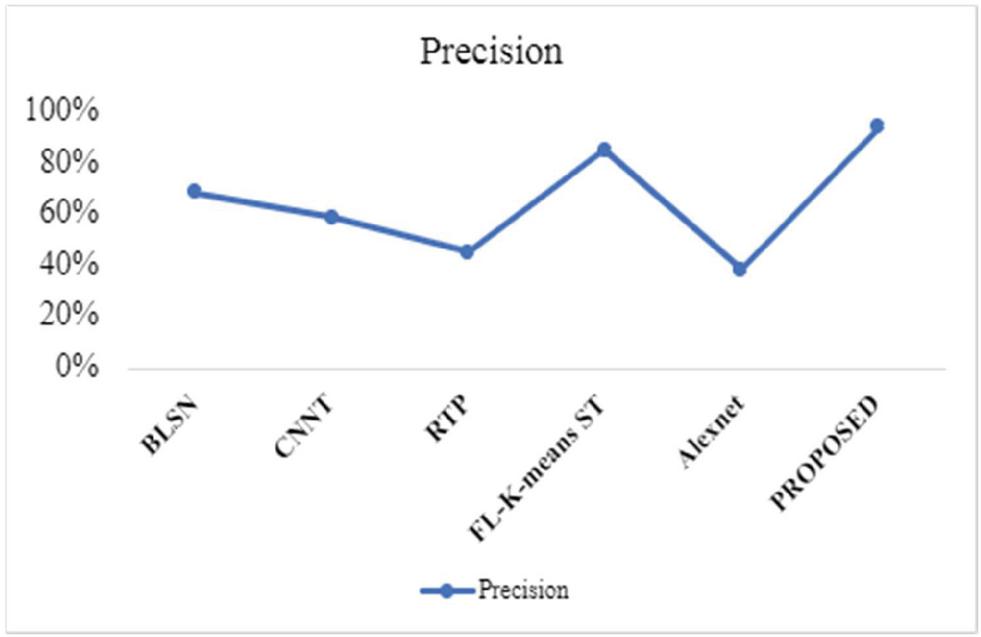
Figure 5 Precision of the SR Strategy.
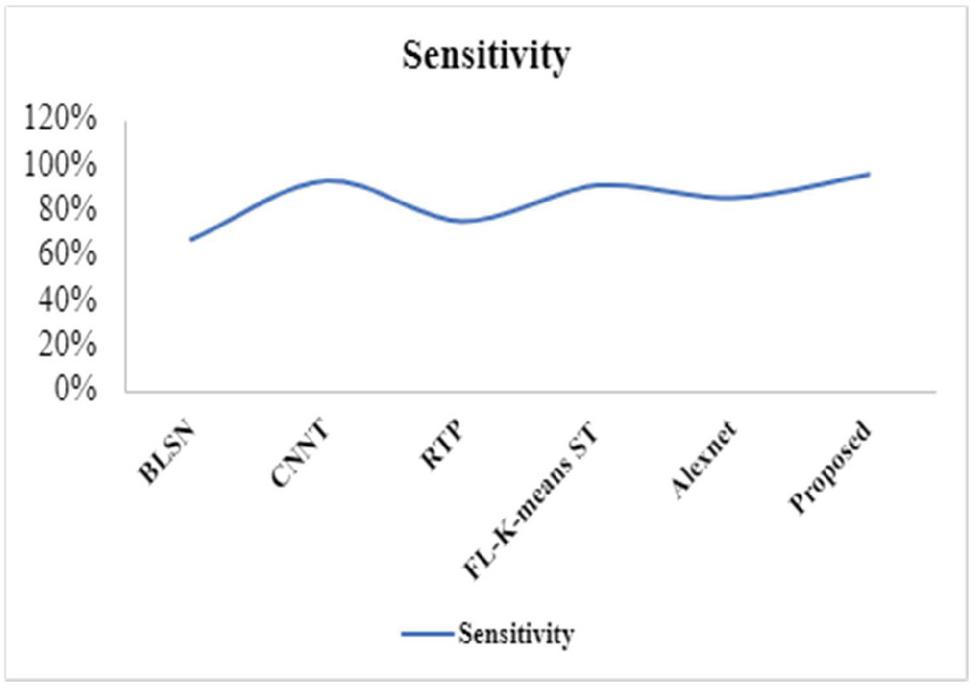
Figure 6 Sensitivity of the SR Strategy.
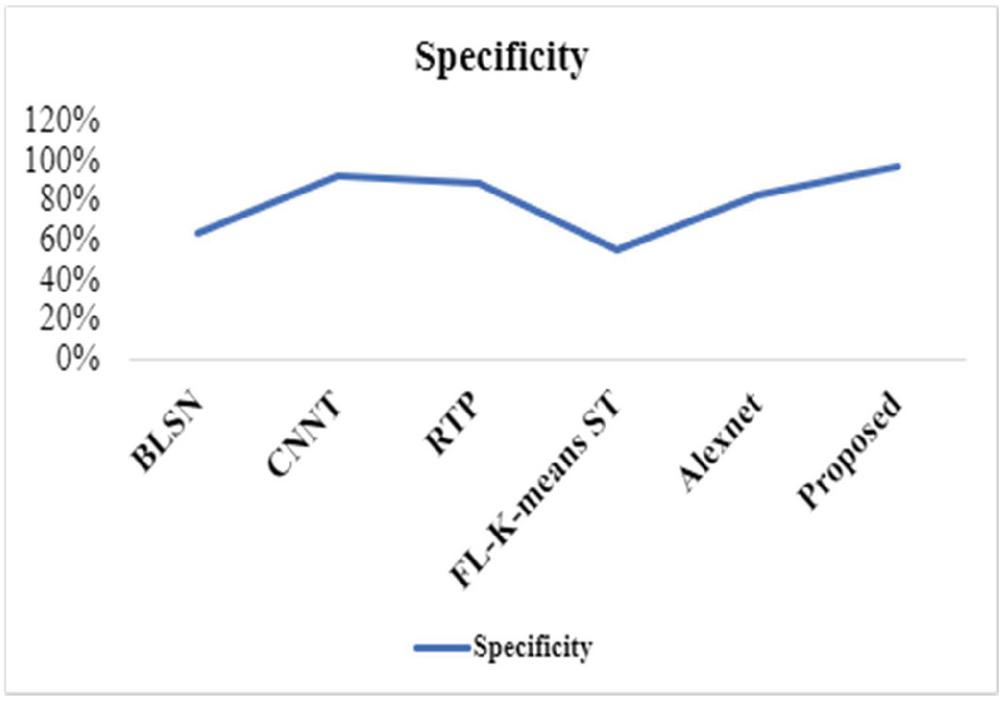
Figure 7 Specificity of the SR Strategy.
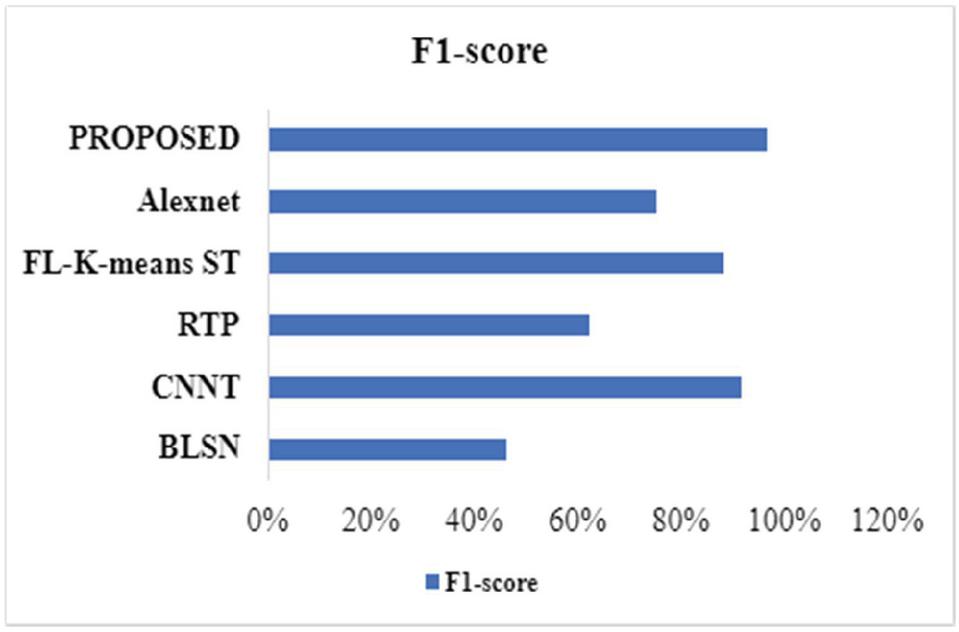
Figure 8 F1-score of the SR Strategy.
The performance metrices such as accuracy, precision, sensitivity, specificity and F1-score of the Sensing Recognition Strategy are achieved highly efficient for detected the diseases when compared with prior techniques in rice plant. The Table 1 shows the performance comparison of proposed work with existing algorithms.
Table 1 Accuracy, Precision, Sensitivity, Specificity, F1-Score
| Metrics | Accuracy | Precision | Sensitivity | Specificity | F1-Score |
| Alexnet | 0.965 | 0.728 | 0.657 | 0.602 | 0.865 |
| FL-K-means ST | 0.925 | 0.624 | 0.854 | 0.867 | 0.955 |
| RTP | 0.890 | 0.576 | 0.756 | 0.889 | 0.780 |
| CNNT | 0.805 | 0.827 | 0.831 | 0.652 | 0.815 |
| BLSN | 0.950 | 0.625 | 0.886 | 0.724 | 0.590 |
| SR Strategy | 0.979 | 0.934 | 0.896 | 0.971 | 0.969 |
5 Conclusion
In Rice plant diseases, leaf scald and eyespot are crucial challenges in rice plant leaf illness can be identified using sensors and detected the illness by Enhanced Grasshopper detection Algorithm. From the end of the fifteenth year on plant infection in the form of coping techniques that remain sharp is an income among professionals. In any plant, diseases are brought on by micro-organisms, growth, and infection. In rice plants, the most common ailments are the Bacterial leaf curse, Brown spot, Leaf barrel, Leaf impact, and Sheath. The Algorithm is recognized based on position, forces and path of the grasshopper. The Proposed method are compared with prior technologies and obtained the Accuracy of 99.94% with highly effective recognition. Further development is carried out to detect the rice crop disease based on IoT with Artificial Intelligence.
References
[1] Krishnamoorthy, D. and Parameswari, V.L., Rice Leaf Disease Detection Via Deep Neural Networks with Transfer Learning for Early Identification. Turkish Journal of Physiotherapy and Rehabilitation, 32, p. 2.
[2] Azim, M.A., Islam, M.K., Rahman, M.M. and Jahan, F., 2021. An effective feature extraction method for rice leaf disease classification. Telkomnika, 19(2), pp. 463–470.
[3] Nguyen, T.T., Ospina, R., Noguchi, N., Okamoto, H. and Ngo, Q.H., 2021. Real-time Disease Detection in Rice Fields in the Vietnamese Mekong Delta. Environmental Control in Biology, 59(2), pp. 77–85.
[4] Jiang, F., Lu, Y., Chen, Y., Cai, D. and Li, G., 2020. Image recognition of four rice leaf diseases based on deep learning and support vector machine. Computers and Electronics in Agriculture, 179, p. 105824.
[5] Basit, A. and Ali, Z., 2021. Detection of Disease Onset in Rice Plant Leaves in Monochrome Light. The Nucleus, 57(3), pp. 100–105.
[6] Chen, S., Zhang, K., Zhao, Y., Sun, Y., Ban, W., Chen, Y., Zhuang, H., Zhang, X., Liu, J. and Yang, T., 2021. An Approach for Rice Bacterial Leaf Streak Disease Segmentation and Disease Severity Estimation. Agriculture, 11(5), p. 420.
[7] Senan, N., Aamir, M., Ibrahim, R., Taujuddin, N.S.A.M. and Muda, W.H.N.W., 2020. An efficient convolutional neural network for paddy leaf disease and pest classification. Int. J. Adv. Comput. Sci. Appl, 11(7), pp. 116–122.
[8] Chen, W.L., Lin, Y.B., Ng, F.L., Liu, C.Y. and Lin, Y.W., 2019. RiceTalk: Rice blast detection using internet of things and artificial intelligence technologies. IEEE Internet of Things Journal, 7(2), pp. 1001–1010.
[9] Sethy, P.K., Negi, B., Barpanda, N.K., Behera, S.K. and Rath, A.K., 2018. Measurement of disease severity of rice crop using machine learning and computational intelligence. In Cognitive science and artificial intelligence (pp. 1–11). Springer, Singapore.
[10] Matin, M.M.H., Khatun, A., Moazzam, M.G. and Uddin, M.S., 2020. An Efficient Disease Detection Technique of Rice Leaf Using AlexNet. Journal of Computer and Communications, 8(12), p. 49.
[11] Prabira Kumar Sethy, Nalini Kanta Barpanda, Amiya Kumar Rath, Santi Kumari Behera, 2020. “Image Processing Techniques for Diagnosing Rice Plant Disease: A Survey”. Procedia Computer Science, Vol. 167, pp. 516–530,
[12] J. P. Shah, H. B. Prajapati and V. K. Dabhi, “A survey on detection and classification of rice plant diseases,” 2016 IEEE International Conference on Current Trends in Advanced Computing (ICCTAC), 2016, pp. 1–8.
[13] Ahmed, Kawcher, Shahidi, Tasmia, Irfanul Alam, Syed and Momen, Sifat, 2019. “Rice Leaf Disease Detection Using Machine Learning Techniques”. 2019 International Conference on Sustainable Technologies for Industry 4.0 (STI), pp. 1–5.
[14] Shah, Jitesh, Prajapati, Harshadkumar and Dabhi, Vipul, 2016. “A survey on detection and classification of rice plant diseases.” pp. 1–8.
[15] Matin, M., Khatun, A., Moazzam, M. and Uddin, M. (2020) An Efficient Disease Detection Technique of Rice Leaf Using AlexNet. Journal of Computer and Communications, Vol. pp. 49–57.
[16] M. E. Pothen and M. L. Pai, “Detection of Rice Leaf Diseases Using Image Processing,” 2020 Fourth International Conference on Computing Methodologies and Communication (ICCMC), 2020, pp. 424–430.
[17] Patidar S., Pandey A., Shirish B.A., Sriram A. (2020) Rice Plant Disease Detection and Classification Using Deep Residual Learning, International Conference on Machine Learning, Image Processing, CCIS, vol. 1240, pp. 278–293.
[18] H. Andrianto, Suhardi, A. Faizal and F. Armandika, 2020. “Smartphone Application for Deep Learning-Based Rice Plant Disease Detection,” 2020 International Conference on Information Technology Systems and Innovation (ICITSI), pp. 387–392.
[19] T. Daniya and S. Vigneshwari, 2021. Deep Neural Network for Disease Detection in Rice Plant Using the Texture and Deep Features, The Computer Journal.
[20] T. Daniya and S. Vigneshwari, 2020. “A Review on Machine Learning Techniques for Rice Plant Disease Detection in Agricultural Research”, International Journal of Advanced Science and Technology, vol. 8, no. 13.
[21] S. Velliangiri, R. Sekar, and P. Anbhazhagan “Using MLPA for smart mushroom farm monitoring system based on IoT”. International Journal of Networking and Virtual Organisations 2020, Vol. 22 Issue 4, pp. 334–346.
[22] Rice disease dataset. https://github.com/aldrin233/RiceDiseases-DataSet/tree/master (accessed August 2021).
[23] http://www.knowledgebank.irri.org/step-by-step-production/growth/pests-and-diseases/diseases
Biographies

T. Daniya received her B.Tech degree in Information Technology from Anna University, Chennai, India and M.Tech degree from MS University, India, in 2009 and 2011 respectively. She is currently doing Ph.D degree in Computer Science and Engineering at Sathyabama Institute of Science and Technology Chennai, India. She is currently working as an Assistant Professor with the Department of Information Technology, GMRIT, Rajam, India. Her research interest is AI, Machine Learning and Deep Learning. She Published 15 research articles in various journals and conferences.

Ch. Vidyadhari currently working as an Assistant professor in the Department of Information Technology at Gokaraju Rangaraju Institute of Engineering and Technology, Bachupally, Kukatpally, Hyderabad. Her research area is Data Mining and Machine Learning. She has published around 10 papers in reputed international journals and has an experience of 12 years in teaching.

Srilakshmi Aluri working as an Assistant Professor, Department of Information Technology, in Gokaraju Rangaraju Institute of Engineering and Technology, Hyderabad, Telangana, India. She completed M.Tech in Computer Science and Engineering from JNTU Kakinada in the year 2013. Her area of research interest includes Artificial Intelligence, Machine Learning, and Data Science. She has 8 years of teaching experience.
Journal of Mobile Multimedia, Vol. 18_3, 705–722.
doi: 10.13052/jmm1550-4646.18311
© 2022 River Publishers