A Comprehensive Review of Neutrosophic Statistics for Data Analysis in Applied Sciences
Adeena Fatima1, Usama Afzal2, Muhammad Aslam3,* and Florentin Smarandache4
1Department of Physics, University of Management & Technology, Lahore 54770, Pakistan
2School of Microelectronics, Tianjin University, Tianjin 300072, China
3Department of Statistics, Faculty of Science, King Abdulaziz University, Jeddah 21589, Saudi Arabia
4Mathematics, Physics, and Natural Science Division, University of New Mexico Gallup, NM, U.S.A
E-mail: fatimaadeena2@gmail.com; mohammadusamafzal7@gmail.com; aslam_ravian@hotmail.com; fsmarandache@gmail.com
*Corresponding Author
Received 05 July 2024; Accepted 26 February 2025
Abstract
This comprehensive review delves into the wide-ranging uses of neutrosophic statistics across various domains, including Applied Sciences, Sensor technology, Astrophysics, Bioinformatics, Materials Science, Nanotechnology, and Microelectronics. Through the presentation of illustrative instances, the research underscores the efficacy of Neutrosophic design in managing uncertainty and handling incomplete information. The paper underscores the significance of neutrosophic analysis in comprehending intricate phenomena within these fields, underscoring its capacity to bring about transformation and offer analytical solutions for real-world intricacies. The idea of a Neutrosophic statistical approach is incredibly potent and useful. Because it can capture the variation in a wide range of complex real-life use circumstances, it has a variety of application areas. The major applications of neutrosophic sets have been discussed in this study. It also examines and evaluates almost all of its applications.
Keywords: Analytical adaptability, applied sciences, bio-information, complex phenomena, multidimensional applications, neutrosophic statistics.
1 Introduction
The neutrosophics found their place in the modern inquiry because the world is rife with uncertainty. The concepts of neutrosophic measure and neutrosophic statistics have been introduced. The creation and use of neutrosophic logic, set, measure, integral, probability, and other concepts in any subject is termed neutrosophic science. Given the wide variety of indeterminacies, there are multiple ways to define the neutrosophic measure, and consequently, the neutrosophic statistics and probability, based on the problem we must solve. Randomness and indeterminacy are distinct concepts Voskoglou [1]. The construction and materials of the physical space, the objects in the space, and other elements may all contribute to indeterminacy.
Smarandache [2] was the first to suggest neutrosophic approaches. He originally put forth the neutrosophic notion as a philosophical idea. Several neutrosophic mathematical theories, including neutrosophic logic, neutrosophic probability, statistics, and neutrosophic sets, were then suggested by Smarandache as an extension of neutrosophic ideas in the area of mathematics. Numerous researchers have developed and extended the neutrosophic theory to make it easier to articulate and apply to engineering and science challenges, resulting in the development of engineering neutrosophic theory and methodologies for practical applications in these fields.
The concept of neutrosophic sets, according to Khan et al. [3], “is a wider platform which extends the concepts of the fuzzy and classical sets.” Neutrosophic statistics serve as a generalization of classical statistics designed to analyze uncertain, vague, unclear and incomplete data El-Hefenawy et al. [4]. Neutrosophic descriptive statistics describes and specifies the properties of a set of data that has some degree of indeterminacy Smarandache [2]. As a fuzzy set and classical set extension with considerable indeterminacy, the neutrosophic set concept was first introduced by Alias [5].
Recently, the use of neutrosophic approaches for the analysis of interval data has increased in several fields, including Applied sciences, Medicine for measuring diagnoses data and Astrophysics for measuring earth speed data. We also analyzed the earthquake data using the K-means of the neutrosophic technique. The use of neutrosophic sampling was employed to investigate the limitations of medical diagnosis.
The COVID-19 data were examined using the neutrosophic Kruskal-Wallis H test, like Aslam [6]. Aslam [7] describes how to utilize the neutrosophic approach on interval point value data that is indeterminate. This is a considerable improvement over classical statistical methods because traditional statistics only deal with data that has fixed point values and no indeterminacy. Neutrosophic statistics are now used more frequently in materials science. For instance, the classical binomial distribution only explains acceptance and rejection probability, while the neutrosophic binomial distribution explains acceptance, rejection, and indeterminate probabilities. Chen et al. [8] presented the neutrosophic statistical methods to analyze the neutrosophic data. Smarandache [9] proved the neutrosophic statistics are more efficient than interval statistics. Sherwani [10] studied the relative and odd ratio using neutrosophic statistics with the application in medical science.
1.1 Some Important Aspects of Neutrosophic Analysis
Let us see some basic aspects of the neutrosophic analysis as follows:
• Representation of Interval:
Neutrosophic statistics, as a modern statistical framework, uses the Neutrosophic variable concept to efficiently characterize intervals. This neutrosophic variable consists of distinct elements: a classical judge, an indeterminate judge, and an interval of indeterminacy. This time on the occasion of Benny’s video, the method skillfully captures and encapsulates the error and uncertain duality within as a break. The classical aspect provides deterministic information, while the indeterminate aspect accommodates elements of vagueness or ambiguity. Also, the uncertainty interval encloses the range within which the uncertainty appears.
• Treatment of Imprecision and Indeterminacy:
Neutrosophic statistics emerges as a sophisticated analytical paradigm that effectively copes with and mitigates the challenges posed by impreciseness and uncertainty inherent in finite datasets within intervals. This methodology stands as a testament to its ability to accommodate and resolve the complexities introduced by uncertain and incomplete information AlAita et al [11]. Through the deliberate recognition of vagueness and ambiguity, this framework empowers analysts to navigate the complexities of real-world data with a better perspective, ultimately yielding insights that go beyond traditional revenue streams, in ways that are limited by preconceived assumptions.
• Statistical Measures:
Neutrosophic statistics, a modern statistical paradigm, uses a specific conceptual apparatus characterized by neutrosophic variables, thereby enabling the computation of statistical parameters in a manner that comprehensively accommodates intrinsic errors. This approach takes advantage of the inherent tripartite nature of Neutrosophic variables, consisting of a classical aspect, an indeterminate aspect, and an associated indeterminate interval.
1.2 Aim of Study
The present study serves as a review article, which illustrates the diverse and effective applications of Neutrosophic statistics in the fields of applied sciences. This review paper first describes the research achievements of neutrosophic technique in applied sciences and applied methods in four main research areas of applied sciences: neutrosophic approach in microelectronics, sensor analysis, Material sciences and Astrophysics. Then, we conduct a literature review of Applied Sciences papers that have been published. The study conclusions and future research directions in the discipline of applied sciences have been then compiled.
A critical review of these applications illustrates the utility of neutrosophic analysis. Well-accommodating uncertainty, misunderstanding, and incomplete information, Neutrosophic statistics provide researchers and practitioners with a versatile toolkit for understanding the complex phenomena involved in the aforementioned disciplines. The results of the study collectively reinforce the claim that adopting Neutrosophic analysis has a distinct advantage in dealing with the complexities and nuances inherent in real-world data.
2 Application of Neutrosophic Techniques in Applied Sciences
The complexity, difficulty, and requirements of applied sciences continue to rise with the advancement of modern science and technology. Due to the nature of applied sciences, it is typically challenging to solve ambiguous and inconsistent problems using classic theoretical research approaches. Therefore, the neutrosophic statistical approach will play a very important role in encouraging the development of applied sciences and practical procedures as a theoretical tool that can effectively describe indeterminate, partial, and inconsistent information Geometries [12] and Nabeeh [13]. Figure 1, expresses the applications of neutrosophic analysis in applied sciences Christianto, et al. [14].
In short, the Neutrosophic technique could be able to help resolve old disputes. For physicists, biologists, and other research professionals, the method by which matter is created in nature is still largely a mystery.
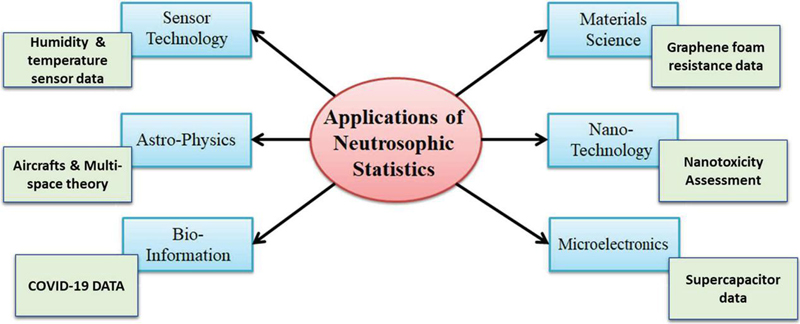
Figure 1 Application of neutrosophic statistics in different fields of applied sciences.
2.1 Neutrosophic Approach in Bio-Information
Applying a neutrosophic approach to analyzing imprecise bioinformatics data stands as an important strategy to facilitate accurate decision-making in matters related to the human body. By adopting this approach, the complex nuances of misperception are effectively addressed, resulting in improved decision outcomes with important implications for human health and well-being. Ansari, et al. [15] proposed the use of the neutrosophic set theory in artificial intelligent-based medical systems. Their study outlined the potential applications of neutrosophic set theory in the realm of medical artificial intelligence (AI). The proposal suggested that by integrating neutrosophic set theory into medical AI systems, improved accuracy and reliability can be achieved in the diagnosis of medical conditions, treatment planning, and patient care. The authors introduced a new method for estimating similarity between rough neutrosophic sets, a theoretical construct designed to handle uncertainty and uncertainty in the data.
The application of this measure in the field of clinical diagnosis shows the potential to increase the accuracy of the diagnosis of complex medical conditions. These sets offer a valuable approach to reporting and analyzing uncertain and ambiguous clinical data. These applications demonstrate the utility of single-valued neutrosophic sets in helping clinicians make informed decisions about clinical conditions, improving diagnostic accuracy. This research has the potential to integrate the neutrosophic concept into clinical diagnosis, contributing to advances in the field of healthcare decision-making. There are several such examples in which neutrosophic sets have been used in medicine can be seen in the references Afzal and Aslam [16], and Afzal and Aslam [17].
Neutrosophic statistics has emerged as an important tool in the analysis and understanding of COVID-19 data, contributing to unraveling its complex patterns and implications. For example, Sherwani, et al. [18] used the neutrosophic Kruskal Wallis H test for the analysis of COVID-19 data. Their work introduced an innovative method that considers the uncertainty inherent in the data, contributing to a more comprehensive understanding of the impact of epidemics. Using Neutrosophic logic within the Kruskal-Wallis H test framework, the study enhances the validity of statistical analysis of variables related to COVID-19. Similarly, a novel neutrosophic sign test procedure was also proposed by Sherwani, et al. [19] for the analysis of COVID-19 data. This innovative approach removes the inherent uncertainty in the data, providing a more comprehensive assessment of the impact of epidemics. Furthermore, Afzal et al. [20] used neutrosophic statistical methodology and applied neutrosophic indeterminacy formulas to data from COVID-19 patients. Neutrosophic Approach in Sensor Technology.
Neutrosophic statistics find wide applications in sensor technology, facilitating rigorous analysis of sensor-generated data. Expanding this approach, Afzal et al. [21] were the first to use a neutrosophic method in the evaluation of false capacitance and resistance data generated from a humidity sensor fabricated with a thin film of methyl green. This seminal work established an important milestone in the use of neutrosophic statistics within this domain, leading to a series of investigations that have adopted the neutrosophic approach to the analysis of uncertain sensor data. Afzal et al. [22] published a paper in which they reported the neutrosophic analysis with the comparison of the classical analysis for three humidity sensors based on different materials. The study addressed this challenge by using neutrosophic statistics to analyze humidity-sensing data. Data collected from different types of humidity sensors, including Ag/MR/Ag, Al/TPPNi/Al, and Ag/Cu2O-PEPC/Ag, were subjected to neutrosophic and classical statistical analyses. Comparative analysis indicated that Neutrosophic statistics outperforms classical statistics in its effectiveness, flexibility, and analysis of uncorrected humidity sensor data. This study is rooted in material statistics, using statistical techniques to analyze complex electrical property data such as capacitance and resistance of humidity sensors using diverse materials.
The research uses the Neutrosophic method to evaluate the above characteristics. Data derived from previously published papers, with consideration of intervals, form the basis of the humidity sensor analysis. Both classical and neutrosophic formulas were applied to this dataset, and the resulting graphs were compared analytically. The results showed that the classical analysis inadequately explained the variations in capacitance and resistance related to changes in relative humidity due to data indeterminacy. In contrast, neutrosophic analysis proved to be particularly effective, demonstrating its superiority in explaining these dynamics.
Consequently, through this study they concluded that neutrosophic statistics outperform classical statistics in terms of effectiveness, reliability, and informative value, thus serving as a stronger foundation for decision-making processes.
2.2 Neutrosophic Approach in Microelectronics
Imprecision plays an important role in the field of microelectronics, arising from various sources such as manufacturing variations, environmental factors, and inherent device characteristics. For example, recently, Afzal et al. [23] published a paper based on the neutrosophic analysis of supercapacitor indeterminate data. With a focus on practical implementation, the research introduced an innovative invariant relationship developed for capacitance and resistance difference values, evaluated with an LCR meter for a supercapacitor. This study provided an in-depth exploration of neutrosophic and classical statistical analysis methods, including an example scenario for each approach and the resulting output tables. And graphs were compared. This comparative insight led to sensible conclusions. Through close investigation, it became clear that the neutrosophic statistical method was proven excellent in analyzing interval data obtained from LCR meters. This observation illustrated the relevance of the method in contemporary material statistics and its potential utility in diverse research domains.
2.3 Neutrosophic Approach in Materials Science & Nanotechnology
Aslam et al. [24] used the Mann-Whitney test based on neutrosophic statistics to analyze the alloy melting point data. This study introduced a novel Mann-Whitney test procedure that accounts for uncertainty in the analysis of alloy melting point data. This innovative approach aims to increase the accuracy of statistical analysis by removing the inherent uncertainty in the data.
Adaikalaraj et al. [25] used neutrosophic statistics to multicriteria decision-making for nanotoxicology. This study focuses on the assessment and classification of nanotoxicity assessment methods. It used an innovative method called Interval-Valued Neutrosophic Multi-Criteria Decision Making (IVNNMCDM) to effectively evaluate the performance of the methods. The IVNNMCDM approach accounts for the uncertainties and errors inherent in the nanotoxicity data and decision-making process.
The main objective of the study was to determine the most suitable nanotoxicity assessment method by considering multiple criteria simultaneously. Same as Afzal et al. [26] used neutrosophic statistics to analyze the graphene foam (3D graphene) imprecise data of resistance variance concerning temperature and current. By considering the intricate interplay between temperature and current, their study emerged as a testament to the potency of neutrosophic statistics in delineating material properties and facilitating informed decision-making. In particular, the findings underscored the effectiveness of neutrosophic statistical methodologies as a discerning tool to unravel complex relationships inherent within materials, reinforcing its utility in advancing both analytical comprehension and the decision-making process.
Applications of the neutrosophic approach extend to the realms of materials science and nanotechnology, offering a sophisticated means of understanding the inherent variability within imprecise data. Ahmad et al. [27] studied the assessment of soil contamination by heavy metals in the vicinity of the Sahiwal (Pakistan) coal power plant using the Neutrosophic Approach. Also, Fatima et al. [28] utilized the Neutrosophic Method in the region of Lahore (Pakistan) for the analysis of heavy metal contamination in Breast Milk. Ahmad et al. [29] implemented the neutrosophic approach for the assessment of heavy metal levels in chicken, in Pakistan, for better and more imprecise data.
2.4 Neutrosophic Approach in Astrophysics
The fact that traditional physics and astrophysics entail so many mutually compatible truths is one of the factors contributing to the limited use of Smarandache geometries and neutrosophic approaches to date. To address this issue, the science of energy conservation views the law of energy conservation as the single source of truth and connects everything to energy.
Finally, to broaden the applications of Smarandache geometries, neutrosophic theory, and quantization approaches, the idea of there being only one truth is further examined. The law of conservation of energy is a key concept in the study of energy conservation. By establishing a movement trajectory that satisfies a particular rule as well as by Smarandache Geometry, we can now correlate a movement trajectory with a given law and find more comprehensive applications for both neutrosophic methods and Smarandache geometries. In this case, it is impossible to say whether a proposition is valid or not; it may be valid one moment and invalid the next Yuhua [30] and El-Hefenawy N. et al. [4].
The author believes that Smarandache Geometry, which is a subject worth more research, should also take into account this third scenario. We can refer to a movement trajectory as meeting the law of conservation of energy if it complies with this principle. We might refer to a movement trajectory as being forbidden by the law of conservation of energy if it violates this principle. Similar to how we can define paths fulfilling the law of conservation of momentum, those restricted by the law of conservation of momentum, those indeterminately satisfying the law of conservation of momentum, those satisfying the law of conservation of angular momentum, those denied by the law of conservation of angular momentum, those indeterminately satisfying the law of conservation of angular momentum, and other trajectories Geometries [31].
3 Review Analysis
The next discussion is about a review of some applications of neutrosophic techniques in Applied sciences as shown in Table 1. Although applied sciences is a very vast field, we highlight some of them here as the entanglement of the neutrosophic approach. Due to the advancement in the field of modern sciences and technology, the complex nature and difficulty level have been raised in applied sciences and it will be more difficult to solve uncertain ambiguous problems with the help of the classical approach. This is the reason for using the new approach called the statistical approach to solve such matters. We discuss how we could solve the problem of indeterminacy in such fields of applied sciences utilizing the neutrosophic approach.
Table 1 Application of neutrosophic statistics in different fields of applied sciences
| Field of | Publication | ||
| Applied Science | Application | Analysis Method | of Year |
| Bio-Information | Medical artificial intelligence (AI) | Neutrosophic set theory | 2011 |
| Medical imaging process | Neutrosophic statistics | 2014 | |
| Medical diagnosis | Rough neutrosophic set | 2015 | |
| Medical diagnosis | Algorithm single value neutrosophic set | 2017 | |
| Medical images | Neutrosophic set theory | 2019 | |
| Diabetic patients | Neutrosophic statistics | 2020 | |
| Diabetic patients | Neutrosophic analysis | 2021 | |
| COVID-19 data | Neutrosophic Kruskal Wallis H test | 2021 | |
| COVID-19 data | Neutrosophic sign test procedure | 2021 | |
| COVID-19 data | Z-test methodology | 2022 | |
| COVID-19 data | Neutrosophic indeterminacy formulas | 2023 | |
| Diabetes data | Neutrosophic indeterminacy formulas | 2023 | |
| Sensor Technology | Humidity sensor data | Neutrosophic indeterminacy formulas | 2021 |
| Humidity sensor data | Neutrosophic indeterminacy formulas | 2022 | |
| Humidity & temperature sensor data | Neutrosophic indeterminacy formulas | 2022 | |
| Tactile sensor data | Neutrosophic indeterminacy formulas | 2023 | |
| Humidity sensor data with PLA films | Neutrosophic indeterminacy formulas | 2024 | |
| Microelectronics | Supercapacitor data | Neutrosophic indeterminacy formulas | 2023 |
| Astrophysics | Physical examples | Neutrosophic statistics | 2007 |
| Multi-space theory | Neutrosophy | 2013 | |
| Aircrafts | Neutrosophic sets. | 2024 | |
| Materials Science & Nanotechnology | Alloy melting points data | Mann-Whitney test under indeterminacy | 2020 |
| Nanotoxicity assessment | Interval-valued neutrosophic multicriteria decision-making | 2021 | |
| graphene foam resistance data | neutrosophic indeterminacy formulas | 2022 | |
| Heavy Metals | Neutrosophic indeterminacy formulas | 2024 |
4 Future Recommendations
This paper is a review of the neutrosophic approach to applied sciences in different fields and different areas are being touched in this review. Some other fields of applied sciences need to be discussed by utilizing a neutrosophic strategy. Further research is recommended to be discussed. Material sciences is such a vast field as in nanomaterials some theoretical assumptions demand to be discussed clearly by using a neutrosophic approach. Some graphs that have been experimentally done and there will remain an error or some specific error that cannot be fixed without fitting could be solved by using such a neutrosophic approach. Matter and dark matter which is ambiguous to us will also be solved by the neutrosophic approach. Lastly, the majority of the paper’s innovations have not been applied to other application domains to validate their dependability, which may be the subject of further study in the future.
5 Discussion and Conclusion
A comprehensive evaluation of these applications has illustrated the inherent value of neutrosophic analysis. By taking into account uncertainty, reducing misunderstandings, and handling incomplete information well, Neutrosophic statistics has endowed researchers and practitioners with a versatile toolkit for understanding the complexities of complex phenomena in the aforementioned fields. The collective findings of this study validate the claim that incorporating neutrosophic analysis has a distinct advantage in dealing with the complex and delicate nature of real-world data.
Through a comprehensive exploration of these domains, the study has highlighted instances where Neutrosophic data has proven invaluable for accuracy and flexibility in analysis. The empirical evidence presented in this review strongly supports the integration of Neutrosophic statistics within the applied sciences, demonstrating its transformative potential as an analytical paradigm. This evidence illustrates the utility of neutrosophic statistics in multidimensional domains, solidifying its position as a powerful and effective approach. In conclusion, this review confirms that Neutrosophic analysis stands as a compelling methodology with the potential to revolutionize understanding and analysis across diverse and complex scientific domains. Sample contributions in various study areas have been provided in this paper. Numerous additional study topics might be investigated in the future by other scholars.
Acknowledgments
The authors are deeply thankful to the editor and reviewers for their valuable suggestions to improve the quality and presentation of the paper.
References
[1] Voskoglou, M.G., From Zadeh’s Fuzziness to Smarandache’s Neutrosophy: A Review. International Journal of Mathematical and Computational Methods, 2022. 7.
[2] Smarandache, F., The Neutrosophic Research Method in Scientific and Humanistic Fields. Multispace and Multistructure. Neutrosophic Transdisciplinariry (100 Collected Papers of Sciences), 2010: p. 732–733.
[3] Smarandache, F., Introduction to neutrosophic measure, neutrosophic integral, and neutrosophic probability. 2013: Infinite Study.
[4] El-Hefenawy, N., et al., A review on the applications of neutrosophic sets. Journal of Computational and Theoretical Nanoscience, 2016. 13(1): p. 936–944.
[5] Alias, S. and D. Mohamad, A review on neutrosophic set and its development. Discovering Mathematics (Menemui Matematik), 2017. 39(2): p. 61–69.
[6] Aslam, M. and M. Albassam, Presenting post hoc multiple comparison tests under neutrosophic statistics. Journal of King Saud University-Science, 2020. 32(6): p. 2728–2732.
[7] Aslam, M., A study on skewness and kurtosis estimators of wind speed distribution under indeterminacy. Theoretical and applied climatology, 2021. 143(3–4): p. 1227–1234.
[8] Aslam, M., Enhanced statistical tests under indeterminacy with application to earth speed data. Earth Science Informatics, 2021. 14(3): p. 1261–1267.
[9] Smarandache, F., Neutrosophic Statistics is an extension of Interval Statistics, while Plithogenic Statistics is the most general form of statistics (second version). 2022: Infinite Study.
[10] Sherwani, R.A.K., et al., An Application of Neutrosophic Statistics: Extending Relative Risk and Odds Ratios to Handle Uncertainty in Epidemiology and Biostatistics. JP Journal of Biostatistics, 2025. 25(1): p. 1–15.
[11] AlAita, A. and M. Aslam, Analysis of covariance under neutrosophic statistics. Journal of Statistical Computation and Simulation, 2023. 93(3): p. 397–415.
[12] Geometries, S., Multi-Space Theory, and Neutrosophy Applied in Physics.
[13] Nabeeh, N., Assessment and contrast the sustainable growth of various road transport systems using intelligent neutrosophic multi-criteria decision-making model. Sustainable Machine Intelligence Journal, 2023. 2: p. (2): 1–12.
[14] Christianto, V. and F. Smarandache, Unveiling Quantum Communication: From Bell’s Inequality to Neutrosophic Logic. 2024: Infinite Study.
[15] Ansari, A.Q., R. Biswas, and S. Aggarwal, Proposal for applicability of neutrosophic set theory in medical AI. International Journal of Computer Applications, 2011. 27(5): p. 5–11.
[16] Afzal, U. and M. Aslam, Use of neutrosophic statistics to analyze the measured data of diabetes, in Cognitive Intelligence with Neutrosophic Statistics in Bioinformatics. 2023, Elsevier. p. 119–135.
[17] Afzal, U. and M. Aslam, Analysis of changes in blood pressure of women during pregnancy through neutrosophic statistics, in Cognitive Intelligence with Neutrosophic Statistics in Bioinformatics. 2023, Elsevier. p. 137–152.
[18] Sherwani, R.A.K., et al., Analysis of COVID-19 data using neutrosophic Kruskal Wallis H test. BMC Medical Research Methodology, 2021. 21(1): p. 1–7.
[19] Sherwani, R.A.K., et al., A new neutrosophic sign test: An application to COVID-19 data. PloS one, 2021. 16(8): p. e0255671.
[20] Afzal, U. and M. Aslam, Neutrosophic statistical analysis of changes in blood pressure, pulse rate and temperature of human body due to COVID-19, in Cognitive Intelligence with Neutrosophic Statistics in Bioinformatics. 2023, Elsevier. p. 153–172.
[21] Afzal, U., et al., Fabrication of a surface type humidity sensor based on methyl green thin film, with the analysis of capacitance and resistance through neutrosophic statistics. RSC advances, 2021. 11(61): p. 38674–38682.
[22] Afzal, U., J. Afzal, and M. Aslam, Analyzing the imprecise capacitance and resistance data of humidity sensors. Sensors and Actuators B: Chemical, 2022. 367: p. 132092.
[23] Afzal, U. and M. Aslam, New Statistical Methodology for Capacitor Data Analysis via LCR Meter. Neutrosophic Systems with Applications, 2023. 8: p. 26–34.
[24] Aslam, M. and M.S. Aldosari, Analyzing alloy melting points data using a new Mann-Whitney test under indeterminacy. Journal of King Saud University-Science, 2020. 32(6): p. 2831–2834.
[25] Adaikalaraj, X., et al., Optimal ranking of nanotoxicity assesement methods using interval-valued neutrosophic multicriteria decision making. Materials Today: Proceedings, 2021. 43: p. 3791–3794.
[26] Afzal, U., M. Aslam, and A.H. AL-Marshadi, Analyzing imprecise graphene foam resistance data. Materials Research Express, 2022. 9(4): p. 045007.
[27] Ahmad, N., et al., Assessment of soil contamination by heavy metals in the vicinity of the Sahiwal coal power plant, Pakistan, employing an innovative statistical analysis approach. 2024: p. 1–14.
[28] Fatima, A., et al., Analysis of heavy metal concentrations in breast milk by neutrosophic method in the locate of Lahore, Pakistan. 2024. 2(1): p. 21.
[29] Ahmad, N., et al., Assessment of heavy metals level in chicken with indeterminate analysis in localities of Lahore, Pakistan. 2024. 196(5): p. 458.
[30] Yuhua, F., Neutrosophic examples in physics. Neutrosophic Sets and Systems, 2013. 1: p. 26–33.
[31] Geometries, S., Multi-Space Theory, and Neutrosophy Applied in Physics. 2007.
Biographies
Adeena Fatima PhD Researcher at Tianjin University’s School of Microelectronics, China, is a researcher actively engaged in the fields of physics and analytical chemistry. Her research interests lie in the application of semiconductors for dye degradation, environmental pollution mitigation strategies, heavy metal analysis methodologies, water and wastewater treatment approaches, and remediation techniques. Fatima’s work has been published in prestigious journals such as Adsorption Science & Technology, International Journal of Environmental Analytical Chemistry, and ASC Omega.
Usama Afzal, PhD Researcher at Tianjin University’s School of Microelectronics, China, is a multidisciplinary expert in microelectronics, environmental science, material statistics, and physics. His research focuses on material science, nanotechnology, and statistical system analysis, with an emphasis on fabricating advanced sensors for heavy metal detection. Afzal’s publications in prestigious journals have significantly contributed to his field, showcasing his expertise and thought leadership. He has also authored books and chapters that have garnered recognition for their innovative perspectives. As a dedicated academic and passionate knowledge sharer, Afzal has earned a reputation as a respected figure in his profession, inspiring future scholars and researchers through his commitment to excellence.
Muhammad Aslam pioneered the field of neutrosophic statistical quality control. He is the founder of several key areas within neutrosophic statistics, including neutrosophic inferential statistics, advanced neutrosophic distribution theory, neutrosophic circular statistics, neutrosophic survey sampling, and neutrosophic design of experiments, neutrosophic reliability analysis, and neutrosophic index numbers.
Florentin Smarandache is the founder of neutrosophy (a new branch of philosophy – generalization of dialectics), neutrosophic set, logic, probability statistics and published hundreds of papers and books on neutrosophic physics, superluminal and instantaneous physics, unmatter, quantum paradoxes, absolute theory of relativity, redshift and blueshift due to the medium gradient and refraction index besides the Doppler effect, paradoxism, oUTER-aRT, Law of Included Multiple-Middle, multispace and multistructure, HyperSoft set, TreeSoft Set, IndetermSoft Set and IndetermHyperSoft Set, SuperHyperGraph, SuperHyperTopology, SuperHyperAlgebra, SuperHyperFunction, Neutrosophic SuperHyperAlgebra, Refined Neutrosophic Set, neutrosophic over-under-off-set, plithogenic set/logic/probability/statistics, symbolic plithogenic algebraic structures, neutrosophic triplet and duplet structures, quadruple neutrosophic structures, extension of algebraic structures to NeutroAlgebra and AntiAlgebra, NeutroGeometry and AntiGeometry, NeutroTopology and AntiTopology, He also published books of poetry, dramas, children stories, translations, essays, novel, folklore, art albums: https://fs.unm.edu/FlorentinSmarandache.htm.
Journal of Reliability and Statistical Studies, Vol. 18, Issue 1 (2025), 25–40.
doi: 10.13052/jrss0974-8024.1812
© 2025 River Publishers