AI and Telemedicine in Elderly Healthcare: A Statistical Analysis
S. Srinivasan1, 2,*, N. Rajavel1 and Ajay Kumar Singh2
1Department of Social Work, Khajamalai Campus, Bharathidasan University, Tiruchirappalli, Tamil Nadu
2Department of Humanities and Social Sciences, Graphic Era (Deemed to be) University, Dehradun
E-mail: srinivasan102@gmail.com; s.srinivasan.hss@geu.ac.in
*Corresponding Author
Received 13 December 2025; Accepted 26 May 2026
Abstract
The manuscript examines the role of Artificial Intelligence (AI) and telemedicine in Improving healthcare access and services for older adults. The study focuses on digital consultations and early diagnosis and employs a descriptive research design. Data were collected from 120 older adults in rural and urban areas of Dehradun, Uttarakhand. The analysis uses statistical techniques including descriptive statistics, regression analysis, ANOVA, and chi-square tests through SPSS to evaluate telemedicine usage, challenges, and satisfaction levels among older adults.
Keywords: Telemedicine, healthcare, older adults, digital consultations, early diagnosis.
1 Introduction
There are 55 million elderly people aged 65 years and older. Telehealth is more useful for older adults. There are different strategies used for telehealth for aged people (Kruse et al., 2020). During emergencies like the COVID situation, all the pharmacies and clinics were temporarily closed (Sharma et al., 2022). Aged people are unable to go physically to the clinic and healthcare facility; they face challenges. Telehealth provides older adults with on-time services during emergencies and reduces health complications (Shagerdi et al., 2022). This can provide support during emergency times and address the challenges in accessing quality and safe services. Telehealth services were very low before COVID; after the pandemic, the trend lasted only 2 years, with telehealth services showing a tremendous increase to a higher level (Wardlow et al., 2023).
There is a need to provide for the ageing health population to ensure better healthcare Services and regular monitoring of their health conditions, along with support services. The advanced technology provides the healthcare solution to access the smartphone services to reach the health facility (Chen et al., 2023). The new digital system, with the help of chatbots, is designed to be crucial in leading to interactions between the patients and healthcare settings. AI- and ML-powered support for the healthcare system is set to revolutionize the support provided for older adults (Idowu and William, 2025). This can integrate chatbots and telemedicine to provide support for telemedicine services for older adults, especially for hospital visits or emergency services, to reach healthcare facilities and receive appropriate care and services (Fadhil, 2018).
AI is used for deep learning, such as big data analytics, and provides blockchain technology support for health services that offer to reach the medical setting. Advanced AI provides the telemedicine platform in many countries for clinical support in four ways (Jabarulla and Lee, 2021). It can include the many-to-one mode, one-to-many mode, consultation mode, and physical present. This practical operation mode is a feasible and effective way for efficient sharing of public health services and enables direct interactions among healthcare workers and affected elderly people (Cheshmmehzangi et al., 2022). The services are provided for diseases like infections to reduce and enhance the older adults’ lives, and they can help prevent the need for extensive healthcare services. The usage of digital technology provides telemedicine services for vulnerable people, especially older adults. In the research study, various strategies were adopted for using telemedicine (Shen et al., 2021).
AI and Telemedicine are revolutionary for the healthcare system. It provides healthcare services in rural place like remote areas and can be more useful in utilizing these services (Ismail and Ebinezar, 2025). AI supports disease diagnostics and is used as a tool for telemedicine support services across peripheral communities.
1.1 Usage AI in Healthcare Facility
AI technology can lead to quick and accurate diagnosis, treatment, and telemedicine services from peripheral areas to specialized healthcare facilities (Pieczynski et al., 2021). The digital technology provides older adults with consultation support, follow-up care, and other chronic disease services and management support (Srinivasan and Rajavel, 2025). Digital technology supports older adults’ health needs and plays a vital role in improving telemedicine services (Jiang et al., 2022). This is real-time service support that increases clinical outcomes for older adults. Technology provides virtual consultation support for older adults. This addresses the literacy gaps and manages the digital implications in the healthcare sector (Fitzpatrick, 2023). Telemedicine provides significant support for healthcare facilities to improve healthcare quality and services for aged people in urban and rural areas. Telemedicine services reach all populations to increase the health output and improve the vulnerable communities, especially aged people in rural and urban areas (Perez et al., 2025).
1.2 AI Transforming Older Adults Live
AI is transforming various fields, especially healthcare, the development sector, telecommunications, transportation, and other related management services. Older adults using AI can enhance their quality of life and promote their independent living (Abadir et al., 2023). This can address age-related issues and support healthcare services for older persons. Digital technology supports older adults in detecting diseases, monitoring support services, and providing personalized care (Bãjenaru et al., 2020).
1.3 Revolutionize AI care Telemedicine services for Older Adults
The research study involves the healthcare system in rural and remote areas. The restricted areas, like tribal places, are unable to access transport facilities to provide healthcare services without the support of telemedicine. During the Coronavirus emergency, there was AI support for telemedicine services to meet their requirements. The healthcare facility faced obstruction during the scarcity of medical resources and the hardship of providing services to remote areas (Abdel-Wahab et al., 2020). The significance of AI in supporting voice advancements for medical care and virtual facility support. The role of ML and remote monitoring surveillance, especially for IoT, can increase healthcare services for vulnerable populations. This can address the issues and gaps in accuracy when providing healthcare services to the remote and peripheral aging population (Ingale et al., 2024).
1.4 Usage of Telemedicine Services to Access the Aged People
Older adults are physically weak and unable to move from one place to another for the majority of them. The importance of telemedicine is at the forefront during the pandemic, with digital technology support proving to be more useful. Digital support grew during the pandemic, benefiting aging people (Omboni et al., 2022). Older adults benefit more from telemedicine, which is especially cherished for its impact on memories in both rural and urban areas. The challenges overcome by digital medical and healthcare technology services in rural and urban areas have improved in-person medical care (Srinivasan et al., 2026). Digital telemedicine services are a transformative solution that supports healthcare services, increasing the health and quality of life for elderly persons (Rony et al., 2024).
The rapid advancement of Artificial Intelligence is transforming the lives of older adults in both rural and urban areas. The digital consultation, as a monitoring tool, can revolutionize care and services for older people by improving early diagnosis. Machine learning enhances support for early diagnosis and the identification of signs and symptoms in older adults. This can strongly support treatment plans and the natural process of increasing digital consultations. During COVID-19, telemedicine services played a crucial role in supporting telemedicine in the healthcare system. Especially in vulnerable groups, older adults in villages and urban areas are utilizing digital technology support. This can provide a treatment plan for older adults, allowing them to choose their treatment based on their preferences. Regular and continuous healthcare services help monitor and reduce hospital visits for older adults while managing chronic diseases through home-based services. This study emphasizes that telemedicine provides a bridge between healthcare services and the challenges of disparities faced in the health system while addressing various health compliance issues. The main focus of the study is on the impact of AI in playing a critical role in telemedicine services and how older adults benefit while facing various challenges in using digital tools. The study also identifies the potential to reshape healthcare services. The study used a descriptive research design and convenience sampling, involving nearly 120 older adults from urban and village areas in Dehradun, Uttarakhand State, India. The study analyzes basic frequencies, uses regression, and applies cross-tabulation analysis with SPSS version 23.
2 Background of the Study
Telemedicine supports older people as an easy way to contact health practitioners with the help of digital technology. This reduces the health barriers, and elderly people get continuous care support. AI can support older adults’ health issues by assisting in diagnosis and treatment plans without travel, and there is no need for them to go physically to get the diagnosis results. The digital technology provides more help for older adults’ health conditions; it detects health problems and identifies overall health issues to improve the quality of life of elderly people. The digital technology addresses various health barriers to provide support for older adults to get benefited from telemedicine services (Lamba and Srinivasan, 2025). The older adults using technology services face some practical challenges, such as a lack of digital technology skills, financial burden, and low internet connectivity to get the digital services. Older adults need some specific healthcare support, which can be provided with the help of digital healthcare solutions.
Digital technology enhances the older adults’ needs by providing digital consultation to increase early diagnosis. The older people are using digital consultation and they can find satisfaction for their health concerns. It provides an effective way to improve telemedicine services. It increases the overall healthcare services for older adults, boosts technology usage, reduces physical barriers, and minimizes the time consumed to get consultation with health professionals. AI telemedicine service provides older adults with equitable, accessible, and effective healthcare delivery. Study provides a better understanding for the healthcare planning and can increase digital innovation to increase the health and wealth of the aged people.
3 Literature Review
According to WHO (2009), healthcare facilities should provide healthcare services equally to all. Due to the age factor, older adults face some challenges in reaching health facilities. The tele-health provides an efficient way to improve the health care services for the vulnerable communities. This can reduce the cost-wise burden and can address the healthcare system for the elderly people, those who live in village regions (Rush et al., 2022). The health facility in the village area has no proper facility; they might have to go to the urban health facility. Due to this reason, older people face issues with transport facilities and are unable to access them all the time; during emergencies, telemedicine services play a vital role in rural areas (Lee et al., 2016). Telemedicine is more useful for rural area people; this can reduce the cost-wise burden, reduce time consumption, and help reduce travel while providing care and facilities for older patients (MacRury et al., 2018).
Telemedicine improved healthcare needs during the COVID situation; it is an alternative source for healthcare services. Telemedicine services are more useful for older people and persons with disabilities using the services (Nelson, 2017; Batsis et al., 2019). This can reduce the need for transportation for physical visits to avoid and get the healthcare benefits. Older adults are using alternative solutions for their treatment plans to address their health needs. The patient-centric care approach provides chronic care support for older adults (Halee et al., 2021; Smith et al., 2016). This can manage multi-morbidity in older adults by providing monitoring support and increasing awareness and education to ensure continuous care and support services. There were challenges faced by people using telemedicine in the COVID situation, especially elderly persons and healthcare workers who were unable to access digital technology. Even older adults face similar kinds of problems when using technology like telemedicine (Aramrat et al., 2022). This can still remain a proper way to handle telemedicine for older adults. Therefore, older adults need to be educated and explore the usage of telemedicine to receive appropriate training (Monaco et al., 2019; Monaco et al., 2021). There is existing literature that provides a comprehensive understanding of telemedicine to address multi-morbidity issues (Wiwatkunupakarn et al., 2023).
3.1 Digital Consultation Practice for Older Adults
Elderly people face more health risks compared to the normal one; they can have co-infections and face multi-morbidity problems (Mold et al., 2019; Rosen et al., 2022). There are practical challenges in accessing technology services for older adults (Kemp et al., 2021; Bryce et al., 2021). Advance technology literacy might enable individuals to benefit from digital health resources. Digital consultation is less accessible for selected elderly people (Wilson et al., 2021).
Digital technology services are more useful for older adults as they can easily communicate, such as through text messages. Through the support of General Practitioners’ online services, they can get e-consultations from health officials; however, it is not affordable for all older adults. There is no proper data regarding the usage of General Practitioners for digital consultation services. Post-COVID, there is an increase in digital consultations such as face-to-face consultations and telephone opinions to reach medical practitioners; nearly 22.7% of adults over 60 years are using digital technology. It is noted that the usage of digital technology is less than the national average of 33.8% (Grønning et al., 2023).
Digital technology increases the connection between health practitioners and patients, as demonstrated by the Danish patient services for non-complex issues. Digital technology increases the sensitivity of issues in patient and physician communication, fostering a smooth relationship where older adults can ask medical-related questions and benefit from the services (Srinivasan and Vallipriya, 2025; Oladimeji and Ibidoja, 2020). General practitioners can promote digital consultancy services for older adults, which may benefit elderly people. Digital technology improves patient healthcare services and increases accessibility to services for older adults (Assing Hvidt et al., 2020; England and Improvement, 2020; Turner et al., 2021).
3.2 AI contributes to Telemedicine Services for Older Adults
Artificial Intelligence (AI) enhances telemedicine for older adults by improving access, efficiency, and quality of care.
I. Remote Monitoring: AI-enabled wearables track vital signs and predict health risks, enabling early intervention and reducing hospitalizations.
II. Personalized Care: AI analyzes health data to tailor treatments, medication schedules, and lifestyle plans for better outcomes.
III. Virtual Assistants: Chatbots provide 24/7 support, reminders, and appointment management.
IV. Diagnostics: AI supports accurate remote diagnosis through image analysis and pattern recognition.
V. Accessibility: AI-driven telemedicine reduces travel needs and improves access, especially in rural areas.
VI. NLP Tools: Convert speech into medical data and support easy, multilingual communication.
VII. Emergency Response: Detect falls or inactivity and alert caregivers instantly.
VIII. Mental Health: Identifies early signs of depression or cognitive decline.
IX. Workflow Efficiency: Automates documentation and administrative tasks for providers.
The study explores an emerging area in Digital Health and Geriatric Healthcare by integrating Artificial Intelligence and Telemedicine to address challenges such as limited mobility, delayed diagnosis, and poor healthcare access among older adults. Its novelty lies in applying this integration specifically to elderly care and using statistical analysis of digital consultations to support early diagnosis and improved outcomes. The study adopts a data-driven approach to assess reduced hospital visits and better health conditions while highlighting inequalities in digital access and usability. It also suggests scalable policy solutions aligned with the World Health Organization, contributing to both research and practical healthcare improvements.
4 Methodology
The methodological approach is to use a descriptive research design to analyses the role of AI in using telemedicine services. Study highly emphasizes how older adults access AI technologies and what problems they face while using digital technology tools. AI-driven use of telemedicine services to reshape healthcare services in urban places and rural areas. The methodological innovation is based on the field sample; it is mentioned that a comparative rural–urban approach is covered for older adults. It captures the rural and urban disparities in access, usage, and challenges for AI-enabled healthcare services. The study adopted a sampling method; it used the convenience sampling procedure for the selected participants in rural and urban areas of Dehradun District. It is located in the northern part of India, in the state of Uttarakhand, India. The accessibility of collecting the data was ensured from various geographical locations within the district of Dehradun. The study equally strengthened rural and urban areas, collecting the sample from 60 in the rural region and 60 in the urban region in Dehradun District.
The tools and data were collected physically by interacting with older adults face to face and asking them questions. Using a structured questionnaire to understand the demographic details of the older adults. The study analyses the frequency of telemedicine usage and the challenges and problems faced when using digital devices. The study perceived how effective the benefits of using AI in the healthcare industry and adopting AI-based services are.
The data were analyzed using SPSS, employing descriptive statistics and frequencies for analysis, and using mean value, SEM, SD, and variance for the socio-demographic details. The regression analysis is used for the association between the dependent variable and independent variables; this can be measured with variables. The dependent variable is age, and the independent variables are digital devices, telemedicine usage, digital skills knowledge, user-friendliness in accessing technology, and difficulties in using hearing and visual digital tools. To perform regression to identify the relationship between both dependent and independent values. The chi-square is used to identify the area for using digital devices and the area for using telemedicine services for health consultations.
This is more usage to understand for the AI-based telemedicine technology access, and challenges faced by older adults. It was also used for comparison and to identify the relationship, utilizing cross-tabulation analysis to compare the perception of usage of telemedicine services in rural and urban areas. The study tools to understand the benefits and various issues faced by older adults in AI-based telemedicine services.
Table 1 Socio-demographic profile of respondents with descriptive statistics (N 120)
| Descriptions | Options | Frequency | % | Mean | SEM | SD | Variance |
| Age | 60–65 | 34 | 28.3 | 2.375 | 0.103 | 1.130 | 1.278 |
| 66–70 | 35 | 29.2 | |||||
| 71–75 | 23 | 19.2 | |||||
| Above 75 | 28 | 23.3 | |||||
| Total | 120 | 100 | |||||
| Gender | Male | 65 | 54.2 | 1.458 | 0.456 | 0.500 | 0.250 |
| Female | 55 | 45.8 | |||||
| Total | 120 | 100 | |||||
| Educational | No Education | 19 | 15.8 | 2.950 | 0.117 | 1.288 | 1.661 |
| Status | Up to 5th Std | 28 | 23.3 | ||||
| 10th Std | 30 | 25 | |||||
| 12th Std | 26 | 21.7 | |||||
| UG | 17 | 14.2 | |||||
| Total | 120 | 100 | |||||
| Family | Joint Family | 42 | 35 | 1.950 | 0.732 | 0.802 | 0.644 |
| Type | Nuclear Family | 43 | 35.8 | ||||
| Extend Family | 35 | 29.2 | |||||
| Total | 120 | 100 | |||||
| Location | Rural Area | 60 | 50 | 1.500 | 0.045 | 0.502 | 0.252 |
| Urban Area | 60 | 50 | |||||
| Total | 120 | 100 | |||||
| Monthly | 10,000 | 46 | 38.3 | 2.01 | 0.091 | 0.992 | 0.983 |
| Family | 10,000–25,000 | 39 | 32.5 | ||||
| Earning | 25,001–50,000 | 23 | 19.2 | ||||
| 50,000 | 12 | 10 | |||||
| Total | 120 | 100 | |||||
| Occupational | Retired Pension | 22 | 18.3 | 3.016 | 0.127 | 1.396 | 1.949 |
| Status | Old age Pension | 25 | 20.8 | ||||
| No Job | 26 | 21.7 | |||||
| Self Employment | 23 | 19.2 | |||||
| Family Members Support | 24 | 20 | |||||
| Total | 120 | 100 |
5 Result and Discussion
The age group shows equal contribution: the age between 66 to 70 is partially high at 29.2%, followed by the 60 to 65 years age group at 28.3%. The 75 years old group is 23.3% and the 71 to 75 years old age group is 19.2%. The mean value is 2.375; the central tendency indicates that the age group 66 to 70 is the representative age range. The SD value is 1.130; it indicates that the age group is moderate across all the ages. The majority of the gender is male at 54.2%, followed by female at 45.8%. The mean value is 1.458, and the SD value is 0.500, which indicates equal variability for gender in binary classification. The education status for the older adults shows that 25% of them have secondary education, nearly 23.3% have primary education, and 21.7% of the older adults have higher secondary education. A minority of them, nearly 15.8%, have no formal education, and 14.2% of the respondents are graduates and above. The mean score provides the education level as 2.950, which means most of the respondents have studied secondary and higher education. The SD value is 1.288; it showcases a reasonable distribution for educational attainment.
Among the older adults, the majority – 35% – are from joint families, 35.8% are from nuclear families, and 29.2% of them are from extended families. The mean value is 1.950; it balances both joint and nuclear families. The SD value is 0.802, representing a moderate distribution for the family types. Older adults live in both rural and urban areas equally; the mean value is 1.5, and the SD rate indicates 0.502, providing consistency for the binary classification. Monthly household income of Rs.10, 000 is 38.3%, and the income range between Rs.10,001 to Rs.25,000 is nearly 32.5%. There are limited respondents earning a monthly income of Rs. 50,000, which is 10%. The mean income is 2.01, indicating lower income and the SD are 0.992, reflecting a skew toward lower income.
The occupational status of the older adults shows that 42.5% of them are not working anywhere; they are receiving a pension, and 20% of them are supported by their families. The mean value is 3.016, which implies that the majority are retired, with some being self-employed, and generally, they fall between no job and retirement. The SD value is 1.396, representing a wide spread of dispersion for the occupational conditions. The overall table represents that most of the aged people are in the age group between 60 to 70 years old. They have secondary education, with an equal distribution in rural and urban areas. The majority of them are from joint families, and their family income is very low. Some of them are independent due to receiving pension support.
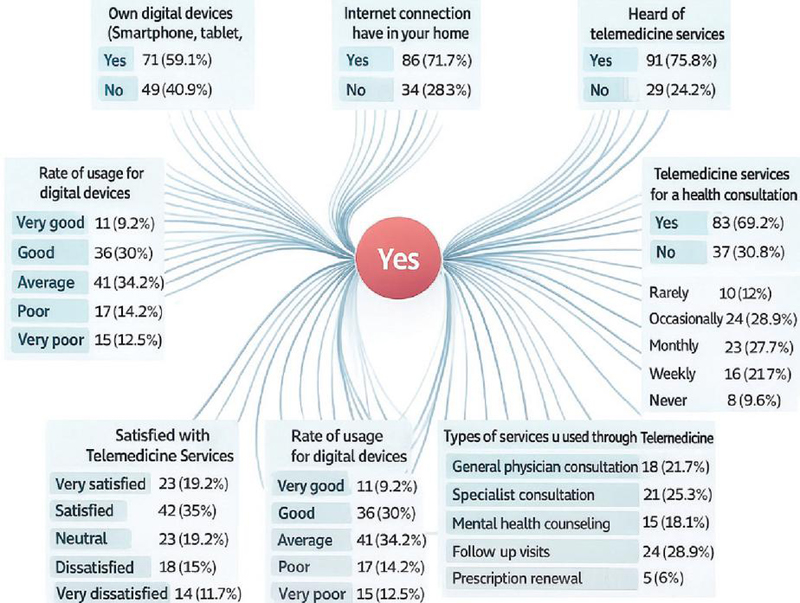
Figure 1 Digital access, telemedicine awareness, usage patterns, and user satisfaction.
Usage of digital equipment such as smartphones, smart watches, tablets, and computers: a total of 59.1% of them use these in daily life. The majority of the respondents, 71.1% of them, are using internet connections with the help of family members’ support – their children and grandchildren – indicating a high level of digital usage among older adults. This provides that the majority of them are capable of using the internet facility during health needs. The majority of them, 75.8% of the people, are aware of the Telemedicine services. 69.2% of the respondents are using Telemedicine for health consultations, which provide awareness among the older adults. Telemedicine is used occasionally by 28.9%, monthly by 27.7%, and nearly 21.7% of them are using weekly consultations with the help of digital tools. A smaller portion rarely use it – 12%, and 9.6% have never tried digital consultation due to lack of knowledge and skill. There are older adults – 9.2% of them have sufficient skills, 30% of them are good, and 34.2% of the respondents are average. Nearly 26.7% of the respondents are poor or very poor in using digital technology due to lack of digital literacy skills.
Telemedicine services using older adults: 28.9% are using it for follow-up, 25.3% of them are getting specialist consultation services, 21.7% of the people are using physician consultation, and 18.1% of them are using it for mental health consultation and getting counseling services. The least used services are for prescriptions – 6% of the respondents. This indicates that the health needs are mostly fulfilled with the support of digital technology services. The overall satisfaction rate for using telemedicine services: the majority of them, 35%, are satisfied, 19.2% of them are very satisfied, 26.7% were dissatisfied or very dissatisfied, and 19.2% of the older adults are neutral. The overall table provides the usage of digital tools and telemedicine, showing high awareness among older adults. This provides a comprehensive understanding of using devices to increase better improvement for the aged persons. This can increase telemedicine services for long-term sustainability and satisfaction in usage.
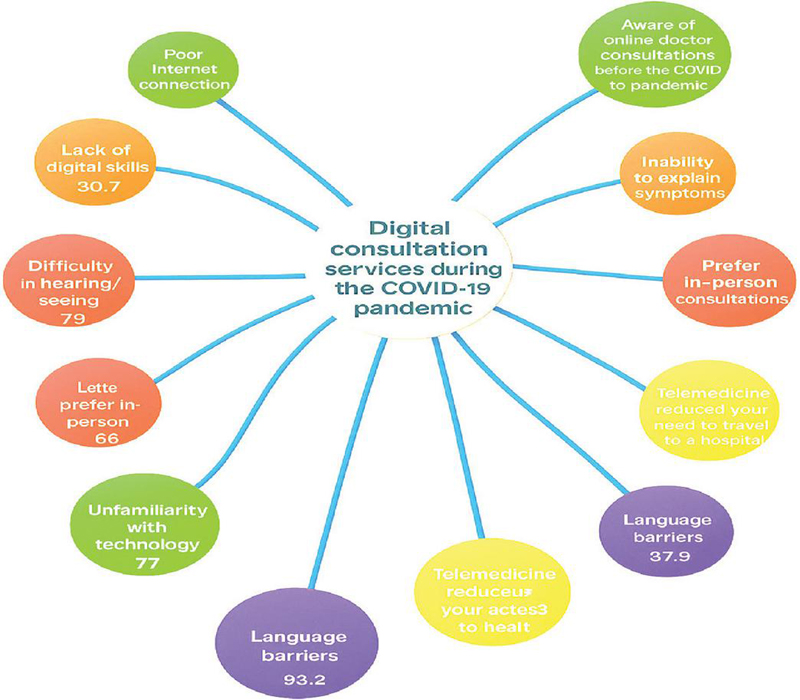
Figure 2 Barriers to telemedicine use.
The older adults using telemedicine services face significant challenges. The most common barriers for the older adults, as reported by the majority (66.7%) of the respondents, are a lack of digital knowledge and skills. Even though they are doing so with the support of family members, they are able to access the technology services. 60.8% of the older adults find it difficult to hear and see the digital tools. The majority of them, 64.2% of the respondents, are unfamiliar with the technology, and 52.5% of them find the user-friendly interfaces contribute to digital exclusion. 55% of the respondents prefer in-person consultation for regular habitual physical visits. Due to poor internet connection, they face lots of problems during the call, and in online mode, they are unable to get clarity of the information from the opposite respondents. Due to lack of knowledge, nearly 49.2% of the respondents are unable to explain their symptoms clearly.
Nearly 42.5% of the respondents lack confidence during the diagnosis, and 30.8% of the respondents face language barriers. The usage of telemedicine benefits older adults. The majority of the respondents, 78.3%, have reduced their travel to the hospital in physical mode. This is especially true for people from remote rural areas, which are getting an advantage. Telemedicine services improve their healthcare, with nearly 69.2% of the respondents agreeing. Before the COVID pandemic, online consultations were nearly 69.2%. After the COVID pandemic, digital consultation services increased to 76.7%. Telemedicine services have both positive and negative impacts on healthcare services. This can reduce the travel for older adults and help them get quick information from health practitioners. The negative side includes poor internet connection, lack of digital literacy, and sensory impairments that older adults are facing. To overcome all the issues and challenges, a more user-friendly approach through the digital technology program is needed, along with improved infrastructure.
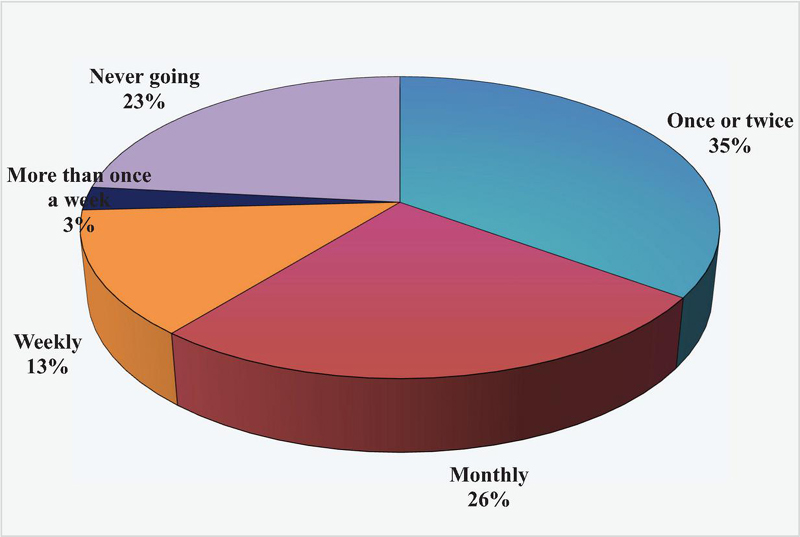
Figure 3 Usage of telemedicine services in health facilities or clinics.
The usage of telemedicine for older adults to access health facilities and clinics shows that 35% of the respondents accessed telemedicine services once or twice. There are 25.8% of them using telemedicine services on a monthly basis to consult health practitioners. 13.3% of the respondents are using telemedicine services on a weekly basis to access their healthcare needs. A very small proportion, 2.5% of the older adults, more than once a week, are in contact with the help of digital services for their follow-up needs. There are 23.3% of the older adults who never use telemedicine services due to lack of knowledge; they prefer to visit in a physical way. The telemedicine services are used by older adults in small portions. The number of older adults is growing for using telemedicine services to access health needs. The high proportion, 23.3% of the older adults, need digital literacy training to access the telemedicine services.
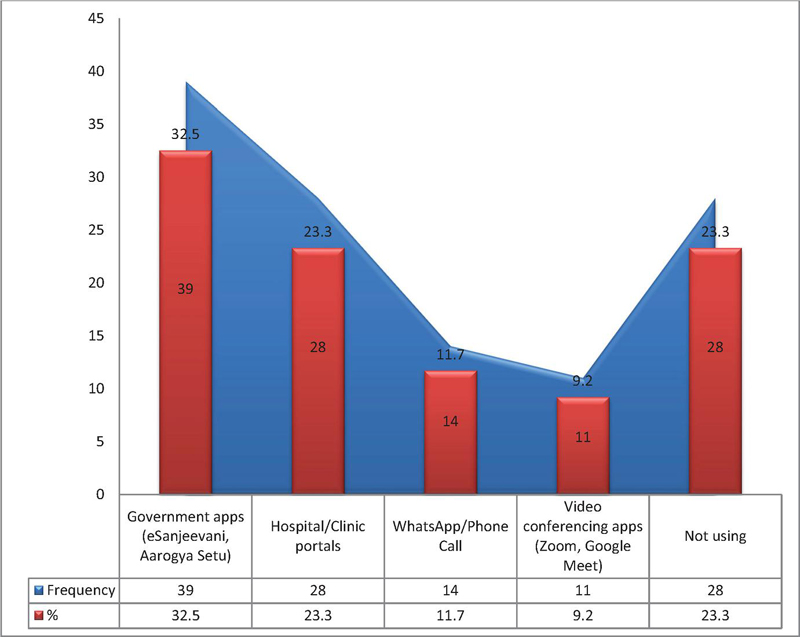
Figure 4 Usage of platforms for digital consultations.
The majority of the older adults, 32.5% of them, are using eSanjeevani and Arogya Setu, Aarogya Sathi using government apps. To get the information and an easy way to access and get to know about the free-to-use digital services on public platforms. There are 23.3% of the respondents who access digital technology to fulfill their health needs and utilize hospital and clinic services. 11.7% of the older people use WhatsApp and telemedicine consultation as a way of digital communication with the help of digital literacy services. 9.2% of the people are using tele-video conference apps like Google Meet and Zoom for health consultations to access health services. 23.3% of the older adults are not using digital consultations lack of digital skills, resulting in low usage of digital healthcare technology services. There are plenty of apps available to access digital consultations with health practitioners. Digital health technology is an easy way to access, user-friendly, and can boost older adults’ health and well-being.
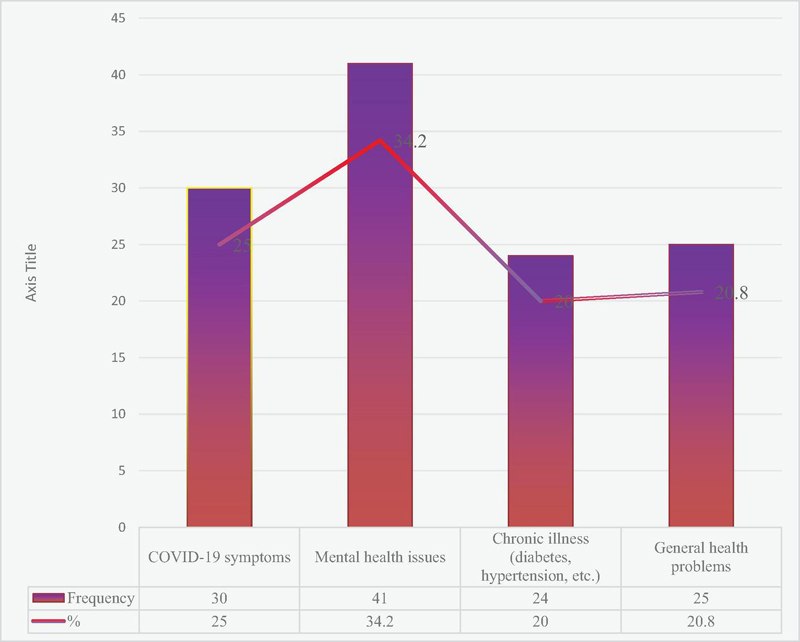
Figure 5 Health concerns addressed through telemedicine services.
Older adults use telemedicine services most frequently for mental health issues, with 34.2% of older adults seeking consultations. 25% of the respondents used telemedicine during COVID symptoms identification because, during the pandemic, they reduced in-person services. Aged persons, 20.8% of them, use telemedicine consultation services for the purpose of general health problems. The usage of telemedicine services for non-emergency purposes. There are 20% of them with chronic illness due to diabetes and hypertension who use digital technology. There is a high priority for using telemedicine services for mental health issues, closely followed by COVID-19 and other general health issues. This can increase acute health needs and, especially, stigma reduction, safety concerns, confidentiality, and convenience factors involved.
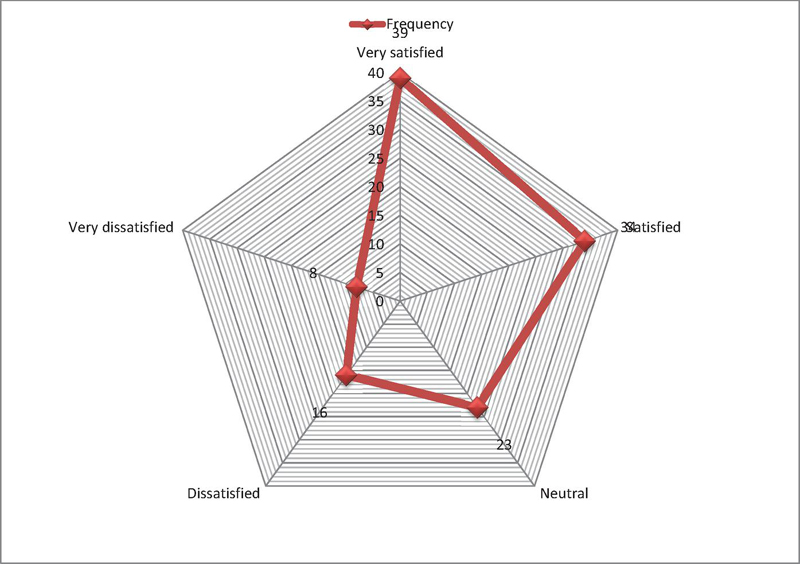
Figure 6 Satisfaction with digital consultation experience.
The satisfaction of the digital health consultation shows that 32.5% of them are very satisfied, and 28.3% of the older adults are satisfied. It reflects that 60% of the older adults have a positive experience. 19.2% of the older adults are neutral; it is provided that they found the services acceptable but not notably impactful. The smaller proportion is dissatisfied – 13.3% of them are dissatisfied, and closely 6.7% of the aged people are very dissatisfied. Most of the respondents were happy using digital services. The digital technology like telemedicine services fulfills the older adults’ expectations of accessibility, effectiveness, and convenience. The negative feedback for the dissatisfaction is due to the low education level and usability of digital technology.
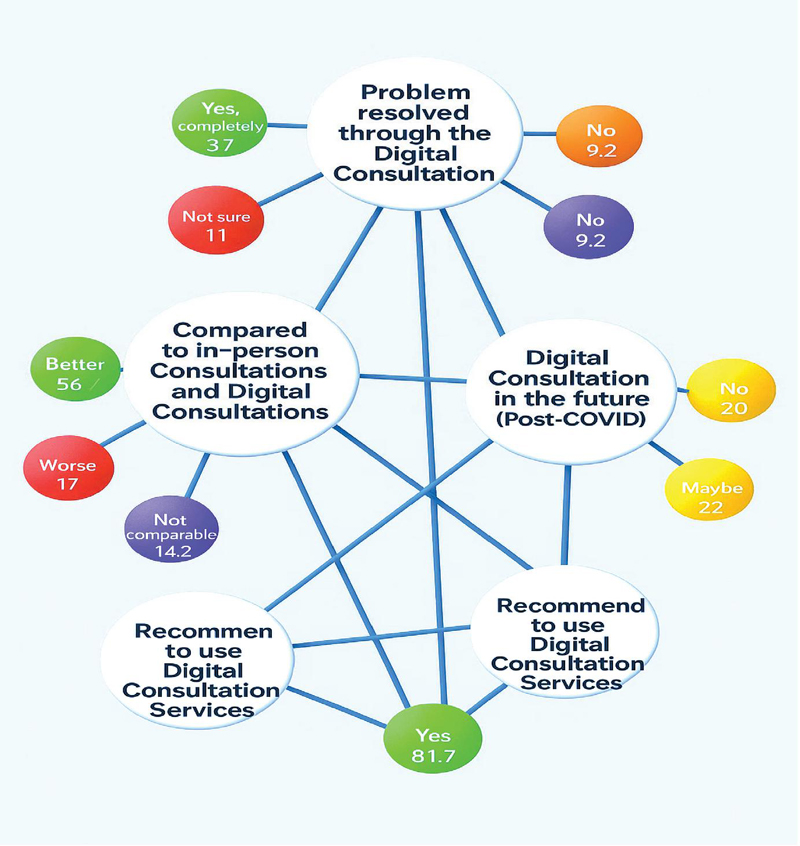
Figure 7 User experience and future outlook on digital consultation services.
The older adults’ experience shapes the future outlook for digital consultation services. There are 30.8% of the respondents whose problems were resolved due to digital consultation services. The majority, 50.8% of the respondents, is partially resolved, and 9.2% of the older adults feel not comfortable as the problem was not solved. The majority of the older adults are highly benefited from the telemedicine consultation services, and the least number of people are not comfortable using digital technology. In the comparison between in-person consultation and digital consultation, the majority of the aged respondents, 46.7% of them, said digital consultation is better than physical consultation. 31.7% of the respondents said it was the same, while the least number of respondents, 7.5% of the aged people, said it was worse, and 14.2% of the older adults said it was not comparable. Based on the table results, 80% of the older adult respondents said digital consultation is better than physical consultation. The willingness to use digital consultation post-COVID shows that the majority, 65% of respondents, find digital consultation more useful. 18.3% of them said it may be useful, and 16.7% of the respondents, compared to digital consultation, find physical visits more useful. The digital consultation provides sustainability during the pandemic emergency period. The majority, 81.7% of the older adults, recommends digital consultation, while 18.3% of them do not support digital technology services and prefer physical consultation.
Table 2 Regression analysis
| Model Summaryb | |||||||||
| Change Statistics | |||||||||
| Adjusted | Std. Error | R | |||||||
| R | R | of the | Square | F | Sig. F | ||||
| Model | R | Square | Square | Estimate | Change | Change | df1 | df2 | Change |
| 1 | .578a | .334 | .282 | 1.00560 | .334 | 6.356 | 6 | 76 | .000 |
| a. Predictors: (Constant), Rate of ability to use Digital Devices, Types of services have you used through Telemedicine, challenges while using Telemedicine Poor internet connection, Lack of digital skills, Not user-friendly interface, Difficulty in hearing/seeing b. Dependent Variable: Age |
|||||||||
The summary of the regression value shows that the dependent value is ’Age’ and the predictor values involve digital device usage, type of telemedicine services, and challenges faced using telemedicine services. The R value is (0.578), indicating the linear association for dependent variable (predictors) and the independent variable, which is age. The R value it is 0.578; it suggests a moderate positive correlation between the assumed variable value and age. The R Square it is 0.334; the proportion variance age dependent variable to explain the predicted independent variables. There is variance; it is 33.4% of the variance age. It can explain the assumption values. It is remaining the 66.6% explained factor; it is not included in the model. The adjusted R Square value, it is 0.282. The number predictor’s value, it is providing the accurate measure for the goodness for fit. The adjusted R square, it is 0.283. It is indicate for the number of predictor value. The value, it is 28.2% of the variance age explained for the model.
The standard error value estimation, it is 1.00560. The SD value, it is observed for the regression line. SE 1.00560, it is the typical error for predicting age; it is about 1.01 years. R Square change the value, it is 0.334; it is predictors for the added model value. The value, it is 0.334, indicates for the predictor values it is additionally 33.4% of the variance age. F change value is 6.356, the predictor value to explain the variance of age. The value of 6.356 indicates the significant contribution and effect on age. The df1 (6) and df2 (76), the degrees of freedom, represent the residual values. The df1 is the number of predictors, and df2 is the number of observations minus the number of predictors minus 1. The Sig. F change value is 0.000, indicating a statistical relationship with the model. The value reflects 0.000, which means that the R Square is statistically significant at the 0.05 level. It improves the model and provides a good fit for the data. The model clearly indicates that the variance in age is 33.4%, and it is statistically associated with the dependent variable and the independent variables, such as the ability to use digital devices, telemedicine services, and various challenges associated with telemedicine services.
Table 3 ANOVA
| ANOVAa | ||||||
| Model | Sum of Squares | df | Mean Square | F | Sig. | |
| 1 | Regression | 38.567 | 6 | 6.428 | 6.356 | .000b |
| Residual | 76.854 | 76 | 1.011 | |||
| Total | 115.422 | 82 | ||||
| a. Dependent Variable: Age b. Predictors: (Constant), Rate of ability to use Digital Devices, types of services have you used through Telemedicine, challenges while using Telemedicine Poor internet connection, Lack of digital skills, Not user-friendly interface, Difficulty in hearing/seeing |
||||||
The ANOVA helps to identify the overall regression predictor for the independent variable and explains its relationship with the dependent variable, Age. The Sum of Squares of Regression value is 38.567; this can predict the value of 38.57 for the variance of age, which is provided by the independent variables. The sum of squares for the residual is nearly 76.855 for the variations that remain unexplained by the predictors’ model values. The residual values in the sum of squares represent the value of 76.854, and it represents the error for the unexplained variance of age. The sum square total value is 115.422; the variance in age is represented by the sum of squares, which is unexplained by the residual sum of squares. In this case, the total variance is 115.422. The df 6 provides the number of predictors for the model, and df 76 is calculated as the number of observations minus the number of predictors minus 1. The total of df is 82, which is the total number of observation units minus 1. Mean Square for Regression provides the value for each variable predictor. It is regression squares 38.567, and the degree of freedom for regression is 6.
The mean square 6.428 provides each predictor’s average value; it is 6.428 in the variance of age. The mean square for residual value represents the average error or unexplained variance of age. It is obtained by dividing the residual sum of squares, which is 76.854, by the degree of freedom for residuals, which is 76. The mean square is 1.011, which suggests that the typical error in predicting age is 1.011 units. The F value is significant at level F = 6.356, which suggests that the regression predictor values, such as the ability to use digital devices, telemedicine services, and challenges faced by older adults, collectively explain a significant amount of the variance in age. The Sign value is (0.000); the p-value provides the relationship with the F values. The p-value is less than 0.05 (0.000). This rejects the null hypothesis, which predicts no effect on age. It means that the model, at the significant level, collectively explains a significant portion of the variance in the age variable. The final ANOVA result for the regression model is a statistically significant association. The predictions are digital device usage, telemedicine services, and challenges faced by elderly people, which contribute to the variance in age. The model fits the data well. The independent variables have a significant effect on the dependent variable, age.
Table 4 Coefficients
| Coefficientsa | ||||||
| Unstandardized Coefficients | Standardized Coefficients | |||||
| Model | B | Std. Error | Beta | t | Sig. | |
| 1 | (Constant) | 2.892 | .433 | 6.672 | .000 | |
| Challenges while using telemedicine Poor internet connection | -.096 | .269 | -.041 | -.358 | .722 | |
| Lack of digital skills | -1.634 | 1.029 | -.681 | -1.588 | .116 | |
| Difficulty in hearing/seeing | .351 | 1.072 | .147 | .328 | .744 | |
| Not user-friendly interface | 1.412 | .426 | .598 | 3.314 | .001 | |
| Types of services have you used through telemedicine | .155 | .100 | .165 | 1.543 | .127 | |
| Rate of ability to use Digital devices | -.404 | .124 | -.414 | -3.250 | .002 | |
| a. Dependent Variable: Age | ||||||
The regression analysis shows that the intercept (B 2.892, p 0.000) is statistically significant, representing the baseline Age when all predictors are zero. Among the predictors, two variables show a significant relationship with Age. The “not user-friendly interface” has a strong positive effect (B 1.412, p 0.001, Beta 0.598), indicating that older adults are more affected by poorly designed digital platforms. Similarly, “ability to use digital devices” has a significant negative effect (B 0.404, p 0.002, Beta 0.414), meaning those with less ability to use digital tools tend to be older. Other variables such as poor internet connection (B 0.096, p 0.722), lack of digital skills (B 1.634, p 0.116, Beta 0.681), difficulty in hearing/seeing (B 0.351, p 0.744), and types of services used (B 0.155, p 0.127, Beta 0.165) did not have statistically significant effects on Age in this model.
Table 5 Location vs. Own Digital Devices Usage (smartphone, tablet, computer)
| Chi-Square Tests | |||||
| Asymp. | Exact | Exact | |||
| Sig. | Sig. | Sig. | |||
| Value | df | (2-sided) | (2-sided) | (1-sided) | |
| Pearson Chi-Square | 43.636a | 1 | .000 | ||
| Continuity Correctionb | 40.952 | 1 | .000 | ||
| Likelihood Ratio | 56.269 | 1 | .000 | ||
| Fisher’s Exact Test | .000 | .000 | |||
| Linear-by-Linear Association | 43.273 | 1 | .000 | ||
| N of Valid Cases | 120 | ||||
| a. 0 cells (0.0%) have expected count less than 5. The minimum expected count is 16.00. b. Computed only for a 2x2 table |
|||||
The Chi-Square Test shows a strong, statistically significant association between location and digital device ownership (, p 0.000). Urban older adults are far more likely to own smartphones, tablets, or computers than those in rural areas. This digital divide underscores the need for focused efforts to improve access in rural regions. All statistical values, including Fisher’s Exact Test and Continuity Correction, support the reliability of this result.
Table 6 Location * used telemedicine services for a health consultation
| Chi-Square Tests | |||||
| Asymp. | Exact | Exact | |||
| Sig. | Sig. | Sig. | |||
| Value | df | (2-sided) | (2-sided) | (1-sided) | |
| Pearson Chi-Square | .977a | 1 | .323 | ||
| Continuity Correctionb | .625 | 1 | .429 | ||
| Likelihood Ratio | .979 | 1 | .322 | ||
| Fisher’s Exact Test | .429 | .215 | |||
| Linear-by-Linear Association | .969 | 1 | .325 | ||
| N of Valid Cases | 120 | ||||
| a. 0 cells (0.0%) have expected count less than 5. The minimum expected count is 18.50. b. Computed only for a 2x2 table. |
|||||
The Chi-Square Test for Location and Use of Telemedicine Services for Health Consultation shows no statistically significant association (Pearson 0.977, p 0.323). This indicates that telemedicine usage does not significantly differ between urban and rural older adults in the sample. Supporting tests like the Likelihood Ratio (p 0.322) and Fisher’s Exact Test (p 0.429) confirm this result. All expected counts are valid, so the analysis is statistically reliable. Overall, both urban and rural respondents appear to have used telemedicine services at similar rates, suggesting equal adoption or access in this context.
6 Conclusion
This study highlights the critical role of AI and telemedicine in improving healthcare access and delivery for elderly people. Digital consultations have reduced travel for those with mobility issues or living in remote areas. Most participants reported positive experiences with telemedicine and showed interest in continuing its use, reflecting growing acceptance among older adults. AI and telemedicine have proven effective in early diagnosis, comorbidity and co-infection disease control, and psychological support. Barriers like limited digital skills, poor internet access, and resistance to change remain significant. Addressing these challenges through training, infrastructure, and awareness is essential. Overall, the integration of AI with telemedicine shows strong potential to transform elderly healthcare, offering timely, personalized, and accessible services. The trend towards digital healthcare is likely to grow, even beyond the pandemic era.
References
Abadir, P. M., Chellappa, R., Choudhry, N., Demiris, G., Ganesan, D., Karlawish, J., Li, R. M., Moore, J. H., Walston, J. D., and Directors & Advisors of the AITCs Marlin Benjamin 7 Dehak Najim 2 Arbaje Alicia I. 1 Unberath Mathias 2 Cudjoe Thomas KM 1 Saria Suchi 2 Oh Esther 1 Lundebjerg Nancy 10 Chute Christopher G. 1 Phan Phillip 1 11 Samus Quincy 1 Schoenborn Nancy L. 1. (2023). The promise of AI and technology to improve quality of life and care for older adults. Nature aging, 3(6), 629–631. https://doi.org/10.1038/s43587-023-00430-0.
Abdel-Wahab, M., Rosenblatt, E., Prajogi, B., Zubizarretta, E., and Mikhail, M. (2020). Opportunities in telemedicine, lessons learned after COVID-19 and the way into the future. International Journal of Radiation Oncology* Biology* Physics, 108(2), 438–443. https://doi.org/10.1016/j.ijrobp.2020.07.006.
Aramrat, C., Choksomngam, Y., Jiraporncharoen, W., Wiwatkunupakarn, N., Pinyopornpanish, K., Mallinson, P. A. C., Kinra, S., and Angkurawaranon, C. (2022). Advancing multimorbidity management in primary care: a narrative review. Primary health care research & development, 23, e36. doi: https://doi.org/10.1017/S1463423622000238.
Assing Hvidt, E., Søndergaard, J., Klausen, M., and Grønning, A. (2020). Not just an information-delivery tool. An ethnographic study exploring Danish GPs’ perspectives on and experiences with the relational potential of email consultation. Scandinavian Journal of Primary Health Care, 38(4), 411–420. https://doi.org/10.1080/02813432.2020.1843939.
Bãjenaru, L., Marinescu, I. A., Dobre, C., Drãghici, R., Herghelegiu, A. M., and Rusu, A. (2020). Identifying the needs of older people for personalized assistive solutions in Romanian healthcare system. Studies in Informatics and Control, 29(3), 363–372. https://doi.org/10.24846/v29i3y202009.
Batsis, J. A., DiMilia, P. R., Seo, L. M., Fortuna, K. L., Kennedy, M. A., Blunt, H. B., Bagley, P. J., Brooks, J., Brooks, E., Kim, S. Y., Masutani, R. K., Bruce, M. L., and Bartels, S. J. (2019). Effectiveness of ambulatory telemedicine care in older adults: a systematic review. Journal of the American Geriatrics Society, 67(8), 1737–1749. https://doi.org/10.1111/jgs.15959.
Bryce, C., O’Connell, M. D., Dale, J., Underwood, M., and Atherton, H. (2021). Online and telephone access to general practice: a cross-sectional patient survey. BJGP open, 5(4). https://doi.org/10.3399/BJGPO.2020.0179.
Chen, C., Ding, S., and Wang, J. (2023). Digital health for aging populations. Nature medicine, 29(7), 1623–1630. https://doi.org/10.1038/s41591-023-02391-8.
Cheshmehzangi, A., Zou, T., Zhang, Y., Chen, H., Su, Z., Dawodu, A., and Xie, L. (2022). Commentary: reflecting on the neglected digital divide barriers of telemedicine during COVID-19. Frontiers in Public Health, 10, 915401. doi: 3389/fmed.2021.646506.
England, N. H. S., and Improvement, N. H. S. (2020). Science in healthcare: Delivering the NHS long term plan. The Chief Scientific Officer’s strategy. https://www.england.nhs.uk/wp-content/uploads/2020/03/science-in-healthcare-delivering-the-nhs-long-term-plan.pdf.
Fadhil, A. (2018). Beyond patient monitoring: Conversational agents role in telemedicine & healthcare support for home-living elderly individuals. arXiv preprint arXiv:1803.06000. https://doi.org/10.48550/arXiv.1803.06000.
Fitzpatrick, P. J. (2023). Improving health literacy using the power of digital communications to achieve better health outcomes for patients and practitioners. Frontiers in Digital Health, 5, 1264780. https://doi.org/10.3389/fdght.2023.1264780.
Grønning, A., Hvidt, E. A., Brøgger, M. N., and Fage-Butler, A. (2020). How do patients and general practitioners in Denmark perceive the communicative advantages and disadvantages of access via email consultations? A media-theoretical qualitative study. BMJ open, 10(10), e039442. https://doi.org/10.1136/bmjopen-2020-039442.
Haleem, A., Javaid, M., Singh, R. P., and Suman, R. (2021). Telemedicine for healthcare: Capabilities, features, barriers, and applications. Sensors international, 2, 100117. https://doi.org/10.1016/j.sintl.2021.100117.
Idowu, M., and William, B. (2025). Revolutionizing Healthcare: The Power of AI, ML, and RPAin End-to-End Digital Transformation. https://www.researchgate.net/profile/Marvel-Idowu/publication/390832371\_Revolutionizing\_Healthcare\_The\_Power\_of\_AI\_ML\_and\_RPA\_in\_End-to-End\_Digital\_Transformation/links/67ff8b49bfbe974b23aac44e/Revolutionizing-Healthcare-The-Power-of-AI-ML-and-RPA-in-End-to-End-Digital-Transformation.pdf.
Ingale, V., Wankar, B., Jadhav, K., Adedoja, T., Borate, V. K., and Mali, Y. K. (2024). Healthcare is being revolutionized by AI-powered solutions and technological integration for easily accessible and efficient medical care. In 2024 15th International Conference on Computing Communication and Networking Technologies (ICCCNT) (pp. 1–6). IEEE. DOI: 10.1109/ICCCNT61001.2024.10725646.
Ismail, Y., and Ebinezar, S. G. (2025). A Review of Evolution and Applications of Telemedicine in Healthcare. Journal of Pharma Insights and Research, 3(2), 043-052. http://jopir.in/index.php/journals/article/view/368.
Jabarulla, M. Y., and Lee, H. N. (2021). A blockchain and artificial intelligence-based, patient-centric healthcare system for combating the COVID-19 pandemic: Opportunities and applications. In Healthcare (Vol. 9, No. 8, p. 1019). Mdpi. https://doi.org/10.3390/healthcare9081019s.
Jiang, Y., Sun, P., Chen, Z., Guo, J., Wang, S., Liu, F., and Li, J. (2022). Patients’ and healthcare providers’ perceptions and experiences of telehealth use and online health information use in chronic disease management for older patients with chronic obstructive pulmonary disease: a qualitative study. BMC geriatrics, 22, 1–16. https://doi.org/10.1186/s12877-021-02702-z.
Kemp, E., Trigg, J., Beatty, L., Christensen, C., Dhillon, H. M., Maeder, A., Williams, P. A. H., and Koczwara, B. (2021). Health literacy, digital health literacy and the implementation of digital health technologies in cancer care: the need for a strategic approach. Health Promotion Journal of Australia, 3. https://doi.org/10.1002/hpja.387.
Kruse, C., Fohn, J., Wilson, N., Patlan, E. N., Zipp, S., and Mileski, M. (2020). Utilization barriers and medical outcomes commensurate with the use of telehealth among older adults: systematic review. JMIR medical informatics, 8(8), e20359. doi:10.2196/20359.
Lamba, Y., and Srinivasan, S. (2025). Digital Strategies to Help the Elderly Access Government Services. In Startup-Driven E-Government: Digital Innovation for Sustainable Ecosystems (pp. 273–306). IGI Global Scientific Publishing. DOI: 10.4018/979-8-3373-0817-3.ch011.
Lee, H. Y., Choi, E. Y., Kim, Y., Neese, J., and Luo, Y. (2020). Rural and non-rural digital divide persists in older adults: Internet access, usage, and perception. Innovation in Aging, 4 (Suppl. 1), 412–413. doi:10.1093/geroni/igaa057.1329.
MacRury, S., Stephen, K., Main, F., Gorman, J., Jones, S., and Macfarlane, D. (2018). Reducing amputations in people with diabetes (RAPID): evaluation of a new care pathway. International Journal of Environmental Research and Public Health, 15(5), 999. https://doi.org/10.3390/ijerph15050999.
Mold, F., Hendy, J., Lai, Y. L., and de Lusignan, S. (2019). Electronic consultation in primary care between providers and patients: systematic review. JMIR medical informatics, 7(4), e13042. doi:10.2196/13042.
Monaco, A., Maggi, S., De Cola, P., Hassan, T. A., Palmer, K., and Donde, S. (2019). Information and communication technology for increasing healthy ageing in people with non-communicable diseases: identifying challenges and further areas for development. Aging Clinical and Experimental Research, 31(11), 1689–1693. https://doi.org/10.1007/s40520-019-01258-8.
Monaco, A., Palmer, K., Holm Ravn Faber, N., Kohler, I., Silva, M., Vatland, A., Griensven, J. V., Votta, M., Walsh, D., Clay, V., Yazicioglu, M. C., Ducinskiene, D., and Donde, S. (2021). Digital health tools for managing noncommunicable diseases during and after the COVID-19 pandemic: perspectives of patients and caregivers. Journal of Medical Internet Research, 23(1), e25652. doi:10.2196/25652.
Nelson, R. (2017). Telemedicine and telehealth: the potential to improve rural access to care. AJN The American Journal of Nursing, 117(6), 17–18. DOI:10.1097/01.NAJ.0000520244.60138.1c.
Oladimeji, A. S., and Ibidoja, O. J. (2020). The Distribution of Service Time of Patients. Journal of reliability and statistical studies, 61–72. https://doi.org/10.13052/jrss0974-8024.1313.
Omboni, S., Padwal, R. S., Alessa, T., Benczúr, B., Green, B. B., Hubbard, I., Kari, K., Khan, N. A., Konradi, A., Logan, A. G., Lu, Y., Mars, M., McManus, R. J., Melville, S., Neumann, C. L., Parati, G., Renna, N. F., Ryvlin, P., Saner, H., Schutte, A. E., and Wang, J. (2022). The worldwide impact of telemedicine during COVID-19: current evidence and recommendations for the future. Connected health, 1, 7. doi:10.20517/ch.2021.03.
Perez, K., Wisniewski, D., Ari, A., Lee, K., Lieneck, C., and Ramamonjiarivelo, Z. (2025). Investigation into Application of AI and Telemedicine in Rural Communities: A Systematic Literature Review. In Healthcare (Vol. 13, No. 3, p. 324). MDPI. https://doi.org/10.3390/healthcare13030324.
Pieczynski, J., Kuklo, P., and Grzybowski, A. (2021). The role of telemedicine, in-home testing and artificial intelligence to alleviate an increasingly burdened healthcare system: Diabetic retinopathy. Ophthalmology and therapy, 10(3), 445–464. https://doi.org/10.1007/s40123-021-00353-2.
Reducing amputations in people with diabetes (RAPID): Evaluation of a new care pathway. International Journal of Environmental Research and Public Health, 15(5).
Rony, M. K. K., Parvin, M. R., Wahiduzzaman, M., Akter, K., and Ullah, M. (2024). Challenges and advancements in the health-related quality of life of older people. Advances in Public Health, 2024(1), 8839631. https://doi.org/10.1155/2024/8839631.
Rosen, R., Wieringa, S., Greenhalgh, T., Leone, C., Rybczynska-Bunt, S., Hughes, G., Moore, L., Shaw, S. E., Wherton, J., and Byng, R. (2022). Clinical risk in remote consultations in general practice: findings from in-COVID-19 pandemic qualitative research. BJGP open, 6(3). https://doi.org/10.3399/BJGPO.2021.0204.
Rush, K. L., Singh, S., Seaton, C. L., Burton, L., Li, E., Jones, C., Davis, J. C., Hasan, K., Kern, B., and Janke, R. (2022). Telehealth use for enhancing the health of rural older adults: a systematic mixed studies review. The Gerontologist, 62(10), e564–e577. https://doi.org/10.1093/geront/gnab141.
Shagerdi, G., Ayatollahi, H., and Hemmat, M. (2022). Emergency care for the elderly: a review of the application of health information technology. Health Policy and Technology, 11(1), 100592. https://doi.org/10.1016/j.hlpt.2021.100592.
Sharma, P., Adichwal, N. K., and Singh, A. K. (2022). Knowledge and Awareness of COVID-19 in Uttar Pradesh: An Exploratory Data Analysis. Journal of Reliability and Statistical Studies, 535–552. https://doi.org/10.13052/jrss0974-8024.1526.
Shen, Y. T., Chen, L., Yue, W. W., and Xu, H. X. (2021). Digital technology-based telemedicine for the COVID-19 pandemic. Frontiers in medicine, 8, 646506. https://doi.org/10.3389/fmed.2021.646506.
Smith, S. M., Wallace, E., O’Dowd, T., and Fortin, M. (2016). Interventions for improving outcomes in patients with multimorbidity in primary care and community settings. Cochrane Database of Systematic Reviews, (3). https://doi.org/10.1002/14651858.CD006560.pub3.
Srinivasan, S., and Rajavel, N. (2025). Technology Improves the Quality of Life for Elderly People. In Perspectives on the Economics of Aging (pp. 109–150). IGI Global Scientific Publishing. DOI: 10.4018/979-8-3693-7753-6.ch005.
Srinivasan, S., Vallipriya, R., and Singh, A. K. (2026). Assistive Devices and Socioeconomic, Health, and Stigma Issues Among Older Adults in Rural and Urban Dehradun. In Global Stigmas and Attitudes Towards Persons With Disabilities (pp. 189–224). IGI Global Scientific Publishing. DOI:10.4018/979-8-3693-9291-1.ch007.
Srinivasan, S., and Vallipriya, R. (2025). Intercultural Communication: An Effective Strategy for the Patient Physician Relationship. In Cases on Physician Cultural Responsibility, Ethics, and Biases (pp. 171–192). IGI Global Scientific Publishing. DOI:10.4018/979-8-3693-3683-0.ch008.
Turner, A., Morris, R., Rakhra, D., Stevenson, F., McDonagh, L., Hamilton, F., Atherton, H., Farr, M., Blake, S., Banks, J., Lasseter, G., Ziebland, S., Hyde, E., Powell, J., and Horwood, J. (2021). Unintended consequences of online consultations: a qualitative study in UK primary care. British Journal of General Practice. https://doi.org/10.3399/BJGP.2021.0426.
Wardlow, L., Roberts, C., Archbald-Pannone, L., and Collaborative for Telehealth and Aging. (2023). Perceptions and uses of telehealth in the care of older adults. Telemedicine and e-Health, 29(8), 1143–1151. https://doi.org/10.1089/tmj.2022.0378.
Wilson, J., Heinsch, M., Betts, D., Booth, D., and Kay-Lambkin, F. (2021). Barriers and facilitators to the use of e-health by older adults: a scoping review. BMC public health, 21, 1–12. https://doi.org/10.1186/s12889-021-11623-w.
Wiwatkunupakarn, N., Aramrat, C., Pliannuom, S., Buawangpong, N., Pinyopornpanish, K., Nantsupawat, N., Mallinson, P. A. C., Kinra, S., and Angkurawaranon, C. (2023). The integration of clinical decision support systems into telemedicine for patients with multimorbidity in primary care settings: scoping review. Journal of medical Internet research, 25, e45944. doi:10.2196/45944.
World Health Organization. (2009). WHO guidelines on hand hygiene in health care: First global patient safety challenge clean care is safer care. World Health Organization.
Biographies

S. Srinivasan has recently joined the Department of Humanities and Social Sciences at Graphic Era (Deemed to be University) as an Assistant Professor. Pursuing PhD in Bharathidasan University, Department of social work, Trichy, Tamil Nadu. With a wealth of experience, Mr. Srinivasan has accumulated 10 years of extensive teaching and field-level expertise. Prior to his current role, he served in the Ministry of Health and Family Welfare, Government of India, and gained valuable experience. He also contributed as a Guest Faculty at the 22 University level and served for nearly 2 years in the State Government Public Works Department as a Mobilization Training Specialist. In the past year, Mr. S. Srinivasan has enriched his experience by actively participating in a Tuberculosis project funded by GFATM and USAID, providing a platform for further exploration of his research, and practical field-based knowledge. His scholarly contributions include publishing 60 papers, with 15 more under peer review in various UGC-Care, SCOPUS, and peer-reviewed journals. Mr. S. Srinivasan has also actively participated in 10 different training programs, including an ICSSR research methodology course, a Workshop on Scientific Writing and Publication, Applications of SPSS in Social Science Research and Training of Trainers in life skill education. Furthermore, he has presented papers at 4 state-level conferences, 10 national conferences, and 15 international conferences. He has also presented and participated in various online international conferences.

N. Rajavel (Rajavel Natesan), MSW, M.Phil, Ph.D., UGC-NET, is currently serving as an Assistant Professor in the Department of Social Work at Bharathidasan University, Tiruchirappalli – 23, India. He holds a Ph.D. in Social Work from Bharathidasan University, completed in 2017, with his doctoral thesis focusing on “Basic Services to Urban Poor in JNNURM Scheme: A Study on Coimbatore City Municipal Corporation.” He earned his M.Phil in Social Work from Sri Ramakrishna Mission Vidyalaya College of Arts & Science, Coimbatore (affiliated to Bharathiar University) in 2005, following his Master of Social Work (M.S.W) in 2000 from the same institution. His academic journey began with a B.Sc in Botany from P.S.G College of Arts & Science, Coimbatore, affiliated to Bharathiar University, in 1998.
Dr. Rajavel cleared the UGC-NET Lectureship examination in June 2006. He brings with him 13 years of teaching experience and 18 years of research experience. His academic and research interests include community development, urban community development, livelihood promotion, and community mental health. He has also gained international exposure through the Linnaeus Palme Fellowship in 2022 and participated in the Faculty Exchange Program with University West, Sweden. Apart from his teaching and research responsibilities, he actively contributes to academic administration in various roles such as Field Work Coordinator, Extension Coordinator, and Academic Coordinator.

Ajay K. Singh is working as an Associate Professor (Research) in the Department of Humanities and Social Sciences, Graphic Era (Deemed to be University) Dehradun. He has worked as Assistant Professor (Economics) in the School of Liberal Arts & Management, DIT University Dehradun for 6 years. He did Post-Doctorate Research with EDI of India, Ahmedabad, Gujarat (India). He received MPhil (Economics) from DAVV Indore (India), and PhD (Economics) from IIT Indore (India. He has published several research papers in the diversified area such as climate change, agricultural productivity, assessment of food security; estimation of GFSI, development of environmental sustainability index (ESI) and its association with socio-economic indicators; measurement and determinants of entrepreneurship ecosystem, and dimension of sustainable development and its interlinkages with economic development.
Journal of Reliability and Statistical Studies, Vol. 19, Issue 2 (2026), 523–554
doi: 10.13052/jrss0974-8024.19212
© 2026 River Publishers