A Qualitative Examination of ESG Institutionalization in Mediterranean Banking Operations
Georgios Papageorgiou and Odysseas Kopsidas
Aegean College, Athens, Greece
E-mail: o.kopsidas@aegeancollege.gr
Corresponding Author: Odysseas Kopsidas; E-mail address: o.kopsidas@aegeancollege.gr
Received 08 April 2025, Accepted 05 June 2025; Published Online: 22 July 2026.
Abstract
Environmental, Social and Governance (ESG) criteria have become central to how banks finance economic activity, manage risk and respond to intensifying regulatory and stakeholder expectations. Yet the way in which ESG becomes institutionalized inside individual banks, and particularly within the under-examined Greek banking sector, remains poorly understood. This study provides a qualitative examination of ESG institutionalization within a major Greek bank, Alpha Bank, addressing three questions: what drives ESG adoption, how ESG is embedded across banking operations, and how ESG practices are institutionalized in day-to-day activity. Adopting an interpretivist philosophy and a single-case design, the study draws on six semi-structured interviews with Alpha Bank executives spanning strategy, risk, controlling and compliance functions. Data were analysed using reflexive thematic analysis, which yielded three themes: ESG criteria adoption factors, the institutionalization of ESG in banking operations, and the institutionalization of ESG practices. The findings show that adoption is propelled by a confluence of regulatory pressure, investor expectations, an internalized sense of social responsibility and market competitiveness, while institutionalization proceeds through governance reform, the creation of dedicated ESG risk functions, transparent reporting, workforce engagement and strategic integration. Persistent obstacles such as data complexity, measurement difficulty, regulatory burden and cost coexist with clear opportunities in risk management, investor attraction, reputation and sustainable growth. The study contributes a granular, context-specific account of ESG institutionalization in Greek banking and offers practical recommendations for the bank, the sector and policymakers.
Keywords: Environmental, Social and Governance (ESG), banking, sustainable finance, corporate governance, institutionalization, Greece, qualitative case study.
1 Introduction
Banks sit at the centre of the financial system, channelling savings towards productive investment and acting as the principal intermediaries through which capital is allocated across the economy (Ghosh, 2018). Because lending, underwriting and advisory decisions determine which activities are financed, the banking sector exercises an outsized influence over the pace and direction of the sustainability transition. Through credit allocation, banks can either entrench carbon-intensive activity or accelerate the shift towards a low-carbon, socially inclusive economy, which places them at the heart of contemporary debates on Environmental, Social and Governance (ESG) integration (Gemar et al., 2019; Weber, 2014).
ESG has consequently moved from the periphery of financial intermediation to its core. Environmental considerations, ranging from climate-related transition risk to the financing of green technology, have evolved from peripheral screens into intrinsic factors shaping credit policy and strategy (Raluca, 2013; Thomä and Chenet, 2017). Social responsibilities span human rights, labour practices, financial inclusion and customer welfare, areas in which the reach of banks gives them particular leverage (Lauesen, 2013). Governance, the third pillar, extends well beyond legal compliance to encompass boardroom transparency, ethical conduct and the quality of risk management (Munir et al., 2019; Zopounidis et al., 2020). The momentum behind these expectations was crystallised by the United Nations Principles for Responsible Investment (United Nations, 2005) and reinforced by the 2030 Agenda and its 17 Sustainable Development Goals (United Nations, 2015), both of which pressed financial institutions to embed ESG considerations within their investment frameworks (Dahl et al., 2020; Vardopoulos and Passas, 2025).
For European banks, this normative shift has been accompanied by a marked tightening of the regulatory environment. Supervisory expectations articulated by the European Central Bank and the Single Supervisory Mechanism, together with disclosure requirements emanating from the EU taxonomy, the Sustainable Finance Disclosure Regulation and the Corporate Sustainability Reporting Directive, have transformed ESG from a voluntary commitment into a supervised obligation. Climate-related and environmental risk is now treated as a prudential matter, requiring banks to integrate ESG factors into governance, risk appetite and reporting (Ragazou et al., 2022). This intensifying regulatory pressure provides much of the impetus for the organizational changes examined in this study.
The Greek banking sector offers a distinctive and analytically valuable setting in which to observe these dynamics. Having passed through a prolonged sovereign-debt and banking crisis, Greek banks have undergone deep balance-sheet repair, consolidation and governance reform, and are now reintegrating into European capital markets at precisely the moment when ESG expectations are crystallising. The sector therefore combines acute sensitivity to investor confidence with strong supervisory oversight, which makes it a compelling case for studying how ESG becomes institutionalized. The broader trajectory of European integration and the uneven economic resilience of member states before and after the crisis form an important backdrop to this reform process (Doukas et al., 2022, 2024, 2025; Maravegias et al., 2025). Despite this, the Greek context remains markedly under-researched, and the indirect social and environmental consequences of bank financing are seldom examined in depth (Jo et al., 2015; Kopsidas et al., 2026).
This study addresses that gap through a qualitative examination of ESG institutionalization within a major Greek bank. Taking Alpha Bank as a single, information-rich case, it investigates the motivations behind ESG adoption, the ESG practices that have been implemented, and the ways in which those practices are embedded in day-to-day banking operations. Three research questions guide the inquiry:
RQ1. What factors drive the adoption of ESG criteria within a major Greek bank?
RQ2. How are ESG considerations institutionalized across the operations of the bank?
RQ3. How are ESG practices implemented and embedded in everyday organizational activity?
The principal contribution of the study is a granular, context-specific account of ESG institutionalization in Greek banking. Rather than offering a further aggregate or quantitative treatment, it surfaces the mechanisms of governance redesign, dedicated risk functions, training architecture and strategic alignment through which abstract ESG principles are translated into organizational practice, and it documents the frictions that accompany that translation. The remainder of the article is structured as follows. Section 2 reviews the literature on ESG in banking. Section 3 details the methodology. Section 4 presents the findings. Section 5 discusses them in light of prior research, and Section 6 sets out the conclusions, limitations and avenues for future research.
2 Literature Review
The literature on ESG in financial institutions has expanded rapidly, moving from broad questions about the business case for sustainability towards more specific concerns about how banks govern, measure, disclose and embed ESG. This section is organised into five themes that mirror the analytical concerns of the present study: ESG in banking, the drivers of ESG adoption in financial institutions, ESG governance and risk management, ESG reporting and stakeholder expectations, and ESG institutionalization.
2.1 ESG in Banking
Banks occupy a dual position in the sustainability transition. They are financial intermediaries exposed to the ESG performance of their borrowers, and they are also organizations whose own conduct is subject to ESG scrutiny (Weber, 2014). This duality distinguishes ESG in banking from its treatment in non-financial firms, because the most material environmental and social impacts of a bank are largely indirect and arise through the portfolios it finances rather than through its own operations (Jo et al., 2015). Early contributions framed sustainable banking primarily in reputational and ethical terms (Lauesen, 2013; Raluca, 2013), whereas more recent work treats ESG as a determinant of financial stability and competitiveness, with environmental performance increasingly modelled as a driver of long-run bank profitability (Gemar et al., 2019; Ragazou et al., 2022). Empirical evidence on the environmental performance of EU financial institutions indicates substantial heterogeneity across banks, reflecting differences in regulatory exposure, ownership and strategic orientation (Ragazou et al., 2022). Against this backdrop, green and sustainable banking has matured from a niche positioning into a strategic imperative.
2.2 ESG Drivers in Financial Institutions
Scholars distinguish between external and internal drivers of ESG adoption. Externally, regulation is consistently identified as the dominant force, with supervisory mandates and disclosure regimes compelling banks to integrate ESG into governance and risk frameworks (Gillan et al., 2010; Weber, 2014). Investor expectations constitute a second external driver. As ESG information becomes integral to investment decisions, financial institutions face growing pressure to demonstrate credible non-financial performance (Amel-Zadeh and Serafeim, 2018; Friede et al., 2015). Sociopolitical conditions also shape the intensity of ESG engagement and the controversies that surround it, particularly across heterogeneous European jurisdictions (Passas et al., 2022). Internally, drivers include an organizational commitment to corporate social responsibility, the pursuit of competitive differentiation and the recognition of ESG as a risk-management discipline (Birindelli et al., 2015; Karagiannopoulou et al., 2023). Multi-criteria evidence on ecopreneur and counterparty selection in European financial institutions further suggests that ESG considerations are increasingly operationalised within the decision tools of banks rather than treated as external constraints (Ragazou et al., 2025).
2.3 ESG Governance and Risk Management
A recurring theme is that sound governance is a precondition for credible ESG integration. The composition and accountability of the board, the clarity of oversight responsibilities and the alignment of incentives all condition whether ESG commitments translate into practice (Gillan et al., 2010; Weber, 2014). Multicriteria approaches to corporate ESG disclosure show that governance quality is tightly bound up with the credibility of environmental and social reporting (Vortelinos et al., 2025; Zopounidis et al., 2020). In parallel, a substantial body of work positions ESG as a risk-management discipline. The materiality literature demonstrates that firms performing well on financially material sustainability issues outperform those that do not, which underscores the value of integrating ESG into risk assessment rather than treating it as peripheral (Eccles et al., 2014; Khan et al., 2016). For banks specifically, ESG risk encompasses transition risk, physical climate risk and conduct risk, each of which can crystallise into credit and reputational losses (Thomä and Chenet, 2017). The assurance and control dimension has also attracted attention, with internal audit increasingly recognised as a mechanism for embedding ESG within governance and risk architecture (Lampropoulos et al., 2025).
2.4 ESG Reporting and Stakeholder Expectations
Transparent reporting is the principal channel through which banks communicate ESG performance to investors, regulators and customers. Integrated and sustainability reporting are theorised as instruments that align disclosure with the information needs of capital providers and reduce information asymmetry (Eccles and Serafeim, 2017). Survey evidence confirms that investors actively use ESG information, although they weigh it against concerns about data quality and comparability (Amel-Zadeh and Serafeim, 2018). Efforts to reimagine sustainable-development and performance indicators reflect the continuing search for measures that are both decision-useful and credible (Panagiotopoulos et al., 2024). In emerging and transition economies, governance characteristics strongly shape the extent and quality of ESG disclosure (Khan et al., 2013). The credibility of reporting is nonetheless threatened by greenwashing and ESG-washing, which erode stakeholder trust and can distort investment decisions when disclosure outruns substance (Passas and Garefalakis, 2025). ESG disclosure also carries market consequences beyond reputation. Evidence linking ESG scores to international credit ratings indicates that reporting quality feeds directly into the cost and availability of capital, a relationship of particular salience for banks (Passas, Vortelinos, et al., 2025). Stakeholder expectations thus operate as both a driver of and a discipline upon ESG reporting.
2.5 ESG Institutionalization
Institutionalization refers to the process by which ESG moves from discrete initiatives to taken-for-granted features of organizational structure, strategy and routine. Evidence on high-sustainability firms shows that durable ESG integration is associated with distinctive governance arrangements, a longer-term orientation and the embedding of sustainability into core processes rather than its confinement to a dedicated unit (Eccles et al., 2014; Ioannou and Serafeim, 2015). Meta-analytic and review evidence indicates a generally positive association between corporate social and financial performance, which lends weight to the institutionalization case (Orlitzky et al., 2003). The conceptual evolution of the field, from corporate social responsibility towards an integrated ESG 2.0, reflects this deepening institutionalization and the maturing of ESG into a governance paradigm (Passas, 2024). The professionalisation of ESG, including the changing role of accountants and assurance providers, further illustrates how institutional infrastructures form around sustainability (Garefalakis et al., 2026). Notwithstanding this progress, scholars caution that institutionalization is uneven and frequently encumbered by measurement difficulty, data complexity and cost, which leaves scope for decoupling between formal commitments and operational reality (Khan et al., 2016). It is precisely this institutionalization process, its mechanisms and its frictions, that the present study examines within a single Greek bank.
3 Methodology
This section sets out the philosophical assumptions, design choices and analytical procedures underpinning the study, with the aim of maximising methodological transparency. Figure 1 summarises the overall research process.
3.1 Research Philosophy, Design and Case Selection
The study is grounded in an interpretivist philosophy, which holds that social reality is constructed through the meanings actors attach to their experiences (Bryman, 2016; Creswell and Creswell, 2017). Because ESG institutionalization is enacted by managers who interpret regulatory signals, investor expectations and organizational priorities, an interpretivist stance is well suited to surfacing the reasoning behind ESG practices. Ontologically, the study adopts a constructivist position that treats ESG arrangements as continuously shaped and reshaped by social actors. Epistemologically, it privileges the situated knowledge of practitioners over law-like generalisation. A qualitative, descriptive design was selected to provide an in-depth account of current ESG practices and the ways in which they are applied (Zikmund et al., 2013), because qualitative methods are appropriate where the objective is to understand processes, meanings and context rather than to measure incidence or test hypotheses (Bryman, 2016).
A single-case design was adopted because ESG institutionalization is a situated organizational process best understood within its real-world context. Alpha Bank was selected as a critical and information-rich case for several reasons. It is one of the four systemic Greek banks, it is directly supervised under the Single Supervisory Mechanism, and it is therefore fully exposed to European ESG regulation and supervisory expectations. It has publicly committed to a sustainability strategy, established dedicated ESG governance and risk structures, and published sustainability disclosures, which makes it a setting in which institutionalization is actively unfolding and observable. Its systemic importance and reform trajectory render it broadly illustrative of the pressures facing the Greek sector, which supports analytical rather than statistical generalisation. Access to executives across relevant functions further strengthened the case selection, because it enabled the study to capture multiple vantage points on the same organizational process.
3.2 Sampling, Interview Protocol and Data Collection
A purposive sampling strategy was used to recruit participants with direct knowledge of ESG strategy, governance, risk and controlling within Alpha Bank (Patton, 2015; Saunders et al., 2009). Selection criteria required that participants held an administrative or specialist role bearing on ESG implementation, possessed sufficient organizational tenure to comment credibly on change over time, and collectively represented a range of functions and seniorities. Six executives met these criteria and participated. Although six interviews constitute a small sample, the focus of the study on a single organization and a clearly bounded phenomenon supports the sufficiency of this number. Participants were senior, functionally complementary informants whose accounts converged on core themes, and data collection continued until additional interviews yielded no substantively new codes, which indicated that thematic saturation had been approached for the questions posed.
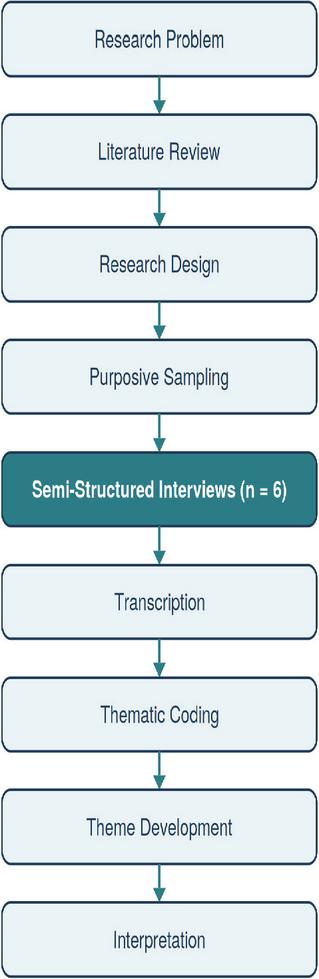
Figure 1 Research methodology adopted in the study.
Semi-structured interviews were chosen as the primary instrument because they combine consistency across informants with the flexibility to probe emergent issues (King and Hugh-Jones, 2018). An interview guide was developed from the research questions and the literature, and it was organised into four sections: participant background and role, drivers of ESG adoption, the institutionalization of ESG across governance, risk, reporting and stakeholder engagement, and implementation practices, challenges and future plans. Open-ended questions were paired with optional probes, which allowed participants to elaborate on points of significance while ensuring comparability across the dataset. Following institutional permission, participants received an information sheet describing the purpose of the study, the voluntary nature of participation and the handling of their data, and they provided informed consent before each interview. Interviews were conducted privately, audio-recorded with consent and transcribed verbatim. Contemporaneous notes captured contextual observations. Transcripts were anonymised at the point of transcription, with participants identified only by a letter code from A to F, and were stored securely in line with data-protection requirements.
3.3 Thematic Analysis, Trustworthiness and Ethics
Data were analysed using reflexive thematic analysis (Braun and Clarke, 2006; Nowell et al., 2017), following its six phases. The researchers first familiarised themselves with the data through repeated reading of the transcripts. Initial codes were then generated inductively, labelling segments relevant to ESG drivers, governance, risk, reporting, engagement and implementation. Codes were collated into candidate themes, which were reviewed against both the coded extracts and the full dataset to ensure internal coherence and external distinctiveness. Themes were then defined and named, which produced the three-theme structure reported below, and they were related back to the research questions during the final write-up. Coding was conducted manually, supported by an audit trail linking codes to source extracts.
Trustworthiness was pursued through the four criteria of credibility, transferability, dependability and confirmability (Nowell et al., 2017). Credibility was supported by purposive recruitment of well-placed informants, verbatim transcription and the triangulation of perspectives across functions. Transferability was addressed by providing a thick description of the case and its context, which enables readers to judge applicability to other settings. Dependability and confirmability were strengthened by maintaining a transparent audit trail from raw data through codes to themes, and by documenting analytical decisions. Researcher bias was mitigated through reflexive engagement with the assumptions of the analysts, the use of participants’ own framings to anchor interpretation, and team discussion of coding disagreements until consensus was reached. Ethical approval and organizational permission were obtained prior to data collection, and the study adhered to the principles of voluntary participation, informed consent, confidentiality and the right to withdraw (Doucet and Watson, 2010). All identifying information was removed, data were stored securely and used solely for research purposes, and findings are reported in a manner that protects participant anonymity.
4 Results
This section presents the findings of the thematic analysis. Six executives participated, all of whom held administrative or specialist positions bearing directly on ESG implementation and had substantial tenure with the bank, which enhances the credibility of their accounts. Their roles and experience are summarised in Table 1. Three main themes were derived from the analysis: ESG criteria adoption factors, the institutionalization of ESG in banking operations, and the institutionalization of ESG practices. Each theme comprises four subthemes, summarised in Table 2, and the three themes map onto the research questions by addressing why ESG is adopted (RQ1), how it is embedded across operations (RQ2) and how it is implemented in everyday activity (RQ3). Table 3 consolidates the themes, subthemes and illustrative evidence.
Table 1. Profile of participants
| Participant | Position | Experience |
| A | ESG Strategy, Senior Specialist | 20 years |
| B | Contractor — Controller | 5 years |
| C | Senior Officer | 25 years |
| D | Associate | 5 years |
| E | Internal Fraud Prevention Officer | 16 years |
| F | Operations Specialist | 25 years |
Table 2. Thematic structure: themes and constituent codes
| Theme | Constituent Codes (Subthemes) |
| ESG criteria adoption factors | Regulatory pressures; Investor expectations; Social responsibility; Market competitiveness |
| Institutionalization of ESG in banking operations | Corporate governance reforms; Risk management and compliance; Transparency and reporting; Workforce and stakeholder engagement |
| Institutionalizing ESG practices | Governance structure changes; Employee training and awareness; Strategic planning and goals; Challenges and solutions |
4.1 Theme 1: ESG Criteria Adoption Factors
The first theme concerns the forces driving ESG adoption and addresses RQ1. Participants consistently located the impetus for ESG in a combination of external and internal factors, captured by four subthemes: regulatory pressures, investor expectations, social responsibility and market competitiveness (Figure 2).
Regulatory pressure emerged as the primary motivator. Participants pointed to escalating demands from supranational supervisors, namely the European Central Bank and the Single Supervisory Mechanism, which require the integration of ESG assessments and climate-related guidelines into operational frameworks. Investor expectations formed a second, closely related, driver, since participants described growing demand for transparency on non-financial disclosures, including the sustainability reporting of the bank, as a condition of investor confidence. Alongside these external forces, participants articulated an intrinsic sense of social responsibility, framing ESG as a matter of principle rather than mere compliance. Finally, the competitive landscape positioned ESG as a strategic imperative, with marketing, strategy and market risks making ESG evaluation integral to competitive positioning. Taken together, these accounts indicate that ESG adoption at Alpha Bank is driven not by any single factor but by the interaction of regulation, investor pressure, principled commitment and competition, which directly answers RQ1.
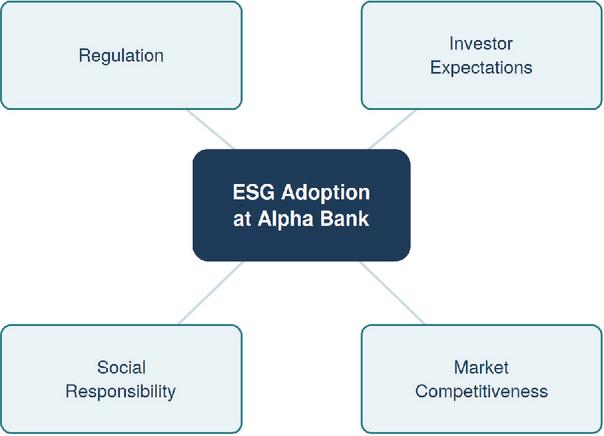
Figure 2 Drivers of ESG adoption at Alpha Bank.
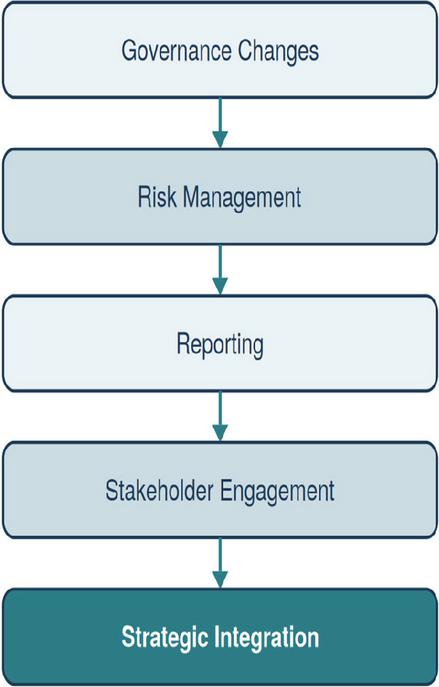
Figure 3 ESG institutionalization process across banking operations.
4.2 Theme 2: Institutionalization of ESG in Banking Operations
The second theme addresses how ESG is embedded across banking operations (RQ2), through four subthemes: corporate governance reforms, risk management and compliance, transparency and reporting, and workforce and stakeholder engagement (Figure 3).
The institutionalization process begins with a fundamental shift in corporate governance, which participants identified as the critical step for integrating ESG standards into banking. One participant captured the resulting strategic orientation directly, observing that “sustainability is at the core of the bank’s strategy.” Building on this orientation, the bank established a dedicated ESG and finance-risk department, which signalled the integration of ESG into the risk-management architecture rather than its treatment as an adjunct. Transparency and reporting were described as a strategic framework presented to corporate clients in order to maximise transparency and attract sustainable investment partners. Finally, workforce and stakeholder engagement underscored the role of human capital in embedding ESG, complemented by efforts to enhance the customer experience through sustainable products. Read together, these accounts show ESG being woven into governance, risk, reporting and engagement simultaneously, an operational embedding that answers RQ2.
4.3 Theme 3: Institutionalizing ESG Practices
The third theme concerns how ESG practices are implemented in everyday activity (RQ3), through four subthemes: governance structure changes, employee training and awareness, strategic planning and goals, and challenges and solutions. Participants described the transfer of ESG oversight and accountability to the board of the bank, a structural change that locates ESG within top-level decision-making. Employee training was institutionalised through a dedicated “ESG Academy,” which moved beyond basic awareness to specialised topics and employed varied educational interventions. Strategic planning and goals featured prominently, with the bank incorporating ESG into its overall business strategy and articulating measurable sustainability targets for defined periods, an indication of a maturing rather than nominal commitment. At the same time, participants were candid about persistent challenges, including the complexity of ESG data, the difficulty of measurement, the burden of evolving regulation and the cost of implementation, which they framed as obstacles to be managed through strategic foresight and investment. These accounts demonstrate that implementation is both advanced and incomplete, which answers RQ3 while foregrounding the frictions explored in Section 5.
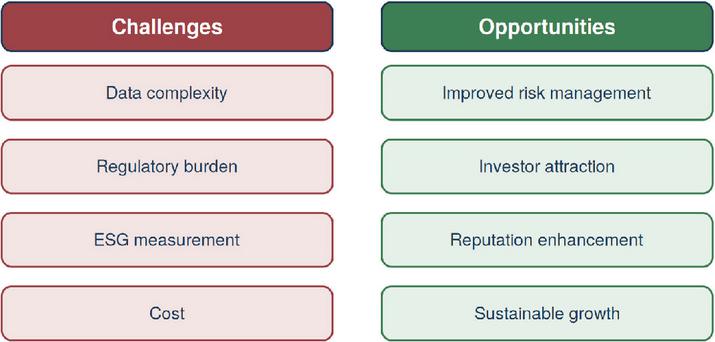
Figure 4 Challenges and opportunities of ESG implementation at Alpha Bank.
Table 3. Themes, subthemes, representative evidence and interpretation
| Theme | Subtheme | Representative Quotation/Participant Account | Interpretation |
| ESG criteria adoption factors | Regulatory pressures | Participants attributed adoption to mandates from the ECB and the Single Supervisory Mechanism requiring ESG and climate-risk integration. | Regulation is the primary external driver of ESG adoption. |
| Investor expectations | Participants noted rising investor demand for transparency on non-financial disclosures and sustainability reports. | Investor confidence depends on credible ESG disclosure. | |
| Social responsibility | Participants framed ESG as a matter of principle, not solely a response to external pressure. | Adoption is partly values-driven and internalised. | |
| Market competitiveness | Participants linked ESG evaluation to marketing, strategy and market risk and to competitive positioning. | ESG functions as a strategic, competitive imperative. | |
| Institutionalization of ESG in banking operations | Corporate governance reforms | “Sustainability is at the core of the bank’s strategy” (Participant account) | Governance reform is the foundation of institutionalization. |
| Risk management and compliance | Participants described the creation of a dedicated ESG and finance-risk department. | ESG is embedded within the risk architecture. | |
| Transparency and reporting | Participants described a transparency framework presented to corporate clients to attract sustainable investment partners. | Reporting is used strategically to attract capital. | |
| Workforce and stakeholder engagement | Participants emphasised human capital and an enhanced customer experience through sustainable products. | People and customers are integral to embedding ESG. | |
| Institutionalizing ESG practices | Governance structure changes | Participants noted the transfer of ESG oversight and accountability to the board. | ESG is located in top-level decision-making. |
| Employee training and awareness | Participants described a dedicated “ESG Academy” with specialised, multi-method training. | Training institutionalises ESG knowledge across the organization. | |
| Strategic planning and goals | Participants reported measurable ESG targets within the overall business strategy. | Measurable goals signal maturing ESG adoption. | |
| Challenges and solutions | Participants cited data complexity, measurement difficulty, regulatory burden and cost. | Implementation remains constrained by data and cost. |
Note. Entries in quotation marks are verbatim. Remaining entries are faithful summaries of participant accounts drawn from the interview data.
5 Discussion
The findings illuminate both why and how ESG is institutionalized within a major Greek bank, and they can be read productively against the wider literature. This section interprets the three themes in turn, noting where the evidence converges with prior research and where the Greek banking context introduces distinctive emphases.
With respect to the drivers of adoption (RQ1), the primacy that participants accorded to regulatory pressure aligns closely with research identifying supervisory mandates as a leading force behind ESG integration in banking (Gillan et al., 2010; Weber, 2014). The salience of European supervisory expectations in the accounts of participants is consistent with evidence that the regulatory environment exerts particular leverage over EU financial institutions (Ragazou et al., 2022). Investor expectations functioned as a second, reinforcing, driver, which echoes survey evidence that investors actively use ESG information and reward credible disclosure (Amel-Zadeh and Serafeim, 2018; Friede et al., 2015). The intrinsic sense of social responsibility that participants described is harder to reconcile with purely instrumental accounts and resonates instead with work treating CSR as a foundational organizational commitment (Birindelli et al., 2015; Karagiannopoulou et al., 2023). The framing of ESG as a competitive imperative, finally, is consistent with the strategic-management view that sustainability shapes long-run performance and positioning (Eccles et al., 2014). The distinctive contribution of the present case is to show these drivers operating jointly and reinforcing one another within a single organization, rather than in isolation.
On the institutionalization of ESG across operations (RQ2), the emphasis of participants on governance reform as the foundational move supports the view that sound governance is a precondition for credible ESG integration (Vortelinos et al., 2025; Weber, 2014; Zopounidis et al., 2020). The creation of a dedicated ESG and finance-risk department exemplifies the integration of ESG into the risk-management architecture advocated in the materiality literature, which finds that attention to financially material sustainability issues is associated with superior performance (Eccles et al., 2014; Khan et al., 2016). The strategic use of transparency to attract sustainable investment partners accords with theory positioning reporting as a means of reducing information asymmetry and signalling quality to capital providers (Eccles and Serafeim, 2017), and with evidence that ESG disclosure feeds into credit ratings and hence the cost of capital (Passas, Vortelinos, et al., 2025). The attention participants gave to workforce and customer engagement underscores the human and relational dimensions of embedding ESG, which complements accounts that link social and financial performance (Orlitzky et al., 2003).
Regarding the implementation of ESG practices (RQ3), the transfer of oversight to the board reflects the argument that durable ESG integration must reach top-level decision-making rather than remaining confined to a specialist unit (Eccles and Serafeim, 2017; Ioannou and Serafeim, 2015). The ESG Academy and its multi-method training illustrate the institutionalization of ESG knowledge across the organization, consistent with the emphasis in the literature on capability-building and the professionalisation of ESG roles (Garefalakis et al., 2026). The articulation of measurable targets within the overall business strategy signals a maturing commitment, which aligns with the institutionalization perspective that distinguishes embedded sustainability from symbolic adoption (Passas, 2024). At the same time, the challenges that participants emphasised, namely data complexity, measurement difficulty, regulatory burden and cost, mirror well-documented obstacles and the risk of decoupling between formal commitments and operational reality (Khan et al., 2016; Panagiotopoulos et al., 2024). The credibility of disclosure under these conditions is itself at stake, given the threat that greenwashing poses to stakeholder trust (Passas and Garefalakis, 2025), and the assurance function, particularly internal audit, emerges as a plausible safeguard against decoupling (Lampropoulos et al., 2025).
Viewed as a whole, the case suggests that ESG institutionalization in Greek banking is neither merely cosmetic nor fully complete. It is a layered process in which external compulsion and internal conviction combine, governance reform anchors operational change, and visible progress coexists with genuine measurement and cost frictions. The Greek context, marked by recent crisis, reform and reintegration into European capital markets, appears to sharpen sensitivity to both supervisory expectations and investor confidence, which lends particular urgency to credible ESG integration and to the broader pursuit of socioenvironmental resilience (Vardopoulos et al., 2026). These dynamics extend prior, largely quantitative accounts by revealing the organizational mechanisms through which ESG is rendered operational.
Several limitations should be borne in mind when interpreting the findings. First, the study is based on a single case and a single bank, which bounds the scope of the conclusions and means that the dynamics observed may reflect the particular circumstances of Alpha Bank as much as sector-wide patterns. Second, the sample comprises six interviews. Although this is appropriate for an in-depth, single-organization study and sufficient to approach thematic saturation for the questions posed, it cannot capture the full diversity of views within a large institution. Third, the qualitative, interpretivist design prioritises depth and meaning over measurement and does not permit statistical inference about the prevalence or financial effects of the practices described. Fourth, because participants are organizational insiders, their accounts may be subject to social-desirability and self-presentation bias, with the ESG efforts of the bank potentially portrayed more favourably than an external assessment would suggest. Triangulation across functions and reflexive analysis mitigate but cannot eliminate this risk. Finally, the findings are analytically rather than statistically generalisable, and their transferability to other banks, sectors or national contexts should be judged in light of the contextual description provided.
The limitations above point to several productive avenues for future research. Comparative studies across the systemic Greek banks would help distinguish institution-specific patterns from sector-wide ones and test the transferability of the present findings. Cross-country comparisons that contrast Greek banks with peers in other European or emerging markets would illuminate how national regulatory and market conditions shape ESG institutionalization. Mixed-method designs that combine interview evidence with disclosure and performance data would allow the mechanisms identified here to be tested at scale and linked to outcomes, drawing where appropriate on multidimensional statistical and input-output techniques (Tsangaris et al., 2025; Vardopoulos and Salvati, 2026). Longitudinal research tracking ESG implementation over time would capture the dynamics of institutionalization and the conditions under which formal commitments become embedded rather than decoupled. Further work could examine the relationship between ESG performance and financial outcomes in the banking context, building on evidence linking ESG to credit ratings and the cost of capital, as well as the broader economic, social and environmental impacts of bank-financed activity (Panagiotopoulos, 2025). Finally, research into customer and employee perceptions of bank ESG efforts would extend the analysis beyond the managerial vantage point adopted here and enrich understanding of how ESG is received by the stakeholders it is intended to serve.
6 Conclusions
This study set out to examine ESG institutionalization within a major Greek bank, addressing three research questions. In answer to RQ1, ESG adoption at Alpha Bank is driven by the interaction of regulatory pressure, investor expectations, an internalized sense of social responsibility and market competitiveness, with European supervision the most prominent single force. In answer to RQ2, ESG is institutionalized across operations through governance reform, the creation of a dedicated ESG and finance-risk function, strategic transparency and reporting, and workforce and stakeholder engagement. In answer to RQ3, ESG practices are implemented through board-level oversight, a structured training architecture, measurable strategic targets and the active management of data, measurement, regulatory and cost challenges.
Theoretically, the study contributes a granular, context-specific account of how abstract ESG principles are translated into organizational practice, elaborating the institutionalization perspective within an under-examined national setting and showing how multiple drivers and mechanisms operate jointly within one organization. For management, the findings indicate that credible ESG integration depends less on isolated initiatives than on the alignment of governance, risk, reporting, training and strategy, and that early attention to data infrastructure and measurement materially eases implementation. For the banking sector, the case suggests that ESG has become a competitive and prudential necessity rather than a discretionary commitment, with reporting quality increasingly bound up with the cost of capital. For ESG practice more broadly, the study underscores the importance of guarding against decoupling and greenwashing through assurance and measurable targets. For Greek policy, the findings imply that supervisory clarity and proportionate, well-sequenced disclosure requirements can accelerate institutionalization, while support for data and measurement capacity would lower the barriers that currently constrain it. Specific recommendations for Alpha Bank include strengthening cross-departmental coordination, enhancing ESG data management and aligning ESG strategy more closely with investor priorities, thereby consolidating its position as a leader in sustainable banking in Greece.
References
Amel-Zadeh, A. and Serafeim, G. (2018). Why and how investors use ESG information: Evidence from a global survey. Financial Analysts Journal, 74(3), 87–103. https://doi.org/10.2469/faj.v74.n3.2
Birindelli, G., Ferretti, P., Intonti, M., and Iannuzzi, A. P. (2015). On the drivers of corporate social responsibility in banks: Evidence from an ethical rating model. Journal of Management and Governance, 19(2), 303–340. https://doi.org/10.1007/s10997-013-9262-9
Braun, V. and Clarke, V. (2006). Using thematic analysis in psychology. Qualitative Research in Psychology, 3(2), 77–101. https://doi.org/10.1191/1478088706qp063oa
Bryman, A. (2016). Social Research Methods. Oxford University Press.
Creswell, J. W. and Creswell, J. D. (2017). Research Design: Qualitative, Quantitative, and Mixed Methods Approaches. Sage.
Dahl, J., Sengupta, J., and Ng, E. (2020). Future of Asia Banking: How Asia is Reinventing Banking for the Digital Age. McKinsey and Company.
Doucet, A. and Watson, R. (2010). Taking a stance: Socially responsible ethics and informed consent. In New Approaches to Qualitative Research (pp. 65–74). Routledge.
Doukas, Y. E., Maravegias, N., Ioannides, S., Salvati, L., and Vardopoulos, I. (2025). Economic resilience and sustainability in the European Union: A comparative analysis of pre- and post-economic crisis. In Environmental Sustainability and Global Change (pp. 257–273). Elsevier. https://doi.org/10.1016/B978-0-443-31596-1.00018-0
Doukas, Y. E., Maravegias, N., Salvati, L., and Vardopoulos, I. (2024). Resilienza economica e sostenibilità: Indicatori macroeconomici e dinamiche politiche pre- e post-crisi nell’Unione Europea. Documenti Geografici, 3, 491–525. https://doi.org/10.19246/docugeo2281-7549/202403_24
Doukas, Y. E., Maravegias, N., and Andreou, G. (Eds.). (2022). 

 ; Dionicos.
Eccles, R. G., Ioannou, I., and Serafeim, G. (2014). The impact of corporate sustainability on organizational processes and performance. Management Science, 60(11), 2835–2857. https://doi.org/10.1287/mnsc.2014.1984.
Eccles, R. G., and Serafeim, G. (2017). Corporate and integrated reporting: A functional perspective. In Corporate Stewardship (pp. 156–171). Routledge.
Friede, G., Busch, T., and Bassen, A. (2015). ESG and financial performance: Aggregated evidence from more than 2000 empirical studies. Journal of Sustainable Finance and Investment, 5(4), 210–233. https://doi.org/10.1080/20430795.2015.1118917
Garefalakis, A., Despoina, K., Angelaki, E., Papademetriou, C., and Passas, I. (2026). Navigating ESG challenges: The role of chartered accountants in corporate sustainability. Risks, 14(3), 47. https://doi.org/10.3390/risks14030047
Gemar, P., Gemar, G., and Guzman-Parra, V. (2019). Modeling the sustainability of bank profitability using partial least squares. Sustainability, 11(18), 4950. https://doi.org/10.3390/su11184950
Ghosh, A. (2018). What drives banking industry competition in developing countries? Journal of Economic Development, 43(4), 1–19. https://doi.org/10.35866/caujed.2018.43.4.001
Gillan, S. L., Hartzell, J. C., Koch, A., and Starks, L. T. (2010). Firms’ environmental, social and governance (ESG) choices, performance and managerial motivation. Unpublished working paper, Texas Tech University and University of Texas at Austin. http://www.pitt.edu/ awkoch/ESG
Ioannou, I. and Serafeim, G. (2015). The impact of corporate social responsibility on investment recommendations: Analysts’ perceptions and shifting institutional logics. Strategic Management Journal, 36(7), 1053–1081. https://doi.org/10.1002/smj.2268
Jo, H., Kim, H., and Park, K. (2015). Corporate environmental responsibility and firm performance in the financial services sector. Journal of Business Ethics, 131(2), 257–284. https://doi.org/10.1007/s10551-014-2276-7
Karagiannopoulou, S., Sariannidis, N., Ragazou, K., Passas, I., and Garefalakis, A. (2023). Corporate social responsibility: A business strategy that promotes energy environmental transition and combats volatility in the post-pandemic world. Energies, 16(3), 1102. https://doi.org/10.3390/en16031102
Khan, A., Muttakin, M. B., and Siddiqui, J. (2013). Corporate governance and corporate social responsibility disclosures: Evidence from an emerging economy. Journal of Business Ethics, 114(2), 207–223. https://doi.org/10.1007/s10551-012-1336-0
Khan, M., Serafeim, G., and Yoon, A. (2016). Corporate sustainability: First evidence on materiality. The Accounting Review, 91(6), 1697–1724. https://doi.org/10.2308/accr-51383
King, N. and Hugh-Jones, S. (2018). The interview in qualitative research. In Doing Qualitative Research in Psychology: A Practical Guide (pp. 121–144). Sage.
Kopsidas, O., Panagiotopoulos, P., Passas, I., Doukas, Y. E., Salvati, L., and Vardopoulos, I. (2026). Integrating externalities into economic systems for long-term environmental sustainability. In Spatial Analysis for Complex Territorial Systems (pp. 201–213). Elsevier. https://doi.org/10.1016/B978-0-443-44133-2.00018-1
Lampropoulos, S. D., Thanasas, G. L., Garefalakis, A., and Passas, I. (2025). Harmonizing sustainability and resilience: The integral role of internal audit in ESG implementation—A review. International Journal of Financial Studies, 13(4), 194. https://doi.org/10.3390/ijfs13040194
Lauesen, L. M. (2013). CSR in the aftermath of the financial crisis. Social Responsibility Journal, 9(4), 641–663. https://doi.org/10.1108/SRJ-11-2012-0140
Maravegias, N., Gourgiotis, A., Doukas, Y. E., and Vardopoulos, I. (2025). Lignes de faille de l’unité: Ajustement économique et politiques spatiales de l’intégration européenne. Aeihoros: Textes d’aménagement du territoire, d’urbanisme et d’aménagement, 42, 49–70. https://doi.org/10.26253/heal.uth.ojs.aei.2025.2339
Munir, A., Khan, F. U., Usman, M., and Khuram, S. (2019). Relationship between corporate governance, corporate sustainability and financial performance. Pakistan Journal of Commerce and Social Sciences, 13(4), 915–933.
Nowell, L. S., Norris, J. M., White, D. E., and Moules, N. J. (2017). Thematic analysis: Striving to meet the trustworthiness criteria. International Journal of Qualitative Methods, 16(1), 1–13. https://doi.org/10.1177/1609406917733847
Orlitzky, M., Schmidt, F. L., and Rynes, S. L. (2003). Corporate social and financial performance: A meta-analysis. Organization Studies, 24(3), 403–441. https://doi.org/10.1177/0170840603024003910
Panagiotopoulos, P. (2025). The economic, social and environmental impact of sports to tourism in the case of Greece. Sustainable Development, Culture, Traditions, 11(a), 37–52. https://doi.org/10.26341/issn.2241-4010-2025-11a-4-K02178
Panagiotopoulos, P., Vardopoulos, I., Maialetti, M., Ciaschini, C., Koundouri, P., and Salvati, L. (2024). Reimagining sustainable development and economic performance indicators: A human-centric Maslow-Bossel blueprint. Economies, 12(12), 338. https://doi.org/10.3390/economies12120338
Passas, I. (2024). The evolution of ESG: From CSR to ESG 2.0. Encyclopedia, 4(4), 1711–1720. https://doi.org/10.3390/encyclopedia4040112
Passas, I. and Garefalakis, A. (2025). The impact of fraud perception and ESG-washing on investment trust: Integrating corporate governance theory and empirical evidence. Accounting and Auditing, 1(3), 9. https://doi.org/10.3390/accountaudit1030009
Passas, I., Ragazou, K., Zafeiriou, E., Garefalakis, A., and Zopounidis, C. (2022). ESG controversies: A quantitative and qualitative analysis for the sociopolitical determinants in EU firms. Sustainability, 14(19), 12879. https://doi.org/10.3390/su141912879
Passas, I., Vortelinos, D. I., Lemonakis, C., Dragomir, V. D., and Garefalakis, S. (2025). Impact of environmental, social, and governance (ESG) scores on international credit ratings: A sectoral and geographical analysis. Sustainability, 17(21), 9755. https://doi.org/10.3390/su17219755
Patton, M. Q. (2015). Qualitative Research and Evaluation Methods. Sage.
Ragazou, K., Lemonakis, C., Passas, I., Zopounidis, C., and Garefalakis, A. (2025). ESG-driven ecopreneur selection in European financial institutions: Entropy and TOPSIS analysis. Management Decision, 63(4), 1316–1345. https://doi.org/10.1108/MD-12-2023-2425
Ragazou, K., Passas, I., Garefalakis, A., Zafeiriou, E., and Kyriakopoulos, G. (2022). The determinants of the environmental performance of EU financial institutions: An empirical study with a GLM model. Energies, 15(15), 5325. https://doi.org/10.3390/en15155325
Raluca, D. O. (2013). Pathways to sustainable banking management. Annals of the University of Oradea: Economic Science, 1(2), 545–550.
Saunders, M., Lewis, P., and Thornhill, A. (2009). Research Methods for Business Students. Pearson Education.
Thomä, J. and Chenet, H. (2017). Transition risks and market failure: A theoretical discourse on why financial models and economic agents may misprice risk related to the transition to a low-carbon economy. Journal of Sustainable Finance and Investment, 7(1), 82–98. https://doi.org/10.1080/20430795.2016.1204847
Tsangaris, S., Michaelides, G. P., Salvati, L., and Vardopoulos, I. (2025). A non-linear input-output econometric model of intersectoral production for urban (and regional) economies. In Uneven Urban and Regional Growth. Elsevier. https://doi.org/10.1016/B978-0-443-45332-8.00005-X
United Nations. (2005). Principles for Responsible Investment. United Nations.
United Nations. (2015). Transforming our World: The 2030 Agenda for Sustainable Development. United Nations.
Vardopoulos, I. and Passas, I. (Eds.). (2025). Futureproofed Sustainability amidst Climate Change Polycrisis: Advancing SDGs and ESG for the Cities of Tomorrow. IGI Global. https://doi.org/10.4018/979-8-3373-2327-5
Vardopoulos, I. and Salvati, L. (2026). Statistica Multidimensionale: Applicazioni per l’economia, l’architettura e le Scienze. ISBN 9798195675202.
Vardopoulos, I., Egidi, G., and Salvati, L. (2026). Socioenvironmental resilience and applied economics: From theory to indicators. In Spatial Analysis for Complex Territorial Systems (pp. 189–200). Elsevier. https://doi.org/10.1016/B978-0-443-44133-2.00008-9
Vortelinos, D. I., Yiannoulis, Y., and Bourantas, N. S. (2025). Sustainability and environmental governance in listed companies: Comparative insights into climate and resource management. Sustainability Research in the Mediterranean, 1(1), 17–30. https://doi.org/10.13052/srm2795-0514.002
Weber, O. (2014). The financial sector’s impact on sustainable development. Journal of Sustainable Finance and Investment, 4(1), 1–8. https://doi.org/10.1080/20430795.2014.887345
Zikmund, W. G., Babin, B. J., Carr, J. C., and Griffin, M. (2013). Business Research Methods. Cengage Learning.
Zopounidis, C., Garefalakis, A., Lemonakis, C., and Passas, I. (2020). Environmental, social and corporate governance framework for corporate disclosure: A multicriteria dimension analysis approach. Management Decision, 58(11), 2473–2496. https://doi.org/10.1108/MD-10-2019-1341
Sustainability Research in the Mediterranean, 1(2), 119–132
DOI: 10.13052/srm2795-0514.009
© 2026 River Publishers