Sustainability Practices in Greek Music Institutions: The Role of Digital Innovation
Despoina Tsavdaridou and Eirini Papadaki
Hellenic Mediterranean University, Greece
E-mail: eirpapadaki@hmu.gr
Corresponding Author: Eirini Papadaki; E-mail address: eirpapadaki@hmu.gr
Handling Editor: Marinos Stylianou
Received 18 September 2025, Accepted 12 January 2026; Published Online: 04 November 2026.
Citation: Tsavdaridou, D., & Papadaki, E. (2025). Sustainability practices in greek music institutions: The role of digital innovation. Sustainability Research in the Mediterranean, 1(4), 207–224. https://doi.org/10.13052/srm2795-0514.016
© 2026 River Publishers
Abstract
This article examines the sustainability practices of four major Greek music cultural organizations: the Thessaloniki Concert Hall, the Athens Concert Hall, the State Orchestra of Thessaloniki, and the State Orchestra of Athens. Through a comparative analysis based on content analysis of official sources and semi-structured interviews with marketing directors, the study explores how these institutions engage with environmental, social, and economic sustainability, while treating digital innovation as a transversal enabling factor. Attention is given to their alignment with the 17 United Nations Sustainable Development Goals (Agenda 2030). The findings reveal a clear imbalance: social sustainability emerges as the most robust and innovative dimension across all four organizations, evident in extensive educational programs, inclusion initiatives targeting vulnerable groups, and community outreach activities. Environmental sustainability, however, remains considerably weaker and less institutionalized. Digital innovation proves to be a critical bridge, supporting both environmental goals and broader social accessibility, yet organizational challenges such as understaffing and the gap between policy and practice persist. The study concludes that Greek cultural organizations require an anthropocentric model of cultural sustainability, one that prioritizes genuine organizational cultural transformation over formal compliance with environmental, social, and governance indicators. By focusing on the Greek Mediterranean context, this research contributes timely empirical insights into sustainability transitions within culturally-rich yet resource-constrained environments.
Keywords: Cultural sustainability, Sustainable Development Goals, cultural organizations, Greece, Mediterranean, digital innovation, music institutions, organizational change..
1 Introduction
Cultural institutions are increasingly called upon to act not only as producers of artistic content but also as agents of sustainable development, embedded within local economies, communities, and environments (Cerquetti and Montella, 2021; Loach et al., 2017; Müller and Grieshaber, 2024). Sustainability thinking in this sector has moved decisively beyond a narrow environmental focus toward multidimensional frameworks recognizing social, economic, and cultural dimensions as jointly constitutive of sustainable development (Soini and Birkeland, 2014). Cultural institutions are now widely understood to hold a distinctive potential to advance the United Nations (UN) Sustainable Development Goals (SDGs) beyond conventional economic indicators (Lyon and Montgomery, 2015; Nocca, 2017), yet this potential remains unevenly realized and, in many contexts, insufficiently documented.
In Greece, the sustainability imperative facing cultural organizations has been reinforced by a wave of European Union (EU)-funded modernization which has placed sustainability squarely on the strategic agenda of public cultural bodies operating under conditions of chronic resource constraint. Recent Greek-context research indicates that while substantial investments are directed toward environmental initiatives, institutional communication remains heavily focused on social sustainability narratives (Tsavdaridou et al., 2026). Furthermore, a broader systematic review of international literature highlights that economic sustainability remains relatively under-theorized, while audience perceptions of organizational sustainability constitute one of the least developed research strands in the field (Tsavdaridou, Papadaki, and Kladou, 2026).
Despite this growing body of work, the existing literature on cultural sustainability remains disproportionately concentrated on leaving performing-arts and music institutions comparatively under-examined (Cardak, 2025; Kapranov, 2025; Torelli et al., 2020). This is a significant gap, since music organizations display a structural diversity, some own and operate purpose-built venues, others are itinerant ensembles with no dedicated infrastructure, that plausibly has direct, and so far largely unexplored, consequences for how sustainability can be practiced and communicated. The gap is particularly pronounced in the Greek Mediterranean context, where four of the country’s most prominent music institutions, two concert halls and two state symphony orchestras, have pursued markedly different, and until now uncompared, sustainability trajectories.
This article addresses this gap through a comparative analysis of four of Greece’s leading music institutions: the Thessaloniki Concert Hall (TCH) and the Athens Concert Hall (ACH) and two state symphony orchestras, the Thessaloniki State Symphony Orchestra (TSSO) and the Athens State Orchestra (ASO). The study is organized around the three classic dimensions of the Triple Bottom Line (TBL; environmental, social, and economic sustainability) with digital innovation treated as a fourth, horizontal, dimension that increasingly mediates all three (Golob et al., 2022; Soini and Birkeland, 2014). Findings are further mapped onto the 17 SDGs (United Nations, 2015), generating a comparative framework intended to be of use both to cultural managers and to policymakers operating in similar Mediterranean contexts. Building on the theoretical and empirical foundations reviewed in Section 2, the study addresses the following research questions:
RQ1: How do the four organizations conceptualize and implement environmental sustainability, and what accounts for the observed differences in institutional maturity?
RQ2: What forms does social sustainability take across the four organizations, and which target groups and mechanisms are prioritized?
RQ3: How is economic sustainability shaped by organizational legal status and funding structure?
RQ4: What role does digital innovation play in mediating environmental, social, and economic sustainability, and how do organizations balance digital and in-person modes of cultural participation?
RQ5: How do the sustainability practices of these organizations align with the UN SDGs, and which goals remain under-addressed?
The remainder of the article proceeds as follows: Section 2 reviews the relevant literature; Section 3 describes the methodology; Section 4 presents the comparative findings; Section 5 discusses their implications; and Section 6 concludes with directions for future research.
2 Literature Review
2.1 Cultural Sustainability as a Multidimensional Concept
Sustainability thinking in the cultural sector has evolved from a narrow environmental focus toward multidimensional frameworks that integrate social, economic, and cultural dimensions (Soini and Birkeland, 2014; Soini and Dessein, 2016). Hawkes (2001) first proposed culture as a “four pillar” of sustainable development, while Soini and Dessein (2016) conceptualize culture as simultaneously a sector to be sustained, a mediator between the other pillars, and an overarching frame for defining sustainability itself. Järvelä (2023) further emphasizes local adaptation, adaptive capacity, and social resilience, dimensions particularly relevant to music organizations embedded in specific urban and regional contexts. At the policy level, UNESCO’s Culture 2030 Indicators (UNESCO, 2019) and European studies (Ferran Vila et al., 2021) provide frameworks for assessing culture’s contribution to sustainable development, highlighting cross-country variation that informs the Greek context.
2.2 Cultural Organizations and the SDGs
Cultural institutions are increasingly expected to contribute to the UN SDGs (United Nations, 2015). Nocca (2017) developed multidimensional indicators for evaluating cultural heritage’s role in sustainable development, while Cerquetti and Montella (2021) examined how museum evaluation systems incorporate SDG criteria. Gao et al. (2023) mapped the nexus between cultural and creative sectors and the SDGs, revealing uneven coverage with stronger representation of social and economic goals compared to environmental ones, a pattern this study tests in the music sector. Müller and Grieshaber (2024) provide one of the few global benchmarks, noting that formal sustainability reporting remains limited to well-resourced institutions. These studies frame the present comparative analysis of Greek music organizations’ alignment with the 17 SDGs. Hence, this study proposes:
H1. Organizations with a strong social mission develop more extensive and innovative social sustainability practices, particularly in access, inclusion, and outreach.
H2. Alignment with the UN SDGs is stronger in institutions with higher organizational maturity and adequate structural resources.
2.3 Environmental Sustainability in Cultural and Heritage Institutions
Environmental sustainability in cultural organizations remains underdeveloped and faces structural constraints. Glesner (2025) critically assesses carbon-footprint reporting, questioning whether it leads to genuine transformation or symbolic compliance. Onofri et al. (2024) and Foster and Kreinin (2020) highlight the methodological and practical difficulties of implementing energy efficiency and circular economy practices in heritage buildings, especially older or protected venues. Rozmiarek et al. (2022) document eco-initiatives in European cultural institutions, offering comparative benchmarks for venue-based organizations such as concert halls. These studies inform RQ1 on differences in environmental maturity between concert halls and orchestras. Music institutions occupy a distinctive position due to their structural diversity, which influences their capacity to implement sustainability practices (Torelli et al., 2020). Kapranov (2025) analyses sustainability discourse in a major performing-arts institution, finding environmental messaging often subordinated to artistic excellence. Cardak (2025) applies a creative-economy lens to the music sector. This limited but growing literature underscores the research gap this study addresses through a focused comparison of Greek concert halls and state orchestras. Hence, this study proposes:
H3. Venue-owning music institutions exhibit higher environmental sustainability maturity than itinerant orchestras due to their structural capacity to implement autonomous energyefficiency policies.
2.4 Digital Innovation as a Mediating Factor Across Sustainability Dimensions
Digital innovation increasingly acts as a transversal enabler of environmental, social, and economic sustainability in cultural organizations. Technologies such as XR, AI, and digital platforms facilitate broader access, reduce material use, and create new revenue streams while supporting hybrid models of participation (Emma, 2025; Hosseini and Rajabipoor Meybodi, 2023; Ioannakis et al., 2020). In the performing arts, digital tools help balance physical presence with wider reach, addressing both accessibility goals and environmental concerns related to travel and printed materials (Jiang et al., 2025; Rozmiarek et al., 2022). Recent Greek research also explores the integration of AI and extended reality in cultural experiences, highlighting both opportunities and challenges in organizational adoption (Avlonitou and Papadaki, 2025). This literature directly addresses RQ4 on the mediating role of digital innovation. Hence, this study proposes:
H4. Digital innovation functions as a transversal mediator that enhances environmental, social, and economic sustainability across music institutions.
2.5 The Greek Context and the Research Gap
In Greece, EU-funded modernization has placed sustainability on the agenda of public cultural bodies operating under resource constraints. Recent studies reveal a pronounced emphasis on social sustainability communication, despite notable environmental investments (Tsavdaridou et al., 2026), while international reviews confirm that economic sustainability is under-theorized and audience perceptions remain underexplored (Tsavdaridou, Papadaki, and Kladou, 2026). Complementary work indicates that digital and green strategies are often pursued in parallel rather than integrated (Avlonitou et al., 2025; Papadaki, 2024). None of these studies, however, has focused specifically on music institutions or examined how legal status and infrastructural ownership mediate sustainability practices. The present comparative analysis of TCH, ACH, TSSO, and ASO addresses this gap. Hence, this study proposes:
H5. Economic sustainability in music institutions is shaped by organizational legal status and funding structure, with public bodies exhibiting more stable but less diversified economic models.
Figure 1 illustrates the proposed conceptual model linking the three sustainability dimensions (environmental, social, economic), with digital innovation, institutional governance characteristics, and SDG alignment outcomes. The model positions digital innovation as a transversal mediating mechanism that enhances all three core dimensions of the TBL. Environmental sustainability is theorized to be strongly shaped by infrastructural ownership and venue control, with venue-owning institutions exhibiting higher maturity due to their capacity to implement autonomous energy-efficiency policies. Social sustainability is conceptualized as the most institutionally developed dimension, driven by organizational mission, inclusion strategies, and outreach practices. Economic sustainability is influenced by the organization’s legal status and funding structure, which determines the stability, diversification, and long-term viability of financial models.
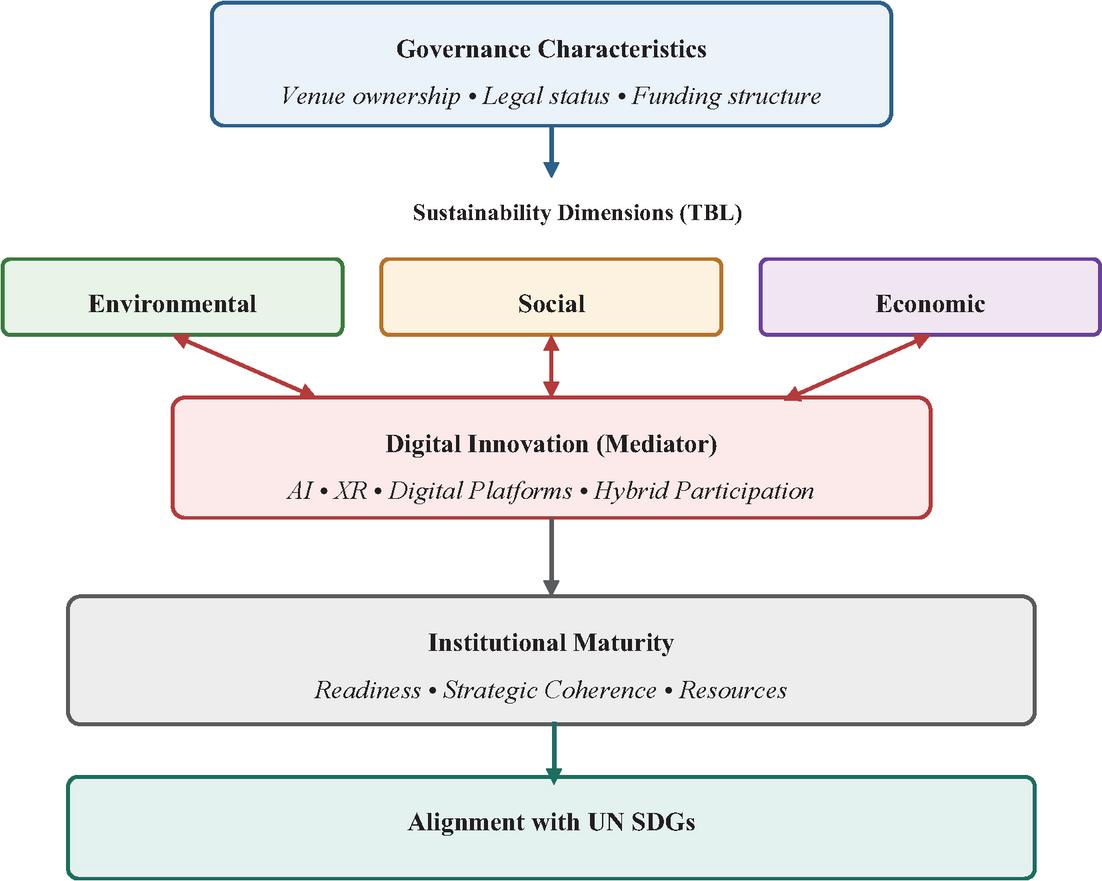
Figure 1 Conceptual model of sustainability mechanisms in Greek music institutions. Digital innovation acts as a transversal mediator between governance characteristics, the three dimensions of the TBL, institutional maturity, and alignment with the UN SDGs.
The model further proposes that the three sustainability dimensions collectively contribute to the institution’s alignment with the UN SDGs. Institutional maturity, defined as the degree of organizational readiness, strategic coherence, and cultural transformation, moderates the strength of this alignment. Digital innovation operates as a cross-cutting enabler that strengthens environmental practices (e.g. reduced material use), expands social accessibility (e.g. digital inclusion tools), and supports economic resilience (e.g. new digital revenue streams). Governance characteristics (venue-owning vs. itinerant) are included as structural moderators that shape the feasibility and depth of sustainability implementation.
Overall, the model integrates insights from cultural sustainability theory, digital mediation literature, and the Greek institutional context to propose a multi-layered framework explaining how music organizations develop sustainability practices and how these practices translate into SDG alignment.
3 Methodology
This study employs a sequential mixed-methods design combining documentary analysis and semi-structured interviews to investigate sustainability practices, communication strategies, and alignment with the UN SDGs in four major Greek music organizations: the TCH, the ACH, the TSSO, and the ASO. The mixed-methods approach was selected to capture both publicly declared practices (through official documents) and internal rationales, challenges, and decision-making logics (through insider perspectives), thereby enabling triangulation that strengthens the validity and depth of the findings (Creswell and Creswell, 2017; Molina-Azorin, 2016). The design is sequential: documentary mapping preceded and informed the interview guide, while interview insights were used to interpret and contextualize patterns identified in the documentary data.
3.1 Data Collection
3.1.1 Phase 1: Documentary analysis (secondary data)
Systematic mapping of publicly available sources was conducted between January 2025 and June 2026. Data were drawn exclusively from official institutional channels, including:
• Official websites and digital repositories
• Annual reports and sustainability reports (where available)
• Press releases and cultural journalism
• Social media accounts (primarily Facebook, Instagram, YouTube)
• EU-funded project documentation (e.g., DIGI-ORCH, Horizon, Recovery Fund)
This phase established a baseline of declared sustainability practices across the three TBL dimensions (environmental, social, economic) and digital innovation, as well as explicit or implicit references to the 17 SDGs.
3.1.2 Phase 2: Semi-structured interviews (primary data)
Two semi-structured interviews were conducted with senior marketing/communication executives who hold direct responsibility for sustainability-related communication and strategic planning:
• Prodromos Monastiridis, Marketing Director, TCH (16 October 2025)
• Nikolaos Kyriakou, Marketing Officer, TSSO (23 June 2025)
The interview guide consisted of 18 open-ended questions organized around four thematic axes: (A) Sustainability practices and challenges, (B) Digital communication strategies, (C) Audience response, and (D) Innovation. Interviews were conducted in Greek via digital platforms, lasted 50–70 minutes, were audio-recorded with consent, and transcribed verbatim. Interviews with the TSSO and TCH marketing representatives also informed a parallel, broader study on digital sustainability communication across 10 Greek cultural organizations (Tsavdaridou et al., 2026). The present article offers an institution-specific, in-depth comparative analysis focused on music organizations, with particular emphasis on the interplay between governance models (venue-owning vs. itinerant), digital innovation as a mediating factor, and SDG alignment, aspects not fully developed in the broader study. Due to access limitations, the ACH and the ASO were analyzed primarily through documentary sources. This limitation is explicitly addressed in Section 6.
3.2 Data Analysis
3.2.1 Documentary analysis
Following Bowen’s (2009) qualitative document analysis framework, all collected materials were systematically reviewed using a standardized coding scheme based on the TBL dimensions plus digital innovation as a transversal enabler. A comparative matrix was developed to identify patterns, best practices, and structural differences across the four organizations.
3.2.2 Thematic analysis of interviews
Interview transcripts were analyzed using Braun and Clarke’s (2006) six-phase thematic analysis. Two researchers independently coded the material to enhance trustworthiness and intercoder reliability (Nowell et al., 2017). The process was interpretive, aiming to uncover not only explicit statements but also underlying organizational assumptions, strategic rationales, and cultural barriers. Codes were clustered into themes corresponding to the study’s research questions (environmental, social, economic sustainability, digital innovation, and SDG alignment).
3.2.3 Integration of findings
Documentary and interview data were integrated through joint displays and narrative synthesis. This allowed for the identification of convergence (e.g., strong social sustainability) and divergence (e.g., environmental implementation vs. communication gaps), producing a nuanced understanding of sustainability in Greek music organizations.
4 Findings
4.1 Environmental Sustainability: Practices, Policies and Structural Contrasts (RQ1)
Environmental sustainability is the dimension in which the greatest heterogeneity is observed among the four organizations, both in the range of actions undertaken and in the degree of institutional adoption of related policies. TCH stands out as the most comprehensive organization in this dimension, with a systematic plan dating back to 2012. Its “Megaro Goes Green” program is not an isolated initiative but a three-phase strategy: first, mapping the current state of energy consumption; second, gradually reducing consumption through actions such as replacing 278 conventional light bulbs with LEDs and cutting centrally controlled lighting by 50%; and third, intensifying recycling across multiple material categories and developing a communication policy aimed at generalizing the model to other Greek cultural organizations (Voria.gr, 2013). TCH additionally participated in the EU Horizon program “Resilience,” which examined the effects of sound in public space, combining scientific research with environmental awareness-raising: “Energy savings, which entail savings in resources and money, significantly reduce the environmental footprint that inescapably follows the principle of sustainable and environmentally friendly cultural management” said Vasilis Gakis, then Chair of the TCH Board (Kaltsidi, 2022). This statement positions TCH as a pioneering Greek public organization in the development of green strategy.
ACH moves in a similar spirit, with the Garden, a 5000-seat open-air park in central Athens, planted with evergreen trees (carob, acacia, bitter orange, magnolia) and drought-tolerant, low-water-demand shrubs, as the central element of its environmental identity (www.megaron.gr). However, ACH’s official website does not provide comprehensive documentation of its energy practices, suggesting a gap between operational practice and communicative transparency. This pattern is consistent with the literature on greenhushing, whereby organizations underreport or selectively disclose sustainability initiatives to avoid scrutiny (Lyon and Montgomery, 2015; Torelli et al., 2020).
TSSO faces more acute practical difficulties given its lack of a dedicated venue, performing variously at TCH, the Lazariston Monastery, universities, and alternative spaces, it cannot implement autonomous energy-efficiency policies for the spaces it uses. This does not, however, translate into inertia. As noted in preliminary baseline findings, for organizations lacking fixed infrastructure, spatial limitations force a strategic shift toward digital alternatives. Reflecting this operational reality, TSSO’s Marketing Officer, Nikolaos Kyriakou, highlighted that the orchestra’s primary environmental lever has been its longitudinal digital transition. This process, initiated in 2015 under the Digital Convergence framework and integrated with Europeana, effectively replaced heavy physical workflows with eco-friendly digital management tools, including electronic ticketing infrastructure, downsized print runs for promotional material, and a structural shift from traditional to digital marketing channels.
This shift points to an important methodological observation: for organizations that do not control the buildings in which they operate, digital transition is the primary available means of reducing environmental footprint. ASO, in turn, shows limited documentation of specific environmental policies based on the available secondary data. Its new website (www.koa.gr), funded by the EU Recovery Fund, represents a step toward digital modernization with indirect environmental implications, although a comprehensive environmental framework is still absent.
A critical observation emerging from the institutional analysis concerns the tension between formal compliance and deeply embedded organizational behavior. Prodromos Monastiridis (TCH) emphasized that while formal metrics like ISO certifications are valuable structural assets, the ultimate objective must be the cultivation of a functional, active strategy that receives genuine support from the internal staff. This necessity for deeper organizational change is closely mirrored in the views of Nikolaos Kyriakou (TSSO), who observed that external sustainability indicators should not be treated as a panacea. Instead, he argued that cultural entities must substantively modify their underlying business models and production strategies to foster meaningful administrative engagement.
Both executives converge, from different institutional standpoints, on the same conclusion: environmental sustainability is a matter of institutional maturity and organizational culture, extending far beyond technical solutions and formal certification. This positioning underscores the broader paradigm shift within the Greek cultural sector, transitioning from superficial compliance to structural adaptation.
4.2 Social Sustainability: Access, Education, Inclusion, and Social Mission (RQ2)
Social sustainability is the richest and most developed dimension for all four organizations. Their shared institutional premise is that access to culture is a public good that should be available to all members of society, regardless of socio-economic status or geographic distance. The difference between organizations is less ideological than performative: which organization implements this premise most extensively, most radically, and most measurably.
4.2.1 Access and inclusion
TCH stands out as the organization with the most institutionalized inclusion plan. Its certification for digital support of visually impaired audiences, including hearing-assistance systems, wheelchair seating, dedicated signage, and an audio bridge for blind concertgoers, constitutes a pioneering action in a European context (www.keat.gr). The President of CERB, Sofia Chamonikolaou, underlined its significance: “Access and inclusion for people with visual impairments in culture and cultural events is undoubtedly a demand that concerns everyone, and innovation and new supportive technologies represent an important step in that direction.” Monastiridis described TCH’s underlying philosophy of inclusion: “We try to make performances inclusive, universally accessible. We practise cultural prescribing.” Cultural prescribing, the systematic referral of individuals to attend or participate in cultural activities as part of a health or social intervention, is a genuinely contemporary social sustainability practice that TCH applies in a substantive and documented manner. Experiential workshops delivered jointly with the Teloglion Foundation of Fine Arts at the Aristotle University of Thessaloniki and with the University of Macedonia further reinforce the inter-university dimension of this work (www.tch.gr).
TSSO develops actions distinguished by their bold, outward-facing and activist character. Kyriakou captured the underlying philosophy vividly: “TSSO’s social role is one of the most important pillars of its activity. The social innovation of our actions concerns the faithful application of the value of inclusion, and for this reason TSSO has appeared in every possible and improbable place, for example in underserved and remote areas, on construction sites, in gyms, on mountainsides, at outdoor archaeological sites, in the Petralona Cave, at the Thermi Dam.” Kyriakou also explained that the slogan “Your Orchestra” functions simultaneously as a communication tool and a philosophical statement, intended to shift public mindsets toward more substantive, engaged participation reinforced through social media (Tsavdaridou et al., 2026). Notable in this respect is TSSO’s action on 23 February 2025 at the sensory park of the Municipality of Kalamaria, within the “Thessaloniki Differently” program, undertaken in partnership with the associations STORGI, ACTNOW, the Panhellenic Association of the Blind “HELIOS,” the Down Syndrome Association, and the “ANORASI” association, an action that embodies what a public cultural organization can most effectively achieve: turning inclusion from rhetoric into practical encounter (TourismToday, 2025).
ASO places particular emphasis on social groups that remain excluded from the cycle of cultural consumption: detainees at Korydallos Prison and the Avlonas Juvenile Detention Centre, hospitalized children (at the Aglaia Kyriakou Children’s Hospital), participants in addiction-recovery therapeutic communities, and people with disabilities (Athens State Orchestra, 2016). This targeted direction of cultural distribution toward vulnerable and marginalized social groups represents one of the most innovative social-sustainability models in the Greek context. ACH, for its part, links inclusion with multiculturalism and international diplomacy. Its “Eden in Olympia” action, featuring the internationally renowned mezzo-soprano Joyce DiDonato, children’s choirs from diverse social and cultural backgrounds, and a trilingual rendition of the Olympic Anthem, positioned culture as a catalyst for social cohesion and environmental awareness ahead of the 2024 Paris Olympic Games.
4.2.2 Education: The foremost investment in future society
All four organizations invest in education both as a strategic tool for building future audiences and as an intrinsic social value, with programming extending from infancy to adulthood. TSSO operates across at least four age tiers: programs for infants aged 0–3 with parental accompaniment; “Sunday Mornings” chamber-music sessions for children aged 4–10; “Open Rehearsals” and educational workshops for secondary-school students; and livestreaming of concerts to schools within and outside Greece (www.tsso.gr). TSSO’s educational commitment is extensive, spanning free school concerts at every educational level, age-tiered programs for audiences from infancy through adolescence, in-school seminars and visits, and livestreaming to schools across Greece and abroad.
ASO, through its “Right to Music” program, delivers over 50 concerts annually in educational institutions across 20 Greek cities (Athens State Orchestra, n.d.-b), while ACH offers experiential educational programs spanning infants to adults, exemplified by “In Search of Sound” in the Garden. TCH, through MOYSA, the Youth Symphony Orchestra founded in 2015 with a donation from the Stavros Niarchos Foundation, systematically builds the bridge between education and professional artistic development (Thessaloniki Concert Hall, n.d.-b).
4.2.3 Mindset change as a challenge
One of the most significant contributions of the two interviews is the identification of a structural challenge that transcends financial or technical obstacles: changing social mentality. Both respondents identified this challenge as central, indeed, as the greatest challenge of all. Kyriakou analyzed the process with insight: “The greatest challenge in this kind of action concerns the effort to change mindsets that are years in the making, deeply rooted in public consciousness, and it takes considerable, systematic effort to get people to follow developments consciously and willingly. This concerns not only the use of new technologies but the broader mentality: from the need for printed materials/tickets, to the lack of willingness to participate, to the absence of a culture of volunteering” (Nikolaos Kyriakou, TSSO).
Monastiridis made a parallel observation: “The greatest challenge concerns the effort to change mindsets that are years in the making. The lack of culture, of strategic planning and of staff. Often there is also dysfunction between institutions, not only within the organisation.” Both executives converge on the conclusion that social sustainability is not a technical but a profoundly cultural matter: it requires a shift in social perception of the role of cultural organizations, transforming them from “high-culture venues” for an elite into “living organisations of social responsiveness” for society.
4.3 Economic Sustainability: Funding Models, Governance, and Strategic Independence (RQ3)
One of the most significant structural differences among the four organizations concerns their legal status, which directly shapes their funding possibilities and constraints. TCH is a private-law, non-profit legal entity (NPID) supervised by the Ministry of Culture and Sport, a status that affords greater flexibility in resource management, sponsorship acquisition, and commercial activity. TSSO and ASO, by contrast, are public-law bodies (NPDD) directly under the Ministry, a structure that imposes stricter regulation, mandatory public recruitment competitions, and the obligation to publish annual financial statements, while also guaranteeing state-funding security. ACH shifted in 2016 from a purely private to a majority state-represented entity on its Board.
All four organizations rely on a blended funding model: state subsidies, EU funds (ESPA, Recovery Fund, Digital Convergence), private-sector sponsorship (principally through the Stavros Niarchos Foundation and banking institutions), ticket revenue, and income from commercial activity. Monastiridis candidly identified a critical structural problem affecting Greek cultural organizations more broadly: “Cultural organisations very often suffer from a serious shortage or rather, understaffing and a lack of strategic planning. Many organisations have proposals, but the structure and volume of work are such that they are confined to the bare essentials” (Prodromos Monastiridis, TCH).
Kyriakou described precisely how TSSO overcomes this obstacle: “The financial factor affects every substantive upgrade in digitisation and the use of new technologies, which is why funded programmes are a solution. These obstacles are overcome through systematic budget provisioning, partnerships with other organisations, and the search for alternative funding.” Economic sustainability is not exhausted by diversifying funding sources but also presupposes transparency of management: ACH and TCH publish their sponsors with clear categorization (annual sponsors, seasonal sponsors, exchange sponsorships), reinforcing public trust. ACH develops additional revenue through M Shop and M Café, a model combining social mission with economic independence.
4.4 Digital Innovation and Digital Communication: Strategies, Tools, and Philosophy (RQ4)
Digital innovation constitutes the fourth, and increasingly decisive, horizontal dimension of sustainability for cultural organizations. A clear axis of differentiation emerges: the two concert halls focus on deeper digital documentation and the creation of permanent digital repositories, while the two orchestras move with greater speed in the digital transformation of their day-to-day audience communication.
4.4.1 TCH: Deep digital infrastructure
TCH has invested in an integrated digital portal featuring three-dimensional renderings of architectural plans, a virtual tour, an interactive timeline, an archive of posters, programs and scores, and a history of musical instruments from Ancient Greece to the present (www.tch.repository.gr). The construction of a Recording Centre and an Extended Reality Studio (VR/AR/projection mapping/spatial audio/motion capture) in building M2, funded by the Ministry of Culture and Sport under action 4.6.9 “Culture as a driver of development,” represents an ambitious investment that will position TCH as a unique hub for technologically enriched cultural experience in Northern Greece (Thessaloniki Concert Hall, n.d.-a), mirroring a broader international shift toward multi-modal extended-reality infrastructure in heritage institutions (Bekele et al., 2018; Luther et al., 2023). Monastiridis identified the organization’s digital archive as its most important innovation, describing digitization as an enduring point of reference and as a cross-cutting sustainability lever among the interviewed institutions (Tsavdaridou et al., 2026).
4.4.2 ACH: Artificial intelligence and accessible digital experience
ACH is distinguished by two pioneering digital innovations. The first is Somax2, developed through a collaboration between the French research institute IRCAM and the Laboratory of Music Acoustics and Technology (LabMAT) at the National and Kapodistrian University of Athens. It is an artificial-intelligence system that “listens, learns and reacts” in real time to musical stimuli, analyzing harmonic contour, timbre, and texture, a genuinely new form of creative interaction between artificial intelligence and live musical practice (Megaron - The Athens Concert Hall, 2025). The second concerns the certified accessibility of its website, which is aligned with Greek Law 4727/2020 and automatically adapts structure, color and font size to each user’s needs, constituting a model of digital inclusion (www.megaron.gr). During the pandemic, ACH pioneered the first interactive 360∘ online presentation of Beethoven’s Ninth Symphony, performed by the Armonia Atenea Camerata, a format consistent with the growing use of 360∘ immersive video as a tool for remote cultural participation (Argyriou et al., 2020).
4.4.3 TSSO: Digital socialization
TSSO is the organization that most extensively exploits digital tools at the interface between communication and social mission, with the widest variety of content types. Kyriakou offered an exhaustive description: “TSSO seeks to exploit every possibility offered by digital media for more effective audience engagement and for the continuous growth of its reach. Concerts (whole or excerpts), interviews, tributes, broadcasts, competitions, street interviews, backstage footage, archive material, home videos, educational material, programme information, spots, trailers, reviews, press coverage” (Nikolaos Kyriakou, TSSO).
TSSO also participates in DIGI-ORCH, funded by the European Regional Development Fund, which uses Augmented Reality (AR) to enrich the audience experience during concerts, reflecting a wider trend of AR adoption at cultural heritage and performance venues as a driver of visitor value and engagement (Bae et al., 2020; tom Dieck and Jung, 2017). A key strategic goal for the future is the development of on-demand livestreaming, a model already applied by world-class orchestras such as the Berlin Philharmonic.
4.4.4 ASO: Archival depth and digital access
ASO has implemented two significant digital initiatives. Its universally accessible website was funded by the EU Recovery Fund. The platform combines an archive of 130 Greek symphonic works (from 1991 to the present) with contemporary programming, offering free access to the wealth of Greek musical creation (Athens State Orchestra, n.d.-a). In addition, ASO has pioneered free introductory talks before selected concerts, offered as “a small guided tour of the programme,” enriching audiences’ experiential engagement.
Table 1 provides a comparative overview of the digital presence and innovation initiatives across the four institutions, illustrating the different strategic emphases.
Table 1 Comparative digital presence and innovation data for the four music institutions (2026)
| Dimension | TCH | ACH | TSSO | ASO |
| Digital innovation | XR Studio (VR/AR); Recording Centre; Horizon EU | Somax2 (AI live composition); 360∘ tour; electroacoustic concerts | DIGI-ORCH (AR); digital archive/Europeana; “Digital Museum” | HUB.KOA.GR: 130 works since 1991; livestreaming (in development) |
| AI & emerging tech | Planning stage; XR Studio | Somax2: AI that “listens/learns” in real time | AI-generated poster/print visuals; DIGI-ORCH AR | Early steps in AI-assisted visuals |
| Livestreaming | Occasional; archival YouTube | 360∘ pandemic-era online presentation (Beethoven’s Ninth); YouTube | Livestreaming to schools in Greece/abroad; on-demand in development | Occasional; strategic development goal |
| Content types | Performances, archive, education, backstage, drone footage | Performances, education, Garden, screenings, interviews | Performances, archive, backstage, street interviews, broadcasts, competitions | Concerts, education, archive, behind-the-scenes, introductory talks |
| Evaluation | Google Analytics; limited in-depth analysis (understaffing) | 96% positive reviews; quantitative monitoring | Attendance metrics; social-media analytics | Attendance metrics |
| Strategic assessment | Extensive digital infrastructure; sustainable M Shop-style products; communication-practice gap | Strong social presence; innovative (Somax2); limited ESG documentation | Systematic; digital archive as sustainable cultural identity; two-way communication | Advanced conception; digital as ally of in-person experience; 130-work HUB archive |
5 Alignment with the 17 SDGs: Comparative Mapping (RQ5)
Building on the overall analysis, Table 2 maps the practices and actions of the four organizations against the 17 UN SDGs. Entries draw on both the secondary-source mapping and the testimony of the two interviews. Reading the table both horizontally (across organizations, per goal) and vertically (across goals, per organization) reveals both the shared strengths and the evident gaps of the sector.
Table 2 Comparative mapping of TCH, ACH, TSSO, and ASO against the 17 SDGs (Agenda 2030)
| SDG | TCH | ACH | TSSO | ASO |
| SDG 1: No Poverty | Reduced tickets for unemployed, disabled, students; partnerships with social agencies | Reduced tickets; free events for vulnerable groups; links with social networks | Free entry for large families, refugees, low-income households; social pricing policy | Reduced tickets for pupils/students; free access for vulnerable groups |
| SDG 2: Zero Hunger | Charitable initiatives; proposed partnership with social grocery stores | No direct action identified | No direct action identified | No direct action identified |
| SDG 3: Good Health & Wellbeing | Cultural prescribing; well-being education; MOYSA mental well-being focus | Mental-health-themed events; “Eden in Olympia” child well-being; music therapy | Infant/toddler educational programs; well-being initiatives; institutional partnerships | Concerts at Aglaia Kyriakou Children’s Hospital; Thiseas/18 ANO therapeutic communities; disability institutions |
| SDG 4: Quality Education | School programs; MOYSA Summer School; partnerships with AUTh/UoM/Teloglio n | Programs from infancy to adolescence; Garden “Treasure Hunt”; open activities | “Sunday Mornings” for ages 4–10; “Open Rehearsals”; livestreaming to schools | “Right to Music”: 50+ concerts/year; seminars in 20 cities; scholarships |
| SDG 5: Gender Equality | Female majority among staff; women musicians in MOYSA | Women artists/executives; empowerment initiatives | Women musicians; equal participation in programs | Gender-equality practice; opportunities for women musicians |
| SDG 6: Clean Water & Sanitation | Building water management; anti-flood works on seafront plot | Low-water-demand Garden planting; urban green lung | Indirect only, via hosting at TCH facilities | No direct action identified |
| SDG 7: Affordable & Clean Energy | “Megaro Goes Green”: 278 LED replacements; 50% lighting reduction; energy mapping | LED proposals; photovoltaics; smart energy systems (proposed) | Digital transformation framed as footprint reduction; e-ticketing | Gradual lighting replacement; digital practices |
| SDG 8: Decent Work & Economic Growth | Employment for young artists/technical staff | Job creation; commercial activity (M Shop, M Café) | 112 permanent musicians; NPDD systematic programming; labor rights | 80+ musicians in stable employment; public recruitment competitions |
| SDG 9: Industry, Innovation & Infrastructure | Recording Centre; XR Studio; Horizon EU; digital repository | Somax2 (AI + music); 360∘ tour; electroacoustic concerts | DIGI-ORCH (AR); digital archive; e-ticketing; Europeana link | HUB.KOA.GR; universally accessible website; EU Recovery Fund |
| SDG 10: Reduced Inequalities | CERB certification; disability programs; inclusion workshops; MOYSA | Nine-language website; free access for vulnerable groups; “Eden” cross-cultural children | Partnerships with STORGI/ACTNOW/HE LIOS/Down Syndrome Assoc.; sensory park | Korydallos & Avlonas prisons; underserved areas; geographic decentralization |
| SDG 11: Sustainable Cities & Communities | Thessaloniki landmark; partnership with Municipality/AUTh; cultural identity | 5000-seat Garden as public space; DIAZOMA; Northern Evia | Aristotle Square; Archaeological Museum; Petralona Cave | “Music Everywhere”: performances at monuments/archaeo logical sites/mountains |
| SDG 12: Responsible Consumption | Paper/metal/plastic recycling; sustainable materials management | M Shop sustainable products; plastic reduction; circular economy | E-ticketing; reduced printed materials; digital marketing | Reduced printed materials; digital rather than traditional communication |
| SDG 13: Climate Action | “Megaro Goes Green”; climate education; green spaces | “Eden in Olympia”; “Our Ocean Greece” 2024; public awareness | “Culture & Environment” conference; awareness education | Participation in environmental conferences; public awareness |
| SDG 14: Life Below Water | Seafront-plot relationship; environmental awareness | “Our Ocean Greece” 2024; sustainable use of marine resources | No direct action identified | No direct action identified |
| SDG 15: Life on Land | Drought-tolerant planting; partnerships with environmental bodies | Evergreen/droughttolerant Garden planting; DIAZOMA; Northern Evia; biodiversity | Sustainable set design; nature-related partnerships | No direct action identified |
| SDG 16: Peace, Justice & Strong Institutions | Public financial statements; transparency; policy dialogue | Transparent governance; State majority on Board; social cohesion | Public-facing actions; NPDD transparency; social democracy | Prison concerts; social reconciliation; transparent administrative procedures |
| SDG 17: Partnerships for the Goals | AUTh, UoM, Teloglion, Stavros Niarchos Foundation, CERB, Municipality, Horizon EU | IRCAM, LabMAT, Friends of Music, DIAZOMA, IOC, international artists | “Balkan Bridge” (Bulgaria); Stavros Niarchos Foundation, AUTh, Europeana, conservatories | Stavros Niarchos Foundation, Kostopoulos Foundation, EU funds, NKUA, international partners |
5.1 SDGs with Strong, Documented Coverage
SDG 4 (Quality Education) is the most consistently addressed goal, reflecting a shared conviction that education forms a core component of the cultural mission rather than a secondary activity. All four organizations invest systematically in educational programming spanning multiple age groups, from early childhood (TSSO’s 0–3 programs) to professional development (TCH’s MOYSA).
SDG 10 (Reduced Inequalities) is the second strongest area, addressed through distinct but complementary approaches: functional accessibility and cultural prescribing (TCH), linguistic and multicultural inclusion (ACH), geographic and social outreach to remote and vulnerable populations (TSSO), and targeted actions in prisons, hospitals, and therapeutic communities (ASO).
SDG 17 (Partnerships for the Goals) also shows strong coverage. However, a critical reading reveals heavy dependence of three organizations on the Stavros Niarchos Foundation, raising questions of long-term resilience and diversification.
5.2 SDGs with Uneven or Partial Coverage
SDG 3 (Good Health and Well-being), SDG 7 (Affordable and Clean Energy), SDG 8 (Decent Work and Economic Growth), SDG 9 (Industry, Innovation, and Infrastructure), and SDG 11 (Sustainable Cities and Communities) are addressed with varying depth and documentation. TCH leads in structured environmental and infrastructural actions, while ACH and TSSO show innovation in specific areas (Garden, AI, AR). The orchestras’ lack of dedicated venues limits direct environmental interventions, particularly for SDG 7.
5.3 SDGs with Insufficient or Absent Coverage
SDG 2 (Zero Hunger), SDGs 14-15 (Life Below Water and Life on Land), and SDG 5 (Gender Equality) remain significantly under-addressed. The limited engagement with biodiversity goals points to a broader knowledge gap in the Greek cultural sector regarding the connection between cultural activity and ecological stewardship.
5.4 Vertical Analysis: Sustainability Profile of Each Organization
TCH presents the most balanced and institutionalized profile. ACH excels in environmental and innovative actions but shows a communication gap. TSSO demonstrates a strongly social-oriented profile, constrained by lack of infrastructure. ASO emphasizes social outreach and digital access but lags in documentation and environmental actions.
5.5 Synthesis: Three Emerging Findings
The combined horizontal and vertical reading of the table yields three composite findings that extend beyond the table’s content and carry theoretical significance for the study of sustainability in the cultural sector.
1. A persistent gap is observed between social and environmental sustainability. All four organizations show a rich social profile and a comparatively weak environmental one, suggesting that in the Greek cultural sector “sustainability” is understood primarily through its social dimension, which is more directly connected to the mission of cultural organizations, while the environmental dimension remains largely “supplementary” to institutional identity.
2. Legal status (NPID/NPDD) functions as a significant mediating factor in the capacity to develop innovative sustainability practices. Private-law bodies (TCH, ACH) show greater flexibility in resource management and in developing commercial activity (M Shop, M Café, private-sector sponsorship), while public-law bodies (ASO in particular) offset this reduced flexibility with the dynamism of their social presence and mobility.
3. The analysis reveals that the SDGs function for these organizations less as externally imposed compliance frameworks and more as a retrospectively recognizable set of principles that converge with pre-existing practice. None of the four organizations organizes its activities from the outset around the 17 SDGs; rather, activities developed from values and needs, and the SDGs offer, after the fact, a useful analytical grid for evaluation. This does not negate the usefulness of the SDGs, but raises a critical question for future research: could ex ante integration of the SDGs into strategic design strengthen the coherence and effectiveness of sustainability practices?
6 Discussion and Future Directions
The comparative analysis of four major Greek music institutions reveals varied degrees of maturity in embedding sustainability practices, confirming several of the hypotheses formulated in this study while highlighting important nuances specific to the Mediterranean cultural context. Social sustainability consistently emerges as the strongest pillar, while environmental sustainability remains considerably weaker and less institutionalized, and digital innovation functions as the most dynamic transversal mediator (Emma, 2025; Ioannakis et al., 2020).
6.1 Revisiting the Hypotheses
H1 is strongly supported, as all four organizations demonstrate rich and innovative social sustainability initiatives, particularly in access, inclusion, education, and outreach to vulnerable groups. In the Greek Mediterranean setting, where cultural institutions often serve as anchors of social cohesion in tourism-driven economies, social sustainability emerges not merely as a complementary pillar but as the dominant expression of institutional mission.
H2 is only partially confirmed. TCH, which exhibits the highest institutional maturity and infrastructural control, shows the most balanced SDG alignment. The orchestras (TSSO and ASO), operating with greater resource constraints and without dedicated venues, display strong performance on social goals (SDG 4, SDG 10) but weaker environmental engagement, a pattern that underscores the structural challenges facing many Mediterranean cultural organizations operating in resource-constrained environments.
H3 is clearly supported, though with an important qualification. The two concert halls (TCH and ACH) demonstrate more systematic environmental practices than the itinerant orchestras, which instead compensate through digital innovation; however, ACH’s own gap between environmental potential and documented practice (“greenhushing”) shows that venue ownership is a necessary but not sufficient condition for environmental maturity. This structural difference carries clear implications for Mediterranean cultural policy: venue-owning institutions can more readily implement tangible environmental measures, while itinerant organizations require differentiated support mechanisms.
H4 is strongly confirmed and emerges as one of the most promising findings. Digital tools mediate all three dimensions of the TBL: reducing environmental footprint (e.g., TSSO’s shift from print to digital workflows), enhancing social inclusion (e.g., ACH’s accessible website, TSSO’s livestreaming to schools), and supporting economic resilience (new digital revenue streams and audience reach). In a Mediterranean context marked by seasonal tourism and geographic dispersion, digital innovation offers a powerful lever for balancing physical cultural experience with wider, more sustainable access. The persistent “communication-practice gap” noted for TCH in Table 1 shows that infrastructure alone does not guarantee this mediating effect without consistent public communication.
H5 is also supported. Private-law entities (TCH, ACH) enjoy greater flexibility in sponsorship and commercial activity (e.g., M Shop, M Café), while public-law bodies (TSSO, ASO) benefit from funding stability but face bureaucratic constraints and report understaffing as a recurring obstacle to strategic planning. This is a finding with direct policy relevance for Mediterranean countries seeking to strengthen the economic resilience of cultural institutions without compromising their public mission.
Taken together, the hypothesis-level analysis suggests that the proposed conceptual model (Figure 1) captures the broad structural logic of sustainability adoption in Greek music institutions, while revealing that governance characteristics condition, rather than fully determine, both environmental maturity (H3) and SDG alignment (H2). Beyond hypothesis testing, the study reveals a persistent imbalance: social sustainability is significantly more developed than environmental sustainability across all four organizations, reflecting both cultural priorities (culture as a tool for social inclusion and identity) and practical limitations (older infrastructure, chronic underfunding). This distinction between venue-owning institutions and itinerant ensembles carries further weight for understanding sustainability pathways across the broader Mediterranean cultural sector: while this social emphasis contributes powerfully to sustainable tourism and creative place-making, it also indicates that Greek and Mediterranean cultural organizations still have considerable room to strengthen their environmental contribution and achieve more holistic sustainability transitions (Malisiova and Kostopoulou, 2024).
From a creative place-making and sustainable tourism perspective, the findings highlight the significant role of music institutions as cultural landmarks that actively co-create place identity and contribute to sustainable tourism development (Kladou and Trihas, 2022). Their strong social sustainability practices function not only as social sustainability measures but also as powerful signals of a socially responsible and authentic cultural destination (Thymi et al., 2026; Vu et al., 2024). TSSO’s outreach in remote areas, TCH’s cultural prescribing, and ACH’s multicultural initiatives position these institutions as active agents in destination branding and community resilience, helping mitigate risks of cultural commodification while enhancing authentic visitor experiences (Duxbury et al., 2017). In the Greek Mediterranean context, where tourism is a major economic driver, digital innovation further amplifies this contribution by extending reach, enabling hybrid participation, and supporting more sustainable forms of cultural consumption that reduce physical pressure on venues (Papadaki, 2024; Tsavdaridou, Papadaki, and Apostolakis, 2026).
6.2 Policy and Practical Implications
The findings suggest that national and regional authorities in Greece and the broader Mediterranean should:
1. Develop differentiated support mechanisms according to organizational type (venue-owning vs. itinerant).
2. Invest in digital infrastructure as a high-impact mediator for all sustainability dimensions.
3. Encourage systematic integration of the SDGs into strategic planning rather than retrospective mapping.
4. Promote cross-sectoral partnerships between cultural institutions, tourism boards, and environmental agencies, explicitly recognizing music institutions as active partners in sustainable destination branding.
6.3 Limitations and Future Research
While this study provides in-depth comparative insights, it relies primarily on documentary evidence for two of the four organizations (ACH and ASO), which limits broader generalization. Future research should adopt longitudinal designs and expand to other Mediterranean countries to test the transferability of these findings. Overall, sustainability in Greek music organizations is evolving as a continuous organizational learning process. Although progress remains uneven, the sector demonstrates increasing awareness that long-term viability depends on the genuine integration of environmental responsibility, social value, economic resilience, and digital innovation, thereby contributing meaningfully to both cultural vitality and sustainable destination development in the Mediterranean.
References
Argyriou, L., Economou, D., and Bouki, V. (2020). Design methodology for 360∘ immersive video applications: The case study of a cultural heritage virtual tour. Personal and Ubiquitous Computing, 24(6), 843–859. https://doi.org/10.1007/s00779-020-01373-8
Athens State Orchestra. (n.d.-a). Σύντομο ιστορικό της κρατικής ορχήστρας Αθηνών.
Athens State Orchestra. (n.d.-b). Δικαίωμα στη μουσική.
Athens State Orchestra. (2016). Το ροζ κουτί (της αλληλεγγύης).
Avlonitou, C. and Papadaki, E. (2025). AI: an active and innovative tool for artistic creation. Arts, 14(3), 52. https://doi.org/10.3390/arts14030052
Avlonitou, C., Papadaki, E., and Kavoura, A. (2025). Green digital strategies: sustainability in global and Greek cultural marketing. Sustainability, 17(5), 1972. https://doi.org/10.3390/su17051972
Bae, S., Jung, T. H., Moorhouse, N., Suh, M., and Kwon, O. (2020). The influence of mixed reality on satisfaction and brand loyalty in cultural heritage attractions: a brand equity perspective. Sustainability, 12(7), 2956. https://doi.org/10.3390/su12072956
Bekele, M. K., Pierdicca, R., Frontoni, E., Malinverni, E. S., and Gain, J. (2018). A survey of augmented, virtual, and mixed reality for cultural heritage. Journal on Computing and Cultural Heritage (JOCCH), 11(2), 1–36. https://doi.org/10.1145/3145534
Bowen, G. A. (2009). Document analysis as a qualitative research method. Qualitative Research Journal, 9(2), 27–40. https://doi.org/10.3316/QRJ0902027
Braun, V. and Clarke, V. (2006). Using thematic analysis in psychology. Qualitative Research in Psychology, 3(2), 77–101. https://doi.org/10.1191/1478088706qp063oa
Cardak, F. S. (2025). Community engagement and heritage awareness for the sustainable management of rural and coastal archaeological heritage sites: The case of Magarsus (Karataş, Turkey). Sustainability, 17(12), 5302. https://doi.org/10.3390/su17125302
Cerquetti, M. and Montella, M. M. (2021). Meeting sustainable development goals (SDGs) in museum evaluation systems. The case of the Italian National Museum system (NMS). Sinergie Italian Journal of Management, 39(1), 125–147. https://doi.org/10.7433/s114.2021.08
Creswell, J. W. and Creswell, J. D. (2017). Research design: qualitative, quantitative, and mixed methods approaches. SAGE Publications.
Duxbury, N., Kangas, A., and De Beukelaer, C. (2017). Cultural policies for sustainable development: four strategic paths. International Journal of Cultural Policy, 23(2), 214–230. https://doi.org/10.1080/10286632.2017.1280789
Emma, O. (2025). Extended reality in the digital age: a literature review on technology-driven learning environments. Computers and Education: X Reality, 8, 100127. https://doi.org/10.1016/j.cexr.2025.100127
Ferran Vila, S., Miotto, G., and Rom-Rodríguez, J. (2021). Cultural sustainability and the SDGs: strategies and priorities in the European Union countries. European Journal of Sustainable Development, 10(2), 73–86. https://doi.org/10.14207/ejsd.2021.v10n2p73
Foster, G. and Kreinin, H. (2020). A review of environmental impact indicators of cultural heritage buildings: A circular economy perspective. Environmental Research Letters, 15(4), 043003. https://doi.org/10.1088/1748-9326/ab751e
Gao, Y., Turkina, E., and Van Assche, A. (2023). The nexus between the cultural and creative industries and the sustainable development goals: a network perspective. Regional Studies, 58(4), 841–859. https://doi.org/10.1080/00343404.2023.2252474
Glesner, J. (2025). Ecological sustainability in arts organizations — on the potentially limited impact of carbon footprint reports in ecological transformation. European Journal of Cultural Management and Policy, 15, 14629. https://doi.org/10.3389/ejcmp.2025.14629
Golob, U., Podnar, K., and Zabkar, V. (2022). Sustainability communication. International Journal of Advertising, 41(1), 42–51. https://doi.org/10.1080/02650487.2022.2144035
Hawkes, J. (2001). The fourth pillar of sustainability: Culture’s essential role in public planning. Cultural Development Network.
Hosseini, E., and Rajabipoor Meybodi, A. (2023). Proposing a model for sustainable development of creative industries based on digital transformation. Sustainability, 15(14), 11451. https://doi.org/10.3390/su151411451
Ioannakis, G., Bampis, L., and Koutsoudis, A. (2020). Exploiting artificial intelligence for digitally enriched museum visits. Journal of Cultural Heritage, 42, 171–180. https://doi.org/10.1016/j.culher.2019.07.019
Järvelä, M. (2023). Dimensions of cultural sustainability — Local adaptation, adaptive capacity and social resilience. Frontiers in Political Science, 5, 1285602. https://doi.org/10.3389/fpos.2023.1285602
Jiang, L., Li, J., Wider, W., Tanucan, J. C. M., Lobo, J., Fauzi, M. A., Hidayat, H., and Zou, R. (2025). A bibliometric insight into immersive technologies for cultural heritage preservation. npj Heritage Science, 13(1), 126. https://doi.org/10.1038/s40494-025-01704-z
Kaltsidi, M. (2022, September 5). Το Μέγαρο Μουσικής Θεσσαλονίκης βάζει στην καθημερινότητά του την εξοικονόμηση ενέργειας εξοικονόμηση ενέργειας. ERTNews.
Kapranov, O. (2025). A meeting point of culture, royalty, and the environment: analysing the discourse on sustainability by the Royal Ballet and Opera in London. Culture, Society, Economics and Politics, 5, 43–59. https://doi.org/10.2478/csep-2025-0014
Kladou, S. and Trihas, N. (2022). Place branding through resource integration and gastro-cultural experiences: A transnational perspective. Tourism and Hospitality, 3(1), 1–14. https://doi.org/10.3390/tourhosp3010001
Loach, K., Rowley, J., and Griffiths, J. (2017). Cultural sustainability as a strategy for the survival of museums and libraries. International Journal of Cultural Policy, 23(2), 186–198. https://doi.org/10.1080/10286632.2016.1184657
Luther, W., Baloian, N., Biella, D., and Sacher, D. (2023). Digital twins and enabling technologies in museums and cultural heritage: an overview. Sensors, 23(3), 1583. https://doi.org/10.3390/s23031583
Lyon, T. P. and Montgomery, A. W. (2015). The means and end of greenwash. Organization & Environment, 28(2), 223–249. https://doi.org/10.1177/1086026615575332
Malisiova, S. and Kostopoulou, S. (2024). Synergies of cultural–creative industries and development in peripheral areas: networking, social capital, and place. Heritage, 7(8), 4500–4519. https://doi.org/10.3390/heritage7080212
Megaron – The Athens Concert Hall. (2025, March 19). : Τζαζ & τεχνητή νοημοσύνη:: O (θαυμαστός κόσμος του Somax II.
Molina-Azorin, J. F. (2016). Mixed methods research: an opportunity to improve our studies and our research skills. European Journal of Management and Business Economics, 25(2), 37–38. https://doi.org/10.1016/j.redeen.2016.05.001
Müller, M. and Grieshaber, J. (2024). How sustainable are cultural organizations? A global benchmark. Sustainability: Science, Practice and Policy, 20(1), 2312660. https://doi.org/10.1080/15487733.2024.2312660
Nocca, F. (2017). The role of cultural heritage in sustainable development: multidimensional indicators as decision-making tool. Sustainability, 9(10), 1882. https://doi.org/10.3390/su9101882
Nowell, L. S., Norris, J. M., White, D. E., and Moules, N. J. (2017). Thematic analysis: striving to meet the trustworthiness criteria. International Journal of Qualitative Methods, 16, 1–13. https://doi.org/10.1177/1609406917733847
Onofri, L., Ojeda, C., Ruiz-Gauna, I., Greno, F., and Markandya, A. (2024). A life cycle and economic assessment of the Peggy Guggenheim Collection in Venice for environmental and economic sustainability. Sustainability, 16(16), 6735. https://doi.org/10.3390/su16166735
Papadaki, E. (2024). Promoting green tourism synergies with cultural and creative industries: a case study of Greece. Sustainability, 16(2), 633. https://doi.org/10.3390/su16020633
Rozmiarek, M., Nowacki, K., Malchrowicz-Mośko, E., and Dacko-Pikiewicz, Z. (2022). Eco-initiatives in municipal cultural institutions as examples of activities for sustainable development: a case study of Poznan. Sustainability, 14(2), 682. https://doi.org/10.3390/su14020682
Soini, K. and Birkeland, I. (2014). Exploring the scientific discourse on cultural sustainability. Geoforum, 51, 213–223. https://doi.org/10.1016/j.geoforum.2013.12.001
Soini, K. and Dessein, J. (2016). Culture-sustainability relation: towards a conceptual framework. Sustainability, 8(2), 167. https://doi.org/10.3390/su8020167
Thessaloniki Concert Hall. (n.d.-a). Recording Centre and XR (Extended Reality) Studio of the Thessaloniki Concert Hall.
Thessaloniki Concert Hall. (n.d.-b). MOYSA — Megaro Youth Symphony Orchestra.
Thymi, I., Bitsani, E., Poulios, I., and Spiliopoulou, I. (2026). Governing intangible cultural heritage for sustainable local development: community-based cultural associations and social capital in Kalamata, Greece. Sustainability, 18(6), 2818. https://doi.org/10.3390/su18062818
tom Dieck, M. C. and Jung, T. H. (2017). Value of augmented reality at cultural heritage sites: a stakeholder approach. Journal of Destination Marketing & Management, 6(2), 110–117. https://doi.org/10.1016/j.jdmm.2017.03.002
Torelli, R., Balluchi, F., and Lazzini, A. (2020). Greenwashing and environmental communication: effects on stakeholders’ perceptions. Business Strategy and the Environment, 29(2), 407–421. https://doi.org/10.1002/bse.2373
TourismToday.gr. (2025, February 14). Κυριακάτικη πολυδράση στο Αισθητηριακό Πάρκο του Δήμου Καλαμαριάς.
Tsavdaridou, D., Papadaki, E., and Apostolakis, A. (2026). Econometric analysis of cultural participation modes in Greek heritage organizations. In Strategic innovative marketing and tourism. https://doi.org/10.1007/978-3-032-12968-0_62
Tsavdaridou, D., Papadaki, E., Kavoura, A., and Trihas, N. (2026). Sustainability in Greek cultural organizations: Mapping practices, professional views, and digital narratives. Sustainability, 18(2), 999. https://doi.org/10.3390/su18020999
Tsavdaridou, D., Papadaki, E., and Kladou, S. (2026). Sustainability in cultural organizations: A systematic literature review. Sustainability, 18(8), 3907. https://doi.org/10.3390/su18083907
UNESCO. (2019). Culture—2030 Indicators. UNESCO.
United Nations. (2015). Transforming our world: The 2030 Agenda for Sustainable Development. United Nations General Assembly.
Voria.gr. (2013, April 10). Tο Μέγαρο… Goes Green. Voria.gr.
Vu, A. D., Vo-Thanh, T., Nguyen, T. T. M., Bui, H. L., and Pham, T. N. (2024). Tourism social sustainability in remote communities in Vietnam: tourists’ behaviors and their drivers. Heliyon, 10(1), Article e23619. https://doi.org/10.1016/j.heliyon.2023.e23619