Green Digital Transition and Sustainable Technology Supply Chains in the Mediterranean
Nikolaos Tsoromokos1, Panagiotis Kritikos1, and Dimitrios Tsoromokos2
1University of Piraeus, Greece
2University of the Peloponnese, Greece
E-mail: dtsoromok@uop.gr
Corresponding Author: Dimitrios Tsoromokos; E-mail address: dtsoromok@uop.gr
Handling Editor: Marinos Stylianou
Received 23 February 2026, Accepted 8 April 2026; Published Online: 04 November 2026.
Citation: Tsoromokos, N., Kritikos, P., & Tsoromokos, D. (2025). Green digital transition and sustainable technology supply chains in the Mediterranean. Sustainability Research in the Mediterranean, 1(4), 255–266. https://doi.org/10.13052/srm2795-0514.019
© 2026 River Publishers
Abstract
The rapid expansion of the digital economy poses dual challenges for the Mediterranean region: managing the surging energy and cooling demands of cloud infrastructure and mitigating electronic waste (e-waste) within fragile coastal ecosystems. This paper adopts a comparative qualitative synthesis of publicly available corporate sustainability disclosures, institutional environmental evidence, scientific and policy literature, and European Union regulatory sources to examine how the corporate models of Microsoft Corporation and Apple Inc. interact with sustainability challenges in the Mediterranean context. By contrasting Microsoft’s cloud-first, R&D-driven infrastructure expansion with Apple’s globally distributed, supplier-heavy hardware production model, we analyze key environmental risk vectors – specifically Scope 3 emissions, water scarcity in data center cooling, and e-waste management under the EU Circular Economy Framework. Ultimately, the study offers actionable policy and managerial recommendations for implementing Green IT and sustainable supply chain practices across Southern Europe and the wider Mediterranean policy context.
Keywords: Mediterranean sustainability, Green IT, Scope 3 emissions, data center infrastructure, e-waste, circular economy, Microsoft, Apple Inc..
1 Introduction
1.1 The Mediterranean Climate Hotspot
The Mediterranean Basin represents one of the most ecologically fragile and climate-vulnerable regions globally (Cramer et al., 2018). According to the First Mediterranean Assessment Report (MAR1) released by the Mediterranean Experts on Climate and Environmental Change (MedECC, 2020), the region is warming at a rate 20% faster than the global average. Mean atmospheric temperatures in the Mediterranean have already risen by 1.5∘C relative to pre-industrial levels, consistently exceeding global warming baselines (MedECC, 2020).
This accelerated warming amplifies severe environmental stressors, including prolonged heatwaves, structural droughts, rising sea levels, and acute water scarcity (UNEP/MAP, 2020). Projections indicate that water demand across the Mediterranean basin could double or triple by 2050, while freshwater availability continues to shrink due to reduced precipitation and increased evaporation rates (MedECC, 2020; UNEP/MAP, 2020). Consequently, any economic activity that imposes high baseline demands on regional energy grids and freshwater reserves risks exacerbating existing ecological imbalances within fragile coastal ecosystems.
1.2 Southern Europe as an Emerging Digital and Data Center Hub
In parallel with these environmental pressures, Southern Europe – specifically Spain, Italy, Greece, and Portugal – is experiencing rapid growth as a strategic digital hub for the Mediterranean and Southeastern Europe (Colliers, 2023; JLL, 2024). Driven by power grid constraints in traditional Northern European markets (Frankfurt, London, Amsterdam, Paris, Dublin: FLAP-D) and the expansion of subsea fiber-optic cable landings, global hyperscalers are making multi-billion-dollar infrastructure investments in Southern Europe.
However, the hyperscale digital infrastructure model presents a distinct resource contention paradox within the Water-Energy-Food-Ecosystems (WEFE) nexus (MedECC, 2024):
• Energy Demand and Grid Stress: Data centers require continuous baseload electricity to power servers and cooling facilities, placing strain on local grids during peak summer cooling periods when civilian energy demand is highest (European Commission, 2024a).
• Hydrological Strain: Depending on cooling design and local climatic conditions, hyperscale data centers using evaporative cooling systems may require substantial volumes of water. In water-stressed Mediterranean territories, this dependence can increase potential competition for available freshwater resources, particularly during periods of drought and high seasonal demand (Bizo & Barber, 2022; MedECC, 2024).
1.3 Corporate Alignments and Scope of the Study
Addressing these challenges requires evaluating how multinational technology firms align their growth models with regional environmental constraints. This study focuses on two distinct corporate models:
1. Microsoft Corporation: Represents an infrastructure-heavy, cloud-centric model. The company’s expansion of Azure data center regions in Southern Europe, including the “GR for Growth” flagship commitment in Attica, Greece, and multi-region expansions in Spain and Italy, makes it a relevant case for examining potential interactions between hyperscale digital infrastructure and local power and water resource constraints in warming and water-stressed regions (Microsoft, 2024).
2. Apple Inc.: Represents a hardware- and consumer-device-centric model. With globally distributed supply chains and high product turnover, Apple’s primary environmental impact in the region relates to Scope 3 value-chain emissions, raw material extraction, and the downstream generation of electronic waste (e-waste) under European circular economy regulations (Apple, 2024; European Parliament, 2022).
1.4 Purpose and Structure of the Paper
The objective of this paper is to examine how the corporate strategies, operational architectures, and supply chains of Microsoft Corporation and Apple Inc. can be aligned with Mediterranean environmental priorities and European Union regulatory mandates, such as the Corporate Sustainability Reporting Directive (CSRD) (European Union, 2022), the EU Green Deal (European Commission, 2019), and the EU Circular Economy Action Plan (European Commission, 2020).
By synthesizing publicly available corporate and economic information with institutional and environmental evidence relevant to the Mediterranean region, this study provides policy and managerial frameworks for implementing Green IT, mitigating Scope 3 emissions, and promoting sustainable digital transformation.
While the Mediterranean Basin provides the broader environmental and geographical context of the study, the empirical and regulatory analysis is primarily focused on Southern European and European Union settings, where the case-study evidence and regulatory documentation are most developed. North African countries are considered primarily within the wider Mediterranean environmental context rather than as equivalent empirical case-study settings.
1.5 Methodological Approach and Case Selection
This study adopts a comparative qualitative synthesis approach based on secondary corporate, institutional, regulatory, and environmental sources. The analysis integrates publicly available corporate sustainability and environmental reports with European Union legislation, institutional reports, and scientific and policy literature relevant to climate vulnerability, the WEFE nexus, data center resource use, circular economy policies, and e-waste management.
The evidence was selected according to three criteria: (i) relevance to the environmental dimensions examined in the study, particularly energy demand, water use, Scope 3 emissions, and e-waste; (ii) relevance to the Mediterranean and Southern European regulatory and environmental context; and (iii) source authority and public accessibility. The analysis was conducted through a thematic comparison of two distinct technology business models: hyperscale cloud infrastructure and consumer hardware supply chains.
Microsoft and Apple were selected as representative case studies because they illustrate two structurally different pathways through which large technology firms interact with environmental sustainability challenges. Microsoft represents an infrastructure-intensive, cloud-centric model in which environmental exposure is associated primarily with electricity demand, cooling requirements, and data center expansion. Apple represents a hardware- and supply-chain-intensive model in which environmental pressures are concentrated predominantly across upstream manufacturing, Scope 3 emissions, material sourcing, product life cycles, and downstream e-waste management.
The study does not seek to provide a facility-level environmental impact assessment or to independently verify corporate sustainability outcomes. Instead, it synthesizes documented regional environmental conditions, publicly reported corporate strategies and commitments, and relevant regulatory requirements to identify potential environmental exposure pathways and governance implications for sustainable digital transformation in the Mediterranean context.
2 Cloud Infrastructure and Water-Energy Dynamics: The Case of Microsoft
2.1 Corporate Background: Intelligent Cloud Architecture and Global Hyperscale Footprint
Microsoft Corporation’s corporate model has shifted toward a cloud-first, infrastructure-heavy strategy centered around the Microsoft Azure ecosystem and intelligent cloud services. Over the last decade, Microsoft’s capital expenditures have been dominated by the construction, acquisition, and powering of hyperscale data center regions globally. These facilities house the compute, storage, and networking hardware required to power global enterprise cloud workloads and high-density Artificial Intelligence (AI) models (Microsoft, 2024).
The scale of Microsoft’s operational footprint makes it a critical actor in global resource consumption:
• Capital Expenditure and R&D Integration: Microsoft invests tens of billions of dollars annually in R&D and data center expansion, prioritizing server efficiency, custom silicon, and cloud virtualization.
• Regional Infrastructure Commitments: To serve Southern Europe and Eastern Mediterranean markets, Microsoft has established new or expanding Azure regions in strategic southern locations – such as its GR for Growth investment in Attica, Greece, alongside expanded multi-region hubs in Madrid (Spain) and Milan (Italy) (Microsoft, 2024).
While these facilities provide localized cloud availability, low-latency computing, and disaster recovery infrastructure, large-scale data center operations are generally associated with substantial electricity demand and cooling requirements, the magnitude of which varies according to facility design, workload intensity, climatic conditions, and operational efficiency (Colliers, 2023; JLL, 2024).
2.2 Environmental Dimensions in the Mediterranean: The Water-Energy Nexus
The operation of hyperscale data centers in semi-arid and drought-prone Mediterranean environments highlights resource management challenges across the WEFE nexus (MedECC, 2024). To systematically trace the operational interdependencies between cloud compute expansion and regional resource constraints, Figure 1 illustrates the causal exposure pathways of hyperscale cloud infrastructure within the Mediterranean WEFE nexus.
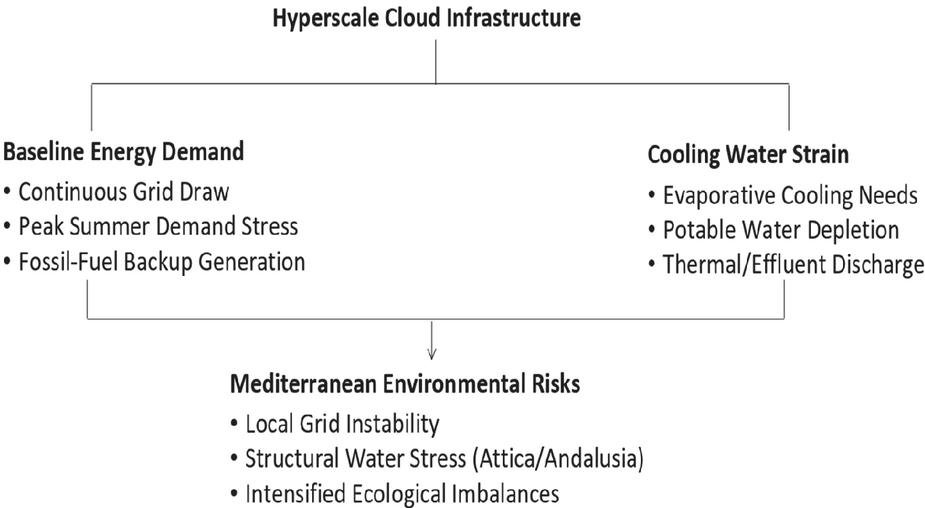
Figure 1 Resource consumption pathways and environmental risk vectors of hyperscale cloud infrastructure in the Mediterranean Basin.
2.2.1 Electrical grid demands and carbon intensity
Data centers require uninterrupted, high-density power supply 24/7/365. In Southern European host countries, grid capacity faces seasonal pressures.
• Seasonal Peak Mismatch: Summer months in the Mediterranean bring extreme heatwaves, driving civilian electricity demand to peak levels due to residential air conditioning (Cramer et al., 2018; MedECC, 2020).
• Baseload vs. Renewable Volatility: While Mediterranean countries have rapidly increased solar photovoltaic (PV) generation, power grids still rely partly on natural gas or coal during non-solar peak demand hours (UNEP/MAP, 2020). Adding hyperscale data center loads without dedicated renewable capacity risks extending reliance on fossil-fuel peaking plants.
2.2.2 Hydrological strain and evaporative cooling
Cooling system design is a critical environmental consideration for hyperscale facilities in high-ambient-temperature environments.
• Evaporative Cooling Towers: Traditional direct evaporative cooling systems use water evaporation to dissipate heat from server racks. In hot climates like Attica (Greece) or Andalusia (Spain), where temperatures routinely exceed 35-40∘C in summer, water consumption rises sharply (Bizo & Barber, 2022).
• Local Water Competition: Where evaporative cooling systems rely on municipal or freshwater supplies, large-scale data center operations may contribute to additional demand pressures and potential competition with agricultural, residential, and tourism-related water uses in regions already experiencing high baseline water stress (MedECC, 2024).
2.3 Strategic Alignments: Corporate Commitments and EU Regulatory Frameworks
To mitigate these localized environmental impacts, Microsoft’s operational deployments in the Mediterranean are shaped by internal corporate targets and European Union statutory mandates.
2.3.1 Corporate commitments: Carbon negative, water positive, and zero waste
Microsoft has established corporate sustainability targets for 2030 (Microsoft, 2024).
• Water Positive Target: Microsoft aims to replenish more water than it consumes across its global operations by 2030 (Microsoft, 2024). The company reports the deployment of low-water or zero-water cooling architectures in selected newer data center designs, alongside investments in water replenishment and conservation initiatives. These measures represent reported corporate mitigation strategies rather than independently verified evidence of environmental performance at individual Mediterranean facilities (Microsoft, 2024).
• Carbon Negative and Clean Power Purchase Agreements (PPAs): Microsoft aims to be carbon negative by 2030 (Microsoft, 2024). To cover the energy consumption associated with its Mediterranean operations, Microsoft reports the use of long-term renewable energy procurement mechanisms, including PPAs, as part of its broader strategy to reduce the carbon intensity associated with its operations and support new utility-scale solar and wind projects in Greece, Spain, and Italy. However, the extent to which such procurement arrangements offset or reduce the environmental footprint of individual Mediterranean facilities requires facility-specific empirical assessment (Microsoft, 2024).
• Zero Waste Operations: Through its Circular Centers and related circularity initiatives, Microsoft states that it aims to reuse or recycle more than 90% of its server hardware and decommissioned components, thereby supporting the reduction of electronic and industrial waste streams (Microsoft, 2024).
2.3.2 EU regulatory mandates: CSRD and the energy efficiency directive (EED)
Multinational hyperscalers operating within the European Union must adapt their operational practices to meet binding regulatory disclosure and efficiency standards.
• EU Energy Efficiency Directive (Article 12 and Delegated Regulation 2024/1364): This mandates that all data center operators within the EU with an installed IT power demand of 500 kW or greater report annual key performance indicators (KPIs) to a centralized European database (EUDCA, 2024; European Commission, 2024a). Required metrics include:
∘ Power Usage Effectiveness (PUE): The ratio of total energy consumed by the facility relative to the energy delivered to IT equipment.
∘ Water Usage Effectiveness (WUE): Liters of water consumed per kilowatthour (kWh) of IT equipment energy.
∘ Energy Reuse Factor (ERF): The proportion of waste heat captured and reused in district heating or industrial processes.
• Corporate Sustainability Reporting Directive (CSRD): Requires comprehensive reporting on Scope 1, Scope 2, and material Scope 3 emissions under standard European Sustainability Reporting Standards (ESRS) (European Union, 2022). This framework obliges tech firms to demonstrate how their cloud infrastructure expansion aligns with regional climate adaptation goals and localized natural resource constraints (European Union, 2022; Microsoft, 2024).
3 Supply Chain Decoupling, E-Waste, and Circular Economy: The Case of Apple
3.1 Corporate background: Asymmetrical value chains and concentrated manufacturing
Unlike infrastructure-centric cloud providers, Apple Inc.’s business model is characterized by a high-volume hardware production architecture that separates capital-intensive manufacturing from global retail distribution. Apple relies on a geographically concentrated tier-1 supply chain, primarily located in East Asia (China, Taiwan, Vietnam, India), with assembly operations heavily dependent on key contract manufacturing partners such as Foxconn (Hon Hai Precision Industry), Pegatron, and Wistron.
The geographical and structural segmentation of hardware production requires evaluating how upstream industrial burdens contrast with downstream regional lifecycle risks. Figure 2 maps the asymmetric value chain architecture of consumer hardware manufacturing alongside its localized adaptation mechanisms under European Union circular economy directives.
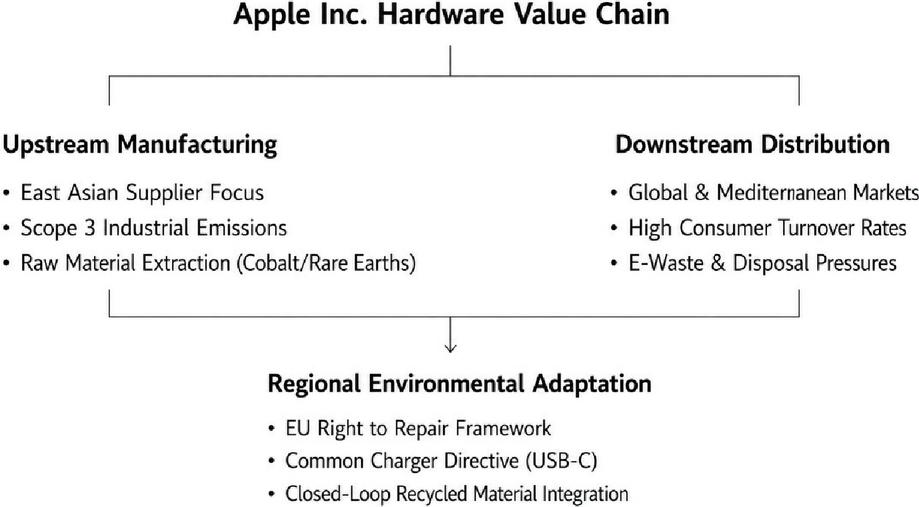
Figure 2 Asymmetric hardware value chain architecture and downstream regional circular economy adaptation.
From an economic and environmental footprint perspective, Apple’s model exhibits distinct dynamics.
• Scope 3 Footprint Dominance: Over 95% of Apple’s total greenhouse gas (GHG) emissions stem from its Scope 3 value chain – specifically raw material extraction, component manufacturing, and product assembly across Asian supplier facilities – rather than direct corporate operations (Apple, 2024).
• Value Distribution vs. Environmental Burden: While high-value IP design, software engineering, and retail marketing margins accrue in Western economies (including European distribution hubs), the primary industrial waste, water usage, and manufacturing emissions remain localized in producing nations. Conversely, the downstream waste vector – e-waste – shifts back to consuming regions at the end of product life cycles (EEA, 2023; Forti et al., 2020).
3.2 Environmental Dimensions in the Mediterranean: The E-Waste Challenge
The Mediterranean region faces severe structural vulnerabilities in managing postconsumer e-waste due to geographic, infrastructural, and economic conditions (UNEP/MAP, 2020).
3.2.1 Island and coastal e-waste accumulation
In Mediterranean countries (e.g., Greece, Italy, Spain, Malta, and Croatia), geography may create distinct waste management bottlenecks.
• Logistical Fragmentation: Insular and isolated coastal communities face high transport costs and limited local infrastructure for sorting, processing, and recycling complex electronic devices (Forti et al., 2020; UNEP/MAP, 2020).
• Tourism-Driven Consumption Spikes: Seasonal population increases during peak tourist months dramatically increase municipal solid waste and discarded consumer electronics, placing additional stress on local waste processing systems (Cramer et al., 2018).
3.2.2 Hazardous leakage in fragile ecosystems
Improper disposal or landfilling of end-of-life smartphones, tablets, and wearables poses risks to coastal soils and marine environments.
• Heavy Metal Contamination: Discarded devices containing lead, mercury, cadmium, and lithium can leach toxic compounds into groundwater aquifers and coastal marine ecosystems during winter rain cycles (Forti et al., 2020; MedECC, 2020).
• Resource Loss: Failing to recover critical raw materials (CRMs) – such as cobalt, neodymium, gold, and lithium – from e-waste streams in Southern Europe may exacerbate European strategic dependencies on foreign mining and refining operations (European Commission, 2023).
3.3 Strategic Alignments: Corporate Closed-Loop Commitments and EU Regulatory Frameworks
To mitigate downstream environmental impacts and align with European sustainability benchmarks, Apple’s product design and material sourcing strategies are evolving alongside binding EU circular economy directives.
3.3.1 Corporate commitments: Apple 2030 and closed-loop recycling
Under its Apple 2030 climate plan, Apple aims to achieve carbon neutrality across its entire footprint by the end of the decade through decarbonization, energy efficiency, and material innovation (Apple, 2024).
• 100% Recycled Cobalt and Critical Materials: According to Apple’s 2024 environmental disclosures, the company has established material sourcing and circularity targets that include increased use of recycled materials in selected components. These commitments should be interpreted as stated corporate targets and reported progress rather than as independently verified environmental outcomes across the company’s entire global supply chain (Apple, 2024).
• Automated Disassembly Technologies: Apple reports the deployment of specialized robotic disassembly systems, such as Daisy, Dave, and Taz, to support the recovery of selected materials from returned devices. These systems represent a corporate circularity strategy intended to increase material recovery and potentially reduce dependence on primary material extraction (Apple, 2024).
• Packaging Decarbonization and Plastic Removal: According to Apple’s corporate environmental reporting, the reduction of plastic in product packaging forms part of the company’s broader packaging and material strategy and may contribute to reductions in material use and associated lifecycle impacts (Apple, 2024).
3.3.2 EU regulatory mandates: Common charger directive and right to repair
Regulatory frameworks within the European Union are transforming product design standards and life cycle management for consumer hardware manufacturers.
• EU Common Charger Directive (Directive (EU) 2022/2380): Amending the Radio Equipment Directive, this mandate required all smartphones, tablets, digital cameras, and portable accessories sold in the EU to adopt a standardized USB Type-C charging port by late 2024 (European Parliament, 2022).
∘ Environmental Rationale: Designed to reduce approximately 11,000 metric tons of annual e-waste generated by discarded proprietary chargers and cables across the EU, while unbundling charger sales from new device purchases (European Commission, 2020; European Parliament, 2022).
∘ Corporate Adaptation: Apple phased out its proprietary Lightning connector across the iPhone 15 and 16 lineups, fully adopting the universal USB-C interface to maintain EU market access (Apple, 2024; European Parliament, 2022).
• EU Right to Repair Directive (Directive (EU) 2024/1799) and Eco-Design Regulations: Establishes binding measures to facilitate product repairability, extend product lifespans, and curb premature obsolescence (European Union, 2024):
∘ Requires manufacturers to provide independent repair shops and end-users with access to genuine spare parts, diagnostic tools, and repair documentation at fair prices for up to 7–10 years after product discontinuation (European Union, 2024).
∘ In response, Apple expanded its Self Service Repair program across European member states and introduced software features (such as iOS Repair Assistant) that allow part configuration without requiring factory service access (Apple, 2024).
4 Policy Implications and Framework for the Mediterranean Basin
4.1 Comparative ESG Analysis of Hyperscale Cloud vs. Hardware Models
The operational strategies of Microsoft Corporation and Apple Inc. present distinct environmental risk profiles and regulatory compliance demands within the Mediterranean Basin. While Microsoft’s primary footprint relates to heavy localized resource draw (electricity, water, grid infrastructure) for its Azure cloud nodes, Apple’s primary impact manifests as upstream manufacturing emissions (Scope 3) in Asian supply chains and downstream e-waste accumulation across Mediterranean member states (Apple, 2024; Forti et al., 2020).
To provide additional empirical context for the comparative analysis, quantitative sustainability indicators can complement the qualitative evidence presented in this study. Under the EU data center reporting framework, operators of data centers with an installed IT power demand of at least 500 kW are required to report standardized sustainability indicators, including PUE and WUE, to the European database on data centers (European Commission, 2024a). PUE measures the ratio between total data center energy consumption and the energy consumed by IT equipment, whereas WUE measures total water input relative to IT energy consumption. These standardized indicators provide an important quantitative basis for assessing the resource efficiency of data center infrastructure in water- and energy-constrained regions.
A complementary quantitative perspective is provided by regional e-waste data. According to the ITU and UNITAR Global E-waste Monitor 2024, Europe generated approximately 13 billion kg of e-waste in 2022, equivalent to 17.6 kg per capita, representing the highest per-capita level among the world’s regions. Of this amount, approximately 5.6 billion kg, or 42.8%, was documented as formally collected and recycled (International Telecommunication Union [ITU] & United Nations Institute for Training and Research [UNITAR], 2024). These figures provide important empirical context for the downstream circularity challenges examined in this study, particularly for Southern European consumer markets where increasing digital device consumption interacts with existing pressures on waste collection, reverse logistics, and material recovery systems. The following Table 1 synthesizes the comparative ESG indicators, operational mitigation strategies, and localized European Union policy implementations for both corporations.
Table 1 Comparative ESG analysis of hyperscale cloud (Microsoft) vs. hardware manufacturing (Apple) models in the Mediterranean framework
| ESG/Sustainability | Microsoft Strategy | Apple Strategy | Mediterranean Application & |
| Indicator | (Cloud & Infrastructure Focus) | (Hardware & Device Focus) | EU Policy Context |
| Environmental Risk Vector | High baseline electricity and water consumption for hyperscale data centers (Azure) | Scope 3 supply chain manufacturing emissions and post-consumer e-waste generation (Forti et al., 2020) | EU CSRD (Directive 2022/2464) & EU Green Deal: Mandates double-materiality reporting for energy, water, and value-chain waste (European Commission, 2019; European Union, 2022) |
| Mitigation Strategy | Reported corporate strategies include renewable energy procurement, low- or zero-water cooling designs in selected facilities, and server circularity initiatives (Microsoft, 2024). | Reported corporate circularity strategies include targets for increased use of recycled materials, automated disassembly technologies, and packaging material reduction initiatives (Apple, 2024) | EU Circular Economy Action Plan: Drive towards closed-loop recycling, waste minimization, and industrial decarbonization (European Commission, 2020) |
| Localized Regional Footprint | Multi-billion-dollar hyperscale data center region expansion in Southern Europe (Greece, Spain, Italy) | Omnichannel retail distribution, authorized repair networks, and local e-waste collection systems | Coastal & Island Protection: Preserving groundwater aquifers, fragile island micro-ecosystems, and regional grid stability during peak summer tourist spikes (MedECC, 2024; UNEP/MAP, 2020) |
| Regulatory Compliance Target | EU Energy Efficiency Directive (EED – Delegated Regulation 2024/1364) for PUE/WUE disclosures (European Commission, 2024a) | EU Common Charger Directive (Directive 2022/2380) & EU Right to Repair Directive (Directive 2024/1799) (European Parliament, 2022; European Union, 2024) | Single Market Harmonization: Enforcing design standardization, spare-part accessibility, and resource efficiency across Southern Europe (European Union, 2024) |
4.2 Policy Recommendations for Mediterranean Stakeholders
To align the growth of multinational technology firms with regional environmental constraints, policymakers, regional authorities, and corporate leaders across the Mediterranean Basin should implement a three-tiered framework. Addressing the combined environmental impacts of cloud infrastructure and hardware supply chains requires an integrated governance approach. Figure 3 outlines a three-tiered policy and managerial framework designed to align multinational technology operations with Mediterranean sustainability targets and EU regulatory standards.
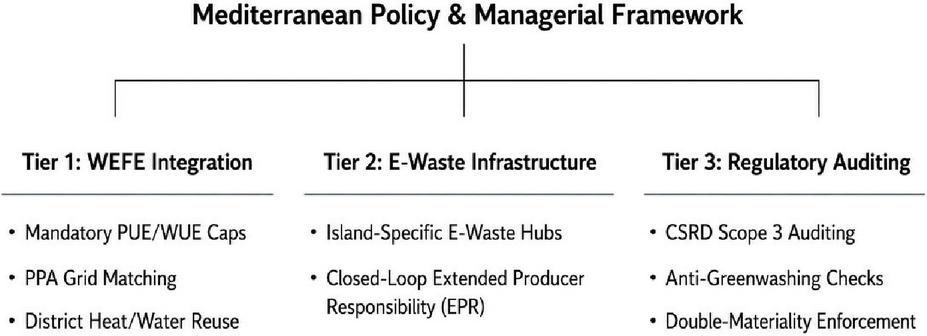
Figure 3 Three-tiered policy and managerial framework for sustainable technology governance in the Mediterranean.
4.2.1 WEFE-aligned cloud infrastructure governance (hyperscale focus)
• Mandatory Water Efficiency Benchmarks: Mediterranean municipal authorities should mandate strict WUE thresholds for new data center construction permits, requiring closed-loop air cooling or adiabatic systems in high water-stress zones (e.g., Attica, Andalusia, Sicily; Bizo & Barber, 2022; MedECC, 2024).
• Local Grid Renewable Matching: National energy regulators in Southern Europe should enforce temporal and geographical matching for Clean PPAs. Hyperscalers expanding cloud infrastructure must fund net-new renewable generation (solar/wind) within the same regional grid zone to prevent reliance on fossil-fuel peaking plants during summer cooling spikes (European Commission, 2024b; Microsoft, 2024).
4.2.2 Regional e-waste infrastructure and circularity (hardware focus)
• Island-Specific Extended Producer Responsibility (EPR) Networks: Mediterranean member states should establish specialized reverse-logistics frameworks for island and coastal regions (Forti et al., 2020). Hardware manufacturers (such as Apple) should co-finance localized collection centers and marine-grade e-waste processing hubs to prevent hazardous heavy metal leaching into coastal aquifers (Forti et al., 2020; UNEP/MAP, 2020).
• Enforcement of Repairability Principles: National authorities must rigorously enforce the EU Right to Repair Directive (Directive (EU) 2024/1799) by prohibiting software locks or serialized component pairing that restrict independent local repair businesses across Southern Europe (European Union, 2024).
4.2.3 Double-materiality transparency and CSRD enforcement
• Scope 3 Supply Chain Auditing: Under the ESRS, regulatory bodies across Southern Europe must audit multinational disclosures to prevent greenwashing regarding overseas manufacturing emissions and local resource draw (European Union, 2022).
• Cross-Border Mediterranean Data Repositories: Standardize environmental reporting under the EU Energy Efficiency Directive database (Delegated Regulation 2024/1364) to allow cross-border tracking of data center PUE, WUE, and waste-heat recovery performance across the entire Mediterranean basin (EUDCA, 2024; European Commission, 2024b).
4.3 Transferability of the Proposed Framework
Although Microsoft and Apple are used as representative case studies, the proposed framework is not limited to these two corporations. Its analytical structure is transferable to other multinational technology firms because it focuses on environmental exposure pathways associated with different digital business models rather than company-specific characteristics alone.
The infrastructure-oriented component of the framework can be applied to other hyperscale cloud and colocation providers whose operations involve substantial electricity demand, cooling requirements, and interaction with regional water and energy systems. Similarly, the supply-chain and circularity component can be extended to other consumer electronics manufacturers whose environmental impacts are strongly associated with upstream Scope 3 emissions, material sourcing, product repairability, and end-of-life management.
The framework may therefore serve as a governance-oriented analytical tool for assessing how different technology business models interact with regional environmental constraints. Its application should nevertheless be adapted to local climatic conditions, regulatory environments, infrastructure capacity, and the availability of facility- or country-level environmental data.
5 Conclusion, Limitations, and Future Research
5.1 Concluding Remarks
The sustainable digital transition across the Mediterranean Basin presents a complex dual challenge: balancing the resource-intensive infrastructure demands of hyperscale cloud computing with the environmental impacts of hardware supply chains and post-consumer e-waste. By analyzing the corporate strategies of Microsoft Corporation and Apple Inc., this study highlights how multinational technology strategies intersect with regional environmental vulnerabilities within the WEFE nexus (MedECC, 2024). Synthesizing the core findings of this study, Figure 4 captures the dual-pathway model required for achieving a sustainable digital transition in Southern Europe and the wider Mediterranean context, balancing infrastructure decarbonization with hardware circularity.
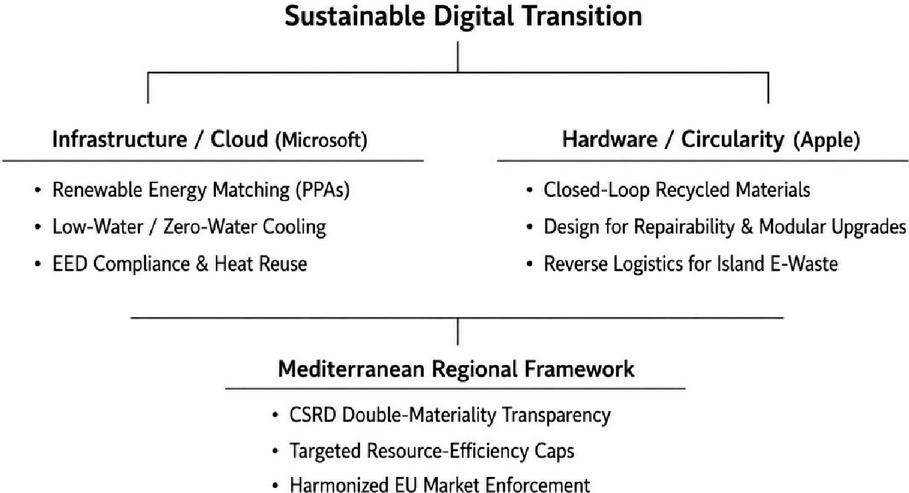
Figure 4 Integrated dual-pathway model for sustainable digital transition and regional environmental governance.
Achieving environmental sustainability in Southern Europe requires a hybrid governance approach.
• Infrastructure Governance: Cloud providers must go beyond offset accounting by implementing zero-water cooling designs and establishing temporal, localized Clean PPAs that actively relieve regional grid stress during peak summer heatwaves (European Commission, 2024b; Microsoft, 2024).
• Circular Lifecycle Management: Hardware manufacturers must adapt to binding EU directives – such as the Common Charger Directive and Right to Repair Directive – while co-financing reverse logistics infrastructure designed specifically for fragmented island and coastal ecosystems (European Parliament, 2022; European Union, 2024; Forti et al., 2020).
Enforcing double-materiality reporting under the CSRD ensures that corporate digital growth aligns with the ecological boundaries of the Mediterranean region (European Commission, 2019; European Union, 2022).
5.2 Study Limitations
This study has several analytical limitations.
• Secondary Data Dependency: The empirical evaluation relies primarily on corporate sustainability reports, public ESG disclosures, and institutional policy documents (e.g., MedECC, UNEP/MAP, EU Directives). Direct primary field data – such as real-time water usage metrics from active data centers or localized e-waste tonnage counts – were not independently measured.
• Aggregated Corporate Reporting: Multinational sustainability metrics are frequently reported at global or continental scales. Isolating granular, facility-level data for specific Mediterranean jurisdictions (e.g., individual Azure regions in Attica or Catalonia) remains challenging due to corporate confidentiality protections.
Accordingly, the discussion of environmental implications should not be interpreted as demonstrating causal environmental impacts attributable to specific Microsoft or Apple facilities. Rather, the analysis identifies documented regional environmental conditions and examines the potential exposure pathways through which large-scale digital infrastructure and technology supply chains may interact with those conditions.
5.3 Future Research Directions
To advance the study of Green IT and regional sustainability in Southern Europe and the wider Mediterranean region, future research should focus on:
• Empirical Water Usage Auditing: Field studies measuring actual WUE and thermal discharge impacts of hyperscale facility cooling during prolonged Mediterranean summer heatwaves (40∘C).
• Island Reverse-Logistics Models: Quantitative operations research evaluating the economic and environmental efficiency of specialized e-waste collection systems in insular Mediterranean territories (e.g., the Aegean Islands, Balearic Islands, Sicily, Malta).
• AI-Driven Grid Optimization: Comparative lifecycle assessments analyzing whether AI optimization can yield net-positive energy and water savings that outweigh the baseline compute power required to train and run large AI models within Mediterranean cloud facilities.
References
Apple. (2024). Environmental Progress Report 2024. Apple Inc.
Bizo, D., and Barber, M. (2022). Data center water consumption: Metrics, risks, and mitigation strategies. Uptime Institute.
Colliers. (2023). Southern Europe Data Center Market Report. Colliers International.
Cramer, W., Guiot, J., Fader, M., Garrabou, J., Gattuso, J. P., Iglesias, A., Lange, M. A., Lionello, P., Llasat, M. C., Otto, S., Ranzi, R., Sannino, G., Tabari, H., Xoplaki, E., and Zittis, P. (2018). Climate change and interconnected risks to sustainable development in the Mediterranean. Nature Climate Change, 8(11), 972–980. https://doi.org/10.1038/s41558-018-0299-2
EEA. (2023). Waste in the circular economy: E-waste management and critical raw material recovery in Europe. European Environment Agency.
EUDCA. (2024). EU Reporting Scheme for Data Centres: Energy Efficiency Directive Implementation Guidance. European Data Centre Association.
European Commission. (2019). The European Green Deal (COM(2019) 640 final). European Commission.
European Commission. (2020). A new Circular Economy Action Plan for a cleaner and more competitive Europe (COM(2020) 98 final). European Commission.
European Commission. (2023). Critical Raw Materials Act: Securing safe and sustainable supply chains for the EU’s green and digital future. European Commission.
European Commission. (2024a). Commission Delegated Regulation (EU) 2024/1364 establishing the European database for data centres and specifying reporting requirements. Official Journal of the European Union.
European Commission. (2024b). Energy Efficiency Directive and data centers: Reporting guidance. Directorate-General for Energy.
European Parliament. (2022). Directive (EU) 2022/2380 on the harmonization of the laws of the Member States relating to the making available on the market of radio equipment (Common Charger Directive). Official Journal of the European Union.
European Union. (2022). Directive (EU) 2022/2464 regarding corporate sustainability reporting (CSRD). Official Journal of the European Union.
European Union. (2024). Directive (EU) 2024/1799 on common rules promoting the repair of goods (Right to Repair Directive). Official Journal of the European Union.
Forti, V., Baldé, C. P., Kuehr, R., and Bel, G. (2020). The Global E-waste Monitor 2020: Quantities, flows, and the circular economy potential. United Nations University (UNU)/United Nations Institute for Training and Research (UNITAR).
International Telecommunication Union (ITU), and United Nations Institute for Training and Research (UNITAR). (2024). The Global E-waste Monitor 2024. International Telecommunication Union and United Nations Institute for Training and Research.
JLL. (2024). Data Center Outlook: EMEA Region. Jones Lang LaSalle IP, Inc.
MedECC. (2020). Climate and Environmental Change in the Mediterranean Basin – Current Situation and Risks for the Future. First Mediterranean Assessment Report (MAR1) [Cramer, W., Guiot, J., Marini, K. (Eds.)]. Union for the Mediterranean, Plan Bleu, UNEP/MAP.
MedECC. (2024). Special Report on the Water-Energy-Food-Ecosystems (WEFE) Nexus in the Mediterranean. Mediterranean Experts on Climate and Environmental Change.
Microsoft. (2024). Environmental Sustainability Report 2024. Microsoft Corporation.
UNEP/MAP. (2020). State of the Environment and Development in the Mediterranean (SoED). United Nations Environment Programme/Mediterranean Action Plan.