An Event-Based Platform-Independent Verification Method for OTT Content Usage History
Ruziev Ulugbek Shukhrat Ugli1, Seok-Yoon Kim1, Youngmo Kim1 and Sun-Jib Kim2,*
1Department of Computer Science & Engineering, Soongsil University, Korea
2Department of Convergence Security, Hansei University, Korea
E-mail: ulushca@gamil.com; ksy@ssu.ac.kr; ymkim828@ssu.ac.kr; kimsj@hansei.ac.kr
*Corresponding Author
Received 16 March 2026; Accepted 08 May 2026
Abstract
In OTT (Over-The-Top) service environments, reliable recording and verification of content usage history are becoming increasingly important for copyright protection, royalty settlement, and dispute resolution. However, conventional platform-specific log management methods have limitations in interoperability, integrity assurance, and external verifiability. In addition, simple indicators such as the number of views or total playback time are insufficient to accurately reflect actual OTT viewing behavior, which often includes nonlinear interactions such as pause, seek, replay, and early stop.
This paper proposes a platform-independent event-based verification method for OTT content usage history. The proposed method defines usage history metadata consisting of content information, session information, playback event information, and usage result information, and derives valid usage intervals from playback events such as play, pause, seek, replay, and stop. In addition, hash-based verification information and linked recording structures are applied to the generated usage history to enhance integrity and traceability.
To examine the applicability of the proposed method, processing latency in the usage history aggregation stage was measured according to changes in the number of sessions and platforms. The experimental results show that the processing time increased in a stable manner as the session scale increased, indicating that the proposed method can be applied to large-scale OTT usage environments. This study is meaningful in that it presents a platform-independent and verifiable method for organizing OTT content usage history, and it can be further extended through future performance evaluation of blockchain recording and verification processes in diverse service environments.
Keywords: OTT, usage history, copyright protection, event-based verification, platform independence.
1 Introduction
With the rapid expansion of OTT (Over-The-Top) services, the production, distribution, and consumption of digital content have changed significantly, increasing the importance of systematically recording and verifying content usage history [4–6]. In OTT environments, the same content may be consumed across multiple platforms, devices, and user accounts, and such usage history can serve not only as an operational log but also as critical evidence for copyright protection, royalty settlement, contract compliance, and dispute resolution [3, 14–20]. In particular, in environments involving multiple stakeholders such as rights holders, platform operators, and content distributors, a reliable method is required to verify when, how, and to what extent content has been consumed.
However, existing OTT usage history management methods largely depend on platform-specific log structures and service-specific operational policies, resulting in limited interoperability and difficulty in independent verification by external organizations or third parties. Because platforms differ in logged fields, event definitions, timestamp handling, and usage calculation criteria, even the same content consumption behavior may be recorded and interpreted differently across services. These issues are closely related to the broader challenges of audience measurement in streaming and OTT environments, where traditional measurement methods are increasingly insufficient for accurately capturing fragmented and multi-platform viewing behavior [7, 8]. In addition, the diversification of subscription-based OTT models and competition among audiovisual media services further increase the complexity of measuring and comparing usage across platforms [9, 10]. Logs originally designed for service operation and internal analytics often do not sufficiently guarantee the integrity, traceability, and verifiability required for copyright protection and settlement purposes. These limitations reduce the reliability of usage history in multi-platform OTT distribution environments.
Moreover, simple summary indicators such as the number of views, play counts, or cumulative playback time are insufficient to accurately represent actual content consumption behavior. In OTT services, users often perform nonlinear playback actions such as pause, seek, replay, and early stop, rather than consuming content in a strictly continuous manner. For example, a user may repeatedly watch only a specific segment, skip part of the content, or stop playback after a short viewing period. Such behaviors cannot be fully explained by simple cumulative time or play-count metrics alone. Prior studies on multimedia quality monitoring and online video Quality of Experience also indicate that video consumption should be interpreted through more detailed playback-related events and user experience factors rather than relying only on aggregate indicators [12, 13]. In addition, recent studies on automatic content recognition in smart TVs show that content consumption can be tracked across device-level environments, further highlighting the need for transparent and verifiable usage records [11]. Therefore, a more precise interpretation of content usage requires analysis that reflects the sequence and relationship of individual playback events.
From this perspective, OTT content usage history should be defined in a way that is not dependent on the internal log format of a specific platform while still being capable of representing actual playback behavior. This requires a common metadata structure encompassing content information, user and session information, playback event information, and usage result information, along with a method for deriving actual usage intervals from playback event sequences such as play, pause, seek, replay, and stop. Rights expression models such as ODRL provide a useful basis for representing rights, permissions, prohibitions, and obligations in a structured form, which can be connected to usage history for copyright protection and contract compliance purposes [3]. By jointly considering the order of events and changes in playback position, it becomes possible to reconstruct meaningful usage flows rather than merely listing raw events. Such an approach is useful for interpreting OTT usage history more accurately and for structuring it in a form that can support settlement and dispute resolution.
Meanwhile, for usage history to be utilized as evidence for copyright protection and post hoc verification, it must support not only data collection and storage but also verification of record integrity and traceability after generation. To this end, hash-based verification information and linked recording structures can be applied to generated usage records so that the relationships among records are preserved and tampering can be detected. The concept of hash-linked records was popularized through Bitcoin [1], and permissioned blockchain technologies such as Hyperledger Fabric have been widely discussed as suitable infrastructure for multi-stakeholder environments requiring controlled participation and verifiable transaction records [2]. Similar approaches have also been applied to digital rights management, code copyright management, video copyright transaction traceability, and digital media copyright confirmation [14–19]. In the OTT domain, studies have examined copyright management using ODRL and Hyperledger Fabric, suggesting the applicability of verifiable rights and usage management to OTT content distribution environments [20]. This approach is meaningful because it extends usage history management beyond internal service administration toward a form that can support external review and subsequent verification.
In this paper, we propose a platform-independent event-based verification method for OTT content usage history. The proposed method defines a common usage history metadata structure applicable across diverse OTT service environments, derives valid usage intervals from playback event sequences, and applies a verifiable recording structure to generated usage records in order to enhance integrity and traceability. To examine the applicability of the proposed method, we analyze the processing latency of the usage history aggregation stage under varying numbers of sessions and platforms.
The remainder of this paper is organized as follows. Section 2 reviews related studies on OTT usage history management, copyright protection, and verifiable recording methods. Section 3 presents the proposed platform-independent event-based verification method for OTT content usage history, including the metadata structure and the procedure for deriving valid usage intervals. Section 4 describes the experimental setup and evaluation results. Finally, Section 5 concludes the paper and discusses future research directions.
2 Related Work
2.1 OTT Content Usage History Management
OTT services provide digital content through diverse platforms and devices, enabling users to consume various types of media such as movies, dramas, and sports in multiple viewing environments [2–7]. In this process, usage history is generated through playback events such as play, pause, seek, replay, and stop, and such records can serve as important information not only for service operation but also for copyright protection, settlement, and dispute resolution [6–8]. OTT content usage history consists of content information, user or session information, playback event information, and derived usage result information, as shown in Figure 1.
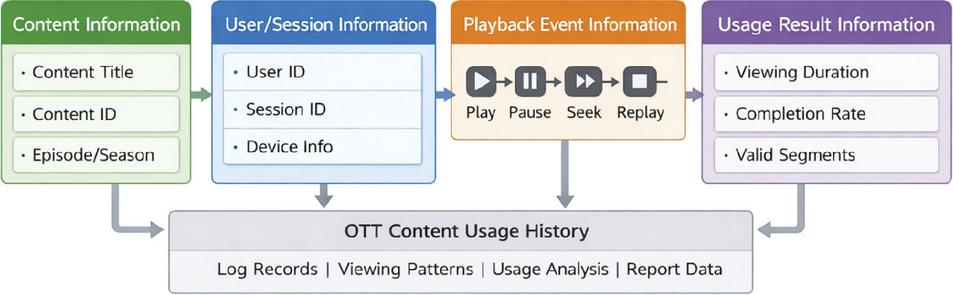
Figure 1 Conceptual structure of OTT content usage history.
In OTT environments, actual usage cannot be sufficiently explained by simple indicators such as play count or total viewing time alone [6–8]. Users may skip specific segments, replay certain parts, or stop playback after watching only a portion of the content [7, 11]. Therefore, event-level records and their interpretation are necessary to more accurately represent actual content usage. However, in practice, such records are usually managed within platform-specific internal systems, which limits interoperability and consistent verification across heterogeneous OTT platforms [6–8].
2.2 Blockchain-Based Copyright Protection and Verification
Blockchain has attracted attention as a distributed ledger technology capable of providing tamper resistance and traceability of recorded data, making it suitable for digital content protection [1, 2, 14–20]. In conventional centralized systems, the generation and management of records are concentrated on a single platform or operator, whereas blockchain-based structures can ensure record integrity through consensus among distributed nodes [1, 2]. The conceptual difference between these two structures is illustrated in Figure 2.
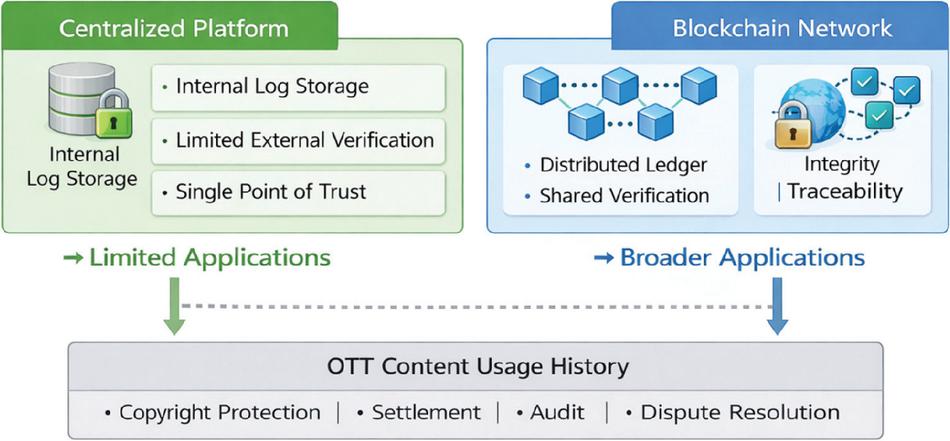
Figure 2 Comparison between centralized logging and blockchain-based verification.
From the perspective of copyright protection, the trustworthiness of records is highly important [15–20]. If content usage records are altered or omitted, the accuracy of royalty settlement may be degraded, and such records may not function as objective evidence in the case of disputes [14–20]. In contrast, blockchain-based record structures make arbitrary modification difficult and preserve relationships among records, thereby improving traceability and verifiability [1, 2, 16–20]. For this reason, blockchain can serve as an effective technical foundation for using OTT content usage history in copyright protection and settlement support.
2.3 Requirements for Verifiable Usage History in OTT Environments
Although OTT platforms generate large volumes of operational logs, copyright-oriented usage history verification requires more than simple log collection [6–8]. Verifiable usage history should represent not only when and which content was accessed, but also how the content was actually consumed [6–8, 11]. For example, even when the total playback time is identical, the meaning of actual usage may differ depending on whether pause, seek, or replay events occurred during playback [7, 11]. The key requirements for usage history verification in OTT environments are shown in Figure 3.
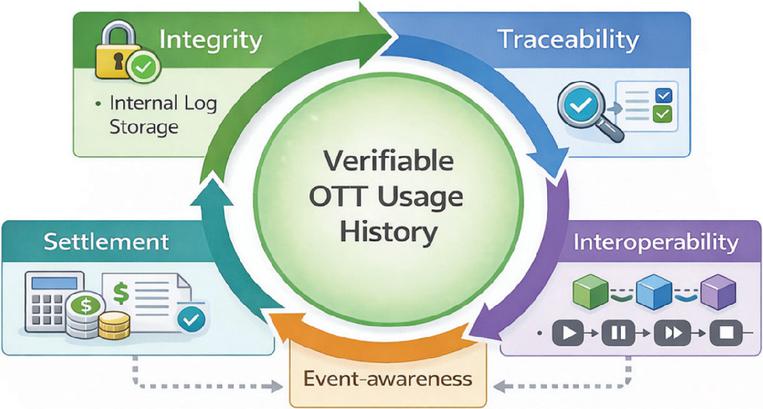
Figure 3 Core requirements for verifiable OTT usage history.
A verifiable OTT usage history should satisfy several requirements [1–3, 15–20]. First, it should ensure integrity so that records remain protected against unauthorized modification [1, 2]. Second, it should provide traceability so that the sequence and context of usage events can be examined [1, 18, 19]. Third, it should support interoperability to allow heterogeneous records from different OTT platforms to be interpreted under a common framework [2, 3, 20]. Fourth, it should reflect event awareness so that playback semantics can be incorporated into usage interpretation [7, 11]. Finally, it should be practically applicable to copyright-related processes such as royalty settlement and dispute resolution [15–20]. These requirements support the need for a blockchain-based usage history verification method in OTT environments.
3 Blockchain-Based OTT Usage History Verification Method
3.1 Overview
In OTT service environments, content usage occurs across multiple platforms and devices, making it necessary to collect and verify usage records in a consistent manner. In this paper, information generated during content consumption is organized into usage history and then recorded on a blockchain to ensure integrity and traceability. The overall structure is shown in Figure 4.
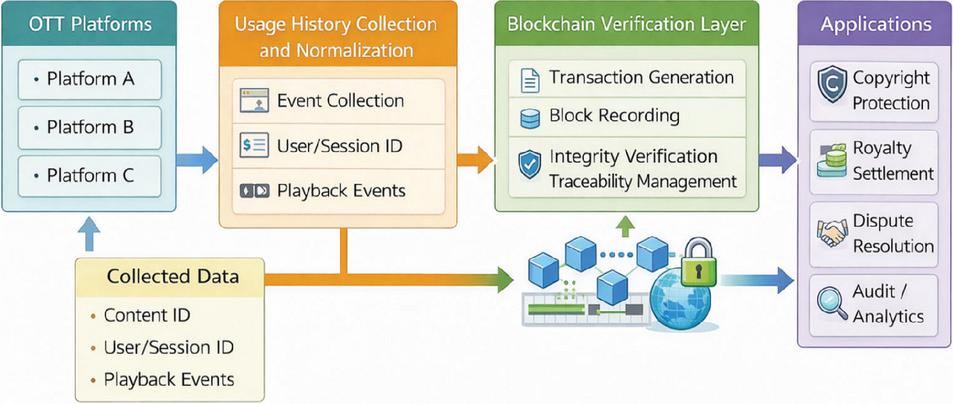
Figure 4 Overall flow of blockchain-based OTT usage history verification.
3.2 OTT Usage History Metadata
To verify OTT content usage in a reliable manner, the generated usage history should be represented in a structured form. In this paper, usage history metadata are defined by combining essential information related to content, user or session, playback events, and derived usage results. The overall composition of the metadata is summarized in Table 1.
Table 1 Metadata fields for OTT content usage history
| Category | Field | Description |
| Content Information | Content Title | Title of the content being consumed |
| Content ID | Unique identifier for the content | |
| Episode/Season | Episode or season information | |
| User/Session Information | User ID | Identifier for the user |
| Session ID | Identifier for an individual usage session | |
| Device Info | Information on the device used for content consumption | |
| Playback Event Information | Event Type | Type of playback event, such as play, pause, seek, replay, or stop |
| Event Timestamp | Time at which each event occurred | |
| Playback Position | Playback position at the time of the event | |
| Usage Result Information | Viewing Duration | Effective viewing time reflected in actual usage |
| Completion Rate | Viewing completion ratio relative to the full content | |
| Valid Usage Interval | Valid usage intervals recognized as actual consumption |
The content-related fields identify the digital asset being consumed. These fields include information such as content title, content identifier, and episode or season information, which allow the usage record to be associated with a specific content item. Since the same platform may provide multiple contents and the same content may be consumed in different sessions, explicit content identification is necessary for reliable usage verification.
The user or session-related fields describe the context in which the content is consumed. These fields include user identifier, session identifier, and device-related information. In particular, session-level information is important because actual usage patterns may differ even when the same content is consumed by the same user under different viewing conditions. By distinguishing sessions, the proposed method can represent usage history in a more precise manner.
The playback event-related fields record the sequence of user actions generated during content consumption. These include events such as play, pause, seek, replay, and stop, along with their corresponding timestamps. Since OTT content consumption is event-driven rather than strictly linear, these event records provide the basis for interpreting how the content was actually consumed.
Finally, derived usage result fields are included to represent summarized information obtained from playback event analysis. These fields may include viewing duration, completion rate, and valid usage intervals. Such information is not directly collected as a raw event, but is derived from the sequence of recorded playback actions and is useful for copyright-oriented verification and settlement support.
3.3 Usage History Generation and Verification Procedure
Based on the metadata defined in the previous section, the proposed method generates OTT content usage history from playback-related events and records it on a blockchain for verification. The significance of this procedure lies not in simply storing logs, but in interpreting individual events as part of the actual content consumption flow and transforming them into trustworthy records. The overall procedure consists of data collection, usage history generation, blockchain recording, and verification, as shown in Figure 5.
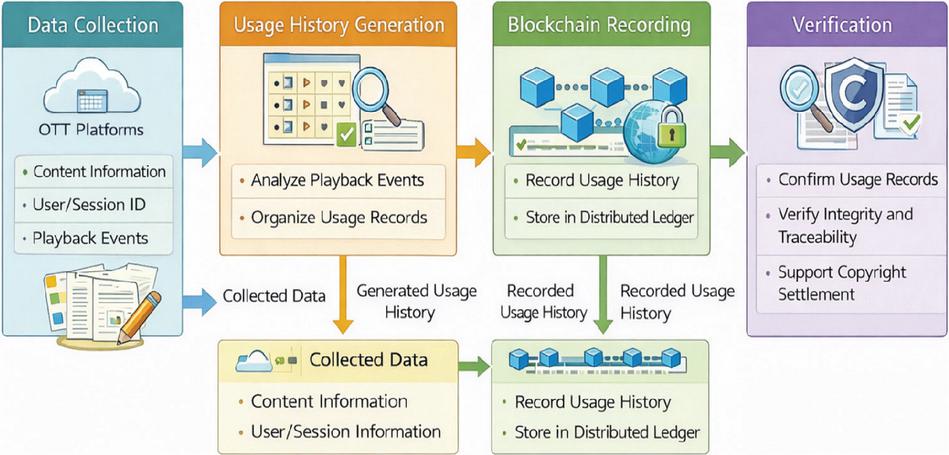
Figure 5 Content usage history collection, generation, blockchain recording, and verification framework.
Raw logs generated in OTT environments are not directly suitable for copyright verification because they may differ across platforms, be fragmented into event-level records, and reflect nonlinear viewing behaviors such as seeking, pausing, replaying, and partial viewing. Therefore, instead of directly using raw events, the proposed method reconstructs them into structured usage history units according to a normalized metadata scheme. The generated usage history is then recorded on a blockchain, after which integrity and traceability can be used for verification.
3.3.1 Data collection stage
In the data collection stage, key information generated during OTT content consumption is acquired. The collected data can be divided into three categories: content information, user or session information, and playback event information, as shown in Table 2.
Table 2 Metadata fields for OTT content usage history
| Category | Collected Field | Description |
| Content Information | Content ID, Title, Episode/Season | Identification of the target content |
| Session Information | User ID, Session ID, Device Info | Identification of the user and viewing context |
| Event Information | Event Type | Play, pause, seek, replay, and stop |
| Event Timestamp | Time at which the event occurred | |
| Playback Position | Playback position at the time of the event |
Content information is used to identify which digital asset a usage record refers to, while user or session information is used to distinguish different viewing instances of the same content. Playback event information represents actual content consumption behavior and includes event types such as play, pause, seek, replay, and stop, along with the corresponding event timestamps.
The purpose of this stage is to acquire playback-related information in a common collection unit, even though the original data may be generated in different formats depending on the platform. For example, one platform may explicitly record seek events, whereas another platform may only record changes in playback position. Therefore, regardless of the internal logging format of each platform, the proposed method treats content identification, session identification, event type, event timestamp, and playback position as the minimum extractable units.
3.3.2 Usage history generation stage
In the usage history generation stage, the collected events are sorted in chronological order and then used to reconstruct the actual content consumption flow. Since raw events are recorded as isolated actions, they are difficult to interpret directly as meaningful usage records. Therefore, the proposed method arranges all events occurring within the same session in temporal order and analyzes the relationships between adjacent events to generate usage history.
For example, if a pause event occurs after a play event, the corresponding segment may be interpreted as one viewing interval. If a seek event occurs, the segment before the seek event and the segment after the seek event may be recorded separately in order to better reflect the actual usage flow. Replay events indicate repeated consumption of the same segment and may therefore be represented as separate usage intervals. A stop event serves as the criterion for ending the generation of usage history within a session. Examples of event pair interpretation rules used in this stage are summarized in Table 3.
Table 3 Metadata fields for OTT content usage history
| Previous Event | Next Event | Interpretation |
| Play | Pause | End of one viewing interval |
| Play | Seek | Viewing up to the point before seeking |
| Pause | Play | Resume viewing |
| Seek | Play | Start viewing from a new position |
| Play | Stop | End of viewing within the session |
| Replay | Stop | End of a replayed viewing interval |
Let the set of collected events for a session be defined as:
| (1) |
where denotes the -th event occurring in session . Each event can be represented by its event type, timestamp, and playback position:
| (2) |
Once the events are sorted chronologically, each adjacent event pair can be analyzed to construct a candidate valid viewing interval. For example, when and , the corresponding segment may be interpreted as one usage interval. In this way, the generated usage history is no longer a simple list of raw events, but a structured record that reflects actual content consumption.
3.3.3 Valid usage interval derivation stage
A key issue in OTT content usage history verification is not merely counting events or summing playback time, but deriving valid usage intervals that can be recognized as actual viewing. Even within the same session, long pauses, frequent seeking, repeated playback, or partial viewing may alter the meaning of actual content consumption. Therefore, the proposed method extracts valid usage intervals based on the event sequence.
Let the set of valid usage intervals generated in session be denoted by . Each interval is expressed by its start position and end position :
| (3) |
Based on these intervals, the total valid viewing time of session is defined as:
| (4) |
where denotes the length of the -th valid usage interval. If the total content length is denoted by , the completion rate for the session can be calculated as:
| (5) |
The above expression represents the basic form. In practical applications, a correction policy may be introduced depending on whether replayed segments are counted separately or whether overlapping intervals should be merged. For example, if repeated viewing of the same segment is not counted as additional effective usage, the total valid viewing time excluding duplicated segments can be expressed as:
| (6) |
where denotes the effective viewing time after removing duplicated intervals. This approach has the advantage of representing actual content consumption more precisely than a simple total-playback-time calculation.
3.4 Blockchain Recording Stage
The generated usage history is then transformed into transaction units and stored in a blockchain ledger. The objective of this stage is to preserve usage history in a form that is resistant to later modification while maintaining the sequence and relationships among records. A recorded usage history unit may include content identification, session identification, summarized event information, valid usage intervals, generation time, and reference information to previous records.
A usage history record can be represented as:
| (7) |
where is the content identifier, is the session identifier, is the summarized event information, is the valid usage interval or valid viewing time, is the recording timestamp, and is the reference value to the previous record.
Each usage history record can thus maintain continuity with previous records, allowing the usage flow of a specific session or content item to be traced. In addition, the recorded record becomes the target of integrity verification through a hash-based identifier. The hash value of the usage history record is defined as:
| (8) |
If the content of the record is modified after recording, the hash value changes accordingly, making it possible to detect integrity violations.
3.5 Verification Stage
In the verification stage, the usage history recorded on the blockchain is examined to determine whether it has been altered, whether the event flow is valid, and whether it reflects actual content consumption. The purpose of this stage is not merely to confirm storage, but to ensure that the recorded usage history can serve as trustworthy evidence for copyright protection and settlement support. The main verification items considered in the proposed method are summarized in Table 4.
Table 4 Verification items for usage history
| Verification Type | Verification Content | Purpose |
| Integrity Verification | Comparison of hash values and detection of record modification | Prevention of data tampering |
| Traceability Verification | Examination of record order and linkage | Tracking of usage flow |
| Usage Verification | Checking valid intervals, completion rate, and event sequence | Determination of actual content usage |
| Applicability Verification | Examination of usability for settlement and dispute response | Assurance of service applicability |
First, integrity verification checks whether recorded data have been changed by comparing the stored hash values. Second, traceability verification examines the sequence and linkage of usage history records corresponding to a specific session or content item. Third, usage verification determines whether the recorded data appropriately reflect actual consumption based on valid usage intervals, completion rates, and event sequences. Finally, applicability verification examines whether the verified usage history can be effectively used for practical copyright-related processes such as royalty settlement and dispute resolution. Through these verification procedures, the proposed method enables OTT content usage history to be utilized not merely as operational logs, but as verifiable records for copyright protection, royalty settlement, and dispute resolution.
4 Experiments and Results
4.1 Experimental Environment
To evaluate the performance of the proposed OTT usage history processing method, experiments were conducted under varying session scales and numbers of platforms. The experiment focused on the aggregation stage, in which usage history records collected from multiple OTT platforms are integrated, and the processing latency was measured according to the number of sessions and platforms. The experimental environment and main settings are summarized in Table 5.
Table 5 Experimental environment and settings
| Category | Setting |
| Experiment Target | Aggregation processing of OTT usage history |
| Number of Sessions | 1000, 10,000, 50,000, 100,000 |
| Number of Platforms | 2, 4, 8 |
| Measurement Item | Aggregation latency (ms) |
| Number of Repetitions | Five runs for each condition |
| Representative Value | Median |
| Aggregation Scope | Total aggregation and per-metadata-dimension processing |
| Experiment Objective | Analysis of aggregation performance according to session and platform scales |
In the experiment, the number of sessions was set to 1000, 10,000, 50,000, and 100,000, while the number of platforms was configured as 2, 4, and 8, considering practical OTT service environments. For each experimental condition, the aggregation latency was measured five times, and the median value was used as the representative result in order to reduce the influence of outliers. In addition, the aggregation process was designed to include not only the total aggregation time but also processing across each metadata dimension.
4.2 Aggregation Latency Results
The change in aggregation latency according to the increase in the number of sessions is shown in Figure 6.
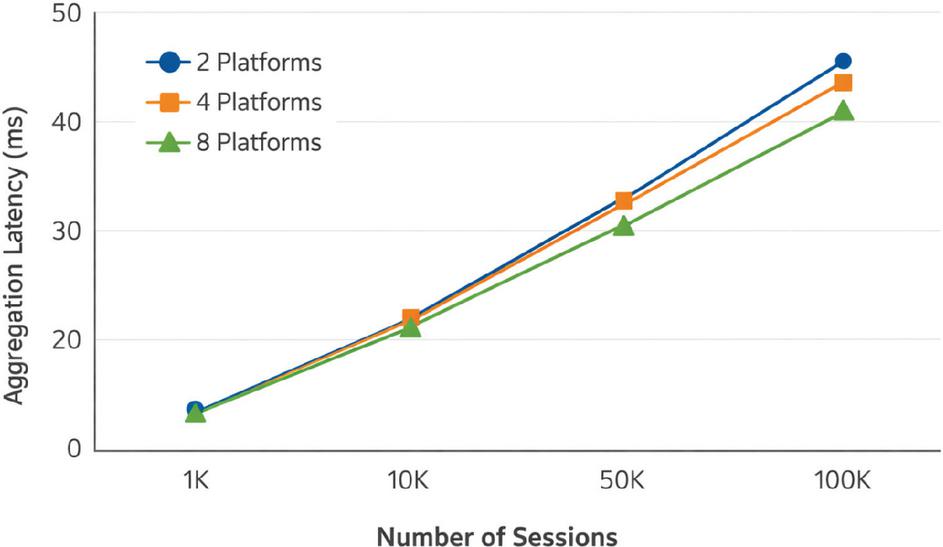
Figure 6 Aggregation latency according to the number of sessions.
As the number of sessions increased from 1000 to 100,000, the aggregation latency also showed an overall increasing trend. In particular, the latency exhibited an almost linear increase as the number of sessions grew, indicating that the proposed aggregation process has predictable processing characteristics with respect to session-scale variation. The detailed measured values are summarized in Table 6.
Table 6 Median aggregation latency (ms): sessions platforms
| Sessions | 2 platforms | 4 platforms | 8 platforms |
| 1000 | 0.37 | 0.37 | 0.36 |
| 10,000 | 3.72 | 3.90 | 3.65 |
| 50,000 | 19.96 | 20.83 | 20.63 |
| 100,000 | 45.79 | 43.26 | 43.71 |
More specifically, under the 1000-session condition, the aggregation latency was below 1 ms for all platform settings, indicating that the processing overhead was very small in small-scale session environments. At 10,000 sessions, the latency increased to approximately 3.6–3.9 ms, and at 50,000 sessions, it reached around 20 ms. Even under the 100,000-session condition, the latency ranged from 43.71 ms to 45.79 ms. For example, in the 2-platform setting, the latency increased from 0.37 ms at 1000 sessions to 45.79 ms at 100,000 sessions.
Even when the number of platforms increased from 2 to 8 under the same session condition, the difference in latency remained small. This indicates that the overall aggregation latency is affected more by the number of sessions than by the number of platforms. In other words, the aggregation performance of the proposed method is more sensitive to increases in session volume than to increases in platform multiplicity.
These results demonstrate that the proposed method can maintain stable aggregation performance even for large-scale OTT usage history data. In particular, the fact that the processing latency remained within tens of milliseconds even at the 100,000-session level suggests that the proposed method has sufficient efficiency for practical usage history analysis and verification tasks in real OTT environments.
5 Conclusion
This paper proposed a blockchain-based usage history verification method for OTT content copyright protection. The proposed method organizes playback-related information generated in OTT environments into structured usage history metadata and records it on a blockchain so that the resulting records can be managed with integrity and traceability. In addition, by reconstructing playback events into interpretable usage history and deriving valid usage intervals, the proposed method enables OTT content consumption to be represented in a more reliable and verifiable manner than simple log-based approaches.
To evaluate the effectiveness of the proposed method, experiments were conducted under varying session scales and platform conditions. The results showed that aggregation latency increased as the number of sessions grew, while the effect of the number of platforms remained relatively limited. Even at the 100,000-session level, the processing latency remained within tens of milliseconds, indicating that the proposed method can maintain stable aggregation performance in large-scale OTT usage history processing environments.
These results suggest that the proposed method can provide a trustworthy basis for copyright protection, royalty settlement, and dispute resolution in OTT service environments. By combining structured usage history generation with blockchain-based recording and verification, the method extends OTT usage records beyond simple operational logs and enables them to function as verifiable evidence for copyright-related processes.
Future work includes refining the derivation of valid usage intervals for more diverse playback patterns, extending the method to more complex OTT service scenarios, and improving the practical applicability of blockchain-based verification in real-world multi-stakeholder environments.
Acknowledgment
This work was supported by the Software Copyright Research and Development Program funded by the Ministry of Culture, Sports and Tourism and managed by the Korea Institute of Culture Technology Evaluation and Planning (KCTEP) (Project Name: Development of Copyright Technology for OTT Contents Copyright Protection Technology Development and Application, Project Number: RS-2023-00225267, Contribution Rate: 100%).
References
[1] S. Nakamoto, “Bitcoin: A Peer-to-Peer Electronic Cash System,” 2008..
[2] E. Androulaki et al., “Hyperledger Fabric: A Distributed Operating System for Permissioned Blockchains,” in Proceedings of the Thirteenth EuroSys Conference, 2018.
[3] R. Iannella and S. Villata, ODRL Information Model 2.2, W3C Recommendation, 2018.
[4] Sandvine, Global Internet Phenomena Report 2024. Sandvine Inc., 2024.
[5] Nielsen, “Time Spent Streaming Surges to Over 40% in June 2024,” The Gauge, 2024.
[6] Nielsen, “What’s the Difference between OTT, CTV and Streaming?,” Nielsen Insights, 2024.
[7] A. González-Neira and C. Quintas-Froufe, “Television Audience Measurement: the Challenge Posed by the Rise of Streaming and OTT Platforms,” Comunicación y Sociedad, vol. 17, e7284, 2020.
[8] J. P. Kelly, “Television by the Numbers: The Challenges of Audience Measurement in the Age of Big Data,” Convergence, vol. 25, no. 1, pp. 113–132, 2019.
[9] A. Papathanasopoulos and A. Stavrianea, “The Evolution of Subscription Services in Greece: From Satellite TV to Over-The-Top (OTT) Streaming Models,” in Strategic Innovative Marketing and Tourism, Springer Proceedings in Business and Economics, pp. 739–747, 2024.
[10] O. Budzinski, S. Gaenssle, and N. Lindstädt-Dreusicke, “The Battle of YouTube, TV and Netflix: an Empirical Analysis of Competition in Audiovisual Media Markets,” SN Business & Economics, vol. 1, no. 9, art. 116, 2021.
[11] G. Anselmi, Y. Vekaria, A. D’Souza, P. Callejo, A. M. Mandalari, and Z. Shafiq, “Watching TV with the Second-Party: A First Look at Automatic Content Recognition Tracking in Smart TVs,” in Proceedings of the ACM Internet Measurement Conference (IMC), 2024.
[12] W. Robitza, A. Ahmad, P. A. Kara, L. Atzori, M. G. Martini, A. Raake, and L. Sun, “Challenges of Future Multimedia QoE Monitoring for Internet Service Providers,” Multimedia Tools and Applications, vol. 76, pp. 22243–22266, 2017.
[13] U. Bulkan and A. Dagiuklas, “Predicting Quality of Experience for Online Video Service Provisioning,” Multimedia Tools and Applications, vol. 78, pp. 18787–18811, 2019.
[14] N. Jing, Q. Liu, and Z. Yong, “A Blockchain-Based Code Copyright Management System,” Information Processing & Management, vol. 58, no. 3, 102518, 2021.
[15] R. F. Ciriello, A. C. G. Torbensen, M. R. P. Hansen, and C. Müller-Bloch, “Blockchain-Based Digital Rights Management Systems: Design Principles for the Music Industry,” Electronic Markets, vol. 33, art. 5, 2023.
[16] Z. Ma, W. Huang, and H. Gao, “A New Blockchain-Based Trusted DRM Scheme for Built-In Content Protection,” EURASIP Journal on Image and Video Processing, vol. 2018, art. 91, 2018.
[17] W. Tan, X. Zhang, and X. Cai, “Digital Rights Management Platform Based on Blockchain Technology,” in Human Centered Computing: 6th International Conference (HCC 2020), Revised Selected Papers, pp. 173–183, 2021.
[18] Y. Yang, D. Yu, R. Zhang, and Y. Yan, “A Video Copyright Transaction Traceability Method Based on the Parent-Child Chain,” in Proceedings of the 2020 3rd International Conference on Blockchain Technology and Applications (ICBTA), pp. 1–6, 2020.
[19] H. Guan, Y. Huang, J. Liu, and W. S. Zhang, “Digital Media Copyright Confirmation Service System Based on Block-Chain Registration and Identifier Tracking,” in Proceedings of the 9th International Conference on Communication and Information Processing (ICCIP 2023), pp. 273–278, 2024.
[20] W. Son, S. Kwon, S. Oh, and J.-H. Lee, “OTT Service Copyright Management Framework Using ODRL Based on Hyperledger Fabric,” in Proceedings of ICEA 2023, pp. 84–89, 2024.
Biographies

Ruziev Ulugbek Shukhrat Ugli received the bachelor’s degree in computer engineering from Tashkent University of Information Technologies, Uzbekistan, in 2015, and the Doctor of Philosophy degree in computer science and engineering from Soongsil University, Korea, in 2023. His research interests include copyright protection and the promotion of its utilization.

Seok-Yoon Kim received the B.S. degree in electrical and electronic engineering from Seoul National University, Korea, in 1980, and the M.S. and Ph.D. degrees in electrical and computer engineering from the University of Texas at Austin, USA, in 1990 and 1993, respectively. From 1982 to 1987, he was a Researcher with the Electronics and Telecommunications Research Institute (ETRI). From 1993 to 1995, he worked as a Senior Researcher at Motorola. Since 1995, he has been a Professor at Soongsil University. His main research interests include copyright protection and the promotion of its utilization.

Youngmo Kim received the B.S., M.S., and Ph.D. degrees in computer engineering from Daejeon University, Korea, in 2003, 2005, and 2011, respectively. Since 2012, he has been a Professor at Soongsil University. His main research interests include copyright protection and the promotion of its utilization.

Sun-Jib Kim is currently working as a Professor at the School of IT, Hansei University, Korea. His research areas include information security, the Internet of Things (IoT), cloud computing, and AI system authentication.
Journal of Web Engineering, Vol. 25_6, 1111–1132.
doi: 10.13052/jwe1540-9589.2564
© 2026 River Publishers