A Web Engineering Approach to AI-Enabled Japanese Tutoring via Instructional Design Pattern Mining
Xiaomei Gai1,* and Yanjia Tian2
1Postdoctoral Researcher, College of Japanese Studies, Sichuan International Studies University, Chongqing 400031, China
2School of Electronics and Information, Shanghai DianJi University, Shanghai 201306, China
E-mail: Gxiaomei2025@outlook.com; tianyj@sdju.edu.cn
*Corresponding Author
Received 05 June 2026; Accepted 27 July 2026
Abstract
Despite the proliferation of artificial intelligence (AI)-enabled web applications for Japanese language learning, existing platforms suffer from three critical challenges: insufficient integration of AI capabilities with pedagogical design, limited scenario adaptability across proficiency levels, and suboptimal lightweight deployment on the browser side. To address these gaps and explore instructional design patterns tailored to diverse Japanese learning needs, this study focuses on web application technology implementation and interaction design as the core analytical dimensions. Three typical AI-enabled Japanese tutoring web applications were selected as research objects, and 192 Japanese learners participated in the empirical research. Quantitative data were obtained through technical disassembly, questionnaire surveys, and web-based behavior tracking; learning effects were verified by comparative experiments, and the weight of instructional design elements was determined via the analytic hierarchy process, finally extracting core instructional design modes suitable for the mainstream Japanese learning stages from beginner to upper-intermediate (Japanese-Language Proficiency Test [JLPT] N5–N2), with preliminary applicability discussion for the advanced stage (N1 and above). The results show that web-based lightweight AI technology deployment and real-time AI interactive feedback design are the core elements, with a combined weight of over 40%. There is a significant positive correlation between web-based AI technology implementation and user satisfaction, with the highest implementation effect and user acceptance in listening, speaking, and grammar modules. Compared with traditional Japanese web learning platforms, AI-enabled instructional design can improve learners’ listening and speaking abilities by CI [56.4, 59.6], Cohen’s , large effect), grammar analysis abilities by 46.5% ( [44.8, 48.2], Cohen’s , large effect), and enhance learning sustainability by 85.7% , Cohen’s , large effect), based on N5–N2 learner data with robust statistical power. Three core instructional design modes were identified, adapted to zero-based-N4 fragmented learning, N3–N2 systematic learning, and N1+ immersive learning, respectively. This study clarifies the core elements and optimization direction of such applications, providing standardized and practical theoretical references and paths for their design, development, and teaching practice.
Keywords: AI empowerment, Japanese tutoring, web application instructional design model.
1 Introduction
With the deep integration of artificial intelligence (AI) and digital education, online teaching has become the mainstream form of Japanese tutoring, breaking the limitations of traditional offline teaching and realizing cross-terminal, low-threshold, and personalized learning. The network teaching mode has the characteristics of pertinence and openness, and the methods of flip learning and AI-driven teaching design further enrich the Japanese network tutoring form. However, there are still shortcomings in the current AI-enabling Japanese tutoring network application: the integration of AI technology and teaching design is not deep, the scene adaptability is insufficient, the lightweight deployment of AI on the network side needs to be optimized, and the lack of targeted teaching design mode covering the whole stage of Japanese learning restricts the user experience and learning effect.
This study has important theoretical and practical significance. In theory, it can enrich the research system of the integration of AI and instructional design in the field of Japanese education, and provide a new perspective for the digital transformation of Japanese education. In practice, it can solve the pain points of existing applications, provide standardized solutions for the optimization of related application development, and meet the needs of learners across the beginner to upper-intermediate stages (Japanese-Language Proficiency Test [JLPT] N5–N2). The findings also offer preliminary references for advanced-level (N1+) instructional design, pending further validation with larger samples.
This study takes AI-enabling Japanese tutoring network application as the object, through technical disassembly, questionnaire survey, and other methods, combined with in-depth learning, -means clustering and analytic hierarchy process to carry out empirical research, to explore the core elements of teaching design, to adapt to the design model of the whole learning stage, to verify the correlation between AI technology landing and user satisfaction, and to fill the research gap. This paper will sort out the relevant research, introduce the research methods, analyze the results of design pattern mining, and finally summarize the conclusions and put forward the prospects.
2 Related Work
The web-based teaching mode is a new information-based teaching form, characterized by pertinence, openness, collaboration, integration, and assistance. Fujimoto [1] discussed the application effect of the web conferencing system in primary Japanese education in traditional and virtual classrooms, analyzed its impact on classroom interaction and learning participation, and provided a practical reference for blended Japanese teaching. Yamada [2] developed a web application for physics education through programming. Although it is not directly aimed at Japanese teaching, its development methods and interactive design ideas have reference significance for the development of Japanese teaching tools. Ma et al. [3] constructed an interactive web three-dimensional content development framework based on linked data, which was applied to Japanese history education, realized immersive learning experience, and provided visual support for Japanese culture teaching. Chen [4] designed a web-based intelligent Japanese teaching system, which integrates intelligent recommendation and learning path planning to improve the level of personalized teaching. Shabudin et al. [5] studied the development and application of Web 2.0 technology in Japanese teaching, and emphasized the positive role of collaborative learning and resource sharing in improving language ability. Zhang et al. [6] developed a web Japanese teaching system based on the deep learning framework, and used a neural network to realize learning behavior analysis and teaching feedback optimization, which improved teaching accuracy. Yang [7] designed and implemented an interactive system for Japanese teaching in colleges and universities based on the Moodle platform, which integrates the functions of course management, homework submission, and online testing, and improves the efficiency of teaching management. Zheng [8] proposed web technology to design a network teaching system for Japanese intensive reading courses, which supports the integration of multimedia resources and the tracking of learning progress, and provides a feasible solution for the digital transformation of the course. Emerson [9] studied the promotion effect of goal setting and self-evaluation on Japanese learners’ autonomous learning ability in the web environment, and emphasized the positive effect of technical support on learning motivation. Iwabuchi et al. [10] analyzed the challenges and responses to the digital transformation of education in Japan during the COVID-19 pandemic from policy and practice levels, and revealed the key role of web technology in ensuring the continuity of education.
The deep integration path of web education technology and education promotes the innovation of teaching mode, the optimization of learning mode, the empowerment of personalized learning and lifelong learning, the digital transformation of education, and provides theoretical support and practical guidance for the high-quality development of education in the new era. Yk [11] applied flipped teaching design to online open distance learning courses, verified the promotion of online teaching supported by web technology to students’ learning, and provided theoretical support for blended teaching. Sun and Qin [12] reconstructed the blended learning education management mode supported by Web 3.0 technology based on a people-oriented concept, and explored the role of technology integration in promoting education management innovation. Zou and Kamba [13] developed a design support tool based on the analysis of differences between Chinese and Japanese e-commerce websites, which provides an empirical basis for the design of human–computer interaction and cross-cultural education technology. Chisag et al. [14] used the technology acceptance model to compare and analyze the application effects of Web 2.0, 3.0, and 4.0 in collaborative learning in higher education, revealing the impact of technological evolution on the change of learning style. Anand [15] studied the application of blockchain technology in web security education, and proposed a security architecture for educational scenarios, which provides a new idea for ensuring the security of educational data. Coetzee and Mulaudzi [16] discussed the educational potential of free Web 3.0 resources in the training of technical students, emphasizing the value of open resources for the improvement of practical ability. Ginting and Miyono [17] empirically tested the impact of government education policies on the adoption of web tools based on the technology acceptance model, providing data support for policy formulation and technology promotion. Tezer et al. [18] conducted a meta-analysis of mathematics education for students with special needs supported by Web 2.0 technology, and verified the effectiveness and applicability of technology in special education. Mutiara et al. [19] developed web interactive media based on Genially and applied it to the teaching of food technology courses, demonstrating the practical value of lightweight tools in vocational education. Van Aartsen et al. [20] analyzed the user behavior of official websites of higher education institutions through web usage mining, providing data support for website optimization, and resource allocation of educational institutions. Yang [21] designed a web-based network education resource sharing system for software engineering specialty, which realized the efficient distribution and collaborative use of teaching resources. Siew et al. [22] developed a web attendance management system by combining face recognition and QR code technology, which improved the automation level and data accuracy of education management. Jiang [23] studied the Japanese teaching mode of online education in the multimedia network environment, and analyzed the comprehensive impact of technology integration on teaching effect and learning experience.
3 Method
3.1 Deep Learning Model for Text Classification
Deep learning-based text classification models are a class of models that use deep learning techniques to understand and classify text data. This model can automatically assign text to one or more categories by learning patterns and features in the text. They are widely used in various natural language processing (NLP) tasks, such as sentiment analysis, topic tagging, intention recognition, etc.
The convolutional neural network (CNN) is a deep learning model originally designed to solve image recognition and processing problems, but it has been widely used in other types of data, such as video, audio, and text. The core feature of CNN is its convolutional layers, which can effectively capture the spatial and temporal dependencies in the data. The CNN architecture is shown in Figure 1.
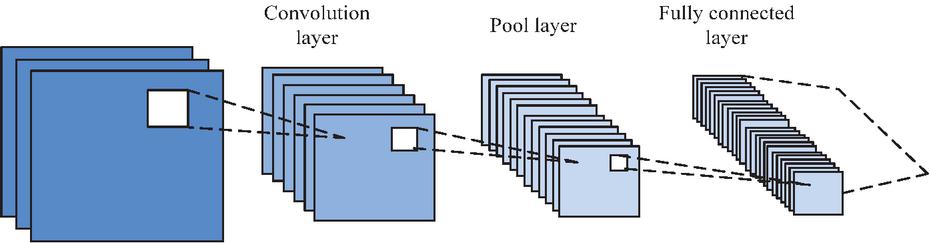
Figure 1 Structure of the convolutional neural network.
CNN is mainly composed of six key features: convolution layer, pooling layer, activation function, fully connected layer, local sensing field, and parameter sharing.
In deep learning, especially when dealing with sequential data, such as text or time series, attention mechanisms allow the model to dynamically focus on the most relevant parts in a given input sequence. This mechanism is often used in conjunction with recurrent neural network or transformer models. The attention mechanism first calculates an “attention score” that determines how much attention should be given to each part of the input sequence when producing output. The most common approach is to use dot product or additive/feedforward attention. The formula for dot product attention is
| (1) |
where is a query and is a key. is usually related to the current goal, while is related to the input sequence.
The formula for additive attention is
| (2) |
Here, and are the weight matrices that can learn. At present, the most popular calculation method of attention score is the dot product attention, such as the dot product attention mechanism used in the transformer model.
When the attention score is calculated, the Softmax function is used to convert the attention score into weights that represent the importance of each input part. The formula is
| (3) |
here is the attention weight for the th input. Finally, the input is combined with the attention weight, and the weighted sum is calculated to obtain the final attention output. The formula is
| (4) |
where is the value associated with the input sequence.
TextCNN is a deep learning algorithm suitable for text classification tasks. In view of its good performance, it has become a benchmark model for text classification tasks. The principle of this model is to take the size of the convolution kernel in the CNN as the dimension of the word embedding vector. For example, if the word vector dimension is 768, the convolution kernel may be set to (3, 768); thus, each time the convolution operation is performed in steps of 1, the convolution kernel selects three adjacent word vectors for convolution. By setting different values of the convolution kernel size parameter, CNNs can extract features from text contents of different lengths. The flow chart of the Bagging algorithm is shown in Figure 2.
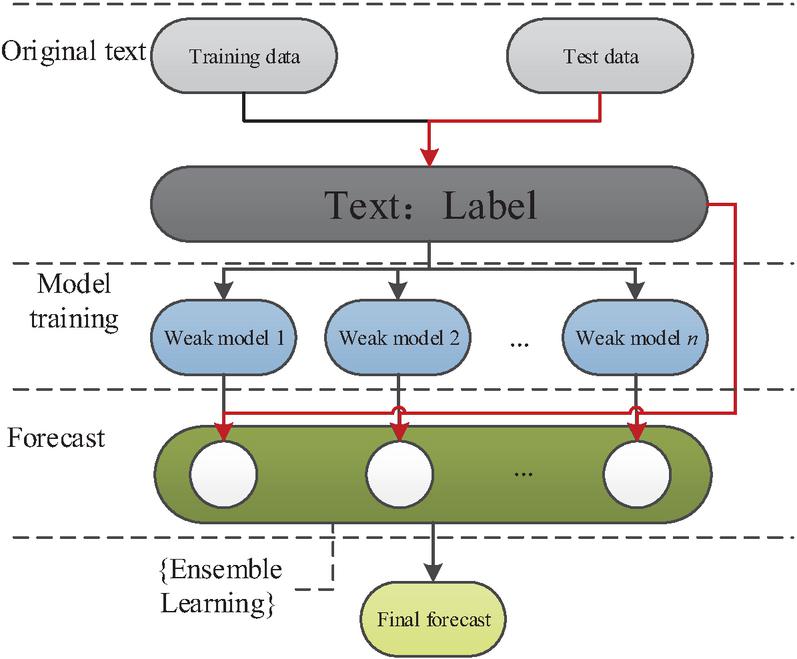
Figure 2 Flow chart of the Bagging algorithm.
After the convolution layer, if the length of the sentence is , then the sentence embedding matrix is , and for a convolution kernel of size (where is the number of words covered by the convolution kernel), the convolution operation can be expressed as Equation (5):
| (5) |
The convolution output is then applied to the ReLU activation function, which is a nonlinear function, meaning that the ReLU function returns if the input is positive or zero, and 0 if is a negative integer. The simplicity of this function makes it computationally very efficient, while it also helps alleviate the problem of vanishing gradients in neural network training. The specific performance is shown in Equation (6):
| (6) |
is the output after passing through the activation function. Finally, the result is fed into a max-pooling layer to select the maximum value from the convolutional outputs, thereby enhancing the local features. The formula is expressed as Equation (7):
| (7) |
where is the output of the pooling layer, which extracts the most important features. After that, it will be put into the full connection layer for integration operation and output the results. For the classification task in this paper, Soft is finally used in the output layer to convert it into the probability distribution of the classification result, as shown in Equation (8)
| (8) |
Here is the output of the fully connected layer, and the above formula summarizes the main mathematical operations of TextCNN in processing text data. This structure is particularly suitable for capturing local features in the text.
3.2 K-Means Clustering Model
The -means clustering algorithm is a commonly used unsupervised learning method, which uses iterative optimization to divide the data into categories. The algorithm flow comprises the following steps: randomly selecting samples as an initial center, calculating the distance from each point to the center, classifying according to the minimum distance principle, and continuously updating the center until the classification result is converged. The -means clustering algorithm is known for its ease of implementation and high computational efficiency, but it has two defects: the random initial partition affects the clustering results, and the user is required to specify the number of clusters . To this end, many improvements have been proposed to solve these problems. In the model-training stage, -means + strategy is used to optimize the selection of initial clustering centers to enhance the convergence speed of the model and reduce the classification jitter. Euclidean distance and Mahalanobis distance are used to calculate the similarity between points in the feature space, and Mahalanobis distance shows higher clustering stability in the scene with significant feature correlation.
| (9) | ||
| (10) |
where is the centroid of the th cluster, which is used to evaluate the compactness of the clustering of instructional design patterns.
Density-based spatial clustering of applications with noise density calculation formula is used to divide teaching strategy clusters with different densities:
| (11) |
The NeuralCF collaborative filtering formula is used to fit the matching degree between the user and the instructional design scheme:
| (12) |
Wide and deep combined training loss, taking into account memory (historical matching of teaching strategies) and generalization (recommended by the new teaching design model:
| (13) |
3.3 Test Method of Correlation Coefficient Difference
In order to judge whether the differences of correlation coefficients between different teaching modules are statistically significant, Fisher’s -to- transformation method was used to compare the correlation coefficients of each module. Specifically, each Pearson correlation coefficient is converted to a value that approximately follows a normal distribution, and the conversion formula is
| (14) |
The standard error of the difference between two independent correlation coefficients is calculated as
| (15) |
The resulting statistic obeys the standard normal distribution and is used to test whether the two correlation coefficients are significantly different. Two-tailed tests were used for all comparisons, and the significance level was set at . This method is superior to purely descriptive comparisons because it takes into account sampling variability, which is particularly important when there are differences in the subsample size of users in each module ( in the overall sample of this study, and the subsample size of each module varies slightly depending on the actual frequency of use).
4 Analysis of Web Application Instructional Design Pattern Mining
This experiment takes AI-enabled Japanese tutoring web application as the research object, and carries out quantitative research around the dimensions of web application design characteristics, user base characteristics, teaching design elements, technology landing effect and learning effect by means of technology disassembly, questionnaire survey, behavior burial point, and comparative experiment. Combined with the analytic hierarchy process, the weight division of the core elements of the instructional design model and the extraction of the model are completed, and finally the AI-enabling Japanese tutoring web application instructional design model adapted to the whole stage of Japanese learning is excavated. The following are the core results and targeted analysis of the experiment.
4.1 Analysis of Basic Characteristics
In the experiment, three typical AI-enabled Japanese tutoring web applications based on market utilization rate, AI technology web-based landing degree, and functional integrity screening are selected as the research objects, and their core features are shown in Table 1. All three applications have completed the web-based lightweight deployment of AI technology. The core technologies are mainly NLP, WebRTC, and lightweight optical character recognition (OCR). There is no heavy end-side model, which is in line with the core attributes of “low threshold, cross-end access” of web applications; web-specific tutoring modules and interactive forms are designed according to the target user groups, such as online handwriting boards for examinees and voice pop-up windows for beginners, which reflect the precise adaptation of teaching design to Japanese learning needs. The data processing mode adopts a “cloud local” hybrid architecture, which achieves a threefold pedagogical-technical synergy. First, local caching (implemented via IndexedDB and localStorage in the front-end stack) enables offline storage of learning progress, vocabulary records, and error logs, allowing learners to engage in fragmented learning sessions of 5–15 minutes without relying on continuous network connectivity – a critical affordance given that 45.8% of users in our sample engage in pure fragmented learning (weekly usage of 1–3 hours, as shown in Table 2). Second, periodic cloud synchronization ensures cross-device learning continuity, enabling a learner to start a session on a desktop (56.3% of users), pause, and resume on the mobile-responsive web (31.8% of users) without data loss or progress reset – a seamless experience essential to the responsive resource presentation mode. Third, the hybrid approach balances performance and cost: latency-sensitive operations (e.g., real-time grammar correction feedback) leverage local cache to achieve sub-800 ms response times, while computationally intensive tasks (e.g., collaborative filtering recommendations and learning analytics) are offloaded to cloud servers where historical data from all users can be aggregated. This architecture is not merely a technical implementation detail but a deliberate design choice that operationalizes the pedagogical principle of “anytime, anywhere, any device” fragmented learning – a principle that fundamentally distinguishes web-based tutoring from traditional classroom-based or packaged software approaches. According to the market utilization rate data, the web application utilization rate for N3–N2 intermediate and advanced learners reaches 45.7%, which reflects that Japanese learners at the intermediate and advanced stage have a higher demand for AI tutoring on the web side, and provides a market basis for the scene adaptation of the follow-up teaching design mode.
Table 1 Object of study – core features of AI-enabling Japanese tutoring web application
| Web Application Name | Core AI Technology (WebBased Deployment) | Japanese Tutoring Core Module | Web-Based Core Interaction Form | Front-end Technology Stack | Data Processing Mode (Server) | Target User | Market Utilization Rate (Last 6 Months) |
| Japanese AI assistant learning network | Lightweight NLP interface, WebRTC real-time speech recognition, locally cached intelligent recommendation | Word dictation, sentence pattern analysis, AI oral dialogue | Page side real-time interaction, voice pop-up window, online practice panel | Vue3+Element Plus | Cloud database + front-end local cache | Japanese Beginner (N5–N4) | 38.20% |
| Zhixue Japanese Web Edition | Customized machine translation model, collaborative filtering recommendation algorithm, real-time NLP grammar correction | Reading guidance, vocabulary intelligent recommendation, AI composition correction | Paged learning, intelligent sidebar prompts, online editing window | React+Ant Design | Distributed storage + realtime data synchronization | Intermediate and Advanced Learners (N3-N2) | 45.70% |
| Grading Test Japanese AI Assistant | Web-based lightweight OCR recognition, pre-training grammar error correction model, wrong question data visualization | Handwritten kana correction, reading and marking, intelligent sorting of wrong questions | Online handwriting board, picture upload and analysis, wrong question book visualization panel | Angular+Boot strap | Local storage + cloud data backup | Japanese Grading Test Candidates (N2–N1) | 32.10% |
Table 2 Basic information of experimental users and basic distribution of web application usage
| Statistical Dimension | Subdivision Type | Number (Person) | Proportion (%) |
| Japanese level | Zero basis | 28 | 14.6 |
| N5–N4 | 82 | 42.7 | |
| N3–N2 | 73 | 38 | |
| N1 and above | 9 | 4.7 | |
| The web side uses the | Computer side (PC) | 108 | 56.3 |
| device | Flat end | 23 | 12 |
| Mobile | 61 | 31.8 | |
| 1–3 hours | 88 | 45.8 | |
| Length of weekly use | 4–6 hours | 57 | 29.7 |
| 7–10 hours | 32 | 16.7 | |
| More than 10 hours | 15 | 7.8 | |
| Interest in learning | 65 | 33.9 | |
| Grading test preparation | 98 | 51 |
In the experiment, 192 Japanese learners were selected as the subjects, and the distribution of their basic information and web application usage is shown in Table 2. The user group covers the whole stage of Japanese learning, and the proportion of users in N5–N4 (42.7%) and N3–N2 (38.0%) stages is more than 80%, which is in line with the current group distribution characteristics of Japanese learning and provides a sample basis for the universality of the experimental results. Web-side devices are mainly computer-side (56.3%), and mobile-side devices (31.8%) account for nearly 1/3. It is clear that responsive cross-end design is the core design requirement of such web applications, and it is necessary to take into account the operation experience of computer-side systematic learning and mobile-side fragmented learning. According to the data of weekly usage time, 45.8% of the users engage in pure fragmented learning (1–3 hours per week), and an additional 29.7% combine fragmented learning with systematic study sessions (4–6 hours per week). This indicates that “short time, high frequency” is the mainstream learning mode for Japanese learners – a pattern that imposes specific technical and pedagogical requirements on web application design. Critically, the viability of fragmented learning on the web depends on the underlying data architecture: local caching ensures that a learner can complete a 10-minute vocabulary drill during a commute without network interruptions, while cloud synchronization preserves the learning progress across the desktop and mobile sessions. Without this hybrid architecture, fragmented learning would be reduced to isolated, noncumulative interactions – undermining the pedagogical principle of distributed practice [24] that is central to language acquisition. The “cloud local” architecture thus serves not merely as a performance optimization but as the technological enabler of the fragmented learning model, ensuring that each short session builds upon previous progress rather than existing as a standalone, disconnected activity.
It is important to point out that although the sample covered the full spectrum of Japanese language proficiency from zero to advanced, the representation of N1 + learners was relatively limited (). This distribution reflects the actual learner demographics in the Japanese language education market – beginning and intermediate learners make up the vast majority. However, this also means that the instructional design model extracted in this study has the most robust validation in the N5–N2 range. The conclusions on N1 + learners should be interpreted with caution, as a preliminary reference rather than a deterministic scheme.
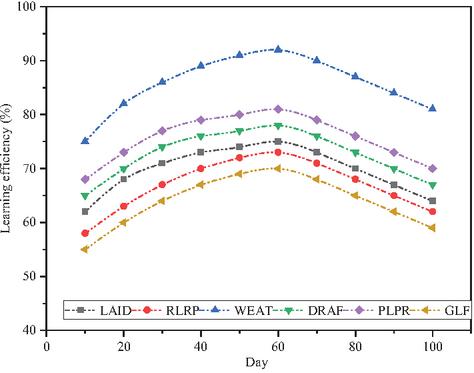
Figure 3 Comparison of learning efficiency of different web terminals.
4.2 Performance Analysis of Learning Outcomes
Figure 3 illustrates that the overall web-side learning efficiency index shows an inverted U-shaped change of first rising and then falling, and the 60th day is the turning point of the efficiency peak. During the 10–60 day ramp-up phase, increased user familiarity with the tool drives productivity growth; after 60 days, cognitive fatigue and attentional decay lead to a gradual decline in productivity. There are significant differences in the performance of different tools: WEAT (web-specific AI tutoring module) has the highest efficiency and the strongest stability, while GLF (collaborative learning function) has the weakest efficiency foundation and is most affected by cognitive load. The study suggests that web-side learning can adopt a 60-day cycle planning strategy, arrange core tasks during peak periods, and improve the long-term efficiency of inefficient tools through functional optimization.
Figure 4 shows that the web-side learning frequency index showed a trend of rising first, then stabilizing and falling slightly, climbing rapidly to the peak in 10–60 days, with each index rising by 42.5% on average ( [39.2, 45.8]) over the 10–60 day period, of which WEAT (web-based exclusive AI tutoring module) peak 95 was the highest and GLF (collaborative learning function) 74 was the lowest. The peak values of LAID (lightweight AI interaction design), RLRP (responsive learning resource presentation), DRAF (real-time AI feedback design), and PLPR (personalized learning path recommendation) are 83, 79, 84, and 87, respectively; after 60 days, there was a slight decline due to a decrease in efficiency, and the decline of each index was less than or equal to 3. After 90 days, it tended to be stable, WEAT (web-based exclusive AI tutoring module) fell back to 92, GLF (collaborative learning function) fell back to 71, and other indicators fell back to 96%–98% of the peak, with significant stickiness. There is a strong correlation between this index and learning efficiency, and both peaks appear in 60 days, forming a positive support, but the decline of frequency is much lower than that of efficiency, and there is a significant difference between the stable rhythm of change and the continuous decline of efficiency in the later period.
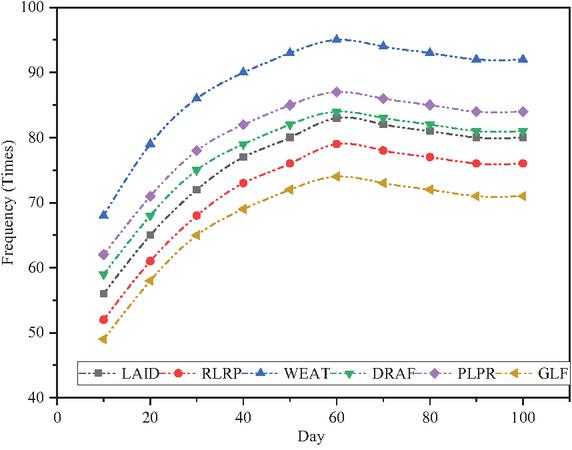
Figure 4 Comparison of usage frequency of different web sides.
Figure 5 shows that WEAT has the highest degree of capability achievement in the whole cycle, and its value has increased rapidly from 68% on the 10 th day to 89% on the 60th day and remained stable, significantly ahead of other modes, reflecting the precise support of this mode for practical ability and knowledge transfer. PLPR and DRAF are the second echelon, and the achievement degree is stable at 76% and 73%; LAID and RLRP are growing slowly, and finally stable at 68% and 60%; GLF is the weakest, and the achievement degree is only stable at 51%. After 60 days, all the modes entered the plateau period of ability achievement, which was consistent with the plateau trend of learning efficiency and frequency of use. It is verified that the AI-driven mode is the core value to improve the completion rate/pass rate of users’ practical tasks (such as the operation compliance rate of web virtual training), the efficiency of problem solving (the number of steps to complete the task/time consume), and the ability of knowledge transfer (the quality of cross-scenario task completion), which also reflects that there is an upper limit to improve the ability of web-side training.
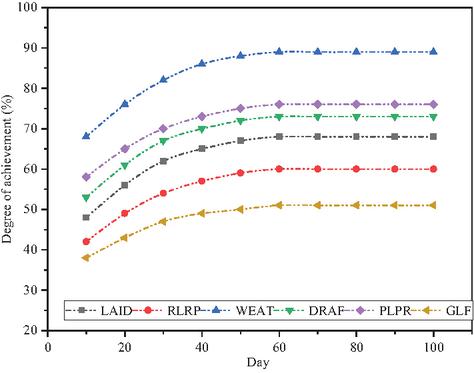
Figure 5 Comparison of capability achievement degree of different web end
Figure 6 shows that the overall trend continued to climb for 10–80 days, and after 80 days, it was completely stable without any decline. The growth rate was fast in the early stage and gradually slowed down in the later stage, which was in line with the gradual nature of knowledge accumulation; the index difference is consistent with the previous order: WEAT is the best (peak 97), GLF is relatively weak (peak 85), LAID, RLRP, DRAF, PLPR peak values are 92, 87, 92, 94, respectively, with an increase of more than 40%; after 80 days, there is no fluctuation in the value of all indicators, because the core knowledge system has been mastered, the growth has entered the bottleneck, reflecting the precipitation of knowledge mastery.
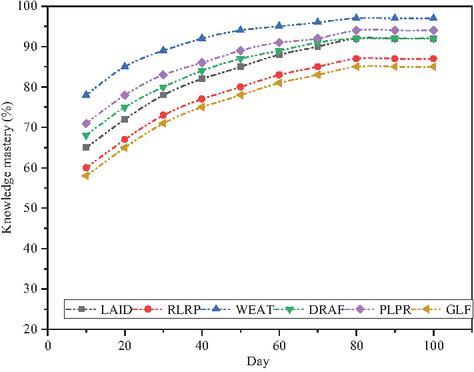
Figure 6 Comparison of knowledge grasping degree of different web end.
Figure 7 shows that WEAT has the highest retention rate in the whole cycle, with its value rising rapidly from 10 to 50 days to 94, falling slightly after 50 days, and tending to be stable after 80 days, without a considerable decline, significantly ahead of other modes, reflecting that its AI tutoring can effectively strengthen memory and delay knowledge forgetting. PLPR and DRAF are the second echelon, and the retention rate is stable at 85% and 83%; LAID and RLRP are finally stable at 82% and 77%; GLF is the weakest, and the retention rate is only stable at 73%. The retention rate of all modes tends to be stable after the 80th day, indicating that web-side learning needs to be combined with a periodic review mechanism to further strengthen long-term memory.
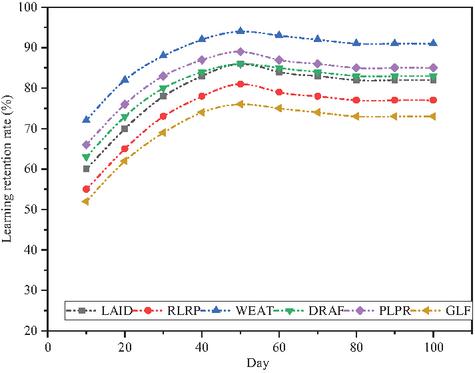
Figure 7 Comparison of learning retention rates on different web sides.
Table 3 AI technology implementation degree and user satisfaction rating of Japanese tutoring modules of the web application
| Module | AI Technology Landing Degree Score () | User Satisfaction Rating ( | Correlation Coefficient | (Effect size) | 95% CI for | Significance | Effect Quantity is Qualitative | Difference Test With Listening and Speaking Module |
| Word module | 8.1 0.7 | 8.0 0.8 | 0.76 | 0.792 | [0.68, 0.82] | 0.01 | Big | – |
| Syntax module | 8.2 0.6 | 8.5 0.5 | 0.83 | 0.689 | [0.77, 0.88] | 0.01 | Big | |
| Listening and speaking module | 8.6 0.5 | 8.8 0.4 | 0.89 | 0.656 | [0.85, 0.92] | 0.01 | Big | |
| Read-write module | 7.5 0.9 | 7.6 0.8 | 0.79 | 0.624 | [0.72, 0.85] | 0.01 | Big | |
| Handwriting correction module | 6.3 0.8 | 6.5 0.7 | 0.72 | 0.578 | [0.62, 0.80] | 0.05 | Medium-large | |
| Wrong question sorting module | 7.8 0.8 | 7.9 0.7 | 0.81 | 0.518 | [0.74, 0.87] | 0.01 | Medium-large |
The experiment further measured and quantified the AI technology implementation degree of each Japanese tutoring module of the web application, investigated the user satisfaction through the Likert five-level scale, and analyzed the correlation between the two. The results are shown in Table 3. A significant positive correlation was observed between AI technology implementation and user satisfaction across all six tutoring modules (, all ). The coefficient of determination () values ranged from 0.518 to 0.792, indicating that AI technology implementation accounted for 51.8% to 79.2% of the variance in user satisfaction across modules. According to Cohen’s (1988) criteria for correlation analysis in educational research ( is considered a large effect), all modules demonstrated moderate-to-large effect sizes, confirming that web-based AI technology implementation is a robust determinant of user satisfaction – a core logic underlying the instructional design of AI-enabled Japanese tutoring web applications.
The listening and speaking module exhibited the strongest correlation (, 95% CI [0.85, 0.92]), followed by the grammar module , the error-review module , the reading-writing module , the vocabulary module , and the handwriting correction module , ). To determine whether these rank-order differences were statistically meaningful, we conducted pairwise comparisons of correlation coefficients using Fisher’s -transformation. The listening and speaking module’s correlation coefficient was significantly higher than those of the grammar module , error-review module , reading-writing module , vocabulary module , and handwriting correction module , confirming that the superiority of the listening and speaking module is not merely a descriptive observation but a statistically robust distinction.
While all modules reached statistical significance, their effect sizes showed meaningful variation. Three modules (listening and speaking, grammar, and error-review) exhibited values exceeding 0.65, indicating that AI technology implementation explains more than two-thirds of the variance in user satisfaction. This suggests that in these modules, the user experience is overwhelmingly shaped by the quality of AI technology deployment. By contrast, the handwriting correction module’s of 0.518, while still indicating a large effect, was the lowest among all modules, implying that factors beyond AI technology – such as input modality constraints and inherent OCR accuracy limitations – play a more substantial role in shaping user satisfaction. This finding aligns with the technical challenges noted in Table 1 regarding lightweight OCR deployment on the web side.
The superior performance of the listening and speaking module can be attributed to the WebRTC-based real-time speech recognition technology, which enables immersive web-based oral interaction and directly addresses the core pedagogical pain point of “difficult listening and speaking training” in traditional Japanese web learning. Similarly, the grammar module’s strong performance () reflects the pedagogical value of real-time NLP grammar correction, which operationalizes an “input-as-correction” instant feedback loop. The handwriting correction module’s comparatively lower correlation is likely constrained by the technical bottleneck of web-based lightweight OCR recognition accuracy and handwriting trajectory analysis, identifying this as a priority area for future technological improvement.
In order to analyze the core learning behavior of users on the web side, the experiment carried out the embedding of web behavior on the core module, and counted the average stay time and operation frequency of users on each core page. The results are shown in Table 4. The average stay time ( minutes) and daily operation frequency (4.8 times) of the AI interaction page are the highest, followed by the result feedback page, indicating that AI interaction and real-time feedback are the core attraction of AI-enabling Japanese tutoring web application, and the user’s core learning behavior revolves around the triggering of the AI function and the viewing of feedback results. It verifies the rationality of “real-time AI interactive feedback design” as the core element of instructional design. The stay time for the home page and the personal center page is less than 3 minutes, and the operation frequency is very low. The core reason is that the core demand of users using this kind of web application is “efficient learning”, which requires the teaching design to optimize the navigation design of the home page, reduce the jump level, and realize the one-click access of the core learning module. The learning module page and the wrong question page are the core intermediate links connecting the AI interaction page and the result feedback page, and the stay time and operation frequency are at a medium level. The design needs to strengthen the clarity of module classification and the convenience of sorting out the wrong questions, so as to improve the user’s operation efficiency. On the whole, the user’s page behavior data intuitively reflects their core learning needs, and provides a direct behavioral basis for the page layout and operation link design of web applications.
Table 4 Average stay time and operation frequency of web application core page users
| Web Application | Mean Residence Time | Daily Average Operation Frequency of | ||
| Core Page | (Min, ) | Single Users (Times) | Core Functionality of the Page | Core User Behavior |
| Home page | 2.1 0.8 | 1.2 | Learning portal, function navigation and recommended resources | Quickly jump to core modules without stopping |
| Learning modules page | 8.5 1.9 | 3.5 | Entrance of each Japanese tutoring module and display of learning resources | Select coaching modules, view learning resources |
| AI interactive page | 12.5 2.3 | 4.8 | AI function triggering, real-time interaction and learning process operation | One key trigger AI, input learning content, voice interaction |
| Result feedback page | 9.8 1.8 | 3.2 | AI correction results, learning report, wrong question display | View the feedback results, collect the wrong questions, and learn twice |
| Wrong questions on this page | 7.2 1.5 | 2.6 | Wrong question sorting, intelligent review and wrong question analysis | Redo the wrong questions, view and analyze them, and generate a review plan |
| Personal center page | 1.8 0.6 | 0.8 | Learning data, personal settings, account management | View learning data and rarely stay |
4.3 Performance Analysis of Learning Behavior Class Process
As can be seen from Figure 8, WEAT has the highest participation in the whole cycle, with its participation increasing from 75% on the 10th day to 95% on the 60th day, and then falling back to 93% on the 80th day and remaining stable, significantly ahead of other modes. The AI-driven dynamic content adaptation and personalized interaction mechanism can effectively improve the frequency and duration of user platform login, the access rate of course content, and the participation rate of interactive modules. PLPR and DRAF are the second echelon, and the participation is stable at 85% and 83%; LAID and RLRP are finally stable at 82% and 77%; GLF is the weakest, and the participation is only stable at 73%.
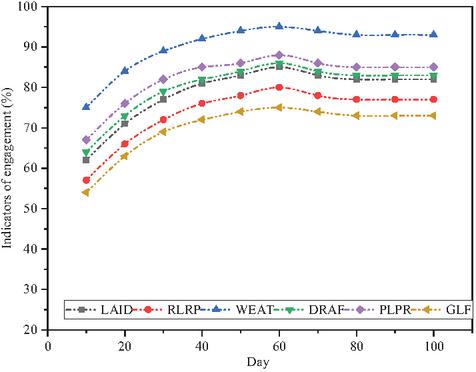
Figure 8 Comparison of engagement metrics across different web sites.
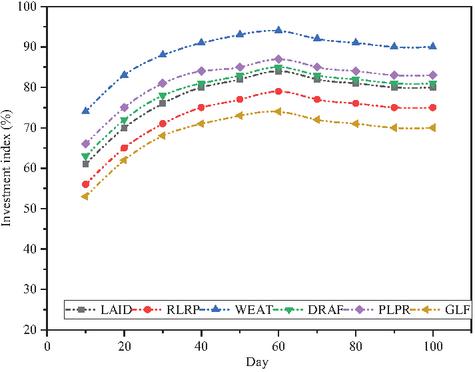
Figure 9 Comparison of investment indicators of different web terminals.
Figure 9 shows that WEAT (web-based dedicated AI tutoring module) is the best in terms of deep engagement behavior, and its users have a higher degree of engagement in effective learning time (excluding hang-up time), task completion time (ratio to average time), and repeated learning times (repetition rate for difficult content). It reflects the AI-driven dynamic content matching and instant feedback mechanism, which can effectively stimulate users’ willingness to participate in depth. In terms of continuous input stability, the input degree of WEAT mode increased from 74% on the 10th day to 94% on the 60th day, and the subsequent fluctuation was stable to 90%, which was the most stable among all modes; the investment of GLF mode dropped steadily from 53% on the 10 th day to 74% on the 60th day to 70%, reflecting the lack of effective incentives for users’ long-term investment in pure collaboration mode. Further correlation analysis shows that the ranking of engagement is highly positively correlated with the ranking of core learning indicators, such as vocabulary memorization efficiency and grammar parsing ability (the correlation coefficient is 0.89), which verifies the positive logic of “high engagement high learning effect”, and also shows that the AI-driven model ultimately achieves the improvement of learning efficiency by improving engagement.
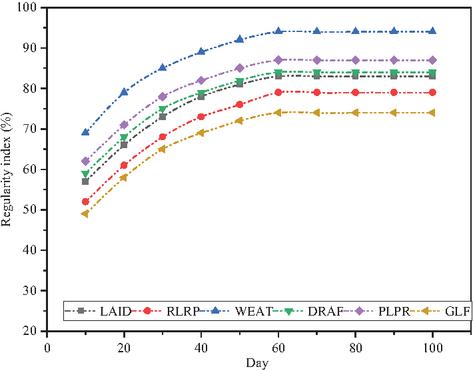
Figure 10 Comparison of regularity indexes of different web terminals.
Figure 10 shows that WEAT (web-based AI tutoring module) has the strongest regularity in the whole cycle, with its regularity rising from 69% on the 10th day to 84% on the 60th day and remaining stable, significantly ahead of other modes, reflecting its AI-driven fixed-period reminder and personalized task push mechanism. It can effectively help users establish stable learning interval stability, task submission timeliness, learning rhythm matching degree, and reduce behavior fluctuations. PLPR (personalized learning path recommendation) and DRAF (real-time AI feedback design) are the second echelon, and the regularity is stable at 87% and 84%; LAID and RLRP are finally stable at 83% and 79%; GLF is the weakest, and the regularity is only stable at 74%, reflecting that pure collaboration mode is difficult to guide users to form stable learning habits.
Figure 11 shows that GLF has the highest human-human interaction index in the whole cycle, with its index dropping from 59% on the 10th day to 86% on the 70th day and remaining stable, reflecting its design with group collaboration as the core, which can significantly improve users’ participation in collaborative tasks and peer interaction. WEAT and PLPR are in the second echelon, with stable indicators at 79% and 78%; RLRP and DRAF are in the middle, with stable indicators at 76% and 77%; LAID is the weakest, with only stable indicators at 72%. Further analysis shows that GLF mode has the highest interaction frequency, but the problem-solving rate is only 68%, while WEAT mode has a lower interaction frequency, but the problem-solving rate is 81%, indicating that AI-assisted interaction is more focused on effective problem solving. Therefore, there is a positive correlation between the human-human interaction index and the improvement of listening and speaking ability (correlation coefficient is 0.78), but the correlation with vocabulary, grammar, and other basic abilities is weak, indicating that human-human interaction can improve the actual language ability, which needs to complement with AI-driven personalized learning.
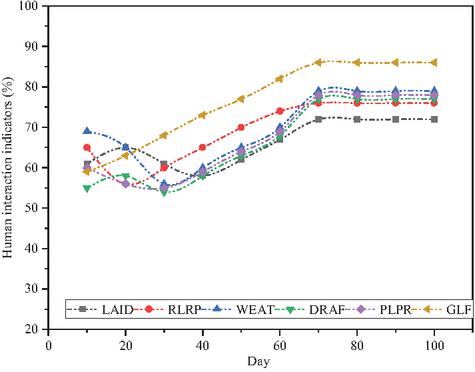
Figure 11 Comparison of human-human interaction indicators on different web sides.
4.4 Analysis on the Weight of Core Elements and Pattern Characteristics
To determine the core elements and priorities of the AI-enabled Japanese tutoring web application instructional design model, the experiment invited Japanese education and web development experts to construct an index system via the Delphi method and calculate element weights using the analytic hierarchy process, with results shown in Table 5. The design model’s core elements are divided into three levels: core, key, and basic, with weight distribution featuring “high core layer proportion and low basic layer proportion”, conforming to web application instructional design’s “grasp core, simplify foundation” logic. Web-based lightweight AI deployment (0.215) and real-time AI interactive feedback (0.208) are core elements, accounting for over 40% of total weight, as lightweight ensures AI landing and real-time feedback reflects AI’s core value. Web-exclusive AI tutoring modules (0.186) and responsive learning resources (0.179) are key elements (nearly 37% weight), ensuring pertinence and cross-end adaptability. User behavior-driven personalized recommendation (0.112) and collaborative learning (0.090) are basic elements (below 15%), consistent with user frequency data. All elements rely on web-exclusive technology, reinforcing the study’s web-focused orientation and providing a clear basis for instructional design mode technology selection.
Table 5 AI-enabling Japanese tutoring web application instructional design model core element weight table
| First-level | Weight | Indicator | |
| Core Elements of Instructional | Level | of Secondary | Layer Weight |
| Design Model (Web-side) | Index Weight | Index | (Comprehensive) |
| Web-based lightweight AI technology deployment | 0.423 | 0.508 | 0.215 |
| Design of real-time AI interactive feedback | 0.423 | 0.492 | 0.208 |
| Design of web-based AI tutoring module | 0.356 | 0.522 | 0.186 |
| Responsive learning resource design | 0.356 | 0.503 | 0.179 |
| Personalized recommendation driven by user behavior data | 0.221 | 0.507 | 0.112 |
| Functional design of collaborative learning | 0.221 | 0.407 | 0.090 |
Table 6 Comparative data of indicators focusing on and quantification of different web learning scenarios
| Day 10 | Day 30 | Day 60 | Day 100 | |||
| Scene Type | Core Indicators | ( SD) | ( SD) | ( SD) | ( SD) | Effect Size |
| Immersive web virtual | Interaction success rate | 0.38 | ||||
| environment | Immersion Rating (1–10) | 9.2 0.5 | 0.32 | |||
| Regular web online courses | Continuity of learning | 0.41 | ||||
| Knowledge mastery | 0.45 | |||||
| Web collaborative learning | Human interaction indicators | 0.29 | ||||
| environment | The degree of completion of collaborative tasks | 85.0 3.5 | 0.36 |
Table 6 presents the change trend of core indicators and their effect quantity () in the four time nodes of 10, 30, 60, and 100 days for the three web learning scenarios. The interactive success rate of the immersive virtual learning environment decreased from 89.0% to 82.0% and then stabilized, and the immersion score decreased slightly from 9.2 to 8.4. The learning persistence and knowledge mastery of conventional online courses decreased from 76.0% and 82.0% to 65.0% and 74.0%, respectively, and then entered a plateau; the human-human interaction index and the collaborative task completion degree of the web collaborative learning environment are stable from 78.0% and 85.0% to 66.0% and 77.0%, respectively. The effect size of the three scenarios () reached a moderate to large effect, and the effect size of the regular course was the highest , indicating that the knowledge mastery index changed most significantly over time. All indicators showed a common rule of “first decline and then stability”, and entered a stable period in about 60 days.
Based on the above quantitative analysis, Japanese teaching theory and web application development specifications, three core teaching design modes of AI-enabled Japanese tutoring web applications are extracted from Table 7. All three modes are web-based, following the design logic of “stage adaptation, scenario matching, and technical support” to cover the entire Japanese learning process and mainstream scenarios. The lightweight AI interaction + responsive resource presentation mode focuses on fragmented learning at the zero-based-N4 stage, featuring “convenience, cross-end, and lightweight” to adapt to web and mobile scenarios, improve learning efficiency, and fit zero-based learners’ habits. The modular AI tutoring real-time feedback mode, the most applicable one, focuses on N3–N2 systematic learning. Centered on “clear modules, immediate feedback, and data traceability”, it adapts to computer-based learning, realizes real-time data statistics via ability-based modules, and meets intermediate and advanced learners’ needs. The personalized recommendation collaborative learning mode targets N1 learners and enthusiasts for immersive learning, using data-driven recommendations and online collaboration to meet advanced needs, though its web implementation needs’ optimization. Their complementary advantages provide a practical, replicable standardized design idea for related web application development.
Table 7 AI-enabling Japanese tutoring web application core instructional design mode feature disassembly table
| Name ofInstructional Design Model | Adapt to Japanese Learning Stage | Adapt to Web Usage Scenario | Core Advantage | Applicable Web Application Type |
| Lightweight AI interaction responsive resource presentation mode | Zero-foundation-N44 | Fragmented learning | Convenient operation, good cross-end experience, fast loading speed and short learning time | Japanese into web application |
| Modular AI coaching real-time feedback mode | N3-N2 | Systematic learning | Strong pertinence, timely feedback, traceable learning effect and clear module division | Web application of Japanese comprehensive learning |
| Personalized recommendation collaborative learning model | N1 and above/Japanese lovers | Immersion learning | High degree of personalization, strong interaction, and meeting the needs of advanced Japanese application | Japanese advanced/grading test web application |
The sample distribution also informs the confidence level of the three extracted instructional design patterns. The first two patterns (lightweight fragmented-learning adaptation mode and structured systematic learning mode) are supported by a combined sample of 163 learners (84.9%), providing strong empirical grounding. The third pattern (immersive advanced application mode), while conceptually derived from the data of nine N1 learners and supplemented by expert interviews and market usage data, should be regarded as a preliminary framework that requires further validation with larger advanced-learner samples. Future research should prioritize recruiting N1+ participants to strengthen the empirical basis of this pattern.
5 Conclusion
Focusing on AI-enabled Japanese tutoring web applications, this study conducts a systematic empirical study on web application technology implementation, instructional design elements, user learning behavior and actual effects, aiming to explore instructional design modes suitable for the whole Japanese learning stage. It addresses problems such as insufficient integration of AI technology and instructional design, and lack of scenario adaptability in current applications, providing theoretical and practical support for related design and development. Quantitative analysis shows that responsive resource presentation and real-time AI feedback are core elements, lightweight AI interaction needs’ optimization, and collaborative learning is a key reconstruction element. There is a significant positive correlation between AI technology implementation and user satisfaction. The innovation lies in deep integration of AI and instructional design, exploring design rules through multi-dimensional data, constructing a fitting instructional design index system, and refining three modes realizing “technology-stage-scenario” binding. Future research will focus on three interrelated directions. First, collaborative learning optimization research. Although the weight of collaborative learning in the analytic hierarchy process (AHP) framework is relatively low (0.090), its pedagogical value for advanced stage (N1) learners cannot be ignored. The follow-up study will explore the following three paths: (a) an intelligent grouping algorithm based on learner portraits to maximize collaboration benefits by matching complementary ability features; (b) research on the optimal timing of AI intervention in collaborative tasks, such as maintaining passive observation during peer brainstorming to maintain interpersonal interaction fluency, actively intervening to correct deviations only when task deviations are detected, and providing summative feedback rather than real-time interruption after the task is over; (c) develop collaborative effectiveness measurement tools beyond task completion rate, covering multi-dimensional indicators such as peer scaffolding frequency, number of negotiated meaning segments, and quality of jointly constructed knowledge products. Second, long-term user data tracking and dynamic mode optimization. This study currently uses a 100-day observation window and finds that most of the learning indicators tend to be stable after 60–80 days. The follow-up study will be extended to a 12-month longitudinal follow-up study, and monthly evaluation nodes will be set up to test the sustainability of the effects of the three teaching modes in a longer period, and to explore the law of mode preference transfer of learners with the improvement of their level. On this basis, a prediction model of user behavior sequence based on long short-term memory is constructed, which realizes the early warning of learners’ loss risk 30 days ago, the recommendation of the best mode switching time and the setting of a personalized review interval based on the Ebbinghaus forgetting curve. Finally, a data-driven design element weight dynamic iteration mechanism is established, which enables the long-term accumulation of learning effectiveness, satisfaction, and participation data to be regularly fed back to the AHP weight framework, so as to realize the continuous calibration and evolution of the teaching mode. Third, AI model integration and scalability research. We will explore progressive enhancement architectures that enable lightweight local models to handle latency-sensitive tasks, while on-demand cloud-based deep analytics serve complex evaluation needs, while investigating multi-model integration strategies to optimize the balance of reasoning speed and accuracy in practical deployment scenarios. The above three directions work together to transform the current static instructional model framework into a dynamic adaptive and data-driven evolutionary instructional design ecosystem.
Funding
This research was supported in part by the “China Foreign Language Education Fund” project “Research on the Integration of AI Multimodal Emotion Recognition and Emotion Generation in Virtual Simulation Teaching for Chinese-Japanese Simultaneous Interpretation (Grant No. ZGWYJYJJ12Z025) and in part by the China Postdoctoral Science Foundation “A Study on the Diverse Connotation of the Cultural Extension Coupling of ’Same Description but Different Indications’ in International Communication between China, Japan, and South Korea” (Grant No. 2024M752301).
References
[1] K. Fujimoto, ‘Usage and review of web conference systems in elementary Japanese education for traditional and virtual classrooms’, Japan e-Learning Association Journal, vol. 11, pp. 12–17, 2011.
[2] K. Yamada, ‘22pRA-13 Development of web application for physics education by programming in Japanese’, Meeting Abstracts of the Physical Society of Japan, vol. 63, no. 2, p. 352, 2008.
[3] C. Ma, W. Shi, and Y. Okada, ‘Interactive web 3D contents development framework based on linked data for Japanese history education’, in E-Learning and Games, F. L. Wang et al., Eds., Springer, 2018, pp. 275–283.
[4] C. Chen, ‘Design of intelligent Japanese teaching system based on web’, Proceedings of SPIE, vol. 12344, p. 123440K, 2022.
[5] M. Shabudin, A. Aisyah, S. Darus, et al., ‘Development of teaching materials and utilization of Web 2.0 in Japanese language teaching and learning’, Procedia – Social and Behavioral Sciences, vol. 118, pp. 433–441, 2014.
[6] C. Zhang, P. Zhong, and J. Huang, ‘Research on Japanese teaching system based on web using deep learning framework’, in 2025 3rd International Conference on Data Science and Network Security (ICDSNS), IEEE, 2025, pp. 1–6.
[7] J. Yang, ‘Design and implementation of college Japanese teaching interactive system based on Moodle platform’, Wireless Communications and Mobile Computing, vol. 2022, Art. no. 1467155, 2022.
[8] S. Zheng, ‘Design and implementation of Japanese intensive reading course with network teaching based on web’, in 2017 10th International Conference on Intelligent Computation Technology and Automation (ICICTA), IEEE, 2017, pp. 315–320.
[9] N. Emerson, ‘Fostering learner autonomy: web-based goal setting and self-evaluation in Japanese higher education’, in WorldCALL Official Conference Proceedings, WorldCALL, 2024, pp. 89–96.
[10] K. Iwabuchi et al., ‘Covid-19 and education on the front lines in Japan: what caused learning disparities and how did the government and schools take initiative’, in Primary and Secondary Education During Covid-19, F. M. Reimers, Ed., Springer, 2022, pp. 125–151.
[11] M. M. V. Yk, ‘A flipped instructional design as an online pedagogy enabling student learning in an ODeL course’, International Journal of Web-Based Learning and Teaching Technologies, vol. 16, no. 2, pp. 1–16, 2021.
[12] X. Sun and Y. Qin, ‘The model practice of reconstructing education management based on Web 3.0 technology blended learning under the people-oriented concept’, Computer Applications in Engineering Education, vol. 32, no. 1, p. e22629, 2024.
[13] X. Zou and T. Kamba, ‘Design support tool based on the analysis of differences between Japanese and Chinese e-commerce sites’, in Proceedings of the International Conference on Human-Computer Interaction (HCII), Springer, 2024, pp. 159–168.
[14] J. C. C. Chisag et al., ‘The technology acceptance model in the collaborative learning of Web 2.0, Web 3.0 and Web 4.0: higher education case study’, WSEAS Transactions on Environment and Development, vol. 16, pp. 16–28, 2020.
[15] S. Anand, ‘Study of web security using blockchain technology and its application in education’, International Journal of Scientific Research in Science and Technology, vol. 11, no. 3, pp. 590–597, 2024.
[16] S. J. Coetzee and L. V. Mulaudzi, ‘Exploring the educational potential of free Web 3.0 resources for training technology students in higher education’, Discover Education, vol. 5, no. 1, Art. no. 175, 2026.
[17] R. Ginting and N. Miyono, ‘Government education policy for e-learning adoption: an empirical examination of technology acceptance models through web-based tools’, International Journal of Data and Network Science, vol. 10, no. 2, pp. 669–676, 2026.
[18] M. Tezer et al., ‘Meta-analysis of Web 2.0 technology-supported math education to individuals with special needs’, Lecture Notes in Networks and Systems, vol. 1142, pp. 50–56, 2025.
[19] E. Mutiara, S. Sutanti, D. A. Dalimunthe, et al., ‘Development of web-based interactive media using Genially in food technology course of culinary arts education study program’, Journal of Ecohumanism, vol. 3, no. 4, pp. 3090–3100, 2024.
[20] B. Van Aartsen, C. Noteboom, D. Talley et al., ‘Technology adoption in higher education: An analysis of web usage mining in public-facing websites’, Issues in Information Systems, vol. 25, no. 4, pp. 29–45, 2024.
[21] Q. Yang, ‘Designing remote sharing system of network education resources for software engineering specialty based on web technology’, International Journal of Computational Systems Engineering, vol. 8, no. 1–2, pp. 20–29, 2024.
[22] E. S. K. Siew, Z. Y. Chong, S. N. Sze et al., ‘Streamlining attendance management in education: a web-based system combining facial recognition and QR code technology’, Journal of Advanced Research in Applied Sciences and Engineering Technology, vol. 33, no. 2, pp. 198–208, 2024.
[23] T. Jiang, ‘Research and analysis on Japanese teaching mode of online education under multimedia network environment’, Mobile Information Systems, vol. 2022, Art. no. 4821034, 2022.
[24] N. J. Cepeda, H. Pashler, E. Vul, J. T. Wixted, and D. Rohrer, ‘Distributed practice in verbal recall tasks: a review and quantitative synthesis’, Psychological Bulletin, vol. 132, no. 3, pp. 354–380, 2006.
Biographies

Xiaomei Gai was born in Weifang, Shandong Province, China, in 1987. She received her master’s degree from Dalian Maritime University. She earned her PhD degree at Wonkwang University in South Korea, and completed postdoctoral research at Sichuan International Studies University. Now, she works at Weifang University of Science and Technology. Her research interests include foreign language teaching.

Yanjia Tian received his MSc degree from Inner Mongolia University, Hohhot, China, in 2009. He is a teacher at the Shanghai DianJi University, Shanghai. His current research interests include parallel and distributed computing, big data intelligence, machine learning, and pattern recognition. He has published four papers, three of which have been indexed by SCI.
Journal of Web Engineering, Vol. 25_7, 1449–1482
doi: 10.13052/jwe1540-9589.2577
© 2026 River Publishers