A Quantized History of Quantum Mechanics for Quantum Engineers
Paulo Sergio Rufino Henrique* and Ramjee Prasad
CTIF Global Capsule Foundation, Paris, Denmark
E-mail: paulo.henrique@riverpublishers.com
*Corresponding Author
Received 08 December 2025; Accepted 09 December 2025
Abstract
2025 is the year UNESCO selected to celebrate 100 years of this novel science, quantum mechanics, based on Heisenberg’s “uncertainty principle” discovery. However, quantum mechanics began with the discovery of quantum packets of energy emission formulated by the German physicist Max Planck, and it incorporated additional discoveries and principles from Albert Einstein, Niels Bohr, Heisenberg, Pauli, de Broglie, and many others in the early 1900s. Since then, many advancements and breakthroughs have been made. Such scientific contributions have influenced the culture and technology of humanity from the 20th century onwards, with the first quantum revolutions bringing innovations in technology and engineering, including the omnipresent light amplification by stimulated emission of radiation (Laser), magnetic resonance imaging (MRI), microprocessor manufacturing and design for computers and nuclear energy. Thus, at the beginning of the Second Quantum Revolution in the 21st century, amid a new wave of novel quantum technologies promising to create the 5th Industrial Revolution and transform humanity, a brief history of these marvellous sciences is condensed, connecting the wonders of the new quantum technogenesis that is being forged, linking its past with classical mechanics and also with novel relativistic mechanics. Understanding these developments highlights the significance of quantum technologies shaping our future and what lies ahead for us.
This article explores technologies that are presently under research and development (R&D) in the quantum physics realm, including quantum computing, quantum cryptography, quantum sensing and metrology, and quantum simulation. It also discusses emerging careers in the quantum field and the unresolved mysteries that continue to challenge scientists. The discussion follows the ancient griot tradition of storytelling, a method that the distinguished physicist, great professor, and Nobel laureate Richard Feynman encouraged us to use to explain complex scientific ideas.
Keywords: Quantum physics, quantum mechanics, Planck, Einstein, Bohr, Heisenberg, Pauli, De Broglie, Richard Feynman, quantum technologies, quantum computers, quantum cryptography, quantum sensing and metrology, quantum simulation, quantum careers..
1 Introduction
The rules of quantum mechanics are omnipresent in the universe and in our daily lives. Most phenomena at the atomic scale can be explained through quantum mechanics. This includes the structure of everyday materials, such as why a person cannot pass through a wall, as well as the reason someone does not get burned by a cup of coffee sitting on a table while radiating heat [1]. However, there are still scientifically debated exceptions, notably the cosmic singularity found within a black hole [2].Teaching the principles of quantum mechanics is essential for cultivating the next generation of quantum engineers, whose expertise will drive the development of quantum technologies capable of addressing urgent global challenges that demand accelerated scientific progress.
Thinking about this concept, in 1981, Professor Richard Feynman, was one of the first to suggest to the scientific community developing quantum computers that could operate mathematically on quantum mechanics principles to address important issues that classical computation would leg, therefore he stated “trying to find a computer simulation of physics seems to me to be an excellent program to follow out. the real use of it would be with quantum mechanics. Nature isn’t classical ” [3].
Thus, based on the aforementioned statement, the article will present the importance of classical and relativistic mechanics and bridge their complementary foundations to describe natural behaviours at the atomic level, as well as the technologies underpinned by this novel concept. The article is delivered on the concept of griot [4], which is a Western African concept, well described in anthropology, linguistics and sociology, used to describe those who were in charge of educating, preserving and transmitting knowledge in an oral tradition and using techniques such as analogy, mythology, music or poetry as a tool for it.
Richard Feynman also used this methodology to deliver his lectures, connecting with the audience, building analogies, and reinforcing his teaching to enable better understanding and the academic dissemination of complex theories such as quantum mechanics. Richard Feynman, one of the greatest popularisers and professors of quantum mechanics, was also known for his active learning approach, which became known as Feynman’s techniques [5]. This process is very appropriate for those who want to dive into the quantum realm or any complex topic and is described in Figure 1.
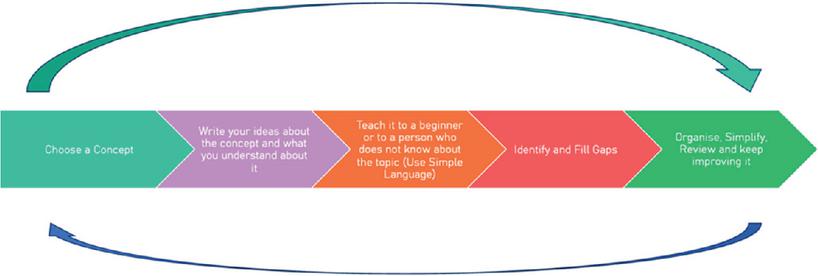
Figure 1 Feynman’s techniques.
Figure 1 illustrates the Feynman technique as a cyclical learning strategy. It starts with choosing a concept and writing down one’s ideas. The core step is trying to teach it to a beginner using simple language, which quickly exposes gaps. This leads to the necessary phase to identify and fill gaps using source materials. The final stage is to organise, simplify, review and keep improving it, ensuring the resulting explanation reflects complete and neat mastery.
This technique is effective and is therefore well used in the following subchapters to help contextualise and explain the importance of quantum mechanics and quantum technologies. Science needs scientists, professors, teachers, and educators to be better prepared and equipped to explain complex subjects like quantum mechanics and many others in a very educational and elucidated manner to curb the decline in science, technology, engineering and mathematics (STEM) education [6] in the Americas and Europe, increasing the number of students interested in learning and enrolling in these courses. For instance, recent findings from the UK Science Education Tracker (SET 2023) survey [7] in the United Kingdom reveal a widening gap between how students experience science in and out of the classroom. While most young people engage enthusiastically with science beyond school, primarily through interactions with STEM professionals, many perceive classroom science and computing as difficult and uninteresting. Student disengagement from science in England is primarily driven by reduced hands-on practical work, overreliance on video-based teaching, teacher shortages, limited resources, and rigid standardized assessments. The study calls for an urgent reform of science education, prioritising practical experimentation, improved teacher recruitment and training, and stronger links between classroom learning and real-world scientific practice.
Knowledge must be shared and popularised more effectively, with strong planning and techniques that simplify the subjects as much as possible, to attract more students and promote STEM education for scientific, social and environmental development worldwide.
Thus, the paper is organised as follows: the first section presents classical and relativistic mechanics, and how these sciences have contributed to science through concepts and our intuitive way of life, based on a deterministic world and the influence of locality, and how they paved the way for quantum physics. Then, the second section presents historical facts that contributed to the discovery of quantum physics and the laws of quantum mechanics, considering quantum science as a whole. The third section presents the First and Second Quantum Revolutions from an R&D perspective, and it outlines several practical applications of current quantum technologies, including the professional areas being created for them. Finally, the last section presents an overview of the quantum topics discussed here, including an analysis and scientific considerations for what to expect beyond quantum mechanics.
2 From Newton to Maxwell: How Deterministic Science Shaped the First Three Industrial Revolutions
Modern classical physics, or its laws, classical mechanics, is a perfect science for describing most macroscopic phenomena in the Universe. Classical mechanics describes continuous, smooth transitions, which can help humanity and students in general feel confident in the predictability of physical processes and the coherence of the physical world. By contrast, quantum mechanics shifts the classical notion of predictability to a probabilistic one, in which the outcomes of any calculation or measurement are based on the probability distribution of what one is measuring, offering energy transitions that occur in discrete, discontinuous levels.
According to the esteemed German physicist Rudolf Julius Emanuel Clausius, considered the father of the entropy concept and one of the founders of thermodynamics, in the realm of science one of the fundamental principles is that, whether in classical or quantum mechanics, based on the principle of the first law of thermodynamics, energy cannot be created or destroyed. Energy can only transform from one form to another. To this day, this principle remains unbreakable [8].
The dynamics of classical mechanics is located at the cornerstone of the First and Second Industrial Revolutions since the English polymath and astronomer Sir Isaac Newton wrote the revolutionary book called “Philosophiæ Naturalis Principia Mathematica” [9], in which Newton describes the laws of motion and gravity. Sir Isaac Newton is considered the great unifier of classical mechanics, igniting the First Industrial Revolution, supported by the philosophical principles of the Enlightenment, and breaking away from the century of obscurantism Europe had endured under the rule of the Catholic Church. His work allowed us to model and predict the behaviour of the physical world with remarkable precision, providing a deterministic framework that guided science and engineering for centuries. Newton inaugurated the western scientific revolution with his three laws (the law of inertia, the law of acceleration and the law of action and reaction), including the first description of the concept of gravity as a force, and also influenced Enlightenment philosophy, shaping thinkers like René Descartes, John Locke, and Baruch Spinoza, among others. Newton himself understood that any technogenesis brought by humanity or any great work, innovative ideas, and novel concepts brought by individuals or a group of people, are based on collective achievements of humanity that preceded the novel discovery. For this, Newton acknowledged, “If I have seen further [than others], it is by standing on the shoulders of giants” [10] and, from his works, humanity accelerated the technological revolution at an exponential pace across all areas, influencing worldwide culture.
The English poet Alexander Pope wrote Newton’s epitaph [11]:
“Nature and Nature’s Laws lay hid in Night. God said Let Newton be! and All was Light.”
Another key figure in the scientific revolution within the classical realm was the French mathematician Pierre-Simon Laplace. He built upon Newtonian mechanics and developed advanced calculus, which has remained a powerful mathematical tool for engineering to this day. His work also contributed to some of the mathematical formalisms in quantum mechanics.
Laplace played a crucial role in establishing the principle of determinism. He envisioned a perfectly predictable universe in which “an intelligence” that knew all the forces and positions could accurately forecast the future. This perspective influenced modern engineering by introducing the divide-and-conquer principle, enabling complex systems to be broken down into manageable parts for analysis and control. Additionally, his development of calculus and Laplace’s equations provided essential mathematical tools that are still in use today. His vision of a predictable universe, where an intelligence knowing all forces and positions could foresee the future, shaped modern engineering through system decomposition and the mathematical tools of calculus and Laplace’s equations.
The philosophy Laplace espoused in his book also embodies the deterministic thinking humanity is so used to. Here is the original quote excerpted from Laplace’s book “Essai philosophique sur les probabilités (1814)” [12] “Given for one instant an intelligence which could comprehend all the forces by which nature is animated and the respective situation of the beings who compose it an intelligence sufficiently vast to submit these data to analysis it would embrace in the same formula the movements of the greatest bodies of the universe and those of the lightest atom; for it, nothing would be uncertain and the future, as the past, would be present to its eyes.” This quote is constantly synthesised as:
“Give me the positions and velocities of all the particles in the universe, and I will predict the future.” Pierre-Simon Laplace
Figure 2 shows the statue of Pierre-Simon Laplace, located in the central square of Beaumont-en-Auge, France, the town where the renowned mathematician and physicist was born in 1749. During my visit to Beaumont-en-Auge in 2022, I took a photograph of this monument, which pays tribute to Laplace’s lasting contributions to mathematics, physics, and astronomy.
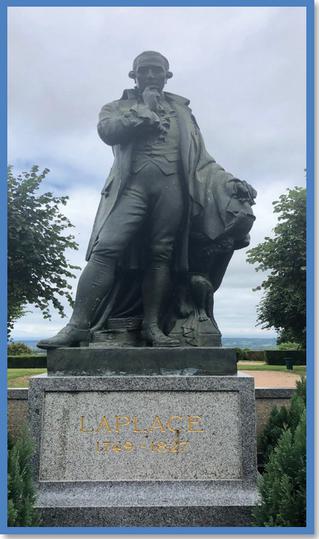
Figure 2 Photograph of the Pierre Laplace statue in Beaumont-en-Auge, France.
The statue is prominently positioned in the town’s main square and symbolizes the intellectual legacy of one of France’s greatest scientific minds. Laplace’s work in probability theory, celestial mechanics, and determinism greatly influenced modern science. My visit provided an opportunity to reflect on Laplace’s vision of a mathematically ordered universe, often referred to as Laplace’s Demon, and to connect his theoretical insights with the historical and cultural context of his birthplace.
In his acclaimed book “Infinite Powers: How Calculus Reveals the Secrets of the Universe”, Steven Strogatz [13] emphasizes that calculus is not only a branch of mathematics but also a powerful system of reasoning with symbols. In contrast, he explained that nature consists of various forces and phenomena. When applied skilfully, calculus can transform science, as demonstrated by James C. Maxwell, who unified electricity and magnetism. In that sense, calculus serves as a vital tool for engineering and technology.
In summary, the intellectual legacy of Newton and Laplace culminated in the work of the Scottish physicist and mathematician James Clerk Maxwell, who unified electricity and magnetism into a single framework, thus establishing the modern science of electromagnetism. Building upon the contributions of these giants, Maxwell developed a set of fundamental laws, known as Maxwell’s laws, which describe how electric and magnetic fields are generated, interact, and propagate through space. This groundbreaking work enabled the engineering of modern telecommunications systems and computers. It paved the way for the discovery of quantum electrodynamics (QED), a concept in quantum field theory developed by the Nobel Prize winners Richard Feynman, Julian Schwinger, and Sin-Itiro Tomonaga [14]. Another significant achievement of Maxwell was to utilise, for the first time, probability and statistics to measure the motion of a molecule without measuring a single molecule [15].
Albert Einstein once remarked about Maxwell, “The special theory of relativity owes its origins to Maxwell’s equations of the electromagnetic field” [16]. Therefore, Newton, Laplace, and Maxwell, these three geniuses, laid the foundation for classical mechanics. Their work not only shaped the last 350 years of history, impacting our society and contributing to the Industrial Revolution, but also had a lasting impact on modern science, philosophy and ways of thinking.
Table 1 Classical physics influence on the industrial revolutions
| Industrial | Key | Technological | ||
| revolution | Period | Core science | figure | outcomes |
| First | 18th–19th c. | Classical mechanics | Newton | Steam engines, machinery, textile industry |
| Second | 19th–20th c. | Analytical mechanics & determinism | Laplace | Electric power, railways, telegraph, mass prod |
| Third | 20th c. | Electromagnetism & quantum physics | Maxwell | Electronics, radio, computing, telecomm |
Table 1 summarizes the scientific foundations of the first three Industrial Revolutions and their technological outcomes. The First Revolution, which took place in the 18th and 19th centuries, was based on Newton’s classical mechanics and led to innovations such as the steam engine and various machinery. The Second Revolution, occurring in the 19th and 20th centuries, was influenced by Laplace’s determinism and thermodynamics, resulting in the development of electric power, railways, and mass production. The Third Revolution, which happened in the 20th century, was inspired by Maxwell’s electromagnetism and quantum physics, giving rise to the fields of electronics, computing, and telecommunications.
As history and evolution do not stop, the dawn of a new law, revealing new wonders of the universe mechanics, was discovered. However, departing from the deterministic, universal view of the universe based on classical mechanics, it emerged in the early 20th century that relativistic mechanics, whose laws were formulated by the German scientist Albert Einstein.
3 Albert Einstein and the Relativistic Mechanics of the Universe
The writer and historian, North American, also Pulitzer Prize winner, James Gleick, delivered a majestic biography of Sir Isaac Newton entitled “Isaac Newton” [17], in which he has a narrative that situates the readers in the time and space and social fabric in which Isaac Newton lived, together with his personal life and his human side aside from the polymathematician and scientist as he is presented. In this book, Gleick presents to the readers how Newton influenced what is called mechanical philosophy, with the laws of motion and gravity, but also solving questions like the movement of the planets, stars and comets, including giving continuity to Galileo’s works and resolving the intricated puzzles at that time of the tidal wave movement, in which Newton pointed out the gravitational pull of the Moon and the Sun. The aforementioned biography is a must-read for readers interested in science and the foundations of classical mechanics, presented in a storytelling style that describes Newton’s life and achievements.
Gleick mentioned in Newton’s biography that, with the revelation of Einstein’s theory of relativity, many scholars claimed that Newton’s classical mechanics “died” or was “replaced”. Rather, the author argues that “…Newtonian physics were reinforced and expanded” [18]. To justify such a statement, Gleick recalled the writing of the Austrian-British mathematician and cosmologist, also contributor to Einstein’s general theory of relativity, Sir Hermann Bondi, who wrote in his famous book “Relativity and Common Sense – A new Approach to Einstein”, “With the passage of time, though, the sensational aspects of Albert Einstein’s work have ceased to caused wonderment, at least, amongst scientist, and now one begins to see the theory as not the revolution, but as a natural consequence and outgrow of all the work that has been going on in physics since the days of Isaac Newton and Galileo” [19].
It is important to note that Newton was born one year after the death of the great Italian astronomer and physicist Galileo Galilei. Again, nature passes the torch of science from one to another. Before Newton, there was Galileo. It seems to be thought-provoking, but it seems that there is no coincidence in nature!
Newton is referenced at the beginning of this section to clarify a common historical misconception that Albert Einstein’s theory of relativity invalidated Newton’s work. Again, if Einstein revealed new wonders of the Universe, it is because he was upon the shoulders of giants such as Galileo, Newton and Maxwell. Einstein himself wrote in 1927 to the Smithsonian Annual Report, on the 200 years of commemoration of Newton’s death, “One’s thoughts cannot but turn to this shining spirit, who pointed out, as none before or after him did, the path of Western thought and research and practical construction…The last step in the development of the program of the field theory was the general theory of relativity. Quantitatively it made little modification in Newton’s theory, but qualitatively a deep-seated one. Inertia, gravitation, and the metrical behaviour of bodies and clocks were reduced to the single quality of a field ” [20]
Figure 3 presents portraits of three significant figures in classical mechanics, often regarded as foundational theoretical unifiers. The first image depicts Sir Isaac Newton, painted by Godfrey Kneller in 1689. This portrait shows Newton at the height of his scientific influence. Created in the 17th century, it is in the public domain and therefore free of copyright. The second image shows Pierre-Simon, Marquis de Laplace, mathematician and astronomer, portrayed wearing the ceremonial robes of the Chancellor of the Senate under the French Empire. This painting is likewise in the public domain. The final portrait is of James Clerk Maxwell, dating from around 1870 and attributed to an unknown artist. This image is also copyright-free. Together, these three portraits illustrate the principal contributors whose work unified classical physics, shaping the foundations of modern theories.
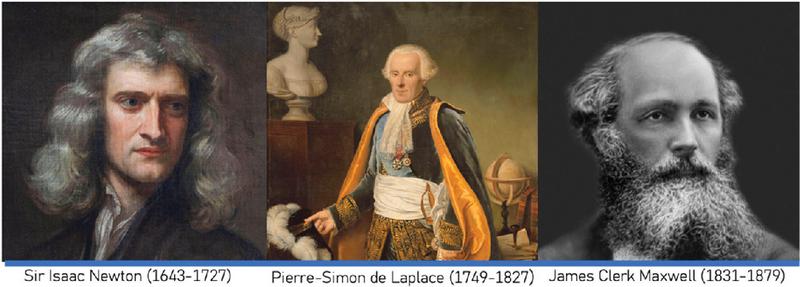
Figure 3 Classical mechanics: theoretical unifiers.
The two theories of relativity are not part of classical mechanics. Instead, they replace and extend classical mechanics in situations involving high velocities (close to the speed of light) or strong gravitational fields. Relativistic mechanics is relatively new compared to classical mechanics, as it was discovered in the early 20th century by the German physicist Albert Einstein. The renowned physicist was considered the first “pop” scientist of his time, and many books have recounted his life. However, the one I truly recommend is the one written by Walter Isaacson, entitled “Einstein: His Life and Universe” [21], which is a great literary masterpiece that combines the life, ideas, discovery, vicissitudes, ordeals and psychological life of this genius of humanity; in short it brings an snapshop of his humanity, as a human being, not just the Einstein scientist and Nobel Prize, as he is recognized.
This outstanding book explores various aspects of Einstein’s life, including his ideas, discoveries, struggles, and personal experiences. It provides a comprehensive look at his humanity, portraying him not only as a renowned scientist and Nobel Prize winner but also as a complex individual.
In this biography, Isaacson recounts a thought attributed to Einstein: “A new idea comes up suddenly, preceded by an intuitive manner but intuition is nothing more than the result of the intellectual work carried out previously” [22]. In this sense, some scholars argue that when Albert Einstein developed the concept of the general theory of special relativity in 1905, it was based on his in-depth knowledge of theoretical physics.
Einstein’s first breakthrough in the relativistic theories was the development of the special theory of relativity, which consisted of his efforts to reconcile Maxwell’s theory of electromagnetism with classical mechanics. In this context, the special theory of relativity corrects classical mechanics for objects moving at high speeds, approaching the speed of light. In this sense, it deconstructs the notion that time and space are absolute entities, introducing the idea that they are relative and depend on the observer’s speed and position. Additionally, it brings the following corollaries:
• Time dilation: Moving clocks run slower.
• Length contraction: Moving objects have their distances shortened in the direction of motion.
Moreover, finally, the special theory of relativity introduces the concept that mass and energy are interchangeable, as presented by the famous equation:
| (1) |
Equation (1), , was introduced by Albert Einstein in 1905 as part of his special theory of relativity. It shows that the equivalence between mass (m) and energy (E) is demonstrated mathematically. Moreover, it states that mass can be converted into energy and vice versa, with the speed of light squared = serving as the conversion factor. Einstein’s special relativity is called “special” because it applies only when the two observers are moving at constant speed and in a straight line relative to each other.
Therefore, for any concept of accelerated motion, or change in position and deceleration, Einstein took more time to work out a novel concept of the relativistic theory, which, one decade later, was called the general theory of relativity. In this concept, he presents new ideas in which time and space are interrelated, and gravity is not a force, as previously described by Newton, but a distortion on the fabric of space and time. Therefore, the notion of a four-dimensional universe is presented, adding time and space as dependent entities.
Thus, the previous concept that space and time were separate entities is rewritten in the Einstein field equations as a single fabric, now called the spacetime fabric. The consequences of this new relativistic mechanics prompted the investigation that proved the universe’s expansion and that light can be bent by gravity, which was later confirmed by Sir Arthur Eddington’s expedition in 1919 sponsored by the Royal Academy of Science and the Royal Academy of Astronomy in London, to two distinguished places, Brazil and Principe Island, observing a Solar eclipse and measuring the light curve of the Heliades constellation. In summary, the general theory of relativity, presented by Einstein in 1915, brought the concepts of:
• Gravity curvature of spacetime.
• Gravitational time dilation Time passes more slowly in stronger gravitational fields.
Predicted phenomena were gravitational waves, light bending to the curvature of spacetime, black holes, and the Big Bang. These concepts created such awe; some of them were also quite old but confirmed by Einstein’s theories. For instance, English physicist and cosmologist Stephen Hawking explains in his book titled “A Brief History of Time” [23] that the cosmological concept that time belongs to the same fabric of space was first proposed by the African philosopher Saint Augustine in 350 AD, who wrote in the book “City of God” [23]. Such a statement can also be found in the same passage in Saint Augustine’s famous book “Confessions” [24], where the philosopher states that when “God creates the universe, He creates the concept of Time” [25]. This is the same principle presented in modern cosmology, known as the Big Bang, in which “time” as we know it did not exist before the event that created the known and observable universe.
The special theory of relativity, formulated by Einstein (1905), transformed physics by showing that the laws of nature are the same in all inertial frames and that the speed of light is constant. One of its main consequences, time dilation, means that moving clocks tick more slowly. This effect is essential to the Global Positioning System (GPS), whose satellites orbit Earth at about 14,000 km/h. Their atomic clocks run at a slightly different rate than those on Earth, and without this correction, GPS accuracy would drift by several kilometres each day.
The photograph in Figure 4 was taken during my second workshop at the IEEE STEM event held at Princeton University [26] on 15 March 2025. It showcases the statue of Albert Einstein, seated in front of the Princeton campus, symbolising his enduring intellectual legacy. The image highlights Princeton’s historical and academic significance as a centre of scientific thought, where Einstein worked in his later years at the Institute for Advanced Study.
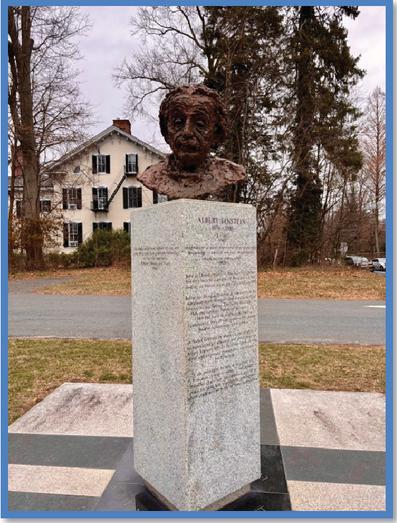
Figure 4 Photograph of Albert Einstein’s statue, Princeton University, NJ, USA.
Einstein’s general theory of relativity (1915) extended these ideas, showing that gravity curves spacetime and slows time in stronger gravitational fields. At high altitude, in which GPS satellites operate, gravity is weaker than on Earth’s surface, causing their clocks to run faster. When both relativistic effects are considered together, they nearly cancel but still require precise correction. If relativity were ignored, GPS positions would deviate by about 10 kilometres in just 24 hours, making the system completely unreliable. The practical realisation of this technology also relied on Dr Gladys West, whose geodetic modelling of Earth’s shape and gravitational variations provided the mathematical foundation that allows GPS to apply Einstein’s theories to modern navigation and communication systems.
As can be seen, Einstein’s theory of relativity transformed modern science and technology. Developed to describe the relation between space, time, and gravity, relativity now underpins many essential systems, not only GPS, but also governs particle accelerators like the Large Hadron Collider (LHC), where particles moving near the speed of light require relativistic equations for energy and mass.
Thus, the aforementioned equation of energy and mass provides the foundation for nuclear energy, medical imaging, and radiation therapy, and it also supports telecommunications, such as radio, fibre optics, and 5G networks, through precise timing and signal synchronisation.
To this day, science seeks to unify the theories of relativity and quantum mechanics, which, in general, have had some success, but the challenge remains. However, Einstein’s Nobel Prize in Physics (1921) [27] was for explaining the photoelectric effect, which was pivotal in establishing quantum mechanics. In the photoelectric effect, Einstein described that light is quantized into discrete packets of energy called photons. Einstein’s revelations influenced the development of quantum field theory, and scientists worldwide worked to reconcile relativistic mechanics and quantum mechanics to develop a better explanation of the universe’s features, especially in the field of quantum theory of gravity [28].
4 A Quantised History of Quantum Mechanics and the Pathway to the Novel Quantum Technologies
Quantum physics is a 100-year-old science, developed as the observation of the atomic world intensified, driven by researchers seeking to understand the microscopic universe better. Quantum physics is the field of research that studies the phenomena at the atomic and subatomic levels. The date of this celebration is used by the United Nations Educational, Scientific and Cultural Organisation (UNESCO) [29] and the United Nations (UN) to mark the Nobel laureate German physicist Werner Heisenberg’s [30] discovery of matrix mechanics and the “uncertainty principle” in 1925. Therefore, UNESCO defined 2025 as the International Year of Quantum Science and Technology (IYQ) [XX] to signal the birth of quantum mechanics. The history of quantum mechanics was already well covered by Manjit Kumar in the book “Quantum – Einstein, Bohr and the Great Debate About the Nature of Reality” [32], which spans 448 pages and is considered the “bible” of quantum mechanics history.
However, looking back, no one can forget that in the early 1900s, the German physicist Max Planck [33] initiated quantum physics with his discovery of the equation, which proved that the distribution of emitted radiation by a blackbody was always discrete. In this latter, he defined it as “quanta” of energy. Max proved this with his equations and showed the world that energy is never continuously exchanged from a primary source; it is delivered in discrete packets of energy.
Quantum mechanics is the theoretical framework that guides the observed phenomena of quantum physics and describes what happens at the atomic and subatomic level. Therefore, it is correct to say that quantum mechanics started with quantum physics. Observation comes first in physics, whereas sometimes the idea precedes new science, which is then tested, and mathematical concepts and tools are used to describe the newly discovered laws of nature. The explanation and the theoretical quantum framework were defined later as quantum mechanics. Quantum physics and quantum mechanics are often used interchangeably [34]. However, they have distinct meanings that depend on how this novel science is described. Compared to classical physics, quantum science is relatively young.
Therefore, this is why the paper here presented first the pillars of classical and relativistic physics, then started diving into the wonders of quantum physics to appreciate better breakthrough discoveries that depart from the deterministic world, pass through the relativistic one, and enter the probabilistic realm of quantum mechanics, challenging our known status quo of how the universe works and leading to new scientific frameworks.
4.1 The Birth of Quantum Physics – Max Planck and the Influence of Thermodynamics
The discovery of quantized energy began with a scientific investigation aimed at standardizing luminosity for the industrial production of artificial light. Therefore, in 1881 a conference title was held called “The Works of Electricians of all Ages” [35], which the four leading inventors of artificial light attended and showcased their works: North American inventor Thomas Edison, the British inventor Sir Joseph Wilson Swan, the British electrical engineer St George William Lane Fox-Pitt, and the British-American Sir Hiram Stevens Maxim. They had exhibited their works during the congress, and at that time, despite having the standards for volts and amps, an industrial standard for luminosity did not exist. Based on this quest for this standard, the way to find it was through the study of blackbody radiation. A blackbody was a theoretical body that was completely black and could absorb all levels of electromagnetic energy and radiate it. The concept of a blackbody was developed by the German physicist Gustav Kirchhoff, who formulated the theoretical idea of a perfect absorber and emitter of radiation, which would appear pitch black while absorbing radiation and reflecting none. At the experimental level, it would be a box with a cavity containing a pinhole in one of its walls; once heated in a lab, it would radiate the electromagnetic energy it receives in accordance with its temperature, releasing it at different wavelengths.
Max Karl Ernst Ludwig Planck was a good pianist who gave up his musical career to dedicate his career to physics and began devoting his research to the laws of thermodynamics formulated by Rudolf Clausius; with a particular interest in the novel concept Clausius developed, “entropy”. Planck’s studies led him to devote time to reviewing energy concepts to investigate blackbody radiation. It was during the study of blackbody radiation that Planck made an astonishing discovery. Energy in a blackbody could only be absorbed or emitted in packets, in which the denomination is “quanta”. In other words, energy would not flow continuously from the source emitters as a liquid pouring down a glass, as in a blackbody; it would be emitted or absorbed discontinuously, in small units. For this discovery, Max derived his famous equation:
| (2) |
In Equation 1.2, Planck sliced the energy (E) into small and indivisible packets of energy of a single photon, or quantum of energy, represented by a constant (h), versus its frequency represented by the Greek letter () nu. The connection with classical physics as a bridge to the quantum discovery is that Planck developed the concept of quantized energy following the work of the Austrian physicist Ludwig Boltzmann, who believed in the microscopic world of atoms and who himself studied the properties that James Maxwell had previously calculated using statistical methods. Boltzmann developed the kinetic theory of gases and improved Clausius’s theory of entropy. Also, prior to Boltzmann’s studies, another German physicist, Wilhelm Carl Werner Otto Fritz Franz Wien, discovered a relationship between the increase in temperature of blackbody radiation and the decrease in wavelength of the electromagnetic wave. Here, Planck established quantum physics, which quantum mechanics has since developed, using the Greek term “quanta” to describe the packets of energy emitted and absorbed.
4.2 Quantum Mechanics: The New Science and its New Rules – From Einstein, Bohr, Heisenberg, to many others
It is impossible to list all the names and collaborators involved in the realisation of quantum mechanics. This paper is not intended to do it with precision, but great literature about it has been produced and is mentioned in this text. The idea is to quantify the history of quantum mechanics and point out where quantum engineering is heading. Having said that, a presentation of some distinguished scholars who devoted their lives to the fruition of quantum mechanics is presented here.
Therefore, no one can forget the remarkable and intuitive civil servant turned professor, Albert Einstein, and his contributions to quantum mechanics, even though this novel science was not yet complete and remains incomplete in certain areas. Also, at that time, the concepts of discontinuity and continuity were divisive amongst scientists. Planck himself did not believe in the atomic theory until he was shocked by his own discovery of the quanta of energy. In classical mechanics, Isaac Newton suspected that light was composed of particles but could not explain the wave behaviour observed when light reflected from a glass surface, for instance.
Albert Einstein, studying the photoelectric effect and believing that all matter in the universe was composed of atoms, continued where James Maxwell left off, describing electromagnetic radiation as waves. Einstein, intuitively believing in the discontinuity of matter, including electromagnetic “wave”, he thought that even then would have atomic properties and display discontinuity principles rather than continuously spreading through the ether as presented by Maxwell. Picking up where Planck left off, Einstein formulated a thought experiment, idealising that gases were composed of particles. He also thought that the thermodynamic equilibrium of the gases would depend on their properties. Then, by creating an imaginary blackbody full of gas, he could derive the same Planck equation, utilising Boltzmann and Wien’s laws to describe the colour emissions from a blackbody. In this concept, he understood that light also behaves as a particle, and its colour depends on the size of the quantum packet of its emitted frequency. With this discovery, the “quanta” of light principle was born, also known as the light-quanta [36].
In this photoelectric effect, Einstein discovered that the minimum energy an electron needs to escape from the surface of a metal depends on the light frequency. If the light frequency is very weak, then the light quanta will not allow the electron to be free. Einstein won the Nobel Prize not for explaining the light quanta effect, but for the photoelectric effect.
The photoelectric effect, described by Einstein, influenced the engineering of artificial light. In its inner core, the photoelectric effect describes how it works: the emission of an electron from a metal due to the absorption of an electromagnetic wave. With this discovery, one can see how important it was to improve the manufacturing of artificial light. Science and engineering, combined, deliver outstanding results for the industrial revolutions to come. The idea that light behaved like a particle would shape the next chapter of science and quantum mechanics, until the arrival of the Danish Niels Bohr with the quantum atom, and the idea that light could also behave like a wave.
Niels Bohr, a Danish physicist, and his student Werner Heisenberg advanced Planck’s theory, challenging the deterministic view of the universe. Bohr received the Nobel Prize in 1922 for explaining why atoms emit light at specific wavelengths and for developing a quantum model in which electrons move between discrete orbits, emitting or absorbing photons of defined energy. In Bohr’s atomic model, each orbit corresponds to a quantum number (n), and transitions between orbits produce radiation of specific colours in the light spectrum.
At this stage in history, calculus and probability were the most sought-after mathematical tools for addressing quantum challenges. During the moment that one electron is moving from one orbit to another, it emits a photon in a different colour of frequency. According to Bohr’s quantum atom model, an electron cannot occupy any space between the orbits. Also, it is not possible to determine where the electron is during an orbital transition; otherwise, the atom would continuously emit a photon during the transition. This action of an electron moving from one orbit to another was classified as a quantum leap.
Bohr showed that the wavelength of a spectral line produced by radiation emitted when an electron jumps from one orbit to another can be calculated using the Planck–Einstein formula.
Figure 5 depicts the electron orbits around the nucleus of an atom, and it shows, at the top right, electron A in an inner orbit X moving to the outer orbit Y and changing colour, which represents a photon emitted at a different frequency triggered by the quantum leap.
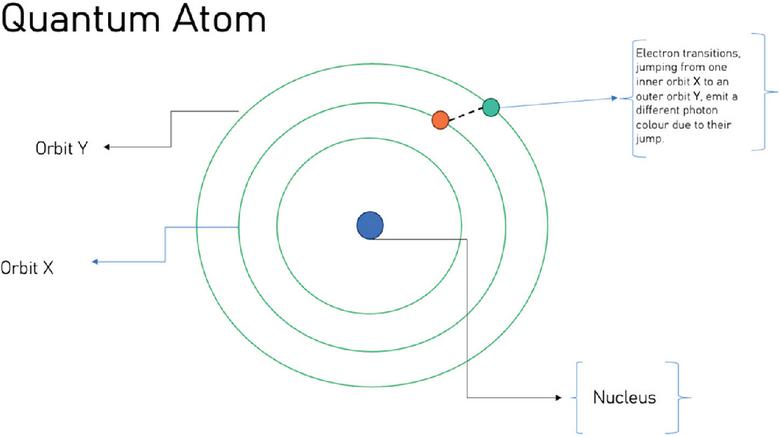
Figure 5 Simplified version of Neils Bohr’s quantum leap and energy level emission.
Bohr later proposed that light can behave as both a wave and a particle, depending on the context of observation. This debate over light’s properties as a particle or a wave culminated in the famous exchange of letters and ideas between Bohr and Einstein, known as “The Great Debate”. Werner Heisenberg received the Nobel Prize in Physics in 1932 for the development of quantum mechanics, introducing the uncertainty principle, which states that the position and momentum of an electron cannot be simultaneously determined with precision but only estimated using matrix equations.
Together with Niels Bohr, he established a probabilistic view of quantum phenomena, in contrast to classical determinism. This new interpretation sparked debate, notably with Albert Einstein, who questioned its indeterminism. In 1935, Einstein, along with Boris Podolsky and Nathan Rosen, published the famous EPR paper, “Can Quantum-Mechanical Description of Physical Reality be Considered Complete?” [37]. The paper proposed a thought experiment involving two entangled particles whose correlated measurements seemed to imply faster-than-light communication, contradicting relativity. Einstein referred to this phenomenon as “spooky action at a distance”, suggesting the existence of hidden variables to preserve locality.
Figure 6 illustrates the thought experiment devised by Einstein, Podolsky, and Rosen (EPR), which revealed the seemingly nonlocal nature of quantum entanglement, where two particles, such as polarization-entangled photons emitted from a single source, remain correlated even when separated by vast cosmic distances. In this scenario, one photon (Photon A) is stored on Earth, while its twin (Photon B) is on Mars, separated by a minimum distance of m.
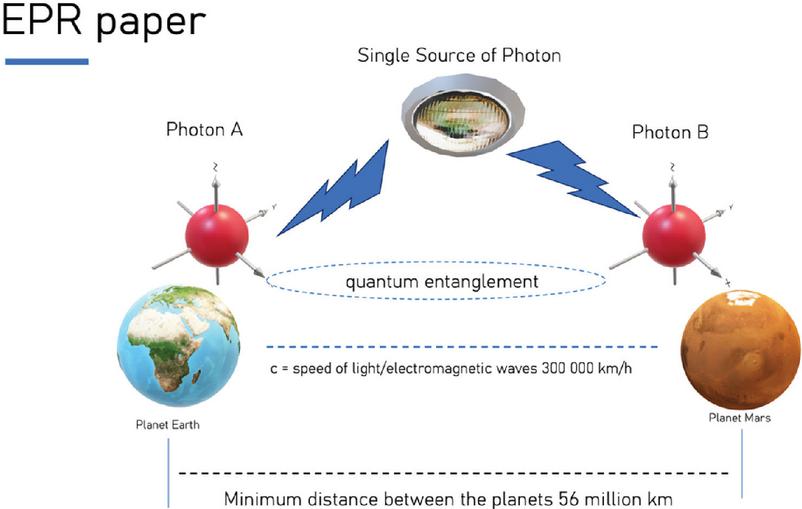
Figure 6 EPR experiment summarized and explained.
A measurement made on Photon A appears to instantaneously determine the correlated outcome of Photon B, despite the planets being separated by an enormous distance. This situation seems to contradict Einstein’s theory of special relativity, which states that no physical signal or influence can propagate faster than the speed of light, which is symbolized by the constant (c).
To understand this apparent paradox, one can calculate the light-travel time between the two planets. The separation distance of m and the speed of light m/s give a propagation time of:
| (3) |
Thus, any causal signal between Earth and Mars would take about 3.11 minutes (186.67 seconds) to arrive. If an observer on Mars measured Photon B only one second after Photon A was measured on Earth and still found perfectly correlated results, this would seem to imply a communication speed greater than light, challenging classical notions of locality and realism.
From this point onwards, quantum mechanics has continued to evolve, and many other contributors have contributed to this new science, in which everyone who gets involved continues to wonder. Of course, some aspects of quantum mechanics cannot be solved yet, and it represents one of the deepest nature secrets, for instance, why entangled photons can be entangled, defying the laws of locality imposed by Einstein’s special relativity that nothing can move faster than the speed of light (c). This is still a trillion-dollar question for future discovery.
The concept of hidden variables, proposed to explain the “spooky action” described in the EPR paper, was clarified by the Northern Irish physicist John Stewart Bell, who worked for Conseil Européen pour la Recherche Nucléaire (CERN). He was a great fan of Einstein and devoted himself to confirming Einstein’s proposal of hidden variables. However, he stumbled across a new reality: quantum entanglement exists despite the concept of locality, and he proved it mathematically. Bell published this finding in the paper “On the Einstein Podolsky Rosen Paradox” [38] in 1964. Although his findings confirmed the nonlocal nature of quantum mechanics, they did not imply that information or matter could travel faster than light. The underlying mechanism of quantum entanglement, however, remains one of the most profound mysteries in quantum physics. However, while the quantum entangled correlation is nonlocal, it does not allow the transmission of controllable information, preserving relativistic causality. The observed correlations arise from the shared quantum state established at the moment of emission, not from any faster-than-light influence, reaffirming that quantum mechanics remains consistent with special relativity.
The intuitive and creative professor, Albert Einstein, even when making mistakes, would turn out to be right in some respects and would help open new frontiers in science and engineering. The EPR paradox thus challenged the completeness of quantum theory and later inspired the foundations of quantum communications, cryptography and computing.
5 The Quantum Engineers and the First and Second Quantum Revolutions
The first quantum revolution, in which engineers began creating technologies based on quantum theory, began in the early 1940s with the development of nuclear energy, which enabled the creation of the atomic bomb and the engineering of the light amplification by stimulated emission of radiation (LASER), and in the 1960s with the development of the medical device magnetic resonance imaging (MRI). This latter belongs to nuclear magnetic resonance (NMR) in the early 1970s.
Science and engineering are now entering the second quantum revolution, a concept introduced by Professors Jonathan P. Dowling and Gerard J. Milburn [39], marking a new era in which the fundamental principles of quantum mechanics are applied to engineer technologies that exploit quantum control, coherence, and entanglement to achieve unprecedented levels of precision and computational capability.
5.1 The Era of the Quantum Computer Engineers
Richard Feynman’s lecture inaugurated the era of the quantum engineers and the planning for the second revolution. Moreover from the technical point of view, the classical computers based on the Jon Van Neumann architecture are coming to the limit, such as the ones highlighted by Moore’s law [39] and edge of its power to handle complex computation, especially at the level of the microscopic world, or black box problems, the ones from probabilistic nature (non-determistic), such as quantum simulation for high entropy such as drug discovery, cosmological evolution, biological systems such as deoxyribonucleic acid (DNA), and hard mathematical problems such as travel sales man (TSM), complex finance management, and cybersecurity to mention a few.
Paul Anthony Bienoff, a North American physicist, formulated the concept of a quantum touring machine [40] in 1982, utilising the Schrödinger equation to derive a touring model capable of reversible computing. Such a concept inaugurated the first technical principles of quantum computers. Beinoff’s work laid the theoretical groundwork for quantum computers, demonstrating the possibilities of creating a new generation of computers departing from classical ones. It was a crucial step for the state of the art of the quantum computers that exist today. Beinoff began the transition from theoretical quantum computing, paving the way for the quantum computer engineering being developed today.
Right after completing the foundations of quantum computing, which appeared in 1994, the North American mathematician Peter Shor developed the first quantum computing algorithm capable of factoring integers in polynomial time [41], which was seen as a significant threat to the state of the art in cryptography used by computers and digital devices in general. With these three distinguished researchers, the foundation of quantum engineering was established, comprising the proposal of creating computers that operate under the principles of quantum mechanics, as presented by Feynman, followed by the theoretical quantum Turing machine concept developed by Beinoff, and triggered by the R&I on quantum algorithms as suggested by Peter Shor.
Another key point to remember is that the power of a quantum computer comes from the fundamental unit of information, the quantum bit (qubit). A qubit can exist in a state of 0, 1, or both at the same time, a property known as superposition. Thus, it allows quantum computers to explore many possibilities simultaneously rather than process them sequentially. When qubits become entangled according to the principle outlined in the aforementioned EPR paper, a change in one immediately influences the other, no matter how far apart they are, creating a powerful link that enhances computational efficiency. Together, these phenomena enable quantum parallelism, allowing the system to perform several calculations simultaneously. By applying these principles, quantum computers can tackle complex computational problems beyond the reach of classical systems, marking a significant step forward in computational science.
To conclude, quantum computers, despite lacking a generic architecture like classical computers, are currently under development, and many quantum computer topologies are being engineered. These topologies include superconducting quantum computers, quantum annealing computers, trapped-ion quantum computers, photonic quantum computers, and the neutral-atom quantum computer. However, their state-of-the-art evolution and computational power depend on the companies that invest in them. Also, quantum computers are currently being tested for several activities and services, including the pharmaceutical industry, financial and insurance services, chemistry, telecommunications systems, and quantum simulations.
Finally, a quantum computer’s limitation lies in the principles to engineer such novel technologies, overcoming the quantum technical constraints for scalable quantum computation called the DiVincenzo criteria [42]. The DiVincenzo criteria, proposed by physicist David P. DiVincenzo in 2000, outline seven essential requirements for the physical implementation of quantum computers and the transmission of quantum information. However, industry and governments are heavily investing in this area of R&D, and the forecast is that by 2030, quantum computers-as-a-service (QCaaCS) will begin operating commercially.
5.2 Advanced Quantum Technologies
Quantum technologies are emerging as transformative tools that integrate with and enhance advanced communication and sensing frameworks such as telecommunications, pharmaceuticals, fintech, and the future integration of communications, navigations, sensing and services (CONASENSE) [43]. In a nutshell, quantum machine learning (QML) represents the convergence of quantum computing, artificial intelligence (AI) and machine learning (ML), offering unprecedented computational speed and data-processing capabilities.
Quantum sensing and metrology apply the fundamental principles of quantum physics to mitigate quantum noise, achieving measurement accuracy and precision that surpass classical limits. These technologies play a vital role in improving imaging, navigation, and communication services, which are critical to the efficiency and reliability of CONASENSE-based systems. Applications such as finding rare minerals on Earth, 3D geographic spatial mapping, advanced radar systems, and advanced medical sensing devices are amongst the services to benefit from this new generation of quantum tech. This technology is being developed for extreme sensing and measurement precision beyond the capability of the existing digital or analogue devices.
Similarly, quantum simulation provides a powerful means of exploring and modelling complex phenomena that are computationally infeasible for classical systems. This capability extends across diverse fields, including materials science, chemistry, biology, medical research, and astronomy, thereby offering substantial benefits for the design and optimisation of future communications networks and CONASENSE environments.
Quantum communication and cryptography promise to establish communication systems of unparalleled security and resilience. By leveraging quantum entanglement and key distribution, these methods can protect information exchanges across telecommunications networks and infrastructures, reinforcing trust, privacy, and data integrity in the next generation of intelligent systems. These are some of the future technologies in quantum tech that are under R&D, in which nations, and private and state organisations, are heavily investing for the next decades.
6 Conclusions
Quantum mechanics education aligned with the development of quantum technologies engineering is essential in today’s world, as humanity faces urgent challenges that require rapid scientific advancements, and classical computing and technologies are struggling to help, while quantum tech can contribute. These challenges include the rise of pandemic diseases and the need for innovation in drug discovery for overcoming longstanding conditions such as cancer, HIV, dementia, and Alzheimer’s. Additionally, there are societal issues that demand attention, such as addressing climate change; consequently, as the scientific community devotes scientific endeavours to developing powerful sources of clean renewable energy and harnessing the energy of stars, humanity needs to accelerate the pace toward Kardashev Scale Type 1 [44].
Furthermore, discovering new materials is crucial for technical and scientific progress, alongside the development of new economic strategies to fight hunger and improve humanity’s quality of life (QoL) [45]. Also, focusing on advancing aerospace services for space exploration, particularly in preparation for a future driven by artificial intelligence (AI), is needed. In all of these areas, quantum tech can help if the scientific community popularises the study of quantum mechanics among society, sparking broad interest among students, scientists, and engineers to investigate these fields, along with public-private partnerships to foster the second quantum revolution in a multidisciplinary manner, as currently the quantum research area despite of all hypes, is still belonging to a small group of researchers worldwide.
Additionally, as the classical computational task becomes more intensive, more graphics processing units (GPUs) or tensor processing units (TPUs) are needed to handle it, or overpriced supercomputers, pushing the edge of the higher energy consumption required or large and complex data centres. Therefore, to address it better, quantum computers are the key technology to transform these technological constraints in the next decade and beyond 2030. Having said that, several countries, organisations, academic institutions, and companies are investing in R&D and research and innovation (R&I) to develop the next generation of quantum computers that can achieve quantum supremacy, and to enable quantum technologies in general to flourish.
The future of quantum engineering will focus on quantum physicists, quantum computing engineers, quantum software development, quantum chemist or biologist, quantum AI/ML researcher, quantum cryptographer and quantum climate and energy scientists, to mention only a few. Also, all areas of statistics and high entropy will require specialists from engineering and mathematics to work on quantum simulators and optimisation services. All this considered, investment in STEM education capable of fostering the next generation of quantum engineers is a must and a great strategy and return on investment (ROI) for any nation that facilitates it.
References
[1] S. M. Carroll, Something Deeply Hidden: Quantum Worlds and the Emergence of Spacetime. New York, NY, USA: Dutton, 2019.
[2] S. Hawking, Brief Answers to the Big Questions. London, England: John Murray, 2018.
[3] F. P. Richard, Tiny Computers Obeying Quantum Mechanical Laws, Los Alamos National Laboratory Report LA-UR-02-4969-02, 1983. [Online]. Available: https://permalink.lanl.gov/object/tr?what=info\%3Alanl-repo\%2Flareport\%2FLA-UR-02-4969-02.
[4] T. A. Hale, Griots and Griottes: Masters of Words and Music. Bloomington, IN, USA: Indiana University Press, 1998. [Online]. Available: https://iupress.org/9780253219619/griots-and-griottes/\#generate-pdf.
[5] “What Is the Feynman Technique?” Oxford Summer Courses, Feb. 17, 2025. [Online]. Available: https://oxfordsummercourses.com/articles/what-is-the-feynman-technique.
[6] European Commission, “STEM education: report highlights need for more policy efforts and research,” European Education Area, 22 Jan. 2025.
[7] The Royal Society and Engineering UK, “Science Education Tracker 2023,” Science Education Tracker, Apr. 24, 2024.
[8] A. Pokropek, G. Mazzeo Ortolani, Z. Karpinski, and F. Biagi, STEM Competencies, Challenges, and Measurements: A Literature Review, JRC Publications Office, European Commission, Report JRC138618, Oct. 2024. doi: 10.2760/9390011.
[9] I. Newton, The Principia: Mathematical Principles of Natural Philosophy, A. Motte, Trans., F. Cajori, Ed. Berkeley, CA, USA: Univ. of California Press, 1934.
[10] S. Hawking, On the Shoulders of Giants: The Great Works of Physics and Astronomy. Philadelphia, PA, USA: Running Press, 2002.
[11] “Intended for Sir Isaac Newton in Westminster Abbey,” Archive of the Poetry & Science Hub, University of Liverpool. [Online]. Available: https://www.liverpool.ac.uk/literature-and-science/archive/archiveofthepoetryandsciencehub/poems/isaac-newton/.
[12] P.-S. Laplace, A Philosophical Essay on Probabilities, “Laplace’s Essay on Probabilities” page. Information Philosopher. [Online]. Available: https://www.informationphilosopher.com/solutions/scientists/laplace/probabilities.html.
[13] S. Strogatz, Infinite Powers: How Calculus Reveals the Secrets of the Universe. Boston, MA, USA: Houghton Mifflin Harcourt, 2019.
[14] “The Nobel Prize in Physics 1965 – Summary,” NobelPrize.org. [Online]. Available: https://www.nobelprize.org/prizes/physics/1965/summary/.
[15] M. Kumar, Quantum: Einstein, Bohr, and the Great Debate About the Nature of Reality, ch. 1, p. 23. London, U.K.: Icon Books Ltd, 2008.
[16] T. S. Durrani, “James Clerk Maxwell (1831–1879),” IEEE Engineering Management Review, vol. 44, no. 4, pp. 29–31, Dec. 2016. doi: 10.1109/EMR.2016.7792400.
[17] J. Gleick, Isaac Newton, Introduction, p. 19. New York, NY, USA: Vintage Books, 2004.
[18] M. R. Matthews, Time for Science Education: How Teaching the History and Philosophy of Pendulum Motion Can Contribute to Science Literacy. New York, NY, USA: Springer, 2000.
[19] H. Bondi, Relativity and Common Sense: A New Approach to Einstein. New York, NY, USA: Doubleday & Co., 1964.
[20] “Einstein on Newton,” NOVA, PBS. [Online]. Available: https://www.pbs.org/wgbh/nova/article/einstein-on-newton/.
[21] W. Isaacson, Einstein: His Life and Universe. New York, NY, USA: Simon & Schuster, 2007.
[22] W. Isaacson, Einstein: His Life and Universe, ch. 6, p. 130. New York, NY, USA: Simon & Schuster, 2007.
[23] S. Hawking, A Brief History of Time: From the Big Bang to Black Holes. New York, NY, USA: Bantam Books, 1988.
[24] Augustine of Hippo, The City of God, M. Dods, Trans. New York, NY, USA: The Modern Library, 1950.
[25] Augustine of Hippo, Confessions, E. B. Pusey, Trans. New York, NY, USA: Dover Publications, 2002.
[26] P. S. R. Henrique and R. Prasad, “STEM’s Role in Advancing Human Rights Through 6G and the Second Quantum Revolution,” in Proc. IEEE Integrated STEM Education Conf. (ISEC), Princeton, NJ, USA, 2024, pp. 1–2, doi: 10.1109/ISEC61299.2024.10664971.
[27] “1921 Nobel Prize in Physics – Summary,” NobelPrize.org. [Online]. Available: https://www.nobelprize.org/prizes/physics/1921/summary/.
[28] S. Hawking, Brief Answers to the Big Questions, ch. 4. London, England: John Murray, 2018.
[29] “A Year Full of Quantum Celebrations,” Nature Photonics, vol. 19, p. 117, Feb. 2025, doi: 10.1038/s41566-025-01627-y.
[30] W. K. Heisenberg, “Werner Heisenberg – Facts,” NobelPrize.org. [Online]. Available: https://www.nobelprize.org/prizes/physics/1932/heisenberg/facts/.
[31] “International Year of Quantum Science and Technology (IYQ 2025),” Quantum2025. [Online]. Available: https://quantum2025.org.
[32] M. Kumar, Quantum: Einstein, Bohr, and the Great Debate About the Nature of Reality, ch. 1, p. 7, London, U.K.: Icon Books Ltd, 2008.
[33] M. Kumar, Quantum: Einstein, Bohr, and the Great Debate About the Nature of Reality, ch. 2, p. 48, London, U.K.: Icon Books Ltd, 2008.
[34] P. S. R. Henrique and R. Prasad, “6G Networks Orientation by Quantum Mechanics,” J. ICT Standardization, vol. 10, no. 1, pp. 39–62, Feb. 2022. [Online]. Available: https://journals.riverpublishers.com/index.php/JICTS/article/view/9485/10681.
[35] “The Paris Electrical Exhibition 1881,” IET Archives – Archives Highlights, The Institution of Engineering and Technology (IET). [Online]. Available: https://www.theiet.org/membership/library-and-archives/the-iet-archives/archives-highlights/paris-electrical-exhibition-1881.
[36] A. Pais, “Einstein and the Quantum Theory,” Rev. Mod. Phys., vol. 51, no. 4, pp. 863–914, Oct. 1979. [Online]. Available: https://web.archive.org/web/20190829151347/http://ursula.chem.yale.edu/~batista/classes/vvv/RevModPhys.51.863.pdf.
[37] A. Einstein, B. Podolsky, and N. Rosen, “Can Quantum-Mechanical Description of Physical Reality Be Considered Complete?,” Phys. Rev., vol. 47, no. 10, pp. 777–780, May 1935. doi: 10.1103/PhysRev.47.777.
[38] J. S. Bell, “On the Einstein Podolsky Rosen Paradox,” Physics, vol. 1, no. 3, pp. 195–200, 1964. [Online]. Available: https://cds.cern.ch/record/111654/files/vol1p195-200\_001.pdf.
[39] J. P. Dowling and G. J. Milburn, “Quantum Technology: The Second Quantum Revolution,” Philosophical Transactions of the Royal Society A, vol. 361, no. 1809, pp. 1655–1674, Jun. 2003. doi: 10.1098/rsta.2003.1227.
[40] P. Benioff, “Quantum Mechanical Models of Turing Machines That Dissipate No Energy,” Phys. Rev. Lett., vol. 48, pp. 1581–1585, 1982. [Online]. Available: https://journals.aps.org/prl/abstract/10.1103/PhysRevLett.48.1581.
[41] IBM Quantum, “Shor’s Algorithm,” IBM Quantum Documentation. [Online]. Available: https://quantum.cloud.ibm.com/docs/tutorials/shors-algorithm.
[42] “David DiVincenzo,” Qutech. [Online]. Available: https://qutech.nl/person/david-divincenzo.
[43] P. S. R. Henrique, A. D. Mihovska, and R. Prasad, “Quantum Computing Technologies to Accelerate 6G and CONASENSE Integration Beyond 2030,” in Proc. Int. Symp. Wireless Personal Multimedia Communications (WPMC), Tampa, FL, USA, 2023, pp. 260–265, doi: 10.1109/WPMC59531.2023.10338974.
[44] A. Zhang, J. Yang, Y. Luo, and S. Fan, “Forecasting the Progression of Human Civilization on the Kardashev Scale Through 2060 with a Machine Learning Approach,” Scientific Reports, vol. 13, Art. no. 11305, 2023. doi: 10.1038/s41598-023-38351-y.
[45] “Moore’s Law,” Intel Newsroom. [Online]. Available: https://newsroom.intel.com/press-kit/moores-law.
Biographies

Paulo Sergio Rufino Henrique is the Editor-in-Chief of the Quantum Information Technologies Journal and Commissioning Editor at River Publishers. He is a scientist, electrical engineer, author, and international speaker specializing in telecommunications, media, broadcasting, and quantum computing. He holds a degree in Electrical Engineering from FESP (Faculdade de Engenharia de São Paulo) and a postgraduate diploma in Wireless Communication Systems from Brunel University, London. Based in Paris, Paulo works as a scientist at the CTIF Global Capsule Foundation, leading research on Quantum Technologies and 6G Networks. He is pursuing a PhD in Denmark under Professor Ramjee Prasad, focusing on next-generation wireless systems (beyond 2030), and serves as Chairman of the international 6G Briefing Conference. His career includes positions at Unisys (Brazil), British Telecom (Brazil and UK), Vodafone (UK), Babcock (UK), and Spideo (France), where he worked on telecom networks, AI recommendation systems, and OTT platforms. He co-authored “6G Networks – The Road to the Future Wireless Technologies 2030”, praised by Forbes, and contributes to the CONASENSE platform. Paulo has lectured at Princeton University (2024, 2025), Johns Hopkins University (2023), University of South Florida (2023), and UNICAMP (2023). His book was launched at the World Economic Forum in Davos (2022), and he has participated in major events such as IEEE 5G (Silicon Valley), WWRF (Abu Dhabi, Paris), WPMC (India, Denmark, Japan), and Futurecom (Brazil).
Ramjee Prasad, Fellow IEEE, IET, IETE, and WWRF, is the Founder President of the CTIF Global Capsule (CGC). He is also the Founder Chairman of the Global ICT Standardization Forum for India, established in 2009. He received Pravasi Bhartiya Samman Puraskaar (Emigrant Indian Honor Award by the Indian President) on 10 January 2023 in Indore. He also received the Ridderkorset of Dannebrogordenen (Knight of the Dannebrog) in 2010 from the Danish Queen for the internationalization of top-class telecommunication research and education. He has received several international awards such as the IEEE Communications Society Wireless Communications Technical Committee Recognition Award in 2003 for making a contribution in the field of “Personal, Wireless and Mobile Systems and Networks,” Telenor’s Research Award in 2005 for impressive merits, both academic and organizational within the field of wireless and personal communication, 2014 IEEE AESS Outstanding Organizational Leadership Award for: “Organizational Leadership in developing and globalizing the CTIF (Center for TeleInfrastruktur) Research Network,” and so on. He has been the Project Coordinator of several EC projects, namely, MAGNET, MAGNET Beyond, eWALL. He has published more than 50 books, 1000 plus journal and conference publications, more than 15 patents, over 150 PhD graduates and a larger number of master’s graduates (over 250). Several of his students are today’s worldwide telecommunication leaders themselves. Under his leadership, magnitudes of close collaborations are being established among premier universities across the globe. The collaborations are regulated by guidelines of the Memorandum of Understanding (MoU) between the collaborating university.
Quantum Information Technologies Journal, Vol. 1_1, 75–104
© 2025 River Publishers